First-ever release of the long-lost original full length versions of tracks from Sheena’s 1985 hit collaboration with super producer Nile Rodgers. Remastered from the original master tapes and pressed on orange coloured vinyl with brand new artwork including full lyrics and rare photos.
Features the previously unreleased uncut versions of singles ‘Jimmy Mack’ and ‘Magic Of Love’, original alternate ‘Break Mix’ of ‘Do It For Love’ and 7 minute+ take on the rock-funk
workout ‘Don’t Turn Your Back’
This orange vinyl ‘Uncut Nile Rodgers Sessions’ edition of 1985’s dance-R&B orientated ‘Do You’ features eight previously unreleased full-length versions of tracks from the hit album.
‘Do You’ finds Sheena Easton hooking up with Nile Rodgers at his imperial 1980s superproducer peak - following mega hit productions for the likes of David Bowie, Madonna and Duran Duran. Easton fully embraces her new upbeat, pop-funk direction on tracks like the Top 30 US dance hits ‘Do It For Love’ and classic Motown cover ‘Jimmy Mack’, as well as sensual groove ballads like ‘Magic Of Love’ and ‘When The Lightning Strikes Again’.
Search:ji fi
Previously Unreleased Recording. Limited to 1200 copies on transparent cherry vinyl. Tip-on jacket, Download code. Insert featuring LP sized original art by Grungie O'Muck. Includes the original recording of Richard Tucker's "Are You Leaving For The Country", later covered by Karen Dalton, and the only song co-written by Karen & Richard, "Sleeping In The Garden". "Richard, Cam & Bert seem to have grasped The Great Harmony. That is, ensemble singing that is at once sweet, precise, funky and a bit sardonic..." -Mike Jahn / New York Times (1970) "For a few years in the late sixties and early seventies Richard Cam & Bert ruled MacDougal St. walking a fine line between the increasingly commercialized demands created by groups like Crosby Stills and Nash and the fierce integrity of earlier folk performers, the generation to which Richard belonged. They managed this with great aplomb, producing original tunes of great integrity and obvious folkloric origins, as well as those which expressed the anarchic omnipresent psychedelia of the moment. They also never abandoned the idea of including some traditional material in their performances. But for the usual random application of luck they could have been very big." - Grungie O'Muck / Artist, Bluesman, Cover artist for their first album and contributor to this one. Richard Tucker, Campbell Bruce, and Bert Lee coalesced as a trio in the spring of 1968, and by the end of that year had become regular performers at fabled Greenwich Village nightspots - The Gaslight, The Bag I'm In, Cafe Feenjon, among others. But mostly they were street singers, busking regularly in Central Park. Their only LP, Limited Edition, was released in 1970, and sold mainly at gigs and on the street. Somewhere in The Stars compiles earlier, previously unreleased recordings, when all three members were signed with Peer-Southern Music publishers as writers and began using their studio to make demos and experiment musically. Beautifully recorded by house engineer Charlie Mack (supervised by Jimmy Ienner), the demos capture a back room casualness and rustic, homespun quality. For me, listening to their songs and harmonies is like entering a world you always hoped existed but had never experienced. Some of the songs were re-recorded the following year for Limited Edition, but many are heard here for the first time. Among them is the original demo for Richard Tucker's song, "Are You Leaving For The Country", which Karen Dalton covered on her seminal 1971 release, In My Own Time. Richard and Karen were husband and wife for much of the 1960s, performing as a duo (initially as a trio with Tim Hardin), and navigating their time on the Village scene while alternating living in a small mining town outside Boulder, Co. before splitting up in 1967. Also making its debut, is the only song Richard and Karen ever wrote together, the haunting "Sleeping In The Garden". Also contains two epic songs by Cam "One Of These First Nights", and "Stockholm") not on their LP, but staples of their live performances, and noted in a gig review by The New York Times, and in a column by future A&R hero, Karin Berg, who was an early champion. Another rarity is the only cover of "Sweet Mama" by Fred Neil we've ever heard. Campell Bruce came to New York in 1967 as lead singer with a band from Washington, DC, The Natty Bumpo. They'd recently signed a record deal with Phillips, but were falling apart. Cam landed in the Village with an acoustic guitar and first started playing and singing in the basket houses, and shortly thereafter at The Gaslight, as the "Cam Bruce Trio" (which included Collin Walcott). After opening for Mose Allison, Cam's hero, the trio went their separate ways, and Cam returned to regular solo gigs at The Flamenco, and the basket houses on Bleecker. Richard and Cam met up on that scene and quickly found a musical kinship as well as becoming best pals. Bert Lee arrived in New York as a runaway the following winter, and began playing and sleeping wherever he could. His sometime accompanist, Ron Price, introduced Bert to Richard and Cam just as Bert's own songs were garnering attention from publishers. According to Bert, "I arrived on the New York scene during a time of great change, and it was the notion of change that influenced me. All around me I saw there were two sorts of songwriters, on the one hand dedicated to the traditions that had inspired them, folk, jazz, the American songbook. On the other hand were songwriters influenced by the wave of experimentation that The Beatles were the perfect example of. Mixing genres, writing lyrics that weren't just about ordinary love and loss. Richard Tucker was a country blues player, with a relaxed and melodic approach to the craft. Cam wrote something more akin to soul songs, with a hint of jazz in the changes. I was writing tunes that sometimes drew on classical structures with a tendency toward what I suppose would be known as prog-rock. But I was rather adamant about not being pinned down stylistically, and so I would write, for example, a song based on some complex classical chord structure, and then go right ahead and write a simple folk song, like Evelyn. Our band was popular locally, and it was this variety that made it distinct." Delmore is excited to present this unearthed treasure, fifteen years in the making. In the words of Richard Tucker, "Tap on your knee, roll on the floor; if you aint free, what's it all for?" "The trio's singing, playing, and writing have all withstood the test of time. Believe me, because I was there. In 1969 R,C&B, myself, Charles John Quarto, David Bromberg, Ron Price, and Keith Sykes were just a few of that year's crop of song-slingers. We were young turks back then, out on the prowl in New York's Greenwich Village for record deals, gigs, and beautiful young women to sleep with and maybe even write a song about. I've lost the names and numbers of those lovelies and I'm not sure what happened to Ron Price, but Richard, Cam, and Bert are back! - Loudon Wainwright lll
- A1: Fathoms Below
- A2: Main Titles
- A3: Fanfare
- A4: Daughters Of Triton
- A5: Part Of Your World
- A6: Under The Sea
- A7: Part Of Your World (Reprise)
- A8: Poor Unfortunate Souls
- A9: Les Poissons
- A10: Kiss The Girl
- B1: Fireworks
- B2: Jig
- B3: The Storm
- B4: Destruction Of The Grotto
- B5: Flotsam And Jetsam
- B6: Tour Of The Kingdom
- B7: Bedtime
- B8: Wedding Announcement
- B9: Eric To The Rescue
- B10: Happy Ending
Begib dich auf ein musikalisches Abenteuer mit der Musik aus Disneys Die kleine Meerjungfrau. Feiern Sie
das 35-jährige Jubiläum mit klassischen Songs und der Filmmusik!
- July 17, 1955, Newport Jazz Festival
- A1: Spoken Introductions By Duke Ellington And Gerry Mulligan
- A2: Hackensack
- A3: ‘Round Midnight
- July 17, 1955, Newport Jazz Festival
- B1: Now’s The Time
- July 3, 1958, Newport Jazz Festival
- B2: Spoken Introduction By Willis Connover
- B3: Ah-Leu-Cha
- July 3, 1958, Newport Jazz Festival
- C1: Straight, No Chaser
- C2: Fran-Dance
- July 3, 1958, Newport Jazz Festival
- D1: Two Bass Hit
- D2: Bye Bye Blackbird
- D3: The Theme
- July 4, 1966, Newport Jazz Festival
- E1: Gingerbread Boy
- E2: All Blues
- July 4, 1966, Newport Jazz Festival
- F1: Stella By Starlight
- F2: R.j
- F3: Seven Steps To Heaven
- F4: The Theme / Closing Announcement By Leonard Feather
- G2: Gingerbread Boy
- G3: Footprints
- July 2, 1967, Newport Jazz Festival
- H1: ‘Round Midnight
- H2: So What
- H3: The Theme / Closing Announcement By Leonard Feather
- July 5, 1969, Newport Jazz Festival
- I1: Miles Runs The Voodoo Down
- I2: Sanctuary
- I3: It’s About That Time / The Theme
- November 1, 1973, Newport Jazz Festival
- J1: Spoken Introduction By Ronnie Scott / Band Warming Up
- J2: Turnaroundphrase
- J3: Tune In 5
- November 1, 1973, Newport Jazz Festival
- K1: Ife
- K2: Untitled Original
- November 1, 1973, Newport Jazz Festival
- L1: Tune In 5 / Closing Announcement By Ronnie Scott July 1, 1975, Newport Jazz Festival
- L2: Mtume
- October 22, 1971, Newport Jazz Festival In Europe
- M1: Directions
- M2: What I Say
- October 22, 1971, Newport Jazz Festival In Europe
- N1: Sanctuary
- N2: It’s About That Time
- July 2, 1967, Newport Jazz Festival
- October 22, 1971, Newport Jazz Festival In Europe
- O1: Bitches Brew
- October 22, 1971, Newport Jazz Festival In Europe
- P1: Funky Tonk
- P2: Sanctuary
- G1: Spoken Introduction By Del Shields
The 8-LP box set Miles At Newport 1955-1975 - The Bootleg Series Vol. 4 features of live performances by Miles’ stellar band lineups from 1955, 1958, 1966, 1967, 1969, 1971, 1973, and 1975, in New-
port, Rhode Island, New York City, Berlin, and Switzerland. From Miles’ debut performance at NJF in 1955 (a hastily arranged jam session featuring Thelonious Monk and Gerry Mulligan), to his final public performance of the ‘70s in 1975, the box set traces the ascen- dance of Miles’ music as the jazz superstar he has become known to be.
The full-length concert performances alone of Miles’ famed “Kind Of Blue” Sextet (with Cannonball Adderley, John Coltrane, Bill Evans, Paul Chambers, and Jimmy Cobb), and second great quintet in ‘66 and ‘67 (with Wayne Shorter, Herbie Hancock, Ron Carter, and Tony Williams) represent templates that reverberate in jazz and popular music to this day.
Miles At Newport 1955-1975 - The Bootleg Series Vol. 4 is available as a deluxe 8LP box set, housed in a lift-off box. The set includes print- ed innersleeves, a mini poster of Miles, and a 12-page booklet with extensive liner notes and rare photos.
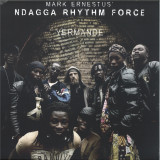
Five years into the project, Yermande announced a thrilling new phase for this Dakar-Berlin collaboration; a giant step forward.
The group of players is boiled down to twelve for recordings, eight for shows; sessions in Dakar become steeply more focused. ‘This time around I was better able to specify what I wanted right from the initial recording sessions in Dakar,’ says Ernestus; ‘and further in the production process I took more freedom in reducing and editing audio tracks, changing MIDI data, replacing synth sounds and introducing electronic drum samples.’
Right away you hear music-making which has come startlingly into its own. Rather than submitting to the routine, discrete gradations of recording, producing and mixing, the music is tangibly permeated with deadly intent from the off. Lethally it plays a coiled, clipped, percussive venom and thumping bass against the soaring, open-throated spirituality of Mbene Seck’s singing. Plainly expert, drilled and rooted, the drumming is unpredictable, exclamatory, zinging with life. Likewise the production: intuitive and fresh but utterly attentive; limber but hefty; vividly sculpted against a backdrop of cavernous silence.
Six chunks of stunning, next-level mbalax, then, funky as anything.
Since its founding back in 2014, Blume has carved a unique place in cultural landscape, issuing free-standing works, spanning the historical and contemporary, that represent singular gestures of creativity within the field of experimental sound. Joining their broad efforts in building networks of context and understanding that already includes the works by Werner Durand, Sarah Hennies, Bruce Nauman, John Butcher, Jocy de Oliveira, Mary Jane Leach, Valentina Magaletti, Alvin Curran, Julius Eastman, Alvin Lucier, and shortly after returning with the first ever vinyl release to attend to James Tenney’s legendary “Postal Pieces”, the label is now offering a brand new, ambitious work by the American composer Ben Vida, entitled “Vocal Trio”, conceived, performed, and recorded in Bremen, Germany, during the Spring of 2022. A truly stunning work of compositional conceptualism, combining the ideas of systems based synthesis with real-time vocal collaboration - issued in a highly limited vinyl edition of 200 copies mastered by Stephan Mathieu, featuring specially commissioned liner notes by Bradford Bailey and a leporello insert offering the piece visual score - it’s a landmark in contemporary experimental practice and arguably the most forward-thinking and exciting piece by one of the most exciting American artists working today.
Ben Vida first emerged during the mid 1990s within a loose constellation of experimental musicians, centred around a performance series of improvised workshops at the Myopic Bookstore in Chicago, alongside Jim O'Rourke, Kevin Drumm, Chad Taylor, and the other future members of Town and Country - Jim Dorling, Joshua Abrams, and Liz Payne - the band within which he would gain widespread recognition over the following years. Like many other members of that scene, Vida remains a restless product of a fleeting context - Chicago during the 1990s and early 2000s - continuously undermining concrete notions of idiom and signifier within a practice that witnessed him rendering bristling abstractions within Pillow, glacial melodies with Town and Country, the art-rock mayhem of Bird Show Band, and the angular, driving indie rock of Joan of Arc, before becoming immersed in a practice of systems based synthesis, beginning in the 2010s, that guided much of his first decade of output as a solo performer and composer.
As early as 2013, he began to incorporate acoustic sound sources - specifically the human voice - into his work. It was this shift, evolving and refining itself over the last decade, that underscores radically the leap in his practice represented by “Vocal Trio”, a work that encounters Vida composing for the human voice with the ideas that allow for synthesis - transferring the underlying concepts and structures of both subtractive and additive synthesis to the acoustic realm - without using a synthesiser.
During the Spring of 2022 Vida was in Bremen, Germany, collaborating on a dance piece with the choreographer Fay Driscoll, when the production fell into delays. Finding himself with time on his hands, a space at his disposal, and the company of two dancers - Amy Gernux and Lotte Rudhart - who were also singers, the idea for the piece - to utilising the larynx as audio paths (multi-harmonic or harmonically pure) while conceptualising each person’s mouth as a filter to sculpt the timbre and resonance of a given tone - began to take shape in his mind. Considering how typographical scores might be developed into a non-linguistic social framework, Vida drafted a single page of text - what became the score for “Vocal Trio” - accompanied by a set of harmonic suggestion and loose parameters, seeking a core meaning from each word's phonic make-up by each of the three singers (Vida, Gernux and Rudhart) singing as slowly as possible.
At the core of the pulsing vocal drones - intoxicating, harmonically rich long-tones - that make up the duration abstraction of “Vocal Trio”, is Vida’s regard for music as a social space. It is an experiment that seeks liberation through the act of collective music making, by challenging the terms through which the act of composing is perceived and then relinquishing control. The piece’s rehearsals were simply the three performers hanging out, allowing their knowing each other and natural dynamics to contribute to its form as the score, before recording during a single afternoon at the end of a number of days sharing company and space.
Creatively visionary and groundbreaking on numerous terms, as well as being intoxicatingly beautiful and remarkably listenable, Ben Vida’s “Vocal Trio” represents a striking step forward for one of the most ambitious and outstanding sonic artists working in the United States today. Issued by Blume in a highly limited vinyl edition of 200 copies mastered by Stephan Mathieu, featuring specially commissioned liner notes by Bradford Bailey and a leporello insert offering the piece visual score, this is hands down one of the most important contemporary records we’re likely to encounter in 2024.
JIMI HENDRIX™ had an electrifying career highlighted by ground-breaking live performances! The latest 3.75” scale, articulated JIMI HENDRIX™ Festival ReAction Figure is inspired by the legendary guitarists’ iconic festival looks and features him in a blue-and-white fringed tunic and bell bottom blue jeans, and comes with an electric guitar accessory. Adding this JIMI HENDRIX™ ReAction Figure to your collection of rock and roll legends is as easy a decision as you’ll ever have to make!
Vibes player Johnny Lytle was one of the heroes of the early acid jazz club circuit, with his cut 'Selim' being an anthem of the scene.
The Ohio born player had made his name at Riverside where his 1965 album "The Village Caller" made him a star. When Riverside ceased trading, owner Orrin Keepnews collaborated with Lytle on two albums which came out on the Detroit label, Tuba
Ace reissued the first album “The Loop” last year (HIQLP 115). We are delighted to now put out the second, “New And Groovy”. The line-up features Milt Harris (organ) Wynton Kelly (piano), George Duvivier (bass) “Peppy” Hinnant or Jimmy Cobb (drums) Montego Joe (congas) and Lytle on vibes. The band power through a selection of original material such as ‘The Snapper’, ‘The Pulpit’ and ‘Screamin’ Loud’. The album also contains Lytle’s radical reworking of Miles Davis' 'Miles' which Lytle retitles 'Selim'. With poor distribution, “New And Groovy” barely made it to the shops back in 1967 and was ignored for twenty years until DJs such as Bob Jones and Gilles Peterson started playing it in the 80s making it a sought-after LP.
The popularity of “New And Groovy” has remained, and this is first time it has been legally reissued on vinyl. “Snapper one up…!”
This led to her immediate recognition as a banjo pioneer and to her win in 1991 of the Banjo Player of the Year award from the International Bluegrass Music Association (the first female to win an Instrumentalist of the Year award). For the 2024 reissue, the original 8- track, 1" multitrack tapes were transferred at a resolution of 192kHz/36- bit, and remixed and mastered by Matt Coles at
Compass Sound Studio in Nashville.
The album was produced in 1989 by acoustic music icon and frequent Jerry Garcia cohort David Grisman (architect of "Dawg Music," the jazz- influenced breakout fringe of the bluegrass genre) and recorded with a cast of all- star musicians at Dawg Studio in Marin, CA. Players on the sessions included Alison Krauss (fiddle), David Grisman (mandolin), Mike Marshall (guitar, fiddle, mandolin), Matt Eakle (flute), Joe Craven (percussion) and Jim Kerwin (bass).
The album's 12 tunes were all written by Alison and include the first recorded versions of some of her most well- known compositions, including "Mambo Banjo," "Leaving Cottondale," and "Weetabix."
REMIXED AND REMASTERED from 192kHz/36-bit transfers of the original multitrack tapes. LP – features LIMITED EDITION BLACK & WHITE SWIRL + album download code with 3 never- before- released bonus tracks Includes a 4- COLOR BOOKLET with liner notes from Alison Brown, Dave Dennison, and Mike Marshall, plus ARCHIVAL PHOTOS and SESSION DOCUMENTS
- A1: Spoken Introductions By Duke Ellington And Gerry Mulligan
- A2: Hackensack
- A3: Round Midnight
- B1: Now's The Time
- B2: Introduction By Willis Connover
- B3: Ah-Leu-Cha
- C1: Straight, No Chaser
- C2: Fran-Dance
- D1: Two Bass Hit
- D2: Bye Bye Blackbird
- D3: The Theme
- E1: Gingerbread Boy
- E2: All Blues
- F1: Stella By Starlight
- F2: R.j
- F3: Seven Steps To Heaven
- F4: The Theme / Closing Announcement
- F5: Element / Closing Announcement
- G1: Spoken Introduction By Del Shields
- G2: Gingerbread Boy
- G3: Footprints
- H1: Round Midnight
- H2: So What
- H3: The Theme / Closing Announcement
- I1: Miles Runs The Voodoo Down
- I2: Sanctuary
- I3: It's About That Time / The Theme
- J1: Band Warming Up / Voice Over Introduction
- J2: Turnaroundphrase
- J3: Tune In 5
- K1: Ife
- K2: Untitled Original
- K1: Tune In 5
- K2: Mtume
- M1: Directions
- M2: What I Say
- N1: Sanctuary
- N2: It's About That Time
- O1: Bitches Brew
- P1: Funky Tonk
- P2: Sanctuary
Miles Davis' 20-year association as an artist at impresario George Wein's renowned Newport Jazz Festival is a thriving tradition that is celebrated with the release of Miles Davis At Newport 1955-1975: The Bootleg Series Vol. 4.
The 8-LP box set, comprised of live performances by Miles' stellar band lineups in 1955, 1958, 1966, 1967, 1969, 1971, 1973, and 1975, in Newport, Rhode Island, New York City, Berlin, and Switzerland.
The 4th entry in the critically-acclaimed Miles Davis Bootleg Series, contains hours of previously unreleased material. From Miles' debut performance at NJF in 1955 (a hastily arranged jam session featuring Thelonious Monk and Gerry Mulligan, that immediately led to the trumpeter's Columbia signing), to his final public performance of the '70s in 1975, the box set traces the ascendance of Miles' music as the Jazz superstar he has become known to be.
The full-length concert performances alone of Miles' famed ""Kind Of Blue"" Sextet (with Cannonball Adderley, John Coltrane, Bill Evans, Paul Chambers, and Jimmy Cobb), and second great quintet in '66 and '67 (with Wayne Shorter, Herbie Hancock, Ron Carter, and Tony Williams) represent templates that reverberate in jazz and popular music to this day.
At the muddy miracle that was Woodstock, the most miraculous performance just might have been Jefferson Airplane’s. The band had been one of the first to sign on for the festival, their imprimatur prompting many other acts to hop on board, and their stature had landed them a coveted headlining slot closing Saturday night’s schedule. But, as the torrential downpours and the unexpected crush of half a million people kept on delaying their set, the chances of putting on anything approaching a quality performance seemed to diminish.
According to Paul Kantner, “We were supposed to go on at 10:30 at night and we’d been up and down about four or five times on acid that night, getting ready to go on, and then everything was delayed for whatever reasons. So, we didn’t get on until like 7:00 the next morning and everybody was pretty much burned out.” Kantner’s protestations to the contrary, the Airplane (with guest pianist Nicky Hopkins in tow) played a scorching two-hour set that defied the elements and the circumstances. Grace Slick led the charge as the band plunged into a frenetic version of Fred Neil’s “The Other Side of This Life”: “Alright, friends, you have seen the heavy groups. Now you will see morning maniac music. Believe me, yeah. It’s a new dawn!” What followed was an adventuresome (and surprisingly tight) set that not only featured the band’s big hits like “White Rabbit” and “Somebody to Love” but also premiered songs from the Volunteers album that was still three months away from being released, including a 21-minute version of “Wooden Ships!” Indeed, about the only members of the crew who weren’t up to snuff were the ones filming the concert documentary, which explains why the Airplane is not one of the acts that commonly come to mind when thinking about Woodstock; they didn’t appear in the film due to subpar footage, and only one of their songs (“Volunteers”) was included the chart-topping 3-LP Woodstock release.
Now, Real Gone Music is proud to present Jefferson Airplane’s complete Woodstock performance. The 3-LP set comes inside a gorgeous, double-gatefold jacket sporting photos of the band at Woodstock, most of them taken by the legendary Henry Diltz; liner notes by folk-rock guru Richie Unterberger complete the package. Pressed in iridescent, “clouds breaking” blue for its 55th anniversary, this release makes a convincing claim that Jefferson Airplane’s Woodstock performance ranks right up there with those of Jimi, Sly, and Santana as a festival highlight. Limited to 1000 copies!
2024 Repress
Dauw welcomes Berlin based musician Midori Hirano to the label with her new album Soniscope. Award winning composer Robot Koch provided a rework of the track Patterns under his recently announced new ambient project Foam and Sand.
With releases on acclaimed labels such as Longform Editions, Sonic Pieces and Alien Transistor, Midori Hirano is no stranger within the field of electro-acoustic piano music. While she is more known for her studio-work, it is often forgotten that she also has a long tradition of writing for films and theatre productions. This forms an important part in her work and a constant inspiration for her autonomous work. Soniscope is no exception in that regard. While working on the film Mizuko (Kira Dane, Katelyn Rebelo, 2019), a still of many little Jizo statutes got her attention and came to be the first steps of her new album.
“I was fascinated by the combination of the image and sound which well emphasized the stillness with a slight of emotion.” (Midori Hirano)
With the Jizo statutes on her mind, Midori Hirano wanted to make an album and started envisioning several personal narratives. Soniscope can be considered as the soundtrack of her own personal stories related to these statues of which Mizuko Jizo was the starting point. With Soniscope, Hirano continues in the same vein as her previous albums in which piano and electronic arrangements hold a central place. However, on this record she specifically explored new possibilities in terms of techniques and instruments.
Midori Hirano is a Japanese musician, composer and producer, born in Kyoto and living in Berlin since 2008. She started learning the piano as a child, and this triggered what was to later see her study classical piano at university. Therefore her productions are based on the use of acoustic instruments such as the piano, strings or guitars, but yet experimental and an eclectic mixture of modern digital sounds with subtle electronic processing and field recordings.
Her first two albums were released on noble records, and her second, “klo:yuri”(2008), saw her further develop of her sound, garnering critical acclaim from various media including TIME magazine , BBC radio and FACT Magazine. Over the following years Midori has performed in venues and festivals as diverse as Club Transmediale, Heroines of Sound Festival, Erased Tapes Sound Gallery, L.E.V. Festival, Boiler Room Berlin, and Wonderfruit Festival.
The nine solo albums and numerous single track releases to date include the works of her other moniker MimiCof, in which she explores the realm of experimental music and detailed rhythmic patterns, combined with an idea of drawing melodic shapes and harmonies. Her recent works have been released by labels such as Sonic Pieces, Daisart, Alien Transistor, raster-media, 7k! Music and Longform Editions.
Besides producing her own works, she composes music for films, video installations and dance performances. The films that have commissioned works by Midori have been screened at Berlin International Film Festival, SXSW Film Festival, International Documentary Film Festival Amsterdam and among others.
Sumer Is Icumen In is Quentin Thirionet's (Dhavali Giri, Pairi Daeza) debut album. Still, his musical escapades are vast and varied, based almost entirely on improvisation and live recordings, of which he occasionally distributes tapes without further information. Elusive to categorization and identification, unwilling to fix his musical activity under a stable pseudonym, his projects have ranged from gypsy jazz guitar swings, French traditional songs from Auvergne, and various experimental collaborations. Increasingly closer to electronic instrumentation, he crafted what Belgian label KRAAK presents here as Maibaum, his first ever solo output. As the title goes, this may be a maypole on which his multicolored sonic visions spring about.
Former rope access worker and currently a farmer of organic greens, Thirionet lives up to these lines of work as a musician. He assembles precisely what seems like a subtle balance between high manmade structures and soft fertilized soils; a high voltage pylon placed in a biotic landscape. It's all an even blend, spontaneous and steady, but this contraption comes from profound considerations. "I chose these tracks among many others," says Quentin, "because I heard the melodies all the time in my mind, and because I cried while playing them without really understanding why."
Armed with nothing more than a blackbox, a sequencer, a freeze pedal, and a tape player, Thirionet orchestrates a vivid rite of polished futures. At times reminiscent of Hans-Joachim Roedelius' enveloping arrangements, Maibaum's ambiances rely on mild repetitive patterns subsequently textured by prickling sprouts, mechanic dislocations and revamps that stoke and brighten the stirring motions. Jim O'Rourke's I'm Happy and I'm Singing comes to mind in terms of its detailed and prismatic nature, but Sumer Is Incumen In has its particular narrative. It's a tale of regeneration, of spring's delicate procedures and allure, a celebration of gracious and fortunate junctions between nature and machinery.
The album unfolds like a massive engine being made flesh to drift along the ether of a sultry land. The terrain turns pleasant and fertile in the title track; the colors and melodies of May start to unravel. Chromatic columns rise and define the scenery's depth of field breeding a synesthetic stream between crystal lights and warbling organisms. Grande Albero Buono Magico Uoma's brisk kaleidoscopic arpeggios sound like scanning a tree's litmus foliage. Then Ciguri takes us back to the foggy swamp of the beginning but is suddenly lit by an insect’s labyrinthine roundabout. The Jeweled Grid is a poem Quanta Qualia's lustrous metallic voice recites as a report of the album's phenomena. "Shiny revelations jump out. Pearls of thought flicker about." Images from within that distill to swirl around among us. The thicket dissolves as the album concludes calmly in Le Concept De Chien N'aboie Pas. Swaying under sieved solar light, leaves and branches tingle until the winds grow weak. All the warm creatures gathered along the way, and all those who danced around the maypole's splendid equilibrium now withdraw, folding up small to foster rebirth once again.
José Badía Berner
Vessel Recordings Group is a new label from the United States and kicks off with Natural Rhythm aka the duo of Thomas White and Pete Williams. They have been working since the 90s on their own brand of house and as this EP shows it is stylish, rooted in tradition but full of contemporary designs. 'Jillybean' is raw, stripped back and perfect for backrooms. 'The Chase' is a slamming cut that pushes on with classic vocal samples twisted into something new, and great swing. 'Son Of Orange' is another lo-fi, high-class house sound with real weight and machine soul and 'Pocket Ops' closes out with dubby techno energy. A fantastic, no-frills EP to get this label underway.
- New signing to Basin Rock label who released breakthrough albums by Julie Byrne, Nadia Reid, Aoife Nessa Frances, Jim Ghedi, Andrew Tuttle, Trevor Beales….
- Limited edition black vinyl with download code.
French lullabies and traditional folk songs dating as far back as the 14th century, adapted with contemporary arrangements and faint tape manipulations in Dublin, Ireland.
Imagine Serge Gainsbourg, John Martyn and Gábor Szabó squeezed on a small stage in the early hours of a smokey backstreet Parisian jazz club, slowly hypnotising the audience into hypnagogic hallucinations.
Growing up, Kevin Fowley split his time between living in France and Ireland. He listened to French lullabies sung by his mother in one room, while his father would be playing Donegal tunes on the fiddle in another. “I’m lucky to have been brought up bilingual and bicultural,” he says. “What I find interesting is that I usually think in English, but if I intentionally start thinking in French, a markedly different side of my personality comes through, encouraging different thought patterns.”
And this is apparent on his beautiful record of French lullabies À Feu Doux, which encompasses musical elements from both worlds, as it seamlessly glides across folk, jazz, and a rich yet shimmering in between sound. Varnished and exposed is the feeling that floats through À Feu Doux like a gentle gust of wind creeping in through the open window at night. Real night time music.
repressed!
Kerri Chandler delivers ‘Lost & Found Vol.1’ this March, a four-track collection of revisited, unreleased archive cuts, including Kerri’s own Grampa, Calvin Reed Sr. as a featuring artist on the opening track.
New Jersey’s Kerri Chandler has been at the forefront of house music since the beginning of his career in the early 90’s. Over the past three decades he’s released an extensive back catalogue of material including several albums on his own Madhouse and Kaoz Theory imprints as well as the likes of DJ Deep’s Deeply Rooted, Apollonia, Jerome Sydenham’s Ibadan and Watergate Records.
Here we see Kerri dig up some never before heard archived material from the 90’s and early 2000’s for this four-track EP. Up first is ‘What Will We Do ft Grampa’, featuring spoken word and vocal lines from Kerri’s Grandfather Calvin Reed St. atop gritty swinging drums, organ lines and rounded subs. ‘Tonight’ follows and tips focus over to airy chord sequences, choppy bass notes, dreamy arpeggio lines and dynamic drums.
‘Into The Night’ opens the b-side next, bringing a raw bass hook, tension building strings and vocal chants of the track’s title into the forefront while bumpy stripped-back drums keep things driving. ‘This and That’ then rounds out the release, bringing twitchy resonant synths and phaser sweeps into the mix alongside stuttering drum programming for a funk-infused, loop driven eight minute workout.
DJ Feedback:
Honey Dijon - Classic
Kerri still has his A Game intact! Great Ep!
Laurent Garnier - Kompakt, MCDE, F Communications
PURE LOOOOOOOOOVE
Jimpster - Freerange, Delusions Of Grandeur
Kerri!!!! Classic tracks with that inimitable groove and production which makes him such an icon. Big ups!!
Terry Farley - Junior Boys Own
BACK 2 DA RAW
Fouk - Heist, House of Disco, Razor N Tape
Super hard to pick a fav as each track has its own vibe! LOVE THIS <3
Enzo Siragusa - Fuse London, InFuse
Quality as always from Kerri!
Harvey Sutherland - MCDE, PPU, This Thing
always.
Roy Davis Jnr
Full support.
Jason Kendig Honey Sound System
Always fire tracks from kerri!
DJ Bone - Subject, Metroplex
Love the entire release!
Politics of Dancing (Guillaume & David)
one love for Kerry as always :)
Joyce Muniz - Exploited Ghetto, 20:20 Vision
Nice Ep!
Massimiliano Pagliara - Panorama Bar, Ostgut Ton
groovy!
Shadow Child
king.
Tobi Neumann - What Came First
Brutally good House Music. This one I wanna have on vinyl. Thanks master Chandler for the music!
Chrissy - Chiwax, The Nite Owl Diner
Very excited for this one
Halo Varga - All Inn Music, Surface, Inmotion Music
Kerri is GOD
Mutiny - Azuli, Skint
Kerri on that deep classic vibe..Love
Alinka - Permanent Vacation, Twirl!
Brilliant as always
Diz - Robsoul
90's freshness!!!
Fish Go Deep - Innervisions, Defected
The long-awaited follow up to She's Crazy! Beautifully done. The other tracks also slamming, packed with dancefloor drive and emotion. Can't wait to play loud.
Art Of Tones, Llorca
Superb EP !
Lupe
The Grampa one, instant cult hit, very endearing! Great stuff
BD1982 - Diskotopia, Tokyo
Classic material from an absolute legend
Johannes Albert - Need Want, Mirau, Berlin Bass
vibes for days!
Joseph G. Bendavid
kerri can't fail, always bomb tracks
Terry Grant
Stone. Cold. Legend.
Harri - Sub Club
Lovely
Severino - Horse Meat Disco
oh yes quality
There are certain occasions when you can truly feel the stars align. One of these is when the interstellar voyager of cosmic soul Jimi Tenor finally lands his spaceship at full force on a Timmion recording. In 2024, he will be serving us two spaced out album sessions recorded together with Cold Diamond & Mink. Jimi is no stranger in these space ways as he has operated behind the Timmion scenes for years, furnishing several of the label's artists with his flute and reeds artistry. The first album out is titled "Is There Love In Outer Space?", which begs the question with the force of five extended tracks that are guaranteed to blow your mind to the stratosphere. The pieces are loaded with whooshing and glistening synth noises and span from lofi space funk to cinematic soundscapes. The sweetly floating title track is like some of those galactic ballads that rare soul collectors are spending their pensions on. At the other side of the spectrum, album closer `What Are You Doing?' sounds like Sun Ra sat down at a JBs session, and is straight up meant to get that booty moving. Combined with the raw soul prowess of CD&M, Jimi is able to refine new shades from his already impressive repertoire of talent. Even if you are a friend of his previous work you might not have heard him get down quite like this.
London residing, yet remaining very much Dublin's son Glimmerman returns for his third outing on First Second Label with Temple Sublet. Four across the board soundscapes into bass, 2-step and wub heavy anthems tipped off with a haunting verse from London based poet and lyricist Older Brother.