DYSTORTION
Extrawelt's Latest and Longest-Brewing Album Lands This December on Cocoon
In this beautiful world marked by rising chaos, sometimes the simplest way to escape its troubles is through sonic relief. Germany's renowned electronic duo Extrawelt will offer exactly that with their 5th full-length album, DYSTORTION, via Cocoon Recordings this December.
For over two decades, the humble duo behind Extrawelt, who shy away from making music for clicks, have been a steadfast presence in electronic music. Known as serious studio and tour-focused artists who craft timepiece albums, each a work of enduring craft, that go on to create atmospheric, out-of-the-box live acts, they've been shaping and redefining electronica since their first release.
DYSTORTION is their most diverse and evocative album to date. Imagined over six years and shaped by a world in flux through COVID, political upheavals, social media, and AI, it reflects the contrasts and twists we've all felt while offering surges of serenity and hope. From brooding tension to playful relief, it moves through different states in an evolved Extrawelt manner.
The album's opening credit, "Grand Départ," as if a cinematic prelude, invites us into a world of creeping bass, an explicitly Extrawelt sound that's synonymous with the "anti-genre genre" they work within. The album's second track, "Clapland," sees Extrawelt joining forces with Jimi Jules, a name synonymous with excellence in electronic music, creating a rare collaboration that is felt in every note. Soon, the mood shifts into softer melodies as heard in "Surrounded By Miracles," "Hope Sounds Good," and "Sir Stringalot," which bring bright euphorics to balance the darker moments in an album echoed by industrial influences. Later, as "Dystortion" (the album's title track) unfolds, we're drawn into something few electronic artists can create: raw emotion. This is a gritty landscape as reflective as it is pulsing, glitchy, intense, and richly textured.
DYSTORTION is a reflection of a complex, divided world, carried through dramatically with Extrawelt's signature techno tension. Like the world right now, it is full of contradictions, surprises, and moments of introspection, an essential listen for fans of mature electronic music that may or may not need a reminder of why, after 20 years, we're still listening.
Suche:jimi
For Toxic Funk Vol. 20, we're excited to welcome back the man with the big beats and unmistakable grooves – Sonale – for his first-ever 7" vinyl release on Breakbeat Paradise Recordings. After making waves with digital releases like the bass-driven Ill Vibe EP and the party-starting Sound Monkey EP, Sonale now brings his signature style straight to wax with two exclusive funk-heavy weapons. The A-side, Give I...
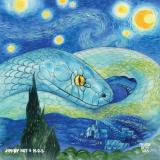
Melody Of the Soul are back with their 9th vinyl release, featuring Felix Raphael & Ghenwa Nemnom on Side A with “Roads” and “Miracle (M.O.S. Remix)”, plus Jiminy Hop & M.O.S. with “Alakea” and Jiminy Hop’s “Keuje” on Side B. A refined selection of melodic and deep grooves, made for both listening and the dancefloor.
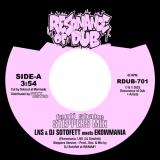
THIS 7" IS FRESHLY RELEASED FOR THE JAPAN TOUR 2025 WHERE DJ SOTOFETT STRICTLY PLAYS ACETATE DUBPLATES!!! DJ Sotofett's new label "Resonance of Dub" follows up his Tresor born dub-club concept with the same name. "Resonance of Dub" is simply the dancefloor spectrum that's directly influenced by Dub music; Steppers, Disco-Dub, Digi-Dub, Dubstep, Lovers Rock, Dub-Techno, UK Garage and Jungle... First release features a strictly percussive dance floor stepper by LNS & DJ Sotofett with vocals by Ekowmania (aka Ekow Alabi Savage, drummer and percussionist from Ghana and collaborator with Jimi Tenor). B-side is a deep melodic and percussive piano dub, a melancholic late night stepper.
Electronic were Bernard Sumner (New Order) and Johnny Marr (The Smiths), who together produced critically-acclaimed alternative dance, and gave both Bernard and Johnny the creative freedom to fully express themselves.
Twisted Tenderness has never been released on vinyl and will also be released on 2LP.
The album was recorded alongside bassist Jimi Goodwin from Doves, and drummer Ged Lynch of Black Grape.
Facta and K-LONE’s Wisdom Teeth imprint returns to the V/A format with ‘Pattern Gardening’: a new collaborative project that leans head-first into the label’s love of minimal-, micro- and tech-house, carving out the label’s distinct, contemporary take on the sound - one that swims between warm, bleepy, rolling, dubby, psychedelic and bass-heavy channels across its duration. The vinyl sampler brings together 6 highlights from the wider 22 track digital project. Wisdom Teeth heads Facta and K-LONE appear alongside longtime label associate Lurka and new signees Polygonia, rRoxymore, Sub Basics and Jichael Mackson.
By now, Wisdom Teeth and its founders are well known for their unabashed love of minimal and tech house, which - alongside ambient, UK club music, experimental electronics and a broad palette of other influences - makes up a key cornerstone of their distinctive sound. The duo’s DJ sets often see them mixing ‘00s gems from labels like Perlon, Mosaic, Minibar and a:rpia:r with more contemporary club sounds, creating a hybrid style that sits somewhere between Balearic terraces and dark UK club basements. Likewise, the label has become known as a go-to outlet for artists occupying a similar crossover space, with names like Jorg Kuning, Parris, Steevio, Duckett, Leif and LUXE all known for pushing house and techno into experimental and refreshing new territories.
‘Pattern Gardening’ follows loosely on from the label’s previous V/A releases ‘To Illustrate’ (2021) and ‘Club Moss’ (2023), which explored downtempo (100bpm) and uptempo (150-170bpm) styles respectively. Here, the focus is fixed on lush, groovy, quirky 4x4 jams, joining the dots between a global spread of producers that bring new energy and perspective to these well-explored frameworks.
As is always the case with Wisdom Teeth’s output, the results fit somewhere between the club and a more contemplative, home-listening headspace, with texture, melody and mood afforded as much significance as rhythm and functionality.
The artwork features photography by Hong Kong-based photographer Jimi Chiu, who captures seemingly ordinary corners of city life in glossy, cinematic detail.
Das Debütalbum der ghanaischen Frafra-Gospel-Queen Florence Adooni (auch Mitglied bei Alogte Oho & Sounds of Joy) ist ein inspirierendes High Life-Werk mit grandiosen Tracks wie der Gospel-Hymne "Mam Pe'ela Su'ure" oder dem mit Jimi Tenor aufgenommenen Clubtune "Vocalize My Luv". Produziert wurde "A.O.E.I.U." von Ethno-Funk-Pionier und Philophon-Betreiber Max Weissenfeldt. Florence Adooni ist mit ihrer achtköpfigen Liveband regelmässig auf Tour, begeisterte bei Festivals wie Roskilde, Down The Rabbit Hole und Überjazz und absolvierte 2024 mehrere Termine mit Erobique.
Marbles is the legendary 1970 proto punk / dance classic from John McLaughlin’s US debut album 'De?otion', recorded at the time in which he played on Miles Davis' Bitches Brew and taped the Record Plant session with Jimi Hendrix.
Marbles didn't just deliver jazz rock's most danceable 4/4 beat, played by Band of Gypsies / Electric Flag drummer Buddy Miles. It is also centered with a once-in-ageneration bass line performed by Billy Rich. Larry Young's otherworldly Hammond textures predate a lot of what synthesizers were about to do much later, and the blowtorch energy emanating from John McLaughlin's cranked amp went beyond what most would had dared during the defining era of heavy rock guitar. An apex achievement at the intersection of jazz rock, guitar rock and dance music without parallel, before or since.
Background: John McLaughlin arrived in New York in 1969 to join Tony Williams' new group Lifetime which also featured Larry Young and eventually Jack Bruce (of Cream). On the second day in town he found himself in the studio with Miles Davis, recording 'In a Silent Way.' His playing would also take center stage in Bitches Brew, Jack Johnson, On The Corner and several other Davis key works of his much beloved first electric era. In between a busy schedule with Lifetime and Davis, McLaughlin also recorded two solo albums in 1970, 'De?otion' with an all-electric group and ‚'My Goa|’s B?y?nd' as its acoustic counterpart. By the time he formed his group Mahavishnu Orchestra in 1972, John McLaughlin was firmly established as the most important practitioner of his instrument of his generation within and well beyond the emerging jazz rock / fusion genre, and he has continued to evolve and surprise until today.
Here, a thorough remaster is supplemented by a new and throbbing techno version by Stefan Goldmann.
Into The Light is the new 2LP Black set from Whitesnake, and is based on David Coverdale's three solo records. The Into The Light album was originally released as David Coverdale’s 3rd solo album, in September 2000, and was his first solo record in 22 years. With an impressive musical lineup, David is joined on Into The Light by guitarists Earl Slick and Doug Bossi, bassist Marco Mendoza, who would later join Whitesnake, legendary drummer Denny Carmassi, who as well as Whitesnake, has played with Montrose and Heart, and Mike Finningan on keyboards, who had previously played with Jimi Hendrix in the 1960s. As well as plenty of unreleased songs and bonus tracks, the set includes “Too Many Tears,” a song David wrote with Adrian Vandenberg and originally featured on Whitesnake’s Restless Heart album. Also included is “River Song,” David’s tribute to Jimi Hendrix, and “With All Of My Heart,” a song David wrote for his wife, and in his own words, one of top ten songs that he’s written. Into The Light also features the singles “Slave,” “Love Is Blind” and “Don’t You Cry.” The box set will also include David’s first two solo records, WhiteSnake MCMLXXVII from 1977 and NorthWinds from 1978, the two titles he recorded immediately after leaving Deep Purple in 1976, in both remixed, expanded and remastered form.
- A1: Ozzobia - Ndi Oma
- A2: Sammy Obot - Edue Ukot Akpa Itong
- A3: Eppi Fanio - Farofa Dancer
- B1: Etiene T Boy - Jealousy
- B2: Ayo Manuel - Do Good (Dub)
- B3: Feladey - Experience
- C1: Chimex G Udensity And His Afrikan Band - Okpoko Na Azo Eze (Edit)
- C2: I S.c.a.c. Band - Igbo Nwe Egwu (Edit)
- C3: Jeje - Jeje
- D1: Dizzy K - Omoge
- D2: Blackman Akeeb Kareem - Oya A (Eje Kajo)
- D3: Jimi Solanke - Owo Orisa Ancestral Respects
- E1: Soki Ohale - Wumaya Awuma
- E2: Jap Band & Feladey - Japadodo
- E3: Pal Sagie - Esan
- F1: Mannix Okonkwo - Ka Anyi Gbaa Egwu
- F2: Sonny Okosuns - Highlife (Dub)
- F3: Wura Fadaka Band - Eyo
Soundway Records presents a collection of Nigerian music chronicling a time when drum machines, synthesisers, imported pop, reggae, disco and soul collided with highlife, juju and cultural music. The late 70s saw a period of political turbulence and prompted change across the country. Following suit, musicians and producers entered a period of experimentation, adaptation, modification and innovation, using new technology to renew and refresh cultural traditions.
Nigerians formed their own unique approach to the limitless creativity these new instruments offered, to reveal a distinct sound which would dominate local airwaves for the decade to come. Nigeria Special Volume 3 celebrates the rich diversity of culture and musical styles of the nation, showcasing eighteen tracks across various genres which laid foundations for the innovation of Afrobeats artists of today. Triple Vinyl gatefold LP compiled by Miles Cleret and Jeremy Spellacey, includes a large 8 page booklet with detailed liner notes, record scans and never-seen-before photos.
- D6: Matalo! (Hey Gente)
- A1: Matalo! (Theme Song)
- C1: Matalo! (Theme Song)
- D1: Matalo! (Theme Song)
- A2: Matalo! (Main Titles - Stereo)
- A3: Matalo! (Mirage)
- B1: Matalo! (Old Town)
- B2: Matalo! (Chase)
- B3: Matalo! (Long Shadows)
- B4: Matalo! (Chase Pt 2)
- C2: Matalo! (Chase Pt 3)
- C3: Matalo! (Old Town Pt 2)
- C4: Matalo! (Cantina)
- C5: Matalo! (Ballata Dei Vestiti)
- C6: Matalo! (Under The Sun)
- D2: Matalo! (Solitude)
- D3: Matalo! (Main Titles - Iia Colonna)
- D4: Matalo! (Fischio)
- D5: Matalo! (Ghosts)
Calling all fans of cult soundtracks and genre-bending scores! Four Flies is thrilled to present a limited edition gatefold beauty containing the premiere vinyl release of the complete score to Matalo!, one of the most captivatingly unique Spaghetti soundtracks ever.
Matalo! is a 1970 'western crépusculaire' by Milanese director Cesare Canevari, known for his visually striking genre films, starring Swedish enfant terrible Lou Castel and Italian theatre actor Corrado Pani. Canevari adopts an experimental, atmospheric approach, relying heavily on out-of-focus effects and framing his shots unconventionally. This gives a dark and atmospheric turn to thewestern genre, with the typical dusty plains transformed into a windswept ghost town, while action sequences replace dialogues almost entirely, leaving actors with very little to say – and, therefore, putting the music center stage.
Composer Mario Migliardi – who was also a conductor, pianist, and Hammond organist – throws out the rulebook for Italian Westerns. Prepare for a wild ride of psych-rock textures, swirling electronic filters, haunting reverbs, and concrete sounds – a sonic tapestry that seamlessly blends influences ranging from Jimi Hendrix to Luciano Berio.
Migliardi masterfully combines traditional folk instruments like acoustic guitars and percussion withnon-canonical electronic processing, creating an electro-acoustic alchemy thatfeels both fresh and timeless today, probably way more than it did in the1970s. In particular, the Leslie filter, a hallmarkin the Hammond organs popular at the time, is applied to the entire soundtrack, resulting in a very distinctive and dynamic phaser effect.
The soundtrack's highlight is probably the rock song featuring vocals from Giano Ton, aka Giacomo Tosti, the only track to have found its way on vinyl prior to this LP (it wasthe B-side ofa forty-five released by RCA Italy at the time). Its 9-minute extended version, previously unavailable on vinyl, is a fantastichard-blues-rock jam à la Hendrix.
This limited-edition double vinyl LP comes in a stunning gatefold jacket with artwork by Eric Adrien Lee, who drew inspiration from the film's original posters and promo materials.
Definitely a must-have for collectors of unique soundtracks and adventurous music!
a Matalo! (Theme Song) feat. Giano Ton
h Matalo! (Theme Song) Instrumental
n Matalo! (Theme Song) [Single Version]
[s] Matalo! (Hey Gente) [feat. Corrado Pani]
[a] Matalo! (Theme Song) [feat. Giano Ton]
[h] Matalo! (Theme Song) [Instrumental]
[n] Matalo! (Theme Song) [Single Version]
[feat. Corrado Pani]
- A1: Blue Beach - Welcome To Your Beach
- A2: Never Find A Girl (To Love Me Like You Do)
- A3: By The Pool
- A4: Roll Over, Beethoven - Out Of The Beach
- A5: In The Shade
- A6: Looking Across The Street
- A7: Long Distance Look
- B1: Hot Afternoon
- B2: Crying In The Sun
- B3: The Next Time
- B4: Miss B B. Walks Away
- B5: Sleep Walk
- B6: Standing There
For the first time since its inception 36 years ago, Steve Hiett’s elusive Down On The Road By The Beach is finally made available outside of Japan. Most recognized in the fashion sphere as an English photographer and graphic designer, Hiett‘s transportive audio portraits amplify his serpentine guitar to the infinite blue, recorded across Paris, Tokyo and New York with no coastline in sight. Now widely celebrated as a desert island disc, very little is actually known of its unfathomable genesis.
A career devotee of Brian Wilson’s ground breaking harmonies, Hiett shot The Beach Boys for Rolling Stone - as well as The Doors, Miles Davis and Jimi Hendrix (in one of his final performances at the 1970 Isle Of Wight Festival) - while establishing himself as a fashion photographer. Decamping to Paris in 1972, he began what would become 20-year collaborations with Vogue Paris and Marie Claire, printing his signature warm, saturated and vibrantly hued snapshots.
In 1982, representatives from Tokyo’s Galerie Watari visited him to propose a solo exhibition. Asking if he could insert a 7” of original music into the back of the exhibition catalogue, Hiett laid down ‘Blue Beach - Welcome To Your Beach’ in a Parisian radio station, playing all of the instruments himself, and two more cuts in New York with Yoko Ono, The Doobie Brothers and Steely Dan hired-gun Elliot Randall. Once dispatched, the phone began ringing off the hook with requests for him to fly to Tokyo. Assuming these long-distance callers were wanting him to check proofs for the book, it wasn’t until he arrived that he discovered CBS/Sony had facilitated an entire album. Heitt hastily gripped some petty cash, bought a guitar and retreated to his hotel room to start writing.
Entering the studio the following day, he was further surprised by a waiting room of session players known as Moonriders - one of Japan’s most acclaimed rock bands of the 1980s. Intimidated by their indecipherable sheet music, Hiett suggested Randall join them and with money being no object for major labels at the time, his wingman was on the next plane out of New York to finalise the high production indulgence. Near-ambient arrangements that float in a space between The Durutti Column, Steve Cropper and Ashra, Down On The Road By The Beach also crowns Hiett the master of recontextualization with his zero-gravity blues visions of Roll Over Beethoven, Santo & Johnny’s Sleep Walk and the 1967 Eddie Floyd soul hit Never Found A Girl.
Produced in coordination between Be With, Efficient Space and the artist, this definitive reissue is restored from original masters with vivid reproductions of the Down On The Road By The Beach exhibition catalogue, intended to accompany its original release, and extensive liner notes penned by fellow Steve Hiett obsessive Mikey IQ Jones.
Norwegian talent Meera makes her Crosstown Rebelsdebut with the atmospheric ‘Stikk’. Landing on 30th August, the EP sees the young artist flex her production prowess with remixes from Dennis Cruz and Tripolism.
Riding the success of her debut single ‘Music For Humans’ in 2023, Norway’s Meera was swiftly recruited by Damian Lazarus, joining him at his Hï Ibiza residency before heading to Rebellion for the release of the resonant ‘Teflon’. The sought-after artist has shown no signs of slowing, releasing a series of remixes this year amongst European shows, festival appearances, and Ibiza
pit stops. Continuing this momentum, she now makes her label debut on Lazarus’ renowned Crosstown Rebels with ‘Stikk’, with imprint regular Dennis Cruz joining on remix duties alongside melodic Danish trio and former collaborators Tripolism, who also make their first outing on Crosstown.
Landing in realms of afro-house, Meera’s production is cool, confident, and creative. With eclectic influences audible throughout her standout sound, her ‘Stikk’ EP proves why she first garnered the attention of artists such as Jimi Jules and John Digweed. The title track leads with minimal climbing percussion, introspective piano melodies and delicate, dreamlike vocals. In contrast, Tripolism’s remix turns up the intensity to a biting crescendo, adding sharp synths for a more dancefloor-focused feeling. ‘Sykkelkurv’ reaches for higher planes of emotion with its atmospheric soundscape, moody chords and driving drums, toeing the line between light and dark. Next, Dennis Cruz’s interpretation drives the track off the line and into deeper rhythms with chunky low-ends, picking up the pace for peak time. Digital purchasers are treated to a bonus track titled ‘Stikk Reprise’, a pulsating trip back into the lead single, with a heightened focus on the song's hypnotic vocals and raw emotive energy.
"Deep Dancefloor Jams of African Disco, Funk, Boogie, Reggae & Proto Electro Music 1977-1986reggWhen a passionate DJ and crate digger intuitively selects music for a DJ compilation, without artistic compromise and without the burden of trends, AfroMagic vol.1 emerges from the depths of his soul. Herewith we present the new favorite phonomancer’s tool for all the DJs who experience the dance floor as a sanctuary and a source of freedom and love.
The most fundamental thing that defines African music is that it was created for dancing. In African dance, there is often no clear distinction between ritual celebration and social recreational entertainment – one can seemlessly merge with the other. Because dance and rhythm have more power than gesture and more richness than words, and because they express the deepest experiences of human beings, dance is in itself a complete and self-sufficient language. It is truly an expression of life with all of its emotions – joy, love, sadness and hope – without which there is no African music and dance. For the African people, dance and music are integral parts of the body and soul, thus depicting the expression of life, current emotional states, visions or dreams. Through hypnotic repetitive music and dance, people communicate with each other and with the souls of the dead, the animals, the plants, the stars, the Gods… They free the body and the spirit through ecstatic states, reaching a healing sense of freedom, happiness, and satisfaction.
Throughout history, this transcendental perception of rhythm and dance originating from Africa, influenced popular music worldwide, thus creating new living and breathing forms of musical genres – freeing them from their industrial mold. Funk, disco, soul, boogie, reggae, dancefloor jazz etc., developed in parallel all over the world. It is foolish to perpetually discuss where they originated from and who were the creators of all these fiery dance floor genres – being obvious that they directly or indirectly originate from the African continent and its people who were as well, over the centuries, influenced by disturbing socio-cultural factors of colonialism. However, no one can enslave the soul. The seeds of free and uninhibited dance and rhythm, true to their original form, initially first sprouted onto the USA’s fertile fields of clubbing and popular music while later evolving in other parts of the world.
The disco funk club culture manifested itself as a phenomenal explosion of artists and grooves in the second half of the 70s in the USA. Shortly it spread around the world continually reigning over charts in its various forms – to this day. Clubs emerged where the DJ is an almighty shaman and the dancers are a tribe united under one roof. This urban ritual had and still has a single goal: togetherness, freedom, and love. Clubs have evolved into temples where we free ourselves from the burden of a consumerist lifestyle and suppressed emotions – a place where we receive love and give love – to be who we really are.
Disco funk clubbing was such an influential global phenomenon that its influence can be observed in various other genres from the disco funk era i.e. progressive rock, which mutated by layering complex rock arrangements with a disco funk groove resulting in hybrids, highly sought by today’s diggers, producers and collectors. The profit-hungry music industry of the 80s very quickly commercialized the original disco funk sound by amputating of its original Afro groove to be able to easily ‘sell’ it globally. So, the original disco funk groove became underground again, and it has remained so until this day. Today, for a DJ to unearth that ravishing groove that will lead the dancers to the stars, he must dig passionately like a true musical archaeologist in search of that groove that picks you up after just a few initial beats. That groove which forces the atoms in your body to vibrate, that groove which unites the body and releases the burden.
The AfroMagic compilation series is created as a tool for real DJs who stick to the aesthetics and essence of clubbing.
This continuation of the Afromagic compilation by DJ Borovich was created in a private jam session which served as an escape route from intense and complex love problems.
Unconsciously driven by intuition and emotion and following a live mix tape framework where many tunes are arranged instantaneously, Borovich narrates his story with a strong rhythm that cuts loose even the most blocked off energy nodes and restores happiness to the spirit and the body.
The musical experience of the groove is completed by the lyrics of the songs, which symbolically give DJ Borovich universal answers to his questions arising from questioning the boundaries, nuances and other forms of love.
When considering that Borovich’s selection was created to facilitate an escape from the burdens of reality through rhythm and dance, we can be sure that Afromagic Vol. 2 will have a 100% uplifting, energized and spaced-out effect on the listeners.
The intro to A1, “Feeling Happy” by the Apostles, introduces us to an experienced and slow, cool and irregularly tight groove containing a confidently sung chorus that instantly gives a sense of freedom and hints at the remainder of Afromagic Vol. 2: “I’m gonna feel happy, ´cause I know I’m gonna be myself.” After the anthemic song mantra of the Apostles, Aigbe Lebarty uncompromisingly continues with a dirty disco rhythm. Acidified by accented synths that elevate it to shamanic levels and held together by a female tribal choir, we embark on an uncompromising ritual disco journey. Without a moment to take a breather the prog funk band Mighty Flames and their Road Man launch a highly vicious and raw, thick funk groove spiced with acid synths and dirty RnR breaks, raising the bar for the A side. Jimi Hendrix himself would surely praise it given the ultimate freedom and virtuosity in the solo sections. With the last tune on A side DJ Borovich decides to burn the floor with Geraldo Pino’s psychedelic, acid furious groove and lyrics which describe this HEAVY part of love problems: “The way she walk, the way she talk, the way she does a funky dances, she is really really heavy – that woman”.
While the A side represents a compact intoxicating afro groove machine that separates us from reality and lifts us up to the stars in over 23 minutes, the B side is a treasure trove of proto sub-genres gems. This selection represents the mission of the Afromagic: to find singular events in African recorded discography of popular music from the 70s and 80s that give evidence to the birth of new modern genres on the Dark Continent even before they emerged in the U.S.A. or Europe. The beginnings of electronic music influenced genres are represented back to back with 80s synth jazzy pop, all painted in African colours.
The B side opens big with Jake Sollo and a huge reggae blues number singing about the humiliation of a man – goosebumps guaranteed! “You think I’m nobody that’s why, you don’t know the way for me, I’m somebody I know, I found myself at last”. Adolf Ahanotu then enters the scene with a hard sliding tackle at B2 and an exotic rare disco funk dancefloor napalm. A ‘Sensation’ that would ignite even the coldest of introverts. While we approach the end of the compilation the narrative revolves again and takes a different turn. No less and no more than to the proto-electro that Baad John Cross serves us in “Give Me Some Lovin´”. The fat and repetitive broken electro synth groove, championing many early 90s electro tracks, is presented here without hesitation and with constant tension accompanied by a mantric chorus “Gimme some, gimme some, gimme some looooovin’, EVERBODY!!!”. Finally, we’re guided to the end of Afromagic Vol. 2 by Eji Oyevole’s 80s synth pop style presented in an authentic afro manner, giving us a glimpse at yet another released Afromagic edition, as well as giving an answer to DJ Borovich’s love problems. A smoothly broken electronic rhythm resembling electrified highlife sounds, carried on the wings of a virtuoso dreamy saxophone on top of which Eji presents the most intimate parts of himself. Finalizing the track with a symbolic chorus, on the surface referring to the dancefloor and simply having fun, but in actuality referring to the skill and happiness of living: “I´m a dancer, I can dance”. So, get up and dance among the stars with DJ Borovich and Afromagic.
microCastle’s first offering of 2024 welcomes Adrian Roman back to the label for his second artist showcase. Hailing from Spain, Adrian Roman first rose to prominence in 2021 with a string of superlative releases which redefined his sound, resulting in an aesthetic that was both cutting edge and effortlessly cool. F, nmully formed within the creative confines of his Castello studio, Adrian’s first microCastle project, 2022’s‘ Disturbing the Perception’ succeeded in showcasing his inventive approach to composition, while remaining club-effective, and in turn earning play from Aera, Fideles and Jimi Jules, amongst others. Moving forward the next eighteen months have proved to be impactful for the young Spaniard, recording standout projects for AZZUR and Sum Over Histories, releases which continued to build on his creative acumen, while remaining in the playlists of underground tastemakers Ame and Dixon. With 2024 beginning with Adrian’s latest Sum Over Histories vehicle ‘Oratorical Ability’, the Spaniard now makes a welcome return to microCastle with a six-track showcase entitled ‘This Is What I Was For A Moment’.
From the opening monochromes of ‘Le Sabbat’ Adrian’s craftsmanship reveals itself across this slow-burning piece, one where grating growls, granular flares and panoramic arps ultimately set the pace for the groove-centric ‘Customized Reality’. It’s here where Adrian puts a greater focus on the dancefloor, marrying hopeful vocal phrasing and silky chord stabs for a rejuvenating experience, while a drum-driven drop ultimately charts the course for a finale of deconstructed sonics and post-rave bliss. The haywire electricity of ‘Faces of Belmez’ finds the Spaniard once again flexing his creative muscles, as corrugated bleeps and cataclysmic rhythms provide a vast sense of space, creating the ultimate backdrop for distorted synths to propel choppy rhythms into dark underground passages, and perhaps onto some of the world’s most adventurous dancefloors.
The collection’s midway point is marked by the hypno-architecture of ‘Mind Design’. Trickling reverberations and long sighs of tonal tension wade through its pulsating framework, with frayed effects and thumping rhythms submerged beneath a buzzing panoramic glow. Played by Ame and sitting as one of the project's most enigmatic tracks is ‘TAGDI’ (They Are Gonna Do It). Tinted with contemplative synths and guttural vocals, Adrian’s unique emotionality peaks here, as he crafts a low-slung, slow-building dystopian romance, all while weaving in cerebral manipulations for an unforgettable ride. The mist breaks instantly on the collection’s final piece, as your thrusted into the muscular grooves of ‘Fear Track’. Horrifying vocal stabs strike, leaving the gauzy purple skies of ‘TAGDI’ behind for a more robust romp, one where anabolic bassline, retro-arps and off kilter percussion bring the release to a feverish peak. A fitting conclusion to a diverse collection of music, one where Adrian creates a journey that speaks to the complexities of life against an immersive and challenging backdrop.
Artwork: Maurcio Seidel
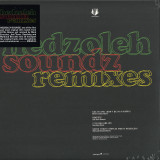
After reissuing Hedzoleh by Hedzoleh in 2022, a collaborative effort by Meakusma and Soundway, this new 12inch features remixes by Jimi Tenor, Mark Ernestus, Gavsborg and Waltraud Blischke, transporting and transfusing Hedzoleh's tracks into new spheres and circumstances. Hedzoleh Soundz were one of the first and most original ‘Afro’ bands from 1970s Ghana, playing an unusual mix of traditional music and western rock as part of the West African Highlife scene. The music for the Hedzoleh album was used by legendary South-African trumpeter Hugh Masekela as the backbone to his afrojazz classic, “Masekela – Introducing Hedzoleh Soundz”. The Hedzoleh Soundz Remixes 12inch features an eloquent, deep, deeply poppy even, dub by Mark Ernestus, Jimi Tenor taking the original Rekpete track into even more joyous territory, adding some subtly hypnagogic touches at the end, Gavsborg transforming Y Yes Baa Gee Wo into a beat-based drone of sorts, a toolin the right hands, and a majestic experimental twist by Waltraud Blischke, sampling one Hedzoleh track and one unreleased solo track by Sascha Todd, son of Hedzoleh bass player and vocalist Stanley Todd.
This record came about with the support of Ostbelgien.
‘Hardcore Jollies’ was Funkadelic’s ninth studio album and their debut on Warner Bros Records. Released in October 1976 and dedicated to “the guitar players of the world”, it showed Funkadelic was the heaviest black rock band since Jimi Hendrix’s Band Of Gypsies (even featuring Buddy Miles on one track). With lead guitarists Michael Hampton and Eddie Hazel dazzling, the personification of funk Bootsy Collins on bass, Bernie Worrell’s keyboard wizardry and many more, the album was helmed by the genius of George Clinton. Reaching no.12 on the US R&B chart, the album spawned singles ‘Comin’ Round The Mountain’ (US R&B No.54) and ‘Smokey’ (US R&B No.96) and a live remake of 1973’s ‘Cosmic Slop’ from the album of the same name. Recorded during rehearsals for 1976’s P-Funk Earth Tour, this version features a vocal introduction dropped from the 1973 studio cut. Over 45 years since its original release, ‘Hardcore Jollies’ is among Funkadelic and George Clinton’s best-ever albums and remains a masterful example of their creative genius. FUNKADELIC Masterminded by the larger-than-life figure of George Clinton, Funkadelic was a key component of his influential P-Funk empire. Funkadelic’s unique combination of Rock, Psychedelia, R&B & Soul led to the band crossing over to the pop mainstream & gaining a vast international following, becoming one of the most important & influential groups in music. On 6 May 1997, Parliament / Funkadelic were inducted into the Rock & Roll Hall Of Fame by Prince. To commemorate six decades of thrilling & delighting fans, George Clinton returned to the stage in 2022 for a series of concerts. To celebrate, Charly have reissued Funkadelic’s classic four albums ‘Hardcore Jollies’; ‘One Nation Under A Groove’; ‘Uncle Jam Wants You’; & ‘The Electric Spanking Of War Babies’ (originally released by Warner Bros during a golden period for the band between 1976-1981). Each album will be available as deluxe gatefold Digi-Sleeve CDs in PVC wallets + obi-strip & facsimile-edition gatefold LPs on 180-gram black vinyl & limited edition 180-gram coloured vinyl + 1970s-style obi-strip in a protective PVC sleeve. “They played a HUGE role in creating the future of music.” PRINCE
Trikk’s striking debut album Fauna & Flora cultivates a sense of scale, character and broad-minded musicianship across ten genre-fusing tracks. Just as its namesake spans the vast spectrum of life on Earth, so this expansive document draws from a diverse sound palette that jumps from widescreen psychedelia and industrial-crusted pop to baile funk and foreboding techno.
Partly descending from the club-focussed fare with which Trikk made his name, he also reaches for art-rock, punk and post-punk to expand on his electronic foundations.
“I wanted to create that feeling where there are these rays of light and total darkness, it’s a game
The new batch from the bottomless edit archives of Danny Krivit is an uptempo, guitar-heavy excursion into two cuts of danceable rock from opposite sides of a decade.
“Marbles” originally came out late in 1970, the result of a collaboration between the fiery British guitarist John McLaughlin and drummer Buddy Miles. Miles was hot off his time with Jimi Hendrix, and producer Alan Douglas, who’d been instrumental in putting together the Band of Gypsys group, attempted another crossover combination with a brand new, blazing guitar god. Also on the date was Larry Young, an organ player best known for his expansive jazzy albums on Blue Note, and several veterans of Buddy Miles’ funk-rock combos. The resulting mixture produced in “Marbles” a powerful, driving rhythm anchoring an addictive riff that steamrolls through the cut in a fashion not unlike the motorik sound of Velvet Underground or Can. Mr. K’s edit leans heavily on the drums, naturally, with a long, tailor-made intro and a mesmerizing focus on the main riff, extending things well past the seven-minute mark.
Ten years later, the world of music was in an entirely different place but a good guitar riff coupled with a driving beat was still powerful currency on the dancefloor. This time, the group was Scottish new wave-punk group APB, whose single “Shoot You Down” had garnered unexpected peak time play in cutting edge NYC hotspots Danceteria, the Peppermint Lounge, the Ritz and the Mudd Club. “Shoot You Down” combines the urgency of the Clash with the free for all vibe that characterized the downtown scene (and throws in a chant borrowed from P-Funk for good measure). Mr. K has created a long instrumental opening that leads into the vocals, giving the tightly-wound 7-inch single a proper extended 12-inch treatment it deserved but never had before.
The sound is crisply remastered for club play, and stretched over the breadth of a 12-inch single. Both of these tracks are appearing on the long-format player for the first time.
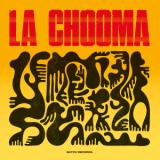
Psychedelic dub, Afro-Latin rhythms and cosmic grooves come together on La Chooma’s self-titled debut for Batov Records. Drawing on Moroccan Gnawa, Colombian cumbia, Afrobeat, Jamaica dub & roots, and cosmic jazz, the six-piece ensemble create deep, hypnotic music rooted in global traditions and shaped for contemporary dancefloors.
Having already captivated local audiences with their hypnotic, organic live performances, La Chooma – now a six-piece ensemble – have been steadily building an international following. Initial singles “Magic Plant” and “Huachuma” earned support from tastemakers including BBC Radio 6 Music’s Deb Grant and Tom Ravenscroft.
“Magic Plant” distills the band’s signature blend of hypnotic grooves, lush percussion and woozy synths, like Jimi Tenor lost in the Colombian Amazon. A dreamlike, dub-infused trip driven by organic rhythm and cosmic textures. “Huachuma” picks up the thread, fusing Afrobeat percussion, swirling basslines and psychedelic flourishes into a hallucinogenic jam made for a tropical dancefloor.