blickwinkel welcomes composer and multi-instrumentalist Francis Plagne to the label with a reissue of Asleep in a beached boat, an album that was initially released on his own Mould/Mouse Museum label in 2021 on cassette. The album was mostly given away to friends but now gets a wider release through a limited vinyl and digital edition.
Gentle melodies set an airy atmosphere and are intertwined with tensive dialogs between rhythms and textures coming from a wide array of acoustic and electronic instruments. Stylistically somewhere in between his Rural Objects (Black Truffle) and Udge (Horn of Plenty), on the eleven tracks on this album we hear Plagne in his most playful way to date.
Francis Plagne is a musician from Melbourne, Australia whose work swings between songwriting and a variety of other approaches, including group improvisation, instrumental abstraction, and domestic musique concrète. He performed live regularly since 2005 and has released recordings on labels such as Black Truffle, Horn of Plenty, Kye Records, Penultimate Press and his own Mould/Mouse Museum micro-label. In addition to performing his own work either solo or with a band, he has performed and recorded in improvised and other arrangements with Tetuzi Akiyama, Oren Ambarchi, Andrew Chalk, Crys Cole, James Rushford, and Joe Talia, among others.
Search:jo di
Peter Rehberg is known for his pioneering electronic work with computer software which over time evolved into a modular set up alongside running MEGO and then Editions Mego labels.
Rehberg was a prolific collaborator, with other musicians and with contemporary dance and theatre productions, most notably with French artist and choreographer, Gisèle Vienne with whom he created a series of soundtracks from Showroomdummies, released under the name DACM in 2002 (Showroomdummies MEGO 056), to Crowd in 2017. A collection of Rehberg’s solo works for Vienne was released in 2008 (Work for GV 2004-2008 EMEGO 092). The outfit KTL, with Stephen O’Malley, was initiated by Gisèle Vienne for her work Kindertotenlieder and subsequently made a series of soundtracks for Vienne’s works branching off into a prolific series of live shows. The work Rehberg did for theatre and performance teased out aspects of his practice one may not have encountered in his own solo work as PITA or that of collaborations with other musicians.
Editions Mego is proud to present a previously unreleased theatre soundtrack made for Icelandic choreographer Margrét Sara Guðjónsdóttir, whom Rehberg had a decade long collaboration with until his untimely passing in 2021. The original composition for Liminal States was created by Rehberg for the performance Pervasive Magnetic Stimuli in 2018 and then revisited as a catalyst for the concepts behind Liminal States. This work is based on an ongoing artistic research conducted by the choreographer into altered states of perception through phenomenological embodiment. It is the last in a trilogy dealing with the notion of larger forces that act on us beyond our conscious mind. The trilogy consists of Pervasive Magnetic Stimuli (2018), Boundless Ominous Fields (2024) and now Liminal States (2024).
Rehberg's score for Liminal States is a vast canvas of spectral ambience at once tangible and unfathomable in its constantly shapeshifting lysergic dread. The results are a psychological journey through the mental effects of sound on space and subsequently the mind. The first part presents cascading waves of shimmering electronics laying the groundwork for the second part where the psychological illusion splinters into all manner of sonic effects taking the listener on a deep mental voyage. If references are witnessed the late period long form hallucinatory works of Coil, such as Time Machines and Constant shallowness leads to evil, are amongst a similar mind message delivered here. Unlike any other release in Rehberg’s output Liminal States is a single long form work which, despite the form, retains Rehberg’s idiosyncratic sound vision.
Guðjónsdóttir and Rehberg’s collaboration blurs that relationship into a greater force which truly enables the theme of liminal states to unfold in a brave new fashion. Rich in timbre and sonic invention this is powerful work easily holding its own outside of the intended performance whilst still complimenting the missions statement entirely. This profound collaboration has the cumulative effect where the concept and soundtrack are one and may be one of the strongest works in the entire Rehberg canon.
Swan Song
The vinyl LP at the heart of this éthiopiques 31 tracks 2 to 11 was one of the very last vinyl records ever released in Ethiopia. But above all it represents, we felt, the absolute masterpiece of the Ethiopian Groove – the Swan Song of Swinging Addis. The album leaves a clear idea for posterity of the level of sophistication and mastery that modern Ethiopian music had achieved, before being crushed under the Stalino-military heel of the Derg – as the bloody revolution that was unfolding came to be called.
Ethiopia1976.
The Revolution that broke out in February 1974 rolled on in a ruthless march. The whole of Ethiopian society was utterly stunned. The bouquets of flowers handed joyfully to the first tanks of the coup d'état were to wilt very rapidly. From September 1976 to February 1978, 18 months of Red Terror (the name given by the junta itself) spilled blood throughout the country. This fratricidal conflict took its heaviest toll among students and youth. The shift from feudalism to a cruel and primitive Stalinism left the country's citizens deeply traumatised, and snuffed out any pretence of activism, whatever the sector of society. This ice age was to last for seventeen long years.
ሙሉቀን፡መለሰ Mulukèn Mellèssè Muluqän Mälläsä
It was three tracks by Muluken that served as the opener for éthiopiques-1 more than 25 years ago. Seven more tracks appeared on éthiopiques-3 and 13, all accompanied by The Equators, which was soon to become the Dahlak Band.
The first track, Hédètch alu, also the very first piece that Muluken ever recorded, left audiences both unsettled and amazed. Reflecting the singer's extremely young age (he was just 17 at the time), this angelic voice mystified many, who thought they were in fact listening to a feminine voice. He was not yet 22 when he released his last vinyl record in 1976 with Kaifa Records (KF 39LP), one of the very last to be issued in Ethiopia, before the cassette tape became the dominant medium for music distribution – and before the new revolutionary regime put a stop to all independent musical life, via an unspeakable barrage of prohibitions and other persecutions.
Mulu qèn, literally, “A well filled day”. This tender maternal intention wasn't enough to ward off the cruelty of fate. His mother's premature death drove Muluken to leave his native Godjam, in northeast Ethiopia, to live with an uncle in Addis Ababa. Born Muluken Tamer, he took his uncle's last name – Mèllèssè.
The spelling Muluken appeared in his administrative records. Transcription of Amharic to the Latin alphabet, both in Ethiopia and for scholars, gives rise to controversies and quibbles that can never be neatly settled. French allows for a closer approximation of the original pronunciation, thanks to its battery of accent marks, confusing as they may be to anglophones.
Between rather accommodating administrative record-keepers and the various versions that pop up in interviews given by the artist, Muluken's year of birth oscillates between 1953 and 1955…
1954? One thing is certain: the artist's talent made itself known very early indeed, because he got his start in 1966-67, at the age of 13 or 14. Photos from the period attest to his extreme youth. It's a strange sort of initiation for a very young teenager to become a sensation in the heart of Addis's nightlife at the time, Woubé Bèrèha – the Wilds of Woubé. And what's more, in the club of the Queen of the Night, the Godjamé Assègèdètch Alamrèw herself, the very same that was portrayed by Sebhat Guèbrè-Egziabhér in his novel-memoir Les Nuits d’Addis Abeba2… The legendary female club owner who is remembered to this day by the capital's ageing boomers.
Muluken first tried his hand at the drums, before he grabbed the microphone. He emigrated briefly to the Zula Club, across the street from the old Addis Post Office, one of the ground-breaking bars of the burgeoning musical scene, before joining the Second Police Band in 1968, for around three years. He spent a few months with the short-lived Blue Nile Band founded by saxophonist Besrat Tammènè. As the musical scene grew increasingly successful, and pulled slowly but decisively away from its institutional ties, Muluken released his first 45rpm single in February 1972 (Amha Records AE 440). It was included in two LP Ethiopian Hit Parade compilation albums in September of the same year. All in all, Muluken released eight two-track 45s and the same number of original cassette tapes between February 1972 and 1984, the year that he departed for permanent exile in the USA. After converting to Pentecostalism in 1980, Muluken gradually abandoned all secular musical activity. In 1985, at the end of a concert in Philadelphia, he decided to quit concerts and recording for good. Mèlakè Gèbré, the historic bass player from the Walias band who was playing with him that night, recalls that everything appeared so irredeemably diabolical in Muluken's eyes, that it was to be the end of his contribution to Ethiopian Groove.
The end of the story, the beginning of a legend.
Dahlak Band, forgotten by History
Aside from his personal history and vocal talents, it must be remembered that Muluken Mèllèssè was one of the biggest names in the musical innovations that marked the end of the imperial period. These éthiopiques aim to convince those who are just discovering this hidden gem... As for Ethiopians themselves, they are to this day captivated by this singular and atypical figure in the Abyssinian pop landscape – even though he withdrew from public life some 40 years ago. Incorrigible devotees of poetic twists, of more or less hidden meanings, Ethiopians appreciate above all the care Muluken took in choosing his lyrics and the writers who penned them, such as Feqerte Haylou, Alemtsehay Wodajo and, here, Shewalul Mengistu (1944-1977). Love songs, written by women, a far cry from the conventional drivel that pleases sappy sentimentalists.
Muluken is equally acclaimed for his perfectionism when it came to music, the opposite of the overly casual approach that is all too common. He remained a faithful partner of musicians who came from a lineage that borrowed from several inventive and pioneering bands (Venus, Equators, Dahlak). Amongst them were certain artists who began their musical lives with Nersès Nalbandian at the Haile Sellassie Theatre and who come of age in around 1973 – at just the wrong time, you might say. Among them were the pillars Shimèlis Bèyènè (trumpet), Dawit Yifru (keyboards) and Tilayé Gèbrè (sax & flute). Most notably Tilayé Gèbrè, certainly one of the most important musicians, composers and arrangers of his generation, of the end of the imperial era, and of the early years of the Derg.
It was only in 1981 that a miraculous opportunity arose for Tilayé to escape the Stalinist paradise of the dictator Menguistou Haylè-Maryam. Once again it was Amha Eshèté (1946-2021) who provided a solution. The spirited and courageous producer, who had been in exile in Washington since 1975, succeeded, thanks to his incredible perseverence, in bringing the Walias Band to the USA. It was, in fact an extended Walias Band comprising ten musicians3, six of whom chose to slip away after a few concerts and the recording of an LP (The Best of Walias, WRS 100). Tilayé Gèbrè was one of these. He has been living in the USA ever since. There he joined the then-nascent Ethiopian diaspora, which lived largely unto itself, and was making only very modest headway in the American musical market. It seems unfair that Tilayé Gèbrè and the Dahlak Band were not able to benefit earlier from the public recognition that they do deserve.
A similar draining away of the top-rate talents would lead to the reorganization of the major groups of the “Derg Time”. The remaining artists spread themselves around between Ibex Band (renamed Roha Band), Ethio Star Band and a remodeled Walias Band. That spelled the end of the Dahlak Band.
With this record, produced by the essential Ali Abdella Kaifa a.k.a. Ali Tango, we can appreciate everything that the Derg not only destroyed, but also prevented from flourishing. This gem of Ethiopian-style afrobeat came out in 1976 (and, by way of a parenthesis, before the FESTAC 1977 in Lagos, which was attended by an impressive delegation of Ethiopian musicians — although Fela was already personna non grata in his own country). Despite everything that might distinguish this ethio-groove from Fela’s music – no colonial axe to grind, no question of political confrontation with the authorities, no claims to negritude or Africanism for the Ethiopian musicians, and less extrovertion! –, this LP fits beautifully into the saga of intense and electrified soul of the new “African” groove that Fela and Manu Dibango embodied so well from that point onwards.
In restoring this record to its place in the afrobeat epic, it can be seen that, if nothing else, the timeline bestows a legitimate pedigree and a historical primacy to works that had no international impact when they were originally released.
Warning! Masterpiece!
Ruffiani is the new joint venture between Sam Ruffillo and Fimiani – a playground for edits, sample reworks and cheeky dancefloor tricks. The first release brings together four cuts that go from classic sample-based grooves to refined eighties-inspired proto-house vibes, up to a shamelessly catchy tune built around a very familiar Italian hook… and a final club weapon made to blow the room apart.
Vinyl reissue of the most acclaimed album by Brazil's legendary female vocal quartet, this LP captures the group at their creative peak, featuring sophisticated arrangements by Edu Lobo and Luiz Eça (Tamba Trio), A post-bossa gem filled with stunning vocal harmonies. Originally released in 1972 on the Odeon label, Quarteto Em Cy stands as a high-water mark in the group's prolific discography-and a hidden gem for collectors of Brazilian vinyl. Known for their intricate vocal harmonies and deep roots in the bossa nova movement, the quartet ventures into post-bossa territory here, where sophistication meets groove in all the right ways. Arrangements by Edu Lobo and Luiz Eça (of Tamba Trio) lend the album a richly layered sound-elegant, jazzy, and emotionally resonant-while the group's harmonies remain as mesmerizing as ever. It's a masterclass in vocal interplay and tasteful orchestration, with an unmistakable Brazilian soul running through every track. Highlights include their stunning interpretation of Milton Nascimento's 'Tudo Que Você Podia Ser,' along with deep cuts like 'Quando o Carnaval Chegar,' 'Canto de Obá,' and 'Cantoria.' These recordings capture a moment when the group, already respected collaborators of Vinícius de Moraes, Jobim, and Chico Buarque, hit a new creative stride. A MPB landmark and long out of print, often cited as QEC finest work, this self-titled LP has become a sought-after piece among collectors of MPB, bossa, and 70s harmony pop. For those drawn to groups like The Free Design or The Mamas & The Papas-but with a distinctly Brazilian elegance-this album offers a rare and rewarding listen. Reissue on 180g vinyl.
Hanagasumi, or "flowering haze," is a Japanese term that poetically describes the smoky, blurred appearance of numerous cherry blossoms visible from a distance. This image is often compared to a floral mist or fog. Through this word, the Japanese convey the visual effect created by a large number of flowers forming a soft, diffused, and ethereal picture. Such a description beautifully resonates with the musical palette of the new release. Introducing the long-awaited album Agera by the mysterious musician Jon'Smu. The record combines elements of classic deep house and ambient music, creating a unique atmosphere and the author's distinctive signature. The album features 8 stunning tracks, carefully selected and compiled into a cohesive story. A few words from the author: "This album, spanning a vast timeline of creativity, is about how important and interesting it is to be in motion and in constant search of something new. The recordings presented cover a significant interval of my musical journey through the diversity of genres and sound experimentation. At the core of the music lies Nature - it is the primary source of inspiration for me, and Action is a key moment of life for everything in nature. A wide range of instruments was used in the recording process, whether fully digital compositions or those featuring vintage analog instruments. I hope my love for an immense variety of genres is reflected in this album and brings joy to the listeners."
Alchemy: An Index of Possibilities ist das zweite Soloalbum von David Sylvian, entstanden zwischen Brilliant Trees und Gone to Earth. Das Werk vereint verschiedene Projekte zu einem atmosphärischen Klangkosmos, in dem Sylvians charakteristische Stimme auf experimentelle Soundscapes trifft.
Für diese Edition wurde die jüngste Remaster-Version verwendet. Sie erscheint als Corona Gold Opaque Red Vinyl – ein Sammlerstück für Fans von Sylvian und Liebhaber außergewöhnlicher Pressungen.
- A1: 100%
- A2: Hete's Johnny (Original Mix)
- A3: Down-Low
- B4: Rock Diz
- B5: The Prophecy (Original Mix)
- B6: Do My Thing (Extended Mix)
Seit 35 Jahren sind Deepack ein treibender Motor in der Hardstyle-Szene. Was in den frühen Pioniertagen des Genres begann, entwickelte sich zu einer Karriere voller Meilensteine und unvergesslicher Momente. In diesem Jahr feierten sie ihr Jubiläum mit speziellen »35 Years of Madness«-Sets auf Festivals wie »Defqon. 1«, »Decibel Outdoor« und »Mysteryland«.
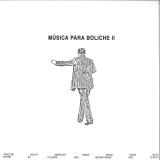
Our journey through “Música Para Boliche” literally “music for the club” from Argentina’s underground scene doesn’t stop. We dug even deeper, right into the ’90s.
Four tracks plus one, all visionary even at the time of their release. Once again, you can feel the magical touch of the Italian and Argentine DJs who worked on it.
Jack Bulgaro did his part, bringing home an instrumental unreleased version of Podés Seguir Sin Arriesgarte, taken from the album Undermalabia, produced by El Signo, pioneers of electronic music in Latin America.
The version will be officially released for the first time, vinyl only, by Maledetta Discoteca Records.
- A1: Intro
- A2: My Cosmos Is Mine
- A3: Wagging Tongue
- A4: Walking In My Shoes
- A5: It’s No Good
- A6: Sister Of Night
- A7: In Your Room
- B1: Everything Counts
- B2: Precious
- B3: Speak To Me
- B4: Home
- B5: Soul With Me
- B6: Ghosts Again
- B7: I Feel You
- C1: A Pain That I’m Used To
- C2: World In My Eyes
- C3: Wrong
- C4: Stripped
- C5: John The Revelator
- C6: Enjoy The Silence
- C7: Waiting For The Night
- D1: Just Can’t Get Enough
- D2: Never Let Me Down Again
- D3: Personal Jesus
- D6: Give Yourself To Me (Bonustrack Aus Den „Memento Mori“-Sessions )
- D7: In The End (Bonustrack Aus Den „Memento Mori“-Sessions ))
- D4: Survive (Bonustrack Aus Den „Memento Mori“-Sessions )
- D5: Life 2 0 (Bonustrack Aus Den „Memento Mori“-Sessions )
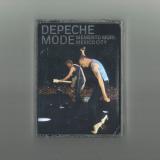
»Memento Mori: Mexico City« ist eine über zweistündige Liveaufnahme von Depeche Modes drei ausverkauften Konzerten im legendären Foro Sol Stadion in Mexiko-Stadt aus dem September 2023 und wird durch vier bisher unveröffentlichte Studioaufnahmen von den »Memento Mori«-Sessions ergänzt.
Die CD-Konfiguration enthält das Livealbum und Bonustracks auf zwei CDs sowie ein 16-seitiges Booklet mit Livefotos von den Shows.
Dieses Livealbum erscheint parallel zu Depeche Modes neuem Film »Depeche Mode: M«, der während der Shows in Mexiko-Stadt aufgenommen wurde. Der Film wurde konzipiert und umgesetzt vom vielfach ausgezeichneten mexikanischen Filmemacher und Regisseur Fernando Frías. Während »Depeche Mode: M« packende Konzertmitschnitte mit stimmungsvollen Nebeneindrücken und ausgesuchtem Archivmaterial vereint, wird gleichzeitig die tiefgreifende Verbindung zwischen Musik und Vergänglichkeit innerhalb der mexikanischen Tradition veranschaulicht. Die Blu-ray- und DVD-Konfiguration von »Depeche Mode: M« enthält zusätzlich das schon erwähnte Livealbum »Memento Mori: Mexico City« sowie einen abendfüllenden Konzertfilm.
KEG announce new EP Girders set for release September 2nd on Alcopop! Records/BMG. The band also share the frenzied and whip-smart new single Kids. The band, who have been hotly tipped across the board for 2022, will also play their debut UK headline tour plus festivals which include Green Man, End Of The Road, Latitude and more. Kids strides into the deep lineage of British art-punk songwriting that is both self-referencing and outward-facing - while being consistently innovative. Few singles manage to take aim at both the restaurant chain Itsu and the comedian Michael McIntyre, but KEG somehow pull it off.
Following a widely successful debut single release Heyshaw in the summer of 2021, KEG saw major support from publications such as NME, DIY, Dork, So Young, Clash etc. Leading into their debut EP Assembly, released October 2021, KEG toured with contemporaries such as Squid and Talk Show.
KEG are a seven piece. Albert (vocals), Joel (bass) & Will (synth) grew up together around the seaside Yorkshire town of Bridlington; and like many artists growing up in removed quarters of the country, they shared a yearning to leave. Spreading to different parts of the country after leaving school, they found their bandmates in their respective cities and found one another once again on the southern shores of Brighton.
Frank (guitar), whose background resides mostly in hip-hop, afforded a unique pulse with a guitar sound which is manic, discordant but firm. Jules (guitar) whose songwriting sensibilities come from a love of cadence and craft of beautiful soul ballads, imbued the band with his structured sense of composition. Both Charlie (trombone & shell) and Johnny (drums) come from classically trained Jazz backgrounds.
The announcement will receive digital marketing support and will launch with new tour dates announced (below) with pre-order for presale access available.
2LP, 180gm vinyl, “Impex Style” Heavy Duty Outer Sleeve w/Flap, Sealed with Analogue October Records Sticker, Hype Sticker
Abbey Road Half speed master from the original tapes
380 gsm Invercote G Sleeve 300 gsm 12 page insert
4.5/5 RECOMMENDED / Editors Choice in Jazzwise magazine
‘And much as audiophiles will savour the tech achievement of this re-issue, the point is the Kaleidoscope of Rainbows
remains joyous, optimistic music that embraces difference and divergence. It needs celebrating not as a revived fossil but as a timeless artwork. Enjoy. And enjoy again’
RIYL Ian Carr / Nucleus / Weather Report / Clips and Art: https://we.tl/t-PfY9QXSjlt
NEIL ARDLEY – KALEIDOSCOPE OF RAINBOWS The Definitive 2LP Reissue of a Landmark in British Jazz Fusion
Analogue October Records proudly presents the long-awaited reissue of Kaleidoscope of Rainbows, Neil Ardley’s 1976 masterpiece, originally released on Gull Records. Produced by Neil Ardley and recorded at London’s famed Morgan Studios, the sessions were engineered and mixed by Martin Levan, capturing one of the most ambitious and beloved works in British jazz. Following the acclaimed reissues of Courtney Pine’s Journey to the Urge Within (AOR-001-ST) and Neil Ardley’s Harmony of the Spheres (AOR-002-ST)—both praised by the audiophile press including The Tracking Angle—this third release confirms Analogue October as one of today’s most meticulous and exciting reissue labels.
A Suite of Sound and Colour
Commissioned for the 1975 Camden Jazz Festival, Kaleidoscope of Rainbows is structured as a seven-part suite, each movement reflecting a colour of the spectrum. Ardley’s composition weaves together jazz improvisation, progressive rock energy, and orchestral elegance in one of the most imaginative British jazz recordings of the era. Featuring Ian Carr, Barbara Thompson, Tony Coe, Trevor Tomkins, and Geoff Castle, the album is a who’s who of the UK’s vibrant 1970s jazz scene.
Cut at Abbey Road, Pressed at Record Industry
For this definitive edition, Analogue October worked directly from the original Gull master tapes. Mastering was entrusted to Miles Showell at Abbey Road Studios, using his renowned half-speed process to extract every detail and dynamic from Ardley’s score. To give the music the headroom it deserves, the reissue has been expanded to a deluxe 2LP set, pressed on the highest-quality vinyl at Record Industry in Haarlem, Netherlands. The result is a presentation that finally does justice to the scope and brilliance of Ardley’s vision.
Deluxe Package – Restored from the Source
The artwork has been meticulously restored from the original film elements, ensuring a sleeve of unmatched vibrancy and fidelity. Inside, a 12-page booklet printed on heavyweight card features an in-depth essay on Neil Ardley and the making of Kaleidoscope of Rainbows, written by Jazzwise magazine editor Mike Flynn, alongside rare photographs from the period.
Curated and Produced by Craig Crane
As with every Analogue October release, Kaleidoscope of Rainbows has been curated and produced by label founder Craig Crane with a collector’s eye for detail and a deep respect for the music’s legacy. This reissue is not only the definitive vinyl edition of one of the great British jazz fusion albums—it also continues the label’s mission to restore and celebrate the most vital recordings of the era.
Neil Ardley’s Kaleidoscope of Rainbows—vivid, expansive, and timeless—returns as the essential edition for audiophiles and jazz lovers alike.
Retail-ready product description (short form):
Produced by Neil Ardley and recorded in 1976 at London’s Morgan Studios, engineered and mixed by Martin Levan, Kaleidoscope of Rainbows is a cornerstone of British jazz fusion. This definitive 2LP reissue, mastered at Abbey Road by Miles Showell from the original Gull master tapes and pressed at Record Industry (NL), finally gives the music the dynamic headroom it deserves. The deluxe edition includes restored artwork and a 12-page booklet featuring an in-depth essay by Jazzwise editor Mike Flynn.
Queer communities have long transformed parties into something powerful: spaces where care flourishes, injustice gets challenged, and new worlds are danced into being. But today, DJs command huge fees while behind-the-scenes workers earn below minimum wage. Corporations profit from our culture while communities that created these spaces are displaced. As venues shut and workers burn out, it’s clear that something has gone deeply wrong.
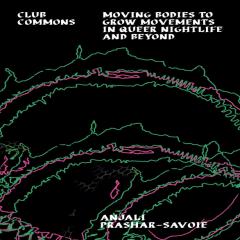
Club Commons: Moving Bodies to Grow Movements in Queer Nightlife & Beyond by Anjali Prashar-Savoie takes you inside hidden stories of resistance and reinvention. We meet the people reshaping nightlife from below: abolitionist security teams creating safety without police, sober raves doubling as mental health support, radical childcare at parties, venues becoming worker cooperatives, and free party crews reclaiming public space. Through their work, we see how party-throwing skills build movements, how refusing to play changes everything, and why protecting queer nightlife means transforming who owns it.
Quotes
“When Anjali shines her perceptive light on dancefloor culture, everything is better illuminated. I can’t wait to read this book. It’s one we need.” Emma Warren (author of Dance Your Way Home/Up the Youth Club)
“Anjali’s one of the most exciting and insightful voices writing about dance music today, bringing fresh perspectives, intellectual rigour and emotive power to a conversation that’s too often homogenous, superficial or cynically commercial. Club Commons promises to be an essential and overdue book: a chance to reexamine the queer history of club culture, celebrate and critique its present, and map out radical possibilities for its future.” Ed Gillett (author of Party Lines)
“Beautifully written and unique, Anjali Prashar-Savoie’s behind-the-scenes journey through queer nightlife is as thorough as it is fascinating. Documenting a world that commercial interests are rapidly destroying, Club Commons is proof that queer culture holds the key to a better future for the dancefloor and beyond.” Professor Sam Parsley (author of Minor Keys, coach, DJ and founder of In the Key, a directory and platform championing the careers of women, trans and non-binary electronic music producers)
“Club Commons: Moving Bodies to Grow Movements in Queer Nightlife & Beyond is a vital reminder of how important the dance floor is to connect, unfurl and envision new futures. The text highlights the historic and existing care work entangled with the club space, particularly in providing temporary sites of refuge and embodied joy for Black and LGBTQIA+ communities. This is juxtaposed with research on the corporate and carceral commodification of nightlife in recent years, which exposes the false premise that club spaces are always radical. This book affirms my belief that the non-commercial nightlife ecosystem is an essential part of our social change infrastructure, rather than a luxury. Club Commons is a call to action to reclaim this space on our own terms and revive the underground.” Camille Sapara Barton, (author of Tending Grief: An Embodied Guide to Being with Grief Individually and in Community)
Das Cover von ,Liquorice", dem dritten Album der australischen Indie-Pop-Künstlerin Hatchie, zeigt ein Nahporträt von Harriette Pilbeam, die lächelt, wobei ihr verschmierter roter Lippenstift auf die glorreiche Folge eines Kusses hindeutet. Das Bild wurde während eines spontanen Fotoshootings im Hinterhof mit einer einfachen Digitalkamera aufgenommen und fängt eine Erinnerung ein, die etwas unvollkommen ist und von Sehnsucht, Begierde und Bedauern geprägt ist Das Bild wurde während eines spontanen Fotoshootings im Hinterhof mit einer kleinen Digitalkamera aufgenommen und verkörpert ein Album, das rau und voller Freude ist und sich mit Themen wie Sehnsucht, Begierde und Reue befasst. Pilbeam begann ernsthaft mit dem Schreiben von ,Liquorice", während sie von 2022 bis 2023 in Brisbane lebte, und später in einem gemeinsamen Haus mit Agius in Melbourne, wo sie die Demos schließlich Mitte 2024 fertigstellte. Als Musikerin, die ihre Einflüsse bisher offen zur Schau gestellt hat, bemühte sich Pilbeam, von Grund auf neu zu schreiben, ohne bestimmte musikalische Einflüsse im Hinterkopf zu haben. Pilbeam begann ernsthaft mit dem Schreiben von ,Liquorice", während sie von 2022 bis 2023 in Brisbane lebte, und später in einem gemeinsamen Haus mit Agius in Melbourne, wo sie die Demos schließlich , und stellte die Demos schließlich Mitte 2024 fertig. Als Musikerin, die ihre Einflüsse bisher offen zur Schau gestellt hatte, bemühte sich Pilbeam, ganz von vorne anzufangen, ohne bestimmte musikalische Einflüsse im Hinterkopf zu haben, und ließ den Songs wochenlang Zeit zum Atmen, anstatt Ideen zu überstürzen. Sie fühlte sich von der melodischen Einfachheit ihrer frühen Songs angezogen und akzeptierte ihre musikalischen Unsicherheiten: ,Ich wollte meine Grenzen als Stärken betrachten, die meinen Stil prägen." Nachdem sie mit den Produzenten Jorge Elbrecht (Caroline Polachek, Japanese Breakfast, Sky Ferreira) und Dan Nigro (Olivia Rodrigo, Chappell Roan) an ,Giving the World Away" gearbeitet hatte, wollte Pilbeam ,Liquorice" mit einem einzigen Kollaborateur fertigstellen, idealerweise einem nicht-männlichen Produzenten, der auch sein eigenes Musikprojekt vorantreibt. Im September 2024 kehrten Pilbeam und Agius nach Los Angeles zurück, um mit Melina Duterte zusammenzuarbeiten, die unter dem Namen Jay Som Indie-Rock aufnimmt und an einer Reihe von Projekten mitgewirkt hat, darunter das mit einem Grammy ausgezeichnete Album ,The Record" von boygenius. ,Mein letztes Album ist sehr düster und introspektiv geworden, und das ist zwar ein Teil von mir, aber es gab noch eine ganz andere Seite, die ich nicht zum Ausdruck gebracht habe", sagt Pilbeam. ,Ich bin eine hoffnungslose Romantikerin und eine sehr alberne Person, manchmal sogar bis zum Äußersten." Die heute 32-jährige, verheiratete Pilbeam stellte fest, dass ,ewige Gefühle" der Sehnsucht und des Herzschmerzes schnell zurückkehrten, als sie über ihre Erfahrungen als jüngere Frau nachdachte. Gleichzeitig ließ sie ihre Vorliebe für tragische Liebesfilme einfließen, in denen die Figuren nicht unbedingt ein gemeinsames Happy End finden. Liquorice beschäftigt sich mit der Endlichkeit des Ewigen. Diese Songs fangen die überwältigenden, berauschenden und transformierenden Nebenwirkungen der Verliebtheit ein, auch wenn die gesamte Liebesgeschichte nur eine einzige magische Nacht dauert. Wie die reichhaltigen Aromen der gewundenen, titelgebenden Süßigkeit - süß, salzig und bitter in einem Bissen - bestätigt Liquorice, wie Sehnsucht und Besessenheit in der Selbstfindung einer jungen Frau miteinander verflochten sind.
- Thinking Of You
- Into The Blue
- Fly Away
- Payback
- Dime Feat. Cancamusa
- Perfect Strangers
- Time Will Tell
- I Don't Wanna Stay
- Play On
- Easy To Love
- The Fool
Aaron Frazer - der in Los Angeles lebende Sänger, Songwriter, Multi-Instrumentalist und Mitglied der gefeierten Gruppe Durand Jones & the Indications - lässt mit "Into the Blue" eine gewagte Mischung aus Soul, Psychedelia, Spaghetti-Western, Disco, Gospel und Hip-Hop auf sein hochgelobtes Debütalbum "Introducing_" aus dem Jahr 2021 folgen. "Into The Blue" repräsentiert die beeindruckende Bandbreite von Frazers klanglichen Talenten. "Es ist das klarste Porträt dessen, was ich als Künstler bin", sagt Frazer über sein zweites Solo-Album, auf dem er die unverwechselbare Falsettstimme und das klassische Songwriting beibehält, für das er bekannt ist, aber mit einer Hip Hop inspirierten Mentalität im Kern, die Genres und Produktionstechniken miteinander verwebt und "Into The Blue" somit fest im Hier und Jetzt verankert. "Into The Blue" ist das Ergebnis eines gebrochenen Herzens. Nach dem Ende einer langen Beziehung zog Frazer quer durchs Land von Brooklyn nach Los Angeles und begab sich auf eine Reise, die sich in den Themen des Albums widerspiegelt: Trauer, Einsamkeit und die Suche nach Heilung. "Into The Blue" enthält Momente mit überragenden Arrangements, die an David Axelrod und Ennio Morricone erinnern, wird aber durch die Rohheit von iPhone-Aufnahmen und One-Take-Vocals ausgeglichen. Als Co-Produzent für das Album konnte Frazer den Grammy-Gewinner Alex Goose gewinnen, der für seine Crate-Digging-Samples und die Zusammenarbeit mit Hip-Hop-Künstler*innen wie Freddie Gibbs, Madlib und Brockhampton bekannt ist. Frazer experimentierte auch zum ersten Mal mit Samples, die er aus unerwarteten Quellen wie der R&B-Gruppe Hi-Five aus den 90ern bezog. Und Obwohl "Into the Blue" aus Herzschmerz entstanden ist, hofft Frazer, dass es die Zuhörer*innen mit einem Gefühl des Optimismus zurücklässt. "Weißt du, man kann auch an einem Tag, an dem man trauert, lachen", sagt er, "es gibt keine Gipfel ohne Täler" - aber mit "Into The Blue" erreicht Aaron Frazer neue Höhen.
- A1: Dick Dale & His Del-Tones - Misirlou
- A2: The Coasters - Down In Mexico
- A3: Keith Mansfield - Funky Fanfare
- A4: The Tornadoes - Bustin' Surfboards
- A5: Nick Perito - The Green Leaves Of Summer
- A6: Dee Clark - Hey Little Girl
- A7: Zarah Leander - Davon Geht Die Welt Nicht Unter
- A8: Joe Tex - The Love You Save (May Be Your Own)
- B1: Link Wray And His Ray Men - Rumble
- B2: The 5 6.7.8'S - Woo Hoo
- B3: Annibale E I Cantori Moderni - Trinity (Titoli)
- B4: Charlie Feathers - Can't Hardly Stand It
- B5: David Hess - Now You're All Alone
- B6: Joe Tex - I Gotcha
- B7: Elvin Bishop - She Puts Me In The Mood
- B8: Jim Croce - I Got A Name
- B9: Johnny Cash - I Walk The Line
RANDOM COLOR VINYL[17,23 €]
Entdecken Sie eine Auswahl der kultigsten Songs aus Quentin Tarantinos Kultfilmen auf einer atemberaubenden Picture Disc Vinyl. Diese exklusive Zusammenstellung umfasst legendäre Künstler wie Dick Dale, Johnny Cash, The Coasters, The 5.6.7.8"s und viele mehr - und deckt Tarantinos gesamtes filmisches Universum von Pulp Fiction bis Once Upon a Time in Hollywood ab. Ein Sammlerstück voller Surf-Rock, Soul, Rockabilly und Retro-Vibes - genau so, wie Tarantino es liebt.
- New York Ripper
- Coffin Colony
- Island Of The Dead
- Depraved Unspeakable Acts
- Massive Cadaver Resurrection
- Undead Apocalypse
- Phantom Intrusions
- Burial Disturbance
- Lunatic Butcher
HOUSE BY THE CEMETARY, the 'supergroup' led by former MONSTROSITY and VILE frontman and current artwork artist Mike Hrubovcak and Rogga Johansson from PAGANIZER and RIBSPREADER are releasing their third full-length, "Disturbing The Cenotaph". Since the duo, completed by former THE PROJECT HATE drummer Thomas Ohlsson, originally picked up their moniker as an homage to the 1981 cult horror flick of the same name, it shouldn't come as a surprise they've once again paying tribute to director Lucio Fulci (1927-1996) in one of this album most lethal salvo, 'New York Ripper'. Elsewhere on this third album, other tracks like 'Undead Apocalypse' or 'Burial Disturbance' were inspired by other famous horror classics like "Night Of The Living Dead" and "The Texas Chainsaw Massacre", Hrubovcak has come up in his lyrics with his own tales of terror. Some are totally fictional like, 'Coffin Colony' about a "diseased homeless living in underground coffins who gets infected with rabies after eating sewer rats". Others, like 'Lunatic Butcher' are inspired by real-life events or, in that case, by the antics and vicious killings of Paul John Knowles, dubbed 'the Casanova killer'. Musically speaking, Johansson jokes about "every band saying that their new album is their best but that's actually true here eh eh! This album is HOUSE BY THE CEMETARY on steroids. The sound is broad and impious, the vocals are awesome and the heavy riffing interlaced with occasional melody makes an overall varied, fun and GORY listen!" Completed, like on 2024's "The Mortuary Hauntings", by a gruesome artwork courtesy Felipe Mora (whose nightmarish visions can already be seen on albums by CONSUMPTION, ACHERON or WOMBBATH) and mixed by Håkan Stuvemark from WOMBBATH, Disturbing The Cenotaph is one raw, in-your-face and eight songs packed death-metal-to-the-core album ready to chill you to the bone!
Mit Secret Love legt die Londoner Band Dry Cleaning ihr bislang reifstes Werk vor. Das dritte Studioalbum, produziert von Cate Le Bon, ist eine konzentrierte Momentaufnahme der besonderen Chemie zwischen Florence Shaw, Tom Dowse, Nick Buxton und Lewis Maynard. Aus intensiven Sessions in Peckham, Chicago, Dublin und schließlich im Black Box Studio in Frankreich entstand ein Werk, das Vertrauen und Verletzlichkeit ins Zentrum stellt - die Bande zwischen den vier Musiker*innen ebenso wie das fragile Verhältnis zwischen Nähe und Manipulation in der Gesellschaft. Musikalisch schlägt Secret Love eine Brücke zwischen den paranoiden Untertönen des frühen US-Punks, dem coolen Strut der Stones, Stoner-Rock, No-Wave-Experimenten und zarten, fast pastoralen Gitarrenfiguren. Die Stücke atmen gleichermaßen Schärfe und Verspieltheit, immer getragen von Shaws unverwechselbarem Sprechgesang, der präzise auf die dynamischen Soundlandschaften ihrer Band reagiert. Damit knüpft sie an eine Tradition von Spoken-Word-Künstlerinnen wie Laurie Anderson an, erweitert sie aber um eine ganz eigene Mischung aus Absurdität, Empfindsamkeit und lakonischem Humor. Die erste Single "Hit My Head All Day" zeigt exemplarisch, wie Secret Love gesellschaftliche Themen - etwa Desinformation und Einflussnahme - mit persönlicher Unsicherheit und existenzieller Fragilität verknüpft. Doch trotz aller Schwere bleibt das Album von einer spielerischen Offenheit geprägt: Ideen wurden ausprobiert, verworfen, neu zusammengesetzt - bis ein Sound entstand, der gleichzeitig roh, elegant und unerwartet warm klingt. Secret Love ist ein Album über das Vertrauen - in Freundschaften, in Musik, in sich selbst - und über die Risiken, die damit verbunden sind. Es markiert für Dry Cleaning den Schritt zu einer Band, die ihre avantgardistische Energie zu einem unverwechselbaren Ausdruck verdichtet hat.
- A1: Santa Marta
- A2: Le Jour Où Je N'aurai D'autre Désir Que De Partir
- A3: Não Me Convém (Ft. Dora Morelenbaum)
- A4: Les Veines Noires De Son Cou
- A5: Tegucigalpa 72
- B1: O Que É O Amor? (Ft. Joyce Moreno)
- B2: Gringolandia
- B3: I'll See You Soon (Ft. Rico Tk)
- B4: Dolce Vita
- B5: Lençóis De Chuva (Ft. Gabi Hartmann)
Hinter dem sorgefrei erscheinenden Titel Dolce Vita verbirgt sich eine dunklere, schmerzhafte Geschichte: es ist die der erzwungenen Flucht von Louis’ Großvater und dessen Familie vor der honduranischen Diktatur. Matute taucht unter dem ironisch gemeinten Motto Dolce Vita in die bewegte Geschichte Lateinamerikas ein, das unter der Herrschaft von Militärregimen und imperialistischen Großkonzernen, wie der United Fruit Company, jahrzehntelang litt.