"Can’t Stop Coming Around is The Shivas’ 10th full-length album. Recorded by the band themselves in their home studio ‘FFF’ in Portland, Oregon, and mixed by dear friend Collin Hegna (Brian Jonestown Massacre, Federale), Can’t Stop Coming Around showcases the many soundscapes that the Shivas traverse.
Psychedelia, garage, surf, girl group harmonies, and a punk ethos are all on display in this true to form full-length. Between reverb drenched vocals and catchy guitar hooks, Can’t Stop Coming Around encapsulates the emotions, hardwork and musicianship cultivated from almost two decades of rockin’ all over the world together.
Ranging from brooding and vulnerable to lively and maniacal - and every facet in between - Can’t Stop Coming Around comes from a place of honesty and certainty. It is certain that The Shivas will always be making music and it’s certain that they will always be pouring their honest selves into it. "
Jorge Velez returns to L.I.E.S. with his first effort since 2012's Hassan lp. Through this six track lp we see the ultra versatile Velez weave seamlessly through numerous strains of electronics.
From menacing drones to EBM influenced floor tracks to Sakamoto-esque melodic experiments, he creates an atmosphere equally suitable for home listening or adventurous club play. All of this very much reminding us of the days when Mute, Factory, Cherry Red, or Fetish Records were at their best.
* A classic roots instrumental from the late 1970s from legendary trombonist Vin Gordon, who played on numerous Studio One classics, as part of the in-house band Soul Vendors as well as countless sessions with Joe Gibbs, Lee Perry and many more.
* Vin played on Aswad’s classic `Warrior Charge’, which from that recording session, `Kojo Hoy’ was born.
* Featuring Aswad Riddim Section - Tony Gad on bass & keys, Angus Gaye on drums and “Bammie” Rose on flute.
* Previously released by Partial in 2015 on 10” (PRTL10005) which rapidly sold out. This issue features an extended dub version.
out of Stock
Last delivered 3 years ago available to reorder, subject to availability
This isn’t just a seminal album. It is an estuary. All the black rivers that would form Brazilian funk/hip-hop flow through it. Led by Paulista pianist Salvador Silva Filho – Dom Salvador – “Som, Sangue, e Raça” from 1971, one year after the explosion of Tim Maia on the scene, catalyzed the bossa nova and jazz background of its leader with the rhythm and blues of its members like saxophonist Oberdã Magalhães, nephew of samba-enredo master Silas de Oliveira and future leader of Banda Black Rio, who since the group Impacto 8 (which had, among others, Robertinho Silva on drums and Raul de Souza on trombone) had already been trying to reconcile MPB with Stevie Wonder and James Brown. Add to all this a mixture of samba, Nordestino accent, and even the black side of the Jovem Guarda represented by the authorial presence of Getúlio Cortes (older brother of Gerson King Combo, our James Brown “cover”) in ‘Hei! Você’. Alongside these elements and the presence of Rubão Sabino (bass), who still called himself ‘Rubens’, drummer Luis Carlos (another member of Black Rio), the record enlists the trumpet and flugelhorn of symphonic musician Darcy in place of the original Barrosinho (yet one more founder of Black Rio), who was traveling during the recording but would end up being a leading force of the band.
The album ‘Som, Sangue e raça’ paves the way for future generations of musicians and producers of the Carioca scene at the beginning of the 1970s. The lyrics that dealt with the question of race and the explosive fusion of samba, soul, jazz, and funk, elaborated by Dom Salvador and his troupe, Abolição, established the bases for the development of new sounds and tendencies in Brazilian music.
out of Stock
Last delivered 3 years ago available to reorder, subject to availability
Ten bad boy digi riddims from the myspace era by Copenhagen’s Maffi crew, dubbed out into 3D space by disrupt in 2024. Raw, minimalist CyberDancehall at its best, nostalgic and oddly futuristic at the same time, this album is quickly becoming RoboCop’s favorite playlist when going to work.
…………………………………………………………………
Maffi Promotions a.k.a. Maffi Boys come straight outta 1773 Kbh V, Copenhagen, Denmark. Originally founded in 1990 by the two homeboys, lazy body Moog and Junior the Rat, Maffi Promotions have been a steady producer of simple digital riddims for years. Hanging out in the streets of Hummel City Junior & Moog used to entertain their friends with the primitve riddims of the Maffi sound. Not knowing that they would do the exact same thing fifteen years later, they continued to believe that one day they would move up the ladder, break out of the underground and reach for the stars.
Now, after finally adopting a little sense of realism, the two homeboys have realised that stardom is nothing compared to spamming people on myspace. So the two stoners decided to get a couple of friends together and turn up the bass online. Together with their sound crew FIREHOUSE, Maffi deal nuff weed and gyals!
Maffi Boys are very dedicated to the art of playing Sensible World of Soccer, rolling weed joints with Manitou tobacco and keeping it real in a Vesterbro-style. So watch out! And don’t test! We’ll be putting up new riddims on a weekly basis. We have nuff things brewing – including a delicious chicken!
………………………………………………………………
Growing up in the streets of Hummel City, Vesterbro, MOOG learned the pleasures of sleeping late, playing Sensible World Of Soccer and picking up hot gyals at an early age. He has spent most of his life trying to master these crucial skills. Taking a break from the dog race, Moog is currently focused on reaching a higher understanding of reggae-science and weedology.
JUNIOR experienced the necessity of rolling well-made spliffs at an early age. Incorporating the aestethic heritage of Scandinavian design, he has spent most of his life perfectionizing this old and traditional art form. Junior is currently taking his ph.d. in digital reggae by buying crates of 80’s 7″ and selecting for his sound system Firehouse.
out of Stock
Last delivered 23 months ago available to reorder, subject to availability
An innovative and idiosyncratic pianist, Thelonious Monk has been hailed as one of Be-Bop’s founding figures, with unexpected melodic shifts and dramatic hesitation hallmarks of his work. Monk By Five is one of the lesser-known sessions recorded for Riverside in the late 1950s and is one worthy of a wider audience; it features the bright swing of the new ‘Jackie-ing’ and the more dissonant ‘Played Twice,’ alongside engaging revisits of ‘Straight No Chaser,’ ‘I Mean You’ and ‘Ask Me Now,’ the interplay between Monk, cornetist Thad Jones and saxophonist Charlie Rouse especially noteworthy. Definitely worth investigating.
Sumer Is Icumen In is Quentin Thirionet's (Dhavali Giri, Pairi Daeza) debut album. Still, his musical escapades are vast and varied, based almost entirely on improvisation and live recordings, of which he occasionally distributes tapes without further information. Elusive to categorization and identification, unwilling to fix his musical activity under a stable pseudonym, his projects have ranged from gypsy jazz guitar swings, French traditional songs from Auvergne, and various experimental collaborations. Increasingly closer to electronic instrumentation, he crafted what Belgian label KRAAK presents here as Maibaum, his first ever solo output. As the title goes, this may be a maypole on which his multicolored sonic visions spring about.
Former rope access worker and currently a farmer of organic greens, Thirionet lives up to these lines of work as a musician. He assembles precisely what seems like a subtle balance between high manmade structures and soft fertilized soils; a high voltage pylon placed in a biotic landscape. It's all an even blend, spontaneous and steady, but this contraption comes from profound considerations. "I chose these tracks among many others," says Quentin, "because I heard the melodies all the time in my mind, and because I cried while playing them without really understanding why."
Armed with nothing more than a blackbox, a sequencer, a freeze pedal, and a tape player, Thirionet orchestrates a vivid rite of polished futures. At times reminiscent of Hans-Joachim Roedelius' enveloping arrangements, Maibaum's ambiances rely on mild repetitive patterns subsequently textured by prickling sprouts, mechanic dislocations and revamps that stoke and brighten the stirring motions. Jim O'Rourke's I'm Happy and I'm Singing comes to mind in terms of its detailed and prismatic nature, but Sumer Is Incumen In has its particular narrative. It's a tale of regeneration, of spring's delicate procedures and allure, a celebration of gracious and fortunate junctions between nature and machinery.
The album unfolds like a massive engine being made flesh to drift along the ether of a sultry land. The terrain turns pleasant and fertile in the title track; the colors and melodies of May start to unravel. Chromatic columns rise and define the scenery's depth of field breeding a synesthetic stream between crystal lights and warbling organisms. Grande Albero Buono Magico Uoma's brisk kaleidoscopic arpeggios sound like scanning a tree's litmus foliage. Then Ciguri takes us back to the foggy swamp of the beginning but is suddenly lit by an insect’s labyrinthine roundabout. The Jeweled Grid is a poem Quanta Qualia's lustrous metallic voice recites as a report of the album's phenomena. "Shiny revelations jump out. Pearls of thought flicker about." Images from within that distill to swirl around among us. The thicket dissolves as the album concludes calmly in Le Concept De Chien N'aboie Pas. Swaying under sieved solar light, leaves and branches tingle until the winds grow weak. All the warm creatures gathered along the way, and all those who danced around the maypole's splendid equilibrium now withdraw, folding up small to foster rebirth once again.
Imagine a Latin remake of Back to the Future. The mad scientist is Arsenio Rodriguez (the godfather of salsa) and the young student who travels through time with him is Eblis Alvarez (Meridian Brothers). This album can only be described as the perfect soundtrack for that movie that never was.
After the massive buzz generated by his first solo album, Mentallogenic, Alex Figueira got back in the studio to work in a more collective fashion this time, carefully assembling the second album of his largest project to date, Conjunto Papa Upa; a team of 6 musicians, spanning 3 generations of some of the best talent in the Latin and avant-garde scenes.
In an era where tropical music is dominated by purely electronic and rhythmically uniform sounds, the ten songs encompassed in “Fruta Madura” (“Ripe Fruit”) wander through the most diverse tempos, rhythms, and motifs effortlessly. A real breath of fresh air that gracefully incorporates soul, funk, jazz, psychedelia, and electronics into a solid tropical, irresistibly polyrhythmic foundation, without ever succumbing to the many genre clichés.
The distinctive production and catchy songwriting of Figueira shine in a very distinctive light on this second full-length. Living up to his reputation (Miles Cleret, founder of Soundway Records, called him “one of the scene's truly authentic and eccentric producers”), he takes the opportunity to show he’s not afraid to keep walking his own path.
Taking the band for a wild ride through the traditions of Africa, America, and the Caribbean; contrasting them with a ridiculously wide plethora of vintage, contemporary, and futuristic sounds, and pivoting on the exuberant musicality displayed by his musicians; the result leaves no doubt: this album is destined to be considered a future classic of the exciting tropical psychedelic music of the 21st century.
Addressing the most diverse themes in this new collection of songs, things take on a much more mature tone, as the title clearly suggests.
The opening track “El segundo es más sabroso” (“The second one is tastier”) sets the tone in the most assertive way imaginable, with the band boldly declaring, through multiple metaphorical references (laid upon a crazy mix of Dominican merengue, Detroit techno, classic and free jazz, dub, and electro), that the bar will be set higher with this second album.
The remaining compositions touch upon the most diverse subjects, with a fair dose of humor, sarcasm, and postmodern “magic realism”. “El Algoritmo” (The Algorithm) is a parranda-cumbia hybrid (for lack of a specific term) about the omnipresence of technology in our lives. The sophisticated Latin soul of the titling track “Fruta Madura” makes a case for the beauty of the maturity process. Some key philosophical teachings of Marcus Aurelius (the role of causality, the impositions of “the logos” and the importance of self-control) get a twisted cumbia treatment on “Reos del Deseo” (Prisoners of Desire). “No le pongas Coca-Cola” (“Don’t put Coca Cola in it”) shows us the most satirical side of the band, accusing those who mix Coca Cola with Rum of committing "sacrilege", on a powerful base of Dem Bow (the grandfather of Reggaeton), intertwined with touches of soul, salsa, and Cuban comparsa.
"Háblame Claro" (“Talk to me clearly”) is a story of heartbreak that evokes in its first part the spirit of the erotic salsa of the 80s (a subgenre deeply despised by purists), and after an unexpected samba interlude, leads to the hardest salsa of the 70s (a subgenre adored by purists), to end up in the surprising form of pure Afro-Cuban ceremonial music.
“Tu mamá tenía razón” ("Your Mom Was Right") is an attempt to exalt the spirit of the Latin American soap opera in the key of “acid bachata”, to recount a real-life case, witnessed by the band on countless occasions: the partying woman who arrives at the show accompanied by her bitter husband, who obviously does not like to dance. A very cheeky song to talk about the very serious and pertinent topic of female empowerment.
“La misma vaina” (“The same thing”) with its indescribable blend of bantú, candomblé, and Mozambique rhythms with abstract synthesizers, is an ode to adventure in favor of the aversion to taking risks and seeking predictability.
“Amigas picadas” (“Salty friends”) is another humorous song recounting another real-life case witnessed by the band on countless occasions: a love encounter sabotaged by the girlfriend's friends, who all happen to fancy the same guy. A jazzy take on the ancient Dominican rhythm of pambiche (grandfather of merengue), with generous psychedelic touches, resembling the classy late 60s releases of Guadeloupe's legendary producer / label owner Henri Debs.
“Vinimos a hablar” (“We came to talk”) takes sarcasm to the highest level, to ridicule the absurdity (also experienced by the band firsthand) seen in live music venues where people pay a ticket to go and have conversations that could be carried out much better on any bar, where no band is playing. The music alternates between a delicate melody with loose, sparse percussion and a full-on, pumping Angolan semba, with a techno kick drum included; bringing things to an apotheotic grooving finale, where the peculiar swing of Venezuelan calypso from the Callao region is thrown on top of all the precedent elements; closing the album in the most uplifting, “end of the carnival parade” feel.
The artwork is a delicate and impactful oil painting by Colombian artist Kevin Simón Mancera, who has collaborated many times with the label before (“Maracas, tambourines and other hellish things” tape and the Lola’s Dice LP).
What the experts are saying:
“Alex (Figueira) dove into this work with a brutal cohesion between lyrics and synths. Timbre poetry, sound poetry (you name it). And that, superimposed on his always impeccable percussive base, confirms the title of “avant-garde visionary of our beautiful Latin music”".
EBLIS ALVAREZ (MERIDIAN BROTHERS)
“Papa Upa's infectious quirkiness is a balm against boredom. A mature album, but without an expiration date”.
GLADYS PALMERA
“Here there is a lot of strength, drum, cadence and psychedelia, lost dance rhythms, united in an intercontinental Latin/African/and Caribbean journey, a unique winning combination that we could consider the new “Ritmo Figueira”.
DISCODELIC
All songs written by Alex Figueira.
Arranged and performed by Conjunto Papa Upa.
Recorded, produced, mixed and mastered by Alex Figueira at Heat Too Hot, Amsterdam.
This feels deliciously fated. Musical soulmates, Cromby is the only person Sally C will go record shopping with. The duo minted their friendship back in 2016, not long after both migrated to Berlin. A friendship forged through shared dancefloors, long hours at the pair’s beloved Bikini Waxx and impromptu B2B sessions, they have a common passion for good times and serious digging. If you want a sense of the genesis of Sally’s label baby Big Saldo’s Chunkers, just listen to the cult-favourite ‘Big Saldo & Cromby Dusty Hip Haus Mix’ that’s lived on her Soundcloud since 2019.
Cromby knows a Chunker that’s for sure. His contribution to the label is elite. Rinsed by the pair all year, it’s supports also include Job Jobse and Bambounou. In January it highlighted Nachtiville, where it was played all weekend long and became an unofficial hype anthem of the festival. A fiercely hunted track I.D ever since, lock this in as one of those catchy Crombyclassics we all love and can’t stop playing (and singing). ‘Pump It’ is an atmospheric roller, a perfect cut for maintaining the energy after the hands-up vibes of ‘House Flava’. ‘Free’ features Cromby’s own vocal debut – “I didn’t realise at the time of writing how fitting the lyrics would be for our times unfortunately,” he shares. Driven by punchy purring bass, it brings plenty of rugged energy with 303 flourishes, while dreamy keys balance things nicely. One for the after-hours.
The EP is rounded out with the wicked hoover-led ‘Best Not Miss’, that transports us back to a steaming Trade dancefloor circa 1997 and is thrilling in every sense.
out of Stock
Last delivered 19 months ago available to reorder, subject to availability
JANEIN RELEASES FIRST ALBUM "VIRTUAL UNIVERSE"
Get ready for a journey like into the deep space as JANEIN drops his first album, "Virtual Universe." The Album takes you on an adventure, with each track marking a unique point in this exploration.
out of Stock
Last delivered 16 months ago available to reorder, subject to availability
British-Trinidadian poet/musician/author Anthony Joseph’s latest album was inspired by and echoes the fertile London scene. Anthony has surrounded himself with some of the best musicians on the local scene, including Jason Yarde, Shabaka Hutchings (Sons Of Kemet, The Comet Is Coming), Crispin Robinson (founder of the iconic acid jazz band Galliano,) and Rod Youngs (Gil Scott Heron’s drummer). Operating as a dedication to poetic ancestors and a coming together of musical generations, ‘The Rich are Only Defeated When Running for their Lives’ is also an almighty jam. Recorded live in August 2020, it shows off the prowess of a team of master musicians from Paris and London. Jason Yarde, who also produced Joseph’s 2018 album ‘People of the Sun’ is credited as producer/ composer/arranger - to startling, albeit intimate, effect. Running throughout the release are inter-connected themes: memory, place, belonging and acts of homage. Anthony Joseph has released seven previous albums - six on Heavenly Sweetness - and collaborated with Archie Shepp, Keziah Jones and Meshell Ndgeocello who produced his album, ‘Time’ in 2014. He is the author of four poetry collections and three novels. His 2018 novel Kitch: A Fictional Biography of a Calypso Icon was shortlisted for the Republic of Consciousness Prize, the Royal Society of Literature’s Encore Award, and long listed for the OCM Bocas Prize for Caribbean Literature.
out of Stock
Last delivered 3 months ago available to reorder, subject to availability
África Brasil is a 1976 release by Brazilian artist Jorge Ben. It was Ben's 14th studio album and a milestone in his career with a switch to electric guitar and funk music leaks. For África Brasil Ben reworked three of his earlier compositions: "A Princesa e o Plebeu" from Sacundin Ben Samba, "Taj Mahal" from Ben, and "Zumbi" from A Tábua de Esmeralda. The album's opening track "Ponta de Lança Africano (Umbabarauma)", a song about an African football striker, became a well known soccer-associated track and it was later included on David Byrne's 1989 compilation Brazil Classics Beleza Tropical, prompting rotation of a video for the track on VH-1
Writing music for film and theatre has always been a big part of Hania Rani's musical world. It is also a part of the creative process that can be tantalisingly out of reach for listeners, either the project doesn't come to fruition or the music simply isn't available away from the film or play. From early collaborations with friends, to last year's two scores for full length films (xAbo: Father Boniecki directed by Aleksandra Potoczek and I Never Cry directed by Piotr Domalewski') Rani has been involved in many such projects, each representing an important step in her artistic development and life as a composer and artist:
"Composing for motion picture or theatre is for me a very different kind of work than writing for my own projects. Firstly, I need to collaborate with somebody else who sees the world through the lense of their own art and craft. That's why these kinds of encounters can be so exciting - they are a promise of creating something very new, as a result of creative work of so many people from all walks of life. Secondly, I feel that music in film is an invisible character, a missing emotion that creates a special atmosphere and sensation. It doesn't illustrate, it completes the work of art. I think it is an extremely sensitive matter that rejects banal associations and easy solutions. I feel like composing for film works like an exercise for my imagination."
It is the nature of these collaborations though, that sometimes the composers own preferred compositions don't make the final cut. This is where Music for Film and Theatre comes in as it allows Rani to present a selection of her own personal favourite pieces composed for film and plays. Pieces that made it to the final cut and pieces that were rejected by the director or the producer. Bringing the music together as an album offers a chance for Rani to share her music with her listeners on her own terms and a chance for her fans to hear a different side of her art.
"I put them in one place, as a collection of precious objects that were kept for years in a drawer. Some of them were composed a couple years ago, some are the result of recent research. I am very happy to finally be able to present them as a separate project."
Rani is of course grateful to all of the directors who have entrusted her to create music for their projects, but she professes especially warm feelings for the pieces composed for her first 'real' theatre play, Pradziady, directed by Michał Zdunik. The title comes from 'Dziady' a term in Slavic folklore for the spirits of the ancestors and a collection of pre-Christian rites, rituals and customs that were dedicated to them. The essence of these rituals was the 'communion of the living with the dead', namely, the establishment of relationships with the souls of the ancestors. "I felt this story needed extremely dark and fragile music, and at the same time a sound that could express the mixture of the two worlds - the living and the dead. I decided to compose part of the soundtrack with a string quartet but including two cellos, viola and only one violin. We recorded in a little house, completely built from wood, mostly from Finnish pine. I always felt this space has a very special, warm and natural acoustics - especially when it is combined with string instruments. The track composed for this theatre play is called Ghosts but actually didn't finally make it to the performance, although I like it so much that I thought it would perfectly fit
this compilation". Other highlights include the enchanting Soleil Pâle written for a collaboration with director Neels Castillon, and improvising dancers Alt Take, the beautiful melancholy of In Between (from the film score for xAbo: Father Boniecki) and the magical bliss of The Beach (from I Never Cry) and together they create a beautiful offering from an artist whose every note is worth hearing, but for whom the journey is just beginning:
"I am very happy to see that many artists consider my music as the right soundtrack for their works, because film music was always a huge inspiration for any of my compositions. I find there a lot of life and real emotions, but also a feeling of freedom. Freedom from my own thinking patterns and prejudices. I also believe strongly in collaboration between people, I always feel this is the way to create something really new, based on a mixture of different ways of thinking, feeling, expressing."
This then is Hania Rani, Music for Film and Theatre – enjoy!
out of Stock
Last delivered 2 years ago available to reorder, subject to availability
*140+ Pages, Full Colour, Heavyweight Print *
Another packed trademark journal from Wax Poetics.
. This issue features articles on the history of the Yellow Magic Orchestra, the 90's hip-hop of Bahamadia and a deep dive into Dazz Band with their strutting funk jams. Plus, we cover the London Latin Jazz scene, Brian Auger, Lenny White and old school Parisian record stores, along with much much more. Don't sleep, very limited numbers.
Strut present the first definitive retrospective of an icon of 1970s and ‘80s soul, jazz and disco, Patrice Rushen, covering her peerless 6-year career with Elektra / Asylum from 1978 to 1984. Joining Elektra after three albums with jazz label Prestige, Patrice had shown prodigious talent at an early age and had first broken through after winning a competition to perform at the Monterrey Jazz Festival of 1972. By the time of the recordings on this collection, she had become a prolific and in-demand session musician and arranger on the West coast, appearing on over 80 recordings for other artists. She joined the Elektra / Asylum roster in 1978 as they launched a pop / jazz division alongside visionaries like Donald Byrd and Grover Washington, Jr. “The idea was to create music that was good for commercial radio / R&B,” Patrice explains. “We were all making sophisticated dance music, essentially.”
Drawing on some of the leading musicians in L.A. like saxophonist Gerald Albright, drummer “Ndugu” Chancler and bassman Freddie Washington and keeping an open minded approach from her training in classical, jazz and soundtrack scores, Patrice’s music was a different, more intricate proposition to many of the soul artists of the time. “L.A. musicians were not so locked into tradition,” she continues. “None of us were accustomed to limitation and the record label left us to take our own direction.”
Early classics like ‘Music Of The Earth’ and ‘Let’s Sing A Song Of Love’ were among Patrice’s first as a lead vocalist before her ‘Pizzazz’ album landed in 1979, featuring the unique disco of ‘Haven’t You Heard’ and one of her greatest ballads, ‘Settle For My Love’. “Although ballads make you feel more vulnerable as an artist because they are often personal, I think listeners relate to that sincerity,” she reflects. By now, Patrice’s records were supremely arranged and produced as her confidence as an all-round writer, producer, arranger and performer grew. Slick dancefloor anthem ‘Never Gonna Give You Up’ and the ‘Posh’ album in 1980 led to her landmark album ‘Straight From The Heart’ two years later. Receiving little support from her label, Patrice and her production team personally funded a promo campaign for the first single from it, ‘Forget Me Nots’. It went on to peak at no. 23 on the Billboard Hot 100 and the album was later Grammy-nominated, while the track became a timeless anthem and popular sample, inspiring Will Smith’s theme for the film ‘Men In Black’ and George Michael’s ‘Fastlove’.
Patrice’s final album for Elektra, ‘Now’ kept the bar high with sparse, synth-led songs including ‘Feel So Real’ and ‘To Each His Own’. It concluded a golden era creatively for Patrice which remains revered by soul and disco aficionados the world over.
‘Remind Me’ features all of Patrice Rushen’s chart singles, 12” versions and popular sample sources on one album for the first time. Formats included a 3LP set and 1CD fully remastered by The Carvery from the original tapes. Both formats include an exclusive new interview with Patrice Rushen and rare photos.
• First definitive Patrice Rushen compilation released on vinyl since the ‘80s
• Includes all of her chart hits, DJ favourites and sample sources
• Official release featuring full interview with Patrice Rushen about her career and music • Features rare photos from her personal collection + some of the photographers she has worked with during her career
• Fully remastered by The Carvery from the original ¼” tapes
• Start of full Patrice Rushen reissue programme from her Elektra era
out of Stock
Last delivered 6 years ago available to reorder, subject to availability
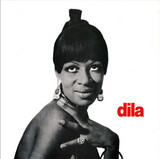
Far Out Recordings proudly presents the first and only album from the mysterious Brazilian vocal sensation Dila (pronounced “Jee-la”). Having reportedly died in a car crash shortly after the album’s release in 1971, there is very little known about the woman behind the voice. But the joyous music Dila left behind, gives us a picture as good as any, of a powerful feminine soul at the top of her game.
The liner notes on the elusive original LP, written by composer Arnoldo Medeiros attest: “Friend, look out! Because when this girl starts to sing, you’re in trouble. Hold the railing so you don’t fall down the stairs, because she’s coming this way and shaking up everything.”
Arranged and produced by Durval Ferreira, alongside his studio band affectionately known as “Os Grillos” (The Crickets), Dila (1971) is a rare glimpse into the authentic soulful Samba sound of Rio’s favelas in the late sixties and early seventies.
A blast of funky, percussive Brazilian breaks, scorching hot brass and swing-laden piano, the music is as iconic as the album’s stark cover, as is clear on opener ‘Inez’, composed by The Crickets’ bassist Romildo. There’s a fantastic interpretation of the Ivan Lins classic ‘Madalena’ (made famous by Elis Regina), a moving version of the Tom Jobim and Vinicius De Moraes classic ‘O Morro Não Tem Vez’, and a number of sunny original compositions by Arnold Madeiros, who’s other writing credits include music for Marcos Valle, Wanderlea, Evinha and Dom Salvador.
With original LPs extremely hard to come by, this rare treasure of Brazilian soul, which fans of Gal Costa, Celia, Evinha and Elis Regina will love, gets a much-deserved official reissue: remastered and pressed to 180g vinyl.
out of Stock
Last delivered 7 years ago available to reorder, subject to availability
OTOROKU is proud to reissue Evan Parker's first solo LP "Saxophone Solos". Recorded by Martin Davidson in 1975 at the Unity Theatre in London, at that time the preferred concert venue of the Musicians' Co-operative, Parker's densely woven and often cyclical style has yet to form; instead throaty murmurs appear under rough hewn whistles and calls - the wildly energetic beginnings of an extraordinary career. Reissued with liner notes from Seymour Wright in an edition of 500. "The four pieces across the two sides of Saxophone Solos - Aerobatics 1 to 4 - are testing, pressured, bronchial spectaculars of innovation and invention and determination. Evan tells four stories of exploration and imagination without much obvious precedent. Abstract Beckettian cliff-hanging detection/logic/magic/mystery. The conic vessel of the soprano saxophone here recorded contains the ur-protagonists: seeds, characters, settings, forces, conflicts, motions, for new ideas, to delve, to tap and to draw from it story after story as he has on solo record after record for 45 years. 'Aerobatics 1-3' were recorded on 17 June 1975, by Martin Davidson at Parker's first solo performance. This took place at London's Unity Theatre in Camden. 'Aerobatics 4' was recorded on 9 September the same year, by Jost Gebers in the then FMP studio in Charlottenburg, Berlin. Music of balance and gravity, fulcra, effort, poise and enquiry. Sounds thrown and shaken into and out of air, metal and wood. It is - as the titles suggest - spectacular." - Seymour Wright, 2020.
In Craig Charles' eigenen Worten enthält "The Craig Charles Trunk Of Funk Volume 3" "19 der feinsten Stücke von super-slinky Soul, boot shaking Blues und Boogie, schillernde Discosongs und feine funky rump shakers!"
Als Dichter, Schauspieler, Radio- und Fernsehstar (u. a. in der Science-Fiction-Comedy "Red Dwarf" und der Seifenoper "Coronation Street") ist er seit seiner Jugend berühmt, und seit über 22 Jahren predigt er in seinen weltberühmten BBC 6 Music-Wochenend- und Tagesshows für den guten Groove, legt in Clubs und auf Festivals rund um den Globus auf - sein Ruf als einer der profiliertesten Botschafter für alles, was Soul und Funky ist, ist unbestritten.
Craigs neueste Kollektion mischt Up-Tempo-Club-Klassiker mit frischer Musik von der Creme de la Creme der zeitgenössischen Soul- und Funk-Szene mit einer Prise Oldschool-Klassikern. Das Ergebnis ist so, als ob Craig persönlich als DJ auflegen würde - eine Mischung aus modernem und klassischem Soul, Disco, Deep Funk und beatlastigem Rhythm and Blues.
out of Stock
Last delivered 2 years ago available to reorder, subject to availability
Die Geschichte von Canned Heat ist auch gleichzeitig die Geschichte von Exzessen, Drogenmissbrauch, psychischen Erkrankungen und Tablettensucht, verbunden mit der Affinität für bandinternen Begräbnisse. So sagte erst vor kurzem Drummer Adolfo "Fito" de la Parra in einem Interview: "Ich bin nach über 55 Jahren noch immer bei Canned Heat. Überhaupt noch am Leben zu sein, ist hier schon ein Triumph". Schließlich war Fito seit dem zweiten offiziellen Album der Band "Boogie With Canned Heat" mit dabei, das 1968 auf dem US-Label Liberty veröffentlicht wurde. 1970 erschien "Future Blues", das erste Album mit dem neuen Gitarristen Harvey Mandel. Mit "So Sad (The World"s in a Tangle)" enthält das Album den ersten Umweltschutz-Song der Band. Es handelt vom ständigen Smog über Los Angeles. "Let"s Work Together", eine Coverversion von Wilbert Harrisons "Let"s Stick Together" aus dem Jahre 1962, wurde für Canned Heat weltweit zu einem Top Ten Hit. Im gleichen Jahr folgte der Konzertmitschnitt ""70 Concert: Recorded Live In Europe". Aufgenommen an verschiedenen Orten während der Tournee durch Europa (u. a. der Londoner Royal Albert Hall), ist dies das erste offizielle Live-Album der Band und gleichzeitig das letzte Tondokument von Canned Heat mit Alan "Blind Owl" Wilson, der im September 1970 an einer Überdosis Tabletten starb. Mit "Final Vinyl" veröffentlichten Canned Heat vor kurzem ihr letztes Album; "Future Blues" und ""70 Concert: Recorded Live In Europe" gehören zu ihren essentiellen Alben, als die Band in ihrer Keybesetzung mit Al Wilson, Bob Hite, Fito de la Parra, Harvey Mandel und Larry Taylor Ende der 1960er / Anfang der 1970er Jahre den Zenit ihres Schaffens erreicht hatten. Wilsons Tod hinterließ eine Lücke, die nicht mehr zu schließen war, zumal auch Larry Taylor und Harvey Mandel kurz zuvor Canned Heat verlassen hatten, um sich John Mayalls "USA-Union"-Band anzuschließen.
out of Stock
Last delivered 2 years ago available to reorder, subject to availability
In 1995, schoolmates Elin Almered and Johan Duncanson started a band which they named after a gas-station-turned-radio-repair-shop called "Radioavdelningen" (Swedish for The Radio Department). In 2001, the Radio Dept. sent recordings to music magazine Sonic, receiving a positive review and being featured on the free CD sampler that came with the magazine. Labrador Records heard them on the disc and signed them to their label. The band"s debut album Lesser Matters (2003) was well received by the music press, scoring 10 out of 10 in the NME. NME would rank Lesser Matters ninth on their list of the 50 best albums of 2004. The album received an 84/100 (Universal acclaim) on Metacritic from a total of five reviews.
out of Stock
Last delivered 18 months ago available to reorder, subject to availability
Filipovich is one of a kind. The Belarus-born, Paris-based artist works in a multitude of media - found footage films, painting, silkscreening and performance to name a few. It's her musical output that has caught the attention of late, though, with Filipovich dropping a run of releases in recent years which began with 2021's Magnificat on Time Released Sound. Filipovich takes as much of a novel approach to her music-making as she does with her other artistic endeavours - Magnificat was centred around treated samples of Sergei Rachmaninov's All-Night Vigil, and she's also combined classical composition with contemporary electronic techniques on her subsequent drops.
For Idealized, Filipovich's debut on Sheffield's Central Processing Unit, she maintains the gothic air which characterised her previous releases and applies it to a record of widescreen contemporary techno joints. These tracks represent something of a gear shift for CPU, a label which has long made its name by delivering top-quality electro and machine-funk jams, but such is the quality of Idealized that these superbly-executed techno productions are sure to win over label fans both old and new.
Idealized is very much schooled in the German tradition of minimal/dub techno. Tracks like 'Physical', 'Wave' and 'Dance Minor' all anchor themselves on single, steady drum pulses and delay-drenched single-chord loops. Filipovich generally lets the central idea of these tracks play out across several minutes while introducing increasingly disorientating elements into the rest of the mix - wiccan atmospherics, clashing chords, spiralling delays and so forth. It's an approach at once respectful of Filipovich's predecessors - Basic Channel, Deepchord, Ellen Allien and so on - but also full of idiosyncrasies and individuality.
Many of the club cuts here hardwire us into the moody, murky environs of the darkest Berlin Basements. 'Ultra Red' rides forward on a crisp drum machine snap, a menacing burble of bassline and an eerie single-note synth whistle in the upper end of the mix; 'Dance Minor' shows off a bit of KiNK in the brain-bending modular loop that waxes and wanes at its centre; the second-half run from 'Wave' to closer 'Small Cave' travels ever-further out into deep space - the kick drums remain insistent, yet the textural elements are delivered with an edge and flair that evidences Filipovich's ability to think outside the box.
Filipovich's unusual methods, and the influence of sound art and electroacoustic composition on her music, are drawn out further when Idealized steps away from the dancefloor. 'Hydra' comes off like a more gothic version of Pole - its central pulse draws from dub techno but never quite settles into a danceable groove, and this beat is combined with the kind of unnerving keyboard work that would make John Carpenter proud. Although closer 'Small Cave' eventually locks into another dark-room techno roller, the opening section of the track delivers a weightless soundscape of bright, tinny chords and a scene-setting field recording.
Idealized, the first drop on Central Processing Unit from Paris-based Belarusian Lina Filpovich, broadens the label's horizons with a selection of finely crafted minimal/dub techno joints.
RIYL: Andy Stott, Deepchord, Ellen Allien, Moritz von Oswald
out of Stock
Last delivered 16 months ago available to reorder, subject to availability
DJ Koco on the cover. A growing superstar DJ, but with an old soul. He brings a classic beat digger’s approach to his impeccable 7-inch selections but peppers them with new-school DJ tricks and is now making waves that reverberate worldwide. Beyond this the issue will be chocked full with articles covering Brit-Funk, Taj Mahal, 23 Skidoo, DJ Parrot, the Monterrey dance scene in the 90's, Don Blackman, Hermeto Pascoal, Larry McDonald and much much more.
Recorded in Japan during a tour in 1970. Featuring famous French musicians Eddie Louiss on organ and Daniel Humair on drums. A classy trio album with Louiss’ superb Hammond organ play front and center and a glimmering of the Caribbean dancing in the shadows.
Grande Coisa! (Big Deal!). You could hear it. It is the eternal irony of life. For a composer who has been making music since he was a teenager and only at the age of 38 does he make his work public, it can indeed be a big deal. Grande Coisa, is Dorea's first authorial album, and tells his stories, the ones he lived, others he heard about, but mainly the ones he created. With all the songs composed during the most isolated period in the pandemic, the work can be dense in many moments, difficult to digest, but there are sighs. And there are stories that intersect, like those of the boys who are one and also millions, and show the artist's vision of Brazil. The disappeared, forgotten, the sad and aimless still appear. And there is the warmth of the song for a loved one or even a family partnership, between mother and son. Grande Coisa has ten songs, all written by the artist himself, one of them with lyrics adapted from an excerpt from a book written by his mother. Its musical roots are rooted in rock, but with a blatantly Brazilian gaze and interpretation. It has musical production and minimalist paths chosen by Sebastian Notini, collaborative arrangements forged in the encounter of Dorea's guitar with Seba's percussive and melodic vein and Carla Suzart's bass, and a wood weave that ends the album with the timbres of Joana Queiroz (bass clarinet and clarinet) and Leandro Tigrão (flute) under the baton of maestro Per Ekdahl.
A holy grail for fans of French boogie, early hip hop, Arabic funk and Balearic bops,"Ettika" has been seriously sought after since Vidal Benjamin found it in the 1€ bin back in 2006. Teasing the ears of the underground via Vidal's 'Balearic Nightmare' mix for Noncollective, copies of the original were soon snapped up completely, and the later adopters were sated by a Blackdisco edit from Alexis Le-Tan (himself gifted Vidal's second copy), which is now also rare as hen's teeth. The fervour for the track is easy to understand. Underpinned by an endlessly buoyant bass groove, chanted female vocals dart out the speakers like a post- modern mantra while synth vamps flare in stuttering stereo.
Middle-Eastern motifs add an air of mystery, but this truly belongs in a dance floor utopia. That the track was the product of a 'back-to-work' scheme aimed at unemployed immigrant youth in Rouen only adds to the appeal. Led by teacher Bernard Guégan, a quartet of students delivered lyrics in French and Arabic inspired by their rejection letters, serving a little social commentary and a lot of funk. If you're mad on Ahmed Fakroun and Shams Dinn, or even those folks in the Bush of Ghosts, then this is a must have for you.
Archeology isn't just about excavation, there should be interpretation too, and in this case it comes from Italian duo Hear & Now and Leeds' The Veteran Delinquents. The former furnish the 12" with two radical takes, the dreamy downtempo stroll of their French Remix - all unhurried percussion, Gilmour-riffing and coastal élan - and the peaktime pump of their Arab Remix, which transports the original vocal into a land of desert new beat and Balearic trance with a little space left for some frazzled fretwork. If you've followed their work with Claremont you know the quality on show.
The Veteran Delinquents, the collaborative vehicle of Leeds stalwarts Craig Christon and Tim Hutton, condense a lifetime of club experiences into their remix, establishing the infectious groove of the original before subverting with chugging bass and winking acid, all augmented with their own slick synth work. The original was an all time classic at Craig's Joe's Bakery nights way back when, and this new interpretation is both respectful and revolutionary.
out of Stock
Last delivered 2 years ago available to reorder, subject to availability
Avision storms into 2020 in fine fashion with his first EP for Maceo Plex's Ellum Audio label.
Playing the decks since just 12 years of age, this American artist grew up in the musically rich New York City scene and is now at the sharp end of it with his own new school techno sound. He has released on key labels like Ben Sims’ Hardgroove, Mark Broom’s Beardman and Teksupport, and is someone that icons like Adam Beyer and Chris Liebing often reach for in their own sets.
He starts off his latest offering with 'Innocence', a bustling techno track with bulky drum programming that is brilliantly loose. It jostles you into action as dark vocals add intensity and makes for a perfectly physical dance floor workout.
Keeping up the pressure is 'Time Lapse', with big hi hats and a driving bassline all interwoven with thundering kick drums that will get the whole club up on its toes. A rising synth in the background adds an air of cosmic exploration and means this tasteful techno trip is enthralling from start to finish.
These are two superbly stylish and high powered techno cuts from this contemporary tastemaker.
out of Stock
Last delivered 17 months ago available to reorder, subject to availability
Far Out Recordings Proudly Presents The 1975 Self-titled Debut Album From Brazilian Vocalist And Bossa Nova Luminary Emilio Santiago. Nicknamed 'the Nat King Cole Of Brazil', Santiago Was A Master Bossa Balladeer And A Top-class Crooner. But He Is Known Equally For His Brazilian Funk, Soul And Boogie Classics. One Of His Best Know Is Album Opener 'bananeira', A Party-starting Version Of The Song Originally Written By Joao Donato And Gilberto Gil. 'brother' Is A Smooth-grooving Killer With Great Horn Arrangements And A Huge Backing Choir, While 'la Mulata' Is A Soulful, Swinging Salsa Stepper.
Originally Released On The Cid Label, The Album Showcases The Full Range Of Emilio's Talents, While Paying Homage To Some Of Brazil's Greatest Composers, Including Jorge Ben, Marcos And Sergio Valle And Ivan Lins Among Others.
The Credits On The Album Are A 'who's Who' Of Brazil's Greats, With João Donato On Keys, Wilson Das Neves, Ivan 'mamão' Conti And Paulinho On Drums, Durval Ferreira, Carlos Roberto Rocha And Helio Delmiro On Guitar, Ariovaldo, Orlandivo, And Chacal On Percussion, Danilo Caymmi On Flute, A Brass Section Featuring Victor Assis Brasil, Edson Maciel And Jesse Sadoc, And Backing Vocals From Jaime And Nair, Lúcia Lins, Jurema And Marcio Lott.
out of Stock
Last delivered 2 years ago available to reorder, subject to availability
Beyond the Bridge is excited to welcome a novel sonic experience to the roster with the debut of Australian artist gi. Capturing the essence of live experimentation, this release was recorded at the Worm Turns festival in 2023. It charts an immersive course through the uncharted territories of drone, IDM, and techno. Each track is thoughtfully selected, guiding the listener on a profound journey marked by peaks of intense emotional release and valleys of serene recuperation. Dive into a meticulously crafted soundscape that promises to enrich and challenge the auditory senses.?
out of Stock
Last delivered 2 years ago available to reorder, subject to availability
Fractal Void is an avant-garde duo based in Düsseldorf, Germany. Their experimental music blends electronic and contemporary genres located somewhere in the field of musical tension between ambient, drone, halfstep and floor-affine IDM. During their live sets, Fractal Void create vertical reflections by processing sounds through software and interaction with real instruments in every unique musical performance like the Chinese contemporary calligraphic practice Dishu.
Their debut album Elemental Collection unveils a dense and lavishly layered transformation of artificial organic signals, sculpting an auditory world filled with emotive landscapes, overgrown polyrhythms and futuristic elements. Embedded within each track are field recordings serving as the heartbeat of the album. Through innovative and expansive deconstruction, Fractal Void create an energetic and sometimes contemplative experience.
The persons behind Fractal Void:
Back in 2008, their musical journey began with winning a Spectrasonics competition using field recordings of a locker door, that was implemented as a bass synth. Their collaboration was continued as producers of the eight-piece electronic jazz project „Mothers of Guru“.
Marcus Scheltinga is a composer, producer and multi-instrumentalist. Besides studying jazz trombone at the Conservatorium Hilversum and the Folkwanghochschule, he works as a musical director, lecturer and coach in 39 countries around the world. From ZDF sound design to live and studio performances with international greats, his own productions have included such as Grammy winner Larry Carlton and Peter Erskine. Mid-east and Indian inspired, Marcus is a true story teller as a musician and composer.
BORGBORG is a producer and DJ. She moves freely in different styles of electronic music with a focus on avant-garde driving techno, dark hypnotic vibes seamlessly blended with deconstructed beats, noise and timeless elements of IDM. She is a member of About Repetition, a group of artists dedicated to the research of repetition through artistic means, collaborating with a wide range of other collectives across Europe and co-founder of the techno event series „SCHLEIFEN“.
out of Stock
Last delivered 2 years ago available to reorder, subject to availability
Over the last few years, I found myself making music for everyone else. What would other musicians think about this record? Would this track get me more gigs? The process of creating become secondary and I fell out of love with it entirely.
This album is a journey to get back to the reason I started doing this in the first place, because I love making music. It is a return to embodying that most unfairly derided of phrases, the bedroom DJ, the bedroom artist. Where else is the love for this game stronger than in those early years, surrounded by your friends and the endless possibility of creation.
Lots of love,
Dan
out of Stock
Last delivered 2 years ago available to reorder, subject to availability
Als Reaktion auf die Nachfrage von Sammlern, Fans und DJs verkündet Decca Records, zwei äußerst
begehrte 7-Inch-Singles wieder verfügbar zu machen. Diese Veröffentlichung lässt jeweils eine seltene Single
aus der Mod-Ära der Sechziger Jahre wieder aufleben, komplett mit ihren Original-B-Seiten. ”Crawling Up
A Hill/Mr. James” von John Mayer & The Bluesbreakers sowie ”Tax Man/That’s It” von Loose Ends sind
ab dem 02.08 erhältlich
This album was a self imposed ambitious project for us. Something to kick in the creative flow. The last few years, having been a challenging time in general, felt like a good time for a pivot. The last two albums were so guitar and keyboard centric, I wanted a weird and fun set of parameters for us to work with. I demo’d everything at home on cassette 4 track (harkening back to simpler times) using drum loops, and just had at it 'til I had a pile of “songs”. Tom and I chose one sound each using synths and created a range of 3 octaves of that sample, then loaded them into Roland SPD-SX samplers and learned the transcribed songs using drum sticks. The idea was to change the way we wrote and to have 4 people along the front of the stage essentially playing percussion. So no guitar, no keys. As we were recording I kept thinking how the sounds, when paired up, sounded a bit like brass. So, we added a saxophone horn section to round out the horniness of the sound with a bit of reedy bell tones. Thanks to Cansfis Foote & Brad Caulkins on tenor and Baritone saxophones :) Sort of a Dexy’s Midnight Runners meets Von LMO meets The Flesh Eaters meets the Screamers kinda punk junk. Poppy and hooky, heavy at times.. Sort of vacuous and maybe a bit sci-fi in sound. Boneheaded in riff and heady in lyrics. Recorded at Stu-Stu-Studio by me on 8 track 1/4” tape . So pretty hot and raw. Lots to write about today. A lot of these lyrics were taken from things people said in passing about taking on life right now that stuck with me. Things that made me reflect. Things that made me laugh. Things that made me WTF. Some folks are kind, genuine & give you love and energy. Some are greedy manipulative ghouls who hang off your veins. You must be strong, composed and take care of yourself. Be self aware and check your mind for cracks. Learn to relax and be well. There are moments of beauty and redemption. Its not all bad news and there’s always hope. People continue to surprise me one way or another. Anyhow, Hope you enjoy and good luck out there. — John Dwyer
Formed in Liverpool in 1985, the Revolutionary Army of the Infant Jesus is a unique experimental ensemble whose work goes beyond music. For over thirty-five years the band’s cult following has grown. Their mesmerising recorded material is influenced by diverse cultural perspectives and stimulates a deeply personal and subjective awakening. Ethereal vocals, ambient compositions, chants, acoustic instrumentation and field recordings generate beautiful and emotionally intense soundscapes. ‘The Dream We Carry’ is the band’s fifth album and perhaps their most coherent body of work to date. It captures echoes and fragile remnants of the lived experience. The emotional traces that affect us. The joys and sorrows we hold. The dreams that we carry. Founder member Leslie Hampson said: “The RAIJ is a project in pursuit of beauty; we have tried to jettison anything that doesn’t address that. We’ve been active for a long time and this album represents another phase in our work. We’re not trying to reinvent ourselves or be something we’re not. We’ve never done that. We only ever try to be more of ourselves.”
Formed in Liverpool in 1985, the Revolutionary Army of the Infant Jesus is a unique experimental ensemble whose work goes beyond music. For over thirty-five years the band’s cult following has grown. Their mesmerising recorded material is influenced by diverse cultural perspectives and stimulates a deeply personal and subjective awakening. Ethereal vocals, ambient compositions, chants, acoustic instrumentation and field recordings generate beautiful and emotionally intense soundscapes. ‘The Dream We Carry’ is the band’s fifth album and perhaps their most coherent body of work to date. It captures echoes and fragile remnants of the lived experience. The emotional traces that affect us. The joys and sorrows we hold. The dreams that we carry. Founder member Leslie Hampson said: “The RAIJ is a project in pursuit of beauty; we have tried to jettison anything that doesn’t address that. We’ve been active for a long time and this album represents another phase in our work. We’re not trying to reinvent ourselves or be something we’re not. We’ve never done that. We only ever try to be more of ourselves.”
Als Reaktion auf die Nachfrage von Sammlern, Fans und DJs verkündet Decca Records, zwei äußerst
begehrte 7-Inch-Singles wieder verfügbar zu machen. Diese Veröffentlichung lässt jeweils eine seltene Single
aus der Mod-Ära der Sechziger Jahre wieder aufleben, komplett mit ihren Original-B-Seiten. ”Crawling Up
A Hill/Mr. James” von John Mayer & The Bluesbreakers sowie ”Tax Man/That’s It” von Loose Ends sind
ab dem 02.08 erhältlich