King of Town (KoT), originally from Johannesburg but now in the UK, is back after a nearly a decade hiatus from his mutant disco-inflected remixes.
Prior to his long break, King of Town remixed the likes of Franz Ferdinand, Slow Club, Alice Russell, the Detachments and the Phenomenal Handclap Band.
His remix of Desmond and the Tutus' 'Kiss You on the Cheek', released on Tigersushi in 2009, has become a regular feature of Spotify playlists and has racked up a few million listens across various streaming platforms.
For this release KoT serves up four exclusive re-edits.
Lord Have Mercy is a retouch of Willie West's slow-burn R&B lament of his own elegiac defiance, where KoT underpins West's groove with a 303 acid bassline and synth flourishes.
Swimming in Your Eyes is a beefing up of Pasteur Lappe's 1979 Rhodes-heavy space disco groove.
Troubles of this World takes OV Wrights ridiculously soulful take on a gospel classic and transforms it into a retro-futurist track aimed firmly at the dancefloor.
And with Khomo Tsaka Deile Kae KoT nods towards his roots and inserts drive and snap into fellow South African Marumo's 1982 kwela-touched stomper.
As always the artwork has been completed by the very talented Pedro Carvalho de Almeida.
Vinyl Only.
quête:johannes
Repress
Palms Trax signals the arrival of his new label CWPT with ‘Petu’, a new single featuring South African vocalist, Nonku Phiri. Originally debuting in dub form during the Berlin-based DJ and producer’s set at The Music Locker as part of Grand Theft Auto Online, ‘Petu’ re-emerges here as a soulful collaboration, neatly complimented by a wide-eyed take from Masalo.
Initially written as a slow-heating instrumental to connect the various musical dots across a DJ set, Palms Trax nonetheless had a vocalist in mind throughout, a fresh voice to lend ‘Petu’ universality and energy. Introduced through mutual friend Esa, Johannesburg’s Nonku Phiri draws on her signature style influenced by vintage Afropop styles and folk traditions, delivering a smooth and vulnerable tale of desire. Triumphant brass recorded by instrumental collective Jungle By Night adds to the depth of instrumentation and feeling throughout, each element driven by Palms Trax’s ebullient percussion and an altogether celebratory energy felt across both the original and dub cuts.
Closely associated with Dutch dance music staple Rush Hour Records, Masalo subtly raises the tempo on his high-energy rework of Petu, spinning off the interconnected elements of the original into a memorable and gloriously Italo-tinged house trip.
Established in 2021, CWPT will play home to Palms Trax original productions alongside collaborations, mixtapes, new-generation artists and vital reissues. An online blog will feature interviews, reportage and charts exploring the stories past and present at the fringe of Palms Trax’s wide-reaching record collection.
Sound Of Smoke sind eine vierköpfige Psychedelic Soul- & Bluesrock Band aus Freiburg mit einem ordentlichen Vintagevibe. Die Bandmitgliedern um Frontfrau Isabelle Bapté schaffen es mit einem Mix aus Blues, Soul und Stonerrock auf eine Reise durch die Zeit mit zu nehmen, als Klänge a la Jefferson Airplane, Black Sabbath und Led Zeppelin in Ihren Bann zogen. Mit "Phases" veröffentlicht das Freiburger Psychedelic-, Soul- & Bluesrock Quartett kaum ein Jahr nach der Platte "Tales" ihre zweites Album über Tonzonen Records. In zahlreichen psychedelischen Jamsessions entstanden elf neue Songs, welche man im legendären Big Snuff Studio in Berlin aufnahm. Das Album wurde in einer 10-tägigen Session komplett analog mit der Technik aus den 60er & 70er Jahren auf Tonband von Szenen-Ikone Richard Behrens (Kadaver, Elder, Odd Couple, All Them Witches uvm.) aufgenommen. "Phases" überzeugt mit eingängigen Bluesrockriffs, orientalische Klängen, bis hin zu schwebenden, sphärischen Klangwelten aber auch Krautrock. Das Leitmotiv bleibt jedoch Isabelle Baptés versiertes Flötenspiel und ihre warme, individuelle Stimme, welche Grace Slick wieder aufleben lässt. Florian Kiefer, welcher den Titel "Reincarnation of Lemmy Kilmister" mit seinem markanten, grollendem Basssound (und Backenbart) für sich beansprucht, bildet mit Johannes Braunstein ein groovendes Fundament im Stile von John Bonham. Getreu dem Motto "Im just tryin to write the best guitar riff in history" wie schon einst Jimmy Page oder Richie Blackmore und einem Faible für Wildwestromantik, trägt Jens Stöver letztlich das gewisse Etwas zum "Sound Of Smoke" bei. Veredelt wurde "PHASES" danach noch mit Orgel- und Synthoverdubs von Isabelle und Florian. Sound Of Smoke freuen sich mit " Phases" ihr anspruchsvollstes Album einem großen Publikum präsentieren zu können.
- 1: Only Love Can Save Me Now" (Acoustic)
- 2: Got So High" (Remix)
- 3: Loud Love
- 4: Death By Rock & Roll" (Acoustic)
- 5: The Keeper" (Feat Alain Johannes)
- 6: Halfway There" (Feat Matt Cameron)
- 7: Quicksand" (Feat Mike Garson)
- 8: What's So Funny 'Bout Peace, Love & Understanding
- 9: Harley Darling" (Acoustic)
- 10: 25" (Acoustic)
- 11: Got So High
The Pretty Reckless veröffentlichen 2022 ein neues Projekt namens »Other Worlds«. Die Sammlung wird akustische Aufnahmen, Cover-Versionen und mehr von Taylor Momsen und Co. enthalten.
Vor allem einige der Cover-Versionen dürften für Fans der Hardrocker aus New York eher überraschend kommen. So enthält »Other Worlds« neue Interpretationen von Elvis Costellos »(What's So Funny 'Bout) Peace, Love And Understanding«, Soundgardens »Halfway There«, Chris Cornells »The Keeper« und David Bowies »Quicksand«.
»Wir haben lange Zeit versucht, einen alternativen Weg zu finden, um Musik zu veröffentlichen, einschließlich Songs, die wir lieben und die es nicht auf unsere Platten geschafft haben, sowie Cover und alternative Versionen«, erklärt Frontfrau Taylor Momsen.
»Mit ›Other Worlds‹ haben wir einen Weg gefunden, dies kohärent und konsequent zu tun. Wir sind eine Rockband, deshalb gibt es auf unseren Platten viele E-Gitarren. Allerdings haben wir von unseren Fans unglaubliches Feedback zu unseren akustischen Auftritten bekommen, und die haben wir nie in einem richtigen Format veröffentlicht. Dies ist also eine andere Sichtweise auf das traditionelle Format einer Platte und eine abgespeckte Version von uns, die unsere Fans noch nie zuvor gehört haben, aber es sind immer noch wir.«
»Other Worlds« enthält auch einige besondere Gäste, darunter David Bowies Pianist Mike Garson, Pearl Jams Matt Cameron und den Multiinstrumentalisten Alain Johannes.
The heavy metal, dark, madcap visionaries collectively known as AVATAR — vocalist Johannes Eckerström (vocals), guitarists Jonas Jarlsby and Tim Öhrström, bassist Henrik Sandelin, and drummer John Alfredsson — have emerged from deep within the Swedish forest in which they have been working on their ninth album to grace fans and listeners with a brand new song, "Valley of Disease".
- A1: Logic System - Unit
- A2: Kraftwerk - Computerwelt (2009 Remastered
- B1: Whodini - Magic's Wand
- B2: Rocker's Revenger - Walking On Sunshine (Feat Donnie Calvin
- C1: Klein & Mbo - Dirty Talk (European Connection
- D1: Liaisons Dangereuses - Los Niños Del Parque
- D2: Yello - Bostich
- E1: The The - Giant
- F1: The Residents - Kaw-Liga
- G1: Clan Of Xymox - Stranger
- G2: A Split - Second - Flesh
- H1: Severed Heads - Dead Eyes Opened
- H2: The Weathermen - Poison!
- I1: New Order - Blue Monday
- J1: Anne Clark - Our Darkness
- J2: 16 Bit - Where Are You?
- K1: Phuture - We Are Phuture
- K2: Model 500 - No Ufo's (Vocal
- L1: Frankie Knuckles Feat Jamie Principle - Your Love
- L2: Quest - Mind Games (Street Mix
- M1: Jasper Van't Hof - Pili Pili
- N1: Guem Et Zaka Percussion - Le Serpent
- N2: Hugh Masekela - Don't Go Lose It Baby
- O1: Sly & Robbie - Make 'Em Move
- Q1: The Ecstasy Club - Jesus Loves The Acid
- R1: Foremost Poets - Reason To Be Dismal?
- S1: Lhasa - The Attic
- S2: A Guy Called Gerald - Voodoo Ray
- T1: M/A/R/R/S - Pump Up The Volume - Usa 12" Mix
- T2: Bobby Konders - Nervous Acid
- U1: Meat Beat Manifesto - Helter Skelter
- V1: Raze - Break 4 Love
- W1: Sueño Latino With Manuel Goettsching Performing E2-E4 - Sueño Latino (Paradise Version
- X1: Off - Electrica Salsa
- O2: Brian Eno - David Byrne - Help Me Somebody
- P1: Primal Scream - Loaded (Andy Weatherall Mix
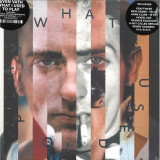
For this uniquely personal retrospective spread over twelve vinyl discs, Sven Väth takes us back to the early days of his DJ career. On What I Used To Play we meet great pioneers of electronic music, gifted percussionists, obscure wave bands, and innovative producers of a bygone 'new electronic' era. Rough beats and irresistible grooves from the identification stage of house, techno, and acid remind us not just how far electronic music has evolved over the past four decades, but how great it was to dance to EBM, techno, and house for the very first time.
If there is one protagonist of the electronic music scene who has remained curious, innovative and at the very cutting edge of music for over four decades, it's Sven Väth. His multi-layered artist albums and Sound of the Season mix compilations have been defining the genre for over two decades, and even today, he is constantly on the lookout for the next top tune to add to the highlights of his next set. At least, that's the case when he's not producing them himself as an artist or remixer. "Actually, it's always been part of my DNA to think ahead," and nothing had been further from his mind than looking back at his past, but when in spring of 2020 the international DJ circuit had to be scaled down to virtually zero, the 'restless traveler' suddenly had time. Time to stop and reflect on "how it actually was back then, at the very beginning of my career..."
"It was a great trip and with every track, beautiful memories came flooding back".
In the London apartment, he had just moved into, Sven has set up a "little music room", where he cocooned himself for several days, "to look way back for the first time and review my musical journey through the eighties, so to speak."
The interim result was six thematically oriented playlists with a grand total of 120 tracks from 'early 80s' to 'Balearic late 80s', together with excursions into afrobeat, European new wave, and EBM sounds and a few epochal techno/house tracks from the USA in between. From these 'Best of Sven Väth's favorites', the project What I Used To Play crystallized. Sven remembers how the Cocoon team reacted to his proposal: "They found the idea of making a compilation out of it MEGA from the beginning and everyone said 'Sven, go for it', but then, of course, the work really started, namely, to clear the rights and to get clean sounding masters of the up to 40-year-old tracks. There was also disappointment, of course. We couldn't clear certain titles because the rights holders in the USA had fallen out with each other or simply disappeared from the scene. In short, it wasn't easy, but now I can safely say we got the most important tracks."
Finally, after two years of research, curation, design, and administrative fine-tuning, the "little retrospective" from 1981 to 1990 is available. The exquisitely packaged, and three-kilo heavy box set is not only physically impressive, WIUTP is also the definitive record of Sven Väth's musical development. On each of the twenty-four sides of vinyl, you can trace track by track, what influenced him during which phase, and how he took off as a DJ from his parents' Queen's Pub straight into the spotlight at Dorian Gray. There and at Vogue (later OMEN), Sven became the style-defining player in the DJ booth that he still is today.
1981 - 1990: Future Sounds of Now
In the early eighties, the crowd in clubs like Vogue and Dorian Gray danced to what nowadays we call 'dance classics' - mainly disco, funk, soul, and chart pop. It was up to a new generation of DJs, including Sven Väth, the youngest protagonist in the Rhine-Main area at the time, to create their own club-ready music mix. Good new tracks and potential floor-fillers were rarities that had to be sought out and found, in order to prove oneself worthy.
Without MP3s, internet streaming, or other digital download possibilities, music didn't just gravitate to the DJ, instead, it had to be tracked down. In well-stocked record stores in Frankfurt and Wiesbaden or even in Amsterdam, London, or New York, Sven and friends sourced the material for countless magical nights. On WIUTP we can follow Sven's very personal journey through this wild, innovative era in which synth-pop, funk, hip-hop, and disco were successively replaced as 'club music' by house, techno, acid, and breakbeat. By the end of the decade, it was clear to see that these once exotic 'fringe' phenomena would soon become 'mass' phenomena.
Early 80s
Dirty Talk by the Italian-American duo Klein & M.B.O. represents the most innovative phase of the Italo-disco genre in the early eighties like no other track. Mario Boncaldo (I) and Tony Carrasco relied entirely on the original synthetic drum and percussion sounds of the Roland TR-808, coupled with the raunchy vocals of Rossana Casale and guitar accents of Davide Piatto. Of course, other tracks from this period were also influential in style, most notably Unit by Logic System, which worked as the perfect soundtrack to the laser lighting system at the legendary Dorian Gray club. With stomping beats and robotic rap interludes, Bostich by Yello also belongs on Sven's eternal playlist - after all, it caught the attention of Afrikaa Bambaataa, who invited the Swiss duo to perform at the Roxy in New York in 1983.
EBM Wave - Mid 80s
From today's point of view, the almost ten-minute-long, downtempo track Giant by Matt Johnson's band project The The, would probably not be considered an obvious club classic. However, a closer (re)listen reveals the rhythmic intricacies of the percussion overdubs by JG Thirlwell (aka Foetus) on Johnson's composition, and it becomes clear why this exceptional piece of music is one of Sven's absolute favorites. Other classics from this phase include Kaw-Liga by the mysterious The Residents, the hypnotic-synthetic Our Darkness by Anne Clark (and David Harrow), and last but not least, the somber, monotonous anthem Where Are You? by 16Bit, one of Sven Väth's projects together with Michael Münzing, Luca Anzilotti from 1986.
US House - Late 80s
You certainly can't talk about Chicago house without mentioning Frankie Knuckles. The resident DJ at the Warehouse not only gave the name to an entire genre, but also produced epochal floor fillers on the Trax label like the timeless Your Love, sung (and moaned) by Jamie Principle. Acid house protagonists Phuture also hail from Chicago, and on We Are Phuture (also released on Trax) we hear the chirping acid sounds of the legendary Roland TB-303 in full effect. Another featured classic is No UFO's by Detroit's Model 500 aka Juan Atkins, who is rightly considered the 'Godfather of Techno' even if the genre-defining track from 1985 still breathes with the spirit of hip-hop and electro from the first breakdance era.
Afrobeat
Le Serpent, by Algerian-born Abdelmadjid Guemguem, is a track that sounds completely different from everything else on WIUTP. Made in 1978, it's a monumental, rousing groove created without bass or synths, just with five congas! Even though Guem sadly passed away in 2021, his immortal, acoustic beats are understood all over the world and will continue to enrich many thousands of DJ sets for years to come. Another classic that not only Sven appreciates beyond measure is Hugh Masekela's Don't Go Lose it, Baby. In addition to being one of the most important jazz pioneers, the trumpeter and freedom fighter from Johannesburg was very experimental, integrating electronic sounds into his music in later years, in a similar vein to Miles Davis and Herbie Hancock. Dutch jazz pianist Jasper van't Hof's afrobeat project Pili Pili has also aged well. The trance-like, almost sixteen-minute-long track of the same name, manages to fill a whole side on the seventh of twelve vinyl discs in the WIUTP box.
UK-US-Euro - Late 80s
Time for a change of scene, in the truest sense of the word, and from a musical perspective, this section is like landing on another planet. First up is Andrew Weatherall's classic remix of Primal Scream's Loaded, featuring the iconic Peter Fonda sample (lifted from the 1966 biker film Wild Angels) that came to personify the mood triggered by the British Second Summer of Love in the late eighties: "We wanna be free to do what we wanna do, and we wanna get loaded...". This period also saw the emergence of M/A/R/R/S whose only single, 1987's Pump Up The Volume, became a club classic with support from DJ legend CJ Mackintosh. In this most eclectic of sections, we also encounter New York house and reggae producer Bobby Konders and his seminal Nervous Acid.
Balearic - Late 80s
Those who know him, know that Sven had already lost his heart to the 'magic island' of Ibiza as a teenager, so with that in mind, the WIUTP project couldn't end without a Balearic chapter. Inspired by Manuel Göttsching's E2-E4, the immortal, eponymously titled Sueño Latino belongs in there without question. Equally popular on the island was, and still is Break 4 Love by Raze, which thinking about it, would also fit perfectly into the house chapter. Last, but not least, there's an overdue reunion with Sven Väth himself, in his role as frontman of the successful Frankfurt trio OFF. Together with Michael Münzing and Luca Anzilotti (later of Snap!) this 'Organization For Fun' created the off-the-wall club hit Electric Salsa in 1986 which incidentally turned into an international chart smash, putting Sven in the enviable position of having to decide between pop stardom and a DJ career. Well, we all know how that decision turned out and the rest, as they say, is history. A not insignificant part of his story is What I Used To Play. Enjoy!
Hamburg’s Polycarp Records delivers the ‘Never Ever’ EP by Bonn this January, backed with remixes from Johannes Albert and The Cruiser.
The Polycarp Records imprint was launched in 2016 by Simon Ferdinand and across its past ten releases has unveiled an array of material from the likes of Pleasant Systems boss Tilman, Frank Music founder Johannes Albert and Simon Ferdinand and Basch both under their own artist names and of course their collaborative project, Bonn. In 2019 Ferdinand and Basch inaugurated their Bonn guise with a debut album entitled ‘Forget Forgot Forgotten’, 2021 saw the release of a follow up EP entitled ‘Ravenous’ and here the story continues with the pair’s latest collaborative works.
The original mix of title-track ‘Never Ever’ opens the EP and lays down
crunchy, off-kilter drums alongside mystical atmospherics, an unfurling acid bass lead and loopy, fluttering stab sequences. Johannes Albert’s twist on ‘Never Ever’ follows next, the fellow German producer takes things down his signature cosmic, nu- disco path via bubbling arpeggio lines and 80’s tinged resonant leads melded together with fragments from the original composition.
‘Phero’ then opens the flip side and sees Bonn deliver a twitchy house
workout fuelled by fidgety synth bleeps, dubbed out chords and bumpy,
saturated drums. Last up to round things out, The Cruiser turns in a
high- octane interpretation of ‘Phero’, upping the tempo and reshaping the original’s raw elements into a murky, dynamically unfolding thumper.
- A1: Party People
- A2: Herbs Im Tee
- A3: Endlich Ostern Mit Timothy Morris, Cuts Von Tobi Tobsucht
- A4: Nichts Zu Sehen
- A5: Ein Kühler Sommer
- A6: Die Letzte Figur
- A7: Danke Vielmals
- B1: Einen Unter Vielen Mit Johannes Onetake
- B2: Recognize Mit Slize
- B3: Halbveganer (Cuts Von Dj Ketch
- B4: Hunger
- B5: Tank So Leer Mit Johannes Onetake
- B6: Wayne
- B7: Blind Im Fokus
Birdy Sanjazz and Philo Philta. A dream team of birds. Birdy scatters beats like birdseed, Philta makes pickypicky. One after the other. You can still hear "Grrrrr, there isn't more than one 16 per grain" and then he's fluttered on. How long this winter was, but luckily the birdhouse was always well stocked. Well-fed, they are now moving on, from Karlsruhe to Würzburg and back. Always look from above, down on this small world with its people and human-like creatures. A few of them approaching, as always. Timothy Morris, Slice, Johannes Onetake, DJ Ketch, Toby Tobsucht. Beep beep, album ready.
Birdy Sanjazz und Philo Philta. Ein Dreamteam an Vögeln. Birdy streut Beats wie Vogelfutter, Philta macht pickypicky. Einer nach dem anderen. Man hört noch „Grrrrr, mehr als einen 16er gibt es nicht pro Korn“ und schon ist er weitergeflattert. Was war dieser Winter lang, aber zum Glück war das Vogelhäuschen immer gut gefüllt. Jetzt ziehen sie wohlgenährt weiter, von Karlsruhe nach Würzburg und zurück. Blick immer von oben, nach unten auf diese kleine Welt mit ihren Menschen und menschenähnlichen Wesen. Ein paar von denen wie immer mit im Anflug. Timothy Morris, Slize, Johannes Onetake, DJ Ketch, Toby Tobsucht. Pieppiep, Album fertig.
- A1: Es Ist An Der Zeit
- A2: Hinfort
- A3: Unbemerkt Hinein
- A4: Fur Immer Verbunden
- A5: Schon Wieder Erleuchtet
- A6: Nutzlose Ratschlage
- A7: Lass Mich Schlafen
- A8: Stille Nacht
- A9: Lieber Nicht
- A10: Mach Die Augen Zu
- A11: Verdrehter Kopf
- A12: Berauscht
- A13: Finger Im Wind
- A14: Taumel
- A15: Stets Weiter
- A16: Gluck Im Traum
- A17: Abgetrieben (Reprise)
- B1: Wieder Verdrangt
- B2: Das Geheimnis Des Klosters
- B3: Das Verschwundene Kind
- B4: Unter Der Decke
- B5: Zuruck
- B6: Verstimmt
- B7: In Der Grotte
- B10: Hinten Im Eck
- B11: Zeit Mit Dir
- B12: Uber Den Dachern
- B13: Bitte Bleib
- B14: Draussen Ist's Kalt
- B15: Lauf Der Wasserader
- B16: Kleiner Abschied
- B17: Einen Augenblick Lang
- B8: Labbrige Hostie
- B9: In Begleitung
Johannes Schebler's musical output is all about establishing a dreamlike territory where sonic settlements can spread at ease. While Grykë Pyje (Johannes Schebler's duo with Jani Hirvonen) presents musical landscapes as open and clear spaces, Baldruin's miniature pieces tend to narrow them down, zooming into domestic sceneries that shift like malleable rooms inside a magic building. These are the quarters where the inhabitants of Schebler's musical world are configured.
Rendered in a tender manner, the tunes in Kleine Freuden (in English: small joys) unfold like a collection of fairy tales and bedtime stories. Fables and lullabies performed in whispering tones seem to carry us through a child's dream where images blend into each other. Compact, yet gauzy and free flowing melodies gather up revealing an ensemble of households where fanciful entities play care freely, leading us along their musical maze. The music is placid, childlike and playful. It wanders around in unwavering estrangement, organizing an unprecedented and intimate space as seen from a bird's eye view.
In the landscape of a bedroom where the night lamp is the sun, we take part in a lively journey, as wonder is warrant and keeper of a warm and pristine environment. Perspective shifts as we rise from bed sheet folds that turn into fragile mountain ranges. We crawl behind furniture and take shelter in secret hideouts while dust falls upon us like a blizzard. Transfiguring notions of scale and time, we are left wondering how long have we been here, wondering if music is the only true measurement of time.
Felix Laband’s The Soft White Hand is the masterwork of an artist who expresses himself through musical and artistic collage acting together to reinterpret his sources and to express significant elements of his own personal story.
Released by Munich-based Compost Records, the 14-track album is Laband’s first full-length offering since the critically acclaimed Deaf Safari in 2015. It is heralded by the single “Derek and Me”, and is being pressed on vinyl for distribution globally.
In The Soft White Hand Laband works with source materials that will be familiar to those who know his previous four records – Thin Shoes in June (2001), 4/4 Down the Stairs (2002), Dark Days Exit (2005) and especially Deaf Safari which reached deep into the South Africa scene and its political culture to inspire its vocal and music sampling. However, the disengagement he felt from his homeland during his latest album’s creation – an abiding sense of untethered-ness to place and space, exquisitely rendered in tracks like “Death of a Migrant” – is perceptible in Laband’s desire to illuminate instead aspects of his own life.
“For this album, my source material became almost autobiographical as opposed to African statements I’ve worked with previously,” says the artist. “I have sampled a lot from documentaries from the 80s crack epidemic in impoverished African American communities and believe my work speaks unapologetically for the lost and marginalised, for those who are the forgotten casualties of the war on drugs. In the past, I have had my issues with substance abuse, and I know first-hand about the nightmares and fears, what it feels like to be isolated and abandoned.”
Few artists have managed to air these intimate aspects of their life so luminously as Laband does in tracks like “5 Seconds Ago”, “They Call Me Shorty” and in the strange and meditative “Dreams of Loneliness”. “I’ve been building this weird, autobiographical story using other people talking. It’s kind of humorous but it is also sad and beautiful,” says Laband.
Yet, as in all of Laband’s recorded output, the delineations between emotions are never starkly drawn and The Soft White Hand is also shot through with beauty. Nature appears in recordings made in his garden in the intimate early morning hours, whether as in the calls of the Hadada Ibis and other birdsong in “Prelude” or of the vertical-tail-cocking bird in “Derek and Me”. The last is a wonderful track with Derek Gripper, the South African experimental classical guitarist of international renown, whose 2020 song “Fanta and Felix” imagines a meeting between Fanta Sacko and Laband.
Laband’s eloquence in reinterpreting classical composers such as Beethoven in “We Know Major Tom’s a Junkie” is another thrilling aspect of the new record. “I’ve been properly exploring classical music on this album,” explains Laband, “taking melodies from classical compositions and reinterpreting them”. A fresh quality comes to his work through this sonic adventuring: the tender manipulation of the mundaneness of the computer’s AI voice to reimagine and reinvent iconic lyrics and melodies in strange and unexpected configurations.
The Soft White Hand is Laband’s most cohesive body of work to date. Yet it remains, in its sheer artistic scope, impossible to describe fully. Darkness abuts the gossamer light. A song that summons the sunrise and all the hope of a new day could also be about the final dipping down of the sun that portends a troubled night ahead. Interludes are invitations to expand outwards or shift inwards. Mistakes and “weird fuckups” in the sound are cherished as convincing statements against what Laband calls the “grossness” of perfect sound in modern music.
For this world-leading electronic artist, the boundaries are unfixed. He is inspired by the German Dada artist, Hannah Höch, who memorably declared: “I wish to blur the firm boundaries which we self-certain people tend to delineate around all we can achieve.” His music consequently reflects a primal artistic impulse that is also visible in Laband’s considerable visual art output as seen recently in several solo exhibitions such as that held in the No End Gallery in Johannesburg in 2019 and in the works he produced during his 2018 Nirox Foundation Artists Residency. “My music is always about collage, as is my art,’’ he affirms. “Everything I do is collage. It is a medium I find very interesting because you are taking history and distorting it and changing its meaning and turning it upside down and back to front.” In her book Recollections of My Non-Existence, Rebecca Solnit calls collage “literally a border art”; it is “an art of what happens when two things confront each other or spill onto each other”.
With The Soft White Hand, Laband is confirming his singular ability to achieve this in both art and music, melting the divisions between the two creative disciplines until they become one. He is also affirming his belief that an album of music should be more than a collection of unrelated tracks, but should unfold a fully integrated, cohesive story as in the song cycles of the great classical composers. In doing so, he claims his position as one of the most significant artists working today.
Artist Statement – Felix Laband – August 2022
When the Khmer Rouge took their captives for processing, they identified their class enemies by looking at their hands. If they were sunburned, rough and calloused, they were those of a peasant, a proletarian to be spared. But if they were soft and white, then they were those of a city-dweller, an intellectual or bourgeois, an adversary to be liquidated.
In calling this album The Soft White Hand, I was reflecting on the Cambodian genocide and how it resonates in contemporary South Africa. The apartheid era is over, and gone with it is white political domination. Yet economic and social privilege is still held in soft white hands. But those who grasp it know just how tenuous is their hold, how it singles them out, and my music reflects their subconscious fears, the stress and guilt of clinging on to what others envy and desire.
The soft white hand of the title suggests to me a further image, one that relates to all of postcolonial Africa. In my mind’s eye, I see the soft, duplicitous handshake of the smooth representatives of the superpowers making deals and promising gifts that benefit only them, and not their African dupes.
Yet, soaring above the wailing of sirens sampled from the first day of the invasion of Ukraine, my music is also about love gained and passion lost. It is about the tender caress of a soft white hand that conducts you into a place of dreams to be enfolded by nocturnal melodies.
Following the release of Barbie Bertisch’s debut album Prelude in June 2022, Love Injection is thrilled to announce Prelude Remixes via Love Injection Records, which features six artists new to the label, kicking off with a two-track 12” single followed by a full digital release. Love Injection is the label and fanzine Bertisch runs with her partner, Paul Raffaele. The duo are romantic about remixes as an artform and always intended to have reinterpretations be the next phase after Prelude. Often reduced to ways to extend a hype cycle, or disjointed add-ons, Love injection’s remixes exist in dialogue with the artist’s songs.
The 12 inch single will inaugurate the project, with Montreal’s Gene Tellem on the A side, and Panorama Bar residents Lakuti and Tama Sumo on the flipside. On the “GT Remix”, Bertisch gushes that “Gene is very good at creating and sculpting atmospherics in her productions. She really grabbed the song and took it to a different place.” Tellem's version of “After The Storm” is faster, elastic and pulsing with an almost primordial intensity.
Creative and life partners Lakuti and Tama Sumo take on “Fertile Garden (Emerge)”. Lakuti, originally from South Africa, got her start DJing in the Johannesburg house scene of the ‘90s. She is now based in Berlin and often DJs with Tama Sumo, who grew up in Bavaria and moved to Berlin in 199x and has been a staple in the scene there since. The duo, both residents of Berlin's Panorama Bar, turn “Fertile Garden” into an ecstatic, unrelenting beat-down, best fit for peak time.
Johannes Auvinen (Tin Man) and Max Ravitz (Patricia), two devotees in the cult of the TB-303, return to Acid Test with the Celestial Body Music series, a follow up to their 2020 LP Powers Of Ten.
Recorded in Ravitz’s studio in Asheville, NC, Celestial Body Music once again showcases the pair’s penchant for raw yet emotive dance music. With Auvinen’s signature TB-303 programming and Ravitz’s typical melancholic flair, the duo’s styles merge seamlessly over the course of 8 tracks that harken back to the heyday of American techno and house. Following on from Powers of Ten, the pair continue to fix their eyes firmly on the stars, as Celestial Body Music’s song titles conjure visions of listening to Dance Mania 12”s on the ISS. With a tonal palette that features the well-trodden sounds of classic analog hardware like the TR-808, TR-909, TB-303, and SH-101, Ociya demonstrate their ability to breathe new life into these old instruments through thoughtful programming, arrangement, and mixing. This is made all the more significant when considering every song was recorded live to 2-track with no editing over the course of a few days. Sweet and savory both, the new material strikes a perfect balance between emotive sensibility and dance floor appeal.
Johannes Auvinen (Tin Man) and Max Ravitz (Patricia), two devotees in the cult of the TB-303, return to Acid Test with the Celestial Body Music series, a follow up to their 2020 LP Powers Of Ten.
Recorded in Ravitz’s studio in Asheville, NC, Celestial Body Music once again showcases the pair’s penchant for raw yet emotive dance music. With Auvinen’s signature TB-303 programming and Ravitz’s typical melancholic flair, the duo’s styles merge seamlessly over the course of 8 tracks that harken back to the heyday of American techno and house. Following on from Powers of Ten, the pair continue to fix their eyes firmly on the stars, as Celestial Body Music’s song titles conjure visions of listening to Dance Mania 12”s on the ISS. With a tonal palette that features the well-trodden sounds of classic analog hardware like the TR-808, TR-909, TB-303, and SH-101, Ociya demonstrate their ability to breathe new life into these old instruments through thoughtful programming, arrangement, and mixing. This is made all the more significant when considering every song was recorded live to 2-track with no editing over the course of a few days. Sweet and savory both, the new material strikes a perfect balance between emotive sensibility and dance floor appeal.
Stargeigerin Anne-Sophie Mutter und Cellist Pablo Ferrández, einer der vielversprechendsten Newcomer der Klassik, veröffentlichen ein gemeinsames Album mit dem Doppelkonzert von Brahms und dem selten zu hörenden Klaviertrio von Clara Schumann bei Sony Classical am 4. November 2022. Die Einspielung erscheint als CD, Vinyl und digital.Anne-Sophie Mutter hat für diese Zusammenarbeit mit ihrem Protegé, dem Cellisten und Sony Classical Exklusiv-Künstler Pablo Ferrández, das Konzert für Violine, Violoncello und Orchester a-moll op. 102 von Johannes Brahms mit der Tschechischen Philharmonie und dem Dirigenten Manfred Honeck sowie das rare Klaviertrio g-moll op. 17 von Clara Schumann mit dem Pianisten und langjährigen musikalischen Partner Lambert Orkis aufgenommen. Das Album ist ab dem 4. November 2022 bei Sony Classical erhältlich.Cellist Pablo Ferrández, der für sein hochgelobtes Debütalbum "Reflections" bei Sony Classical den Opus Klassik-Preis 2021 als "Nachwuchskünstler des Jahres" erhielt, war Mitglied von Anne-Sophie Mutters handverlesenem Ensemble Mutter's Virtuosi. Anne-Sophie Mutter zählt seit ihrer frühen Zusammenarbeit mit Herbert von Karajan, mit dem sie 1983 auch ihr erstes Brahm Doppelkonzert aufnahm, zweifellos zu den Größen der Klassik-Welt. Neben ihrem überragenden Können und hohen Ansehen hat sie sich stets dafür eingesetzt, neue Generationen von Streichern zu fördern und zu unterstützen, beispielsweise in der von ihr ins Leben gerufenen Anne-Sophie Mutter Stiftung zur Förderung von musikalisch Hochbegabten, darunter auch Pablo Ferrández.Das Doppelkonzert von Johannes Brahms nahmen beide Künstler live in Prag im Januar 2022 mit der Tschechischen Philharmonie unter Manfred Honeck auf, nachdem sie bereits in Madrid und Oxford mit demselben Werk aufgetreten waren. Das Konzert ist ein Kammermusikwerk mit symphonischer Wirkung, eine anregende Mischung von musikalischem Miteinander, wie auch Konfrontation. In der Zusammenarbeit mit Pablo Ferrández erlebte Anne-Sophie Mutter eine "frische, aufgeschlossene und neue" künstlerische Partnerschaft mit einem Musiker, der ihrer Meinung nach "an der Spitze" der neuen Generation von Cellisten steht. Clara Schumann, künstlerisch untrennbar mit Johannes Brahms verbunden, war eine weibliche Komponistin in einer Männerwelt und wurde oftmals und für lange Zeit übersehen. "Beide bewunderten sich künstlerisch und Johannes Brahms fragte sie oft um Rat", so Anne-Sophie Mutter. Ihre menschliche und künstlerische Beziehung verband und inspirierte sie. Für die Geigerin spielte bei der Auswahl des Repertoires auch die Vielfalt eine wichtige Rolle, um auch eine von der Musikgeschichte vernachlässigte Komponistin ins Rampenlicht zu rücken. Clara Schumanns Klaviertrio g-moll von 1846 ist eines ihrer besten Werke - ein Stück voller Turbulenz, beeindruckender Komplexität und tiefer Sehnsucht, das Anne-Sophie Mutter und insbesondere ihren regelmäßigen Klavierpartner Lambert Orkis zu einer neuen Dimension musikalischer Konversation animierte. Die Studio-Aufnahme entstand in München und ist unvergleichlich in ihrem Fokus auf Clara Schumanns individueller Musikalität."Es inspiriert mich, mit Pablo solch ein musikalisches Gespräch zu führen", sagt Anne-Sophie Mutter über ihre Arbeit mit Pablo Ferrández. "Anne-Sophie Mutter ist die ideale Künstlerin", sagt Pablo Ferrández. "Hinter ihrem Spiel steckt immer eine Idee, alles geschieht aus einem bestimmten Grund. Es ist eine Ehre, nicht nur mit ihr zu spielen und aufzunehmen, sondern sie zu kennen und sie als Mentorin zu haben."
2+ is the 3rd album of DjeuhDjoah & Lieutenant Nicholson. A new sound stopover in their funky trip since their beginning with T’es qui ? album in 2015. This new building stone prolongs their critically acclaimed album Aimez ces airs released in 2019.
What’s new? 15 tracks , eclectic, soft, deep, and funky, where electro, soul even afro beat touches , or bossa nova live together harmoniously. DjeuhDjoah & Lieutenant Nicholson make praise of slowness (« Pas si vite »), address environmental issues (« Coeur béton »), social statements on (« Police », « Raie publiques », « clic »), childhood on (« Bola Mba ») , the post colonial relation between Africa and the other continents. Love is also really well presented ( « Thé à la menthe «, « Ping Pong ») and why not sailing to Essaouira in Morocco ?
During the summer of 2020 , when the french national radio asked them to perform a live cover , our french funky duo chose the famous « Né quelque part » by Maxime Leforestier released in 1987. Their Suave interpretation, haunting beat and spatial & languid atmosphere give a fantastic tribute to this beautiful melody and strong lyrics. They found a very intimate link with chorus in Zulu, harking back to the strong connection they made with South Africa during their last tour.
It became clear that they needed to put this track on their new album , as their now club remix classic « Bwe Dlo « performed with their friend David Walters.
After their tour in South Africa, they met « Cool Affair », the musician and electro house producer in Johannesburg who made a beautiful remix of « Aimé Césaire » which close perfectly this new opus. Recorded at « Le triangle des Bermudes » the home studio of Lieutenant Nicholson, produced and mixed by him with a electro analog sound dear to them. Horns, live drums, percussions and vocal choir were recorded at Bastille village at the label basement , even during the pandemic… On 2+, we can also hear the swirls of Antoine Berjeaut at the trumpet and bugle, magic keys from Florian Pellissier , two new flagships of the French jazz scene.
Once again, DjeuhDjoah & Lieutenant Nicholson push the boundaries of the traditional « French song « to make the world dance. They want to keep their international audience , from Australia, Japan, Usa, South Africa to name a few the dance floors of the world will ignite with this new album . The French touch will still shine !
After Quiet Places (2020) Andreas Vollenweider has grouped his music
on his new album according to atmosphere and character: Slow Flow is a collection of pieces with a relaxed, flowing feel, while "Dancer" is full of movement and rhythm All 11 songs on "Slow Flow" and "Dancer" were created between 2010 and 2021 in collaboration with British producer Andy Wright (Eurythmics, Simply Red, Jeff Beck, Simple Minds, among many others). The two were supported in their
creative process by Vollenweider's talented circle of friends, who laid the foundation for the songs: Walter Keiser (drums), Andi Pupato (percussion), Daniel Kueffer (bass clarinet), Oliver Keller (guitars) and the young Swiss rapper and beat boxer Steff La Cheffe, a.k.a. Stefanie Peter. The music of "Dancer" also reflects Vollenweider's connection with Africa. The South African vocal harmony band Africapella and singer Ayanda Nhlangothi embody this connection. The London Session Orchestra, consisting of musicians from the Royal Symphonic
Orchestra under the direction of James McWilliam, filled out the sound.
Renowned British producer and arranger Peter Vettese is responsible for most of the orchestration. The recordings took place at Andreas' Lakeside Studios in Switzerland, as well as at SABC Studios in Johannesburg, South Africa, and finally at the legendary Abbey Road Studios in London. Andy Wright's long-time sound engineer Gavin Goldberg has set new sonic standards for Vollenweider's music
with his work, and is able to delight even the most discerning audiophiles with a punchy yet transparent, dynamic soundscape.
- A1: Bas Mooy & Jeroen Liebregts - Shelf Life
- A2: Mascon - Nenner
- B1: Exium - Dark Voids
- B2: Quelza - Argumentum Ad Ignorantiam
- C1: Nørbak - Hereditário
- C2: Rebecca Delle Piane - Throw A Fit
- C3: Dimi Angélis - Poisoned Cocktail
- D1: Izan Hesse - Blue Room
- D2: Antony Doria - Uprite
- E1: Alexander Johansson & Mattias Fridell - Folkskygg
- E2: Vinicius Honorio - Fearless
- F1: Johannes Volk - Nightmare Orchestra
- F2: Jaraossa - Drive
- G1: Roll Dann - Suffrage Of Souls
- G2: Surit & Katran - Reconnect
- G3: Kaiser - Esco
- H1: Operator - Metal Moon
- H2: Takaaki Itoh - Implement
- I1: Uvb - Hdmt
- I2: Asec - Guilt Can't Shape The Future
- J1: Rommek - Caustic Waves
- J2: Piska Power - Unbenanntererer
- K1: Ritzi Lee - Ants On Steroidz
- K2: Lewis Fautzi - 141021
- L2: Jokasti & Nek - Gains
- M1: Kike Pravda - Rotational
- M2: Olympic Pool Maintenance League - When Sadness Still Comes
- N1: Shxcxchcxsh - Röd Sol
- N2: Vertical Spectrum - Męczybuła
- N3: Gotshell - Lost In The Subway
- K3: Casual Treatment - It Doesn't Matter (Just Listen)
- L1: Bazalt - Ogas