Search:johannes

Styles
All
Various - Feines Tier Zoo, Vol.2 Compilation

Cologne’s Feines Tier is delivering the second label compilation Zoo Vol.2. Providing the finest vibes from slow chuggers, Disco and Indie Dance to house and techno on one black and one white vinyl. Only 300 limited pieces available with silk printed and numbered vinyl covers. Don’t miss the quadrophant prints. Plus: Sticker inside!

out of Stock

Order now and we will order the item for you at our supplier.

23,49

Last In: 4 years ago
URBAN VILLAGE - UDONDOLO

Urban Village

UDONDOLO

12inchNOF49LP
NO FORMAT
05.02.2021

Signed to Parisian label N F rmat! (home to Oumou Sangar , Blick Bassy & M lissa Laveaux), Soweto-based 4 piece band Urban Village present their debut album, ‘Udondolo’.
Marrying the day-to-day experiences of black South Africans with ebullient elements from traditional Zulu music, Urban Village is the alias of four experimental musicians all born & raised in the township of Soweto at the tail end of apartheid.
Urban Village release music under a name which specifically references the blend of cultures, music & rites which were assimilated into the now 1 million strong population of Soweto, when black South Africans from multiple provinces were brought to the area during the establishment of apartheid, under strict segregation from Johannesburg’s white suburbs.
Born for the most part in the last years of apartheid, whilst growing up the band plunged happily into house and dance music that turned the page of a heavy past. Guitarist Lerato came across older Zulu musicians and their style of maskandi playing. Lerato has since mixed styles from homelands and rural areas, sharpened in club jam sessions (where he went on to meet Tubatsi and form Urban Village) during which spoken word, hip-hop and jazz rub shoulders freely.
‘Udondolo’ - partially recorded at legendary Downtown Studios in the heart of Johannesburg and at Figure of 8 studios in the leafy suburbs of Randburg, - is a journey through all the colours of Soweto. This is where it draws its consistency, strength & identity. That of Soweto itself - a dormitory town designed to
monitor those who were sent there, it has become a laboratory of music where the hopes of an entire people resonate, even today.

out of Stock

Order now and we will order the item for you at our supplier.

19,29

Last In: 5 years ago
CONDRY ZIQUBU - GORILLA MAN

Condry Ziqubu

GORILLA MAN

12inchAFS047
Afro Synth
22.01.2021

Four tracks by one of the biggest names in South African disco: Condry Ziqubu. A regular on the local soul scene since the late 1960s in groups such as The Flaming Souls, The Anchors and The Flaming Ghettoes, by the mid-80s he had qualified as a sangoma (traditional healer), recorded with Harari (the biggest group in the country at the time), fronted his own group Lumumba, and travelled the world as part of Caiphus Semenya and Letta Mbulu’s band.

In 1986 he ditched Lumumba and released his first solo hit, ‘Gorilla Man’. Opening with an audacious 20-second intro, the song tells the story of a man preying on women in downtown Johannesburg. It highlights Condry’s winning formula of lyrics that touch on everyday South African issues and places (without drawing the attention of apartheid censors). Musically the song draws obvious influence from Piano Fantasia’s 1985 Euro-disco hit ‘Song for Denise’.

Also included on this new anthology is another song from the same album, the politically charged ‘Confusion (Ma Afrika)’, as well as ‘Phola Baby’ from his 1988 album Pick Six – a call to men to “stop pushing your woman around … what kind of man are you?” – and ‘Everybody Party’ from 1989’s Magic Man, a straight-up party song with no political or social intimations, other than as a brief escape from the harsh reality of the time, one that still resonates today.

Gorilla Man will be released on vinyl and digitally in early 2021 on Johannesburg-based Afrosynth Records (AFS047), distributed worldwide by Rush Hour in Amsterdam.

out of Stock

Order now and we will order the item for you at our supplier.

12,23

Last In: 5 years ago
URBAN VILLAGE - UDONDOLO

Urban Village

UDONDOLO

12inchIN205221
NO FORMAT
22.01.2021

The latest signing to Parisian label No Format! (home to Oumou Sangaré, Blick Bassy and Mélissa Laveaux), Soweto-based 4 piece band Urban Village will release their debut album "Udondolo". Marrying the day-to-day experiences of black South Africans with ebullient elements from traditional Zulu music, Urban Village is the alias of four experimental musicians all born & raised in the township of Soweto at the tail end of apartheid; Urban Village release music under a name which specifically references the blend of cultures, music & rites which were assimilated into the now 1 million strong population of Soweto, when black South Africans from multiple provinces were brought to the area during the establishment of apartheid, under strict segregation from Johannesburg's white suburbs. Born for the most part in the last years of apartheid, whilst growing up the band plunged happily into house and dance music that turned the page of a heavy past. Guitarist Lerato came across older Zulu musicians and their style of maskandi playing. Lerato has since mixed styles from homelands and rural areas, sharpened in club jam sessions (where he went on to meet Tubatsi and form Urban Village) during which spoken word, hip-hop and jazz rub shoulders freely. "Udondolo" - partially recorded at legendary Downtown Studios in the heart of Johannesburg and at Figure of 8 studios in the leafy suburbs of Randburg - is a journey through all the colours of Soweto. This is where it draws its consistency, strength & identity. That of Soweto itself - a dormitory town designed to monitor those who were sent there, it has become a laboratory of music where the hopes of an entire people resonate, even today.

pre-order now22.01.2021

expected to be published on 22.01.2021

18,87
KARI IKONEN - IMPRESSIONS, IMPROVISATIONS AND COMPOSITIONS

This album could easily have turned top-heavy. After all, here’s a record which, in just under 40 minutes, covers anything from Arabic scales to Japanese sounds, from free jazz references to concepts by Finnish pianist Kari Ikonen’s favourite painter Vasiliy Kandinsky.
To realise his vision, Ikonen even personally developed a device allowing him to play micro-intervals on his piano. And yet, things turned out differently: If anything, the results sound dream-like and mesmerising rather than stodgy and severe.
The album’s genesis may serve to explain this paradox. In August of 2019, Ikonen suddenly found himself with a month of free time. Without thinking twice and as if in a premonition of the Covid-lock-down, he recorded ‘Impressions, Improvisations and Compositions’ at his own home. His only companion was his beloved Steinway, captured by a personal selection of high-end microphones. Just a few days after the final session, the pieces landed on the desk of ECM- and Blue-Note-engineer Johannes Lundberg who mixed the album at his Gothenburg Epideminstudios. Clearly then, the music is spontaneous. But it’s also refined and deep. The influence of Kandinsky inspired
Ikonen to write some of his most complex and monumental pieces.

pre-order now08.01.2021

expected to be published on 08.01.2021

21,81
AZUMAH - LONG TIME AGO

Azumah was the coming together of a group of talented young dancer-musicians from Soweto (South Africa) with musician and instrument-maker Smiles Mandla Makama of eSwatini (formerly Swaziland). Long Time Ago is the surprising and enticing, resultant album from 1985, recorded in the house of theatre stalwarts Des and Dawn Lindberg in Johannesburg.

Produced by David Marks (3rd Ear Music, Hidden Years Music Archive Project), Des Lindberg and Smiles Makama, this album takes us back to a priceless musical moment in the dark and wild eighties of apartheid South Africa. Smiles Makama is a gifted and visionary music-maker. He was born in South Africa but grew up in eSwatini, the small kingdom enveloped by South Africa and Mozambique on each side. He tells the story of the process leading to the recording of this remarkable album: “I was invited from Swaziland by a Soweto-based group, Azumah. … One of the members knew that there was a wizard in the mountains in Swaziland, building instruments. As I was in the mountains in my hut and then I saw people arrive. They found me. It all started there.”

Instead of simplistic images of a generic ‘Africanness’ or ‘South Africanness’ and pictures of constructed and exotic ethnic identity, a contemporary, fresh listen to this album encourages an appreciation of the composition and musical skill at play in this music. Few people speak about the individual innovation and experimentation involved in the creation of this music (or the music of Amampondo for instance). “Woza Moya” sticks out as a dark and melancholy creation, different tonally to what has come before, evoking the work of Naná Vasconelos or Don Cherry. One thing that remains the same decades later is that encouraging deeper listening to the sounds of the mbira, the nyunga-nyunga, the uhadi or makhoyane bows is still challenging. Discouraging the superficial, short-lived acknowledgement of this ‘unchanging’, ‘African cultural expression’ is the everlasting hurdle. This is made so much easier by albums like Long Time Ago: when artists create music to be loved and entangled with, to be challenged by, derived from the musical roots and structures of these instruments and then expanded upon with creative freedom, risk, humour and funk.

Azumah did this in 1985 and we have this album again today, newly released, to remind us of that moment and the moments since when musicians have urned inward and done similar. As Smiles has it: “Indigenous music doesn’t fade out. It’s just waiting to be discovered, all the time.”

out of Stock

Order now and we will order the item for you at our supplier.

16,01

Last In: 5 years ago
SCOTCH - JAM ALLEY / BAFANA BAFANA

By 1995 Kwaito was already a well established and distinguishable sound compared to the International House Remixes that preceded. The tempo was slowed down, Soulful vocal samples were replaced by catchy and repetitive hooks and versus sang in vernacular. The new hit sound had a template and studios worked around the clock to pump fresh releases into the demanding market.

After the successful 1995 release of Import mixes Vol 4, The Groove City team behind the productions now decided to venture into the territory of Mid Tempo. They would craft an album for a young frontman with the help of Kwaito pioneer Oscar Warona, and without much trouble, the team had their first hit on their hands. Filling the boots of their cars with copies of the cassettes and taking the stock to various townships around Johannesburg the tape quickly circulated and sold out every new batch that was printed. Demand was high for the release but as with much of the music at the time, the fast paced demand for the music moved on. Without a follow up release Scotch failed to ride the momentum built by the debut and remained largely unknown although he is still in the music industry to this day.

Even with their first artist release being a success, the following years proved more difficult in reaching such a large audience for the Kaleidosound studio. With popularity for the genre growing, the simple templates for early classics were changing as Kwaito fused with hip hop. Rapping took over as the preferred vocals for the masses. Mysterious production teams and labels that served as guides for music lovers were eclipsed by frontmen and groups that could draw crowds. The fight for fresh sounds continued as the airwaves became the main battleground for artists and the more club oriented music was pushed back underground, eventually evolving into some of the earliest examples of Deep House seen on the continent. The Kaleidosound production team would finally strike gold again in 1997 when reviving Groove City for vol. 5 which acted as the debut for the newly formed group Chiskop. The group would become superstars of the new commercial era that followed, sparking solo careers for the members and creating some of the biggest hits the genre knew.

To this day Scotch remains one of the best albums to come out of the golden era of Kwaito. Although it was outperformed by other groups from the time it has a special place for those who knew it and can still be found as a treasured piece in many collections. The various people involved created a one off fusion of sound that has remained fresh for 25 years. Playful lyrics over floaty grooves resulted in favourites like “Jam Alley” which uses catch phrases from the beloved TV show and “Bafana Bafana” guaranteed to get the boys on the dance floor. Here you have these two tracks taken from the album pressed on a club ready Maxi Single for the Deejays

out of Stock

Order now and we will order the item for you at our supplier.

13,40

Last In: 4 years ago
Various - Endlich Normale Menschen Vol.1 2x12"

New 2x12" on Ear Clip Series.

E.N.M. steht fur Endlich Normale Menschen (E.N.M. stands for finally normal people, editor's note). This double opus, compiled by Low Bat, can be considered as a collection of friendships and encounters, where phlegmatism and melomania are intertwined. It includes tracks by F. Æmbient or Vamilienfa†er, two sheet metal artists from the Berlin experimental scene with their respective labels, Kashual Plastik and Bohemian Drips, as well as a track by Dame Area, a Barcelona duo that Low Bat booked during their 4 years of Berlin penitence.

The nine tracks oscillate between two main lines. The first record offers to discover a palette of more introspective feelings, where twilight layers cross broken rhythms and almost acidic progressions. The second, on the other hand, allows one to step by step to break away from this approach and look at introspection in a different way, alternating between unbridled joy (4K - Schabernak) and consistent melancholy (3H by Blume Attempt).

out of Stock

Order now and we will order the item for you at our supplier.

17,27

Last In: 4 years ago
Boots & Kats - Park Talk EP

Boots&Kats

Park Talk EP

12inchHOD028
HOUSE OF DISCO
07.10.2020

Dynamic Dublin-duo Boots & Kats get given the keys to the House of Disco channelling an Italo Disco rave of interplanetary proportions for HOD028. Three pure peak-time pumping Italo warpers, complete with an exquisite Johannes Albert’s Party Talk remix to round off the package.

Fists in the air business in a far-away planet, one where synthesisers rule the lands using colossal kicks and huge snares to enhance the power of their all-encompassing arps that range from rapid fire bass to gargantuan top lines. Johannes Albert then throws in some party chatter and deft sampling to his reworking of ‘Party Talk’ completing this futuristic capsule of interstellar goodness.

It’s the best of that ‘80s Italo sound given a modern take that harnesses Boots & Kats’ unbridled Irish energy.

out of Stock

Order now and we will order the item for you at our supplier.

11,56

Last In: 17 months ago
PHILIPPE COHEN SOLAL FEAT. ANGÉLIQUE KIDJO & MO LAUDI - AFRO BOLERO

An exchange between several voices of African artists (the Congolese Flamme on guitar, the late Cameroonian Hilaire Penda on bass, the Beninese Angélique Kidjo on vocals, and the dj singer producer
from South Africa Mo Laudi on the mike) gathered for the dance and celebration of this World Heritage work. The most popular anthem of classical music revisited in Afro Pop mode for crowds around the world. About this project, the producer Philippe Cohen Solal (ex-Gotan Project) tells: « When Mo Laudi, a Paris-based South African DJ, joined me in the studio, he delivered a great rap full of positive energy and geopolitical rhymes, from Patrice Lumumba to Biko and from Congo to São Paolo. Then Queen Angelique Kidjo, like a divine diva, fervently sang her hymn "Lonlon" in the Mina language, where the Afro literally meets the Bolero. We will not forget the fine team that allowed me to concoct this sacred cocktail: Flamme Kapaya,
outstanding Congolese guitarist, the Parisian DJ-beatmaker Lazy Flow and the late Hilaire Penda, Cameroonian bass player who unfortunately left us since. Benin, South Africa, Congo and Cameroon meet in Paname, the capital of World Sound, but the musical adventure did not stop there. The remixes take us straight to London with Poté, to Berlin with Daniel Haaksman and to Johannesburg with the super-group Batuk formed by the godfather of the African electro Spoek Mathambo, the kwaito maestro Aero Manyelo and the Mozambican singer Manteiga. At a time when travel is prohibited or
not recommended, let us be glad that music does not need certificates or passports and knows no borders ».

out of Stock

Order now and we will order the item for you at our supplier.

11,39

Last In: 5 years ago
Gil Scott-Heron & His Amnesia Express - Summer '86 LP

Gil Scott-Heron was one of the foremost singer-songwriters of his generation. A committed
civil rights activist that also wrote a couple of unusual novels exploring negative elements of
the black experience and the punitive societal attitude against black people in the United
States, Scott-Heron recorded an exceptional body of work during the 1970s and 80s, and
although longstanding issues with drug addiction resulted in repeated bouts of imprisonment
and an ultimately shortened lifespan, he continued to produce noteworthy material into the
new millennium. Anyone that had the pleasure of seeing Scott-Heron and His Amnesia
Express band during the mid-1980s is unlikely to forget it; percussionist Larry McDonald,
drummer Rodney Young, saxophonist Ron Holloway and backing vocalist/keyboardist Kim
Jordan provide a full yet uncluttered backdrop to the man and his piano, as evidenced by
these stunning excerpts from the summer 1986 tour, with “Winter In America,”
“Johannesburg,” “Blue Collar” and “Shut ‘Em Down” being among the standouts.

out of Stock

Order now and we will order the item for you at our supplier.

19,29

Last In: 5 years ago
Martin Matiske - Robotic theatre

We welcome to the Moustache Records family the oldskool electro legend Martin Matiske with his Electronic disco-ish 12 inch EP release "Robotic Theatre" This is a future vision of a theatre run by robots and is the era in which machines entertain mankind. Operas are written and played in a mechanical way. The pieces of "Robotic Theatre" deal with different terms of stage work. Track A1 is called "Acting Faces" and Refers to the rehearsing of the role, as well as the interaction of the actors on stage. The well-being of the actor does not often match what is played. He has to play even If it's painful. B2 is the track called "Machinery" Human beings are machines that build machines today. The advantage is perfection and time saving. Robots as actors are reliable and precise. B1 listen to the name "Transistor Dances"its Like The Hungarian Dances by Johannes Brahms you just need a dance to express happiness and remind your culture. Dances bring people together. A robotic dance should not be missing in a play. The last track of the EP is the tune "Practise" a story about a robot the has to practise to achieve perfection and it is fun." Don'tplay this underwater order now gone is gone.

out of Stock

Order now and we will order the item for you at our supplier.

10,29

Last In: 23 months ago
Stacey Juritz Ravens Keller - Like the Grass

Like the Grass documents and reimagines a warm summer's evening in Basel, Switzerland, in June 2018. Four musicians convened: Johannesburg composer and bow expert Cara Stacey, South African violinist and composer Galina Juritz, German harp player Antonia Ravens and Swiss guitarist and sonic explorer Beat Keller.

Together they improvised using a graphic score titled "Luhlata njengetjani" ("Green like the grass" in the southern African Siswati language), inspired by the rivers of eSwatini, blackbirds in the parks of Basel and the evocative, red-flowered umcinci or erythrina tree. The South African umrhubhe mouthbow's dense harmonics folded around skittering, fractal violin loops; temperate swells of guitar were punctuated by agitated harp pings and the hearty thuds of Ugandan and Mozambican lamellophones.

This joyous, unfettered outpouring criss-crossed between southern Africa and Europe, forwards and backwards, for the following two years. The fruits were unpicked and rewoven into new mosaics by Cara, Galina, and two of our favourite recording artists, Object Agency and Hello Skinny.

Recorded as part of Cara Stacey's studio residency in Basel, Switzerland, supported by ProHelvetia Johannesburg.

out of Stock

Order now and we will order the item for you at our supplier.

14,66

Last In: 5 years ago
Freund der Familie - The Omega Interpretations Chapter I 2x12"
out of Stock

Order now and we will order the item for you at our supplier.

30,46

Last In: 5 years ago
THE BEES - MAMEZALA / NEVER GIVE UP

The Bees are a textbook case of the chew and spit cycle that was the late 80’s South African music industry. Although their unknown story is likely unique, it is just as likely that it is no different to that of many other young artists who dreamed of getting their music heard at the time.

By 1988, the independent record label was no longer as uncommon as it had been at the beginning of the decade. As the 80s went on, more seasoned A&R reps and Producers that had gained experience and connections from their work under major labels would be trying to cash in on a market they helped create. Without the need of big rooms or expensive recording equipment, the digital advancements allowed many Producers to open or work in smaller studios and promote unknown artists under their own imprints. They would then have their catalogs marketed and distributed by the same major labels they had been working for just years prior. This would open up the possibility of a new era of stars as potential talent no longer had to be pitched to major labels in hopes of them taking a chance on a new signee over their already established artists. With the market growing and a struggle to keep up with the demand for new sounds this agreement would allow the major labels to put new emerging artists or groups on their catalog with little investment and high reward if it happened to be a hit.

ON Records was just one of the independent players at the time. Ronnie Robot had just signed the unlikely trio The Bees in hopes of adding a hit group to his label roster that consisted of solo acts. Despite the debut’s fresh house inspired sound, it failed to catch on was outsold by the bubblegum disco the label was known for. Over the years unsold back stock and promos would build up with the distributor. Luckily this allowed sealed copies from the label’s catalog to survive into the 90s when the distributor’s stock was unloaded and picked up by legendary Johannesburg jazz shop Kohinoor. Here sealed copies of the Bees first attempt sat under appreciated for over 20 years before becoming a hot title after they started circulating online and became club staples. This is how the first album of an unknown group with no success was able to become a collectors item and earn a reissue over 25 years later.

With their first record behind them The Bees were ready move forward and get back into the studio. A suggestion from producers had the trio change camps and go work with the newly formed Creative Sound Recordings, the label that promised “Music for the Future” and ended up being an essential studio in the early years of Kwaito. They would work with producer Chris Ghelakis and guitarist George Vardas, while a young Marvin Moses sat behind the desk. Musically the sophomore album was as good as a follow up as you could get. Building on the first album, Mashonisa delivers catchy melodies backed by heavy drum programming that would score points with any Pantsula. The Black Box inspired “ Never Give Up” was one of two tracks chosen to be pressed as the promo for the album, hoping to trick listeners with their catchy version of the hit( A year later the label would release their first volume of Black Box covers sang by neo soul diva BB, it would be a great seller). The label printed up an unknown amount of these in a last attempt to push the release in Shabeens and on Radio. The cheaper route of flooding the market with promo copies would only pay off 25 years later when unplayed copies started being rediscovered and had survived the years in a quantity that original run of the full album could not. Once again it was clear that with no mainstream appeal, the quality of the music on its own was not enough to garner any success at the time. The album flopped worse than their first and failed to make it past it’s initial run, making it one of the harder titles to get from the CSR catalog.

Mashonisa would be the last attempt from the Bees. They would disappear from the scene as quickly as they appeared. Of the three members it is only known that lead Singer Solomon Phiri continued in music fronting a wave dance group before he mysteriously vanished in 1993, never to be heard from again. Through a combination of luck and circumstance the group, which is unknown in South Africa to even the most plugged in musicians, producers and radio hosts of the time, managed to finally get some of the recognition they deserved 30 years later. Unfortunately this small blip of fame would happen with none of the band members present to give their side of the story, or even aware of how their two albums became popular enough to be printed on different continents in a new millennia. The Bees suffered the same fate as countless other artists of the time, who thanks to emerging independent labels and willing producers were given an opportunity to have a short career, only to be replaced by the meat grinder of the music industry when they failed to produce a hit.

out of Stock

Order now and we will order the item for you at our supplier.

13,32

Last In: 4 years ago
Ociya aka Patricia & Tin Man - Powers Of Ten 2x12"

As Ociya, hardware freaks Tin Man (Johannes Auvinen) and Patricia (Max Ravitz), come together in unholy acid matrimony on a definitive double-album, Powers Of Ten.

We know both sides well. Over a prolific run of records for Acid Test and his own Global A, Auvinen has expounded upon the promise of "Nonneo" (recently named one of Resident Advisor's 2010-19: Tracks Of The Decade), unearthing new, emotional vistas from the Roland TB-303. Ravitz, meanwhile, matches Tin Man in studio ethic, establishing himself as one of North America's hardware masters on records for Ghostly and Opal Tapes.

What we couldn't have predicted is how well the parts merge. Cuts like "Ghost Moons" channel the hazy IDM legacies of the past, while "Hopeful Galaxy" mixes a plaintive Rhodes motif with a hopeful 303 line for the perfect "tears on the dance floor" cut. The track titles on Power Of Ten— a perfect melodic techno LP generously spread across two records—are celestially minded ("Gravity Knots," "Star Scraping") and indeed, the cosmic metaphor is apt or the newly-formed duo. On Powers Of Ten, Tin Man's acid lines rocket through space like brilliant, shooting stars. His signature orchestral acid moments are given the perfect backdrop, the nebula of Patricia's rich atmospherics and melodies.

The album was recorded live to 2 track in Patricia’s studio in New York, no edits.

out of Stock

Order now and we will order the item for you at our supplier.

19,29

Last In: 2 years ago
Ociya aka Patricia & Tin Man - Acid Test 015

Ociyaaka.Patricia&Tin Man

Acid Test 015

12inchACIDTEST015
Acid Test
18.05.2020

As Ociya, hardware freaks Tin Man (Johannes Auvinen) and Patricia (Max Ravitz), come together in unholy acid matrimony on a EP (here) and definitive double-album, Powers Of Ten (coming up on april 27).

We know both sides well. Over a prolific run of records for Acid Test and his own Global A, Auvinen has expounded upon the promise of "Nonneo" (recently named one of Resident Advisor's 2010-19: Tracks Of The Decade), unearthing new, emotional vistas from the Roland TB-303. Ravitz, meanwhile, matches Tin Man in studio ethic, establishing himself as one of North America's hardware masters on records for Ghostly and Opal Tapes.

The album was recorded live to 2 track in Patricia’s studio in New York, no edits.
This 12-inch simply called Acid Test 15, ill be released before the album and also features remixes from Plasmic Eddy

out of Stock

Order now and we will order the item for you at our supplier.

9,03

Last In: 5 years ago
DUMAMA + KECHOU - BUFFERING JUJU

buffering juju, the title of dumama + kechou's debut album, relates to the process of "excavating spiritually charged content from within". The duo's textural sound, driven by cyclical song structures and chant making, not only captures the angst of the modern world but mines this state of affairs for regenerative potential.
dumama (vocalist and uhadi player) + kechou (multiinstrumentalist with a focus on indigenous African instruments and handmade instruments) met in Cape Town in 2017. There was an instinctive pulse to the initial clutch of shows they played together, blowing open vast sonic and conceptual possibilities. "I guess we were in similar places with our music processes in trying to push healing music to the edges and be more experimental with it," says dumama. The narrative of the album unravels as a piece of magical realism informed by South African folklore and reality, detailing a woman's liberation story where the characters shift shape and traverse multiple realms, deploying various iterations of their power or lack thereof. "It has an organic, natural, cyber and modern kind of energy - all rooted in African aesthetics of sound and storytelling," says kechou. All of this sits on a bed of the duo's unique musical language, one that, although applied electronically in the form of looping and soundscaping, is founded on approaches to string, vocal and percussion tones that reflect a merger between Northern and Southern African heritage.
Recorded primarily in Cape Town and Johannesburg over the first quarter of 2019, buffering juju is a conduit to a past we were not necessarily present for, and a future where threatened indigenous technologies thrive in an increasingly digitised world.

out of Stock

Order now and we will order the item for you at our supplier.

23,15

Last In: 5 years ago
SKYF CONNECTION - TEN TO TEN

Skyf Connection (pronounced skAyf) was a short lived project by long time friends Anthony Mthembu and Enoch Nondala. At the time they were working for Annic Music, an independent label run by married couple Anne and Nic Blignaut. Although the label was known mostly for Zulu, Sotho, Tsonga and other traditional styles, they had a few Disco releases on the label including groups like Keith Hutchinson’s Focus and Enoch’s discovery Lena, who went on to have huge success under the name Ebony a few years later.

In 1984, when an artist didn’t show up for a booked session they decided to make use of the studio time and began working on a demo. At the time Anthony and Enoch had been playing for a year at a new club called Gamsho, located on a farm on the outskirts of Kliptown Soweto. Along with Blackie Sibisi, Sepate Mokoena and Elijah “chippa” Khumalo they made up the resident house band. Due to cultural boycotts and American artists refusing to perform in the country, locals took it upon themselves to fill the market with the American sound the crowds demanded. The demo they recorded at Blue Tree Studios was going to be their product they could use to promote their brand of the American sound. They then took the demo to Universal Studios where their friend and trusted engineer Jan “fast fingers” Smit was working. It would be here that they would polish their demo into something they could take to their bosses and have pressed. Equipped with a DX 7, Linn Drum and some Juno synthesizers they were on their way. Jan lived up to his name and programmed the drums, it is rumoured he could program in almost real time, a skill that translated to the local arcade where he held high scores on many machines. Enoch would be singing and playing guitar while Anthony would do all the Bass and Keyboards. The result was 4 funky party anthems with synth work like no other recording at the time. Their take on what they believed the crowd would want to hear at the beloved club they called home.

From start to finish the 4 tracks portray what would have been a standard night at the Gamshu. Although the club would open earlier and the standard hours of most clubs was 6 to 6 , the band would start playing at 10pm. With their standard set time and Anthony and Enoch unique view on what a Disco should be, they chose the motto Ten to Ten as the album title because those were the hours when they were the stars and Disco ruled the dance floor. To get to the club was a bit difficult, you needed to drive along an empty road where thieves waited for any patrons trying their luck walking after dark. Since there was no transport during the night, the safest way to get home was to wait till the next morning to walk home. Even though in the summer months of Johannesburg light begins to peek in just after 4am, crowds refused to leave and stayed enjoying good music and company until 10am. The lead off track “Let’s Freak Together” has powerful lyrics encouraging people to let go of their worries, put aside any differences and let the music bring everyone to freak and dance together. The whole album is about the joy we can all feel when we share the same moments and how music can bring people together in a unique way, a philosophy shared with the original nightclubs of 70s New York. This approach to music is where the name Skyf Connection comes from, translating from slang to mean the connection we create through sharing, in this case Music and good times.

Skyf Connection would go on to play at Gamsho till the club’s closure in 1986. In those years their popularity lead to being booked for private events like weddings and birthday parties, as well as gigs in some other venues like Mofolo Hall. They would share the stage with many artists through the years learning artist’s songs and providing support as a backing band. After the club closed Anthony would go on to join the house band at The Pelican, another famous club located in Orlando East, as well as dabbling with songwriting for artists like Phumi Maduna and helping Enoch on many projects through the years. Enoch would ditch live music altogether and immerse himself in studio work, starting full time as a house producer and A&R for the recently formed Ream Music. He would go on to produce hit albums for pop artists like Percy Kay and Makwerhu but made his mark discovering countless artists that would become stars in the traditional market. They would remain friends until Anthony’s passing in 2016 and although Anthony is no longer with us his spirit lives in the grooves he left on this one of a kind record. His wife Vinolia will be accepting his portion of the profits on his behalf.

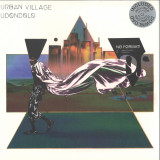
out of Stock

Order now and we will order the item for you at our supplier.

14,83

Last In: 5 years ago
Items per Page:
N/ABPM
Vinyl
