There is something of Monsieur Rêve in this sweet tekno EP... Sounds is very loud on a system and very cool at home... A true Tekhouse record then... The mabiance is kind of tracy and a bit electro... Nice tunes that do not forget to give reward to the dancefloor. A good space techno record !
Cerca:john b
Atemberaubender Exotica-Mod-Jazz aus den 1960ern, neu aufgelegt in limitierter, handnummerierter Auflage auf schwarzem Biovinyl im authentischen Tip-On-Cover samt Download-Code. John Lemon war ein vielseitiger, in Louisiana geborener Rohrblatt- und Flötenspieler, der seinen tiefen, klangvollen Tenor für alles zur Verfügung stellte, von Exotica über R&B bis zu Bebop-Jazz und allem dazwischen. Sein einziges Album "Hey Baby" ist ein sensationeller Schatz, den man selten findet - es sei denn, er erscheint auf Mo-Jazz!
The Emmy-winning Comeback Kid himself comes back yet again with a blunt, brilliantly quotable stand-up special. "Baby J" takes the form of a wide-ranging conversation between John Mulaney, a kid in the balcony named Henry, and the rest of the sold-out crowd at Boston"s Symphony Hall. And now, you! John dominates the chat, of course - and while his cautionary tales are a bit too convulsive to be functionally preventative, you probably aren"t here to be cautioned. So have at it!
- A1: Giant Steps
- A2: Cousin Mary
- A3: Naima
- A4: Village Blues
- B1: I’ll Wait And Pray
- B2: My Favorite Things, Pt. 1 (Single Version)
- B3: Everytime We Say Goodbye
- B4: Central Park West
- B5: Body And Soul
Introducing John Coltrane 'Now Playing' on Translucent Blue Vinyl - Uncover the brilliance of jazz legend John Coltrane through a tracklist uncovering rich gems, such as the iconic "Giant Steps", the soulful "Naima," demonstrating Coltrane's virtuosity and innovation, the enchanting melodies of "My Favorite Things, Pt. 1" and the tender ballad "I'll Wait and Pray" as the perfect start or continuation of your musical journey
- Permeable
- Quixotica
- Fishing For Paramecium
His list of collaborators is a who's- who of adventurous improvised music. Recently he's extended into an actual new territory, moving to Lisbon, Portugal in 2021. This new record Beast captures him playing in front of a live audience with a new multi-generational ensemble of musicians from the fertile European improv scene. Rhythm section duties are handled by the Portuguese team of Ze Almeida on bass and drummer Joao Lencastre.
Joining the band on piano is the German musical polymath Samuel Gapp, so that this recording marks the first time in John's prodigious and storied career that he has recorded as a leader with the classic piano quartet line-up. The album presents four extended improvisational settings, with half of these drawing upon John's compositional ideas as inspiration for exploring unknown territory, manipulating timbre and density as well as pitch and rhythm. "My compositions are used as frameworks, with the caveat that they are only to be used to provide cohesion when we sense the need. Otherwise, everything's wide open."
This album presents the next instalment in the journey of one of the music's greatest questing musical innovators, exploring all the possibilities opening up with a new set of collaborators in a new country.
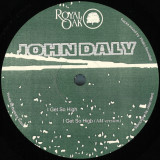
Clone Royal Oak for all things House! This one for the deep house warriors... John Daly delivering two cuts reminiscent of the early 90's NY deep house vibes. On the a-side we got the warm jazzy ''I Get So High'' in the AM mix and the original mix featuring vocals by Barbara Vulso and Saxophone by Jabin Ward. On the flip side we have the dreamy ''Two Days'' in the original version and one of those rare house mixes by Alden Tyrell & Serge who added some bump to this release. John Daly, the og Irish deep house maestro is back!
"Stepmom is a 1998 comedy-drama film directed by Chris Columbus and stars Julia Roberts, Susan Sarandon, Ed Harris and Jena Malone. The story follows a terminally ill woman dealing with her ex-husband's new lover, who soon will become their children's stepmother. Susan Sarandon was nominated for a Golden Globe Award for Best Actress in a Motion Picture - Drama for performance. The music was composed and conducted by the legendary John Williams, who already worked together with Columbus on Home Alone and Home Alone 2: Lost in New York. They would also continue to work together on the first two movies of the Harry Potter franchise. For the soundtrack of Stepmom, Williams received a BMI Film Music Award in 1999. Stepmom is available on vinyl for the very first time as a limited edition of 500 individually numbered copies on translucent green coloured vinyl and includes an insert with liner notes by Chris Columbus."
Stepmom by John Williams, released 9 May 2024, includes the following tracks: "Time Spins Its Web", "A Christmas Quilt", "Taking Pictures" and more.
This version of Stepmom comes as a 2xLP. This release comes with (a) Insert(s).
The vinyl is pressed as a translucent, green disc. Another vinyl is pressed as a translucent, green disc.
With words as weapons and public infrastructure as his blank slate, John Fekner's City Squad are always questing for the ineffable, even as they yearn for concrete change - Make no mistake, Idioblast is a serious party where everyone is welcome.
Released in 1984, Idioblast is a lost classic, a future shock narrative ahead of its time, and yet completely of its era, like few artifacts before or since. The cover tips you off from the jump--a crude but effective collage featuring classic Fekner slogans like Toxic Junkie, Growth Decay and Soft Brains Watch The Screen And Buy The Jeans. In an uncanny and tragic coincidence, the very first lyric on the album--"The place to be is on the space shuttle/if you're brave enough to get on it"--seems to anticipate the Challenger disaster just two years later.
But for the most part, the tracks on Idioblast directly reference the concepts that inspired Fekner's visual art. Musically, "Rapicasso" utilizes pneumatic pounding with an industrial edge as Fekner equates the great and controversial painter with risk-taking graffiti kids bombing trains and billboards across the city. Art is in a constant state of exploding--forms, paradigms, outdated ideas.
Splitting the difference between hip-hop and new wave, the Santaniello-sung "The Beat" is like Thomas Dolby meets Run-DMC and should've been a radio staple for at least one sticky summer. It could soundtrack either a couples roller skate or a drug-fueled evening out. Channeling Fekner's slogan-stencil aesthetic, "Travelogue The 80's" is a tour de force reminiscent of Negativland's experiments in audio culture jamming. As Fekner details, "I grabbed all of the sounds via a shortwave radio picking up transmissions from LaGuardia airport and the TV. I recorded and edited on a Sony Pro Walkman and an Aiwa dual cassette deck."
Red Vinyl[26,26 €]
Deluxe edition Tan and Black Marble Vinyl[28,36 €]
Cassette[14,50 €]
It's been a decade since John Carpenter recorded the material that would become Lost Themes, his debut album of non-film music and the opening salvo in one of Hollywood's great second acts. Those vibrant, synth-driven songs, made in collaboration with his son Cody Carpenter and godson Daniel Davies, kickstarted a musical renaissance for the pioneering composer and director. In the years since, Carpenter, Carpenter, and Davies have released close to a dozen musical projects, including a growing library of studio albums and the scores for David Gordon Green's trilogy of Halloween reboots. With Lost Themes IV: Noir, they've struck gold again, this time mining the rich history of the film noir genre for inspiration. Since the first Lost Themes, John has referred to these compositions as "soundtracks for the movies in your mind." On the fourth installment in the series, those movies are noirs. Like the film genre they were influenced by, what makes these songs "noirish" is sometimes slippery and hard to define, and not merely reducible to a collection of tropes. The scores for the great American noir pictures were largely orchestral, while the Carpenters and Davies work off a sturdy synth-and-guitar backbone. The noir quality, then, is something you understand instinctively when you hear it, as in connected in an emotional way. The trio's free-flowing chemistry means Lost Themes IV: Noir runs like a well-oiled machine_the 1951 Jaguar XK120 Roadster from Kiss Me Deadly, perhaps, or the 1958 Plymouth Fury from John's own Christine. It's a chemistry that's helped power one of the most productive stretches of John's creative life, and Noir proves that it's nowhere near done yielding brilliant results.
Black Vinyl[24,79 €]
Deluxe edition Tan and Black Marble Vinyl[28,36 €]
Cassette[14,50 €]
It's been a decade since John Carpenter recorded the material that would become Lost Themes, his debut album of non-film music and the opening salvo in one of Hollywood's great second acts. Those vibrant, synth-driven songs, made in collaboration with his son Cody Carpenter and godson Daniel Davies, kickstarted a musical renaissance for the pioneering composer and director. In the years since, Carpenter, Carpenter, and Davies have released close to a dozen musical projects, including a growing library of studio albums and the scores for David Gordon Green's trilogy of Halloween reboots. With Lost Themes IV: Noir, they've struck gold again, this time mining the rich history of the film noir genre for inspiration. Since the first Lost Themes, John has referred to these compositions as "soundtracks for the movies in your mind." On the fourth installment in the series, those movies are noirs. Like the film genre they were influenced by, what makes these songs "noirish" is sometimes slippery and hard to define, and not merely reducible to a collection of tropes. The scores for the great American noir pictures were largely orchestral, while the Carpenters and Davies work off a sturdy synth-and-guitar backbone. The noir quality, then, is something you understand instinctively when you hear it, as in connected in an emotional way. The trio's free-flowing chemistry means Lost Themes IV: Noir runs like a well-oiled machine_the 1951 Jaguar XK120 Roadster from Kiss Me Deadly, perhaps, or the 1958 Plymouth Fury from John's own Christine. It's a chemistry that's helped power one of the most productive stretches of John's creative life, and Noir proves that it's nowhere near done yielding brilliant results.
180-GRAM VIRGIN VINYL - THE COMPLETE CONCERT. TOTAL TIME: 59 MINUTES - LIMITED EDITION
The complete April 8, 1960 concert at the Kongresshaus in Zurich, Switzerland by the splendid Miles Davis Quintet with John Coltrane on tenor sax, Wynton Kelly on piano, Paul Chambers on bass, and Jimmy Cobb on drums. Along with the frequently heard “All Blues” and “So What”, the Zurich concert has versions of “Fran Dance” and “If I Were a Bell”. “If I Were a Bell” had been first recorded by Miles and Coltrane in a quintet format in the celebrated October 26, 1956 studio session for Prestige and the Zurich version heard here is the only surviving appearance of this song from the 1960 European tour
Repress!
The ethos behind the Major Keys label is take that originally accomplished Album masterpice and give said slice of jazz brilliance its own side of a vinyl…so following the well recived maiden release of Herbie Hancock's Chameleon/Watermelon Man, what better way than to follow up with THE king 'Trane' himself, and his seminal cut "Naima" backed with My Favourite things. Exclusively on 180g for RSD.