
Buscar:john b

- 1: Inexorable (Perracide)
- 2: The Grotesque (Benediction)
- 3: In The Eyes Of Suffering (Perracide)
- 4: Raped (Deströyer 666)
- 5: Satanic Sacrifice (Nifelheim)
- 6: Domedagen (Nasum)
- 7: The Decisive Slaughter (Perracide)
- 8: Horripilation (Perracide)
- 9: The Dreams You Dread (Benediction)
- 10: Black Evil (Nifelheim)
- 11: Cut To Fit (Nasum)
- 12: Torn From The Grave (Interment)
- 13: Silence The World (Perracide)
- 14: Satanic Speed Metal (Deströyer 666)
14
Jeder, der den extremen Metal-Underground in den letzten drei Jahrzehnten auch nur halbwegs verfolgt hat, sollte mit Schlagzeug-Phantom-Lord Perra Karlsson vertraut sein. Von seinen bescheidenen Anfängen bei Wortox/Altar über frühe Vorzeigebands wie Suffer und Nasum bis hin zur Präsentation seines einzigartigen Schlagzeugspiels bei legendären Bands wie Nominon, In Aeternum, Benediction und Deströyer 666 und dem Verleihen seines Könnens an neuere Bands wie Kvaen, Devil's Force und AngelBlast scheint die Liste seiner Beiträge zum Metal schier endlos.
Nach einem Leben, das er im Underground verbracht hat, mit einer nie erlahmenden Hingabe an das Handwerk des Metals, ist sein Name zum Synonym für harte Arbeit und eine wahre Liebe für alles, was mit Metal zu tun hat, geworden. Frustriert über den Mangel an Aktivität in seinen derzeitigen Stammbands, nutzte Perra seine Unzufriedenheit, um das Feuer der Kreativität zu schüren, und so wurde "Underdog" geboren.Um dieses Monster von einem Album zu realisieren, rief der außergewöhnliche Drum-Lord zu den Waffen, die von einem Geschwader von Legenden des Metal-Undergrounds beantwortet wurden, die selten auf einem Album versammelt sind.
Mit herausragenden Leistungen von Marc Grewe (Morgoth, Insidious Disease), Hellbutcher (Nifelheim), John Zwetsloot (Dissection, Cardinal Sin), Anders Jacobsson (Nasum, Necrony, Axis of Despair), Dave Hunt (Benediction, Anaal Nathrakh), Jörgen Sandström (Grave, Entombed, Torture Division), Simon Wizén (Valkyrja, Die Hard), K. K. Warslut (Deströyer 666, Bestial Warlust) und Gord Gord Olson (Darkened) wird dieses Biest weder verleugnet noch enttäuscht werden.

5
Reptile Mob is a newly launched, vinyl-only sub-label of the well-regarded GLBDOM imprint. It kicks off with a five-track various artists release that pays homage to the garage sound. 'Don't Know It' by Highrise opens up with a distantly 90s vibe, then Sky Joose shows his class on 'On The Shores' with its hard-edged bassline and full-throttle drums. Johnny U-Tah works some re-pitched and time-stretched vocals to perfection on 'Voices In My Head', with further gems from The Thunderkats whose 'Melatron' is a piano-laced bumper and last of all Jay Ward's 'Everything That I Need' brims with vocal lushness. A top draw start for sure.

2
Repress!
Leeds soul and funk label ATA Records are proud to announce the new single from The Sorcerers. Available on 7" vinyl and Digital Download from Friday 30th March, this single is a driving Ethiojazz track aimed squarely at the dancefloor, backed by the Yorkshire Film & Television's original recording of "The Anderson Spectrum" (Later re-recorded and re-named by The Sorcerers as "The Viking Of 5th Avenue")
Taking influences from Ethiopiques Ethiojazz as well as the soundtracks to the European horror films of the 60s and 70s, The Sorcerers seamlessly blend these disparate elements into one cohesive package. Based in ATA Records' home of Leeds, The Sorcerers are made up of the cream of the city's jazz and world scene. Forming the backbone of the ATA Records house band they incorporate bass clarinets, flutes, and vibraphone alongside bass, guitar organ and drums, providing Ellingtonian textures on top of a solid rhythmic foundation.
Initially inspired by the work of Ethiopian composer Mulatu Astatke, The Sorcerers have developed their sound from the foundations laid out on their debut LP "The Sorcerers"."In pursuit of Shai Hulud" eschews the atmospheric textures of their previous material, replacing them with driving percussion and propulsive bass. Organ and flute tear into the melody as temple blocks beat out an insistent rhythm throughout.
The B-Side ("The Anderson Spectrum") is the original track from The Yorkshire Film & Television Orchestra that The Sorcerers re-recorded and re-named "The Viking Of 5th Avenue" when they recorded it for their debut. Tremolo-fuzz guitar and heavy brass place the track firmly in the sonic realm of 1960s British Library Music, bringing to mind the work of John Barry and Portishead rather than Mulatu Astatke.

- A1: Traffic In The Sky (Lee “Scratch” Perry)
- A2: Wasting Time (Subatomic Sound System)
- A3: No Other Way (Dennis Bovell)
- A4: Tmes Like These (Lee “Scratch” Perry)
- A5: Calm Down (Dennis Bovell)
- A6: Better Together (Nightmares On Wax)
- B1: One Step Ahead (Scientist)
- B2: Breakdown (Nightmares On Wax)
- B3: Turn Your Love (Mad Professor)
- B4: You Can’t Control It (Yaadcore)
- B5: It’s All Underground (Monk)
11
In March 2020, Jack reached out to Lee “Scratch" Perry to produce a dub remix album based on Jack’s most loved recordings. On 8/29/21 the project was brought to a halt as Scratch departed this physical world. In ‘22 Jack and Subatomic Sound System, Perry’s band of the last decade, connected directly and discovered they had all the pieces to bring Lee “Scratch” Perry’s 3 creations to completion. The LP also features dubs from Dennis Bovell, Scientist, Mad Professor, Nightmares on Wax & more.

- A1: Electric Light Orchestra - Mr Blue Sky
- A2: Gerry Rafferty - Baker Street
- A3: Rod Stewart - Da Ya Think I'm Sexy?
- A4: 10Cc - Dreadlock Holiday
- A5: Justin Hayward - Forever Autumn
- A6: Wings - With A Little Luck
- A7: Kate Bush - The Man With The Child In His Eyes
- B1: Bonnie Tyler - It’s A Heartache
- B2: Suzi Quatro - If You Can't Give Me Love
- B3: Clout - Substitute
- B4: Crystal Gayle - Don't It Make My Brown Eyes Blue
- B5: Elton John - Part-Time Love
- B6: Billy Joel - Movin' Out (Anthony's Song) (Anthony's Song)
- B7: Joe Walsh - Life's Been Good
- B8: Blue Öyster Cult - (Don't Fear) The Reaper (Don't Fear)
- C1: Donna Summer - Macarthur Park
- C2: Chic - Le Freak
- C3: A Taste Of Honey - Boogie Oogie Oogie
- C4: The Three Degrees - Givin' Up Givin' In
- C5: Chaka Khan - I'm Every Woman
- C6: Yvonne Elliman - If I Can't Have You
- C7: Odyssey - Native New Yorker
- C8: Earth Wind & Fire - Fantasy
- D1: The Boomtown Rats - Rat Trap
- D6: Elvis Costello & The Attractions - (I Don't Want To Go To) Chelsea (I Don't Want To Go To)
- D7: The Jam - Down In The Tube Station At Midnight
- D8: Patti Smith - Because The Night
- E1: Abba - Take A Chance On Me
- E2: Baccara - Sorry, I'm A Lady
- E3: Boney M - Rivers Of Babylon
- E4: Althea & Donna - Uptown Top Ranking
- E5: Blondie - Denis
- E6: Olivia Newton-John - Hopelessly Devoted To You
- E7: Renaissance - Northern Lights
- E8: Dean Friedman - Lucky Stars (With Denise Marsa)
- F1: Marshall Hain - Dancing In The City
- F2: Eruption - I Can't Stand The Rain
- F3: Dee D Jackson - Automatic Lover
- F4: Sarah Brightman & Hot Gossip - I Lost My Heart To A Starship Trooper
- F5: Hot Chocolate - Every 1'S A Winner
- F6: Commodores - Three Times A Lady
- F7: Rose Royce - Wishing On A Star
- D2: The Undertones - Teenage Kicks
- D3: Buzzcocks - Ever Fallen In Love (With Someone You Shouldn’t’ve) (With Someone You Shouldn’t’ve)
- D4: Siouxsie & The Banshees - Hong Kong Garden
- D5: The Rezillos - Top Of The Pops
46
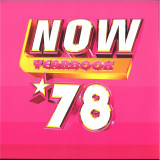
NOW Music is proud to present the next instalment in our ongoing ‘Yearbook’ series, NOW – Yearbook 1978; 85 tracks from a magical year in Pop! The 85 track special edition CD is housed in ‘hard-back-book’ packaging, including a 28-page booklet featuring a summary of the year, a track-by-track guide, a quiz, and original singles artwork. NOW – Yearbook 1978; 46 tracks on a 3LP set pressed on translucent pink vinyl - from a magical year in Pop!
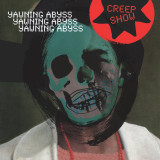
In the five years since Creep Show’s acclaimed Mr Dynamite album was released it’s fair to say that we’ve all been through a fair bit. Sitting here, in 2023, things don’t seem to be getting any better. There’s the cost of living crisis and political meltdowns; we're in deep water with global warming and to top it all there’s a war on our doorstep.
Back in 2018 everything seemed less complicated. Sure, there was stuff to get riled about, but we knew nothing about what was to come. Mr Dynamite was a fairground ride into the dark corners of a world that was on the brink of being blitzed in a blender. It was a record teetering on the edge. Five years down the line you’d expect the follow-up, Yawning Abyss, would double-down and bring the white-knuckled, teeth-gritted fury of the last five years to the boil. And yet….
A quick recap? No problem. Wrangler + John Grant = Creep Show. And Creep Show? “A band of musical misfits who have found a voice or two”, says Wrangler’s Ben “Benge” Edwards, whose Bond villain studio on the edge of a moorland is Creep Show Grand Central as well as home to an analogue synth arsenal that could sink ships.
Wrangler have known each other for a while. Tunng’s electronics wizard Phil Winter and Cabaret Voltaire’s trailblazing, pioneering frontman Stephen Mallinder go way back, while Phil and Benge crossed paths in the 21st century when they seemed to be increasingly in the same venues at the same times. Meanwhile, Mal had been living in Australia since the mid-90s and when, in 2007, he returned to the UK his old pal Phil suggested he meet Benge and the three of them immediately began working together.
Wrangler collectively bumped into Grant at their soundcheck for Sheffield’s Sensoria Festival in 2014 where they were playing with Carter Tutti. A friendship blossomed and when they were invited to perform together for Rough Trade’s 40th anniversary show at London’s Barbican in 2016, well, they jumped at the chance... and Creep Show was born.
Let’s talk about the new album... What is the ‘Yawning Abyss’? You might well ask. According to Mal, it’s “a cosmic event horizon that I can see from my attic window when stand on a chair”. Yeah. Thanks.
“On this album”, offers Benge, feet firmly on the floor, “Wrangler wrangled some vintage synths, mostly Roland, Moog, and the ‘Crystal Machine’ - then John Grant joined in the fun at Memetune Studios where lots of musical experiments were carried out. Then Mal and John ran off to Iceland with the master tapes and recorded a load of madcap vocals. Back at Memetune, me and Phil were left to try and make sense of it all. Which wasn’t hard because what they did in Iceland was totally magnificent.”
Which kind of brings us back to where we began. You’d imagine ‘Yawning Abyss’ would be blowing steam out of its furious ears. Mr Dynamite but kicking a wasps nest. Repeatedly. And yet…
Opener ‘The Bellows’ comes on like a modular ‘Radio Ga Ga’, the singalong ‘Moneyback’ (“You want your money back? / I didn’t think so”) sounds like Godley & Creme’s ‘Snack Attack’ meets Prince Charles And The City Beat Band (“Pennies, pounds, dollar bills, signed agreements, death wills”). ‘Yahtzee!’ is an unhinged electro breakdance party in four minutes and nine seconds.
Where Mr Dynamite was menace, a mélange of mangled voices, with Grant and Mallinder being heavily treated, pitched up or down, rendering their contributions largely indistinguishable, Yawning Abyss takes a more direct approach. You hesitate to say feelgood, but there’s a skip in the step here for sure.
The title track plays John Grant’s vocal straight. Completely. It’s good, so very good. Like ‘Axel F’ covered by Vangelis. The delicious shimmering synths of ‘Bungalow’ also plays those Grant pipes with a straight bat. ‘Matinee’ delves into darker, very funky territory. With Mal upfront it comes on like ‘The Crackdown’. Choice lyric: “You are starting to breakdown / And it’s so fun for me to see / You should have thought of that / You should have come prepared / You can see what’s happening and you look a little scared”.
So, you know, not all feelgood. But it does feel good. It’s probably best to draw your own conclusions... This is Creep Show after all.

12
Tuff Darts was an American punk rock band. They reached their greatest fame in the mid-late 1970s with such songs as “Slash”, “(Your Love Is Like) Nuclear Waste” and their biggest single, “All for the Love of Rock and Roll”, which was originally recorded by Ram Jam. The band appeared at popular New York City clubs like Max’s Kansas City and CBGB and featured Tommy Frenzy (vocals), Jeff Salen (guitar), Bobby Butani (guitar), John DeSalvo (bass), and John Morelli (drums). In 1978, the group released their debut album Tuff Darts!, on Sire Records, produced by Bob Clearmountain and Tony Bongiovi.
This NYC punk rock classic, Tuff Darts!, is available as a limited edition of 750 individually numbered copies on translucent red coloured vinyl and includes an insert.

7
Brazilian soul, psych, bossa and jazz, reimagined from Berlin, via the Dead Sea, on Moriah Plaza’s dreamy first album for Batov Records.
Moriah Plaza co-founders Tamir Chen and Moosh Lahav first encountered and fell in love with the beautiful and hypnotic sounds of Brazilian bossa nova and samba as children in Tel Aviv in the nineties, via the many local bands and tribute groups that had sprung up since the first wave of bossa had hit swept across the world. Likewise
they developed a fascination with elevator muzak, film soundtracks, and even the hotel pianist performing day-by-day in the lobby of the Sheraton Moriah where Tamir’s mother worked, overlooking the Dead Sea.
Relocating years later to the vastly different environment of Berlin, capital of a country that enjoyed its own Brazilian moment, Tamir and Moosh’s shared passion for Brazilian music would encourage them to create their own songs inspired by the warm pulse of Brazil, albeit a world apart, through a vastly different lens.
Whilst the initial inspiration for Moriah Plaza can be traced back to Tel Aviv and the Dead Sea, the band itself was conceived by Tamir and Moosh in Solarium Studio, Berlin, from the broken fragments of their former shoegaze band, Soda Fabric, who had the honour of backing outsider legend Daniel Johnston. They would go on to write and record their debut album in close collaboration with two Brazilians and fellow Berlin residents,, poet and singer Cecília Erisman, and singer, songwriter, synth operator and Tropical Disco Club founder Flavia Annechini.
The album opens with “Desendereçada”. Dirty drum machine beats thud away under flutes and extraneous noises and a spoken word commentary. The oddness and allure of the intro is a perfect introduction to the world of Moriah Plaza.
The pace picks up on “Mais Amor”. A beautiful Brazilian soul jazz number with a sublime vocal from Flavia Annechini that will surely appeal to the global dancefloor jazz scene. “Te Peço” daws us in deeper with sweetest jazz vocal over an irresistible bassline and bossa drums that transforms halfway through into a modern soul rhythm crowned by flute and horns. A flute solo from Moosh Lahav leads us into the final uplifting refrain.
The Pharoah Sanders meets Ravi Shankar in Rio grooves of “Estelar”
have that fresh feeling that will certainly appeal to fans of modern favourites Rebecca Vasment and Ruby Rushton. Next up, the mysterious “Lagoon de Merim” is practically two songs in one, the first half an atmospheric string-topped number somewhere between Arthur Verocai and Cinematic Orchestra, before snappy drums beats and playful organ chords introduce a slow brassy samba that fills the whole sonic room.
“Teu Porto” is a must for all DJs, mixing calypso, highlife and house, lilting guitars and smooth vocals by Cecilia Erismann.. The deep samba house grooves of “Samba Moosh” close us out. The rich blend of sweet vocals, soaring flute and gritty synths carry us off into the sunset.
Moriah Plaza’s self-titled debut album is a major addition to the global soul and jazz scene. providing the perfect summer soundtrack for music lovers around the world.

Akhenaten was the first album Nat released on the fledgling Gondwana label back in 2009,
it was the second release on the label and has remained a hugely popular and much sought after album ever since.
Jazzman Records issued a vinyl version in 2016 (which quickly sold out and is now a collector’s item)
and Nat reissued a CD version a few years later, but this is a much needed and long awaited new vinyl pressing.
Featuring four original compositions the album is a deeply meditative offering of heartfelt Spiritual Jazz,
in the classic mode of late 1960s/early 1970s John & Alice Coltrane and Pharoah Sanders

- A1: A World Without Love – Peter & Gordon
- A2: Wishin’ And Hopin’ – Dusty Springfield
- A3: Don’t Throw Your Love Away – The Searchers
- A4: Beat Girl (1993 Remaster) – The John Barry Orchestra
- A5: Starstruck – The Kinks
- A6: You’re My World – Cilla Black
- B1: Wade In The Water (Live At Klooks Kleek) – The Graham Bond Organisation
- B2: I’ve Got My Mind Set On You – James Ray
- B3: (Love Is Like A) Heat Wave – The Who
- B4: Puppet On A String – Sandie Shaw
- B5: Land Of 1000 Dances – The Walker Brothers
- B6: There’s A Ghost In My House – R. Dean Taylor
- C1: Happy House – Siouxsie & The Banshees
- C2: (There’s) Always Something There To Remind Me – Sandie Shaw
- C3: Eloise – Barry Ryan
- C4: Anyone Who Had A Heart – Cilla Black
- D1: Last Night In Soho – Dave Dee, Dozy, Beaky, Mick & Tich
- D2: Neon (Soundtrack Edit) – Steven Price
- D3: Downtown (A Capella) – Anya Taylor-Joy
- D4: Downtown (Uptempo) – Anya Taylor-Joy
20
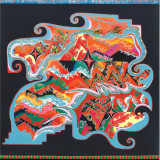
The next chapter of the Natural Information Society is here. Since Time Is Gravity, credited to Natural Information Society Community Ensemble with Ari Brown, presents a newly expanded manifestation of acclaimed composer & multi-instrumentalist Joshua Abrams nearly 15 year, 7 albums &-counting flagship ensemble. Joining the core NIS of Abrams (guimbri & bass), Lisa Alvarado (harmonium) Mikel Patrick Avery (drums) & Jason Stein (bass clarinet) are Hamid Drake (percussion), Josh Berman & Ben Lamar Gay (cornets), Nick Mazzarella & Mai Sugimoto (alto saxophones & flute), Kara Bershad (harp) & Chicago living legend of the tenor saxophone Ari Brown. Recorded live to tape at Electrical Audio & The Graham Foundation, cover painting Vibratory Cartography: Nepantla, by Lisa Alvarado. 2xLP on Eremite USA, 2xLP & CD on Aguirre/Eremite Europe. Out 14-04.
Since first developing Natural Information Society in 2010, Joshua Abrams has been gradually expanding the group’s conceptual underpinnings, its musical references & the sheer number of the group’s members. Its music is, in a sense, an expansive form of minimalism, based in repeated & overlaid rhythmic patterns, ostinatos & modality. Its roots, its scale & its meaning become clearer in time. If time is gravity, it also allows us to carry more. Having begun as fundamentally a rhythm section with Abrams’ guimbri at its core, the version here can stretch to a tentet, including six horns.
Abrams has been expanding his minimalism gradually, but he has long understood a key to minimalism’s potential: the breadth of its roots in the late 1950s & early 1960s, ranging from the dissatisfaction of young European-stream composers with the limitations of serialism to the simultaneous dissatisfaction of jazz musicians with the dense harmonic vocabulary of bop & hard bop. The former began exploring rhythmic complexity & narrow tonal palates in place of harmonic abstraction (Steve Reich’s Drumming, Philip Glass’ Music with Changing Parts; perhaps above all Terry Riley’s In C & his late ‘60s all-night organ & loop concerts); the later reduced dense chord changes to scales (signally with Miles Davis' Kind of Blue, but rapidly expanding with John Coltrane’s vast project). In the 1950s the LP record opened the world with documentation of Asian & African musics, key influences on both minimalists & jazz musicians. If John Coltrane’s soprano saxophone suggested the keening shehnai of Bismillah Khan, the instrument was rapidly taken up by two key minimalists, LaMonte Young & Riley, similarly appreciative of its flexible intonation, the same thing that kept it out of big bands.
If the guimbri, the North African hide-covered lute that Abrams plays with NIS, involves a rich tradition of hypnotic healing music associated with the Gnawa people, Abrams’ music also touches on other musics as well — other depths, memories & healings, different drones, rhythms & modes. As the group expands on Since Time Is Gravity, he has made certain jazz traditions in the same stream more explicit as well. If there is a mystical & elastic quality involved in the experience of time, both in direction & duration, you will catch it here. The parts for the choir of winds expand on the roles of Abrams’ guimbri, Mikel Patrick Avery & Hamid Drake’s percussion & Lisa Alvarado’s harmonium: at times, the winds are almost looping in the tentet version, each hitting a repeating note in turn, at once drone & distinct inflection on temporal sequence. The brilliance of the work resides in Abrams’ compositions, the NIS’ intuitive execution & in Ari Brown’s singular embodiment of the great tenor saxophone tradition, including the oracular genius of Eddie “Lockjaw” Davis, & Yusef Lateef. The three pieces by the expanded NIS featuring Brown —the opening “Moontide Chorus” & “Is” & the ultimate “Gravity”— have an immediate impact, & togther might be considered a kind of concerto for tenor saxophone. Here Brown presses almost indistinguishably from composed melody to improvised speech, getting so close to language that he might have a text. Everything here is a sign. Note the tap of the Rhythm Ace that links “Moontide Chorus” to “Is”, the attentive heart always present, even when signed by a machine. There’s a link here to the methodologies & meanings of dub music & the linear & vertical collage of beats, textures & tongues: treated with reverence, a sample of a beat-box can be as soulful, as hypnotic, as a mbira or a tamboura. If those pieces with Brown are heard as a suspended concerto, the three embrace & enfold the other works, like the sepals of a flower. That placement will also touch on the mysteries of our perception of time.
Particularly in “Is”, but elsewhere as well, a phenomenon of transcendence arises in which time appears to be tripartite, at once moving backwards & forwards & standing still. This is an act of technical brilliance certainly, but also an illumination of music’s ability to represent temporal consciousness through polymetrics. This particular listener has only heard it before in a few places, including the horn shouts & bowed basses of Coltrane’s Africa, in moments of Charles Mingus’ The Black Saint & the Sinner Lady, in certain pieces where tapes were literally running backwards, & earlier still in Dizzy Gillespie’s Cubana Be, Cubana Bop, in which the composer George Russell & conguero Chano Pozo found a music that spoke at once in the voices of Stravinsky’s Rite of Spring & the vestigial rites, rhythms & songs of the Yoruba language & Santeria religion of inland Cuba.
In Joshua Abrams’ compositions & the realization of them by the NIS, in the time of one’s close listening & memory thereof, distinctions between the “natural” & the “social”, the “quotidian” & the “transcendent” are erased, suspended or perhaps irrelevant. Consider two of the ensemble pieces, one named for nature, the other social science. In “Murmuration” the repeated wind figures of flute & alto saxophone combine with the interlocking patterns of harp, guimbri & frame drum (tar) to create a perfect moving stillness, not an imitation but a witness to the miracle of the starlings’ astonishing collective art, a surfeit of beauty that might be the ultimate defense tactic.
“Stigmergy” takes its name & concept from the Occupy movement’s Heather Marsh, who proposes a social system based on a cooperative rather than competitive models, one in which ideas are freely contributed & developed as ideas rather than an individual’s property. In its form, Abrams’ “Stigmergy” is the closes thing to traditional jazz, a series of accompanied solos by each of the wind players. However, the composed accompaniment is a radically collectivist notion: a repeated rhythmic figure, call it ostinato or riff, in which the different winds each play only a note or two of the figure, a concept both more collectivist & individualistic in its conception than any typical unison figure. It suggests another of the underlying recognitions that propel the Natural Information Society, the group as social organism, the teleology of hypnotic anarchy, all parts in place, functioning systematically, evolving & expressing itself, its nature & society, as a transformative organism.
George Lewis has described music as “a space for reflection on the human condition”. This suggests that, rather than a “distraction”, at least some music might serve as a distraction from distraction. It’s a focus, a clarity, a awareness, an external invitation to interiority, as if music itself is a model for form & contemplation, an organism contemplating for us or as us. If that is a possibility, & I am sure I have heard such musics, than this music is among them. How many of our rhythms, melodies & harmonies (cultural, historical, biological, psychic) might such music carry, translate & transform in the particulate ecstasy of our own murmuration? (Stuart Broomer, April 2022)

After the success of Codeine's Frigid Stars LP, the trio of Stephen Immerwahr, John Engle, and Chris Brokaw booked time at Harold Dessau Recording in June 1992 to track an eight-song sophomore album. A few days and a couple of unexplainable high-pitched frequencies later, the record was scrapped, shelved, and forgotten about. Brokaw left the band shortly after, and these songs were re-tracked in various iterations for Codeine's final LP. On its 30th anniversary, Numero has unearthed these recordings, restoring the original White Birch to the band's exacting standards with producer Mike McMackin. A slowcore masterpiece hidden in plain sight.

11
After the demise of Teenage Jesus and the Jerks, Lydia Lunch launched her solo career with Queen Of Siam, arguably her greatest LP. In true No Wave style, the album is a mishmash of irritants, but her palette is far broader here, lurching from slow dirges, excessive feminist exhortations, and raucous personal purges to a touch of disco and lounge music exoticism, as conjured by Voidoids/Lou Reed guitarist Robert Quine, Contortions bassist Jack Ruby, and John Cale’s drummer, Douglas Browne. Spirited, surprisingly broad and defiantly dissonant, Queen Of Siam’s dense layers were designed to provoke and inflame; listen closely to fully decode.

10
What would have happened if Michael Dudikoff had gone missing in action, say – in Poland in 1987 – during the harshest freezing spell of the century? Would he have coped under these conditions like John Rambo has in the town of Hope? We shall never find out, but the soundtrack is already there. Latarnik and Cancer G (members of EABS and Błoto) would call this film Zima Stulecia: Minus 30°C.
When Twin Peaks debuted on Polish National Television with its oneiric music by Angelo Badalamenti, Poland could feel as eerie as the series. Seemingly nothing quite matched, but on the other hand, no one was surprised. Growing up in the 1990s inevitably brings back memories of stalls selling a variety of products. You could buy there cleaning products from Germany, some underwear, Haribo jellies and Jacobs coffee, and have access to the "latest" cultural releases, which would be arriving late in Poland. This is where one could obtain pirated copies of cassette tapes and VHS, the labels of which had typewritten film titles that transported kids' fantasies to another world. With such content distribution, many of these kids got their first glimpse of Predator, Terminator, Robocop, as well as Van Damme's stunts in Bloodsport and a plethora of other B action movies, which to this day - like American Ninja - are rerun on TV over and over again. The afterimages of these soundtracks nestled in the heads of Marcin Rak and Marek Pędziwiatr for years and found expression on their debut album.
The music of Zima Stulecia is difficult to label in terms of genre. It oscillates towards melancholic electronic music. For some it will be techno, others will hear elements of house, all accompanied by improvised synth and percussion music.
Zima Stulecia is a duo that was not supposed to have any chance of success. Many years ago, back in 2006, when they were still budding musicians they met for the first time at a jazz workshop. When they found out where they both came from and that they were separated by almost 800 kilometers, despite having great chemistry in playing, they
jokingly said goodbye with the sentence: "it was fun playing together!". They figured they would never meet again. At the time, none of them imagined that in a few years' time in Wrocław they will form one of the most interesting contemporary jazz bands in Poland: EABS and Błoto. On top of that, they were both born in January 1987. The last of the historic "winters of the century" (eng. for "zima stulecia") occurred at that time in Poland, which ultimately determined their name as a band. Minus 30°C album is a recording of the non-verbal workings of these soulmates, and a fruit of a musical collaboration that has lasted for 16 years.

Weekend Recovery are back with a brand-new album ‘Esoteric’. Mixing equal measures of in-yer-face vox, overdriven guitars and straight-talking lyrics, it’s this mix that’s seeing the Sheffield indie-pop trio into editorial playlists on Apple, Deezer and YouTube alongside shows at Kendal Calling, Bingley Weekender and sell out dates including Corporation Sheffield. The first cuts from the record ‘Chemtrails’ and ‘No Guts All The Glory’ hit the airwaves with a bang, amassing plays on BBC Radio 1 Introducing (Gemma Bradley, Nels Hylton), BBC 6 Music (Steve Lamacq, Chris Hawkins, Fresh on the Net), Radio X (John Kennedy), Kerrang! Radio (Johnny Doom), Amazing Radio (Charlie Ashcroft, Shell Zenner, Frankie Francis), Absolute Radio (Frank Skinner), Planet Rock (Wyatt Wendels), BBC Sheffield (Christian Carlisle, Ellie Colton), BBC York (Jericho Keys), RTE 2 Ireland and as far as KEXP, Seattle and national USA station Sirius XM (Rodney Bingenheimer). The latest single ‘No Saint’ features Joel Arthur from local bandmates Hydeout and represents the harder edge in their third studio album.

8
También disponible
white vinyl edition[39,87 €]
Johnny The Boy - aus einer simplen Idee entstanden, und im Laufe der letzten Jahre zu einer vollwertigen Einheit entwickelt - machen Musik, die weh tut. Bewaffnet mit einer kratzigen, aber ausgefeilten Mischung aus eiskaltem Black Metal, vernichtendem Sludge und sehnigem, knochentrockenem Rock'n'Roll hat das Trio seine musikalische Identität gefunden: perfekt unvollkommen und bereit zum Ausweiden. Johnny The Boy wurde um den kreativen Kern von Sängerin Belinda Kordic, Gitarrist Justin Greaves (beide Mitglieder von Crippled Black Phoenix) und Bassist Matt Crawford (CBP-Alumnus und Live-Bassist) gegründet und begann sein Dasein als instinktiver Griff nach etwas Dunklerem und Gemeinerem.

8
También disponible
standard version[39,20 €]
Johnny The Boy - aus einer simplen Idee entstanden, und im Laufe der letzten Jahre zu einer vollwertigen Einheit entwickelt - machen Musik, die weh tut. Bewaffnet mit einer kratzigen, aber ausgefeilten Mischung aus eiskaltem Black Metal, vernichtendem Sludge und sehnigem, knochentrockenem Rock'n'Roll hat das Trio seine musikalische Identität gefunden: perfekt unvollkommen und bereit zum Ausweiden. Johnny The Boy wurde um den kreativen Kern von Sängerin Belinda Kordic, Gitarrist Justin Greaves (beide Mitglieder von Crippled Black Phoenix) und Bassist Matt Crawford (CBP-Alumnus und Live-Bassist) gegründet und begann sein Dasein als instinktiver Griff nach etwas Dunklerem und Gemeinerem.

French producer Timothee Milton debuts on Local Talk with an EP that fumes of soulfulness in every direction.
Written by Angela Johnson, the original is a big vocal deep house jam that got some hints of the 90s Jersey sound..but not too retro ;).
To give the package an extra edge we enlisted deep house connoisseur Hugo LX and boogie-house maestro Art Of Tones for the remixes, and our boys really delivered the goods.
Hugo's mix is a classy as it gets, supa bumpy deep house where everything little production detail is delivered with good taste.
The Art Of Tones remix is equally strong but goes for a more uplifting approach and puts the funk, boogie and soul front & centre.
