Almost Starlight is the extraordinary new album by Jem Finer (hurdy-gurdy) and John Matthias (violin). Produced by Jay Auborn and recorded in a Medieval Church, deep in the Devon countryside, in the Summer of 2025, the music is suffused with light, heat and the natural acoustics of the space.
The album defies categorisation; forced to pigeon hole it the nearest approximation would be ‘modern-classical’ but this ignores its myriad influences and explorations which encompass inspiration from Arvo Pärt through Terry Riley to Can via Delius, Alice Coltrane and a subtle reimagining of electronic music played purely with acoustic instruments, bending and shaping their possibilities in surprising and unexpected directions.
Jay Auborn plays cello on a number of the compositions and his production opens up and expands the music through a skilled and imaginative use of space, paying homage to the atmosphere of the church; ‘the sound evolved… chasing the imagined acoustics of that church in my mind; a place for worshipping light with sound.’
Almost Starlight will be released on the 4th September by Touch, available as CD, vinyl, cassette and on streaming platforms.
BIOS OF THE ARTISTS
Jem Finer
Since studying computer science in the 1970s, Jem Finer has worked in various fields, including photography, film, experimental and popular music, sound recording, sculpture and installation.
Much of his work relates to systems, extended processes and extremes of scale and includes Longplayer, a musical composition repeating once every 1000 years, and the Gurdy and Hurdy stones, ancient rocks set upright in fields in East Sussex and Gloucestershire with Jimmy Cauty. Their work together includes a band, The Standing Stones, whose most recent release is Twa Sisters, featuring Iona Zajac and Daragh Lynch.
He was a founder member of The Pogues, with whom he has played, written and recorded since 1981.
Recent music revolves around a fascination with the hurdy-gurdy and includes hrdy-grdy, a cassette released by Benedict Drew’s Thanet Tape Centre. His latest collaboration, with John Matthias, Almost Starlight, will be released by Touch in September 2026.
John Matthias
Since studying Theoretical Physics in the late 1980s and 1990s, John has created music and sound in many forms, including for installation, popular music, music for film, for dance and orchestra.
Much of John’s work plays with the physics of complex systems but he is also greatly influenced by stories and song. John has collaborated with Matthew Herbert, Stanley Donwood, Jay Auborn, Radiohead, Thom Yorke, Nick Ryan and many others to create music with a variety of textures and sonorities. He is particularly interested in simplicity and form and how context informs the way music sounds.
His latest collaboration, with Jem Finer, Almost Starlight, will be released by Touch in September 2026.
out of Stock
Last delivered 27 days ago available to reorder, subject to availability
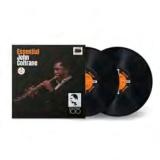
Wenn man nur eine Coltrane-LP haben kann, sollte es diese sein!
Wie fasst man das Werk von John Coltrane zusammen? Eigentlich gar nicht. Zu groß ist die Spannweite zwischen Ballade und Ekstase, zwischen Blues, harmonischer Forschung, modaler Freiheit und jener
spirituellen Suche, die insbesondere sein späteres Werk bestimmte. Coltranes Vermächtnis sprengt alle
Grenzen. Von seinen Anfängen in Philadelphia bis zu seinen ekstatischen Vorstößen in musikalisches Neuland erweiterte Coltrane die moderne Musik immer wieder um neue Dimensionen.
Auf dem Impulse!-Label finden sich seine aufregendsten Werke. „Essential John Coltrane“ versammelt
jetzt auf zwei LPs im Gatefold-Sleeve beispielhafte Aufnahmen aus einem an Sensationen reichen Katalog
und nimmt den Hörer mit auf eine Reise durch die Impulse!-Klassiker „John Coltrane and Johnny Hartman“ (1963), „Impressions“ (1963), „Crescent“ (1964), „Live at Birdland“ (1964), „Duke Ellington & John
Coltrane“ (1963) und natürlich „A Love Supreme“ (1965). Hochinteressante Linernotes steuert Marcus J.
Moore bei, Autor von Büchern über Kendrick Lamar und De La Soul
Piano Works 2016-2026 collects fourteen impromptu pieces by composer and producer John Carroll Kirby, written whenever he had the opportunity to sit at a piano while on the road. These mostly solo works for piano were recorded in Los Angeles, Rome, Tokyo, Wollongong (Australia), rural New Zealand and London. Piano Works marks a departure from the full-band sound of recent albums Blowout and Septet, which Kirby has spent the past years performing live around the world. The album is a study in piano repertoire: Baroque, Romantic, Impressionist, jazz, minimalist, atonal, and more. Most of the pieces have an impromptu feel - improvised, or meant to sound improvised, or at least written in one sitting. The collected pieces on Piano Works are a document of Kirby's life as a piano player and touring musician, and "serve as the melodic / harmonic lexicon for what would inform all my other compositions of the past ten years." John Carroll Kirby has scored two feature films, and his solo piano song "Walking Through a House Where a Family Has Lived" formed the score for Oscar-nominated short film Retirement Plan.Fans of John Carroll Kirby's cult favourite solo album Conflict will find plenty to love in Piano Works 2016-2026.
out of Stock
Last delivered 13 days ago available to reorder, subject to availability
John Williams Legacy: Seine größten Filmmusiken in einer Edition
Dieses Album versammelt einige der bekanntesten Filmmusiken von John Williams, darunter Star Wars,
Harry Potter, Jurassic Park, Indiana Jones und E.T. Das Besondere an dieser Auswahl: John Williams dirigiert seine eigenen Kompositionen selbst. Die Aufnahmen entstanden mit den Berliner Philharmonikern,
den Wiener Philharmonikern und dem Recording Arts Orchestra of Los Angeles. Ergänzt wird die Veröffentlichung durch Booklet-Texte von Journalist Jon Burlingame.
So entsteht ein Album, das viele der prägendsten Stücke der Filmgeschichte in einer hochkarätigen Einspielung zusammenführt.
John Williams Legacy: Seine größten Filmmusiken in einer Edition
Dieses Album versammelt einige der bekanntesten Filmmusiken von John Williams, darunter Star Wars,
Harry Potter, Jurassic Park, Indiana Jones und E.T. Das Besondere an dieser Auswahl: John Williams dirigiert seine eigenen Kompositionen selbst. Die Aufnahmen entstanden mit den Berliner Philharmonikern,
den Wiener Philharmonikern und dem Recording Arts Orchestra of Los Angeles. Ergänzt wird die Veröffentlichung durch Booklet-Texte von Journalist Jon Burlingame.
So entsteht ein Album, das viele der prägendsten Stücke der Filmgeschichte in einer hochkarätigen Einspielung zusammenführt.
out of Stock
Last delivered 38 days ago available to reorder, subject to availability
John Tchicai (1936 – 2012) was one of the most important free improvising saxophonists of the 20th Century: an artist of rare vision and aptitude whose lines soared and stood out even in the most hallowed company, and whose body of work as a leader / composer is among the most singular and distinct within the entire canon of that music. But Tchicai’s importance doesn’t end there. Born in Copenhagen, Denmark, to a Danish mother and a Congolese father, his life and career represent a crucial bridge between the European and American traditions of free jazz. Initially trained on violin as a child, Tchicai shifted his focus to the clarinet and alto saxophone during his mid-teens, and began touring Europe as a professional musician by his early 20s, which landed him at a socialist youth festival in Helsinki, Finland, where he met the trumpeter Bill Dixon and saxophonist Archie Shepp. Impressed by what they heard, Dixon and Shepp encouraged the young saxophonist to move to New York, and in so doing changed the history of jazz forever.
Tchicai’s arrival in New York marks the rare occurrence of a European player joining the intimate circle that was first wave of American free jazz. Following his landing in the city in November of 1962, in addition to regularly sitting in with Don Cherry’s group, Tchicai began playing with Bill Dixon's band alongside Archie Shepp and Roswell Rudd, forming the nucleus of the foundation of the New York Contemporary Five - one of the most important groups of the era - which counted Tchicai, Shepp, Cherry, Don Moore, and J. C. Moses as its members. From the ashes of this group, Tchicai would go on to found the legendary ensemble, New York Art Quartet, with Roswell Rudd, Milford Graves, and Lewis Worrell, as well as working within Albert Ayler's band, recording “New York Eye and Ear Control”, Shepp’s band, recording “Four for Trane”, the ensemble that recorded John Coltrane's “Ascension”, and the Jazz Composer's “Orchestra”.
By the time he decided to return to Denmark in 1966, had Tchicai chosen to record little else, his legacy within the history of music would have been ensured. Incredibly ambitious, his arrival home marked the beginning of an incredible period of activity which saw him radically expanding his creative explorations, which by the end of the decade would include becoming a founding member of Amsterdam's Instant Composers Pool and helping to record John Lennon and Yoko Ono's “Unfinished Music No.2: Life with the Lions”. This, however, was proceeded the formation of a new orchestra, Cadentia Nova Danica, led by Tchicai, dedicated to radical cross-disciplinary exploration. Remaining together between 1966 and 1971, the group and its shifting membership regularly fell into collaboration with artists and composers, notably Musica Elettronica Viva, who existed beyond the realms of jazz, as well as participating within multi-media events that incorporated the visual realms.
Cadentia Nova Danica’s only two LPs - “Cadentia Nova Danica” (Polydor, 1968), and “Afrodisiaca” (MPS, 1969) - are effectively Tchicai recorded efforts as a leader, and are legendary. There’s little mystery, once heard, why the later landed on Thurston Moore’s iconic “Top Ten from the Free Jazz Underground”, published by Grand Royal in 1996. Sadly, despite playing extensively during their five year run, with exception of a CD documenting a performance at Jazzhus Montmartre, in 1966, until now there has been no other publicly available recordings that allow us to capture a glimpse of this astounding band at work. Alga Marghen / Formalibera’s vinyl pressing of a never before released body of recordings, made in Copenhagen between 1969 and 1970, changes that in the most exciting of ways.
Comprising three pieces - “Mc Gub Gub, (I–VIII)”; “Ode to Skt. John”; and “Pladepip” - the material on this stunning LP comes from two specific events. The first, which encompasses the first side, “Mc Gub Gub, (I–VIII)” was recorded by Cadentia Nova Danica - in this instance, Tchicai, Sune Weimar, Theo Rahbek, Christian Kyhl, Niels Holt, Jørgen Thorup, Michael Schou, Morgens Bollerup, Allan Gregersen, Ole Matthiessen, Pierre Dørge, Willy Jaegert, Anthony Barnett, and Jon Finsen - on May 29th, 1969, at the ABC-Theatre in Copenhagen. Penned by Tchicai, the piece is a sprawling, evolutionary composition at the outer reaches of free jazz, rooted in large blocks of colliding tonality and rhythm - a sound only accessible to larger ensembles - that push territories explored by Charles Mingus to previously unimagined heights, threaded by moments of hard blown fire. Writhing like a stormy sea - skronking and devilish - “Mc Gub Gub, (I–VIII)” is a work of profound complexity that singlehandedly illuminates not only Tchicai’s singular vision as a composer, but also the power and uniqueness of Cadentia Nova Danica during the band’s most vital period.
The two pieces - “Ode to Skt. John” and “Pladepip” - taking up the flip side, were recorded on February 21st, 1970, at the Danish Broadcasting Corporation’s Radio House, and are the outcome of Cadentia Nova Danica’s extended residency there between 1969 and 1970. In many ways, these two recordings offer some of the best insights into the broad collaborative approaches that defined the band, in this case encountering them working with Danish experimental composer, Svend Erik Werner, who was among the earliest in his country to embrace stylistic pluralism and the use historical forms within a modern context. “Ode to Skt. John” - based on aspects of Gregorian music - was penned by Werner, incorporating heady improvisation by the members of Cadentia Nova Danica, this time made up by Tchicai, Sune Weimar, Hugh Steinmetz, Theo Rahbek, Christian Kyhl, Michael Schou, Morgens Bollerup, Ole Kühl, Torben Enghoff, Mauritz Tchikai, Kjeld Ipsen, Willy Jaegert, Ole Matthiessen, Ole Thilo, Pierre Dørge, Steffen Andersen, Jon Finse, and Clause Bøje. The piece is a fascinating binary of the composed and improvised, utilising the band’s large scale to introduce a remarkable sound within its slow progressions and furious, driving free moments, in this incredible meeting of worlds.
The album’s final piece, “Pladepip”, is arguably its most historically significant: an entirely singular piece, unlike anything in Tchicai’s recorded canon as his foray into musique concréte. Drawing upon two recordings of full-band improvisations by Cadentia Nova Danica, for its creation Tchicai also gouged the surfaces of 78rpm records in his collection to skip and create repeated phrases and patterns, creating a stunning sound collage of hard angles and abrupt phrase, that creates a striking counterpoint to the band’s flowing improvisations that bookend those passages. The result is an engrossing listen and easily one of the most unique and culturally important gestures in the entire history of musique concréte.
Truly incredible, Alga Marghen / Formalibera’s vinyl pressing of this never before released body of recordings, made by John Tchicai’s Cadentia Nova Danica, in Copenhagen between 1969 and 1970, offers an unprecedented window into one of the most important groups working in Europe during that period, significantly expanding their rare and slim discography to date. Accompanied by extensive exploratory liner notes by veteran jazz writer, Ed Hazell, this is easily one of the most historically important archival releases of the year and is impossible to recommend enough. Absolutely essential on every count.
Nachdem Elvin Jones 1963 gemeinsam mit dem Bassisten Jimmy Garrison, seinem langjährigen Partner aus dem John Coltrane Quartet, für Impulse! Records das Septett-Album “Illumination!” eingespielt
hatte, legte der Schlagzeuger 1965 mit “Dear John C.” sein erstes Album als eigenständiger Bandleader
bei dem Label vor. Obwohl das Titelstück des Albums natürlich eine Hommage an Coltrane war, legte
Jones großen Wert darauf, eine gewisse Distanz zur modalen Musik zu schaffen, die er seinerzeit mit dem
Quartett des Tenorsaxofonisten spielte. Dies tat er zum einen durch die Zusammenstellung des Repertoires,
das neben Stücken von Charles Mingus, Duke Ellington sowie Charlie Parker und Dizzy Gillespie auch einige
klassische Popsongs umfasste. Zum anderen besetzte er sein Quartett nicht mit einem Tenorsaxofonisten,
sondern mit dem Altsaxofonisten Charlie Mariano, der sich zuvor in der West-Coast-Szene einen Namen
gemacht hatte
Raus aus seinem Sumpf! Anlässlich des 25-jährigen Jubiläums des Kinodebüts unseres aller Lieblingsogers
präsentiert Varèse Sarabande eine neue Reissue CD der klassischen Filmmusik von Harry Gregson-Williams
und John Powell zu „Shrek“.
Das 1966 bei Impulse! Records erschienene Album “Meditations“ fing John Coltrane in einer Umbruchphase
ein. Einerseits enthielt es die letzten Aufnahmen, die der Saxofonist mit der kompletten Besetzung seines
legendären Quartetts einspielte. Zum anderen präsentierte er auf dem Album mit dem Tenorsaxofonisten
Pharoah Sanders und dem zweiten Schlagzeuger Rashied Ali zusätzlich neue musikalische Weggefährten,
die Coltranes letzte Schaffensphase mitprägen sollten. In dem suiteartigen Programm fließt die Musik als
fortwährende Meditation über Transzendenz und kollektiven Ausdruck. “Meditations” hebt Coltranes Spiritual Jazz in höhere Sphären der Energie und Abstraktion. Das Album, das oft als spiritueller Nachfolger
von “A Love Supreme” bezeichnet wird, bleibt ein kraftvolles Dokument der Transformation, Intensität und
Hingabe in Coltranes musikalischem Vermächtnis
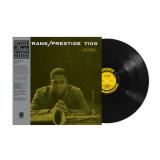
Original Jazz Classics celebrates John Coltrane’s centennial with this release of the mono edition of Coltrane. Originally released on Prestige in 1957 the album features Coltrane alongside Johnnie Splawn, Sahib Shihab, Red Garland, Mal Waldron, Paul Chambers, and Albert “Tootie” Heath. This new edition of the album is released on 180-gram vinyl pressed at RTI with all-analog mastering from the original tapes at Cohearent Audio and a Stoughton Tip-On Jacket.
John Edwards’ early releases, mainly at Aware Records under the tutelage of Floyd Smith, thrilled soul lovers with his consummate vocals and impressed the multi-million selling Spinners enough to hire him to replace their revered vocalist Philippe Wynne.
Edwards’ first Aware hits, such as ‘Stop This Merry-Go-Round’ and ‘Careful Man’, led to his eponymous debut LP. As the label’s major male artist, the company followed up by recording a second album and were probably anticipating a further hit. But Aware collapsed thanks to the label owner’s criminal activities, putting paid to that proposed disc.
When the master tapes were uncovered in the ’90s, the tracks were issued on the 1996 Kent CD ‘Careful Man’ and handful of singles were issued to great acclaim.
At last, we have collected the tracks on vinyl and the beauty of ‘Tin Man’, ‘How Can I Go On Without You’ and ‘Cold Hearted Woman’ can be enjoyed as they were originally intended. Modern soul fans will be able to sleep easily again.
John Hassall (The Libertines) & The April Rainers release their long overdue second, self- titled album. It's is the followup to 2017's Wheels to Idyll, which picked up critical applause on its release. The new album was largely recorded at John's home studio in Aarhus, Denmark where he has been living since 2009. And was produced by the band, with string player Clementine Brown having a big influence on the sound. John Hassall "These 10 songs are the ones that survived, grew and took on a life of their own. There's no way of telling if a song will make it until the end. That Pale Lantern in my opinion, started off as a rank outsider and then turned into one of the strongest songs on the album. Lessons were learnt from Wheels to Idyll and a new musical development runs through it. Whereas the last album was recorded pretty much live. The new album maintains similar classic songwriting and pop sensibilities, though with more complex arrangements and production." Most of the songs were cowritten by John and longtime poet collaborator Steev Burgess exploring memories of school days, journeys and adventures, fading dreams, ancient empires and even somebody's trinket collection. Burgess who has known Hassall for many years, wrote the lyrics to lead single Miracles, a sort of Ballad of John and Line. Libertines band mate Peter Doherty is also involved with a co-writing credit on Doing Time. John Hassall and The April Rainers will be announcing UK shows shortly, in the meantime John will be appearing with his other band The Libertines at summer festivals across Europe and the UK.
Charting the history of punk and DIY scenes from the 1970s to the present day.
Combines the life of a musician and a music journalist who tapped into the cutting edge of alternative music.
Packed with stories of well-known figures from the rock music scene.
Robb's is a life of facing down outsider struggles, overcoming career disappointments
and the DIY spirit that carried him through.
REVIEWS
'A searcher and a true believer in the magic and power of music.' - Noel Gallagher, musician.
'John Robb writes about music and culture with the insight of someone who loves it from the outside and lives it from the inside.' - Johnny Marr, musician.
'A treasure trove of bands found and lost, wracked geniuses, greasy gigs, rumbles and fumbles and moments of bliss.' - Ian Rankin, novelist.
'John Robb. OG.' -Mary Anne Hobbs, DJ and journalist.
‘Clever, witty, eloquent and so weird – he's like the brother I never had.’ Chris Packham, broadcaster.
The irresistible story of a one-man cultural phenomenon. Minister for the Counterculture, Mancunian mainstay and alternative national treasure John Robb has lived a life in music. In this book he charts his adventures on the cultural frontline, chronicling the making of a DIY icon.
Robb’s quest began in his hometown of Blackpool – where punk was a battle against the odds – and went international when he toured the world with his band. The first person to interview Nirvana, he also discovered The Stone Roses for weekly newspaper Sounds and did early interviews with The Jesus and Mary Chain and The Manics, before moving on to legends such as Mark E. Smith, Nick Cave and Patti Smith.
Along the way, he became an on-screen commentator and author of bestselling books. Robb’s memoir tells of deep friendships with figures from Poly Styrene to Chris Packham.
Packed with riotous stories, it provides an alternative account of British musical and cultural history and a triumphant blueprint for a punk rock life.
Following the genre-redefining revelations of A Love Supreme in 1965, John Coltrane began a dramatic shift toward spiritual free jazz, abandoning familiar forms in favor of a more abstract sonic palette and bold questions he'd spend the rest of his life and career pursuing. Meditations, released by Impulse! in 1966, continues that emotional throughline while retaining, for the last time in full, the classic quartet that propelled Trane to greatness: pianist McCoy Tyner, bassist Jimmy Garrison and drummer Elvin Jones. (They're further augmented by Pharoah Sanders on tenor sax and additional drummer Rashied Ali.) Meditations pushes Coltrane’s spiritual jazz into heightened realms of energy and abstraction — a powerful document of transformation, intensity, and devotion in Coltrane’s recorded legacy.