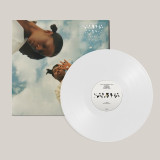
Sampha kündigt mit "LAHAI" sein mit Spannung erwartetes zweites Album an, das am 20. Oktober auf Young erscheint. Nach dem Namen seines Großvaters väterlicherseits benannt, der gleichzeitig auch Samphas zweiter Vorname ist, fließt die Musik auf "LAHAI" zwischen der Ehrfurcht vor dem Leben und der Magie der weltlichen Existenz und beschreibt das Chaos, das man erlebt, wenn man sich dem Kreislauf des Lebens und dem Jenseits stellt. Auf den 14 Tracks hat Sampha enge Freunde und Kollegen zusammengerufen - darunter fantastische Künstler wie Yaeji, Léa Sen, Sheila Maurice Grey (Kokoroko), Ibeyi, Morgan Simpson (Black Midi), Yussef Dayes, Laura Groves und Kwake Bass. Im Gegensatz zum Vorgänger "Process" ist "LAHAI" ein eher kollaboratives Album. Die neueste Single "Only", die von einem Musikvideo von Dexter Navy in Zusammenarbeit mit Sampha begleitet wird und auf dem Vorab Track "Spirit 2.0" folgt, zeigt einen extrem lebendigen Sampha, der melodisch über einen fragmentierten Hip-Hop-Beat mit Co-Produktion von spanischen Musiker El Guincho singt. Im Juni kehrte Sampha zum ersten Mal seit fünf Jahren für seine Satellite Business Residencies in London und New York auf die Bühne zurück. Das einzigartige Setup, bei dem Sampha und seine Band in der Mitte des Raums auftraten, ermöglichte den Fans einen intimen Zugang zu der improvisierten Performance neuer, unveröffentlichter Musik und alternativer Arrangements von Samphas Katalog, die das Publikum "wie gebannt" (Pitchfork) zurückließ. In diesem Herbst wird Sampha eine größere Version der Satellite Business Live-Show auf Tournee mitnehmen. Den Anfang machen mehrere Abende in London in der St. Johns at Hackney Church im Oktober, bevor er nach Nordamerika zurückkehrt, um in großen Städten aufzutreten: Los Angeles, Toronto, New York City, Chicago, San Francisco, Washington D.C., Philadelphia und Atlanta. Anfang Dezember kehrt er nach Europa zurück und spielt in Berlin, Amsterdam und Paris. Wie sein Schöpfer lässt sich auch "LAHAI" nicht in eine Schublade stecken. Das neue Album ist eine Mischung aus Jazz, Soul, Rap, Dance, Jungle und westafrikanischer Musik, mit der Sampha seine produktionstechnischen und stimmlichen Ambitionen auf ein neues Niveau hebt. Als begnadeter Sänger , Songwriter und Produzent ist es kein Wunder, dass Künstler wie Kendrick Lamar, Stormzy, Travis Scott und früher auch Drake, Solange, Frank Ocean, Beyoncé, Lil Wayne und Alicia Keys ihn für seine unnachahmliche Stimme sowie seine Beiträge zum Songwriting und zur Produktion ihrer Musik um Unterstützung baten. Zu seinen früheren kreativen Partnerschaften gehören die Modedesignerin Grace Wales Bonner, das Shy Light Zine mit Durimel (der auch das LAHAI-Artwork gedreht hat), sein Process-Film mit dem Regisseur Kahlil Joseph und kürzlich die Zusammenarbeit mit Jonny Lu, mit dem Sampha das Artwork für sein LAHAI-Album und sein neues Logo entwickelt hat. Wenn "Process", Samphas 2017 mit dem Mercury-Preis ausgezeichnetes Debütalbum, einen Künstler zeigte, der seinen eigenen Platz in der Welt suchte und schließlich auch fand, ist "LAHAI" eine Übung in der radikalen Akzeptanz und Freude am Leben und der Schönheit der Reise bis hierhin. Willkommen zu Samphas nächstem musikalischen Kapitel: LAHAI.
quête:john keys
Sampha kündigt mit "LAHAI" sein mit Spannung erwartetes zweites Album an, das am 20. Oktober auf Young erscheint. Nach dem Namen seines Großvaters väterlicherseits benannt, der gleichzeitig auch Samphas zweiter Vorname ist, fließt die Musik auf "LAHAI" zwischen der Ehrfurcht vor dem Leben und der Magie der weltlichen Existenz und beschreibt das Chaos, das man erlebt, wenn man sich dem Kreislauf des Lebens und dem Jenseits stellt. Auf den 14 Tracks hat Sampha enge Freunde und Kollegen zusammengerufen - darunter fantastische Künstler wie Yaeji, Léa Sen, Sheila Maurice Grey (Kokoroko), Ibeyi, Morgan Simpson (Black Midi), Yussef Dayes, Laura Groves und Kwake Bass. Im Gegensatz zum Vorgänger "Process" ist "LAHAI" ein eher kollaboratives Album. Die neueste Single "Only", die von einem Musikvideo von Dexter Navy in Zusammenarbeit mit Sampha begleitet wird und auf dem Vorab Track "Spirit 2.0" folgt, zeigt einen extrem lebendigen Sampha, der melodisch über einen fragmentierten Hip-Hop-Beat mit Co-Produktion von spanischen Musiker El Guincho singt. Im Juni kehrte Sampha zum ersten Mal seit fünf Jahren für seine Satellite Business Residencies in London und New York auf die Bühne zurück. Das einzigartige Setup, bei dem Sampha und seine Band in der Mitte des Raums auftraten, ermöglichte den Fans einen intimen Zugang zu der improvisierten Performance neuer, unveröffentlichter Musik und alternativer Arrangements von Samphas Katalog, die das Publikum "wie gebannt" (Pitchfork) zurückließ. In diesem Herbst wird Sampha eine größere Version der Satellite Business Live-Show auf Tournee mitnehmen. Den Anfang machen mehrere Abende in London in der St. Johns at Hackney Church im Oktober, bevor er nach Nordamerika zurückkehrt, um in großen Städten aufzutreten: Los Angeles, Toronto, New York City, Chicago, San Francisco, Washington D.C., Philadelphia und Atlanta. Anfang Dezember kehrt er nach Europa zurück und spielt in Berlin, Amsterdam und Paris. Wie sein Schöpfer lässt sich auch "LAHAI" nicht in eine Schublade stecken. Das neue Album ist eine Mischung aus Jazz, Soul, Rap, Dance, Jungle und westafrikanischer Musik, mit der Sampha seine produktionstechnischen und stimmlichen Ambitionen auf ein neues Niveau hebt. Als begnadeter Sänger , Songwriter und Produzent ist es kein Wunder, dass Künstler wie Kendrick Lamar, Stormzy, Travis Scott und früher auch Drake, Solange, Frank Ocean, Beyoncé, Lil Wayne und Alicia Keys ihn für seine unnachahmliche Stimme sowie seine Beiträge zum Songwriting und zur Produktion ihrer Musik um Unterstützung baten. Zu seinen früheren kreativen Partnerschaften gehören die Modedesignerin Grace Wales Bonner, das Shy Light Zine mit Durimel (der auch das LAHAI-Artwork gedreht hat), sein Process-Film mit dem Regisseur Kahlil Joseph und kürzlich die Zusammenarbeit mit Jonny Lu, mit dem Sampha das Artwork für sein LAHAI-Album und sein neues Logo entwickelt hat. Wenn "Process", Samphas 2017 mit dem Mercury-Preis ausgezeichnetes Debütalbum, einen Künstler zeigte, der seinen eigenen Platz in der Welt suchte und schließlich auch fand, ist "LAHAI" eine Übung in der radikalen Akzeptanz und Freude am Leben und der Schönheit der Reise bis hierhin. Willkommen zu Samphas nächstem musikalischen Kapitel: LAHAI.
The prolific Brussels-based ensemble Razen is back on Hands in the Dark with a new stunning collection of fascinating improvisations: ‘Hier l’An 4000’.
Based upon the theme of reincarnation hypnosis and inspired by the writings of Donoso and Slauerhoff, 1940s SF drawings, sky burials and a fantasy of future music where savagery and sophistication meet, the band ventures here into reverse mesozoic exotica. Each piece leans on sampled hand percussion (by grace of the legendary Algerian percussionist Abdelmajid ‘Guem’ Guemguem), augmented by Brecht Ameel, Kim Delcour and David Poltrock’s trademark devotional approach on early music wind instruments and pre-digital keys and synthesisers, spiralling down into their own rabbit hole of repetition and changes.
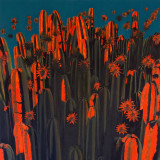
As gorgeously illustrated by the contemporary British painter Nicholas William Johnson: whilst proposing a futuristic trance-like trek through magenta night skies, toxic radiations and a hostile flora, Razen has never sounded more ecstatic and disruptive.
Classic Jazz Album from 1978.
Featuring an all-star line-up.
First ever vinyl reissue since 1986.
Released for the first time in the UK & North America.
180g BLACK vinyl limited to 500 copies (w/obi strip).
Curtis Fuller (December 15, 1932 – May 8, 2021) was an American jazz trombonist best known for being a member of several legendary jazz outfits, his impressive catalog of solo albums and a contributor to many classic jazz recordings.
Fuller was born in Detroit and lost both his parents at a very young age. He spent several years in an orphanage run by Jesuits where he developed a passion for jazz after one of the nuns there took him to see his first live performance. Curtis attended public school in his hometown (together with Donald Byrd and Milt Jackson) where he took up the trombone at the age of sixteen.
Curtis Fuller was a well-respected member of iconic outfits such as Art Blakey & The Jazz Messengers, Art Farmer’s Tentet, The Benny Golson Quintet and Eastern Rebellion. The list of his collaborations is impressive to say the least, Mr. Fuller recorded and performed with greats such as Quincy Jones, John Coltrane, Count Basie, Dizzy Gillespie, Freddie Hubbard, Roland Kirk Rashaan, Miles Davis…and many others.
Fuller was granted an honorary doctorate of music from Berklee College of Music in 1999 and eight years later he was honored as a NEA Jazz Master. Curtis Fuller’s performances were included on classic recordings released by prominent labels from the likes of Blue Note, Savoy, Prestige, Strata-East, Muse, Verve and Impulse!
On the album we are presenting you today: Four On The Outside (Recorded in 1978 at the famous New York CI Recording Studio and released on Timeless Records the same year) the listener is treated to six majestic tracks of the highest caliber and features a remarkable outing of advanced musicianship by jazz-giants in their prime, delivering an inspirational gem of an album.
The all-star line-up includes Pepper Adams (Oliver Nelson, Lalo Schifrin, Herbie Hancock) on saxophone, Dennis Irwin (The Jazz Messengers, Chet Baker) on bass and James Williams (Calvin Keys, Thelonious Monk) on piano.
Four On The Outside shows off Fuller’s mastery of the Trombone and this delightful set features him in a front line with Pepper Adams delivering a unique trombone-baritone saxophone combination (few others have followed this intriguing coupling). Curtis Fuller plays from the heart and is on top of his game. Expect sharp and elegant original compositions, machine gun-like spurts, angular boppish lines and top rhythm section work that never gets in the way of the horns spreading their wings. All of the above makes this record a must have for any self-respecting jazz fan or collector!
Japan has produced some exceptionally talented jazz drummers and among them is Tatsuya Nakamura, who joins the BBE Music J Jazz Masterclass Series with his album ‘Locus’ from 1984, a session covering several bases, from heavy percussive samba to meditative avant-ambient. This is the album’s first ever reissue, although a track from ‘Locus’, ‘¼ Samba’, was included on J Jazz vol. 3. Nakamura began his drumming career as a teenager, inspired after seeing the documentary film “Jazz on A Summer’s Day” and listening to his idols Art Blakey and Miles Davis. By his early twenties, Nakamura was working with such luminaries as free jazz guitarist Masayuki Takayanagi, pianist Masaru Imada and band leader & composer Mitsuaki Kanno. In the mid-70s, like several other Japanese jazz players, Nakamura decided to make the move to New York where he studied drumming with Roy Haynes, and performed with members of the AACM and players from the loft and free jazz scenes including Richard Davis, George Adams, John Hicks, and Pharaoh Sanders. Returning to Japan, Nakamura continued playing as leader of his Japanese band The Jazz Fellows and in 1979, he went into the studio as leader for the classic “Where Is The Quarter” session featuring Masaru Imada, Hideto Kanai and Kenji Mori. This session includes the original percussion heavy version of ‘¼ Samba’ and was followed by a period back in NYC during which he recorded the funky/free session ‘Rip Off’ in 1980. 1984 saw Nakamura working as leader of a heavy-duty fusion septet and in February of that year he led them in a performance at Audio Technica Hall. The album ‘Locus’ on Sea Horse Records is the label’s one and only release. On ‘Locus’, Nakamura is joined by a stellar line-up. On trumpet is Shinobu Fujimoto and he’s joined by seasoned bass player Hideto Kanai (1931 -2011) who began playing in the mid-1950s, appearing on King Recs All-Star Jazz Series before going on to be a regular fixture on the legendary Three Blind Mice (TBM) label, backing many of its leading artists. He even released his own album on TBM, ‘Ode to Birds’ in 1975. On guitar is Kazumasa Akiyama. Born in Tokyo in 1955, he taught himself guitar at 10 years old and was influenced initially by The Beatles and Ray Charles, and later Jimi Hendrix, Cream, Chicago Blues, and jazz. When he was a student, he got a chance to appear on Sadao Watanabe's radio program ‘My Dear Life’, which led him to join the Isao Suzuki Group and Mikio Masuda Group. Akiyama released his first leader album ‘Dig My Style’ in 1978 and is still an active musician. On keys is the incredible Jun Fukamachi (1946-2010). Born in Harajuku, Tokyo, Fukamachi started playing the piano at the age of three, showing an extraordinary talent, recognised as a child prodigy. He became a professional musician while still in school and released his first album ‘Portrait of a Young Man’ on Polydor in 1971.
"With this solo piano performance, he romps, he stomps, he lays back, he makes the keys cry and he makes them jump for joy" - Randy Lewis (Los Angeles Times).
This double CD treasure takes The Legendary Sessions Vol 1 and adds five unissued cuts to the bounty, including two cuts exclusive to this CD version!
Miles Davis created just one studio album with his original sextet: Milestones. And he made every moment count. Pairing with Cannonball Adderley, John Coltrane, Red Garland, Paul Chambers, and Philly Joe Jones, Davis not only laid the groundwork for the modalism that immediately followed but tailored a genuine modern-jazz masterwork laden with performances among the most explosive of his distinguished career. Sandwiched between the more famous 'Round About Midnight and the epochal Kind of Blue, Milestones remains a seminal work of art.
Sourced from the original master tapes and pressed on dead-quiet SuperVinyl, Mobile Fidelity's numbered-edition 180g LP grants each musician their own space amid broad soundstages. Afforded the benefits of a nearly non-existent noise floor and supreme groove definition, this vinyl reissue doubles as a time machine back to the February-March 1958 recording sessions.
Colors, shapes, and dimensions appear in the manner that resembles what you'd glean from behind a studio control room's window. Davis' burnished trumpet is rendered in three-dimensional perspective and seemingly coaxes the band to play with unburdened zest. Coltrane's trademark saxophone teems with lifelike tonality and images with specificity; his solos work in tandem with and against the driving rhythms. Garland's swaggering piano lines? Visualize the keys as he hits full stride, the chords and fills slithering around skeletal frameworks.
Inducted into the Grammy Hall of Fame and selected as a "Core Collection" record by the Penguin Guide to Jazz, Milestones is as famous for its title track – widely considered ground zero for modalism and bolstered by Jones' hallmark "Philly Lick" rim shot – as the players that produced it. The launching pad for many of Davis' improvisational flights, the album teases the explorations Coltrane would soon chase. Davis' own solo work broaches territories that far exceed what he had done in his bop-rooted past. Every song is a highlight.
Take the bravado "Dr. Jackle," featuring a hot-foot pace and bebop strains, or "Sid's Ahead," which continues the album's blues theme while juggling edgy harmonics and inside-out structures. On "Billy Boy," distinguished with an arco bass solo from Chambers, Garland gets a turn in the spotlight and channels the openness practised by one of his heroes, Ahmad Jamal. Even more instructive is the band's reading of Dizzy Gillespie's "Two Bass Hit." Three years removed from the version Davis and company recorded for the trumpeter's Columbia debut, this interpretation demonstrates the extent to which the group had jelled in a relatively short amount of time.
Then there's "Straight, No Chaser," the definitive rendition of Thelonious Monk's signature piece. Coltrane's marbled playing pulls at the tune's borders, Adderley takes liberty with solos, and Davis dances around his mates, at one point quoting "When the Saints Go Marching In" while demonstrating his knowledge of tradition and casting an eye towards the future.
About that future. Garland already had one foot out the door during the Milestones sessions to the extent Davis spells him on "Sid's Ahead." Jones would stick around for a bit longer but soon plot his exit. History proves Davis navigated the changes with visionary aplomb. Yet the chemistry, excitement, and beauty the sextet achieves on Milestones cannot be overstated. This reissue helps put the album in proper perspective – and presents the music the fidelity it deserves.
Julian Cannonball Adderley's only Blue Note album, Somethin' Else, would likely forever be famous in music lore if just for the presence of Miles Davis. The iconic composer/trumpeter steps into the role of sideman on the 1958 set, one of just a handful of times he'd make such a move after the calendar passed the mid-1950s. Yet evaluating Somethin' Else strictly on Davis' involvement misses the big picture. Plain and simple, Adderley's jubilant work remains a jazz landmark due to the chemistry of its Hall of Fame personnel, enthusiasm of its participants, and sophistication of its arrangements – not to mention the reference-grade production and inclusion of the definitive renditions of two all-time jazz standards.
Limited to 6,000 numbered copies, pressed on dead-quiet MoFi SuperVinyl at RTI, and mastered from the original master tapes, Mobile Fidelity's ultra-hi-fi UltraDisc One-Step 180g 45RPM 2LP collector's edition pays tribute to the record's merit and includes the bonus track "Allison's Uncle." Offering reference-calibre sonics, this spectacular collector's version provides a clear, transparent, ultra-dynamic, and up-close view of a cornerstone effort that witnesses Adderley and Davis sharing horn duty alone for the only time in their fabled careers – an arrangement that occurred as a result of Adderley having joined Davis' majestic sextet a year prior.
The premium packaging and beautiful presentation of the UD1S Somethin' Else pressing befit its extremely select status. Housed in a deluxe slipcase, it features special foil-stamped jackets and faithful-to-the-original graphics that illuminate the splendour of the recording. No expense has been spared. Aurally and visually, this UD1S reissue exists as a curatorial artefact meant to be preserved, touched, and examined. It is made for discerning listeners that prize sound quality and production, and who desire to fully immerse themselves in the art – and everything involved with the album, from the iconic photos to the gorgeous finishes.
The vibrant potency reveals itself openly on an analogue set that provides full-range reproduction of an ensemble that also includes pianist Hank Jones, bassist Sam Jones, and drummer Art Blakey. Each and every snare hit, downbeat, and cymbal splash registered by the latter take on realistic proportions, blooming and decaying as they would right in front of you on a stage. Jones' foundational bass lines register with uncommon depth and palpability, the litheness of the strings and fullness of the instrument epitomizing the definition of rhythm. Stellar, too, are the surefooted 88s. Sublime in scale, tonality, and attack, with the delineation such you can practically separate the white and black keys in your mind. As for that liquid interplay between Adderley and Davis? Breathtakingly lifelike in timbre, naturalism, purity, and presence. This collector's version takes you there – there being Rudy Van Gelder's legendary New Jersey studio in March 1958 to witness it all unfold, again and again.
For reasons that extend far beyond the outstanding playing and flawless repertoire, Somethin' Else is without question a record you'll always want to watch and hear come together. As veteran critic Bob Blumenthal observed writing about the album four decades after its release, "The instant rapport achieved by the quintet is thus the product of much shared and common history, though the tensile strength that they create throughout created a totally unique feeling that can be attributed to the sensitive musicianship of all concerned, including the supposedly hard bopping leader and drummer." Such inimitable feeling, or emotion, courses throughout every passage, and no where more obviously than on "Autumn Leaves" and "Love for Sale."
Without question, the discreet interpretations of the Johnny Mercer and Cole Porter songs, respectively, found on Somethin' Else have long been considered part of jazz's alluring mystique. Adderley and Davis bring contrasting approaches to the table yet sound of a singular mind on "Autumn Leaves," with the latter's muted trumpet and the headliner's lush alto saxophone dovetailing into a performance that endures as a blueprint for expression, counterpoint, sophistication, fluidity, and linearity. Blues, melody, and romance pour from their horns. Their bandmates, picking up on the intimate vibe and calm mood here – as well as on the spry, head-over-heels spirit of "Love for Sale" – join in on the conversation with sharp economy and float-on-air roundedness.
Not to undersell the other three numbers, all deserving five-star status. Twelve measures in length, the title track offers a slow burn in swing. Written by Adderley's brother, Nat, the 12-bar "One for Daddy-O" transmits funk flavors. The closing "Dancing in the Dark" pops with lushness and temptation, its stream of bold colours and understated textures calling for a moonlight twirl, or at least fantasies suggestive of a memorable night. Somethin' else, indeed.
Lndon Odense Ensemble is a powerhouse quintet that combines forces from the Causa Sui/El Paraiso family tree (Jakob Skott, Jonas Munk, Martin Rude) with the vibrant, experimental London jazz scene (Tamar Osborn, Al MacSween). On two studio full-lengths, released in 2022 and 2023, they have explored the confluence of psychedelia, improvisation and cosmic jazz. On this set, recorded at the 2021 edition of Denmark's Jaiyede Jazz Festival, the energy is cranked up another notch or two. Comprised almost entirely of exclusive material not found on the two studio records these three sonic excursions dive head-on into the fiery side of the group's sound. Taking up the entire A-side "Energy Ascending" starts out as a gently flowing piece of dreamy jazz that wouldn't have sounded out of place on a late 1960s Pharoah Sanders record. As the piece evolves the guitar takes it into rock territory, where it dissolves in a mesmerising breakdown before commencing a build of epic proportions, lead by Tamar Osborn's baritone sax, channelling The Stooges as much as John Coltrane. Heavy. On the B-side things get more electronic and spacy. Here the ensemble uses album track "Sojourner" as a starting point for a new improvisation guided by Al MacSween's virtuoso keyboard work. The rhythm section creates a hypnotic foundation for layers of synths and electric keys to fully blossom and travel into cosmic territory. Limited to 300 copies on transparent ochre vinyl.
Cyphon is proud to bring you brand new music from one of Europe’s pioneers of techno and IDM, Stefan Robbers aka Terrace and Florence. His early releases for Djax-Up-Beats and his own Eevo Lute Muzique in the early 90’s were hugely influential striking a sweet spot between stark minimalism, majestic analogue lushness and dance floor grooves. In more recent years his own reinterpretation of the Detroit sound can be found on the highly regarded Dutch label Delsin.
Here on his ‘Thermionic EP’ Terrace sings out with such intensity that minds are blown. Listen to the brutal, exhilarating sequences of ‘Territorial’ which leads the new EP, and you will receive that message loud and clear. While the music is as much about the consequence of soulful depth, it is also about edgy machines communicating intimately. Sweet chords fuse and then contrast with grainy acidic sonics, leaving the tempo poised at an irresistible pace like all our futures depended on it.
As you move next onto the more subtle electro pulse of ‘Thermon’, shimmering keys dance around a frame-by-frame remembrance of robotic disco in the 23rd century. The uplifting brilliance of ‘Woodward’ follows filling the void with an explosion of colour that is all about life-affirming instrumentation, hitting you fast and loose with a cascade of arpeggios, tough drums plus an incendiary surge of melodic distraction causing the airwaves to crackle with celebration.
Completing this stunning release from Terrace are the fierce, hotwired grooves forged by ‘Ritual’, conjuring up endless combinations of an analogue model rediscovered. The sheer dancefloor animation found within each of Terrace’s productions on this EP purposefully point to and enhance Cyphon Recordings own mission to explore, propelling the emphasis forever forwards.
DJ Support:
Sean Johnston, Kevin Reynolds, Vince Watson, Gareth Sommerville, Daniele Baldelli, Dj Rocca, Massimiliano Pagliara, Craig Smith, Jason Kendig, Rarish & Yoshi Horino
Oliver Dollar’s Industry Standard welcome Detroit’s Outr Drive featuring vocalist Steffanie Christi’an for a vinyl release on the label. This package presses up the original ‘You Don’t Know’, first released on the label in 2021, with remixes from John Arnold & KON.
The original sees Outr Drive deliver a low slung, soul drenched, deep house track with a live bass line and lush keys that set the tone of a track for a wonderful vocal from Steffanie. The song is both emotive and seductive and shows off her amazing vocal range.
Detroit’s John Arnold steps up for the first remix taking his version into a deep electronic, synth driven work out, using the vocals to blistering effect over his swirling Detroit styled synth chords.
Over on the B-side we have some disco gold from Boston’s KON. He’s crafted a vintage styled disco record around the vocal that sounds truly authentic, almost feeling like it was recorded in a live session. This mix oozes quality and will be a timeless floor pleaser for the cooler floors.
Crackazat & Heist present: “Senses”. A stunning mini album that sees the artist deliver a heartwarming perspective on contemporary electronic music
On “Senses”, we see the pure talent of Crackazat come to life like never before. We’ve all danced to “Alfa” or his most recent hit on Heist “Demucha” and have heard his venture into the more poppy side of things with his 2022 album ‘Evergreen’ on Freerange. “Senses” however, is on another level. Crackazat takes you on a sonic journey exploring his musical personality with live keys, vocals, bass and production all coming from his studio in Uppsala, Sweden. The
jazzy horns that are featured throughout are recorded by Adeev and Ezra Potash, better known as the Potash twins. The duo took a sidestep from their recordings with John Legend, Robert Glasper and even Diplo to dive into this project with Crackazat and help him deliver arguably his best work to date.
The 6-track album starts off with the low-slung groove of ‘I need to know’. The whole atmosphere is warm, dreamy and seems to be written to lift your spirits, no matter where you are in life. Plucked strings, arpeggios and long horn notes give this song its energy, which is subtly supported by lo-fi drums and sparse bass licks.
“Do you think about me”, keeps the energy tight with a lovely drum groove and a sparse bass section. From the first note of the track, you get the feeling like the energy could change any moment. Halfway through this is exactly what happens, when uplifting keys and a buzzing lead take control of the track. The string arrangement is subtle enough to never overshadow the other instrumentation, but simply adds a beautiful layer to a track that’s already filled with
emotion. It’s all smiles when the energy of this track is set loose!
If “Do you think about me” is Crackazat in pop mode, “Freddie’s Groove” is Crackazat in full-on jazz mode. The nod to Freddie Hubbard is clear, and Crackazat cleverly takes ideas from both the jazz legend and his legendary French sampler, Pepe Bradock for this track. The horns are deep and moody, the groove is jazz-house at its best and Crackazat’s soft vocals have the perfect amount of fragility to fit the groove. The changeover into a stabby synth section
halfway through the track is a subtle reminder from the skilled producer that – even with all these musical elements – he can direct you to the front of the dancefloor with the twist of a note.
“Phantom” sees Crackazat move into a shuffling Latin-dance vibe. Here, the song reaches its full potential through the horn section, so it’s only fitting that this is the feature track for the Potash Twins. The Latin rhythms are lush, the key progression is on point and the energy on this track just keeps on going with layers and layers of horns, powerful vocal chops, and subtle but effective percussion changeovers.
“Endless life” is a track that feels like it’s building up momentum with every repetition. Whether it’s the broken beat groove, the offbeat keys or the sparse horn hits, chord hits or leads, there’s a certain energy in this track that takes a hold of you and simply doesn’t let go.
The outro “When we last met” is built around vibey drunk keys and a downtempo hip-hop groove. There’s a hint of old school D’angelo in this track and you can clearly hear the artist feels at ease with the path he’s taking the listener on. It’s a perfect ending to a record that showcases the beautiful world that Crackazat has crafted through his compositions and one thing is for sure: This is an album we will all keep coming back to for a long time to come.
Yours Sincerely,
Maarten & Lars
Lost private press gem "The Swimmer" by Florida native Danny Morgan, is a cool and breezy, beguiling easy glide from 1987. It should've been huge. It still could be. It's a mellow marina masterpiece and quintessentially Balearic. Over the past few years, it's gathered a cult following yet the album from which it derives is virtually impossible to come by.
Finally available on a standalone, fully remastered 12", it's been backed by an instant classic "Seahawks Swimming Through Space Remix", courtesy of those beloved cats Jon Tye and Pete Fowler.
These won't be around for long, limited to just 500 copies for the world, so don't drown in procrastination.
One listen and you'll want to dive in.
Fans of the deeply entrancing, nautically and narcotically-enhanced cuts of Dennis Wilson or Michael Nesmith’s The Prison will be instantly mesmerised by the sheer beauty of "The Swimmer". After tracking Danny down, we wanted to know more. How does something so magical come about? The man himself answered thusly:
"At the time I was running many miles on the Sanibel Island beach and doing a bit of swimming in the Gulf Of Mexico. Keeping my mind busy on a long run, I imagined a “what if” movie scene. Almost every run or swim someone is sitting there on the beach watching what goes by. Back at my desk I started finger picking some chords and the picture in my head showed up. I punched in a rhythm loop and the song was on its way.
Adrian Belew and I had the same manager Stan Hertzman so I was listening to some of Adrian’s work. I was a huge fan of Joni Mitchel and the unusual chord changes and melodies in some of her songs. All of this influenced the sound on “The Swimmer”
I had a support band at the time living in my house on Sanibel Island so we practiced a lot. We came up with an arrangement of the song and we took across the bridge to John McLane’s Important Studios and recorded it. I played finger picking acoustic guitar and sang, Tim Miller played drums, Jeff Holck played fretless bass, Dave Dust played lead guitar and John McLane played keyboards and sang harmony."
Our deep thanks must go out to Jon Tye (MLO / Seahawks / Ocean Moon) for first hipping Be With to this stunner. We returned the favour by giving him the keys to the stems and requesting a strung out remix to go on the flip - he returned having conspired with Pete Fowler to conjure a cosmically copacetic rerub with the subtropical chug of the "Seahawks Swimming Through Space Remix".
Putting together the artwork for this 12" release was an enjoyable process. It was nice to be able to flip the original sleeve for the Beach Life album by using previously unseen photos, sent to us by Danny. We wanted to create something that looks like it would've gone with the LP sleeve. We think we've cracked it. Simon Francis remastered Danny's original audio and Cicely Balston's precise cut for Alchemy at AIR Studios ensures this 12" sounds appropriately outstanding. The immaculate Record Industry pressing will ensure this previously lost masterpiece stays forever found.
- A1: Aos & Tom Bugs - Time Mo 1 (Norman Talley Mix)
- A2: On Your Way (Divinity Vocals)
- B1: Chama Piru's
- C1: Seen Was Set (Norm Talley Mix - Big Strick Vocal)
- C2: Smash (Kyle Hall Keys - Ignit-Linn Drums)
- D1: Buggin Out
- E1: You Silk Suit Wearin Mulafuk'ka
- E2: Take Ya Pik, Nik!!!!!
- F1: Ah'revolution (Poli Grip For Partials Mix'nik - Amp Fidder Vocals)
- G1: Bitch,,,,I'll Buy You Another One!!!
- H1: Heard'chew Single (John Fm Vocals)
Alex "Omar" Smith has never been one for modesty, so we shouldn't be too surprised that he's called his latest full-length - his fifth in total - The Best. To be fair, he is rather good at producing high-grade deep house, and here unveils another eleven gems. Interestingly, he's recruited an impressive cast-list of collaborators and guests, including Norman Talley, Kyle Hall, OB Ignitt and, most surprisingly of all, Bristol-based Tom Bug. Highlights are plentiful, from the dusty afro and blues influences of the tribal "Chama Piru's", and hazy, Rhodes-heavy vocal cut "AhRevolution", to the hip-wigglin' disco-house influences of "Seen Was Set", and retro-futurist, Inner City style Divinity hook-up "On Your Way".
Weekend Recovery are back with a brand-new album ‘Esoteric’. Mixing equal measures of in-yer-face vox, overdriven guitars and straight-talking lyrics, it’s this mix that’s seeing the Sheffield indie-pop trio into editorial playlists on Apple, Deezer and YouTube alongside shows at Kendal Calling, Bingley Weekender and sell out dates including Corporation Sheffield. The first cuts from the record ‘Chemtrails’ and ‘No Guts All The Glory’ hit the airwaves with a bang, amassing plays on BBC Radio 1 Introducing (Gemma Bradley, Nels Hylton), BBC 6 Music (Steve Lamacq, Chris Hawkins, Fresh on the Net), Radio X (John Kennedy), Kerrang! Radio (Johnny Doom), Amazing Radio (Charlie Ashcroft, Shell Zenner, Frankie Francis), Absolute Radio (Frank Skinner), Planet Rock (Wyatt Wendels), BBC Sheffield (Christian Carlisle, Ellie Colton), BBC York (Jericho Keys), RTE 2 Ireland and as far as KEXP, Seattle and national USA station Sirius XM (Rodney Bingenheimer). The latest single ‘No Saint’ features Joel Arthur from local bandmates Hydeout and represents the harder edge in their third studio album.
"Darktown" ist das 1999er Studioalbum des legendären Gitarristen Steve Hackett. Dieses Album wurde noch nie auf Vinyl veröffentlicht und ist das erste in einer Reihe von Veröffentlichungen aus seinem Backkatalog, die zum allerersten Mal in diesem Format erhältlich sein werden. Auf "Darktown" ist Steve zusammen mit Julian Colbeck (Keys), Roger King (Keys, Bass, Drums), Hugo Degenhardt (Drums), Jim Diamond (Vocals), John Hackett (Flute, Pan Pipes), Ian McDonald (Sax), John Wetton (Bass Samples) und vielen anderen zu hören. Enthält die 3 Bonustracks der CD-Wiederveröffentlichung von 2013. Erhältlich als Gatefold 180g 2LP mit 2-seitigem Einleger.
Tidal Waves Music proudly presents ‘Fly By Night’ for the FIRST TIME on vinyl (the album was only released as a limited compact disc back in the early nineties).
This unique record comes as a deluxe 180g vinyl edition (strictly limited to 500 copies) with obi strip.NonReturnable.
This vinyl edition also features the original painted front cover artwork by Virgil Grady (known for his work with Tribe records) and back photography by acclaimed Detroit scene photographer & author Barbara Barefield, whose work has appeared in many renowned publications such as The New York Times, LA Times, People magazine and countless others.
Released exclusively for Record Store Day 2023 (UK/Europe) and available in participating stores on April 22, 2023.
Wendell Harrison was born in Detroit in 1942 where he began formal jazz studies for piano, clarinet and tenor saxophone. At 14, while still in high school, Harrison started performing & recording professionally with artists such as Marvin Gaye, Grant Green, Sun Ra, Hank Crawford … and many others.
In 1971, Harrison began teaching music at Metro Arts (a multi-arts complex for youth) where he also connected with Marcus Belgrave, Harold McKinney and Phil Ranelin…soon after they formed the (now
legendary) Afro-centric TRIBE record label and artist collective. TRIBE used the Metro Arts complex as a vehicle to convey a growing black political consciousness. Wendell Harrison also published the very popular TRIBE magazine, a publication dedicated to local and national social and political issues, as well as featuring artistic contributions such as poetry and visual pieces.
In 1978 Harrison and McKinney co-founded REBIRTH, a non-profit jazz performance and education organization, in which many notable jazz artists have participated. Around the same time Wendell Harrison
also created the WENHA record label and publishing company, which released many of his (now classic) recordings as well as those of other artists, such as Phil Ranelin, Doug Hammond and Reggie Fields (The Real ShooBeeDoo).
In the early 1990s, Wendell Harrison was awarded the title of “Jazz Master” by Arts Midwest. This distinction led Harrison to collaborate with fellow honorees and gave him the chance to tour throughout the UnitedStates, Middle East and Africa. Even to this day Wendell Harrison's recordings for the TRIBE, WENHA and REBIRTH labels have a large worldwide fanbase.
It is on WEHHA in 1990 that Harrison released (and self-produced) the opus: ‘Fly By Night’ which we are proudly presenting you today. ‘Fly By Night’ is a monster of an album featuring an all-star line-up that
includes Doug Hammond (Mingus, Lonnie Liston Smith) on drums, Kirk Lightsey (Chet Baker, Calvin Keys) on piano, Cecil McBee (John Hicks, Pharoah Sanders, Alice Coltrane) on bass, Jaribu Shahid (Sun Ra) on contrabass and Pamela Wise (Tribe) on Piano. Harrison is killing it here with this selected ensemble (guys he grew up with in Detroit in the late 50’s, when hard bop was the thing and Miles and Coltrane were the heroes of the day). This group of talented veterans are taking this classic album to unseen heights.
On ‘Fly By Night’ the gloves come off…no more jazzy-funk or poppy-jazz. Wendell picks up his tenor for one tune but the remainder of the sessions he performs on clarinet. Wendell’s mastery coaxes the sweet piquant sound of the instrument and as it re-emerges in the contemporary jazz scene. The eight handpicked tunes demonstrate the fertile new directions Wendell Harrison has been working on, combing standards with a fresh new approach.
On these amazing recordings (recorded at the Rebirth Studios in Detroit) the listener is invited to experience a synthesis of what has been and what is now. The record shows Wendell’s trademark proficiency. All of the above makes this incredible record both timeless and as relevant today as it was back when it was initially
released.
- A1: 1916 (1:11)
- A2: Elastic Rock (4:05)
- A3: Striation (2:14)
- A4: Taranaki (1:38)
- A5: Twisted Track (5:19)
- A6: Crude Blues (Part 1) (0:54)
- A7: Crude Blues (Part 2) (2:38)
- A8: 1916 (The Battle Of Boogaloo) (2:58)
- B1: Torrid Zone (8:41)
- B2: Stonescape (2:39)
- B3: Earth Mother (5:15)
- B4: Speaking For Myself, Personally, In My Own Opinion, I Think… (1:31)
- B5: Persephone’s Jive (2:14)
Nucleus's Elastic Rock is undisputedly a milestone in Jazz-Rock. A beautiful and vital debut album, it was first released on Vertigo in 1970. Original copies are now very tricky to score and, like all the Nucleus records, it’s aged ridiculously well. This Be With re-issue, re-mastered from the original analogue tapes, shows off just why this deserves to be back in press.
Genius trumpeter and visionary composer Ian Carr was one of the most respected British musicians of his era. He was a true pioneer and saw the potential in fusing the worlds of jazz with rock, just as Miles Davis and The Tony Williams Lifetime did in the US. In late 1969, following the demise of the Rendell-Carr quintet, and tiring of British jazz, Carr assembled the legendary Nucleus. Regarding music as a continuous process, Nucleus refused to “recognise rigid boundaries” and worked on delivering what they saw as a “total musical experience”. We can get behind that.
Under bandleader Carr, Nucleus existed as a fluid line-up of inventive, skilled musicians. This constant evolution and revolution was all part of the continuous musical exploration and discovery that took jazz to new levels. And the music has kept relevant. To steal a line from a review of our re-issue of Roots, when it comes to anything Nucleus “it’s basically already hip-hop”.
The very title Elastic Rock could be regarded as the group's MO, describing a melting point between their rock and jazz impulses. Indeed, housed in a memorable gatefold jacket designed by Roger Dean, the die cut molten teardrop shape on the front sleeve opens to reveal a fiery volcanic crater. On the back, Dean's drawing has Carr with saxophonist Brian Smith, guitarist Chris Spedding, drummer John Marshall, bassist Jeff Clyne and sax, oboe and pianist Karl Jenkins in a circle, the central core of a movement and the basis for its activity.
Recorded over four days in January 1970, Elastic Rock didn't sound like any other British jazz album. Exploding out the gate, "1916" opens with Marshall's frantic pounding before melancholic horns enter. The smooth title track, "Elastic Rock" is just a gorgeous electric blues track. Light drums, gentle melodic horns, piano and a solid bassline serve as the perfect bed for Spedding's graceful bluesy guitar melodies. The serene "Striation", a Clyne and Spedding collaboration, is led by bowed bass and is the epitome of calm before the late night laid back vibe of "Taranaki" breezes along sweetly and smoothly with great trumpet and tenor.
The truly emotional "Twisted Track" is elegant with horns, while guitar is gently played with drums and bass. Initially deeply soothing, it gradually builds with various solos and duets. "Crude Blues (Part 1)" features an excellent oboe part by Jenkins with laconic guitar helping out. "Part 2" is livelier, with a heavy backbeat and great wind parts. "1916 (Battle Of Boogaloo)" features a steady bassline and great call and response parts from the horn section.
The highly-charged centrepiece of the record, the mesmeric epic "Torrid Zone" features an hypnotic bassline and hi-hat with some of the ensemble's best soloing. Brilliantly encapsulating the jazz fusion aesthetic so desired by the group, the rhythm section is rock-influenced but magically retains a laid-back jazz vibe. Just perfection. Spacey jazz in the style of In a Silent Way, the semi-ambient "Stonescape" features smooth, muted brass, warm, smokey keys and a barely-there rhythm section. Heavenly.
The bubbling, fragile restraint of "Earth Mother" partially utilises the "Torrid Zone" bassline but takes the energy in a different direction with Marshall's frenetic drumming and Spedding's unpredictable riffing. Next comes the very idiosyncratic drum solo track by Marshall in the appropriately-titled "Speaking for Myself, Personally, in My Own Opinion, I Think." The album closes with the raucous "Persephones Jive", a track that ends the album frantically, riotously, just as it began.
This Be With edition of Elastic Rock has been re-mastered from the original Vertigo master tapes, Simon Francis’ mastering working together with Cicely Balston's cut at AIR Studios to weave their usual magic with these wonderful recordings. The stunning die-cut gatefold sleeve has been restored in all its molten glory.
Their masterpiece? With breaks for dayyyyyys and an almost ambient, heavy jazz atmosphere throughout, *this* is the apex of British jazz-rock fusion. We'll Talk About It Later was first released on Vertigo in 1971 and original copies are now very tricky to score. Like all the Nucleus records, it’s aged ridiculously well and this Be With re-issue, re-mastered from the original analogue tapes, shows off just why this deserves to be back in press.
Genius trumpeter and visionary composer Ian Carr was one of the most respected British musicians of his era. He was a true pioneer and saw the potential in fusing the worlds of jazz with rock, just as Miles Davis and The Tony Williams Lifetime did in the US. In late 1969, following the demise of the Rendell-Carr quintet, and tiring of British jazz, Carr assembled the legendary Nucleus. Regarding music as a continuous process, Nucleus refused to “recognise rigid boundaries” and worked on delivering what they saw as a “total musical experience”. We can get behind that.
Under bandleader Carr, Nucleus existed as a fluid line-up of inventive, skilled musicians. This constant evolution and revolution was all part of the continuous musical exploration and discovery that took jazz to new levels. And the music has kept relevant. To steal a line from a review of our re-issue of Roots, when it comes to anything Nucleus “it’s basically already hip-hop”.
We'll Talk About It Later is arguably Nucleus's best album. Not only that, it's in the top 5 of all fusion albums. By the time Nucleus entered Trident Studios in September 1970 to record Elastic Rock's successor, they had already won a best group award at the Montreux Jazz Festival. Once again presented in a Roger Dean designed die-cut gatefold sleeve it continued to demonstrate the chemistry and interplay that worked so brilliantly on Elastic Rock; Carr's sumptuous trumpet and flügelhorn lines, Karl Jenkins's funk-filled electric keyboards, Chris Spedding's wah-wah guitar, Brian Smith's sax and the rhythmic foundation of drummer John Marshall and bassist Jeff Clyne.
The group work and insane musicianship Nucleus were famed for is in evidence from the off. The intensely funky "Song for the Bearded Lady" is absolute FIRE, blasting out the speakers to leave listeners floored. Counterpoint riffing segues into a spacious groove and a Carr trumpet solo demonstrating the influence of electric Miles from the period. The stop-start funk of "Sun Child" would appeal to Soft Machine devotees whilst the genuinely touching "Lullaby for a Lonely Child" is a lovely downtempo ballad. Featuring an understated, reflective horn line from Carr and Smith and atmospheric, shimmering bouzouki from Spedding, there's an exotic flavour which contributes to the bliss. The ominous, sleazy title track retains a swaggering menace and is not the only track to lend a sort of heavy stoner rock atmosphere. The guitars and bass are deep and low throughout, conjuring heavy psych moments to go with the actual jazz and even funk. To say this album was in conversation with Bitches Brew would not be overstating the sheer brain-frying brilliance.
The Weather Report-adjacent "Oasis" opens Side B, a colossal track featuring nearly 10 minutes of steadily building melodic horns, keys and choppy guitar riffs. So ace, it could easily go on for another 10. Mesmeric. Spedding adds unique vocals to the undeniable groove of "Ballad of Joe Pimp" whilst saxophonist Smith's duet with drummer Marshall at the conclusion of "Easter 1916" - inspired by the Yeats poem about the Irish nationalist uprising in Dublin - adopts the wildness of the most incendiary free jazz.
This Be With edition of We'll Talk About It Later has been re-mastered from the original Vertigo master tapes, Simon Francis’ mastering working together with Cicely Balston's cut at AIR Studios to weave their usual magic with these wonderful recordings. The stunning die-cut sleeve has been restored with the original gatefold window pane depicting the Irish uprising in 1916. Incredible, timeless, guaranteed spine-chills.