On November 6th, Asthmatic Kitty Records will release Worst Christmas Ever!, a single-LP collection that distills Sufjan Stevens’ expansive holiday catalog—drawn from the box sets Songs for Christmas and Silver & Gold—into one definitive collection. The album pairs fifteen favorites, selected from more than one hundred Christmas recordings, with the newly released original song "On This Christmas (It Only Gets Better)," Sufjan's first new Christmas song in nearly fifteen years.
Available on LP, CD, and cassette, Worst Christmas Ever! is the perfect introduction for new listeners and an essential addition for longtime Sufjan Christmas devotees.
"Part of what makes Sufjan Stevens' contributions to the Christmas canon so enduring and remarkable is that they're almost overpoweringly effort-intensive. He views the holidays as a labor of love—worthy of creativity and care, hard work and an ocean of ideas."
— NPR
"9 EPs and 100 recordings later, Stevens has undoubtedly accepted his reputation as a Bing Crosby for the thirtysomething NPR listener."
— Consequence of Sound
On November 6th, Asthmatic Kitty Records will release Worst Christmas Ever!, a single-LP collection that distills Sufjan Stevens’ expansive holiday catalog—drawn from the box sets Songs for Christmas and Silver & Gold—into one definitive collection. The album pairs fifteen favorites, selected from more than one hundred Christmas recordings, with the newly released original song "On This Christmas (It Only Gets Better)," Sufjan's first new Christmas song in nearly fifteen years.
Available on LP, CD, and cassette, Worst Christmas Ever! is the perfect introduction for new listeners and an essential addition for longtime Sufjan Christmas devotees.
"Part of what makes Sufjan Stevens' contributions to the Christmas canon so enduring and remarkable is that they're almost overpoweringly effort-intensive. He views the holidays as a labor of love—worthy of creativity and care, hard work and an ocean of ideas."
— NPR
"9 EPs and 100 recordings later, Stevens has undoubtedly accepted his reputation as a Bing Crosby for the thirtysomething NPR listener."
— Consequence of Sound
Yaka slips into the APPX catalogue a hi-def 8 part narrative. Coated in silky sonic camouflage the Philadelphian sound designer, producer, and apparent amphibophile, conjures an aquatic instrument-rack straight out the estuary, and re-engineers it into a kind of amphibient-bass eco-system: part poolside bio-luminescence, part Severn-side subsidence. Welling with emotion ‘Dream Big’ is a joyride with your favourite frog-sage homies. It’s devotional, yes, but with a wink. Orchestrated by a bayou-mystic who’s just as likely to kiss the ring-modulator as they is to throw a shaka from his boogie board as they carves a line down stream.
The opening track “chrysalis of peace” builds like a choral summoning, beckoning you outward. “blubstep” shakes itself off and stretches into scattered breaks, sprinkles of underworld energy flickering beneath the surface. On “la pari,” the daemons find their stride in a huge leap into bass, punctuated by vocal satire, kitschy melodic fun, and an Amazonian sweat capable of humidifying any dancefloor. “miss that beach” slows the A-side into a thoughtful drift on a lilo, the distant sounds of cousins playing while wind lifts leaves overhead.
Flipping the disc, “buggged” arrives as a beat you can imagine bounding out of a Timbaland studio, tiptoeing in and out of 4/4 club jack. “back at the pad” breaks stride with a halftime depth that keeps you poised, like the surface tension of a water droplet in zero gravity. “weavin’ web” threads ascending melodic patterns over raised nodules of rhythm. Closing the album, “secret dream” dissolves into a private horizon — something half-remembered, half-invented — left for the listener to discover on their own.
About Yaka
A sound designer and musician based in Philadelphia, Pennsylvania. Their work blends emotive aquatic ambience, thick bass layering, and playful rhythmic structures, with an essence that sits somewhere between spiritual and satirical. Their earlier releases Somewhere In That Water introduced a practice rooted in the melancholic and bitter-sweet cuteness dipped in a deep affinity for wet environments.
Beyond their solo work, Yaka co-operates Inner Most, a label run between Philadelphia and Reykjavík alongside Echinacea. The imprint has become a home for boundary-blurring electronic music and features a number of Appendix.files favourites, including a release by our own secret getii, reinforcing a shared ethos of porous scenes and cross-continental collaboration.
New album from the South African musician + creative visionary, known for her vibrant, inimitable style + affirming lyricism Full Moon is a collection of 12 songs which displays Sanelly's unique sonic fingerprint, joyous attitude, distinctive vocals + genre-bending hits. Recorded in multiple locations while on the road, Full Moon is an introspective yet kinetic display of her versatility. "I can make any genre, I have fun creating music because I'm not limited," she says. Its club- ready beats oscillate between electronic, afro-punk, edgy-pop, kwaito, + hip-hop sensibilities. Produced by Johan Hugo (Diplo, MIA, Self Esteem)
Follow-up album to cult-classic debut, Mantra Moderne.
‘Melodi’ is the second album from captivating duo Kit Sebastian (aka Kit Martin and Merve Erdem). Those familiar with the band's cult classic 2019 debut record 'Mantra Moderne' will instantly recognise their unique sound that blurs boundaries of world music, jazz and psychedelia. Not to be content replicating the same album, sonically the feel of ‘Melodi’ is a maturation. It is more diverse and provides glimpses into many different worlds from the Italian Riviera to the mountains of the Caucasus, the beaches of Bahia to the city streets of Istanbul and Paris. This joyous merging of soundscapes evokes a borderless planet with music as an international language, belonging everywhere and nowhere.
‘Melodi’ is imbued with Kit Sebastian's love of vintage records and world cinema, but it is not a retro homage. It celebrates its influences but is very much a modern record, being simultaneously brand new and retro. This is a credit to the duo's craft as musicians and songwriters, presenting their influences as a circular interaction between the present and the past rather than a linear one.
The music was written during the first UK lockdown and recorded that summer, a time of opening up that only briefly existed. In a world with a slower pace than before the Covid crisis, the band were able to spend more time experimenting in the studio. The album’s range of instrumentation has expanded from the previous record to include zithers, harpsichords, congas, bongos, bulbul tarang, and a mock-up choir on top of the synthesizers, balalaikas, organs, and saxophones. Session musicians and friends were also booked to introduce trumpet and string sections giving the album an added depth and orchestral texture. Despite the added complexity, the album was recorded using the same techniques employed for the previous album with various tape machines, bouncing back between cassette and ¼” tape for practicality and sonic abstraction. To pierce through this abstraction, the vocals are intentionally more expressive. Merve took cues from the Turkish singers of her youth, adding a slightly more melancholic, darker and more reflective style than 'Mantra Moderne’. Rooted in observations from everyday life, they speak often about the worlds and thoughts that arise from the end of the night.
Like with many of the best albums, the record seems over all too soon and has you instantly wanting to play it again. On each listen you decide on a track that you think is your favourite from the album only for it to be replaced with a different one on the next listen. The songs and production have hidden depths that seem to evolve and morph the more you devour them. Moments of pure pop, moments to fall in love, moments to contemplate. This journey is rich in musical vitamins and nourishment, but like all the best things still leaves you wanting more.
We’re teaming up with ELUCID and Fat Possum for a limited edition of 300 copies of a Rush Hour black ice coloured edition.
E L U C I D, one half of the illustrious duo Armand Hammer, is here with the full-length follow-up to 'I Told Bessie'. Further experiments in the sonic, expanding on the 'live' side of music paired with the embracing of chaos. Something you haven't heard, or not so for a very long time. E L U C I D is here to reveal the bleakness of reality.
''There is never time in the future in which we will work out our salvation. The challenge is in the moment; the time is always now.''
James Baldwin
A raw, crackling urgency runs through rapper-producer ELUCID’s new album REVELATOR like an underground power line. There is no space here for sepia-toned reminiscences or indulgent self-mythologizing. Intellectual rabbit holes have been filled in with concrete and rebar ; there is nowhere to hide and no off ramp from the audio Autobahn that ELUCID has fashioned—a renegade Robert Moses with gold fronts, bulldozing the homes of the powerful and the complicit. REVELATOR brims with the energy of now, with a refusal to look away. Carpe diem in a murder one mask.
Born in Jamaica, Queens, ELUCID has been on the cutting edge of New York’s underground scene since the mid-2000s. From the beginning, he has defied both convention and expectation. He ran with Okayplayer darlings Tanya Morgan, but his own music eschewed their throwback charm for glitchy noise experiments and bass-swamped culture jamming. His 2016 debut studio project Save Yourself (re-released in a deluxe edition last year) announced him in earnest. But in recent years, his Armand Hammer releases with partner-in-crime billy woods have received significant attention and acclaim. Serving as a followup to his last solo album—2022’s comparatively balmy I Told Bessie—ELUCID hoped to “re-distinguish” himself with REVELATOR, setting himself apart amidst the increasing attention around the music he and his friends are making together.
For ELUCID, this meant setting bold new challenges for himself. One of these was diving further into live instrumentation than ever before—”getting my Quincy Jones on,” as he puts it. The testing ground for this approach was Armand Hammer’s most recent project, 2023’s We Buy Diabetic Test Strips’ Möbius strip soundscapes, warmed with instrumental flourishes and skin-shedding beat progressions. With REVELATOR, though, ELUCID strove to create an atmosphere of chaos, embracing experimental electronics and atonal sample bursts. He worked on much of the album with co-producer Jon Nellen, who comes from a background in avant-garde and Indian classical music. “I wanted to get as freaky as I could at this moment. I wanted people to hear things, maybe for the first time, or in a way they haven’t for a long while,” the rapper explains.
ELUCID arrived at the studio with a collection of noise sources: non-referential samples, glitches and noises. Together he, Nellen, and others created forms out of them and, as ELUCID recalls, “just started playing drums with it.” Their fried, distorted sound was directly inspired by Miles Davis at his most uncompromising—specifically, the tone-clustering funk track “Rated X” from his 1974 double LP Get Up With It. At times, the pairing of rap with avant-fusion sounds also brings Emergency! from The Tony Williams Lifetime to mind, perhaps in an alternate timeline where the late drummer was listening to Ice Cube’s AmeriKKKa’s Most Wanted.
“The World is Dog,” REVELATOR’s lead single, functions as the album’s aesthetic thesis statement. Like the Davis track, the textures are punishing, the tonality is in free-fall, and the driving breakbeat of a groove cuts in and out unceremoniously. Avant-jazz bassist Luke Stewart, who appears throughout the record, holds the whole thing together just long enough for ELUCID to tightwalk over the beat. This tension is exactly where REVELATOR sets itself apart; in a time of drumless loops, and safe soul samples, this is a high-wire act with no safety net. Similarly, the song announces the themes of the album within just a few phrases, evoking the way societies accept and adjust to new levels of debasement and brutality while suffocating under the weight of history: “Can’t clock the kill, all a mystery/Forced past will eating everyone eventually/The world is dog.”
Many of the songs on REVELATOR grapple obliquely with dissolution and disenfranchisement in America and across the world—the grim realities of our domestic sociopolitical climate and our involvement in foreign conflicts. “Much of my artistic and political sensibility comes from the Black arts movement here in New York,” ELUCID explains. “Recognizing the interconnected global struggles against oppression, artists and thinkers created works and actions in solidarity with freedom movements in South Africa and Palestine.” ELUCID cites intellectuals like Amiri Baraka, Kwame Nkrumah, Audre Lorde, Sonia Sanchez, and Nikki Giovanni among his heroes. (One track on the album is specifically inspired by Lorde’s work, “SKP,” citing the scholar’s paper “Uses of the Erotic: The Erotic As Power.”) Songs like REVELATOR’s insistent closer “ZIGZAGZIG,” find ELUCID applying up-to-the-minute messaging, making explicit reference to the conflict in Gaza: “Feed a war machine…from river to sea, in lieu of peace.”
Despite ELUCID’s preference for cacophonous system overload here, the rapper also provides moments of respite. Recorded at The Alchemist’s Los Angeles studio, the laid-back, wheezing “INSTANT TRANSFER” is a collaboration with billy woods, which crystallizes their shared sense of creative determination. “With much momentum behind us and even more on the horizon, I knew a purpose, and that every step was ordered to that purpose,” ELUCID said of the experience. Meanwhile, the jittery “HUSHPUPPIES” is a playful anomaly on the track list, providing a snapshot of ELUCID watching his grandparents in the kitchen while preparing for Friday night fish fry dinners.
“Love still rules over on this side,” ELUCID says. ”I’m raising a family. We are making meaning and finding joy in the midst of all the fucked up-ness of everything around us because the alternative is cowardice and slow death. We remain rooted. We celebrate our people and our wins. Struggle is necessary.”
“IKEBANA” is one of ELUCID’s strongest statements of purpose on the record, blending the record’s heaviest themes with its most hopeful sentiments. supported by a shoutalong refrain and an urgent prog-funk groove. Breaking away from images of dissolution and crumbling societal systems that populate REVELATOR, ELUCID notes that the only way to navigate life’s bleakest landscapes is to cling to love and believe in those around you—to look forward toward something better that may or may not be possible. For the rapper, one of the album’s most trenchant lines comes during a centerpiece of a beat drop: “Being alive/I must look up.”
“The lyric ‘being alive I must look up’ is important especially in the context of this album. Much of the album imagery is harsh and reflects the actual doom some of us experience. But still I/we exist,” ELUCID explains.
Every artist is, in one way or another, the product of their time, bound by life’s leaden gravity to operate within the space of that which is already known. But there are some who are able to shake free of these ties, to shape the culture as it unfolds, to make the present their own.
Revelation, as a concept, points to the scales falling from people’s eyes—something that has been hiding in plain sight becoming clear. “The revelator relates to things that have been talked about, things that have been forecasted,” ELUCID adds. “And now they’re really here, and everyone sees it. And there’s no escaping.” REVELATOR plays out with the unmitigated power of those storms, laying waste to any genre conventions in pursuit of a certain physicality. Here, ELUCID develops a wholly distinctive musical language to explore our fractured modernity.
REVELATOR's packaging was designed by longtime Armand Hammer / Backwoodz art director, Alexander Richter.
Waves of Distortion (The Best of Shoegaze 1990-2022) is a superbly curated trip through the genre from the good folks at Two_piers, who have served up similarly excellent collections focussed on everything from French psychedelic pop to garage psych. This serves as both a fine intro and a great retrospective for existing fans that will take you down a rabbit hole and leave you wanting more. Some of the scene's original pioneers feature and there are many a timeless tune here that help to document the subtle evolution of the genre throughout the decades.
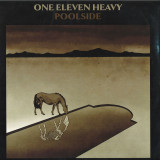
Formed in 2016 by transatlantic buds Nick Mitchell Maiato and James
Toth, One Eleven Heavy is a band designed as a Venn diagram of the
pair's shared musical loves Crazy Horse, Grateful Dead, and Dylan come to the fore when listening to their joyful third album, Poolside, but the influences go much deeper.
Toth says, We were lucky to have our touring drummer, Jake Morris (Stephen Malkmus & The Jicks) at the ready to play drums. Nick's pal, the fantastic Guy Fowler, plays bass on the record.
Guided by mysterious producer Colin Sick, One Eleven Heavy spent
a year writing and recording the tracks that form Poolside, an album that feels like a gothic western romp through cartoon dreams of escaped criminal ciphers ( Tyrant King ), rebound coke binge recollections ( Rizzo In The Wig ), and tales of sasquatches crossing state lines ( Bama Yeti ).
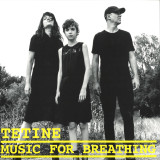
We've been writing new material as a trio since the first lockdown in the spring of 2020. An organic and electro-acoustic impulse that translates both mine and Eliete's need of self-archiving, re-inventing and auto-cannibalising Tetine's past, present and
future in order to explore other aural landscapes and modes of composing intuitively, while at the same time, re-experiencing moments of our trajectory as a hybrid organism.
Music For Breathing was born as a respiratory, meditative, and improvisatory piece of DIY tropical-mutant-punk "chamber music" written for cello, voice, piano, organ and electronics. The work responds to the suspended acts of breathing and vertigos experienced in contemporary polluted environments in political, social and philosophical transitions, whilst investigating the secret ontologies of inanimate objects and architectures, as well as the echoes and ethics of modes of operating things.
Recorded during the intense period of heatwaves that hit London between July and August 2022, in a small studio set up in our flat's kitchen - so that we could capture the acoustic instrumentation (in particular, for the recording of cellos) without much
noise interference from the street - this vinyl version of the album comprises of 5 distinct yet complementary reflective movements.
Musically and lyrically, it explores the atmospherics and syntaxes of time and space, voice, rhythm, as well as themes such as hearing loss, menopause, pollution and respiration. It builds an expanded suite of unexpected electro-acoustic textures through repetition, minimalistic motives, simple melodies, chromatic developments, free counterpoint and atonalism. Conceived as an ode to the poetics of slowness, the sounds you hear give continuity to the music we composed for the performance-film The Ether - Prelude No.1 over the first lockdown in 2020 as it simultaneously explores the warmth, melodiousness and power of the cello in conjunction with electronics. Music For Breathing evokes this transitory moment: a place and time where language runs out, communication and information lose their functions, sound and meaning do not correspond. Facts do not correspond to contexts. Spaced Out in Paradise. The last degree of the structure, the loss of memory. The lost voice.
The album also features our 12-year-old daughter Yoko Afi on cello and vocals. It reflects a period of free sound experimentation influenced both by romantic composers of the late 19th / early 20th centuries and contemporary electronic music. The pieces you hear were composed, arranged, and recorded with the joy and melancholy of "those who do not know". In other words, "with the arrogance of a second childhood" as Derek Jarman once put it. 'Agile and candid as a child'(1).
1) Manifesto da Poesia Pau-Brasil, Oswald de Andrade, Correio da Manhã, 18 de Março de 1924.
Viewtiful Joe (Casa Voyager, mindcolormusic, Fundamental) continues his run of sublime electro EPs with this joyful 5-tracker for Welt Discos. Futuristic in sound yet harking back to the heyday of breakdance in the early-to-mid 80s, these battle-ready boogie jams explode with wiggly slap bass, soaring pop melodies and the funk to make you jump. Lock in and freak out!
Reclaiming her original moniker of Kittin, electroclash pioneer - formerly known as Miss Kittin - presents Cosmos, a continuous twelve-track LP of organic, leftfield electronica due 2 November on Dark Entries. Throughout her illustrious career, Kittin has carved a considerable niche for herself, assimilating references from New Wave and 90s techno to form an inimitable sound that resonates with electronic music fans the world over. Despite being most recognizable with 'Miss' before it, Kittin was in fact her original artist name - the prefix often added without her consent at promoter's will and eventually becoming the norm.
Cosmos is her most spiritual release yet, influenced by her time in the French countryside after a bout of touring exhaustion. She gives up any formulas from her past; verses/chorus, pop or club beats, to come to the essence of chords and textures, peeling away the non-essential to find joy in music yet again. In retrieving her chosen name from more than 20 years ago, Kittin also returns to the essence of her musical journey. By liberating herself from the constraints of formal structure she opens the door to a new set of aesthetics, exploring her influences without restraint. Sonically, the voice acts a central instrument, whilst the album drives continuously forward with no breaks, paying homage to her love for ambient and electronica whilst wandering calmly into the unknown. 'With Cosmos everything is energy. We go back to the core with curiosity and freedom.' - Kittin
Fust’s first record "Evil Joy" was a bitter domestic drama obsessed with the kitchen-sink passage of time measured by moments of leaving and returning. With "Genevieve", we find a different kind of leaving: leaving behind, leaving one’s old ways, starting anew, a small life together, in “Family Country.” Thus, Genevieve: an historical name for both the saintly and the ordinary, the peasantry and the family, the community and the wife, extreme devotion and absolute forbearance. While sonically and instrumentally louder than Evil Joy, Genevieve is thematically more quiet about its pains—more settled in its ways. It is a collection of pathetic love stories written in dedication to “small life,” moving from gentle exceptions (“I can take the late hours if you’re with me”) to pitiful admissions (“I’m never going to change when I leave…”). What comes with a quiet life? The highest forms of beauty, but we also find here songs of unspeaking companions, the sublime dread of having children, the balance of humility and humiliation, playing the fool for the greater good, and… budget birthday parties. With these stories of possible growth, "Genevieve" can’t help but also feature tried and true examples of crisis and repression: seeking a bygone lifestyle in an old friend who hasn’t changed much over the years, pissing contests, search parties as the form of community for melancholics with no clue what they’ve lost, old flames you won't let go and dying flames you won’t admit. "Genevieve" was recorded throughout 2021-2022 (mostly) at Drop of Sun studio in Asheville NC by Alex Farrar. The painting by Sasha Popovici is exactly right: a domestic scene yet unfinished. Many friends helped to make it much better than it was without them—Xandy Chelmis, Michael Cormier-O’Leary, Indigo De Souza, MJ Lenderman, Courtney Werner.
The borderless, tropical band “of Tropique,” whose core sound blends funk and rock-infused exotica, releases a 12-track full-length album on vinyl LP!!
This work maximizes their core lineup as a guitar-less trio, featuring a diverse array of 14 guest musicians to construct a rich sonic landscape.
This landmark release in the history of domestic exotica and tropical music features Mutsumi Kobayashi of the Minyo Crusaders, Rockin' Enocky of Jackie
& The Cedrics, to global talents like Joshua Camp of CHICHA LIBRE and MIRAMAR, the standard-bearer of US new wave Latin bands, and more!
It's a masterpiece that delivers the full thrill, excitement, and pleasure of encountering unknown music.
Santamaria Brothers are the latest incarnation of a lifelong musical journey rooted in rhythm, rebellion, and reinvention. The children of Peruvian and Ecuadorian immigrants to Australia, brothers Pat and Andrew Santamaria grew up steeped in the sounds and culture of Latin America - a deep inheritance that coloured everything they did, even as they moved through scenes and styles far from home.
In their youth, the brothers sharpened their first musical swords playing in globally touring indie bands. As the rhythm section of cult outfit Lost Valentinos, they had the opportunity to see the world and learn from the best; touring with, working alongside, and releasing music through the likes of Soulwax, Ewan Pearson, and Kitsuné. Taking those experiences home, they dove deep into the rave underground, co-founding of the crucial Sydney-centric techno label, warehouse party collective, and long-running radio show Motorik! In that guise,they helped shape the city’s electronic music scene over the past decade from the booth, the studio, the airwaves, and the street.
Now, after years behind the decks and on both sides of the mixing board, Santamaria Brothers return to their roots - releasing music under the family name for the first time. With We Got Latin Soul, they bring it all together on a 4-track EP of club-ready edits (via Sosilly Records). Reworking four towering figures of Latin soul; Mongo Santamaria, Ray Barretto, Pucho & The Latin Soul Brothers, and Joe Bataan — the brothers inject each cut with tasteful touches of Balearic haze and chugging acid house pressure, honouring the originals while making them sing on today’s dancefloors.
This is Latin soul filtered through a unique blend of antipodean rave culture, crate-digging, and relentless reinvention. It’s joyful, percussive, and made for the club - a full-circle moment from two lifers forever finding new ways to move bodies.
nicht am Lager
Zuletzt vor 2 Tagen geliefert unverbindlich nachbestellbar
Wir denken gerne, dass unser Leben zu Geschichten geformt werden kann - klare Bögen, verständliche Bedeutungen, aber das Leben lässt sich nicht in Schubladen stecken. Stattdessen geht es unverblümt und ohne Entschuldigung weiter, ohne Rücksicht auf unser Ordnungsgefühl. El Ten Elevens ,Nowhere Faster", das 16. Album des Duos, entstand in diesem Unbehagen. In acht Tracks geht es nicht nur um das Nichts, sondern auch um Geschwindigkeit - diese seltsame Dringlichkeit, die uns vorantreibt, auch wenn das Ziel unklar bleibt. Das 33-minütige Album verlangsamt sich gerade so lange, um die schwierigen Fragen zu stellen: Wovor laufen wir weg und was glauben wir, überholen zu können? ,Nowhere Faster" entstand während der längsten Pause, die Kristian Dunn und Tim Fogarty in ihren 23 gemeinsamen Jahren von Tourneen und Aufnahmen gemacht haben, obwohl ,Pause" eigentlich nicht ganz richtig ist. Dunn ist bekannt dafür, dass er immer kreativ am Werk ist, und das hat er auch hier nicht aufgegeben. Stattdessen fing er an, nicht nur für einen, sondern für zwei Schlagzeuger zu schreiben, was Fogarty vor eine der größten Herausforderungen seiner Karriere stellte. Das Album ist auch eine Premiere für die Band, da es durchgehend echte Streicher und Klavier einbindet und damit die Klangpalette eines ihrer vielschichtigsten Werke noch erweitert. Nowhere Faster ist kein Rückzug in Nostalgie. El Ten Eleven setzt weiterhin auf Risiko und Neuerfindung. Das Album konzentriert sich weiterhin auf Fogartys treibendes Schlagzeugspiel und Dunn's bassgetriebene Experimente: Die ersten vier Tracks (,Seite A") zeichnen sich durch E-Bass aus, während die zweite Hälfte (,Seite B") zu akustischem Bass wechselt, der durch Pedale verarbeitet wird und so die emotionale Schwere des Albums subtil verändert. Letztendlich ist ,Nowhere Faster" ein Album über das Abrechnen - über Zeit, Ausdauer und die Ungewissheit, wie lange eine Band oder ein Leben dauern kann. Wir alle tasten uns an die Endlichkeit heran. Die Frage ist nicht, ob wir dort ankommen, sondern was wir auf dem Weg dorthin hören wollen. Zu welcher Musik werden wir tanzen, wenn sich der Boden unter uns zu verschieben beginnt? Wenn schon nichts anderes, dann vielleicht zu etwas, das wie ,Nowhere Faster" klingt.
Taupe’s latest album release, waxing | waning delivers jazz experimentalism, ‘skronk’, avant-rock, and electronics, by the Glasgow-based trio, due out via Minority Records. Across its seven tracks, waxing | waning captures Taupe’s approach – bold and boundary pushing – shaped by a fresh shift in the band’s dynamic and compositional approach.
Taupe’s waxing | waning, co-composed and realised by its players in a studio that was once an undertaker’s premises in Glasgow, is an absolutely affirmative album, an act of cultural defiance in desperate times.
Comprising Mike Parr-Burman (guitar, bass guitar, electronics), Jamie Stockbridge (alto and baritone saxophones) and Alex Palmer (drum kit, percussion), Taupe work up a storm of skronk, free jazz and harmolodic frenzy whose closest relations include Zu, Melt Banana and John Zorn. However, waxing | waning is from its opening, stuttering blasts, an exercise in seeking out and claiming new territory, finding unique and novel permutations in which jazz, rock, electronics interbreed at breakneck pace. Here is a group determined to say and do things they don’t get to say and do elsewhere in their musical lives.
‘Lemonade Tycoon’ hits the ground skronking. It’s cubistic jazz, cumulative in its impact, avoiding the white lines of the conventional freeway, bridling, bustling, coming at you from all angles – a three way conversation of astonishing rapidity, fast track, telepathic communication – everyone from James Chance to Albert Ayler coming at you at once, before morphing in to a spidery scrawl of electronics and furious percussion. ‘Anti-Bird-Spike BirdNest’s‘ title somehow sums up the sort of mental images evoked by the music – its sheer creative disobedience, as if being chased in vain, like a delivery rider evading capture by ICE agents -– shapeshifting, assuming different shades, sprouting metal quills and, in its midsection, seeming almost to swallow itself alive, before regurgitating itself in a sublime mess.
‘Interlude (Stride)’ is not exactly ambient, more a horizontal enmeshment of percussion, drones, reverberant noise, electronics, a sonic mulch. ‘allcapsallbold' reminds of early Aksak Maboul, in its playfulness, a haywire series of short phrases, subject to mechanical interference, a complex weave of irregular rhythms, increasingly eloquent sax phraseology and caustic guitars, which land heavier and heavier. ‘Pet Boss' is the new jazz equivalent of a highly evolved, mature conversation among brilliant equals, sharp, empathetic, complementary, rising to a collective, joyful noise. On the title track, electronics descend like a shower of bright particles, intensifying in their luminosity, whitening the skies, as sax and drums kick up a tempestuous, spontaneously sculpted noise that summons the ghosts of the great free jazz players, before a dark calm descends slowly. Finally, ‘Turn Push Kick’, a burgeoning chatterstorm of electronics, before the group kicks in, at angles to one another, led by abrasive guitars, reminiscent of Sunn O))) in their ritualistic concussion, riffing, digging deep amid squealing sax and piledriving percussion.
You don’t need to be Freud to regard teeth as a delicate issue. They can make joy look joyous and pain look painful, and on the cover of the new múm album they do both at the same time. As »Yesterday Was Dramatic – Today Is Okay« (2001), »Finally We Are No One« (2002) and »Sing Along To Songs You Don’t Know« (2009) »Smilewound« is another example of the band’s art of juxtaposing two conflicting meanings and taking advantage of the energy created through the tension between both.
Sparser in sound than many of its predecessors, »Smilewound« is an airy, relaxed record. The múm-core-duo of Örvar and Gunni doesn’t make you laugh out loud (except maybe for the quirky vintage Arcade-sound-start of »When Girls Collide«), but it will make you smile often - despite the heavenly voices singing about violence in one form or another in most songs. Musically, múm’s capability to build playful electronic sound-ornaments around simple melodies is in full bloom. And these days they know that trimming the ornamentation can strengthen the melody. Take »The Colorful Stabwound«: an aguish drum’n’bass piece and »Smilewound« gets close to a straight pop-song. Even that isn’t very close, but it combines its rhythmic strength with a simple yet effective piano-line and the soothing lushness of a female voice to something compelling that follows you like the smell of a delicate eau de toilette. Or »Candlestick« which started out as a little ditty strummed on an acoustic guitar many years ago and has grown into this bouncy piece of synth-pop that changes its musical colours every couple of beats until you feel comfortably dizzy. Perfect pop in very fancy clothes. No wonder that antipodean pop-princess Kylie Minogue wanted to collaborate with múm on the »Whistle«, the main song in 2012-movie »Jack & Diane«.
Recorded in, among other places, the band’s practice-space, an old baltic farmhouse and on the kitchen-table after dinner, the album was produced by múm themselves. And being the revolving collective they are, it comes as no surprise that we see the return of former member Gyda. Defining satellites as part of the core fits nicely with the band’s penchant for ambivalence - in fact that's part of the album's charm.
nicht am Lager
Zuletzt vor 7 Monaten geliefert unverbindlich nachbestellbar
The journey through French-speaking pop archives continues with this fifth volume, packed with fuzz, gimmicks, and dissent. Far from the charts, the selected tracks display a great creative freedom, often backed by corrosive humor. Welcome to the surprising, kaleidoscopic, and colorful world of the late sixties and early seventies, Wizzz!
Born in Montauban, Robert Pico stumbled into music by chance when he met René Vaneste, then artistic director at Pathé-Marconi. René brought him to Paris to record his first 45 RPM EP in 1964. A year later, Pierre Perret introduced him to Vogue, where he recorded his second album with Claude Nougaro’s orchestra. Sylvie Vartan then introduced him to RCA, where he recorded four singles, including the astonishing "Chien Fidèle," a track backed by a hair-rising fuzz guitar. Alongside his solo career, he also composed for other artists like Alain Delon (the song was recorded but remains unreleased), Magali Noël, Bourvil, and Georges Guétary. In the Paris of the sixties, he mingled with Mireille Darc, Elsa Martinelli, Marie Laforêt, France Gall, Françoise Hardy, Petula Clark, Régine, Dani, Serge Gainsbourg, Joe Dassin, Franck Fernandel, Charles Level, and Roland Vincent. Despite his efforts and winning a Grand Prix Sacem for his final record, Robert Pico didn’t achieve the expected success in show business and decided to leave Paris and return to the Southwest, where he devoted himself to writing. He is the author of 23 books (including Delon et Compagnie, Jean-Marc Savary Editions 2025, a memoir about his youth and his many encounters). Today, he is relieved to never have become a celebrity and devotes himself to his work with passion.
In 1969, the Franco-Italian movie Erotissimo was released, directed by Gérard Pirès (who later directed Taxi in 1998, written and produced by Luc Besson). This pop comedy features Annie Girardot, Jean Yanne, Francis Blanche, Serge Gainsbourg, Nicole Croisille, Jacques Martin, and Patrick Topaloff. The soundtrack was written by Michel Polnareff and William Sheller, with lyrics by Jean-Lou Dabadie. "La Femme Faux-cils," performed by Annie Girardot. It recounts the feelings of a rich CEO's wife who seeks to develop her sex appeal under the influence of advertisement and magazines. Groovy, sparkling and light, this track, with ITS lush arrangements humorously critiques consumer society and feminine beauty standards.
“Je suis l’Etat” (1967) is the flagship track of the first EP by singer-songwriter Spauv Georges, aka Georges Larriaga, better known as Jim Larriaga (1941-2022). Born into a family of bakers, the young man was initially planning to become a hairdresser when he discovered English-speaking music through Elvis Presley and the Beatles. After this revelation, he decided he would become a songwriter and gave himself five years to succeed. He recorded his first two EP’s independently for RCA under the pseudonym Spauv Georges; meaning “that poor George”, a nickname given to him by the mother of her friend Jean-Pierre Prévotat (future drummer of the Players, Triangle, or Johnny Hallyday). Portraying a depressed and eccentric young man, Spauv Georges created corrosive and amusing songs that didn’t reach a wide audience, despite a TV appearance with Jean-Christophe Averty.
Supported by his loyal friend and fellow songwriter Jean-Max Rivière, Georges Larriaga met the future singer Carlos in the early '70s, then Sylvie Vartan’s assistant. He wrote songs for Carlos, including the popular "La vie est belle," "Y’a des indiens partout," and "La cantine", which went onto become a huge hit in 1972. He also composed for Claude François (“Anne-Marie”, 1971), Charlotte Julian (“Fleur de province”, 1972), helped launch child singer Roméo (who sold 4 million records), and later wrote the hit "Pas besoin d’éducation sexuelle" (1975) for the young Julie Bataille. In 1971, Jim recorded an album for Disc'Az: “L’univers étrange et fou de Jim Larriaga”, which featured pop gems like “La maison de mon père”.
The story of the song "Zoé" began when Pierre Dorsay, artistic director at Vogue Records, asked Swiss singer and musician Pierre Alain to write a song for a new female singer. The inspiration came when he realized that Zoé (the artist's name) was also the name of France's first atomic battery, created in 1948, which consisted of uranium oxide immersed in heavy water! The lyrics reflect a bubbling energy that must be handled with caution, while the instrumentation echoes this atomic theme, notably with the use of a theremin.
Zoé’s career lasted only as long as a single 45 RPM, but it seems Christine Fontane was the vocalist behind this pseudonym, who is known for several EPs, a good "popcorn" album in 1964, and a handful of children’s singles in the '70s. Regardless, the photograph on the cover is of a different girl entirely.
Later, Pierre Alain continued his career, writing songs for himself, Marie Laforêt, Danièle Licari, Alice Dona, Arlette Zola (3rd place in Eurovision 1982), and achieving multiple gold and platinum records in Canada. Also an inventor with several patents, president of the Romande Academy, and head of the French Alliance in Geneva, he now composes atonal music, books, and poetry. Moreover, he is also the host of "Les Mardis de Pierre Alain" at "Le P'tit Music'Hohl" in Geneva.
Filled with oriental choruses and fuzz guitar, "Fou" is from Jacques Da Sylva's only EP released by Vogue in 1967. Despite the quality of this recording, all traces of this singer disappear after this first effort.
Valentin is a baroque pop singer born in Belgium. He is the songwriter and composer of most of the tracks on his three singles released in the late 60s in Canada. A legend says that he reincarnated himself as Jacky Valentin during the 1970s for a rock'n'roll revival career in Belgium, but his older brother sadly debunked this story. Valentin's first two singles were arranged by Claude Rogen, a Parisian session pianist who had come to Canada to promote the song “Mister A Gogo”, a cover of David Bowie’s “Laughing Gnome”, adapted by singer Delphine, his wife at the time. Far from his usual network, Claude Rogen arranged music for Polydor, including the arrangements for “Je suis un vagabond” in 1969, a jerk tune with string arrangements and a furious optimism.
Jacques Malia wrote, composed, and recorded his only 45 EP for Festival in 1966. “Histoire de gitan” is an incredible beat track with bohemian scat that tells the story of a gypsy musician who came to Paris to make it in the Music-Hall, to no avail. The hero of the song and its author probably shared a similar fate, as Jacques Malia faded into anonymity after this remarkable attempt.
Bernard Jamet recorded two EPs for Barclay in the late sixties and co-wrote several songs with Christine Pilzer, Pascal Danel, and prolific songwriters Michel Delancray and Mya Simile. The track “Raison Légale” (1968), his masterpiece, immerses the listener in a courtroom right when a murderer is being judged, with jerk rhythm and free arrangements. A unique, paranoid, judicial, and psychedelic oddity.
Jean-Pierre Lebrot-Millers started his career in show business in 1967 as a singer and songwriter for the Philips label. After three singles, he wrote several songs of a new kind with his friend Pierre Halioche, in the midst of the sexual liberation movement and the democratization of drugs. With provocative lyrics, “Les filles du hasard” and “Barbara au Chapeau Rose” were released on a Philips singles in 1968. The character of Barbara was inspired by a queen of Parisian nightlife during the psychedelic years: model Charlotte Martin, who dated Eric Clapton from 1965 to 1968, then Jimmy Page from 1970 to 1983. Jean-Claude Petit’s arrangements, with a table-filled intro, soul brass, and Hendrixian guitar, emphasize the flamboyance of a hedonistic and sexy character, whose dog is named Junkie because “Junkie est un nom exquis”! The track was recorded live in three takes with a full orchestra.
Upon its release, the record was censored by Europe 1 and RTL due to its references to drug use. Jean-Pierre Lebrot was then banned from the airwaves and later dismissed by his record label. He changed his artist name to Jean-Pierre Millers, while his companion Pierre Halioche became D. Dolby for a new dreamy composition, “Chilla”, which Jean-Pierre produced himself with arrangements by Jean Musy. Once again, the song was immediately censored everywhere. After this setback, he decided to stop singing and started taking on odd jobs to support his Swedish wife and their son until the day he met Jean-Pierre Martin, then production manager at Decca, who had worked with Manu Dibango. Martin offered Jean-Pierre Lebrot-Millers, then employed at Rank Xerox, the position of artistic director at Decca. He accepted and became, a year later, promotion director (radio, press, TV). He worked on Julio Iglesias’s first album for Decca, which became a massive hit and allowed him to meet Claude Carrère. The latter asked him to write new songs and find their performers, much like a “talent scout.” It’s through him that Jean-Pierre discovered Julie Pietri and Corinne Hermès. He composed “Ma Pompadour” for Ringo, Sheila’s husband, and took the microphone again for the syncope hit “Rendez-Vous” in 1982.
That same year, Jean-Pierre Lebrot-Millers tried to release a track for which he had heavily gone into debt: “Si la vie est un cadeau”. Having recorded it in London, he presented it to numerous professionals, all of whom refused to get involved. The same thing happened with Antenne 2 and the Sacem when he proposed the song as France’s entry for Eurovision. He then met Haïm Saban, who was producing cartoon soundtracks and had just launched the Goldorak theme song. Saban, having listened to the song, declared it had the potential to become a hit. He sent Jean-Pierre and Corinne Hermès to meet the CEO of the Luxembourg radio and television network. The latter received them, asked to hear a verse and chorus a cappella in his office, and immediately hired them to represent Luxembourg at Eurovision 1983. They reworked the arrangements and recorded a new version with Haïm Saban as co-producer. The song ended up winning Eurovision 1983, a great comeback for our hero. He continued producing and hung out with the band Nacash in Belgium when a couple came to introduce their daughter for an impromptu audition in a hotel room. The girl sang “Les démons de minuit” while dancing to a radio cassette. Impressed, he had her take singing lessons for a year and composed a song for her (for which he had the melody and title, but no lyrics). This required him to go on the hunt for a lyricist, who ended up being Guy Carlier. They recorded the song, which was initially a ballad, at Bernard Estardy’s CBE studio, and gave the singer a new name: Melody. They showed the song around their industry network without success. Later, Estardy called Jean-Pierre to suggest changing the rhythm and making it pop-rock. Orlando, Dalida’s brother, liked the result and decided to co-produce the track. “Y’a pas que les grands qui rêvent » became a classic hit. The song has since been covered by Juliette Armanet (as a ballad, like the original) and Valentina.
Born into an aristocratic Breton family, Hervé Mettais-Cartier worked as a DJ at Queen Kiss, a nightclub in Poitiers, where he formed the band Les Concentrés with Michel (an actor) and Christian (a radio technician). Together, they created a repertoire of whimsical songs (“Ma bique est morte”, “J’suis un salaud”, “Fils de dégénéré”...) that they performed on stage dressed in white (in homage to “concentrated milk”). They performed at Bliboquet and Olympia in 1968 for the 10th edition of the “Relais de la chanson Française” organized by L’Humanité-Dimanche and Nous les Garçons et les Filles, sponsored by Pepsi Cola. Winners in the author-composer category, alongside Danish singer Dorte, their visibility allowed them to record a 45, and appear on television in Jean-Christophe Averty’s show. The A-side of the disc features Bruno le ravageur, a casatchok dedicated to Bruno Caquatrix, the director of Olympia, nicknamed in the song “Coq Atroce” or “croque-actrices”. The B-side is dedicated to “Fils de dégénéré”, a quirky tribute to Hervé's aristocratic roots, mixing absurdity with sophisticated vocal harmonies.
After Les Concentrés, Hervé Mettais-Cartier formed the duo La Paire et sa Bêtise with his friend Olivier Robert. They performed in Parisian cabarets and toured with Pierre Vassiliu. In the late 1970s, Hervé began a solo career. He recorded two albums for the Motors label in 1978 and 1979, which did not achieve their anticipated success due to lack of promotion. In 1980, he met Bernadette, with whom he started a family and created a “Chansons à voir” (songs to see) show that he performed until his death at the end of 2024.
Publicité comes from the final EP by the Missiles (Ducretet Thomson, 1966), a disc that also includes “La (nouvelle) guerre de cent ans”, featured on Volume 4 of our Wizzz! series. Please refer to the booklet for the story of the band.
“He’s 1.82 meters tall, 28 years old, weighs 135 kg, is black and Belgian”: this is the description of singer Hegesippe on the back of his sole single (Decca, 1967). He appears on the album cover wearing a Greek toga, like a hippie gag – we are at the end of the year 1967. In “Le crédo d’Hegesippe”, this former bodyguard of Antoine and the Charlots plays the delightful card of the thick brute converted to Flower-Power and non-violence, with arrangements by Jean-Daniel Mercier, aka Paul Mille.
“Ethéro-disco” was released on a promotional record for clients of the Maréchal company (Liège, Belgium) for the New Year 1979. Over a funky rhythm, celebrity impersonations (Brigitte Bardot, Jacques Dutronc, Fernandel…) deliver an enigmatic text about pharmaceutical products like ether, bismuth, and aspartate. The track was composed by Dan Sarravah (responsible for Joanna's “Hold-up inusité” featured on Wizzz! Volume 3) and Tony Talado, who was also a singer (one 45 in 1967), songwriter (with over a dozen credits between 1964 and 1985 in various styles from surf music to disco), author (Devenez Végétarien, Dricot Editions, 1985), ad designer, and psychologist.
Décollez-les is on the A-side of Mamlouk's only single, a pseudonym for Marsel Hurten, who is known for his work on several EPs in the late sixties, as well as composing music for Hervé Vilard’s “Capri, c’est fini”, Claude Channes' “La Haine”, Annie Philippe’s “On m’a toujours dit”, and Nancy Holloway’s “Panne de Cœur”.
This strange song, with Afrobeat horns and absurd dialogues between a chef and his kitchen staff, is the result of a collaboration between Marsel Hurten and one of his neighbors, a photographer from Pavillon-sous-Bois (93), where the musician settled after returning from the Algerian War. A music video was shot to promote the record.
Marsel Hurten was born in Tourcoing (59) into a musical family. At a young age, he joined the brass band founded by his grandfather, playing the piston before studying trumpet at the conservatory, as well as teaching himself how to play the guitar. As an orchestra musician, he toured in France, Belgium, Germany, and England. He released a series of solo 45’s between 1965 and 1968 for the DMF and Az labels before stopping recording to focus on working for other artists (Gilles Olivier, Noëlle Cordier…).
“L’amour nu” (Vogue, 1971) is the work of the short-lived Belgian band Mozaïque. The track, written by singer Jacques Albin, closely resembles another of his compositions, “Carré Blanc”, which he recorded in 1969 for Disc’AZ.
Represented by the Lumi Son micro-label based in Marignane (Côte d'Azur), Jean-Marc Garrigues released two 45 RPMs in the late sixties, defending the French jerk sound. The song “Je dis Non” is a short, joyful ode to youth, pop music, and rebellion.
Songwriter and performer Jacques Penuel released three singles. The first one, “Astronef 328” (Fontana, 1969), features a dizzying series of chords punctuated by sound effects, a sci-fi story, and arrangements by Jean-Claude Vannier.
We would like to sincerely thank Pierre Alain, Moon Blaha, Marsel Hurten, Bastien Larriaga, Jean-Pierre Lebrot-Millers, Bernadette Mettais-Cartier, Robert Pico, Olivier Robert, Claude Rogen, Micky Segura.
nicht am Lager
Zuletzt vor 8 Monaten geliefert unverbindlich nachbestellbar
Previously we’ve mentioned influences from the 1970s self-reflective work of Nick Drake & John Martyn to the lovelorn tragedy of troubadours such as Elliott Smith and Jeff Buckley creating a fusion of 1960s/70s folk and blues.
Now Cardiff-based indie folk singer-songwriter Ivan Moult returns with his most personal work to date, Stood Out In The Storm, due to be released on November 7th through Bubblewrap (home to The Gentle Good). The album follows the acclaimed Songs From Severn Grove (2023), which drew praise for its warmth, intricacy and timeless songwriting, cementing Ivan’s reputation as one of Wales’ most compelling contemporary voices.
While Songs From Severn Grove captured moments of renewal and joy - written in lockdown and
during the early days of fatherhood - its follow-up takes a braver, more vulnerable step. Stood Out
In The Storm was written in the aftermath of a personal crisis and charts Ivan’s gradual process of
healing and recovery. The record traverses darkness and light, despair and resilience, offering a
deeply honest exploration of fragility, survival and hope.
Ivan’s signature sound remains at the core: a seamless blend of 1960s/70s folk and blues infused
with modern textures, drawing influence from John Martyn, the late great Terry Reid and Ry
Cooder. On Stood Out In The Storm, that familiar intimacy is expanded with a greater presence
of guitars and organs, adding new depth and urgency to the sound. As with his previous records,
Ivan wrote, played, recorded and mixed the album at his Cardiff home studio, and the record sits
as a companion piece to Songs From Severn Grove.
Over the years, Ivan has gained support from BBC Radio 6 Music, BBC Radio Wales and KLOF
(Formerly Folk Radio UK), earned festival slots at Cornbury Festival, Festival of Voice and Sŵn,
and shared stages with the likes of This Is The Kit, Becca Mancari and Willy Mason. Now, with
Stood Out In The Storm (out November 7th), he offers his most powerful and affecting work yet –
an album born of struggle, but defined by resilience.
“Exquisite”- Folk Radio UK
“Beautiful” - Huw Stephens, BBC Radio
“Utterly wonderful” - Adam Walton, BBC Radio Wales
”There is a wonderful delicateness that resonates through Ivan’s heartfelt lyrics, deamy music and vocals. Ivan is able to take listeners on their own journey of growth through his soft melodies and blissful atmosphere”
- Amplify The Noise
Seit etwas mehr als zwanzig Jahren gehören die Schwestern Bianca und Sierra Casady zur musikalischen Avantgarde der experimentellen Popmusik und haben die Liebe, die Härte und die Ekstase ihrer Schwesternschaft in eine der gewagtesten, gefährlichsten und originellsten Musiken verwandelt, die unsere zunehmend hygienisierte Kultur kennt. CocoRosie war ein Projekt, das stets an der musikalischen Spitze stand, zahllose Musiker beeinflusste und zugleich Inspiration und wichtiger Teil der "Queer Culture"-Bewegung und vor allem aber ein Kanal für eine unbändige künstlerische Selbstverwirklichung gewesen ist. "Little Death Wishes" ist so offen und zärtlich wie alles, was sie je geschaffen haben. Die Songs erzählen eine kaleidoskopische Geschichte über die generationsbedingte Härte von Frauen und die zerrütteten Realitäten ihres Lebens, über die prekäre und kostbare Natur des Menschseins, darüber, dass die Liebe Unrecht tut, und über einen letzten Wunsch, ungebrochen zu sein. CocoRosie bringt alles auf den Punkt: Schmerz wird zu Wissen, Schwesternschaft zu Polemik und Kitsch und Klischees werden zu neuen Wahrheiten. Der 8. Longplayer des Duos existiert in seinem eigenen musikalischen Lexikon und ist ein reichhaltiges Sammelsurium an verstaubten Signifikanten der Popkultur, die die Schwestern zu ihrem eigenen Sinn für Zeitlichkeit verdrehen. CocoRosie tragen zur Avantgarde bei, halten sich aber nicht an zeitgenössische Trends und sammeln musikalische Überbleibsel aus anderen Zeiten, die sie zu ihren eigenen barocken, theatralischen Kreationen verarbeiten. Jeder Song auf "Little Death Wishes" fühlt sich transportativ und transformativ an. "CocoRosie ist nun schon so lange der Mittelpunkt unseres Lebens", sagt Bianca. In diesen Jahren wurden die Schwestern infantilisiert und verehrt, fetischisiert und gespiegelt, misogynisiert und verehrt; manchmal absichtlich missverstanden von der Presse, die es nicht geschafft hat, die Gruppe auf eine perverse Laune zu reduzieren. Trotz alledem haben CocoRosie immer wieder die mutigsten und kühnsten Wege beschritten, indem sie die rohesten, unverhülltesten und zärtlichsten Stränge der Menschheit zum Vorschein brachten.
nicht am Lager
Zuletzt vor 11 Monaten geliefert unverbindlich nachbestellbar
LTD BRIGHT GREEN VINYL W/ 4 PAGE INSERT** **JEWEL CASE CD W/ 12 PAGE BOOKLET** A gloriously off-kilter yet deeply personal record that mixes absurdist punk theatre with an unexpectedly tender dive into mental health, Catholic guilt, and the surreal poetry of everyday life. “It’s more personal than the previous ones,” frontman Pete explains, “but not in a heavy way – more like Mortimer & Whitehouse than The Bell Jar”, succinctly summing up the Dinner Ladies’ approach: taking the kitchen sink, giving it a saxophone solo, and letting it spill over with charm, wit, and a fair helping of existential unease. Parody and poignancy runs through every song. Tracks like ‘Is There Life in Rhyl?’ and ‘Holy Pictures’ explore personal trauma and social conditioning through an unmistakably British filter; Catholicism, childhood fear, seaside holidays, and haunted toilet trips included. For fans of: The Fall, The Kinks, John Cooper Clarke, X-Ray Spex, Madness, cabaret, collage, chaos, and joyfully honest punk.
Black Truffle is thrilled to announce Spilla, the second album from Nantes-based Ensemble Nist-Nah, 48 minutes of music for Gamelan, drum kits, wood and metal percussion instruments, and plucked strings that will surely count as one of the most electrifying records you hear this year. Founded by the Australian drummer/percussionist Will Guthrie in 2019, continuing the explorations begun in solo form on Nist-Nah (Black Truffle, 2020), the ensemble (eight or nine core members with occasional guests) has been consistently active in the half-decade since: composing, rehearsing, recording and touring Europe (with a mass of equipment in tow) to great acclaim. Spilla tracks the continuing evolution of the project since the recording of their first album, Elders (Black Truffle, 2022). The two sides of this record document two different iterations of the group, and the members' compositional input has increased: each side contains one piece by a member other than Guthrie. It has become clearer than ever that Ensemble Nist-Nah is not an attempt at a European Gamelan ensemble but rather a hybrid percussion ensemble that uses instruments from a Javanese Gamelan alongside other percussion to perform original music informed by a variety of South East Asian music but also by everything from free jazz to contemporary hip-hop: while Nist-Nah and Elders both featured traditional Javanese pieces, on Spilla the only tune not generated by a member of the group is by Guthrie’s long-time musical hero and occasional collaborator Roscoe Mitchell.
The two short pieces that open the record could almost be the two sides of a wild 7” selected to show off what the Ensemble can do. On opener ‘Gerak Maju’, intricately skittering open-snare patterns bounce over clanging metal, chiming bell-like tones and deep gong hits, adapting the rhythm-register connections heard in traditional Gamelan musics—where the lowest pitched sounds are heard least frequently—to a cut-up breakbeat straight off Feed Me Weird Things. ‘Strollabout’ then moves into an entirely different realm of meditative repeating patterns, performed entirely on Chinese, Javanese and Vietnamese gongs. The remaining seven pieces, ranging from three to twelve minutes, offer up a wealth of different percussive, compositional and arrangement possibilities. On ‘Ghostly Klang’, two drumkits mirror each other’s moves, bouncing hats and snares across the stereo field in a way that recalls On the Corner and the jittering hi hat patterns of trap, while slow moving melodies on the tuned instruments add a sense of majesty contrasted by scurrying details in resonant wood. The epic closing track presents a take on Roscoe Mitchell’s ‘Uncle’, performed by the Art Ensemble of Chicago on their classic Urban Bushmen live album. Where the Art Ensemble used Mitchell’s dirge-like melody as a jumping off point for virtuosic improvisational flights, Ensemble Nist-Nah rethink the piece as a near-static dialogue between the monumental, slow-moving sequence of unison tuned percussion notes and a textural cloud that grows in richness and intensity from whispering cymbal rolls into a mass of gong overtones and bowed metal.
Beautifully recorded and mixed, Spilla arrives in a sleeve decorated with core member Charles Dubois’ drawings of cymbals and gongs. Against the backdrop of a wider musical landscape dominated by over-produced electronic slop and bland harmonic wallpaper, Ensemble Nist-Nah stands out as a reminder, vital and unpretentious, of the joys and possibilities of human beings playing instruments together.
nicht am Lager
Zuletzt vor 7 Monaten geliefert unverbindlich nachbestellbar
"Max Knouse’s voice feels like laughter that follows a well-loved joke. Only afterward, it dawns on you that you don’t fully understand the punchline. Or for that matter the set up. In fact, you’re not even sure what language the joke was told in. What to make of such a laugh—inexplicable, delightful, surprising, seemingly nonsensical? And what to make his voice, at once comforting, beguiling, and just beyond the bounds, like a blues moan or a Mingus lick or some ancient guttural holler? It’s the kind of haunt that lingers long after the record fades, echoing back in your imagination, laden with cryptic possibilities and occulted meanings.
Chipmunk’d Away is his third album. Known for his sessions and live shows with artists like Califone, Jolie Holland, Adan Jodorowsky, Psychic Temple, Simon Joyner, Alex Dupree, and others, Knouse has established himself as an essential factor in the West Coast indie pop underground, brandishing guitar chops that mirror the rawness of his voice; he treats his instrument like a divining rod of spiritual tension and joyful racket, pushing and pulling on it with affection and sometimes something darker.
From the swelling cosmic folk of “Mint and Tobacco,” which features Knouse intoning apocalyptically over engineer Michael Krassner’s washing guitars, “Your breathing ain’t so deep,” to the jazz standard swooner-meets-West Coast psych-pop title track, to the nightmare-scape blues of “Clumsy Hunter,” to the concluding audio collage sway of “Banana, Orange, and Something Else,” Chipmunk’d presents the range and scope of Knouse’s style: bold, adventurous, frightening, and then frequently, when you least expect it, heartbreakingly lovely, like a joke that clarifies your feelings before you could actually verbalize what those feelings even are. They had been hidden from you, chipmunk’d away, but now Max Knouse has revealed them."
One of the UK’s most exciting breakout stars of the past decade, Rebecca Lucy Taylor AKA Self Esteem emerged from cult favourite status to mainstream hero following the huge success of her empowering, truth-telling 2021 single ‘I Do This All The Time’. The song resonated intensely as a perfect example of Taylor’s affectionately termed ‘trojan horse’ or ‘salad and chips’ approach, fearlessly packing important, emotive messages into witty, resonant pop music.
Self Esteem’s wildly acclaimed second album Prioritise Pleasure quickly followed, tackling the hypocrisies and joys found in her experiences of modern day womanhood across dating, friendship, comparison culture, self love, women’s safety and sexual assault and much more. Prioritise Pleasure received Mercury Prize, BRIT Award, Sky Arts and NME Award nominations, was crowned The Guardian and Sunday Times Culture’s Album of the Year, and ‘I Do This All The Time’ was also named The Guardian’s #1 song of 2021.
Quite the opposite of an overnight success, Taylor spent a decade as one half of indie duo Slow Club before adopting the pop star persona she’d always dreamed of. She released her first Self Esteem album Compliments Please in 2019, featuring fan favourite singles ‘The Best’, ‘Girl Crush’ and more.
Gathering a passionate and vast legion of fans ever since, Taylor has appeared on The Graham Norton Show, Celebrity Gogglebox, Friday Night Live & Taskmaster, performed three times on Jools Holland including the NYE Hootenanny, graced the covers of magazines from Grazia to NME to Sunday Times Style, and is one of a handful of artists to have been playlisted across BBC Radio 1, 2 and 6 Music simultaneously.
Having reached new heights of acclaim, Taylor continued to grow, diversify, and create in 2024. Branching out into the world of acting, Taylor starred in a regular role in the Sky series SMOTHERED before completing a run playing Sally Bowles in the multiple Olivier Award-winning production of 'Cabaret at the Kit Kat Club' in London's West End. Starring alongside Jake Shears (Scissor Sisters) as Emcee, the pair’s time on stage was extended due to popular demand and showcased the sheer range of talent in Taylor’s repertoire. Last year’s releases ‘Big Man’ and ‘Love Second Music First’ followed a collaboration with Becky Hill on her song ‘True Colours’.
One of the UK’s most exciting breakout stars of the past decade, Rebecca Lucy Taylor AKA Self Esteem emerged from cult favourite status to mainstream hero following the huge success of her empowering, truth-telling 2021 single ‘I Do This All The Time’. The song resonated intensely as a perfect example of Taylor’s affectionately termed ‘trojan horse’ or ‘salad and chips’ approach, fearlessly packing important, emotive messages into witty, resonant pop music.
Self Esteem’s wildly acclaimed second album Prioritise Pleasure quickly followed, tackling the hypocrisies and joys found in her experiences of modern day womanhood across dating, friendship, comparison culture, self love, women’s safety and sexual assault and much more. Prioritise Pleasure received Mercury Prize, BRIT Award, Sky Arts and NME Award nominations, was crowned The Guardian and Sunday Times Culture’s Album of the Year, and ‘I Do This All The Time’ was also named The Guardian’s #1 song of 2021.
Quite the opposite of an overnight success, Taylor spent a decade as one half of indie duo Slow Club before adopting the pop star persona she’d always dreamed of. She released her first Self Esteem album Compliments Please in 2019, featuring fan favourite singles ‘The Best’, ‘Girl Crush’ and more.
Gathering a passionate and vast legion of fans ever since, Taylor has appeared on The Graham Norton Show, Celebrity Gogglebox, Friday Night Live & Taskmaster, performed three times on Jools Holland including the NYE Hootenanny, graced the covers of magazines from Grazia to NME to Sunday Times Style, and is one of a handful of artists to have been playlisted across BBC Radio 1, 2 and 6 Music simultaneously.
Having reached new heights of acclaim, Taylor continued to grow, diversify, and create in 2024. Branching out into the world of acting, Taylor starred in a regular role in the Sky series SMOTHERED before completing a run playing Sally Bowles in the multiple Olivier Award-winning production of 'Cabaret at the Kit Kat Club' in London's West End. Starring alongside Jake Shears (Scissor Sisters) as Emcee, the pair’s time on stage was extended due to popular demand and showcased the sheer range of talent in Taylor’s repertoire. Last year’s releases ‘Big Man’ and ‘Love Second Music First’ followed a collaboration with Becky Hill on her song ‘True Colours’.
Far Out Recordings proudly presents a landmark discovery in Brazilian jazz: the long lost album by drumming pioneer Edison Machado. Recorded in New York City in early 1978 but never released, Edison Machado & Boa Nova captures a pivotal figure in Brazilian music history at the height of his artistic powers.
Combining North and South American jazz traditions with Machado's revolutionary samba innovations, Edison Machado & Boa Nova represents a triumph against the odds. After facing persecution under Brazil's military dictatorship and being forced to sell his drum kit in 1976, Machado found renewed creative purpose in New York with the Boa Nova ensemble. The resulting album captures the essence of his genius - sophisticated yet wild, controlled yet daring, leading an ensemble of some of the best jazz, samba and bossa nova players of the day.
At just fifteen years old, Machado revolutionized Brazilian music through an accident that would change everything - when his snare drum broke during a performance, he began playing samba rhythms on the cymbal. This innovation, known as "samba no prato" (samba on the cymbals), brought new layers of dynamism to samba and proved instrumental in the development of bossa nova alongside contemporaries like Antonio Carlos Jobim and João Gilberto.
A complex and passionate figure, Machado was notorious for his militant perfectionism and "attacking" style of drumming. Having spent some years of his youth in the Brazilian army, musicians often remarked that he played as if he were at war. But his innovative style, while exhibiting complete control and sophistication, somehow so often danced right on the edge of chaos and wild abandon.
After making his name in Rio's legendary Beco das Garrafas (Bottles Alley) in the 1950s and early '60s, Machado went on to form Bossa Três - the world's first instrumental bossa nova group. His influence spread internationally through collaborations with Stan Getz, Sergio Mendes, Antônio Carlos Jobim, Milton Nascimento, and Chet Baker, while his 1964 album Edison Machado É Samba Novo stands as a masterpiece of Brazilian jazz.
At 80 minutes in length, Edison Machado & Boa Nova, the lost 1978 New York sessions, is a singular achievement in Brazilian jazz. The format itself is a rarity in the canon. It’s packed full of exceptional technical precision and creative vitality, with sophisticated arrangements and masterful improvisation from its exceptional sextet of Brazilian and US musicians: Paulinho Trompete (flugelhorn/trumpet), Ion Muniz (tenor saxophone), Steve Sacks (baritone saxophone), Mozar Terra (piano), and Ricardo dos Santos (double bass).
The album features unheard compositions by Brazilian masters Dom Salvador (Salvador Trio, Harry Belafonte, Edu Lobo), Guilherme Vergueiro (Raul De Souza, Leon Ware, Joyce), Aloisio Aguiar (Arthur Verocai, Airto) amidst the plethora of captivating original material by the members of the Boa Nova ensemble.
nicht am Lager
Zuletzt vor 18 Monaten geliefert unverbindlich nachbestellbar
THE NIGHTINGALES veröffentlichen ihr erstes Studioalbum seit dem viel gelobten Vorgänger "The Last Laugh" von 2022. Ihr neues Album "The Awful Truth", das am 4. April bei Fire Records erscheint, ist eine moderne Music-Hall-Interpretation mit Popsongs und 80er Nostalgie. Gefeiert in dem exzellenten, von Stewart Lee erzählten Film "King Rocker of 2020", in dem der Vorhang für die Magie des "altgedienten Punk/Alternative-Rock-Freiwilligen" (The Quietus) Robert Lloyd gelüftet wurde, sind THE NIGHTINGALES so aktuell wie eh und je, denn sie veröffentlichen eine scharfes Statement-Album auf die moderne Zeit, die zu Recht als "The Awful Truth" betitelt wird. Das Eröffnungsstück "The New Emperor's New Clothes" ist ein beschwingter, mitreißender Ausbruch mit einem dröhnenden Klavier, das den Song einleitend begleitet und dann in wilder, improvisierter Popmusik endet. Die Band über den Track: "A stream of consciousness. Initially inspired by the tawdry but tractable trend of the vacant, voluntarily egged on by ego hungry politicians, pop stars, beauties, ballers, ingrowing haters and hard-nosed influencers. One hundred percent on point with the nonsense of neo populism and savagely edited to fit the music, it is far from silky, it is futile and silly. Real rock 'n' roll." In den frühen 80er Jahren genossen sie Kultstatus als Lieblinge der glaubwürdigen Musikszene und wurden von John Peel angepriesen, der über sie sagte: ,Ihre Auftritte werden dazu dienen, ihre Exzellenz zu bestätigen, wenn wir weit genug von den 1980er Jahren entfernt sind, um diese Zeit rational zu betrachten, und andere, unendlich viel bekanntere Bands als Scharlatane entlarvt werden." Ihre Zeit ist in der Tat gekommen. The Nightingales sind Robert Lloyd, Andreas Schmid (Faust) am Bass, Fliss Kitson (Violet Violet) am Schlagzeug und Gitarrist James Smith (Damo Suzuki). "They genuinely sound more vital than ever." Uncut - "One of rock's unsung heroes" Esquire - "Still stunningly relevant" London Evening Standard - "Lloyd is the most underestimated songwriter of his generation" The Independent
The Tubs' second album, Cotton Crown, sees the Celtic Jangle boyband venture into darker, more personal territor y while continuing to hone their highly addictive brand of songcraft. It 's a true level up album which sees the band expand their sonic palette to take in a kaleidoscopic range of influences: everything from soulful pub rock (Chain Reaction) to Husker Du aggression (One More Day) to melancholy sophisto-pop (Narcissist) gets a look in. As Pitchfork noted, The Tubs see jangle as a `vast world of moods and muses' and Cotton Crown sees them continuing to explore this world and creating a distinctly Tub-ular sound in the process. This is in no small part down to Owen `O' Williams' vocal performance- often compared to a young Richard Thomson- and his frank, bleakly funny lyric writing. Cotton Crown sees him delve further into his favourite themes of love-psychosis, unsympathetic mentally ill behaviour, and the humiliations of being a musician in London. This time around, however, there's a palpable sense of risk in his self assessments/confessions. No more so in the track's closing track Strange- an accounting of the clumsy, intrusive, well-meaning social interactions that took place in the period following the suicide of his mother (the folk singer Charlotte Greig.) As Williams says: "I'd tried a few times to write a song about it. The result had always seemed either mawkish, simplifying or like I was hawking my trauma. But then this one came out, and it felt right because it looked at something smaller: the weird, unsatisfying, strangely funny ways everyone, including myself, acted after the dust settled." The album artwork features an image of Williams as an infant being breastfed by Greig in a graveyard- a promotional shot taken around the release of her debut album (the re-issue of which was featured in The Guardian in 2023.) The essential trick Cotton Crown plays is to offset Williams' lyrical bleakness with joyous, hook-laden blasts of pop perfection. This is largely down to the guitar work of George Nicholls, who, across the album, effortlessly slips between the virtuoso jangle of Marr, the driving folk-rock of Pentangle and the chorus-heavy hi-fi grooves of contemporary bands like Tops or The 1975. Add to that the breakneck rhythm section of Taylor Stewart (Drums) and Max Warren (Bass)- who attack each song with power-pop ferocity, recalling Guided by Voices at their drunken-yet-tight best- and you've got yourself a recipe for indie rock greatness. The band's debut `Dead Meat' was a word-of-mouth sensation that saw the band earn accolades from Pitchfork, The Guardian, MOJO, SPIN and more. They even gained some celeb fans: the inimitable Mark Proksch (The Office (US), Better Call Saul, What We Do in the Shadows) starred in the video for their "Round the Bend" single & punk legend Iggy Pop has praised them on his BBC 6Music radio program. Standing in opposition to the UK norm of post punk, and hookless high-minded indie prog, the album was described by Kitty Empire (Observer) as a "shot in the arm for indie rock". The band's hard touring and raucous, beer y live show have seen them stand out at festivals like Greenman, End of The Road, Melbourne Rising and Canela Party. The band (minus Stewart) were previously members of Joanna Gruesome- who won the Welsh Music Prize, toured the UK and US extensively, and were praised in Pitchfork, Rolling Stone, The NY Times, The Guardian and others. Lan Mcardle (Joanna Gruesome, Ex-Void) also provides backing vocals on several tracks. The Tubs are part of the Gob Nation collective- the London-based network of bands, writers and promoters who were recently profiled in The Guardian.
The Tubs' second album, Cotton Crown, sees the Celtic Jangle boyband venture into darker, more personal territor y while continuing to hone their highly addictive brand of songcraft. It 's a true level up album which sees the band expand their sonic palette to take in a kaleidoscopic range of influences: everything from soulful pub rock (Chain Reaction) to Husker Du aggression (One More Day) to melancholy sophisto-pop (Narcissist) gets a look in. As Pitchfork noted, The Tubs see jangle as a `vast world of moods and muses' and Cotton Crown sees them continuing to explore this world and creating a distinctly Tub-ular sound in the process. This is in no small part down to Owen `O' Williams' vocal performance- often compared to a young Richard Thomson- and his frank, bleakly funny lyric writing. Cotton Crown sees him delve further into his favourite themes of love-psychosis, unsympathetic mentally ill behaviour, and the humiliations of being a musician in London. This time around, however, there's a palpable sense of risk in his self assessments/confessions. No more so in the track's closing track Strange- an accounting of the clumsy, intrusive, well-meaning social interactions that took place in the period following the suicide of his mother (the folk singer Charlotte Greig.) As Williams says: "I'd tried a few times to write a song about it. The result had always seemed either mawkish, simplifying or like I was hawking my trauma. But then this one came out, and it felt right because it looked at something smaller: the weird, unsatisfying, strangely funny ways everyone, including myself, acted after the dust settled." The album artwork features an image of Williams as an infant being breastfed by Greig in a graveyard- a promotional shot taken around the release of her debut album (the re-issue of which was featured in The Guardian in 2023.) The essential trick Cotton Crown plays is to offset Williams' lyrical bleakness with joyous, hook-laden blasts of pop perfection. This is largely down to the guitar work of George Nicholls, who, across the album, effortlessly slips between the virtuoso jangle of Marr, the driving folk-rock of Pentangle and the chorus-heavy hi-fi grooves of contemporary bands like Tops or The 1975. Add to that the breakneck rhythm section of Taylor Stewart (Drums) and Max Warren (Bass)- who attack each song with power-pop ferocity, recalling Guided by Voices at their drunken-yet-tight best- and you've got yourself a recipe for indie rock greatness. The band's debut `Dead Meat' was a word-of-mouth sensation that saw the band earn accolades from Pitchfork, The Guardian, MOJO, SPIN and more. They even gained some celeb fans: the inimitable Mark Proksch (The Office (US), Better Call Saul, What We Do in the Shadows) starred in the video for their "Round the Bend" single & punk legend Iggy Pop has praised them on his BBC 6Music radio program. Standing in opposition to the UK norm of post punk, and hookless high-minded indie prog, the album was described by Kitty Empire (Observer) as a "shot in the arm for indie rock". The band's hard touring and raucous, beer y live show have seen them stand out at festivals like Greenman, End of The Road, Melbourne Rising and Canela Party. The band (minus Stewart) were previously members of Joanna Gruesome- who won the Welsh Music Prize, toured the UK and US extensively, and were praised in Pitchfork, Rolling Stone, The NY Times, The Guardian and others. Lan Mcardle (Joanna Gruesome, Ex-Void) also provides backing vocals on several tracks. The Tubs are part of the Gob Nation collective- the London-based network of bands, writers and promoters who were recently profiled in The Guardian.
The Tubs' second album, Cotton Crown, sees the Celtic Jangle boyband venture into darker, more personal territor y while continuing to hone their highly addictive brand of songcraft. It 's a true level up album which sees the band expand their sonic palette to take in a kaleidoscopic range of influences: everything from soulful pub rock (Chain Reaction) to Husker Du aggression (One More Day) to melancholy sophisto-pop (Narcissist) gets a look in. As Pitchfork noted, The Tubs see jangle as a `vast world of moods and muses' and Cotton Crown sees them continuing to explore this world and creating a distinctly Tub-ular sound in the process. This is in no small part down to Owen `O' Williams' vocal performance- often compared to a young Richard Thomson- and his frank, bleakly funny lyric writing. Cotton Crown sees him delve further into his favourite themes of love-psychosis, unsympathetic mentally ill behaviour, and the humiliations of being a musician in London. This time around, however, there's a palpable sense of risk in his self assessments/confessions. No more so in the track's closing track Strange- an accounting of the clumsy, intrusive, well-meaning social interactions that took place in the period following the suicide of his mother (the folk singer Charlotte Greig.) As Williams says: "I'd tried a few times to write a song about it. The result had always seemed either mawkish, simplifying or like I was hawking my trauma. But then this one came out, and it felt right because it looked at something smaller: the weird, unsatisfying, strangely funny ways everyone, including myself, acted after the dust settled." The album artwork features an image of Williams as an infant being breastfed by Greig in a graveyard- a promotional shot taken around the release of her debut album (the re-issue of which was featured in The Guardian in 2023.) The essential trick Cotton Crown plays is to offset Williams' lyrical bleakness with joyous, hook-laden blasts of pop perfection. This is largely down to the guitar work of George Nicholls, who, across the album, effortlessly slips between the virtuoso jangle of Marr, the driving folk-rock of Pentangle and the chorus-heavy hi-fi grooves of contemporary bands like Tops or The 1975. Add to that the breakneck rhythm section of Taylor Stewart (Drums) and Max Warren (Bass)- who attack each song with power-pop ferocity, recalling Guided by Voices at their drunken-yet-tight best- and you've got yourself a recipe for indie rock greatness. The band's debut `Dead Meat' was a word-of-mouth sensation that saw the band earn accolades from Pitchfork, The Guardian, MOJO, SPIN and more. They even gained some celeb fans: the inimitable Mark Proksch (The Office (US), Better Call Saul, What We Do in the Shadows) starred in the video for their "Round the Bend" single & punk legend Iggy Pop has praised them on his BBC 6Music radio program. Standing in opposition to the UK norm of post punk, and hookless high-minded indie prog, the album was described by Kitty Empire (Observer) as a "shot in the arm for indie rock". The band's hard touring and raucous, beer y live show have seen them stand out at festivals like Greenman, End of The Road, Melbourne Rising and Canela Party. The band (minus Stewart) were previously members of Joanna Gruesome- who won the Welsh Music Prize, toured the UK and US extensively, and were praised in Pitchfork, Rolling Stone, The NY Times, The Guardian and others. Lan Mcardle (Joanna Gruesome, Ex-Void) also provides backing vocals on several tracks. The Tubs are part of the Gob Nation collective- the London-based network of bands, writers and promoters who were recently profiled in The Guardian.
Parade Ground has always been the duo of brothers Jean-Marc and Pierre Pauly from Brussels, Belgium formed in 1981. Taking cues from Post-Punk, Coldwave, Dada and Surrealism, Parade Ground channeled suffering, tension and rage through pulsing synthesizers, skeletal guitar, severe bass and Jean-Marc’s expressive vocals as the most melodic and emotional instrument. The Golden Years is an 11-song, career-spanning collection of Parade Ground’s long out-of-print 7” and 12” singles as well as rare compilation tracks from the pioneers of electronic body music created during 1982-1988.
Parade Ground first appeared on the Nationale Rockmeeting LP in 1982, striking straight to the heart with the passionate plea “I Shut My Eyes.” Later that year the brothers met Daniel B. and Patrick Codenys of Front 242 beginning a collaborative partnership that continues to present day. In 1983 they released their debut 3-song 7” EP Moan On The Sly on the New Dance label, musically a hybrid of Joy Division and Fad Gadget. 1984 brought further explorations into the world of electronic body music with the 3-song Man In A Trance EP and 2 tracks on the live concert compilation Mask Promotion both records released on Front 242's Mask Music label. The following year the single Took Advantage/Moral Support 12” was released incorporating then, state-of-the-art modular synthesizers programmed by Daniel B. and back-up vocals from Flo Sullivan (A Formal Sigh, Shiny Two Shiny). Then in 1987 the brothers collaborated with Colin Newman of British post-punk band Wire, who produced and lent his vocals, guitars and keyboards to two songs ("Moans"/"Action Replay") while Daniel B. produced flipside "Gold Rush" on the Dual Perspective EP that stands alongside 80s anthems from Tears for Fears, Modern English, Echo & The Bunnymen. Finally in 1988 their debut album Cut Up was released on Play It Again Sam Records and featured the singles Strange World and Hollywood. In 1993 the brothers wrote and composed the vocals on two Front 242 albums Up Evil and Off. After 15 years of silence the boys released their second album Rosary in 2007 and continue to write new material and tour with their extensive catalog of dark dance classics. Each LP includes a 6-page press kit with lyrics, discography, photos and liner notes by Daniel B. of Front 242. The history of Belgian electronic music would not be complete without a trip through “The Golden Years” of Parade Ground.
nicht am Lager
Zuletzt vor 7 Monaten geliefert unverbindlich nachbestellbar
It took a village to create Le Motel’s Odd Numbers / Số Lẻ. Beneath its pulsing, shimmering tones, the record is alive with the sounds of everyday life—purring mopeds, idle whistling, the din of kitchens and whisper of rain, voices joyful and contemplative, scenes of bustling cities and domestic intimacy.
Le Motel—who runs the Brussels-based record label Maloca—gathered sounds, photographs, and videos while traveling in Vietnam in 2023. From Hanoi he ventured to Hmong communities in the mountains near the border with China, building out a network of contacts gathered from friends and friends of friends. But Odd Numbers / Số
Lẻ—which takes its title from traditional Vietnamese numerological beliefs and customs—is wholly unlike the extractive product typical of exploitative modes of Western tourism; the album’s final shape was deeply dependent upon the participation of the people the artist met in Vietnam.
Back in Brussels after his travels, as Le Motel began working with his materials, he sent early drafts to his contacts, inviting their input. This back-and-forth eventually yielded a dynamic collective effort in which nine of the album’s 15 tracks feature multiple composer credits. Among the album’s diverse collaborators are Yvonne Quỳnh-Lan Dươn, an educator and ethnomusicologist; Chi Chi, the daughter of a Hmong shaman; and Phapxa Chan, who contributes three poems inspired by landscape and Le Motel’s own music (and, in one case, psychedelics).
The result is an album that is not about making sound, broadcasting it as a one-way communication, but instead about the empathic practice of listening—about listening as an integral and even ethical part of musical creation, even (especially!) when that music is created on a computer, rather than conjured by a group of players sharing space in real time. It’s an album that adopts many of the traditional trappings of ambient music while reminding us of the importance of intentional modes of creation. Brian Eno famously said that ambient music must be as ignorable as it is interesting, but Le Motel’s Odd Numbers / Số Lẻ suggests, to the contrary, the richness of experience available to us should we make the effort to open our ears.
Complementing the album, Le Motel’s Odd Numbers / Số Lẻ also takes the form of a multimedia exhibition including photographs, video, and text-based works created in collaboration with Belgian designer and programmer Antoine Jaunard and Vietnamese poet Phapxa Chan. The exhibition is on view from January 23 until March 2, at Brussels’ 254Forest gallery, as part of Photo Brussels Festival 2025.
nicht am Lager
Zuletzt vor 13 Monaten geliefert unverbindlich nachbestellbar
Denison Witmer returns with a new collection of ten vibrant and pensive folk-pop songs recorded and produced by Sufjan Stevens, his long-time friend and collaborator. Anything At All finds Denison in a suitably reflective mood, mining sublime revelation from an ordinary, domesticated life. Topics like bird watching, carpentry, houseplants, and hiking offer insights into bigger, existential questions about life, death, meaning, and purpose. What are we doing with the precious time we have left on this earth? Whether it's spent making clocks, gathering berries, planting trees, or putting the kids to bed at night, these songs suggest that a life lived with thoughtfulness and care can lead to deeper joy and fulfillment. Recorded sporadically over a period of two years, Anything At All was primarily created at Sufjan's Catskills studio during the pandemic, with additional sessions recorded by Andy Park, in Seattle, WA. Contributors include Stevens and Park as well as Sam Evian, Hannah Cohen, Sean Lane, and Keenan O'Meara, amongst others. The album's musical aesthetic marries Denison's folksy, Mennonite vibe with Sufjan's signature bells and whistles: lush strings and woodwinds, women's choir, and an occasional jazzy saxophone weave their way around Denison's matter-of-fact vocals and acoustic guitar. These are simple folk songs with bursts of awe and wonder.
You Are The Morning was formed amid personal upheaval in 2021. "I came out as trans to my nearest and dearest," she says, "Some did not accept me, but some did." Jasmine got divorced, and a difficult home life meant she was writing while experiencing homelessness and precarious housing, sleeping on friend's couches and relying on community support. Despite the pain of some of its background, the record is an uplifting look at t4t love. Jasmine describes her first trans romance as the first time she experienced joy in a deep sense, because of her experience of living as a woman. First single `Skin on Skin' explores the new joy of physical touch. Usually a quick writer, it's a rare song that grew over time, during which a close connection with a friend began to form. "Sticking to the physical boundaries we wanted to have with each other became increasingly difficult. We were spending lots of time together, then falling in love. This song became a celebration of healing and physical catharsis found through unrepressed queer love." The first UK signee on Saddest Factory Records, the album was produced by Julien Baker, Phoebe Bridgers and Lucy Dacus. Jasmine and her band travelled to L.A. to record at Sound City Studios. It was made across 12 days in a highly collaborative and emotional process, and because Jasmine sees her songs as fluid and ever-changing, the recordings carry that free and spontaneous spirit. jasmine.4.t is supported by an all-trans band, Phoenix Rousiamanis contributes piano and strings, with Eden O'Brien on drums and Emily Abbott on bass. With Jasmine's voice and songwriting at the centre, the record incorporates a wider cast of voices. `Best Friend's House' features a chorus including her bandmates, Julien Baker, Phoebe Bridgers and Lucy Dacus ("the girls and the boys"), Saddest Factory Records label-mate Claud, Becca Mancari and E.R. Fightmaster. The song carries the communal spirit of the record's creation. On the closing track, `Woman', she is backed by the Trans Chorus of Los Angeles, a cross-generational group of trans singers who, like Jasmine, use their voice as a source of communal power. The song blossoms from solo performance to wider group catharsis. All the while, Jasmine sings unwaveringly about the power of knowing yourself at a core level: "I am, in my soul, a woman". The writing of You Are The Morning pulled from dark moments to tell its story. Surrounded by friends, the recording process was full of light. Through her performances, activism and artistry, jasmine.4.t is ushering in a new dawn.
nicht am Lager
Zuletzt vor 13 Monaten geliefert unverbindlich nachbestellbar
Originally released on Robs Records offshoot Pleasure, followed by a repress on Air Trance in 1995 featuring Francesco Farfa & Kiticonti on remix duty, the debut offering from French/UK outfit Prism - aka Pascal Eloy & Grant Wilkinson - ‘Vapour Trails’ EP eventually gets a much needed reissue on Cosmocities this summer, enhanced with a remix from Bliss Inc.
From its initial sortie on the label run by Rob Gretton, former manager of legendary New Wave bands New Order and Joy Division, onto making it to a then en-vogue Italian trance imprint, this record made waves and opened new portals for many lovers of the burgeoning electronic sound, including - years later - Cosmocities head exec himself, holding the special status of being his first ever vinyl record buy. Harder was the path towards that longed-for repress, but with a twist from destiny - after tracking down one half of Prism - Pascal Eloy - to no avail, the label managed to find him through his father, contemporary composer Christian Eloy, plans were set out to release a first EP, ‘Rain’ (2022), and now ‘Vapour Trails’, which comes as the icing on the cake.
A future-facing slice of fast-track trance bound to have ravers melting in XTC thru and thru, the lead single treats us to a deluge of prismatic arps and multi-faceted synthwaves, ushering us into a vivid, mind-expanding kaleidoscope of throbbing colours and propulsive groove; an absolute killer of a tune that’s lost nothing of its frenzied punch. In the hands of Italian duo Farmakit, the track morphs into a further corrosive churner tailored for peak-time rumble in the warehouse with its calibrated mix of acid-drenched bass whorls, hard house bounce and Tangerine Dream vibrations.
Flip sides and here’s ‘O.N.V.I.’ shifting gears towards a more tribal / spiritual kind of uptempo hoodoo, running the gamut wildly from ethereal choirs to warlike drum programming, via sci-fi-indebted cosmicness and proper 303-infused salvos from outer space. New addition to the bunch, the remix from Bliss Inc. treats us to a more focussed parade of jacking house percussions, hi-NRG acid tropes and Afro funk-minded psychedelia, revving up the engines as the room temp rises from hot to sweltering. No surrender
nicht am Lager
Zuletzt vor 8 Tagen geliefert unverbindlich nachbestellbar
The Boysnoize Records catalogue contains more than a decade of milestones in the life of Angeleno DJ and producer PILO. His signatures—a focus on sound design, and a digital crunch evocative of hardware rather than software—are present from the very beginning, but the evolution of Pilo’s skill and sophistication is clear as he stretches from electro to experimental to techno and back again in a slowly oscillating gradient. Yet despite his dozen or so releases in just as many years, G.L.A.M. (dropping November 8th, 2024 from BNR) is Pilo’s first proper album. That the record embraces the cyclical nature of time is apropos; the artist’s journey towards self-actualized mastery always ends with a new beginning.
Over the eight tracks of G.L.A.M., Pilo reaches deep into the dream that first ignited the passion that has driven him since. For a chosen few internet-connected American teens in the aughts, the sounds of European electro (and electroclash) trickled down their ethernet cables and instilled a fantasy of exotic, sartorial, sexually-fluid hedonism that felt a world away from the hard-edged masculinity of the hip-hop and skate cultures dominant at home. Pilo opens G.L.A.M. expressing this idealized fantasy with the track “Superstar DJ,” channeling the tongue-in-cheek self-celebritizing of Miss Kitten and The Hacker’s seminal work. “I’m a superstar, come meet me at the bar,” hiss Pilo’s heavily effected vocals, over a bassline of chopped mentasm synths driven by a swift, club-ready rhythm. The fingerprint of 2000’s electro a la International Deejay Gigolo Records is recognizably present, yet Pilo is too adept, too confident in his studio abilities to let his tracks rely on the retro. A great joy of this album is the future-facing richness of its production, always nodding to its spiritual guide of the past, while constantly breaking new sonic ground.
G.L.A.M. continues with “Girls Rule The World,” its vicious, droning bassline and sticky, titular hook making it the perfect electroclash soundtrack for a revenge plot on an ex-boyfriend. “What you Want” offers an instrumental exercise in “synthesizers are the new guitars,” and Pilo’s FX chops really shine as he warps and distorts his sounds into an undiscovered dimension existing somewhere between both. “Loverboy” enters the more melodic, Legowelt-inspired realm of electro, pushing above and beyond the foundation of analogue minimalism with flourishes of impressive sound design to construct something both climactic and cathartic. Scopa lends her perfect coldwave sprechgesang to titular track “G.L.A.M.,” with Pilo’s vocal processing offering surprises throughout and his FX chains wielded as instruments unto themselves.
On the track “A Slow Thinning Halo,” Pilo might be conjuring the haunting vocal chops and chiptune simplicity of early Crystal Castles, but the whiplash snap of his drums and sizzling production are all his own. “Spend the Night” is G.L.A.M.’s least nostalgic—and most unashamedly pop—offering, with the mic being passed between Sana and DEEVIOUS (previously featured on Pilo and Boys Noize’s 2023 track “Pvssy.”) DEEVIOUS’ sultry singing rides atop the bassline as it hypnotically struts across the floor, while Pilo’s skillful arrangement, deft rhythm programming, and atmospheric control elevate the songcraft into full-spectrum worldbuilding.
As the penultimate track, the contemporaneity of “Spend the Night” serves as transition away from the album’s previous, past-leaning exercises, allowing Pilo to step fully into the future with “One Last Embrace.” The closing track still references aughts sounds, but it borrows so widely and prolifically that Pilo’s reassemblage can only be described as singular. Here, Pilo pushes his engineering into psychoacoustic territory, as the eerie, beautiful melancholy of “One Last Embrace” explodes into a thrashing bassline that warbles like a drowning memory, struggling against the sinking weight of time. Pilo allows it to survive for 16 electrifying, gut-wrenching bars before letting go. In G.L.A.M., as in Pilo’s career, as in life, every ending can only be a new beginning.
nicht am Lager
Zuletzt vor 38 Tagen geliefert unverbindlich nachbestellbar
Feiern Sie die Weihnachtszeit mit der beliebten Weihnachtssammlung von Sufjan Stevens, ,Silver & Gold: Songs for Christmas, Vols. 6-10", die jetzt zum ersten Mal seit ihrer ursprünglichen Veröffentlichung 2012 wieder auf Vinyl im Handel erhältlich ist. Dieses umfangreiche Set enthält fast drei Stunden festliche Musik, darunter 18 Eigenkompositionen und kreative Interpretationen von Weihnachtsklassikern. Die 6-LP-Kollektion (vier Einzel-LPs und eine Doppel-LP) im Schuber zeigt Stevens' einzigartige Herangehensweise an Weihnachtsmusik, die Folk, Indie-Rock und experimentelle Klänge miteinander verbindet. Von intimen Weihnachtsliedern bis hin zu ausgedehnten Orchesterarrangements zeigt ,Silver & Gold" Stevens' künstlerische Vielseitigkeit und seinen kollaborativen Geist, was es zu einer unverzichtbaren Ergänzung jeder Weihnachtsmusiksammlung macht.
You Are The Morning was formed amid personal upheaval in 2021. "I came out as trans to my nearest and dearest," she says, "Some did not accept me, but some did." Jasmine got divorced, and a difficult home life meant she was writing while experiencing homelessness and precarious housing, sleeping on friend's couches and relying on community support. Despite the pain of some of its background, the record is an uplifting look at t4t love. Jasmine describes her first trans romance as the first time she experienced joy in a deep sense, because of her experience of living as a woman. First single `Skin on Skin' explores the new joy of physical touch. Usually a quick writer, it's a rare song that grew over time, during which a close connection with a friend began to form. "Sticking to the physical boundaries we wanted to have with each other became increasingly difficult. We were spending lots of time together, then falling in love. This song became a celebration of healing and physical catharsis found through unrepressed queer love." The first UK signee on Saddest Factory Records, the album was produced by Julien Baker, Phoebe Bridgers and Lucy Dacus. Jasmine and her band travelled to L.A. to record at Sound City Studios. It was made across 12 days in a highly collaborative and emotional process, and because Jasmine sees her songs as fluid and ever-changing, the recordings carry that free and spontaneous spirit. jasmine.4.t is supported by an all-trans band, Phoenix Rousiamanis contributes piano and strings, with Eden O'Brien on drums and Emily Abbott on bass. With Jasmine's voice and songwriting at the centre, the record incorporates a wider cast of voices. `Best Friend's House' features a chorus including her bandmates, Julien Baker, Phoebe Bridgers and Lucy Dacus ("the girls and the boys"), Saddest Factory Records label-mate Claud, Becca Mancari and E.R. Fightmaster. The song carries the communal spirit of the record's creation. On the closing track, `Woman', she is backed by the Trans Chorus of Los Angeles, a cross-generational group of trans singers who, like Jasmine, use their voice as a source of communal power. The song blossoms from solo performance to wider group catharsis. All the while, Jasmine sings unwaveringly about the power of knowing yourself at a core level: "I am, in my soul, a woman". The writing of You Are The Morning pulled from dark moments to tell its story. Surrounded by friends, the recording process was full of light. Through her performances, activism and artistry, jasmine.4.t is ushering in a new dawn.
We can't hide the fact that we're a Manchester label with some very strong feelings for the Red side of the city. Regardless of your tribal affiliation - whether you have one or not - Edric Connor's "Manchester United Calypso" is an undisputedly joyous, soulful classic. Like the bunch of bouncing Busby Babes the song sought to raise up, it's remarkable, stylish and profoundly memorable; and its magical legacy has only grown in the 70 years since it first surfaced.
A testament to its enduring brilliance, "Manchester United Calypso" is heard to this day on the terraces of Old Trafford and beyond. However, it's impossible to find a copy of the original 78rpm shellac release or, indeed, the 45rpm vinyl. So, we're delighted to reissue this unforgettable anthem - with Lord Kitchener's equally dazzling "Manchester Football Double" on the B-Side - and make it available on 7" vinyl to United fans of any vintage; as well as fans of vintage calypso fire! Featuring typically striking, specially commissioned artwork from the legendary Stan Chow, this record is a collectors item for the ages.
"Manchester,
Manchester United
A bunch of bouncing "Busby Babes",
They deserve to be knighted
If ever they're playing in your town,
You must get to that football ground
Take a lesson come to see,
Football taught by Matt Busby
Manchester,
Manchester United"
Whether you have United in your heart or not, "Manchester United Calypso" is a record that, like the best football teams in Old Trafford's history, swaggers with an addictive beauty that's impossible to ignore.
It's impossible to discuss the significance of the calypso without remembering what ultimately ripped through the heart of this most beloved youthful side.
Eight of the Babes who were celebrated in the Calypso tragically lost their lives on 6th February 1958 in the Munich air disaster.
Like the players and the club itself, the United calypso radiates a special type of magic and speaks to the spirit of United:
the demand to be fearless, unrelenting, creative and obliged to entertain the viewing public.
The Calypso was written by Eric Watterson and Ken Jones and sung by Edric Connor, who moved to England from Trinidad in 1944.
Connor is considered a pioneer, popularising calypso music, becoming the first black actor to perform with the Royal Shakespeare Company, setting up the Afro-Asian Caribbean Agency to represent Black and minority artists with his wife, Pearl and establishing a theatre workshop.
“I would think coming to this country right after the war, as Edric did, and getting into BBC radio, and moving among the people, he did a great deal of good for our own community,” Pearl once revealed.
He saw himself as a self-appointed ambassador for his country, Trinidad. We were very nationalistic back then. We believed we had a country worthy of recognition”.
The B-Side is another doozy.
Swoon along to Lord Kitchener's fantastically woozy "Manchester Football Double" - a fitting ode to the city where you'll "find football's headquarters".
Then and, after the 2024 FA Cup Final, now.
Simon Francis remastered the original audio for both tracks and Cicely Balston's precise cut for Alchemy at AIR Studios ensures this 7" well and truly soars.
The immaculate Record Industry pressing will ensure this sought-after gem finds a home in many more collections, from Manchester to Malta, Mumbai to Malaysia.
nicht am Lager
Zuletzt vor 2 Jahren geliefert unverbindlich nachbestellbar
"Glossolalia" ist das dritte Solo-Album von Dale Crover, dem weltbekannten Schlagzeuger der Melvins, Nirvana und Redd Kross sowie Sänger und Gitarrist von Altamont. Das von Crover und Toshi Kasai produzierte Werk strotzt nur so vor Nuggets-Garagenrock, Proto-Metal-Riffs und herrlich verschwommenem Psych-Pop. Die erste Single des 11-Song-Albums ist "Doug Yuletide". Der Track ist einer von zwei "Glossolalia"-Songs, bei denen Crover mit dem Gitarristen Dan Southwick zusammenarbeitet, seinem langjährigen Freund und Altamont-Bandkollegen. Aber Southwick ist nicht der einzige Freund, der auf Glossolalia zu hören ist: Kim Thayil von Soundgarden (Leadgitarre bei "I Quit" und "Rings"), Ty Segall (Leadgitarre bei "Spoiled Daisies" und "I Waited Forever"), Rob Crow von Pinback ("Don't Worry About It", "Rings" und "I Waited Forever") und Tom Waits' ungelenkes, in Zungen gesprochenes Intro beim Titelstück. "Glossolalia" ist Crovers bisher fokussiertestes Statement als Solokünstler. In seiner Gesamtheit zeigt das neue Album, dass Crover, so wie die Melvins in ihrem vierten Jahrzehnt weiter wachsen und sich entwickeln, auch als Solokünstler neue Schritte unternimmt. Inmitten des inspirierten Geplappers von Waits, des glorreichen Schredderns von Segall und Thayil und vielem mehr, sticht vor allem die Robustheit von Crovers Vision hervor. Diese Platte zeigt, dass seine Gesamtästhetik genauso stark wie sein legendärer Schlagzeugdonner ist. ENGAs he began plotting his new solo album, Dale Crover _ world-renowned drummer for the Melvins, Nirvana and Redd Kross, and singer-guitarist for Altamont _ realized that, unlike with his prior two full-lengths, he was starting from scratch. "I didn't have any songs," he says, "so I just went on this writing spree." The result is Glossolalia, Crover's third LP under his own name and arguably his most focused statement yet as a solo artist: 11 catchy yet eccentric tracks that move from Nuggets-y garage rock to crafty proto-metal riffage and gorgeously hazy psych-pop, touching on everything from a bad teenage trip to the charms of the late, great Jane Birkin, and featuring input by illustrious guests including Ty Segall, Soundgarden's Kim Thayil and none other than Tom Waits. What stands out across the record is the sturdiness of Crover's vision. He's modest about his ambitions _ "It's just kind of like extra credit," he says, about having a solo outlet apart from his main band _ but as this record shows, his overall aesthetic hits just as hard as his legendary drum thunder.