On High Flying Man, the third LP by Matt Berry’s pseudo-eponymous project The Berries, loss and desire take center stage. Berry delves deep into 21st century malaise, crafting densely layered songs which project an unshakable yearning for deliverance from the world’s shortcomings. Each track extends an outstretched palm towards universal connection, blending a complex of mix of pop hooks, rock swagger, and psychedelia into dejected populist anthems. Faced with the perils of an isolating world, High Flying Man reignites the tradition of great American songwriting, speaking in the voice of the longing masses. At heart, Berry demands more life, rejecting both arty cynicism and nostalgic escapism.
Berry cut his teeth at a young age playing in the bands Happy Diving (Topshelf Records) and Big Bite (Pop Wig), and has since regularly served as a touring member for bands like Angel Dust and Dark Tea. His early work with Happy Diving and Big Bite solidified his position as an upcoming star in the world of fuzzed-out indie rock, earning him tours and opening slots with the likes of Turnstile, Dinosaur Jr., Nothing, The Swirlies, and The Coathangers. With The Berries, however, Berry turns the Big Muffs down (although not off), creating sonic space to stretch his wings as a burgeoning pop songwriter. The psychedelic-surrealist textures of his earlier output are not gone, per say, but rather find themselves folded into more expansive, rock-oriented arrangements, becoming accoutrements as opposed to the driving force of each song itself.
High Flying Man follows The Berries’ previous releases, 2018’s Start All Over Again and 2019’s Berryland. While longtime listeners will undoubtedly recognize Berry’s disaffected drawl and melodic sensibility, High Flying Man’s complex arrangements and expansive sonic landscape place it well apart from its predecessors. Berry enlisted live band members Danny Paul (drums), Emma Danner (backing vocals), and Lance Umble (bass) during the recording of High Flying Man, as well as the mixing talents of Rob Schnapf (Elliott Smith, Beck, Guided by Voices), breaking from the self-produced home recording ethos of the previous Berries LPs. The collaborative nature of High Flying Man’s recording process is reflected in the quality of each song’s arrangement. Freed from the pressure of being individually responsible for every detail committed to tape, Berry was able to focus his attention more fully on the creative demands of constructing a dynamic and cohesive record. High Flying Man pivots away from any sort of obvious nod to Americana tropes, baggy British attitude, or Neil Young-esque riffing, leaning head on into a lush, idiosyncratic grandeur.
Each track evokes the irreverent and flashy style of a songwriting voice finding itself for the first time. Berry’s guitar heroics extend towards new heights, channeling the simple pop mastery of Lindsay Buckingham (“Prime”) and the wicked emotion of a 21st century “November Rain” (“High Flying Man”). Unusual stylistic juxtapositions give certain songs an almost timeless quality: Bert Jansch-esque crooning finds its counterpoint in sweeping, distortion-soaked riffs (“A Drop of Rain”), the primitive rhythms of Amon Duul are given an arena-sized, Britpop facelift (“Life’s Blood”). On High Flying Man, however, the ballad reigns supreme. “Down That Road Again” drips with sentimentality, powered by soft, undeniable pop melodies and pared-down chord progressions. Album-centerpiece “Eagle Eye” teeters between pure grace and extreme sorrow, unfolding into a massive, immediately memorable tide of melancholic beauty.
Lyrically, High Flying Man is both simple and direct. Although often bitter about the state of the world, Berry has no overtly political axe to grind. In some instances, he takes jabs at the moral laziness of aging millennials, expressing his yearning for a return to vitality and conviction (“Prime”). In other instances, Berry turns his criticism inwards, examining his longing for a better life and his repeated tendency to self-sabotage (“Down That Road Again”). These two poles balance each other out, creating a thematic tenor which is more so self-implicating and empathetic than critical. If anyone is to blame, it is the world we have been saddled with, not the people left to pick up its pieces. Although often personal, Berry’s words evoke a universal experience of continued belief in the face of loss. “High Flying Man” chronicles the growing distance between Berry and an old friend who has been shipwrecked by the weight of trauma, evoking the sorrow of trying to love someone who is no longer able to keep up with reality. Even the most somber passages of “Eagle Eye” (“long before I become aware of it, my friend/it’s 6 AM and I’m gonna die”) find their redemption in a burning devotion towards something worth living for (“If there’s one thing I can depend on/it’s my old friend/my shining light/my eagle eye”).
With High Flying Man, Matt Berry embraces undying love in the face of isolation. Daring to want more life becomes a spiritual rallying cry against a world that has failed to make life either meaningful or beautiful. At their core, these songs are not about revolution, but they are about the faith that gives something like revolution a purpose in the first place.

Suche:jr s
300 copies
BerettaMusic, known for discovering and developing Detroit talent and serving as a launching ground for several well known artists such as Seth Troxler, Ryan Crosson, Luke Hess and many others, exposes another great new talent in Detroit with his first vinyl release, Nic Joseph.
Nic is a rising star in the house music scene and has been honing his sound the past 10 years incorporating driving deep house and soulful Detroit techno elements. He has had some massive house releases this year on Simma Black, Too Many Rules & Origins and has made a
big splash in the UK. His last release, “On Me” peaked at #13 on the top 100 Beatport House chart amongst thousands of other tracks and was featured on Defected Radio’s show. His music is currently supported by the likes of Simon Dunmore (Defected), Sam Divine (Radio 1), Josh Butler, Mark Knight (Toolroom) and Kevin McKay. Nic delivers 3 of his signature style driving house tunes for the first time on vinyl and they are not to be missed!
Airport Society are the Detroit duo of Brian Kage and Ryan Sadorus who founded the label BerettaMusic together nearly 20 years ago. They are on remix duties serving up their signature deep, late night dark Detroit warehouse inspired sound. Drawing inspiration from Basic Channel, Echo Space and Terry Lee Brown Jr., this mix will fit great into those deep dark German style house sets.
As the 1970's turned into the 1980's Reggae's beat took another turn,slowing down to allow more space for the music to breathe.
The new sound became Reggae's focus and the Roots Radics one of Jamaica's finest session/backing bands were at the forefront of this radical change.
The Roots Radics were based around the nucleus of Errol'Flabba'Holt(bass),Lincoln Valentine 'Style' Scott(drums) and Eric 'Bingi Bunny'Lamont(guitar).
Holt and Bingi Bunny had previously been involved in the Morwells label set up and had cut some popular tunes such as 'Swine and Dine','They Hold Us Down' and the great 'Kingston Twelve Tuffy'.
Before this Bunny had played for one of the other great Reggae sessions band the Channel One based Revolutionaires.
It was the demise of this legendary band due to Sly and Robbie's commitments to their own Taxi label that led to the formation of the Roots Radics.
The Radics have worked with many different producers over the years including Linval Thompson with the series of alums 'Space Invaders Destroy the World' and 'Win the World Cup'.They also worked as Gregory Isaacs backing band and were responsible for the rhythms that made up his seminal 'Night Nurse' set.
We have caught the Roots Radics for this set cutting rhythms in their favourite environment the famous Channel One Studios.
On this occasion working with producer Ossie Thomasfor his own Black Solidarity label,a match made in Heaven...Enjoy..
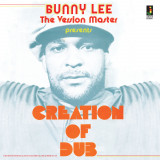
King Tubby and Producer Bunny ‘Striker’ Lee are intertwined in the birth of Dub Music. After discovering a mistake that made a ‘serious joke’ (more of which later...) they went on to release the first pressings of this new musical genre namely ‘Dub Music’. Tubby’s vast knowledge of electronics and Bunny’s vast catalogue of rhythms would lay the foundations of what today is taken as a standard... the Remix / Version cuts to an existing vocal tune.
Osbourne ‘King Tubby’ Ruddock was born in Kingston, Jamaica on 28th January 1941 and grew up in the High Holborn Street area of downtown Kingston. He studied electronics at Kingston’s National Technical College and also on two correspondence courses from the U.S.A... When he had qualified Tubby began repairing radios and other electrical appliances in a shack in the back yard of his mother’s home. His work in the early days included winding transformers and building amplifiers for Kingston’s Sound Systems. Tubby built his first Sound System in 1957 playing jazz and Rhythm & Blues at local weddings and birthday parties. His reputation as a man who knew and understood both electronics and music grew steadily and as the sixties drew to a close. Tubby purchased his own basic two track equipment. He installed this alongside his dub cutting machine, a homemade mixing console and his impressive collection of Jazz albums in the back bedroom of his home at 18 Dromilly Avenue which he christened his music room.
Tubby and Striker were at Treasure Isle Studio’s one day while Ruddy from Spanish Town was working with the engineer Byron Smith....
“Tubby and myself was talking when Ruddy was cutting some dub but Smithy (engineer) made a mistake through we were talking and forgot to put in the voice. It was two track recording in those days. Ruddy said ‘No Man! Make it stay! and so they cut the rhythm. When I went over to Ruddy’s that Saturday night a dance was in progress and when they played the vocal to the tune... then he said we’re going to play ‘Part Two’. They never called it ‘Version’..and then he played the rhythm track. The song was a catchy song and everybody started to sing along and the deejay started to toast so everything went down well. On Monday morning I went up and I said ‘Tubbs the mistake we made was a serious joke. It mash up Spanish Town! The people went wild. So you have to start to do that now ‘cause when the man put on the ‘Part Two’ everyone start singing this song. It played about twenty times. I said you try Tubbs!’...Well the next Saturday night now when Tubby strung up down the farm U Roy said he’s going to play ‘Part Two’ but Tubby did it different now. He started with the voice then dropped it out and let the rhythm run and then he brought in the voice in the middle and from there Tubby started to get really popular.’’
Bunny ‘Striker’ Lee
Dynamic Sounds upgraded to sixteen track recording in 1972 and Tubby purchased, again with the help of a deal brokered by Bunny Lee. The old four track equipment and the MCI console from their Studio B. The four tracks now gave him far wider scope to work with and he began to create a new musical form where the bass and drum parts were brought up while the faders allowed Tubby to ease the vocal and rhythm in and out of the mix. It was only a matter of time before Tubby’s dub plate experiments began to make it on to vinyl and the first ever long-playing King Tubby releases would feature a collection of his mixes to a selection of Strikers rhythms. So please sit back and enjoy this historic set of sounds, mixed by King Tubby and Mr Prince Phillip Smart and another set of scorcher Bunny Lee rhythms.
- A1: Rebel Dance
- A2: Casanova Dub
- A3: Silver Bullet
- A4: Rasta Locks
- A5: Dubbing With The Observer
- A6: Sir Niney’s Rock
- B1: Jam Down
- B2: Parade Dub
- B3: Youth Man
- B4: Turntable Dub
- B5: Corn Man
- B6: Mister D Brown Skank
- B7: Rema Dub
REPRESS
Niney the Observer’s first dub album ‘Dubbing With The Observer’ was cut at King Tubby’s Studio with Tubby
himself reworking Niney’s rhythms and adding his magic as only he could do.
Niney The Observer (b. Winston Holness, 1951 Montego Bay, Jamaica) by the early 70’s had forged a successful working partnership with singer Dennis Brown cutting some of his best songs adding a more rootsy element to the singers sound. Songs like ‘Westbound Train’, ‘No More Will I Roam’, ‘I Am the Conqueror’ to name but a few. Also
cutting a hit for Ken Boothe ‘Silver Words’ and two other singers that Niney had grown up with, Max Romeo ‘That Was Love’ and Delroy Wilson ‘Halfway Up The Stairs’. It was these tracks and a few other Dennis Brown worked rhythms, that Niney took to King Tubby’s studio at 18 Drumilly Avenue, Kingston 11, with the intention to let Tubby remix and enhance the rhythms Tubby Style.
The result was to be Niney’s first Dub album the mighty ‘Dubbing with the Observer’. On completion it was sent to London and it was then released on Trojan records and named Dub album of the Year. We are proud to put that album back out there for all to hear, what has now become a dub classic.
Hope you enjoy the experience………….
Phillip Smart was one of the great engineers to learn his trade as understudy to the legendary dub master himself Osbourne'King Tubby'Ruddock.
Alongside other luminaires such as Prince Jammy and Scientist,Phillip Smart would step in at the controls when demand for King Tubby studio dubs grew to such an extent that each single release was expected to carry a version/dub flipside.
Phillip Smart moved to the United States in the late 70's and in 1981 opened his successful studio HC&F,Long Island,New York.It produced some sizeable Jamaican Dancehall hits for his two record labels TanYah and Eclipse.
Tracks like Dirtsman's 'Hot This Year' and 'Rikers Island' and most notably artist Shaggy used the studio to work up his massive hits 'Oh Carolina','Big Up' and 'Angel'.
But it's in the heady days of the early 1970's and up to 1976 that we concentrate on for this release.When Version was King and Prince Phillip Smart was at the controls mixing up some fine dubs with Jamaica's finest musicians The Aggrovators.
Working some of producer Bunny'Striker'Lee's rhythms in fine style....hope ypu enjoy the set......
Being in a band is like being in a marriage: sometimes it’s magical, sometimes it’s unbearably challenging. To reinvigorate that marriage, Deap Vally have made their third album a genre-bending experiment with new collaborators and instrumentation that push the limits of what has previously defined the duo - Marriage is their musical Rumspringa, if you will. The album sees Julie and Lindsey break free of the rigid creative constraints within which they previously existed (two members, two instruments, two voices) and invite in collaborators such as KT Tunstall, Peaches, Jennie Vee and jennylee, as well as a range of producers including Allen Salmon, Josiah Mazzaschi and Harvey Mason Jr.
Mudlow have been making trouble and music for over twenty years,
playing stages as far-flung as Minnesota's Deep Blues festival, Belgium's
Muddy Roots festival and Dorset's Dark Holler festival, to name a few -
Their good fortune has led them to play alongside household names such
as Model T Ford, Cedric Burnside, Seasick Steve, Scott H Biram, The
Detroit Cobras, The Jim Jones Review, Daddy Longlegs, The Bonnevilles
and Alabama 3 - Now it is time for Mudlow to become a household name
themselves
.Dangerous and unashamedly funky, Mudlow's world is populated with characters
full of lament and thoroughly committed to their mistakes. Tobias Tester (Guitar/
Vocals), Matt Latcham (Drums, Percussion) and Paul Pascoe (Bass/ Producer)
soundtrack these fables of misfortune with their distinctly scuzzy take on the
blues. Prepare to enter their world as Mudlow take you Lower Than Mud...
· "Wild bluesy rock from Mudlow, who have been going a good twenty years but
never quite got their due. I hope their new album "Bad Turn" will change that" –
Huey Morgan, The Blues Show, BBC Radio 2 · "This is really good" – DJ Andy
Smith · If you have soul, you need this new Mudlow record. If you don't have soul
you need this Mudlow record to help you get some." - Andy McGibbon Jr, The
Bonnevilles · "Mudlow are a swamp dream of a band... You have to hear this
beast" – Folk and Honey
Translucent purple 180 Gram vinyl with Download card including all 12
tracks that appear on the CD
Over a 45-year career as one of the world's top blues musicians, Ronnie Earl has
transfixed audiences with his distinct sound of emotion-laden blues. On his own
and with his band The Broadcasters, Ronnie is a four- time Blues Music Award
winner as "Guitar Player of the Year," with 28 albums and multiple chart-topping
compositions in his catalogue.
Ronnie sets the songs of this album into context with a quote from Rev Dr Martin
Luther King Jr prominently placed in the album art: "The Blues tell the story of
life's difficulties, and if you think for a moment, you will realize that they take the
hardest realities of life and put them into music, only to come out with some new
hope or sense of triumph."
These songs present triumphant Blues - uplifting and hopeful songs that point to
a better tomorrow, including "Soul Searching," "A Prayer for Tomorrow," "The Sun
Shines Brightly" and "Your Love Keeps Lifting Me Higher And Higher." Celebrating
artists who have contributed to the theme of hope, Mercy Me includes "Blues for
Ruthie Foster," "Blues for Duke Robillard" and "Dave's Groove" (co- written with
Dave Limina).
Artificial Countrysides is Athens, Ga - based Elf Power's 14th album and
first for Yep Roc Records
The band expand their sound on this record to glorious effect, adding marimba,
harpsichord, synth bass, distorted drum machine loops, and mellotron to their
time tested mix of fuzz guitars, moog keyboards, pummeling drums, and layered
acoustic guitars, achieving a satisfying and unique synthesis of traditional and
futuristic sounds. Lyrically the album mirrors this approach by discussing the
difficulties and advantages of dealing with modern life's digital and artificial
landscape, balanced with the natural world. Elf Power formed in Athens, GA in
1994 and have released 14 albums, two eps, and a handful of singles, while
touring North America, Europe, and Japan many times playing alongside acts like
R.E.M., Flaming Lips, Dinosaur Jr., Neutral Milk Hotel, Guided by Voices, Arcade
Fire and many more. Albums such as 1998's Dave Fridmann-produced "A Dream
In Sound" and 2008's collaboration with the late folk rock icon Vic Chesnutt, "Dark
Developments", have cemented the bands' reputation as the finest purveyors of
modern melodic psychedelic folk rock around. The band became known as a
member of the much heralded Elephant 6 Collective, which includes their friends
and collaborators Neutral Milk Hotel, Apples in Stereo, Olivia Tremor Control, Of
Montreal, and many more.
- A1: Diana Ross - Turn Up The Sunshine (Feat Tame Impala)
- A2: Brittany Howard - Shining Star (Feat Verdine White)
- A3: St Vincent - Funkytown
- A4: Brockhampton - Hollywood Swinging
- A5: Kali Uchis - Desafinado
- B1: Caroline Polachek - Bang Bang
- B2: Thundercat - Fly Like An Eagle
- B3: Phoebe Bridgers - Goodbye To Love
- B4: Bleachers - Instant Karma!
- B5: Weyes Blood - You're No Good
- C1: Gary Clark Jr - Vehicle
- C2: Her - Dance To The Music
- C3: Tierra Whack - Black Magic Woman
- C4: Verdine White - Cool
- C5: Jackson Wang - Born To Be Alive
- D1: The Minions - Cecilia
- D2: Gem - Bang Bang
- D3: Rza - Kung Fu Suite
- D4: Heitor Pereira - Score Suite
This OST promises another exciting instalment in The Minions franchise. Produced by legendary Grammy-winning music producer Jack Antonoff and filled to the brim with a star-studded list of artists, the soundtrack celebrates a range of dazzling funk, disco and soul classics with brand-new versions of some of the biggest hits of the 1970s. From St. Vincent’snew take on Lipps Inc’s 1979 hit Funkytownand H.E.R.’s rendition of Sly and The Family Stone’s 1967 smash Dance to the Music, to Bleachers version of John Lennon’s 1970 track Instant Karma! and Phoebe Bridgers’ interpretation of The Carpenters’ 1972 single Goodbye To Love, every track has been reimagined by each artist with ingenious results. Set in the 1970s, Minions: The Rise of Gru tells the origin story of how Gru (Oscar nominee Steve Carell), the world’s greatest supervillain, first met his iconic Minions, forged cinema’s most despicable crew and faced off against the most unstoppable criminal force ever assemble.
- A1: Diana Ross - Turn Up The Sunshine (Feat Tame Impala & Verdine White)
- A2: Brittany Howard - Shining Star (Feat Verdine White)
- A3: St Vincent - Funkytown
- A4: Brockhampton - Hollywood Swinging
- A5: Kali Uchis - Desafinado
- A6: Caroline Polachek - Bang Bang
- A7: Thundercat - Fly Like An Eagle
- A8: Phoebe Bridgers - Goodbye To Love
- A9: Bleachers - Instant Karma
- A10: Weyes Blood - You're No Good
- A11: Gary Clark Jr - Vehicle
- A12: Her - Dance To The Music
- A13: Tierra Whack - Black Magic Woman
- A14: Verdine White - Cool
- A15: Jackson Wang - Born To Be Alive
- A16: The Minions - Cecilia
- A17: Gem - Bang Bang
- A18: Rza - Kung Fu Suite
- A19: Heitor Pereira - Minions: The Rise Of Gru Score Suite
This OST promises another exciting instalment in The Minions franchise. Produced by legendary Grammy-winning music producer Jack Antonoff and filled to the brim with a star-studded list of artists, the soundtrack celebrates a range of dazzling funk, disco and soul classics with brand-new versions of some of the biggest hits of the 1970s. From St. Vincent’snew take on Lipps Inc’s 1979 hit Funkytownand H.E.R.’s rendition of Sly and The Family Stone’s 1967 smash Dance to the Music, to Bleachers version of John Lennon’s 1970 track Instant Karma! and Phoebe Bridgers’ interpretation of The Carpenters’ 1972 single Goodbye To Love, every track has been reimagined by each artist with ingenious results. Set in the 1970s, Minions: The Rise of Gru tells the origin story of how Gru (Oscar nominee Steve Carell), the world’s greatest supervillain, first met his iconic Minions, forged cinema’s most despicable crew and faced off against the most unstoppable criminal force ever assemble.
Joe Rainey is a Pow Wow singer. On his debut album Niineta he demonstrates his command of the Pow Wow style, descending from Indigenous singing that's been heard across the waters of what is now called Minnesota for centuries. Depending on the song, his voice can celebrate or console, welcome or intimidate, wake you up or lull your babies to sleep. Each note conveys a clear message, no matter the inflection: We're still here. We were here before you were, and we never left. On Niineta, Rainey finds himself in between cultures, collaborating with producer Andrew Broder, who brought his turntablist sensibility to the project. The two of them met backstage at Justin Vernon's hometown Eaux Claires music festival before crossing paths more through the 37d03d collective, and both contributed to the last Bon Iver album before partnering up. "At first I didn't know what I could add," Broder says. "I came to understand everything is rooted in the drum-even the songs on our record that have no drum." Each song started with Broder's beats, the two of them experimenting with various sounds and tempos before orchestrating and recontextualizing the ancient sounds in strange, new in-between places, also pulling from Rainey's vast sample folder of pow wow recordings, layering in slices of his life. Niineta is a short version of the Ojibwe term meaning, "just me," and Rainey is using the term only in the sense that he's taking sole responsibility for the music. He is protective of Pow Wow culture-once outlawed by the US government and maintained in secret-while trying to figure out where he fits and how he can be creative with it. "These are my creations, but they're pow wow songs, and our language is sacred," he says. Rainey suggests conceptualizing the album as him working the door at a Pow Wow after party. "If I'm answering that door, I want to say, hey, yeah, come on in. But there's fucking tons of us in here. It ain't just me."
North London-by-way-of-Suffolk soundsmith Gerry Read delivers his first release for Circus Company with the Lean on Something EP. After countless examples of his bold production moves on many of our brother and sister labels including Herbert’s Accidental Jr to more recently on Koze’s Pampa Records, Read has always displayed a kindred spirit mindset to ours in his adventurous musical angles, and we are very happy to present this particular set of rock-solid and uniquely diverse pieces.
The title track “Lean on Something” starts things off in fine and classic Read form, with knocking found-sound percussion, fizzing textures and slick use of chopped and disorienting vocal sample
bits, as the track layers unfold into a whimsical and wondrous melodic stargazing anthem. “Wooer at the Well” then follows and picks up the tempo with those fly live acoustic drum lines that gives
Gerry’s tracks that special beyond-electronic feeling, while once again the deft layering of such a rich sound palette builds and builds giving other mavericks like Four Tet a sincere run for their money. The mood then brilliantly shifts on the next track “Paramol”, where Read treats us to an almost Robotnik-era Italo sprinkling amidst his otherwise forward-thinking club floor-filling tendencies, with an amazing array of synth sections and an arrangement that should satisfy even the neo-purists out there amongst us. Finally, “Risotto” wraps up the proceedings with a warm, jazzy bouncer reminiscent of both Read’s as well as our own catalog’s charming early offerings, and a kind of landing-at-home-base sensation with smoky cubist funk feelings and an equal parts rough-yet-undeniably cool effervescent groove.
The Silvertones were steeped in the grand tradition of Jamaican vocal trios along with other greats such as The Heptones, The Abyssinians and The Kingstonians. Formed in 1964 by Delroy Denton, Keith Coley and Gilmore Grant, the group recorded under a variety of names in the ska and rocksteady era for Duke Reid’s Treasure Isle and Coxsone Dodd’s Studio One, before hooking up with producer Lee “Scratch” Perry.
Originally released in 1973, The Silvertones’ debut Silver Bullets was recorded at Perry’s Black Ark studio with vocal tracks captured at King Tubby’s Dromilly Avenue studio in a marathon, all-night session. While firmly planted in roots reggae, Silver Bullets’ dense harmonies and relaxed vibe harken back to rocksteady. The album marks an interesting point in Jamaican music where the past and the future are visible in the grooves of a single LP—from classic rocksteady-tinged love songs like “That’s When It Hurts” and “Rock Me In Your Soul” to the Rasta anthem “Rejoice Jah Jah Children.”
Antarctica Starts Here presents the first widely available domestic release of Silver Bullets. This reissue is part of an archival series that focuses on Trojan’s essential ’60s and ’70s catalogue. Liner notes by JR Gonne.
Clear Vinyl
"Flux" is the 1981 debut solo outing of Robert Turman, an American multi-instrumentalist and avant-garde composer. Until recently, Turman was perhaps best known for his contributions to the ballistic NON project with Boyd Rice, as well as other obscured U.S. industrial acts such as Z.O. Voider.
In the summer of 1981 Turman decided he would take a drastic turn from the noisy/electronic/industrial work of his compatriots, and began work on what is now the classic "Flux" cassette. "Flux" was originally self-released in extremely limited numbers. Weary of the noisescapes of old, he set out to create long-form minimalism utilizing kalimba, piano, "Mini-Pops Jr." drum machine, and tape loops to create a complex bed of interweaving micro-stasis'. The results of these new experiments were as beautiful as they were perplexing.
A curious dusty fidelity carries these classic tracks across four sides of vinyl, including all of the original "Flux" content. These compositions glow with a sprawling, slow motion haze that's light years ahead of its time. "Flux" reveals wide spectrums of sound from melancholic kalimba and percussion patterns to slowed down, syrupy Exotica. Turman had complex ideas in his mind yet only the simple technologies of the day were at hand. Hear the click of the stopping and starting Tascam 3340 open-reel tape machine as one hand presses the "record" and "play" buttons and the other plays piano phrases. While there are similarities in style to Classical Minimalism, Turman's sound and vision is his own and is exclusive to his limited discography.
Released in a limited edition 2xLP set. Lovingly remastered and cut by Rashad Becker at Dubplates & Mastering from the original C-60 cassette master. Original cassette artwork and scans provided by Aaron Dilloway.
Spectrum Spools released in association with Editions Mego
- A1: Diana Ross - Turn Up The Sunshine (Feat Tame Impala & Verdine White)
- A2: Brittany Howard - Shining Star (Feat Verdine White)
- A3: St Vincent - Funkytown
- A4: Brockhampton - Hollywood Swinging
- A5: Kali Uchis - Desafinado
- A6: Caroline Polachek - Bang Bang
- A7: Thundercat - Fly Like An Eagle
- A8: Phoebe Bridgers - Goodbye To Love
- A9: Bleachers - Instant Karma
- A10: Weyes Blood - You're No Good
- A11: Gary Clark Jr - Vehicle
- A12: Her - Dance To The Music
- A13: Tierra Whack - Black Magic Woman
- A14: Verdine White - Cool
- A15: Jackson Wang - Born To Be Alive
- A16: The Minions - Cecilia
- A17: Gem - Bang Bang
- A18: Rza - Kung Fu Suite
- A19: Heitor Pereira - Minions: The Rise Of Gru Score Suite
This OST promises another exciting instalment in The Minions franchise. Produced by legendary Grammy-winning music producer Jack Antonoff and filled to the brim with a star-studded list of artists, the soundtrack celebrates a range of dazzling funk, disco and soul classics with brand-new versions of some of the biggest hits of the 1970s. From St. Vincent’snew take on Lipps Inc’s 1979 hit Funkytownand H.E.R.’s rendition of Sly and The Family Stone’s 1967 smash Dance to the Music, to Bleachers version of John Lennon’s 1970 track Instant Karma! and Phoebe Bridgers’ interpretation of The Carpenters’ 1972 single Goodbye To Love, every track has been reimagined by each artist with ingenious results. Set in the 1970s, Minions: The Rise of Gru tells the origin story of how Gru (Oscar nominee Steve Carell), the world’s greatest supervillain, first met his iconic Minions, forged cinema’s most despicable crew and faced off against the most unstoppable criminal force ever assemble.
- 1: Manu Dibango - Groovy Flute
- 2: Tenorio Jr. - Nebulosa
- 3: Mark Murphy - Why Don't You Do Right
- 4: Illinois Jacquet - Mambocito Mio
- 5: Frank Minion - Bongo Blues
- 6: Blue Mitchell - Mi Hermano
- 7: Lorez Alexandria - I'm Whishin
- 8: Marian Mcpartland - Coming Home Baby
- 9: Oliver Nelson - 125Th Street & 7Th Avenue
- 10: Ella Fitzgerald, Ernie Heckscher Big Band & Tommy Flana
- 11: Orchester Roland Kovac - Milky Way
- 12: Gene Ammons - Pagan Love Song
- 13: The Monty Alexander Trio - Monticello
- 14: Mel Tormé - Right Now!
- 15: Richard "Groove" Holmes - Six Million Dollar Man Theme
- 16: Dizzy Gillespie - For The Gypsies
- 17: Michel Sardaby - Welcome New Warmth
- 18: Art Farmer Septet - Mau Mau
- 19: Frank Minion - Watermelon
- 20: The Ibrahim Khalil Shihab Quintet - Before The Rain And
- 21 0: Gabor Szabo - Galatea's Guitar
Winston 'Niney' Holmes AKA The Observer, must be one of Reggaes finest Roots Rebel producers. Capable of making some of the heaviest, innovative music, not only in sound but also in the Cultural/Political sense.
Born George Boswell, Montego Bay, Jamaica 1951, and name checked 'Niney' due to losing a thumb in a workshop accident. He began his career in music by organising bands to play at school dances. But his first steps learning the musical ropes came working under the tutelage of producer Bunny Lee around 1967, organising sessions for Bunny's stable of artists. He moved on to work alongside Lee Perry at Joe Gibb's 'Amalgamated' label setup, where on Lee Perry's leaving in 1969 to start his own 'Upsetter' label, Niney became chief engineer.
Inspired by Perry's success it wasn't long before his own 'Destroyer' label was under way. It was 1970, and his first production entitled 'Mr Brown' by DJ's Dennis Alcapone and Lizzy, proved to be a minor hit, but his own 'Blood and Fire' track released in December of that year would become a major hit. After initial problems with it's likeness to Bob Marley's track ' Duppy Conqueror' being ironed out, it's reissue on his now named 'Observer' label, saw it go on to become, Jamaican Record of the Year 1971. Far out selling Bob Marley's track to the tune of 30,000 copies in Jamaica alone. A roots classic...
Niney's reputation for building great roots tracks, was furthered with more success working with singer Max Romeo. Issuing cuts such as 'Beard Man Feast', the great 'Reggae Matic' and 'Aily Ailaloo' and renewing his friendship with Lee Perry on the track 'Rasta Band Wagon', who's production credit read Perry, Niney, Maxie. In 1973, Niney began working with Dennis Brown, who was already an established star from an early age, they found a chemistry that went on to produce some of Dennis' finest work. The 1973 hit 'Westbound Train' was followed in 1974 by 'Cassandra', 'I am the Conqueror' and the timeless 'No More Shall I rOam'. Another important connection around this time was the great King Tubby who Niney would take his tapes along to and even record some of his tracks at Tubby's house, 18 Drummlie Avenue, Kingston, which doubles as his Studio of Dub.
It's these tracks that we are concentrating on here. Tubby would strip the tracks back to the bone and rebuild then sometimes leaving off the hook line. Whether that be the horn line or keyboard line and adding effects over the top that could disguise the cut even more. Even Niney stating that when Tubby had finished with a cut, he found it hard to recognise the track himself. Its these tracks as dub plate specials that Tubby would play on his Hometown HI-FI Sound System and it's these such tracks that we have compiled for this release. Dub Plated that have not seen the light of day since tragically the great Osborne Ruddock AKA King Tubby was gunned won and murdered on the 06th December 1989. For a few dollars and a gold chain, reggae music has lost one of it's most creative, inventive forces.
Niney also cut tracks with many other Reggae giants such as Gregory Issacs, Michael Rose, Junior Delgado, Horace Andy and Delroy Wilson to name but a few. As in house producer at the legendry Channel Studios and supervising sessions at Dynamic and Randy's Studio 17, his magic touched many. DJ, Arranger, Producer, his Roots Rebel music still stands the test of time.
Hope you enjoy the set.....
- A1: Money Won't Change You
- A2: It's Bad
- A3: Good Thing
- A4: Best Of Luck To You
- A5: That's What I Get
- A6: That's The Sound Of My Heart
- A7: How Long Must I Wait For You
- B1: Foxy Mama
- B2: Look A Little Higher
- B3: I Take What I Want
- B4: She's Got To Be Loved
- B5: Just A Dream
- B6: To Love Me Like You Do
- B7: There's Gonna Be A Better Day Coming
Perhaps the best Soul / Funk LP Athens of the North has ever released and you know we have high standards, not one filler and mostly unreleased tracks – Essential LP
The Up Tights were formed by Henry Bradley in Forrest City, Arkansas in March of 1967 while most of the band members were attending Lincoln High School.They took their name from the Stevie Wonder song "Uptight - Everything's Alright." Playing at school functions, they quickly branched out to playing bigger shows and headlined the 1968 St. Francis County Fair in Forrest City.
The Up Tights first recorded for Action Records in Memphis as Noble and the Up Tights. The 45 featured an original song by singer, Izear "Ike" Noble Jr. titled "Don't Worry About It."
Henry Bradley was drafted into Vietnam in 1968. He served in the 1st Squadron, 11th Armored Cavalry Regiment. While he was away, the Up Tights continued with Henry's brother, Arthur, taking over all the guitar duties. The band also hired a manager named John Mitchell. In 1968, the band met Joe Lee, who owned Variety recording studio in Jonesboro, Arkansas.
For the band's first recordings at Variety, Lee chose two originals by Noble titled "Look a Little Higher" and an updated version of "Just a Dream" which Lee released on his Alley Records label in 1968. Lee continued to record the band over the next several months. He liked to experiment in the studio and produced many versions of the group's original songs, adjusting the mix and adding elements to each unique take.
For the group's second Alley release, they appeared simply as Ike Noble on the record label. Lee brought in a local songwriter named Charles "Jamie" Holmes, who had previously written for Alley records and Joe Keene's studio in Kennett, Missouri
The resulting 45 from this collaboration was "It's Bad" backed with "That's What I Get," two Holmes originals. Another Holmes original was unreleased at the time, but available here titled "There's Gonna Be a Better Day Coming." Stax Records was interested in signing the group and wanted to re-cut "It's Bad" at their studio, but ultimately the label passed since they generally had a policy of working with Memphis based groups.
As the band grew in popularity, they began appearing with and competing with Memphis legends, the Bar-Kays. The group's biggest show in Arkansas was an opening slot at Barton Coliseum, one of the largest venues in the state, in Little Rock in mid-1969. As a result, the band was offered a spot on George Klein's "Talent Party" television show on WHBQ in Memphis in July of 1969..... Further Sleeve notes on back of the LP