Blossom Kollektiv returns to vinyl once again after the success of Jepe's 'Spring Shadow,' this time around inviting House and Techno veteran Matthias Vogt to the label. The two-track EP of finely crafted melodic and emotive Techno features remixes from Oliver Gehrmann and Jepe and is sure to find its way into DJ bags world wide.
Starting the EP off on a strong note with Solace, Matthias Vogt takes us on a magical journey like we're floating in the clouds with a driving kick and lush melodies that keep us soaring through the sky into a land of beautiful and lovely emotions. Then just when we feel like we're about to fall the track uplifts us once again into a place of cosmic bliss with rich piano notes full of substance.
Playing with the rich piano notes of the original Oliver Gehrmann creates his own vision of Solace bringing a deeper and more after hours feel. The track takes us through the elements of the original but reworking it ever so slightly while never losing the strong emotional sense of the original.
Next we come back to Matthias with Fluorescence where we once again are whisked of to a fascinating place full of melody and care free attitudes. However don't let this allure fool you, powered by a heavy kick drum and tight percussion this track will work wonders on any peak hour dance floor bringing a sense of euphoria to the crowd.
After returning from our blissful land Jepe brings us right to the floor with his straightforward house version of Fluorescence. Putting his stamp all over his version using classic piano stabs and funky percussion to make the track uplifting in a rhythmic way, then subtle synths from the original peek their heads out to create a little drama and suspense until the slamming kick drum kicks back in making the crowd move.
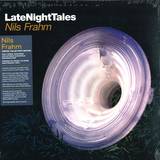
Composer, musician and producer Nils Frahm steers the new edition of Late Night Tales, set for release on 11th September. A hypnotic voyage through modern and classical composition, experimental electronics, jazz, dub techno, soundtracks and soul; Frahm's Late Night Tales haunts and beguiles. It's not mixing, so much as gently layering, like a particularly fluffy goose-down duvet folding in on itself, the folds part of the attraction, the layers part of the overall picture being painted. Many of the tracks have been edited, effected and re-made. The subtly overdubbed parts on Rhythm & Sound's 'Mango Drive' adding to the haunting hypnosis, while choral interruptions aid Miles Davis' 'Générique' on its journey towards the light. Meanwhile, on Boards Of Canada's 'In A Beautiful Place Out In The Country', the tempo is somewhat sluggish, the organs slurred, as Frahm slows it down to a funereal 33rpm that nevertheless fits perfectly. The purring of his girlfriend's cat Cleo transitions playfully between Nina Simone's definitive version of 'Who Knows Where the Time Goes' and unearthing the gentle electronics of Dub Tractor. Eddy Arnold's 'You're The Only Star', a country tune that sounds like its transmitting from a mid-west diner wireless circa 1947, is straight from the soundtrack to an imaginary David Lynch movie, comforting and dismaying all at once. This crackly reality abounds, as on Finnish band Gentleman Losers' 'Honey Bunch', that adds an unsettling texture, with a sound that is modern but as nostalgic. Frahm's own tracks bookend the mix, opening with an inspired "rework" of the infamous silent John Cage piece '4:33' ("I sat at the piano in silence and worked from
there. I listened and took in the atmosphere and this is what came out of it") and ending with a solo piano version of 'Them', taken from his recently released score of the film 'Victoria'. The traditional Late Night Tales spoken word epilogue is voiced by actor Cillian Murphy (Inception, Batman, 28 Days Later), reading a short story by Edna Walsh (Hunger, Disco Pigs).
This record is the most important promo tool of Leipzig's own M.ono in his grand scheme to conquer the world with his supersecret cocktail named, Die Volle Schnauze. All flavours and 17 secret ingredients of this wonderful drink come together in the 4 tracks of this EP. So if you're digging the forward groove and jumping keys of Volle schnauze, The 'shit-is-the-sun-already-coming-up' vibe of Perle, the dancing arps of Delaware state route and the freaked out acid of Pegasus '83, you'll surely like the cocktail. Whatever's the hell's in it. Sincerely yours, Lars & Maarten Vital sales points: - M.ono got instant underground love for his first artist EP on his own Rose Records when Move D. destroyed the boiler room playing 'Holding back California'. - M.ono produces some amazing tunes together with label co-owner Luvless. - Full Cover with 180 Gr. Vinyl.
out of Stock
Last delivered 19 months ago available to reorder, subject to availability
Tensnake's standard In The End (I Want You To Cry) release gets not one, but seven remixes. A nod to the good old remix double pack craze of the nineties, you will find them spread out over two plates. Ranging from a classic Tiger & Woods treatment to Prins Thomas quirkiness via Lone's happiness, two versions by Shan, the timid DJ Oyster as well as Pete Herbert's & Dicky Trisco's respectful re-arrangement, this one has it all: disco, techno, jungle (alomost!), house, cheese & chocolate!
"...don't ask if there will ever be a Volume 2. We don't know yet. What we do know is that if we ever come across a similar tour de force as Don McCaslin's composition, Praise Poems, then there will certainly be one..." These were the final words of the sales notes for Praise Poems Volume 1 - which we proudly released earlier this year. And indeed, since then, we have discovered a tune which led us to continue to curate this series of obscure, soulful, jazzy and spiritual sounds from back in the day. The song to which we refer to is Abraham Battat's jazz-samba masterpiece, Fly Away. Fly Away is a righteous combination of sonorous jazz guitar, crackling drums and warm acoustic piano. Floating through the tones as if in a private concert for you in your very living room, it is an earnest, honest vocal performance bringing a rainbow message of freedom and liberty to the world. This is the standard by which we judged the entirety of this compilation. Though they may be known in some circles, selections by Richard Martian, Larry Covin, and The Gingerbread Express are in the same category of pure beauty. Of course, good luck finding a copy of Larry Covin's Masquerade or the Portis Brothers' Summer Love. The single hit you receive while doing an online search is the exact same copy from which we took the master. To find a needle in a haystack is a cakewalk compared to turning up a copy of some of these gems to be found here.
The stage is set from minute one on Clay Wilson's new 4-track EP, "Skandha," his second release for The Bunker New York.
The eponymous first track begins with a familiar techno throb, but is quickly overcome by a blooming swirl of coruscating synthesizer pulses that seem to gather inside the listener's head, a phenomenon Wilson seems particularly interested in: "I've never been into really straightforward club techno that works in neat 8- and 16-bar sequences," he says. "I'm always looking for things that have forward momentum, ways to escape that 'block-y,' downbeat-centric feeling that you find in so much contemporary techno. For me, it's the drone—what's going on in the background—that serves to hold my interest."
Nowhere is this more apparent than on the record's second track, "Cataleptic." The meat of the track is its tightly-wound techno core built from insistent, hypnotic percussion, but it's what's happening in the background that keeps you coming back for more: The sound of a babbling brook and a plaintive, meandering bird call ("the only actual recorded animal sounds on the record," notes Wilson) gently give way to the tintinnabulation of a distant bell, whose meditative timbre brings to mind a Tibetan singing bowl. It turns out that the naturalistic, organic sounds in many of Wilson's tracks are often just that: "I make field recordings all the time, actually—on my phone," he says. "I've found field recordings have been a great way to pull things along, never repeating themselves, but also never being so upfront as to draw your attention away from the synths and drums."
That's a key point, and make no mistake—for all the flora and fauna lurking in the background of Wilson's productions, they're designed for the dancefloor through and through. "Feres," the EP's third track, slows down the pace a little bit, keeping time with a static kick-hat pattern while chunky, stepped percussion laid on top makes the track feel remarkably dynamic. The final cut, "Pict," seems to slowly unfurl like flowers at dawn, while a ghostly vocal sample (or merely something approaching it) repeats itself underneath it all.
While at times the drawn-out shimmering tones in Wilson's work may recall modern minimalism, "getting into techno, and more specifically techno production, was kind of a way for me to get away from (formal, classical musical) training," he recalls. "I had been headed down an open-minded, anything-goes path with a compositionally-geared approach, and ... all those paths led to techno." And for that, we're glad.
With releases on established labels like Force Inc., Cytrax, Lo-Fi Stereo, Morris / Audio, Delay or Background, he made his way with his tricky electronic sound. He started his own label, Edit that embraces the concepts of reuse and redefinition. Components are generated, arranged and fine-tuned. They are stripped apart, processed and rearranged. Sophisticated editing techniques enable this process to continue without end. The resulting audio productions become remixes of themselves.
Streetlight Soul' is the inaugural release on new imprint Gnosis. This four track EP is the fifth Myriadd record, following 12"s for Crème organization, Pinkman and Signals. The past decade has seen releases from the artist under a variety of pseudonyms including Acid Phreex (Djax-Up-Beats), Mantra (Bunker, Abstract Acid, Solar One Music) and Monofonix (Iwari, Cataclyst). Across the EP, Myriadd remoulds the template of vintage Chicago house, acid and deep house into his vision of modern house music. Opening with 'Midnight Obsession'; working a dark hypnotic bassline into an endless groove of crisp jacking drums and soul stirring melody, all primed for maximum effect at 4AM when lost in the smoke and strobes. 'Visions Of Love' is driven by a Juno bassline, a classic palette of tumbling, infectiously funky drums, warm, enveloping synth atmospherics and elevated by lush, celestial string work which comes off like some fantasy Mr Fingers + Virgo psychedelic jam. The EP's titular track goes deeper into the night with 909 claps, off-kilter snare hits, melancholy synth and ethereal melodies that ascend and dissolve into neon clouds. Closer 'Back To Nature' is a trip into blissed out, tropical house sounding like a lost Balearic classic re-tweaked for the 21st Century..
"Hey Boy Hey Girl" is a song by British big beat duo The Chemical Brothers. It was released as a single from their 1999 album Surrender. The vocal sample "Hey girls, B-boys, superstar DJs, here we go!" was taken from "The Roof Is on Fire" by Rock Master Scott & the Dynamic Three.
It peaked at number three on the UK Singles Chart in June 1999 and remained on the chart for ten weeks.(citation needed) The song dates back to 1997 when it was in the Radio 1 Anti-Nazi Mix. The song is also a track in the dancing video game Just Dance 3 and also featured in the 2012 video game Lumines Electronic Symphony.
out of Stock
Last delivered 74 days ago available to reorder, subject to availability
Dakini9, co-boss of Plan B Recordings and Sound Warrior Recordings, launches her first solo vinyl 12' EP on Jersey City's Green Village label. In keeping with her previous releases, Dakini9's work is always emotional and cinematic, and here we find her stretching out into tougher beats and speedier tempos. Made for the dance floor, this EP includes a DJ Spider remix on the B side.
Audio Casette Tape
Following up on the experimental sounds of LP3 and LP4, RATATAT return to their core guitar-driven sound on Magnifique which was recorded over the course of four years in various studios in different locations including Jamaica (the country), upstate New York, Long Island, NY and their home studio in Brooklyn. The art for Magnifique includes a series of sketches drawn by Mast and Stroud during the recording sessions. What else can you expect on Magnifique: pedal steel guitar, the sound of a tiny 1940's guitar amp found in a thrift store in Guadalajara used on Intro,' a song named upon the discovery that the guys both had posters of a ' Countach' on their walls in junior high (the duo met in college), and a cover, their first ever, called I Will Return' by Springwater (aka Phil Cordell).
There used to be a time when ring tones were important. You were easily recognizable as one of the few people actually owning one of these new gadgets called ›mobile phone‹ (or ›handy‹ as the Germans say). Later you could make an important distinction by choosing a ›cool‹ ring tone...
In May 2014 the Festival »Doofe Musik« (»Stupid Music - Songs for Dreaming, Sedation and Forgetting«) took place at Haus der Kulturen der Welt (HKW) in Berlin. As part of the »Anthropocene Project« the festival focussed on escapism and the special function of music when retreating from reality. Detlef Diederichsen, curator at HKW, and Holger Schulze, Head of Sound-Studies-Lab Berlin, decided to not only focus on music which music lovers usually hate, e.g. ›Schlager‹, German folk music, Light Jazz, but also on ring tones.
The audio logo of Deutsche Telekom has been part of Germany's mobile phone culture from the very beginning so it acted as a starting point to question the usual concepts for ring tones. Using Christian Kellersmann's idea of the »Pocket Symphony« ten artists were invited to come up with adaptations of Telekom's audio logo. The results were performed for the first time during »Stupid Music« and once again in October of the same year when most of the recordings you can find on the album were made.
As you will hear: The short motif, as simple and unforgettable as it is, is ideal musical material.Everyone knows it, everyone has some sort of connection to it and these ten different versions, these ten different positions, open up the most varied possibilities for associations.
It is time that we take the ring tone seriously again. As the most reduced musical form that is the most-widely available in the whole world it contains enormous and unrealised potential!
Cadenza Records displays a deft touch in showcasing new talent, just as much as it leans on its core of established producers. The 'Split' EP shines a bright light on the musical endeavors of Enrico Gasperini AKA gAs, and fellow Italian, Lino Pugliese. One side of vinyl each, and gAs opens up Side A with 'Rack Attack', its woody hits and scattering hi-hats holding a solid groove whilst gentle keys entwine a melodic touch with a stuttering synth riff that's designed to circulate around the brain. Splashes of cymbals and white noise provide the all important drama as the track rises to a crescendo. Enrico's second contribution, 'Agogo', keeps up the ante with another slice of exquisite house grooves. The inner-city street ambience opening gives way to an undeniably funky rhythm track, incessant spongy stabs and frenzied percussion that makes this one a sure fire winner. Over on Side B, Lino Pugliese gets to flex his sonic palette after recent releases on Cadenza Lab and Memento. 'Banging On Your Door' takes its time to unfurl; a percussive swing not too dissimilar to the Stones' 'Sympathy For The Devil' sets the tone magnificently, as low frequency synth sweeps and distant vocal effects build, the kick drum jolting the track into life with bursts of furry snares and handclaps. More ambient soaked business on 'Aniwama' as Lino forges melodious piano and clanging ride cymbals with low end sonics as the track deconstructs as quickly as it builds, tearing up the arrangement rule books to create a unique cut that can perform as a mood-setting piece just as well as a peak time genre-shifter.
After "III" Dusty Kid is back with a new album that is a trip and homage through and for his native land, Sardegna. "The Arsonist" anticipates this trip from its most dramatic part, touching upon an issue that haunts the island every summer: arsons. Setting itself apart from the contemporary techno music trends 'The Arsonist Part II" delves into 90's trance, reminiscent of legendary Jam&Spoon and rave parties. An intense explosion of pathos reminding us of the glorious Loveparade to describe a dangerous situation, a desperate attempt to save the Sardinian land. The pathos peaks with "Doa" when the fire leaves behind utter desperation and desolation, ashes and smoke. "Doa" is another stage in this new journey for Dusty Kid. It is an emotional and melancholic stop, drenched in the magic of the spaghetti western genre, honoring Morricone that has always been the artist's idol. The track is dedicated to the date of July 18, 1983, when in the north ofSardegna the worst arson happened; here 9 people lost their lives and 15 reported terrible burns in the attempt to extinguish the fire. This has later become the European date to raise awareness against forest fires. The EP ends on the balearic notes of "Serpentara', little abandoned island in the south east of Sardegna, that represents a small batch of land that is untouched by men, their doings and their fires. 'Serpentara' recalls the likes of "Sueno Latino', the summer of love '88 and Ibiza, when ravers wanted to take a break from the hysteric acid house and needed softer and dreamier sounds. Dusty Kid is back with a masterpiece that cannot be missed, a perfect soundtrack to the Summer of 2015.
Following the huge success of the lead single "Settle Down" (played twice on one show by David Rodigan!), Blend Mishkin and the Roots Evolution band deliver their stunning debut album "Survival Of The Fittest" for NICE UP! records. Having spent most of his professional career behind either a computer screen or pair of turntables, Athens based producer Blend Mishkin (real name George Mantas) has been putting in work since the mid 90s with releases on labels such as Pork Recordings, Tru Thoughts, Shadow Records and many more. For this, actually his 8th studio album, he decided to do something a little different and step out from behind the computer. A chance meeting with some like minded musicians led to a conversation about them re-creating some of his past tracks for a potential live show, but after much thought it was decided that something brand new and fresh was needed. After numerous sessions and jams, a collection of tracks had begun to take shape. Recorded live and then taken back to the lab for mixing and dubbing, "Survival Of The Fittest" is the fruits of these sessions. The next step was to scout for vocal performers to bring the rhythms to life, with the focus on using both international and local talent to give a wide breadth of influences and themes. Lining up are Rebel Salute show-stopper and Juno award winning Exco Levi and seasoned veteran Skarra Mucci from Jamaica, UK reggae/dancehall don Gappy Ranks, Italian raggamuffin KG Man, Mandinka Warrior from Denmark and fellow Greek BNC amongst many others. Retaining an authentic vibe whilst keeping it current, "Survival Of The Fittest" is a truly modern roots reggae album.
Tough, to the point, no-nonsense machine music is a longstanding Midwestern tradition.
Drawing a line all the way back to the old guard, The Bunker New York's latest EP is Walk The Distance, courtesy of Mark Verbos, a techno veteran and New Yorker by way of Milwaukee who put together four pieces of heavyweight dancefloor artillery, informed by an intimate, inside-out knowledge of the machinery used in the production of these tracks.
"I've been doing this for a long time. In the beginning, there was only hardware, and it feels better to make music with physical objects. Plus, I make hardware, too," says Verbos, recounting his production processes. Verbos not only produces music, he also produces the hardware he uses to make music—his company, Verbos Electronics, manufactures Eurorack synthesizer modules with a vintage sensibility. When he's making music, Verbos says, "I try to get to know the devices I use well enough that whatever I imagine can come from them. Techno is machine music. When I'm recording, it's just me and the machines."
The music, however, speaks for itself. No punches are pulled here—the record starts in top gear with "Start Up Drive," a devastating techno bomb centered around a throbbing, repeating bassline and a meaty kick drum that builds to a massive climax in the span of five minutes. "In The Back Room" kicks the tempo up a notch, featuring spaced-out atmospheric synth leads floating atop syncopated percussion. "Just A Little Late" is funkier than the other two, built around a rubbery, insistent synthesizer groove that worms its way deep into your head and doesn't let go.
The aforementioned three tracks alone would comprise a solid techno EP suitable for any number of dancefloors. But the last track on the record—its namesake—shifts gears entirely. "Walk The Distance" is a moody, pulsing slow burner, introspective and emotional. It's a haunting listen that adds remarkable depth and complexity to the record. "Walk The Distance, the track, is a reference to the fact that music is not a career. Any advice you could offer someone on how to have a successful career doesn't really apply to a career in music. By that I mean to say, process is everything, and the results don't really matter."
Sage advice indeed, but judging by Walk The Distance, Mark Verbos has figured out how to produce results that matter.
Until December last year music was simply a hobby for Alex Crossan, aka Mura Masa. He may have had 7 million plays and 30,000 followers on Soundcloud but the 18 year old Channel Islander had never played his music live, DJ'd or even been to a gig himself. He had just started an English degree at Sussex University and was happy playing guitar and bass in function bands.
It was an email from Jakarta Records that changed everything. The Cologne-based label (previously home to Kaytranada, Iamnobodi and Sango) felt Mura Masa's mixtape 'Soundtrack To A Death' was too good to sit on Soundcloud and persuaded him to release it with them.
The following 3 months were a whirlwind, with 30 spins on Radio 1, a sold out debut show & a top 5 position on the itunes electronic chart in the UK and US. At one point Mura Masa had 4 tracks in the HypeMachine top 50 and remix requests from Ed Sheeran, Ellie Goulding, RL Grime and iLoveMakonnen in his inbox, whilst still juggling his degree.
So as Mura Masa prepares for his first official EP release the stakes are very different and he has upped his game accordingly. As well as the sampling for which he known, Mura Masa plays live piano, guitar, drums and even sings on Someday Somewhere. He is keen to show that he is a musician and songwriter as well as a beat-maker and has called on new friends Nao, Denai Moore and Jay Prince to feature on tracks.
Paul Epworth (Producer for Bloc Party, Adele, Santogold): 'That 18 year old is taking over the world right now and he's just delivering the most deeply textured music around, we have got such a talent on our hands in the form of Mura Masa and i think the UK has finally got our very own Kaytranada and it's not beyond him to overtake that, so good, ridiculous....
Amazones de Guinee - SambaPure vibes to start our series. Live and direct, high energy African funk with a powerful vocal, recorded live in Paris in 1983.Hailing from Guinea they were the countries first all female group, formed by members of Guinean army nonetheless. Their lead percussionist Kade Diallo was killed in a car crash just days after returning from a tour of France in the early 80's. The group did not record again until 2008, but they continue to tour now, with a new generation of fans.Taken from the sought after 1983 album 'Au Coeur De Paris', previously unreleased on 7'.Moussa Doumbia - SambaMalia born Moussa Doumbia and was a prolific saxophonist, composer and arranger, who lived in Abidjan, Ivory Coast.He fused African and Funk rhythms in his own unique style, comparable to the likes of Fela Kuti, Orchestre Poly Rythmo de Cotonou and Ebo Taylor. Moussa's voice is strongly reminiscent of the almighty James Brown. Similarly to Fela and The Shrine, Moussa played at 'Boule Noire', a club in the cosmopolitan area of his town, Treichville. Every night they would play their own styles for hours to rich businessmen and locals.'Samba' is taken from his 1980 LP 'Lassissi Presente Moussa Doumbia' released on Sacodis. Extremely hard to find.
WRR is back on the scene with a new record from the label owner Giovanni Damico aka Ron Juan. Freshness and grooves are the key words of this new release projected into the summer and Gio is serving them to you on a beautiful piece of yellow wax! Laying the needle on side A and listen to "O Pais Do Sol", feel the smell of the sea and have a mojito, then when the sun is burning, smoke a cigarette in the shade and check what Trinidadian Deep thinks about that sound on the side B...Yeah you feel it, right The party is on! Now dance until the sunset and when you feel tired, the "Someone Is Gr8" track will bring you home safe!
Tasty Treats, another side project of the multi-talented Ronald Burrell dropped this 4 track EP way back in 1993 on the cult Citi label out of NYC.
As expected the tracks contained within have all the facets of that magical "Burrell sound"; healthy doses of Soul, sleaze, deepness, late night atmosphere and that solid, no nonsense NY/NJ House attitude, for the heads, the dancers, the all nighters and the freaks! This is pure Shelter/Garage joy!
The Burrell brothers back catalog is just ridiculous in terms of releases, styles and quality control and this EP sits comfortably up there with some of their classics. An all round solid EP for all true House music lovers regardless of area code or geography!
%100 legit re-issue, re-mastered and brought back for the summer 2015 flex - Don't snooze!
Over the past few decades, there has been a seismic shift in Brazil's musical landscape. A plethora of varying musical undergrounds has developed across the nation. While Rio and São Paulo have been overwhelmed with networks of talented musicians for a long time, creative life is now bursting all over the country. Amplificador exists to document and propagate the wonderfully diverse music currently blossoming from Brazil's vivacious and geographically varied musical undergrounds. Presenting an up-to date insight into Brazilian music, this compilation draws together some of the components of 'Novíssima Música Brasileira' (brand new Brazilian music), ranging from afro-grooves to rock, to modern samba and MPB. The music reaches back across Brazil's incredibly rich musical and cultural traditions, while also taking in influence from other movements around the globe.
Having begun life in 2012 as a Brazilian music blog run by Marcelo Monteiro, Eduardo Rodrigues, Mateus Campos, and Ricardo Calazans, the aim of Amplificador is to document and propel to wider audiences, Brazilian music of the '00s and '10s generation. This is a task made more significant by obvious changes in the way music is consumed. 'People are no longer obliged to listen to what the radio and TV are presenting. There is a whole new generation that wants to listen to new bands and new sounds and we try to connect those bands with other bands, producers, fans and even the mainstream.' These changes in technology and the way music is discovered and shared have developed parallel to the proliferation of these emerging scenes. The ostensible decentralization of the music industry means the promoting and filtering work of journalists and blogs, like Amplificador, have become increasingly important, as people try to keep up with the tsunami of new music and media flooding the country on a daily basis.
Marcelo uses the example of the Mangue Beat movement to explain a trend in contemporary Brazilian music that looks both inwards, to Brazil's own musical traditions and outwards, to movements around the world to create a novel, localised identity: 'The 90's Pernambuco art-social movement was inspired by Coco, Maracatu and Forró all mixed with modern riffs and grooves. The mythical
revolutionary Chico Science, his Nação Zumbi, Mundo Livre, Siba, and many others do this blend perfectly. There are also the references to the older generations and masters - Gil, Caetano, Luiz Gonzaga, João Gilberto, Tim Maia, Jorge Benjor - as a constant inspiration for all bands.' This is very much the case for the Brazilian artists of today.
Music is unquestionably informed by place. Brazil has always been famed for its regional differences in this sense. Indeed there are still pronounced variations between the scenes of Rio, Sao Paulo, Natal, Goiânia, Belo Horizonte and Belém for example, there are also great divergences within cities and while technology has brought changes to the way musical influences are shared, there are cultural differences, rooted in folkloric traditions, that aren't going away. Expressing his appreciation for this fact, while highlighting the potential of Brazil's spread of musical flavours, Marcelo explains that 'what we have now is new ingredients to make an even better mixture.'
This compilation heavily features music from a scene in Brazil's current musical make-up, which draws inspiration from African music, particularly Afro-beat music. Abayomy Afrobeat Orchestra from Rio formed because of their shared love of the music of Fela Kuti, uniting initially in 2009 for a jam session in his honour. But what sets Abayomy apart from other groups of a similar nature, is the fact that their sound also brings with it the songs and rhythms of candomblé. In this sense, Abayomy was the first band of its kind. The thirteen members of the orchestra have a palpable current of Rio's musical heritage - its rhythms and culture - running through them. So while their sound is distinctly African, it is also inherently Brazilian. Similarly, Zebrabeat Afro-Amazônia Orquestra draw upon traditional guitarradas and carimbos from the state of Pará and fuse these with the poly-rhythms of Afrobeat to create another regional hybrid, which stays true to both its Amazonian and African roots, yet which results in a very fresh, Brazilian sound. From Belo Horizonte (capital of Minas Gerais), Iconilli are another key band on Brazil's Afro-groove scene. With influences as varied as funk, jazz and psychedelic rock, congado, mining harmonies, maracatu, coco, ijexá, carimbó, Iconilli somehow manage to balance all of these sounds in such a way that makes it impossible to pin them down. From the Northeastern city of Joao Pessao, Parayba, Burro Morto's pshychadelic afro sound leans more towards rock and funk influences, with hint of regional Brazilian rhythms such as frevo and forro. They add another flavour to the Brazilian afro-groove scene: just one of the many exciting facets of Novíssima Música Brasileira.
While African-inspired music features heavily on the compilation, it is just one of the many styles within. Ive Seixas has a fresh approach to MPB, based on traditional rhythms and instrumentation, punctuated by a pop sensibility, coupled with a powerful female vocal. As an artist she is a product of a 'Do It Yourself' outlook to creativity, taken from her love of rock growing up. In 2013 she embarked on a project of street performance: wandering, like a lonely troubadour with just her guitar. Ive and her project began to gain notoriety and shortly after, her first EP was recorded, featuring some important names of South Rio's underground scene. 'Cervejas Populares' taken from the EP, is a beautiful, sombre piece of modern Brazilian pop, with a traditional samba rhythm. Another artist of the new MPB scene is Fabricio, from the city of Vitoria, who's 'Feito Tamborim' melds rock and funk and is also clearly reminiscent of the old Brazilian masters. It's an appreciation for the national musical heritage, alongside a keen ear for melody and an acceptance of foreign influences that results in these promising new sounds of Brazilian MPB.
Sao Paulo's super group of the underground 'Passo Torto' have been at the helm of an emerging scene in the city: an innovative approach to samba which draws in and experiments with afro grooves, jazz melodies and rock structures. Their sound is naturally very Brazilian, but the nylon twang of Faira Lima Pra Ca, interspersed with ominous strings and light rolling percussion, seems reminiscent of Captain Beefheart or Tom Waits, as the band lament their frustrations with their native city through their music.
The Future of Novíssima Música Brasileira looks very bright. The main challenge (and purpose of this album) is to get the music beyond Brazil's underground and into view of international audiences. In the last 10 years this goal has become somewhat more attainable, as the Brazilian government has begun to see the internationalisation of the nation's culture as a strategic objective, with public projects gaining increased investment and backing. The continuing project of Amplificador is to reinforce this international bridge by writing, filtering and promoting the scene as a whole. There is a wealth of great music currently blooming in Brazil and using new media tools, Marcelo and the team, alongside many others, will passionately continue to get the voices of Brazil's underground heard.
Macro has released albums by two of techno's greatest live acts, KiNK and Elektro Guzzi. It would have been a shame if the two didn't exchange their special skills on each other's killer material. And that's just what they did: KiNK remixed "Atlas" into a tranced-out, peaktime world-domination slammer of pure euphoria. Elektro Guzzi let the snares smack and the pads build up on "Vodolaz" into nirvana. Dream team double pack: nothing better to let the sun shine through the summer of 2015. Even at night.
Just This is Hunter/Game new label based on their well known party in Milan.
Just This is the expression of a social, metropolitan and underground movement we are living and going through all together.
Our Mission is to give room and importance to Art and Music which are still evolving day by day.
Just This is aimed to frame these changes, which are going to be the picture of today and the future memory of the cultural movement of this age, throughout a series of messages, images and sensation drawn inside the audience.
Furthermore, thanks to the energy, the happiness and the magic charm of our parties and events, talented and unique artists, from all over the world, use their way to interpret music to communicate people the real core of this change:
the future is changing...
Moff begins its first Vinyl with the release named Unique from Bodeler & Juan Zolbaran. On the remix duties we welcome Kindisch native Ben Hoo who brings exceptional 8 minute remix into this amazing Ep.
out of Stock
Last delivered 14 months ago available to reorder, subject to availability
Bunny Lee's Flying Cymbals or flyers rhythms dominated the Dancehalls and the charts during 1974 and 1975.The style based around the Philadelphia disco or the Philly Bump ,the sound of an open and closed hi-hat was not necessarily novel but Striker's innovations of bringing a number of different elements into play most certainly was.
Johnny Clarke's interpretation of Earl Zero's 'None Shall Escape the Judgement' not only opens this se but also opened the floodgates for the flyers style.
The story had begun the previous year with Lowell'Sly'Dunbar.
'Sly played the flying cymbals first'....I said to Sly' You played it on the Delroy Wilson tune for Channel One named 'It's a Shame' AND Sly played it before that was with Skin, Flesh & Bones on 'Here I am Baby Come and Take Me' the Al Green tune, when Al Brown sung it for Dickie Wong with the 'tsk,tsk,tsk' sound on the hi-hat,I named it flyers but they didn't know what flyers was!!!'..Bunny Striker Lee
Before too long 'Every tune we put out we put the rhythm behind it' and every Kingston producer followed suit with their own variation of Striker's Flying Cymbals Rhythms...........
The enigmatic Amara Touré from Guinée Conakry finally getting a well deserved compilation showcasing all of the 10 songs ever released between 1973 and 1980. Cuban influenced music of a different kind featuring amazing spaced-out guitar works!! Analog Africa compiles a complete collection of Amara Touré's Afro-Cuban compositions, originally released between 1973 and 1980."Lamento Cubana and Temedy are the two finest Afro-Cuban compositions ever recorded. As if they were played in a smokey, poorly lit ballroom where dark rum was sipped ever so slowly" - Vikram Sohonie - Ostinato Records
Analog Africa to release a compilation by Amara Toure, the enigmatic Afro-Cuban musician from Guinea-Conakry, showcasing all of the 10 songs he ever released between 1973 and 1980.
"Latin music, is it really foreign to us Africans I don't think so. Listen to the drums, to the rhythm. It all seems very close to us - it feels like it's our own culture," declared enigmatic singer Amara Toure. It is the late 50s, and Senegal is going crazy to the groove of Son Montuno and Patchanga. Brought to West Africa by Cuban sailors in the early 40s, these styles were immediately adopted by a flourishing music scene that did not hesitate to embrace the Caribbean sound, mixed it with their own Folklore, and, in the process, created something new. Through the unique cultural fusion of West African and Caribbean influences, Latin music took on a new and unique sound - the format was reinvented. Producer Ibra Kasseì and his Miami nightclub acted as the spearheads of this movement. They brought a breath of fresh air into Dakar's nightlife, further energising one of West Africa's most exciting cities. The demand for ballroom parties and live acts exploded, attracting numerous musicians from surrounding countries. One of the musicians who answered this call was percussionist and singer Amara Toureì, from Guinea-Conakry. Spotted by Kasseì while performing with Dexter Johnson, Toureì was asked if he would like to be part of a new project. Little did he know that this project would become a phenomenon.Immensely important for the development of Senegalese modern music, Le Star Band de Dakar, led by Mady Konate, became a sort of musical incubator and workshop, where many musicians learned and practiced their trade before moving on to become stars in their own right. Toureì's talent on percussion was undeniable, but it was his powerful and raw voice that captivated the producer. The fascinating way Toure interpreted Cuban music was unparalleled, and it was this feature that encouraged Kasse to recruit the unknown artist.
Although already brimming with incredible talent, Amara Toure's joining of Le Star Band de Dakar in 1958 began the band's meteoric rise to the top. The band quickly became Dakar's number one orchestra, and it cemented the reputation of the Miami nightclub as the hottest spot in the country. The place was packed nightly, and Dakar was boiling.
Amara Toure's Senegalese adventure lasted for ten years when he received an irrefutable offer and in 1968, joined by a few talented Senegalese musicians, headed to Cameroon and immediately formed the Black and White ensemble. Many live gigs later and it was time for the first songs to be recorded. A total of three singles were produced between 1973 and 1976. These singles, representing the first six songs on this compilation, fully epitomise and distill the essence of what Toureì had learned during his career. His Mandingue roots fused with the Senegalese sound that he had mastered - the perfect foundation for the Toureì's Cuban interpretations.
If Toure's intention was to create the most sensual music ever recorded in Africa, he might very well have reached this goal. The musicians on the recording sound like they are playing in a smokey, poorly lit juke joint, where dark rum was sipped ever so slowly, and the pulse of the music took up a life of its own. How many couples have danced, swayed, and melted together to the distinct sound of Amara Toure Nobody can say for sure ...
Amara Toureì's success poured across the borders of Cameroon, and in 1980 he went to Libreville, Gabon, to team up with the powerful Orchestre Massako. Toureì recorded an LP at that time which is hailed by many music aficionados as one of the very best African albums. The songs from that LP are the last four on this compilation. It took only ten songs for Amara Toureì to become a legend. These ten treasures, representing Toure ìs complete discography, have been carefully re-mastered from original session tapes and vinyl records, and will be released by Analog Africa on 22 June 2015. After the release of his LP in 1980, Toureì seems to have disappeared. Apparently he was last seen in Cameroon but it is unknown if he is still alive today. His music though is definitely alive.
NORTHERN SOUL doesn't get much better than this iconic 1968 anthem, Time Will Pass You By', one of the famed 3 Before 8' as played every Sunday morning at Wigan Casino during it's 8 year reign. Presented here - FOR THE FIRST TIME - coupled with the original demo, recorded by the writers at the Impact studio, Detroit, 1965. We also include a spoken word introduction recorded exclusively for Outta Sight by writer and producer John Rhys... now ain't that just Outta Sigfht!'
SALES POINTS:
One of the all-time great Northern Soul tracks, a 3 before 8' classic
Exclusive commentary by writer John Rhys
As featured in the film Northern Soul
Vor eineinhalb Jahren war er noch Tellerwäscher in einem Restaurant in Fort Worth, vor drei Monaten jagten vierzig Plattenfirmen nach seiner Unterschrift. Nun, im Frühling 2015, steht Leon Bridges vor der Veröffentlichung eines DER Alben, die mit Spannung erwartet werden. So musste zuletzt beim diesjährigen SXSW Festival in Austin beim seinem Konzert hunderten Besuchern wegen Überfüllung der St. David's Episcopal Church der Eintritt verwehrt werden. Doch wie war dem extrem schüchternen, 25-jährigen Texaner, der mit seinem Look und Sound den Soul der Prä-Beatles-Ära aufleben lässt, in der kurzen Zeit dieses Kunststück nur geglückt Leons große Liebe war eigentlich das Tanzen und so absolvierte er zunächst eine Ausbildung als Choreograph. Auf die Idee, irgendwann einmal selbst Musik zu machen, wäre er damals nie gekommen. Seine eigene Musikerkarriere begann Leon Bridges mit dem Schreiben einfacher Songs und trat bei "Open Mic"-Abenden im Großraum seiner Heimatstadt auf. Im Laufe der Zeit entwickelte der junge Texaner dann ein Faible für perfekt nuancierten Retro-Soul und -Gospel, der ihm Vergleiche mit seinen Helden Sam Cooke, Percy Sledge und Otis Redding bescherte.
out of Stock
Last delivered 4 years ago available to reorder, subject to availability
Collecting Eddie Ruscha's cassette recordings over two compilation albums has been one of the highlights of the
label, so it seemed right to hand over the choice tracks to a set of his contemporaries from the City of Angels.First up is rising star Suzanne Kraft. The alias of Diego Herrara, very much a young man to watch. With releases for Running Back, Young Adults and Noise In My Head, as well as possibly EP of the year already as Dude Energy, while holding down being a member of The Pharoahs (ESP Institute / Not Not Fun) and not forgetting, one half of Blase with Mr Ruscha himself, he's a busy man so getting this remix took some effort! However, it was all worth
it, as Diego takes the crazy afro-stylings of Afrobotics and pulls it towards the danceflor, adding percussion and sirens, forging the originals vibes in to a ethno-beat club jam that is all about that heads down moment. Next up is the quirksum individuality of The Samps. The project of one of LAs fiest, but hidden musicians,
Cole M.G.N. Working with Nite Jewel, Ariel Pink and Puro Instinct is cool enough, but his solo Samps project is another level, with a mind-altering exploration of funk warped electronics. Sure enough then, his take on Shockers is just that, a mash of beats, bass and sample cut ups. This is pyschedelic dance music for the mind.
Flipping things completely is LA's Mr Funk himself, Tom Noble. Taking the laid back grooves of Underdogs, Tom does his trademark good time, party vibes with a killer boogie style remix. Letting the groove do the work, keys and a good deal of wiggle just led it all ride home. Finally then is something Emotional Response is all about, highlighting producers the label is fans of, but letting them explore alternate spheres. While Cameron Stallones' Sun Araw project has become one of the names in
modern psychedelic experimentation, little is known of the alter-ego Aristrocrat P. Child. With just one cassette of warped disco edits to his name, here he closes the EP with exactly that, a re-edit of cut up irreverance, twisted and looped to distraction - an ethereal experimental and modern musical genius...just like Mr
Ruscha.
After a truly groundbreaking year in 2014, Gardens Of God is back on board Ten Walls' Boso imprint to deliver the highly accomplished 'Zulu EP'.
2015 is set to be a big year for the talented Lithuanian producer with many a clubs gig and festival appearance this summer plus a weekly feature on B.Traits Radio 1 show for the whole of May.
Already gaining early support from the likes of Maceo Plex, Damian Lazarus, Agoria, John Digweed and Dubfire, this release is set to be another huge success. Title track ' Zulu' radiates with an otherworldly tone, tribalesque percussions, building sonically with prominent stabs and melodic undertones. Next up 'Juno 1' is deep and dark at the roots, yet wholly emotive with chimes and subtle haunts. 'Juno 2' is a beautifully beatless and stunning musical composition.
o+ Releases on Maceo Plex's Ellum Audio & Ten Wall's Boso as well as a heavily supported remix of the Cologne band VIMES have cemented Gardens Of God as a new Maestro of production. The Boso EP title track Gluk was also named Essential New Tune on Pete Tong's Radio 1 show and Pulse named him as a 'must hear artist for 2015' in a recent feature providing more evidence that he is one of the strongest emerging artists in the electronic music scene today.
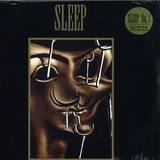
BACK IN STOCK NOW!! "Volume One is the debut album. It was the only album recorded with original guitarist Justin Marler, before he became an Orthodox monk. Volume One showcases a darker sound and stronger doom metal influence than Sleep's later work. The image featured on the cover is taken from the Salvador Dali painting "Soft Self-Portrait with Fried Bacon".
Their only album as a four piece of Al Cisneros, Matt Pike, Justin Marler and Chris Haikus
LP repressed for first time in many years.
allmusic
"For all their budding, precocious talent, Sleep's 1991 debut, Volume One, quickly betrays their still quite heavy debt to doom metal forefathers like Black Sabbath, Witchfinder, and Saint Vitus. Driven by Matt Pike and Justin Marler's lumbering mass of low-tuned guitar riffs, Al Cisneros' (still going as Luke here) serpentine bass and ragged screams, and drummer Chris Haikus' cyclopean kit pummeling, occasional highlights such as "The Suffering," "Nebuchadnezzar's Dream," and "The Wall of Yawn" prove less memorable than they are sensorially overwhelming. And yet, ironically, Sleep's rhythm guitars would never again be kept as under control, nor would their leads sound quite as refined as they do here (see the cleaner harmonies employed to good use on "Numb" and "Catatonic," for example). This was probably due to the onetime involvement of the significantly less stoned Marler, who would soon exchange the group for a monastery where he would study to become a monk. Fittingly enough, however, losing the versatility of a second guitarist was exactly what Sleep needed to focus their singular power into a crushing force, and the remaining trio would flourish immediately behind the sheer physicality of Pike's six-string style, as proven by 1993's superlative sophomore LP, Sleep's Holy Mountain."
Denver party crew delivers house cuts for the floor: Occidental "Move U", jacking house; Falling Into Places "Sound Response" somber yet driving; Bocaj "Everything Must Change" airy w/swung acid stabs; Justin More w/introspective "Feeling"
For his first release on Common Dreams, Reedale Rise (Simon Keat) brings us two thoughtful tracks, both well-layered and very well produced. The A side "Pressure Box" is the more funkier, 'deep house' leaning tune, giving us juicy chords, a starry pad, and some very nice atmospheres in between. All the while, drums are pushing you forward, and in some parts just reach out and slap you in the face. The B side "Azikiwe" fuses sporadic arpeggiations with some very thoughtful chord melodies. Maybe it could be described as having a more psychedelic twist. But just when you get too far out, you're brought right back to the rhythm tracks wich are nothing short of solid, making for a good all around dance track.
Nach der Veröffentlichung seiner "Dreamzone EP" verbrachte der gebürtige Finne Jaakko Eino Kalevi das vergangene Jahr hauptsächlich damit, Shows und Festivals von Europa bis Japan zu bespielen. Letzten Sommer veröffentlichte der finnische Workaholic zudem seine "Yin Yang Theatre EP" für das Beats In Space Label des New Yorker DJs & Radio Hosts Tim Sweeney, die mit ihrem bohemen Disco-Sound erneut aufzeigte, wie vielseitig Kalevi sein kann. Die zweite Hälfte des Jahres 2014 mixte Kalevi sein fertiges Album dann in New York mit Nicolas Vernhes (The War On Drugs, Run The Jewels) und zog anschließend nach Berlin. Sein selbstbetiteltes Synthie-Pop Album erscheint Mitte Juni auf CD und Vinyl via Weird World/Domino Records.
Matt Nowak drops a trio of mesmerising techno tracks on his Zaijenroots imprint this June with appearances from Sebastian Klenk and Jerome Sydenham. Matt Nowak inaugurated the Zaijenroots discography under his No Mad Ronin moniker alongside Jerome Sydenham in 2013, before reappearing for the second release with Quiet Daze (Ian Pooley) on remix duties. As the label returns for its third outing Nowak pairs up with German producer Sebastian Klenk whilst distinguished veteran Sydenham carves up a remix. 'Aleister' sees Nowak and Klenk create an acosmic track that initiates with a touch of funk before sullen synths make way for punchy SP-1200 beats and unsettling throbs. Sydenham provides a rendition of No Mad Ronin 'Chemical Planet' from Zaijenroots second release, featuring a perennial hook joined by intangible spoken samples and a subtle sub bass. Lastly 'Lenore' ties things together with a subterranean cut abundant with echoes and spacey atmospherics.