
- 1: Blacktop Blues
- 2: Make A Liar
- 3: Be Your Man
- 4 5: Th Of July
- 5: Tennesse Moon
- 6: Over And Over
- 7: Hey Mississippi
- 8: Something Easy
- 9: Wildfire
- 10: Dust On A Dirt Road
- 11: Heart On The Range
También disponible
WIldfire Smoke Vinyl[34,03 €]
WIldfire Smoke Vinyl[34,03 €]

Black Vinyl[33,82 €]

A long-awaited vinyl press: the now-legendary Makebo remix of Planet Funk’s timeless anthem “Chase The Sun”.
Flipping to the B-side reveals another gem - massive remix of G-Pal by Simon Vuarambon.

Music From Memory presents inrain, a collaborative project by Rudy Tambala of A.R. Kane and Alison Shaw of Cranes, originally recorded in the early 1990s.
inrain brought together two artists who were at the time shaping distinct yet quietly influential currents within alternative music. Through A.R. Kane, Tambala had helped redefine the possibilities of guitar music, placing atmosphere, abstraction, and emotional ambiguity at its centre in ways that would later resonate across dream pop, shoegaze, trip hop and experimental pop. At the same time, Shaw’s work with Cranes was establishing a singular vocal presence and a deeply intuitive approach to mood and space. inrain emerged at the intersection of these sensibilities.
The project began after Tambala was introduced to Shaw by Geoff Travis, leading to sessions at H.Ark! Studios in Stratford, East London. Working outside the expectations of their primary bands, the pair recorded informally over several months, building songs from minimal foundations. Early sampling technology, drum machines, acoustic guitar, and voice were used sparingly, with arrangements left open and space treated as an active element within the music. Vocals were often improvised, first takes preserved, and the atmosphere of the studio — calm, unhurried — became part of the sound itself.
Originally released in limited form during the early 1990s, the recordings carried subtle traces of the surrounding musical landscape: the low-end experimentation of emerging jungle, dub-influenced rhythmic structures, and a restrained melodic sensibility shaped as much by classical textures as by contemporary underground culture. Though modest in scale, the music feels quietly expansive — intimate, patient, and emotionally direct.
For this release, all tracks have been newly remastered from the original DAT tapes. This edition also includes the additional track 'Biology', written and recorded in 2012
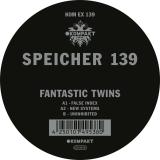
“It’s been on my wishlist for a while that the incredibly talented Julienne Dessagne does a techno EP for us,” Michael Mayer says. You can hear why, straight up, on Speicher 139, as Dessagne’s project Fantastic Twins is finally let loose on Kompakt’s storied series. The key words: psychedelic acid trax. “False Index” is peeled back to core: a fearsome rhythm, with an endlessly helixing synth pattern twisting around your skull, crinkling like cellophane and warping like burnt plastic, while Dessagne’s Sprechstimme floats above everything – detached but effortlessly perceptive. “New Systems” is a new kind of Europe Endless – hypnotic and lush, its deep drones pinpricked by sonar bleep. “Uninhibited” is catchy in a way that only Dessagne can make possible, its vocal tattoo burnt into your mind as it echoes through massive architectures, tones dropping from scaffold and splashing at your feet as glitch-work burrows its way up through the floor, directly into your earholes. Uninhibited? Everything here’s simultaneously under control, all under the watchful, guiding eye of Dessagne, and playfully, wildly out of control, little arrangements of phenomena let loose to build new worlds. Organised chaos, and chaotic organisation.
„Es stand schon seit einiger Zeit auf meiner Wunschliste, dass die unglaublich talentierte Julienne Dessagne eine Techno-EP für uns produziert“, sagt Michael Mayer. Auf Speicher 139 kann man sofort hören, warum, denn Dessagnes Projekt Fantastic Twins erscheint endlich in der legendären Serie von Kompakt. Die Schlüsselwörter: psychedelische Acid-Trax. „False Index“ ist auf das Wesentliche reduziert: ein furchteinflößender Rhythmus mit einem sich endlos windenden Synth-Pattern, das sich um den Schädel dreht, wie Zellophan knistert und sich wie verbranntes Plastik verzieht, während Dessagnes Sprechstimme über allem schwebt – distanziert, aber mühelos wahrnehmbar. „New Systems“ ist eine neue Art von Europa Endlos – hypnotisch und üppig, seine tiefen Drones von Sonar-Pieptönen durchbrochen. „Uninhibited“ ist eingängig auf eine Weise, wie es nur Dessagne möglich macht, ihre Stimme brennt sich in dein Gedächtnis ein, während sie durch massive Architekturen hallt, Töne fallen vom Gerüst und spritzen an deinen Füßen, während sich Glitch-Work seinen Weg durch den Boden bahnt, direkt in deine Ohren. Hemmungslos? Hier ist alles gleichzeitig unter Kontrolle, alles unter dem wachsamen, leitenden Blick von Dessagne, und spielerisch, wild außer Kontrolle, lassen sich kleine Arrangements von Phänomenen los, um neue Welten zu erschaffen. Organisiertes Chaos und chaotische Organisation.

This first-time reissue of Quinteplus’ 1971 album revives a key moment in Argentine jazz, featuring crisp trumpet and tenor sax, electric piano-driven funk and modal grooves, and a tight, spacious rhythm section. It showcases prominent figures like Jorge Anders and “Pocho” Lapouble.
==================================
Quinteplus was born in Buenos Aires at the end of the 1960s, emerging directly from the ideas and experiments of the legendary Agrupación Nuevo Jazz. Founded in the early ’60s, this collective brought together some of the most forward thinking figures in Argentine jazz functioned as a creative lab where musicians questioned where jazz could go next. Among the key ideas discussed was the fusion of jazz with Argentine folk styles such as zamba, chacarera, malambo, cueca, and candombe, as well as a deeper look into African rhythms as a bridge between musical worlds.
Two members of that collective, keyboardist Santiago Giacobbe and bassist Jorge “Negro” González, carried those ideas forward when they formed Quinteplus in 1969. The group came together naturally: all the musicians already knew each other and had played in different projects around the Buenos Aires scene. They shared a strong admiration for Julian “Cannonball” Adderley’s quintet, along with a clear goal—to develop a modern jazz language grounded in local Argentine rhythms.
From the start, Quinteplus stood out for its openness and adventurous spirit. Rhythm was central, and so was experimentation. The band belonged to a generation of Argentine jazz musicians eager to explore electric instruments and new textures, anticipating what would soon be known as jazz-rock. This was happening in Buenos Aires at the very same time Miles Davis was opening new doors with “In a Silent Way” and “Bitches Brew”. Giacobbe introduced one of the first Fender electric pianos in Argentina, while González pioneered the amplification of the upright bass and even developed a hybrid electric, boxless version of the instrument. Trumpeter Gustavo Bergalli, meanwhile, maintained close ties with the emerging Argentine rock scene, collaborating with Luis Alberto Spinetta and appearing on Almendra’s first album.
In 1971, Quinteplus recorded its first and only studio album for EMI. The original lineup featured Jorge Anders on tenor saxophone, Bergalli on trumpet, Giacobbe on keyboards, González on upright and electric bass, and Norberto “Pocho” Lapouble on drums and percussion—who also illustrated the album’s iconic sleeve. The record is a refined showcase of the band’s musical vision: original compositions, fluent jazz language, folk-derived rhythms, funky electric textures, tight ensemble playing, and standout brass solos. Though critically praised, the album received little label support and sold modestly, eventually becoming a sought-after collector’s item.
Quinteplus disbanded in 1973, their music was perhaps too bold and unconventional for its time.
Frizzell & Duque's A Sorrow Unrequited moves with suspended patience, each LP piece built from simple melodic figures, each of which eventually thicken out to quiet overwhelm. Working outside their Zake/City of Dawn aliases, the pair realise a more diaristic exposure here, drawing their inspiration and track titles from Julia Frizzell's poems of the same name. 'We Once Believed We Owned The Sky' tone-sets the vibe with long, tidal swells of strings and synth, dissonances sparing but weighted, while 'Closer, Always Closer' moves in similarly tidal cycles, with momentary swellings and torn cellos fissuring through the overall sadness.

Das dritte Album von Nick Llobet und Micah Prussack, alias youbet, aus Brooklyn ist ein weitläufiges, warmes Gemisch aus Indie-Rock, Pop und experimentellen Klängen. Es zeigt eine Band, die weit über ihre Bedroom-Pop-Wurzeln hinausgewachsen ist und sich zu einer selbstbewussteren, komplexeren und lauteren Kraft entwickelt hat. Das Album, das in Bewegung entstanden ist und zwischen langen Tourneen Gestalt angenommen hat, spiegelt einen Moment ekstatischer Möglichkeiten und Entschlossenheit wider. Sowohl geschärft als auch expansiv, wächst youbet aus den Grenzen des Heimaufnehmens und des ,Bedroom Pop" zu etwas Robusterem, Lauteren und Unverwechselbarem, das ganz der Band eigen ist. Die vielfältigen Einflüsse des Duos - von den Beatles über Bernard Herrmanns schwindelerregenden Vertigo-Soundtrack bis hin zu Flamenco, den japanischen Noise-Rockern Boris und vielem mehr - legen sich in den Hintergrund, während die Band ihre eigene musikalische Sprache entwickelt. Die Co-Produzenten Katie Von Schleicher und Julian Fader runden das Album ab, wobei erstere glitzernde Synthesizer-Klänge und letzterer ein von Prussacks Bass untermaltes Schlagzeug-Fundament beisteuern. youbet zeigt, wie Llobet und Prussack bezaubernde musikalische und lyrische Ausdrucksformen miteinander verweben und das Ergebnis immer wieder neu formen.

Chicken Shack are a British blues rock band founded in 1965 by Stan Webb, Andy Silvester, and Alan Morley, who were later joined by Fleetwood Mac’s Christine McVie, then still known as Christine Perfect. They signed to the legendary British blues label Blue Horizon in 1967.
O.K. Ken? is the band's second studio album from 1969 and reached #9 in the UK Albums Chart. The record was Perfect's last album as a member of Chicken Shack; she would join Fleetwood Mac a year later in July 1970. Her tune "Get Like You Used to Be" from the album became a staple of Fleetwood Mac's live act until 1975.
O.K. Ken? is available with the original UK cover, as a limited edition of 1000 individually numbered copies on red vinyl.
Repress
The Collaboration - Having toured together over the years, Lattimore and Barwick now join forces to co-write and record this full-length album. Their creative synergy brings together harp, voice, and analog synths in a deeply emotional, immersive sound journey. The album was recorded at the Philharmonie de Paris with co-producer Trevor Spencer (Fleet Foxes, Beach House). This album continues a unique series of collaborations between the label and the Musée de la Musique, featuring historical instruments in contemporary composition. Since 2017, InFiné and the Philharmonie de Paris have co-developed a series of albums designed to highlight the extraordinary instrument collection of the Musée de la Musique. Following the albums InBach by Arandel (2020) and Saturn 63 by Seb Martel (2022), this third release is a meeting of two iconic contemporary ambient voices: Mary Lattimore and Julianna Barwick. The project offers the artists full access to the museum’s playable instruments for recording, sound conservation, and creative reinterpretation.
--
Tragic Magic brings together Julianna Barwick and Mary Lattimore, two of contemporary ambient, experimental and electronic music’s most celebrated composers, for a unique collaboration at the Philharmonie de Paris, with extraordinary access to the Musée de la Musique’s instrument collection, in partnership with the French label InFiné. The album features seven immersive, evocative compositions guided by the human spirit – intimate, grounded in friendship, both earthly and cosmic – and part of a greater continuum, reflecting the solace and transformative power of artistry across generations.
Co-produced by Trevor Spencer (Fleet Foxes, Beach House), Tragic Magic was created in just nine days, a testament to the “musical telepathy” that has developed between Barwick and Lattimore over years of touring and friendship. Arriving in Paris from Los Angeles shortly after the 2025 wildfires, their sessions combined improvisation with the emotions and experiences they carried, in a setting both inspiring and deeply supportive. Lattimore selected harps tracing the instrument’s evolution from 1728 to 1873, while Barwick chose several iconic analog synthesizers, including the Roland JUPITER and Sequential Circuits PROPHET-5. In freeform dialogue between voice and instrument, they create a meditation on tragedy, wonder, and the restorative power of shared experience.
The duo, often joined by Spencer, also explored the city, sharing meals and visiting museums and landmarks, each encounter leaving an impression on their next session. The experience allowed them to work intimately with rare instruments, blending their personal sensibilities with centuries of history, resulting in music that honors the past while remaining a deeply authentic expression of the present.
Throughout Tragic Magic, Barwick and Lattimore find something beyond themselves: a sense that while everything may not be okay, beauty persists. Their approach – transforming life into music, observing, feeling, and creating – continues a lineage of creative expression and visionary invention, embodied in the very instruments they employed for this project.
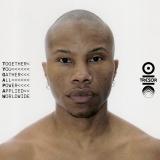
May 2026 marks the arrival of TYGAPAW (aka Dion McKenzie)’s first full-length album on Tresor Records, entitled Together You Gather All Power Applied Worldwide. An acronym of its creator’s name, TYGAPAW’s third studio album is a deeply personal collection of music building worlds where Black queer and trans siblings can thrive, while unifying dancefloors worldwide. A proposition that collective wisdom liberates us from the matrix of domination we live within. The album unfolds as the latest chapter in TYGAPAW’s ongoing techno opera opus, continuing to center the voices of Black women, which surface as layered incantations rather than lyrics - powerful, haunting, sensual, activating.
With the process of creating the album starting in 2023, as TYGAPAW (Dion McKenzie) was in the first year of their transition, the music reflects the intensity of that period, where they were experiencing deplatforming as a response to the shift in their physical appearance: Tracks like ‘M32 Riddim’ and ‘Helicopter hovers over my Crown Heights Apartment’ feature high-paced rhythms intersecting with intense siren-like synths to form demanding compositions echoing a heightened sense of alert. Yet throughout the album, relief comes in the form of TYGAPAW’s vocal features, co-conspirators, and chosen family, whose voices are treated with reverb and echo, a sonic fingerprint that leads back to the pioneers in the legendary studios of TYGAPAW’s native land, Jamaica, an important reminder that the past will always inform the future. It is an album for dancers first and foremost, where joy, defiance, and integration with the natural body coexist, and every drop feels less like a climax than a transformation. Expect a bass that permeates your soul and melodic synthesized sequenced phrases echoing the dancehall eras of TYGAPAW’s youth, reshaped into hypnotic melodies that glow over industrial kicks designed to command attention, reasserting Jamaica's pioneering yet often overlooked contribution to electronic music.
In the opening track, ‘Can I Live’, Precious Okoyomon’s words feel like the beginning of a ritual; setting the intentions for the rest of the proceedings. As McKenzie puts it, their “work is about regeneration, resetting, getting integrated into nature, and about rebirth. That’s the tone I wanted to set at the outset of the album.” Ms Carrie Stacks continues this thread of support in ‘Don’t Panic’ with heavily processed vocals on top of a beat that takes inspiration from another important ingredient in the antidote to the oppression of isolation: Ballroom culture. “ I feel like I found my queerness in Ballroom, that’s why this track is very important to me.”
Echoes of NYC Black queer nightlife scene also permeate in the energetic drums of ‘Exorcise the Language of Domination’, in which Julianna Huxtable’s spoken performance complements the various movements and tones of the music. “My producer brain thought this was the one that Juliana’s vocals would be best suited for. I hinted: ‘what do you think of this one?’ She just went into her notes and picked some passages to go with the first section of the track. From there, it was a year-long process of development. It required time and space for this thing to evolve, but I think it’s one of the most powerful tracks on the album.” London’s SUUTOO contributes the album’s only musical collaboration on ‘B2B’, a track that emerged from sessions in McKenzie’s New York studio where the real objective was to connect and have fun; a time out from the demands of life outside.
The album closes out with a double hit of emotion in the form of ‘Effects of Resistance and Black Trans Masculine Experience’. The former features South African scholar Khanyisile Mbongwa drawing connections that exist between Africa and the Black diaspora, whilst looking to the future and calling for a shared sense of community.
The latter piece, an instrumental version of the piece which featured on the IMMIGRANT E.P. of 2025 is a gentle and deeply affecting end to the record, a place of peace and acceptance. This end-of-cycle tone is mirrored in the sleeve photography, which also ties back to IMMIGRANT by finally revealing what was hidden: a portrait of the artist fully self-actualized; a step towards true inner liberation. TYGAPAW is sonically defiant across this album; bass frequencies feel tactile — less heard than inhabited — infectious lead synth melodies remain with you long after the track ends. An overall sound that leaves asserting an urgent need for connection. From Detroit to New York to Berlin to Jamaica, despite geographic distance, this album reminds us that we remain in solidarity, recognising that meaningful world-building requires collective input and action, both personal and communal, if we are to move toward liberation.

Blanche Biau, the enigmatic solo project blending 80s wave, post-punk, and shoegaze into a dreamy yet melancholic soundscape, is set to release a remix album of her sophomore record ‘Heartcore’. The new album, titled ‘Heartcore (Remixes)’, will be released via the Zurich based label Subject To Restrictions Discs.
Following the success of ‘Heartcore’, released in July 2025, the remix album brings together a group of artists to reimagine Blanche Biau’s hauntingly beautiful tracks. The remixers include Danzinger99, Donna Haringwey, Lumpex, Lust For Youth, Spear Flower and Milan STHC.
Blanche Biau on the remix album: «Heartcore is deeply personal to me, but I also imagined it as a living, breathing entity that could evolve. Collaborating with these incredible artists has been a dream – they’ve taken my songs to places I never thought possible. This remix album is a celebration of reinterpretation and connection.»
Blanche Biau is a solo project hailing from Zurich, Switzerland. Known for her DIY approach and ability to channel influences from 80s wave, post-punk, and shoegaze into a sound that is both nostalgic and forward-thinking, Blanche Biau has quickly established herself as a rising star in the alternative music scene. Her music combines raw emotion with dreamy atmospheres, resonating deeply with audiences worldwide.

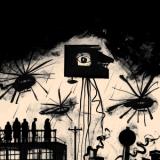
In an age that demands hyper acceleration, kinetic flashes and byte voracity, Blak Saagan sticks out like a sore thumb with a sprawling body of work that requires attention and unlocks profound symbols and meaning with every passage. After a 5 year gap, the Venetian composer returns with his most personal and openly political statement yet, ‘Un Sequestro Lungo 10.000 Anni’, a staggering 108 minute triple album soundtracking a dystopian city through flashes of futuristic fourth world visions, warehouse 80s rave-ups, meditative trance and dark rumblings. Following his acclaimed ‘Se Ci Fosse La Luce Sarebbe Bellissimo’ was never going to be an easy feat but Samuele Gottardello (Blak Saagan) approached the fresh canvas with a renewed sense of commitment sparking a dense parallel world inhabited by paranoia, control and repression. A world that is relieved by the figure of a woman with the body of a bird emerging from the asphalt and freeing humanity from the “sequestro” (kidnapping) to which it has long been subjected. Dystopia pushed to the limits and sadly close to our current affairs.
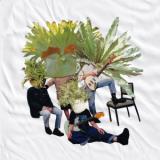
Phantastic Ferniture are back with their jubilant garage pop, releasing not one but two singles - their very first recordings since their critically acclaimed 2018 debut album. Recorded at Golden Retriever Studios in Sydney, produced by Phan Fern themselves, and mixed and mastered by previous collaborators Tim Carr and Andrew Edgson respectively, tracks “Change My Mind” and “Dare to Fall in Love” immediately evoke everything about this band we have come to know and love. Julia Jacklin’s ability to write a catchy yet effortlessly cool vocal hook is evident on first listen, but it’s the magic that Phan Fern creates together that really brings the songs home.
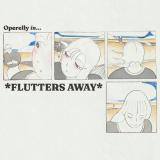
Ultra Clear Vinyl. ‘*FLUTTERS AWAY*’ follows last year's debut EP, ‘Handwriting Practice No. 1’, which established Operelly as one of the most exciting new voices in music. Thupcoming EP tells the story of a relationship breaking down
amidst miscommunication. Delicate electro-acoustic arrangements (dubbed "tiptoe music" by Operelly) intersperse
with the static sounds of radio interference, as if the interrupted communication recounted in the lyrics has punctured the songs
themselves. Operelly executive produced the entire record and mixed four of the five songs. Additional production work was provided by Hudson Pollock, Al Carlson, Stephen Willard, and Kali Flanagan. Cover art was designed by Leo Horton in collaboration with Operelly. The music video for "under my bed" was directed and shot by Sarah Elise Bauman
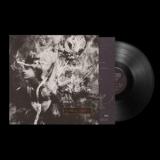
Das 1990 erschienene 4AD-Debütalbum von His Name Is Alive festigte die Stellung der Band innerhalb der bereits etablierten, ätherischen Klangtradition des Labels, indem es dessen Sound neu erfand und durch ein Prisma brach. Ein zartes und leicht entrücktes Dream-Pop-Album, das nahezu zehn Jahre von Defevers Heimaufnahmen bündelt - zusammengeführt zu einem eindringlichen Gesamtklang durch den geisterhaften, femininen Gesang von Karin Oliver. Produziert und gemischt von Ivo Watts-Russell sowie dem This Mortal Coil-Kollaborateur John Fryer, ist das Album ein kraftvolles Eröffnungsstatement, das mit rauschhaften Refrains und texturierten Gitarrenklängen Neugier weckt. Es behandelt die beiden zentralen Themen Liebe und Verlust, die taumelnd und wie in einem Traum vorgetragen werden.
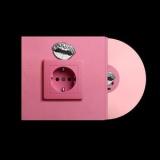
Die Power-Punk Band ERECTION aus Regensburg steht für das, was moderne Musik oft nicht mehr zu bieten wagt: kompromisslose Ehrlichkeit, rohe Emotionen und eine Klangwelt, die sich irgendwo zwischen Hoffnung, Überforderung und purem elektrischen Aufbruch bewegt. Mit ihrem neuen Album präsentieren sie eine Sammlung von Songs, die das Lebensgefühl einer Generation einfangen, die zwischen Burnout und Selbstentdeckung, zwischen Existenzkampf und Freiheitsdrang ihren Platz sucht. Ihre Musik verbindet moderne Pop- und Elektro-Elemente mit rockiger Direktheit und einer lyrischen Offenheit, die man selten findet. Die neue Platte zeigt diese Ambivalenz deutlicher denn je: laut und leise, hart und zerbrechlich, düster und gleichzeitig voller Sehnsucht nach Licht.
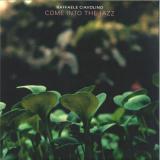
DJ Support: Kerri Chandler, Louie Vega, Dam Swindle, Jovonn, Brian Tappert, Grant Nelson, Mark Farina, DJ Mes, Cinthie, Floorplan, Kevin Yost, Fouk, Julius Papp, T. Markakis and more..
Raffaele Ciavolino is an Italian DJ, producer, and professional engineer who has carved out a significant niche in the global house music scene. His work is characterized by a sophisticated blend of Jazzy, Funky, and Deep House, often incorporating the high-energy "Jackin" house style that has earned him consistent recognition on major genre labels. “Come In To The Jazz”, the title of his new Album, gives you an idea of what to expect - jazzy melodies and sophisticated house beats. He does so with a modern viewpoint but also plenty of reverence for the glory days of jazzy house. Trumpets and guitars feature here and embellish the drums with quality, meaningful layers of melody and mood. As he merges the past and present, this richly textured work shines with improvisation and timeless deep house warmth.
