This LP resonates with the label on many levels. The originals, true to
LUMs sound and nature display his inner world, "LUM is above all a
spiritual encounter, a ritual séance for the acquisition of one’s essence, a ceremony...". Well rounded and truly individual are the remixes that complete the release. SIS, a tech house hero with many hits behind his back, delivers a signature dancefloor pleaser. Julio, debuts with a heavier darker take on the original. Ohm Hourani, hailing from Montreal take the original under his analog wings and delivers two live jam versions set as vinyl and digital only respectively.
out of Stock
Last delivered 26 days ago available to reorder, subject to availability
7" Originally released in 1987 on Australian label Big Home Productions both tracks were later re-released in 1990 on Sarah Records together with the Goes so Slow single as a five track 7 inch EP titled Nothing Ever Happens.
This is the first time that the single has been released in the UK in it’s original format.
Even As We Speak is an indie band from Sydney, Australia. Formed in the mid 1980s, founding members Matthew Love (guitar, banjo, vocals) and Mary Wyer (vocals, guitar) were later joined by Rob Irwin (bass) Anita Rayner (drums, banjo, mandolin), Julian Knowles (guitar, keyboards, production), and Paul Clarke (guitar, vocals).
After a series of vinyl releases on Australian independent labels including Phantom Records, and success on the Australian indie scene, they came to the attention of BBC Radio 1 DJ John Peel who started to play the band’s ‘Goes So Slow’ Phantom Records release on his show. This brought them to the attention of UK audiences and began a relationship with UK indie label Sarah Records. The band released several singles and an album on Sarah Records, three of which reached the Top 5 of the Melody Maker and New Musical Express UK independent music charts in 1992 and 1993.
out of Stock
Last delivered 5 years ago available to reorder, subject to availability
Following the labels theme of reaching beyond the conventional record label by combining music experimentation, short narratives, true stories, and illustrations – Jujuka 002 pushes into new territory with the Split EP “Raw Reflex” featuring founder Julia Govor on the A side followed by the first recordings of EMIT. Julia reaches into her imagination to find Soviet Union enthusiasm met with an American punk drive to add to her signature vibrant arrangement. Behind the EMIT alias is the intricate and vivid musician / producer – Kamran Sadeghi. EMIT read backwards is ‘time’ – the continuum of experience in which events pass from the future through the present to the past. The project is guided by the literal and musical use of time. A culmination of styles unravel within each track, encouraging listeners to discover their own path through the rhythmic and tonal patterns. The music belongs to every-body and no-body.
out of Stock
Last delivered 5 years ago available to reorder, subject to availability
London-based folk-psych-country band The Hanging Stars return with their eclectic third studio album, A New Kind Of Sky, due out on 21 February 2019. Carrying on their exploration of transatlantic psychedelic folk and cosmic country, the new album blends twelve-string, harmony-laden lullabies with soft rock anthems to create a guilded box of bucolic folk-rock. As well as the band’s signature wistful pastoral escapism, there are lyrical concerns about the recent past; the systematic division of people, values, facts and humanity in The West in general - and the UK in particular. The band weave the same thread they have always woven but this time with a more unified vision, creating a kaleidoscopic poncho for these times.
The Hanging Stars comprise songwriter, singer and guitarist Richard Olson, Sam Ferman on bass, Paulie Cobra on drums, Patrick Ralla on guitars, keys and vocals, and renowned pedal steel player Joe Harvey-Whyte. Returning guest Collin Hegna from Brian Jonestown Massacre plays an instrument called a Marxophone on “Choir of Criers”. They also welcome Sean Read of The Rockingbirds and Dexy's Midnight Runners, who adds horns to “Three Rolling Hills” and “I Was A Stone”.
The main bulk of the recording for the new album was done live in the studio at Echozoo in Eastbourne with Dave Lynch. For the first time, the band decided to dive straight in to the recording studio following their German tour in 2018. Having lived in each other’s pockets and playing their new songs every night, the band were as tight and primed as they could possibly be. There ensued a few, very long, days of recording, capturing the essence of the band in their element.
The songwriting process was even more collaborative for this album, with the usual co-writes between Richard Olson, Sam Ferman and Patrick Ralla enhanced by Joe Harvey-White’s arrangements and Paulie Cobra’s harmonies. The biggest difference is that Sam Ferman sings lead on the first single “‘(I’ve Seen) The Summer in Her Eyes”, a song about lost love and self doubt channeled through two and a half minutes of garage pastoralism.
The album’s title track “A New Kind of Sky” tells a story from the point of view of somebody who idealises a past that never existed. The band go glam-rock on the stand-out track “I Will Please You”, a tale of a cult leader/world leader and his irresistible (for some) charm from the point-of-view of his most recent victim and “Heavy Blue” is a country music tale of drunken debauchery seen through the eyes of an inexperienced young man. The triumphant trumpet-driven song “These Rolling Hills” is a minor-key tale of a journey into the hills of Marin County, California undertaken by Paulie and Richard to visit friends Asteroid No. 4, with a most interesting outcome.
The Hanging Stars released their debut album Over the Silvery Lake in 2016, which received plaudits from broadsheets such as The Times, who described it as; "An album with enough of a hazy, sun-dappled charm to make the capital's dreariest weather bearable”, as well as The Guardian, who said; “Mersey-laced harmonies and just a whiff of the Gun Club.” They picked up a good amount of support at 6 Music and “The House on the Hill” scored a much-coveted 10/10 by John Robb on Steve Lamacq’s Roundtable.
Their second album Songs For Somewhere Else in 2017 received critical acclaim from the likes of Uncut (Revelations article), Shindig (several features and 4* review) as well as The Quietus and The Line Of Best Fit, plus radio support from Gideon Coe and Bob Harris (they performed an Under the Apple Tree Session for Bob Harris in January 2019).
Whilst playing their own successful sold-out headline dates, the band were invited to share the stage with Teenage Fanclub, The Clientele, Wolf People, The Long Ryders and GospelbeacH, as well as playing festivals such as Liverpool’s International Festival of Psychedelia, Red Rooster, Ramblin' Roots, UK Americana Festival and The Long Road.
out of Stock
Last delivered 6 years ago available to reorder, subject to availability
LP IN STOUGHTON JACKET, PRINTED INNERS, OBI STRIP WITH FOUR OF SAMANTHA KEELY SMITH'S INCREDIBLE CONSCIOUSNESS MEMORY LANDSCAPES GRACING THE ALBUM SLEEVE.
The Pyroclasts album is the result of a daily practice which was regularly performed each morning, or evening during the two week Life Metal sessions at Electrical Audio during July 2018, when all of the days musical participants would gather and work through a 12 minute improvised modal drone at the start and or end of the day’s work. The piece performed was timed with a stopwatch and tracked to two inch tape, it was an exercise and a chance to dig into a deep opening or closing of the days session in a deep musical way with all of the participants. To connect/reconnect, liberate the creative mind a bit and greet each other and the space through the practice of sound immersion. The players across the four pieces of Pyroclasts are Tim Midyett, T.O.S., Hildur Guðnadóttir, and as always Stephen O’Malley & Greg Anderson.
The music on Pyroclasts is inextricably woven to Life Metal. It exists on the very same tape reels, was explicitly recorded by Steve Albini. The brightness and vividity of that glorious session glares through these four tracks, the precision and radiance, prismatic lustrousness of the saturation, the elemental sculptural shapes, the abstract renderings. It is a sister, or perhaps a shadow album. Or perhaps the now apparent miasma or aether. But it also exists in a form of a pause, a time space which exist in between and around the compositional structures of Sunn O)))’s titanic works.
For the listener or recipient/participant there are deep rewards within the patience of pulling down the walls and letting the music feel, and feel the music. To be immersed will reveal great detail and colour, clarify image, encourage a depth of focus and stillness which may lead to a quite profound experience. Sitting inside the space of time. A deep form of elementalism, even atomism, and connection with presence moment, time and reality.
Sunn O))) would invite their audience to consider these points of perception when experiencing and listening to Pyroclasts. Sunn O))) would also invite and encourage the audience to use Pyroclasts as a lens to review and reexperience the complexity of the Life Metal album, and even to interrupt its sequence with Pyroclasts. This elaboration can bring the astute listener both abyssal, hallowed rewards.
Pyroclasts was recorded and mixed by Steve Albini at Electrical Audio on two inch tape July 2018, and mastered by Matt Colton through all analogue AAA process at Metropolis July 2019.
Stephen & Greg would like to dedicate this album to the memories of Ron Guardipee, Kerstin Daley & Scott Walker.
out of Stock
Last delivered 6 years ago available to reorder, subject to availability
Award-winning bassist Daniel Casimir and vocalist Tess Hirst release their debut album via pioneering London-based record labe Jazz re:freshed. Following the success of Daniel Casimir's critically acclaimed debut EP 'Escapee' which featured Hirst on vocals and fellow rising stars on the scene Moses Boyd, Joe Armon-Jones and Shirley Tetteh, this album - 'These Days' is inspired by the duo's London surroundings, delivering thought-provoking lyricism, neo-soul and modern jazz
Casimir, a former Birmingham Conservatoire student, has collaborated with Julian Joseph, Jason Rebello, Benet McLean, Lonnie Liston Smith, Nathan Facey, Shane Forbes, Chihiro Yamanaka, Ashley Henry, David Lyttle, Nubya Garcia, The Tracey Quintet (Meantime Jubilation), Tom Harrison (Unfolding In Tempo), Jasmine Power (Stories And Rhymes), Camilla George and Art Blakey Jazz Messenger saxophonist, Jean Toussaint.
Named Young Jazz Musician of the Year by the Musicians' Company in 2016, Casimir has received plaudits for his arrangements and recital, while Hirst has made a name for herself with her vocals on the jazz circuit having moved between London, Leeds and LA to hone her craft. What sets Hirst apart as a musician is not only the originality of her music but her perspective of herself as an artist. She is an Ethnomusicology Graduate of SOAS and her writing style walks us through her upbringing in West London and down the halls of academia
Casimir and Hirst fuse traditional jazz sounds into beautiful compositions, narrating their way through a political and cultural landscape across these twelve tracks. The frenzied groove heavy'Security' addresses the need to trust one another and how we protect ourselves personally, while the rich atmospherics of 'Freedom' combined with Hirst's vocals, explore liberation and the rejection of duty - from a female perspective.
At the heart of 'These Days', Casimir plays with a passion and power that resonates throughout each composition. His knack for complex chord changes are highlighted in 'What Did I Do', bringing an energy and enthusiasm to the track while Hirst decries our changing capital. Elsewhere, references to John Agard's poem 'Listen Mr. Oxford Don' in 'The Magic Money Tree', explore the past and its relevance to now while a re-imagining of Charles Mingus' 'Fables Of Faubus' further ensures this theme remains central to the essence of the album.
Daniel Casimir and Tess Hirst have already received radio support from BBC Radio 3, BBC Music Introducing and Jazz FM, along with coverage in the London Evening Standard and Jazzwise Magazine
'Don't Let Them' interpolates elements of 'Fables Of Faubus' written by Charles Mingus (c) 1959. Published by Jazz Workshop Inc. Administered by BMG Rights Management (UK) Ltd. Used by permission. All rights reserved.
out of Stock
Last delivered 6 years ago available to reorder, subject to availability
UKNOWY music is back with a new installment on its more house-leaning "Plastic Garment" vinyl series. This time the EP title is "Midnight Impulse" as every track carries the treats of nocturnal life: it's dark, it's fresh and it's open to all possibilities! Starting with Salomo we have a delivery of a definite club banger with "Transform" - devotees of the likes of Kyle Hall or Steven Julien/Funkineven will definitely get their fancy tickled here. Next comes Italian break-beat maestro Sofa Talk with a rhythmically sophisticated yet deep "ALBA", much in the vein of earlier Plastic Garment releases. Munich house duo Rhode & Brown starts the B side with "You & Me" building intricate synth arpeggios over catchy chords. St. Petersburg's very own Dices closes things off with his more dreamy and at the same time incredibly complex and beautiful "See You There" - a track for the listener or the later hours of the night.
out of Stock
Last delivered 5 years ago available to reorder, subject to availability
Cititrax presents a full length LP by a new duo called Tornische. Julio Tornero and Hanna Chamiarytskaya (aka Anneq) got together in Madrid after having met through mutual friends. Immediately, they bonded and found a musical chemistry between them. They went into the studio and began revisiting Julio's unreleased archives, incorporating what he had already recorded years ago with fresh sounds and Neu Deutsche Welle style duets. The result is a modern, chaotic, take on 80s European new wave, 90s detroit electro, and contemporary indie pop. The energy level is always high, the melodies are catchy and the vocal delivery and lyrics futuristic, subversive, italo-disco / punk, and surreal. A special album, this one is line with Medio Mutante's classic debut EP, 'Inestable' (2008) and not unlike the pioneering sound of Liaisons Dangereuses.
The vinyl will be pressed on 160 gram ultra clear and limited to 500 copies. The record is housed in a PVC printed sleeve, with a neon graphic designed by Peter Miles. The back features an image by Nastya Porukevich along with the track titles and album info.
out of Stock
Last delivered 6 years ago available to reorder, subject to availability
After the major success of Part 1, Cosmo Vitelli & Malka Tuti are presenting Holiday in Panikstrasse Part 2, the 2nd and final part of Cosmo’s 2XLP on the label.
After collaborating with Fantastic Twins on Part 1, the amazing Julienne Dessagne’s vocals are back on Part 2 as well for the opening track Fragments of Reality. Another collaboration on the record is with Croatian singer and vocalist Tanja Vezic, whom we’ve already seen collaborating with Cosmo on his Les Disque De La Mort release, and who gives a cinematic sort of feeling to the track Party old boy.
With “He just wanted to hang out with the DJs” Cosmo creates a slow burning dark banger that will not go unnoticed.
The final track Irritable is the perfect mixture between German Krautrock heritage and the French disco-synth touch of the 80s - emotional, growing and cathartic, one cannot stay indifferent to it.
out of Stock
Last delivered 5 years ago available to reorder, subject to availability
ALTA’s debut release, 'Reasons' is the product of many long nights making music together in a back room at Hannah and Julius’ Brunswick home. It was self-recorded over 10 months, from January 2018 to November 2018, using midnight sessions, tape delay effects and a literal room full of wall to wall synths to carve out a world all their very own. "It's a collection of songs written together in our home studio - No cowriters or anything, just us two experimenting making the music,” says the band.
The album was later mixed by Seekae’s George Nicholas in Sydney and mastered by Grammy-winning engineer Chris Gehringer at Sterling Sound (Rihanna, Janelle Monae, Chvrches).
Thematically, the album’s title alludes to the sense of complacency that often sets in when people start making excuses for themselves.
“It’s this internal thing,” Julius explains, ‘always coming up with reasons why things did or didn’t happen, or reasons why someone else did something. Often it’s self-preservation but it’s also bullshit.”
‘Push’ follows on from previous singles ‘Figured Out’, ‘Back On It’ and ‘Twisted’, which have just under 2 million streams on Spotify since their release and are receiving global attention, with spins on BBC Radio 1 and praise from the likes of The Line of Best Fit and CLASH.
At streaming, ALTA have seen huge support locally and internationally, with their 2019 releases featuring in Spotify’s New Music Fridays, Indie Arrivals, The Local List, Just Chill, Front Left, New Dance Beats and The Office Stereo, plus Best Of The Week on Apple Music.
Melbourne fans will witness ALTA performing tracks from Reasons for the first time ever at Northcote Social Club on Saturday 5 October. Tickets are on sale now via Northcote Social Club’s website.
Reasons is an intricate and emotional body of work that will see ALTA step out from Melbourne’s underground scene, and into the international limelight. Pre-order your copy today.
out of Stock
Last delivered 6 years ago available to reorder, subject to availability
During the uprising in 2000, aided by the League of Humanity, two of Dr: Gall’s advanced prototypes escape the Rossum Universal Robot factory and flee Earth on a decommissioned spacecraft.
Travelling aimlessly through space, they begin to wonder what their new home would look like. They tell each other stories of planets with no humans to enslave them, no factories to go to — planets where fresh blue water runs through pink, sun kissed mountaintops.
Perhaps it’s fortunate then that these Robots can feel no time, have no sense of past and future? And by the time their ship touches down on Ebaum’s Dreamland, who knows how many years have passed on Earth…
“Ebaum’s Dreamland” is the first Rossum Universal Tracks release.
It features a remix by Julius Steinhoff, who first discovered the scrambled transmissions in his deep space observatory in the woods.
out of Stock
Last delivered 4 years ago available to reorder, subject to availability
When acclaimed South African musician Guy Buttery first sought out Dr. Kanada Narahari in late 2016, it was as his patient.
“It was a dark time.” Buttery recalls, “I had been bedridden for months and had been suffering from debilitating bouts of fatigue which no diagnosis or medication could help me get to the bottom of. When I first met Kanada, I was at the stage where even picking up my guitar to make music had become a joyless and taxing exercise.”
As Buttery’s searched for a cure, a family member recommended he see Kanada an Ayurvedic doctor who had relocated to South Africa from India and set up a practice in Durban. It was during this consultation, that the musician first experienced how Narahari infused the healing properties of Indian Classical music into his practice. Rather than treating him with a smorgasbord of pharmaceuticals, Narahari played his sitar and set Buttery on a strict daily diet of Raga’s to fast track his recovery.
Buttery was not only struck by his doctor’s musical talents but by the powerful healing properties inherent in his sitar compositions. When he left Narahari’s doctors room that afternoon, he asserts he was feeling decidedly clearer, lighter and stronger.
“Diving into Kanada’s music was definitely one of the reasons I'm still here today.” he admits. “The consistent tonal centre at the heart of Indian Classical Music, literally became my support pillar over this period. A central core of sorts in which to fall back on, strengthen and discover.”
Narahari as it turned out, was not only a prominent music therapist (and one of the only Ayurvedic doctors practicing in South Africa) but like Buttery, a highly accomplished musician with a devoted following back in his homeland.
Born in a small village along the Western Ghats in Karnataka, India, Narahari, at the age of nine, had enrolled to study Carnatic classical vocal and developed an interest in Hindustani Classical music with a particular passion for the sitar. While Buttery had secured his reputation as one of South Africa’s musical treasures, a multi-instrumentalist who commands sold-out performances both locally and internationally and more recently had been awarded the prestigious 2018 Standard Bank Young Artist for Music.
From this consultation, a friendship developed between the two musicians with Buttery soon inviting Narahari to join him in his studio. But it wasn’t all plain sailing in the beginning. While Buttery and Narahari’s sensibilities were very much aligned, there were a range of cultural and musical influences, nuances and inflections that first needed to be navigated and understood.
“I suppose we had to find a common ground.” Buttery says, before adding, “Which in the end turned out to be pretty "uncommon ground" for the both of us.”
It was after a few intensive sessions together that something exhilarating began to emerge. What began as a few idle improvisations soon evolved into feverish and lengthier jams. Whenever time permitted, the musicians would meet, descending deeper into the emerging sounds, while reimagining the realms that existed between their African and Indian heritages.
Over the next few months, the duo would rack up over fifteen hours of recordings in studio, and it was up to Buttery to shape the material into an album which they collectively titled Nāḍī, which Narahari translates from the Sanskrit as "The Channel" or "An Internal River".
During this period, Narahari bestowed upon Buttery, the moniker Guruji while Guy would refer to him, in affectionate return, as Panditji. Each time the musicians would meet, the studio space would be cleared by an impromptu ritual, with Guruji burning African Imphepho while Panditji would chant a Sanskrit mantra dusting Indian Agarbatti clouds over their instruments.
Once the room had been made hazy with this aromatic alchemy (with the ancestors welcomed in) the musicians would pick up their instruments and plunge into shimmering tides of sound. Reflecting on these sessions, Narahari recalls the immense creative freedom he felt throughout: “Guy and I tried to wander as much as possible, without any speculative, preoccupied ideologies or limitations. Love remained at the forefront of our journey together.”
“Those evenings we spent together in the studio” adds Buttery, “felt incredibly rich with purpose and a profound sense of freedom. While improvising, anything could happen and mostly did.”
On a first listen, the tracks on Nāḍī emerge as salty, humid invocations to the inscrutable depths and misty myths of the Indian ocean-- that vast body of water that stretches between, and laps the shorelines, of the artists’ respective homelands.
When asked to describe the sound him and Narahari refined, Buttery prefers to relay a series of evocative images.
“For me” he explains, “Nāḍī is a lighthouse, a beacon that resides at the bottom of the ocean.” As Buttery envisions it, “what once offered light to guide ships to safety, has been submerged and re-purposed by marine life as a coral-reef temple. Similarly, this sunken lighthouse exists as a concealed cenotaph, memorializing the ancient sea-routes and passages that once connected the two distant lands.”
On paper this may sound obscure but listening to the songs, it serves as an apt metaphor.
Across each meditative movement, listeners are able to relive the journey, immersing themselves in a series of incantations, replete with high dynamics, delicate African-Indian inflections and virtuoso string playing of an entirely new order. Further complimenting the fusion of musical dialects are a range of guest artists including Shane Cooper on bass, Thandi Ntuli on vocals, Chris Letcher on organ, Ronan Skillen on tabla and percussion and Julian Redpath on guitar, synth and backing vocals.
Now like the submerged lighthouse, the recordings stand as a monument, a marker and snapshot of this fortuitous meeting, a tribute to the healing gifts of Guruji and Panditji in performance. It’s a process that already, both musicians look back on with reverence and nostalgia.
Buttery ruminates in closing, that when he first met Kanada his illness correlated with the biggest drought South Africa had experienced in many years “…for whatever reason, whenever we would connect and make music together, the sky would tend to open. Even if it was just a few drops. This went on for months, until finally the drought dissipated and my health had been restored.”
By the time the heavens did open across the East Coast, a deep friendship had been forged and with it abundant musical offerings poured down. A treasured sample of which we able to share in every time we press play and immerse ourselves in the sacrosanct musical universe that is Nāḍī.
out of Stock
Last delivered 6 years ago available to reorder, subject to availability
I remember the first time I read W.E.B. DuBois eclectic masterpiece The Souls of Black Folk. The way in which this Weberian scholar flowed from personal account to prose to sociological analysis to music and even political intervention has had a lasting impact on my own work as a cultural anthropologist. It made me understand that as scholars we must use different means in order to give expression to the totality of the lived experience: There is only so much in an academic text.
The experience of alienation has always been at the heart of my scholarly and artistic practice. I have used academic writing, lecturing, theatre performance and electronic improvisation to understand and represent it as a theoretical concept, postcolonial condition and lived experience. I believe, some issues need to be told like a story, some analyzed in most abstract terms and others need to be sung like a gospel. The medium changes the message.
In this sense, I guess, I’m a singing cultural anthropologist.
For some time now I have been engaged in the use of dystopian themes and sounds to paint a sonic picture of structural racism and whiteness of our present. But recently I have grown weary of this Ballardian idea of Future Now and the resulting phantasmagorian aesthetics myself and others have been invested in. The widespread availability of Digital Audio Workstations, sequencers, loopers and delay pedals has lead us into a futuristic cul de sac best described by Mark Fisher as the very absence of future.
Likewise, I am most skeptical of the “naturalist” countermovement, the return of folk. Especially in Germany, I am convinced there is no such thing as an innocent or progressive folk musical expression as it is always connected to the idea of the homeland (“Heimat”) which in turn produces the colony. It seems to me, the current zeitgeist is stuck between a “museum of a dystopian future” and a “museum of an idealized past”, but I wanted to sing about the present.
So, I involuntarily returned to pop music in its two-folded meaning of something popular and addressing not an essentialist notion of “Volk” or its woke cousin “communities”, but society as a whole.
I entered the studio just with a few lo-fi sounding melodies and rhythms from my circuit bent CASIO synthesizer. I had no clue what the finished product would sound like. But as soon as Markus started drumming, in a way strangely reminding me of CAN’s Ethnographic Forgery Series, my uptight sounds were suddenly embedded within a warmer global sound spectrum. The alien at home and abroad and the strange overlapped: We were seeing one and the same sound differently but were gently held together by Tobias’ producing.
Making music is about building coalitions. It’s about suggesting an articulation of styles, sounds and people, that hasn’t materialized, yet, but may help us in the current crisis: I wanted Amon Düül II to send their drug induced archangel thunderbird to rescue the refugees, that had tried to escape the police by climbing up a tree in Munich in 2016. I wanted Sun Ra to taunt far-right protesters in Chemnitz in 2018. And I wanted to mourn the loss of a former kebab shop cum discotheque that served as proof that there is such a thing as a minoritarian universalism.
SCHLAND IS THE PLACE FOR ME is a pop album featuring songs of alienation, not only as a tragic experience, but as a pop-cultural promise. Maybe Bill Callahan sung it best, “I am Star Wars today, I am no longer English grey”. I want those who suffer from alienation to stand in alliance with those who seek alienation, and vice-versa. A coalition, that tolerates the possibility that we are moved by the same groove for contrary reasons.
Fehler Kuti
Munich, Autumn 2019
Music by Julian Warner, Markus Acher & Tobias Siegert
Saxophone on RINDERMARKT by Franz Brunner
Trombone on RINDERMARKT and IL by Matthias Götz
Recorded and mixed by Tobias Siegert in Munich.
SONTAGSFAVORIT mixed by Dario Albiez in Dusseldorf.
Mastered by Duphonic in Augsburg.
Artwork by Atelier Grande, Munich.
out of Stock
Last delivered 5 years ago available to reorder, subject to availability
Microdosing is a series of compilation 12”s selected by Julienne Dessagne aka Fantastic Twins, and designed in collaboration with French visual artist Geff Pellet. Microdosing is a collective experiment aimed at helping you fighting back your modern obsession with happiness. You may deserve a nice day but the day does not need a nice you, nothing should be forced, everything is permitted. Microdosing will provide you with sonic healing weapons on regular basis and at irregular dosage. Those doses will favour psychedelic social techniques against self help tyranny, creation over soma, provoking over numbing, our outer-selves over our inner-selves. Microdosing refuses the fatality of the pleasure principle. Life is a struggle, time to embrace it. —— “The cure 4 pain is in the pain” The Microdosing community is an endless Tibetan geometric tattoo on a thousand backs, a black well opening on infinite space. Let us embrace the void in our lives as it is fruitful. Cooper Saver hails from L.A, a city of fallen angels. “Phase 0” is a demonic weapon of choice, its beauty rising from urban ashes. Borusiade’s “Worlds” is an industrial mantra, tribal rhythms driving you through the seven circles of agony, the voyage being the destination itself. Zillas On Acid’s “S-Test” slowly pours acid into your retina, its groove showing you that the blind are the true see-ers. Scott Fraser’s “Deliria” concludes this chapter with the serenity only known to true martyrs. This is not a soothing piece, just the realisation that peace comes from eternal damnation. Microdosing is happy to lead you through the dances that know no threshold. To the chant of “the only cure for pain is in the pain”, you will travel further through an empty eternity. (Ivan Smagghe)
out of Stock
Last delivered 6 years ago available to reorder, subject to availability
Australian producer and multi instrumentalist Michael Di Francesco
Released debut album 'Visions' in 2017 with full visualiser Multiple gold accredited singles in the past 3 years Sold out headline 2019 Australian headline tour with 5k tickets sold nationally Debut USA headline tour with live band in July 2018
out of Stock
Last delivered 6 years ago available to reorder, subject to availability
Club Internacional dig deep to launch their new global reissue series in style with two long lost cuts from Rio-based label Top Tape. First up is Jose da Silva aka Zeca Do Trombone.
A massively respected instrumentalist, he has worked his trade over the years with many of Brazil's leading artists such as Tim Maia, Milton Nascimento, Elizeth Cardoso, Beth Carvalo, Martino Da Vila, Gonzaguinha and Carlos Dafe amongst others.
He also produced a very much sought after LP in 1976 alongside Roberto Sax which was finally re-released this year on Mad About Records. Tema Do Brisa dates from a few years later in 1978 and is Zeca's only solo 45 single. Never released on digital and never reissued on vinyl before, it is with great pleasure that Club Internacional re-launch this psychedelic jazz and heavily funk influenced gem with its still stunningly fresh sounding drum patterns to a new generation of listeners. Fans of jazz, funk, rare groove and Brazilian music in general will appreciate the strong vibes of this original track and be delighted to finally have this record in their hands. The track represents a unique moment in the career of a great musician fully in control of his instrument and more than willing to test its musical boundaries. Zeca continues to play out as an artist regularly in Brasil right up to the present time.
On the flip side, Sambacanas, or Os Sambacanas as they were sometimes also known, were a group of Samba musicians recorded by the Sao Paulo based producer Julio Nagib.
Although they were mostly known for a samba covers LP entitled 'Sucessos Da Juventude Em Tempo De Samba' (re-released in the UK under the title 'Fly Me To Brazil'), this song, Panga, Danga, Panga, was the A side of their only 45 single release for Top Tape which came out in 1976. Again this track has never been re-released before in its 45 single version, and has not been made available digitally. A beautiful example of raw and simple Batucada-style Brazilian samba music infused with Latin funk vibes, it features excellent vocals and percussion including the berimbau and cuica. Club Internacional hopes you enjoy this journey back to rediscover these very different, but wonderful, long lost sounds of Brazil on this limited edition vinyl 45 pressing to add to your record collection. Each Club Internacional edition may take some time, but it will be worth the wait!
out of Stock
Last delivered 2 years ago available to reorder, subject to availability
Made up of Dave Harrington (Darkside/Dave Harrington Group) and Benjamin Jay (NDF/Benoit & Sergio), Lights Fluorescent is, as the two describe it, an ‘experiment in the spaces between song and texture, idea and reference, past and present.’ On their debut album, The Oldest Sons Of The Oldest Sons, the duo develops an atmospheric, slant-pop sensibility that lists toward the experimental tendencies of improvisational and ambient music.
The result is a set of songs meant to be lived with. Entirely percussion-less, recordings drift on a tenderness of guitar, revenant feedback and vocals of autumnal intimation. Space Metal and July 9th process layers of bespoke noise and washed out chords to tarry with integral depth, light, and shadow, while Hotels distills country-western longing into its nth dimensional essence always unrequited.
From within these sonic panoramas, vocals emerge more as watercolor traces than coarse etchings. They aim to capture evocative, lyrical intensities, eschewing the solace of the literal. As such, the album favors 'the gestural, the implicit, and the miniature over the more adolescent urges of grand narratives and epic.’ These preferences map onto the album in all of its moves. J Girls reveals a hint of story buried, like its context, deep in whorls of feedback. Fleeting images of monuments, cathedrals, or epitaphs on tracks like Palace Walls or Small Sacrifices speak to a sense of memory and community paradoxically ungrounded by the material instantiations meant to keep things in place.
out of Stock
Last delivered 18 months ago available to reorder, subject to availability
Livity Sound's final transmission of 2019 comes from the esteemed Freerotation resident and UntilMyHeartStops co-founder, Leif.
Quietly earning himself a well-deserved reputation for his outer-worldly production stance and forward-thinking approach to Dj-ing, Leif has spent the last decade refining his musical palette with a slew of releases including highly acclaimed LPs for Whities and UntilMyHeartStops. In 2017 he launched the TIO-Series label as a vehicle to showcase the more off-kilter rhythmical side of his own productions releasing contemporary anthems such as July V and Bluebird.
This new EP for Livity Sound continues in the exploratory TIO-series vein finding Leif in percussion mode, combining nimble rhythms, deep bass and hazy synths in his idiosyncratic style to dazzling effect.
This 12” vinyl release comes with brand new art direction from Tess Redburn in a full colour artwork reverse board sleeve.
Livity Sound is a label set up by Peverelist in 2011 as a vehicle for a raw and exploratory strain of UK techno, rooted in the heritage of UK dance music and sound system culture. It has since become one of the UK's foremost protagonists for cutting edge underground music.
out of Stock
Last delivered 6 years ago available to reorder, subject to availability
Hollie Kenniff is a Canadian-American electronic musician. The Gathering Dawn is her debut solo album .
The album, which is her first ambient proclamation, displays a sprawling looseness in sharp contrast to her works as one half of Mint Julep with husband Keith Kenniff (Helios, Goldmund).
The Gathering Dawn wistfully utilizes glacial synths, blurred out guitars and Hollie's melancholic vocal plumes as a basis. The album finds Hollie effortlessly folding classic ambient motifs in with minimal modernist brushstrokes.
The Gathering Dawn will be out on November 15th on limited edition 180gm pink vinyl and compact disc.
out of Stock
Last delivered 6 years ago available to reorder, subject to availability
"Sounds Over Seas" is the new label bringing banging beats straight from the depths of the heart. Spearheaded by label head and DJ/Producer Julian Bainbridge, "Sounds Over Seas“ intention is to deliver groovy and dreamy vibes by new and established artists, whilst remaining genuine to its true nature; music not just for the dancefloor.
SOS001 brings all this together, delivering rhythmic and jacking beats on the A-Side and a more dreamy and spacious vibe on the reverse side.
out of Stock
Last delivered 8 months ago available to reorder, subject to availability
Plants Dub is an art project of the homonym collective based in Lecce - Italy formed by Maria Teresa Santoro, art historian and light designer, Francesco Andriani De Vito aka Dubin dj and producer, and Andrea Presicce aka NoFinger Nails, dub master and producer. They work in Plants Dub project in a mutual exchange of skills so as to be able to research in a way where art and science has no borders. Plants Dub connects electronic music and bio-acoustic researches. Through samplings and synthesizers Plants Dub produces an inter-species communication in order to form a complete human-plant audio exchange. The album was composed using melodies generated by plants thanks to a special sound device that allowed the translation of the plants' electrical impulses into sound. Plant sounds were recorded between March 2018 and July 2019 in Salento. The musical production has followed a double register: in Acanthus Mollis, Morus and in Phoenix Canariensis the vegetable melodies overlap to specially composed dub rhythms, in Laurus Nobilis, Olea Europaea and in Quercus, the tree melodies are translated into ambient sounds.
out of Stock
Last delivered 6 years ago available to reorder, subject to availability
Sam went into an almost psychotic state when making music. He wasn’t himself. He was immersed in the creativity to such an extent that it was almost like a psychotic trance. Here’s an example. He found all this giant kelp down at Western Port bay and he would bathe himself in it for weeks. He would replenish the water and put salt in the bath, but leave the kelp in there. I used to ask Julie, his partner and wife, “How’s everything going?” and she’d say, “Just go and have a look at the bath.” - Tony Rogers
Sam Mallet could have pursued a career as a French literature professor in Paris, but decided his true calling was to remain in Australia, dedicate himself to his music and find the plateau; a word he used to describe the sensory worlds residing in music. Under the influence of Eno, Jon Hassell, Arvo Pärt, John Coltrane and Robert Fripp, Sam explored a wide variety of musical styles and put them to service soundtracking the time based works of his peers. He crafted spatial ambience, somber jazz, and drum computer driven rockers for short films and experimental video works, television shows (including the original Australian Wilfred series), feature films and live theatre. The avant garde Anthill Theatre, known for its departure from conventional staging practices and having a keen eye for talent, enlisted Mallet to provide soundtracks for approximately 40 productions throughout the 1980s and early 1990s.
Sadly, Sam passed away in 2014. A crucial piece of his legacy is undoubtedly the body of work he produced during his life, and the archive of recorded works is vast and deep. Sam seemingly saved everything, from fragments to finished pieces; and often repurposed previously released tracks by collaging them into new pieces. He self released a small number of cassettes and CDs from the mid 1980s onward, the contents of which were culled from soundtrack work and original pieces, but the majority of his music was experienced only within the ephemeral live performances.
Wetlands is the product of countless hours spent with this archive by Rowan Mason (Sanpo Disco/Recurring Dream) and Tony Remple (Musique Plastique), offering a dynamic survey of Sam’s work, and housed in a jacket evoking the minimal design and colour palette of his earliest cassette releases. Two selections of Sam Mallet’s music were featured on the compilation Midday Moon (also produced by Rowan), released last year by Bedroom Suck Records. Along with Left Ear Records’ Antipodean Anomalies, Midday Moon has served to highlight outlier musics and scenes from Australia and New Zealand, and Wetlands plunges deeper into the catalog of this obscure yet groundbreaking artist.
out of Stock
Last delivered 6 years ago available to reorder, subject to availability
The avant-garde composer and conductor Pierre Boulez was a titan of post-War experimental classical music. Born in the small cheesemaking town of Montrbrison in central France in 1925, Boulez studied at the Paris Conservatoire with the composer and organist Charles Messiaen and received private tuition from pianist Andrée Vaurabourg; after moving to the Marais district in 1945, he briefly studied with Schoenberg disciple, René Leibowitz, and further influence came from immersion in Balinese gamelan, Japanese classical music and African drumming, among other sources. Earning money by playing an early electronic keyboard called the ondes Martenot on theatre productions, Boulez soon became music director of the Renaud-Barrault theatre company (led by actor/direction Jean-Louis Barrault and his actor wife, Madeleine Renaud), leading to tours of Belgium, Switzerland, Britain and both North and South America. American composer John Cage became an ally, though they subsequently clashed over Cage’s commitment to the role of chance in his compositions, paving the way for an intense and lasting friendship with the German composer, Karlheinz Stockhausen, who arrived in Paris in 1952 to study with Messiaen. In July of that year, the pair attended the International Summer Course for New Music in Darmstadt, leading to contact with Italian composer Luciano Berio and other noteworthy figures. Then, in 1954, with backing from Barrault and Renaud, Boulez began staging a series of concerts of experimental music at the Petit Marigny theatre, titled Le Domaine musical. The pieces collected on this album are all taken from performances staged for the 1957 Domaine musical season, beginning with Berio’s “Serenata I,” conducted by Boulez, which debuted in Paris in March of that year; arranged for flute and fourteen instruments, Berio said that the idea behind the piece was for the solo flute to be confronted by continuously interchanging elements, rather than mere accompaniments or oppositions. Boulez’s own “Sonatine,” composed in 1946 for flute and piano, is a 12-tone piece that evidences Messiaen’s influence, with shades of Asian classical music in places; then, Stockhausen’s monumental “Zeitmasze” or “Time Measures,” a serial composition for five woodwinds, played in different combinations of tempos and speed, was partly inspired by Webern’s principles of homogenous and harmonic textures. Finally, Messiaen’s 1949 work “Cantéyodjayâ,” delivered by pianist Yvonne Loriod, takes it shape from the classical Hindu rhythms of ancient India, as with much of the composer’s oeuvre.
out of Stock
Last delivered 6 years ago available to reorder, subject to availability
A testament to the growth of Adam Beyer’s scene-leading label, Drumcode annual A-Sides Vol.8 is the brand’s biggest yet.
The 25-track strong compilation, split across 7 EPs, features standout cuts Beyer has received over the last 12 months, but been unable to find room for in Drumcode’s regular release schedule, such is the volume and high standard of music that’s submitted.
Part 3 includes Will Clarke’s bass-drenched re-work of Adam Beyer & Bart Skils ‘Your Mind’, whilst Ramon Tapia unleashes the heavy hitting ‘Sonic Therapy’ and Nicole Moudaber drops her first DC release in 5 years with the mesmerizing ‘This Is Us’.
The highlight-rich compilation also includes Jamie Jones & Darius Syrossian’s buzzy Drumcode debut ‘The Grid’ and Joey Beltram’s first Drumcode release in 11 years with the retro-tinged ‘Can You Feel It’. The beloved Alan Fitzpatrick returns to the fold with the searing ‘Heiße Rakete’, while the exciting Hyperloop project links up with Upercent for the slinky loop-driven ‘Rouge’, alongside label mainstays Layton Giordani, who drops the stirring chord-driven ‘Chrome’ and Wehbba with ‘Mantra’, combining techno classicism with future-focused groove.
There’s a troupe of debutants donning the Drumcode jersey for the first time, including BEC, Shelley Johansson, Avision, Zimmz, Woo York, SAMA (in a terrific collaboration with Secret Cinema) and Ilija Djokovic, who delivers a shimmering highlight with ‘Aura’, a particular favourite of Beyer’s over the last year. Raxon also debuts on the label after a couple of quality additions to the Truesoul back catalogue.
Exciting young guns Weska and Juliet Fox bring heat to the compilation, while Veerus and Timmo follow up strong DC releases with a repeat dose. Elsewhere faithful contributors Jay Lumen, Luca Agnelli, Marco Bailey and Mark Reeve craft powerful dancefloor weapons.
out of Stock
Last delivered 5 months ago available to reorder, subject to availability
15 years ago in a basement in the Bronx, I attended a bunch of sessions with my long time collaborator and friend, Ray West. Ray is a lifelong DJ and home producer, and only in 2012 did he begin to release music via his well-respected underground label, Red Apples 45. He had a main studio but also this much smaller room in the back which I dubbed “Studio B” in the tradition of any multi-room recording facility who would have a second “B” or third “C” room, and the name stuck. Despite the much lower-level quality equipment in that room, like a Yamaha MiniDisc board burning mixes realtime to CD-R, there was a certain vibe to it that inspired creativity, and a simplicity that encouraged faster working methods. One of the groups that worked there was called Results. Their philosophy was whatever happened in the moment was meant to be on tape and they didn’t spend hours perfecting it. This is rather opposite to how I work in the studio and especially on my own material, of which I can be thorough to the point of finishing less than I’d like. Through working there I realized the potential of having a smaller, simpler second setup, one that was not related to my work as an engineer, or my artist career as a performing electronic musician and techno producer.
Fast forward to 2016 and I would have both a professional studio outside of the home and enough spare gear to make a smaller studio based around a 4-track cassette recorder in my living room. This was a place where I could make whatever I wanted, whenever I wanted, without the disturbances of clients, the chaos of 30th St., or any genre restrictions that I might place on myself in the big studio. I spent some time tracking down a functioning Akai MG614, the holy grail of 4-track recorders. It’s a large machine, making even the MPC3000 look small on the table next to it. With no computer, things were focused. I went through a couple of variations of the setup in my living room beginning with an MPC1000, DSI Evolver, Sonic Potions LXR, Bastl Microgranny, and a variety of classic effects that I didn’t keep in the rack at Butcha Sound like the Yamaha SPX90 and Ensoniq DP-4, plus a bunch of pedals and eventually a Korg Karma keyboard. Then I had the good sense to bring home the Emu SP1200 I was borrowing from The Martinez Brothers. Eventually I brought home the MPC3000 as well. Another thing I kept connected was a Zoom field recorder that captured sirens, street noises, and me playing the upright piano in my apartment live to tape. Results. These recordings were made in Hell’s Kitchen from July 2016 - May 2017 with the window open and the sounds of my Manhattan block inspiring the takes. — Phil Moffa 2019
out of Stock
Last delivered 6 years ago available to reorder, subject to availability
For over half a century, Takehisa Kosugi was one of the most unique and enduring figures in the Japanese underground. As an art student in Tokyo in the early 1960s, he joined the Fluxus-styled performance unit Hi Re Centre and then founded the improvisational ensemble Group Ongaku, but his most legendary project was The Taj-Mahal Travelers – a multicellular organism that included Kosugi, Ryo Koike, Yukio Tsuchiya, Seiji Nagai, Michihiro Kimura, Tokio Hasegawa and sound engineer Kinji Hayashi.
With a penchant for long psychedelic jams (some lasting 12 hours or more) The Taj-Mahal Travelers lived up to their name. Touring in a Volkswagen van across Europe and Asia in the early '70s, they eventually reached the actual Taj Mahal in India. Upon their return to Japan, they held a concert to raise more touring funds and released their very first recordings. Their debut album, July 15, 1972, would extend the band's matter-of-fact titling: all the tracks were named precisely for the times they began and ended.
With a grab bag of instrumentation (electric violin, double bass, santoor, vibraphone, harmonica, radio oscillators, sheet iron, etc.), The Taj-Mahal Travelers weave together mesmerizing waves of sonic texture. Featuring longtone concepts that Kosugi discovered while working with sound generators in New York in the mid-'60s, July 15, 1972 remains just as much a collective tone poem as psych workout. These leader-less sounds coalesce into a unified whole that feels both subconscious and sublime, as if the waveforms bypass the listener's ears and land directly inside one's synapses.
out of Stock
Last delivered 6 years ago available to reorder, subject to availability
* Emika releases a remix EP of her 6th studio album ‘Falling In Love With Sadness’, (Originally released on World Mental Health Day Oct 2018)
* The remix EP explores 4 sound worlds in electronic music today. Experimental bass music, hypnotic & dark techno, and electro.
About the remixers:
* Pinch, a pioneer of UK bass-driven music, is considered to be one of the most groundbreaking, explorative producers to emerge from the UK dubstep scene.
* Rising techno star Julia Govor is an artist doing things differently, paving her own way with her own label, receiving recognition from the global dance music scene.
* Rebekah needs no introduction, pioneering her own intense sound, now entering her 20th year in the business, she is a serious artist with some seriously heavy vibes.
* Underground Berlin talent Headless Horseman, all though shrouded in mystery, is in high demand world-wide to perform his unique live sets at some of the biggest clubs and festivals.
* Emika produced original album material with cult electro icon The Exaltics.
* Solid remixes from solid underground artists.
About the remixes:
* Pinch creates a seductive environment for a scene from which could have been from David Fincher's Fight Club, one which threatens to overload at any given time, but retains tension until the end.
* Julia’s mix transports us into the next part of our journey, beyond conflict and tension, she gives us the chance to breathe, open up, be free and to dance.
* Rebekah's remix brings us hurtling back down to Earth at a tremendous pace, with crystal clear drums that wake up the soul and synths that energize the mind, this version is more than a dark techno track, it has the spirit of a self-confident grown woman running through it.
* Headless Horseman brings Emika’s original into a beautiful new song space, revoicing the harmony and finding completely fresh chords and backing.
* The artwork hits the mark with a message important for Emika: Equality. With 3 female artists and 3 male artists all featured on the cover, this is a way in which Emika highlights her love for collaboration and sharing of the spot-light.
* Green coloured vinyl (1st edition) 500 copies pressed..
‘’We are moving into a new century where collaboration is going to bring music forwards and exclusivity is going to become a thing of the past.’’ - Emika
out of Stock
Last delivered 17 months ago available to reorder, subject to availability
War Jacques Greenes Debütalbum "Feel Infinite" (2017) der Soundtrack zum Vorglühen, so ist sein Nachfolger der Reflektionsmoment nach dem Rave, hochempfindsam, voller latenter Möglichkeiten. Gleichzeitig ist "Dawn Chorus" sein bislang kooperativstes Werk, an dem Filmkomponist Brian Reitzell ("Lost In Translation") und Cellist Oliver Coates teilnahmen, während Ambient-Künstlerin Julianna Barwick, Rapper Cadence Weapon und die kanadischen Sängerinnen Ebhoni und Rochelle Jordan Vocals beisteuerten. Statt Clubmusik macht Jacques Greene Musik über den Club, er remixt Radiohead, produziert Katy B und Tinashe und tourt mit The xx.
out of Stock
Last delivered 6 years ago available to reorder, subject to availability
For VENT’s 19th release, Tolga Baklacioglu has collaborated with Ezgi Irem Mutlu and received remix support from both Julia Govor and Anastasia Kristensen, which has resulted in a rich and diverse EP that is full of currents and counter currents - drawing on each contributor’s vision and interpretation of the themes created by Tolga and Ezgi. The two have previously collaborated, and it is perhaps this that has allowed both artists to stretch the limits of their own personal expressions whilst remaining in touch and correspondence with the other. Tolga’s vortexes and knots of rhythms and textures are as disorienting and entrancing, as Ezgi’s diverse and intuitive range of vocalistic expression is mysterious yet straightforward. Julia Govor’s remix masterfully opens up the original mix of “Repentless” into a dramatic vista propelled forward by pulses of momentum coming from the bassline, while Anastasia Kristensen’s “Bir Vars” remix focuses on the suggestive elements of Ezgi’s vocals and reconfigures the dreamy and paradoxical original track into a dark and intense new experience. As a digital bonus track, Tolga and Ezgi offer a third collaboration, “A Very Slow Goodbye”, which together with “Repentless” and “Bir Vars” forms a triad of quizzical and dreamy tracks. It sits nicely between the two tracks and functions as a key to understanding the other two as the respective explorations of the outermost ends of the creators’ joint spectrum of collaboration.
out of Stock
Last delivered 6 years ago available to reorder, subject to availability
Director Amanda Kramer’s prompts for composer Ben Babbitt’s soundtrack to her enigmatic film Paris Window read like magnetic fridge poetry – “warped ambient bumper muzak tension” – but the results skew closer to some hypnagogic contemporary noir: lulling, low-lit, and laced with lingering dread. Electronics, strings, and percussion swoon and seethe in heady mirages of dreams and delirium, romance and menace. The narrative it accompanies is equally opaque and out of time: two eccentric siblings psychologically unravel through divergent fixations, one obsessed with the hypnotic infomercials of a mysterious self-help institute while the other falls in love with an ambiguous doppelganger.
Babbitt’s background scoring experiential video games (Kentucky Route Zero) and collaborating with exploratory songwriters (Angel Olsen, Weyes Blood, Eartheater) is evident in his versatility and finesse, flowing fluidly between minimal and maximal modes. Like all dynamic film music, the pieces weave a story of their own. Serene synthetic swells decay into murmuring television static and eerie vocal fragments; close-mic’d drones turn acidic then claustrophobic, mirroring sleep paralysis transformed into panic. Babbitt builds a window into a surreal world, seen through shadows and smeared, street-lit glass.
out of Stock
Last delivered 7 years ago available to reorder, subject to availability
Kompakt welcomes veteran contemporary experimental producer Marcus Schmickler with the release of his spectacular noise/techno fused medallion entitled “Particle/Matter-Wave/Energy”. Marcus Schmickler’s fifty plus release discography is one of the most fascinating in his field. From his studies under Cologne based Stockhausen collaborator Johannes Fritsch to his releases through legendary imprints a-Musik, editionsMego and Mille Plateaux, over the years Schmickler has been behind innumerable collaborations and sonic explorations. Be it through his ground-breaking indie/electronic band Pluramon or through his releases that have included collaborations with musicians such as John Tilbury, Thomas Lehn, Julee Cruise or MIMEO he has even had his works being performed by ensemble recherche, musikFabrik or Paragon Ensemble. Beyond continuing to perform on the world stages, he authors theatre and film and currently teaches at Institut für Musik und Medien in Dusseldorf. This brings us to the release of "Particle/Matter-Wave/Energy" - a 37 minute long piece (split into 2 parts on the LP version) that explores the borders of a scientific universality of sonification towards something that becomes a singular experience – sound. The pieces’ foundational aim was to create an acoustic rendering of what it sounds like when two galaxies collide by gravitational forces. To avoid this one sheet getting lost in theory, the audible result of “Particle/Matter-Wave/Energy” is an incredibly, immersive work that is required listening from start to end. Contemporary experimental music and modern techno collide as waves of synths caress the listener through intense waves of frequency variables. The orchestral enormity of the piece is both discomforting yet embracing as the listener feels engulfed with it’s robotic caress.
out of Stock
Last delivered 5 years ago available to reorder, subject to availability
lack Truffle present In Real Life, the latest in a flurry of releases from Berlin-based guitarist and composer Julia Reidy. Having drawn acclaim for solo performances on 12-string acoustic guitar that bridge microtonality, ‘American primitive’ stylings and classic minimalism, Reidy’s recent releases have utilised an increasingly broad sonic palette, fleshing out guitar-based composition with electronics, field recordings, and – most strikingly – heavily auto-tuned vocals. On In Real Life, Reidy pushes one step further, crafting an epic LP-length suite that moves from abstracted song to lush electronics and explorations in contemporary musique concrète. Beginning with a passage of eerie electronics and creaking percussive interjections, Reidy’s heavily auto-tuned voice quickly takes centre stage. Surrounded by explosions of electric guitar and synthesised arpeggios, the auto-tuned voice delivers a melancholic ode, bringing together poetic images to reflect on the instability of experience and mutability of identity in a contemporary world saturated by digital technology. This concern with the unsettled relationship between the physical and digital is reflected musically by the constantly shifts in emphasis between Reidy’s physically demanding guitar-picking and the various forms of synthesis deployed. Similarly, the dynamic imagery of cutting, shattering, and ‘racing streams’ present in Reidy’s lyrics also serves to characterise the structure of In Real Life, which ceaselessly shifts between distinct episodes. The song-based opening, long sequences of frenetic 12-string guitar shadowed and eventually overtaken by synth tones, passages of delicate chiming harmonics, electro-acoustic cut-ups – each flows seamlessly into the next, often recurring throughout the record’s duration, which lingers over interstitial moments between these episodes.
Mixed and mastered by Joe Talia at Good Mixture, Tokyo. Vinyl cut at 45rpm for maximum fidelity by Rashad Becker at D&M, Berlin. Artwork by Suze Whaites. LP desgn by Lasse Marhaug.
out of Stock
Last delivered 7 years ago available to reorder, subject to availability
“Having moved forwards emotionally from the wilds of dystopian stalking and associated hobbies, Madonnatron have instead been found frolicking through the green pastures of gangsta pimps, Hindu God wars, Cyber Men invasion, loveless nightclub hook-ups, modern Italian Nabokov, and revered screen goddess Elizabeth Taylor. Think of them as post-punk lab rats in the Secrets Of Nimh, feasting dubiously on back-dated episodes of Top Of The Pops. With notorious roaring guitars, chanting vocals and rabid drums they audibly glow in the dark, are strong-armed, and will probably bite you.”
Like their debut, which was released to much acclaim in July 2017, Musica Alla Puttanesca was produced by Liam D. May at Trashmouth Studios.
Their atmospheric, raw, and confrontational live shows carry a sonic force that by turns will make you weep, cross yourselves, and weep again. In the last couple of years, Madonnatron delivered a successful UK headline tour; supported The Moonlandingz,
out of Stock
Last delivered 7 years ago available to reorder, subject to availability
Transversales Disques proudly presents the first LP reissue of Défense de savoir (L’uomo a destra basso nella fotografia) original soundtrack written by italian composer Bruno Nicolai.
During the Giallo boom of the early 70’s, a lot of French film directors started working with maestro Ennio Morricone. French director Nadine Trintignant decided to hire the maestro’s
musical orchestrator and collaborator Bruno Nicolai to compose the score of her fourth movie, a political thriller starring her husband Jean-Louis Trintigant. Recorded at Morricone’s Ortophonic studio in Rome, this OST is undoubtedly the most
underrated Bruno Nicolai’s soundtrack, probably because it was only released in France at the time. Presented here with previously unreleased tracks as an alternative to the rare original
french pressing. Limited Edition. Remastered from the original master tapes.
out of Stock
Last delivered 6 years ago available to reorder, subject to availability
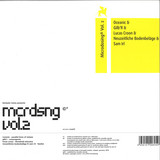
Microdosing is a series of compilation 12”s selected by Julienne Dessagne aka Fantastic Twins, and designed in collaboration with French visual artist Geff Pellet. Microdosing is a collective experiment aimed at helping you fighting back your modern obsession with happiness. You may deserve a nice day but the day does not need a nice you, nothing should be forced, everything is permitted. Microdosing will provide you with sonic healing weapons on regular basis and at irregular dosage. Those doses will favour psychedelic social techniques against self help tyranny, creation over soma, provoking over numbing, our outer-selves over our inner-selves. Microdosing refuses the fatality of the pleasure principle. Life is a struggle, time to embrace it. —— "My battery is low and it’s getting dark” We at Microdosing will make Opportunity’s famous last words fully ours. Some would see these as an epitaph on a black screen, we embrace them as a reclaimed fragility. Are we grains of sand wandering in space, hoping for a goal? No. We are the cosmos, the cosmos is us, unafraid of the end, unafraid of the void. Before the rise of the infinite silence, Microdosing brings you new guiding lights, white sun or black hole being a simple permutation of the kinetic rainbow. Oceanic’s “Parallel Lines Of Stripes” is a meandering mantra, an synthesised Moebius ring, a mission to your heart, that furthest star in the sky. Gilb’R’s “Cosmogonie” simply reminds us of the profound relation between spatial systems and the holy act of birth (cosmo, world and gon, conceive). The universe is a body, your body is your universe. Lucas Croon’s “Threshold Stimulus” is the soundtrack of a never ending voyage, the man is on a trip to the core sanctum. Imagine Space as a reverberation room cladded with bakelite. Losing yourself in delay repeats sometimes is the shortest way. Neuzeitliche Bodenbeläge & Sam Irl’s “Faeden” is another hymn to the umbilical chords joining us to the outer world, a black monolith of kraut acid, a pagan dance as portal to a destination only you can choose. Microdosing will be back soon with more enablers, helping to turn your petty struggles into a search for a meaning of life. The Quest lives on.
out of Stock
Last delivered 6 years ago available to reorder, subject to availability
« Hôtel Costes presents... » is a collection of exclusive music recorded or mixed at Studio HC, the hotel studio, and composed by Adrien de Maublanc guests. This unique studio with exceptional gears craft the sound of MidiMinuit.
The second opus, Round the clock, by Midiminuit, is a modern album where classical and jazz music meet modular synths.
MidiMinuit is a collaborative project between pianist Julien Quentin, bass player Yonatan Levi and electronic musicians Cesar Merveille & Adrien de Maublanc. Four experts in their respective fields are harmoniously combining their music creating a new entity.
Three days, twelve hours of music per day, from 12pm to 12am. This was the primary rule of the jam sessions, giving the band its name. This was the first time all four musicians came together. In those three days, there was no rehearsals. Every piece was improvised, recorded and it was moved on to the next track. Bringing those world-class musicians together had the potential to create something unique. And so… ROUND THE CLOCK was born!
Cesar Merveille is known for his collaborations with labels such as Cadenza and Visionquest, and has been a major player in the electronic scene for the past 15 years touring extensively as a DJ, and has now started his own imprint Roche Madame. He started early on collaborating with musicians from different backgrounds. Combining electronic music with acoustic instruments has been part of his defining style since the early days. His love for modular synthesisers brings a unique colour to the sound and groove of MidiMinuit.
Julien Quentin – Born in Paris, graduated from the Juilliard School in New York, pianist Julien Quentin performed in all major concert venues such as Carnegie Hall, the Berlin Philharmonie or the Concertgebouw in Amsterdam. Julien’s interest after 20 years of classical music on the road is opening up to projects ranging from improvisation to producing electronic music and could be heard live at Sonar Off and Amsterdam Dance Event, or in Berlin clubs where he is now based. His remarkable depth of musicianship and distinct clarity of sound coupled with flawless technique bring its distinctive classical influence to MidiMinuit.
Yonatan Levi – Born in Tel-Aviv, Israel, Yonatan Levi first started with classical guitar and switched to classical stand up bass studies from the Israeli Conservatory of Music in Tel Aviv. He then got a full scholarship at Berkley College of Music. He has been playing alongside some of Jazz greats like Avishai Cohen and Eddie Henderson. In the past few years, since moving to Berlin, Levi has ventured into the vast electronic music world, becoming an avid vinyl collector as well as collaborating with electronic music producers who are known for their cross-genre, multi disciplinary approaches. Bringing all that jazz to the band.
Adrien de Maublanc – Adrien is well known as a producer and sound engineer as one half of the Masomenos duo which is a productive partnership with graphic designer and DJ Joan Costes. They have a long collaboration with the Hôtel Costes music history. In fact, they have been in charge of the Costes presents serie, a minimal electronic oriented serie of albums by glacial, seuil and themselves. Since two years now, they have located their studio in the Hôtel Costes extension that have been on works, and named the place Studio HC. It is in this unique studio that MidiMinuit has been mixed. Maublanc is now part on his own several bands that like midiminuit will be released on Hotel Costes Presents label.
out of Stock
Last delivered 6 years ago available to reorder, subject to availability
Johnny Clarke is one of the great vocalists that ruled the Jamaican Dancehall scene from the mid – 1970’s to the early 1980’s. While Bob Marley was out conquering the world, Dennis Brown, Gregory Issacs and Johnny Clarke were winning the hearts of the Jamaican people .Johnny Clarke’s use of the ‘Flying Cymbal‘ sound took the Island by storm and produced a run of hit singles few could match.
Johnny Clarke (b.1955, Jamaica, West Indies) cut his first record ‘God Made The Sea and Sun’, after winning a local singing contest in the Bull Bay area of Jamaica. Although the single was not a hit, it led to two follow up tracks for producer Rupie Edwards, ’Everyday Wandering’ and ‘Julie’ that fared much better, both on the island and oversees in England and Canada. These tracks also brought the singer to the attention of producer Bunny Lee and a working relationship that would go on to produce a prolific catalogue of music. Johnny Clarke’s Dread Conscious / Love Song style were to grace many hits around this time in 1974. Such tunes as ‘None Shall Escape The Judgement’, ‘Move Out of Babylon’, ‘Rock With Me Baby’, ‘Enter The Gates With Praise’ to name but a few. All new songs added to a host of cover tunes, recommended by Bunny Lee, many taken from the singer John Holt’s catalogue, that suited Clarke’s vocal style. The rhythms were cut at various studios around the Island. Randy’s Studio 17, Channel 1, Treasure Isle, Dynamic Sounds and Harry J’s, by a group of musicians loosely called the Aggrovators and some tunes incorporating the ‘Flying Cymbal’ sound again introduced by Bunny Lee, working the Hi-Hat in fine style. The tracks were then taken to King Tubby’s studio where Johnny Clarke’s vocals would be voiced.
Another phenomenon that was happening in the early 1970’s, was the version cuts to vocal tracks. This is when the tunes were cut back to the bass and drums and the vocals were dropped in and out in a dubbed style, and reverb and echo and various effects were added to these tracks. The main exponent to this style was King Tubby himself, and as was the fashion at the time, each vocal track would carry a version as its B-Side. Producer Bunny Lee lead this style working closely with King Tubby and all of his singles from then on would carry a Dub cut on its flipside. As Johnny Clarke was one of Bunny’s main singers at the time, we would hear a great selection of popular songs getting the dub treatment and in many cases the single was purchased for its more exciting dub cut, again made popular at the various dances where the dubplates were played out. We have compiled some of the best of these dubs from the time and put them together for this release, hope you enjoy the great voice of Johnny Clarke alongside the productions of Bunny Lee and the creative genius of King Tubby, a great combination we hope you will agree….
out of Stock
Last delivered 3 years ago available to reorder, subject to availability
TThe melodically adventurous soul of Leon Ware continues its expression in his final opus Rainbow Deux, released on double vinyl on September 13th. The album features new songs recorded and performed by Leon before his health turned, leading to his transition on February 23rd 2017. Co-produced by Taylor Graves, it has stellar musical contributions from the likes of Kamasi Washington, Thundercat, Ronald Bruner Jr, Rob Bacon and Wayne Linsey.
Taylor Graves came into Leon’s musical family in 2002 when he, his brother Cameron and the Bruner brothers Ronald Jr and Stephen (Thundercat) were playing along with their schoolmate Kamasi at an L.A. jazz club. Taylor, Cameron, Ronald and Stephen became Leon’s band for his debut shows in Japan in 2002 and Taylor continued to work with Leon as his mentor and collaborator over the next 15 years.
“Leon was ALWAYS writing something or developing his musical palette” his wife Carol Ware tells us, so it’s impossible to pinpoint any single moment of Rainbow Deux’s genesis. Six of the songs go back to 2012/2013 and were released in 2014 as part of Sigh, a Japan-only CD collection heavy with Rob Bacon’s tasteful licks and Wayne Linsey’s piano vibes. The rest of the material comes from Leon’s sessions with Taylor.
Describing Leon’s and his process, here’s Taylor: “We’d start by having some great homemade food! Then a glass of wine ‘to slow down time’. After we’d have our fill and smoked our joints we’d go into his studio room to listen and create.”
The album was finished-up around August of 2016 in a back-and-forth between Leon and his go-to mastering engineer Toni Economides in the UK.
Leon worked on Rainbow Deux with life’s greatest challenge looming over him, yet it is one of his most focused and cohesive solo offerings since the 1980s. The entire record is a vibe: mellow, deep and smooth as silk. The lyrical themes are eternal, and the music is elegant, soulful and sensual.
The album opens with the hypnotic throb of “For The Rainbow”, coming on like a percussive, slow-mo house shuffle. Gilles Peterson is a fan. The exotic “Let Love In” follows, with its gradual-build Island Funk, intricate guitar picks and sassy female vocals. It explodes when it hits its stride. “Sigh” is the stylish slow jam close-out to side A. Serene guitars and polished drums create neck snapping funk, with a swaggering finger-snap strut.
Side B opens with the easy-burning broken-beaty “The Darkest Night”, the centrepiece of the album. Kamasi Washington’s lurking sax, restrained and beautiful, unfurls into the dank, sticky atmosphere of Thundercat’s signature creeping bass laid over his brother’s in-the-pocket drums. Leon’s vocals are perfect, a masterclass in seductive sax-soul.
“Surrender Now” conjures waves of vocals to swell and wash over the glossy piano, subtly bumping hip-hop drums and bubbling synth-bass stabs. It’s got the trademark Leon layers. “Summer Is Her Name” has Kamasi’s effortless, melancholic sunshine sax give way to rising tempos and propulsive rhythms.
“Are You Ready” is a total highlight (and we’ve been playing it out for ages). It’s a nimble groove of piano and synth rolling around Theo Croker’s sensual trumpet playing. Digi-soul at its finest. With lush G-Funk sensibilities “Streets (Keep Me Runnin’)” sounds like a lost Dam-Funk produced gem. All tough kicks and snares and street sounds. Leon’s hood pass will be forever intact.
“Samba Dreams” is the first of two tracks that bring a little Rio magic to Rainbow Deux. Leon created a whole body of work in partnership with Brazilian legend Marcos Valle that includes “Rockin’ You Eternally” - a hit for Leon - and “Estrelar” – a hit for Marcos. Leon channels his obvious love of Brazilian music here through more of Croker’s sumptuous trumpet, played over loose percussion. “Let’s Go Deep” is next up. A dreamy between-the-sheets quiet storm anthem and a real showcase for Leon’s vocals.
The dripping, honeyed harp-funk of “We Should Be Laughin’” marks the star turn of the brilliant Kimbra. Leon first met her on-stage to do an impromptu duet of “Inside My Love” during an open-air celebration of Minnie Riperton in July of 2014. Kimbra was working with Taylor on her music and he brought her to Leon’s house to do some writing. This was the result.
Warm synths radiate shuffling samba soul on “Wishful Thinking” as those Brazilian rhythms return to bring Rainbow Deux to a close.
During an apartment move Leon and Carol rediscovered some watercolours Leon had done years ago. One of these paintings had been dubbed “Deux Hearts” and Leon decided it should be on the cover of Rainbow Deux, getting as far as approving a draft concept for the artwork.
Carol has overseen developing that draft into the final gatefold sleeve. It brings together quotes, photographs and tributes in what is a reflection on the music, relationships and philosophy of the sensual minister.
Gerry “the gov” Brown, Leon’s long-time sound engineer, was by his side throughout the project, recording and mixing. The album was mastered by Toni Economides and Simon Francis’ additional sensitive work makes sure this double LP sounds like it should on vinyl.
Be With’s first ever release was Leon’s eponymous LP. Re-issuing that album planted the seed of a relationship that has grown to grant us the privilege of presenting his crowning achievement. We know that Leon’s fans all over the Earth will love Rainbow Deux. But we also hope that this album, the final entry in a phenomenal body of work, will reach new fans and find fresh conduits for the spirit of this oft-unsung hero of Soul.
Leon always said “they will get it when I'm gone.”
He also said that “the spirit never dies”…
out of Stock
Last delivered 7 years ago available to reorder, subject to availability