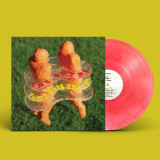
Violet Vinyl
"During the recording of TOTALLY, we were having a blast and the music just kept rollin' out so we decided to also put together a tasty EP. Guests Mario Lalli on STÖNER Theme and Greg Hetson of Circle Jerks and Bad Religion on our version of the Motorhead/Pink Fairies classic City Kids makes this EP extra sweet. Jump in and let's BOOGIE TO BAJA! If the name Stöner seems a little on the nose, well_ it is. Brant Bjork and Nick Oliveri, founding members of the stoner rock legend Kyuss, are joined again by drummer Ryan Güt (of Bjork's solo band) and they've got dibs on the thick and dusty swinging grooves, returning as Stöner with their sophomore release "totally_" Stöner's love for their early inspirations (bands like Blue Oyster Cult, Kiss, Ramones, Blue Cheer, Misfits, Black Flag, The Stooges, MC5) result in big, groovy, sunbaked riffs that can cruise low and slow but then floor it and run all the red lights. Live, this is a band about the magnetism between the players, the groove, the loose vibe and straight up badass rock and roll_ Stöner are masters of their trade. With "totally..." Stöner is in its true form, getting together and having fun. Stöner's world is a colorful joyride, heavy of rock but not of head. The record cranks with vibes of classic hard rock, heavy blues, desert rock and psych rock jams - things that come organically to this trio Stöner can't help but express an abundance of punk rock rawness and passion for real rock and roll swagger. With two records, "Live at Mojave" and "Stoners Rule" (available on Heavy Psych Sounds), the latest release "totally..." sees the band realizing the chemistry of these old friends developing a statement of pure rock and roll fun.
Cerca:jump up records
A compilation by To Pikap records diving deep into the 90's rave nostalgia. Pera Sta Ori starts with a jungle/idm track, while next Serge Geyzel contributes with a killer acid breakbeat. All 303 DimDJ's track also and ACU with a party feeling but yet sentimental track. Finally Dj Tsoug and TSEV add up a slice of braindance.
This 40 year anniversary collection traces Brother Culture's career and includes some of his biggest hits, with remastered versions of these classics. The album includes his hits Jump Up Pon It (25 million streams), Supanova (15 million streams), My Selecta (2 million streams), and some of his most listened-to tracks ever released on vinyl.
A composition simply means things being put together. In music, we usually think of composition as a classical idea. But in recent years, the possibilities of what ‘composing’ can be, have dramatically increased. Based in Oslo, Norway, Deathprod (aka Helge Sten) has been making his own forms of music with no compromise since the early 90s. His specialty is a deeply atmospheric, grainy minimalism that slows time down and explores the very particles of sound itself. This music can sound forbidding and alien at first, but compared to his more brutal output, it’s an extraordinarily close and intimate experience. The first new Deathprod studio project since 2019’s OCCULTING DISK, Compositions is the result of an intense period at his legendary Audio Virus Lab studio in central Oslo. All tracks are released in chronological order – in other words, the order in which they were recorded. Helge used a personal, unique combination of obsolete digital audio processors and sound generators, combined with his own secret-sauce tuning system. Like gazing at the wonders revealed by an electron microscope with Helge compositional control directs your attention to a succession of ever more spellbinding details and textures. Helge adopted the Deathprod alias in 1991. A complex array of homemade electronics, samplers, sound processing and analogue effects – cumulatively known as the ‘Audio Virus’ – combined with obsolete samplers and playback devices, to distort and transform sounds into unrecognizable relatives of their former selves. On the new album Compositions, the virus has evolved into even more fascinating and kaleidoscopic new strains. Electronically generated sounds vibrate and tremble like undiscovered metals ringing and resonating together. Sonic forms attract or repel each other as if under the influence of a strange magnetism. None of the tracks are over four minutes, but no way are these ‘miniatures’. Each one contains its own fully-formed galaxy of tones and clusters, while all tracks audibly belong in the same universe. These are 17 compositions in search of a sonic ideal. His off-grid audio control centre created a parallel acoustic universe which he filled with mutated samples and electronic textures. Even the gaps between the tracks are part of that universe. Helge left the almost silent, twitching crackles of his snoozing analogue gear intact, ensuring a smoother transition between them. Helge is continually striving to find new parameters and possibilities for what music can be – what you can affect with the medium of sound. From the intricate homemade miniatures of Treetop Drive to the bonecrushing electronic barrage of Morals and Dogma and OCCULTING DISK, the different sides of Deathprod are all products of the same obsessive focus and self-discipline in pursuit of sonic exploration. His Compositions are private rather than public music: like introspective chamber or solo compositions instead of the more strident, outward-looking tones of a symphony. Helge is a founder of Norwegian improvising group Supersilent and has produced records by Motorpsycho, Susanna, Jenny Hval, Arve Henriksen and others. He recently composed music for Harry Partch’s legendary instruments, which can be heard on Sow Your Gold in the White Foliated Earth, released in 2022 on Smalltown Supersound.
- A1: The Jump Off
- A2: Banned From Tv Feat Nature, Big Punisher, Cam'ron, Styles & Jadakiss
- A3: I Love My Life Feat Carl Thomas
- A4: N O.r.e
- A5: Hed Interlude
- A6: Hed Feat Nature
- B1: It's Not A Game Feat Maze & Musolini
- B2: Fiesta Feat Kid Capri
- B3: 40 Island Feat Kool G Rap & Musolini)
- B4: The Way We Live Feat Chico Debarge
- C1: Animal Thug Interlude
- C2: The Change
- C3: Superthug
- C4: Da Story Feat Maze
- D1: Mathematics (Esta Loca)
- D2: The Assignment Feat Busta Rhymes, Spliff Star & Maze
- D3: Body In The Trunk Feat Nas
- D4: One Love
- D5: Outro
Raised in Queens, New York, rapper, actor, and media personality Noreaga (N.O.R.E) has spent the better part of the last 3 decades topping charts, pushing buttons and capturing the world's attention. While he may be known these days as the host of one of the most popular podcasts in the world, "Drink Champs, " it was his earlier work as an unapologetic, energetic MC that helped to catapult the multi-talented artist into the spotlight. First making waves with his work as one half of duo Capone-N-Noreaga alongside fellow Queens rapper Capone, N.O.R.E.'s career has been unrelenting since first hitting the charts in 1997. Shortly after the release of their massively successful debut album, "The War Report", Capone landed himself back in prison and N.O.R.E. moved ahead as a solo act, finding further success with his first, self-titled album, "N.O.R.E.". Released in 1998, the album catapulted up the charts, peaking at #3 on the Billboard 200 and went on to be certified platinum by the Riaa. With features from fellow NYC MC's Nas, Kool G Rap, Big Pun and Busta Rhymes and featuring production from then-up-and-coming producers, The Neptunes and Swizz Beatz, "N.O.R.E.", was praised by critics for it's modern, futuristic sound and helped to further cement N.O.R.E.'s spot as one of the most successful and memorable artists in Hip Hop. Thanks to the massive success of singles like, "Superthug", "N.O.R.E.", and legendary posse cut, "Banned from T.V.", N.O.R.E.'s debut album has continued to find success around the world and is without a doubt an undisputed classic amongst Hip Hop heads. As part of their 40th Anniversary celebration, Tommy Boy will be reissuing this game-changing album in limited, colored vinyl which is sure to be a must have for records collectors far and wide.
RED APPLE MARBLE VINYL REPRESS.
Everything changed for The Beths when they released their debut album, Future Me Hates Me, in 2018. The indie rock band had long been nurtured within Auckland, New Zealand’s tight-knit music scene, working full-time during the day and playing music with friends after hours. Full of uptempo pop rock songs with bright, indelible hooks, the LP garnered them critical acclaim from outlets like Pitchfork and Rolling Stone, and they set out for their first string of shows overseas. They quit their jobs, said goodbye to their home town, and devoted themselves entirely to performing across North America and Europe. They found themselves playing to crowds of devoted fans and opening for acts like Pixies and Death Cab for Cutie. Almost instantly, The Beths turned from a passion project into a full-time career in music.
Songwriter and lead vocalist Elizabeth Stokes worked on what would become The Beths’ second LP, Jump Rope Gazers, in between these intense periods of touring. Like the group’s earlier music, the album tackles themes of anxiety and self-doubt with effervescent power pop choruses and rousing backup vocals, zeroing in on the communality and catharsis that can come from sharing stressful situations with some of your best friends. Stokes’s writing on Jump Rope Gazers grapples with the uneasy proposition of leaving everything and everyone you know behind on another continent, chasing your dreams while struggling to stay close with loved ones back home.
"If you're at a certain age, all your friends scatter to the four winds,” Stokes says. “We did the same thing. When you're home, you miss everybody, and when you're away, you miss everybody. We were just missing people all the time.”
With songs like the rambunctious “Dying To Believe” and the tender, shoegazey “Out of Sight,” The Beths reckon with the distance that life necessarily drives between people over time. People who love each other inevitably fail each other. “I’m sorry for the way that I can’t hold conversations/They’re such a fragile thing to try to support the weight of,” Stokes sings on “Dying to Believe.” The best way to repair that failure, in The Beths’ view, is with abundant and unconditional love, no matter how far it has to travel. On “Out of Sight,” she pledges devotion to a dearly missed friend: “If your world collapses/I’ll be down in the rubble/I’d build you another,” she sings.
“It was a rough year in general, and I found myself saying the words, 'wish you were here, wish I was there,’ over and over again,” she says of the time period in which the album was written. Touring far from home, The Beths committed themselves to taking care of each other as they were trying at the same time to take care of friends living thousands of miles away. They encouraged each other to communicate whenever things got hard, and to pay forward acts of kindness whenever they could. That care and attention shines through on Jump Rope Gazers, where the quartet sounds more locked in than ever. Their most emotive and heartfelt work to date, Jump Rope Gazers stares down all the hard parts of living in communion with other people, even at a distance, while celebrating the ferocious joy that makes it all worth it -- a sentiment we need now more than ever.
- A1: Alpha (Feat Eddie Kane & Rim)
- A2: Pearl Handle (Feat Geechi Suede)
- A3: Chicks, Man (Feat Skipp Whitman)
- A4: 45 (Feat King Spills)
- A5: House Meds (Feat Rim)
- A6: Medley A (Instrumental)
- B1: Get Mines (Feat Casual & Pep Love)
- B2: So Brook (Feat Eddie Kane)
- B3: Lux (Feat Kanetic Source)
- B4: Look (Feat Masta Ace & Planet Asia)
- B5: Omega (Feat Ag Of Ditc & Rim)
- B6: Medley B (Instrumental)
Honoring the craft and the ones that came before him through undeniably infectious beats that brace the weight of his choice samples and original layers. Getting his chops up through his younger days, Shane spent his time developing instrumental obstacle courses for local emcees to dance around including Gift Of Gab (Blackalicious), Spills (NY) Kinetic Source (Ozomatli) and Cashus King (LA.) By the age of 21 Shane threw himself into the ring of the Stones Throw beat making contest. To only the surprise of himself, Shane walked away twice as a weekly winner of the battles. After a small hiatus due to the birth of his daughter Clementine, Shane jumped back on the pads and began crafting the instrumentals for what would become Apostolos. With the instrumentals in flux Shane reached out via Instagram to an upcoming emcee out of the Duck Down Camp, a prodigy of the late, great Sean Price, Rim. After chatting back and forth for a small time, making sure Rim knew Shane was in this project for the right reasons, Rim jumped on board and even helped land other up and coming NY emcees like Eddie Kaine & Spills. From there everything snowballed. One feature led to another and soon enough the album was taking shape with features from not only Rim and Eddie Kaine, but hip-hop heroes such as Masta Ace, Planet Asia, A.G. of D.I.T.C. and Geechi Suede. With a few more instrumentals and spaces to fill Shane reached out to long-time bay area engineer/producer Deegan Mack Adams to help with the mixing and mastering and overall release of the project. Apostolos gets its namesake and back cover imagery from Shane Sounds' great great Grandfather, Apostolos Christakis who immigrated to the United States from Greece at the turn of the 20th century. The documents you see on the back cover are Apostolos’s army registration documents only a week after coming to the United States. We pay our respects to the ones who came before us and allowed us to be here to create this project. Salute!
Tombolo Rumble Vol I. is here! The first volume of a list of selected releases by different artists from around the globe. Proud to be presenting four tracks by four upcoming and established legends on the panorama of electronic music: Unknown Mobile, DJ Dog, Poly Chain and Abdul Raeva.
First artist on the list is Unknown Mobile, an amazing producer and dj based in Montréal, Canada. You may know him well from his well received releases across some of the dance sphere labels like Planet Euphorique or Pacific Rhythm among others. What you can find in his track is a 4×4 upbeat house atmosphere that goes along with crazy synths, and a beautiful armony creating a perfect melting for the dancefloor. Second track is by DJ Dog, the fun aka of DJ Fett Burger, a Norwegian legend based in Berlin founder of projects such as Sex Tags Mania or Trushmix. He comes with a downtempo, jumpy track, with very fun percussions and synths that will make you feel as if you are walking on Mars. Third track is by Estonian duo Abdul Raeva. Huge track for the club, upbeat techno with acid baselines on a fast bpm percussion. And last but not least, we have Poly Chain, a Ukranian artist that is getting a lot of attention due to her strong mixes as well as her productions, delivering some fat broken beats with acid baselines as well.
Friendsome Records and Tatie Dee are delighted to present to you her debut EP Purple Wave. After a few singles released on various french and international labels and compilations, that launched a very promising career, the young prodigy has produced this beautiful 5 tracker to take you on an Acid trip full of jumpy melodies, heavy beats and banging drops ! Oscillating between “classic” House and contemporary Acid touches , you will first be taken on a journey of grooves fully produced by Tatie Dee (A1 to A3). Each in their own styles won’t definitely get a crowd in stagnation ! The B side has much more heaviness to it, starting with a remix by the one and only UK legend Mr G, where he took Take Me Up in a mix which only he has the secret for. Followed by the last (but not least!) track of the record, OMZ, which we could describe as the “dirty side” of Tatie Dee. Enjoy your trip !
- A1: Rock This Mother
- A2: Talk To Me Girl
- A3: You Can Find Me
- A4: Check This Out
- A5: Jesus Going To Clean House
- A6: Hope You Understood
- A7: Is It What You Want
- A8: Love Is Everlasting
- A9: This Is Hip-Hop Art
- A10: Opposite Of Love
- A11: Do You Know What I Mean
- B1: Saving All My Love For You
- B2: Look Out Here I Come
- B3: Girl You Always Talking
- B4: Have A Great Day
- B5: Take My Hand
- B6: I Need Your Love
- B7: Your Town
- B8: Talk Around Town
- B9: Booty Head/Take A Little Walk
- B10: I Love My Mama
- B11: I Never Found Anyone Like You
Vinyl LP[23,49 €]
As the sun sets on a quaint East Nashville house, a young man bares a piece of his soul. Facing the camera, sporting a silky suit jacket/shirt/slacks/fingerless gloves ensemble that announces "singer" before he's even opened his mouth, Lee Tracy Johnson settles onto his stage, the front yard. He sways to the dirge-like drum machine pulse of a synth-soaked slow jam, extends his arms as if gaining his balance, and croons in affecting, fragile earnest, "I need your love… oh baby…"
Dogs in the yard next door begin barking. A mysterious cardboard robot figure, beamed in from galaxies unknown and affixed to a tree, is less vocal. Lee doesn't acknowledge either's presence. He's busy feeling it, arms and hands gesticulating. His voice rises in falsetto over the now-quiet dogs, over the ambient noise from the street that seeps into the handheld camcorder's microphone, over the recording of his own voice played back from a boombox off-camera. After six minutes the single, continuous shot ends. In this intimate creative universe there are no re-takes. There are many more music videos to shoot, and as Lee later puts it, "The first time you do it is actually the best. Because you can never get that again. You expressing yourself from within."
"I Need Your Love" dates from a lost heyday. From some time in the '80s or early '90s, when Lee Tracy (as he was known in performance) and his music partner/producer/manager Isaac Manning committed hours upon hours of their sonic and visual ideas to tape. Embracing drum machines and synthesizers – electronics that made their personal futurism palpable – they recorded exclusively at home, live in a room into a simple cassette deck. Soul, funk, electro and new wave informed their songs, yet Lee and Isaac eschewed the confinement of conventional categories and genres, preferring to let experimentation guide them.
"Anytime somebody put out a new record they had the same instruments or the same sound," explains Isaac. "So I basically wanted to find something that's really gonna stand out away from all of the rest of 'em." Their ethos meant that every idea they came up with was at least worth trying: echoed out half-rapped exhortations over frantic techno-style beats, gospel synth soul, modal electro-funk, oddball pop reinterpretations, emo AOR balladry, nods to Prince and the Fat Boys, or arrangements that might collapse mid-song into a mess of arcade game-ish blips before rallying to reach the finish line. All of it conjoined by consistent tape hiss, and most vitally, Lee's chameleonic voice, which managed to wildly shape shift and still evoke something sincere – whether toggling between falsetto and tenor exalting Jesus's return, or punctuating a melismatic romantic adlib with a succinct, "We all know how it feels to be alone."
"People think we went to a studio," says Isaac derisively. "We never went to no studio. We didn't have the money to go to no studio! We did this stuff at home. I shot videos in my front yard with whatever we could to get things together." Sometimes Isaac would just put on an instrumental record, be it "Planet Rock" or "Don't Cry For Me Argentina" (from Evita), press "record," and let Lee improvise over it, yielding peculiar love songs, would-be patriotic anthems, or Elvis Presley or Marilyn Monroe tributes. Technical limitations and a lack of professional polish never dissuaded them. They believed they were onto something.
"That struggle," Isaac says, "made that sound sound good to me."
In the parlance of modern music criticism Lee and Isaac's dizzying DIY efforts would inevitably be described as "outsider." But "outsider" carries the burden of untold additional layers of meaning if you're Black and from the South, creating on a budget, and trying to get someone, anyone within the country music capital of the world to take your vision seriously. "What category should we put it in?" Isaac asks rhetorically. "I don't know. All I know is feeling. I ain't gonna name it nothing. It's music. If it grabs your soul and touch your heart that's what it basically is supposed to do."
=
Born in 1963, the baby boy of nine siblings, Lee Tracy spent his earliest years living amidst the shotgun houses on Nashville's south side. "We was poor, man!" he says, recalling the outhouse his family used for a bathroom and the blocks of ice they kept in the kitchen to chill perishables. "But I actually don't think I really realized I was in poverty until I got grown and started thinking about it." Lee's mom worked at the Holiday Inn; his dad did whatever he had to do, from selling fruit from a horse drawn cart to bootlegging. "We didn't have much," Lee continues, "but my mother and my father got us the things we needed, the clothes on our back." By the end of the decade with the city's urban renewal programs razing entire neighborhoods to accommodate construction of the Interstate, the family moved to Edgehill Projects. Lee remembers music and art as a constant source of inspiration for he and his brothers and sisters – especially after seeing the Jackson 5 perform on Ed Sullivan. "As a small child I just knew that was what I wanted to do."
His older brother Don began musically mentoring him, introducing Lee to a variety of instruments and sounds. "He would never play one particular type of music, like R&B," says Lee. "I was surrounded by jazz, hard rock and roll, easy listening, gospel, reggae, country music; I mean I was a sponge absorbing all of that." Lee taught himself to play drums by beating on cardboard boxes, gaining a rep around the way for his timekeeping, and his singing voice. Emulating his favorites, Earth Wind & Fire and Cameo, he formed groups with other kids with era-evocative band names like Concept and TNT Connection, and emerged as the leader of disciplined rehearsals. "I made them practice," says Lee. "We practiced and practiced and practiced. Because I wanted that perfection." By high school the most accomplished of these bands would take top prize in a prominent local talent show. It was a big moment for Lee, and he felt ready to take things to the next level. But his band-mates had other ideas.
"I don't know what happened," he says, still miffed at the memory. "It must have blew they mind after we won and people started showing notice, because it's like everybody quit! I was like, where the hell did everybody go?" Lee had always made a point of interrogating prospective musicians about their intentions before joining his groups: were they really serious or just looking for a way to pick up girls? Now he understood even more the importance of finding a collaborator just as committed to the music as he was.
=
Isaac Manning had spent much of his life immersed in music and the arts – singing in the church choir with his family on Nashville's north side, writing, painting, dancing, and working various gigs within the entertainment industry. After serving in the armed forces, in the early '70s he ran The Teenage Place, a music and performance venue that catered to the local youth. But he was forced out of town when word of one of his recreational routines created a stir beyond the safe haven of his bohemian circles.
"I was growing marijuana," Isaac explains. "It wasn't no business, I was smoking it myself… I would put marijuana in scrambled eggs, cornbread and stuff." His weed use originated as a form of self-medication to combat severe tooth pain. But when he began sharing it with some of the other young people he hung out with, some of who just so happened to be the kids of Nashville politicians, the cops came calling. "When I got busted," he remembers, "they were talking about how they were gonna get rid of me because they didn't want me saying nothing about they children because of the politics and stuff. So I got my family, took two raggedy cars, and left Nashville and went to Vegas."
Out in the desert, Isaac happened to meet Chubby Checker of "The Twist" fame while the singer was gigging at The Flamingo. Impressed by Isaac's zeal, Checker invited him to go on the road with him as his tour manager/roadie/valet. The experience gave Isaac a window into a part of the entertainment world he'd never encountered – a glimpse of what a true pop act's audience looked like. "Chubby Checker, none of his shows were played for Black folks," he remembers. "All his gigs were done at high-class white people areas." Returning home after a few years with Chubby, Isaac was properly motivated to make it in Music City. He began writing songs and scouting around Nashville for local talent anywhere he could find it with an expressed goal: "Find someone who can deliver your songs the way you want 'em delivered and make people feel what you want them to feel."
One day while walking through Edgehill Projects Isaac heard someone playing the drums in a way that made him stop and take notice. "The music was so tight, just the drums made me feel like, oh I'm-a find this person," he recalls. "So I circled through the projects until I found who it was.
"That's how I met him – Lee Tracy. When I found him and he started singing and stuff, I said, ohhh, this is somebody different."
=
Theirs was a true complementary partnership: young Lee possessed the raw talent, the older Isaac the belief. "He's really the only one besides my brother and my family that really seen the potential in me," says Lee. "He made me see that I could do it."
Isaac long being a night owl, his house also made for a fertile collaborative environment – a space where there always seemed to be a new piece of his visual art on display: paintings, illustrations, and dolls and figures (including an enigmatic cardboard robot). Lee and Issac would hang out together and talk, listen to music, conjure ideas, and smoke the herb Isaac had resumed growing in his yard. "It got to where I could trust him, he could trust me," Isaac says of their bond. They also worked together for hours on drawings, spreading larges rolls of paper on the walls and sketching faces with abstract patterns and imagery: alien-like beings, tri-horned horse heads, inverted Janus-like characters where one visage blurred into the other.
Soon it became apparent that they didn't need other collaborators; self-sufficiency was the natural way forward. At Isaac's behest Lee, already fed up with dealing with band musicians, began playing around with a poly-sonic Yamaha keyboard at the local music store. "It had everything on it – trumpet, bass, drums, organ," remembers Lee. "And that's when I started recording my own stuff."
The technology afforded Lee the flexibility and independence he craved, setting him on a path other bedroom musicians and producers around the world were simultaneously following through the '80s into the early '90s. Saving up money from day jobs, he eventually supplemented the Yamaha Isaac had gotten him with Roland and Casio drum machines and a Moog. Lee was living in an apartment in Hillside at that point caring for his dad, who'd been partially paralyzed since early in life. In the evenings up in his second floor room, the music put him in a zone where he could tune out everything and lose himself in his ideas.
"Oh I loved it," he recalls. "I would really experiment with the instruments and use a lot of different sound effects. I was looking for something nobody else had. I wanted something totally different. And once I found the sound I was looking for, I would just smoke me a good joint and just let it go, hit the record button." More potent a creative stimulant than even Isaac's weed was the holistic flow and spontaneity of recording. Between sessions at Isaac's place and Lee's apartment, their volume of output quickly ballooned.
"We was always recording," says Lee. "That's why we have so much music. Even when I went to Isaac's and we start creating, I get home, my mind is racing, I gotta start creating, creating, creating. I remember there were times when I took a 90-minute tape from front to back and just filled it up."
"We never practiced," says Isaac. "See, that was just so odd about the whole thing. I could relate to him, and tell him about the songs I had ideas for and everything and stuff. And then he would bring it back or whatever, and we'd get together and put it down." Once the taskmaster hell bent on rehearsing, Lee had flipped a full 180. Perfection was no longer an aspiration, but the enemy of inspiration.
"I seen where practicing and practicing got me," says Lee. "A lot of musicians you get to playing and they gotta stop, they have to analyze the music. But while you analyzing you losing a lot of the greatness of what you creating. Stop analyzing what you play, just play! And it'll all take shape."
=
"I hope you understood the beginning of the record because this was invented from a dream I had today… (You tell me, I'll tell you, we'll figure it out together)" – Lee Tracy and Isaac Manning, "Hope You Understand"
Lee lets loose a maniacal cackle when he acknowledges that the material that he and Isaac recorded was by anyone's estimation pretty out there. It's the same laugh that commences "Hope You Understand" – a chaotic transmission that encapsulates the duality at the heart of their music: a stated desire to reach people and a compulsion to go as leftfield as they saw fit.
"We just did it," says Lee. "We cut the music on and cut loose. I don't sit around and write. I do it by listening, get a feeling, play the music, and the lyrics and stuff just come out of me."
The approach proved adaptable to interpreting other artists' material. While recording a cover of Whitney Houston's pop ballad "Saving All My Love For You," Lee played Whitney's version in his headphones as he laid down his own vocals – partially following the lyrics, partially using them as a departure point. The end result is barely recognizable compared with the original, Lee and Isaac having switched up the time signature and reinvented the melody along the way towards morphing a slick mainstream radio standard into something that sounds solely their own.
"I really used that song to get me started," says Lee. "Then I said, well I need something else, something is missing. Something just came over me. That's when I came up with 'Is It What You Want.'"
The song would become the centerpiece of Lee and Isaac's repertoire. Pushed along by a percolating metronomic Rhythm King style beat somewhere between a military march and a samba, "Is It What You Want" finds Lee pleading the sincerity of his commitment to a potential love interest embellished by vocal tics and hiccups subtlely reminiscent of his childhood hero MJ. Absent chord changes, only synth riffs gliding in and out like apparitions, the song achieves a lingering lo-fi power that leaves you feeling like it's still playing, somewhere, even after the fade out.
"I don't know, it's like a real spiritual song," Lee reflects. "But it's not just spiritual. To me the more I listen to it it's like about everything that you do in your everyday life, period. Is it what you want? Do you want a car or you don't want a car? Do you want Jesus or do you want the Devil? It's basically asking you the question. Can't nobody answer the question but you yourself."
In 1989 Lee won a lawsuit stemming from injuries sustained from a fight he'd gotten into. He took part of the settlement money and with Isaac pressed up "Saving All My Love For You" b/w "Is It What You Want" as a 45 single. Isaac christened the label One Chance Records. "Because that's all we wanted," he says with a laugh, "one chance."
Isaac sent the record out to radio stations and major labels, hoping for it to make enough noise to get picked up nationally. But the response he and Lee were hoping for never materialized. According to Isaac the closest the single got to getting played on the radio is when a disk jock from a local station made a highly unusual announcement on air: "The dude said on the radio, 107.5 – 'We are not gonna play 'Is It What You Want.' We cracked up! Wow, that's deep.
"It was a whole racist thing that was going on," he reflects. "So we just looked over and kept on going. That was it. That was about the way it goes… If you were Black and you were living in Nashville and stuff, that's the way you got treated." Isaac already knew as much from all the times he'd brought he and Lee's tapes (even their cache of country music tunes) over to Music Row to try to drum up interest to no avail.
"Isaac, he really worked his ass off," says Lee. "He probably been to every record place down on Music Row." Nashville's famed recording and music business corridor wasn't but a few blocks from where Lee grew up. Close enough, he remembers, for him to ride his bike along its back alleys and stumble upon the occasional random treasure, like a discarded box of harmonicas. Getting in through the front door, however, still felt a world away.
"I just don't think at the time our music fell into a category for them," he concedes. "It was before its time."
=
Lee stopped making music some time in the latter part of the '90s, around the time his mom passed away and life became increasingly tough to manage. "When my mother died I had a nervous breakdown," he says, "So I shut down for a long time. I was in such a sadness frame of mind. That's why nobody seen me. I had just disappeared off the map." He fell out of touch with Isaac, and in an indication of just how bad things had gotten for him, lost track of all the recordings they'd made together. Music became a distant memory.
Fortunately, Isaac kept the faith. In a self-published collection of his poetry – paeans to some of his favorite entertainment and public figures entitled Friends and Dick Clark – he'd written that he believed "music has a life of its own." But his prescience and presence of mind were truly manifested in the fact that he kept an archive of he and Lee's work. As perfectly imperfect as "Is It What You Want" now sounds in a post-Personal Space world, Lee and Isaac's lone official release was in fact just a taste. The bulk of the Is It What You Want album is culled from the pair's essentially unheard home recordings – complete songs, half-realized experiments, Isaac's blue monologues and pronouncements et al – compiled, mixed and programmed in the loose and impulsive creative spirit of their regular get-togethers from decades ago. The rest of us, it seems, may have finally caught up to them.
On the prospect of at long last reaching a wider audience, Isaac says simply, "I been trying for a long time, it feels good." Ever the survivor, he adds, "The only way I know how to make it to the top is to keep climbing. If one leg break on the ladder, hey, you gotta fix it and keep on going… That's where I be at. I'll kill death to make it out there."
For Lee it all feels akin to a personal resurrection: "It's like I was in a tomb and the tomb was opened and I'm back… Man, it feels so great. I feel like I'm gonna jump out of my skin." Success at this stage of his life, he realizes, probably means something different than what it did back when he was singing and dancing in Isaac's front yard. "What I really mean by 'making it,'" he explains isn't just the music being heard but, "the story being told."
Occasionally Lee will pull up "Is It What You Want" on YouTube on his phone, put on his headphones, and listen. He remembers the first time he heard his recorded voice. How surreal it was, how he thought to himself, "Is that really me?" What would he say to that younger version of himself now?
"I would probably tell myself, hang in there, don't give up. Keep striving for the goal. And everything will work out."
Despite what's printed on the record label, sometimes you do get more than one chance.
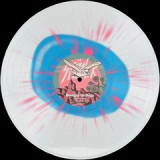
Add color, reframe, follow the prism, head to the beach. Not sure we’d ever be talking about Grotto Terrazza, the Munich based art/music/life project of Thomas Schamann, in these terms, but here we are, adjusting to his ever evolving collage of life in the form of his new album ‘Kalte Köstlichkeiten’, an ecstatic uptempo, punchy mitteleuropa celebration of punks in the city.
If his 2019 debut ‘Stumpfer Gegenstand’ (also co-released by Cut Surface and Maple Death) introduced us to Grotto Terrazza’s beautiful intimate translucent dark beat poetry set over art-punk ritmik, foggy nightclubs and musk-induced industrial malaise, Kalte Köstlichkeiten sets the record straight by adding a whole new dimension. Cold Delicacies (the literal translation) delivers so much more, 12 melting popsicles that furiously jump from dancefloor post-punk, brazen EBM, funk sleaze and smoked out cold-wave.
Violet Vinyl[15,67 €]
Clear Vinyl + DL Code
Yiannis Iliakis is a multi instrumentalist and composer from Athens. He is mainly known as a drummer. As such he is a member of the free jazz band Outward Bound as well as a member of the successful Greek progressive rock band Ciccada. However, that's only one side of Iliakis' creative efforts. In April 2021, he released his first full length electronic album entitled Vertical Horizon on the Submersion Records, which mostly is an ambient work. Now, with Mountainmouth he opens another chapter for his musical talents.
The EP is one of the most thrilling and adventurous takes on what the IDM term usually would suggest. The key song might be the title track "Mountainmouth" - an extremely energetic composition which won't leave you unaffected. As per most of Iliakis' songs it is based on originally recorded drums that were heavily edited. In the next step, these were combined with chords, melodies, bass and harmonies on top. The musical result is simply breathtaking - one might even call this track electronica for prog-rock heads. Surely a perfect opener for the release.
The next song is Carbonated Soap on which Iliakis is going straight forward. The catchy melody and a fresh uptempo beat are offering something that could even fit well into a club-friendly DJ set. Next up, comes "Infected Walkman". According to Iliakis, it was the first one he made for this project when he participated in an art exhibition. This track, as well as the following "Sad Plants", are both down tempo and chilled, yet keeping an experimental vibe without loosing a soulful and human touch. Coming closer to the end, "Exodus Denied" is a brilliant experimental ambient piece, more similar to the works on the Vertical Horizon LP. Finally, the EP ends with a short edit of "Carbonated Soap" that jumps right to the more energetic parts after the first break.
Mountainmouth may not be an easy listen at start - but we are sure the music has the power to be another classic release from our catalogue. The EP will be released in July 2022 on a very limited 12" vinyl as well as digitally. The cover artwork was done by Iliakis himself. We are very excited to present a new artist to you on Equinox with so many different talents.
Clear Vinyl[15,67 €]
Violet Vinyl + DL Code
Yiannis Iliakis is a multi instrumentalist and composer from Athens. He is mainly known as a drummer. As such he is a member of the free jazz band Outward Bound as well as a member of the successful Greek progressive rock band Ciccada. However, that's only one side of Iliakis' creative efforts. In April 2021, he released his first full length electronic album entitled Vertical Horizon on the Submersion Records, which mostly is an ambient work. Now, with Mountainmouth he opens another chapter for his musical talents.
The EP is one of the most thrilling and adventurous takes on what the IDM term usually would suggest. The key song might be the title track "Mountainmouth" - an extremely energetic composition which won't leave you unaffected. As per most of Iliakis' songs it is based on originally recorded drums that were heavily edited. In the next step, these were combined with chords, melodies, bass and harmonies on top. The musical result is simply breathtaking - one might even call this track electronica for prog-rock heads. Surely a perfect opener for the release.
The next song is Carbonated Soap on which Iliakis is going straight forward. The catchy melody and a fresh uptempo beat are offering something that could even fit well into a club-friendly DJ set. Next up, comes "Infected Walkman". According to Iliakis, it was the first one he made for this project when he participated in an art exhibition. This track, as well as the following "Sad Plants", are both down tempo and chilled, yet keeping an experimental vibe without loosing a soulful and human touch. Coming closer to the end, "Exodus Denied" is a brilliant experimental ambient piece, more similar to the works on the Vertical Horizon LP. Finally, the EP ends with a short edit of "Carbonated Soap" that jumps right to the more energetic parts after the first break.
Mountainmouth may not be an easy listen at start - but we are sure the music has the power to be another classic release from our catalogue. The EP will be released in July 2022 on a very limited 12" vinyl as well as digitally. The cover artwork was done by Iliakis himself. We are very excited to present a new artist to you on Equinox with so many different talents.
For Fans Of: Delvon Lamarr Organ Trio, The Sure Fire Soul Ensemble, New Mastersounds, Soulive, Jimmy Smith, Khruangbin. First reissue since it's original pressing in 2018! The iconic debut LP from the Scone Cash Players. Hammond Organ Stylings By Organ Master Adam Scone. The Hammond Organ is lead singer on this soulful and orchestral journey about industrial decay and the death of the steel town. Deep from the rusted steel mills of Youngstown Ohio, we bring you the much-anticipated reissue of the melting debut from the Scone Cash Players. It's the same organist that brought you the screaming organ on all those Daptone favorites from The Sugarman Three. Scone was behind that organ bench on the modern classics as follows. "Sugar's Boogaloo”, “Soul Donkey”, “Pure Cane Sugar", and "What the World Needs Now." Adam Scone entered the studio on Dunham Street in Brooklyn. He was wearing a blue Adidas jump suit. The studio had just opened. At the helm were his old compadres from The Dap-Kings. Namely Thomas Brenneck, Eric Kalb, Homer Steinweiss and lan Hendrickson-Smith. They make up the "Bliss Machine" behind Scones's groove. It was a truly rare moment to catch these masters of music and taste in between tours of Sharon Jones and Charles Bradley. Tommy put the mics around. Scone powered up the organ. The analog tape machine turned and turned until they couldn't turn any more. These songs were recorded. We worked all day and all night. Tears were shed. Espresso was made. There was beer on tap. 3 days of life were taken to make this album. We will never get them back. They were distilled to 40 minutes of pure emotion. It's a tale of woe. It's a tale of leaving art for responsibility. It's a farewell to an era. It's a journey that the Hammond B3 organ wasn't accustomed to. You can't compare this album to any other organ record. Don't expect to hear what you want. Free your mind. Be open. Your world is going to feel the heat of the BLAST FURNACE! It never quite feels how you want it to. Don't get burned... Tracks: 1. 1% Crown 2. Bliss Machine 3. The Slitter 4. Heavy Gauge 5. Necking 6. Blast Furnace 7. Jet Cool 8 Call & Receive No Call Back 9. Grinding Wheel 10. Structural Failure
- A1: Rock This Mother
- A2: Talk To Me Girl
- A3: You Can Find Me
- A4: Check This Out
- A5: Jesus Going To Clean House
- A6: Hope You Understood
- A7: Is It What You Want
- A8: Love Is Everlasting
- A9: This Is Hip-Hop Art
- A10: Opposite Of Love
- A11: Do You Know What I Mean
- B1: Saving All My Love For You
- B2: Look Out Here I Come
- B3: Girl You Always Talking
- B4: Have A Great Day
- B5: Take My Hand
- B6: I Need Your Love
- B7: Your Town
- B8: Talk Around Town
- B9: Booty Head/Take A Little Walk
- B10: I Love My Mama
- B11: I Never Found Anyone Like You
Cassette[11,72 €]
As the sun sets on a quaint East Nashville house, a young man bares a piece of his soul. Facing the camera, sporting a silky suit jacket/shirt/slacks/fingerless gloves ensemble that announces "singer" before he's even opened his mouth, Lee Tracy Johnson settles onto his stage, the front yard. He sways to the dirge-like drum machine pulse of a synth-soaked slow jam, extends his arms as if gaining his balance, and croons in affecting, fragile earnest, "I need your love… oh baby…"
Dogs in the yard next door begin barking. A mysterious cardboard robot figure, beamed in from galaxies unknown and affixed to a tree, is less vocal. Lee doesn't acknowledge either's presence. He's busy feeling it, arms and hands gesticulating. His voice rises in falsetto over the now-quiet dogs, over the ambient noise from the street that seeps into the handheld camcorder's microphone, over the recording of his own voice played back from a boombox off-camera. After six minutes the single, continuous shot ends. In this intimate creative universe there are no re-takes. There are many more music videos to shoot, and as Lee later puts it, "The first time you do it is actually the best. Because you can never get that again. You expressing yourself from within."
"I Need Your Love" dates from a lost heyday. From some time in the '80s or early '90s, when Lee Tracy (as he was known in performance) and his music partner/producer/manager Isaac Manning committed hours upon hours of their sonic and visual ideas to tape. Embracing drum machines and synthesizers – electronics that made their personal futurism palpable – they recorded exclusively at home, live in a room into a simple cassette deck. Soul, funk, electro and new wave informed their songs, yet Lee and Isaac eschewed the confinement of conventional categories and genres, preferring to let experimentation guide them.
"Anytime somebody put out a new record they had the same instruments or the same sound," explains Isaac. "So I basically wanted to find something that's really gonna stand out away from all of the rest of 'em." Their ethos meant that every idea they came up with was at least worth trying: echoed out half-rapped exhortations over frantic techno-style beats, gospel synth soul, modal electro-funk, oddball pop reinterpretations, emo AOR balladry, nods to Prince and the Fat Boys, or arrangements that might collapse mid-song into a mess of arcade game-ish blips before rallying to reach the finish line. All of it conjoined by consistent tape hiss, and most vitally, Lee's chameleonic voice, which managed to wildly shape shift and still evoke something sincere – whether toggling between falsetto and tenor exalting Jesus's return, or punctuating a melismatic romantic adlib with a succinct, "We all know how it feels to be alone."
"People think we went to a studio," says Isaac derisively. "We never went to no studio. We didn't have the money to go to no studio! We did this stuff at home. I shot videos in my front yard with whatever we could to get things together." Sometimes Isaac would just put on an instrumental record, be it "Planet Rock" or "Don't Cry For Me Argentina" (from Evita), press "record," and let Lee improvise over it, yielding peculiar love songs, would-be patriotic anthems, or Elvis Presley or Marilyn Monroe tributes. Technical limitations and a lack of professional polish never dissuaded them. They believed they were onto something.
"That struggle," Isaac says, "made that sound sound good to me."
In the parlance of modern music criticism Lee and Isaac's dizzying DIY efforts would inevitably be described as "outsider." But "outsider" carries the burden of untold additional layers of meaning if you're Black and from the South, creating on a budget, and trying to get someone, anyone within the country music capital of the world to take your vision seriously. "What category should we put it in?" Isaac asks rhetorically. "I don't know. All I know is feeling. I ain't gonna name it nothing. It's music. If it grabs your soul and touch your heart that's what it basically is supposed to do."
=
Born in 1963, the baby boy of nine siblings, Lee Tracy spent his earliest years living amidst the shotgun houses on Nashville's south side. "We was poor, man!" he says, recalling the outhouse his family used for a bathroom and the blocks of ice they kept in the kitchen to chill perishables. "But I actually don't think I really realized I was in poverty until I got grown and started thinking about it." Lee's mom worked at the Holiday Inn; his dad did whatever he had to do, from selling fruit from a horse drawn cart to bootlegging. "We didn't have much," Lee continues, "but my mother and my father got us the things we needed, the clothes on our back." By the end of the decade with the city's urban renewal programs razing entire neighborhoods to accommodate construction of the Interstate, the family moved to Edgehill Projects. Lee remembers music and art as a constant source of inspiration for he and his brothers and sisters – especially after seeing the Jackson 5 perform on Ed Sullivan. "As a small child I just knew that was what I wanted to do."
His older brother Don began musically mentoring him, introducing Lee to a variety of instruments and sounds. "He would never play one particular type of music, like R&B," says Lee. "I was surrounded by jazz, hard rock and roll, easy listening, gospel, reggae, country music; I mean I was a sponge absorbing all of that." Lee taught himself to play drums by beating on cardboard boxes, gaining a rep around the way for his timekeeping, and his singing voice. Emulating his favorites, Earth Wind & Fire and Cameo, he formed groups with other kids with era-evocative band names like Concept and TNT Connection, and emerged as the leader of disciplined rehearsals. "I made them practice," says Lee. "We practiced and practiced and practiced. Because I wanted that perfection." By high school the most accomplished of these bands would take top prize in a prominent local talent show. It was a big moment for Lee, and he felt ready to take things to the next level. But his band-mates had other ideas.
"I don't know what happened," he says, still miffed at the memory. "It must have blew they mind after we won and people started showing notice, because it's like everybody quit! I was like, where the hell did everybody go?" Lee had always made a point of interrogating prospective musicians about their intentions before joining his groups: were they really serious or just looking for a way to pick up girls? Now he understood even more the importance of finding a collaborator just as committed to the music as he was.
=
Isaac Manning had spent much of his life immersed in music and the arts – singing in the church choir with his family on Nashville's north side, writing, painting, dancing, and working various gigs within the entertainment industry. After serving in the armed forces, in the early '70s he ran The Teenage Place, a music and performance venue that catered to the local youth. But he was forced out of town when word of one of his recreational routines created a stir beyond the safe haven of his bohemian circles.
"I was growing marijuana," Isaac explains. "It wasn't no business, I was smoking it myself… I would put marijuana in scrambled eggs, cornbread and stuff." His weed use originated as a form of self-medication to combat severe tooth pain. But when he began sharing it with some of the other young people he hung out with, some of who just so happened to be the kids of Nashville politicians, the cops came calling. "When I got busted," he remembers, "they were talking about how they were gonna get rid of me because they didn't want me saying nothing about they children because of the politics and stuff. So I got my family, took two raggedy cars, and left Nashville and went to Vegas."
Out in the desert, Isaac happened to meet Chubby Checker of "The Twist" fame while the singer was gigging at The Flamingo. Impressed by Isaac's zeal, Checker invited him to go on the road with him as his tour manager/roadie/valet. The experience gave Isaac a window into a part of the entertainment world he'd never encountered – a glimpse of what a true pop act's audience looked like. "Chubby Checker, none of his shows were played for Black folks," he remembers. "All his gigs were done at high-class white people areas." Returning home after a few years with Chubby, Isaac was properly motivated to make it in Music City. He began writing songs and scouting around Nashville for local talent anywhere he could find it with an expressed goal: "Find someone who can deliver your songs the way you want 'em delivered and make people feel what you want them to feel."
One day while walking through Edgehill Projects Isaac heard someone playing the drums in a way that made him stop and take notice. "The music was so tight, just the drums made me feel like, oh I'm-a find this person," he recalls. "So I circled through the projects until I found who it was.
"That's how I met him – Lee Tracy. When I found him and he started singing and stuff, I said, ohhh, this is somebody different."
=
Theirs was a true complementary partnership: young Lee possessed the raw talent, the older Isaac the belief. "He's really the only one besides my brother and my family that really seen the potential in me," says Lee. "He made me see that I could do it."
Isaac long being a night owl, his house also made for a fertile collaborative environment – a space where there always seemed to be a new piece of his visual art on display: paintings, illustrations, and dolls and figures (including an enigmatic cardboard robot). Lee and Issac would hang out together and talk, listen to music, conjure ideas, and smoke the herb Isaac had resumed growing in his yard. "It got to where I could trust him, he could trust me," Isaac says of their bond. They also worked together for hours on drawings, spreading larges rolls of paper on the walls and sketching faces with abstract patterns and imagery: alien-like beings, tri-horned horse heads, inverted Janus-like characters where one visage blurred into the other.
Soon it became apparent that they didn't need other collaborators; self-sufficiency was the natural way forward. At Isaac's behest Lee, already fed up with dealing with band musicians, began playing around with a poly-sonic Yamaha keyboard at the local music store. "It had everything on it – trumpet, bass, drums, organ," remembers Lee. "And that's when I started recording my own stuff."
The technology afforded Lee the flexibility and independence he craved, setting him on a path other bedroom musicians and producers around the world were simultaneously following through the '80s into the early '90s. Saving up money from day jobs, he eventually supplemented the Yamaha Isaac had gotten him with Roland and Casio drum machines and a Moog. Lee was living in an apartment in Hillside at that point caring for his dad, who'd been partially paralyzed since early in life. In the evenings up in his second floor room, the music put him in a zone where he could tune out everything and lose himself in his ideas.
"Oh I loved it," he recalls. "I would really experiment with the instruments and use a lot of different sound effects. I was looking for something nobody else had. I wanted something totally different. And once I found the sound I was looking for, I would just smoke me a good joint and just let it go, hit the record button." More potent a creative stimulant than even Isaac's weed was the holistic flow and spontaneity of recording. Between sessions at Isaac's place and Lee's apartment, their volume of output quickly ballooned.
"We was always recording," says Lee. "That's why we have so much music. Even when I went to Isaac's and we start creating, I get home, my mind is racing, I gotta start creating, creating, creating. I remember there were times when I took a 90-minute tape from front to back and just filled it up."
"We never practiced," says Isaac. "See, that was just so odd about the whole thing. I could relate to him, and tell him about the songs I had ideas for and everything and stuff. And then he would bring it back or whatever, and we'd get together and put it down." Once the taskmaster hell bent on rehearsing, Lee had flipped a full 180. Perfection was no longer an aspiration, but the enemy of inspiration.
"I seen where practicing and practicing got me," says Lee. "A lot of musicians you get to playing and they gotta stop, they have to analyze the music. But while you analyzing you losing a lot of the greatness of what you creating. Stop analyzing what you play, just play! And it'll all take shape."
=
"I hope you understood the beginning of the record because this was invented from a dream I had today… (You tell me, I'll tell you, we'll figure it out together)" – Lee Tracy and Isaac Manning, "Hope You Understand"
Lee lets loose a maniacal cackle when he acknowledges that the material that he and Isaac recorded was by anyone's estimation pretty out there. It's the same laugh that commences "Hope You Understand" – a chaotic transmission that encapsulates the duality at the heart of their music: a stated desire to reach people and a compulsion to go as leftfield as they saw fit.
"We just did it," says Lee. "We cut the music on and cut loose. I don't sit around and write. I do it by listening, get a feeling, play the music, and the lyrics and stuff just come out of me."
The approach proved adaptable to interpreting other artists' material. While recording a cover of Whitney Houston's pop ballad "Saving All My Love For You," Lee played Whitney's version in his headphones as he laid down his own vocals – partially following the lyrics, partially using them as a departure point. The end result is barely recognizable compared with the original, Lee and Isaac having switched up the time signature and reinvented the melody along the way towards morphing a slick mainstream radio standard into something that sounds solely their own.
"I really used that song to get me started," says Lee. "Then I said, well I need something else, something is missing. Something just came over me. That's when I came up with 'Is It What You Want.'"
The song would become the centerpiece of Lee and Isaac's repertoire. Pushed along by a percolating metronomic Rhythm King style beat somewhere between a military march and a samba, "Is It What You Want" finds Lee pleading the sincerity of his commitment to a potential love interest embellished by vocal tics and hiccups subtlely reminiscent of his childhood hero MJ. Absent chord changes, only synth riffs gliding in and out like apparitions, the song achieves a lingering lo-fi power that leaves you feeling like it's still playing, somewhere, even after the fade out.
"I don't know, it's like a real spiritual song," Lee reflects. "But it's not just spiritual. To me the more I listen to it it's like about everything that you do in your everyday life, period. Is it what you want? Do you want a car or you don't want a car? Do you want Jesus or do you want the Devil? It's basically asking you the question. Can't nobody answer the question but you yourself."
In 1989 Lee won a lawsuit stemming from injuries sustained from a fight he'd gotten into. He took part of the settlement money and with Isaac pressed up "Saving All My Love For You" b/w "Is It What You Want" as a 45 single. Isaac christened the label One Chance Records. "Because that's all we wanted," he says with a laugh, "one chance."
Isaac sent the record out to radio stations and major labels, hoping for it to make enough noise to get picked up nationally. But the response he and Lee were hoping for never materialized. According to Isaac the closest the single got to getting played on the radio is when a disk jock from a local station made a highly unusual announcement on air: "The dude said on the radio, 107.5 – 'We are not gonna play 'Is It What You Want.' We cracked up! Wow, that's deep.
"It was a whole racist thing that was going on," he reflects. "So we just looked over and kept on going. That was it. That was about the way it goes… If you were Black and you were living in Nashville and stuff, that's the way you got treated." Isaac already knew as much from all the times he'd brought he and Lee's tapes (even their cache of country music tunes) over to Music Row to try to drum up interest to no avail.
"Isaac, he really worked his ass off," says Lee. "He probably been to every record place down on Music Row." Nashville's famed recording and music business corridor wasn't but a few blocks from where Lee grew up. Close enough, he remembers, for him to ride his bike along its back alleys and stumble upon the occasional random treasure, like a discarded box of harmonicas. Getting in through the front door, however, still felt a world away.
"I just don't think at the time our music fell into a category for them," he concedes. "It was before its time."
=
Lee stopped making music some time in the latter part of the '90s, around the time his mom passed away and life became increasingly tough to manage. "When my mother died I had a nervous breakdown," he says, "So I shut down for a long time. I was in such a sadness frame of mind. That's why nobody seen me. I had just disappeared off the map." He fell out of touch with Isaac, and in an indication of just how bad things had gotten for him, lost track of all the recordings they'd made together. Music became a distant memory.
Fortunately, Isaac kept the faith. In a self-published collection of his poetry – paeans to some of his favorite entertainment and public figures entitled Friends and Dick Clark – he'd written that he believed "music has a life of its own." But his prescience and presence of mind were truly manifested in the fact that he kept an archive of he and Lee's work. As perfectly imperfect as "Is It What You Want" now sounds in a post-Personal Space world, Lee and Isaac's lone official release was in fact just a taste. The bulk of the Is It What You Want album is culled from the pair's essentially unheard home recordings – complete songs, half-realized experiments, Isaac's blue monologues and pronouncements et al – compiled, mixed and programmed in the loose and impulsive creative spirit of their regular get-togethers from decades ago. The rest of us, it seems, may have finally caught up to them.
On the prospect of at long last reaching a wider audience, Isaac says simply, "I been trying for a long time, it feels good." Ever the survivor, he adds, "The only way I know how to make it to the top is to keep climbing. If one leg break on the ladder, hey, you gotta fix it and keep on going… That's where I be at. I'll kill death to make it out there."
For Lee it all feels akin to a personal resurrection: "It's like I was in a tomb and the tomb was opened and I'm back… Man, it feels so great. I feel like I'm gonna jump out of my skin." Success at this stage of his life, he realizes, probably means something different than what it did back when he was singing and dancing in Isaac's front yard. "What I really mean by 'making it,'" he explains isn't just the music being heard but, "the story being told."
Occasionally Lee will pull up "Is It What You Want" on YouTube on his phone, put on his headphones, and listen. He remembers the first time he heard his recorded voice. How surreal it was, how he thought to himself, "Is that really me?" What would he say to that younger version of himself now?
"I would probably tell myself, hang in there, don't give up. Keep striving for the goal. And everything will work out."
Despite what's printed on the record label, sometimes you do get more than one chance.
One of the most highly awaited records on the planet. In true Bad Company UK style, going against the grain to bring you what you want. Oxygen - Prolix Remix and Dogs on the Moon - Delta Heavy Remix have been immortalised together on one piece of vinyl #1, kickstarting the BCUK Remix vinyl project which has been evolving and developing over the past 7 years, to bring you something very special. As supported by the likes of Andy C, The Prototypes, AMC, Audio and everyone else, these tracks are locked and loaded.
Dogs On The Moon Delta Heavy Remix - A bouncy catchy remix by Delta Heavy, with a bass line and drop that is an energetic anthemic Bad Company UK dance-floor classic. Fit for the old school Drum & Bass heads while also being a perfectly modern new age banger with a fast tempo for those who like to move, dance, run, exercise or just enjoy DnB at its best.
OxygenProlix Remix - An uptempo Drum & Bass remix from the highly talented Prolix, of the classic Bad Company UK deadly sinister theme - Oxygen. The old school Drum & Bass generation are thrilled to see the ‘Drilla Killa’ classic updated for 2022, giving the new age fans who are more and more interested in the foundation of the scene, a slice of the past with a modern twist. This rhythmical beast will get you showing off your best moves while screwing up
your face.
Dj support: UKF, Andy C, A.M.C, DC Breaks, Ed Rush, Audio, Prolix, Futurebound, The Proto- types, Dj Marky, Bryan G, Mampi Swift, Jumping Jack Frost.
- A1: The High Numbers - I’m The Face
- A2: The Action - Never Ever
- A3: The Hollies - Bus Stop
- A4: Small Faces - Don’t Burst My Bubble
- A5: Georgie Fame & The Blue Flames - Sweet Thing
- A6: Tony & Tandy - Two Can Make It Together
- A7: Jimmy James & The Vagabonds - Ain’t No Big Thing
- A8: Geno Washington & The Ram Jam Band - Michael (The Lover) (The Lover)
- A9: The Artwoods - I Take What I Want
- B1: Dusty Springfield - Little By Little
- B2: The Richard Kent Style - I’m Out
- B3: Bluesology - Come Back Baby
- B4: Wynder K Frog - Henry’s Panter
- B5: The Organisers - The Organiser (Feat Harold Smart)
- B6: Timebox - Soul Sauce
- B7: The Spencer Davis Group - High Time Baby
- B8: The Syndicats - Crawdaddy Simone
- C1: Fleur De Lys - Circles
- C2: Rod Stewart - Good Morning Little Schoolgirl
- C3: The Yardbirds - Over Under Sideways Down
- C4: The Birds - How Can It Be
- C5: The Creation - Makin’ Time
- C6: The Carnaby - Jump & Dance
- C7: The Eyes - I’m Rowed Out
- D4: The Quik Bert’s - Apple Crumble
- D5: Apostolic Intervention - Madame Garcia
- D6: Madeline Bell - Picture Me Gone
- D7: Sharon Tandy - Hold On
- D8: Pp Arnold - (If You Think You’re) Groovy (If You Think You’re)
- D9: Love Affair - Everlasting Love
- C8: The Kinks - She’s Got Everything
- D1: The Mike Cotton Sound - Soul Serenade
- D2: John Mayall & The Bluesbreakers - Crawling Up A Hill
- D3: The Alan Bown - Set Emergency 999
Demon are proud to release “Eddie Piller Presents British Mod Sounds Of the 1960s”, the follow up the “The Mod Revival”. This 2LP set serves an introduction to 'British Mod Sounds of the '60s’ and features 34 tracks.
Curated by Acid Jazz Records and Modcast founder Eddie Piller, this collection features the stapes of the British Mod scene including Small Faces, The High Numbers, The Action, The Fleur De Lys, The Kinks, Spencer Davis Group, The Creation, Rod Stewart, The Yardbirds, and The Love Affair.
"Be in with the In Crowd once more."
Every great youth cult deserves a great soundtrack, and when the '60s Mods adopted classic American R&B, with a side order of hip Jazz, they undoubtedly found the right music for their exuberant and stylish way of life. And yet, buying expensive imports, hoping for a local release or praying for a rare visit from overseas talent was never going to be enough to satisfy British youth with a thirst for the latest sounds. Certainly not those on the dancefloor and definitely not those with their own musical ambitions.
It was a music scene that began with imitation, before skill and imagination lead curious minds to innovation, a scene that evolved from average (at best) copies of releases on the Chess, Motown and Stax labels, to become something more sophisticated,something quite unique, something very British.
For Fans Of: Delvon Lamarr Organ Trio, The Sure Fire Soul Ensemble, New Mastersounds, Soulive, Jimmy Smith, Khruangbin. First reissue since it's original pressing in 2018! The iconic debut LP from the Scone Cash Players. Hammond Organ Stylings By Organ Master Adam Scone. The Hammond Organ is lead singer on this soulful and orchestral journey about industrial decay and the death of the steel town. Deep from the rusted steel mills of Youngstown Ohio, we bring you the much-anticipated reissue of the melting debut from the Scone Cash Players. It's the same organist that brought you the screaming organ on all those Daptone favorites from The Sugarman Three. Scone was behind that organ bench on the modern classics as follows. "Sugar's Boogaloo”, “Soul Donkey”, “Pure Cane Sugar", and "What the World Needs Now." Adam Scone entered the studio on Dunham Street in Brooklyn. He was wearing a blue Adidas jump suit. The studio had just opened. At the helm were his old compadres from The Dap-Kings. Namely Thomas Brenneck, Eric Kalb, Homer Steinweiss and lan Hendrickson-Smith. They make up the "Bliss Machine" behind Scones's groove. It was a truly rare moment to catch these masters of music and taste in between tours of Sharon Jones and Charles Bradley. Tommy put the mics around. Scone powered up the organ. The analog tape machine turned and turned until they couldn't turn any more. These songs were recorded. We worked all day and all night. Tears were shed. Espresso was made. There was beer on tap. 3 days of life were taken to make this album. We will never get them back. They were distilled to 40 minutes of pure emotion. It's a tale of woe. It's a tale of leaving art for responsibility. It's a farewell to an era. It's a journey that the Hammond B3 organ wasn't accustomed to. You can't compare this album to any other organ record. Don't expect to hear what you want. Free your mind. Be open. Your world is going to feel the heat of the BLAST FURNACE! It never quite feels how you want it to. Don't get burned... Tracks: 1. 1% Crown 2. Bliss Machine 3. The Slitter 4. Heavy Gauge 5. Necking 6. Blast Furnace 7. Jet Cool 8 Call & Receive No Call Back 9. Grinding Wheel 10. Structural Failure
The Hammond Organ is lead singer on this soulful and orchestral journey about industrial decay and the death of the steel town. Deep from the rusted steel mills of Youngstown Ohio, we bring you the much-anticipated reissue of the melting debut from the Scone Cash Players. It's the same organist that brought you the screaming organ on all those Daptone favorites from The Sugarman Three. Scone was behind that organ bench on the modern classics as follows. "Sugar's Boogaloo", "Soul Donkey", "Pure Cane Sugar", and "What the World Needs Now." Adam Scone entered the studio on Dunham Street in Brooklyn. He was wearing a blue Adidas jump suit. The studio had just opened. At the helm were his old compadres from The Dap-Kings. Namely Thomas Brenneck, Eric Kalb, Homer Steinweiss and lan Hendrickson-Smith. They make up the "Bliss Machine" behind Scones's groove. It was a truly rare moment to catch these masters of music and taste in between tours of Sharon Jones and Charles Bradley. Tommy put the mics around. Scone powered up the organ. The analog tape machine turned and turned until they couldn't turn any more. These songs were recorded. We worked all day and all night. Tears were shed. Espresso was made. There was beer on tap. 3 days of life were taken to make this album. We will never get them back. They were distilled to 40 minutes of pure emotion. It's a tale of woe. It's a tale of leaving art for responsibility. It's a farewell to an era. It's a journey that the Hammond B3 organ wasn't accustomed to. You can't compare this album to any other organ record. Don't expect to hear what you want. Free your mind. Be open. Your world is going to feel the heat of the BLAST FURNACE! It never quite feels how you want it to. Don't get burned... FOR FANS OF: Delvon Lamarr Organ Trio, The Sure Fire Soul Ensemble, New Mastersounds, Soulive, Jimmy Smith, Khruangbin
Tape
Los Angeles native Sha Sha Kimbo undeniably lives for the rave. As exemplified through her every intentional move as a producer, DJ, promoter, radio host and label owner, Sha Sha radiates an unwavering love for amplifying, nurturing and supporting the culture of underground electronic music and the community that surrounds it, with her forthcoming release absolutely no exception to this.
Set for release as a digital download and limited edition cassette tape on August 13, the LA rave staple is happy to announce her debut EP on Evar Records, Total Chaos. A brilliant testament to the cathartic importance of staying up late and getting lost in a buzzing crowd of kindred spirits, Total Chaos harnesses the universal experience of having pent-up energy into massive, angst-ridden breakbeat anthems. Over six tracks, Sha Sha channels the hair-raising spirit of '90s rave along with her formative experiences with DMZ-via-Low End Theory dubstep and punk rock. Finding her place within LA's bass music, house, techno and rave scenes while defying easy categorization, Sha Sha personifies the no-rules electronic music ethos behind John Frusciante and Aura T-09's Evar Records. To supplement Total Chaos' three originals, LYZZA, Machine Girl and LCY provide three raw remixes highlighting various aspects of Sha Sha Kimbo's renegade rave spirit.
Drawing from the Los Angeles punk rock and '90s rave music that soundtracked her youth, Total Chaos personifies how she grew up on the dance floor, showcasing Sha Sha's tried and true ability to express rich, nuanced emotions through tracks that, first and foremost, can level a warehouse party. Kicking off the vibe on July 30, the EP's lead single "Save The World" is a perfect representation of this, with the jump-up rave cut employing a megaton breakbeat and sickly-sweet vocal samples over simmering base of dark, UK-influenced atmospherics. From the late night energy of the title track to the euphoric, dawn-breaking feel of "Limited Perfect," Total Chaos offers the refuge of a robust dance floor with the warm reassurance to be one with the universe.
Rounding out Total Chaos EP are three remixes that amicably and serendipitously support Sha Sha Kimbo's visionary aim to both explore the unknown and bring people together along the way. Brazilian-born, Amsterdam-based powerhouse LYZZA adds a full verse and a nest of serrated rhythms to her version of "Total Chaos," while New York's Machine Girl applies their trademark punk electronics approach to "Save The World." Meanwhile, Bristol's own LCY hollows out "Limited Perfect" into a haunting amalgam of post-punk minimalism and low-frequency pressure. A study of the opposing light and dark energies of underground dance music, Total Chaos presents a breakbeat-heavy vortex, sure to awaken everyone's inner raver.
- A1: Marvellous Cain - Hitman (Gun Talk Album Only Version)
- A2: Marvellous Cain - Hitman (Dj Stretch 95' Dubplate)
- B1: Marvellous Cain - Life Is Rollin
- B2: Marvellous Cain - Miss Out
- C1: Marvellous Cain - Will I See You? (95' Unreleased Promo Iq012)
- C2: The Runninz Kru - Hi Chaperal (Cain Dubplate Version 1995)
- D1: Marvellous Cain - Jump Up (Dubplate Special 1994)
- D2: Co-Cain - Homicide (Paul Z Remix 1996)
- E1: Marvellous Cain & Bizzy B - Everyday Junglist
- E2: Marvellous Cain - Believe It
- F1: Libra & Marvellous Cain - Nu Music (Unreleased Alternative Studio Version 1996)
- F2: Lion Man Aka Marvellous Cain - Wheel Up
- G1: Marvellous Cain - Cb4 (Still On The Block' Remix 2022)
- G2: Marvellous Cain - Dubplate Style (Freezeuk & Nicky Blackmarket Remix)
- H1: Marvellous Cain - Respect Down (Cain Unreleased Personal Dubplate 95')
- H2: Marvellous Cain - Da Power (Vip Duplate Version 96')
THE HITMAN aka MARVELLOUS CAIN delivers his most sought after tracks on vinyl!
RETURN OF THE HITMAN collects together 16 of the most exclusive cuts from Marvellous Cain’s extensive back catalogue, all remastered and presented as a collectable vinyl box set package.
This album has been a long time coming, much of that time spent by Marvellous Cain digging through his studio to find original DAT recordings of his most in demand hits, in the process unearthing some exclusive, never before released gems!
This album kicks off with 2 versions of arguably his most notorious track Hitman, a certified jungle classic from 1994! For this compilation, Marvellous Cain has selected the version of Hitman previously only available on his debut Gun Talk LP back in 1995 (released on Suburban Base). He’s also treated us to the very long overdue, unreleased, DJ Stretch Dubplate VIP, originally produced in ’94, but never pressed to vinyl!
On the flip are two cuts from the infamous Lucky Spin imprint... Life Is Rollin & Miss Out. Both tracks were originally available as a very limited white label press, but never got a full release. This has been selling for £90 on reseller sites due to its scarcity.
Record 2 is again packed with rare music, with 3 of the 4 cuts being unreleased to date. The first track Will I See You? has traded hands for an incredible £500 on Discogs, we can see many buying Return Of The Hitman for this track alone!
Our 3rd slice of vinyl see’s Marvellous Cain teaming up for studio collaborations with original jungle don Bizzy B on Everyday Junglist, also with Libra for an unreleased alternative version of Nu Music discovered on the original session DAT from 1996.
The 4th and final slice of wax in this package introduces new remixes of a couple of classic tracks. CB4 has been reworked for 2022 by Marvellous Cain himself. Dubplate Style has a fresh ‘22 lick by D&B’s hardest working DJ Nicky Blackmarket alongside production partner FreezeUK who’s recently released on Ram Records sister label Prog:Ram!
We close out with two dubplate exclusives from 95 & 96 respectively, taken from Marvellous Cain’s personal arsenal of DJ ammunition, and now available for the first time to the record buying public.