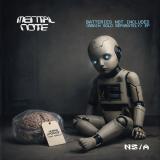
‘Batteries Not Included (Brain Sold Separately)’ EP Arrives Via No Static Automatic
No Static Automatic is proud to announce the new EP from UK Electro legend Phil Klein under his Mental Note alias. Titled “Batteries Not Included (Brain Sold Separately),” this release marks the dynamic follow-up to the acclaimed 2020 debut “Voices In My Head (Noises In My Pants).”
Few authentic Electro producers from the UK can wear the badge ‘legend’ with the same level of justification as Phil Klein, aka Bass Junkie. Active since the late 80s, Klein has tirelessly shaped his distinct vision of Electro, both as a solo artist and through storied collaborations with icons like Dynamix II, Keith Tenniswood (Radioactiveman), and Si Brown (Dexorcist). As a DJ, remixer, live act, and the driving force behind the seminal Battle Trax label, his influence is woven into the fabric of the genre.
With essential releases on labels including DMX Krew’s Breakin’ Records, Andrea Parker’s Touchin’ Bass, and Billy Nasty’s Elektrix, the Bass Junkie sound seamlessly bridges the old-school beats of Electro’s origins with a potent, borderline-industrial edge. As noted by Andy Barton of Bass Agenda: “From funky to ferocious, Bass Junkie’s discography is a must-have for anyone claiming passion for the genre – influential, individual, and infectious with every beat.”
Now, as Mental Note, Klein continues his exploration of electronic psychedelia. The new EP, “Batteries Not Included (Brain Sold Separately),” is a four-track expedition through the Electro cosmos:
“Brainwash” immerses the listener in swirling, hypnotic synths.
“They're Not Blue, They’re Purple” delivers a masterclass in crunchy, textured drums.
“Primordial Soup” showcases frantic, intricate programming.
“Kluster Funk” offers a moment of deep, sonic relief and groove.
Each track reinforces Mental Note’s signature: a journey that is cerebral, raw, and irresistibly rhythmic.
About Bass Junkie/Mental Note:
Phil Klein, operating primarily under the alias Bass Junkie, is a cornerstone of the UK Electro scene. For over three decades, his work has defined and evolved the sound, earning him a revered status among peers and purists. His Mental Note project is a focused outlet for a deeper, more experimental strand of his production genius, further solidifying his legacy as an electronic music innovator.
quête:jus phil
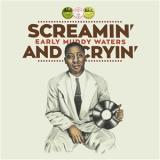
- 1: Gypsy Woman
- 2: Little Anna Mae
- 3: I Can't Be Satisfied
- 4: I Feel Like Going Home
- 5: Train Fare Home
- 6: Sittin' Here And Drinkin
- 7: You're Gonna Miss Me (When I'm Dead And Gone)
- 8: Mean Red Spider
- 9: Streamline Woman
- 10: Muddy Jumps One
- 11: Little Geneva
- 12: Canary Bird
- 13: Screamin' And Cryin
- 14: Where's My Woman Been
- 15: Rollin' And Tumblin' Part 1
- 16: Rollin' And Tumblin' Part 2
The Definitive Origins of the Chicago Electric Blues. Witness the birth of a legend. This essential collection captures Muddy Waters at the most pivotal moment of his career: the transition from a Mississippi Delta traveler to the "King of Chicago Blues." Muddy Waters was an ambitious young man who saw little future in Mississippi. In 1943, he headed for the bright lights, big city of Chicago, where he soon connected with blues giant Big Bill Broonzy, who began featuring Muddy as an opening act at his club dates. Within a year, Muddy had switched to electric guitar and formed his first blues combo, quickly becoming an established figure on Chicago's club scene. In 1947, Muddy came to the attention of the fledgling Aristocrat Records, just as Leonard Chess-then running a nightclub called the Macomba Lounge-invested in the company. Working frequently with pianist Sunnyland Slim, Muddy recorded a split session with him for Aristocrat in December 1947. This collection begins there: eight Aristocrat 78 rpm releases (sixteen sides), recorded between 1948 and 1950 and presented here in chronological order of release. Just three years later, Leonard and his brother Phil Chess would buy out Aristocrat's remaining partners and rename the label Chess Records-ushering in a new era of Chicago blues that would reverberate around the world. Includes extensive liner notes by Muddy Waters expert Fred Rothwell.
- A1: Les Masques - Il Faut Tenir (1969)
- A2: Isabelle Aubret - Casa Forte (1971)
- A3: Christianne Legrand - Hlm Et Ciné Roman (1972)
- A4: Jean Constantin - Pas Tant D'chichi Ponpon (1972)
- A5: Billy Nencioli & Baden Powell - Si Rien Ne Va (1969)
- B1-: Marpessa Dawn - Le Petit Cuica (1963)
- B2: Jean-Pierre Sabar - Vai Vai (1974)
- B3: Sophia Loren - De Jour En Jour (1963)
- B4: Isabelle - Jusqu’à La Tombée Du Jour (1969)
- B5: Sylvia Fels - Corto Maltesse (1974)
- C1: Frank Gérard - Comme Une Samba (1972)
- C2: Ann Sorel - La Poupée Des Favellas (1971)
- C3: Charles Level - Un Enfant Café Au Lait (1971)
- C4: Andrea Parisy - Les Mains Qui Font Du Bien (1970)
- C5: Audrey Arno - Quand Jean-Paul Rentrera (1969)
- C6: Aldo Frank - T’as Vu Ce Printemps (1970)
- D1: Christianne Legrand - Cent Mille Poissons Dans Ton Filet (1972)
- D2: Clarinha - Lemenja (1970)
- D3: Hit Parade Des Enfants - Aquarela (1976)
- D4: Jean-Pierre Lang - Tendresse (1965)
- D5: Magalie Noël - Une Énorme Samba (1970)
- D6: Françoise Legrand - La Lune
Ever since the late 1950s bossa-nova revolution, Brazil’s influence on French music has been undeniable. Pierre Barouh, Georges Moustaki and a vast array of lesser known artists, all made the Musica Popular Brasileira (MPB) an axis of promotion at the service of a cool and metaphysical, modern and mixed Brazilian lifestyle. Some were seduced by the poetic languors of the bossa, some were looking for fun, and others just loved the American hybridization of jazz-bossa, jazz-samba.
What is bossa nova? One of its creators, Joao Gilberto said: "Its style, cadence, everything is samba. At the very start, we didn't call it bossa nova, we sang a little samba made up of a single note - Samba de uma nota so .... The discussion around the origins of bossa nova is therefore useless”. It is nevertheless useful to remember that these magnificent Brazilian songs, which the guitarist describes as samba, were shifted and balanced around improbable chords. "I like things that lean, the in-betweens that limp with grace," said Pierre Barrouh, quoting Jean Cocteau.
With emotion, arrangements for violin and supple guitar licks, bossa nova rapidly changed. A transformation that can be heard in the Tchic, tchic, French Bossa Nova 1963-1974 compilation, the result of a cultural reappropriation, which traveled through the United States and supplemented itself in France.
A musical revolution that has remained significant, bossa nova was born in Rio. From 1956 to 1961, Brazil lived through its golden years. In five years, the country had invented its modernist style. Elected president in 1956, Juscelino Kubitschek de Oliveira, an elegant man with a broad forehead, brandished a promising slogan: "Fifty years of progress in five years". He quickly got to work. Not worried about increasing debt, he launched the project for a new federal capital, Brasilia, designed by the communist architect Oscar Niemeyer. Volkswagen opened state-of-the-art factories and created the “fusquinha”, the Beetle. In Rio, the Vespa made its first appearance. The Arpoador Surf Club crew run into the “girl” from Ipanema, Helô Pinheiro - the tanned garota ("chick"), between a flower and mermaid, who at 17 walked by the Veloso bar, where the fiery author and composer, Tom Jobim and Vinicius de Moraes, were getting drunk on whiskey. From then on, bossa symbolized cool.
In 1958, Joao Gilberto recorded Chega de Saudade, which the directors of Philips denied, calling it "music for fagots". The marketing director, who believed in it, secretly pressed 3000 78-inch vinyls and distributed them at schools around Rio, creating a tidal wave.
American jazzmen then took over. In particular, trumpeter Dizzy Gillespie and guitarist Charlie Byrd. In November 1962, the Brazilian Ministry of Foreign Affairs funded a "Bossa-Nova" concert at Carnegie Hall in New York, inviting the genre’s pioneers. Unprepared, the show soon turned to disaster. But the troupe was invited to the White House by Jackie Kennedy. The first lady loved "the new beat" and in particular Maria Ninguem, a song by Carlos Lyra, later covered by Brigitte Bardot.
In Brazil, the 1964 military coup quickly ended this euphoria. The destructive atmosphere that ensued pushed many Brazilian musicians to leave, if not to exile. Thus, Tom Jobim, Sergio Mendes and Joao Gilberto arrived to the United States. In New York, Joao Gilberto met saxophonist Stan Getz. At the time, he was married to the Bahianese Astrud Weinert Gilberto, who had a German father. She had never sung before, but she knew how to speak English. Getz therefore asked her to replace her husband on The Girl From Ipanema. The Getz/Gilberto record with Tom Jobim on piano, was released in March 1964. Phil Ramone, the "pope of pop" was in charge of sound.
Bossa nova arrived in Paris through the classic “guitar-voice” channel (Pierre Barouh, Baden Powell, Moustaki…) But France loved jazz and Paris had already welcomed its American contributors. All these good people were to pass through Saint-Germain-des-Prés. The cabaret l'Escale became the Mecca of Latin American sound where one could find Pierre Barrouh and his friends, such as the Camara Trio, samba-jazz aces, whose only record was published by the Saravah label. With a band strangely called Les Masques (a band that included Nicole Croisille and Pierre Vassiliu, among others), the Camara Trio recorded an interesting Brazilian Sound, including the track Il faut tenir which is present on this tasty compilation of rarities.
Other enlightened musicians can also be found on the compilation, such as Jean-Pierre Sabar (songwriter for Hardy, Auffray, Leforestier ...) and the French pop rock organist Balthazar. In 1975, Sabar recorded Aurinkoinen Musiikkimatka on a Finnish label, which featured the crazy Vai, Vai, included on this record. We are now following the footsteps of Brazilian electronic musicians such as Sergio Mendes, Eumir Deodato or Marcos Valle who created funk and disco sounds on their keyboards and synthesizers. A style that influenced Véronique Sanson when she wrote Jusqu’à la Tombée de la nuit in 1969 for Isabelle de Funès, the niece of Louis and a great friend of Michel Berger - Sanson did end up singing this track on her 1992 Sans Regret record.
The pinnacle of exoticism and travel, Sylvia Fels’ Corto Maltese includes bongos, sea mist and ocean sounds. The title was taken from Jacky Chalard’s concept album written in 1974, Je suis vivant, mais j’ai peur (I am alive, but I am scared), based on Gilbert Deflez’s science fiction novel.
However, bossa nova extended the scope of popularity. "In the 1970s, I was a fan of Sergio Mendes, Getz / Gilberto. I fell in love with this music that I knew because I had been an orchestral singer, " explained Isabelle Aubret, who in 1971 delivered a composite record of covers by the very funky Jorge Ben, Orfeu Negro, Tom Jobim, Vinicius de Morais and Jean Ferrat. "I recorded this album for Meys Records in Paris, far from Brazil, with wonderful musicians, François Raubert, Roland Vincent, Alain Goraguer...". The latter wrote the arrangements for Casa Forte, a very percussive title borrowed from Edu Lobo, one of the initiators of the bossa who spent time in California. "Jazz and bossa came together and produced very rhythmic music. I love singing, it allows me to dream, to have fun, to feel a high on stage, and these songs brought me joy, made me swing, my singing felt like a dance.”
The world tours of French singers and their desire for the tropics, often brought them to Rio with its hills, forests, caipirinhas and tanned bodies. There are surprises though, like this Iemenja (Iemenja is the goddess of the sea in the Afro-Brazilian candomblé religion). Not unlike the composer and musician Jean-Pierre Lang, based in Sao Paulo, Claire Chevalier taught Brazil to Brazil. In 1970, the singer and painter published a 45-inch vinyl, Mon mari et mes amants (My husband and my lovers), under the improbable pseudonym of Clarinha (little Claire). She was then living in Rio, with her husband, Joël Leibovitz, who founded a band called Azimuth, and who owned a record label specialized in "sambas enredos" songs for samba school parades.
For its B side, she asked Pierre Perret to come up with lyrics for a song composed by Carlos Imperial: "Oh goddess of the sea, o goddess Iemenja, I bring a white rose to adorn your long hair ..." . "Perret came to see us, and we had fun, remembers Joël Leibovitz. We wrote Lemenja for fun, we recorded it at the Havaí studio, behind the Central do Brasil the central station. Erlon Chaves, the arranger who worked with Elis Regina, joined us" adding his share of Afro-Brazilian percussions and funky brass to the mix.
There is a common misunderstanding in Franco-Brazilian history: that bossa, admittedly hedonistic, is perceived as funny, even though the poets who wrote the texts are often philosophizing on the human condition. Its French interpreters pull it towards a carnival inspired universe, far removed from its fundamental essence. Thus, Jean Constantin covered the famous Samba da minha terra, an ode to the art of samba written by the classic Bahian composer Dorival Caymmi, renaming it with the enticing title of Pas tant de tchi tchi pompon: "On your pier there is no tchi tchi / when you arch your back, you know everything is alright ”(lyrics by Gérard Calvi). This expedited bossa aims for the absurd, but retains a certain elegance.
Indeed, Jean Constantin was not an idiot, the rather large man had a huge mustache and liked fantasy, (Les pantoufles à papa, Le pacha, inspired by cha-cha-cha-cha, salsa and jazz) but he was also the lyricist of Mon manège à moi interpreted by Edith Piaf, the composer of Mon Truc en plume by Zizi Jeanmaire and the soundtrack of François Truffaut’s 400 Blows. Le Poulpe, published in 1970, from which this bossa is extract, was arranged by Jean-Claude Vannier, an accomplice of Serge Gainsbourg’s Melody Nelson. In short: "There is enough of samba / By looking at the parasol / Because my poor cabeza / Is going to die in the sun".
Even the American actress Marpessa Down, who was at the heart of the bossa nova revolution with her role as Euridyce in Marcel Camus’ film Orfeu Negro, winner of the 1959 Cannes Palme d'or, fed the clichée with Je voudrais parler au petit cuica - "Tell me how you manage to always make people want to dance / It's true, I must admit that I cannot resist your magic" - in consequence, once can hear the cuica, a little drum inherited from the Bantu.
But bossa nova had many angles. Societal, of course, pushing actresses who were symbols of women's liberation like Brigitte Bardot, Jeanne Moreau, or Sophia Loren to engage in the exercise of accelerated bossa. In February of 1963, Sophia Loren made a record in French in Rome, Je ne t'aime plus, featuring the song De jour en jour, a bossa written by two Italians, Armando Trovajoli and Tino Fornai, which was released a little later by Barclay. Bossa accompanied the 1960s, a decade of moral liberation. Ann Sorel, who interpreted La Poupée des favellas, caused a sensation with L’amour à plusieurs, a provocative song written by Frédéric Bottom and Jean-Claude Vannier. As for the actress Andrea Parisy, she displayed her bourgeois cheekiness in Marcel Carné's Les Tricheurs before interpreting Les mains qui font du bien. And Magalie Noël, the friend of Boris Vian, who sung Johnny fais-moi mal, was hired to sing Une énorme Samba, composed by Alain Goraguer (arranger to Gainsbourg, Bobby Lapointe and Jean Ferrat) with lyrics by Frédéric Botton.
But in the end, of what wood is bossa nova made of? The answer is given by Christianne Legrand, daughter of Raymond the conductor, and sister to Michel the composer: "With me, with jà" - jà means "immediately" in Portuguese. In 1972, the singer, an expert in vocal jazz and a member of the Double Six, published Le Brésil de Christianne Legrand. Two songs included on the Tchic Tchic compilation that demonstrate how bossa, jazz, funk, rock, etc. work like a swiss army knife: the music is used to denounce broken systems, or miracles, HLM et ciné roman, Cent mille poissons dans ton filet, two songs from the O Cafona soundtrack, a successful telenovela broadcast, at the time in black and white, on TV Globo. The first was adapted in French by the fighter and friend of the Legrand tribe, Agnès Varda. The second is content with a play on words, jostling them into a summer fun.
Véronique Mortaigne
Returning to Peak Oil for a second expedition, veteran Russian producer Kirill Vasin, aka Hoavi, explores an untrodden path on 'architectonics', drawing from his lifelong appreciation of Indonesian gamelan musics to mastermind a rhythmelodic hybrid sound that's sinuous, subtle and remarkably dubby. Over the last three and a half years, Vasin has used the music's methodologies and rhythmic forms to evolve his existing processes and signatures and transform his musical philosophy. To start the exercise, he knew he needed percussion, so used his phone and a contact microphone to pick up nearby sounds, drumming on various tables, railings, empty glasses and other objects to create a library of textured, tonally complex percussive sounds. But the work wasn't done yet - in fact, it was just the beginning of a long process of trial and error: Vasin created two full versions of the album before 'architectonics' was finished.
There are still echoes of the chrome-plated sci-fi atmospheres and complex, stuttering beatscapes that underpinned 2021's 'Invariant', but 'architectonics' asks very different questions, prompting fresher, more innovative responses. Leaning on his bank of organic percussive sounds, Vasin is able to concoct a tactile aura that he fills with eerie fluctuating repetitions that shift subtly, sometimes imperceptibly. The cavernous reverb and booming bass that supported his last few albums is still present, now employed as scaffolding for different architectures: skittering sequences and ornamented overlapping phrases that owe as much to Steve Reich's hallowed minimalist compositions as they do to Indonesian traditional forms. Lulling, almost hypnotic tessellations appear like fractals on the polished surfaces, morphing from jazz to techno and dub while retaining gamelan's haunting xenharmonic resonances and Vasin's concept becomes crystal clear. 'architectonics' isn't an attempt to make a gamelan album, it's Vasin's way of developing his own artistic process by looking far beyond the traditional boundaries of electronic music.
- A1: You Came Thru
- B1: Hurry Up Tomorrow
The Nu’rons were a family group consisting of two sets of brothers and cousins, the four young men in question being brothers Daryl Howard and Raymond Gibson (Daryl’s mother registered him under his father’s surname of Howard and Raymond under her maiden name of Gibson) together with Otho Bateman and Charles Bateman. They were all born and raised in Salem, New Jersey and from the age of ten and eleven began singing with a fifth member and Gibson brother Rudolph as a group called The Gospel 5. They eventually decided to crossover to secular music and as a group known for their energetic dance routines they came up with the new performing name of ‘The Nu’rons’ (taken from the word ‘Neuron’ which is a cell that transmits nerve impulses). However Rudolph was soon to leave the group due to physical illness. Also Daryl Howard and Charles Bateman had also been part of a working group known as The Devotions prior to becoming The Nu-Ron’s.Following hours of practice The Nu’rons eventually felt confident enough to put their own shows together and began to perform at local dances and parties around New Jersey and Philadelphia, often being used as a non-paid warm up act for bigger named artists. They moved between several different managers including Jimmy Bishop (Duo Dynamic Productions) until they came under the tutelage of WDAS radio DJ Georgie Woods (his wife Gilda, being the owner of the Philadelphia Gil, Dion and Top & Bottom record Labels). It was Georgie who introduced them to Manny Campbell who in turn invited them to an audition at his and partner Charles Bowen’s Emandolynn Music studio in Chester P.A. The song The Nu’rons chose to audition with was the self penned “I’m A Loner”, the audition went well, as during late January/early February of 1970 Manny and Charles took The Nu’rons into the Sigma Sound Studio’s with Tom Bell and the TSOP musicians to record “I’m A Loner” and “All My Life” which was released on the Nu-Ron label in April of the same year. The two studio takes presente don this release came short after the band moved on from the collaboration with producer Emanuel Campbell to take music matters in their own hands. Beside recording "Disco Hustle" to be part of the disco boom in Philly of the times, they recorded also “You Came Thru”, a rough yet beautiful heavy bassline driven soul funk recording, and the just amazing “Hurry Up Tomorrow”, here presented in one of the original Studio takes.
- A1: Coming To Town
- A2: Empty Bank
- A3: Harry's Philosophy
- A4: Dolly's Arrival
- B1: Harry And Dolly
- B2: Sawmill
- B3: Bank Robbery
- C1: Moanin
- C2: Gloria's Story
- C3: Harry Sets Up Sutton
- D1: Murder
- D2: Blackmail
- D3: End Credits
Unlock the allure of The Hot Spot through its unforgettable soundtrack, a captivating collection that brings the film's sultry ambiance to life.
Set against the backdrop of a small Texas town, The Hot Spot follows Harry Madox, a charming drifter with a dark past. As he arrives in town, he becomes embroiled in a web of seduction and deceit, navigating his way through a love triangle involving the sultry waitress, Gloria, and the alluring femme fatale, Dolly. Tensions rise and passions ignite, leading to a thrilling climax where desire and danger intertwine. Directed by the visionary Dennis Hopper, the film is a masterclass in mood and atmosphere, capturing the essence of 1990s neo-noir.
The Hot Spot has garnered acclaim for its stylish cinematography and gripping narrative, but it's the music that truly sets it apart. It's an amalgamation of swampy blues, jazz and rock — all mixed and recorded in a sparse, bloomy and eerie sort of way.
Critics hailed the soundtrack as "an electrifying fusion of jazz and blues that perfectly complements the film's seductive undertones." The blend of sultry melodies and haunting instrumentals creates an immersive experience that resonates long after the credits roll.
This recording is just so damn fine, so airy and warm. And the musicians aboard on this Dennis Hopper film are a who's who, including Miles Davis, John Lee Hooker, Taj Mahal, Roy Rodgers, Earl Palmer and Tim Drummond. This has long been a highly sought-after and collectible record among audiophiles. This soundtrack is essential for any music lover or film buff, capturing the very essence of the film's seductive spirit.
LP Transparent Purple Vinyl in Picture Sleeve
The essential debut album from Chicago’s disco-funk pioneers, featuring the timeless “Free Man,” returns fully remastered from the tapes of Tom Moulton for RSD 2026. Produced by Philly soul legends Bunny Sigler and Bruce Hawes, this record bridges Chicago’s raw energy with Philly’s orchestral elegance. Essential for any collector serious about the roots of disco and dancefloor culture — an all-killer, no-filler LP that sounds fresher than ever today. Remastered and Redesigned labels and sleeve, Transparent Purple Vinyl.
- A1: Al Green – Let's Stay Together
- A2: Marvin Gaye - What's Going On
- A3: Diana Ross - Ain't No Mountain High Enough (Single Version)
- A4: Stevie Wonder - Signed, Sealed, Delivered (I'm Yours)
- A5: Commodores - Easy (Album Version)
- A6: Bill Withers - Ain't No Sunshine
- A7: The Stylistics - You Make Me Feel Brand New (Let's Put It All Together Version)
- A8: Rose Royce – Wishing On A Star
- B1: Jackson 5 - I Want You Back (Single Version)
- B2: Smokey Robinson & The Miracles - The Tears Of A Clown (Single Version / Mono)
- B3: The Supremes - Nathan Jones
- B4: Frankie Valli And The Four Seasons - The Night (1972 Album Version)
- B5: Chairmen Of The Board – Give Me Just A Little More Time
- B6: The Trammps - Hold Back The Night
- B7: The O'jays - Love Train
- B8: The Blackbyrds – Walking In Rhythm
- B9: Heatwave - Always And Forever (Single Version)
- C1: The Temptations - Papa Was A Rollin' Stone (Edited)
- C2: Isaac Hayes - Theme From "Shaft" (Remastered 1991 Album Version)
- C3: Ike & Tina Turner - Proud Mary
- C4: James Brown - Get Up I Feel Like Being A Sex Machine
- C5: Edwin Starr - War
- C6: Sly & The Family Stone - Family Affair (Single Version)
- C7: The Delfonics - Didn't I (Blow Your Mind This Time)
- C8: Billy Paul - Me And Mrs. Jones (Single Version)
- D1: The Floaters - Float On (Single Version)
- D2: Minnie Riperton - Lovin' You
- D3: The Isley Brothers - Summer Breeze, Pt. 1
- D4: William Devaughn - Be Thankful For What You Got (Part I)
- D5: Detroit Emeralds – Feel The Need In Me
- D6: The Moments - Jack In The Box
- D7: Raydio - Jack And Jill
- D8: The Tymes - Ms. Grace
- E1: Barry White - Can't Get Enough Of Your Love, Babe
- E2: Aretha Franklin – Until You Come Back To Me (That's What I'm Gonna Do)
- E3: Al Green – Tired Of Being Alone
- E4: Gladys Knight & The Pips - Midnight Train To Georgia
- E5: Timmy Thomas – Why Can’t We Live Together (7" Glades Version) (2013 Remaster)
- E6: George Benson – The Greatest Love Of All
- E7: Diana Ross - Theme From Mahogany (Do You Know Where You're Going To) (Single Version)
- E8: Jackson 5 - I'll Be There
- F1: Freda Payne – Band Of Gold
- F2: Ann Peebles - I Can't Stand The Rain
- F3: Marvin Gaye - Let's Get It On (Single Version)
- F4: Harold Melvin & The Blue Notes Featuring Teddy Pendergrass - If You Don't Know Me By Now
- F5: The Stylistics - Can't Give You Anything (But My Love)
- F6: The Three Degrees - When Will I See You Again (Single Version)
- F7: Deniece Williams - Free (Single Version)
- F8: Earth, Wind & Fire - After The Love Has Gone (Single Version)
- F9: Commodores - Three Times A Lady (Single Version)
NOW That’s What I Call 70s Soul brings together 50 era-defining tracks from one of the most powerful decades in soul music, featuring classics from Motown legends, Philly Soul pioneers, smooth balladeers and funk innovators – all pressed across 3LPs on beautiful blue vinyl… Out April 24th!
LP1 opens with one of the decade’s most recognisable love songs: Al Green’s ‘Let’s Stay Together’, a US #1 and UK Top 10 hit that became his signature recording. It’s followed by Marvin Gaye’s ‘What’s Going On’, the socially conscious masterpiece and title track from his landmark 1971 album, and Diana Ross’ Ain’t No Mountain High Enough’, which topped the US chart and became her first solo #1. Stevie Wonder’s ‘Signed, Sealed, Delivered (I’m Yours)’ remains one of Motown’s most joyful recordings and comes before Commodores’ ‘Easy’ introducing Lionel Richie’s smooth ballad vocals. The side also includes Bill Withers’ timeless ‘Ain’t No Sunshine’, a Grammy-winning classic, and The Stylistics’ lush ballad ‘You Make Me Feel Brand New’, a UK Top 3 smash, before closing with Rose Royce’s beautiful ‘Wishing On A Star’, one of the most loved soul ballads of the era.
Flip the LP over and The Jackson 5’s ‘I Want You Back’ – the group’s explosive debut single opens the side. Smokey Robinson & The Miracles’ ‘The Tears Of A Clown’ became a UK #1 and is followed by The Supremes’ Nathan Jones’ showcasing the group’s evolving psychedelic-soul sound. Northern Soul classics from Frankie Valli & The Four Seasons with ‘The Night’, Chairmen Of The Board’s Top 3 smash ‘Give Me Just A Little More Time’ and The Trammps’ ‘Hold Back The Night’. The O’Jays’ joyous ‘Love Train’ leads to The Blackbyrds’ Walking In Rhythm’, before the side closes with the romantic classic ‘Always And Forever’ from Heatwave.
LP2 opens with The Temptations’ epic ‘Papa Was A Rollin’ Stone’, a Grammy-winning US #1 remains one of the most stunning recordings from the Motown catalogue, is followed by Isaac Hayes’ ‘Theme From “Shaft”’, an Academy Award-winner and a US #1 smash. More funk follows from Ike & Tina Turner, James Brown with one of his key tracks ‘Get Up (I Feel Like Being A) Sex Machine’, Edwin Starr’s powerful anti-Vietnam protest song ‘War’, and Sly & The Family Stone’s hugely influential ‘Family Affair’. The Delfonics’ sublime ‘Didn’t I (Blow Your Mind This Time)’ comes ahead of Billy Paul’s timeless ‘Me And Mrs. Jones’ which closes the side…the other side begins with the 1977 #1 from The Floaters with ‘Float On’, before the breathtaking vocals of Minnie Riperton on ‘Lovin’ You’. The Isley Brothers’ Summer Breeze’ and William DeVaughn’s ‘Be Thankful For What You Got’ have become enduring classics and are followed by a run of ‘80s pop-chart crossover hits completing LP2 from Detroit Emeralds, The Moments Raydio and The Tymes’ #1 ‘Ms. Grace’.
LP3 opens with the unmistakable voice of Barry White and his US #1 hit ‘Can’t Get Enough Of Your Love, Babe’, before Aretha Franklin’s ‘Until You Come Back To Me (That’s What I’m Gonna Do)’, delivers one of her smoothest performances. Al Green’s ‘Tired Of Being Alone’ and Gladys Knight & The Pips’ ‘Midnight Train To Georgia’ are followed by minimalist soul classic ‘Why Can’t We Live Together’ from Timmy Thomas, and the side closes with a trio of defining ballads:- George Benson’s ‘The Greatest Love Of All’ Diana Ross’ ‘Theme From Mahogany (Do You Know Where You’re Going To)’ and The Jackson 5’s ‘I’ll Be There’, their biggest hit…while over on the final side…Freda Payne’s #1 ‘Band Of Gold’, opens alongside Ann Peebles’ influential and much covered ‘I Can’t Stand The Rain’.Marvin Gaye’s sensual ‘Let’s Get It On’ became another US #1, while Harold Melvin & The Blue Notes featuring Teddy Pendergrass deliver the contemporary standard ‘If You Don’t Know Me By Now’. Three massive UK #1s are next…The Stylistics with ‘Can’t Give You Anything (But My Love)’, The Three Degrees’ peerless ‘When Will I See You Again’ and Deniece Williams’ ‘Free’. This amazing collection closes with two timeless ballads: Earth, Wind & Fire’s ‘After The Love Has Gone’, a Grammy-winning classic, along with ‘Three Times A Lady’, a huge worldwide #1 for the Commodores.
NOW That’s What I Call 70s Soul, 50 defining tracks from one of music’s greatest decades. Out April 24th.
- A1: Me Pega
- A2: Tem Carnaval
- A3: Sexy Doce
- B1: Coeur
- B2: Então Tá Bem
- B3: Para Ser Feliz
- B4: Tô Nem Aí
Fresh from releasing projects on Method 808 and Future Classic, landing a huge collaboration with Chloé Caillet, and delivering an official remix for Fatboy Slim, PPJ are entering a new chapter in full force. Their expansive take on global street sounds, ranging from neoperreo to Miami bass, gets a cool re-coating.
Led by the magnetic vocalist Páula, with production from Povoa (individually supported by Four Tet, Ben UFO, and Barry Can't Swim, with recent releases on Live From Earth), the duo operates in maximalist mode: playful, sensual, and slightly unhinged.PPJ’s new era, JOKER, embraces a figure that appears everywhere from card decks to carnival culture as a symbol that mirrors their own DNA: funny, eerie, seductive, unpredictable. The EP leans further into club territory, but rather than polishing their edges, PPJ amplify them.
At the emotional core of the record sits “Coeur,” co-produced with Chloé Caillet. It begins with an MPB-tinged foundation flirting with bossa nova. It’s unmistakably Brazilian, bathed in sunset hues before being sped up and twisted into a dance-floor-ready electronic form. The groove shimmers with tension: warm percussion, elastic basslines, and Páula’s voice hovering between intimacy and tease. It feels like a remix of itself, romantic, but slightly untrustworthy.
If “Coeur” glows, “To Nem Ai” is a slow burner. A very deep and downtempo house cut, it unfolds slowly, almost luxuriously, guided by sensual vocals that feel whispered directly into the ear of the listener. A hypnotizing piano sample that feels like a late-night confession. It’s the kind of record that transforms a dancefloor into something tactile.
Elsewhere, “Me Pega” is a high-energy reinterpretation of the tech-house sounds from Santa Catarina, one of southern Brazil’s most feverish party states, twisted and accelerated for ferocious impact. Drawing direct inspiration from Sarro, a raw and vibrant Brazilian street dance, the track captures physical intensity in its purest form: sweat, bass pressure, collective release.
Its counterpart, “Tem Carnaval” channels Páula’s vivid storytelling into a thunderous ode to Rio’s carnival spirit, euphoric, chaotic, cinematic landed just in time for this year’s celebrations.
On “Sexy Doce,” rugged electroclash melodies collide with unexpected references. “It was inspired by Budots, which is dance music from the streets in the Philippines,” Povoa explains. “Then we mixed it with Páula’s Brazilian vocals. Baile funk is similarly from the streets, so there is a connection.” The result is raw yet futuristic, a cross-continental flirtation that feels both underground and explosive.
With this new EP, PPJ make music like they’re tuning into a dozen pirate frequencies at once. Pirate radio from Rio to Berlin to Manila intercepting fragments of street culture, sensuality, and chaos, and stitching them into something deliriously cohesive.
JOKER doesn’t just nod to club culture. It challenges it, twists expectation and leaves a lasting impression.
Back in 2022, Is It Balearic? Recordings founders Coyote (AKA long-serving producers Richard Hampson aka Ampo and Timm Sure) took time out from releasing music on their own labels to deliver a near perfect mini-album on Phil Cooper’s similarly mind-ed NuNorthern Soul imprint, Everything Moves, Nothing Rests.
A superb exploration of their trademark sound, where gentle downtempo rhythms and nods to dub came cloaked in colourful ambient chords, sun-bright melodic motifs, organic instrumenta-tion and quirky spoken word samples, Everything Moves, Nothing Rests deserved a sequel. So, three and a half years on, the duo has delivered just that: a fine six-track EP that offers an even deeper and more atmospheric exploration of their signature sound.
It is a sonic approach that should now be familiar to Balearic en-thusiasts the world over. Aside from delivering a steady stream of singles, albums and remixes on their own imprint, Hampson and Sure have also showcased their skills and loved-up musical mis-sives on International Feel, Music For Dreams, Needwant, MM Discos and Citizens of Vice.
The Higher The Sky, The Deeper The Ocean, their hotly anticipated NuNorthern Soul return, is named in honour of a quote from Ped-ro Alonso’s documentary series On the Ship of Enchantment, an extended voyage in which the Money Heist movie star meets healers and masters of ancestral medicine across his native Mexi-co.
There’s naturally a meditative and slightly psychedelic sound to much of The Higher The Sky, The Deeper The Ocean, which offers a subtly varied exploration of Coyote’s style and influence. Yearning, soft-focus opener ‘Muted Beauty’ – the kind of immersive, effects-laden and sample-sporting ambient bliss found nestling on Fila Brazillia albums of the mid 1990s – is followed by the similarly gentle ‘Go All The Way’, where delay-laden acoustic guitars, spo-ken word snippets and gaseous chords stretch out atop a languid, slow-motion groove.
‘A Drop in the Ocean’ picks up the pace a little via a glorious hat-tip to turn of the 90s ambient house – all dub-wise bass, heady deep house sonics, spaced-out chords and half-buried references to sunrise-ready Balearic synth-pop records of the late 1980s. Late psychedelic guru Terrence McKenna appears in sampled form on ‘Dolce Far Niente’, a tabla-driven drift and musical hallucination which conjures mental images of lying in the Mexican desert, gazing intently at a starry sky.
In contrast, ‘Riviera Sound’ is a chunkier, brighter and more sun-splashed affair – all deep, dubby bass, sustained piano parts, punchy downtempo breaks and the duo’s trademark ambient pads – while superb closing cut ‘No Coincidences’ fixes jazzy double bass samples, twinkling keyboard motifs, subtle acid lines and Latin-laced percussion to a street soul-adjacent beat.
Heady, impeccably crafted and thoroughly enveloping, The Higher The Sky, The Deeper The Ocean is Coyote at their dazzling best. It marks another significant chapter in their ever-evolving musical journey.
Phonica welcomes Mattias El Mansouri, a Swedish-born DJ and producer of Moroccan/Chilean descent who has been behind some of our favourite releases over the past few years on labels such as Aniara and Nous'klaer.
On the 'Sense Data' 12", El Mansouri expands on his atmospheric House and Techno explorations with three deep yet dancefloor primed pieces that hold personal resonance for him.
El Mansouri, who holds a degree in Theoretical Philosophy, explains:
"'Sense Data' are the immediate elements of perception; what is directly given to the senses before any judgment or interpretation. In vision, these appear as colored, shaped patches; in other senses, as sounds, tastes, smells, or tactile qualities. For example, seeing a brown table with a white coaster involves sense data of a brown patch and a white roundish patch, from which one infers the presence of a table and coaster."
On the record's flip, we have the beautiful "Cielo Vacío' and 'Ouzo Hallon' dub version of 'Sense Data'. El Mansouri continues:
"Cielo Vacío translates to “empty sky” in Spanish. The track serves as a eulogy for my brother, who passed away in December 2023. I chose this title because it resonates with the sonic and emotional atmosphere of the piece. Its ambiguity is intentional, carrying both the weight of grief that lingers after losing someone you love, and a strange, fragile peace you extend toward the departed. It reflects the hope that, wherever they are, whether or not one believes in an afterlife, they have found rest.
Ouzo Hallon translates to Ouzo (the Greek liquor)+Hallon (Raspberry). It’s a long drink that my (Greek) ex came up with last summer, mixing ouzo, raspberry syrup/raspberry juice and ice. It became a thing in our little friend group, consisting of mostly Greeks, and every time we all hang out we would all just drink ouzo hallon until we couldn’t stand straight. I always wanted to name a track Ouzo Hallon, just for the fun of it, and what better way to get the chance than now!"
Repress
The Collaboration - Having toured together over the years, Lattimore and Barwick now join forces to co-write and record this full-length album. Their creative synergy brings together harp, voice, and analog synths in a deeply emotional, immersive sound journey. The album was recorded at the Philharmonie de Paris with co-producer Trevor Spencer (Fleet Foxes, Beach House). This album continues a unique series of collaborations between the label and the Musée de la Musique, featuring historical instruments in contemporary composition. Since 2017, InFiné and the Philharmonie de Paris have co-developed a series of albums designed to highlight the extraordinary instrument collection of the Musée de la Musique. Following the albums InBach by Arandel (2020) and Saturn 63 by Seb Martel (2022), this third release is a meeting of two iconic contemporary ambient voices: Mary Lattimore and Julianna Barwick. The project offers the artists full access to the museum’s playable instruments for recording, sound conservation, and creative reinterpretation.
--
Tragic Magic brings together Julianna Barwick and Mary Lattimore, two of contemporary ambient, experimental and electronic music’s most celebrated composers, for a unique collaboration at the Philharmonie de Paris, with extraordinary access to the Musée de la Musique’s instrument collection, in partnership with the French label InFiné. The album features seven immersive, evocative compositions guided by the human spirit – intimate, grounded in friendship, both earthly and cosmic – and part of a greater continuum, reflecting the solace and transformative power of artistry across generations.
Co-produced by Trevor Spencer (Fleet Foxes, Beach House), Tragic Magic was created in just nine days, a testament to the “musical telepathy” that has developed between Barwick and Lattimore over years of touring and friendship. Arriving in Paris from Los Angeles shortly after the 2025 wildfires, their sessions combined improvisation with the emotions and experiences they carried, in a setting both inspiring and deeply supportive. Lattimore selected harps tracing the instrument’s evolution from 1728 to 1873, while Barwick chose several iconic analog synthesizers, including the Roland JUPITER and Sequential Circuits PROPHET-5. In freeform dialogue between voice and instrument, they create a meditation on tragedy, wonder, and the restorative power of shared experience.
The duo, often joined by Spencer, also explored the city, sharing meals and visiting museums and landmarks, each encounter leaving an impression on their next session. The experience allowed them to work intimately with rare instruments, blending their personal sensibilities with centuries of history, resulting in music that honors the past while remaining a deeply authentic expression of the present.
Throughout Tragic Magic, Barwick and Lattimore find something beyond themselves: a sense that while everything may not be okay, beauty persists. Their approach – transforming life into music, observing, feeling, and creating – continues a lineage of creative expression and visionary invention, embodied in the very instruments they employed for this project.
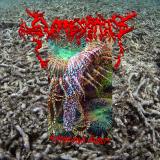
Extinction Burst! is the new invocation in album-form by Guttersnipe, Leeds’ premier and pre-eminent XFCER (XFCER: Xenofeminist crisis-energy rock)* duo. Slamming at full speed to multi-dimensional oblivion, Extinction Burst! is the most full, hidefinition lurid dream-mare yet spewed out by Uroceras Gigas & Tipula Confusa. Engineered and mixed by Ross Halden at Hohm Studio in Bradford and mastered by Rashad Becker, Extinction Burst! follows 2018’s My Mother The Vent, which garnered universal critical adoration. Nevertheless, this long-awaited follow up is more extreme: it is wildness beyond reason, splitting new tears in the reality gauze, ultimate hallucination through sound ecstasy. 2026’s Guttersnipe are evolved, mutated by 8 years of touring together and with the labyrinthine network of groups both Guttersnipe members are involved with - Tristwch Y Fenywod, Nape Neck, Petronn Sphene, Yexxen to name a few. On Extinction Burst!, as with previous material, the duo are heavily augmented with technology. Tipula Confusa's drum kit triggers chasm-causing synth pulses with thumping low end attack.. Strafing from all over the stereo field the constant shatter of the cymbals and toms feel like Sunny Murray or Rashied Ali in full flight during a John Coltrane session in 1967. Uroceras Gigas’s guitar + synth storm is by-now similarly an instantly recognised tool kit in underground music. Switching from screeching guitar atonality to intricate riffs from the black metal/Voivod hinterland to ultra-distorted synth meltdown, it’s an utterly overwhelming, essential and vital pouring-out of the full emotional spectrum. Both artists vocalise, ecstatic and primal, drawn out or yelped in pain or pleasure or panic. Alive On Tuesday begins with some of the only space on Extinction Burst! Digital crackles and tight-delays blow out into a fullthrottled death-dive into sweet opaqueness, offset by the duo’s vocals. There’s a popular believe that Guttersnipe is chaos, but over 9 mins here the group are clinical in their control of the simulated entropy. Mincing while the Maelstrom Churns’s guitar is modulated into jagged atonal atonement, duetting with the virtuoso drum patterns before it thuds into gear at quadruple the speed. Threads Of Radical Unaliveness veers close to the extreme Metal influences with blast beats and guttural vocalisations until the track exhausts itself into unaliveness. Keep Honking summons a demonic digital panic, with the duo reincarnating in real time as haunted versions of themselves, almost translating the lurid, ultra vivid, simultaneous hell+heaven of being alive in this dimension. Primordial Invagination harnesses No Wave’s dissension of normality before the structured collapse of Skra¨ckblandad Fo¨rtjusning, in which Tipula Confusa’s accelerating drums simulate a bouncing barrel of brimstone descending into a primordial gunky ooze, a respite in the middle before the record splutters to a stuttering finale, both members’ vocals out there in the neon realness, alive with crisis energy. There is nothing on this cursed earth like Guttersnipe. For over 10 years they have whirled in a wiggliness both woebegone and wonderstruck on a mission of radical mutant exaltation using rock music weaponry loaded with a queer hysterical ammunition to rupture the fabric of the known Rock universe and unleash a tendril-soft hallucinatory violence; thrumming with the bracing vividness of insect bodies, crazed with alien synaesthetic emotions, harnessing jagged excoriating illogic as a face meltingly snazzy affront to redundant macho mediocrity with the hope to break minds, squeeze hearts, explode pelvises and maybe even reset the parameters of reality. Addendum: xenofeminist : proposing and creating a world defined not only by sexual/gender equality, queer empowerment and the toppling of the racist heteropatriarchal hegemony and it’s tyranny of phallogocentric signifiers, but a philosophy of radical queerness that explodes the basic notion of embodied existence itself beyond even the human, where we see bacteria, invertebrates, reptiles, marine life, animalia in general, inanimate objects, quantum phenomena and as yet inarticulated bodies and minds as social and political equals that may inspire and inform our concepts of self, feeling and meaning as we labour to build a collective reality that doesn’t completely suck!! crisis energy : a term borrowed from the weird fiction author china mieville to describe a type of extreme concentration of power which emerges when a system or organism is pushed to it’s absolute limit; the point of rupture, chaos, entropic overload, just before it all breaks apart. rock : Rock ’n’ Roll, rock music, the devil’s music, sex, guitar, drums, voice, rhythm, riffs!
- A1: Eighteen Days
- A2: Sir Casey Jones
- A3: The Highest Tree
- A4: Deed I Do
- A5: Hide And Seek
- B1: Twig Folly Close
- B2: Lady Margaret
- B3: Cold Early Morning
- B4: Monday Morning’s No Good Coming Down
- B5: The Waterman’s Song To His Daughter
- C1: Seven Dials
- C2: Up The Hill
- C3: Quiet Joys
- C4: Would Be King
- C5: Stone Cold
- D1: Tell Me Tomorrow
- D2: Mary Anne
- D3: Dawn
- D4: Cod’ine
- D5: Flowers Of The Forest
“Released on Joe Boyd’s Hannibal label here was a band rooted in Thompson/Swarbrick Fairport but also a snatch of the Velvet Underground and a sprig of The Byrds. The Eighteenth Day Of May evoked a legendary era, and now they are a justifiably legendary band too.” – KLOF Mag
Beginning life as a trio in London, 2003, the original line-up consisted of Allison Brice (vocals, flute), Richard Olson (acoustic guitar) and Ben Phillipson (guitar, mandolin) before expanding the following year to include the rhythm section of Mark Nicholas (bass) and Karl Sabino (drums, autoharp) and finally Alison Cotton (viola).
This being the mid zeros, the independent music scene in the UK was reluctant to embrace a sun-dazed folk band but this, their sole album, has gradually feathered a bed of affection amongst international folk fans. Twenty years on, the album is now rightfully seen as a trailblazer for the myriad alternative/psych folk bands that emerged in its wake.
Andy Childs who signed the band originally takes up the story. “I first heard their music on a cover mounted CD with the much missed Comes With A Smile magazine and as far as I could tell no-one was making music like this anymore, certainly not with such panache and confidence. To my jaded ears it all sounded so uninhibited - old weird folk songs, Americana, original psych-folk, minimalist drones. Great melodies and all six of them could sing! A joyous, unfettered sound that could in one moment conjure up flashes of The Byrds and then effortlessly the spirit of Velvet Underground would drift through. They even covered a Spacemen 3 song. I loved the fact that they had the aplomb to tackle traditional folk songs like Lady Margaret and Flowers In The Forest and not be afraid to stamp their own identity on them.
Signing them to the Hannibal label was straightforward. If anything the album somehow sounds fresh and undated, even better than it did in the day when perhaps eclecticism was out of synch with the times; its subtleties have become more apparent.”
“Their rendition of Lady Margaret builds to a headswirling crescendo that challenges anyone who claims Shirley Collins, Buffy Sainte-Marie or Trees have recorded the definitive version and the hallucinatory The Waterman’s Song To His Daughter raises an already brilliant album to an unholy level” - IT’S PSYCHEDELIC, BABY Magazine
"Over the past three decades, Philipp Lauer has produced an incredible body of work, deploying a myriad of aliases, both as a solo artist and as a part of collaborative projects. From his hardware-steeped Frankfurt studio Pyramide 2, he has built this catalogue through original material and remix commissions, taking on the full spectrum of electronic music while retaining an unmistakable signature. He combines a hands-on approach to rhythm and composition with a DIY MO and a love of big hooks. The level of expertise at hand seems to facilitate a playfulness that subtly permeates all layers of his work. He's a pop melody natural who just so happens to love fiddling with synthesizers, drum machines, and effects an equal amount. All of these qualities are exemplified on "Embalmed In Martino": Lauer's four-track ode to the Belgian Martino sauce, a spicy tomato-based condiment, and arguably the essential ingredient to top off the namesake raw meat sandwich. On "Embalmed", which makes use of instrumentation that would fit right in on an early eighties Manchester cut, and "Martino", where a sturdy, electroclash flavored arp bass provides the stamina, a slew of big and small riffs easily work their way in, thirsting for our ears. On the other side, "Transactional" combines Miami basslines and similarly electro-fundamental twinkling synth work with a flanger-laced 4/4 beat, while "Don't You Know" features soaring synthwave patterns and the only vocal samples on the EP. Both sport rich arrangements as well, right down to the cowbell overdubs. Lauer's often lauded for his "summery sound". In this light ALT026 lands right on time - yet we might disagree here, as it's suited for all seasons, and all terrains, both the shiny festival grounds and the dim-lit club floors."
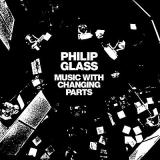
Philip Glass, the great American composer, was already in his mid-30s before his first album appeared, and then only because he produced the double LP himself. Music With Changing Parts was the inaugural release on his own Chatham Square imprint in 1971.
At this point, Einstein on the Beach, Glass' first opera, was still five years away. Yet in Changing Parts, one can already hear much of his vocabulary in full bloom: the buoyant arpeggios, the melding of electronic and acoustic instruments, the elongated drones of human voice, the primary emphasis on pulse (an interest he shared with fellow composer Steve Reich) and the ecstatic potential inherent in repetition.
The album features the original Philip Glass Ensemble – the composer himself, along with Jon Gibson, Dickie Landry, Art Murphy, Steve Chambers and Robert Prado – playing Farfisa organs and woodwinds as well as Barbara Benary on electric violin.
As Glass describes in his memoir Words Without Music, he secured a $500 interest-free loan for the recordings' initial release from the Hebrew Free Loan Society – an organization intended to help immigrants from the Old World upon arrival in the US. Though Glass was merely the grandson of immigrants, the venture wasn't far off the society's charter as Changing Parts helped usher in a new world of sound that would become known as Minimalism.
Chatham Square went on to release albums by other composers in Glass' circle, including Gibson and Landry. The label was named after the Manhattan intersection where Landry had a studio and the ensemble rehearsed.
Born in Baltimore in 1937, Glass first moved to New York to attend Juilliard at just nineteen, having already graduated from the University of Chicago. A staple of the Downtown scene, he can perhaps be appreciated as akin to the likes of sculptor Richard Serra or filmmaker Jim Jarmusch: mavericks who became major cultural figures entirely on their own terms.
This first-time vinyl reissue reproduces the original side-breaks and gatefold sleeve.
- A1: Poetic Sands (Interlude) - Brian Jackson Feat. Wes Felton
- A2: It's Your World - Brian Jackson Feat. Raheem Devaughn, J. Ivy
- A3: We Almost Lost Detroit - Brian Jackson Feat. Moodymann
- B1: The Bottle - Brian Jackson Feat. Omar
- B2: Peace Go With You Brother - Brian Jackson Feat. Raheem Devaughn
- B3: Beautiful Dame - Brian Jackson Feat. Raquel Ra Brown
- C1: Lady Day & John Coltrane - Brian Jackson Feat. Rahsaan Patterson
- C2: The Revolution Will Not Be Televised - Brian Jackson Feat. Black Thought
- C3: Addiction (Interlude) - Brian Jackson Feat. Raquel Ra Brown
- D1: Home Is Where The Hatred Is - Brian Jackson Feat. Lisa Fischer
- D2: Madison Avenue - Brian Jackson Feat. Raheem Devaughn
- E1: Is That Jazz? - Brian Jackson Feat. Rahsaan Patterson
- E2: More Than Ever (Interlude) - Brian Jackson Feat. Raquel Ra Brown
- E3: Now More Than Ever
- E4: Home Is Where The Hatred Is
- F1: Moonshine (Live) - Brian Jackson Feat. Carl Cornwell
- F2: Racetrack In France - Brian Jackson Feat. Josh Milan, J. Ivy, Moodymann
- F3: Winter In America - Brian Jackson Feat. Rich Medina
- F4: New York City
Produced by Masters At Work (Kenny Dope and Louie Vega).
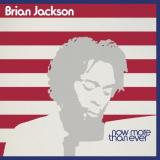
'Collaboration is stimulating, it's in my blood.' Thus speaks Brian Jackson and his philosophy for making music and it's indeed collaboration that runs through this amazing album of reimagined and revisited songs from his artistic past. Featuring artists such as Black Thought, Rahsaan Patterson, Josh Milan, Moodymann, Omar, J. Ivy and others and being produced by Masters At Work, Now More Than Ever takes the enduring classic tracks that Brian made with Gil Scott-Heron and places them in the now over nineteen tracks and across a triple vinyl LP or double CD.
Songs such as Lady Day & John Coltrane, The Revolution Will Not Be Televised, Home Is Where The Hatred Is, Winter In America, The Bottle and more soundtracked a generational movement of Black Consciousness in the 70s and 80s. As Brian says, 'This album is one way to connect to what we were about in the 70s; we were about change and this is part of the lineage of resistance. These tracks mark a period of time when resistance was essential and now a younger generation has picked them up.'
'As young men in their twenties we (Brian and Gil) just wrote about what we saw and were feeling and people interpreted these songs in ways we never thought about but as Sly stone said the song comes from me but it's for you.' This statement from Brian perfectly sums up the collaborative nature of Now More Than Ever and the relevance of these songs in a contemporary perspective can be perfectly summed up by the songs themselves. The formidable stable of artists contributing to each track and the excellent production from Louie Vega and Kenny 'Dope' Gonzalez make this album an event in itself. However, these songs are there to be enjoyed as a canon or as individual masterpieces, whether on the dancefloor or on a home system. ‘Now More Than Ever’ just has to be in everybody’s music collection.
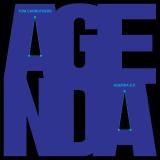
With Agenda EP, Tom Carruthers closes a landmark trilogy on Skylax Records, following Neutralise EP and Deepline. Three records. Fifteen tracks. One coherent vision of machine-driven house music stripped to its raw, functional core. This final chapter dives deeper into direct, club-focused energy, where groove, repetition and tension do the talking. Agenda is less reflective, more physical — built for movement, sweat, and long transitions in dark rooms. Opening track “Chrome” sets the tone: sharp drum programming, metallic pressure, and looping synth phrases that lock the body into motion. “Agenda (Raw Mix)” follows with a tougher, stripped-down approach — no excess, just pure rhythmic insistence rooted in early Chicago jack and warehouse discipline. “Beat Down” pushes further into machine funk territory, where relentless patterns and rugged textures meet in hypnotic repetition. On the flip, “Fade Away” brings a deeper, moodier tension — a late-night track where subtle emotion seeps through minimal structures. Closing cut “What You Want” is classic Carruthers: jacking drums, understated melody, and a groove that feels timeless rather than retro. As with the previous releases, the visual identity is handled by H5, whose modernist, reduced artwork mirrors the sonic philosophy: clarity, impact, and purpose. Agenda EP completes the Skylax trilogy as a statement of intent — not revivalism, not nostalgia, but dance music reduced to its essential elements.
Simoncino returns to Skylax Records with Traxxx EP, a raw and hypnotic five-track collection built for the dancefloor. Known for his unmistakable analog approach and deep connection to the legacy of Chicago house and underground European club culture, the Italian producer delivers a set of stripped-down, highly functional DJ tools. Tight drum machine programming, rolling basslines and subtle synth movements drive each track forward with precision and efficiency. No gimmicks, no excess — just pure club energy designed for long mixes and late-night sessions. True to the Skylax philosophy, Traxxx EP focuses on timeless groove architecture rather than trends, offering DJs and collectors a record that will remain effective in the bag for years. Raw, hypnotic and direct, this is underground house music in its most essential form.
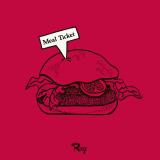
A great name. A great cover. And - of course - outstanding library music.
Soul City Orchestra's Meal Ticket houses titanic funk, mellow groove and symphonic disco-soul.
Released in 1977 on Rouge, a subsidiary of the prestigious and long-established British library label Music De Wolfe, Meal Ticket was crafted by the studio band Soul City Orchestra (a pseudonym for the De Wolfe in-house composers Chris Rae & Franck McDonald).
The driving instrumental funk-rock of the A Side is enhanced with strings and no little drama. However, it's undoubtedly the peerless flipside that makes this record an essential part of any collection.
Head straight to highlight "Chamber Maid"; insistent, conga-driven funky rock with lashings of string-heightened drama. It's sophisticated, classical and deeply classy.
The majestic, powerfully emotive "Sore Head" contains an excellent intro drum break and sultry slo-mo disco breaks throughout. It's low-key stunning. With a few melodic switch-ups, it's symphonic soul heaven and is comfortably the best and most beautifully crucial track on Side A.
The breezy, Philly soul-tinged "Short Change", its intense strings reminiscent of the Salsoul Orchestra and TSOP, presents an easy-glide funk that's just irresistible.
The funky, cool and slick AF "Wheeling And Dealing" is laconic flute and string-propelled sophisticated mid-tempo disco soul. It's worth the price of admission alone.
The breezy, mellowed out disco-funk workout "The Jam" is a deliciously slinky and sophisticated soul strut. Try not swaggering into the club with this in your head next time you venture into the murky world of "the night". Just ace.
The crowning glory is the sweeping, sublime symphonic disco breaks of horn-infused "Soul City Drive", an absolute monster of radiant heavy soul-funk à la Barry White with great string & brass arrangement.
Basically, this is essential for all groove-aficionados.
The audio for Meal Ticket has been meticulously remastered by Be With regular Simon Francis, ensuring this release sounds better than ever. Cicely Balston's expert skills have made sure nothing is lost in the cut whilst the records have been pressed to the highest possible standard at Record Industry in Holland. The original, iconic sleeve has been restored here at Be With HQ as the finishing touch to this long overdue re-issue.