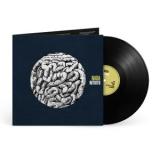
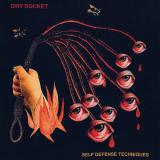
**ON RANDOM COLOUR VINYL** PRIMITIVE RING consists of Bert Hoover (bass/vocals), Charles Moothart (guitar/vocals), and Jon Modaff (drums). The Los Angeles power trio formed in September 2024 when Hoover and Moothart came together seeking a new creative outlet. In 2025, the band released four 7"s on four different labels (Greenway, In the Red, Reverberation Appreciation Society, and Fuzz Club UK). They hauled amps and drums into bars to hone the sound of the newfound brotherhood that is Primitive Ring. Rock and roll is in its essence a primal experience, and the name reflects that. Three individuals collide and egos rattle, shedding layers and growing new limbs. Archetypes flash to the rhythm of a freight train and the crown is passed hand to hand like a good luck charm, symbolic and communal. Rock and roll is for the people and Primitive Ring is for the taking. At least it will be when the band's debut LP is hurled into the future via In the Red Recordings. Primitive Ring is 11 tracks coming in just under 42 minutes. It was recorded by Mark Rains in December of 2025 at The Station House in Echo Park. The album is the genesis story of a lightning bolt flashing in the eternal drama of creation and destruction. The album showcases the distinct writing styles of each member, but the overall aesthetic is a woven tapestry demarcating the timeless meridian. The record is the spawning of a collective vision. This is something we all share, and we must remind one another how electric humanity can be.
The second volume of this series is as good as the first with more finely tuned twilight dubs and Balearic chuggers, expertly curated by a master of this form in Pete Herbert. Across two sides, the comp flows between low-slung grooves, deep synth atmospheres and sun-kissed dancefloor moments. Highlights include Statues' warming 'Andromeda' and a powerful synth-driven turn from Imogen Soundsystem, while side two leans further into Balearic romance, from Herbert's nostalgic 'At Zuka to Kasper Bjorke's proto-dancefloor elegance. Cohesive, tasteful sunset music with real substance.
DJ Feedback
Phil Mison/Cantoma/Ambala:
"Great tunes as always , full support. Lovingthe Zuka tune!"
Sean Johnston/ALFOS:
"Killer Petey! Next few ALFOS sets sorted"
Conrad/Idjut Boys:
"Nice selection, totem project rmx has it for me"
Sally Rogers/A Man Called Adam:
"Excellent, dependable DJ fodder from Pete and Co. Thanks for the consistency :) "
Camilo Miranda/Ibiza:
"Nice combo of tracks here ! loving these!!"
Dream Chimney/Blog:
"SF vol 2 is 10/10 every track a winner on here"
Logan Fisher/Try Outs:
"Superb comp. full of goodies"
4Trepanado/Selvagem/Brazil:
"Great compilation! the Pete Herbert Remix for Time is a great weapon to flip the switch at the dancefloor"
Simon Lee/Faze Action:
"Stunning compilation, hard to pick a winner but I'm heading for Pete Herbert - Zuka"
Marco Gallerani/Hell Yeah:
"Beautiful selection!!! loving it. Can't wait for summer now"
Dicky Trisco/File Under Disco:
"Classy release. All winners. Giselle is my fave. Nice one Pedro xxx"
Felix Joy/Rinse FM:
"Sounding great!"
Jaime Fiorito/Ibiza:
"Some cool bits! Time is my favorite!"
out of Stock
Last delivered 3 months ago available to reorder, subject to availability
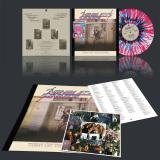
Just as you were getting your head straight coming off the 21st Trip … Brown Acid dose # 22 drops, continuing to fry your mind in a revolving trap-door Twilight Zone alternate world of early hard rock… populated by real life characters so far out they can look like a cheesy wedding band but sound like Blue Cheer! Uncanny! This music comes at you from many angles. Teens in a garage colliding with booze, drugs and girls for the first time, lounge lizard hustlers with snazzy stage clothes and fuzz boxes… gnarly backwoods troublemakers meet blow dried glam rock wannabes here, seamlessly clobbering your head with sound rather than each other! An electric post-psychedelic bar brawl for your mind awaits, unfasten your seat belt, crank it up and fly! Sounds Synonymous "Babylon" out of Flint, Michigan 1969 rip the devastating Blue Cheer classic a new one, immediately swarming you with organ swells and distortion before collapsing into a tuff funk groove, a psychedelic James Brown vibe shot through with dirty howling fuzz guitar, vocals nailing the messed up but confident relaxed sneering attitude of the original Cheer eruption. The Bumps "Shining" from Seattle 1969 resides right at the transition of ‘60s psych into early prog, well constructed, no diluting things artsy fartsy style, a compelling heavy riff, spacious vocal harmony hook floating above a turbulent take on getting your shit together and shining like a star. Fat chance, but you can dream, the band did and their dreams kick ass across time to right now or you wouldn’t be here.
Coulda been a hit back then, definitely a hit now. Riverside "Farmer" explodes out of Austin, Texas 1974, economical but brilliantly structured riffs and power chords, intense dynamic tension/release, fantastic screaming leads over shifting angles of attack during the middle break… it’s all here with a detached confidence in the vocal that swaggers back in time to the late ‘60s in its proto-heavy psych adjacent assault. Cincinnati Joe & Mad Lydia "Get It Together" for real in Cincinnati, Ohio 1970. The song says everything you need to know: “You may think that you’re the very best, miles and miles ahead of the rest, but be sure when you’re put to the test you get it together!” These words are deployed in a manner similar to Peter Green’s “Oh Well”, intermittently stated between killer gnarly guitar and gushy organ attacks. Bar band heaven and hell rolled up into one big ball, the vocals get all the way out there! Straight Up "Fire" takes the monster 1968 Crazy World Of Arthur Brown hit into faithfully executed but surreally minimalist territory, Minneapolis, Minnesota 1974. Genius version of a key song that presciently cuts to the chase regarding Brown Acid’s incinerations of psychedelic idealism, you’re gonna burn, burn, burn… as that moment climaxes you can gawk at their preposterous flashy lounge band stage outfits and realize side one must end because everything is totally scorched into eternity. Scrap Iron "Poopsie" is a primitive two chord stomper with spiraling fuzz and organ riffs, singer marking his territory caveman style. “Poopsie, you’re my woman” he commands, but gets weirdly insecure she’ll blow him off at the altar by the end of each verse. Snarly wah-wah ices this toxic cake out of Carteret, New Jersey 1973. Focused delivery so single-mindedly crude it creates an inescapable instant brain-worm. Lady "Live Show Tigers" is amongst the most potently life affirming trash rockers you’ll ever hear, one outrageously triumphant but fiercely sloppy anthem about living it up like a star, strutting the stage glammed up New York Dolls drag style but with a Dictators sense of humor. Tasty slightly off kilter guitar leads all through, going serendipitously berserk on the fade. Picture disc single out of L.A. 1980. Fantastic fun rock star rock at a very raw local street level where any time is party time.
Killer Frog "Hard Times" on Masochist Records from Chicago, Illinois 1972 takes less than two minutes, an action packed James Gang style bar band rocker with a bit of punky sneer in the face of misfortune. These guys never even heard of flower power. They are killer frogs. Good Humore "Killer" does kill in stripped down hard rock trio style, Warren, Michigan 1976. No frills guitar, bass and drums groove tight, snaky primordial riff, snarly licks. “She’s a killer of a woman, knows just what she’s doing…” The singer knows she’s a femme-fatale roadhouse predator but she’s so hot the inevitable wreckage seems a bargain. Ride it out like the extended jam on the fade knowing she’ll be back for more! Sarawest "Space Rider" winds up the 22nd Trip lost in a twisted two chord space adventure from the point of view of an alien visiting our planet seeking knowledge but finding out we are stupidly destroying ourselves, so he gotta split sneering back at us like we wasted his time “I got no time for loving… I wanna be a space rider, space rider”. Toronto, Canada 1974, a vibe lurking in some strange but funny void between late ‘60s outsider garage psychedelic rock complete with reverb-y acid guitar leads and late ‘70s retro-futuristic D.I.Y wisecracking from inner space… taking the piss out of outer space!
Just as you were getting your head straight coming off the 21st Trip … Brown Acid dose # 22 drops, continuing to fry your mind in a revolving trap-door Twilight Zone alternate world of early hard rock… populated by real life characters so far out they can look like a cheesy wedding band but sound like Blue Cheer! Uncanny! This music comes at you from many angles. Teens in a garage colliding with booze, drugs and girls for the first time, lounge lizard hustlers with snazzy stage clothes and fuzz boxes… gnarly backwoods troublemakers meet blow dried glam rock wannabes here, seamlessly clobbering your head with sound rather than each other! An electric post-psychedelic bar brawl for your mind awaits, unfasten your seat belt, crank it up and fly! Sounds Synonymous "Babylon" out of Flint, Michigan 1969 rip the devastating Blue Cheer classic a new one, immediately swarming you with organ swells and distortion before collapsing into a tuff funk groove, a psychedelic James Brown vibe shot through with dirty howling fuzz guitar, vocals nailing the messed up but confident relaxed sneering attitude of the original Cheer eruption. The Bumps "Shining" from Seattle 1969 resides right at the transition of ‘60s psych into early prog, well constructed, no diluting things artsy fartsy style, a compelling heavy riff, spacious vocal harmony hook floating above a turbulent take on getting your shit together and shining like a star. Fat chance, but you can dream, the band did and their dreams kick ass across time to right now or you wouldn’t be here.
Coulda been a hit back then, definitely a hit now. Riverside "Farmer" explodes out of Austin, Texas 1974, economical but brilliantly structured riffs and power chords, intense dynamic tension/release, fantastic screaming leads over shifting angles of attack during the middle break… it’s all here with a detached confidence in the vocal that swaggers back in time to the late ‘60s in its proto-heavy psych adjacent assault. Cincinnati Joe & Mad Lydia "Get It Together" for real in Cincinnati, Ohio 1970. The song says everything you need to know: “You may think that you’re the very best, miles and miles ahead of the rest, but be sure when you’re put to the test you get it together!” These words are deployed in a manner similar to Peter Green’s “Oh Well”, intermittently stated between killer gnarly guitar and gushy organ attacks. Bar band heaven and hell rolled up into one big ball, the vocals get all the way out there! Straight Up "Fire" takes the monster 1968 Crazy World Of Arthur Brown hit into faithfully executed but surreally minimalist territory, Minneapolis, Minnesota 1974. Genius version of a key song that presciently cuts to the chase regarding Brown Acid’s incinerations of psychedelic idealism, you’re gonna burn, burn, burn… as that moment climaxes you can gawk at their preposterous flashy lounge band stage outfits and realize side one must end because everything is totally scorched into eternity. Scrap Iron "Poopsie" is a primitive two chord stomper with spiraling fuzz and organ riffs, singer marking his territory caveman style. “Poopsie, you’re my woman” he commands, but gets weirdly insecure she’ll blow him off at the altar by the end of each verse. Snarly wah-wah ices this toxic cake out of Carteret, New Jersey 1973. Focused delivery so single-mindedly crude it creates an inescapable instant brain-worm. Lady "Live Show Tigers" is amongst the most potently life affirming trash rockers you’ll ever hear, one outrageously triumphant but fiercely sloppy anthem about living it up like a star, strutting the stage glammed up New York Dolls drag style but with a Dictators sense of humor. Tasty slightly off kilter guitar leads all through, going serendipitously berserk on the fade. Picture disc single out of L.A. 1980. Fantastic fun rock star rock at a very raw local street level where any time is party time.
Killer Frog "Hard Times" on Masochist Records from Chicago, Illinois 1972 takes less than two minutes, an action packed James Gang style bar band rocker with a bit of punky sneer in the face of misfortune. These guys never even heard of flower power. They are killer frogs. Good Humore "Killer" does kill in stripped down hard rock trio style, Warren, Michigan 1976. No frills guitar, bass and drums groove tight, snaky primordial riff, snarly licks. “She’s a killer of a woman, knows just what she’s doing…” The singer knows she’s a femme-fatale roadhouse predator but she’s so hot the inevitable wreckage seems a bargain. Ride it out like the extended jam on the fade knowing she’ll be back for more! Sarawest "Space Rider" winds up the 22nd Trip lost in a twisted two chord space adventure from the point of view of an alien visiting our planet seeking knowledge but finding out we are stupidly destroying ourselves, so he gotta split sneering back at us like we wasted his time “I got no time for loving… I wanna be a space rider, space rider”. Toronto, Canada 1974, a vibe lurking in some strange but funny void between late ‘60s outsider garage psychedelic rock complete with reverb-y acid guitar leads and late ‘70s retro-futuristic D.I.Y wisecracking from inner space… taking the piss out of outer space!
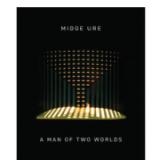
In recent years, Midge Ure has spent his time playing live and not has time to fully immerse himself in the studios creating music To that end A Man of Two Worlds is his first album of new material in 12 years. Well worth the wait, the album is a formidable collection of outstanding music, divided into two clear parts.
The first half, World One: Music, consists of eight instrumental pieces, while the second half, World Two: Songs, features eight vocal songs. This concept was partly inspired by the time Midge spent during lockdown listening to instrumental music whilst presenting THE SPACE on Scala Radio. Hearing music that rarely finds a home on mainstream radio, he set about making something without lyrics, where the melodies had to speak for themselves. The eight vocal songs which form the second part of the album, came to Midge as the world reopened. A more divided world, in many ways a much harder and less empathetic one. Sharing an atmosphere with the preceding instrumentals, these songs are incredibly sparse and meditative, and whilst they are subtle, with some songs dealing with the frailty of the human condition, underlying many songs reflect Midge's concerns for the discord infecting world today.
First Word Records proudly present the second single from Above The Clouds (aka kidkanevil & Magic Manfred), taking on another underground hip hop classic, 'Change'.
'Change' was originally performed by Shadez of Brooklyn, produced by Da Beatminerz and most notably appeared on DJ Premier's legendary 'New York Reality Check 101' mix compilation back in 1997.
This 7" vinyl release follows on from last Summer's MF DOOM cover 'Arrow Root', which received strong support from the likes of Japan's DJ Koco and Philadelphia's DJ Jazzy Jeff.
This new instrumental reinterpretation also features cuts by Leicester-based turntablist, Jon1st - a DMC World Online Champion, as well as being a producer & musician in his own right, collaborating on music with a number of hip hop, D&B and electronic artists.
One of the original First Word roster, UK Producer/DJ and all-round laptop music geek kidkanevil has developed a distinctive and progressive sound over the years, gleefully exploring the beats and bleeps of the electronic music universe to international recognition. Leeds born, sound system bred and raised on a (un)healthy diet of video games and anime, his solo work inhabits the curious space between bass frequencies and otaku culture. But as a devoted teenage backpack rap nerd, somewhere in the back of kid's mind was a lingering desire to reconnect with his first love, hip hop.
Not long after moving to Berlin he joined a studio space in graffiti plastered Kreuzberg, where he met multi instrumentalist wizard Magic Manfred; a disciple of all things boogie, disco, funk and soul. Born and raised in Berlin, and currently a touring musician for many an act, Manfred's musical map joins the dots from piano lessons at four, to starting a band with his teenage friends, leading him to his true calling - the bass - via the club vibrations of his hometown, which introduced him to the world of DJing and production, and a stint studying in the explosive London jazz scene to finalise his Jedi training.
Bonding over their mutual love of '90s hip hop, a friendship and musical kinship developed, coupled with a desire to honour past eras but push things forward, Above The Clouds was born; named after their joint favourite DJ Premier beat, with a touch of irony regarding their basement based studio of a windowless variety.
kidkanevil explains further "We started the project with a few covers, just as a way to get warmed up and in a certain creative headspace, of which 'Change' by Shadez Of Brooklyn was one. We both loved DJ Premier's 'New York Reality Check 101' mix when we were teenagers and this track was a favourite. The elements really lent themselves to live interpretation, and as an instrumental there was space to bring some nice movement with the bass and stuff. Hopefully we found the balance between paying tribute and finding our own pocket. For the final seasoning we hit up the homie and turntable wizard Jon1st to recreate the cuts, of which he did an immaculate job of course.
The b-side 'Urgh' is one of our favourite beats we've made so far; the title is just how it makes us feel! We actually recorded the piano with two iphones as left and right and it sounded kinda cool so we went with it..."
'Change / Urgh' is released on limited 7" vinyl & digital platforms, April 24th 2026.
out of Stock
Last delivered 3 months ago available to reorder, subject to availability
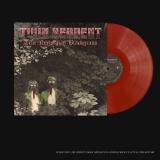
“Weird, rowdy and just a little bit black metal” – TWIN SERPENT’s sophomore album out in May via Svart Records Facilitating country influences and the energy of punk, Twin Serpent is a noisy but cute outsider band that manages to blur genre boundaries. Inspired by the likes of The Taxpayers and 16 Horsepower, this crust-country band applies lo-fi black metal aesthetics without having to bathe in blood. Songs about love, betrayal and defiance are delivered with acoustic to amp-wall dynamics, duelling vocal harmonies, shrieking solos and distorted banjos. The debut album Feels Like Heaven, North Of Hell (2022, Loyal Blood Records) was described by the press as genre-defying and compared to bands like GY!BE and Tom Waits. The sophomore TRUE NORWEGIAN BLACKGRASS turns the volume to twelve and the trainbeat races down the tracks at a derailing speed. Covering topics on windmill resistance, porn industry and post-Trump America accompanied by playful country punk with a twinkle in the eye, laced with cosmic and occult undertones. “We’re super happy to finally unbox our sophomore weirdo rocker! And we’re specially stoked to do so on the amazing Svart Records! This particularly hits home with Timo who was born in Finland.
There’s even a song in Finnish on the album, which came out great! The artwork is amazing and everything is there for a reason. We recorded it during the year of the serpent at Piir studio, just a 5-minute walk from our home in Svartlamon, Trondheim, NO. Vebjørn Svanberg Numme aka the wizard technician did an amazing job capturing the essence of the Twins during a hot summer week. 12 songs about love, betrayal and black holes with country licks, rock’n’roll kicks and heaps of punk attitude is the result and we’re super proud to present the first tease from it! We’ve kept things close to home as our resident artist Hanna and designer Tony did the cover art! It’s weird, rowdy and just a little bit black metal", comments the band on the new album. With a slew of sold out shows in their hometown of Trondheim, the band is delighted to spread their cosmic gospel to the people! Twin Serpent goes hard with in-your-face attitude and fits in barn dances as well as punk festivals!
“Weird, rowdy and just a little bit black metal” – TWIN SERPENT’s sophomore album out in May via Svart Records Facilitating country influences and the energy of punk, Twin Serpent is a noisy but cute outsider band that manages to blur genre boundaries. Inspired by the likes of The Taxpayers and 16 Horsepower, this crust-country band applies lo-fi black metal aesthetics without having to bathe in blood. Songs about love, betrayal and defiance are delivered with acoustic to amp-wall dynamics, duelling vocal harmonies, shrieking solos and distorted banjos. The debut album Feels Like Heaven, North Of Hell (2022, Loyal Blood Records) was described by the press as genre-defying and compared to bands like GY!BE and Tom Waits. The sophomore TRUE NORWEGIAN BLACKGRASS turns the volume to twelve and the trainbeat races down the tracks at a derailing speed. Covering topics on windmill resistance, porn industry and post-Trump America accompanied by playful country punk with a twinkle in the eye, laced with cosmic and occult undertones. “We’re super happy to finally unbox our sophomore weirdo rocker! And we’re specially stoked to do so on the amazing Svart Records! This particularly hits home with Timo who was born in Finland.
There’s even a song in Finnish on the album, which came out great! The artwork is amazing and everything is there for a reason. We recorded it during the year of the serpent at Piir studio, just a 5-minute walk from our home in Svartlamon, Trondheim, NO. Vebjørn Svanberg Numme aka the wizard technician did an amazing job capturing the essence of the Twins during a hot summer week. 12 songs about love, betrayal and black holes with country licks, rock’n’roll kicks and heaps of punk attitude is the result and we’re super proud to present the first tease from it! We’ve kept things close to home as our resident artist Hanna and designer Tony did the cover art! It’s weird, rowdy and just a little bit black metal", comments the band on the new album. With a slew of sold out shows in their hometown of Trondheim, the band is delighted to spread their cosmic gospel to the people! Twin Serpent goes hard with in-your-face attitude and fits in barn dances as well as punk festivals!
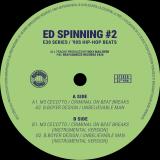
“Ed Spinning” is straight 90’s hip-hop beats, pressed on 7" vinyl.
This project hits like the old party mixes: heavy looping beats, vocals that stick in your head, edits made for DJs back when digital wasn’t a thing (shoutout AV8 series).
For these two new volumes, Ugly Mac Beer is on the boards. Two tracks per side: vocal on the A-side, full instrumental on the B-side, plus drum loops dropping right from the jump. Raw boom bap, lo-fi heat, the way it used to be — for the real heads.
Titles and visuals nod to the BMW E30 and spinning: endless loops, burnouts, tires smoking, just like the beats blazing on the turntables.
“The beat has to follow the movement, never the fashion.”
The Yawpers planted their flag at the intersection of the delta, the dive bar, and the mosh pit. We’re proud to drag their most feral albums back to the turntable.
Four years after American Man, the band moved to Chicago’s Electrical Audio to record Human Question live to tape with producer Alex Hall. The result was a record Americana UK called a “shambolic rock and roll” masterpiece, earning a 10/10 for its refusal to polish its own edges. While American Man was a “frantic folk stomp,” Human Question shifted into what Punk Rock Theory dubbed “pedal-punk,” a noisy cocktail of psychobilly and gospel, presented here on sunburst splash vinyl
These records aren’t just artifacts of a specific scene; they are honed to a shiv point, designed to cut through the noise of an oversaturated market. Restored and remastered with original posters dropped in for good measure, these are loud, lean, and necessary.
The Yawpers planted their flag at the intersection of the delta, the dive bar, and the mosh pit. We’re proud to drag their most feral albums back to the turntable.
American Man, produced by Cracker’s Johnny Hickman, is “part blues, part rock, part folk, all slathered with early 80s punk attitude” and “a success on every level” according to the geniuses at American Songwriter. We’re not arguing and you have no right to, either. This one’s earned our esteemed Barrel Select designation, pressed on Bloodshot-Red vinyl.
These records aren’t just artifacts of a specific scene; they are honed to a shiv point, designed to cut through the noise of an oversaturated market. Restored and remastered with original posters dropped in for good measure, these are loud, lean, and necessary.
Nonesuch Records releases Let X=X, by Laurie Anderson with Sexmob. This triple-LP/double-CD set was recorded live during a 2023 tour by Anderson and the jazz band Sexmob – Steven Bernstein and Briggan Krauss on brass, Kenny Wollesen on percussion, Douglas Wieselman on winds and guitar, and Tony Scherr on bass. Its cover and interior packaging feature paintings by Anderson. The album features 23 songs, including many favourites from throughout Anderson’s career, performed in new arrangements – plus one by Lou Reed and Metallica, ‘Junior Dad’. Anderson and Sexmob play more US and international dates this spring and summer (details below).
The New York Times said Anderson and Sexmob’s concert at the Brooklyn Academy of Music (BAM) ‘wasn’t a historical recreation of past recordings; Sexmob’s sound is a beefier one than on Anderson’s albums. With musicians who can double on electric guitar and bass clarinet, its members offered a rich range of textural variation throughout the evening.’
Laurie Anderson is one of America’s most renowned – and daring – creative pioneers. Her work, which encompasses music, visual art, poetry, film, and photography, has challenged and delighted audiences around the world for more than 40 years. In a recent 60 Minutes profile, Anderson Cooper said she ‘is a pioneer of the avant-garde, but... that doesn’t begin to describe what she creates... It’s experienced by audiences who come to see her perform: singing, telling stories, and playing strange violins of her own invention... she blends the beautiful and the bizarre, challenging audiences with homilies and humor. She blurs boundaries across music, theater, dance, and film.’ The Washington Post has said she ‘doesn’t just tell stories; she draws out every word with a kind of physical pleasure, tasting its flavor as she probes the everyday mysteries of life.’
Anderson released her first album with Nonesuch Records, the critically lauded Life on a String, in 2001. Her subsequent releases on the label include Live in New York (2002); Homeland (2010); the soundtrack to her acclaimed film Heart of a Dog (2015); and her Grammy-winning collaboration with Kronos Quartet, Landfall (2018). Nonesuch released a re-mastered edition of Big Science in 2007 for its 25th anniversary, followed by a vinyl LP re-issue in 2021; the album includes Anderson’s beloved, surprise hit, song, ‘O Superman’, which also is featured on Let X=X. Her recent Nonesuch release was 2024’s Amelia, about renowned female aviator Amelia Earhart’s tragic last flight.
Anderson’s virtual-reality film La Camera Insabbiata, with Hsin-Chien Huang, won the 2017 Venice Film Festival Award for Best VR Experience, and, in 2018, Skira Rizzoli published her book All the Things I Lost in the Flood: Essays on Pictures, Language and Code, the most comprehensive collection of her artwork to date. Recent exhibitions and installations of Anderson’s work include Habeas Corpus at New York’s Park Avenue Armory; her largest exhibition to date, The Weather, at Washington, DC’s Smithsonian’s Hirshhorn Museum of Modern Art; and Looking into a Mirror Sideways at Stockholm’s Moderna Museet, which was her largest European exhibition to date.
Laurie Anderson was awarded the 2024 Stephen Hawking Medal for Science Communication, along with Christopher Nolan and David Attenborough, and the International Astronomical Union named a minor planet in her honour: Asteroid 270588, Laurieanderson. That same year, she was awarded a Grammy Lifetime Achievement Award.
By the end of the 1980s, R&B and soul were very much a part of pop culture. However, it was the UK group The Pasadenas who paid the most honest homage to the origins of these genres, with their music drawing on 1950s doo-wop, 1960s Motown and 1970s funk and R&B. The single “Enchanted Lady”, for example, was an ode to Smokey Robinson and could easily have been mistaken for the real thing.
Now their debut album To Whom It May Concern is finally back in stock for the first time on coloured vinyl. The album's biggest hit was "Tribute (Right On)", which took Europe by storm in the summer of 1988. The album was also a huge success, selling over a million copies.
To Whom It May Concern is available as a limited edition on red vinyl and includes an insert.
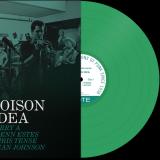
Kicking off the collection, we have POISON IDEA performing their first ever gig as a high-velocity punk band on New Years Eve 1980 – truly an incredible find. “We put our gear in shopping carts and pushed it to the venue” Jerry recalls as well as the reaction from Portland’s first wave of hardcore kids, “They only had 30 seconds in a song to throw each other around and pogo, so they’d go for it. It came naturally, like the music possessed them”. The embryonic versions presented here of future POISON IDEA classics like “Give It Up” and “Castration” are played in a more quirky and herky-jerky manner than how they would appear three years later on their debut seven-inch EP, Pick Your King. This recording also holds the most unfiltered display of Germs vocalist Darby Crash’s influence on Jerry. “His voice gave me the license to go” states Jerry. “You didn’t have to be a trained singer. Just open up your soul and scream”.
The remainder of this release is culled from a recording done in June of 1981 at a birthday party for Kim Kincaid, vocalist for local punk group, Neo Boys. The event was held at the short-lived but groundbreaking punk venue for Portland, Clockwork Joe’s. “Clockwork Joe’s was like Peter Pan’s island of lost boys” Lang recollects, “There was a lot of booze, a lot of drugs and a lot of young kids”. Hearing this ferocious, tightly-wound set, one can only imagine the sweaty debauchery that occurred that night, especially during the pounding rendition of “Underage” presented here, yet another future Pick Your King track.
Dam Swindle tap Kerri Chandler, Louie Vega, Folamour, Cinthie & more on 100th Heist release.
The ‘House of House’ V/a takes in nineteen all-new tracks from some of house music’s most revered names and new-school talent.
Dam Swindle present ‘House of House’, a triple vinyl V/a compilation marking the one-hundredth release milestone on Heist Recordings, landing on 8th May 2026. Across nineteen all-new tracks, ‘House of House’ reads like a roll call of modern house royalty.
The compilation features contributions from scene legends and contemporary torchbearers alike, including Kerri Chandler, Two Soul Fusion (AKA Louie Vega & Josh Milan), Folamour, Cinthie, Kolter, DJ Sneak, and Supershy, the dance music alias of Tom Misch, alongside rising talents like Papa Nugs, Lolu Menayed, and many more.
From the old-school magic of tracks like Dam Swindle’s ‘Back to the Old School’ feat. DJ Minx and Kolter’s ‘Need U, Want U’, to the jazzy, soulful depths of Kerri Chandler’s ‘Kerriousity’ and Superhy’s ‘Pyrenees’, to the peak-time energy of Papa Nugs & Mixolydian’s ‘Let Go’ and Elisa Elisa’s ‘Coco Coco’, the compilation captures the full spectrum of house sounds that have shaped the world of Heist Recordings over the past 13 years.
Launched in 2013, Heist Recordings has become a high benchmark for quality house music – a home for legendary artists like Cinthie and DJ Sneak, and a breeding ground for new talent from Kassian to Make`z. Dam Swindle have cemented their place among the upper echelons of modern house, with three critically acclaimed LPs, collaborations with the likes of Kerri Chandler, Tom Misch, and a relentless tour diary.
‘House of House’ reflects the ethos that has defined our label since day one: a home for house heads who bring genuine soul to club music, whether they’re legendary originators or new-school up-and-comers. Heist’s one-hundredth release is more than just a number – it’s a testament to the community, creativity, and legacy we’ve built, release after release.
As always enjoy the music and play it loud.
Much love, Heist HQ
out of Stock
Last delivered 67 days ago available to reorder, subject to availability
Caterina Barbieri & Bendik Giske's At Source resounds music as wellspring, that which is essential and unknowable, and yet utterly primary. It finds two acclaimed composer-musicians building a world together in self-contained collaboration between analogue synthesis and an extended approach to the saxophone that conjures its own universe of sound. It is at once intimate and cosmic, drawing on the challenges and possibilities of their artistic exchange, tearing down technique to access all the expansive possibilities of their sonic meeting point.
At Source is a document of the world of sound to be conjured when two artists strive for something together, discovering the expansions and limitations of performance by bodies and machines. It is not an exercise in assimilation, but in productive exchange and creative confrontation. It does not draw on outside energies or influences, but grapples with what there is to find in their respective playing. "It also reflects how natural the collaboration was," says Barbieri, "a meeting at the source which was spontaneous, graceful and natural".
Barbieri and Giske first met and were enthralled by one another's performances at Kunsthaus Glarus in 2019, a meeting that spurred conversations on the power of transitions as a compositional force. Giske later contributed a rework of Fantas for Fantas Variations (Editions Mego, 2021), an ambitious undertaking to rescore Barbieri’s work for his saxophone and voice, a challenge Giske had started undertaking two years prior as an ongoing practice of transcription. “The request came as a proof of aligned ideas”, says Giske.
Their new collaborative project then started during an artistic residency in Milan’s ICA in 2021, by invitation of swiss artist and curator Jan Vorisek, as the world was emerging from lockdown. This meeting, and the preceding closure of sites for cultural exchange, made their work together 'feel like springtime' says Barbieri. Giske, who was on the brink of releasing his sophomore album, Cracks, then joined Barbieri's light-years tour, which functioned as an inaugural incarnation of her newborn label and platform through a series of multi-artist curated shows with appearances of Lyra Pramuk, Nkisi, MFO, among other artists.
Through the tour, they continued to develop material live, and this release, laid down in the studio, is true to that ever-evolving process of creation, where live feedback stays essential to the vitality of this collaborative effort. The tracks are each named with two evocative words that contain the two poles of their sound. Theirs is both abstract and cosmic, in the synth as machine undermined by Barbieri's naturalistic playing, and in Giske's continuous exploration of the symbiosis between his instrument, voice, and body. These binaries, of body and machine, posed various challenges, notably in how the stepped patterns Barbieri uses were near-impossible to translate for Giske's body to perform, and other times where mathematical resolutions were needed to sync their playing. Explains Giske: "It forced me to go to the core of what I am and what I have to offer”. Barbieri says that it "explores the liminality between the machine and the human, and the vulnerability in this process".
At Source is testament to two divergent practices finding a whole cosmos in which to convene; music is crystalised and made utterly enveloping through the focused and critical work of two musicians working at their peak. The versions here are, temptingly, "just one of many versions" of this abundant source material Giske explains. Like the best collaborations, At Source is more than the sum of its parts – bringing more to the feast than the simple combination of two musicians, promising versions upon versions of the exquisite material captured here.
out of Stock
Last delivered 18 days ago available to reorder, subject to availability
In 2023, Wood secretly worked with producer Kevin Antreassian on a new mix of his top-selling release "The Normal Album." Digging into the original 2019 recordings for more muscular takes, smoother edits, and a more nuanced and balanced mix, Antreassian and Wood created a version of the fan favorite that is one of the rare cases where a new mix is widely considered to improve on the original noticeably. "The Normal Album" is yet another turn in Wood's discography, sardonically playing with Americana and doo-wop sounds, strategically restrained but still highly emotive vocals, and lyrics densely packed with scientific and philosophical references. The dark mania of Wood's prior 2016 release, "SELF-iSH," continues on some tracks but is arranged with greater precision with a new band at his command. Like his 2015 debut "Everything is a Lot," the songs whiplash tonally but are brought together through intertwined themes and recurrent musical motifs and an undercurrent of simultaneous obtuseness and vulnerability. After the original mix of "The Normal Album" was released, a live version of the 4th track on the LP, "I/Me/Myself," had an unexpected viral moment, which brought attention to many other songs on the LP. Songs like "2econd 2ight 2eer" and "Laplace's Angel" continued to attract new fans with their dense wordplay and high-energy attitude, and the album became Wood's first major break into larger notoriety, proving that his sudden burst of popularity was not just a fleeting trend. After taking some time away from the public, Wood began to revisit the album with the intent of giving it the production that he had originally envisioned for it. Wood's top-selling album re-edited for a fuller sound and clearer instrumentation, bringing the album to a new level: new Modern Stereo Mix - 2023 Edit
out of Stock
Last delivered 5 months ago available to reorder, subject to availability
A tribute to Bob the Landlord from Rotterdam. Bob the Landlord became known in Rotterdam after appearing in a documentary about the harbor cafe Willems Kantine. He was a loud and direct landlord who rented small rooms to people around the area. Bob was famous for his strong Rotterdam attitude and the way he spoke to people without filtering his words. One of the most famous moments was when Cowboy Jos asked him for five euros. Bob angrily replied, "Five euros? On your face!" This line later became a well-known quote in Rotterdam. Even though he could be rough and strict, Bob became a memorable character and a small cult figure in the city. 4 tracks on one very special release. A1 by Doctr - Our Minds Belong Together. The long awaited super nu italo hit already played by David Vunk at many festivals and clubs where everyboday is waiting for! A2 by Theo Scuera - Your Virus. Club banger and Dancefloor filler with crazy sexy bassline and pumping rhythm section. Half electro half techno. Endmix legendary by Endrik schroeder. A1 David Vunk and Ben la Desh - Unrealized prophet. Long time friends Ben la Desh and David Vunk team up again with another super deep techno house track, layered analog sequencial prophet 5 synths sound, Erica Perkons drums and fx. All of this comes together in an exciting tech break with space-like sounds. Be prepared for this secret wapon. B2 Patricio Diaz - Come To My Hell A Parisian space house techno track with energetic beats and 90ies vibes. Pure energy. Get your 10000 steps on this one. Hint: Most likely people will already buy this just for the cover. So be quick for this release and don't miss this.
out of Stock
Last delivered 5 months ago available to reorder, subject to availability
The Story — From the Streets of Rome to the Male Productions Label
In the early 1990s, Rome lived in a kind of suspended moment. The city was still tied to its historic clubs, yet in the outskirts—inside abandoned warehouses, quarries along the coastline, and the wooded parks north of the capital—something new was beginning to stir. A nocturnal, constantly shifting movement fuelled by a hunger for freedom and a sonic curiosity that reached far beyond the mainstream.
Moving through this ferment was Francesco “Chicco” Furlotti. First an organizer of unconventional parties and underground nights, he soon became one of the driving forces behind Rome’s itinerant rave scene. Furlotti sensed that a wave of change was about to sweep across the city. It wasn’t just about parties: it was the rise of a culture, a new way of thinking about music, community, and belonging.
It was within those nights—later held with official permits, properly built sound systems, and an ever-growing crowd—that Furlotti recognized the existence of a distinctly Roman sound, and the need to capture it, preserve it, and give it tangible form.
So, in 1991, he decided to take a bolder step: to found an independent record label—small, determined, and far removed from the commercial logic that dominated at the time.
That was the birth of Male Productions.
Male was not a label like any other: it was a workshop, a gathering point, a creative hub where DJs, producers, friends, and wanderers converged. Within that environment, an artistic core took shape—Stefano Di Carlo, Leo Young, and Mauro Tannino, along with other collaborators orbiting around Furlotti. From their synergy emerged a project whose very name declared its mission:
The True Underground Sound of Rome.
The collective did not simply aim to release music; it sought to tell a story of Rome through sounds that defied categorization: house, techno, ambient, electronic mysticism, psychedelic visions… a unique blend, instantly recognizable, emotional, and experimental. The sessions unfolded using essential yet razor-sharp gear: Roland drum machines, analogue synthesizers, Akai samplers, stripped-down mixers. Few tools, endless imagination.
The first result of this work was the 12” Secret Doctrine, released in 1991 in an extremely limited run—around 500 promotional copies, according to accounts. The record captured something that until then had floated only in the air of Roman raves: enveloping atmospheres, deep rhythms, melodies built to make the mind travel far beyond the dancefloor. A sound that did not imitate what was happening in Detroit, London, or Berlin, but absorbed those influences and re-sculpted them with a distinctly Roman sensibility.
Yet, precisely because it was independent and detached from commercial circuits, Male’s output remained sparse: few EPs, few copies, irregular distribution. Over time, those records became rare artifacts—almost mythical objects within the Italian electronic scene. The legacy of Male Productions seemed destined to survive only in the memories of those early years, in the stories told after raves, and in the private archives of a handful of collectors.
Many years later, thanks to the almost accidental rediscovery of a few original copies of the first two releases issued by Male Productions, it became possible to undertake a meticulous process of recovery and restoration of the audio etched into those grooves, with the aim of preserving as fully as possible the quality and character of that unrepeatable sound.
We are therefore able today to present — at last in a complete and faithful form — the first two mixes created for Male Productions, now released on a double vinyl that brings back into the present the exact moment when it all began: the nomadic nights of the raves, Furlotti’s vision, the creativity of Di Carlo, Young and Tannino, and the sonic identity of a Rome in the midst of transformation.
This is not merely a reissue.
It is a historical document.
A fragment of a culture that changed the city.
The authentic sound of the Roman underground, finally returned to the world.
out of Stock
Last delivered 47 days ago available to reorder, subject to availability
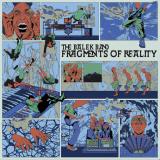
Some grooves don’t rush to the dancefloor — they crawl there, slow and heavy, like smoke wrapping around a bassline. With Fragments of Reality, The Balek Band sculpt an electronic funk that lives between shadow and light — an end-of-the-world fever dream, a Barjavel-style Ravage where chaos turns nihilistic.
No sequencer grid here — just four musicians sharing the same room, shaping air and tension together: drums locked tight with a slap bass, a guitar dripping with echo and heat, and a one-man orchestra behind his machines, weaving acid lines and synth arpeggios while mixing the band live — drenching it in delay, reverb, and saturation, like a dub producer in a Kingston studio, Lee Scratch Perry or King Tubby conjuring ghosts through smoke.
This isn’t fusion — it’s friction. A living ritual where the TB-303 hums, and machines don’t dominate but converse with the human pulse. Each track feels like a night that refuses to end — that humid in-between where trance slips into languor, and the body starts to think for itself.
The record recalls the cosmic jazz of Alain Mion or Eddy Louiss meeting the fiery energy of West African afrobeat musicians freshly arrived in a smoky Belleville basement in the mid-’80s. When The Balek Band summon ghosts, it’s only to reshape them — bending the past into something futuristic, alive, and strangely refreshing. Both disciplined and delirious, Fragments of Reality feels like a promise at dawn: dark funk for the late hours, slow acid for warm blood.
This EP isn’t nostalgic, though it remembers. It’s a transmission from a parallel past — a moment when jazz players met drum machines and decided never to stop playing. Each note sweats, each rhythm breathes. You can almost see the light cutting through the haze, faces half-awake, half-possessed.
The Balek Band aren’t recreating a moment — they’re keeping it alive.
Flesh and cables. Impulse and patience.
A band, not a loop.
A trip, not a format.
out of Stock
Last delivered 4 months ago available to reorder, subject to availability
They Came Like Swallows is the first album-length collaboration between Thurston Moore and Kramer (now officially Bonner Kramer), two giants of alternative/ experimental music. The accomplishments and influence of these two artists in the world of independent music cannot be overstated and the result of their artistic union is a startlingly cohesive statement that burns through landscapes of primitive outsider rock, avant-garde composition, progressive ambient and further locales boldly and beautifully unnamable. “Kramer and I reconnected in Miami, Florida, a few years back, many many years after each of us had departed NYC on separate life adventures. It was only a matter of time before Kramer and I started making plans to record together and with his irrepressible due diligence he quickly set up a mobile recording contraption in the pad I was decamped in, the Florida sunshine flowing through the palm leaves, lithe lizards skittering across the windowsills, and we just went for it.
Kramer had the idea to cover a Joy Division tune, a left turn from the improvisations we had been tracking, though wholly in keeping with both our sensibilities of light and dark unifying in transcendent songwriting, both of us devotees of 'the song' as well as 'the freedom.’ What transpired is They Came Like Swallows, a session we immediately felt should exist as a prayer to the war-torn souls of the families of Palestine continually decimated by the brutality of genocide. We agreed beyond words to offer our music as a sonic activism and as a beneficent energy. This album is our duo exchange for human dignity, it is our soul music for any semblance of a peaceful planet.” ~ Thurston Moore “For the first time in our nearly 45 years of friendship, we had identical time windows open to make a record together,” recounts Kramer. After all this time not a moment is wasted as the duo immediately taps into the heightened core of improvisational tension across these seven offerings. Volcanic opener “Urn Burial” notches a similar historic union (John Cale and Terry Riley) to meet the circumstances of the moment, with swirling mists of organ and pounding toms over guitar that thickens the atmosphere with jagged, grimy dissonance.
Solemn strings open the second track, “The Redness In The West,” with Kramer’s cello and viola in dueling bow beneath the high tension drive and sustain of Thurston’s electric guitar, tapping out a Morse code of tension that mounts endlessly into a fog of inevitable war by the end. Moore and Kramer’s sense of experimentalism is in free and full grandeur throughout They Came Like Swallows, though the duo keep a strong and constant sideways eye on melody, composition and architecture, to the ends that any strict lines between song and improvisation are blurred beyond qualification.
As if to punctuate this point, Swallows closes with a nightwork cover of Joy Division’s “Insight,” a doleful coda that breathes out with a solemn inner grace under Thurston’s instantly stylistically recognizable guitar melodies as they weave into he and Kramer’s unison voices. As the lone vocal piece and only traditional ‘song’ form on the album, “Insight” is unique to this set and as a closing statement draws connective lines back to the kind of dynamic, electrified melodicism that wove deep, melancholy patterns into the untamed fire of Sonic Youth’s Sister and Daydream Nation. In the album’s final moments, the two voices repeat the lyric “I’m not afraid anymore” as mantra, underscoring the heavy, unsettled themes and methods that preceded it. Kramer describes the creative process of They Came Like Swallows: “I had composed and recorded a few pieces at my home studio over the course of a couple weeks. Thurston was spending the winter in South Florida, so I flew down and spent a few days recording his guitar parts in his home there. Watching him spontaneously compose his parts was pretty astonishing, to say the least. Once we'd finished working on those pieces, we began improvising and following wherever the music pointed us, and another few pieces were born. We got straight to it, without anything driving us other than the joy of finally working together.
My personal goal was to remain present and catch as many surprises as I could from Thurston's guitar work, and there were plenty during those few days. We had a fucking blast.” Thurston’s contributions here will be readily familiar to any acolytes of his other works, the through-line between his inspired playing, cradled in Kramer’s meticulous, solid arrangements. “If I had to make this record again, I'd do it all exactly the same way,” Kramer says. “It’s like jazz, you don't think about it. You just do it. It was miraculous, and you don't fuck with a miracle.”
They Came Like Swallows is the first album-length collaboration between Thurston Moore and Kramer (now officially Bonner Kramer), two giants of alternative/ experimental music. The accomplishments and influence of these two artists in the world of independent music cannot be overstated and the result of their artistic union is a startlingly cohesive statement that burns through landscapes of primitive outsider rock, avant-garde composition, progressive ambient and further locales boldly and beautifully unnamable. “Kramer and I reconnected in Miami, Florida, a few years back, many many years after each of us had departed NYC on separate life adventures. It was only a matter of time before Kramer and I started making plans to record together and with his irrepressible due diligence he quickly set up a mobile recording contraption in the pad I was decamped in, the Florida sunshine flowing through the palm leaves, lithe lizards skittering across the windowsills, and we just went for it.
Kramer had the idea to cover a Joy Division tune, a left turn from the improvisations we had been tracking, though wholly in keeping with both our sensibilities of light and dark unifying in transcendent songwriting, both of us devotees of 'the song' as well as 'the freedom.’ What transpired is They Came Like Swallows, a session we immediately felt should exist as a prayer to the war-torn souls of the families of Palestine continually decimated by the brutality of genocide. We agreed beyond words to offer our music as a sonic activism and as a beneficent energy. This album is our duo exchange for human dignity, it is our soul music for any semblance of a peaceful planet.” ~ Thurston Moore “For the first time in our nearly 45 years of friendship, we had identical time windows open to make a record together,” recounts Kramer. After all this time not a moment is wasted as the duo immediately taps into the heightened core of improvisational tension across these seven offerings. Volcanic opener “Urn Burial” notches a similar historic union (John Cale and Terry Riley) to meet the circumstances of the moment, with swirling mists of organ and pounding toms over guitar that thickens the atmosphere with jagged, grimy dissonance.
Solemn strings open the second track, “The Redness In The West,” with Kramer’s cello and viola in dueling bow beneath the high tension drive and sustain of Thurston’s electric guitar, tapping out a Morse code of tension that mounts endlessly into a fog of inevitable war by the end. Moore and Kramer’s sense of experimentalism is in free and full grandeur throughout They Came Like Swallows, though the duo keep a strong and constant sideways eye on melody, composition and architecture, to the ends that any strict lines between song and improvisation are blurred beyond qualification.
As if to punctuate this point, Swallows closes with a nightwork cover of Joy Division’s “Insight,” a doleful coda that breathes out with a solemn inner grace under Thurston’s instantly stylistically recognizable guitar melodies as they weave into he and Kramer’s unison voices. As the lone vocal piece and only traditional ‘song’ form on the album, “Insight” is unique to this set and as a closing statement draws connective lines back to the kind of dynamic, electrified melodicism that wove deep, melancholy patterns into the untamed fire of Sonic Youth’s Sister and Daydream Nation. In the album’s final moments, the two voices repeat the lyric “I’m not afraid anymore” as mantra, underscoring the heavy, unsettled themes and methods that preceded it. Kramer describes the creative process of They Came Like Swallows: “I had composed and recorded a few pieces at my home studio over the course of a couple weeks. Thurston was spending the winter in South Florida, so I flew down and spent a few days recording his guitar parts in his home there. Watching him spontaneously compose his parts was pretty astonishing, to say the least. Once we'd finished working on those pieces, we began improvising and following wherever the music pointed us, and another few pieces were born. We got straight to it, without anything driving us other than the joy of finally working together.
My personal goal was to remain present and catch as many surprises as I could from Thurston's guitar work, and there were plenty during those few days. We had a fucking blast.” Thurston’s contributions here will be readily familiar to any acolytes of his other works, the through-line between his inspired playing, cradled in Kramer’s meticulous, solid arrangements. “If I had to make this record again, I'd do it all exactly the same way,” Kramer says. “It’s like jazz, you don't think about it. You just do it. It was miraculous, and you don't fuck with a miracle.”
Oceanine, Jolanda Moletta’s third album and her first for Beacon Sound, is a powerful and ethereal statement of artistic community. Expanding on her previous work, each track represents a collaboration with a different female vocalist, with the foundational elements being generated entirely by her own voice. By turns haunting, enchanting, and inspiring, you won’t want to come up for air once you’ve been pulled under. Representing a musical practice that is distinctly feminist, this is an album with a longer view in mind, to an age when the altars were to goddesses and women were centered as powerful beings representing the earth’s cycles of regeneration and renewal. Oceanine then, in all its beauty, can be viewed as an album of survival. It is deeply transportive, accessing something that lies within all of us. As the late, great Lithuanian folklorist and archaeologist Marija Gimbutas noted, “We must refocus our collective memory. The necessity for this has never been greater as we discover that the path of 'progress' is extinguishing the very conditions for life on earth.”
Jolanda Moletta is a multimedia artist and one-woman electronic choir. She creates wordless compositions through extended vocal techniques, integrating wearable-controlled live processing, alongside symbolic visuals. Moletta considers her performances to be a collective ritual and creates her Sonic & Visual Spells following the cycles of nature and the moon. Jolanda's 2022 critically acclaimed album Nine Spells was released on the Ambientologist label, followed by Night Caves on Whitelabrecs in 2025. Moletta’s artistic practice is a radical and spiritual journey through sound art, ritual, and the symbolic archaeology of the feminine.
Oceanine is inspired by sirens, water nymphs, and the timeless call of the sea. At its core lies Jolanda’s deep, lifelong connection to the Mediterranean Sea and to the ancient and modern myths and folklore that have emerged from its waters. Growing up by the Mar Ligure, Jolanda was surrounded by stories carried by salt, wind, and waves: legends of sirens, echoes of ancient voices, and the sea as both origin and oracle. This intimate relationship with the Mediterranean is not merely a backdrop, but a living source that shapes Oceanine’s emotional, symbolic, and sonic world.
Each track features a different female vocalist, creating a rich tapestry of voices, styles, and perspectives. This artistic choice not only broadens the album’s sonic palette, but also deepens its narrative core: celebrating the power, beauty, and mystique of feminine energy through myth, history, and sound.
The entire album is built exclusively from the human voice, processed and layered, yet always remaining voice, and nothing else. For each piece, Jolanda invited every vocalist involved to contribute a raw stem: a short, unedited melodic fragment of just a few seconds, inspired by the album’s themes. These intimate vocal seeds became the foundation of each track: the guest artists’ voices appear as brief, melodic stems, while the entire surrounding “orchestral” fabric is created solely from Jolanda’s own layered and processed voice. In this way, Jolanda’s voice becomes the Ocean itself, embracing, absorbing, and carrying the sirens’ calls within a vast, immersive soundscape. Every song is a unique expression of the feminine experience, revealing its depth, complexity, and emotional range, echoing the call of the sea and the many faces of the siren archetype.
The figure of the siren has transformed across centuries. In myths of Ancient Greece and Rome, sirens were hybrid beings, part woman, part bird, whose irresistible songs lured sailors to their doom. During the Middle Ages, the image shifted toward the half-woman, half-fish figure, often associated with temptation and danger. Historically, the voice of women has often been feared. Sirens were considered harbingers of misfortune not simply because they seduced or destroyed, but because they were powerful liminal beings.
In Ancient Greek, sirens functioned as psychopomps: figures who existed between worlds and guided souls, especially between life and death. Their songs were believed to carry forbidden knowledge, including prophetic insight and the ability to reveal truths about fate and the future. The danger of the sirens lay in what they revealed: knowledge that humans were not meant, or ready, to hear.
Oceanine confronts this legacy head-on. The voices heard throughout the album are not merely beautiful: they are dark and luminous, wild and enchanting, magical, soothing, dreamy, and at times fractured or distorted. They whisper, lament, beckon, and enchant. Like sirens, they skim the surface of the water and sink into its depths, hovering on the edge between tenderness and danger, vulnerability and power. They rise toward the sky, dissolve into mist, and return as echoes charged with raw, elemental emotion: voices that seduce, warn, mourn, and remember. They refuse to be reduced to decoration.
Alongside the album’s release in May, Oceanine will also unfold as a visual and performative work through a short art film. The film includes a live session recorded inside a sea cave facing the Mar Ligure, the very coastline where Jolanda spent her childhood, dreaming of sirens and listening to the sea as if it were speaking directly to her. This site-specific performance reconnects the music to its place of origin, allowing the voice to resonate within stone, water, and air, and transforming the cave into both a sanctuary and a threshold between myth and reality.
What if the sirens’ songs were considered dangerous because they carried another truth, an ancient truth long forgotten?
Oceanine embraces the idea that we are still deeply woven into myth. Though we may see ourselves as rational and modern beings, our world is saturated with ancient symbols and archetypes, often distorted, simplified, or stripped of their original meaning. And if those symbols are allowed to shift, if the mirror once held by the siren becomes an invitation to look beyond appearances and into what has been obscured, then we may finally uncover a deeper truth and reclaim the voice that was always ours.
Oceanine is not just an album. It is a reclamation, a spell, and a call from the depths.
Wasteland is a record that is unafraid to plunge into the darkness of the modern world and embrace the weirder, edgier and more unnerving moments that come from doing so. It is an album that captures all the enormity of life from the micro to the macro, zooming in on the personal as well reflecting on broader societal issues.
“Wasteland is about the idea of a place once known or familiar that is now broken down and unrecognisable,” says Ghedi. “It’s about exploring the process of watching someone’s surroundings and environment collapse.” And within that you have a lot going on. “It also explores death, personal loss, grief, mental health and how the natural world provides solace and meaning for that loss and how these worlds blur into one another.”
Ghedi has always been an artist that in many ways perfectly encompasses folk music in its purest form but he is also someone that frequently pushes the boundaries of that label and no more so is that apparent than on this record. As like previous albums, such as 2018’s A Hymn for Ancient Land and 2021’s In the Furrows of Common Place, Ghedi uses traditional folk songs as a means to explore contemporary issues via modern and experimentally-leaning music. “With the traditional material on this album I wanted to find songs with content that resonated with me,” says Ghedi. “But also that were based roughly around the north of England.” This is a central underlying theme to the album for Ghedi. The feelings of loss, erosion, and degradation are often most pronounced in working class communities and this was something he wanted to weave in. “It was important to voice and choose material that represented or expressed issues that correlated with things going on around me.”
However, as remarkable as some of the traditional material is, some of the most arresting work on the album is Ghedi’s entirely original compositions. Lead single ‘Wasteland’ is a stunning piece of work that while rooted in an environment being corrupted and broken – “there’s violence on these hills” Ghedi sorrowfully sings, before claiming this is no longer somewhere that can be called home – it is also a stirringly beautiful composition that soars and glides as it opens up, as sweeping strings swoop and in and out of Ghedi’s twangy electric guitar.
The decision to incorporate more fuller sounds, such as electric guitar and huge drums, results in a notable shift and evolution in tone for Ghedi. “The lyrical content needed something more band-driven and loud to deliver them,” he explains. “Incorporating the electric guitar in my songwriting was also a big part of opening the sound up, using drop tunings pushed me to use my voice in a wider range, which forced me to use falsetto a lot which I haven’t previously done before. That then opened the sound up and gave me creative ideas for bigger arrangements and to sonically really push things.”
What Ghedi has done in creating his masterpiece is construct a remarkable space where deeply intimate and personal feelings coexist with reflections on environment, place and society, while also interweaving historical context via traditional songs. Wasteland is as much of a world to explore and exist in as much as it is an album, with Ghedi carving out his distinctly unique sonic language and voice to explore that singular environment.
Wasteland is a record that is unafraid to plunge into the darkness of the modern world and embrace the weirder, edgier and more unnerving moments that come from doing so. It is an album that captures all the enormity of life from the micro to the macro, zooming in on the personal as well reflecting on broader societal issues.
“Wasteland is about the idea of a place once known or familiar that is now broken down and unrecognisable,” says Ghedi. “It’s about exploring the process of watching someone’s surroundings and environment collapse.” And within that you have a lot going on. “It also explores death, personal loss, grief, mental health and how the natural world provides solace and meaning for that loss and how these worlds blur into one another.”
Ghedi has always been an artist that in many ways perfectly encompasses folk music in its purest form but he is also someone that frequently pushes the boundaries of that label and no more so is that apparent than on this record. As like previous albums, such as 2018’s A Hymn for Ancient Land and 2021’s In the Furrows of Common Place, Ghedi uses traditional folk songs as a means to explore contemporary issues via modern and experimentally-leaning music. “With the traditional material on this album I wanted to find songs with content that resonated with me,” says Ghedi. “But also that were based roughly around the north of England.” This is a central underlying theme to the album for Ghedi. The feelings of loss, erosion, and degradation are often most pronounced in working class communities and this was something he wanted to weave in. “It was important to voice and choose material that represented or expressed issues that correlated with things going on around me.”
However, as remarkable as some of the traditional material is, some of the most arresting work on the album is Ghedi’s entirely original compositions. Lead single ‘Wasteland’ is a stunning piece of work that while rooted in an environment being corrupted and broken – “there’s violence on these hills” Ghedi sorrowfully sings, before claiming this is no longer somewhere that can be called home – it is also a stirringly beautiful composition that soars and glides as it opens up, as sweeping strings swoop and in and out of Ghedi’s twangy electric guitar.
The decision to incorporate more fuller sounds, such as electric guitar and huge drums, results in a notable shift and evolution in tone for Ghedi. “The lyrical content needed something more band-driven and loud to deliver them,” he explains. “Incorporating the electric guitar in my songwriting was also a big part of opening the sound up, using drop tunings pushed me to use my voice in a wider range, which forced me to use falsetto a lot which I haven’t previously done before. That then opened the sound up and gave me creative ideas for bigger arrangements and to sonically really push things.”
What Ghedi has done in creating his masterpiece is construct a remarkable space where deeply intimate and personal feelings coexist with reflections on environment, place and society, while also interweaving historical context via traditional songs. Wasteland is as much of a world to explore and exist in as much as it is an album, with Ghedi carving out his distinctly unique sonic language and voice to explore that singular environment.
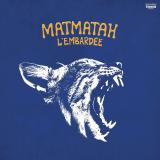
After months of working exclusively on his own repertoire, Matmatah is slowly recovering from his 30th birthday by returning to his first love: covering other people’s songs !
Because Matmatah comes from there, from the steamy atmosphere of bars and clubs.
Back in the day, they played loads of covers. Oh yes, they certainly did.
So why not put a few of them together on an album?
It’s a must, isn’t it?
Except that… There are many ways to record an album of covers.
The band could have taken the easy route and covered the songs they loved in their early days. But that would be to misunderstand these lads. They needed to come up with a proper concept to justify such a project.
They came up with two:
To tackle styles that are diametrically opposed to their own, so they could better make them their own.
To broaden their linguistic repertoire and experiment with different sounds.
The result is a rich, joyful and socially conscious collection of 20 songs, written between the 18th and 21st centuries and performed in no fewer than 10 European languages. A fine tribute to the continent’s diversity.
To spice up this project, they’ve brought in the whirlwind that is Fanny Gillard on vocals for ‘Eisbär’ and ‘Putain Putain’, the powerful voice of Morgane Mercier on the eerie ‘Alison Gross’, mentor Patrick Marie for a space-age ‘Kan Ha Diskan’, and the immense Kevin Camus on the uilleann pipes and whistle for ‘The Winner Takes It All’.
Matmatah takes a wild ride, travelling across Europe and through time, having fun and cheekily reworking songs he never imagined he’d play.
Find the lynx!
Red Axes step into the fabric presents series with a release that feels both inevitable and deeply personal. Known for their hypnotic, psychedelic approach to club music, the Tel Aviv–based duo bring a narrative-driven sensibility that aligns seamlessly with fabric’s legacy of long-form storytelling and forward-thinking curation.
Across years of performances at fabric and other key global institutions, Red Axes have developed a reputation for sets that unfold patiently and unpredictably, drawing dancers into a world where groove, tension, and atmosphere take precedence over genre or trend. Their contribution to the fabric presents series reflects this ethos: a carefully sculpted journey that prioritises mood, momentum, and emotional depth, while remaining firmly rooted in the physical language of the dancefloor.
Formed by Dori Sadovnik and Niv Arzi, Red Axes emerged from Tel Aviv’s underground with a sound shaped by post-punk, acid, krautrock, and cosmic disco influences. Over the past decade, they have built a catalogue defined by raw textures, twisted melodies, and a distinctly human looseness, qualities that translate as powerfully in the club as they do on record. Their releases and remixes for labels such as Phantasy, Correspondant, Running Back, Dark Entries, and Permanent Vacation have established them as artists who consistently operate just outside the expected.
As DJs, Red Axes are celebrated for their ability to stretch time on the dancefloor, weaving obscure selections, unreleased material, and leftfield classics into slow-burning, trance-inducing narratives. This approach has seen them invited to venues and festivals including Panorama Bar, De School, Bassiani, Dekmantel, Sonar, and Primavera Sound, where their sets are defined not by peaks alone, but by the tension built between them.
With the forthcoming fabric presents Red Axes release, the duo deliver a statement that captures years of shared musical intuition and a deep respect for the club as a communal, transformative space. It is a mix that rewards close listening as much as physical immersion, a snapshot of Red Axes at their most focused, expressive, and uncompromising.
To mark the launch of their forthcoming fabric presents album, the duo unveil the lead single, “Hot Rod To Hell”, a bold reworking of Man Parrish and Roy Garrett’s 14-minute spoken-word electro epic, reimagined through Red Axes’ signature psychedelic lens.
Stripped back and refocused, the original’s narrative tension is transformed into a hypnotic, downtempo house track built for late-night immersion. A rolling, elastic groove anchors the track, while pulsing low-end, subtly warped synth lines, and tightly controlled percussion create a sense of slow, smouldering momentum. The spoken vocal elements drift through the mix like fragments of memory, lending the track a ritualistic, cinematic quality without overwhelming the dancefloor.
out of Stock
Last delivered 74 days ago available to reorder, subject to availability
KNEECAP return to bend genre, language, and rules. The most talked about artists in the world are turning the page. A new chapter, new sounds, new manifestos.
A blistering album that revels in darkness while bursting through the void with illuminated revery. This is FENIAN.
Produced by Dan Carey (Fontaines D.C., Kae Tempest, Wet Leg), FENIAN upends expectations with an expansive sonic palate, traversing acid house, trip-hop, dubstep, and more - Masters of rave and rap theatre, FENIAN represents Kneecap’s most sophisticated exploration of language and sounds.
More darkness. More confrontation. More craic. More energy. More solidarity. More absolute bangers. And more fuel for the unrelenting engine that powers this unstoppable force. For their remarkable second album, Kneecap have come out fighting.
Throughout, the sirens and alarms ring, and the chorus’s blast. Revolutionary and rebellious, confrontational and impossibly catchy, inescapably intelligent and brilliantly rendered, FENIAN doesn’t just represent the next phase in Kneecap’s trajectory but stands as a remarkable record that thrills as much as it surprises. The mayhem of their breakout year is a memory now. But Kneecap are neither dwelling on that nor merely persevering through it. In FENIAN they excel, reaching a new peak that is undeniable in its mastery.
Pressure makes diamonds, and FENIAN glistens with Kneecap’s uncut gems.
out of Stock
Last delivered 5 months ago available to reorder, subject to availability
Fresh from releasing projects on Method 808 and Future Classic, landing a huge collaboration with Chloé Caillet, and delivering an official remix for Fatboy Slim, PPJ are entering a new chapter in full force. Their expansive take on global street sounds, ranging from neoperreo to Miami bass, gets a cool re-coating.
Led by the magnetic vocalist Páula, with production from Povoa (individually supported by Four Tet, Ben UFO, and Barry Can't Swim, with recent releases on Live From Earth), the duo operates in maximalist mode: playful, sensual, and slightly unhinged.PPJ’s new era, JOKER, embraces a figure that appears everywhere from card decks to carnival culture as a symbol that mirrors their own DNA: funny, eerie, seductive, unpredictable. The EP leans further into club territory, but rather than polishing their edges, PPJ amplify them.
At the emotional core of the record sits “Coeur,” co-produced with Chloé Caillet. It begins with an MPB-tinged foundation flirting with bossa nova. It’s unmistakably Brazilian, bathed in sunset hues before being sped up and twisted into a dance-floor-ready electronic form. The groove shimmers with tension: warm percussion, elastic basslines, and Páula’s voice hovering between intimacy and tease. It feels like a remix of itself, romantic, but slightly untrustworthy.
If “Coeur” glows, “To Nem Ai” is a slow burner. A very deep and downtempo house cut, it unfolds slowly, almost luxuriously, guided by sensual vocals that feel whispered directly into the ear of the listener. A hypnotizing piano sample that feels like a late-night confession. It’s the kind of record that transforms a dancefloor into something tactile.
Elsewhere, “Me Pega” is a high-energy reinterpretation of the tech-house sounds from Santa Catarina, one of southern Brazil’s most feverish party states, twisted and accelerated for ferocious impact. Drawing direct inspiration from Sarro, a raw and vibrant Brazilian street dance, the track captures physical intensity in its purest form: sweat, bass pressure, collective release.
Its counterpart, “Tem Carnaval” channels Páula’s vivid storytelling into a thunderous ode to Rio’s carnival spirit, euphoric, chaotic, cinematic landed just in time for this year’s celebrations.
On “Sexy Doce,” rugged electroclash melodies collide with unexpected references. “It was inspired by Budots, which is dance music from the streets in the Philippines,” Povoa explains. “Then we mixed it with Páula’s Brazilian vocals. Baile funk is similarly from the streets, so there is a connection.” The result is raw yet futuristic, a cross-continental flirtation that feels both underground and explosive.
With this new EP, PPJ make music like they’re tuning into a dozen pirate frequencies at once. Pirate radio from Rio to Berlin to Manila intercepting fragments of street culture, sensuality, and chaos, and stitching them into something deliriously cohesive.
JOKER doesn’t just nod to club culture. It challenges it, twists expectation and leaves a lasting impression.
A century-old grand piano, a secluded house surrounded by the greenery of Brittany, no internet connection, and a reel-to-reel recorder.L'Écho de Bretagne, the new EP by Niklas Paschburg, set for release from fall 2025 via Nettwerk Music Group, is a solo piano record as essential as it is intense. An album made of silences, space, slowness. A music that doesn't chase impact, but truth.
the album release is march 26th - 2026.
If his previous work, Mexican Alps (2025), marked the first time the German composer and producer created an ambient-electronic album without his instrument of choice, the piano, L'Écho de Bretagne emerges as a direct response to that absence. "It was exactly the lack of piano that brought about the need for this new record, which instead puts that instrument, so vital to me, at the very center, stripping everything else away," Niklas explains.
Born in 1994, Paschburg has shaped over the years a musical path deeply connected to travel, nature, and introspection. From his debutTuur Mang Welten(2016) toOceanic(2018),Svalbard(2020),Panta Rhei(2023), and the aforementionedMexican Alps— alongside soundtracks, remixes, and collaborations with artists like RY X, Hania Rani, Ásgeir, and Bryan Senti — his sound bridges neoclassical, electronic, ambient, and pop-driven composition.
WithL'Écho de Bretagne, the Hamburg-born, Berlin-based musician continues his exploration by seeking solitude in nature, much like he did onSvalbard, but this time with an even more radical choice: disconnecting completely from the internet, and switching off both computer and smartphone for a while, in order to fully immerse himself in his new music. "I rented an old cottage in Paimpol, Brittany, where I knew there was a grand piano," he recounts. "When I got there, I discovered that not only was the piano more than a hundred years old, but it was also of an unknown brand, never restored, and quite difficult to play. But that gave it a unique character, and I didn't give up. Sure, it was an instrument left to its own fate, I couldn't play anything too fast. But how fascinating was that? I'm convinced that setting limits, instead of giving yourself total freedom when composing, can become an extraordinary source of inspiration."
As for the decision to temporarily detach from a life that demands we stay constantly connected, Niklas describes it as both a creative and human experiment. "I had my laptop and phone with me, just in case, but I kept them turned off. That choice made me wantL'Écho de Bretagneto be a fully analog work, even in how it was recorded." A way of clearing the mind. "I don't think I've ever been as calm as I was during those days in Paimpol. Even though I was working on a very specific project and didn't have much time, that period was more relaxing than any vacation."
Not that it was free of hiccups. "I'd borrowed a reel-to-reel recorder small enough to travel with me, but after recording a session on the piano, I realized it wasn't working properly, the sound was distorted, full of crackles. I got worried, because I wasn't near any big city where I could find a technician. Luckily, I figured out the problem was the old tape reels I had brought along. That was the only time I had to go online, to order new ones. But it was just for a moment. I shut everything off again right after." At that point, Niklas was waiting for the new tapes to arrive. He found out, completely by chance, from a local UPS courier that they had been delivered to a nearby village. "Since my phone was off, I couldn't track the shipment. So one day I asked this delivery guy, who didn't know anything about it. But from that point on, we'd see each other daily and talk… That's what being disconnected also means: reconnecting with people around you, even strangers. It was thanks to that courier that I found out where the tapes had ended up. And he even helped me get them back, writing directions for me on a scrap of paper."
But there's another element that makes this new EP unique.L'Écho de Bretagnewas recorded entirely live; its tracks are all improvised, complete with their imperfections. This approach leads to a sound that is pure, profoundly organic, and deeply authentic, intentionally preserved to give the listener the feeling of a live performance happening in their own living room. The touch of fingers on the keys, the breath of the wood, the tension of the vibrating string, all become part of the music. There is no construction, only expression. "Even now, when I listen back to it, I feel that moment I gave myself to step away from everything: from reality, from words, from noise." The result is a collection of suspended melodies and atmospheres, reflecting a state of the soul. A refuge from the rush of time. A pause from the world.
Purple Haze started out in Linköping in 1981. When singer Christer Göransson joined them towards the end of the year, they soon changed their moniker to Genocide (after the Judas Priest song of the same name) and supported local metal heroes Axewitch. A final name change was to follow: In August 1983, the band, now called Mindless Sinner, recorded a four-track demo entitled »Master Of Evil«, consisting of the title track, “Broken Freedom”, “Key Of Fortune” and “Screaming For Mercy”. This attracted Swedish label Fingerprint Records, and they in turn released the NWOBHM-inspired material as a mini-album with an awful cover and getting the band’s name wrong (spelling it Mindless Sinners). By then, the line-up of the band was Anders Karlsson (bass), Magnus Danneblad (guitar), Jerker Edman (guitar), Tommy Johansson (drums) and vocalist Christer Göransson. »Master Of Evil« originally saw the light of day on Fingerprint in January 1984. This was followed by the second album »Turn On The Power« in 1986 as Christer Göransson explains: “Well, »Turn On The Power« was actually recorded in October 1984, the same year as »Master Of Evil« was released. But the record label was almost out of business by 1985, so as a result »Turn On The Power« didn’t come out until January 1986, and shortly after the label went bust.” Just like on the debut, the cover was once again pretty weird. “Same story,” says the singer. “Blame the label again. We wanted a band photo for the cover but once more Fingerprint didn’t listen. We didn’t know who this girl was at all. And once again we saw the cover for the first time when we visited our local record store.” “I guess »Turn On The Power« was more of a straight heavy metal album compared to »Master Of Evil«,” describes Christer Göransson the band’s follow-up record, “better playing and better songs on »Turn On The Power«. Even though we love »Master Of Evil«. I guess it didn’t sell that much as the label went bankrupt, but the reactions were great.” Mindless Sinner played as much as they could in Sweden at the time but didn’t venture outside their home country. Over the years, their music has often been compared to the Tygers Of Pan Tang from England but Christer Göransson doesn’t see too many similarities: “We really love Tygers Of Pan Tang but I don’t think they were a big influence. It was more Judas Priest, Iron Maiden, Saxon, Black Sabbath, Ozzy Osbourne and Dio.” Shortly after the release of »Turn On The Power«, the band cut their name short to Mindless. According to Christer Göransson, this is why: “It was the sign of the times really. We wanted a more melodic kinda style and we just thought it was better to change the name to Mindless. But looking back now we should have stuck to our guns.”
Rock legend John Corabi—renowned for his work with Mötley Crüe, The Scream, Union, ESP, and The Dead Daisies—steps into the spotlight with “New Day” his first full-length solo album of original material. Recorded in Nashville during the summer of 2025 and produced by multi-platinum songwriter and producer Marti Frederiksen (Aerosmith, Ozzy Osbourne, Buckcherry), the album fuses classic ’70s rock, soul, and blues influences into a sound that is both timeless and deeply personal. The record features the previously released singles “Così Bella (So Beautiful)” (2021) and “Your Own Worst Enemy” (2022), now fully integrated into a rich collection of tracks that showcase Corabi’s commanding vocals, heartfelt lyrics, and masterful songwriting.
Throughout the album, Corabi is joined by Marti Frederiksen, who adds backing vocals, guitars, piano, and percussion; Evan Frederiksen, providing drums, bass, B3 organ, electric guitar, mandolin, and programming; Richard Fortus (Guns N’ Roses) on lead guitar; and Paul Taylor (Winger, Steve Perry) contributing piano, organ, and clavinet. Together, they create an organic, instrument-driven sound built on real performances, melodic interplay, and soulful energy. A trip down to memory lane mostly with a nostalgic mood offering intimate everything that is in between acoustic moments to richly layered arrangements rockers: “New Day” is a journey through the heart of rock, infused with soul and blues sensibilities, and inspired by the melodic grandeur of early Boston and Queen. With a European tour planned for February/March 2026 and additional shows through late spring and summer, Corabi is poised to bring this music directly to fans, delivering both powerful live energy and emotional resonance. More than just a solo debut, “New Day” is John Corabi’s personal testament to rock’s enduring spirit—an exploration of melody, soul, and authenticity, played with passion and conviction at every turn.
"Nitrito" is the new album by renowned Italian singer-songwriter Nada. The Italian word Nitrito refers both to the chemical compound and to the sound horses make to communicate, the album was released last June just in Italy and is now set to be released in other European countries such as Germany, Austria, Switzerland, France and in the UK. The album was recorded in Bristol in 2024, with Nada once again entrusting its production to John Parish (PJ Harvey, Eels, Aldous Harding, Tracy Chapman, Giant Sand, Sparklehorse), who also plays most of the instruments on the record. This continues the collaboration that began with "Tutto l"amore che mi manca" (All the Love I Miss) (2004), recently remastered and released for the first time on vinyl and in a new CD edition, and continued with "E un momento difficile tesoro" (It"s a Difficult Time, Darling) (2019) and "La paura va via da sé se i pensieri brillano" (Fear Goes Away on Its Own If Thoughts Shine) (2022). "Nitrito" received an excellent four star review from the influential British magazine Mojo.
"Nitrito" is the new album by renowned Italian singer-songwriter Nada. The Italian word Nitrito refers both to the chemical compound and to the sound horses make to communicate, the album was released last June just in Italy and is now set to be released in other European countries such as Germany, Austria, Switzerland, France and in the UK. The album was recorded in Bristol in 2024, with Nada once again entrusting its production to John Parish (PJ Harvey, Eels, Aldous Harding, Tracy Chapman, Giant Sand, Sparklehorse), who also plays most of the instruments on the record. This continues the collaboration that began with "Tutto l"amore che mi manca" (All the Love I Miss) (2004), recently remastered and released for the first time on vinyl and in a new CD edition, and continued with "E un momento difficile tesoro" (It"s a Difficult Time, Darling) (2019) and "La paura va via da sé se i pensieri brillano" (Fear Goes Away on Its Own If Thoughts Shine) (2022). "Nitrito" received an excellent four star review from the influential British magazine Mojo.
Dry Socket is a politically charged hardcore band from Portland, Oregon, known for blistering performances and emotionally uncompromising songwriting. Rooted in the raw aggression of classic hardcore, their sound channels the urgency of early Ceremony, G.L.O.S.S., and Negative Approach while carving out a distinctly modern, inclusive space within the genre, one where anger, grief, and survival are not just themes, but lived realities.
Their music confronts systems of violence, coercion, and control with unflinching honesty, creating room to be unapologetically furious, vulnerable, and alive at the same time. Every riff lands like a strike; every lyric feels torn from experience rather than abstraction.
Since forming, Dry Socket has toured extensively across the U.S., Europe, and Mexico, sharing stages with Gorilla Biscuits, The Hope Conspiracy, Torso, and more.
Their latest record, Self Defense Techniques, centers on survival under constant pressure. Inspired by the practice of dehorning rhinos to protect them from poachers, removing a vital part of the animal in order to keep it alive, the album examines the compromises people are forced to make to endure a hostile world. Horns are tools for protection, communication, care, and identity. To survive, so many of us are taught to remove our own.
Across the record, Dry Socket interrogates life inside systems that demand silence, obedience, and self-erasure. Songs wrestle with exhaustion, spiritual betrayal, and economic violence, oscillating between fury and grief. Self Defense Techniques isn’t about triumph, it’s about endurance, documenting the cost of staying alive while refusing the lie that softness is weakness or that silence is peace
Mutual Rytm spawns new sub-label ‘Versus’ with debut EP from longtime techno associates Regent and Chontane. Continuing to expand its creative world, SHDW’s Mutual Rytm imprint now introduces ‘Versus’ - a new sub- label crafted for creative symbiosis between two artists across one shared release. Opening the series with authority, Regent and Chontane man the debut offering - two close friends and native Berliners who have been shaping techno for more than 15 years. Both long-standing members of the Mutual Rytm family, having released multiple times here before, the pair have always created music informed by life immersed in their local scene. Having both mutually influenced one another over the years, here they present their shared interpretation of techno with individual artistic DNA, forming a unified sound that represents the best of both worlds. Regent goes first, leaning towards functional, anthemic, dance-floor-focused techno. ‘Ephemera’ is tight, minimal but forceful; ‘Slow Burn’ has synth tension rising through the dark, next to glitchy percussion; and ‘Afterglow’ lets in more light, bringing otherworldly synths that hang above the groove and consume your focus. Chontane then explores a more musical and unconventional approach. ‘Plaxaric’ is supple, warm, and deep techno that tunnels into an abyss. ‘Grounding Factor’ is just as economical in design, but with introverted funk and evolving layers of sound. ‘Mental Lab’ spins out into complex rhythms inspired equally by IDM, jungle, and techno. It’s a mental workout as well as a physical one. Both artists add a pair of digital bonus tracks. Regent’s ‘Control Room’ and ‘Rarely Enough’ deliver elevated, hypnotic tools, before Chontane’s ‘Escore’ and ‘Outside In’ bring extroverted drum patterns along with contrasting melodic unease
out of Stock
Last delivered 43 days ago available to reorder, subject to availability
Few artists can make chaos sound this fun. Steel Beans, the self-titled album from the genre-bending one-man band, is a wild ride through rock, funk, jazz, and whatever else happens to cross the radar of Everett, WA’s Jeremy DeBardi — the multi-instrumentalist and mad scientist behind it all. Known for his jaw-dropping live performances where he sings, shreds guitar, and drums at the same time, Steel Beans brings that same unfiltered energy to tape, capturing the spirit of a garage jam gone cosmic.
The album moves effortlessly from fuzzed-out psych-rock to greasy funk breakdowns and tongue-in-cheek lyricism, mixing humor and virtuosity in equal measure. It’s unpredictable, unpolished in all the right ways, and full of personality — the kind of record that feels alive because it’s never trying to be perfect. Steel Beans isn’t just an album; it’s a reminder that music can still be weird, raw, fun, and ridiculously entertaining. Whether you’re hearing him for the first time or you’ve already seen the madness live, this album is the perfect introduction to the wild world of Steel Beans.
out of Stock
Last delivered 5 months ago available to reorder, subject to availability
The Definitive Origins of the Chicago Electric Blues. Witness the birth of a legend. This essential collection captures Muddy Waters at the most pivotal moment of his career: the transition from a Mississippi Delta traveler to the "King of Chicago Blues." Muddy Waters was an ambitious young man who saw little future in Mississippi. In 1943, he headed for the bright lights, big city of Chicago, where he soon connected with blues giant Big Bill Broonzy, who began featuring Muddy as an opening act at his club dates. Within a year, Muddy had switched to electric guitar and formed his first blues combo, quickly becoming an established figure on Chicago's club scene. In 1947, Muddy came to the attention of the fledgling Aristocrat Records, just as Leonard Chess-then running a nightclub called the Macomba Lounge-invested in the company. Working frequently with pianist Sunnyland Slim, Muddy recorded a split session with him for Aristocrat in December 1947. This collection begins there: eight Aristocrat 78 rpm releases (sixteen sides), recorded between 1948 and 1950 and presented here in chronological order of release. Just three years later, Leonard and his brother Phil Chess would buy out Aristocrat's remaining partners and rename the label Chess Records-ushering in a new era of Chicago blues that would reverberate around the world. Includes extensive liner notes by Muddy Waters expert Fred Rothwell.