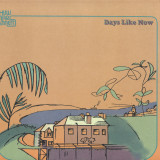
On the new album, Days Like Now, Bennett takes direct inspiration from the music of Wales.
The songs draw heavily on acoustic folk sounds and melodies. During the pandemic Huw sat and wrote a lot of material just with his bass and acoustic guitars and that low key atmosphere is very present throughout the new record.
Drums are lo-fi and fuzzy, and the palette of sounds draws from many folk cultures around the world, but this time round has a distinctly Welsh influence.
out of Stock
Last delivered 13 months ago available to reorder, subject to availability
Don Glori, a.k.a multi-instrumentalist Gordon Li, returns with a remix EP that tears open five tunes from his groundbreaking debut, Welcome.
Taking an opportunity to sink into some of the ideas explored on the original album, the five remixes featured here sees some of Europe and Australia’s finest throw open the shutters and shine a light on Li’s inventive compositions and remarkable instrumentation.
Rosie from the Block, a.k.a Belgian multi-instrumentalist, producer and DJ Roselien, leans right into the percussion and drum kit playing that made Welcome so infectious, layering this with cheeky bubblegum-beat bass lines that lend the whole affair an incredibly smooth, street-soul styling.
Other key players include Swedish duo Mount Liberation Unlimited, lending their take on things an introspectively dark, brooding atmosphere that evolves into one of their trademark acid-house extended journeys; Australian radio DJ and producer Ennio Styles working alongside Liam de Bruin, hip-hop/soul duo Man Made Mountain, led by MC Cazeaux O.S.L.O, and an insanely infectious organic house take on hit single Dlareme by one of Melbourne’s finest, Teymori.
A perfect companion to an album that broke open the Melbourne scene and laid out new parameters for the quality of jazz, samba and funk-inspired music emerging from that city, Welcome Remixes breathes fresh life into this incredible album and reminds us just how goddamn fun making, playing and performing music can be.
out of Stock
Last delivered 3 years ago available to reorder, subject to availability
The best R&B songwriter and soul singer that most people have never heard of, Sam Dees has written songs for countless artists, including Gladys Knight, Aretha Franklin, Whitney Houston, George Benson, the Temptations, Teddy Pendergrass, Millie Jackson, Jackie Wilson, the Manhattans, Regina Belle, KC & the Sunshine Band, Willie Clayton, and many others. He's also a pretty fine singer, having recorded for the Chess, Atlantic, Polydor, and SSS labels, and he had a nice string of his own hits in the 1970s. His 1975 Atlantic album The Show Must Go On has long been regarded by Southern soul aficionados as one of the best of the genre. Sounding a bit like a deeper-voiced Curtis Mayfield (in both style and theme), Dees sings with assurance, wisdom, passion, and a whole lot of soul here. Songs like "Child of the Streets", "Troubled Child," & "What's It Gonna Be," share Mayfield's commitment to social commentary, and Dees knows his way around a love song, too. It's absolutely essential.
Dieses Best Of Album wurde ursprünglich 1981 veröffentlicht und vereint die klassischen Singles, die The Damned für Chiswick aufgenommen hatten. Darunter 'Love Song', 'Smash It Up', 'I Just Can't Be Happy Today', 'History Of The World Part 1', 'Hit Or Miss', ihre Weihnachtssingle 'There Ain't No Sanity Clause' und natürlich 'Wait For The Blackout'. Diese gelten heute nicht nur als klassische Damned-Tracks der zweiten Phase, sondern stellen auch eine musikalische Entwicklung dar, in der die Band von ihren Punk-Wurzeln zu melodischen Popsongs überging, die sie auch in die Charts brachten. Als das Album 1981 erstmals veröffentlicht wurde, enthielt es on top auch die früheren Punk-Klassiker 'New Rose' und 'Neat Neat Neat'. Es gibt sogar die Captain Sensible and the Softies-Version von 'Jet Boy, Jet Girl', die 1982 als B-Seite von 'Wait For The Blackout' erschien. Mit einem Klassiker macht man nichts falsch, deshalb wurde das Album genau so neu aufgelegt, wie es 1981 aussah, komplett mit Innenhülle und Blackmail-Label-Schriftzug.
Written by veteran journalist Shawn Reynaldo, First Floor is a weekly newsletter that focuses on electronic music, along with the culture and industry that surround it. Over the course of just a few years, it’s become one of electronic music’s most influential platforms, routinely putting many of the genre’s thorniest issues under the microscope while reckoning with changes in the culture during a time of profound transformation.
A collection of Reynaldo’s most thought-provoking essays, First Floor Volume 1 provides a nuanced, wide-ranging look at contemporary electronic music culture, with a particular focus on systemic issues that often go undiscussed.
Topics covered included the evolving nature of electronic music fandom and artistry, value shifts brought on by the current changing of the generational guard, the shortcomings of the modern music press and the growing gap between electronic music’s foundational rhetoric and the genre’s present-day norms.
Incorporating both pieces originally published in the newsletter (all of which have been updated) and exclusive new material from Reynaldo himself, the book also features a foreword by veteran artist and 3024 label founder Martyn.
With more than fifty albums recorded, Nina Simone is one of the main representatives of vocal jazz. Her original style comes from the fusion of gospel and pop songs with classical music. From My Baby Just Cares for Me to Willow Weep for Me, discover the quintessence of Her Highness NINA SIMONE. Powerful and radical, Nina is a true source of inspiration for many generations.
Keni Burke's seminal Changes yielded the eternal club classic "Risin' To The Top". You need this record for this iconic steppers anthem alone. However, it's crucial to acknowledge that the whole of Changes, first released in 1982 on RCA but now a tricky one to find, is something truly special. It's a masterpiece of sophisticated 80s groove, containing first class funky soul that sounds as fresh as ever. This is multi-tempo soul music conceived in heaven.
Ace bass player, songwriter, arranger and producer, Keni Burke was discovered by Curtis Mayfield and a childhood member of the Five Stairsteps. Emanating from that magical 81-83 era and pristinely recorded at Philadelphia's legendary Sigma Sound Studios, his third solo album Changes really perfected Keni's groove. It incorporated tight, snappy rhythm arrangements which, despite the era, featured *real drums* courtesy of Steve Ferrone (from Average White Band) to compliment Keni's meaty bass lines. With Dean "Sir" Gant on synths and keyboards and Ed Walsh handling the Vocoder-OBX and Prophet 5, wonderful lines from Earth, Wind & Fire's legendary horn section and hooky rhythm and lead guitar riffs courtesy of Ed "Tree" Walsh, Keni was truly spoiled for excellence. With Doc Gibbs on percussion and Vince Montana on vibes elevating the sensational writing and arrangements, Keni couldn't really go wrong.
“Risin’ To The Top” is undoubtedly the defining crown and lasting legacy of this album. Wth its instantly captivating bassline, slowly creepin' groove and uplifting lyrics, it was a favourite among both the 80s soul steppers and hip-hop crowd and remains canonical to this day. Written by Burke, Allan Felder, and former Chic member Norma Jean Wright, it incredibly failed to garner much American radio play or really trouble the soul charts. Whilst it was an instant classic in the U.K., in the States it took the hip-hop generation and later R&B and hip-hop samples of the tune to finally make it popular, many years later. Of note, Big Daddy Kane sampled it for "Smooth Operator", LL Cool J for "Around The Way Girl", Pete Rock & CL Smooth for "Take You There" and O.C. with "Born 2 Live".
But the highlights are not restricted to this one behemoth. For example, the track which precedes "Risin'" on Side B is another steppers favourite. "One Minute More" is a perfect mid-tempo ballad and the epitome of deep modern soul. A truly timeless work of genius. We, for one, struggle to think of a better song segue than the moment you're still reeling from the intense beauty of "One Minute More" and "Risin'" elegantly stirs into action. Frisson in excelsis. The propulsive, bass-heavy opener "Shakin" is an indisputable cracker and its followed by the timeless mid-tempo class of "Hang Tight". Just gorgeous. Next up, "Can't Get Enough" is another emotional, horn heavy chugger. The side closes with the sparse, tender, floating sl-o-o-w jam "Who Do You Love"; a truly divine ballad. The B-side beings with the title-track, "Changes", a squelchy, melodic boogie banger with fantastic keys, incredible vocals, ace shuffling percussion and spacey synths. It's followed by the ultimate one-two in "One Minute More" and "Risin'" before this sensational set closes with the glorious easy glide "All Night".
An absolutely essential record for fans of deeply soulful modern-funk, Changes was mastered for vinyl by Simon Francis and cut by Cicely Balston for Alchemy at AIR Studios. The artwork was restored at Be With HQ over many painstaking months so, hopefully, this fresh new edition ensures this long-lusted after album is no longer so awkward to find.
out of Stock
Last delivered 2 years ago available to reorder, subject to availability
The first legendary Pink fairies album: a real must for all psychedelia and garage fans. Contains 'Do It', 'Heavenly Man' and the manifest-track of the band: 'Uncle Harry's Last Freakout", 10 long minutes of anarchist rock, rich of feedback and acid guitars.
This really was 'proto-punk'!
The packaging is just like the original one, with an external artwork on plastic sleeve.
JEROME BRAILEY funk drummer and former member of George Clinton’s PARLIAMENT FUNKADELIC is most famous for co-writing PARLIAMENT’s 1976 gold hit single “Give Up The Funk (Tear The Roof Of The Sucker)". But thanks to poor management, in 1978 he and several other members mutinied and left the group.
That same year Jerome gathered his own crew, dubbed them MUTINY, and issued two classic funk albums on Columbia Records: “Mutiny On The Mamaship” (1979) and “Funk Plus The One” (1980). A third album entitled “Black Hat Daddy & The Silver Comb Gang” was scheduled for release on Jerome’s own label J.Romeo in 1981 but, due to unforeseen circumstances never saw an official release, although a handful of tracks were included on MUTINY’s 1983 album “A Night Out With The Boys”.
So now, Jerome Brailey & Regrooved Records proudly presents the original mixes and line-up for the true 3rd and unreleased MUTINY album “Black Hat Daddy & The Silver Comb Gang”.
out of Stock
Last delivered 3 years ago available to reorder, subject to availability
Bonus 7' - Black Hat Daddy & The Silver Comb Gang by Child Support Instrumental
JEROME BRAILEY funk drummer and former member of George Clinton’s PARLIAMENT FUNKADELIC is most famous for co-writing PARLIAMENT’s 1976 gold hit single “Give Up The Funk (Tear The Roof Of The Sucker)". But thanks to poor management, in 1978 he and several other members mutinied and left the group.
That same year Jerome gathered his own crew, dubbed them MUTINY, and issued two classic funk albums on Columbia Records: “Mutiny On The Mamaship” (1979) and “Funk Plus The One” (1980). A third album entitled “Black Hat Daddy & The Silver Comb Gang” was scheduled for release on Jerome’s own label J.Romeo in 1981 but, due to unforeseen circumstances never saw an official release, although a handful of tracks were included on MUTINY’s 1983 album “A Night Out With The Boys”.
So now, Jerome Brailey & Regrooved Records proudly presents the original mixes and line-up for the true 3rd and unreleased MUTINY album “Black Hat Daddy & The Silver Comb Gang”.
out of Stock
Last delivered 3 years ago available to reorder, subject to availability
Bonus 7' - Black Hat Daddy & The Silver Comb Gang by Child Support Instrumental
JEROME BRAILEY funk drummer and former member of George Clinton’s PARLIAMENT FUNKADELIC is most famous for co-writing PARLIAMENT’s 1976 gold hit single “Give Up The Funk (Tear The Roof Of The Sucker)". But thanks to poor management, in 1978 he and several other members mutinied and left the group.
That same year Jerome gathered his own crew, dubbed them MUTINY, and issued two classic funk albums on Columbia Records: “Mutiny On The Mamaship” (1979) and “Funk Plus The One” (1980). A third album entitled “Black Hat Daddy & The Silver Comb Gang” was scheduled for release on Jerome’s own label J.Romeo in 1981 but, due to unforeseen circumstances never saw an official release, although a handful of tracks were included on MUTINY’s 1983 album “A Night Out With The Boys”.
So now, Jerome Brailey & Regrooved Records proudly presents the original mixes and line-up for the true 3rd and unreleased MUTINY album “Black Hat Daddy & The Silver Comb Gang”.
out of Stock
Last delivered 3 years ago available to reorder, subject to availability
Renowned Italian spiritual jazz master, DJ, producer, guitarist, and bandleader Nicola Conte proudly presents his new album Umoja via London based label Far Out Recordings.
A joyous exultation across ten tracks, Umoja taps into the abundant well of knowledge Conte has amassed over his career as connoisseuring compiler and archivist of deep jazz, latin, afrofuturist, bossa-nova and soul music from around the world. Expressing unity, oneness and harmony in Swahili, Umoja coalesces universal feelings through the multifaceted global music Conte has spent his life studying and researching.
Having released music with Blue Note, Impulse! and Schema records, Nicola Conte’s relationship with Far Out began over a shared love of hard-edged bossa-nova and swinging samba-jazz. Between 2009-2013 Nicola Conte compiled five volumes of forgotten 60s Brazilian music for his Viagem series. He then released his critically acclaimed Natural album: a collaboration with vocalist Steffania Dippiero, featuring jazz standards alongside covers of lesser known Brazilian gems.
The music of Umoja draws on the deep-dug 70's independent spiritual and free jazz sounds, private-press soul records, and African and Afro Caribbean rhythms in Conte’s collection. But he equally recognises his debt to many of the decade’s more celebrated musical icons, such as North American cosmic jazz masters Lonnie Liston Smith and Gary Bartz, and Afrobeat originators Fela Kuti and Tony Allen.
Since founding the Bari-based bohemian cultural movement and club night Fez at the dawn of the nineties, Conte has proven to be a pillar of the contemporary, international soul-jazz scene. Composed alongside his long time friend, guitarist Alberto Parmegiani, Conte brings together a dazzling host of guests from around the world, including award winning British vocalist Zara Mcfarlane, acclaimed Finnish saxophonist Timo Lassy, french vibes player Simon Mullier, US vocalist Myles Sanko, rising South African drummer Fernando Damon, former Roy Hargrove bassist Ameen Saleem and Serbian flute sensation Milena Jancuric.
Proudly revivalist, Umoja was recorded direct to analog tape, with just two takes for each track. “Searching for an unadulterated, spontaneous, almost improvised feeling”, Nicola made sure that the few overdubs were also transferred to tape in order to retain the colour and warmth of the analog sound. “Very little post production or editing has been added, so what you hear is largely what happened in those magical live sessions”.
out of Stock
Last delivered 8 months ago available to reorder, subject to availability
Brian May + Friends: Star Fleet Project ist die dritte Veröffentlichung der ’Brian May Gold Series’, die erstmals 1983 erschien. Begleitet von den Rockgrößen Edward Van Halen, Alan Gratzer, Phil Chen und
Fred Mandel wurde das Ergebnis ihrer legendären Aufnahmesessions auf einem Mini-Album mit drei Tracks festgehalten. Zur Feier des 40-jährigen Jubiläums wurde Star Fleet Project komplett neu aufgesetzt.
Brian und sein Studioteam (die Queen-Toningenieure Justin Shirley-Smith und Kris Fredriksson) haben einen neuen 2023-Mix der Sessions aus den originalen Multitrack-Masterbändern erstellt und das Artwork digitalisiert.
"Inga Rumpf, the myth, the voice - City Preachers, Frumpy, Atlantis, NDR Big Band and so on... it takes a lot of space and time to name all of Inga Rumpf's musical stations. The list of her international companions, colleagues (and admirers) is long and includes such outstanding names as B. B. King, Udo Lindenberg, Lionel Richie, Tina Turner or Keith Richards, to name just a few! If there is a living legend in the music business in Germany, it is Inga Rumpf!
The new studio album “UNIVERSE OF DREAMS” will be released on earMUSIC this late summer. The album is a gift to all fans, but also to Inga Rumpf herself: the Grande Dame celebrates her 75th anniversary birthday on August 2nd."
Seit 2005 schaffen es Local Natives sich immer wieder neu in die Indie-Herzen ihrer Fans zu spielen und liefern nun mit „Time Will Wait For No One“ den nächsten Soundtrack für einen ausgedehnten Roadtrip im Sommer.
In L.A. leben viele Menschen, die auf der Suche nach dem einen Trick sind, der ihnen hilft, sich zu verwirklichen, erfolgreich und glücklich zu werden. Es ist ein lohnendes, aber zum Scheitern verurteiltes
Unterfangen, und das Beste, worauf wir hoffen können, ist, in einem Moment präsent zu sein. Das Album der Local Natives kommt in einem Moment der persönlichen Metamorphose. Das frühere Selbst schmilzt dahin, einige werden Väter, andere durchleben Zeiten der Isolation, des Verlusts und der Identitätskrise.
Time Will Wait For No One ist ein Mantra der Beruhigung als Antwort auf unerbittliche Veränderungen.
Regeln sind dazu da, gebrochen zu werden, und Grenzen existieren, damit man sie überschreiten kann.
Wer wüsste das besser als Caleb Zackery Toliver alias Don Toliver , der alle Hürden und Hindernisse in Lichtgeschwindigkeit überquert. Der vielfach Platin-ausgezeichnete Sänger, Songwriter und Künstler aus Houston, Texas hat sich von einer Underground-Instanz zum Superstar entwickelt - unbestreitbar, unzähmbar und mit einem unnachahmlichen Stil ausgestattet, der von Hip-Hop-Hochglanz, intergalaktischem R&B, progressivem Pop und einem guten Schuss Rockstar-Attitüde geprägt ist. Selbst in dieser Branche voller extrovertierter Sonderlinge gibt es niemanden, der klingt, aussieht und sich anfühlt wie Don.
Sein Vehikel für den nächsten Überschalltrip: das neue Album "LOVE SICK" . Auf seinem dritten Werk stellt Toliver visuelle Anleihen aus der Disco-Kultur, Mafia-Filmen und dem opulenten Design der 70er-Jahre in einen zeitgemäßen Kontext. Das Album erzählt die Geschichte von Don, der ein Speiselokal führt, das "Love Sick Diner", und nun plant, in die Nachtclubszene einzusteigen. Dabei gerät er jedoch mit dem Gesetz in Konflikt. "LOVE SICK" nimmt uns mit in eine Welt, die so facettenreich und einzigartig ist wie der Künstler Don Toliver selbst.
Salute to the Sun: Live at Halleì St Peter's documents a very special concert recorded at the iconic Manchester venue during lockdown.
Released in November 2020, Matthew's Halsall's Salute to the Sun was the trumpeter's first album since 2015's Into Forever, and marked the debut of his new band. A hand-picked ensemble featuring some of Manchester's finest young musicians. The album drew it's energy from the band's weekly sessions and was inspired by Halsall's love of nature. Lush and spiritual it received universal praise, but Halsall and his band were frustrated that they were unable to share their beautiful new sound live with an audience.
On November 25th 2020, Halsall took his band into the iconic Manchester venue, Hallé St Peter's, for a concert recording in aid of the charity Mind, that was streamed on January 21st 2021 to a global audience in the thousands. The concert was also recorded for posterity.
"When we recorded Salute to the Sun, I wanted to create something playful but also quite earthy and organic that connected to the sounds in nature. It seemed to strike a chord with people and I was blown away by the response to the album. Our concert film, recorded at the height of last winter's lockdown was a special moment for us all and I feel that the concert recording captured something beautiful that we wanted to share".
Salute to the Sun: Live at Halleì St Peter's features Matthew Halsall– trumpet, Matt Cliffe- flute & saxophone, Maddie Herbert– harp, Gavin Barras– bass, Liviu Gheorghe– piano, Alan Taylor– drums and Jack McCarthy- percussion
The recording has been mixed by Matthew Halsall and George Atkins at 80 Hertz and is mastered by Peter Beckmann at Technology Works. The vinyl was cut at Calyx in Berlin and the album is pressed at Optimal in Germany. It is presented in the form of a limited edition 2LP set with artwork by legendary designer Ian Anderson of The Designers Republic.
Spread over three sides of the vinyl LP for maximum fidelity the fourth side of the LP (side D) features an etching of Daniel Halsall's now iconic artwork for the album Salute to the Sun and copies are strictly limited with just 3000 available in total. The album will also be available for download and on streaming platforms.
In the realms of modern day late night ambient exploration Manchester's Marconi Union often draw comparisons with Brian Eno and Biosphere, perhaps Sigur Ros, but the graceful manner with which their richly melodic compositions unfold and the emotion these evoke sets them apart from their peers.
'Weightless' topped a scientific list of the most relaxing pieces of music of all time, research suggesting that it can slow the heart rate, reduce blood pressure and decrease cortisone levels.
Continuous worldwide spotlight on this track sparks new interest daily in Marconi
Union and all their music as the story continues its viral reach across the globe online and in print, on radio and TV.
Consistently topping the Billboard Digital Song Sales Charts, iTunes Electronic Music Chart, UK Independent charts, European and Australian charts and the Amazon Ambient Music bestsellers list, Marconi Union are considered one of the leading ambient (and electronic- synth) acts in the world, continuously topping many lists as the most important contemporary ambient artists around today. They have released 12 albums on the Just Music label since their 2003
debut, continually refining and developing a unique musical identity that seamlessly blends elements of dub, jazz, ambience and electronic music.
Originally released in 2014 and their most successful album to date, the band's 7th studio album Weightless (Ambient Transmissions Vol 2) is now to be released on vinyl.
out of Stock
Last delivered 3 years ago available to reorder, subject to availability
Lost private press gem "The Swimmer" by Florida native Danny Morgan, is a cool and breezy, beguiling easy glide from 1987. It should've been huge. It still could be. It's a mellow marina masterpiece and quintessentially Balearic. Over the past few years, it's gathered a cult following yet the album from which it derives is virtually impossible to come by.
Finally available on a standalone, fully remastered 12", it's been backed by an instant classic "Seahawks Swimming Through Space Remix", courtesy of those beloved cats Jon Tye and Pete Fowler.
These won't be around for long, limited to just 500 copies for the world, so don't drown in procrastination.
One listen and you'll want to dive in.
Fans of the deeply entrancing, nautically and narcotically-enhanced cuts of Dennis Wilson or Michael Nesmith’s The Prison will be instantly mesmerised by the sheer beauty of "The Swimmer". After tracking Danny down, we wanted to know more. How does something so magical come about? The man himself answered thusly:
"At the time I was running many miles on the Sanibel Island beach and doing a bit of swimming in the Gulf Of Mexico. Keeping my mind busy on a long run, I imagined a “what if” movie scene. Almost every run or swim someone is sitting there on the beach watching what goes by. Back at my desk I started finger picking some chords and the picture in my head showed up. I punched in a rhythm loop and the song was on its way.
Adrian Belew and I had the same manager Stan Hertzman so I was listening to some of Adrian’s work. I was a huge fan of Joni Mitchel and the unusual chord changes and melodies in some of her songs. All of this influenced the sound on “The Swimmer”
I had a support band at the time living in my house on Sanibel Island so we practiced a lot. We came up with an arrangement of the song and we took across the bridge to John McLane’s Important Studios and recorded it. I played finger picking acoustic guitar and sang, Tim Miller played drums, Jeff Holck played fretless bass, Dave Dust played lead guitar and John McLane played keyboards and sang harmony."
Our deep thanks must go out to Jon Tye (MLO / Seahawks / Ocean Moon) for first hipping Be With to this stunner. We returned the favour by giving him the keys to the stems and requesting a strung out remix to go on the flip - he returned having conspired with Pete Fowler to conjure a cosmically copacetic rerub with the subtropical chug of the "Seahawks Swimming Through Space Remix".
Putting together the artwork for this 12" release was an enjoyable process. It was nice to be able to flip the original sleeve for the Beach Life album by using previously unseen photos, sent to us by Danny. We wanted to create something that looks like it would've gone with the LP sleeve. We think we've cracked it. Simon Francis remastered Danny's original audio and Cicely Balston's precise cut for Alchemy at AIR Studios ensures this 12" sounds appropriately outstanding. The immaculate Record Industry pressing will ensure this previously lost masterpiece stays forever found.
out of Stock
Last delivered 2 years ago available to reorder, subject to availability
Seit 2005 schaffen es Local Natives sich immer wieder neu in die Indie-Herzen ihrer Fans zu spielen und liefern nun mit „Time Will Wait For No One“ den nächsten Soundtrack für einen ausgedehnten Roadtrip im Sommer.
In L.A. leben viele Menschen, die auf der Suche nach dem einen Trick sind, der ihnen hilft, sich zu verwirklichen, erfolgreich und glücklich zu werden. Es ist ein lohnendes, aber zum Scheitern verurteiltes
Unterfangen, und das Beste, worauf wir hoffen können, ist, in einem Moment präsent zu sein. Das Album der Local Natives kommt in einem Moment der persönlichen Metamorphose. Das frühere Selbst schmilzt dahin, einige werden Väter, andere durchleben Zeiten der Isolation, des Verlusts und der Identitätskrise.
Time Will Wait For No One ist ein Mantra der Beruhigung als Antwort auf unerbittliche Veränderungen.
On behalf of re:discovery records, it is with great excitement that we announce the reissue of the illusive 1993 EP 'Clouds Over Europe' out of Sweden.
This EP was orginally only 100 promo white labels without a proper full production release due to pre-internet slow communication from pending labels that were interested but never followed through. Music was changing so fast at that time, a year later perhaps those labels changed their mind. We will never know. Aquarian Atmosphere 'White Clouds' is the most highly regarded track from this album for many diggers.
An amazing ambient techno track that sounds like classic Rising High records material to us. Sure to be played at chill out rooms everywhere. In 2021 re:discovery released a cd of unreleased music from Unit21. He is also featured here with an unreleased and we think even better version than the original of Clubbtraxx (Movement 1) along with a trance track from 39626 named 'Elixir of Life'. Surrounding those 3 tracks are 2 more unique 90's gems from Aquarian Atmosphere. Original copies of this white label being exchanged for $100 a copy isn't unusual at record fairs and online. We are really proud to finally help bring this piece of Swedish ambient techno history to a wider audience. Dare to Dream isn't just our credo but a lifestyle of listening to space music among the stars.
out of Stock
Last delivered 2 years ago available to reorder, subject to availability
Yo! Boombox is the new instalment of Soul Jazz Records’ Boombox series on the early days of hip-hop on vinyl and features some of the many innovative underground first-wave of early rap and disco rap records made in the USA in the period 1979-83.
The album includes the first releases of seminal groups such as Grandmaster Flash & The Furious Five and The Funky Four Plus One More through to a host of rarities and little-known obscurities such as the Carver Area High School band’s ‘Get Live 83’, an awesome record made at a Chicago high school.
The album is released as a deluxe triple LP complete with 3x full inner sleeves of extensive sleeve notes, exclusive photography and original label artwork. There is also a very-limited one-pressing only special deluxe version that comes with an extra bonus super-rare 7” single of ‘Magic’s Rap’ by Magic’s Trick, aka ex-marine Magic Fraga, a record that was only ever available on US military bases!
Yo! Boombox also features the stunning photography of Sophie Bramly, one of a very select group of photographers (alongside Henry Chalfant, Martha Cooper, and Joe Conzo) who were allowed full access to document the exciting early days of hip-hop in New York.
These first exuberant wave of innocent, upbeat, party-on-the-block rap records were the first to try and create the sounds heard in community centres, block parties and street jams that first took place in the Bronx in the mid-1970s. Where the first DJs – Flash, Kool Herc and Bambaataa – were back-spinning, mixing and scratching together now classic breakbeat records like The Incredible Bongo Band’s Apache or Babe Ruth’s The Mexican, these first pre-sampling rap records were all made using live bands, often replaying then current disco tunes.
As Chic’s ‘Good Times’ was to ‘Rappers’ Delight’, the songs here feature then-current dancefloor hits such as the Tom Tom Club’s ‘Genius of Love’, Cheryl Lynn’s ‘To Be Real’, MFSB’s ‘Love Is the Message’ while MCs rapped over the top, creating a unique new sound. In fact, the links between disco and rap date back earlier to the ‘party style’ MCing of figures such as the legendary DJ Hollywood or radio DJs like Frankie Crocker.
This new Soul Jazz Records collection
celebrates these first old-school rap
records, bringing together rare, classic
and obscure tracks released in the
early days of rap.
out of Stock
Last delivered 3 years ago available to reorder, subject to availability
Soul Jazz Records are releasing this latest Studio One compilation which features non-step 100% stone-cold classic Studio One killers! Spanning 40 years of the legendary label, this album is a fitting tribute to Clement "Sir Coxsone" Dodd and is a who's who of Jamaicaan Reggae.
out of Stock
Last delivered 3 years ago available to reorder, subject to availability
Ska, rocksteady, funky reggae, roots, dub mixes, disco mixes, they're all here from the queens of the Jamaican music scene - Studio One Women features a wide mix of classics and obscurities from the finest female voices in reggae.
Until now most of these tracks have only ever been available as extremely hard to find Jamaican 7" and 12" singles and even if you were lucky enough to find them they'd cost you a small fortune
Marcia Griffiths and Rita Marley (here with her first group The Soulettes) are two of Jamaica's most famous female singers hugely popular today. Both these artists became internationally famous as The I – Threes (along with Judy Mowatt), Bob Marley's backing singers alongside The Wailers. Also featured are Hortense Ellis, sister of Alton who cut many smash hits on the island, and Jennifer Lara, a lady who had a long career with Studio One, singing on countless sides.
Studio One is the greatest label in the history of reggae and is the foundation of all reggae music. It's where virtually every world renowned Jamaican superstar started out, Bob Marley and The Wailers included. Under the guidance of the legendary Clement Coxsone Dodd the musicians at Studio One recorded hundreds of instrumental rhythms which still provide the backbone for many of the records made in Jamaica today.
out of Stock
Last delivered 8 months ago available to reorder, subject to availability
Singular Texan musician Craig Clouse hurtles unstoppably towards the 20th birthday of his dancefloor-splintering electronic project Shit And Shine, releasing a landmark LP, his first full-length for The state51 Conspiracy, ‘2222 And AIRPORT’. Acid house, minimal techno, electro, funk, krautrock, hip hop, found sound, spoken word, live percussion and industrial are blown apart stupendously and then reassembled – mad-scientist style, in a way peculiar to Clouse – into 13 hypnotic and transportative tracks.
Lead single SWISS, out 24 March, is a gloriously minimalist funk jam that sounds like the exact point at which someone turns the lights off at a lowkey house party and a wild night for the ages gets under way. An almost scornfully skeletal riff, sounding like a misfiring Cyberdine Systems Model 101 summoning up a Prince circa Sign “O” The Times riff while crashing head first into the hyper-processed early work of Prefuse 73, also featuring a cheeky sample of revered Mancunian DJ Luke Una talking about “existential fucking darkness”.
This is followed on 4 April by INFINITE SHITE, arguably the epic central track to the album, is a Shit And Shine banger for the ages, its dancefloor affect, undeniable. An unforgiving, pulsating Byetone-style bass drone worthy itself of being blasted on a Funktion-One rig, is just the background for a colossal acid b-line, destroying all in its path.
Micro details bristle at the liminal level, threatening to only reveal themselves to those in a club, those listening on headphones or those experiencing a heightened sensory state.
out of Stock
Last delivered 3 years ago available to reorder, subject to availability
Hailing from the seaside communities surrounding Enoshima, a small island located 50 km southwest of Tokyo, Maya Ongaku is a ragtag collective of local musicians whose brand of earthy psychedelia transcends widely beyond the roots of their inner souls. The name derives not from any kind of ancient civilization, but rather a neologism defined as the imagined view outside one’s field of vision. The band—currently a trio of Tsutomu Sonoda, Ryota Takano, and Shoei Ikeda—finds sanctuary at the Ace General Store, a beachy vintage shop and salon-like space just hidden from sight from the bustling, touristy riverside Subana Street. Between discussions on music and art, curating the vinyl section and manning the register, and chatting up with locals young and old, the members find time to jam and record their spontaneous ideas in the studio tucked away in the back. It’s in this unlikely setting where Maya Ongaku finds its origins, the culmination of what Sonoda describes as 自然発生 (shizen hassei), meaning spontaneous generation, or the supposed production of living organisms from nonliving matter.
Approach to Anima, the group’s debut album released on Guruguru Brain, finds Maya Ongaku building a foundational groove while tapping into their innermost psyche. Sonoda’s malleable guitar and vocals, Takano’s sinuous bass lines, Ikeda’s floating woodwinds, and a sprinkling of delicate percussion—all coalesce into an aural experience that’s assertive yet abstract, calm but unsettling. The slow building, sax-laden “Approach” serves as an introduction to Maya Ongaku’s world, while the appropriately-named “Water Dream” floats its way toward the gentle finale of “Pillow Song.” It’s a concise distillation of their many interests and influences, from Neo-Dada and Fluxus, to where contemporary art intersects with the development of modern recording technology in the ‘60s and ‘70s.
As the title suggests, Approach to Anima is not intended to be a terminus; it’s merely the beginning of an exploration. The three childhood friends that comprise Maya Ongaku are always looking beyond the confines of the idyllic but rapidly gentrifying enclave of their beloved Enoshima. Feeding off of the energy that still radiates from the triumphant, decade-long journey of their label bosses’ band Kikagaku Moyo, who rose to global prominence from scrappy beginnings busking on the streets of Takadanobaba, they hope to go wherever inspiration takes them, to anywhere around the globe where their music can find a home.
Ultimately, Maya Ongaku’s uninhibited world-building will make it possible for us to see the unseen, expand the possibilities of the naked eye—all through the unbridled vibrancy of their music.
out of Stock
Last delivered 86 days ago available to reorder, subject to availability
“20 years ago, I dreamed a dream of creating a family of like-minded, crazy individuals from all corners of the planet. That dream was Crosstown Rebels. Over these years, I have forged beautiful friendships, discovered very talented artists and tried my best to help, advise and support some of the most colourful characters in dance music. It’s been 20 years of madness, magic and music. Now it’s been distilled into our own book to mark this milestone. I’m honestly surprised at how much I remembered!” - Damian Lazarus
For 20 years Crosstown Rebels has forged a path as one of the world’s leading electronic music labels.
Established in 2003, Damian Lazarus’ label manifesto has not changed. Discovering and nurturing new talent has always been the beating heart of the label, with a mission to soundtrack the future of the dancefloor and beyond. Introducing the world to the likes of Jamie Jones, Seth Troxler, Maceo Plex and Art Department was just the beginning. Today the roster is gloriously international, showcasing the truly global scene that Crosstown has shaped over the years.
Of course, there’s the parties too. The early Slash & Burn and Rebel Rave parties paved the way for Damian to create two of the world’s most cherished experiences, Get Lost and Day Zero, and in turn setting a benchmark for electronic music events worldwide.
Now the Crosstown Rebels story is told in a new 240 page book. 20 years of madness, magic and music. Starting right back before the beginning and taking us through to the present day, acclaimed electronic music writer Joe Muggs dives into the label’s history, interviewing Damian at length and revealing Crosstown’s story as never told before. The book brings together countless unseen photographs and artwork taken from the last two decades. It tells the story of how the dance underground battled and triumphed. This is a unique publication, not only for fans of Crosstown Rebels and Damian Lazarus, but also for anyone with an interest in independent label culture and the evolution of dance music over the last 20 years.
- Deluxe 240 page book
- Limited edition with only 400 copies on public sale
- De-bossed hardback cover, printed on FSC® certified papers, with alternating paper stocks, book ribbon and G.F. Smith endpapers
- Foreword by Pete Tong MBE
- Comprehensive label discography
- Printed in the UK by PurePrint, the first CarbonNeutral® printer in the world
This reissue expands the offering with some of their earliest known recordings, combining to form a full menu from a legendary band that ushered bluegrass into a more modern era! The band, led by the virtuosic mandolin player Roland White, delivers a collection of traditional and original tunes that showcase their impeccable musicianship and tight harmonies.
But it's not just about technical skill - the Kentucky Colonels also bring a sense of soulfulness to their music. Vocal tracks like "I Am A Pilgrim" and "Lonely Heart Blues" are delivered with heartfelt emotion, while instrumentals like "Dusty Miller" have a haunting beauty that lingers long after they've ended
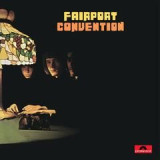
These records contain some of the most storied names not just in British, but world music. From a bunch of school friends setting out to be 'the British Jefferson Airplane', over the course of their first quartet of releases, the group metamorphosed into the leading exponents of British folk rock. In the way American folk and blues had looked back to gospel songs and spirituals, Fairport mined a seam a traditional English folk song, and then combined them with rock rhythms to create something ground- breaking and quickly emulated.
For many, this is the first time the considerable talents of Richard Thompson, Sandy Denny, Ashley Hutchings, Ian Matthews, Dave Swarbrick and Dave Mattacks would have been heard on record.
Lewis Taylor's legendary magnum opus: The Lost Album. "Now you're talking. That's my favourite LT album. Unlike all of the others, there isn't anything about it that embarrasses me." Straight from the genius's mouth. What can we say about this? Well, it's the most requested record ever at Be With Towers. The Lost Album was the intended follow-up to his first album but Island rejected it for fear of "confusing" the marketplace and its conception of Lewis as a soul artist. Their loss. It's a breezy sunset masterpiece.
The genesis of this incredible record needs unpicking a bit. Lewis stopped promoting the first album after a year and went home to record a completely different record that was the most un-R&B album you could probably ever hear: "I pushed in such an extreme direction the other way with what eventually became The Lost Album. It was a knee-jerk reaction to a perceived ‘trapped in R&B’ feeling I was going through at the time. Some people around me were in favour of it and others weren’t. In the end I think I lost confidence in it and did Lewis II instead." We did at least get Lewis II, which is a remarkable album, and he kept Island happy...for a bit. Not long after, Lewis was dropped. And what was to become The Lost Album could've been...er...lost. Forever.
Thankfully, however, Lewis and longtime partner Sabina Smyth revisited those scrapped demo tracks in 2003. They decided to re-arrange, re-record and then self-release them. So it was that the brand new version of The Lost Album finally dropped in late 2004. It's sheer perfection, and we don't say that lightly. The Lost Album was a fully 50/50 collaboration between Lewis and Smyth. As well as production, Sabina did a lot more writing on it, from the melody to "Listen Here" to the chord sequence for "Let's Hope Nobody Finds Us." Thankfully, Sabina is credited this time around.
No, it's not straight up "soul music" in the vein of his previous work. Yet, in its perfectly formed suite of one dozen songs, The Lost Album is dripping in soul. It's so warm, so effervescent and so alive with possibilities. It features deep, fresh imprints on well-loved, accessible sounds. It's a proper 70s style double album. Just one listen and the musical influences on The Lost Album are fairly self-explanatory, as Lewis recently told us, but it's always nice to hear that, in case we were in any doubt, he was definitely channeling Love, Yes, Brian Wilson, CSN, Laura Nyro and, of course, Todd Rundgren. The influences don't end there: "I’m particularly fond of my bass playing on that album, there’s a lot of Chris Squire going on which is cool."
Deep orchestral opener "Lost" is a sublime, harp-laced, string drenched gem, a cinematic, melancholic Axelrod-esque mini-epic that simply beguiles. Written by Smyth, it evokes Donny Hathaway's celestial "I Love The Lord, He Heard My Cry" from Extensions Of A Man. The only problem is the brief 90 seconds running time. It segues into the classic Brian Wilson-meets-power-pop-rock splendour of "Listen Here" which, with its outstanding extended harp-licked beatless intro, sounds like the younger cousin to Boston's "More Than A Feeling". We then drift into the ringing guitars of classic 70s rock anthem "Hide Your Heart Away". It's Lewis's personal favourite, "especially the multi-tracked guitar solo – I was listening to Boston at the time, which was fun." A-ha!
A new version of the heart-stopping, shoulda-been-a-massive-pop-hit "Send Me An Angel" opens Side B before the arrival of, in Lewis's completely correct words, "the clear standout, "Leader of the Band"; the perfect distillation of everything that album was trying to achieve." Soaring, piano-led Rundgren-esque power pop that makes the hairs on the back of your next stand on end. Truly, otherworldly. This is pure pop for now (and then) people. The simple jangly brilliance meets experimental prog-rock of "Yeah" sounds like simultaneously like prime CSNY and late 90s Radiohead (if they'd had a slightly more accessible bent and could write better tunes).
Oh, you wish The Beach Boys had continued writing amazing songs beyond Holland? Well, allow us to point you in the direction of the downlifting stunner "Please Help Me If You Can" and the warm textures and brilliant atmospherics of goosebump-inducer "Let’s Hope Nobody Finds Us". Words can't really describe the sheer beauty of these songs. So we'll stop trying. Just listen. Listen, listen, listen. Closing out this remarkable side of music, the accidentally Balearic "New Morning" should be blasting out at every sunrise set in Ibiza, this summer and forevermore.
The final side opens with the vaguely Beatlesey "Say I Love You". It's just classic, soaring pop-rock songwriting and should strictly be canonical. It's that good. The sassy, Stonesy swagger of "See My Way" injects enough rock'n'roll attitude to compensate for the rest of record's peace-loving, AOR sun-dappled vibe whilst album closer, "One More Mystery", emerging out of the rubble of the previous track, comes on initially like a Baroque-Pop George Harrison before piling crunching drums and screeching guitar solos atop the dreamy harmonies til close.
When asked what it means to have these records available on vinyl for the first time, Lewis is in no doubt: "It’s great and it’s really nice to be able to offer fans a different listening experience. There’s a whole other dimension with vinyl that taps into that whole nostalgia thing, well for me anyway. Something about the physical aspect of pulling it out of the sleeve and putting it on, it does tend to make you feel like you’re more engaged."
Lewis was adamant that he wanted all new artwork for The Lost Album vinyl sleeve and his brief was just the sort of classic tropical-beach-at-sunset you’d want to see on the front of a record that sounds like this. On the finished sleeve, the beach at sunset is just where we start out, before heading up through the painterly clouds and heading out into the stars. And yes, the lettering is a definite subtle nod to all those in-between-period Beach Boys bootlegs we all love. Simon Francis's sensitive mastering combines with Cicely Balston's precise cut for Alchemy at AIR Studios so the album sounds appropriately outstanding. The immaculate Record Industry double LP pressing will ensure this previously lost masterpiece stays forever found.
out of Stock
Last delivered 3 years ago available to reorder, subject to availability
High Focus Records is proud to present 'Put That Soul On Me' a brand new 3 track offering from arguably one of the best voices to emerge from these shores in recent years : Rag N Bone Man.
Since having been introduced to the world via High Focus Records in early 2013, Rag N Bone Man's career has flourished in an incredible way and it has become a widely known fact that, as cliche as it may sound, he is the next big thing. From gathering attention from the likes of tastemakers Zane Lowe, Rob Da Bank, Mistajam & getting daytime radio play on BBC Radio 1 among others to working with Hip Hop legend DJ Premier and touring all over the country with chart toppers Bastille, it is a proven fact that Rag N Bone Man's voice has the power to touch the hearts of millions no matter what genre of music you are into. With such a universally recognised talent, its going to be hard for nay sayers to deny the infectious flute grooves of 'Put That Soul On Me' or the slow pounding bass of 'Across The Sky'.
Dirty Dike, normally known for his outlandish lyrics and larger than life provocative character takes the back seat on this release, allowing his signature crunchy production to do the talking. Dirty Dike's instrumentals provide the perfect back drop for the smooth rumblings of Rag N Bone Man, the pair complement each other perfectly as the beat and the voice are just as heavy as one another, both putting on a fantastic display of skill and raw talent which has been synonymous with all High Focus Releases.
The title track, 'Put That Soul On Me' is a catchy celebration song, a festive underground tune praising 'that neat sweet soul' whilst denigrating those 'wack ass drums and played out synths' over swirling flutes. Following the festivities we have 'Across The Sky', a bass heavy downtempo number which explores the side effects of different drugs, upon which our protagonist asks for a helping hand before the heart wrenching saxophone kicks in. High Focus Records fans will be pleased to see that the infamous Rag N Bone Man 'exclusive Bars' from the HFTV channel is finally seeing an official release. 'My Business', which set the internet on fire upon its release on the channel, getting retweeted by the likes of super producers DJ Premier and 9th Wonder, is the third track on this project and features a guest verse from Contact Play legend Ronnie Bosh. With these three unmissable tracks on one piece of wax, The 'Put That Soul On Me' 12'' is going to be the soundtrack to your summer.
Lewis II was the follow up to Lewis Taylor's epochal, self-titled debut album. It was initially released in 2000 and this double LP release, its first ever vinyl edition, has been heavily anticipated for nearly a quarter of a century. It's often years before most listeners catch up with an album's breathtaking vision and devastating execution, and so it has proved with Lewis II; it stands up exceptionally well today.
After Island rejected Lewis Taylor's second release (later released as The Lost Album), he returned to the studio to record Lewis II. Less esoteric than Lewis Taylor, Lewis II is a more polished, sophisticated funk and mature uptempo soul than the dark psych-soul of his debut. The production, whilst slicker, is a bit tougher, with more crisp, R&B-flavoured grooves and head-nod beats and more bass pumping up his voice. The vocal intensity present on album number one doesn't abate. Indeed, as Lewis himself noted, "my voice is better on Lewis II and the vocals are high in the mix."
The moody funk of "Party" sounds like a mad blend of Riot-era Sly Stone and Brian Wilson. It rides a stuttering drum machine groove with acapella harmony vocals arriving halfway through to stay for the duration. "My Aching Heart", with its clean, slick, late 90s R&B drums, could surely have been a single. Perhaps Lewis's idiosyncratic melodies would've been too challenging for the charts. Lewis *had hoped* "You Make Me Wanna" would be a single but the dank, organ-drenched groove, coupled with the growling eroticism of Lewis's vocals would've, again, made this beyond the pale for most mainstream music fans. Somewhat incongruous acidic synths and bleeps give way to a laconic summertime groove on breezy highlight "The Way You Done Me", all funky acoustic guitars and stunning, good-time vocals. Sumptuous ballad "Satisfied", a real fan favourite, marries unusual instrumentation with classic soul-ballad structure and closes with a monster guitar solo which almost out-Princes Prince in its gritty melodicism, set against sweeping strings of real majesty. Prog-Funk-Rock!
The dubbed-out, spaced-out "Never Gonna Be My Woman" is the closest the album comes to classic D’Angeloesque neo-soul, with echoes of the esoteric funk featured across Maxwell's contemporaneous Embrya. But what follows is on some next level business. As Lewis's biggest fan, Geoffrey Scull, noted, "the "I'm On The Floor" / "Lewis II" / "Into You" song cycle stacks up against any other consecutive 15 minutes of recorded music, ever!" And who are we to argue with that? These could've been hits for Justin Timberlake during his fascinating Timbaland-collaborating days, such is the sonic and textural pop experimentation at play here. The extraordinary title track sounds like an outtake from Marvin Gaye’s Trouble Man and spends its last third as a searingly dark piano-led psychedelic-guitar-crunching soul instrumental. Just astounding. And then. AND THEN! The way it segues into, er, "Into You" is just straight up genius. Goosebumps galore on this one, no words can describe its celestial brilliance. Just kick back and be beguiled by the "Let me come on over again" refrain that ornately adorns its sensational coda. Phew.
The swoonsome, lovelorn ballad "Blue Eyes", apparently written in the spirit of Marvin’s "Vulnerable", is a lush, slow swinger with some gorgeous noir touches. To close, Lewis completely retools Jeff Buckley’s beloved, beautiful "Everybody Here Wants You" and, while talking some liberties, even manages to surpass the original. Yes, really! With soaring, fiery vocals set against icy piano and psychedelic guitars, Lewis recasts Buckley's effort as dramatic, ethereal soul.
When it came to translating the original CD booklet into a 12 inch LP sleeve, thanks to some suggestions from Cally Callomon (head of Island’s art department, who designed all the sleeves for Lewis’s two Island albums and their singles) and his trusting us with his “Lewis Taylor” folder full of various negatives, test prints and whatever else he was able to salvage from the old Island art department, we’ve gotten pretty close to what the original LP sleeve would’ve looked like if it existed. Simon Francis’s vinyl mastering, presents the eleven tracks over a double LP so, as ever, the record sounds outstandingly good. The records have been cut by Cicely Balston at Air Studios and pressed at Record Industry.
out of Stock
Last delivered 3 years ago available to reorder, subject to availability
Santana's self-titled debut album announces the arrival of a new Guitar God. Made during the legendary bandleader's most fruitful and creative period, the classic 1969 set functions as an accessible entry point into the tangy worlds of Latin music by way of an intoxicating blend of Afro-Cuban percussion, jazzy tempos, exotic leads, bluesy riffs, and psychedelic accents.
Indeed, separation between Carlos Santana's fluid fills, spicy solos, and broiling grooves and pianist Gregg Rolie's soulful Hammond organ runs allows the music to come alive with a newfound freshness and radiance. Songs simmer, with each passage bursting forth with vibrant colour. Just like the equally essential follow-up Abraxas, Santana also lays claim to one of the biggest (and unfortunate) production gaffes in music history.
For nearly four decades, copies were produced with the left and right channels reversed, meaning that everything was placed in a backwards manner. This even extended to compilations on which individual songs from Santana were included. Rest assured that, in addition to boasting reference audiophile sonics, this 180g 45RPM 2LP set gets all the specifications exactly right. And with a record of this magnitude, you want everything to be perfect.
Bound by natural chemistry and earthy spirituality, the record's innovative synthesis of myriad styles goes beyond anything that came before – as well as nearly everything that's followed. Playing with the finest band that the iconic guitarist ever had, Santana doesn't water down any exotic roots or simply incorporate mainstream Western styles into a Latin framework. This is a true hybrid, responsible for opening up borders, transcending cultural divides, and, most importantly, exhilarating the senses.
Released just weeks after the band blew minds at Woodstock, the groundbreaking record stands alongside Miles Davis' Bitches Brew and Jeff Beck's Beck-Ola as a pillar of rock fusion. Featuring the Top Ten radio smash "Evil Ways" and jam favorite "Soul Sacrifice," it hasn't aged a day. Hear like never before why Rolling Stone says Santana is #149 on its list of the Greatest Albums of All Time.
From Alehouse to Playhouse Bjarte Eike and his barnstorming Barokksolistene capture the vital spark of Restoration London’s entertainment scene with a captivating new recording for Rubicon Classics! The Playhouse Sessions will be released on 23 September 2022 to coincide with Barokksolistene’s concert double-bill at London’s Southbank Centre.
‘A smattering of Purcell, dances from Playford’s Dancing Master, shanties, reels and ballads succumb to a nine-piece ensemble drawing on Baroque, jazz and folk styles for a no holds barred hooley of riotous improvisatory give and take,’ (BBC Music Magazine review of The Alehouse Sessions, August 2019)
London’s musicians, pushed in the 1650s, to the margins of society by order of Oliver Cromwell, found room for new forms of entertainment in city-centre taverns and alehouses. They remained there long after the restoration of the monarchy, performing sets of dances, theatre songs and bawdy ballads to audiences glad to be free from Puritan constraints on pleasure.
Norwegian violinist Bjarte Eike and his Barokksolistene have restored the spirit and substance of those long-forgotten performances with their Alehouse Sessions, hailed by The Times as ‘irresistible’ and ‘fabulously unrestrained’ by The Guardian. Five years ago the Norwegian violinist and his band scored a best-selling album with The Alehouse Sessions on Rubicon Classics. They return to the label with another compelling collection of music and words of the kind on offer more than three centuries ago at Henry Purcell’s favourite Westminster watering holes. The Playhouse Sessions, set for release on Rubicon Classics on 23 September 2022, reflects the uplifting energy and engaging emotional contrasts of Barokksolistene’s Alehouse performances.
“The album contains a sort of inner narrative that runs through the recording,” says Bjarte Eike. “It has become like a play in its own right, with each track being a small tale within a larger story.” The recording’s tracklist includes Eike’s beguiling arrangements of music from Purcell’s semi-opera The Fairy Queen and his own original compositions on words from the play on which it is based, Shakespeare’s A Midsummer Night’s Dream; popular songs and ballads such as ‘The Irish Washerwoman’, ‘I often for my Jenny strove’ and ‘The Three Ravens’; tunes from Purcell’s welcome odes and stage shows, Come ye sons of art and Dido and Aeneas among them; the ‘Willow Song’ from Shakespeare’s Othello; Eike’s own voice in Puck’s monologue from Act 5 of A Midsummer Night’s Dream; and John Dowland’s sublime air ‘Can she excuse my wrongs’.
London’s theatres were closed at the start of the English Civil War in 1642 and remained shut until the Restoration. Alehouses offered redundant musicians, actors and dancers a place to scrape a precarious living and soon became their creative refuge. “Although a few surviving theatres reopened in 1660 with the return of Charles II, there was little money around to rebuild those that had been demolished,” observes Bjarte Eike. “And a generation of musicians had already found an audience in places like the Black Horse in Aldersgate Street. So popular were their alehouse sessions that Cromwell tried to abolish them! But they outlived him and became part of Restoration musical life.” The form of a Barokksolistene Alehouse, he adds, is like a creative room. “Within its framework I can frequently refurbish the show with new contents. The Playhouse project is likewise an extension of the ever-evolving Alehouse Sessions. Together they tell the story of music and theatre in London during Cromwell’s time and after the Restoration. Of course there’s an historical context to what we do. But there’s also the practical context – which is even more important to me – of connecting with a contemporary twenty-first century audience. An Alehouse / Playhouse performance is not something for the museum; it's about music made in the present moment, just as it was in the London alehouses of Purcell’s day -- with their playhouses annexed to the rear of the beer-drinking saloons. The encounter of musicians onstage and the audience in the hall is the real magic of it. We have to fuse the audience into the action of our performance!”
The Playhouse Sessions will be launched on Friday 23 September with a late-night concert at the Purcell Room and a post-concert Alehouse Session in the foyer of the Queen Elizabeth Hall. Soprano Mary Bevan is set to join Eike and his Alehouse Boys for the first half of their Southbank Centre double-bill, offering unique interpretations of songs from Purcell shows and other hits from the late seventeenth-century London stage. “The Southbank Centre is a direct descendant of concerts given in the 1650s in the alehouses of London,” notes Eike. “These alehouses after all staged some of the world’s first public concerts. Later, after the Restoration, it became common for promoters to advertise alehouse concerts in the press and offer subscription tickets. Purcell and his fellow musicians were thus just as at home performing there as they were in the chambers of the royal court or in London’s new theatres.”
Bjarte Eike launched his Alehouse Sessions in company with like-minded musicians 15 years ago. The ensemble comprises a core of regular performers, all of whom have committed to memory a huge setlist of up to four hours of music. Typically they meet a day or so before a concert tour to share a meal and make music together; then next day, re-grouping thirty minutes before the show, they discover Eike’s select-menu for the evening. “That ensures that every show is fresh,” he notes. “I make sure we never repeat the same programme twice. It’s therefore essential to work with people who share my outlook and dare to adventure. We’re into a high-risk sport, with lots of traps and places where the unexpected appears - for good or for ill. And so the audience knows we’re vulnerable. But our skill is seen in how we re-act on the hoof to the unpredictable. That’s authenticity and honesty - and above all it’s a performance that’s genuine.”
Armed with a classical training and a background in folk music and improvisation, Bjarte Eike was drawn naturally to Early Music in all its stylistic variety. “I never really felt at home with only one genre,” he recalls. “Early Music allowed me to study profound, complicated compositions, but performing it has also opened up the chance of rebellion and uproar! Early music offers wide, multi-faceted areas of musical exploration for me. You find, for instance, links to different types of music wherever you look in seventeenth-century English repertoire. And I am fascinated by all these connections. They offer a foundation for the Alehouse Sessions and for all Barokksolistene performance more generally. Every member of the group plays, sings, dances and improvises without limitation. We’re all interested in the many different fields of being a stage performer and pushing hard at the ‘normal’ boundaries of what it means to be a classical musician.”
The apartheid boycott In the 80s, the world – rightly - stepped up its boycott against South Africa’s apartheid government. But this had unexpected and sometimes adverse consequences for South Africa’s music professionals and consumers. Musicians still needed to work live shows both at home and abroad, and to make and sell records. The youth still aspired to clubbing and partying at the weekend after hard, poorly paid jobs under the thumb of an oppressive government. Music was their sanctuary: specifically, African- American inspired soul, jazz, boogie, disco and funk. Unique diversity Producing musical excellence was nothing new for South Africa, even in the 80s: both traditional and jazz music of various genres had been performed, showcased and recorded for decades with the assistance of some of the most skilled and ingenious sound-engineers and producers in the world, the jazz players rivalling their American peers in many cases. But what makes Mzansi 80s popular music unique is that it had to – and for the most part, did- appeal to a multi-ethnic, multilingual population almost like no other in the world, for its geographical size. There may have been many tribal and political differences between Zulu, Sotho, Xhosa, Tsonga and others day-to-day, but when it came to the weekend, those differences often melted away for a while on the dancefloor. Paul Ndlovu had kwaZulu fans as well as Shangaan followers; Black Moses and the Soul Brothers had followers and fans with everyone..and so on. And everyone- detractors and lovers alike- were content to settle on the monicker ‘Bubblegum’ as a general description. Mzansi took disco- and slowed it down a bit.. ..exactly as 90s and early 2000s South African DJs and mixers took House- and slowed it down a bit to develop Kwaito, Gqom and – later – Amapiano. The Roland TR-707 sampler came along in 1985- at just the right time for the flowering of Mzansi disco and boogie. And in the artful hands of arrangers, engineers and producers such as Peter “Hitman’ Moticoe, whose work figures on several of the tracks here, it became something unique to South Africa. 'Yebo! Rare Mzansi Party Beats from Apartheid's Dying Years' compiled by John Armstrong is out BBE Music on x3 vinyl set in a gatefold sleeve, CD, and across digital platforms for download and streaming.
Rock & Roll, Rhythm & Blues, Mambos, Cha Chas, Exotisches, unglaublich Seltsames! Zusammengestellt wurden diese raren Stücke von Professor Bop, der vielen eigentlich als Radiomoderator bekannt ist. In mühsamer Kleinstarbeit wurden längst vergessene Geheimnisse der Musikgeschichte geborgen und liebevoll zusammengestellt.
"Down At The Ugly Men's Lounge" ist eine skurrile Zusammenstellung dieser Raritäten und soll dem Zuhörer eine Tür in die Vergangenheit öffnen, zum Hören und Tanzen anregen.
Marc Richter aka Black To Comm released his debut record 20 years ago. In 2023 he is still busy releasing music under various disguises and is currently signed to the Thrill Jockey label. To celebrate this anniversary his own Cellule 75 label is re-releasing some classic out-of-print vinyl albums that originally came out on the defunct Type and De Stijl labels. The LP will feature a full-colour printed inner sleeve exclusive to this edition.
In 2009 the Type Recordings label run by John Twells had just released seminal records by Grouper, Jóhann Jóhannsson and Yellow Swans when they signed Richter and put out his breakthrough Alphabet 1968 album. The LP sold out within two weeks, receiving a glowing full-page review in The Wire Magazine by the late Mark Fisher (later reprinted in his book Ghosts Of My Life), was selected for Boomkat's Top 10 releases of the year (alongside debut albums by Leyland Kirby, Demdike Stare and Oneohtrix Point Never) and was greeted with universal praise in the underground blog network as well as established magazines such as The New Yorker and Pitchfork.
The music itself played with the notion of nostalgia without being nostalgic itself. It's the sound of half-remembered dreams, a surreal distorted vision of the past, an aural polaroid of long forgotten musics, a ghostly voice from a non-existent era.
From the original Type one-sheet:
"The mission statement for Alphabet 1968 was to write an album of "songs" for want of a better word. Short tracks which represented genre points, the milestones which stuck in Richter's mind when he thought back to his favorite records. What we arrive at is a breathtaking 10-track album which, over the course of 45 minutes, explores world music, techno, noise, avant-garde, ambient music and even exotica. Each track is linked with a loose thread of radio static or environmental sound, dragging you through the album, as if tuning in to a stray broadcast or a particularly adventurous mix. Richter has pieced the album together from hours of recordings made at his studio with home made gamelan, small instruments and loops gathered from a collection of ancient vinyl and 78 records. The scope of the album is admirable, but ignoring this, it is simply a shockingly arresting collection of experimental oddities, with references ranging from Moondog to Basic Channel by way of Bernard Herrmann. It's not hard to fall in love with Alphabet 1968, far harder would be to place exactly where the record should fit into your collection."
Mark Fisher in The Wire:
"But what if we were to take Richter's provocation seriously - what would a song without a singer be like? What would it be like, that is to say, if objects themselves could sing? It’s a question that connects fairy tales with cybernetics, and listening to Alphabet 1968, I’m reminded of a filmic space in which magic and mechanism meet: JF Sebastian’s apartment in Blade Runner. The tracks on the LP are crafted with the same minute attention to detail that the genetic designer and toymaker brought to his miniature automata, with their bizarre mixture of the clockwork and the computerised, the antique and the ultramodern, the playful and the sinister. Richter’s musical pieces have been built from similarly heterogeneous materials - record crackle, shortwave radio, glockenspiels, all manner of samples, mostly of acoustic instruments. ….. JF Sebastian's apartment was itself an update of older spaces in which science and sorcery co-existed: the workshops of ETA Hoffmann's inventor-magicians, or of Pinocchio's creator, Geppetto. I think, too, of Auguste Villiers de l'Isle-Adam's astonishing 1886 tale The Future Eve in which Edison, using the expertise he has recently acquired from inventing the phonograph, sets himself the task of constructing an artificial woman. But if there are songs here, they are sung by the gramophone and other recording and playback machines. Richter so successfully effaces himself as author that it is as if he has snuck into a room and recorded the objects as they played (to) themselves. Rather than simply automating his music, as in the case of Pierre Bastien and his mechanical machines, Richter makes us feel that he has merely recorded the unlife of objects. ….. Indeed, the impression of things winding down is persistent on Alphabet 1968. Entropy has not been excluded from Richter's enchanted soundworld. It feels as if the magic is always about to wear off, that the enchanted objects will slip back into the inanimate again at any moment."
We are ecstatic to announce that Sparkz’s debut High Focus EP ‘Overload’ is now available for pre-order!
As a long time player in the UK Scene with the likes of The Mouse Outfit, Voodoo Black, and LEVELZ - We’re sure that most of you will be familiar with Sparkz by now.
Coming in strong with his second single ‘Mean It’, Sparkz brings the heat with an unforgettable party banger that is guaranteed to liven up even the dreariest of functions. Fully self-produced, written, and recorded by the man himself, ‘Overload’ is a testament to the years in which Sparkz spent honing his multi-disciplinary skillset.
Due for release on the 24th March, ‘Overload’ will be landing just in time to welcome in the change of the seasons, because we can assure you that these tracks have already secured themselves a place on our summer playlists!
‘Overload’ is available to pre-order now on a limited run of 250 black vinyl, as well as available to purchase digitally from the HF shop, and across all digital platforms.
A wild and funky collection of Afro grooves that was ahead of its time in 1977 and has become a collector’s item in recent years, especially due to the growing international interest in Colombian picó sound system culture. Fruko and his studio bands Wganda Kenya and Kammpala Grupo treat us to a diverse set of African and Caribbean styles, laced with crazy synths, psychedelic guitar and infectious pan-African polyrhythms. By the time Discos Fuentes released the album “Wganda Kenya Kammpala Grupo” in 1977, Wganda Kenya’s discography was expanding with many 45 singles and appearances in various artists collections. The group’s 1975 debut record “África 5.000” was a full length LP in the U.S. and a various artists compilation in Colombia, which was followed by the self-titled long player the following year. However, Kammpala Grupo, which shared the album’s title and was credited to three songs on the record, had never appeared before, yet was basically the same studio group as Wganda Kenya. Most likely the creation of this short-lived studio band was just a ploy by the label to make it seem like there were more groups playing the type of exotic afro tracks favored by the picotero DJs of Colombia’s Caribbean coast (especially in Barranquilla and Cartagena). 1974 Discos Fuentes’ management had sent musician, band leader and producer Julio Ernesto “Fruko” Estrada to the coast on an A&R mission to discover what people were dancing to in the verbenas (communal open air neighborhood parties) run by the owners of picó sound systems (decorated mobile DJ rigs). Always game for an adventure, Fruko was tasked with bringing some popular examples of these esoteric, hard-to-find African, French and Dutch Antillean records back to Medellín to serve as inspiration (or to outright copy) so that the label could enter into the growing regional market and spread its popularity to the interior of Colombia and other Latin American countries via its own studio creation, Wganda Kenya. Fuentes was always returning to exploit the rich African-rooted culture of the coast as it had with the cumbia and other regional genres before, so in a way it was not surprising that they were attuned to this particular niche phenomenon from a marginalized sector of the population. The most popular genres with the champeta dancers in the 70’s and 80’s were styles like Congolese rumba, highlife, afrobeat, juju, mbaqanga and soukous as well as the music of Haiti, Guadeloupe, Martinique, Curaçao and Dominica, all of which were fiercely guarded by the DJs who had managed to acquire them often through extreme means of travel, barter and intense digging. The record kicks off with the joyful ‘El Gallo Africano’ which features exquisite interplay between Sepúlveda’s highlife style guitar and an authentic-sounding African style saxophone, perhaps played by Carlos Piña. In reality it was ‘Go Call Police Chief’ by prolific Nigerian highlife guitarist Chief Oliver Sunday Akanite, aka Oliver De Coque. Next up is Kammpala Grupo’s ‘La Yuca Rayá’ (‘Grated Yuca’), written by Isaac Villanueva in a style he termed son haitiano which sounds much more like Zimbabwe Shona mbira music. Wganda Kenya’s ‘Caimito’ (star apple, a type of tropical fruit), on the other hand, is actually a cover of a relatively well-known Haitian merengue song. Kammpala Grupo then takes us from the French Antilles to the multi-cultural discotheques of Paris, where a cover version of Black Soul’s Afro-boogie anthem ‘Black Soul Music’ is retooled and renamed ‘King Kong’, perhaps in a nod to the 1976 remake of the monster flick of the same name. Side two introduces us to the infectious merengue rebita of Angola via ‘La riphyta’ with “Paparí”, aka Mariano Sepúlveda, doing the vocals and faithfully replicating the Angolan guitar style. ‘La Trompeta Loca’ (‘The Crazy Trumpet’), probably the nuttiest track on the album, is an ingenious cover of ‘Ye Gbawa Oo Baba (Tribute To Nigeria)’ by Joe Mensah of Ghana. As with all their covers of African tunes, this rendition tightens up the original with some pop sheen, more consistent drumming and higher production values, remaking it into a powerful slow-burning dance floor filler. This is followed by one of the most powerfully original songs to come out of the entire Wganda Kenya project, Mike Char’s reggae anthem ‘El Nativo’ with Joe Arroyo on vocals. The record ends on a more authentically Caribbean sounding note with the instrumental ‘El testamento’, a cheerful islands banger with bright brass, syncopated calypso beats and chunky cuatro guitar (or ukulele). The original was in the mento genre and titled ‘Sweet meat’, written and recorded by Jamaican trumpeter Bobby Ellis. First time reissue. 180g vinyl.
Selected by Jim O’Rourke for his Tone Glow list of 25 albums that “never got their due”, Org was founded in the early 90’s by Espen Jensen and Kjetil D Brandsdal who would later go on to variously record as Elektrodiesel, Noxagt and Ultralyd in the swirl of the highly active Norwegian underground. “Org" was the only album the pair recorded as a duo, pressed in a meagre edition of just over 100 copies which disappeared almost as soon as they were made, lodged in the memory of the select few who have managed to hear it in the years since.
Made up of three long tracks, the near 20-minute ‘001’ opens the album with an extended organ zone-out matched with scraping factory machinery saturated into a dense cloud of harmonic fuzz. There's something transcendental about the sound that intersects with microtonal Alice Coltrane (particularly the unfairly maligned organ-only edition of "Turiya Sings"), as well as Pauline Oliveros and Ramleh. It’s music that pulls you in subconsciously; before you know it, you're fixating on the uncomfortable grind of metal on metal, buried mechanical rhythms and liturgical organ vamps that wind between industrial cacophony and sacred ritual music. For its last few seconds, we go into a full death metal tearout that fades out before it takes full flight, a glorious wtf.
‘002’ connects between minimalist drone styles and shoegaze, distorting fuzzed organ into pliable, dreamlike warbles that end up sounding like Kevin Shields' ‘Loveless’-era glides, or even Sunn O))) at their most devotional. Never losing the numbing overdriven mettle, its a piece that sounds spiritually entwined with Matthew Bower's Skullflower - a minimalist re-reading of high-contrast guitar music that takes all the psychoacoustic power and none of the annoying posturing.
For ‘003’, subaqueous organ is joined by synth and drum machine, sounding like the inspirational spark for Religious Knives' screwed 'n chopped cosmic psychedelia. The choice of sounds links it to Antena's foundational electro samba recordings too, but the overwhelming drone - a constant on all three compositions - connects the music to minimalist spirituals that have simmered beneath the DIY/avant garde for decades.
‘Org’ sits heavy on the nerves with overproof levels of mulched amp worship and ungodly, palms-down organ chords and wheezing, bezonked lines of melodic thought. 25 years out of sight and marinading in the archives, with the benefit of hindsight we can better understand the role these sounds played in the development of music in the contemporary sphere. It’s an important piece of the puzzle, one that makes valuable connections that, over time, have looked progressively more faint.