From the very start of "Drawing Dead" through the memorable lead line in the slower-paced closer "Big Sky Theory," Dozer assembled a work of impeccable songwriting and deep-rooted character. In the arc of their career, every record was another step forward, and just as 2001's Madre de Dios built on the debut and 2003's Call it Conspiracy built on that, so too did Through the Eyes of Heathens pick up from where its predecessor left off. Its sound was still rooted in a heavy rock feel, but Dozer were able to translate that into something more aggressive when they wanted - their sound had bite as well as lumber, and while a cut like "Born a Legend" could be traced back to their desert-minded beginnings in its basic structure, by the time it was finally executed, it was something else entirely. The Obelisk
Search:just be
From the very start of "Drawing Dead" through the memorable lead line in the slower-paced closer "Big Sky Theory," Dozer assembled a work of impeccable songwriting and deep-rooted character. In the arc of their career, every record was another step forward, and just as 2001's Madre de Dios built on the debut and 2003's Call it Conspiracy built on that, so too did Through the Eyes of Heathens pick up from where its predecessor left off. Its sound was still rooted in a heavy rock feel, but Dozer were able to translate that into something more aggressive when they wanted - their sound had bite as well as lumber, and while a cut like "Born a Legend" could be traced back to their desert-minded beginnings in its basic structure, by the time it was finally executed, it was something else entirely. The Obelisk
In a world of announcements of announcements, Gatecreeper are firing no warning shots before dropping their new release. “I think the social media environment has just fried our attention spans,” vocalist Chase Mason says. “Trying to hold someone’s attention for two or three months with a typical album roll-out doesn’t seem feasible with everything else currently going on in the world.” That’s not the only reason An Unexpected Reality comes with no pre-release hype whatsoever. “It’s meant to be listened to as a whole, so we didn’t wanna break it up or release a couple songs ahead of time as ‘singles’ or whatever,” Mason clarifies. “We also didn’t wanna treat it like it’s our next full-length. Because it’s not.” Written, recorded and now released during the Covid-19 pandemic, An Unexpected Reality is Gatecreeper like you’ve never heard them before. Exploring both ends of the tempo spectrum, the release offers two opposing sides of the band’s musical personality. Side one consists of seven short, sharp shocks that have a total running time of less than seven minutes. Inspired by grind, punk and hardcore, tracks like “Starved,” “Rusted Gold” and “Amputation” are some of the fastest offerings the Arizona death metal squad has ever recorded. Side two is the exact opposite.
Hunter And The Dog Star is the band’s fifth studio album and their first since 2018’s Rocket—a record that marked a major return for the group following a twelve-year hiatus and was released to widespread critical acclaim. Of the album, Associated Press declared, “a triumphant return…their joy in recording together again is clear on Rocket, a record that touches on a variety of musical styles with ease,” while NPR’s World Café proclaimed, “explosively joyful” and the Austin American Statesman praised, “a beautiful, inspiring, sensational album.” Since forming in Dallas in the mid-1980s, the band has toured extensively across the country and had their music featured in several hit shows including Miami Vice, Girls, Cold Case, Ugly Betty, Wet Hot American Summer: Ten Years Later, American Dad! and more. Since the release of their 1988 debut, the 2x platinum-certified, Shooting Rubberbands at the Stars, the band has continued to earn their reputation as an unclassifiable, genre-blending force. Returning to Arlyn Studios in Austin, TX to record with producer Kyle Crusham, Brickell and the New Bohemians—Brandon Aly (drums), John Bush (drums, percussion), Brad Houser (bass, synthesizer) and Kenny Withrow (bass, guitars, synthesizer)—once again put forth a collection of diverse musical ideas and styles on Hunter And The Dog Star, as they have continuously done for the past three decades. Reflecting on the album, Brickell shares, “Hunter And The Dog Star is a collection of songs reflecting the mystery of self-expression, loyalty, companionship and love in the darkest sky just before dawn.” In addition to Brickell (vocals, guitars), Crusham (background vocals, mellotron, piano, Rhodes, synthesizer) and the New Bohemians, the album also features Matt Hubbard (background vocals, organ, piano, synthesizer, wurlitzer), Burton Lee (pedal steel) and background vocals from Kelly Micwee and Alice Spencer.
Just before the end of the year 2020, a mere 12 months, after the release of their celebrated record “No Treasure But Hope”, Tindersticks surprised everyone with mentioning a new album to be released in 2021.
Stuart Staples was already nurturing seeds for a different kind of Tindersticks album before lockdown halted their tour in early 2020, singer. If 2019’s “No Treasure but Hope” saw the band rediscovering themselves as a unit, the follow-up reconfigures that unit so that everything familiar about Tindersticks sounds fresh again. “Distractions” is an album of subtle realignments and connections from a restless, intuitive band: rich in texture and atmosphere, it lives between its open spaces and details, always finding new ways to connect with a song.
If it’s an album that resists easy summation, at least one thing is clear: though it isn’t untouched by the lockdown, “Distractions” is not ‘a lockdown album’. As Staples says, “I think the confinement provided an opportunity for something that was already happening. It is definitely a part of the album, but not a reaction to it.”
"Liza With A 'Z'" is a multi-media production that has been showered with superlatives. It won numerous awards, including those for Choreography and Direction. However, a further award for the music composed by John Kander and Fred Ebb is probably the main reason for the show being released on a record, i.e. just for the ears. But the plan bore fruit, and the LP rocketed onto the Billboard 200. It was to be Liza Minnelli’s best chart hit ever – and it could even be called the soundtrack of her life.
Great favourites such as "Ring Them Bells" and "Bye Bye Blackbird" are set alongside sharp rhythm and blues numbers ("Son Of A Preacher Man", "I Gotcha"). Taking centre stage is a 10-minute medley from the film adaptation of the musical "Cabaret" that was shown in the cinemas also in 1972 and which brought Minnelli her international breakthrough.
All that remains of this costly and glamorous television event, which was only broadcast a few times on US television after the premiere, is the original music on record. Here it is once again in all its glory and with a new freshness.
Green Vinyl
Next up on Just Jack Recordings, long time, Detroit, underground hero - Gari Romalis delivers two super deep, grooving bumpers on the A. Lush chords, chunky beats and rolling melodies are the name of the game, whilst on the flip the energy gets taken down a notch with broken beats, fuzzy bass and filtered samples coming together for a blissed-out jam.
SebaKaapstad is not just a band; SebaKaapstad is about showingpeople what it looks like when cultures collide - stories that come from the lives of PalesaModiga, Philip Scheibel, Ndumiso Manana, and Sebastian Schuster. If you have ever wondered what it would sound like if a South African, a Swazi and a few Germans got together and used their talents to express themselves, this is your answer. SebaKaapstad is the coming together of worlds and experiences while appreciating how alike we are as human beings. Through the global perspective of the members, SebaKaapstad are able to explore a soundscape influenced by soul, groove, electronic undertones, jazz and African music.
The 12" EP A Momentary Convergence of Differently Paced Trajectories is a heterogenous dj-oriented release, prelude and companion of Maurizio Ravalico's first solo percussion album Nobody's Husband, Nobody's Dad, released in November 2018 with the Funkiwala label. It comes in 180gms vinyl on a hand-numbered run of 300 individually screen-printed 320gsm brown card sleeves.
THE MUSIC
Side A opens with a full-size batucada version of Fear of Mapping, one of the tracks from No Fiction Now!, the 2013 debut album of Maurizio's trio Fiium Shaarrk.
It is followed by a personal take on one of Collocutor's second album tracks, Here to There to Everywhere, arranged here as a spacey 5/4 drum'n'bass epic.
Side B contains an old-school jungle remix of Just Bring Your Toys, one of the tracks from Maurizio's forthcoming album, by the Italian d'n'b veteran Enjoy (Omni Music, Bustle Beats). The EP closes with an edited version of the same track: a taste of the album.
Despite being both loosely presented as remixes, neither of the two arrangements on side A makes use of samples from the respective releases, and any material not progammed or played anew by Maurizio comes from either unreleased off-cuts or preliminary demos.
"One of the finest avant-garde percussionists in the world. Maurizio Ravalico is incredible to watch and hear. Catch him live somewhere soon!"- Jean-Claude Thompson, IfMusic uk
"Creative, deep and intriguing. Percussion avantgarde at its best." - Vince Vella, Dj, producer, Havana Cultura
Italian-born visionary cross-genres percussionist Maurizio Ravalico has been one notably eclectic presence in the London music scene since his arrival in the UK, in 1991.
Regularily seen on stage and on releases with the like of Jamiroquai and the James Taylor Quartet throughout the nineties, as well as with virtually every salsa and Cuban-oriented projects to originate from London in the same period, he has subsequently collaborated on many of the projects of the experimental music label Not applicable (Icarus, Isambard Khroustaliov, Alex Bonney, Tom Arthurs) since 2005, and is now an established name in both the London and Berlin improv and experimental scene, having played with John Edwards, Oren Marshall, Steve Beresford, Pat Thomas, Frank Paul Schubert and many others.
Maurizio Ravalico's peculiar approach to percussion is one of the distinctive traits of Tamar Osborn's modal jazz 5-piece band Collocutor (On the Corner records) and of the pan-European trio Fiium Shaarrk (on BBC3 Late Junction's 12 Best Albums of 2017). Maurizio Ravalico also collaborates with the string quartet Phaedra Ensemble, the composer Fred Thomas and the French contemporary dance company Silenda.
The wait is ¦nally over. IBI001 was born. T_NO, the artist,
makes his debut with this disc. You can expect four solid
tracks between house, techno and electro. There is also a
very club-friendly DJ Balduin remix to be heard on the record.
Lean back, relax and prick up your ears. That's just the
beginning!
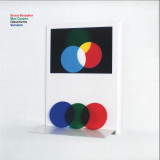
Laurel Halo, Donato Dozzy and Teheran sound artist Tegh give us their "Glassforms Versions"alongside a new edit by Max Cooper. The works of Philip Glass are reflected and refracted in a myriad of ways by some of the most renowned electronic artists alive, making for a blissful, multi-dimensional listening experience.
Textextext - (add your write up)
With "Glassforms", Max Cooper and Bruce Brubaker set out on an intimate, nuanced exploration of the works of Philip Glass. The resulting recordings, developed in a fluctuating exchange between the American pianist and the Irish scientist-artist, are an astounding testament to the innovation that artistic collaboration can achieve and what depths are yet to discover in Philip Glass' compositions. The two artists did not just rework, but fundamentally rewired the original songs using algorithmic software to process and augment the musical data it received from Brubaker's piano live on stage.
When approaching his remix, Donato Dozzy also tapped into that inspiration to create something new rather than just reworking it, which is one of the core motives that emanates from "Glassforms". The Italian producer and label owner is known for his drive to explore: he develops installations for public spaces and museums, uses obscure musical instruments and collaborates with classical singers or visual artists. "I chose "Two Pages" for it's hypnotic feel in the notes repetition", he says, "but I did not want to merely sample the piano, but instead ask someone I trust and admire to carve it from scratch and even go further." So he followed the lead of Brubaker and Cooper and teamed up with the renowned Italian percussionist and jazz musician Daniele Di Gregorio to completely rewire "Two Pages" into a gorgeous piece of endlessly modulating ambient electronica.
Laurel Halo, the second remixer on "Glassforms Versions", does not need a long introduction either: the American musician is at the forefront of electronic music in 2020, a bright star today after releasing her debut "Quarantine" on Hyperdub in 2012. Her remix of "Opening" brings to mind the string section of an orchestra tuning their violins before the performance - forever. They glide in and out of tune, sometimes individually, then together, then are accompanied by keys that are most likely a ghostly representation of Brubaker's piano, sampled and pitched down, but sound almost jazzy in the context of Halo's remix. It's a blissful listening experience, calling to mind her recent collaboration with cellist Oliver Coates on "Raw Silk Uncut Wood" and showing a deep understanding of Philip Glass' work.
Sound artist Tegh is the third on the remix bill - the electronic musician from Teheran delivers his take on "ƒTwo Pages", once again showcasing how versatile, how inherently complex the works of Philip Glass are. They can be interpreted in a myriad of ways - Tegh's version is a bounding, brooding piece filled with raw energy that feels like it is performed live, just for you, every single time you listen. His version is, at first, much more focused on the underlying moods, electronic undercurrents of the original than Dozzy's version, and yet, when the piano finally does break through, it becomes clear that we are listening to Philip Glass, reflected manifold: through the piano of Bruce Brubaker, the synths of Max Cooper, and then again through the mind of the artist Tegh.
Concluding the new "Glassforms Versions" is a previously unheard edit of "Two Pages". It's difficult to edit a piece of minimalistic beauty without losing it's essence, but Max Cooper - after many efforts and close conversations with Bruce Brubaker - managed to bring these shorter edit into a satisfying, conclusive form.
Following on from a series of singles, 'Runnin' Wild', 'Confliction' and 'Jump The Line', First Word Records is very pleased to present a full-length EP from alt-soul artist Olivier St.Louis, produced by Oddisee - 'M.O.T.H. (Matters Of The Heartless)'
Olivier was born in Washington DC of Haitian and Cameroon heritage, but spent his teens studying in the UK. As a teenager, his CD and tape collection would encompass a wide range of genres, from hip hop and r&b to garage and British alternative rock. A bio-science student, Olivier couldn't suppress his true passion of music. After graduating, he took on a "Jekyll and Hyde" lifestyle; working as a scientist in the day, and a musician at night.
His work as a recording artist eventually lead to his debut release in 2011, 'The Mr. Saint Louis EP', released under the moniker Olivier Daysoul and produced by longtime collaborator and fellow Washingtonian, Oddisee, a revered hip hop producer / artist in his own right. From here on, Olivier began laying down vocals, collaborating and touring with a wide-range of artists over the following years, including Hudson Mohawke, C2C, Laura Mvula and German rockers, AnnenMayKantereit.
After taking a hiatus from feature work, Olivier decided to concentrate on nurturing his own sound. Embracing a newfound love for blues, rock and funk, a series of late night sessions saw him engulfed in new soundscapes, and reverting back to his birth name, Olivier St.Louis. This saw him release two critically-acclaimed EPs with Berlin-based label, Jakarta, and the release of 'The Serious EP' with Bibio on Warp Records.
Following world tours with many of the afore-mentioned, Olivier has been working on all-new material, which is now set to be unleashed upon the world via Worldwide Award-winning London label, First Word Records.
The 'M.O.T.H.' EP begins with the downtempo bump of 'Jump The Line' before the adrenaline-racing rhythm of 'Runnin Wild' steps up the pace. Next is second single 'Confliction'; a considerably moodier affair, with Oddisee on assist on the bars as well as on the boards. The flipside begins on a similar vein as the first with the smoothed-out soul of 'All In Love', before we head into the slightly jazzier tinged 'Quit'. 'Serotonin' follows next with a groove and bassline reminiscent of Sly Stone, before we close out with the feel-good uptempo boogie stepper, 'Steady'. With Oddisee on the boards throughout, this EP exemplifies Olivier's unique take on alternative soul.
Comparisons have already been made to something between D'Angelo and Shuggie Otis - big boots to fill, though easy to believe once you've seen and heard this man do his thing. This EP is essentially a classically-structured selection of soul-funk with a rock edge, and a touch of jazz. Each track is laced with Olivier's sweet harmonies and fuzzed-out guitar licks throughout, and mixed down with a little 2020 boom bap thump. A prime example of Olivier's unique talents and a set of quality contemporary alt-soul.
When asked his thoughts on his artistry, Olivier St. Louis simply states "no punches pulled, no compromises, just me".
'M.O.T.H. (Matters Of The Heartless)' is released via First Word Records in January 2021.
The legendary reggae artist Frederick Nathaniel “Toots” Hibbert and his band The Maytals continuously put out great albums. Their classic sound will be familiar with reggae fans. The songs range from stone reggae groove to rocksteady. Sadly Toots passed away in Kingston, Jamaica, on September 11th, 2020 but his legacy lives on through classic records such as Just Like That.
There is a blink-and-you’ll-miss-it anecdote tucked into one of
the many fine documentaries about seminal 20th Century artist
Jean-Michel Basquiat regarding the habits of his studio practice.
As we watch inspiring footage of Basquiat darting from one
piece to the next with rapid-fire brush strokes, a friend or
gallerist in a voice over says that it was not unusual for
Basquiat to be working on several paintings in the same
moment as several radio stations and televisions played in the
background. Not much more time is spent on the anecdote but
it feels like a skeleton key into Basquiat’s endlessly alluring,
neoexpressionist work.
And while Bryan Devendorf’s solo curio ‘Royal Green’ doesn’t
possess the only-in-New York vibe of Basquiat’s work, there is
something shared in its many-channels-open style of creation.
Satellite signals, strange voices from lost television
documentaries and radio operas are all woven into its fabric -
like it’s using these endless tides of media and information to
unlock the subconscious. Even its covers - Bob Dylan,
Fleetwood Mac, The National (with a nice big wink), The
Beatles - are like stunning, albeit satanic takes on hymns, or
like American standards almost dragged into the underworld.
Like the best of Spacemen 3, Sparklehorse or massively
underrated San Fran band Skygreen Leopards - the music
makes you queasy in one movement and lulls you into
blissmode in the next. It’s the very edge of outsider pop
songwriting.
For all the amphitheaters and festival fields Devendorf has
played to over his career, ‘Royal Green’ almost feels like an unlearning and a newfound love of homemade/found/fractured
sounds - and how, if collaged just so, detritus can become
stunningly gorgeous and surreal. And not without hooks. Look
no further than ‘Frosty’, which could be Little Billy Corgan’s
decayed demo tape from just before the Smashing Pumpkins
appeared on the scene. And the unspooling, slightly unglued
dream-pop of ‘Breaking the River’ is as rapturous as it is
sinister. And that’s probably where Devendorf wants it.
Repress
When you find DJ Sotofett and Telephones on remix duties for the mighty Joan Bibiloni it's sure to be a treat. For the 22nd installment in the Saft series, two of Bibiloni's greatest numbers from "Born" (1989), are re-imagined for the occasion.
Sotofett opens up the A-side with an extended version of Bibiloni's "El Sur". Clocking in just under twelve minutes, the so-called "mastermix" is a version in the vein of the extended disco singles from the era of the original. Sotofett's supernatural dancefloor touch centers around Bibiloni's guitar-licks that gently slide along and communicate with the other elements of the original. This is a version to close a night with - or better yet - to close a summer set just before sundown.
The B-side contains a reworked version of "Sa Fosca" by another Norwegian artist: Telephones. "Telephones Coastal Dub", is another lengthy endeavor. The ten (and something) minutes long venture keeps in line with the Mallorcan character of the Bibiloni sound, while giving it a subtle touch of dancefloor, complete with the signature lead of the original as the focal point. The extensive intro and the balance between breeziness and firmness is sharply done and will make sure that the version can find its way into numerous settings.
Demon Records is proud to present a new series of vinyl reissues from American singer-songwriter Black Francis / Frank Black
“Salutations from the Twilight Zone, and if you think I mean the 1960s sci fi television program you are correct;
I am quite literally inside of a 1960s sci fi television program. And in that context Demon have allowed
me to correct certain anachronisms in my published works and are releasing some for the first time on vinyl
(https://en.wikipedia.org/wiki/Polyvinyl_chloride).” - Black Francis
• First released in 2000, Oddballs is a compilation of remixed rarities and B-sides recorded between 1994 and 1997.
• Black Francis explains the album was given the title as “they're ODDBALLS. There was once a time when even I was asked to
provide additional content for auxiliary releases of main published works. It was great. They didn't care what the new content was
they just needed it. Yesterday. So awesome. I get to go back into the studio and obsess a little more with no one to bother me,
except by then the bank was mostly blown so we did not have a lot of TIME. Well, sometimes, fuck time.”
• Long out of print, this new vinyl reissue is pressed on 140g silver vinyl, housed in a printed inner sleeve.
Jupiter, the gas giant in our Solar System, with thunderstorms a thousand times more powerful than on Earth, rainfalls of diamonds in the atmosphere, temperatures below -100°C, plenty of hydrogen, 79 moons and a South pole that looks like an abstract painting, has just the kind of environment this music seems to emanate from.
Jupiter and Beyond, the second collaborative effort of composer/performer Rafael Toral and percussionist João Pais Filipe as a duo (after Saturn in 2016), is definitely not quite a record of Earth music. On the contrary, Jupiter and Beyond, is indeed gas music, unfolding over two long movements without solid body or any tangible outline, between ambient and noise. A music of sheer volume and beauty, icy, massive, in which the elements of Toral's signature, in particular his use of jazz-inspired electronics and feedback, dissolve to become a labile, nebulous, expansive material, occasionally struck by abyssal depressions and masterful densities, magnified by the return, after 17 years of silence, of the electric guitar in Rafael Toral's instrumentarium.
Towards the end of Beyond, the second piece on the record, lurking behind the volutes of feedback, a bell and a bass drum, one can detect from the distance... a barking dog, as a surreptitious and prosaic reminder of where we are here and now, a calling back to Earth. Between sadness and joy, anger and peace, movement and stillness, Jupiter and Beyond is indeed a mirror held out to us, music reflecting our times and that emotionally speaks first of all about us.
"While João Pais Filipe was drummer in the Space Quartet, we played a live duo set. During soundcheck we were jamming for a while on bowed gongs and feedback and lost track of time, it just flowed so well. I joked "we could make a whole record with this!". But later we took the idea seriously and set to record an improvised session at his cymbalsmith workshop (he made the gong on the cover and it was used in the recording). When we listened to the first take the mass of sound was amazing. At some point it reminded me of the complex clusters of sound in Ligeti's music as it appears on Kubrick's 2001 scene "Jupiter and Beyond the Infinite". In the end the title felt like an apt choice for Saturn's successor. Back at my studio I felt the need for some more layers of density in some sections. I thought of using trombones, but ended up picking up the electric guitar, which I hadn't used since 2003.” Rafael Toral
The band that became Nightshift formed in 2019 in the ecosystem of Glasgow's current indie scene. The city's fertile & creative group of musicians have been committed to pushing the boundaries of and blurring the lines between DIY, punk, experimentalism and indie pop for decades now; a home to bands like Shopping, Vital Idles, Current Affairs, Still House Plants, and Happy Meals as well as forebears like Orange Juice, Teenage Fanclub and Yummy Fur. Nightshift slot right in with all mentioned, featuring members from current indie stalwarts Spinning Coin, 2 Ply and Robert Sotelo. Initially formed by guitarist David Campbell and bassist Andrew Doig as a "No Wave/No New York/ early Sonic Youth/This Heat-esque" group, the addition of Eothen Stern (keyboards/vocals) and Chris White (drums) instantaneously transformed their approach (guitarist/vocalist/clarinetist Georgia Harris joined as the band was writing "Zöe"). The band self-released a full-length tape on CUSP Recordings in early 2020, laying the foundation of their sound; hypnotic, melodic, understated indie post-punk with hooks that stick around long after you've heard them. "Zöe" is the band's newest effort, and first for Trouble In Mind. Unlike the band's previous album, the songs on "Zöe" weren't conceived live in the band's practice space, but rather pieced together and recorded remotely during quarantine lockdown, with each member composing or improvising their parts in homes/home studios, layering ideas over loops someone made and passing it on. The isolation actually allowed for an openness and creativity to flow and many of the songs took on radically different forms from when they were originally envisioned. Vocalist & primary lyricist Eothen Stern says "The process of writing these songs separately during lockdown was a kind of exquisite corpse - I liked this gesticulation of reaching out to one another and responding. Building up the next layer and passing it on." Stern says "poetic restraints" to writing & Eno's Oblique Strategies concepts were on their mind when composing the words to the songs on "Zöe" and lists the influence of author Rosi Bradiotti's book "The Posthuman". "Zöe" means "live drive", derived from the word conatus. Bradiotti defines conatus as "an effort or striving, endeavour, impulse, inclination, tendency, undertaking, serving is an innate inclination of a thing to continue to exist and enhance itself." and Stern views it as "...a kind of feminist re-claiming of communal public, anti- privatisation, looking to strive for social and environmental justice. Zöe kind of became a character of striving for me when writing.". "Zöe" kicks off with "Piece Together", a hypnotic song anchored by the band's chanted vocals and serpentine guitar licks. "Spraypaint the Bridge" showcases Harris' clarinet in an unexpected & delightful melodic shift during the song's anti-chorus. Elsewhere tunes like the swooning "Infinity Winner" and "Outta Space"s minimalist, slinky rhythm swirl in a late-night vibe, while "Make Kin" ruminates on "Looking to kinship as a way of engaging with entangled environmental and reproductive issues... how a band is a bond" and lurches forward with kinetic guitar strangling and staccato rhythmic percussion from White and Doig. "Power Cut" is the album's centerpiece, kicking off side two and lures the listener into its world over it's 7-minute runtime. Lulling them into involuntary movement with its waves of melodic harmonies, synth drones and metronomic pulse, until they all come crashing down in the song's dissonant midsection. The band acknowledges the whiffs of nostalgia prevalent in "Zöe"s songs (the title track in particular), and the nature of writing and recording the album is soaked in the self-work, reflection and reevaluations involved not only personally but creatively in each member's lives. Consequently, the album becomes a collection of sketches of hope, growth, awareness of the power of the world and the power of self, kith, kinship, friendship, resistance, and possibility.
When Claud Mintz's mother finally heard the 13 songs on her kid's magnetic first album, Super Monster, she asked a concerned question: Just how many people had her 21-year-old dated? From beginning to end, these sparkling pop tunes capture the assorted stages of a relationship's delight and dejection_the giddy sensation of a first kiss during the beaming "Overnight," the heartsick longing of a pending rejection during the yearning "Jordan," the reluctant call for a requisite breakup during the smoldering "Ana." Claud, though, replied that these songs detailed the phases of only two or three relationships, simply written during them or at various points after they were over. The debut release on Phoebe Bridgers' Saddest Factory Records, Super Monster is a vertiginous but joyous coming-of-age reckoning with such young love. Claud sees relationships as games of endless wonder, intrigue, and second-guesses, a roller-coaster thrilling you even when it's terrifying. If "Gold" turns the tension and indecision of a bad match into an undeniable bit of lithe disco, "That's Mr. Bitch To You" uses a spurt of righteous indignation to fuse a little soul and emo into one breathless hook. Super Monster is like a compulsive compilation that Claud culled from a lifetime of musical enthusiasms_the arcing alt-rock of '90s airwaves, the rapturous pop of '00s chart-toppers, the diligent genre-hopping of modern online life. Claud emerges as the chameleonic mastermind of this mélange, channeling all of love's emotions into songs so sharp they make even the hardest times feel fun. Perhaps you are in the throes of one of these romantic moments yourself right now, resentful of a frustrating paramour like Claud during "Pepsi" or indulging in lust like "In or In Between." Or maybe these songs recall those wild days and tough situations. Incisive, instant, and addictive Super Monster works on either level_to remind us of love's wild ups and downs or to help us deal with them in real time. In that way, Mom, these songs are about dating, well, everyone.
Feines Tier is kicking off in 2021 with a top notch EP by St. Petersburg based brothers Radial Gaze. Andrey is an electronic musician, producer and mixing engineer, resident of the club "Skotny Dvor". Stas is a sound designer, theatre director and author of music for theatrical performances. So non-trivial synthesis, new media and club vibes meet classic arts and Russian percussion! The Apollonius EP contains three original tracks plus remixes by the likes of Roe Deers and SHMLSS making this record just a perfect club music ride. Vinyl diggers are appreciating the beautiful artwork of the limited and hand numbered edition on black plastic
Established in 2015 with a vision to push the envelope on bass-driven music at 140bpm, Belgian label DUPLOC have been doing just that ever since. Now, after a refreshing rebrand and enticing new label plans in store, they welcome Distance into the fold with his darkly raw and starkly haunting Sacrifices EP.
- A1: The Marsist
- A2: Men In Black
- A3: Punk Rock City
- A4: You Ain’t Me
- A5: Jesus Was Right
- A6: I Don’t Want To Hurt You (Every Single Time)
- B1: Mosh, Don’t Pass The Guy
- B2: Kicked In The Taco
- B3: The Creature Crawling
- B4: The Adventure And The Resolution
- B5: Dance War
- B6: The Cult Of Ray
- B7: The Last Stand Of Shazeb Andleeb
Demon Records is proud to present a new series of vinyl reissues from American singer-songwriter Black Francis / Frank Black
“Salutations from the Twilight Zone, and if you think I mean the 1960s sci fi television program you are correct;
I am quite literally inside of a 1960s sci fi television program. And in that context Demon have allowed
me to correct certain anachronisms in my published works and are releasing some for the first time on vinyl
(https://en.wikipedia.org/wiki/Polyvinyl_chloride).” - Black Francis
• First released in 1996, The Cult of Ray is Frank Black’s third studio album and includes the singles ‘Men In Black’, ‘The Marsist’
and ‘I Don’t Want To Hurt You (Every Single Time)’.
• Black Francis explains the Cult Of Ray “was the band that was also the band for the first Frank Black & The Catholics record. I
hadn't stumbled on to my live to 2 track obsession just yet, but I was quite enjoying the parameters of 16 track 2 inch. Fat and
warm, aided by my sweet as candy pal Lyle Workman on lead guitar. Lyle can be best described as a HOT DOG with a
telecaster in his large, supple hands. Super fun motorcycle ride.”
• Long out of print, this new vinyl reissue is pressed on 140g blue vinyl, housed in a printed inner sleeve.
Just when you thought every loner folk genius had been outed/discovered, hyped, and pontificated about, a new/old challenger lurks in the murky depths of time...and Maine. Sure, you have your Skip Spences, Dave Bixbys, Stone Harbours, and Perry Leopolds already, but have you heard the lonesome sound of Bill Stone? Well, don't feel bad or "unkool", hardly anyone has--unless you lived in rural Maine in the early 70s and grabbed his barely-ever seen LP in the day. Titled simply Stone, Bill's mysterious album was pressed in the micro-est of quantities, covering wistful, airy psychedelia on par with the UK's Mark Fry's classic Dreaming of Alice, while still evoking the earthy, evening-hour melancholy of Leonard Cohen or Tom Rapp. Stone was also especially influenced by one Donny P. Leitch, one Robby Zimmerman, and much trad folk, while growing up in his hometown of Old Town, Maine. Stone started out playing in a few small folk ensembles while also moonlighting with occasional solo gigs, finally recording this lone platter in 1969 in a pottery studio (!?) on a 2-track Panasonic tape recorder in Boothbay, Maine (where he says, they competed with a cat in heat). The LP features Tom Blackwell/Bill Stone-guitars, Arthur Webster-bass, Bob Blackwell/Skip Smith-drums, Bill/Beth Waterhouse on vocals. It also seems cover artist Doug Bane went on to become an acclaimed cosmic painter--committing loads of animals, psychedelic scenes, and Native American portraits to canvas, who knew? But we digress--anyhow, seems Stone's solo career slowed down after marriage hit, and he transitioned to playing covers in bars for cash, but after acquiring a masters and doctorate in education, he moved into the teaching walk of life. Bill published books and articles on subjects as diverse as school counseling and chaos theory--but now retired, he's returned to music, even recording a new album of originals and traditional numbers, based on his experiences as a cab driver (another wrinkle in the Stone Saga we must hear more of someday - but for now check out). So with Bill back in action and the world slowly crawling out of a disillusioning haze, now seems like the perfect time for a first-time-ever reissue of this incredibly rare, happy-sad, gently delicate, Stone(d) classic of a downer song-cycle.
Influenced by a life split between Lima, London, and Twentynine Palms, Peru-born M. Caye Castagnetto’s Leap Second is an intriguingly personal and hard to classify debut album. The album is a thick collage of samples Caye recorded with different artists and musicians, including Beatrice Dillon and the late Aileen Bryant, that spans five years in the making. There is something in Leap Second that tracks the speed of bodies, how they approach and retreat. The ten tracks are speedy and languid, thick ruffles, and dirges. In parts it feels like one’s stumbled upon a forgotten incredible ’70s folk record but that feeling gets broken quickly by clever sleights of hand. Caye’s balladry is angular, time is elastic. Each song is a fresh cape. How dandies really mean it, so masc- that it’s fay, how the only moment is this one and it’s just passed, etcetera.“While it doesn’t really sound like anything else, there are moments that feel like a Latin-flavored Nico, that’s edging its way towards some of the outings of the Sun City Girls. In my opinion it checks all the boxes, by checking none of them.” —Bjorn Copeland, Black Dice “A truly interesting conglomeration of loose inspirations and conjurings. A hard to decipher sound all together which makes it worth every moment...a sprinkling of Catherine Ribeiro, Dr. John, Terje Rypdal and Nico. Far-out sun-soaked odysseys and moon-dappled woodland night creepers...” —John Dwyer
Thom Morecroft’s new live single 'The Beast' is unafraid to show the scars. Liverpool, UK — Thom Morecroft’s new 7 inch single ‘The Beast’ has
already been described by writer Paul Du Noyer (NME, Q, Mojo, Word) as “that killer finale”. Recorded live at Studio2, Parr Street, it captures the Shrewsbury-born singer-songwriter closing the launch of his latest album in his hometown of Liverpool.
Following the release of the rich and layered ‘Feng Shui and the Sushi’ album, ‘The Beast’ brings everything back home to an acoustic guitar, the raw voice and a captive audience. A personal story of family alcoholism and mistaken identity, it captures a
young artist at his most direct and vulnerable; giving just a little too much away.
After a UK album tour cut short (and the thrill of a huddled audience for many a distant memory) Thom wanted to reach out with a song that could only really be heard live.
Available on 7” Vinyl and across all digital platforms. For more information, promo requests, or to arrange an interview, get in touch via details at the top.
Leeds-based art-rock trio Mush release their feverish second
album, ‘Lines Redacted’, via Memphis Industries. The new
release, which finds the group recruiting Lee Smith (The Cribs,
Pulled Apart By Horses) on mixing duties, arrives just under a
year after their debut, ‘3D Routine’, capping off what has been
an obviously tumultuous but remarkably prolific year for the
band. With any prospect of live shows decimated, the group,
led by songwriter Dan Hyndman, have found the time to
release two EPs (‘Great Artisanal Formats’ and ‘Yellow Sticker
Hour’) and now a duo of full-length albums.
Tipped previously by the likes of 6 Music, Loud & Quiet, Uncut,
Q, Stereogum, DIY, The Line of Best Fit, Dork and more, Mush,
comprised of Hyndman (guitar/vox), Nick Grant (bass/vox) and
Phil Porter (drums), present their own sonic idiosyncrasy. It’s a
sound that blurs the lines of abstract surrealism, existentialism
and social commentary; utilising guitars as tools in 2020 to
stave off malaise whilst simultaneously commenting on the
nation’s ability to fall into such dire straits. It’s a sensory
overload of wiry tones that zig-zag between punk, prog and
sardonic-funk with a relentless ability to reflect society’s faults
and apathy in a unique and acerbic manner.
Whereas the band’s debut was very much a product of its time,
something part-inspired by the political atmosphere of mid-
2019 and a genuine moment of optimism when the prospect of
a socialist government in the UK was on the cards, this new
record uses tongue-in-cheek cynicism as a coping mechanism
for the environment that we now find ourselves in. From one
song to the next, ‘Lines Redacted’ introduces a string of
different narrators with each providing a different reflection on
the Armageddon scenario that we are slowly entering, whether
that’s bemoaning it or gleefully willing it along. ‘3D Routine’
presented a bed of scathing political jibes latching onto themes
and decisions of the time. ‘Lines Redacted’ mutates these ideas
into something slightly more sinister whilst maintaining all of
Hyndman’s razor-sharp wit that permeates the album.
- A1: Muddy Water Blues (Acoustic Version) (Feat. Buddy Guy)
- A2: Louisiana Blues (Feat. Trevor Rabin)
- A3: I Can’t Be Satisfied (Feat. Brian Setzer)
- A4: Rollin’ Stone (Feat. Jeff Beck)
- B1: Good Morning Little School Girl - Part I (Feat. Jeff Beck)
- B2: I’m Your Hoochie Coochie Man (Feat. Steve Miller)
- B3: She’s Alright (Feat. Trevor Rabin)
- C1: Standing Around Crying (Feat. David Gilmour)
- C2: The Hunter (Feat. Slash)
- C3: She Moves Me (Feat. Gary Moore)
- C4: I’m Ready (Feat. Brian May)
- D1: I Just Want To Make Love To You (Feat. Jeff Beck)
- D2: Born Under A Bad Sign (Feat. Neal Schon)
- D3: Good Morning Little School Girl - Part Ii (Feat. Richie Sambora)
- D4: Muddy Water Blues (Electric Version) (Feat. Neal Schon)
Muddy Water Blues: A Tribute to Muddy Waters is the second solo album by Paul Rodgers, best known as the vocalist of Free and Bad Company. This album features collaborations with many artists, including Brian May, Buddy Guy, David Gilmour, Jeff Beck, Gary Moore, Richie Sambora, Slash, and Steve Miller. He took these classic blues tunes and arranged them a little more towards rock. The album was recorded at various studios due to the many guests on the album, but producer Billy Sherwood managed to keep the sound pretty similar throughout. Muddy Water Blues was nominated for a Grammy Award.
Now available as a limited edition of 2000 individually numbered copies on translucent yellow coloured vinyl.
Limited marble coloured vinyl
There’s a lonesome vibe to his brand of heartland rock, evoking late nights on a deserted road, or neon-lit streets just after a rainstorm.” (Brooklyn Vegan)
“His music has a distinct cinematic quality to it, as it explores the weird, grotesque, and strangely beautiful corners of the human psyche.” (Noisey)
'Highway Dancer' was the latest addition to Calvin Love's catalog of cerebrally-crafted, atmospheric indie pop, before his b-side and rarities album 'Night Song' came out via Taxi Gauche Records a year ago. The album stems from the same period of songwriting as his 2017 EP, Ecdysis, and encapsulates the observations and inspiration from Love's life on the road. 'Highway Dancer' is now re-issued on vinyl.
"The songs you hear on this album were compiled from a larger collection over the past three years. Many of the songs are the subconscious soundtrack to my life and travels before my mind had a chance to conceive them. Inspiration came from everything that attracted my inner soul to the external forces and beauty this world has to offer."
For fans of: Weyes Blood, Father John Misty, Cut Worms, Sam Cohen
For Rhye’s Michael Milosh, the home is the center of creativity and community. It transcends conventional understandings of walls, stairs and hardwood floors. A culmination of a wayfarer’s journey, the home is a balm for a restless spirit — a place to simply be.
For much of his life, the Canadian singer, songwriter and multi-instrumentalist has wandered, decamping in Toronto, Montreal, Thailand, the Netherlands, Germany and Los Angeles at varying times. Since the meteoric rise of Rhye’s 2013 debut Woman, he’s mostly lived on the road—playing between 50 and one hundred shows a year. But over the last couple of years something changed. On the heels of some major life changes, including a new relationship, Milosh yearned for a more permanent space. “It's this idea of creating a safe place that's not just conducive to creativity, but one that’s truly an anchor point from which to make art and be creative,” he says.
That longing was fulfilled in August of 2019 when Milosh and his partner Genevieve happened upon the perfect place in Topanga. It had been on and off the market for two years as the owner sought the perfect buyer, one who would carry on its creative tradition. “She did this ceremony somewhere on the property where she was trying to call in the right people, and apparently we came the next day,” Milosh explained. “The right kind of home presented itself to us, and we presented ourselves to it. It was like a union between us and the home.”
Written throughout 2019 and early 2020, recorded at Milosh’s home studio, United Recording Studios and Revival at The Complex, and mixed by Alan Moulder (Nine Inch Nails, Interpol, My Bloody Valentine, U2, The Killers), Home is familiar in its synthesis of propulsive beats, orchestral flourishes, piano ruminations and sultry, gender-nonconforming vocals, but never have they sounded more cohesive or alive.
“I'm always trying to always accomplish musical goals that are connected to the way I listened to and interact with music as a child,” Milosh says. The sentiment also underscores a broader, less obvious, but no less important theme echoed through his new record: No matter where life takes us, we can always go home.
There is a blink-and-you'll-miss-it anecdote tucked into one of the many fine documentaries about seminal 20th Century artist Jean-Michel Basquiat regarding the habits of his studio practice. As we watch inspiring footage of Basquiat darting from one piece to the next with rapid-fire brush strokes, a friend or gallerist in a voice over says that it was not unusual for Basquiat to be working on several paintings in the same moment as several radio stations and televisions played in the background. Not much more time is spent on the anecdote, but it feels like a skeleton key into Basquiat's endlessly alluring, neoexpressionist work. And while Bryan Devendorf's solo curio `Royal Green' doesn't possess the only-in-New York vibe of Basquiat's work, there is something shared in its many-channels-open style of creation. Satellite signals, strange voices from lost television documentaries and radio operas are all woven into its fabric _ like it's using these endless tides of media and information to unlock the subconscious. Even its covers _ Bob Dylan, Fleetwood Mac, The National (with a nice big wink), The Beatles _ are like stunning, albeit satanic takes on hymns, or like American standards almost dragged into the underworld. Like the best of Spacemen 3, Sparklehorse or massively underrated San Fran band Skygreen Leopards _ the music makes you queasy in one movement and lulls you into blissmode in the next. It's the very edge of outsider pop songwriting. For all the amphitheaters and festival fields Devendorf has played to over his career, `Royal Green' almost feels like an un-learning and a newfound love of homemade/found/fractured sounds _ and how, if collaged just so, detritus can become stunningly gorgeous and surreal. And not without hooks. Look no further than "Frosty" which could be Little Billy Corgan's decayed demo tape from just before the Smashing Pumpkins appeared on the scene. And the unspooling, slightly unglued dream-pop of "Breaking the River" is as rapturous as it is sinister. And that's probably where Devendorf wants it.
Plump is fat positive, sex positive, queer positive, feminist and anti racist with a focus on centering underrepresented and marginalized voices. Think feminist Ghetto Tech, uplifting while militant, raw and empowering. A place of refuge for everyone who has ever felt unseen or excluded no matter gender, colour or creed.
Plump is about an attitude and ethos, more than it is attached to a genre specific sound. Plump is about radical acceptance. Plump is a return to the origins of dance music as a space for people from all walks of life to be able to come together, embrace joy, pleasure and be free to truly be themselves.
Plump is a creative partnership and collaboration between Kevin Knapp and Jessica “Hutch” Hutcheson, AKA Hutchtastic. Hutch is a visual artist, vocalist, Detroit native, burgeoning producer and overall performer and art personality. Kevin Knapp is music producer, DJ and vocalist, with a slew of releases on formidable labels in the dance music industry.
Kevin also has a new streaming show on Dirtybird Live called Plump’d. The Plump’d livestream show originates from Berlin and is created by Kevin & Hutch.
Kevin says
"Plump'd is an opportunity I've been gifted in the wake of the world shutting down due to the pandemic. Life is funny that way when life closes some doors it opens others. I've been given the opportunity to host a show every Saturday night during the prime time slot, on Dirtybird's Twitch channel for Dirtybird Live. Each week my hope is to have artists I respect, revere, and consider a friend to come on and play some music with me, just for the love of the music. The show is named after our new record label and carries with it the label's ethos of going back to the roots of dance music as a place of radical acceptance."
We’ll get to the vocal content in a second, but first it’s time to acknowledge what a patchwork tapestry of genius ‘Peace is not the word to play’ is in terms of production. Large Professor being a prodigy on the SP-1200 is well established, but the way he flips parts of MFSB’s ‘TLC’ and Milly and Silly’s obscure ‘Gettin’ Down for Xmas’ with a sprinkling of Lyn Collins here establishes his credentials in the top tier.
Lyrically, it’s a tour de force, with Main Source taking exception with the misuse of the word ‘peace’ by the hip-hop fraternity. With even the most homicidal of gangster rappers dropping it at the end of tracks at the time, time was overdue for some regulation.
The album version makes its point pithily in a single verse, while the remix, included on the flip of this first ever 7” release, expands on the topic with new verses and some new samples too. It’s a welcome reminder of the time when remixes were remixes – not just the identical track with the latest hot rappers joining in.
Most of all, Main Source once again walk the fine line between lyrical lecture and head-nodding banger – the rare example of a track with a point to make that can still fill a dancefloor and get necks snapping.
• Samples MFSB’s ‘TLC’; Milly and Silly’s obscure ‘Gettin’ Down for Xmas’ and Lyn Collins
• First ever 7” release of the Remix
Main Source’s paean to the simple pleasures of relaxing with friends is built over two tried-and-tested samples. The dreamy, swoony sounds of Vanessa Kendrick’s timeless ‘90% of Me is You’ is ever-present during this stone-cold classic, while Sister Nancy’s unmistakeable ‘Bam Bam’ lends several elements to the mix. Throw in some Skull Snaps and Sweet Charles and you’ve got the perfect soundtrack for a roll call of Large Professor’s nearest and dearest.
There are plenty of reasons why so many regard ‘Breaking Atoms’ as an all-time classic album, and the sheer variety of singles lifted from it is chief among them. Large Professor was happy to roam over varied topics at a time when many rappers had a manic focus on one thing.
And where better to hang out with friends than at a barbecue? ‘Live at the Barbecue’ is rightly regarded as one of the best posse cuts of all time, and famous for showcasing the debut of one Nasty Nas. While he delivers a dope verse full of quotables over drums from Bob James’ oft-plundered ‘Nautilus’, credit is also due to the other guests. Fatal and Akinyele aren’t disgraced in this company, and Large Professor tops it off with a rare verse of pure brag-rap.
An undisputed entry in the pantheon of head-nod hip-hop, this is its first official UK release, and another debut on 7”.
• Samples Sister Nancy’s unmistakeable ‘Bam Bam’
• Taken from the all-time classic album ‘Breaking Atoms’
• Features the debut of Nas
• Limited Edition Purple vinyl
Sometimes a record comes along that is a wonderful anomaly that really is all about the music. Silver Leaf recently appeared on the radar via obscuro diggers on both sides of the Atlantic and landed with a Hey!
What is known about Silver Leaf, beyond that it was a short-lived mid-80s project out of Cincinnati, Ohio, is that it features ex-Zephyr keyboardist John Faris, working alongside the mysterious vocalist Silvia Leaf.
The difference between the blues and occasional psychedelic rock of early 70s Boulder, Colorado's Zephyr and the lo-fi recordings of Silver Leaf are striking, but in Hey! and Can We Rebuild Our City?, the power of the ballad and strong playing of John, is wrapped in mid-80s, mid-States lo fi heaven.
Whether a non-de-plume, Ms Leaf's searing, innocent vocals fly above John's keys and programming. Hey!'s repetitive exhalations act like a mantra to a party, while tom's chime in accompaniment. Here it comes!
Can We Rebuild Our City? starts with Faris' forlorn intro before crashing percussion heads to some kind of wonderful, as Leaf questions a calls to hearts.
Releasing just 3 singles, Silver Leaf's music is unique and essential, an experience and a delight to present.
The album was intended as an experiment using musical styles Brubeck discovered abroad while on a United States Department of State sponsored tour of Eurasia, such as when he observed in Turkey a group of street musicians performing a traditional Turkish folk song that was played in 9/8 time, a rare meter for Western music. Columbia president Goddard Lieberson took a chance to underwrite and release Time Out. It received negative reviews by critics upon its release, but despite this, it became one of the best-known and biggest-selling jazz albums, charting highly on the popular albums chart when 50,000 units sold for a jazz album was impressive. It consequently produced a Top 40 hit single in "Take Five", composed by Paul Desmond, and the one track not written by Dave Brubeck. The cover art is just as important as the LP itself featuring specific artwork created by S. Neil Fujita best known for his covers for CBS Records, which introduced abstract art to jazz LP packaging.
We’ll get to the vocal content in a second, but first it’s time to acknowledge what a patchwork tapestry of genius ‘Peace is not the word to play’ is in terms of production. Large Professor being a prodigy on the SP-1200 is well established, but the way he flips parts of MFSB’s ‘TLC’ and Milly and Silly’s obscure ‘Gettin’ Down for Xmas’ with a sprinkling of Lyn Collins here establishes his credentials in the top tier.
Lyrically, it’s a tour de force, with Main Source taking exception with the misuse of the word ‘peace’ by the hip-hop fraternity. With even the most homicidal of gangster rappers dropping it at the end of tracks at the time, time was overdue for some regulation.
The album version makes its point pithily in a single verse, while the remix, included on the flip of this first ever 7” release, expands on the topic with new verses and some new samples too. It’s a welcome reminder of the time when remixes were remixes – not just the identical track with the latest hot rappers joining in.
Most of all, Main Source once again walk the fine line between lyrical lecture and head-nodding banger – the rare example of a track with a point to make that can still fill a dancefloor and get necks snapping.
• Samples MFSB’s ‘TLC’; Milly and Silly’s obscure ‘Gettin’ Down for Xmas’ and Lyn Collins
• First ever 7” release of the Remix
"Over the years, I have had the absolute pleasure of meeting countless wonderful people in every corner of this beautiful planet, and a lot of times these music enthusiasts have expressed a very similar-sounding story. That our presence – whether it be via a studio recording or our ferocious show – is capable of transporting them to a better place and washing away all earthly worries. Doesn't this sound amazing – especially during these challenging times?"
This gentle voice belongs to the vocalist-guitarist Jonne Järvelä, who happens to be the creative force behind the unique Finnish ensemble KORPIKLAANI. Having experienced multiple triumphant years within the inner circle of folk-influenced heavy metal, Jonne now acknowledges his position as one of the most recognisable artists ever coming from the land of a hundred thousand lakes.
KORPIKLAANI – preceded by Jonne's own project SHAMAANI DUO (1993-1997) and the band SHAMAN (1997-2003) – was founded somewhere deep in the primeval northern forests in 2003. Ten celebrated studio albums, numerous world tours and hundreds of millions of digital streams alongside multiple other releases, have established KORPIKLAANI’s status as one of the leaders of innovative heavy music. For their diehard legion of fans, they are known as Folk Metal Superstars.
"I have always been fascinated by ancient Lappish/Samish culture and the infectious melodies of aged folk songs. However, that's only one side of the coin as I have loved rip-roaring metal since I was a frantic kid looking for some rebellious sounds. My butt was kicked by the likes of MOTÖRHEAD, IRON MAIDEN and JUDAS PRIEST", says Jonne.
"Since the early 2000s, KORPIKLAANI has combined these elements as we have tirelessly attempted to pump new life into the ancient tales of joy and heartbreak, and added the enormous energy of current heavy metal into that folk metal melting pot.We have always been on a mission to create something new and unprecedented."
Here and now, KORPIKLAANI’s fearless journey continues on – and this time, the journey is powered by rather serious subject matter. Their eleventh full-length studio record "Jylhä" (which has no direct translation but can be described as majestic, or wild and rugged in a beautiful way) brings all the well-known and essential ingredients to the table: heavy-duty guitar riffing, rhythmic folk melodies and more.
What about the tales of the wilderness then? The fascinating and miscellaneous tales have always been a crucial part of KORPIKLAANI’s journey within the realms of unspoiled Finnish nature, ancient Scandinavian myths, shamanistic voyages and beyond. "Did I already mention that "Jylhä" offers some new angles?", the singer/guitarist laughs. "Well, lyrically, there are definitely some previously unknown passages – such as fables connected to the infamous Lake Bodom murders in Southern Finland in early 1960s."
KORPIKLAANI’s long-time lyricist Tuomas Keskimäki – the renowned Finnish poet and author, comments: "When I am coming up with narratives, interesting wordplays and other ideas for KORPIKLAANI, I often feel like I am diving into some absorbing fantasy world. I would describe this state of mind as some kind of a deep trance", says Keskimäki.
"As a whole textual piece, "Jylhä" is rather widespread. For example, there are stories about the fragility of life, revealed by using nature metaphors. ‘Miero’ is one of these tales: after all, it's a fact that the lifetime of a human being is just one blink of an eye compared to the eternal aeons of the cosmos."
"On the darker side, there are several murder songs - I wasn't really planning these rather untraditional lyrics, they just happened... One of these is ‘Kiuru’, and that story is inspired by a famous Finnish double homicide case, which took place in the small village of Tulilahti in 1959. In these lyrics, the character called Kiuru – Skylark in English – acts as eyewitness and a prophet, but at the same time, this creature also functions as an allegory of many things... All in all, I am really happy with the lyrics and all these new themes!"
When asked about his current sentiment regarding the new KORPIKLAANI opus "Jylhä", the commander of the forest clan sighs and smiles. "Using "Jylhä" as our solid steppingstone, we are able to reach completely new heights. For me, it's crystal clear that KORPIKLANI has never been better."
It is a fitting album for our dark times, summed up well by the song ‘Huolettomat’ (The Careless). It talks about living in the present moment, alongside a story of joy and celebration. Today is today, tomorrow is uncertain.
MSG is a legendary name. After two phenomenal records under the guise of Michael Schenker Fest, a true guitar hero is returning to his roots. By forming Michael Schenker Group (MSG) back in 1979, Michael Schenker laid the foundations for one of hard rock’s most glorious solo careers of all times. And while nobody expected anything less from a former guitarist for Scorpions and UFO, it’s close to impossible mentioning everything Michael has built over the past 50 years, or the countless people he influenced or played with. This, truly, is the stuff that hard rocking myths are made of.
“I never looked back,” is how Michael dryly sums up an extraordinary career. Due to this mindset, he only realised much later what a huge impact his playing had made on the world of metal and hard rock. Very few guitarists can be cited as a primary influence for the likes of James Hetfield, Kirk Hammett, Dave Mustaine, Dimebag Darrell, Slash or Kerry King. However, to understand Michael Schenker means to understand one primary thing: he’s not here to be worshipped or adored, he’s not here to get rich, he’s here to play. And at 65, he’s doing it with the same swagger, verve and dizzying artistry as always. “I’m still 16 in my head,” he laughs.
Right in time for his 40th anniversary as a solo artist and his 50th birthday as a musician, he resurrects the immortal Michael Schenker Group. “Immortal” is also the name of his new album, recorded by likely the strongest line-up in his long history. Its a lightning bolt of an album that sounds fresh, bloodthirsty and agile. “Immortal” showcases the gargantuan vocal talents of Chilean hard rock prodigy Ronnie Romero (Rainbow), backed by singers Ralf Scheepers (Primal Fear), Joe Lynn Turner (ex-Deep Purple) as well as Schenker’s brother in arms, Michael Voss (Mad Max) who again produced the record alongside Michael Schenker – flawlessly, punchy and at full steam as if their very lives depended on it.
Next to Michael Schenker caressing his iconic black and white Dean Flying V, we hear bass player Barry Sparks (Dokken), keyboard player Steve Mann as well as the three drummers Bodo Schopf, Simon Phillips (ex-Toto) and Brian Tichy (ex-Whitesnake) pumping gallons of fresh blood through the tracks. And that’s not all, keyboard wizard extraordinaire Derek Sherinian (Dream Theater, Black Country Communion) gives the listener a baptism of fire in the blistering, heavy hitting opener “Drilled to Kill”, powered by Ralf Scheepers’ unbelievable vocal tornado.
Michael Schenker doesn’t live to play, he plays to live, and there’s no better way of summing up his relationship to his music than this – now for half a century and counting. The most emblematic representation of this relationship is the monumental closing track “In Search Of The Peace Of Mind”, a new recording of the very first song he ever wrote. “I composed this track in my mother’s kitchen back when I was 15,” he looks back half a century and smiles broadly: “The solo is just so perfect, I wouldn’t change a single note even today. This is the most important song of the last 50 years for me. It’s what started it all.”
When it finally got released in 1972 on the Scorpions’ debut “Lonesome Crow” Schenker had already moved on to UFO. What followed were several decades of pure hard rock ecstasy on and off stage, featuring a rotating cast of stellar players, always pressing the pedal to the metal. Now, in 2020, he reaps what he sowed. Alongside many of his peers, friends and contemporaries, he is celebrating 50 years of hard rock – fittingly with an album that is something like a zeitgeisty reminiscence of everything he’s ever done. The massive midtempo smasher “Don’t Die On Me Now” sees Joe Lynn Turner going all in, Ronnie Romero works his magic in “Knight Of The Dead” while Michael Voss cuts a grand figure before the microphone as well as behind the mixing desk on the furious second single “After The Rain”.
Towering above them all, Michael Schenker and his guitar prove they’re truly and utterly invincible. The celebrated icon pulls out all the stops – including his legendary “howler”, the fabled magnet he’s used on his fingerboard for a while now. And here’s yet another thing that’s just so archetypically Schenker, when bringing up his fiery and dedicated performance on “Immortal” he nonchalantly shrugs it off: “I simply played from the heart, as always.” This, dear Michael, is the understatement of the year – all the more so for a record that is already one of the top contenders for hard rock/metal album of the year.
MSG is a legendary name. After two phenomenal records under the guise of Michael Schenker Fest, a true guitar hero is returning to his roots. By forming Michael Schenker Group (MSG) back in 1979, Michael Schenker laid the foundations for one of hard rock’s most glorious solo careers of all times. And while nobody expected anything less from a former guitarist for Scorpions and UFO, it’s close to impossible mentioning everything Michael has built over the past 50 years, or the countless people he influenced or played with. This, truly, is the stuff that hard rocking myths are made of.
“I never looked back,” is how Michael dryly sums up an extraordinary career. Due to this mindset, he only realised much later what a huge impact his playing had made on the world of metal and hard rock. Very few guitarists can be cited as a primary influence for the likes of James Hetfield, Kirk Hammett, Dave Mustaine, Dimebag Darrell, Slash or Kerry King. However, to understand Michael Schenker means to understand one primary thing: he’s not here to be worshipped or adored, he’s not here to get rich, he’s here to play. And at 65, he’s doing it with the same swagger, verve and dizzying artistry as always. “I’m still 16 in my head,” he laughs.
Right in time for his 40th anniversary as a solo artist and his 50th birthday as a musician, he resurrects the immortal Michael Schenker Group. “Immortal” is also the name of his new album, recorded by likely the strongest line-up in his long history. Its a lightning bolt of an album that sounds fresh, bloodthirsty and agile. “Immortal” showcases the gargantuan vocal talents of Chilean hard rock prodigy Ronnie Romero (Rainbow), backed by singers Ralf Scheepers (Primal Fear), Joe Lynn Turner (ex-Deep Purple) as well as Schenker’s brother in arms, Michael Voss (Mad Max) who again produced the record alongside Michael Schenker – flawlessly, punchy and at full steam as if their very lives depended on it.
Next to Michael Schenker caressing his iconic black and white Dean Flying V, we hear bass player Barry Sparks (Dokken), keyboard player Steve Mann as well as the three drummers Bodo Schopf, Simon Phillips (ex-Toto) and Brian Tichy (ex-Whitesnake) pumping gallons of fresh blood through the tracks. And that’s not all, keyboard wizard extraordinaire Derek Sherinian (Dream Theater, Black Country Communion) gives the listener a baptism of fire in the blistering, heavy hitting opener “Drilled to Kill”, powered by Ralf Scheepers’ unbelievable vocal tornado.
Michael Schenker doesn’t live to play, he plays to live, and there’s no better way of summing up his relationship to his music than this – now for half a century and counting. The most emblematic representation of this relationship is the monumental closing track “In Search Of The Peace Of Mind”, a new recording of the very first song he ever wrote. “I composed this track in my mother’s kitchen back when I was 15,” he looks back half a century and smiles broadly: “The solo is just so perfect, I wouldn’t change a single note even today. This is the most important song of the last 50 years for me. It’s what started it all.”
When it finally got released in 1972 on the Scorpions’ debut “Lonesome Crow” Schenker had already moved on to UFO. What followed were several decades of pure hard rock ecstasy on and off stage, featuring a rotating cast of stellar players, always pressing the pedal to the metal. Now, in 2020, he reaps what he sowed. Alongside many of his peers, friends and contemporaries, he is celebrating 50 years of hard rock – fittingly with an album that is something like a zeitgeisty reminiscence of everything he’s ever done. The massive midtempo smasher “Don’t Die On Me Now” sees Joe Lynn Turner going all in, Ronnie Romero works his magic in “Knight Of The Dead” while Michael Voss cuts a grand figure before the microphone as well as behind the mixing desk on the furious second single “After The Rain”.
Towering above them all, Michael Schenker and his guitar prove they’re truly and utterly invincible. The celebrated icon pulls out all the stops – including his legendary “howler”, the fabled magnet he’s used on his fingerboard for a while now. And here’s yet another thing that’s just so archetypically Schenker, when bringing up his fiery and dedicated performance on “Immortal” he nonchalantly shrugs it off: “I simply played from the heart, as always.” This, dear Michael, is the understatement of the year – all the more so for a record that is already one of the top contenders for hard rock/metal album of the year.
MSG is a legendary name. After two phenomenal records under the guise of Michael Schenker Fest, a true guitar hero is returning to his roots. By forming Michael Schenker Group (MSG) back in 1979, Michael Schenker laid the foundations for one of hard rock’s most glorious solo careers of all times. And while nobody expected anything less from a former guitarist for Scorpions and UFO, it’s close to impossible mentioning everything Michael has built over the past 50 years, or the countless people he influenced or played with. This, truly, is the stuff that hard rocking myths are made of.
“I never looked back,” is how Michael dryly sums up an extraordinary career. Due to this mindset, he only realised much later what a huge impact his playing had made on the world of metal and hard rock. Very few guitarists can be cited as a primary influence for the likes of James Hetfield, Kirk Hammett, Dave Mustaine, Dimebag Darrell, Slash or Kerry King. However, to understand Michael Schenker means to understand one primary thing: he’s not here to be worshipped or adored, he’s not here to get rich, he’s here to play. And at 65, he’s doing it with the same swagger, verve and dizzying artistry as always. “I’m still 16 in my head,” he laughs.
Right in time for his 40th anniversary as a solo artist and his 50th birthday as a musician, he resurrects the immortal Michael Schenker Group. “Immortal” is also the name of his new album, recorded by likely the strongest line-up in his long history. Its a lightning bolt of an album that sounds fresh, bloodthirsty and agile. “Immortal” showcases the gargantuan vocal talents of Chilean hard rock prodigy Ronnie Romero (Rainbow), backed by singers Ralf Scheepers (Primal Fear), Joe Lynn Turner (ex-Deep Purple) as well as Schenker’s brother in arms, Michael Voss (Mad Max) who again produced the record alongside Michael Schenker – flawlessly, punchy and at full steam as if their very lives depended on it.
Next to Michael Schenker caressing his iconic black and white Dean Flying V, we hear bass player Barry Sparks (Dokken), keyboard player Steve Mann as well as the three drummers Bodo Schopf, Simon Phillips (ex-Toto) and Brian Tichy (ex-Whitesnake) pumping gallons of fresh blood through the tracks. And that’s not all, keyboard wizard extraordinaire Derek Sherinian (Dream Theater, Black Country Communion) gives the listener a baptism of fire in the blistering, heavy hitting opener “Drilled to Kill”, powered by Ralf Scheepers’ unbelievable vocal tornado.
Michael Schenker doesn’t live to play, he plays to live, and there’s no better way of summing up his relationship to his music than this – now for half a century and counting. The most emblematic representation of this relationship is the monumental closing track “In Search Of The Peace Of Mind”, a new recording of the very first song he ever wrote. “I composed this track in my mother’s kitchen back when I was 15,” he looks back half a century and smiles broadly: “The solo is just so perfect, I wouldn’t change a single note even today. This is the most important song of the last 50 years for me. It’s what started it all.”
When it finally got released in 1972 on the Scorpions’ debut “Lonesome Crow” Schenker had already moved on to UFO. What followed were several decades of pure hard rock ecstasy on and off stage, featuring a rotating cast of stellar players, always pressing the pedal to the metal. Now, in 2020, he reaps what he sowed. Alongside many of his peers, friends and contemporaries, he is celebrating 50 years of hard rock – fittingly with an album that is something like a zeitgeisty reminiscence of everything he’s ever done. The massive midtempo smasher “Don’t Die On Me Now” sees Joe Lynn Turner going all in, Ronnie Romero works his magic in “Knight Of The Dead” while Michael Voss cuts a grand figure before the microphone as well as behind the mixing desk on the furious second single “After The Rain”.
Towering above them all, Michael Schenker and his guitar prove they’re truly and utterly invincible. The celebrated icon pulls out all the stops – including his legendary “howler”, the fabled magnet he’s used on his fingerboard for a while now. And here’s yet another thing that’s just so archetypically Schenker, when bringing up his fiery and dedicated performance on “Immortal” he nonchalantly shrugs it off: “I simply played from the heart, as always.” This, dear Michael, is the understatement of the year – all the more so for a record that is already one of the top contenders for hard rock/metal album of the year.
The five members of Sun June spent their early years spread out across the United States, from the boonies of the Hudson Valley to the sprawling outskirts of LA. Having spent their college years within the gloomy, cold winters of the North East, Laura Colwell and Stephen Salisbury found themselves in the vibrant melting-pot of inspiration that is Austin, Texas. Meeting each other while working on Terrence Malick's 'Song to Song', the pair were immediately taken by the city's bustling small clubs and honky-tonk scene, and the fact that there was always an instrument within reach, always someone to play alongside. Coming alive in this newly discovered landscape, Colwell and Salisbury formed Sun June alongside Michael Bain on lead guitar, Sarah Schultz on drums, and Justin Harris on bass and recorded their debut album live to tape, releasing it via the city's esteemed Keeled Scales label in 2018. The band coined the term 'regret pop' to describe the music they made on the 'Years' LP. Though somewhat tongue in cheek, it made perfect sense ~ the gentle sway of their country leaning pop songs seeped in melancholy, as if each subtle turn of phrase was always grasping for something just out of reach. Sun June returns with Somewhere, a brand new album, out February 2021. It's a record that feels distinctly more present than its predecessor. In the time since, Colwell and Salisbury have become a couple, and it's had a profound effect on their work; if Years was about how loss evolves, Somewhere is about how love evolves. "We explore a lot of the same themes across it," Colwell says, "but I think there's a lot more love here." Somewhere is Sun June at their most decadent, a richly diverse album which sees them exploring bright new corners with full hearts and wide eyes. Embracing a more pop-oriented sound the album consists of eleven beautiful new songs and is deliberately more collaborative and fully arranged: Laura played guitar for the first time; band members swapped instruments, and producer Danny Reisch helped flesh out layers of synth and percussion that provides a sweeping undercurrent to the whole thing. Throughout Somewhere you can hear Sun June blossom into a living-and-breathing five-piece, the album formed from an exploratory track building process which results in a more formidable version of the band we once knew. 'Real Thing' is most indicative of this, a fully collaborative effort which encompasses all of the nuances that come to define the album. "Are you the real thing?" Laura Colwell questions in the song's repeated refrain. "Honey I'm the real thing," she answers back. They've called this one their 'prom' record; a sincere, alive-in-the-moment snapshot of the heady rush of love. "The prom idea started as a mood for us to arrange and shape the music to, which we hadn't done before," the band explains. " Prom isn't all rosy and perfect. The songs show you the crying in the bathroom,, the fear of dancing, the joy of a kiss - all the highs and all the lows." It's in both those highs and lows where Somewhere comes alive. Laura Colwell's voice is mesmerising throughout, and while the record is a document of falling in love, there's still room for her to wilt and linger, the vibrancy of the production creating beautiful contrasts for her voice to pull us through. Opening track 'Bad With Time' sets this tone from the outset, both dark and mysterious, sad and sultry as it fascinatingly unrolls. "I didn't mean what I said," Colwell sings. "But I wanted you to think I did." Somewhere showcases a gentle but eminently pronounced maturation of Sun June's sound, a second record full of quiet revelation, eleven songs that bristle with love and longing. It finds a band at the height of their collective potency, a marked stride forward from the band that created that debut record, but also one that once again is able to transport the listener into a fascinating new landscape, one that lies somewhere between the town and the city, between the head and the heart; neither here nor there, but certainly somewhere.
From Tromso to Oyafestivalen, to Roskilde Festival, moving to Oslo and now with new label Fysisk Format onboard, Heave Blood & Die is ready to follow up their 2018 effort "Vol. II", with "Post People". A mournful panoramic rock piece that brings to mind the inward explosions of The Cure, Smashing Pumpkins and Killing Joke. Given life through the mix by Graham Walsh (Holy Fuck, METZ, Viet Cong) and master by Paul Gold (Angel Olsen, Preoccupations, Beach House). Post People started as a concept we talked about together as a group, the more we discussed the topic, the more it turned out to it could possibly be so many different things: A fictional universe deprived of an established society, a post-apocalyptic universe of sorts, which the concept Post People very much is. It would be humankind as a whole transcending modern society, leaving capitalism behind, laying waste to non-justified authority, achieving the climate neutral goal, equality for all and ending the war on drugs. Post People is very much an activist piece of art, a critical view on how things are, and always has been, put into rhythm and sounds sequenced in an order that makes melodies that some find pleasant.
Much has changed in the musical life of renowned composer and director John Carpenter since 2016's Lost Themes II. Following the release of that album, he went on his first-ever concert tour, performing material from the Lost Themes albums, as well as music from his classic film scores. He re-recorded many of those classic movie themes for 2017's Anthology album, working alongside son Cody Carpenter and godson Daniel Davies. The following year, he was asked to executive produce and compose the music for the new Halloween movie directed by David Gordon Green, which promptly became the highest-grossing installment in the series. Now, he returns with his first album of non-soundtrack music in nearly five years, Lost Themes III: Alive After Death. Underpinning Carpenter's renaissance as a musician has been his collaboration with Cody Carpenter and Daniel Davies. They've composed and performed as a trio throughout this entire run, on studio albums, on soundtracks, and onstage. Here, the trio reaches a new level of creative mind meld. Richly rendered worlds are built in the interplay between Davies's guitar and the dueling synthesizers played by the Carpenters. "We begin with a theme, a bass line, a pad, something that sounds good and will lead us to the next layer," John says of the trio's process. "We then just keep adding on from there. We understand each other's strengths and weaknesses, how to communicate without words, and the process is easier now than it was in the beginning. We've matured." Whereas the original Lost Themes album came as a pleasant surprise after years of relative silence from Carpenter, the third installment sees him in the midst of a resurgent moment as a cultural force. The 2018 Halloween score gave his music its biggest audience in decades, and the world he releases his new album into is one that has, at long last, given him the credit he deserves as a founding father of modern electronic music.
It's tempting to think that you have all the answers, screaming your gospel every day with certainty and anger. Life isn't quite like that though, and the debut album from London four-piece TV Priest instead embraces the beautiful and terrifying unknowns that exist personally, politically, and culturally. Posing as many questions as it answers, Uppers is a thunderous opening statement that continues the UK's recent resurgence of grubby, furious post-punk music. It says something very different though - something completely its own. Four childhood friends who made music together as teenagers before drifting apart and then, somewhat inevitably, back together late in 2019, TV Priest was borne out of a need to create together once again, and brings with it a wealth of experience and exhaustion picked up in the band's years of pursuing 'real life' and 'real jobs', something those teenagers never had. Last November, the band - vocalist Charlie Drinkwater, guitarist Alex Sprogis, bass and keys player Nic Smith and drummer Ed Kelland - played their first show, to a smattering of friends in what they describe as an "industrial freezer" in the warehouse district of Hackney Wick. "It was like the pub in Peep Show with a washing machine just in the middle_" Charlie laughs, remembering how they dodged Star Wars memorabilia and deep fat fryers while making their first statement as a band. Unsurprisingly, there isn't a precedent for launching a band during a global pandemic, but among the general sense of anxiety and unease pervading everything at the moment, TV Priest's entrance in April with the release of debut single "House Of York" - a searing examination of the Monarchy set over wiry post-punk and fronted by a Mark E. Smith-like mouthpiece - served as a breath of fresh air among the chaos, its anger and confusion making some kind of twisted sense to the nation's fried brains. It's the same continued global sense of anxiety that will greet the release of Uppers, and it's an album that has a lot to say right now. Taking musical cues from post-punk stalwarts The Fall and Protomartyr as well as the mechanical, pulsating grooves of krautrock, it's a record that moves with an untamed energy. Over the top of this rumbling musical machine is vocalist Charlie, a cuttingly funny, angry, confused, real frontman. Uppers sees TV Priest explicitly and outwardly trying to avoid narrowmindedness. Uppers sees TV Priest taking musical and personal risks, reaching outside of themselves and trying to make sense of this increasingly messy world. It's a band and a record that couldn't arrive at a more perfect time.
-LTD. LOSER EDITION-
This LIMITED LOSER INDIES edition is on GREY MARBLED Vinyl! It's tempting to think that you have all the answers, screaming your gospel every day with certainty and anger. Life isn't quite like that though, and the debut album from London four-piece TV Priest instead embraces the beautiful and terrifying unknowns that exist personally, politically, and culturally. Posing as many questions as it answers, Uppers is a thunderous opening statement that continues the UK's recent resurgence of grubby, furious post-punk music. It says something very different though - something completely its own. Four childhood friends who made music together as teenagers before drifting apart and then, somewhat inevitably, back together late in 2019, TV Priest was borne out of a need to create together once again, and brings with it a wealth of experience and exhaustion picked up in the band's years of pursuing 'real life' and 'real jobs', something those teenagers never had. Last November, the band - vocalist Charlie Drinkwater, guitarist Alex Sprogis, bass and keys player Nic Smith and drummer Ed Kelland - played their first show, to a smattering of friends in what they describe as an "industrial freezer" in the warehouse district of Hackney Wick. "It was like the pub in Peep Show with a washing machine just in the middle_" Charlie laughs, remembering how they dodged Star Wars memorabilia and deep fat fryers while making their first statement as a band. Unsurprisingly, there isn't a precedent for launching a band during a global pandemic, but among the general sense of anxiety and unease pervading everything at the moment, TV Priest's entrance in April with the release of debut single "House Of York" - a searing examination of the Monarchy set over wiry post-punk and fronted by a Mark E. Smith-like mouthpiece - served as a breath of fresh air among the chaos, its anger and confusion making some kind of twisted sense to the nation's fried brains. It's the same continued global sense of anxiety that will greet the release of Uppers, and it's an album that has a lot to say right now. Taking musical cues from post-punk stalwarts The Fall and Protomartyr as well as the mechanical, pulsating grooves of krautrock, it's a record that moves with an untamed energy. Over the top of this rumbling musical machine is vocalist Charlie, a cuttingly funny, angry, confused, real frontman. Uppers sees TV Priest explicitly and outwardly trying to avoid narrowmindedness. Uppers sees TV Priest taking musical and personal risks, reaching outside of themselves and trying to make sense of this increasingly messy world. It's a band and a record that couldn't arrive at a more perfect time.
Melbourne-based violist/violinist and orchestral composer, Tamil Rogeon, returns to his jazz roots on his soaring and celestial new album, Son Of Nyx coming soon on Greg Boramans' new imprint Soul Bank Music (part of the !K7 Music Group). From conducting the Melbourne Symphony Orchestra at the 2500-seated Hamer Hall to writing and co-producing his first full-length album in three years and one of the very few viola-led jazz LPs of our time, Rogeon joins forces with several stars of Melbourne's thriving and acclaimed jazz scene (Allysha Joy, Sam Anning et al.), channeling the cosmic energy of Yussef Lateef, Herbie Hancock and the like. Whilst often not an instrument typically associated with jazz, violin greats from Jean-Luc Ponty, Stéphane Grappelli to Billy Bang, have gone on to become iconic figures in the jazz canon, yet little can be said for the viola. Often considered the older sibling to the violin, the viola is larger in size and the tone is a lot deeper, something Rogeon was keen to make use of on Son Of Nyx. "I didn't want to make a bebop record. I wanted to make a modal jazz record and there just aren't that many on viola. I wanted to speak with a heavier voice, more akin to a tenor saxophone. The viola is darker and thicker. It speaks slower".
DeWolff return with their new album, Wolffpack, released on 5th February 2021 via Mascot Records.
DeWolff, the kaleidoscopic warriors were not long into their 2019 Tascam Tapes European Tour when the Covid19 pandemic broke and they, like so many others, had to turn back and head home. They started working on the new album Wolffpack.
The album kicks off with the first song they finished, the soulful psychedelic funk of "Yes You Do," featuring Ian Peres and longtime friend of the band, Judy Blank. "We wrote it in a Zoom meeting!" Pablo says. "Treasure City Moonchild," struts in with a funky swagger and Piso's trademark swirling Hammond, with Dawn Brothers' Levis Vis providing some Bass juice. "Do Me," includes Theo Lawrence on vocals and is through the eyes of an anti-hero who realizes he isn't worthy of the woman of his dreams, and dates back to 2019 and the Next of Kin live show. "I consider this the best song I ever wrote, so I couldn't stand the idea that it was only used for those Next of Kin shows and then never again! That's why I brought it to DeWolff, but it needed some rearranging," he says. Another song from the Next of Kin sessions was "Sweet Loretta" and features Dawn Brothers' Stefan Wolfs and Darilyn's Diwa Meijman. "Loretta is the protagonist's childhood sweetheart. She has a rich dad, but he's really conservative, and so she can only inherit his money if she marries a man. But she's lesbian. So, the protagonist, who's also out for this old guy's money, suggests they play pretend and marry so they can split the money."
They sweep through disco on "Half Your Love," swamp rock on "Bona Fide" and take on sci-fi and the Old Testament on "RU My Savior." Their tour buddies The Grand East show up on "Roll Up the Rise." Written in the first days of quarantine, it's about the end of the quarantine - told from a future perspective. "Lady J," came after Pablo watched the documentary "13th." "I was quite shaken up by it," he admits. "The lyrics are based on the idea that Lady Justice seems to have a scale that doesn't measure the "weight" of your crime but the tone of your skin. She is supposed to be blindfolded, but the people who act in "her" name aren't blind at all: they discriminate between white and black."
The album ends with the forlorn "Hope Train." Based on the Pulitzer prize-winning novel by Colson Whitehead about two slaves in the US during the 19th century, who make a bid for freedom from their Georgia plantation. "I found it really hard to envision the world in which it takes place," he says. The band used a 1970s Fisher-Price Toy cassette recorder in the intro, "We wanted to see if we could somehow approach the sound of those very early country blues recordings, like the ones by Blind Willie Johnson.”
First drop of 2021 from AE Productions is from New York legend Emskee. From solo releases to group projects with The Good People alongside Saint, plus a slew of guest features far and wide his catalogue is staggering! Emskee previously appeared on guest spots with AE Productions for the Cut Beetlez ‘What Beetlez?’ album in 2020 and Oxygen’s ‘Age Appropriate’ album from 2019 but AE and Emskee go way back to 2012 thanks to an introduction via mutual friends Diggers With Gratitude at their Marisco event.
Both tracks here are produced by AE boss Mr Fantastic but for this one turntable duties were shared between Emskee who is one of those rare creatures – a highly skilled MC and DJ, and supplied the timeless scratched in vocal chorus feel from a legendary old school gem for 'Wall To Wall', and Mr Fantastic who supplies the question and answer style cuts for ‘Supernatural Force’ utilizing a couple of Emskee's prior releases as the source.
This is a heavyweight release - 12" black vinyl complete with Main Version, Instrumental and Radio Edit of both tracks - just how Hip Hop singles should be. We all love 45's but a big 12" with space for longer tracks and extra versions is historically where it's at for DJ's and with precious few released now it is a shame so we aim to remedy that here with at least one more new 12” release.
The full sleeve artwork adds to the class of this release with a huge nod back to the style of Blue Note Records’ heyday of the 50’s and 60’s thanks to Nick at Fine Print who has perfectly recreated the feel of those classic sleeve designs.
- A1: Wilton Gaynair - Rhythm (1959)
- A2: Lance Hayward Feat. Totlyn Jackson - Old Devil Moon (1960)
- A3: The Eric Grant Orchestra - Let’s Fall In Love (1960)
- A4: Cecil Lloyd - St. Thomas (1961)
- A5: Lennie Hibbert - I Love Paris (1961)
- A6: Ernest Ranglin - Exodus (1962)
- B1: Cecil Lloyd Group - I’ll Remember April (1962)
- B2: The Workshop Feat. Don Drummond - It Happens (1962)
- B3: The Workshop Feat. Tommy Mccook - The Answer (1962)
Talking about the foundation of Jamaican music, the Alpha Boys School in Kingston can be considered as one of the places where it all began! Back in the day, under the direction of Sister Mary Ignatius, the school was the place where young boys from the poor neighborhoods in Kingston could embrace an instrument (mostly brass and drums). Then history tells us that some of these kids became among the most influential musicians in the history of Jamaican Jazz, Ska, and Reggae. Joe Harriott, Dizzy Reece, Tommy McCook, Don Drummond, Cedric Brooks, Rico Rodriguez, Johnny Osbourne, Leroy Smart and Yellowman are just some of the fruits of such a great community art project. Now this compilation contains some rare gems produced between 1959 and 1962 by Jamaican Jazz heavyweights such as Tommy Mc Cook, Don Drummond, Ernest Rangling, Lennie Hiibert, Cecil Lloyd and others. This is highly swinging music inspired by the Black American tradition with a unique and inevitable Caribbean flavour. Don't miss it!!!
- A1: Today I Sing The Blues
- A2: Love Is The Only Thing
- A3: Won’t Be Long
- A4: Right Now
- A5: Are You Sure
- A6: Maybe I’m A Fool
- A7: Rock-A-Bye Your Baby With A Dixie Melody
- A8: Operation Heartbreak
- B1: I Surrender, Dear
- B2: Rough Lover
- B3: Don’t Cry, Baby
- B4: Without The One You Love
- B5: Try A Little Tenderness
- B6: Just For A Thrill
- B7: Trouble In Mind
- B8: God Bless The Child
A fantastic collection focusing on Aretha Franklin hits from the period 1960-62. That's when she started to gain fame as a unique and powerful singer who later became world-known as the Queen of Soul. A great selection of songs full of all the essential ingredients that will inform the development of Soul, Gospel and R&B. The perfect introduction to the spirit and art of the unforgettable Lady Soul.
Two years after the release of 'Kreise' Selm have once again peered out from the torture racked enclave they call a studio. Originally conceived as two separate EP's and later stacked into an all-consuming album over 44 minutes 'TiiiER / Post-Adrenaline' pushes Selm's agenda of black dwarf techno and physically exhausting industrial churning to new levels. The opening salvo of tracks that form the 'TiiiER' disc (tracks 1-5) posit a techno minimalism coated in the incredible, almost edible crust of controlled distortion and flaking edges garnered through masterful gain staging. Opener 'Sin' accrues greater density with each iteration and pass. 'Kreise' is classic DBX style beep ran into manic filters and weight gain classes.'Moger' is a truly sinister and clinical piece of industrial sound design raising blood pressure with its stainless steel poise. 'Laus' is a real percy, syncopated just the right side of falling over and baked into the toughest compression throbs. It closes the first 'disc' and perhaps what could be considered the more straight forward tracks of the album. 'Post-Adrenaline' the second disc of the set is where Selm's love of intensely textural sound design work can be best felt. 'Nineteen Voices' opens with its disembodied conversations utterly smothered by the roiling mass of bass synth which surrounds on all sides. 'Irr' terrifies the young with it's truly OTT undulance of seismic tone, as reverential to death industrial as it is to guitar music, the riff laid bare. 'Brett' is a damp, warm environment of intelligent growth. Fermenting itself again in a stew of gnashing bass heaviness now crowned with glowing bowed metal and tuned feedback. 'Sommeil' closes the second disc with not a single positive note played, it's a dreary escalation of all the albums previous incarnations, flickering noise shaped rhythm, serpentine bass formations and no rush to please or to entertain. At just under 6 minutes, it and the album are over. Selm do not hold up on this follow up to Kreise. While the albums share ideas they are refined to a point of punishment here. 'TiiiER / Post-Adrenaline' is hyper-modern music that sounds like it's made from air, stone and rust.
- Churchill’s | Speech
- Aces | High
- Where | Eagles Dare
- 2: Minutes To Midnight
- The | Clansman
- The | Trooper
- Revelations
- For | The Greater Good Of God
- The | Wicker Man
- Sign | Of The Cross
- Flight | Of Icarus
- Fear | Of The Dark
- Iron | Maiden
- The | Number Of The Beast
- The | Evil That Men Do
- Hallowed | Be Thy Name
- Run | To The Hills
Parlophone Records are pleased to announce the release of IRON MAIDEN’s new double live album Nights Of The Dead - Legacy Of The Beast, Live in Mexico City on November 20th. Containing over 100 minutes of classic Maiden music and available in multiple formats, Nights Of The Dead - Legacy Of The Beast, Live in Mexico City was recorded during the band’s three sold out arena shows there in September 2019 and is a celebration of their Legacy Of The Beast World Tour which began in 2018 and will finish next Summer in Europe.
Iron Maiden founder and bass player Steve Harris comments,
“When the final leg of our 2020 Legacy tour this summer had to be cancelled due to the COVID pandemic, the whole band was very disappointed and deflated and we know our fans felt the same. We’d been really looking forward to bringing the show to even more countries and although we’ve been able to reschedule most of our European own-shows for 2021, we thought we’d take a listen to the recordings from the tour so far and see if we could create a definitive live album souvenir that everyone, everywhere could enjoy. I’m very pleased with the results, especially as this set list includes songs which have never made it to a live CD before, such as For The Greater Good Of God, and other older songs like Where Eagles Dare, Flight Of Icarus, The Clansman and Sign Of The Cross which haven’t been included in our live set releases for many years.
We’ve never released a live album from Mexico before and I think this recording does justice to the passion and joy of our Mexican fans who always give us such a fantastic welcome whenever we play there.”
VINYL[19,87 €]
Nahawa Doumbia's new album Kanawa concisely captures this current moment in Malian history. The singer, whose storied career spans more than four decades, reflects on the immigration crisis from the Malian perspective in the title of her new album Kanawa. Across eight songs recorded in Bamako with a band including traditional and modern instruments, Doumbia merges her early work that relied on a spare expression of her trademark didadi rhythm with the bombastic range of contemporary Malian pop. The beautifully complex musical accompaniment that results is courtesy of the large ensemble she pulled together with producer and arranger (and day one collaborator) N'gou Bagayoko. The band features two highly expressive Malian string instruments, the ngoni and the slightly smaller kamalé ngoni, as well as a variety of percussion, drum programming, karignan (a metal scraper) and acoustic and electric guitars. Doumbia's daughter, a celebrated singer with her own group and busy concert schedule, Doussou Bagayoko sings on "Adjorobena," a song about patience, tolerance and living in peace. Doumbia weaves together a roadmap of her psyche when it comes to the good and bad life has to offer. She talks about marriage and women leaving home to join another through the metaphor of a tree in the garden; she includes gunshot samples in the song "Foliwilen" to honor the bravery of hunters, soldiers and other courageous people; she uses a bird in "Djougoh" to talk about lazy people; and, in "Ndiagneko" she advises people to ignore critics, just do you. Mali has gone through an intense period of regional strife and terrorist incidents over the last ten years and Doumbia roots the album in tragic local concerns with deep global implications. "The meaning of Kanawa is so simple. We see our children trying to cross the ocean all the time. I said that many of our children die in the ocean and some of them die while crossing the Sahara. But I ask them why do they leave their country? They said that they leave because of the family situation or problems like poverty and unemployment. I ask them to stay and work in their country. I call on the UN and African leaders so that we can coordinate our efforts to find a solution, to create jobs for them so that young people stop leaving. That's why I chose it as the title of my album so that everybody can learn from it and also so that there is a reduction in the number of people emigrating. So that some will hear the message and stay home and grow the land. Leaving is not the only solution. My message is to help the youth find jobs."
Ralph Heidel is one of the young musicians that represent the spirit of Berlin’s new musical ecleticism better than others. He is part of the avantgarde circles that mix modern jazz and contemporary classical music with elements of new electronica and experimental ambient music. This is the vibe of Germany's next generation.
Heidel creates a sonic universe that is unique. He takes the listener into a deep, atmospheric travel that stimulates emotions and feelings on a different level. Heidel brings together two worlds: what he learned at Musikhochschule München, Germany’s leading academy for classical music where he studied saxophon and composition and the moods happening in Germany's new electronic circles.
On „Relief“ Heidel created six songs. Except one, all of them are instrumental music. Partly composed and often improvised these sounds take the listener into Heidel's specific sonic universe. Raw beat structures, emotive horn lines, strong harmonical tensions and dramatic build ups. Heidel’s signature sound.
In fact Heidel is a multiple influenced artist with a strong personality that absorbs whats around him, connects it with his own wide artistic knowledge and fullfills it into magical musical moments.
Relief is the next step in what could become a longtime artistic career.
After a (very composed) debut album for string quartet and rhythm section for Kryptox (Moments of Resonance 2019), it was important for Heidel, to process current feelings of daily life.
Not just his cultural learnings, but also emotions connected to the hard COVID times and a lot of personal experiences.
Relief are six abstract, distorted patterns. Long deep transitions that lead into euphoric parts of sonic greatness. Heidel's sense for sound design and the soft tone of his saxophone phrases, add a personal note that is somehow alone in the current music scenario. Sampling his saxophone (reeds, keys etc.) to create very organic beats is one of the many techniques to create that special „Heidel“ sound. Also his calm and wide harmonies over disquiet, rough drums are part of his unique ambivalent, disrupted moods.
Most of this EP has been played by Heidel alone. For a few parts he was joined by musicians from the local scene. In fact besides his albums on Kryptox Ralph Heidel is very connected in Berlin’s current cultural playground: He creates music for underground performance art happenings in Neukölln as well as for new German theater (Volksbühne, Berliner Ensemble). Also German rapper Tarek from K.I.Z heard about Heidels string debut album, so they collaborated for an album, where Heidel reworked his record for stringquartet, piano, drums and bass.
- A1: I'd Do Anything For Love (But I Won't Do That) (But I Won't Do That)
- A2: Life Is A Lemon & I Want My Money Back
- B1: Rock & Roll Dreams Come Through
- B2: It Just Won't Quit
- B3: Out Of The Frying Pan (& Into The Fire) (& Into The Fire)
- C1: Objects In The Rear View Mirror May Appear Closer Than They Are
- C2: Wasted Youth
- C3: Everything Louder Than Everything Else
- D1: Good Girls Go To Heaven (Bad Girls Go Everywhere) (Bad Girls Go Everywhere)
- D2: Back Into Hell
- D3: Lost Boys & Golden Girls
25 Years after it was released, the 16x platinum selling Bat Out of Hell II: Back Into Hell is to be repressed on vinyl for the first time since its initial release. Featuring the classic #1 single 'I Would Do Anything For Love (But I Won't Do That)'.
And following on from the hugely successful Bat Out of Hell II: Back Into Hell, Welcome To the Neighbourhood is to be repressed on vinyl for the first time since its initial release in 1995. Featuring the hit single 'I'd Lie For You (and That's The Truth)'.
- A1: Dakota
- A2: The Bartender & The Thief
- A3: Just Looking
- A4: Have A Nice Day
- A5: Local Boy In The Photograph
- B1: Maybe Tomorrow
- B2: Superman
- B3: Pick A Part That's New
- B4: My Own Worst Enemy
- B5: I Wouldn't Believe Your Radio
- C1: You're My Star
- C2: Mr Writer
- C3: Step On My Old Size Nines
- C4: Devil
- C5: It Means Nothing
- D1: A Thousand Trees
- D2: Vegas Two Times
- D3: Traffic
- D4: More Life In A Tramps Vest
- D5: Handbags & Gladrags
Usm Are Pleased To Announce The Vinyl Reissue Of Stereophonics' decade In The Sun: Best Of'.
This 2lp Hasn't Been Available Since Its Original Release In 2008, When It Debuted At #2 In The Chart. Across Formats, This Release Has Sold 1.4 Million Copies To Date And Features Hit Singles 'dakota', 'have A Nice Day' And 'maybe Tomorrow'. The Release Will Have A Gatefold Sleeve With Printed Inner Bags And Will Contain A Digital Download Card.
"On Tour" - Delaney Bramlett (g, voc); Bonnie Bramlett, Rita Coolidge (voc); Eric Clapton, Dave Mason (g); Bobby Keys (sax); Jim Price (tb); B. Whitlock (org, voc); Carl Radle (b); Tex Johnson (bgo, cga); Jim Gordon (dr)
This 42-minute-long live album, which was recorded in December 1969 in Croydon, England and was awarded 5 stars by the magazine Rolling Stone, is not only the culmination of Delaney & Bonnie’s creative output, but also marks their connection to the further careers of Eric Clapton and George Harrison. On this particular tour Clapton plays the same mixture of country music, blues and gospel that were to hallmark his own early solo appearances from 1970. He rose to the occasion with consistently brilliant virtuosity; the highlights are a dizzying solo in "I Don’t Want To Discuss It", a lengthy 'Slowhand' passage in "Only You Know And I Know", and a dry fervent introduction to the wonderfully balanced "Coming Home". Vocally Delaney & Bonnie were never better than on this live set, and the 11-piece band sounds musically more close-knit than many a quartet of the times, regardless of whether they are playing a lengthy blues number or a medley of Little Richard songs. It is certainly no coincidence that the band featured here would become Clapton’s own choice for his first solo LP, or that the kernel of this group – Bobby Whitlock, Carl Radle and Jim Gordon – would metamorphose into Derek and the Dominos, or that the bulk of the band would constitute the group that would perform with George Harrison in "All Things Must Pass" and The Concert For Bangladesh, except that their playing (not to mention the recording) is better here. Half the musicians on this record attained near-superstar status less than one year later, and although their fame was fairly short-lived, this is certainly justified, as you will ascertain when you listen to this live performance.
This Speakers Corner LP was remastered using pure analogue components only, from the master tapes through to the cutting head. More information under pure-analogue.
All royalties and mechanical rights have been paid.
Recording: December 1969 live at Fairfield Halls, Croydon (UK), by Andy Johns and Glyn Johns
Production: Delaney Bramlett and Jimmy Miller
monstrously rare private pressing from 1973 originally on the deroy imprint, motiffe play twisted king crimson esque progressive rock with dark jazz elements, 99 were pressed with just a handful having hand drawn covers, record deals were offered but musical differences split the band, with the mighty Flux emerging jn the aftermath, before ace guitarist Grimaldi joined Argent to help craft their masterpiece 'Circus'. valued at £2000, this is the first fully authorised legal edition with all members consent and full history written by the band in the inner gatefold. The Gryphon image is also drawn by the band for the cover.
The now legendary show that started the teuchter rock trio’s sold out UK tour at the beginning of 2020 at Glasgow’s favourite venue, The Barrowland Ballroom. Features live versions of all their favourites from their first two albums “Uptown Fank” and “Light my Byre”. Having recently won album of the year and live at of the year at the Na Trads awards and recently showcased their music on BBC2’s show “the misadventures of romesh ranganathan”.
From the band:
Peat and Diesel – Live at the Barrowlands
The year 2020 started out fine but as the year went on it has changed the way we live dramatically.
Remember when thousands of strangers would all pile into a gig, jammed in like sheep at the fank, not a care in the world, just there to feel the buzz and magic of live music. It was crazy. Are these days gone forever??
Let’s go back to January 2020, the first time Peat & Diesel arrived in Glasgow, to play the famous Barrowlands Ballroom (aka The Barras). There were an army of 2000 true P&D fans waiting to have the craziest night both the band and the crowd had ever seen and if you don’t believe it… this album will prove it!!!
“Peat & Diesel - Live at the Barrowlands 2020” is an album which was recorded to capture the
incredible sound of the crowd (not the band!) and the atmosphere they brought with them that special night. It is not in any way recorded with any fancy tools to sort any mistakes or nonsense, its 100% raw, just the way Peat & Diesel wanted it.
The Sea and Cake's fifth album Oui is back on vinyl. Pressed on color vinyl for the first time (yellow with white!) and packaged in a high gloss jacket with a free download card. Oui marks the triumphant return of The Sea and Cake after a three-year absence which saw the members of the band pursue a variety of interests; musical, professional and personal. The line up of the band remains Sam Prekop, Archer Prewitt, Eric Claridge and John McEntire. The Sea and Cake formed in 1994 out of the ashes of Shrimp Boat (Sam and Eric), and The Cocktails (Archer). John was a friend of the three and had just begun playing with Mosquito, which would later rename itself Tortoise. In fall of that year the band released their self- titled debut record and followed it with three more for a total of four in four years, each gaining in popularity and critical acclaim. In 1997 after months of touring in support of their most successful record The Fawn, the band decided to take some time off to focus their energy in other places. Eric went to work on his paintings with a series of shows in Chicago and a bi-monthly insert in the Chicago Reader. Archer recorded his second solo record, toured and continued to concentrate on his Sof' Boy merchandise and comics (published by Fantagraphics). John played with Tortoise, built a studio (SOMA) and engineered the Stereolab record among many others. Sam painted for his debut solo show in Chicago and a July 2000 show at Clementine in Chelsea, released his debut solo record and toured extensively. When things began to quiet down in late 1999, the four began setting aside the time to record what would become their finest record yet, Oui. "Surprisingly the long lay off didn't seem to pose any ill effects, somehow the distant perspective supplied a new necessary focus", says Prekop. There were no impediments as far as reconvening and songwriting were concerned. Sam added that "I think (the fact that) Archer and I continued to work together during The Sea and Cake's down time was crucial. So when we started writing it wasn't like we were starting over, we were just working in a new context."
2015. Two boys with guitars on their chests, stretching songwriting muscles and finding, to their delight, new possibilities at every run up the neck. This means trading vocal parts mid-song, then trading back again, modulating madly through rhythm changes, looking for a note in the harmony they’d never played or sung before. All in the service of locating the feelgood pop alchemy in a song in which no parts are repeated. Laying it all down with a sweet solid state vibe.
“Whatever happened to ‘She’s a Beam’!?!” has been a question/passive-aggressive demand from Ty and Cory aficionados over the past few years. This is what happened. It went to Heaven and lived a beautiful life there. This is the sound of it. Guitars and harmonies. Helium-coated keyboards. A celestial, Steve Millerish synth transformation. Positivity. Lightness. Rock. Epic. Energetic. Happy, headbanging days.
‘Milk Bird Flyer’ is a perfect other ‘A’ to pair with ‘She’s a Beam’, hovering on a fade-in fanfare of gleaming guitar godness before shifting into a countryish tripper with cheerful Psilo-sci-fi-bin lyrics to bend and stretch the ecstatic shuffle of the beat. As with ‘She’s a Beam’, Ty and Cory are floating so tight in the harmony that we’re like “Who’s who?”
The pure sounds of yesterday are bright like a moment in time just waiting for its chance to exist, a nugget of potency landing right between the eyes in any era. Turn it up and smile, smile, smile.
Summer 2011, we discovered Triptides’ music through a music blog aggregator and immediately fell in love with it. Just after that, we decided to interview the band for our own blog and to release a single, their first-ever vinyl record, through our beginning sister label Croque Macadam. The single contained two songs Going Under & Outlaw, both coming from and self-released tape named Psychic Summer. One year later, Triptides released a CD album Sun Pavilion and we were releasing again another 7” record with the main single Bright Sky and an exclusive b-side (Darling). Both albums never were released as vinyl. 10 years later we are now releasing a beautifully remastered version of these two lovely albums. Since then, Triptides became one of the most endearing contemporary psych band alongside the dynamic Californian scene with which they share or shared members (Mystic Braves, Levitation Room, Frankie And The Witch Fingers…).
The Band then formed by the duo Glenn Brigman & Josh Menashe used to make their song from their Bloomington student home studio on an old Tascam 8 track tape recorder, already showing a deep interest for the sixties influenced music. If their first EP were showing some touching errors, despite the years passing, both Psychic Summer & Sun Pavilion are still offering a very nice musical experience for the listener. Their songwriting remains flawless and the DIY lo-fi production makes it sound as spontaneous and charming as it was back then. Our favorite songs such as Going Under, Who Knows, Satin Skies, Bright Sky, English Rain or Sun/Shine shows a great kraft for beautiful and catchy songs anchored in both a sixties tradition and the then-burgeoning modern indie-pop sound through very interesting surf influences and uses of a drum machine.
The reissue is a great opportunity to rediscover Triptides in their beginnings. The objects had been carefully made, Psychic Summer for example had a brand new artwork by psychedelic collage master Andrew McGranahan, both have color vinyl version and standard black. Far from being rough drafts, these two albums are still showing a beautiful angle on Triptides’ music and their always strong discography.
Summer 2011, we discovered Triptides’ music through a music blog aggregator and immediately fell in love with it. Just after that, we decided to interview the band for our own blog and to release a single, their first-ever vinyl record, through our beginning sister label Croque Macadam. The single contained two songs Going Under & Outlaw, both coming from and self-released tape named Psychic Summer. One year later, Triptides released a CD album Sun Pavilion and we were releasing again another 7” record with the main single Bright Sky and an exclusive b-side (Darling). Both albums never were released as vinyl. 10 years later we are now releasing a beautifully remastered version of these two lovely albums. Since then, Triptides became one of the most endearing contemporary psych band alongside the dynamic Californian scene with which they share or shared members (Mystic Braves, Levitation Room, Frankie And The Witch Fingers…).
The Band then formed by the duo Glenn Brigman & Josh Menashe used to make their song from their Bloomington student home studio on an old Tascam 8 track tape recorder, already showing a deep interest for the sixties influenced music. If their first EP were showing some touching errors, despite the years passing, both Psychic Summer & Sun Pavilion are still offering a very nice musical experience for the listener. Their songwriting remains flawless and the DIY lo-fi production makes it sound as spontaneous and charming as it was back then. Our favorite songs such as Going Under, Who Knows, Satin Skies, Bright Sky, English Rain or Sun/Shine shows a great kraft for beautiful and catchy songs anchored in both a sixties tradition and the then-burgeoning modern indie-pop sound through very interesting surf influences and uses of a drum machine.
The reissue is a great opportunity to rediscover Triptides in their beginnings. The objects had been carefully made, Psychic Summer for example had a brand new artwork by psychedelic collage master Andrew McGranahan, both have color vinyl version and standard black. Far from being rough drafts, these two albums are still showing a beautiful angle on Triptides’ music and their always strong discography.
10th Anniversary reissue of Cloud Nothings acclaimed and beloved debut album.
Clear w/ Opaque Light Blue Marble LP - Uncoated Jacket with Spot UV Gloss on Cover Photo, w/ download card.
It’s been 10 years since the release of Turning On, Cloud Nothings’ debut album. Singer-songwriter Dylan Baldi was just 18 years old when he began recording the album, creating each track in his parents’ basement in Cleveland, Ohio. Over one winter, Baldi produced an album of taut, lo-fi guitar-pop songs, playing each instrument himself. His music gained traction in the increasingly popular music blog circuit, allowing Baldi to book his first shows in new places, like New York City. He gathered a band together to play live, and Cloud Nothings were on their way.
The band has accomplished a great deal since Turning On, signing to Carpark Records, releasing seven albums, and headlining numerous international tours. Yet, their debut isn’t dusted over in the band’s history. Turning On still remains the stripped-back core of Cloud Nothings style: raw and grungy, filled with catchy earworms that are surprisingly pop. The album carries all the stored potential of someone ready to venture off into the world, a feeling that bursts with energy even 10 years later.
All the tracks on Turning On are eruptive and restless, its lo-fi quality embodying the desperate need to record an idea by any means necessary. Songs like “Hey Cool Kid” encapsulate Baldi’s talent for churning, hook-filled guitar. The vocals on songs like “Can’t Stay Awake” are distorted, with scattered lyrics that echo the angst of a teenage diary. As a whole, the album delivers dissonance and edge, without sacrificing the authentic romanticism of someone who is on the verge of something big and doesn’t know it yet.
- 1: Prologue: Rain
- 2: A Trail Of Wind And Fire
- 3: Second Born Child
- 4: Tokyo Music Experience
- 5: The Rise And Fall Of The Plague
- 6: Another Year
- 7: Fragments
- 8: The Disappearance Of Dr. Duplicate
- 9: Excerpt Taken From Chapter 3
- 10: Where Is My Dream?
- 11: Part One: The Long Drought
- 12: Part Two: Crossing The Desert
- 13: Epilogue: Big Poisonous Shadows
BLACK vinyl with deluxe origami fold out sleeve & obi strip & DL Card. CD Wallet. The third album from Dutch punk-laced noiseniks adds new maturity and a conceptual feel that pulls the extremes of their sound together. A psyche-fuelled journey into the id punctuated with rhythmic kabuki modal mood swings, thunderstorms, digital beeps, traffic noise, and just plain old beautiful cacophonous reverb-drenched sound when needed. The 'third chapter' refers to the last five years that the Dutch band have spent creating their "difficult" third album. Each song spins a yarn; there are plagues, dreams, wind and fire, 'mythical' characters, and the search for the secret government warehouse. Lead single, Tokyo Music Experience, resonates with a conveyor belt-propelled modal guitar, reflecting the halcyon days of Japanese super-productivity; a mesmerising mantra, infected with news bulletin on-the-hour bleeps underlining its time-sensitive nature; a pristine super-commercial anthem to drive loyalty and reinforce solidarity with the party! Having been described as creating "underground noise with a bracing, warped pop appeal" (Mojo), their new album is a coming-of-age post-classic with a unique worldview - inspired by Van Dyke Parks (Song Cycle) Scott Walker (3 & 4), Moondog (Elpmas), White Noise (An Electric Storm) and Beach Boys (Smile). If their previous effort (Tape Hiss) was their very own sketch of a sketch for an incomplete concept album, a noisy reaction to their previous life, then 'Excerpts From Chapter 3..', with all its interlaced intricacies, is the realisation of their transition from punk-spiked-pop to psyche-pop protagonists. Evolving, testing, infectious...
What hides in the fog that keeps people apart, and what does it take to cut through it? These questions hang heavily over
Sarah Beth Tomberlin's music, whose hushed and intimate tones orbit answers as much as they savor the unanswerable.
To be in relation to another human being is to engage with a deep mystery: We are all fundamentally alone, siloed into
confusing bodies, and yet occasionally we ¬nd someone who lets us feel as if we weren't. Tomberlin, the Louisville native
who recently relocated to Los Angeles, delights in articulating and amplifying that mystery, picking out its details and
marveling at its scale. In singing her aloneness she soothes it, and extends a hand to others reckoning with their own
solitude--a paradox that warms her spectral songs.
Tomberlin's new Projections EP continues the arc of her critically acclaimed 2018 debut At Weddings, weaving new collaborators and new techniques into her signature dusky milieu. Since the LP's release, Tomberlin has toured with Pedro the
Lion, Andy Shauf, American Football, and Alex G, played a Tiny Desk concert for NPR, and given a riveting performance on
Jimmy Kimmel Live! The ¬ve-song EP, capped with a cover of Casiotone for the Painfully Alone's stunning "Natural Light,"
re ects this period of intensive growth and self-discovery. "I wrote these songs while getting to know myself outside of
people's perceived notions of who I was," says Tomberlin. "I just started being like, What am I interested in? What do I want
out of relationships and friendships? What am I looking for that I don't have in myself already?"
- A1: Top Of The Pops
- A2: Time Will Tell
- A3: Punk A Go Go
- A4: Disco Zombies
- A5: Tv Screen Existence
- B1: Drums Over London
- B2: Heartbeats Love
- B3: Here Come The Buts
- B4: Mary Millington
- B5: Where Have You Been Lately, Tony Hateley?
- C1: The Year Of The Sex Olympics
- C2: Target Practice
- C3: New Scars
- C4: Greenland
- C5: Paint It Red
- D1: Night Of The Big Heat
- D2: Lho
- D3: Paint It Red #2
- D4: Lenin’s Tomb 5 Hit
It was 1977, there may well have been “knives in West 11”, but at a student’s hall of residence in Leicester, a packed room of cross legged intellectuals were about to witness the debut of The Disco Zombies; Andy Ross on vocals and guitar, Geoff Dodimead on bass, Johnny ‘Guitar’ Hawkins on guitar and Andy Fullerton on drums. They were loud, fast and they had some witty one-liners.
The four-piece became five with the addition of Dave Henderson from The Blazers, a chirpy power pop punk quintet, who were part of a burgeoning scene in the city that included The Foamettes, Dead Fly Syndrome, Wendy Tunes, The RTRs, Robin Banks And The Payrolls and many more. Wine bars, canteens and bowling alleys in pubs were the home of this phenomenon until Subway Sect and The Lou’s arrived for The Great Unknown Tour. They needed a local band for support and the Disco Zombies obliged.
Record Shop owner - and now Mayor Of Mablethorpe - Carl Tebbutt was keen to ride the punk rollercoaster and decided to launch Uptwon Records with a Disco Zombies EP. Recorded in Chester in one four hour session, it included The Blazers’ ‘Top Of The Pops’ and Andy’s ‘Time Will Tell’, ‘Punk A Go Go’ and ‘Disco Zombies’.
Carl had done a deal with a one-stop music production company who went bust almost immediately and the record was shelved. Unperturbed the band pressed on and recorded a session at the local radio station, ‘TV Screen Existence’ being the only track that survived. A tour of Leicester – five pubs in five days – was the end of that era and the band without Johnny ‘Guitar’ who had another year to do at Uni, relocated to London taking with them The Foamettes’ guitarist Steve Gerrard who wisely returned to Leicester and become part of The Bomb Party. Steve was replaced by Mark Sutherland in what was to become the recognised line up of The Disco Zombies for several years, playing lots of London gigs from The Hope And Anchor to The Moonlight Club, North London Poly to the Scala.
By 1978, there was an eruption of small DIY indie labels and Andy Ross launched South Circular Records to release the band’s debut single, ‘Drums Over London’ - an ironic stab at people’s hostility to the arrival of other cultures, a piss-take of Spear And Jackson-wielding Tory attitudes. John Peel played it regularly until Rock Against Racism complained even though Peel explained that it was actually supporting their views. Ho hum. South Circular wasn’t to last but Dave Henderson launched Dining Out. Dave and Andy journeyed to Ipswich to record the debut EP from the Peel-approved Adicts, the plan being to follow it with a Disco Zombies’ single and regain momentum. ‘Here Comes The Buts’ was the second Dining Out release, featuring the breakthrough Dr Boss drum machine; it was greeted with great enthusiasm in some quarters, although strangely it was likened to The Cramps meets Neil Young in NME.
Dining Out was always just one step ahead of going out of business and even though the follow up had been recorded - ‘The Year Of The Sex Olympics’, backed with ‘Target Practice’ and ‘New Scars’ – it never saw the light of day as the money finally ran out.
Somehow, Dining Out had a second lease of life and Andy wanted to record a new track for a new release amid 45s from The Sinatras, New Age and Spit Like Paint. By now, the Zombies had been through their dark post punk phase and ‘Where Have You Been Lately Tony Hateley’ was a clever upbeat anthem which told the tale of the nomadic footballer. The test pressing gained many Peel minutes but by the time it was ready to release, the band had finally split up. It eventually saw the light of day on the Cordelia label’s ‘Obscure Independent Classics’ album. Very fitting.
So, it was 1980: Mark Sutherland opened a studio in Bow, Dod got a day job, Andy Fullerton already had one. Andy and Dave went a bit experimental in Club Tango; Andy eventually discovering Blur for Food which he started with The Teardrop Explodes’ David Balfe, while Dave flirted with Worldbackwards.
In 2011, the drum machine line up descended on Mark’s studio, rehearsing for a show at the Bull And Gate. They recorded two of their lengthier tracks – ‘Night Of The Big Heat’ and ‘LHO’ powered by a waning Dr Rhythm – these were pressed as an extremely limited edition ten-inch. A few years later Andy Fullerton returned to the fold recording three more originals ‘Hit’, ‘Lenin’s Tomb’ and ‘Paint It Red’ for an even more limited edition ten-inch in 2018 and a show in October that year at The Dublin Castle.
Since then, meandering lunchtime discussions in restaurants that were popular in the ‘70s (Joe Allen, Café De Pacifico, etc) have led to arguments about the lost tracks – ‘Man From UNCLE’, ‘I Need You Like I Need VD’, ‘Throwaway Line’, ‘I Thought You Were Only Joking’, ‘London Nights’, ‘Cosmetics For China’, ‘When Doo Wop Hit Hampstead’. It’s only a matter of time. Until then.....
“The Vale” is in immersive electronic album of dark soundtrack work. It’s the first of several Everyday Dust releases scheduled for Castles in Space in 2021.
Everyday Dust is RJ McConnell. Based in Scotland, RJ ditched piano lessons when he realised I had no interest in being an instrumentalist. Instead he wanted to create his own musical works from the ground up. He goes on, “I was much happier working my way through music theory books on my own and applying my learning to my own music. We had a little home studio when I was a child. My Dad was also a musician and was involved in local amateur theatre where he prepared and operated all the sound cues on reel to reel tape. So from an early age I was messing around with tape machines, making tape loops and recording music. For years I tried to make the most interesting tones I could from a Yamaha home keyboard by passing it through my Dad’s guitar pedals, or recording to tape and playing it back at different speeds etc. My first proper synth was the Roland SH101.” He went on to study music and sound for theatre and worked for many years as a theatre composer before branching into larger events and eventually film and documentary work.
The Vale story starts in 2018. RJ again, “I was brought in as composer for an independent horror short that was being filmed in Istanbul. The film was a vampire movie, very atmospheric and beautifully shot. I was aware of being a Scottish composer on a Turkish film and therefore didn’t want to attempt in any way to make anything that sounded traditionally Turkish. I wanted to represent the idea of these ancient beings who had existed in one of the oldest cities in the world for centuries. I wondered how I could imply this “ancient” world with the instruments I had to hand. I recorded various old metal whistles, which were slowed right down to become eerie arcane horn blasts that sounded like they had come from another time. I also recorded lots of melodica, which was again slowed down to sound like wheezing old harmonium drones. I spent another day recording inside an old piano, plucking individual strings and also hammering them percussively with wooden beaters. Using synthesizers and effects as the “glue” to bring these sounds together I started to work on the cues for the film. I had scored most of the film by the time I heard it was being cancelled. The concept and story had been taken over by a streaming site who wanted to make it into a series - with a drastically different tone and style.
“Later that same year I had worked on a project that incorporated the folklore of a celtic water sprite who kept the waterfalls and streams running smoothly so they could turn the mills of the local village. In return the villagers would bring the water sprite bannocks (Scottish flatbreads) each day. I started to daydream about a darker, Lovecraftian twist on this story. Some Ancient One dwelling in the forests and controlling the water - the very life essence of the village - in return for offerings of the soul. The concept was filed away in the back of my mind for some months.
“The following year I was on a flight to visit my friend in Bodrum. He had been the producer and editor on the original disbanded Vampire film, and I found myself thinking about the project again. I wondered if the sound cue files were still on my laptop, which they were. It had been a year since I’d even heard them. Hearing the eldritch folk-tinged sounds of the whistles and plucked strings my mind instantly returned to the idea of the Lovecraftian folk horror story. I started jotting down notes and musical ideas and by the time I landed in Bodrum I already had the album title - The Vale. Having the album concept and prototype ideas to work with was a huge head start in making the album. Although all of the original cues were so dramatically developed and transformed that they really just served as the initial clay on the wheel.
“I used a Doepfer A100 modular synth to create the animalistic yelps, conches and horns that were improvised over the original cues as a response to the arcane “folk” world of the acoustic instruments. This half-acoustic half-modular landscape was the sonic scene-setter I needed to move onto the composition and musical journey of the album. I composed and developed most of the musical parts on an Oberheim Matrix 6 synthesizer. However all the percussion, rhythmic sequences and ornamental synth sounds were created from improvised modular sessions multitrack recorded. A lot of editing later, the soundtrack to the movie in my mind was finally there.
- 1: Fender Iv - Everybody Up
- 2: The Sonics - Marlene
- 3: James Mask - Hootchie Coochie Gal
- 4: John Worthan - The Cats Were Jumpin
- 5: Vince Maloy - Hubba Hubba Ding Ding
- 6: Don Wade - Gone, Gone, Gone
- 7: Billy Wayne - I Love My Baby
- 8: Wally Willette And His Globe Rockers - Pink Elephantssi
- 1: Darrell Rhodes And The Falcons - Four O'clock Baby
- 2: Arlie Miller And The Bullets - Lou Ann
- 3: Cruisers - Betty Ann
- 4: Joe D. Johnson - Rattlesnake Daddy
- 5: Bobby Mcdowell - Lonely
- 6: Jerry Arnold And The Rhythm Captains - Can't Do Without
- 7: Gene Terry - The Woman I Love
- 8: Glen Glenn - Blue Jeans And A Boys' Shirtside C
- 1: Red Moore - Crawdad Song
- 2: Maylon Humphries And His Tri-Seniors - Worried 'Bout Yo
- 3: Van Brothers - Servant Of Love
- 4: Sonny Fisher - Sneaky Pete
- 5: Benny Cliff Trio - Shake Um Up Rock
- 6: Gene Norman - Snaggle Tooth Ann
- 7: Tommy Nelson - Hobo Bop
- 8: Lloyd Mccollough - Gonna Love My Babyside D
- 1: Don Ellis And Royal Dukes - Blue Fire
- 2: Sonny Wallace - Black Cadillac
- 3: Floyd Mack - I Like To Go
- 4: Rod Morris - Alabama Jailhouse
- 5: Carl Trantham And The Rhythm Allstars - Where There's A
- 6: Jim Oertling - Back Forty
- 7: Hodges Brothers - I'm Gonna Rock Some Too
- 8: Lonesome Drifter - Eager Boy
Nach Crazy Rhythms Of Mata Hari, Shake Your Bones, dem Cool Cat Club und Born To Hula! Folgt nun der 5. Teil der DJ-Set Serie auf Stag-O-Lee. Wie auch bei den Vorgängern handelt es sich hier um einen auf 80 Minuten eingedampftes DJ-Set von einem verdienten Recken der Zunft - Keb Darge. Gaz Mayall folgt direkt mit Volume 6. Linernotes: Rockabilly didn't cross my world until the early nineteen eighties at a Dirtbox weekender in Bournemouth, until then I was a pure northern soul boy. I didn't really get stuck into collecting the stuff until a decade later, but when I did what a wonderful world of tunes opened up to me, and I went wild on it. I was very lucky to be doing a record stall in Camden market at the time just across from Boz Boorer and Neil Scott's stall. They along with other serious collectors Dave Vickers, Barney Koumis, Cosmic Keith, Jim Fox, Dave Crozier, and many others taught me all I needed to know. I only ever made one great rockabilly discovery which none of them knew, "Little Bit Lonesome" by Charles Ross, but I was happy enough buying all their recommendations as they were all new and exciting for me. I have done several rockabilly comps before, but sadly the Philippines typhoon in 2013 destroyed my village and forced me to sell the bulk of my collection. Here are some of my favourites that I never got round to putting out before that happened. Two of the aforementioned collectors are no longer with us. I therefore dedicate this comp to Dave Vickers and Cosmic Keith who both had a huge influence on my life and my musical taste.
In his essay ‘The Meaning of My Avant-Garde Hillbilly and Blues Music’, Henry Flynt talks about how his music should be analysed as an intellectual tribute to the music of the autochtone, setting aside plain folk references, but adopting academic insights to mold the music one makes as a folk creature. Much of Flynt’s discourse applies to the music of Glen Steenkiste’s Hellvete. Over the past twenty years he has been thoroughly investigating both the ethnic musical language of various regions as well as the contemporary pioneers that preceded him as a drone musician, internalizing concepts such as e.g. deep listening or just intonation. Casting off any redundant ideas or sounds, and stripping down the focus to develop singular concepts, his working method lead to pieces such as ‘Droomharmonium’, in which he shapes the endless variations on a theme, emphasizing detail and nuance rather than multitude. The Indian harmonium here serves as the main device to worship ancient ghosts and masters, and to preserve a continuum in a tradition that touches both folk and avant-garde culture. The materialisations are sustained tone compositions which become a means of appreciation of the people and cultures that paved the way for forms of mutual escapism. This might well be the core of what Hellvete’s music is about. As much as it is a form of self-entertainment – like folk music in the old days – it also invites the listener to a shared experience of sonic reverie, it is a casual gift to the community.
This is certainly true for the pieces presented on this album. They were first presented in a smoke filled and darkened art space in Ghent, Steenkiste surrounded by only a couple of candles and just enough stage light to see him erratically moving to the rhythm of the piece, occasionally twiddling the knobs of a Doepfer synth that processed the prerecorded harmonium tracks. Unlike most of his other performances this piece embraced the audience in a trance that was similar to that of an old-school rave club. Flynt writes: ‘The music should be intellectually fascinating because the listener can perceive and participate in its rhythmic and melodic intricacies, audacity of organization, etc. At the same time, the music should be kinesthetic, that is, it should encourage dancing.’ ‘Voor Harmonium’ does exactly that; it builds on the artistic ideas that have long been established in Hellvete’s oeuvre, but the ecstatic nature of these pieces merges the usual spiritual transcendence with one of determined physical bliss. It encourages both mind and body to step into the sound, to be enraptured, to celebrate.
An exploratory record that dances across time and genre, guided by fidgety miniatures and jazz inflected collage. Throughout, the band pool together their instrumental chops, moving from fluid and serpentine R&B to meditative, minimalistic piano, evoking a contrast of virtuosity and self-surrender.
While constructed from the inspiration of soul, funk and film music, BÉE mediate those influences having first digested them through the productions of Madlib & the RZA.
A sticker on the sleeve tells us Self Help “combines jazz-funk and mysticism,” a signpost to where its musical and spiritual concerns align. The jazz-funk component translates to arresting hooks in sideways song forms: echoes of Gainsbourg spooled through Azymuth-style Brazilian jazz and punctuated by the whip and snap of Steely Dan. “The Sound Where My Head Was,” the instrumental centrepiece, exemplifies present-wave jazz but also ancient sounds, giving off the mothballed air of a Hiroshi Yoshimura record in a library-music archive.
Self Help’s mysticism emerges in broad and specific ways, denoting not only a search beyond cliché and intellect but also an inquiry into the beat, the spirit, the one will. This isn’t new territory for them: Turnbull—the artist formerly known as Slim Twig, who writes and performs with U.S. Girls and various other Toronto concerns—named the group’s Nature, Man & Woman EP after the Alan Watts book. Building these songs from his drafts over three weekends at Toronto’s Palace Sound studio, the ensemble was free to tap out of the city and into some other place, taking up residence in a collective mind maze. The album produces, in equal measure, familiar surprises and the surprisingly familiar. Intoxicated jazz riffs swerve left at phantom intersections. Rhythms cut loose and tie you in knots. But wired in to each song is a sense of gentle accumulation, making every featherlight flourish weigh a ton. U.S. Girls’ Meg Remy brings serenity to “Sing a Silent Gospel,” and wears its antic melodies lightly. The soul shimmer of “Unity (It’s Up to You)” lets the players pool their R&B chops into something fluid and serpentine while, on guest vocals, the musical performance artist James Baley issues urgent declaratives: “Water must pool, as a rule, before tasted/Or else the water is wasted.” The words throughout the record complement the ensemble music while riffing on the precarious nature of unity itself. Then, closer “Extinct Commune” finds Turnbull deserted at the piano, playing phrases of meditative minimalism taking after the composer Joanna Brouk.
For all the record’s reach, it is these contrasting quiet moments that bring Self Help’s communal spirit into focus. A note on personnel: Badge Époque Ensemble now has a seventh member in Karen Ng, the saxophonist and sometime collaborator of Do Make Say Think, Feist, and others. In BÉE, Ng joins Chris Bezant and Giosuè Rosati, her bandmates in the Andy Shauf live band, as well as U.S. Girls co-conspirators Turnbull and Ed Squires, and other Torontonian cross-pollinators listed below. Guest vocalists across Self Help include Meg Remy, who sings with Dorothea Paas on the opener, James Baley, and Toronto singer-songwriter Jennifer Castle on the remarkable “Just Space for Light.” Words by: Jazz Monroe
Wretched Cuts is the new solo EP by gender-nonconforming techno artist, Projekt Gestalten. The release comes via the New York’s Mild Fantasy imprint run by DJ Elle Dee and features three original themes focusing on introspective techno plus a remix by veteran, The Lady Machine.
The project reflects an array of themes using as the starting point the story of Estamira and the Brazilian documentary of the same name, telling her life story. Estamira was an incredibly enlightened older woman who scattered one of the largest landfills of Rio de Janeiro for food. Not because she had to, but because she loved that place as she loved “her own children” and enjoyed making a living out of other people’s disposable goods. Simultaneously, while dealing with schizophrenia and abuse, she believed she was a superior spiritual being whose magical powers could control time, space, and other elements of nature.
The tracks are inspired by some of her most memorable quotes and moments that made an impact on Projekt Gestalten. “Wise People In Reverse” goes into a darker approach and samples Estamira’s voice talking in a mysterious unknown language with an unrevealed force, using only a broken piece of a telephone that she had just found it in the trash. “Morte Macaca” takes a rhythmic approach towards dub techno, and “Holographic Principle” gets trippier and hallucinogenic with Projekt Gestalten’s signature acid lines. The Lady Machine’s “Wise People In Reverse” remix takes the original theme to a driving, peak hour approach and transforms it into an effective DJ tool.
“There are no more innocent people on Earth, only wise people in reverse”.
Skylax Armagnac's darling who released his first EP just a year ago, which had an international resonance with rave reviews from Resident Advisor, Bicep, Chaos in the CBD, Peach or even soul clap. Rightly some saw it as a resurgence, a modernized version of 90s New York house, silky and elegant in the Bobby Konders, Mr Fingers way. For this new EP, with fantastic remixes of the brilliant Simoncino, our French prodigy is inspired by the beginnings of trance on the title song (and title of the ep by the way) "The world as we know it (masterclass mix)", UK dub and rave influences, as on some Nu Groove releases (notably the first joey beltram) - the lead vocal sample comes from a speech in which Noam Chomsky describes the United States as a violent country and hard. According to the author "If this piece says something, I believe it is that the music and the party should not serve to forget the problems of the world, but rather to find the strength, the resources, the inspiration to solve them." On "Oh La Musique" Armagnac used the sound of his neighbors as a voice sample ! Indeed, during this incredibly complicated period that we are living in, confinement due to the devastating effects of covid 19, one of his neighbors played music really loudly and for 20 minutes ignored the other neighbors who were screaming "oh oh, the music" through the window. "Turning this moment of irritation into a sample to the glory of the music strikes me as pretty funny." Still according to the author. On B1, it’s a house masterclass lesson by the phenomenal & ultra prolific Simoncino, but do i need to remind you how much italians are masters in their way of paying homage to all the best house music that has ever been created & produced ? Good taste is often on their side ! The red zone club is a tense and incredibly effective mix that can be enjoyed either on a house or techno dancefloor, it is clearly a banger. B2 saw the italian master offers us a beautiful ambient mix. And to conclude "On My Own" is according to Armagnac "a title that speaks of the trust that one can place in one's fellow human beings and of emancipation." A superb EP that adds to the long list of must-haves from Skylax Records.
CASSETTE[8,78 €]
Nahawa Doumbia's new album Kanawa concisely captures this current moment in Malian history. The singer, whose storied career spans more than four decades, reflects on the immigration crisis from the Malian perspective in the title of her new album Kanawa. Across eight songs recorded in Bamako with a band including traditional and modern instruments, Doumbia merges her early work that relied on a spare expression of her trademark didadi rhythm with the bombastic range of contemporary Malian pop. The beautifully complex musical accompaniment that results is courtesy of the large ensemble she pulled together with producer and arranger (and day one collaborator) N'gou Bagayoko. The band features two highly expressive Malian string instruments, the ngoni and the slightly smaller kamalé ngoni, as well as a variety of percussion, drum programming, karignan (a metal scraper) and acoustic and electric guitars. Doumbia's daughter, a celebrated singer with her own group and busy concert schedule, Doussou Bagayoko sings on "Adjorobena," a song about patience, tolerance and living in peace. Doumbia weaves together a roadmap of her psyche when it comes to the good and bad life has to offer. She talks about marriage and women leaving home to join another through the metaphor of a tree in the garden; she includes gunshot samples in the song "Foliwilen" to honor the bravery of hunters, soldiers and other courageous people; she uses a bird in "Djougoh" to talk about lazy people; and, in "Ndiagneko" she advises people to ignore critics, just do you. Mali has gone through an intense period of regional strife and terrorist incidents over the last ten years and Doumbia roots the album in tragic local concerns with deep global implications. "The meaning of Kanawa is so simple. We see our children trying to cross the ocean all the time. I said that many of our children die in the ocean and some of them die while crossing the Sahara. But I ask them why do they leave their country? They said that they leave because of the family situation or problems like poverty and unemployment. I ask them to stay and work in their country. I call on the UN and African leaders so that we can coordinate our efforts to find a solution, to create jobs for them so that young people stop leaving. That's why I chose it as the title of my album so that everybody can learn from it and also so that there is a reduction in the number of people emigrating. So that some will hear the message and stay home and grow the land. Leaving is not the only solution. My message is to help the youth find jobs."
- Rare P-Funk album from 1983 - Funkadelic/Parliament All-Star Line-Up - First ever vinyl reissue - Comes with a repro of the original insert - 180g Black Vinyl Edition - Limited to 500 copies, comes with obi strip // Jerome "Bigfoot" Brailey is an American drummer who started performing in the early 1970s with several R&B groups from the likes of The Unifics, The Chambers Brothers and The Five Stairsteps where he developed his unique style and finesse on drums. Later in 1975 he joined George Clinton's P-Funk collective and has appeared on many of Parliament & Funkadelic's most popular recordings (some of which he also co-wrote). Brailey played on classic albums like `Mothership Connection' and `One Nation Under A Groove'. Samples from that body of work (and his drum arrangements) have since then appeared on hundreds of hip hop and contemporary R&B songs by renowned artists such as Kendrick Lamar and Childish Gambino. Jerome Brailey is a member of the Rock and Roll Hall of Fame (inducted in 1997) and part of their `50 greatest drummers in the Hall' list (stating that his drum style kept Parliament-Funkadelic rooted in the old-school `James Brown-style funk')_next to this achievement, he was proclaimed by Rolling Stone as one of the `100 Greatest Drummers of All Time' for his steady kick drum, shifty hi-hat action and intricately unpredictable snare patterns. Brailey earned numerous Gold and Platinum records with the P-Funk Organization and has worked as a session drummer for many talented artists such as Herbie Hancock, Buddy Miles, Snoop Dogg and Pharoah Sanders. George Clinton's funk empire was not without its disagreements and Jerome Brailey's `Mutiny' project was a direct result of just such a disagreement (as well as one of the more notable offshoots of the P-Funk axis). Mutiny performed in a style not far removed from the classic P-Funk style and with a lot of emphasis on the dual lead guitar work, but what makes them unique compared to their contemporaries is that at times their recordings also emit a darker, more sinister feeling. Besides Brailey on drums (and on most of the lead vocals) Mutiny featured a funk-alumni line-up and released three amazing and collectible albums: `Mutiny On The Mammaship' (CBS, 1979), `Funk Plus The One' (Columbia, 1980) and `A Night Out With the Boys' (J. Romeo, 1983)_these were followed by two comeback albums: `Aftershock' (Rykodisc 1995) and `Funk Road' (Catbone, 2013). The `Mutiny' album we are proudly presenting you today (A Night Out With The Boys) is an underrated gem made by musicians who defined the funk scene of the '70s and '80s! Featuring an all-star line-up that includes Rodney Curtis (Fred Wesley, Maceo Parker), Michael Hampton (Funkadelic-Parliament, Deee-Lite), Kenni Hairston (Cameo) and Maceo Bond of Osiris/Afrika Bambaataa fame! `A Night Out With The Boys' has it all: Jerome's trademark drumbeats, funky bass grooves, driving riffs accented by stinging synth parts, slow spacey (and prominently featured) guitars, top-notch lead vocals and chants that recall Sly Stone's "Loose Booty". The whole album is a hot dance jam with crisp percussion_an extremely infectious, locked-in-the-pocket bass-heavy monster-funk-bomb that any serious self-respecting funk fanatic must have in his/her collection!
- A4: How Does It Feel To Feel
- A1: How Does It Feel To Feel
- A2: Sylvette
- A3: Life Is Just Beginning
- A5: I Am The Walker
- A6: Ostrich Man
- A7: Sweet Helen
- B1: Midway Down
- B2: The Girls Are Naked
- B3: Bony Moronie
- B4: Mercy, Mercy, Mercy
- B5: For All That I Am
- B6: Uncle Bert
• The Creation was formed in 1966 from beat combo The Mark Four, and was quickly signed to a production deal with Shel Talmy, The Who’s producer. The first release was the urgent “Making Time”, which featured guitarist Eddie Phillips playing his guitar with a violin bow, two years before Jimmy Page started doing so.
• Alongside the “We Are Paintermen” LP, “How Does It Feel To Feel” rounds up the remainder of the recordings they made with Shel Talmy. This LP features the 2016 stereo mixes of Creation classics “How Does It Feel To Feel” (both the UK and US versions), “Life Is Just Beginning” and “Sylvette”. The last 60s lineup of The Creation, which featured future Face and Rolling Stone Ron Wood, is represented by all four sides of their two single releases.
• Pressed on 140 gram clear vinyl, the inner sleeve features 60s photos of The Creation from the collection of designer Phil Smee.
a A1. How Does It Feel To Feel UK version
[d] A4. How Does It Feel To Feel [US version]
This limited edition vinyl release is a double disc pressing on 180g
heavyweight, translucent ORANGE vinyl. The beautiful record sleeve is a gatefold design to fit both LPs.
This vinyl is a limited release to 1000 pressings; each vinyl is hand numbered.
Kate Rusby’s album, Hand Me Down, started life a few years ago whilst she was rehearsing for the Jo Whiley Show on BBC Radio 2. Jo asks her live music guests to perform songs of their own plus any cover version of their choice, Kate’s choice at that time was Oasis’ “Don’t Go Away”; on her second visit to the show she chose by ‘Friday I’m in Love’ by The Cure.
“As a folk singer, it’s what I do, re-interpret existing songs, but usually the songs are much, much older. After playing a version of Oasis’ ‘Don’t Go Away’ on the BBC Radio 2 Jo Whiley show, about 5 years ago, it dawned on me that not just the very old songs are handed down through the generations, but also favourite songs of any age, of any generation.
Songs are precious for many different reasons. With ‘Don’t Go Away’ proving so popular on the last album and hearing the reaction when we performed it on tour, I decided, “Right, that’s it! I am doing a whole album of covers.”
It was always the plan to make this album this year, lock-down just made it more intimate. We have laughed and we have cried, we have danced and we have sung. All of that is here, engrained in every track.”
This reissue of Nina Simone’s ‘Forbidden Fruit’ includes a bonus album, ‘Nina Simone sings Ellington’ plus 2 bonus tracks. On the 1960/1 recording Nina sings and plays piano, accompanied by Al Shackman, guitar Chris White, bass and Bobby Hamilton, drums.
The bonus album was recorded in 1961 with an orchestra conducted and arranged by Ralph Burns. The two bonus tracks are from 1957 with Jimmy Bond on bass and Albert “Tootie” Heath on drums. The 20-page booklet contains complete information with specially prepared liner notes by Penguin Guide to Jazz’s writer Brian Morton and by France’s prestigious Jazz Magazine. “With Forbidden Fruit, Simone became one of the defining voices of the 1960s.” Penguin Guide to Jazz
- A1: A Horse Called Music
- A2: Roll Me Up (Feat. Snoop Dogg & Kris Kristofferson)
- A3: A That’s All There Is To This Song
- A4: No Place To Fly
- B1: Every Time He Drinks He Thinks Of Her
- B2: Come On Up To The House (Feat. Sheryl Crow)
- B3: Hero
- B4: My Window Faces The South
- C1: The Sound Of Your Memory
- C2: Cold War With You
- C3: Just Breathe
- D1: Home In San Antone
- D2: Come On Back Jesus
- D3: The Scientist
At 87 and with an impressive career spanning more than seven decades, Willie Nelson really needs no introduction. Heroes is a testament to his status as a rebel of country music: a beautiful collection of popular pop-country songs, covers of classic songs from the 30’s & 40’s and new songs. It features guest appearances from Kris Kristofferson, Merle Haggard, Snoop Dogg, Sheryl Crow and others. But he also gives us his interpretation of more modern classics, such as Coldplay’s “The Scientist” and Pearl Jam’s “Just Breathe”. Heroes is available as a limited edition of 1000 individually numbered copies pressed on solid green vinyl.
- I’m A Fool To Want You
- For Heaven’s Sake
- You Don’t Know What Love Is
- I Get Along Without You Very Well
- For All We Know
- Violets For Your Furs
- All Of You (Bonus Track)
- You’ve Changed
- It’s Easy To Remember
- But Beautiful
- Glad To Be Unhappy
- I’ll Be Around
- The End Of A Love Affair
- There’ll Be Some Changes Made (Bonus Track)
This reissue of Billie Holiday’s ‘Lady In Satin’ recorded in 1958 with Ray Ellis and His Orchestra also includes eleven bonus tracks recorded a year later with the same personnel.
The 20-page booklet contains complete information with specially prepared liner notes by Penguin Guide to Jazz’s writer Brian Morton and by France’s prestigious Jazz Magazine. “Every track is performed in an inimitable and extraordinary way, and the tragic mood never falls into the pathetic. Even today Billie continues to influence the style of innumerable singers and instrumentalists, both male and female. What’s the secret?
Just the fact that Billie Holiday simply invented a way of singing.” Penguin Guide to Jazz
Fabrizio Lapiana continues to offer up deep musical escape from these troubling times with another expertly crafted techno EP, Cantamen, on his own Attic Music label. It features four of his own original cuts and builds on the success of his latest release, Collective Chaos, back in March.
For more than a decade, this Italian artist has been at the forefront of a techno scene that deals in deep and rolling drums, well sculpted synths and cavernous grooves that are rich in ambient detail. His Attic Music label has been at the centre of that thanks to careful A&R and always innovative releases, while he has also released on cult imprints such as M_Rec Ltd, ARTS, Figure Jams and Out-Er and many other collaborations.
Sleek opener 'Demons' is a mind melting and widescreen deep techno groove. Groaning synths creep across the face of the track as all manner of earthy and organic motifs drift by, as if you're racing through an underground network of caves. It's music for the mind as well as the body, and the hugely atmospheric 'Cantamen' is just the same - fizzing synth details and alien life forms fill the airwave with tension as the smooth and supple kick drums pound away down below.
The hypnotic masterclass continues on 'Kura' with rattling snares and harder hitting drums making you move your body before coarse claps and a majestic arpeggiated synth hook repeats up top and takes you to another level of rapture. Last of all is the fantastic 'Back Home', which has a skeletal electro groove run through with late night sci-fi pads. Its vast sense of cosmic infinity leaves you feeling floating adrift amongst the stars.
These are four evocative and cinematic techno tracks that take you into another dimension.
The Tipping Scale is a gorgeously sung cycle of songs that mix deeply personal lyrics with universal themes; Kinlaw is a smart, conceptual writer, one not afraid to explore deep emotions like loss, regret, and confusion, alongside strength, identity, and change. She explains that The Tipping Scale is an ideal metaphor for the record, the idea of an ever-present slipping in and out of change, and an acceptance of this kind of change. On it, she unravels intimate memories and tries to learn from them. As you listen to her songs and decode her words, you realize she's not just building songs, she's also creating a home_where painful thoughts of the past can exist within the present_as well as an entirely new, unflinching universe. This universe she created is not metaphorical_it's, in fact, very real. Kinlaw, who often works with gesture and movement as a writing tool, found The Tipping Scale unifying her multidisciplinary practice. She found it by building a real world. As she wrote, with the goal of finding human entry points for storytelling that felt authentic and honest to her practice, she often saw the music relating to motion. "I would start with a gesture and let it build into something until a memory attached itself to it," She explains. "The memory would become a story and the story would reveal itself as something important that needed to be expressed in this album." This works, too, for the lyrical process, where harder and less smooth gestures would represent consonants, and smooth, flowing movements would become vowels. She found the same thing happening with melodic lines and key changes. This is a record that jolts between the corporeal and the psychological, drawn from a flailing body, anchored by inconvenient truths. RIYL: Choir Boy, Jenny Hval, Kate Bush, Boy Harsher, Caroline Polachek, Black marble, Julia Holter, Grouper
Kiwi Jr. is a phenomenal "rock" and/or "punk" and/or "indie-rock" (whichever you like more) band from Canada, made up of Jeremy Gaudet (mic, guitar), Brohan Moore (drums), Mike Walker (bass), and Brian Murphy (guitar). Cooler Returns is their second album, and their first for Sub Pop. Despite being a snapshot of the pandemic-infused beginnings of this decade, Cooler Returns is truly a whole lot of fun. RIYL indie-pop from down under, things that are smart/exuberant/catchy all at once. Buildings burning in every direction; macabre unknowns in your friendly neighbor's basement; undecided voters sharpening their pencils: under pressure we could call Kiwi Jr.'s Cooler Returns "timely." But what year is it, again? On Cooler Returns, Kiwi Jr. cycle through the recent zigs & looming zags of the new decade, squinting anew at New Year's parties forgotten and under-investigated small town diner fires, piecing together low-stakes conspiracy theories on what's coming down the pike in 2021. Put together like a thousand-piece puzzle, assembled in flow state through the first dull stretch of quarantine, sanitized singer shuffling to sanitized studio by streetcar, masked like it's the kind of work where getting recognized means getting killed, Cooler Returns materializes as a sprawling survey from the first few bites of the terrible twenties, an investigative exposé of recent history buried under the headlines & ancient kings buried under parking lots. Not so long since their debut Football Money in archaeological time, unending gray eons later in the dog years of quaran-time, spiritually antipodean Canadians Kiwi Jr return to disseminate this year's annual report to the shareholders, burying the incriminating numbers in the endless appendices of a longform narrative record, a 3,000 word tract for stakeholders to pore over. These stories - memories of Augusts past, unrepressed & transcribed fast - go down easier thanks to meaningful changes enacted in 2019's KiwiCares Pledge: delivering on a promise to transition from Crunchy to Smooth by 2021, the caveman chug of Football Money has been steamed & pressed with the purifying air of a saloon piano - operated with bow-tie untied - and a spring green side-salad of tentatively up-tempo organ taps & freshly fluted harmonica. A chronically detuned spin of the dial through swivel-chair distractions & WFH daydreams, an immersive ctrl-tab deluge cycling through popular listicle distractions like the unentombing of Richard III, or the deja vu destruction of the Glasgow School of Art, Kiwi Jr. sing this song to an indoor audience, crisscrossing canceled, every other prestige distraction source wrung dry, only songwriting remaining to deliver engrossing tales to the populace, just how I imagine it worked in the old days. Fixing loose ingredients into a sturdy whip, Kiwi Jr. beam in live from the 9-5, striding into 2021 with a mastered brainwave that comes equally from the back room of the record store as the penalty box. And how do we, left holding this box of deliberate entanglements, sign off to those as yet uninitiated, undecided, uncertain, unseen, absent return coordinates - Best Wishes, Warm Regards, Good Luck? Cooler Returns, Cooler Returns, C o o l e r R e t u r n s ! Cooler Returns was produced by Kiwi Jr., mixed and engineered by Graham Walsh (METZ, Bully) in Toronto, and mastered by Phillip Shaw Bova at Bova Labs in Ottawa, Ontario.
LTD. LOSER EDITION
Kiwi Jr. is a phenomenal "rock" and/or "punk" and/or "indie-rock" (whichever you like more) band from Canada, made up of Jeremy Gaudet (mic, guitar), Brohan Moore (drums), Mike Walker (bass), and Brian Murphy (guitar). Cooler Returns is their second album, and their first for Sub Pop. Despite being a snapshot of the pandemic-infused beginnings of this decade, Cooler Returns is truly a whole lot of fun. RIYL indie-pop from down under, things that are smart/exuberant/catchy all at once. Buildings burning in every direction; macabre unknowns in your friendly neighbor's basement; undecided voters sharpening their pencils: under pressure we could call Kiwi Jr.'s Cooler Returns "timely." But what year is it, again? On Cooler Returns, Kiwi Jr. cycle through the recent zigs & looming zags of the new decade, squinting anew at New Year's parties forgotten and under-investigated small town diner fires, piecing together low-stakes conspiracy theories on what's coming down the pike in 2021. Put together like a thousand-piece puzzle, assembled in flow state through the first dull stretch of quarantine, sanitized singer shuffling to sanitized studio by streetcar, masked like it's the kind of work where getting recognized means getting killed, Cooler Returns materializes as a sprawling survey from the first few bites of the terrible twenties, an investigative exposé of recent history buried under the headlines & ancient kings buried under parking lots. Not so long since their debut Football Money in archaeological time, unending gray eons later in the dog years of quaran-time, spiritually antipodean Canadians Kiwi Jr return to disseminate this year's annual report to the shareholders, burying the incriminating numbers in the endless appendices of a longform narrative record, a 3,000 word tract for stakeholders to pore over. These stories - memories of Augusts past, unrepressed & transcribed fast - go down easier thanks to meaningful changes enacted in 2019's KiwiCares Pledge: delivering on a promise to transition from Crunchy to Smooth by 2021, the caveman chug of Football Money has been steamed & pressed with the purifying air of a saloon piano - operated with bow-tie untied - and a spring green side-salad of tentatively up-tempo organ taps & freshly fluted harmonica. A chronically detuned spin of the dial through swivel-chair distractions & WFH daydreams, an immersive ctrl-tab deluge cycling through popular listicle distractions like the unentombing of Richard III, or the deja vu destruction of the Glasgow School of Art, Kiwi Jr. sing this song to an indoor audience, crisscrossing canceled, every other prestige distraction source wrung dry, only songwriting remaining to deliver engrossing tales to the populace, just how I imagine it worked in the old days. Fixing loose ingredients into a sturdy whip, Kiwi Jr. beam in live from the 9-5, striding into 2021 with a mastered brainwave that comes equally from the back room of the record store as the penalty box. And how do we, left holding this box of deliberate entanglements, sign off to those as yet uninitiated, undecided, uncertain, unseen, absent return coordinates - Best Wishes, Warm Regards, Good Luck? Cooler Returns, Cooler Returns, C o o l e r R e t u r n s ! Cooler Returns was produced by Kiwi Jr., mixed and engineered by Graham Walsh (METZ, Bully) in Toronto, and mastered by Phillip Shaw Bova at Bova Labs in Ottawa, Ontario.
Linus Hillborg’s solo debut Magelungsverket lures listeners through despaired soundscapes of justly tuned electroacoustic orchestral arrangements seeped in rich harmonic synthesis.
Magelungsverket is a rendering of materials from Hillborg’s own computer game hacking project, Orphan Works, where an obsolete game engine was modified to create an interactive installation in which participants drive through the purple midnight streets of a decrepit and abandoned Stockholm. The game's generative soundtrack interacts with the player’s haphazard navigation of a ceaseless digital void of factories, housing projects, run down bars, ditches and lakes. Displaced, uncanny narratives and depictions of both real and semi-fictional locations in Stockholm that could have existed - but do not - procures distinct sequences of sound constructed with the Buchla 200 system, programmed synthesis, bowed cymbals, metal clarinet and tape machines.
The rendered pieces on Magelungsverket have been adapted from Orphan Works’ interactive and generative material into separate, fixed compositions, bound by duration, each one named after a location in this fictional, virtual Stockholm. For instance, Vårbergsobservatoriet (The Vårberg Observatory), draws its name from an artificial mountain that exists in the outskirts of Stockholm, amidst the sprawl of residential areas far beyond the sparkling city center. It was built from garbage scraps left behind after the underground metro system was constructed in the 1970s. In this fictional version, a public observatory was wishfully imagined to have been built on top of it. However fictitious Hillborg has imagined these locations, it is a bittersweet reflection and fragmented mental image of a Stockholm that never existed. Magelungsverket will be released on the 4th of December in a limited run of 200 black vinyls and across digital platforms.
Linus Hillborg (b. 1989, Stockholm) is a composer, musician and sound artist based in Stockholm, operating in numerous fields, ranging from experimental musics and audio-visual installations to post-punk and noise formations.
The Gordons crashed upon the do-it-yourself scene of early 1980s Christchurch with torrential force, self-releasing two foundational planks of the vibrant New Zealand underground. Future Shock, a three-song 7-inch released in 1980, is a wild-eyed rampage, as staggering as any feedback-addled punk then being recorded at Southern Studios. The Gordons LP, which followed in 1981, matches the abandon with motorik churn and livewire dissonance, evoking New Zealand antecedents as divergent as This Kind Of Punishment and the Dead C. Brought together on this release, they’re a noise-rock landmark anticipating fans such as Sonic Youth.
Flying Nun Records, the storied Christchurch label and symbol of the island nation’s rich independent music scene, re-released The Gordons and Future Shock together in 1988 following the formation of Gordons outgrowth Bailter Space, which frontman Alister Parker founded with Clean drummer Hamish Kilgour. Bailter Space, which would also come to include founding Gordons members Brent McLachlan and John Halvorsen, settled on a droning shoegaze sound, drawing comparisons to Dinosaur Jr. and the Pixies. The Gordons and Future Shock, however, represent the trio’s unreformed id, as startling today as upon release.
Generative music seems to imply a systems approach to music, or a system that once created can utilise randomness in a creative way. The benevolence of nature’s creativity belies this musical term, and can flip the word ‘generative’ to mean to involve constantly flowing creativity with purpose. In Europe there was a time in the Pagan Renaissance when architecture would mirror nature’s generative quality. Sculptures and columns were to imply animation or movement.
That’s where Milan W.’s album comes through in 2020. His music involves the night shadows of Europe’s architecture and its growth. In Bloom personifies itself by showing Antwerp’s influential ‘Night Play’: a term that can relate to many European cities such as Bologna, Vienna, and so on and so on. The leftovers of Renaissance and gothic architecture are everywhere in Europe still; layers of ruins that can generate the impression of simultaneous time periods. Tracks like Spa and Helium Queen reveal and revel in the power of shadow movement that is generated by the night. In Milan W.’s past works, the poignant and simple creative play of dark wave and synth beat music was his vehicle for expression, but now on In Bloom he departs to a touching sidereal impressionism allied with Coil’s instrumental pieces on Horse Rotorvator — an album whose cover portrays the potential powers of the pavilion just as Milan W. is portraying the generative soul and alienation of Europe’s ‘Night Play’. Because of In Bloom we can come to believe that there is a secretive energy in alienation, a playfulness that is alight at Night.
‘The Fountain was supposed to be a full length album but as the songs took shape, I realized that there was something cohesive going on with a smaller batch.
They all focused on the theme of platonic love with a sense of gratitude. I think that traditionally, I had mostly written yearning, romantic odes and it was nice to focus on what was right in front of me,’ says Justin Sullivan, who records as Night Shop and also plays with Kevin Morby.
Fittingly, The Fountain is a family affair, with friends and collaborators bringing the songs to life. The E.P. features Katie Crutchfield (Waxahatchee) on backup vocals, Meg Duffy (Hand Habits) on guitar and bass, Sofia Arreguin (Wand) on piano, Jarvis Taveniere (Woods), engineering and playing a host of instruments, Anna St. Louis on backup vocals, Tiffanie Lanmon (Jess Williamson) on drums and Flat Worms bandmates Ivy and Hellman.
- That Old Feeling
- It’s Always You
- Like Someone In Love
- My Ideal
- I’ve Never Been In Love Before
- My Buddy
- Let’s Get Lost (Bonus Track)
- But Not For Me
- Time After Time
- I Get Along Without You Very Well
- My Funny Valentine
- There Will Never Be Another You
- The Thrill Is Gone
- I Fall In Love Too Easily
- Look For The Silver Lining
- Just Friends (Bonus Track)
‘Chet Sings’ by the trumpeter and vocalist Chet Baker is a classic of West Coast cool jazz. Recorded between 1953 and 1956 this CD reissue includes 10 bonus tracks and vinyl inludes 2 bonus tracks.
The collective personnel accompanying Baker includes Russ Freeman on piano & celeste; Jimmy Bond, Carson Smith, Joe Mondragon, bass; Peter Littman, Lawrence Marable, Bob Neel, Shelly Manne, drums; among others. The 20-page booklet features complete information and specially prepared liner notes by Penguin
Guide to Jazz’s writer Brian Morton and by France’s prestigious Jazz Magazine.
SINGS
This reissue of ‘Louis Armstrong Meets Oscar Peterson’ includes 4 bonus tracks, also recorded in 1957 and produced by Norman Granz and the LP has 2 bonus tracks.
With Armstrong on both vocals and trumpet and Peterson on piano are guitarist Herb Ellis, bassist Ray Brown and drummer Louie Bellson. The-20 page booklet contains complete information with specially prepared liner notes by Penguin Guide to Jazz’s writer Brian Morton and by France’s prestigious Jazz
Magazine.
Audiophile reissue of the first RSD release from legendary jazz bassist Ron Carter, the most-recorded jazz bassist in history and member of the second great Miles Davis Quintet (1963 - 1968).
180g double vinyl, gatefold sleeve.
Carter leads his “Foursight” quartet on this live recording from Sweden recorded in November 2018. The group includes drummer Payton Crossley, tenor saxophonist Jimmy Green, the and star pianist Renee Rosnes.
“With us, nobody knows exactly what happens when,” Carter praised the Foursight Quartet’s unique selling point. “This is precisely why every concert is a real challenge. We almost always play 35 to 40 minutes without a stop at the beginning. No breaks, just slight changes that show the beginning of a new song. If we were a classical music band, it would be called a symphony with five movements.
This kind of thing only works with this band!”
Personnel: Ron Carter (bass), Renee Rosnes (piano), Jimmy Greene (tenor saxophone), Payton Crossley (drums)
- The Song About Songs
- In This Together (Skit)
- The Mad Day
- Sad Is Not Forever
- The New Kid (Skit)
- Forever Friends
- You Do You
- A Lot In Common (Skit)
- Vamos A Jugar, Let’s Go Play
- Super Busy Kids (Skit)
- Jumping Through Hoops
- The Talent Show Tryouts (Skit)
- Oops! I Made A Mistake
- Were You Ever Afraid Of The Dark? (Skit)
- The Moon & The Stars & Me
- Just Keep On Walking (Skit)
- Bully This
- A Mind Of Your Own (Skit)
- The Song About Songs (Reprise)
‘A Mind of Your Own’ is the debut release from The Bright Siders, the duo of acclaimed songwriter and musician Kristin Andreassen and NYC child psychiatrist Kari Groff, MD. Brimming with uplifting and empowering songs, the album invites its listeners to think deeply on feelings and emotions that come with growing up, while focusing on resilience and mindset.
Along with a slew of all-star guests including Ed Helms, The War and Treaty, Oh Pep!, The Hokes (a.k.a. Punch Brothers), Gaby Moreno, and more, The Bright Siders bring profound sensitivity and vivacity to songs about friendship, bullying, anger, acceptance of others, and coping with sadness and change.
This music is sure to spark meaningful conversations and bring families closer as they explore the beauty and complexity of their emotional lives together.
Marie Knight's legendary 45 from 1964 that made her a name in the Northern Soul scene. Massive spin in Wigan Casino allnighters, officially reissued here for the first time with 'Say It Again' on the flip, as originally released.
DESCRIPTION
Singer and pianist, Marie Knight made her name as a gospel superstar recording for Decca in duet with the legendary Sister Rosetta Tharpe. Her first solo record for Decca arrived in the mid '50s, just a couple of years before her signing to Mercury. She later toured with rhythm and blues acts like the Drifters, Clyde McPhatter and Brook Benton. Three singles followed on Diamond in 1963/64 before she was signed to Musicor Records later in 64.
Her definitive non-religious song 'That's No Way To Treat A Girl', crafted in this period, failed to become a hit at the time but was the recording that would make her name with the Northern Soul fans in the UK many years later, standing as one of the most celebrated spins at the Wigan Casino allnighters.
The slow-paced ballad on the flip-side, 'Say It Again', is a beautiful deep soul song that echoes the gospel singing Knight had mastered over the years. After her deal with Musicor ended, she was unable to land another secular recording contract. "That's No Way To Treat a Girl' is officially reissued here with 'Say It Again' on the flip for the first time, as originally released.
Thinking about a fox face may give many warm, fuzzy feelings,
but don’t forget that foxes have teeth.While Milwaukee quartet
Fox Face may not bite one’s face, their new album End Of Man
might just melt it off.
Featuring players drawn from various corners of the Brewtown
music scene, Fox Face came together organically ahead of the
recording sessions for their November 2017 debut album, Spoil
+ Destroy. Main songwriter Lindsay DeGroot (The Olives)
started working on her songs with multi-instrumentalist Lydia
Washechek (Static Eyes). Eventually fellow Olives member
Mary Hickey joined up on bass, and the final piece of the band
was found with the addition of drummer Christopher Capelle
(Midwest Beat, Long Line Riders). Spoil + Destroy was one of
the best garage punk albums of 2017-2018, taking on science
deniers, misogynists and other jerks with songs anchored by
fiery guitar playing and rock-solid ensemble playing.
End Of Man bumps up the furious guitar sound of Spoil +
Destroy a few more notches. It’s not hard rock, per se, but the
album’s sound edges in that direction. And one can tell that Fox
Face has been playing together for several years now, because
these recordings are tight AF. There’s no filler or extraneous
padding; the arrangements and playing make for a cohesive
whole, and lyrically the songs are direct and to the point while
still remaining universal enough to be met on personal terms by
the listener.
End Of Man may not be a party record … at least, once letting
the lyrics filter past the lizard brain enjoyment of the blazing
riffs. But art is not supposed to be all fun and games. Standing
up and speaking truth may not be the easiest path for a band or
its listeners, but there is much to be said for catharthis. Anyone
feeling despair and helplessness about the current political and
societal breakdown should find some common ground to rage
along with these new songs from Fox Face.
The music of CARM features horns in roles typically reserved for drums, guitars, and voices, while also escaping the genre categorizations reserved for music featuring an instrumentalist as bandleader. It is not jazz or classical music, nor is it a soundtrack. This is contemporary popular music that features a sound normally used as a background color and texture as the unabashed lead voice. According to CARM, aka CJ Camerieri, "It started with the question: `What kind of record would my trumpet-playing heroes from the past make today?' I believe they would want to work with the best producers, beat makers, song-writers, and singers to create new, truly culturally relevant music, and that's what I sought to do with this project." Produced in Minneapolis by Ryan Olson ( Polica , Lizzo ) and featuring collaborations with Sufjan Stevens , Justin Vernon ( Bon Iver ), Yo La Tengo , Shara Nova , Mouse on Mars , Francis and the Lights and many others. It is a completely unique sound that additionally serves as a survey of the collaborations that have come to define the artist's career thus far. Says Vernon, "I truly believe there isn't a more accomplished brass player in the entire world of music. And this is way more than a 'horn' record. It's a discovery of new heights with what is possible in creating music." The album begins with an orchestral brass choir of french horns, which quickly gives way to a piano sample from Francis, as Stevens and Lupin combine voices over a lush bed of horns to sing "Song of Trouble." The album bookends with the same piano sample used as a springboard to an iconic lyric by Vernon in the album closer "Land." Between these two generation-defining artists we have upward sweeping melodies and fanfares reminiscent of Ennio Morricone . The acutely original sound of Georgia Hubley and Ira Kaplan of Yo La Tengo in "Already Gone" give way to the virtuoso sound of Nova's voice. A more experimental path emerges before the strings from yMusic bring us back to the piano sample that started the record. Instead of recycling well-trodden sounds, CARM offers a respite for those seeking an original voice.
NEW REPRESS IN HARD CARDBOARD SLEEVE + OBI + INSERT WITH LINER NOTES
+ RESEALABLE OUTER SLEEVE.
Ultimate US hard-psychedelic / proto-prog burner from 1971!!
Obscure Sabbath-esque hard-rock band Salem Mass self-released their only album in 1971. Recorded at a beer bar converted studio, “Witch Burning” consists of seven tracks full of ripping guitar, crazy Moog attacks, heavy keyboards, demented vocals and Satanic / Occult related lyrics, especially in the mindblowing ten minute long title track.
*Original artwork.
*Remastered sound from the original masters, insert with liner notes and rare photos / memorabilia.
Note: This is the only fully-authorized vinyl reissue of Salem Mass in the current market. Beware of inferior, low-quality bootlegs.
Early summer 2019, João Lobo started recording his compositions at les Ateliers Claus in Brussels, with guitarist Norberto Lobo, bassist Soet Kempeneer and recording engineer Christophe Albertijn. The recording sessions were planned over the course of one week, however the job was mostly done in just a few takes. With the addition of some overdubs, the whole process was finalised in a spontaneous wave. It is too simplistic to define Joao Lobo’s compositions with one term, and the association of the album “Simorgh” with this ingenious partnership’s new creations, is inevitable.
While the mix of genres and styles may be easy to distinguish, the focus centres on the result of the mixing: a highly grooving and an occasionally paused and introspective music that seems out of time and out of space. It is difficult to grasp or define a specific period in time or a geographic origin in this fusion of references, as what you listen to is a bold creation of original and surprising elements. Drummers – such as João Lobo – employ a multi-layered concept in their music, weaving the different tracks into a linear wash of sound. He plays the song with the drum set while the other members fly in and out of the compositions, always gathering around their phoenix in order to attain enlightenment.
What João Lobo and many of his contemporaries are up to, can be explained through simple terms as a future exploration of the emotionally expressive possibilities of sound. It breaks away from the conventional order providing space for the discovery of a new order. Simultaneously it allows a more profound and broader expression of what the current reality of music is and represents. It was instantly clear for me that we had to share his music with our audience and create this medium for happiness.
This release is the trio’s debut record, which is the impetus for their personal development in the realisation that features João as a mentor in the creation process. The featured compositions highlight the musicians’ unique physical aspect to control their instruments and their hidden techniques that underlying these tracks. The result is an ongoing aural interplay. It was love at first sound.
This album is a co-release between Les Albums Claus and Shhpuma.
white vinyls
5 years after his last studio album, Wax Tailor is back with "The Shadow Of Their Suns" a darkly elegant "sound feature" accompanied by a new and prestigious cast.
Behind this allegorical title hides a long period of brainstorm. The luxury of time in a world where everything goes fast. Time to observe the light from the shadow, the "whirlwind of life", its excesses, its drifts and its symbolic violence. Time to think and translate into music as a privileged witness of our society.
Among the guests of this new album, the rock legend Mark Lanegan & his unique voice, Del the Funky Homosapien (Gorillaz, Hieroglyphics), D Smoke (Winner Netflix Rythm + Flow, the new west coast scene sensation), the late Gil Scott Heron, Rosemary Standley (Moriarty), Mr LIF (Thievery Corporation, Def Jux), Yugen Blakrok (noticed alongside Kendrick Lamar & Vince Staples on the Black Panther album), Adeline (Brooklyn’s Best Kept secret soul singer), Boog Brown (Detroit femcee).
fter a small digital break, here is new record from the Comic Sans' vaults. First world appearance for Low Khey with 10 tracks exploring the 90-100 bpm side of experimental bass music. Call it mutant dancehall, deconstructed dub or industrial riddims, it's difficult to describe precisely in which genre the release falls.
Let's just imagine that Vybz Cartels' beats met Adrian Sherwood's punk dub sound design and that the whole thing was supervised by the evil twin of DJ Python. The big space left to the drums and the precise use of robotic sound-effects give a hyper-mechanical aspect to the riddim tracks which are aired by several interludes made of weird FX making it sound like futuristic commercials for spaceships or intergalactic bitcoin exchange.
The whole project has hidden references to artificial intelligence and problems that human are facing regarding the technology. The world in wich Low Khey lives is dominated by machines, and mankind is having a rough time to say the least! But there is hope for our Homo Sapien friend... If only he kept in mind this simple advice : Never. Trust. A. Cyborg.
Founded in 1996 by the German-Nigerian lead singer Ade Bantu, his brother Abiodun Odukoya and Patrice, BANTU have been one of the West African acts transforming the legacy of King Sunny Adé and Fela Kuti into the soundtrack of the continent. The group is distinguished by the fact that while created and fronted by vocalist Ade Bantu, it is unmistakably a collective, collaborative effort. When you have a band this strong, this tight where everyone gets to shine, magic happens. And once again with this new album, the 13-piece ensemble is pushing the boundaries of funkiness and political prowess for contemporary music, in Africa or globally.
From their first release, “No Vernacular in 1996 to the present, BANTU has scored a series of hits across Europe and Africa garnering major awards. Indeed, the list of artists who've collaborated with BANTU is a testament to the power, originality and talent of the band: an international cornucopia including UB40, Tony Allen, Orlando Julius, Brothers Keepers (which they created), Gentleman, Ebenezer Obey and Burna Boy just to name a few. These collaborations helped the band earn several major Continental awards, including the Kora Awards (the Pan African equivalent of the Grammys) for “Best Group West Africa” and “Best Group Africa”.
Their latest release Everybody Get Agenda is nothing short of a musical sensation - Afrobeat, Funk and Soul seamlessly flow into one another as they merge with Jazz, Highlife, Hiphop and Yoruba music. The lyrics address issues around corruption, injustice, migration, xenophobia and urban alienation while a guest appearance by Seun Kuti on “Yeye Theory” rounds up this solid long player. There is no doubt that with Everybody Get Agenda BANTU has not just charted new musical territory but reached it and planted the flag.
While on lockdown, Senbeï exchanged a lot with his fans on social networks, offering them a collaborative project. From these discussions a dedicated Facebook group has been created on which his fans proposed ideas, arrangements and instrumental interpretations.
So many possible inspirations that allowed Senbeï to then play the conductor, composing new titles based on these exchanges.
The fans were also invited to propose titles for the album and graphic proposals ... TOITSU - unification in Japanese - as well as the work of Adrien Waterlot (a fan) were chosen by the members, to represent this work common.
SENBEÏ talks about it:
This project was launched during the 2020 lockdown. Like a lot of people, I found myself stuck at home, no more work, no more touring. I wanted to take the opportunity to launch a collaborative project by appealing to my fans via social networks. At first, I just imagined doing a song, picking from their ideas, a sample here, a guitar take there. I didn't think it would take on this magnitude. We quickly reached more than 500 people on a dedicated discussion group. And then it all got wrapped up. 4 months later, Toitsu was complete.
It wasn't just music, but also incredible general goodwill, good mood, lots of support, sharing, dedication and humor. All of that helped me orchestrate this happy mess in record time.
"Toitsu" means "Unification". Without those who participated, this album would not exist.
- 1: Dungeon Dance
- 2: Poison Moon
- 3: I Fire Myself
- 4: The Bell
- 5: Painted Horses
- 6: The Hour Glass
- 7: 13 Bees
- 8: The Golden Fruit
- 9: Whisper From The Tree
- 10: 1542
- 11: Valley Of One Thousand Perfumes
- 12: Tiger Rising
- 13: An-Deluzion
- 14: The Fox And Hound
- 15: Rider On The Stormy Sea
- 16: Return To Pirates (Kingston St Session)
- 17: Poison Moon (Kingston St Session)
- 18: Killed By The Telephone (Kingston St Session)
- 19: Valley Of One Thousand Perfumes (Orchestral Version)
Remastered by Bob Weston, ‘Mountains’ comes back to us as a gold foil-embossed gatefold double LP and includes the previously unreleased original takes of ‘Return to Pirates’, ‘Poison Moon’ and ‘Killed by the Telephone’, which were delivered along with the original master tapes 20 years ago but were omitted from the final album.
The record is completed by a newly recorded orchestral version of ‘Valley of One Thousand Perfumes’ produced by composer Joe Wong (Russian Doll, Midnight Gospel) and mixed by Dave Fridmann.
At the turn of the Century, Timony (Ex Hex, Wild Flag, Hammered Hulls) was already a celebrated presence in American underground music - a fixture of D.C. and Boston rock ’n’ roll via her work in Autoclave and Helium respectively. By 1998, though, Helium was drawing to a close and Timony was feeling uncertain about the future. “I had never been good at the rock ‘n’ roll business, and making a living from being in a band just didn't seem like it was in the realm of possibility for me,” she writes. “I just knew I wanted to make another record because that was the part of being in a band that I liked the most.”
Die drei Detektive sind mit Titus Jonas im Pick-up unterwegs, als Peter sich in einer Pause beim Erkunden einer Höhle verletzt. Doch nicht nur das bereitet Justus Sorgen. Eine seltsame Begegnung im Supermarkt von Carmine Falls beschäftigt ihn und seinen Onkel Titus. In der Kleinstadt Carmine Falls ist offensichtlich ein Verbrechen geschehen, und die Spur führt direkt zu Justus` Familie. Die drei ??? sind gleich doppelt gefragt.
- 1: Just A Gigolo / I Ain't Got Nobody
- 2: When You're Smiling / The Sheik Of Araby
- 3: Angelina
- 4: I'll Be Glad When You're Dead (You Rascal You)
- 5: That Old Black Magic
- 6: Banana Split For My Baby
- 7: Jump, Jive An' Wail
- 8: Sing, Sing, Sing (With A Swing)
- 9: Oh Marie
- 10: Shadrack
- 11: Pennies From Heaven
- 12: Buona Sera
- 13: (Nothing's Too Good) For My Baby
- 14: Felicia No Capicia
ACCEPT ARE BACK! The German kingpins of heavy metal will release their new, eagerly-awaited studio album via Nu- clear Blast on January 15th 2021. The ingenious title of the masterpiece is “Too Mean To Die”.
Speaking of heavy metal kingpins, when ACCEPT first launched at the end of the 70s, the metal genre didn’t even exist - at first the band could only be labelled with the (quality) seal “crazy loud and crazy wild”. Today we know that this was (and is) metal par excellence. And we also know that ACCEPT opened the door to thrash metal, inspiring giants such as Metallica. Guitarist Kirk Hammett recently stated in the German magazine “Gitarre & Bass”: “Wolf Hoffmann has a huge influence on me.“
ACCEPT, who once had their origins in the city of Solingen, a city of sound, have been a worldwide music phenomenon for more than 40 years. They still impress with razor-sharp guitar licks and a steel-hard sound. The band created all-time metal classics like “Balls To The Wall”, “Metal Heart” and many more.
Countless world tours and headline slots at the biggest, cutting-edge festivals cemented the band’s reputation as one of the best, hottest and loudest live acts ever. In addition, the band has sold millions of records, has achieved gold status in the USA, top 10 chart positions worldwide and a number 1 album (Germany, Finland) for “Blind Rage” (2014).
Now with “Too Mean To Die” their 16th studio album is in the starting blocks - it is the fifth album that US vocalist and front man Mark Tornillo has put his incomparable vocal stamp on.Recorded in the world music capital of Nashville (USA), ACCEPT’s music was once again produced by British master producer Andy Sneap, who is responsible for the mix. Sneap, who works for Judas Priest and Megadeth among others, has also been responsible for all ACCEPT productions since 2010.
Special circumstances often lead to very special albums. This is certainly true for “Too Mean To Die”, which of course alludes to the Corona period, although in a different way than one might assume. Hoffmann says: “Its to be expected that many musicians will address the Corona situation in their songs. There will certainly be slogans for cohesion, through which positive vibes should be spread, which is also good. But we have decided to not let ourselves be influenced by it. The fans will get a hard, direct and uncompromising metal album, but of course accompanied with a wink: We are too mean to die! Weeds do not go away! ACCEPT do not let themselves get down!”
Wolf isn’t wrong - the title track is a classic Accept cracker: dynamic and unwavering, turned up to eleven!
Zombie Apocalypse’, also relentless and hard, strikes the same note in the band’s signature style.
The first single - which will be released on October 2nd 2020 together with a remarkable video - is different. Titled ‘The Undertaker’, its a terrific midtempo number with great vocals and a built-in character that chugs along – certain to deliver some mermorable live moments! According to Wolf Hoffmann its one of the most catchy, pleasing pieces of the album.
New to the band, and thus to be heard for the first time on an ACCEPT album, is Philip Shouse (Gene Simmons Band, among others). The US guitarist fights hot duels with Hoffmann, while Uwe Lulis makes the guitar trio perfect and pro- vides the right rhythm. “Phil was part of our orchestra project and was also completely convincing live. We recognised his great talent immediately and simply didn’t let him go,” explains Hoffmann.
Just how varied the ACCEPT guitar trio performs on the new album is proven by one of the secret highlights: ‘The Best Is Yet To Come’ – a beguiling ballad in which Mark Tornillo is at his best. The metal world knows that Mark can scream like no other, but here it shows once again that the frontman can also sing magnificently. “Mark sang this, for us rather unusual song stunningly well. The fantastic thing about Mark is that he not only masters the typical metal screams, but can also sing melodically and beautifully. He proves this impressively in this song”, chief guitarist Hoffmann raves.
In addition, ACCEPT have strengthened their team even further with newcomers Martin Motnik (bass) and Philip Shouse (guitar), thus forming an unbeatable team together with “Drum God” Christopher Williams and “Rhythm Mas- ter” Uwe Lulis.
There’s no doubt that with “Too Mean To Die” Accept are once again playing at the top of the Champions League of the genre. Wolf Hoffmann & Co. present the (music) world eleven masterpieces at the beginning of 2021 - eleven songs for eternity!
It seems that every major jazz artist has a one-off sort of record in their discography, be it with strings, voices, spoken word or - as in this case - a foray into the funkier side of jazz. Charlie Rouse (going here as Charles Rouse) gets his chance on Two Is One, a funky soul jazz excursion on Strata-East, the artist-run label where creativity and pushing boundaries was at the forefront. Playing mostly with a group of session musicians, Rouse put together an album that may stray a bit from his hard bop roots, but is nonetheless an enjoyable and at times inventive record. The style of music played here - sophisticated soul jazz with some post bop and spiritual jazz thrown in for good measure - is very much a product of it's time. 1974 saw a whole slew of artists stretching the boundaries of what jazz music could be, combining elements from the past two decades into electric jazz adventures. The piano-less group that Rouse put together is a funky one, with lots of rhythmic playing behind either the searching solos of Rouse on the tenor or some inventive electric guitar work from either George Davis or Paul Metzke who appear together on all but a couple of tracks. Cal Scott gets plenty of time to shine throughout on what sounds like an electrified cello, an unusual instrument for modern jazz to be sure, but one that manages to fit in just fine here.
The first side of the album is all slow burning soul jazz, highlighted by the opening track "Bitchin'" where Rouse shows off that he is more than capable of setting down soulful lines over a funky backbeat. The second side is where the group gets a whole lot more inventive, particularly on the title track where they mix some post bop madness with the soul jazz sound. "Two Is One" features different tempos throughout: in the "first section" the bass plays in 9/8 time, the drums in 6/8 time and the cello and tenor are in 3/4 time. For the "second section" the rhythm section switches to 7/8 time while cello and tenor move to 4/4 time. Stanley Clarke is on bass here and his deep and twisty electric bass line is placed prominently up front.
"Two Is One" is certainly the highlight of the album from a pure jazz standpoint, and it lives up to it's title, which according to Gene Lewis' liner notes is taken from a Thelonious Monk phrase meaning two people so in tune with one another that they become one. The album finishes off with "In His Presence Searching," a spiritually informed jazz number that is reminiscent of the work being done during this period by the likes of Pharoah Sanders and Gary Bartz, (while not being quite as out there as their best work). The tune is all rhythmic glory, with Rouse and Scott playing introspective and penetrating solos throughout. It's a nice album closer, and a good reminder that while Two Is One may be best known for it's funkier excursions, Rouse had a few tricks up his sleeve and the album, when taken as a whole, is a complete statement from a legendary jazz musician.
On to my short review. I have to admit that I'm biased in favour of Charles Tolliver. He plays with a combination of strength and sweetness that goes beyond mere language. The fact that he is self -taught is more miraculous. This particular recording has the best sound quality I've ever heard. The clarity is stunning and all the music is magnificent. The recording is so good, one can hear the sound of a musician's fingertips accidentally brushing across the bass strings, for example. Alvin Queen is always brilliant on the drums. This group has a synergy that just goes so deep, it feels like they're reading each others' minds. But I can't recommend this enough. It's some of the best recorded jazz I've ever experienced.
Need for Mirrors vinyl containing the tracks Coco & Witch Shark taken from NFM's new album "Flames". "We don't really do albums on 31, so it has to be something special, something a bit different and not just a collection of DJ tracks. What really drew me to this project was the vocal tracks that NFM had produced, they really are different and have a quality to them that I don't hear very often in DNB, coupled with the other experimental tracks and straight up rollers, this to me really is an excellent example of what a DNB album should be".
CHAI’s triumphant single ‘NO MORE CAKE’ is released on 7” with B-side ‘Ready Cheeky Pretty’.
Artwork by Chai member Yuki.
“The planet’s most fun band unleash their best single yet: all manic intensity and haunting chants underpinned by elephantine bass and taut funk.” - The Guardian
A message from Chai: “You know how I feel about make-up? I feel like make-up has the ability to allow you to be who you want to be. It’s that
super awesome, sparkling kind of magic! Yes you can paint over with it, even recreate with it but… doesn’t that make it just like decorations? The same as a cake no? Because, I’m the original! There’s no reason to become someone else right? My color is only for me to decide! “what’s attractive to us?”, is something CHAI will MAKE ♡ and of course eat as much CAKE as possible! It’s this type
of song!”
Shame follow up their wildly acclaimed debut with a James Ford-produced peek into the riddled mind of the band's frontman, Charlie Steen. There are moments on Drunk Tank Pink where you almost have to reach for the sleeve to check this is the same band who made 2018's Songs Of Praise. Such is the jump Shame have made from the riotous post-punk of their debut to the sprawling adventurism and twitching anxieties laid out here. The South Londoner's blood and guts spirit, that wink and grin of devious charm, is still present, it's just that it's grown into something bigger, something deeper, more ambitious and unflinchingly honest. The genius of Drunk Tank Pink is how these lyrical themes dovetail with the music. Opener Alphabet dissects the premise of performance over a siren call of nervous, jerking guitars, its chorus thrown out like a beer bottle across a mosh pit. Songs spin off and lurch into unexpected directions throughout here, be it March Day's escalating aural panic attack or the shapeshifting darkness of Snow Day. There's a Berlin era Bowie beauty to the lovelorn Human For A Minute while closer Station Wagon weaves from a downbeat mooch into a souring, soullifting climax in which Steen elevates himself beyond the clouds and into the heavens. Or at least that's what it sounds like. From the womb to the clouds (sort of), Shame are currently very much in the pink.
Germany Exclusive on Smoke Marble Vinyl, only 1000 copies available. Shame follow up their wildly acclaimed debut with a James Ford-produced peek into the riddled mind of the band's frontman, Charlie Steen. There are moments on Drunk Tank Pink where you almost have to reach for the sleeve to check this is the same band who made 2018's Songs Of Praise. Such is the jump Shame have made from the riotous post-punk of their debut to the sprawling adventurism and twitching anxieties laid out here. The South Londoner's blood and guts spirit, that wink and grin of devious charm, is still present, it's just that it's grown into something bigger, something deeper, more ambitious and unflinchingly honest. The genius of Drunk Tank Pink is how these lyrical themes dovetail with the music. Opener Alphabet dissects the premise of performance over a siren call of nervous, jerking guitars, its chorus thrown out like a beer bottle across a mosh pit. Songs spin off and lurch into unexpected directions throughout here, be it March Day's escalating aural panic attack or the shapeshifting darkness of Snow Day. There's a Berlin era Bowie beauty to the lovelorn Human For A Minute while closer Station Wagon weaves from a downbeat mooch into a souring, soullifting climax in which Steen elevates himself beyond the clouds and into the heavens. Or at least that's what it sounds like. From the womb to the clouds (sort of), Shame are currently very much in the pink.
Just when America received a Grammy Award for Best New Artist in
1973, they released their second album Homecoming to great critical and popular acclaim. The single “Ventura Highway” preceded the album and hit a Top Ten status. The album followed suit and stormed the Billboard Top Ten. Polishing their sound, they built further on the Folk Pop formula they invented on their debut America a year earlier. Dewey Bunnell, Dan Peek and Gerry Beckley delivered a compelling and top quality set of songs, by many regarded as their best work..
Available as a limited edition of 1500 individually numbered copies on
flaming gold coloured vinyl.
• 180 GRAM AUDIOPHILE VINYL
• TRIFOLD SLEEVE, FOLD OUT SLEEVE
• LIMITED EDITION OF 1500 INDIVIDUALLY NUMBERED COPIES ON FLAMING GOLD COLOURED VINYL
Shame follow up their wildly acclaimed debut with a James Ford-produced peek into the riddled mind of the band's frontman, Charlie Steen. There are moments on Drunk Tank Pink where you almost have to reach for the sleeve to check this is the same band who made 2018's Songs Of Praise. Such is the jump Shame have made from the riotous post-punk of their debut to the sprawling adventurism and twitching anxieties laid out here. The South Londoner's blood and guts spirit, that wink and grin of devious charm, is still present, it's just that it's grown into something bigger, something deeper, more ambitious and unflinchingly honest. The genius of Drunk Tank Pink is how these lyrical themes dovetail with the music. Opener Alphabet dissects the premise of performance over a siren call of nervous, jerking guitars, its chorus thrown out like a beer bottle across a mosh pit. Songs spin off and lurch into unexpected directions throughout here, be it March Day's escalating aural panic attack or the shapeshifting darkness of Snow Day. There's a Berlin era Bowie beauty to the lovelorn Human For A Minute while closer Station Wagon weaves from a downbeat mooch into a souring, soullifting climax in which Steen elevates himself beyond the clouds and into the heavens. Or at least that's what it sounds like. From the womb to the clouds (sort of), Shame are currently very much in the pink.
The Pink Fairies were and English Rock band in the London underground and psychedelic scene of the early 70s. Their first album Neverneverland, from 1971, is a mix of psychedelic, proto-punk (“Do It”), rock (“Teenage Rebel” & “Say You Love Me”) and even American R&B (on “War Girl”) sounds which shows their wide style. Also included is the b-side of their debut single “Do It” which was later covered by The Henry Rollins Band on their 1988 Do It album. The 50th Anniversary edition includes an insert with extensive liner-notes by Mark Powell, credits, cutout pieces and photos.
- A1: Rawhead Rex Main Theme
- A2: Welcome To Ireland
- A3: Rawhead Appears
- A4: Nicholson's Farm
- A5: “Just You Wait”
- B1: Boy Runs For His Life Through The Wood
- B2: Minty - “Gotta Pee”
- B3: The Vicarage
- C1: The Family Is Leaving
- C2: Gussing Opens Book
- C3: Howard Discovers A Strange Glass Window In The Church
- D1: Declan Goes Wild In The Church
- D2: Howard Discovers The Power Of The Stone
- D3: Rawhead Rex End Credits
- D4: There Is A Green Hill Far Away
Based on a short-story by the master of horror and fantasy, author Clive Barker (Hellraiser), Rawhead Rex is set in 1980’s rural Ireland. The Demon, alive for millennia and trapped in the depths of hell, is unleashed on the sleepy local farming community. Remembered faintly through pre-Christian myth, the only one that can stop Rawhead's bloody rampage is the historian, desperately racing against the time.
This is the first ever release for the soundtrack by Colin Towns, one of Europe’s most prolific film, television and theatre composers, but also a pianist, songwriter, arranger, producer and collaborator, known for The Puppet Masters, Space Trackers, Maybe Baby, Foyle’s War, Doc Martin, Pie In The Sky.
"The first film I scored was Full Circle which starred Mia Farrow and is still in the BFI top ten for best score for horrorfilms. I felt that film was more of a dark scary mystery. Rawhead Rex on the other hand was clearly a horror film 100%. I visited the film set in Ireland during the filming to take in the atmosphere and meet the actors after which I decided to record the music at CTS in London with a sixty piece orchestra plus electronics. I have always orchestrated my own work and had a wild time with Rawhead which is what I really love doing". Colin Towns
-LTD. COL. EDITION-
We are always sitting on a handful of unreleased songs that didn't make their way to albums. Listening back to these gems we decided to launch a new series entitled Big Crown Vaults and the first volume features the music of Lee Fields & the Expressions. These tunes were cut during the Special Night & It Rains Love sessions. Listening to these tracks you can imagine how difficult some of these decisions were in the first place to leave them off the albums. An absolute standout is "Regenerate," a song that finds Lee in the country soul realm, a style that Mr Fields, a North Carolina native, flourishes in. A drum break starts the song and then drops into a chorus where El Michels, Paul & Big Bill Schalda belt out the earworm chorus. Lee sings an encouraging tune about finding your way out of a low point in a relationship while The Expressions lay down an airtight groove. "Thinking About You" takes it back to the dance floors with what will surely be a hit at Soul parties around the globe. An uptempo drum break opens the song and Lee launches into a tale about the unbreakable bond with his significant other and how they keep each strong through moments of hardship and pain. People who have seen Lee perform live in the last decade might have been lucky enough to hear his rendition of Little Carl Carlton's "Two Timer". For those of you who haven't heard it, Big Crown Vaults has got you covered. A faithful version of the song showcases Lee's gorgeous voice and the Expres- sion's unwavering groove. Another treat on here is the fuzzed out funk banger "Do You Know" where Fields uses his platform to address some of our societal woes in a "Make The World" style. A deeper from the vaults number is "Out To Get You", an instrumental that Lee never laid down vocals to. Even as just a rhythm track it stands as a testament to The Expressions musical prowess, the band that created 5 studio albums with Lee Fields which will go down in history as stone classics.
Here in solo instrumental mode, the entire record consists of just one instrument, the pipe organ, and represents absolute liberation of the imagination.All Thoughts Fly radiates a melancholic beauty, and is distinguished by fluid transitions of contrasting elements; calmness and drama, harmony and dissonance, much like the place that inspires the music. About the album Anna explains"there's a sadness and wilderness that inspired me to write this album, also a timelessness. I believe that this park has survived not only due to its beauty but also because of the iconography, it has been liberated from predictable ideas and ideals. The people who built this park truly set their minds and imagination free. All thoughts fly is a homage to this creation, and an effort to articulate the atmosphere and the feelings that this place evokes inside of me. It's a very personal interpretation of a place that I lack the words to describe. I'd like to believe Orsini built this monumental park out of grief for his dead wife, and in my Sacro Bosco I used this story as a core for my own inspiration: love as a foundation for creation."
After a brief period of studio lock-down at the start of 2019, Brame & Hamo are back and present their fifth EP ‘Pressure’ on their eponymous imprint, due out on the 24th of June.
Having recently appeared in the Mixmag Lab, and put out a highly-curated mix via Ninja Tune’s Solid Steel Radio late last year, the duo from Sligo have an ever-increasing tour schedule, which is taking their vibrant brand of music to dancefloors worldwide. They recently completed a sell out four-show tour in Australia, and have trips to the USA, Canada and Asia booked for later in 2019.
This EP is a contagiously energetic three tracker. Starting off with ‘Pressure’, an infectious drum pattern morphs into a driving and spacey dance floor weapon. ‘Transit’ is an intricate commute of driving synths, whilst ‘Dial Up’ is the guy’s take on breakbeat rave, taking inspiration from Josh Wink and Chemical Brothers.
“The start of 2019 has been a few months locked away in the studio juggling demos for various labels and making sure everything is just the way we wanted it. We have been putting ourselves under a lot of (self-inflicted) pressure to continue to deliver music of the standard of previous releases, and finally we got there. Each of the tunes took only a few hours and were all done in one take, using all the hardware in our studio during some intense jam sessions’.
“The greatest thing about being a musician is experiencing it with other people,” says Ed Riman, the Brighton-based Eurasian singer, songwriter and sound-scapist who records as Hilang Child. “Whether that’s playing with others, creating together, sharing a vision, whatever, I just think in all aspects it’s a totally elevated experience when you’re not alone.” Proof rings out with force and feeling on Hilang Child’s superlative second album, ‘Every Mover’, released on Bella Union.
In 2018, Riman delivered a serene, textured debut album in ‘Years’, rich in sound and feeling. Lauren Laverne, Q, MOJO and others lavished praise but the “isolating process” of making the album left Riman hungry to find alternative ways of working. Meanwhile, the “lonely, pressured” aftermath of ‘Years’ found Riman grappling with “rough selfesteem and anxiety issues,” amplified in part by social media’s “fulfilment narratives.” Duly, he set out to navigate and overcome these mindsets, drawing deeply on his own insecurities and those he recognised in others.
These themes converge emphatically on ‘Every Mover’, an album steeped in everyday emotional states and crafted for cathartic, communal performance. Drawing on a rich spread of collaborators, sounds and themes, Riman uses his frustrations as the impetus to transform the brimming promise of ‘Years’ into upfront and expansive new shapes. “I wanted it to sound a bit gutsier than the first album,” he says, succinctly, “heavier and closer to the kind of stuff that hits me when I go to shows or blast music in the car. I started out in music as a drummer playing for pop or beat-driven artists and grew up listening to louder stuff, but a lot of the music I’ve made as Hilang Child has been more ethereal. I wanted to bring it back to a place that feels more ‘me’ and make more of a thing of having big hypnotic drums, aggressive bass, ripping distorted instruments and a general energy to it.”
‘Good To Be Young’ serves swift notice of this leap, its banked synths and twinkling sound clusters leading to an assertion of fresh force when the main beat lands and a congregation of friends - AK Patterson, Paul Thomas Saunders, Dog in the Snow, Ellen Murphy, members of Penelope Isles - unite for the gang-vocal refrains. “It’s all iridescent colour I’m on,” Riman exults, a claim lived up to on the full-flush folktronica of ‘Shenley’.
A reflection on spiralling insecurity, ‘Seen The Boreal’ ups the ante again with its monkish chorales, looping samples, spectral woodwinds (from multi-instrumentalist John ‘Rittipo’ Moore, of Public Service Broadcasting and Bastille previous) and ecstatic chorus, Riman transforming a meditation on hindsight’s limiting effects into a spur to look forwards. And surge forwards he does with the glittering synths, spacey guitars and Krautrock propulsion of ‘King Quail’, developed in jam sessions with dream-pop wonder Zoe Mead (Wyldest) in her basement studio.
Brought to a sublime close with ‘Steppe’, the resulting album projects its own epiphanic force. Thankfully, most of the main parts were recorded pre-lockdown between East London, Gateshead, Brighton, Wandsworth and elsewhere, before mixing proceeded remotely. Meanwhile, alongside indie-pop trio OUTLYA’s Will Bloomfield (percussion/coproduction on ‘Play ’Til Evening’), visual design collective Tough Honey (accompanying videos) and other collaborators, Riman’s bond with co-producer JMAC (Troye Sivan, Haux, Lucy Rose) proved crucial. “It felt freeing to work collaboratively and have that push-andpull of ideas,” says Riman. “Even the moments where we didn’t see eye-to-eye made it feel like I wasn’t alone, with someone else working just as passionately on the project.”
LP pressed on red transparent vinyl.
This album could easily have turned top-heavy. After all, here’s a record which, in just under 40 minutes, covers anything from Arabic scales to Japanese sounds, from free jazz references to concepts by Finnish pianist Kari Ikonen’s favourite painter Vasiliy Kandinsky.
To realise his vision, Ikonen even personally developed a device allowing him to play micro-intervals on his piano. And yet, things turned out differently: If anything, the results sound dream-like and mesmerising rather than stodgy and severe.
The album’s genesis may serve to explain this paradox. In August of 2019, Ikonen suddenly found himself with a month of free time. Without thinking twice and as if in a premonition of the Covid-lock-down, he recorded ‘Impressions, Improvisations and Compositions’ at his own home. His only companion was his beloved Steinway, captured by a personal selection of high-end microphones. Just a few days after the final session, the pieces landed on the desk of ECM- and Blue-Note-engineer Johannes Lundberg who mixed the album at his Gothenburg Epideminstudios. Clearly then, the music is spontaneous. But it’s also refined and deep. The influence of Kandinsky inspired
Ikonen to write some of his most complex and monumental pieces.
- A1: The Great Beyond
- A2: Falling
- A3: The Great Before/U Seminar
- A4: Jump To Earth
- A5: Terry Time
- A6: Joe's Life
- A7: Portal
- A8: Run/Astral Plane
- A9: Lost Soul
- A10: Meditation/Return To Earth
- A11: Terry Time Too
- A12: 22 Is Ready
- B1: Pursuit/Terry's World
- B10: Enjoy Every Minute
- B11: Just Us
- B2: Betrayal
- B3: Lost
- B4: Epiphany
- B5: Ship Chase
- B6: Escape/Inside 22
- B7: Flashback
- B8: Earthbound
- B9: Thank You
'Available exclusively on Disney+ beginning Dec. 25, 2020, Disney and Pixar’s feature film “Soul” introduces Joe Gardner, a middle-school band teacher with a serious passion for jazz music. The story is particularly relatable to the artists behind it. For Jamie Foxx, who lends his voice to Joe, it begins with jazz. “Like Joe, I hear music in everything,” said Foxx. “When you’re a jazz artist, man, you talk a little different: ‘Hey, cat!’ I got a chance to go to a few jazz fests and meet Herbie Hancock, Chick Correa—hang out with those guys. They have a way of talking, a way of dressing—everything funnels toward their music, toward the jazz."
• 180 GRAM AUDIOPHILE VINYL
• INCLUDES INSERT
• FEATURING THE HIT SINGLES “TRUE COLORS”,
“CHANGE OF HEART” & “WHAT’S GOING ON”
• 2-TIME GRAMMY NOMINATED ALBUM
• GUEST APPEARANCES BY BILLY JOEL, RICK DERRINGER, THE BANGLES, AIMEE MANN, NILE RODGERS, AND MANY MORE
• SECRET INSCRIPTIONS IN RUN-OUT GROOVE
• BLACK VINYL
Cyndi Lauper’s second studio album True Colors was a successful one, earning her two nominations at the 29th Annual Grammy Awards and a number 4 position in the Billboard 200 chart. With this release Lauper wanted to prove that she was no longer interested in being just an “icon”. Her intention was to create something, that could have proved her artistic values. And that’s what True Colors did for her career. It spawned several successful singles, like “True Colors”, “Change Of Heart”, and “What’s Going On”. The album has been certified double platinum in the United States and sold 7 million copies worldwide.
Bristol-based trip hop trio Jabu this week announced details of their second album. ‘Sweet Company’ will be released on November 20th via the group’s own do you have peace? imprint.
Sweet Company is the second album by Jabu. Where their first LP, Sleep Heavy, was an unflinching exploration of grief, dark and disembodied, Sweet Company’s deep, sedative soul feels like more of a lovers’ outing: optimistic, becalmed, looking outwards as well as inwards, and longing for the kind of human connections where ego and self-consciousness might dissolve. It is perhaps also an exhortation to love and accept yourself, to recover a lost innocence and peace – that paradise which has always been lost. Released via their own do you have peace? label, Sweet Company is on the one hand a very intimate and private-sounding work - the sound of life played out in a room, a bubble, a home, a head. The rhythms of everyday domesticity: listening to the plants, cars in the street, voices through the wall…. going to work, not going to work, sleeping heavy or not sleeping at all. Wavering on the brink of a revelation, of something just beyond the material world, while you wait for the kettle to boil. The core Jabu trio of producer Amos Childs and vocalists Jasmine Butt and Alex Rendall is present and correct. Sweet Company has theexhilarating sweep and confidence of a collaboration between people who trust and understand each other implicitly, and, secure in that knowledge, are able to give the absolute best of themselves to us. As before, Jasmine’s voice is a textural, painterly instrument, layered and blurred into abstraction, resisting the limits of language; the songs she sings on are portals into vast internal landscapes where the normal rules of gravity are suspended, every sound is smothered in a cathedral-like resonance, and you're both fearful and hopeful that you might never find your way back out again. Alex takes a more narrative, confessional and no less engaging pop tack: as on the gauzy, decelerated 2-step of ‘Lately’, with his masochistic, self-mocking entreaties to “be cruel to me … I like it when you make a fool of me”. Childs has a true hip-hop fiend's ear for a striking sample, and how to loop it to most hypnotic and rapturous effect, but here takes things to ever more powerfully uncanny and auteurish places, drawing inspiration from the voidal bliss-outs of shoegaze (AR Kane’s amniotic dream-pop epic 69 is one influence cited) and the space-time disturbances of dub, commanding both a raindrops-on-cobwebs delicacy and an immense, oceanic pressure. His productions seem to resist linear progression - instead they move by a kind of unstoppable diffusion, like weeds reclaiming an unkempt garden, or alien flora patterning the sea-floor and coral-caves of the subaquatic level of a computer game which may exist only in your, or his, imagination. Perhaps it's Daniela Dyson, the British-Afro-Colombian artist who contributes her vivid, energising poetic mysticism to two tracks, who best sums up Sweet Company's ambition and effect: “Me quiero perder en los momentos tan puros en su esencia que Las Horas mismas se detienen para ser testigo de nuestro amor” (I want to lose myself in the moments so pure in their essence / that The Hours themselves stop to bear witness to our love…). For a precious half an hour, we're invited to celebrate the smallness of our lives - and the limitless grandeur which that smallness contains. When it ends, we step back from the brink but things aren’t quite the same anymore: we’re haunted by what we briefly almost knew.
Jamie xx releases a remastered version of his debut album ‘In Colour’ on Young Turks.
Jamie’s definitive ‘In Colour’ is a bold, celebratory and emotional artistic statement that received critical acclaim across the board as well achieving huge commercial success.
The eleven track LP was widely regarded as one of the best albums of 2015 and was voted in the top 25 of Pitchfork’s Best Records Of The Decade. ‘In Colour’ went on to receive Grammy, Brit and Mercury Award nominations, reaching Gold status in the UK Official Charts, and its lead single ‘I Know There’s Gonna Be (Good Times)’ featuring Young Thug and Popcaan is certified Gold in the USA.
As well as continued success with The xx (whose third album ‘I See You’ was released in 2017), Jamie released a new single ‘Idontknow’ in April this year, which has sold out on 12”.
*repress*
Justin Cudmore returns to the Phonica White shelves with four new tracks, and his long-awaited first full EP since 2017's "Forget It" for The Bunker New York. With the dancefloor seeming far outside our reach right now, 'Train Dance' transports us back to a simpler time lost in the mix.
Across the disc, Cudmore reflects on the sounds and scenes closest to his heart and record bag, flexing his knack for crafting catchy hooks and the kind of ear-worm melodies that helped cement his status as one of house & techno's fast-rising stars. A1 "Train Dance" is his ode to the urban symphony of train cars whirling past his apartment in Brooklyn, with eight minutes of swingy, jacking house built for a sunny afternoon set across the pond at Panorama Bar.
"Club Fetish" shifts to a more introspective, heads-down vibe crafted instead with a dark and sweaty basement in mind. A touch of psych à la classic John Tejada, Cudmore's subtle, squelchy synths rub shoulders with cerebral drums and floating basslines.
The B-side nods to Cudmore's acclaimed acid sound for two deep slow rollers. "Expectation Game" and its no-nonsense 303s chug through a couple of understated breakdowns, while "Realize" was written with a Detroit outdoor patio in mind, with a sleazy acid bassline and cut up vocal groans sounding like Cudmore riffing on a late-night Moodymann jam.
Recorded during a productive time of new beginnings and positive headspace, ‘Train Dance’ comes out during a strange and unclear present for Cudmore and many of his contemporaries in the scene. However given it all, Justin remains excited to share new music and sounds, and hopes to return to the dance floor with everyone again as soon as safely possible.
Artwork as always is supplied by the talented Pedro Carvalho de Almeida
Following on from the success of ‘Greg Belson’s Divine Disco’ series Greg Belson and Cultures of Soul team up again to explore the world of Gospel Funk. Belson, one of the world's leading collectors and DJs of gospel music, has assembled a collection of some of the rarest Gospel funk records for “Greg Belson’s Devine Funk.”
In addition to the full-length, available on CD and LP, choice selections from the compilation will be released on 7 inch singles in limited quantities. Fifth in the Devine Funk 7 inch series, includes the sublime soulfulness of Zella Jackson’s “Days Are Just Like People"
Patrick Conway is made of snips and snails and puppy tails. This is his second offering for the ESP Institute. On side A, Hypersocial removes our minds from the daily online cesspool and pulls up emotions we haven’t felt for almost a year. We lost a Summer of dancing together en masse in clubs, fields, warehouses and pubs, but with this beautiful reminder of what true social synergy and collective ecstasy can physically feel like, the Bristolian by way of Berlin hits the nail right on the head (with a little help from his friends Quantum Thomas & Hoyahelper). Lush strings? Tick. Balmy chord progression? Tick. Ethereal vocal chops? Walloping bassline? Infectious rhythm? Goosebumps? Tears of joy? Tick, tick, tick, tick, tick! On the flip-side, Safety Test is surely the tougher counterpart, the warm fuzzies are traded for a ten ton bag of grit. Here, Patrick foreshadows a sonic approach we’ll hear lot more of with his debut album early next year; a combination of abrasive rhythms, processed scraps, a grab bag of stabbing bleeps and bloops, distant car alarms, ballistic fax machines, and an arsenal of low frequencies so brutal your woofers will require jumper cables. So, a heroic slab for both a block party in your brain and sunset in your soul, these two songs will bring back the Summer you just lost.
Grammy award winner & multi grammy nominated Luisito Quintero grew up with the Latin American and African tradition of percussion. His father is just as much a percussionist as his uncle Carlos Nene Quintero and his cousin Roberto Quintero . He became a member of the Orquesta Simfonica de Venezuela , but soon appeared with ensembles such as Grupo Guaco and El Trabuco
Venezolano and toured with Oscar D'León .
He then moved to New York, where he initially worked with Latin jazz musicians such as Willie Colón , Eddie Palmieri , Tito Puente and Celia Cruz . He then turned to the fusion of jazz, funk, salsa and African music and performed with George Benson , Herbie Hancock , Ravi Coltrane and Toshiko Akiyoshi , but also with pop musicians such as Gloria Estefan and Marc Anthony .
Vega Records are proud to present his new vinyl release “Percussion Maddness Revisited” Part Two. From the Osibisa remake by Luisito Quintero “Music For Gong Gong” to collaborations with the Great Richard Bona, Latin Jazz legend Hilton Ruiz and Salsa Veterans Jose Mangual and Milton Cardona, you can see the caliber of musicians that make up this timeless piece. For the afrohouse heads you have the new track “Yemaya” Featuring Nina Rodriguez remixed by Afrohouse King Manoo. Prepare for the sonic fun with vinyl pressings by Optimal !!
Percussions Maddness Revisited Part Two Double Vinyl Set out soon at a vinyl store near you !!!
"The second in the series of DJ Duckcomb affiliated reissues brings the Jamaica / London connection to light, with a reissue of the Brixton based band Red Cloud under the spotlight.
Double Talk was their debut release, coming on House / Freestyle / Reggae label Dancefloor Records, first explored by Emotional Rescue several years ago. After meeting with label head, Jeffrey Collins, in his then London base, the band went on release 2 albums, a 12" and 7" with him, as well as notably being Floyd Lloyd Seivright's backing band.
The original 1983 12"" - now a highly sought after digger's disco reggae bomb - Double Talk is a perfect summer Lovers jam. A tale of sweat talking, cross loving and loss, with redemption and strength, all backed by an uplifting drum and bass, with guitar, keys and piano highlighting the JA climbs instilled in dem sound.
Dubble Dub brings it all down, stripping away and lifting the interplay between keys and piano, allowing guitar to ride above warm bass grooves.
On the flip Duckcomb returns, with his now trademark riding the vocal'n'dub, gently teasing'n'pulling, looping'n'flipping, before letting the echoplex loose to just let the wonderful groove bump'n'grind.
White Vinyl
For Intervals, Arndt's chose the family piano to begin the creative process. By placing less importance on the skittering rhythms, which propelled previous Near the Parenthesis collections, Arndt was able to focus more on the instant gratification of sitting down and just playing. These ideas became the back- bone in which he then composed eight tidal tracks, mostly in the early morning hours in his East San Franciso Bay creekside home.
In these sessions, Arndt utilized various synths, and percussion to provide additional depth and atmosphere to the tracks' original skeletal structures. Arndt says of Intervals, "The title has a dual meaning as there has been a decent period of time between my previous album Helical and the release of Intervals, Four years to be exact. This concept of time and the spaces between gives the title its other connotation, which is a nod to musical intervals and the spaces between notes. I think this becomes evident in my use of arpeggiation, which I feel is a grounding motif across the album."
As with many Arndt's Near The Parenthesis works, there is a gentile hopefulness sewn through Intervals forty-minute runtime that provides much-needed solace in such unsettling times.
Azumah was the coming together of a group of talented young dancer-musicians from Soweto (South Africa) with musician and instrument-maker Smiles Mandla Makama of eSwatini (formerly Swaziland). Long Time Ago is the surprising and enticing, resultant album from 1985, recorded in the house of theatre stalwarts Des and Dawn Lindberg in Johannesburg.
Produced by David Marks (3rd Ear Music, Hidden Years Music Archive Project), Des Lindberg and Smiles Makama, this album takes us back to a priceless musical moment in the dark and wild eighties of apartheid South Africa. Smiles Makama is a gifted and visionary music-maker. He was born in South Africa but grew up in eSwatini, the small kingdom enveloped by South Africa and Mozambique on each side. He tells the story of the process leading to the recording of this remarkable album: “I was invited from Swaziland by a Soweto-based group, Azumah. … One of the members knew that there was a wizard in the mountains in Swaziland, building instruments. As I was in the mountains in my hut and then I saw people arrive. They found me. It all started there.”
Instead of simplistic images of a generic ‘Africanness’ or ‘South Africanness’ and pictures of constructed and exotic ethnic identity, a contemporary, fresh listen to this album encourages an appreciation of the composition and musical skill at play in this music. Few people speak about the individual innovation and experimentation involved in the creation of this music (or the music of Amampondo for instance). “Woza Moya” sticks out as a dark and melancholy creation, different tonally to what has come before, evoking the work of Naná Vasconelos or Don Cherry. One thing that remains the same decades later is that encouraging deeper listening to the sounds of the mbira, the nyunga-nyunga, the uhadi or makhoyane bows is still challenging. Discouraging the superficial, short-lived acknowledgement of this ‘unchanging’, ‘African cultural expression’ is the everlasting hurdle. This is made so much easier by albums like Long Time Ago: when artists create music to be loved and entangled with, to be challenged by, derived from the musical roots and structures of these instruments and then expanded upon with creative freedom, risk, humour and funk.
Azumah did this in 1985 and we have this album again today, newly released, to remind us of that moment and the moments since when musicians have urned inward and done similar. As Smiles has it: “Indigenous music doesn’t fade out. It’s just waiting to be discovered, all the time.”
Dj Revive gets his first vinyl release after numerous digital and CD EPs. A rapidly rising talent in the ever expanding old skool breakbeat hardcore scene, Revive has a knack for heavy, pounding beats and the sort of euphoric piano and vocal lines that remind you of Dj Force & The Evolution or other prime artists of that era. This EP doubles down hard on his previous work, while leaning further forward with meticulous production and epic soundscapes! With the full support of Kniteforce Records and a remix from head honcho Luna-C, this one comes with perfect pedigree.
- A1: Mega Corp - Jon Sewi
- A2: Gladdics - Black Soyls
- A3: It's Tea Time - Renegades Of Jazz
- A4: Jagged - Serafin Plum
- A5: Opera - The Maenads
- A6: Sheikah - Double Screen
- A7: Put It On Ice - Stubby Dials
- B1: The Cards - Lucinate
- B2: Waving At A Melting Square Tooth Of A Specific Rabbit (Short Version) - Woodpecking Mantis
- B3: Lucempight - Wrenasmir
- B4: Poets And Rockets - Jay Solomon
- B5: Midnight Sun - The Motion Orchestra
- B6: What - Teis Ortved
- B7: The Last Recording From Earth - Funki Porcini
This compilation sees the coming together of independent music makers from across the globe to meet in one place and gather as a single entity. That simmering hub of warmth and affection is known as Motor Jazz - a place for artists to congregate and share their devotion for songs that are infused with rhythms created by anodic wires, buttons and other digital paraphernalia. That's electronic music to you and me, and in this case electronic music with swing, a sense of freedom and improvisation that some might call 'Jazz'.
The album opens with the ominous drone of the Mega Corp., sounding like one of the parties responsible for 2020's almost post-apocalyptic feel. It's perhaps an unlikely opener for a what's a positive and optimistic collection courtesy of young musicians from across the globe, but we all need to be reminded of who's in charge sometimes, and Dutch producer Jon Sewi does just that!
The mood soon lightens though, with the soulful strings and enticing keys of Gladdics by the mysterious Black Soyls, before well established German musical artisan Renegades of Jazz brings the family in for It's Tea Time with ticking clocks, warm tea pots and slices of cake, whilst being serenaded by a very vintage sounding horn section.
Serafin Plum almost steer us into drum & bass territory with their off-the-wall percussive nugget Jagged, whilst keeping a calming hand on the shoulder (as all good parents should) with soothing keys, before it's playtime once again.
There's nothing conventional about the Motor Jazz family though, and after tea time and play time, it's time to rave! In Greek mythology, The Maenads were female followers of Dionysus; their name literally translating as "the raving ones". Often they were portrayed as being inspired by the god into a state of ecstasy through a combination of dancing and intoxication, during which time they would dress in fawn skins and carry a thyrsus - a long stick wrapped in ivy or vine leaves and tipped with a pine cone. With a sound ranging between Jazz, Techno, Rave and Breaks their track, Opera, delivers a psyche and Jazz influenced piece with colliding styles, busy drums and rich melodies.
Heading over to Dublin, Ireland, and multi-talented producer, musician and DJ, Donal Sharpson (aka Double Screen) makes his presence known with grandiose brass preempting a four-to-the-floor wood block frenzy in the shape of Sheikah, complete with enthusiastic whoops and a persuasive bassline. Meanwhile, somewhere below the Irish Sea, aquatic artiste Stubby Dials delivers the bass worrying Put It On Ice the only way he knows how - living in a submarine, he emerges from time to time to leave his master tapes on the beach with a note saying "Release this!" before submerging, never been seen again.
Back in the Netherlands, Bram van der Hoeven, otherwise known as Lucinate, is an electronic Jazz producer par excellence. His effortless balance of organic musical roots like Fusion, Bossa Nova and Soul, into the world of modern beat orientated sounds is something to behold, and with The Cards he offsets life-affirming keys with rolling drums reminiscent of some of the seminal liquid Drum & Bass he grew up with.
As the global Motor Jazz family expands, we head to Canada, where the wonderfully monikered Woodpecking Mantis brings a little acid to the party with his squelchy, stuttering and brilliantly entitled Waving At A Melting Square Tooth Of A Specific Rabbit……. We're guessing they like acid a lot in Canada.
We're going down under to Newcastle, Australia next, where things take a more serene turn. Wrenasmir, known to his parents as Craig Smith, used to be a baroque pipe organist before he discovered samplers and synthesizers. Now he makes imaginary soundtracks at his studio for the twilight beachside city that lives in his head - full of vinyl and pixels and bittersweet memories. The gorgeous Lucempight is exactly that.
Keeping things low key and tranquil, Poets And Rockets, the latest offering from Jay Solomon is a horn driven slice of futuristic dub that makes way for The Motion Orchestra's majestic Midnight Sun, complete with Alexander Bednasch on double-bass, Mark Matthes on violins, Andy Sells on drums and David Hanke on electronics and production. Though influenced heavily by neo-classical and jazz sensibilities they occupy a musical space that sits in neither sphere, with a compositional style that deftly fuses the orchestral and electronic worlds. The full Motion Orchestra album, All One, will be released later this year on Bathurst.
Sixteen year old, self taught producer and multi-instrumentalist Teis Ortved is something of a prodigy. The Copenhagen based wunderkind has so far self-released two EPs, and if What, his offering here, is anything to go by, he's going to be making big waves across the eclectic music spectrum for years to come.
If Teis is the new kid on the block then what better way to round off this compilation that with its patriarchal figure. Funki Porcini has over a quarter of a century of recordings in his back catalogue, and has spent fifteen of those years dedicated to the independent UK behemoth that is Ninja Tune records. The Last Recording From Earth is exclusive to this album and is in many ways the perfect closing song. Perhaps more concept art than traditional piece of music, the idea behind it is that an alien archeologist has found this recording tens of thousands of years after humans have disappeared into the sand…. You never know, it might just happen, and hopefully Them To Us will take on a whole new meaning.
A new collaborative EP from Dwayne Parris and Joseph Richmond Seaton, a.k.a. Call Super
I took a trip to see something sublime. There was no need to satisfy, nothing to fill. I just wanted to look. If only you knew what these forms meant to me, we could fill this dead room with talk. They’ve been there for so long, floating, bending the space, sculptural hymns to colour a vacant spirit. In some time, like you and me, they will be lost.
Memento’s label honcho Idriss D is back at the production duties with
a mesmerising super single featuring a shattering remix by the
Norwegian infamous wonder known as Dj Sotofett.
“Lunatic” symbolises Idriss D natural inclination for an incessant
sonic exploration, which on this esoteric cur, has brought him to the
darkest and the most hectic jungle territories; drawing from the early
nineties British tradition but with a long sight into the contemporary
climate, these heavy rattling beats and scattered vocals will simply
leave you speechless.
On the flip side , Dj Sotofett is just condensed cutting edge music
technology wisdom; the straight deep beat and the charming arpeggios transform the original mayhem into a late night anthem.
The splendid picture on the release cover has been taken by Ismail
Zaidy of L4artiste, which is also responsible for the astonishing
video teaser, while the artwork has been as usual an graphic affair of Boogie.
Light Blue Marbled Vinyl
Memento’s label honcho Idriss D is back at the production duties with
a mesmerising super single featuring a shattering remix by the
Norwegian infamous wonder known as Dj Sotofett.
“Lunatic” symbolises Idriss D natural inclination for an incessant
sonic exploration, which on this esoteric cur, has brought him to the
darkest and the most hectic jungle territories; drawing from the early
nineties British tradition but with a long sight into the contemporary
climate, these heavy rattling beats and scattered vocals will simply
leave you speechless.
On the flip side , Dj Sotofett is just condensed cutting edge music
technology wisdom; the straight deep beat and the charming arpeggios transform the original mayhem into a late night anthem.
The splendid picture on the release cover has been taken by Ismail
Zaidy of L4artiste, which is also responsible for the astonishing
video teaser, while the artwork has been as usual an graphic affair of Boogie.
The debut album from writer and artist Holly Childs and artist Gediminas Žygus formerly known as J.G. Biberkopf.
Initiated in 2017, Hydrangea grew out of a series of performances emphasising conspiracies and the designer realities that they generate. Navigating a tangle of digitally induced subjectivities and relationships, Hydrangea sees Childs & Žygus amidst a continuously evaporating world in which narratives dissolve, leak, fold in on themselves and loop.
Childs & Žygus ask: As individuals are siloed online, can rifts in reality ever be reconciled? Is history a form of science fiction? And are narrators ever reliable? The process of creating Hydrangea was defined by the search for a form to bind fiction, poetry, and musical experience. Its narrative is influenced by technical instructions, lectures and whispered conversations, in which slippage and floating focus can create new meanings in the listener that weren’t intended by the speaker.
Aspects of physical and informational security including passwords, codes, locks and obstacles speak to the ways in which meaning or material can be locked, unlocked or instrumentalised for a range of potential outcomes. Hydrangea reflects on the Machiavellian strategies of political ideologists such as Steve Bannon, Aleksandr Dugin and Vladislav Surkov who have made use of contemporary and postmodern artistic strategies to design narrative uncertainty—covertly braiding together questionable truths, slippery narratives and bespoke reinterpretations of history for undisclosed political ends.
"Hydrangea’s Just the Password Though, Right?"
Childs & Žygus employ a musical language that layers their cumulative practices and experiences. The compositions are cinematic and spatial, working with the illustrative qualities of Disneyesque string melodies and taking cues from Maurice Ravel’s impressionistic piano works.
The work is also influenced by both artists’ lifelong experiences of rave culture, beginning for Žygus during childhood in newly independent Lithuania, spending time juggling Disney and happy hardcore cassettes on the family stereo, and for Childs as a preteen in Australia, tagging along with her sisters to doofs and warehouse parties. Initiated while the artists were both working between Amsterdam and Rotterdam in 2017, the work also draws on Dutch gabber music.
Hydrangea’s development has been influenced by collaboration with artists and filmmakers Metahaven, who created the album art.
Holly Childs is a writer and artist. Her research involves filtering stories of computation through frames of ecology, earth, memory, poetry, and light. She is the author of two books: No Limit (Hologram) and Danklands (Arcadia Missa); and has presented her work at ICA (London), Stedelijk Museum (Amsterdam), Trust (Berlin), Elam School of Art (Auckland) and more.
Gediminas Žygus is an artist working within the fields of sound, documentary and performance. Their practice assembles a spectrum of influences deriving from architecture, ecology, ethnography, science studies, and media theory. As J.G. Biberkopf, their releases have found homes on Knives and Danse Noire. Žygus has performed at Barbican Centre (London), Berghain (Berlin), Sonic Acts (Amsterdam), and Centre Pompidou (Paris), among others. credits
2023 Restock
Within the elusive confines of this film awaits an unreleased album that defies categorisation by a musician who in a different time and space would be revered amongst some of the most important exponents of progressive rock, dark ambient, Krautrock and pioneering synthesiser composition - not to mention sound design and art-house film scores. As a protégé of François Bayle and Luc Ferrari who had studied classical music before immersing himself in found-sound manipulation and oscillators, Alain Pierre quickly became an enthusiastic go-to man for sound sculpture and technical studio proficiency in Belgium’s small film industry.
To the many generations of dedicated fans of the visual work of Philippe Druillet it might seem virtually impossible to adequately “score” the alien, futurist landscapes of the man who many called the “space architect” (on account of his space age reductions of Gothic cathedrals, Art Nouveau, and Indian temples), but once you have heard the sonic reactions of Alain Pierre on this the first-ever dedicated Druillet documentary, Ô Sidarta, complete with his own equivalent sound palette, it will be difficult to “hear” Druillet’s world via any other composer. Despite Druillet’s truly incredible record sleeve designs for projects like cosmic disco ensemble Black Sun, concept albums such as Attention by Jean-Pierre Mirouze (composer of Le Mariage Collectif), Parisian metal bands like Sortilège, gatefold portraits of Jimi Hendrix, later period albums by William Sheller and most relevantly on albums by Igor Wakhévitch (Docteur Faust, 1971) as well as separate releases by both Richard Pinhas and Georges Grünblatt (both from the cosmic prog outfit Heldon), it is fair to say that this criminally unreleased album by Alain Pierre would conjure up the closest synergy between sound and vision that either artist would come close to.
The almost twelve of continuous music that Alain Pierre supplied for Ô Sidarta in 1974 fortunately appears in its entirety, unedited, as it does here for the first time ever away from its original broadcasts. Broadcast on Belgian and French TV that autumn, the film received a warm reception from Druillet fans, prospective film producers and space rock fans lucky enough to catch the short feature.
Throughout his career Alain’s commitment to conceptual music excelled within both cinematic realms as well as with the live arena. Never shying away from the constraints of transporting heavy synthesiser technolog and unpredictable analogue equipment to public spaces, Alain took his self-initiated “live” work very seriously. It was within his lesser-documented performances that you would find the closest sound to the music on Ô Sidarta, proving that the Druillet collaboration was naturalistic and conceptually close to Alain’s personal stylistic agenda. A rare recording of a one-off concert at the Université libre de Bruxelles in October 1976 reveals a very similar set of movements and soundscapes found on Ô Sidarta. This rare artefact has been included on the second side of this record under its original title Notions de physique intérieure (Notions Of Interior Physics) and stands as a perfect companion piece to Ô Sidarta - complete with a very similar “kit list” including the welcome addition of an Arp Sequencer, a Korg Vocoder and a Theremin (a back line whose total would far surpass any stationary studio of the era never mind a live show!).
By looking back at his original composition for one of his very first solo soundtrack commissions, Ô Sidarta, you can hear that back in 1974 Alain had already successfully managed to combine more unlikely musical influences, experimental techniques, and previously unheard soundscapes and studio tricks in to one twelve-minute score than most musicians fail to cram in to a whole discography. But still there is so much music yet to be discovered and Ô Sidarta is just the tip of the iceberg in the middle of a cosmic sea. Much like a character from one of Philippe Druillet’s books, Alain Pierre is a rogue pilot, steering his own ship in to the unknown, uncharted, unnoticed and quite unbelievable.
Joshua Abrams’ first album Natural Information from 2010, superb avant-jazz, newly remastered at Dubplates & Mastering.
In his book Powershift, published in 1990, writer and businessman Alvin Toffler predicted that the century ahead would be defined by speed and that time itself is destined to become our most valuable commodity. When Joshua Abrams recorded Natural Information, originally released by Eremite in 2010, he was reacting against such commodification of time and the diminishing attention span that accompanies it by offering music with an irresistible groove, rooted in the sinuous rhythms of the human body and the full play of our senses.
At the heart of this music is the sound of the guimbri, a North African three-stringed bass lute, which Abrams started to play following a visit to Morocco during the late 90s. Traditionally the instrument has a key role in mystical healing ceremonies. Abrams, already a well-established figure in Chicago’s vibrant musical communities, had no desire to repackage tradition. He recognized however that the involving, springy and percussive sound of the guimbri was just the right voice to communicate vital data, to relay the natural information we all need in order to get back in touch with the pulsating continuities of a world we all share.
With Natural Information Abrams entered a new phase of his musical life, extending an invitation to the trance, where time intersects with timelessness. He carried with him a wealth of playing and listening experience. As a bass player he had worked with a host of notable musicians including guitarist Jeff Parker and percussionist Hamid Drake, and had been a member of back porch minimalism outfit Town And Country and the improvising trio Sticks And Stones.
The guimbri is a shaping presence on this remarkable recording, but Abrams also plays bass, bells, kora, sampler and synthesizer. Sympathetic friends including guitarist Emmett Kelly, vibraphonist Jason Adasiewicz and drummers Frank Rosaly and Nori Tanaka join him for the project. They set out not to contrive some neat hybrid but to enable coordinated energies and enriching influences to pulse and flow through living, breathing music. Ten years further into a century seemingly dedicated, as Toffler foresaw, to the survival of the fastest, the deep involving groove of Natural Information seems still more relevant, more illuminating, more vital.
Joshua Abrams: guimbri, mpc, percussion, harmonium, bass, bells, dulcimer, donso ngoni, ms20
Jason Adasiewicz: vibraphone
Emmett Kelly: guitar
Frank Rosaly & Noritaka Tanaka: drums
Philipp Gorbachev presents his latest 5-track EP "Nichego Ne Ponyal" on System 108. Philipp Gorbachev is amongst Moscow's most renowned dance music artists. The musician, DJ, and live performer is also known as the resident of MUTABOR, a member of ARMA17 and the System 108 community. His previous releases on Comeme, Trip, ARMA, and his own PG TUNE label contribute to a big variety of music genres: full live bands, church bell music, and techno. The new EP, which translates to 'I understood nothing' is an ode to isolation, where one's personal state of solitude simultaneously clashed with a global pandemic lockdown. The record was produced in the process of a fleeting stream of thought, and rather than relying on the use of automatization and the digital, it consists of recorded instruments. Drum machines, live drums, drum pads, keyboards, accompanied by bewildering vocals - all create an enticing audio tale that embodies the ethereal state of today's existence. Whilst being confined in the new secluded and virtual reality of the world, the artwork was devised via Facetime by photographer Nick Gavrilov, and just like the EP, it depicts the act of creation as such; Gorbachev's kitchen transformed into a temporary art studio where the interchange of imagination roamed free. The 'Nichego Ne Ponyal' EP is a result of Philipp Gorbachev's collaboration with System 108 and is the 3rd vinyl release of the creative platform, which is recognized for delivering outstanding events in Moscow's electronic music scene.
- A1: Frank Wiedemann - Dream Hoarding
- A2: Sainte Vie - Hibernation
- A3: Mano Le Tough - Oblivion
- B1: Marc Piñol - Sooner
- B2: Adana Twins -Shadow Of Doubt
- B3: Axel Boman - Anywhere In The World
- C1: Echonomist - Cecil
- C2: Perel - Der Abend Birgt Keine Ruh
- C3: Michael Mayer - Hamstring
- D1: Rebolledo - Twenty Tears
- D2: Frank Wiedemann - Peter Pan Me
- D3: Robag Wruhme - If You Leave
“We have always been very fortunate to meet and know many talented producers. In recent years, we have been exploring those relationships with different remixes and collaborations, and every time something exciting came out. That’s why we started our Synchronicity project. To challenge ourselves making inspiring, fun and beautiful music.‘Synchronicity’ means "the simultaneous occurrence of events which appear significantly related but have no discernible causal connection. This very well describes how our path led to the place we are now – somewhere between the club and indie scenes.” – WhoMadeWho
KOMPAKT welcomes back Copenhagen’s WhoMadeWho. Tomas Barfod’s penchant for electronic music poetically juxtaposed with Tomas Høffding and Jeppe Kjellberg’s respective backgrounds in rock and jazz, gives their music an electrifying combination of sounds, merging a variety of influences to produce a unique sonic fingerprint that is emotive, irresistible and immensely satisfying.
Though we both have yet to strike a note together since the release of their 2012 full length “Brighter” (KOM 254), WhoMadeWho have been remarkably productive. With two full lengths, a DJ mix for Watergate’s series and releasing two of 2019’s most played out club tracks together with Rampa (Innervisions) and Artbat (Watergate Records), the trio have found themselves diving more and more into the world of electronic music, tapping into their goldmine of connections within the scene to spearhead an array of collaborations.
Synchronicity is all about ‘meaningful coincidences’ – bringing interpretation to bear on connections that have no actual causal relationship. It’s a canny concept to pin onto Copenhagen trio WhoMadeWho’s latest album, which sees them return to Kompakt for the first time since 2012’s Brighter.
This re-established connection helps us to understand the synchronicity at play, the way that the WhoMadeWho core ave built an album around collaboration with friends and peers, much as Kompakt is all about cross-connections and family. On Synchronicity, WhoMadeWho call on friends old and new – Michael Mayer, Echonomist, Adana Twins, Alex Boman, Robag Wruhme, Frank Wiedemann, Sainte Vie, Mano Le Tough, Marc Piñol, Rebolledo, and Perel is the cast list; WhoMadeWho direct the material, shaping it into one lovingly flowing gem of dance-pop glory.
There’s something particularly generous about hearing an album as all-inclusive and open-hearted as Synchronicity in the midst of the profound social and cultural shifts we’re currently experiencing. While some songs on Synchronicity were recorded together, in real time, such as the collaborations with Adana Twins and Rebolledo, most of them have taken place via long distance, thanks to the pandemic lockdown. But you don’t need to know who was where to understand either the magnesium-flare melancholy of “Sooner”, recorded with Piñol, which has you holding your breath with the gentle thrill of the song’s lush melody, or the stomping strut of the following Adana Twins collaboration, “Shadow Of Doubt”.
Elsewhere, there’s the stentorian robot voice at the heart of “Hamstring”, where they’re joined by Michael Mayer; the lustrous headsoak of “Twenty Tears”, a tender intervention by Rebolledo; the strip-light, slow-motion disco strut of “Cecil”, produced alongside Echonomist; or the glittering, arpeggio dreamwork that Perel helps sculpt into shape on “Der Abend birgt keine Ruh.”… Really, there’s so much to celebrate here, a panoply of pleasures. From pop revelations to dancefloor delirium to slow-burning brooders, Synchronicity is just that; a space for the joys of the unexpected to collide, and to be given meaning by their coincidental co-existence in WhoMadeWho’s beautiful world.
"Wir hatten immer schon das Glück, viele talentierte Produzenten kennenzulernen. In den letzten Jahren haben wir diese Beziehungen durch verschiedene Remixe und Kollaborationen vertieft und jedes Mal kam etwas Aufregendes dabei heraus. Aus diesem Grund haben wir unser Synchronicity-Projekt gestartet: um uns selbst herauszufordern inspirierte, lustige und schöne Musik zu machen. “Synchronizität” bedeutet das gleichzeitige Auftreten von Ereignissen, die scheinbar in einem signifikanten Zusammenhang stehen, aber keinen erkennbaren kausalen Zusammenhang haben. Das beschreibt sehr gut, wie unser Weg zu dem Ort geführt hat, an dem wir jetzt sind - irgendwo zwischen der Club- und der Indie-Szene". – WhoMadeWho
KOMPAKT freut sich über Rückkehr der Kopenhagener Band WhoMadeWho. Tomas Barfods Vorliebe für elektronische Musik im poetischen Kontrast zu Tomas Høffding und Jeppe Kjellbergs jeweiligem Hintergrund im Rock und Jazz macht ihre Musik zu einem elektrisierenden Konglomerat, in das verschiedene Einflüsse zu einem einzigartigen klanglichen Fingerabdruck verschmelzen: gefühlvoll, unwiderstehlich und immens befriedigend.
Obwohl wir seit der Veröffentlichung von "Brighter" (KOM 254) in 2012 keine gemeinsamen Dinger gedreht haben, waren WhoMadeWho in der Zwischenzeit bemerkenswert produktiv. Mit zwei Full-Length-Alben, einem DJ-Mix für die Watergate-Reihe und der Veröffentlichung von zwei der meistgespielten Clubtracks aus dem Jahr 2019 zusammen mit Rampa (Innervisions) und Artbat (Watergate Records), taucht das Trio mehr und mehr in die Welt der elektronischen Musik ein. Für ihre Kollaborationen greifen WhoMadeWho immer wieder auf ihre Goldgrube an Bekanntschaften innerhalb der Szene zurück.
Bei “Synchronicity” geht es um "sinnvolle Zufälle" - also um die Interpretation von Verbindungen, die keinen tatsächlichen Kausalzusammenhang haben. Es ist ein ausgeklügeltes Konzept, das dem neuesten Album des Kopenhagener Trios WhoMadeWho anheftet: Diese wieder hergestellte Verbindung hilft uns, die Synchronizität im Spiel zu verstehen; die Art und Weise, wie WhoMadeWho ein Album um die Zusammenarbeit mit Freunden und Gleichgesinnten herum aufgebaut hat: schließlich geht es auch bei Kompakt um Querverbindungen und Familie. Auf Synchronicity richten sich WhoMadeWho an alte und neue Freunde: Michael Mayer, Echonomist, Adana Twins, Axel Boman, Robag Wruhme, Frank Wiedemann, Terr, Sainte Vie, Mano Le Tough, Marc Piñol, Rebolledo und Perel stehen auf der Liste. Das Trio führt Regie und sorgt für den Feinschliff. Das Ergebnis: ein echtes Juwel aus Dance, Pop und Glorie.
Inmitten der tiefgreifenden sozialen und kulturellen Veränderungen, die wir derzeit erleben, ist es etwas Besonderes, ein Album zu hören, das so offenherzig ist wie “Synchronicity”. Zwar wurden einige Songs gemeinsam und in Echtzeit aufgenommen – etwa die Kollaboration mit den Adana Twins und Rebolledo – die meisten Sessions fanden aufgrund der Pandemie jedoch über größere Entfernungen statt. Letztlich muss man aber gar nicht wissen wer wo war, um die Melancholie von "Sooner" mit Marc Piñol zu verstehen und im sanften melodischen Rausch des Liedes den Atem anzuhalten. Auch die eher brachiale Energie der darauf folgenden Adana-Twins-Kollaboration , "Shadow Of Doubt" vermittelt sich eingehend über die soziale Distanz hinweg.
An anderer Stelle ertönt die schallende Roboterstimme im Herzen von "Hamstring", wo sich Michael Mayer zu ihnen gesellt; die schimmernden "Twenty Tears", einer zärtlichen Intervention von Rebolledo; der Zeitlupen- Disco-Nummer "Cecil", die zusammen mit Echonomist produziert wurde; oder der glitzernde Arpeggio-Traum, den Perel in "Der Abend birgt keine Ruh" in Form bringt.. Ja, es gibt tatsächlich einiges zu feiern: Von Pop-Enthüllungen über Dancefloor-Delirium bis hin zu Stücken, die sich ihre Zeit nehmen - Synchronicity bietet Platz für all das; das Album spendet Raum, in dem die Freuden des Unerwarteten aufeinanderprallen und durch ihr zufälliges Nebeneinander in der Welt von WhoMadeWho Sinn ergeben.
Subheim adds a new chapter to his catalog of shadowy raves with ΠΟΛΙΣ – the fourth long player. Pronounced "Polis," the Greek word for "city," ΠΟΛΙΣ doesn't so much evoke the rapid cadences of life in a modern metropolis as it does the unspoken tension between longing to escape and being trapped in some kind of concrete stasis – living together with millions of souls in an expansive emptiness.
Subheim uses ΠΟΛΙΣ as a vehicle to depart from traditional songwriting structures, crafting each track as a piece of a larger sonic collage. Songs come out of nowhere, abruptly come to end before they even get a chance to start or introduce new motifs and surprise reprises long after we expect the next track to cue up. These stutter-start forms reflect the four years it took for the record to take shape: a series of failed musical experiments, indecision, balancing an unstoppable creative drive with the unavoidable emotional ebb and flow of life.
Though this is clearly Subheim working at a new level, listeners will recognize the sound of ΠΟΛΙΣ instantly as his, with both hints of the IDM/electronica of Approach era and the unmistaken human element that is present in all his work. The natural, off-grid time feel of the record is effortlessly augmented with field recordings and found sounds, this time around with the addition of more grit and power, and with heavier use of analog synthesizers.
Despite the album being born out of a feeling of alienation from one’s surroundings, it's impossible to ignore the sense of hope that runs through this LP. In ΠΟΛΙΣ, we hear an arrival at a deeper understanding of oneself, an inner peace amidst the decay and a cautious optimism that comes from someone who just happens to feel most at home in darkness.
2X12" repressed !
Welcome to - Industrie & Zärtlichkeit , the raw, quirky yet emotional debut album from Moon! Although the Berlin-based duo is revered for dancefloor bangers such as - Ze power', Johannes Albert and Johannes Paluka (better known as Iron Curtis) have put much effort into making this album a true listening experience without sacrificing their roots in House Music. - Industrie & Zärtlichkeit (which translates into - Industry & Tenderness ) effortlessly achieves what is claimed in its title, namely a fusion of seemingly disparate elements: the rough and the smooth, dirty beats and soothing harmonies, bizarre sounds and comforting chords. The title track is a fine example of this perfectly-dosed blend with its detuned strings that glide over a crisp electro beat and an infectious melody which would make Kraftwerk proud. Cafe Del Landwehrkanal' is a lighthearted and kinky gem while - Light Of Virtue combines warm synth pads (Detroit is not far) with dusty drums and an acid bassline. MFB Nights' and Machine Rhythm Tomorrow' are also illustrations of the duo's undeniable savoir-faire, with the former celebrating garage classics thanks to its cheeky vocal sample and gorgeous rhodes chords while the latter plays out as a dedication to the early 90's, a time when people didn't care about genres and just dived in the novelty of electronic dance music.
But as we all know, there is a dark and secret side of the Moon, an aspect which is best expressed via the freaky organ chords of - Proto and its detuned melody. Not to mention the excellent ambient pieces - Fjordig or - The Bitter End which showcase the duo's ability to venture into uncharted territory.
All in all, Industrie & Zärtlichkeit feels like drinking fresh orange juice gently sparkled with chilli... and it concludes flawlessly with two reworks that prolong the album's laidback yet assured vibe. First off is Black Spuma (Lauer of Tuff City Kids fame and Italian disco legend Fabrizio Mammarella) who rework the title track into a hands-in-the-air boogie monster that will definitely be a festival staple this summer. Finally, Lerosa emphasizes the deeper shade of the album's spectrum with an impressive new wave rework of - Appeal .
Limited edition remastered, originally released on F Communications 2004. A beautiful release for the French label here provided by a man that very rarely puts a foot wrong. - RA review (4.5/5)
The brilliant Jori Hulkkonen returns to the French based F Communications to help the label celebrate 10 years in this volatile industry by gracing them with 2 original productions of his own in his A Letter From Cardassia EP. Expect trademark quality house that Jori has become famously known for in his years of producing.
First up on the EP is Fermi Paradox. Retro at its finest, the track features some very nice crisp drum patterns and a bouncy baseline to get very excited about. As the track builds, the baseline forms into a bouncing retro synths, accompanies by fantastically produced drums and percussion. Funky house with a electro and techy edge, it really must be heard to understand the appeal!
On the flip is the Live Version of 7 Strange, 7 Faith. The beats are quirky, and the baselines bouncy in this production that is just as impressive as the tasty a-side. A brilliant groove is created by the low end sounds, and also by the beautiful string patterns that ride the track for the majority of the record. A quirky vocal line doesn’t harm its allure in a track that increases in emotion as it progresses.
A beautiful release for the French label here provided by a man that very rarely puts a foot wrong.
Despite current circumstances, Speedy have had a busy year. The London-based label run by producer Dan Carey alongside Alexis Smith and Pierre Hall were recently coveted with the Best Small Label Award by AIM after being nominated for the second year in a row. Carey also picked up UK Producer Of The Year earlier in the year at the prestigious Music Producer Guild Awards. He also produced the critically acclaimed sophomore album ‘A Hero’s Death’ by Fontaines D.C. which landed a welldocumented No. 2 position in the official album charts.
Speedy Wunderground released their fastest ever selling 7” - The Lounge Society’s timely tour de force ‘Generation Game’, the second band to be signed to the label for a forthcoming EP release following Squid’s ‘Town Centre’ EP in 2019. They also announced the label’s first ever full album release - Tiña’s ‘Positive Mental Health Music’, with recent single ‘Golden Rope’ having just come off the A-list at 6 Music.
Bringing bands into the studio wasn’t an option so the label started an ongoing project called ‘The Quarantine Series’ in which Carey under his Savage Gary techno/electronic alter ego collaborated with artists and friends, old and new over the internet and then uploaded them to the label’s Soundcloud/socials with little or no fanfare - no PR-ing or radio pluggers, just let the bands do their own thing, organically.
The common thread throughout all is Carey, whether it be in his regular name or his Savage Gary guise. However, collaborators in the series so far have included a wide range of people: Kae Tempest, PVA, Willy Mason, Heartworms, Warmduscher, Charlotte Spiral, Boxed In, Stephen Fretwell, Goat Girl and more.
“We chose two tracks/artists that I think we really wanted to shed some more light on” says label co-runner Pierre Hall. “Two that we really didn’t want to go under the radar - and in our opinion reflect this parallel strand of the label that’s forming - with new artists we’re really excited about - and that will hopefully draw people in to explore the series as a whole.”
First on the release is ‘Wait & See’ from rising Bajan artist RoRo. A hypnotic masterful flow which meanders seamlessly around Carey’s pulsating electronics. It’s bursting with attitude and originality. “I saw Dan Carey play with Kate Tempest on one of my first few times ever being out in London” she says, “it was such an amazing show. I was extremely excited to then get the chance to work with him. I’d been trying to do so while in London, but it didn't quite work out that way. We did manage to make it happen remotely whilst I was back in Barbados though, and we knocked it out!”
Second is ‘Cigarettes Pt. 2’ from the enigmatic Londoner youngblackmale AKA Rutare Savage: “It’s a poem, transformed into a song by the ever amazing Dan Carey. It touches (lightly) upon the topics of fear of the police, drug and alcohol abuse, family, and pulling oneself out of a nihilistic worldview driven by a newfound lust for life. This is me trying to reason with the void.”
A contemporary dance score for award winning British choreographer Wayne McGregor inspired by Sergei Pavlovich Diaghilev (1872-1929). 'My composer for Dyad, Icelandic musician ?lafur Arnalds, is coming in next week to finish work on the score. It's an amazing piece of music ? it's melancholic and spatial then cuts to extreme rhythmic violence - it's hauntingly inspiring' ? Wayne McGregor (Random Dance) 2009 has already proved quite a year for Iceland's neo-classical export ?lafur Arnalds. Still high on the success of his 7-song series 'Found Songs' ? recording a song a day for 7 days and instantly making each track available via Twitter; ?lafur was approached by the world renowned and critically acclaimed choreographer Wayne McGregor to create a 30-minute score for his ambitious new work 'Dyad 1909'. The dance piece, inspired and created 'In The Spirit of Diaghilev' premiered at the Sadler's Wells theatre this October and became an unpredictable and much talked about 5-nights of live music, dance and visuals. This 'fascinating collaboration' (Guardian) will go on a EU-wide tour this autumn with Arnalds included in an impressive creative line-up alongside visual artists and filmmakers Jane and Louise Wilson. In December ?lafur's 'evocative and lyrical score' (The Times) will see a 10" vinyl, CD and digital release via Erased Tapes ? the label behind his previous releases as well as Peter Broderick's recent and much noted dance score release 'Music For Falling From Trees'. Born in 1987, ?lafur hails from the suburban Icelandic town, Mosfellsb?r, just a few kilometres outside of Reykjav?k. He has immersed himself completely in a world of delicate symphonic compositions generating near weightless orchestral pieces. Arnalds explores the crossover from classical to pop by mixing chamber strings and piano with discreet electronics which makes him a perfect fit for cinematic pop label Erased Tapes. His motivations are clear: "The classical scene is kind of closed to people who haven't been studying music all their lives. I would like to bring my classical influence to the people who don't usually listen to this kind of music?open people's minds." This young artist is steadily gaining recognition worldwide since his 2007 debut 'Eulogy for Evolution' and the 2008 follow-up EP 'Variations of Static'. In April 2009 online experiment 'Found Songs' received more than 200,000 downloads via foundsongs.erasedtapes and the physical edition released this August has instantly become a best seller, demonstrating that music in its physical format still attains a particular charm. ?lafur conceived 'Found Songs' as a way to collate several lost and found musical sketches and ideas in a 'very challenging, but fun' series. The experiment offers its listeners an intimate insight into ?lafur Arnalds' creative world with artwork contributions from fans via Flickr. With the next full-length release due in 2010, 'Found Songs' hasn't just inspired 2-D work. Esteban Di?cono ? a young motion graphic artist from Buenos Aires, Argentina ? created an astonishing animation video for 'Lj?si?', which found its way into the heart of UK illusionist Darren Brown among over 400,000 others within 4 weeks via Vimeo and YouTube. The music video is now available for download via iTunes. ?lafur is currently in the studio with Bardi Johannsson (Bang Gang) who will be co-producing his upcoming and highly anticipated second full-length album.
Icelandic contemporary composer Olafur Arnalds created and released a new song, one per day for one for one whole week during the month of October 2011. The songs were recorded and filmed live in the living room of his Reykjavik apartment and released instantly for free as streamed videos and mp3 downloads. Thousands of fans followed this exciting project online at: livingroomsongs.olafurarnalds Living Room Songs will now also be released on CD, Vinyl and as High Quality Downloads via Erased Tapes on December 5th, 2011. Following in the spirit of ?lafur Arnalds' critically acclaimed Found Songs (2009) where he wrote, recorded and released a free song every day for a week - now comes Living Room Songs. This time ?lafur takes the idea further and invites the audience into the comfort of his living room, where the songs were recorded live and the whole process filmed. The songs were instantly released in form of a free mp3 download and video stream- straight from ?lafur's Reykjavik apartment. In his own words: 'One night I was just playing my piano here in this apartment and I was writing a new song and I didn't have my phone on me which I usually use to record ideas. So I actually took out my MacBook and I didn't want to open like a proper recording program, so I just opened Photo Booth and recorded a video of myself playing the song so that I would remember the song. And I really liked the atmosphere of that video and that's when I thought I should do a series of songs in my living room...' ? ?lafur Arnalds
- A1: Invitation
- A2: Do You Wanna Come Over?
- A3: Make Me" (Feat G-Eazy)
- A4: Private Show
- A5: Man On The Moon
- A6: Just Luv Me
- B1: Clumsy
- B2: Slumber Party
- B3: Just Like Me
- B4: Love Me Down
- B5: Hard To Forget Ya
- C1: What You Need
- C2: Better
- C3: Change Your Mind (No Seas Cortes)
- C4: Liar
- C5: If I'm Dancing
- C6: Coupure Electrique
- D1: Mood Ring
- D2: Swimming In The Stars
- D3: Matches
- D4: Mood Ring (Pride Remix)
- D5: Mood Ring (Wuki Remix)
- D6: Mood Ring (Ape Drums Remix)
- A1: Mark Ronson - Valerie (Feat Amy Winehouse)
- A2: The Script - Breakeven
- A3: Duffy - Mercy
- A4: Maroon 5 - She Will Be Loved
- A5: Ilse Delange - So Incredible
- A6: Elbow - One Day Like This
- B1: Queens Of The Stone Age - Make It Wit Chu
- B2: Beth Hart - Leave The Light On
- B3: White Lies - Farewell To The Fairground
- B4: Amy Macdonald - Mr Rock & Roll
- B5: Mark Knopfler - What It Is
- B6: Stereophonics - Maybe Tomorrow
- C1: Rufus Wainwright - Going To A Town
- C2: Amy Winehouse - You Know I'm No Good
- C3: Black Eyed Peas - I Gotta Feeling
- C4: Justin Timberlake - Cry Me A River
- C5: Within Temptation - Ice Queen
- C6: Anastacia - I'm Outta Love
- D1: Alicia Keys - Fallin
- D2: Pearl Jam - Just Breathe
- D3: Keane - Somewhere Only We Know
- D4: Dido - White Flag
- D5: Outkast - Hey Ya!
- D6: Caro Emerald - A Night Like This
- D7: Elvis Presley Vs Junkie Xl - A Little Less Conversation
The Radio 2 Top 2000 is the largest annual radio event in The Netherlands. The audience of Radio gets to vote for their favorite all-time songs. These literally millions of votes come together in the Top 2000, All these 2000 songs are broadcasted back to back from Christmas until a few minutes before New Years Eve, when they air the No.1 of the chart.
Top 2000 - The 00’s contains the best hits from the century in which various styles of the late 20th century remained popular, such as in rock, pop, metal, hip-hop, and indie. A variety of genres started to fuse in order to see new styles emerging. Musicians like Amy Winehouse, Justin Timberlake, Alicia Keys, Duffy, and Anastacia had a huge following. While bands like Pearl Jam, Keane, Maroon 5, and The Black Eyed Peas saw there following growing bigger and bigger with each release. All these artists can be found on this wonderful 2LP.
We are very pleased to finally present you a new Lorenz Rhode release, for the „Sandpaper EP“ Lorenz Rhode and Jamie Lidell get together again. Their first collab „Any Kind of Pressure“ was followed by Lorenz joining Jamie’s world tour and a remix of „Big Love“ for Warp Records. Jamie performs with an amazing energy, and his
soulful voice is carried by a warm and playful house backing: Minimoog bass, Rhodes piano and just some sparkles of a very old Roland synth that Lorenz had just bought, and which is now broken.
The second new jam „On the Nightshift“ is a fun stabby tune based on a spiraling chord progression. It loops every three-and-a-half bars, just to make life harder for DJs. A real nice warm groover.
The remix for „Sandpaper“ is a true family affair! Sound Support is the all new project by Lars Dales better known as 1/2 of Detroit Swindle and Lorenz himself. They’ve just released their debut EP on Prins Thomas’ “Internasjonal” label in October this year, here they take Jamie’s vocal into a more dramatic and electronic territory touching
electro grounds. To close things out we also added an instrumental on the vinyl and radio mix on the digital version of this new EP. Enjoy as much as we did putting this together for you!
Saga: Ólafur Stephensen 01.02.1936 – 28.04.2016 Wife: Klara Stephensen Children: Ingibjörg “Día” Ambonguilat Stephensen, Stephan Stephensen, Magnús Stephensen & Ólafur Björn Stephensen
Ólafur was born in Reykjavik. His parents were Stephan Stephensen, a shopkeeper at Verðandi, and Ingibjörg Stephensen, a housewife.
Ólafur graduated from The Commercial College of Iceland on June 16, 1956 and then studied public relations as well as marketing and propaganda at Columbia University in New York where he graduated in 1962.
Ólafur was a pioneer in the advertising services in Iceland which with him turned away from being solely a profession of illustrators to a new era of marketing. Ólafur touched on many subjects through his career. Alongside his study Ólafur worked for NBC News and META educational TV. He reported for UN Radio and Voice of America as well as for AFRTS under the pen name of Sonny Greco. Ólafur was the managing director of The Icelandic Red Cross, a jazz pianist in Harlem, the spokesperson for the media center of the NATO ministerial summit in Reykjavík in 1968 and hosted a program on the Icelandic National Television. Ólafur was the first Scandinavian citizen to become a member of the Advertising Club of New York, the first president of the Reykjavik chapter of JC as well as the first vice-president of JC International, the host of a jazz program on Icelandic National Radio, a judge for the American Advertising Awards and an active Freemason in Iceland as well as Portugal. Ólafur was awarded a Badge of Honour by the Finnish Red Cross in 1967.
Ólafur founded both ÓSA advertising agency and later Gott Fólk and was the first elected president of the Icelandic Advertising Association. He wrote a large number of published newspaper and magazine articles on his trade of advertising and marketing and released a book on the subject, “New and Better”, in 1987. Ólafur Stephensen released three jazz albums with his jazz trio named Tríó Óla Steph, played music both in Iceland as well as internationally with various jazz combos and was a big fencing enthusiast.
A year before Wild Pitch Records properly introduced us to the trio of Queens native Large Professor and Toronto’s Sir Scratch and K-Cut, the soon-to-be-legendary group self-released their own debut single. Dropping on Actual Records, the 12” of ‘Think’ and ‘Atom’ was soon a sought after rarity, with scarce originals still fetching upwards of three figures.
On it, they only hint at the greatness to come, while simultaneously showing that they’d already mastered the three-minute rap single – this is concise brilliance with no flab whatsoever.
Engineered by the late, esteemed Paul C, ‘Think’ is a study in how to turn well-worn samples into something new. The combination of several James Brown snatches, along with bits lifted from Lyn Collins and Jimmy Castor Bunch, could have been tired and almost parodic by 1989, but instead the group weave something interesting from old fabric.
‘Atom’ is arguably even better, built around a brace of elements from Marvin Gaye and Tammi Terrell’s 1967 duet ‘Little Ole Boy, Little Ole Girl’. On it, Large Pro gives the first real hints that he’ll not just be a super-producer, but a committed MC to watch. Mixing threats with humour, positivity with braggadocio, it’s a calling card performance on a track that could have still sat comfortably on 1991’s ‘Breaking Atoms’ album.
Heavily bootlegged, this is the first official double-sided 7” release bringing together both these foundational cuts.