Suche:just for fun

Styles
Alle
Bill Wells - Dreams '24 / '25

Bill Wells

Dreams '24 / '25

12inchKALK143LP
Karaoke Kalk
08.05.2026
 
24

On Dreams ’24 / ’25, Scottish composer Bill Wells turns his nocturnal imagination into a sequence of delicate musical miniatures. The album brings together 24 short pieces, most of them under two minutes, unfolding in just under half an hour like a quietly drifting dream diary.

The album is split into two parts. On the Dreams 2024 side, Norman Blake lends his voice to Wells’ dream-born melodies. Blake, best known as a founding member of Teenage Fanclub, recorded the songs with Wells in a single afternoon at his home, capturing their fragile immediacy in direct and unadorned performances.

For Dreams 2025, Aby Vulliamy — one of Yorkshire’s best kept musical secrets — takes over vocal duties. In mid 2025, Wells sent her a batch of demos; Vulliamy recorded them at home and sent them back to him. The result is a second chapter that feels more introspective, intimate and gently surreal.

The songs themselves are born directly from dreams. Wells wakes from the dream, records it on his mobile and later shapes it into a brief, lyrical composition. One piece, Mackenzie’s Return, was inspired by a dream in which Elvis Costello marched through the streets of a suburban town complaining that he had run out of song ideas, a detail that perfectly captures the album’s blend of humour, strangeness and quiet melancholy.

Dreams ’24 / ’25 is not a collection of fully formed pop songs, but rather a series of fleeting emotional snapshots: soft voices, simple motifs, and melodies that appear and vanish before they can fully settle. It is an album that rewards close listening, inviting the listener into a private, half-lit space somewhere between memory and imagination.

The album is accompanied by a striking cover artwork by Annabel Wright.

vorbestellen08.05.2026

erscheint voraussichtlich am 08.05.2026

23,49 €
Caterina Barbieri & Bendik Giske - At Source LP

Caterina Barbieri & Bendik Giske's At Source resounds music as wellspring, that which is essential and unknowable, and yet utterly primary. It finds two acclaimed composer-musicians building a world together in self-contained collaboration between analogue synthesis and an extended approach to the saxophone that conjures its own universe of sound. It is at once intimate and cosmic, drawing on the challenges and possibilities of their artistic exchange, tearing down technique to access all the expansive possibilities of their sonic meeting point.


At Source is a document of the world of sound to be conjured when two artists strive for something together, discovering the expansions and limitations of performance by bodies and machines. It is not an exercise in assimilation, but in productive exchange and creative confrontation. It does not draw on outside energies or influences, but grapples with what there is to find in their respective playing. "It also reflects how natural the collaboration was," says Barbieri, "a meeting at the source which was spontaneous, graceful and natural".


Barbieri and Giske first met and were enthralled by one another's performances at Kunsthaus Glarus in 2019, a meeting that spurred conversations on the power of transitions as a compositional force. Giske later contributed a rework of Fantas for Fantas Variations (Editions Mego, 2021), an ambitious undertaking to rescore Barbieri’s work for his saxophone and voice, a challenge Giske had started undertaking two years prior as an ongoing practice of transcription. “The request came as a proof of aligned ideas”, says Giske.


Their new collaborative project then started during an artistic residency in Milan’s ICA in 2021, by invitation of swiss artist and curator Jan Vorisek, as the world was emerging from lockdown. This meeting, and the preceding closure of sites for cultural exchange, made their work together 'feel like springtime' says Barbieri. Giske, who was on the brink of releasing his sophomore album, Cracks, then joined Barbieri's light-years tour, which functioned as an inaugural incarnation of her newborn label and platform through a series of multi-artist curated shows with appearances of Lyra Pramuk, Nkisi, MFO, among other artists.


Through the tour, they continued to develop material live, and this release, laid down in the studio, is true to that ever-evolving process of creation, where live feedback stays essential to the vitality of this collaborative effort. The tracks are each named with two evocative words that contain the two poles of their sound. Theirs is both abstract and cosmic, in the synth as machine undermined by Barbieri's naturalistic playing, and in Giske's continuous exploration of the symbiosis between his instrument, voice, and body. These binaries, of body and machine, posed various challenges, notably in how the stepped patterns Barbieri uses were near-impossible to translate for Giske's body to perform, and other times where mathematical resolutions were needed to sync their playing. Explains Giske: "It forced me to go to the core of what I am and what I have to offer”. Barbieri says that it "explores the liminality between the machine and the human, and the vulnerability in this process".


At Source is testament to two divergent practices finding a whole cosmos in which to convene; music is crystalised and made utterly enveloping through the focused and critical work of two musicians working at their peak. The versions here are, temptingly, "just one of many versions" of this abundant source material Giske explains. Like the best collaborations, At Source is more than the sum of its parts – bringing more to the feast than the simple combination of two musicians, promising versions upon versions of the exquisite material captured here.

nicht am Lager

Bestelle jetzt und wir bestellen den Artikel für dich beim Lieferanten.

Last In: vor 3 Tagen
22,90 €
WILL WOOD - THE NORMAL ALBUM  (2023 MIX)

In 2023, Wood secretly worked with producer Kevin Antreassian on a new mix of his top-selling release "The Normal Album." Digging into the original 2019 recordings for more muscular takes, smoother edits, and a more nuanced and balanced mix, Antreassian and Wood created a version of the fan favorite that is one of the rare cases where a new mix is widely considered to improve on the original noticeably. "The Normal Album" is yet another turn in Wood's discography, sardonically playing with Americana and doo-wop sounds, strategically restrained but still highly emotive vocals, and lyrics densely packed with scientific and philosophical references. The dark mania of Wood's prior 2016 release, "SELF-iSH," continues on some tracks but is arranged with greater precision with a new band at his command. Like his 2015 debut "Everything is a Lot," the songs whiplash tonally but are brought together through intertwined themes and recurrent musical motifs and an undercurrent of simultaneous obtuseness and vulnerability. After the original mix of "The Normal Album" was released, a live version of the 4th track on the LP, "I/Me/Myself," had an unexpected viral moment, which brought attention to many other songs on the LP. Songs like "2econd 2ight 2eer" and "Laplace's Angel" continued to attract new fans with their dense wordplay and high-energy attitude, and the album became Wood's first major break into larger notoriety, proving that his sudden burst of popularity was not just a fleeting trend. After taking some time away from the public, Wood began to revisit the album with the intent of giving it the production that he had originally envisioned for it. Wood's top-selling album re-edited for a fuller sound and clearer instrumentation, bringing the album to a new level: new Modern Stereo Mix - 2023 Edit

nicht am Lager

Bestelle jetzt und wir bestellen den Artikel für dich beim Lieferanten.

Last In: vor 4 Monaten
26,01 €
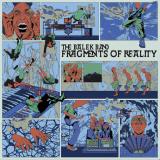
The Balek Band - Fragments of Reality (incl Bufiman & Shubostar remixes)

Some grooves don’t rush to the dancefloor — they crawl there, slow and heavy, like smoke wrapping around a bassline. With Fragments of Reality, The Balek Band sculpt an electronic funk that lives between shadow and light — an end-of-the-world fever dream, a Barjavel-style Ravage where chaos turns nihilistic.

No sequencer grid here — just four musicians sharing the same room, shaping air and tension together: drums locked tight with a slap bass, a guitar dripping with echo and heat, and a one-man orchestra behind his machines, weaving acid lines and synth arpeggios while mixing the band live — drenching it in delay, reverb, and saturation, like a dub producer in a Kingston studio, Lee Scratch Perry or King Tubby conjuring ghosts through smoke.

This isn’t fusion — it’s friction. A living ritual where the TB-303 hums, and machines don’t dominate but converse with the human pulse. Each track feels like a night that refuses to end — that humid in-between where trance slips into languor, and the body starts to think for itself.

The record recalls the cosmic jazz of Alain Mion or Eddy Louiss meeting the fiery energy of West African afrobeat musicians freshly arrived in a smoky Belleville basement in the mid-’80s. When The Balek Band summon ghosts, it’s only to reshape them — bending the past into something futuristic, alive, and strangely refreshing. Both disciplined and delirious, Fragments of Reality feels like a promise at dawn: dark funk for the late hours, slow acid for warm blood.

This EP isn’t nostalgic, though it remembers. It’s a transmission from a parallel past — a moment when jazz players met drum machines and decided never to stop playing. Each note sweats, each rhythm breathes. You can almost see the light cutting through the haze, faces half-awake, half-possessed.

The Balek Band aren’t recreating a moment — they’re keeping it alive.
Flesh and cables. Impulse and patience.
A band, not a loop.
A trip, not a format.

nicht am Lager

Bestelle jetzt und wir bestellen den Artikel für dich beim Lieferanten.

Last In: vor 4 Monaten
13,87 €
Jolanda Moletta - Oceanine

Jolanda Moletta

Oceanine

12inchBNSD098
Beacon Sound
01.05.2026

Oceanine, Jolanda Moletta’s third album and her first for Beacon Sound, is a powerful and ethereal statement of artistic community. Expanding on her previous work, each track represents a collaboration with a different female vocalist, with the foundational elements being generated entirely by her own voice. By turns haunting, enchanting, and inspiring, you won’t want to come up for air once you’ve been pulled under. Representing a
musical practice that is distinctly feminist, this is an album with a longer view in mind, to an age when the altars were to goddesses and women were centered as powerful beings representing the earth’s cycles of regeneration and renewal. Oceanine then, in all its beauty, can be viewed as an album of survival. It is deeply transportive, accessing something that lies within all of us. As the late, great Lithuanian folklorist and archaeologist Marija Gimbutas noted, “We must refocus our collective memory. The necessity for this has never been greater as we discover that the path of 'progress' is extinguishing the very conditions for life on earth.”

Jolanda Moletta is a multimedia artist and one-woman electronic choir. She creates wordless compositions through extended vocal techniques, integrating wearable-controlled live processing, alongside symbolic visuals. Moletta considers her performances to be a collective ritual and creates her Sonic & Visual Spells following the cycles of nature and the moon. Jolanda's 2022 critically acclaimed album Nine Spells was released on the Ambientologist label, followed by Night Caves on Whitelabrecs in 2025. Moletta’s artistic practice is a radical and spiritual journey through sound art, ritual, and the symbolic archaeology of the feminine.

Oceanine is inspired by sirens, water nymphs, and the timeless call of the sea. At its core lies Jolanda’s deep, lifelong connection to the Mediterranean Sea and to the ancient and modern myths and folklore that have emerged from its waters. Growing up by the Mar Ligure, Jolanda was surrounded by stories carried by salt, wind, and waves: legends of sirens, echoes of ancient voices, and the sea as both origin and oracle. This intimate relationship with the Mediterranean is not merely a backdrop, but a living source that shapes Oceanine’s emotional, symbolic, and sonic world.

Each track features a different female vocalist, creating a rich tapestry of voices, styles, and perspectives. This artistic choice not only broadens the album’s sonic palette, but also deepens its narrative core: celebrating the power, beauty, and mystique of feminine energy through myth, history, and sound.

The entire album is built exclusively from the human voice, processed and layered, yet always remaining voice, and nothing else. For each piece, Jolanda invited every vocalist involved to contribute a raw stem: a short, unedited melodic fragment of just a few seconds, inspired by the album’s themes. These intimate vocal seeds became the foundation of each track: the guest artists’ voices appear as brief, melodic stems, while the entire surrounding “orchestral” fabric is created solely from Jolanda’s own layered and processed voice. In this way, Jolanda’s voice becomes the Ocean itself, embracing, absorbing, and carrying the sirens’ calls within a vast, immersive soundscape. Every song is a unique expression of the feminine experience, revealing its depth, complexity, and emotional range, echoing the call of the sea and the many faces of the siren archetype.

The figure of the siren has transformed across centuries. In myths of Ancient Greece and Rome, sirens were hybrid beings, part woman, part bird, whose irresistible songs lured sailors to their doom. During the Middle Ages, the image shifted toward the half-woman, half-fish figure, often associated with temptation and danger. Historically, the voice of women has often been feared. Sirens were considered harbingers of misfortune not simply because they seduced or destroyed, but because they were powerful liminal beings.

In Ancient Greek, sirens functioned as psychopomps: figures who existed between worlds and guided souls, especially between life and death. Their songs were believed to carry forbidden knowledge, including prophetic insight and the ability to reveal truths about fate and the future. The danger of the sirens lay in what they revealed: knowledge that humans were not meant, or ready, to hear.

Oceanine confronts this legacy head-on. The voices heard throughout the album are not merely beautiful: they are dark and luminous, wild and enchanting, magical, soothing, dreamy, and at times fractured or distorted. They whisper, lament, beckon, and enchant. Like sirens, they skim the surface of the water and sink into its depths, hovering on the edge between tenderness and danger, vulnerability and power. They rise toward the sky, dissolve into mist, and return as echoes charged with raw, elemental emotion: voices that seduce, warn, mourn, and remember. They refuse to be reduced to decoration.

Alongside the album’s release in May, Oceanine will also unfold as a visual and performative work through a short art film. The film includes a live session recorded inside a sea cave facing the Mar Ligure, the very coastline where Jolanda spent her childhood, dreaming of sirens and listening to the sea as if it were speaking directly to her. This site-specific performance reconnects the music to its place of origin, allowing the voice to resonate within stone, water, and air, and transforming the cave into both a sanctuary and a threshold between myth and reality.

What if the sirens’ songs were considered dangerous because they carried another truth, an ancient truth long forgotten?

Oceanine embraces the idea that we are still deeply woven into myth. Though we may see ourselves as rational and modern beings, our world is saturated with ancient symbols and archetypes, often distorted, simplified, or stripped of their original meaning. And if those symbols are allowed to shift, if the mirror once held by the siren becomes an invitation to look beyond appearances and into what has been obscured, then we may finally uncover a deeper truth and reclaim the voice that was always ours.

Oceanine is not just an album. It is a reclamation, a spell, and a call from the depths.

vorbestellen01.05.2026

erscheint voraussichtlich am 01.05.2026

23,95 €
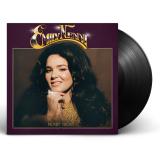
Emily Nenni - Movin' Shoes LP

Emily Nenni

Movin' Shoes LP

12inch607396593217
New West Records
01.05.2026
auch erhältlich

GOLD VINYL[27,10 €]


Whenever Emily Nenni is onstage, she welcomes everybody to the dancefloor. The California-born, Nashville-based singer-songwriter wants the honkytonk to be a place of escape, where fans can shed their troubles for a few hours and feel safe and free. “I’m always watching the dancefloor and making sure everybody’s being respectful.” Or, as she sings on the supremely funky title track to her new album Movin’ Shoes, “Here’s where you dress for you and dance the way that you want to.”

Movin’ Shoes is an album about how we treat each other and how we treat ourselves. Confident in its touchstones and compassionate in its insights, Movin’ Shoes eloquently and wryly blends southern soul from Memphis and Muscle Shoals with southern rock from Macon and outlaw country from Austin. Making Movin’ Shoes was a process of discovery for Nenni. Musically she found all new ways to combine the disparate artists she loves so much, and lyrically she found all new ways to relate to herself and to others. “We should at all times acknowledge and accept the fact that we’re imperfect people,” she explains. “We all make mistakes and we should all rethink the way we go about things. I am flawed. Everyone around me is flawed. But that’s not a bad thing. It just means we’re all human. This album is about making mistakes and learning from them. I’m always trying to put that into my songs.”

vorbestellen01.05.2026

erscheint voraussichtlich am 01.05.2026

27,10 €
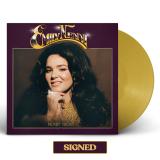
Emily Nenni - Movin' Shoes LP
auch erhältlich

Black Vinyl[27,10 €]


Whenever Emily Nenni is onstage, she welcomes everybody to the dancefloor. The California-born, Nashville-based singer-songwriter wants the honkytonk to be a place of escape, where fans can shed their troubles for a few hours and feel safe and free. “I’m always watching the dancefloor and making sure everybody’s being respectful.” Or, as she sings on the supremely funky title track to her new album Movin’ Shoes, “Here’s where you dress for you and dance the way that you want to.”

Movin’ Shoes is an album about how we treat each other and how we treat ourselves. Confident in its touchstones and compassionate in its insights, Movin’ Shoes eloquently and wryly blends southern soul from Memphis and Muscle Shoals with southern rock from Macon and outlaw country from Austin. Making Movin’ Shoes was a process of discovery for Nenni. Musically she found all new ways to combine the disparate artists she loves so much, and lyrically she found all new ways to relate to herself and to others. “We should at all times acknowledge and accept the fact that we’re imperfect people,” she explains. “We all make mistakes and we should all rethink the way we go about things. I am flawed. Everyone around me is flawed. But that’s not a bad thing. It just means we’re all human. This album is about making mistakes and learning from them. I’m always trying to put that into my songs.”

vorbestellen01.05.2026

erscheint voraussichtlich am 01.05.2026

27,10 €
Various - ROOMIES 2 LP

Various

ROOMIES 2 LP

12inchSON021
SONHOUSE RECORDS
01.05.2026
 
8

The second season of the funny and heartfelt fiction series by Flo Van Deuren and Kato De Boeck takes us along as Bibi and Ama move on to the next chapter of their lives and into their new, unexpected home: an old daycare building. With school no longer providing structure and their wallets running on empty, they dive headfirst into adulthood.

This results in eight new episodes that, like the main characters, have grown up, yet remain just as hilarious and moving as ever.

With the second season of Roomies, the show’s award-winning music makes its return. This time with a powerful soundtrack featuring Eefje de Visser, Ategha (Ahlaam Teghadouini) & Mickael Karkousse (Goose), Maria Iskariot, and Porcelain ID.

“(Tijdbom) Tikkend” is a dark, electronic track that feels like a constant run: sometimes away from the other, sometimes right toward them. It captures the feeling of running out of time, losing each other, and wanting to reconnect. That push-and-pull dynamic felt like a perfect fit for Roomies, where relationships, drama, and fun are always intertwined. - Eefje de Visser

“Whatever Happens” came together in a very organic way, and you can hear that in the track. Raw, genuine, and effortless. What’s unique is that we hadn’t even met until a few days before. Ahlaam walked into the studio and said, “I’ve prepared something.” That opening line alone was fantastic and immediately showed confidence and courage. “Perfect,” I thought. Then we turned the volume up to maximum, and I listened as Ahlaam sang right by my ear. Instant goosebumps! - Mickael Karkousse

vorbestellen01.05.2026

erscheint voraussichtlich am 01.05.2026

22,65 €
SERGEANT - SYMBOLS

SERGEANT

SYMBOLS

12inchSTRLP-115
Stroom
30.04.2026

Sergeant ventures deeper into the chaos, occasionally emerging with something dangerously close to catchiness.

Symbols further explores the technique the band calls “dj-shadow-in-reverse”. Instead of digging for samples, they dig through themselves. Things are cut apart and glued back together: kraut drums, plunderphonics fragments, dance floor killers and dub chambers. This time, the wreckage has rhythm and the rhythm has an opinion. Ferre sings through the songs like he’s looking for an exit and having a great time not finding it. Somewhere in there, a flute appears: it sounds slightly worried about the bassline. But the band is more in charge of its plot than ever before. Sergeant finds bliss in losing it over and over again.

vorbestellen30.04.2026

erscheint voraussichtlich am 30.04.2026

23,11 €
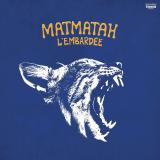
Matmatah - L'Embardée LP 2x12"

Matmatah

L'Embardée LP 2x12"

2x12inchLOP2633004
Upton Park
30.04.2026
  • 1: Pour moi la vie va commencer
  • 2: Cancion de Jinete
  • 3: Tombé pour la France
  • 4: Love Will Tear Us Apart (L'amour nous séparera)
  • 5: Miss Maggie
  • 6: Eisbär (feat. Fanny Gillard)
  • 7: Gimme some truth
  • 8: Anne, ma sœur anne
  • 9: Goldfinger
  • 10: O que faz falta
  • 11: Ar miliner (feat. Patrick Marie)
  • 12: La pulce d'acqua
  • 13: Putain putain
  • 14: Boys Don't Cry
  • 15: Sweet Amanite Phalloïde Queen
  • 16: Alison Gross (feat. Morgane Mercier)
  • 17: Lisa
  • 18: Oh Madeleine
  • 19: The Winner Takes It All
  • 20: Qu'est-ce que sera demain

After months of working exclusively on his own repertoire, Matmatah is slowly recovering from his 30th birthday by returning to his first love: covering other people’s songs !
Because Matmatah comes from there, from the steamy atmosphere of bars and clubs.
Back in the day, they played loads of covers. Oh yes, they certainly did.
So why not put a few of them together on an album?
It’s a must, isn’t it?
Except that… There are many ways to record an album of covers.
The band could have taken the easy route and covered the songs they loved in their early days. But that would be to misunderstand these lads. They needed to come up with a proper concept to justify such a project.
They came up with two:
To tackle styles that are diametrically opposed to their own, so they could better make them their own.
To broaden their linguistic repertoire and experiment with different sounds.
The result is a rich, joyful and socially conscious collection of 20 songs, written between the 18th and 21st centuries and performed in no fewer than 10 European languages. A fine tribute to the continent’s diversity.
To spice up this project, they’ve brought in the whirlwind that is Fanny Gillard on vocals for ‘Eisbär’ and ‘Putain Putain’, the powerful voice of Morgane Mercier on the eerie ‘Alison Gross’, mentor Patrick Marie for a space-age ‘Kan Ha Diskan’, and the immense Kevin Camus on the uilleann pipes and whistle for ‘The Winner Takes It All’.
Matmatah takes a wild ride, travelling across Europe and through time, having fun and cheekily reworking songs he never imagined he’d play.
Find the lynx!

vorbestellen30.04.2026

erscheint voraussichtlich am 30.04.2026

27,31 €
Various - NOW That's What I Call 70s Soul (3x12")
  • A1: Al Green – Let's Stay Together
  • A2: Marvin Gaye - What's Going On
  • A3: Diana Ross - Ain't No Mountain High Enough (Single Version)
  • A4: Stevie Wonder - Signed, Sealed, Delivered (I'm Yours)
  • A5: Commodores - Easy (Album Version)
  • A6: Bill Withers - Ain't No Sunshine
  • A7: The Stylistics - You Make Me Feel Brand New (Let's Put It All Together Version)
  • A8: Rose Royce – Wishing On A Star
  • B1: Jackson 5 - I Want You Back (Single Version)
  • B2: Smokey Robinson & The Miracles - The Tears Of A Clown (Single Version / Mono)
  • B3: The Supremes - Nathan Jones
  • B4: Frankie Valli And The Four Seasons - The Night (1972 Album Version)
  • B5: Chairmen of the Board – Give Me Just A Little More Time
  • B6: The Trammps - Hold Back The Night
  • B7: The O'Jays - Love Train
  • B8: The Blackbyrds – Walking In Rhythm
  • B9: Heatwave - Always And Forever (Single Version)
  • C1: The Temptations - Papa Was A Rollin' Stone (Edited)
  • C2: Isaac Hayes - Theme From "Shaft" (Remastered 1991 Album Version)
  • C3: Ike & Tina Turner - Proud Mary
  • C4: James Brown - Get Up I Feel Like Being A Sex Machine
  • C5: Edwin Starr - War
  • C6: Sly & The Family Stone - Family Affair (Single Version)
  • C7: The Delfonics - Didn't I (Blow Your Mind This Time)
  • C8: Billy Paul - Me And Mrs Jones (Single Version)
  • D1: The Floaters - Float On (Single Version)
  • D2: Minnie Riperton - Lovin' You
  • D3: The Isley Brothers - Summer Breeze, Pt 1
  • D4: William DeVaughn - Be Thankful For What You Got (Part I)
  • D5: Detroit Emeralds – Feel The Need In Me
  • D6: The Moments - Jack In The Box
  • D7: Raydio - Jack And Jill
  • D8: The Tymes - Ms Grace
  • E1: Barry White - Can't Get Enough Of Your Love, Babe
  • E2: Aretha Franklin – Until You Come Back To Me (That's What I'm Gonna Do)
  • E3: Al Green – Tired Of Being Alone
  • E4: Gladys Knight & The Pips - Midnight Train To Georgia
  • E5: Timmy Thomas – Why Can’t We Live Together (7" Glades Version) (2013 Remaster)
  • E6: George Benson – The Greatest Love Of All
  • E7: Diana Ross - Theme From Mahogany (Do You Know Where You're Going To) (Single Version)
  • E8: Jackson 5 - I'll Be There
  • F1: Freda Payne – Band Of Gold
  • F2: Ann Peebles - I Can't Stand The Rain
  • F3: Marvin Gaye - Let's Get It On (Single Version)
  • F4: Harold Melvin & The Blue Notes featuring Teddy Pendergrass - If You Don't Know Me By Now
  • F5: The Stylistics - Can't Give You Anything (But My Love)
  • F6: The Three Degrees - When Will I See You Again (Single Version)
  • F7: Deniece Williams - Free (Single Version)
  • F8: Earth, Wind & Fire - After The Love Has Gone (Single Version)
  • F9: Commodores - Three Times A Lady (Single Version)

NOW That’s What I Call 70s Soul brings together 50 era-defining tracks from one of the most powerful decades in soul music, featuring classics from Motown legends, Philly Soul pioneers, smooth balladeers and funk innovators – all pressed across 3LPs on beautiful blue vinyl… Out April 24th!

LP1 opens with one of the decade’s most recognisable love songs: Al Green’s ‘Let’s Stay Together’, a US #1 and UK Top 10 hit that became his signature recording. It’s followed by Marvin Gaye’s ‘What’s Going On’, the socially conscious masterpiece and title track from his landmark 1971 album, and Diana Ross’ Ain’t No Mountain High Enough’, which topped the US chart and became her first solo #1. Stevie Wonder’s ‘Signed, Sealed, Delivered (I’m Yours)’ remains one of Motown’s most joyful recordings and comes before Commodores’ ‘Easy’ introducing Lionel Richie’s smooth ballad vocals. The side also includes Bill Withers’ timeless ‘Ain’t No Sunshine’, a Grammy-winning classic, and The Stylistics’ lush ballad ‘You Make Me Feel Brand New’, a UK Top 3 smash, before closing with Rose Royce’s beautiful ‘Wishing On A Star’, one of the most loved soul ballads of the era.

Flip the LP over and The Jackson 5’s ‘I Want You Back’ – the group’s explosive debut single opens the side. Smokey Robinson & The Miracles’ ‘The Tears Of A Clown’ became a UK #1 and is followed by The Supremes’ Nathan Jones’ showcasing the group’s evolving psychedelic-soul sound. Northern Soul classics from Frankie Valli & The Four Seasons with ‘The Night’, Chairmen Of The Board’s Top 3 smash ‘Give Me Just A Little More Time’ and The Trammps’ ‘Hold Back The Night’. The O’Jays’ joyous ‘Love Train’ leads to The Blackbyrds’ Walking In Rhythm’, before the side closes with the romantic classic ‘Always And Forever’ from Heatwave.

LP2 opens with The Temptations’ epic ‘Papa Was A Rollin’ Stone’, a Grammy-winning US #1 remains one of the most stunning recordings from the Motown catalogue, is followed by Isaac Hayes’ ‘Theme From “Shaft”’, an Academy Award-winner and a US #1 smash. More funk follows from Ike & Tina Turner, James Brown with one of his key tracks ‘Get Up (I Feel Like Being A) Sex Machine’, Edwin Starr’s powerful anti-Vietnam protest song ‘War’, and Sly & The Family Stone’s hugely influential ‘Family Affair’. The Delfonics’ sublime ‘Didn’t I (Blow Your Mind This Time)’ comes ahead of Billy Paul’s timeless ‘Me And Mrs. Jones’ which closes the side…the other side begins with the 1977 #1 from The Floaters with ‘Float On’, before the breathtaking vocals of Minnie Riperton on ‘Lovin’ You’. The Isley Brothers’ Summer Breeze’ and William DeVaughn’s ‘Be Thankful For What You Got’ have become enduring classics and are followed by a run of ‘80s pop-chart crossover hits completing LP2 from Detroit Emeralds, The Moments Raydio and The Tymes’ #1 ‘Ms. Grace’.

LP3 opens with the unmistakable voice of Barry White and his US #1 hit ‘Can’t Get Enough Of Your Love, Babe’, before Aretha Franklin’s ‘Until You Come Back To Me (That’s What I’m Gonna Do)’, delivers one of her smoothest performances. Al Green’s ‘Tired Of Being Alone’ and Gladys Knight & The Pips’ ‘Midnight Train To Georgia’ are followed by minimalist soul classic ‘Why Can’t We Live Together’ from Timmy Thomas, and the side closes with a trio of defining ballads:- George Benson’s ‘The Greatest Love Of All’ Diana Ross’ ‘Theme From Mahogany (Do You Know Where You’re Going To)’ and The Jackson 5’s ‘I’ll Be There’, their biggest hit…while over on the final side…Freda Payne’s #1 ‘Band Of Gold’, opens alongside Ann Peebles’ influential and much covered ‘I Can’t Stand The Rain’.Marvin Gaye’s sensual ‘Let’s Get It On’ became another US #1, while Harold Melvin & The Blue Notes featuring Teddy Pendergrass deliver the contemporary standard ‘If You Don’t Know Me By Now’. Three massive UK #1s are next…The Stylistics with ‘Can’t Give You Anything (But My Love)’, The Three Degrees’ peerless ‘When Will I See You Again’ and Deniece Williams’ ‘Free’. This amazing collection closes with two timeless ballads: Earth, Wind & Fire’s ‘After The Love Has Gone’, a Grammy-winning classic, along with ‘Three Times A Lady’, a huge worldwide #1 for the Commodores.


NOW That’s What I Call 70s Soul, 50 defining tracks from one of music’s greatest decades. Out April 24th.

nicht am Lager

Bestelle jetzt und wir bestellen den Artikel für dich beim Lieferanten.

Last In: vor 5 Monaten
37,40 €
PPJ - Joker
  • A1: Me Pega
  • A2: Tem Carnaval
  • A3: Sexy Doce
  • B1: Coeur
  • B2: Então Tá Bem
  • B3: Para Ser Feliz
  • B4: Tô Nem Aí

Fresh from releasing projects on Method 808 and Future Classic, landing a huge collaboration with Chloé Caillet, and delivering an official remix for Fatboy Slim, PPJ are entering a new chapter in full force. Their expansive take on global street sounds, ranging from neoperreo to Miami bass, gets a cool re-coating.

Led by the magnetic vocalist Páula, with production from Povoa (individually supported by Four Tet, Ben UFO, and Barry Can't Swim, with recent releases on Live From Earth), the duo operates in maximalist mode: playful, sensual, and slightly unhinged.PPJ’s new era, JOKER, embraces a figure that appears everywhere from card decks to carnival culture as a symbol that mirrors their own DNA: funny, eerie, seductive, unpredictable. The EP leans further into club territory, but rather than polishing their edges, PPJ amplify them.

At the emotional core of the record sits “Coeur,” co-produced with Chloé Caillet. It begins with an MPB-tinged foundation flirting with bossa nova. It’s unmistakably Brazilian, bathed in sunset hues before being sped up and twisted into a dance-floor-ready electronic form. The groove shimmers with tension: warm percussion, elastic basslines, and Páula’s voice hovering between intimacy and tease. It feels like a remix of itself, romantic, but slightly untrustworthy.

If “Coeur” glows, “To Nem Ai” is a slow burner. A very deep and downtempo house cut, it unfolds slowly, almost luxuriously, guided by sensual vocals that feel whispered directly into the ear of the listener. A hypnotizing piano sample that feels like a late-night confession. It’s the kind of record that transforms a dancefloor into something tactile.

Elsewhere, “Me Pega” is a high-energy reinterpretation of the tech-house sounds from Santa Catarina, one of southern Brazil’s most feverish party states, twisted and accelerated for ferocious impact. Drawing direct inspiration from Sarro, a raw and vibrant Brazilian street dance, the track captures physical intensity in its purest form: sweat, bass pressure, collective release.

Its counterpart, “Tem Carnaval” channels Páula’s vivid storytelling into a thunderous ode to Rio’s carnival spirit, euphoric, chaotic, cinematic landed just in time for this year’s celebrations.

On “Sexy Doce,” rugged electroclash melodies collide with unexpected references. “It was inspired by Budots, which is dance music from the streets in the Philippines,” Povoa explains. “Then we mixed it with Páula’s Brazilian vocals. Baile funk is similarly from the streets, so there is a connection.” The result is raw yet futuristic, a cross-continental flirtation that feels both underground and explosive.

With this new EP, PPJ make music like they’re tuning into a dozen pirate frequencies at once. Pirate radio from Rio to Berlin to Manila intercepting fragments of street culture, sensuality, and chaos, and stitching them into something deliriously cohesive.
JOKER doesn’t just nod to club culture. It challenges it, twists expectation and leaves a lasting impression.

vorbestellen24.04.2026

erscheint voraussichtlich am 24.04.2026

20,97 €
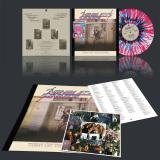
Mindless Sinner - Turn On The Power LP
  • 1: We Go Together
  • 2: I'm Gonna (Have Some Fun)
  • 3: Turn On the Power
  • 4: Live and Die
  • 5: Left Out on My Own
  • 6: Here She Comes Again
  • 7: Standing on the Stage
  • 8: Voice of the Doomed
  • 9: Tears of Pain

Purple Haze started out in Linköping in 1981. When singer Christer Göransson joined them towards the end of the year, they soon changed their moniker to Genocide (after the Judas Priest song of the same name) and supported local metal heroes Axewitch. A final name change was to follow: In August 1983, the band, now called Mindless Sinner, recorded a four-track demo entitled »Master Of Evil«, consisting of the title track, “Broken Freedom”, “Key Of Fortune” and “Screaming For Mercy”. This attracted Swedish label Fingerprint Records, and they in turn released the NWOBHM-inspired material as a mini-album with an awful cover and getting the band’s name wrong (spelling it Mindless Sinners). By then, the line-up of the band was Anders Karlsson (bass), Magnus Danneblad (guitar), Jerker Edman (guitar), Tommy Johansson (drums) and vocalist Christer Göransson. »Master Of Evil« originally saw the light of day on Fingerprint in January 1984. This was followed by the second album »Turn On The Power« in 1986 as Christer Göransson explains: “Well, »Turn On The Power« was actually recorded in October 1984, the same year as »Master Of Evil« was released. But the record label was almost out of business by 1985, so as a result »Turn On The Power« didn’t come out until January 1986, and shortly after the label went bust.” Just like on the debut, the cover was once again pretty weird. “Same story,” says the singer. “Blame the label again. We wanted a band photo for the cover but once more Fingerprint didn’t listen. We didn’t know who this girl was at all. And once again we saw the cover for the first time when we visited our local record store.” “I guess »Turn On The Power« was more of a straight heavy metal album compared to »Master Of Evil«,” describes Christer Göransson the band’s follow-up record, “better playing and better songs on »Turn On The Power«. Even though we love »Master Of Evil«. I guess it didn’t sell that much as the label went bankrupt, but the reactions were great.” Mindless Sinner played as much as they could in Sweden at the time but didn’t venture outside their home country. Over the years, their music has often been compared to the Tygers Of Pan Tang from England but Christer Göransson doesn’t see too many similarities: “We really love Tygers Of Pan Tang but I don’t think they were a big influence. It was more Judas Priest, Iron Maiden, Saxon, Black Sabbath, Ozzy Osbourne and Dio.” Shortly after the release of »Turn On The Power«, the band cut their name short to Mindless. According to Christer Göransson, this is why: “It was the sign of the times really. We wanted a more melodic kinda style and we just thought it was better to change the name to Mindless. But looking back now we should have stuck to our guns.”

vorbestellen24.04.2026

erscheint voraussichtlich am 24.04.2026

25,63 €
Steve Kuhn - Steve Kuhn LP
  • A1: Pearlie's Swine
  • A2: Silver
  • A3: Time To Go
  • A4: The Heat Of The Moment
  • B1: The Baby
  • B2: Hold Out Your Hand
  • B3: The Meaning Of Love
  • B4: Ulla

180g Vinyl

The album features the group playing Gary McFarland arrangements of Kuhn's compositions, accompanied by a string section on several tracks, with Kuhn delivering stream of consciousness lyrics in an unplanned and largely improvised fashion in the studio. However, that wasn't the only surprising aspect to the session. Airto Moreira's appearance was more by chance than design, he having just popped by the studio, again, unplanned. The 'Steve Kuhn' album is all the stronger for these extemporaneous and serendipitous elements and showcases a band at the top of their game; tight and funky yet relaxed and flowing like molten gold, with stabs and washes of keyboard from Kuhn. Splashes of free playing enter the session, but the band never stray too far from a melodic and harmonious centre of gravity. Kuhn's deft keyboard skills provide melodic embroidery to the impressive rhythmic textures and tonal colours of Carter, Cobham and Moreira. As if the music wasn't enough, the album is given extra significance by the fact that, within a few months of the recording, McFarland would die after being mysteriously poisoned by methadone in a New York bar. In a sense, it is a valedictory album from McFarland, channeled by Kuhn and the band. It's among the hardest of Kuhn's albums to find so this reissue is most welcome. Luxuriate in the glow of Kuhn's Fender Rhodes and the pliant funky bass of Ron Carter; immerse yourself in the percussive interplay of Moreira and Cobham, a pairing that has rarely sounded so good. This is such an exquisite album; you will lose yourself in its delicate power and find yourself coming back to it again and again. "It's a beautiful picture, and it helped me to comprehend things, life a bit, you know. And as I'm thinking about it, I hope it does that for whoever listens to it too." - Thundercat, Musician Details: Heavyweight Vinyl 45 RPM Cut / Original glued prints on Thick Cardboard 700 gram / 2 Separated parts hand-glued / Glossy lamination / PVC outer / 30x60 cm insert printed on 300 gram DNS paper with interview to Steve Kuhn by Tony Higgins.

vorbestellen24.04.2026

erscheint voraussichtlich am 24.04.2026

48,11 €
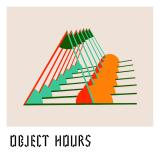
Object Hours - Solved By Walking LP

Leather-jacket krautrock? Indeed. Welcome to the world of Carrboro NC's Object Hours. These generous saviors consist of three Triangle scene lifers who all worship the riff but imagine what happens if the riff fell into the middle of your favorite CAN LP. Yes, it lives up to the hype.

"Solved By Walking" was recorded in the winter of 2025 at Betty's in the Chapel Hill woods, these are mighty rock slabs ready for all seasons. Rock believers have felt the ripples and knew the day was coming. Object Hours is a band that fits right in on stage alongside acts as varied as Kim Gordon and Tropical Fuck Storm, bringing the house down in these and similar moments. These are songs that groove, peel paint, sandblast, inspire unconscious movement, make your head bob - frequently all at the same time. These are the jams inspired by the time that you heard "Fun House" coming out of that dude's car with the windows down in the middle of the summer, the ones inspired by the kids who own 3 copies of "Daydream Nation," the ones who listen to the last 1:30 of Wire's "Too Late" over and over. This is the band that has a timer on stage so they don't keep each song playing for days on end, the band whose Bandcamp bio succinctly summarizes their approach thusly: "We try to keep songs under 25 minutes for your sake." Every word here should be inspiration for you to *want* and *need* to hear this record and every word here is true. Just you wait.

Real heads know and the rest of the heads are getting ready to find out. Get ready for Object Hours' "Solved By Walking".

vorbestellen24.04.2026

erscheint voraussichtlich am 24.04.2026

27,69 €
Byard Lancaster - Us

'At the beginning of the 1960s, at the Berklee College of Music, Byard Lancaster met some feisty friends: Sonny Sharrock, Dave Burrell and Ted Daniel. It is easy to see why he rapidly became involved in free jazz. Once he was settled in New York, he appeared on Sunny Murray Quintet, recorded under the leadership of the drum crazy colleague of Albert Ayler.
'In 1968, the saxophonist and flutist recorded his first album under his own name: It’s Not Up To Us. The following year he came to Paris in the wake of… Sunny Murray. He would come back to France in 1971 (again with Murray) and in 1973 (without Murray for a change). This is when he met Jef Gilson, the pianist and producer who encouraged him to record under his own name again. On Palm Records (Gilson’s label), he would release four albums: Us, Mother Africa, Exactement and Funny Funky Rib Crib.

'Us, the first of the four records was recorded on November 24th, 1973 with Sylvin Marc on electric bass (a Fender… Lancaster?) and the evergreen Steve McCall on drums.
'On the album, the trio works from the John Coltrane model; free jazz shook up by the timely contributions of the bassist, followed by a mesmerizing atmospheric music. Then, Lancaster delivers a sinuous solo path, which is a reminder of his unique tone. On the album’s companion single, the trio launches into great black music of a different genre which would lead the clairvoyant François Tusques to claim that Byard Lancaster is an “authentic representative of soul/free jazz”, to sum up this is Great Black Music!'

nicht am Lager

Bestelle jetzt und wir bestellen den Artikel für dich beim Lieferanten.

Last In: vor 5 Monaten
27,94 €
Steel Beans - Steel Beans LP

Steel Beans

Steel Beans LP

12inchERE1121
EMPIRE
21.04.2026
  • A1: Big Dumb
  • A2: Stowaway
  • A3: Throwin' Stones
  • A4: Sex With Your Own Shadow
  • A5: Too On (feat. Anderson .Paak)
  • A6: I'd Rather Be Me
  • B1: Full Flavored Vibrations
  • B2: Strange Is My Name
  • B3: Change The Vibration
  • B4: Gunsmoke & Mirrors
  • B5: Drive Me Home
  • B6: Bound To Bloom

Few artists can make chaos sound this fun. Steel Beans, the self-titled album from the genre-bending one-man band, is a wild ride through rock, funk, jazz, and whatever else happens to cross the radar of Everett, WA’s Jeremy DeBardi — the multi-instrumentalist and mad scientist behind it all. Known for his jaw-dropping live performances where he sings, shreds guitar, and drums at the same time, Steel Beans brings that same unfiltered energy to tape, capturing the spirit of a garage jam gone cosmic.

The album moves effortlessly from fuzzed-out psych-rock to greasy funk breakdowns and tongue-in-cheek lyricism, mixing humor and virtuosity in equal measure. It’s unpredictable, unpolished in all the right ways, and full of personality — the kind of record that feels alive because it’s never trying to be perfect. Steel Beans isn’t just an album; it’s a reminder that music can still be weird, raw, fun, and ridiculously entertaining. Whether you’re hearing him for the first time or you’ve already seen the madness live, this album is the perfect introduction to the wild world of Steel Beans.

nicht am Lager

Bestelle jetzt und wir bestellen den Artikel für dich beim Lieferanten.

Last In: vor 5 Monaten
24,79 €
Willie Nelson - For Always LP
  • Nite Life
  • Hello Walls
  • Funny How Time Slips Away
  • Crazy
  • Touch Me
  • Rainy Days Blues
  • Wake Me When It's Over
  • Mr. Record Man
  • No Place For Me
  • Willingly
  • Lumberjack
  • The Storm Has Just Begun
  • What A Way To Live
  • Is This My Destiny
  • Three Days
  • Where My House Lives
  • One Step Beyond
  • You Dream About Me
vorbestellen17.04.2026

erscheint voraussichtlich am 17.04.2026

20,13 €
EAVES WILDER - LITTLE MISS SUNSHINE
  • 1: HURRICANE GIRL
  • 2: JUST SAY NO!
  • 3: EVERYBODY TALKS
  • 4: MOUNTAIN SIZED
  • 5: THE GREAT PLAINS
  • 6: ENGLISH TEA
  • 7: ROPEBURN
  • 8: LA
  • 9: DAISY CHAIN REACTION
  • 10: SUMMER ROLLS

Im April 2026 bringt Eaves Wilder ihr heiß erwartetes Debütalbum ,Little Miss Sunshine" raus. Die Platte ist ein krasser Entwicklungssprung für die Singer-Songwriterin aus Nord-London, die 2020 mit 16 Jahren mit ihrem selbst aufgenommenen Lockdown-Release ,Won't You Be Happy" zum ersten Mal auf sich aufmerksam gemacht hat. Eaves begann mit der Arbeit an ,Little Miss Sunshine" nach einer Phase des Nachdenkens, in der sie sich fragte, ob sie der Musik in ihrem Kopf letztlich gerecht werden könnte. Wer sich mit dem Album beschäftigt, entdeckt zehn Songs, die sich an den Zyklen der Natur orientieren, um die emotionalen Stimmungen zu erklären und zu feiern, die uns zu Menschen machen. ,Als ich am Boden war", erinnert sich Eaves, die an einer Stelle sogar lacht, als sie sich daran erinnert, wie sie beschloss, die Musik ganz aufzugeben, um in ein Kloster einzutreten: ,Ich wollte einfach nur unmenschlich, gefühllos und unbewegt sein. Wie ein Berg oder ein Baum. Oder der Himmel. Das sind alles Dinge, die einen Zweck haben, aber ich wusste nicht, was mein Zweck war. Und so musste ich es herausfinden, Song für Song." Auf Little Miss Sunshine wird diese Geschichte in spannenden Episoden erzählt, angefangen mit den ersten Sekunden des Albums und der Lead-Single Hurricane Girl, einer sensationellen Synergie aus durchscheinenden Shoegaze-Harmonien und elementaren Rockgitarren, inspiriert durch Dokumentarfilme über Sturmjäger, wobei die Metapher verwendet wird, um ein Licht auf Freunde zu werfen, die gezwungen waren, stürmische Beziehungen zu suchen. ,Ich habe das Gefühl, dass dies mein Pearl-Jam-Song ist", erklärt sie. ,Das erste Mal, als ich Pearl Jam hörte, war ich auf einem riesigen Berg in Wales. In derselben Woche hörte ich auch zum ersten Mal Jagged Little Pill von Alanis Morissette." Von hier aus, bis hin zu seinem schmerzlich bewegenden Requiem an die Kindheit Summer Rolls fungiert jeder Song auf Little Miss Sunshine als leuchtender Koordinatenpunkt in einem Bogen der Selbstfindung. Da ist der hochfliegende Klangrausch Everybody Talks, mit seinem ansteigenden Crescendo aus aufdringlichen Stimmen, der auf beiden Seiten des Atlantiks große Unterstützung im Radio fand. Für Mountain Sized bezog sie sich auf Lily Allens Single The Fear aus dem Jahr 2009 - ,weil da diese eine Frau ist, die ganz beiläufig all die schlimmsten Dinge über sich selbst aufzählt, Dinge, die man sich eigentlich nicht trauen würde zuzugeben". In Eaves' Song wird diese aufkommende Angst jedoch durch einen panoramischen Refrain ausgelöscht, in dem sie die Grenzen ihrer realen Welt durchbricht, um zu verkünden: ,But in my mind/But in my mind/I am taller than the highest mountain sides." In dem schmerzlich melodiösen ,The Great Plains" hinterfragt Eaves ihre frühesten Erinnerungen, in denen sie ihre ältere Schwester Dora vergötterte. ,Sie war so zurückhaltend und wie eine Meerjungfrau", erinnert sich Eaves, ,und ich wurde von meinen Emotionen beherrscht - und je mehr ich versuchte, das nicht zu sein, desto mehr wurde mir klar, dass ich niemals wie sie sein könnte." In dem Song findet Eaves eine Art Selbstakzeptanz, indem sie auf die Natur schaut, um zu erfahren, dass es okay ist, so zu sein, wie sie ist: "As I erupt into a blaze / It's ok the sky will do the same/Let no-one bat an eye when / Every year I'll hibernate till May / Because no-one blames the clouds for rain / So take me as I am, tears down my face." Als die Sessions an Fahrt gewannen, fand Eaves Inspiration in zeitgenössischen Veröffentlichungen. Beispiele dafür waren Wolf Alice (,die einzige Band, die die Balance gefunden hat, die ich immer suche - die Kombination aus schweren Gitarren und hohen, ätherischen Vocals"), Mannequin Pussy (,sie gaben mir etwas von dem, was ich in der Ära von Riot Grrrl vermisst habe, als L7 und Babes In Toyland auf Tour waren") und CMATs ,geradlinig brillantes Songwriting". Weitere Highlights auf einem Album, das von ihnen geprägt ist, sind Daisy Chain Reaction, dessen glitzernder Power-Pop-Glanz einen Text über die Kultur des Wettbewerbs rund um Essstörungen verbirgt, und der unangenehme, mechanisierte Angriff von Just Say No, ein Song, der auf den brutalen Wahrheiten basiert, die Eaves und ihre Freundinnen in ihren Auseinandersetzungen mit missbräuchlichen Männern gesammelt haben. Zwei Jahre lang hat Eaves unermüdlich daran gearbeitet, jeden einzelnen Vers, Refrain, Pre-Chorus und Middle Eight auf Little Miss Sunshine zu verfeinern, bevor sie mit dem Co-Produzenten des Albums, Andy Savours (My Bloody Valentine, The Killers, The Horrors), ins Studio ging. Dies ist ein Album, auf dem jedes einzelne Detail seinen Platz verdient hat und das Zeugnis ablegt von der einzigartigen musikalischen Vision seiner Schöpferin.

vorbestellen17.04.2026

erscheint voraussichtlich am 17.04.2026

22,27 €
Various - Naive Melodies (Tape)

Various

Naive Melodies (Tape)

CassetteBBE424CTP
BBE Music
17.04.2026

Naive Melodies is a bold and visionary tribute to the music of Talking Heads, reinterpreted through the lens of Black musical innovation. Curated by Drew McFadden — the creative mind behind BBE’s acclaimed Modern Love (David Bowie tribute album) — this new collection dives deep into the Afro-diasporic rhythms and experimental soul roots that helped shape Talking Heads’ unmistakable New Wave sound. Inspired by artists like Fela Kuti, Parliament, and Al Green — whose influences loomed large in the band’s rhythmic DNA — Naive Melodies shines a light on the Black music traditions that underpinned their artistry. Far from a conventional tribute, Naive Melodies reframes the band’s catalog through the voices and visions of a new generation of genre-defying artists. These interpretations illuminate the foundational grooves and sonic textures that fueled Talking Heads’ rhythm-forward aesthetic, bringing them full circle with authenticity. “With Naive Melodies, I wanted to spotlight the deep and often overlooked influence of Black music on the sound of Talking Heads, drawing from the rhythmic foundations of Afro-diasporic traditions, soul, gospel, Latin, and spiritual jazz. This project is a chance to reimagine Talking Heads’ legacy through the lens of the very innovations that helped shape it, bringing those influences to the forefront through the voices of today’s most forward-thinking artists.” — Drew McFadden The album features a globally minded lineup, including Liv.e, Bilal, Rogê, Miguel Atwood-Ferguson, Aja Monet, Georgia Anne Muldrow, Theo Croker, Kenny Dope, Rosie Lowe, Pachyman, W.I.T.C.H., and more — spanning Afrobeat, jazz, soul, funk, gospel, dub, electronica, orchestral, and Latin styles. It reflects not only the boundary-pushing ethos of Talking Heads, but also the influence of Black music as a cultural force that helped shape it. This is not just a tribute album — it’s a recontextualization. A cultural conversation. A rhythmic reawakening.

vorbestellen17.04.2026

erscheint voraussichtlich am 17.04.2026

25,17 €
BCUC - The road is never easy

BCUC – Bantu Continua Uhuru Consciousness – have been channeling the spirit of Soweto for over twenty years. Indigenous funk, hip-hop consciousness, and punk rock energy fused into something utterly original and deeply rooted. Their mantra: Music for the people, by the people, with the people. From humble beginnings rehearsing in a shipping container, a stone's throw from the church where Desmond Tutu organized the escape of the most wanted anti-Apartheid activists, they kept believing in their dream of self-empowerment. Today they command festival stages worldwide: Glastonbury West Holts, Roskilde, Afropunk Brooklyn, WOMAD, Fusion, Sziget, FMM Sines, Beaches Brew, Boomtown, Colours of Ostrava, Couleur Café – to name just a few. In 2023, BCUC were honoured with the prestigious WOMEX Artist Award, an accolade usually reserved for more established artists, in recognition of their fearless work and transcendent live performances.

THE ROAD IS NEVER EASY

The Road Is Never Easy is BCUC's fifth album and their debut on Outhere Records. On this new offering, BCUC take listeners on another Afro-psychedelic journey into the soul of Soweto. It feels like a gospel sermon colliding with a punk concert, "guaranteed to touch untapped corners of your soul" (OkayAfrica). BCUC's music is deeply rooted in history and echoes the voices of the ones who came before. The road was never easy for the people of Soweto who originally came to work in the mines of Egoli, the City of Gold, Johannesburg. When apartheid finally ended after a long struggle, it was hoped that life would improve. But more than 30 years later, many of those initial hopes and dreams are still waiting to be fulfilled. This album is about that struggle. The album contains 10 brand new songs – a record for BCUC, whose previous albums featured an average of 3 songs. It represents the culmination of more than two decades of performing together and building a reputation as a powerful live act. These ten songs encapsulate that same live energy, each one building gradually and drawing you into BCUC's Afro-psychedelic stream of consciousness. It's a seismic tour de force through life in Soweto today. Songs like Amakhandela (Breaking All the Chains) connect history to daily life: "How is this precious metal inflicting so much pain in us," sing BCUC, "this government has been telling us we are free, but we don't benefit from being free." The album also talks about all the hopes and dreams that remain: "I have too many wishes and dreams in my head," BCUC sing in Um duma khanda, "I think I am losing my mind". The album ends with the soothing Matla a rona ke Bophelo, "our strength is life", praising the spirits and thanking the elders for protection. The Road Is Never Easy is about the harsh reality of life in Soweto, where "people always carry heavy loads". BCUC are street poets trying to deal with that burden: sometimes revolutionary, sometimes soothing, but always hopeful and compassionate. "When you are from Soweto you can't retreat nor surrender." (Sebenzela)

RECORDING

The album was largely recorded in Munich, Germany during tour breaks over two sessions, each three days long. It took place in a small studio located in a German WW II bunker converted into rehearsal spaces. The songs were recorded in one take altogether in one room, with only a few overdubs added, mainly backing vocals, by BCUC at Fourways studio in Johannesburg. BCUC have created their own distinctive way of writing, or rather, finding and creating their songs. The recording process is like an improvised live performance. They bring their ideas into a zone where the music, the rhythm and the spirits take over until the song starts to form. In this Afro-psychedelic zone BCUC create their unique poetry that feeds on the dreams still dreamt, the hopes, the fears and the temptations lingering everywhere. BCUC's songs need to breathe and time to build. The right take was the one when the song took over, and just like their live performances, no one knew beforehand where the song would take them. During the recording, BCUC just let it all flow out: inner turmoil, cries of rebellion, but also resilience and a search for healing, love, unity and compassion. You don't have to be from Soweto to feel the deep meaning and impact of this music. In these times of so much hate and division, BCUC are like a campfire for people to gather around.

PRODUCTION & ARTWORK

"BCUC have a unique magic," says Outhere's Jay Rutledge, who produced the album. "It blew our minds. It's like punk and pure gospel at the same time. Their music can make you dance and it can make you cry, all at the same time. And when the song is over, you feel you're not alone in this world anymore. We felt compelled to do this." The album cover is based on a matchbox design, matches being a common household item in South Africa even today. "These were the matches people used to burn government buildings and cars," explain BCUC. Little messages, addresses, or phone numbers used to be scribbled on the back of these boxes; each one a reminder of the strength, resilience, and resistance that once drove the struggle for freedom in Soweto. BCUC keep this flame burning. The Road Is Never Easy is a heavy spiritual road trip, a deep dive into the subconscious of Soweto and a quest for truth, justice and sanity in this crazy world. BCUC tackle the harsh realities of the voiceless, guided by the spirit world of their ancestors. Rather than reinforcing stereotypes of poverty, BCUC's portrayal of Africa is one rich in tradition, rituals and beliefs. "We bring fun and Afro-psychedelic fire from the hood," says vocalist Kgomotso Mokone.

nicht am Lager

Bestelle jetzt und wir bestellen den Artikel für dich beim Lieferanten.

Last In: vor 5 Monaten
19,75 €
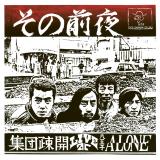
Shūdan Sokai - Live At 八王子 Alone

First time reissue of JP free jazz rarity, pre-Seikatsu Kōjyō Iinkai group.

The single album self-released by the quartet Shūdan Sokai in 1977 is one of the most vital documents of mid-seventies Japanese free jazz, documenting Tokyo’s free scene at the precise moment when it began to shift to a handful of tiny venues on the western fringes of the city. In Free Jazz in Japan, Teruto Soejima identifies the extant venue Aketa no Mise in Nishi-Ogikubo as the pioneer of this decamping from the centre: a cramped basement beneath a rice shop, seating just 20 people. Musician-run, operated on a shoestring, these spaces offered a vital site for community, creativity, and a small measure of financial independence — “even though it was in a basement, in spirit it was a loft.”

Among the most active of the new venues was Alone in Hachiōji, nearly an hour from Shinjuku, in a district shaped by universities, lower rents, and a thriving counterculture. Originally opened in 1973 as a jazu kissa, Alone was unusually spacious and equipped with a stage, grand piano, and drum kit. Around 1974, Junji Mori and Yasuhiro Sakakibara began working there, booking free jazz players on weekends and establishing the venue as a crucial hub. Mori recalls early appearances by figures including Kazutoki Umezu, Toshinori Kondo, and others who would define the scene.

In early 1976, Umezu and pianist Yoriyuki Harada — recently returned from New York’s loft jazz environment, where they had played with musicians such as David Murray and William Parker — formed Shūdan Sokai with Mori and drummer Takashi Kikuchi. The name, meaning “mass evacuation,” pointed to their self-chosen exile in Hachiōji. With Alone as their home base, the quartet developed a music characterized by an infectious sense of enjoyment and a willingness to integrate free jazz with elements of song structure. Harada switched between piano and bass; the group experimented with rap-like vocal pieces, jabbering nursery rhymes over bass rhythms.

They returned to Alone on December 24 to record Sono zen’ya (Eve), releasing it on their own Des Chonboo Records, partially funded by advertisements from local businesses printed on the rear cover. The closing “Ballad for Seshiru,” dedicated to Harada’s newborn son, unfolds over a delicate piano melody that moves into emphatic chords as intertwining alto lines rise and spiral.

Alone closed in September 1977, and Shūdan Sokai soon dissolved, later morphing into the expanded Seikatsu Kōjyō Iinkai Orchestra. What remains is a recording rooted in a specific place and moment: a fiercely independent scene sustained by small rooms, close listening, and collective commitment.

nicht am Lager

Bestelle jetzt und wir bestellen den Artikel für dich beim Lieferanten.

Last In: vor 5 Monaten
28,15 €
Firesc - NRV011 (Incl. Andrei Ciubuc Remix)

_NRV011 welcomes Romanian craftsman Firesc for a deep, stripped and deliberate three-track journey built for long blends and late-hour tension.

“Travelling Monk” unfolds across eleven patient minutes — a rolling, meditative groove anchored by subtle low-end pressure and finely detailed percussion. The arrangement breathes, evolves and locks into a steady hypnotic stride designed for extended transitions and heads-down floors.

“Resiclap” tightens the focus. Snapping drums and elastic rhythm work drive the groove forward with crisp minimal precision, balancing restraint with just enough swing to keep things playful.

On remix duties, Andrei Ciubuc reinterprets “Resiclap” with a darker, more driving edge. His version sharpens the rhythmic framework and reinforces the low-end weight, turning it into a focused, late-night weapon without sacrificing the original’s subtlety.

A refined, functional release that stays true to the understated aesthetic _NRV is becoming known for — built for selectors who value patience, space and control.

nicht am Lager

Bestelle jetzt und wir bestellen den Artikel für dich beim Lieferanten.

Last In: vor 6 Tagen
14,24 €
Guilty Razors - Complete Recordings 1977 - 1978

UILTY RAZORS, BONA FIDE PUNKS.


Writings on the topic that go off in all directions, mind-numbing lectures given by academics, and testimonies, most of them heavily doctored, from those who “lived through that era”: so many people today fantasize about the early days of punk in our country… This blessed moment when no one had yet thought of flaunting a ridiculous green mohawk, taking Sid Vicious as a hero, or – even worse – making the so-called alternative scene both festive and boorish. There was no such thing in 1976 or 1977, when it wasn’t easy to get hold of the first 45s by the Pistols or the Clash. Few people were aware of what was happening on the fringes of the fringes at the time. Malcolm McLaren was virtually unknown, and having short hair made you seem strange. Who knew then that rock music, which had taken a very bad turn since the early 1970s, would once again become an essential element of liberation? That, thanks to short and fast songs, it would once again rediscover that primitive, social side that was so hated by older generations? Who knew that, besides a few loners who read the music press (it was even better if they read it in English) and frequented the right record stores? Many of these formed bands, because it was impossible to do otherwise. We quickly went from listening to the Velvet Underground to trying to play the Stooges’ intros. It’s a somewhat collective story, even though there weren’t many people to start it.
The Guilty Razors were among those who took part in this initial upheaval in Paris. They were far from being the worst. They had something special and even released a single that was well above the national average. They also had enough songs to fill an album, the one you’re holding. In everyone’s opinion, they were definitely not among the punk impostors that followed in their wake. They were, at least, genuine and credible.

Guilty Razors, Parisian punk band (1975-1978). To understand something about their somewhat linear but very energetic sound, we might need to talk about the context in which it was born and, more broadly, recall the boredom (a theme that would become capital in punk songs) coupled with the desire to blow everything off, which were the basis for the formation of bands playing a rejuvenated rock music ; about the passion for a few records by the Kinks or the early Who, by the Stooges, by the Velvet mostly, which set you apart from the crowd.
And of course, we should remember this new wave, which was promoted by a few articles in the specialized press and some cutting-edge record stores, coming from New York or London, whose small but powerful influence could be felt in Paris and in a handful of isolated places in the provinces, lulled to sleep by so many appalling things, from Tangerine Dream to President Giscard d’Estaing...
In 1975-76, French music was, as almost always, in a sorry state ; it was still dominated by Johnny Hallyday and Sylvie Vartan. Local rock music was also rather bleak, apart from Bijou and Little Bob who tried to revive this small scene with poorly sound-engineered gigs played to almost no one.
In the working class suburbs at the time, it was mainly hard rock music played to 11 that helped people forget about their gruelling shifts at the factory. Here and there, on the outskirts of major cities, you still could find a few rockers with sideburns wearing black armbands since the death of Gene Vincent, but it wasn’t a proper mass movement, just a source of real danger to anyone they came across who wasn't like them. In August 1976, a festival unlike any other took place in Mont-de-Marsan – the First European Punk Festival as the poster said – with almost as many people on stage as in the audience. Yet, on that day, a quasi historical event happened, when, under the blazing afternoon sun, a band of unknowns called The Damned made an unprecedented noise in the arena, reminiscent of the chaotic Stooges in their early adolescence. They were the first genuine punk band to perform in our country: from then on, anything was possible, almost anything seemed permissible.

It makes sense that the four+1 members of Guilty Razors, who initially amplified acoustic guitars with crappy tape recorder microphones, would adopt punk music (pronounced paink in French) naturally and instinctively, since it combines liberating noise with speed of execution and – crucially – a very healthy sense of rebellion (the protesters of May 1968 proclaimed, and it was even a slogan, that they weren’t against old people, but against what had made them grow old. In the mid-1970s, it seemed normal and obvious that old people should now ALSO be targeted!!!).
At the time, the desire to fight back, and break down authority and apathy, was either red or black, often taking the form of leafleting, tumultuous general assemblies in the schoolyard, and massive or shabby demonstrations, most of the time overflowing with an exciting vitality that sometimes turned into fights with the riot police. Indeed, soon after the end of the Vietnam War and following Pinochet’s coup in Chile, all over France, Trotskyist and anarcho-libertarian fervour was firmly entrenched among parts of the educated youth population, who were equally rebellious and troublemakers whenever they had the chance. It should also be noted that when the single "Anarchy in the UK" was first heard, even though not many of us had access to it, both the title and its explosive sound immediately resonated with some of those troublemakers crying out for ANARCHY!!! Meanwhile, the left-wing majority still equated punks with reckless young neo-Nazis. Of course, the widely circulated photos in the mainstream press of Siouxsie Sioux with her swastikas didn’t necessarily help to win over the theorists of the Great Revolution. It took Joe Strummer to introduce The Clash as an anti-racist, anti-fascist and anti-ignorance band for the rejection of old-school revolutionaries to fade a little.

The Lycée Jean-Baptiste Say at Porte d’Auteuil, despite being located in the very posh and very exclusive 16th arrondissement of Paris, didn’t escape these "committed" upheavals, which doubled as the perfect outlet for the less timid members of this generation.
“Back then, politics were fun,” says Tristam Nada, who studied there and went on to become Guilty Razors’ frontman. “Jean-Baptiste was the leftist high-school in the neighbourhood. When the far right guys from the GUD came down there, the Communist League guys from elsewhere helped us fight them off.”
Anything that could challenge authority was fair game and of course, strikes for just about any reason would lead to increasingly frequent truancy (with a definitive farewell to education that would soon follow). Tristam Nada spent his 10th and 11th unfinished grades with José Perez, who had come from Spain, where his father, a janitor, had been sentenced to death by Franco. “José steered my tastes towards solid acts such as The Who. Like most teenagers, I had previously absorbed just about everything that came my way, from Yes to Led Zeppelin to Genesis. I was exploring… And then one day, he told me that he and his brother Carlos wanted to start a rock band.” The Perez brothers already played guitar. “Of course, they were Spanish!”, jokes their singer. “Then, somewhat reluctantly, José took up the bass and we were soon joined by Jano – who called himself Jano Homicid – who took up the rhythm guitar.” Several drummers would later join this core of not easily intimidated young guys who didn’t let adversity get the better of them.

The first rehearsals of the newly named Guilty Razors took place in the bedroom of a Perez aunt. There, the three rookies tried to cover a few standards, songs that often were an integral part of their lives. During a first, short gig, in front of a bewildered audience of tough old-school rockers, they launched into a clunky version of the Velvet Underground's “Heroin”. Challenge or recklessness? A bit of both, probably… And then, step by step, their limited repertoire expanded as they decided to write their own songs, sung in a not always very accurate or academic English, but who cared about proper grammar or the right vocabulary, since what truly mattered was to make the words sound as good as possible while playing very, very fast music? And spitting out those words in a language that left no doubt as to what it conveyed mattered as well.
Trying their hand a the kind of rock music disliked by most of the neighbourhood, making noise, being fiercely provocative: they still belonged to a tiny clique who, at this very moment, had chosen to impose this difference. And there were very few places in France or elsewhere, where one could witness the first stirrings of something that wasn’t a trend yet, let alone a movement.

In the provinces, in late 1976 or early 1977, there couldn’t be more than thirty record stores that were a bit more discerning than average, where you could hear this new kind of short-haired rock music called “punk”. The old clientele, who previously had no problem coming in to buy the latest McCartney or Aerosmith LP, now felt a little less comfortable there…
In Paris, these enlightened places were quite rare and often located nex to what would become the Forum des Halles, a big shopping mall. Between three aging sex workers, a couple of second-hand clothes shops, sellers of hippie paraphernalia and small fashion designers, the good word was loudly spread in two pioneering places – propagators of what was still only a new underground movement. Historically, the first one was the Open Market, a kind of poorly, but tastefully stocked cave. Speakers blasted out the sound of sixties garage bands from the Nuggets compilation (a crucial reference for José Perez) or the badly dressed English kids of Eddie and the Hot Rods. This black-painted den was opened a few years earlier by Marc Zermati, a character who wasn’t always in a sunny disposition, but always quite radical in his (good) choices and his opinions. He founded the independent label Skydog and was one of the promoters of the Mont-de-Marsan punk festivals. Not far from there was Harry Cover, another store more in tune with the new New York scene, which was amply covered in the house fanzine, Rock News (even though it was in it that the photos of the Sex Pistols were first published in France).
It was a favorite hang-out of the Perez brothers and Tristam Nada, as the latter explained. “It’s at Harry Cover’s that we first heard the Pistols and Clash’s 45s, and after that, we decided to start writing our first songs. If they could do it, so could we!”
The sonic shocks that were “Anarchy in the UK”, “White Riot” or the Buzzcocks’s EP, “Spiral Scratch” – which Guilty Razors' sound is reminiscent of – were soon to be amplified by an unparalleled visual shock. In April 1977, right after the release of their first LP, The Clash performed at the Palais des Glaces in Paris, during a punk night organised by Marc Zermati. For many who were there, it was the gig of a lifetime…
Of course, Guilty Razors and Tristam were in the audience: “That concert was fabulous… We Parisian punks were almost all dressed in black and white, with white shirts, skinny leather ties, bikers jackets or light jackets, etc. The Clash, on the other hand, wore colourful clothes. Well, the next day, at the Gibus, you’d spot everyone who had been at this concert, but they weren’t wearing anything black, they were all wearing colours.”

It makes sense to mention the Gibus club, as Guilty Razors often played there (sometimes in front of a hostile audience). It was also the only place in Paris that regularly scheduled new Parisian or Anglo-Saxon acts, such as Generation X, Siouxsie and the Banshees, the Slits, and Johnny Thunders who would become a kind of messed-up mascot for the venue. A little later, in 1978, the Rose Bonbon – formerly the Nashville – also attracted nightly owls in search of electric thrills… In 1977, the iconic but not necessarily excellent Asphalt Jungle often played at the Gibus, sometimes sharing the bill with Metal Urbain, the only band whose aura would later transcend the French borders (“I saw them as the French Sex Pistols,” said Geoff Travis, head of their British label Rough Trade). Already established in this small scene, Metal Urbain helped the young and restless Guilty Razors who had just arrived. Guitarist for Metal Urbain Hermann Schwartz remembers it: “They were younger than us, we were a bit like their mentors even if it’s too strong a word… At least they were credible. We thought they were good, and they had good songs which reminded of the Buzzcocks that I liked a lot. But at some point, they started hanging out with the Hells Angels. That’s when we stopped following them.”

The break-up was mutual, since, Guilty Razors, for their part, were shocked when they saw a fringe element of the audience at Metal Urbain concerts who repeatedly shouted “Sieg Heil” and gave Nazi salutes. These provocations, even still minor (the bulk of the skinhead crowd would later make their presence felt during concerts), weren’t really to the liking of the Perez brothers, whose anti-fascist convictions were firmly rooted. Some things are non-negotiable.
A few months earlier (in July 1978), Guilty Razors had nevertheless opened very successfully for Metal Urbain at the Bus Palladium, a more traditonally old-school rock night-club. But, as was sometimes the case back then, the night turned into a mass brawl when suburban rockers came to “beat up punks”.

Back then, Parisian nights weren’t always sweet and serene.

So, after opening as best as they could for The Jam (their sound having been ruined by the PA system), our local heroes were – once again – met outside by a horde of greasers out to get them. “Thankfully,” says Tristam, “we were with our roadies, motorless bikers who acted as a protective barrier. We were chased in the neighbouring streets and the whole thing ended in front of a bar, with the owner coming out with a rifle…”
Although Tristam and the Perez brothers narrowly escaped various, potentially bloody, incidents, they weren’t completely innocent of wrongdoing either. They still find amusing their mugging of two strangers in the street for example (“We were broke and we simply wanted to buy tickets for the Heartbreakers concert that night,” says Tristam). It so happened that their victims were two key figures in the rock business at the time: radio presenter Alain Manneval and music publisher Philippe Constantin. They filed a complaint and sought monetary compensation, but somehow the band’s manager, the skilful but very controversial Alexis, managed to get the complaint withdrawn and Guilty Razors ended up signing with Constantin with a substantial advance.

They also signed with Polydor and the label released in 1978 their only three-track 45, featuring “I Don't Wanna be A Rich”, “Hurts and Noises” and “Provocate” (songs that exuded perpetual rebellion and an unquenchable desire for “class” confrontation). It was a very good record, but due to a lack of promotion (radio stations didn’t play French artists singing in English), it didn’t sell very well. Only 800 copies were allegedly sold and the rest of the stock was pulped… Initially, the three tracks were to be included on a LP that never came to be, since they were dropped by Polydor (“Let’s say we sometimes caused a ruckus in their offices!” laughs Tristam.) In order to perfect the long-awaited LP, the band recorded demos of other tracks. There was a cover of Pink Floyd's “Lucifer Sam” from the Syd Barrett era – proof of an enduring love for the sixties’ greats –, “Wake Up” a hangover tale and “Bad Heart” about the Baader-Meinhof gang, whose actions had a profound impact on the era and on a generation seeking extreme dissent... On the album you’re now discovering, you can also hear five previously unreleased tracks recorded a bit later during an extended and freezing stay in Madrid, in a makeshift studio with the invaluable help of a drummer also acting as sound engineer. He was both an enthusiastic old hippie and a proper whizz at sound engineering. Here too, certain influences from the fifties and sixties (Link Wray, the Troggs) are more than obvious in the band’s music.

Shortly after a final stormy and rather barbaric (on the audience’s side) “Punk night” at the Olympia in June 1978, Tristam left the band ; his bandmates continued without him for a short while.

But like most pioneering punk bands of the era, Guilty Razors eventually split up for good after three years (besides once in Spain, they’d only played in Paris). The reason for ceasing business activities were more or less the same for everyone: there were no venues outside one’s small circuit to play this kind of rock music, which was still frightening, unknown, or of little interest to most people. The chances of recording an LP were virtually null, since major labels were only signing unoriginal but reassuring sub-Téléphone clones, and the smaller ones were only interested in progressive rock or French chanson for youth clubs. And what about self-production? No one in our small safety-pinned world had thought about it yet. There wasn’t enough money to embark on that sort of venture anyway.

So yes, the early days of punk in France were truly No Future!
nicht am Lager

Bestelle jetzt und wir bestellen den Artikel für dich beim Lieferanten.

Last In: vor 5 Monaten
21,43 €
Nat King Cole - Just One Of Those Things LP
  • When Your Lover Has Gone
  • A Cottage For Sale
  • Who's Sorry Now
  • Once In A While
  • These Foolish Things
  • Just For The Fun Of It Can't
  • I Lover Come Back To Me
  • Don't Get Around Much Anymore
  • I Understand
  • Just One Of Those Things
  • The Song Is Ended
  • I Should Care
  • The Party's Over
  • Angel Eyes
  • Teach Me Tonight

By the time Just One of Those Things was recorded, Nat "King" Cole was already considered by the general public as more of a singer and entertainer than a jazz pianist. Cole did his first sessions with the more jazz-oriented Billy May in 1951, but it wasn't until 1957 when they collaborated on this first LP - Just One of Those Things, a memorable album in which all 12 songs fit seamlessly together perfectly. It wasn't just May's arrangements that created such swinging music behind Cole's vocals though, it was also the band, which included many illustrious soloists: Harry "Sweets" Edison, Willie Smith, Pete Candoli, Jimmy Rowles and Lee Young, along with John Collins and Jack Costanzo, members of the celebrated Nat "King" Cole Trio.

vorbestellen10.04.2026

erscheint voraussichtlich am 10.04.2026

21,43 €
BNNYHUNNA - PSALM FUNK LP

BNNYHUNNA

PSALM FUNK LP

12inchSDBANULP48
SDBAN ULTRA
10.04.2026

On Psalm Funk, Bnnyhunna deepens the artistic language he first articulated on his celebrated debut Echoes of a Prayer. Rather than retracing familiar ground, the Amsterdam-based composer and producer expands his palette, allowing rhythm and space to carry as much narrative weight as harmony and lyricism.

While Echoes of a Prayer felt personal and devoted, Psalm Funk opens things up. Gospel harmonies stay central to his music, but now they are energized by smooth funk rhythms and heightened by the flexibility of jazz improvisation. Bnnyhunna moves between styles effortlessly, in a way that nothing seems borrowed, but everything feels lived in.

At the center of the record is an understanding of space. Silence acts not as an absence but as a structure. Breath, restraint, and patience shape the music just as much as basslines and backbeats. This awareness of dynamics allows the album to grow without losing its focus. It signifies a subtle but important change in Bnnyhunna as an artist, moving from inward reflection to forward momentum, from prayer as personal dialogue to prayer as a physical expression. The clarity, discipline, and emotional depth that marked his debut remain, now directed into something more rhythmically confident and spiritually uplifting.

Fusing gospel, funk, jazz, and African rhythmic traditions, Psalm Funk serves as both a meditation and an outpouring. It invites deep thought while demanding a physical response.

The album includes collaborations with American saxophonist Braxton Cook, trumpeter Sheila Maurice-Grey of Kokoroko, 3DDY, and Reggie Dartey, among others. The singles "Sorry Not Sorry" and "Waiting For You" have already hinted at the project's range, while the latest single, "The Heart Part 2," further expands on the album's dynamic and emotional scope.

To celebrate the release, Bnnyhunna will tour the Netherlands in April, with performances in Amsterdam, Rotterdam, and Nijmegen before heading to the UK for a show at The Great Escape.

Released in October 2024, Bnnyhunna's debut album Echoes of a Prayer was created as a dialogue with God, a personal call expressed through sound. The record resonated both with fans and media, gaining support from platforms like 3voor12, Rolling Stone Africa, and Afromixx. It reached the airwaves of BBC Radio 1 in the UK, KEXP in the US, J-Wave in Japan, and 3FM in the Netherlands, and landed in playlists such as BUTTER, Morning Rhythm, and Vanguard.

In 2025, Echoes of a Prayer earned the Edison Pop award for Soul/R&B/Funk and received Grammy consideration for Best Alternative Jazz Album. On stage, Bnnyhunna established his presence with performances at festivals such as Lowlands, Couleur Cafe, Brick Lane Jazz Festival, Dour, and Super Sonic Jazz, as well as his first tour in Japan.


Upcoming live shows:
10/04/26 - BIRD, Rotterdam (NL)
11/04/26 - Doornroosje, Nijmegen (NL)
12/04/26 - Tolhuistuin, Amsterdam (NL)
13/05/26 - The Great Escape, Brighton (UK)

vorbestellen10.04.2026

erscheint voraussichtlich am 10.04.2026

23,95 €
Carlos Giffoni & Thurston Moore - IGUANA (TAPE)

Carlos Giffoni reconnects with Thurston Moore for two sides of loose-limbed axe noise, oscillator worship and hard-phased, Spacemen 3-style feedback.

Giffoni’s been on a roll recently. Since the No Fun founder returned to the scene with »Vain¡, a genius set of synth mutations that appeared in iDEAL back in 2018, he’s been slowly ramping up the activity, dropping the celestial »Dream Walker« on Stephen O’Malley’s Ideologic Organ in 2024 and following it with »Pendulum«, a bumper compendium of collaborations, just a few weeks back. For those who remember Giffoni’s first trip round the block, he was always able to hold his own chopping it up in person, not just by mail.

Just scrub through his early catalog and you’ll see collabs with Nels Cline and Chris Corsano, Merzbow, Jim O’Rourke and Lasse Marhaug, and of course, Thurston Moore. The two rekindle their thing on »IGUANA’« picking up where 2001’s fabled »4 Guitars Live« performance left off. Here, Giffoni straddles a tabletop synth and FX while Moore attacks his signature Jazzmaster with a drumstick and a screwdriver – vibes fully intact.

Moore is on blistering form, sounding as if he’s taken a step back to refresh his approach since the early ‘00s when he could be spotted moonlighting on any number of basement-adjacent noise sides. Sawing at his strings and turning the guitar into a shrieking resonator, he leaves only faint vapours of the classic Sonic Youth sound as opiating accents on his animalistic wails and rumbles. On the opening half, his whammy – assisted shreds are balanced out by Giffoni’s off-world whirrs and airlocked vibrations, building a dense wall of noise towards an unexpectedly elegiac conclusion. At some point, Giffoni’s rasping churr transforms into a simmering shudder and Moore’s into hymnal drones – squint a bit and you could almost call it pretty.

Of course, they ramp things up on the flip, dissolving the melancholia with smokey white noise and twangy, post-Derek Bailey chimes that Giffoni accompanies with aggy oscillations. Like every great taped noise set, the recording quality is crucial - »IGUANA« was captured from the pit by Guillermo Hernandez Avendano, the dad of Lia Miranda who provides the cover photo. It’s that kinda show.

vorbestellen10.04.2026

erscheint voraussichtlich am 10.04.2026

19,75 €
Kilotoni - Barsebäck

Kilotoni

Barsebäck

12inchKILOTONI-04
Kilotoni
10.04.2026

Entering the abandoned warehouse full of haze and blinded by the strobe lights, you feel the rush when the bass kicks in. You have no idea if the year is 1996 or 2026, but it doesn't matter as long as you are alive.

Indeed, another batch of forgotten and previously unreleased radioactive acid techno has surfaced on the anonymous, vinyl-only Kilotoni imprint — possibly their strongest release so far.

A1 The peak of acid techno is perhaps found in its most stripped-down form. As the bass line throbs your breath out, you try to chase the kick drum in a game of hide-and-seek until complete exhaustion. It's something you play after the copies of Betty Ford and Sync In start to melt during a nuclear reactor accident.

A2 A ravey or hard-techno-oriented approach is applied to the acid techno formula here. The squelching, pulse-width-modulated synth makes for an eerie yet irresistible call to the dance floor. The snare rolls might just be your guilty pleasure.

B1 The flip side opens with funkier techno that the Voyager probes could bump to in outer space a million years from now. A wild acid line is accompanied by playful chords and beats. Detroit influences meet Nordic melancholy.

B2 The kick drum keeps pounding its way through while a lonely TB-303 is traveling in its own space and time. Influenced perhaps by the Midwest acid techno style, this could be a mid-90s DAT-tape lost inside the transatlantic postal system on its way to the Analog Records USA headquarters.

nicht am Lager

Bestelle jetzt und wir bestellen den Artikel für dich beim Lieferanten.

Last In: vor 3 Monaten
11,72 €
Yungmorpheus & Real Bad Man - The Chalice & The Blade LP 2x12" +7"

Real Bad Man and YUNGMORPHEUS are excited to announce their new album The Chalice & The Blade is out now. The album features Boldy James, Kool Keith, Grip, Blu, Fatboi Sharif, and more.

YUNGMORPHEUS is a highly innovative rapper that consistently endeavors to redefine the boundaries of originality and elevate the art of lyricism. Earlier this year, YUNGMORPHEUS dropped his critically acclaimed album “From Whence It Came” which received praise from The FADER, NPR, SPIN, and was hailed by QUIP Mag as “Everything you need from a hip-hop record.”

Since 2020, Prolific LA-based producer and designer Adam Weissman (Real Bad Man) has been on a sensational run releasing albums with Boldy James, Smoke DZA, and Pink Siifu. The Chalice & The Blade will be Real Bad Man’s third album of the year following his remarkable collaborations with Blu (“Bad News”) and Kool Keith (“Serpent”).

The Chalice & The Blade showcases a unique ambiance marked by a stoney and atmospheric quality, interspersed with elements of funk. Real Bad Man explains the album making process, "I always tailor the music to the artist I’m collaborating with. I sent Morpheus a bunch of beats that he’d sound good over and once he started picking them, that set the path. We’d record and I’d make more beats, and move stuff around, get rid of some songs and record new ones. It was a good process. I like being able to adjust as we go, I think that makes for a good album. We left some songs on the cutting room floor. Cream rises."

YUNGMORPHEUS discussing the new album, “‘The Chalice & The Blade’ is an album primarily rooted in dichotomies; contemplation of action vs action itself, inner locus vs outer locus, pursuit for self vs pursuit for others. Honesty is always the centerpiece. Play if you want cause I’m not!”

On The Chalice & The Blade, the seamless synergy between Real Bad Man and YUNGMORPHEUS takes center stage, showcasing an extraordinary chemistry that elevates every track to new heights of musical innovation.

vorbestellen03.04.2026

erscheint voraussichtlich am 03.04.2026

37,40 €
TETSU YAMAUCHI - TETSU (1972)

After his work with Miki Curtis & Samurai and just after joining the British rock band Free, Tetsu Yamauchi recorded his first solo album during a brief return to Japan in 1972.
This remarkable record is packed with standout tracks: the razor-sharp guitar riffs of “Wiki Wiki,” the groovy funk-rock vibes of “First Time,” “How To Cook,” and “Orange Dog,” and the sultry, melancholic vocals of Eleanor on “Alexander Stone,” “Why,” and “Baby Blue.”
Now beautifully reissued and remastered by Makoto Kubota, this hidden gem is a must-listen for fans of early ’70s Japanese rock.

vorbestellen03.04.2026

erscheint voraussichtlich am 03.04.2026

37,40 €
Selwyn Birchwood - Electric Swamp Funkin' Blues

Rolling Stone calls award-winning Florida musician Selwyn Birchwood “a remarkable, contemporary bluesman…a powerhouse young guitarist and soulful vocalist.” Now, this mesmerizing guitarist, lap steel master and cinematic songwriter unleashes the powerful new album Electric Swamp Funkin’ Blues, further blazing his own musical trail.

Birchwood’s sound is an intoxicating mix of deep blues, blistering, psychedelic-tinged rock, booty-shaking funk and sweet Southern soul, played and sung with true blues passion. From an emotionally devastating whisper to a soul-baring scream, Birchwood’s vocals command attention. Schooled in the blues' storied traditions (he toured with and was mentored by the famed Sonny Rhodes), Birchwood maps out a dazzling future for the blues with his visionary music.

Selwyn Birchwood is one of the hardest-touring artists on the Alligator roster, and will support the new release with shows throughout the U.S. He's no stranger to European stages either, with plenty of tours there under his belt, and having just completed over a month's worth of European dates, 27 shows in all, with 24 taking place in France, three in Belgium and one in Czechia.

vorbestellen03.04.2026

erscheint voraussichtlich am 03.04.2026

26,85 €
Cassia - everyone, outside

Cassia

everyone, outside

12inchCASSIA07VINYL
love sundays
02.04.2026

Macclesfield 3-piece Cassia make their extremely welcome return with the announcement of their most ambitious release yet in new studio album everyone, outside - out April 11th.

The album marks a bold new chapter, and recently served up a tropical-tinged first offering in ‘heat’ - with today serving a superb Round Two with the stomping, insatiable, hook-laden new single ‘friends’.

everyone, outside takes Cassia’s sound to new heights. Written fresh off the back of two years of relentless touring, the band channelled every ounce of their renowned live energy into the album, returning to a studio they built themselves in Macclesfield, after creating their previous album in Berlin. The journey provided an added twist, recording the majority of tracks live on TikTok, giving fans a unique, inclusive experience to be part of the process.

The album’s title is a metaphor for embracing your truest self and reflection of a band who are at their happiest outside. It’s a message that speaks to the idea of reconnecting with nature and Britain’s finest summers. As frontman Rob explains, “That title, ‘everyone, outside’ started as a song about how weird it is that we stay inside all the time when being out in nature always makes us feel better. Over time, it came to mean more than that - like a metaphor for being your truest, most natural self, unburdened, like when no one’s watching.”

Drawing influences from a host of genres and cultures, everyone, outside reveals Cassia’s venn diagram of global sounds and intimate storytelling. A trip to Mexico during the writing process injected the record with a new energy, while their time spent in their new space back home gave the band a freedom to try new instruments, new sounds, acquire new tools to hone their production skills - and to simply have fun and explore. “The time we spent in Berlin taught us so much, but coming back home to Macclesfield allowed us to really focus on making something that felt like it came from us. No distractions, just pure creativity,” says drummer Jacob Leff.

Cassia’s rise has been impressive. From their early days busking the streets of Cornwall to playing major festivals, touring the world and receiving critical acclaim from BBC Radio 1, Radio X, The Independent, Rolling Stone UK, Clash & many more, the band has carved out a unique niche. Their sound, influenced by the African music Rob’s father introduced him to, combined with the indie heritage of nearby Manchester, combines the positivity of bands like Foals and Vampire Weekend, with the jazz-tinged afrobeats of Fela Kuti and Ebo Taylor.

After signing to Distiller Records in 2018, the band gave up their full-time jobs and ventured to Bath to record their debut album, Replica. Tracks such as ‘Right There’, ‘Drifting’ & ‘100 Times Over’ have amassed millions of streams, seeing the band sell out multiple headline Tours both in the UK and Europe. Playing to a homecoming capacity crowd at Manchester’s O2 Ritz, as well as sold out headline shows at London’s KOKO & The Garage, the band have accrued a huge, loyal following and their live shows earned them a nomination for Best Live Act at the AIM Awards alongside Idles and DMA’s, as well as making them the winners of Reeperbahn’s Anchor Award in 2022.

Cassia will tour the UK in May 2025, playing songs from the new album and some of their biggest tracks - headlining Leeds, Bristol, a newly added night in Southampton, a special Manchester homecoming, Glasgow, Birmingham, & a huge show at London’s HERE @ Outernet - dates below & Tickets Here. The band will also take things Stateside this year for their first ever run of headline shows in the US & Mexico.

nicht am Lager

Bestelle jetzt und wir bestellen den Artikel für dich beim Lieferanten.

Last In: vor 5 Monaten
25,17 €
Raffaele Ciavolino - Come Into The Jazz

DJ Support: Kerri Chandler, Louie Vega, Dam Swindle, Jovonn, Brian Tappert, Grant Nelson, Mark Farina, DJ Mes, Cinthie, Floorplan, Kevin Yost, Fouk, Julius Papp, T. Markakis and more..

Raffaele Ciavolino is an Italian DJ, producer, and professional engineer who has carved out a significant niche in the global house music scene. His work is characterized by a sophisticated blend of Jazzy, Funky, and Deep House, often incorporating the high-energy "Jackin" house style that has earned him consistent recognition on major genre labels. “Come In To The Jazz”, the title of his new Album, gives you an idea of what to expect - jazzy melodies and sophisticated house beats. He does so with a modern viewpoint but also plenty of reverence for the glory days of jazzy house. Trumpets and guitars feature here and embellish the drums with quality, meaningful layers of melody and mood. As he merges the past and present, this richly textured work shines with improvisation and timeless deep house warmth.

nicht am Lager

Bestelle jetzt und wir bestellen den Artikel für dich beim Lieferanten.

Last In: vor 7 Tagen
26,01 €
Bosse-De-Nage - Hidden Fires Burn Hottest (2x12")
  • 1: Where to Now?
  • 2: Mementos
  • 3: In the Name of the Moth
  • 4: With a Shrug
  • 5: No Such Place
  • 6: Triangular Dream
  • 7: Underwater
  • 8: Frenzy
  • 9: Immortality Project
  • 10: Leviathan
auch erhältlich

Black Vinyl[34,03 €]

CASSETTE[18,07 €]


There's a tendency in metal to mistake aggression for honesty, volume for depth. To confuse the performance of darkness with its actual weight. Hidden Fires Burn Hottest, the new album from San Francisco-based post-black metal band Bosse-de-Nage, sidesteps this entirely. It’s the group’s most fully realized work yet, precisely because it refuses to be pinned down.

Bosse-de-Nage have been working with The Flenser for over fifteen years. They were one of the first bands the label ever partnered with and have the longest active relationship in the label's history. But unlike most bands who build momentum through constant touring and visibility, Bosse-de-Nage has largely existed apart from the music world's usual machinery. They've evolved on their own terms, in relative isolation, allowing the work to develop without outside pressure or influence. What began rooted in black metal anonymity has mutated into something that actively defies categorization. The aggression is still there, but it's no longer the point. Hidden Fires Burn Hottest finds the band treating emotions like physical objects, feelings with spatial properties. “No Such Place"" describes a space that can't exist but does anyway, somewhere between thought and location. ""Immortality Project"" examines infinite possibility not as promise but as problem, endless options collapsing under their own weight. These songs don't use metaphor to describe emotion. They make emotion into something you could theoretically touch.
Tracked by Jack Shirley (Deafheaven, Oathbreaker) at Atomic Garden East and mixed and mastered by Richard Chowenhill of Agriculture, Hidden Fires Burn Hottest was years in development, with some tracks beginning in 2018.

The long writing process offered time that most records don't get. Time to live with ideas, revise endlessly, to let structures settle. For the first time, lyricist Bryan Manning wrote everything in advance, creating a surplus to pull from rather than working under deadline pressure. The difference shows.
Coming off Further Still, an album built on constraint and economy, Bosse-de-Nage sought the opposite: sprawl, strangeness, fewer rules. Space for ideas to develop without rushing them. Dynamics that move through quiet as much as noise. Presence earned through atmosphere instead of volume. The record even includes ""Mementos,"" which might be considered the first love song the band has ever written.

Nothing here coheres into a theme. These are pieces pulled from low moments and private feelings made public through sound. The band has never been interested in positivity, in music that resolves cleanly or offers comfort. But bleakness doesn't mean humorlessness. There's something darkly funny running through much of it, even when it shouldn't be.
Hidden Fires Burn Hottest doesn't explain itself. It just insists: what you feel is as real as what you can see."

vorbestellen27.03.2026

erscheint voraussichtlich am 27.03.2026

35,50 €
Bosse-De-Nage - Hidden Fires Burn Hottest (TAPE)

There's a tendency in metal to mistake aggression for honesty, volume for depth. To confuse the performance of darkness with its actual weight. Hidden Fires Burn Hottest, the new album from San Francisco-based post-black metal band Bosse-de-Nage, sidesteps this entirely. It’s the group’s most fully realized work yet, precisely because it refuses to be pinned down.

Bosse-de-Nage have been working with The Flenser for over fifteen years. They were one of the first bands the label ever partnered with and have the longest active relationship in the label's history. But unlike most bands who build momentum through constant touring and visibility, Bosse-de-Nage has largely existed apart from the music world's usual machinery. They've evolved on their own terms, in relative isolation, allowing the work to develop without outside pressure or influence. What began rooted in black metal anonymity has mutated into something that actively defies categorization. The aggression is still there, but it's no longer the point. Hidden Fires Burn Hottest finds the band treating emotions like physical objects, feelings with spatial properties. “No Such Place"" describes a space that can't exist but does anyway, somewhere between thought and location. ""Immortality Project"" examines infinite possibility not as promise but as problem, endless options collapsing under their own weight. These songs don't use metaphor to describe emotion. They make emotion into something you could theoretically touch.
Tracked by Jack Shirley (Deafheaven, Oathbreaker) at Atomic Garden East and mixed and mastered by Richard Chowenhill of Agriculture, Hidden Fires Burn Hottest was years in development, with some tracks beginning in 2018.

The long writing process offered time that most records don't get. Time to live with ideas, revise endlessly, to let structures settle. For the first time, lyricist Bryan Manning wrote everything in advance, creating a surplus to pull from rather than working under deadline pressure. The difference shows.
Coming off Further Still, an album built on constraint and economy, Bosse-de-Nage sought the opposite: sprawl, strangeness, fewer rules. Space for ideas to develop without rushing them. Dynamics that move through quiet as much as noise. Presence earned through atmosphere instead of volume. The record even includes ""Mementos,"" which might be considered the first love song the band has ever written.

Nothing here coheres into a theme. These are pieces pulled from low moments and private feelings made public through sound. The band has never been interested in positivity, in music that resolves cleanly or offers comfort. But bleakness doesn't mean humorlessness. There's something darkly funny running through much of it, even when it shouldn't be.
Hidden Fires Burn Hottest doesn't explain itself. It just insists: what you feel is as real as what you can see."

vorbestellen27.03.2026

erscheint voraussichtlich am 27.03.2026

18,07 €
Passarani - Analog Fingerprints Vol. 0 (2x12")

Analog Fingerprints Vol. 0 is a compilation bringing together the early 2000s works of Marco Passarani under his Analog Fingerprints alias, collecting key tracks originally released on Rome’s Plasmek and Pigna labels.

For Numbers, the story starts long before the label itself. In their formative years, digging in Glasgow’s Rubadub, Passarani’s records felt like dispatches from a future city. Releases on his own Nature Records and on labels such as Generator and Interr-Ference Communications were mind blowing: rooted in Detroit techno, Chicago house and electro, yet pushing somewhere new. Much like fellow travellers Autechre, who would remix him in 2001, Passarani’s music balanced machine funk with restless experimentation.

Information was scarce, and you would hear these records first on the dancefloor or at listening stations in shops like Rubadub. Print fanzines like Ear and early web outposts such as Forcefield offered only fragments. But there was a palpable axis forming between Detroit techno and a new European wave of record labels including Skam, Rephlex, Clone, Viewlexx and Nature itself. It was the sound that defined Saturday nights at Rubadub’s ‘69’ parties in Paisley, just outside of Glasgow.

Passarani’s records, in particular, were instrumental in bringing together the future Numbers co-founders. Richard had already booked him pre-Numbers; meanwhile Calum (Spencer) and Jack (Jackmaster), then 16/17 year olds working alternate Saturdays in Rubadub, were so enamoured with the Roman sound that they travelled to Rome for the Bitz Festival in 2003 to seek out Passarani and Lory D at their source.

The first Analog Fingerprints release landed as a 12” on Plasmek in 2001, following the fractured, IDM-leaning 6 Katun material. For Passarani, the project marked a recalibration. A DJ first and foremost, he had moved into production via early computer setups, from a Commodore Amiga through primitive PC audio, Cubase and Logic, later experimenting with Ableton. The IDM scene had offered a playground for trial and error, but there was always a tension between abstraction and the dancefloor. Analog Fingerprints became the bridge: still intelligent, but with more dance than distance. After years of broken beats and complex arrangements, he wanted directness without surrendering identity.

Working closely with Francesco de Bellis and Mario Pierro in the Pigneto district, the trio formed Pigna as a vehicle for reclaiming a more accessible dance sound, deliberately steering away from the minimal wave beginning to dominate Europe. Sessions were fast, instinctive, often stretching late into the night with friends dropping by. It was a studio as social space, production as collective energy.

“In that constant search for balance, Analog Fingerprints was my way of expressing something closer to the classic dance floor. The track 'Tribute' - a tribute to my favourite early Detroit techno track of all time, 'First Bass' by Separate Minds - came after I realised I had almost lost my connection with the dance floor. The simplest step was to take inspiration from early Chicago and Detroit and twist it in our Roman ‘Pigna’ way. My goal was to create more accessible dancefloor tracks by mixing my unconscious Italo roots with my teenage love for that early US sound, ensuring the result was as far as possible from the minimal sound that was starting to dominate everywhere.” - Marco Passarani

Technically, the Analog Fingerprints tracks span a transitional era: Roland TR-909, SH-101 and Alpha Juno hardware met early software experiments. A Novation Drumstation rack stood in for the unattainable TR-808, syncing with TB-303 and TR-606. Yet the true secret weapon was Jeskola Buzz, a tracker-style modular environment that allowed step-by-step parameter control and strange melodic constructions, later exported into the audio sequencer. Even the lead on ‘Tribute’ came from an early PPG Wave-style plugin. It was hybrid thinking at a moment when digital tools still felt unstable but full of possibility for technologists like Passarani.

Behind the music sat Finalfrontier, a loose Roman collective orbiting Nature and Plasmek. Distribution and production were intertwined; importing obscure records into Italy built connections with like-minded outsiders across Europe and the US. Expensive phone bills and fax machines forged an “electronix network” that linked Rome to Clone, Viewlexx, Skam, Rephlex, Rubadub and Detroit’s Underground Resistance. There was a shared sense of survival and resistance, of operating against commercial systems.

Passarani recalls “The first time I found a sheet of paper inside an Underground Resistance 12” with info about upcoming releases... and a huge picture of Spock on the back. Imagine that: you love the music, you love Star Trek, and there’s someone on the other side of the ocean sharing those same values and sounds. It was the perfect match. We even gave our original company the suffix ‘Finalfrontier’: that says it all.”

Feedback in that era arrived physically: distributor faxes, conversations with visiting DJs, the experience of playing abroad and meeting kids who had connected with the records. Glasgow became a key node in a scattered outlier network. Passarani personally brought the first two Nature releases to Fat Cat in London, playing them in-store. Shortly after, a fax arrived from Rubadub in Glasgow requesting copies.

“I still remember that phone buzz and the fax paper slowly sliding out, with someone I didn’t know saying they wanted 75 copies of Nature 001. Or like the time we got a fax from the Rephlex crew just saying, “Hello Nature Records, Keep up the good work.” That was how we knew the message was getting through. It was a fantastic feeling; just one piece of thermal fax paper as an analog notification - the mood for the entire week would change.” - Passarani

The connection to Glasgow has since stretched across generations. As Passarani reflects, links often fracture as scenes renew themselves, but in Glasgow something different happened. New and old mixed seamlessly. There was a visible trust in what came before, and a willingness to carry it forward rather than discard it. Observed from Rome, it was deeply encouraging.

Analog Fingerprints Vol. 0 captures that moment of exchange: Rome to Glasgow, Detroit to Europe, experiment to dancefloor. It documents an artist recalibrating his sound and a network of scenes discovering one another in real time, connected by vinyl, faxes and shared intent.

lagernd ab02.10.2026

Last In: vor 19 Tagen
24,16 €
Jodey Kendrick - Acid Fiami VOL 1

New series for Jodey Kendrick with volume 1, pure 90s Acid sprinkled with funky rhythms like FSOL, Humanoid and 808 State. Exploring an escalation of breaks that are as sexy as they are captivating and progressive already open that this series will become a classic. Just quality music!
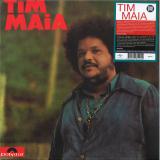
nicht am Lager

Bestelle jetzt und wir bestellen den Artikel für dich beim Lieferanten.

Last In: vor 81 Tagen
14,08 €
Tim Maia - 1973

Tim Maia

1973

12inchVAMPI342
Vampisoul
23.03.2026

Tim Maia’s self-titled 1973 album is one of those records that hits you from the very first groove and doesn’t let go. Originally released on Polydor Brazil, this was the fourth in a series of Tim’s self-titled albums and many fans and critics still consider it the crown jewel. Packed with irresistible hooks, lush arrangements, and that unmistakable Tim Maia swagger, the album captures the singer at the peak of his creative powers.If you’re new to Tim Maia, here’s the quick story: born in Rio de Janeiro, Tim was a larger-than-life icon whose music married American soul and funk with Brazilian samba and pop long before “fusion” was a buzzword. A true musical polymath, he absorbed everything from Curtis Mayfield to Motown and translated it into a sound entirely his own, gritty, passionate, and full of groove.


He didn’t just introduce soul to Brazil; he made it Brazilian.On this 1973 release, Tim pushes everything up a notch. The arrangements are bigger, slicker, and surprisingly majestic, without losing the raw spirit that earned him a devoted following. From the moment ‘Réu Confesso’ opens the album, you know you’re in for something special—smooth, funky, and heartfelt in all the right ways. The bittersweet ‘Gostava Tanto de Você’ remains one of his most beloved classics, while ‘O Balanço’ bursts with Brazilian flavor that practically dares you not to move. And with tracks like ‘Do Your Thing, Behave Yourself’ and ‘Over Again,’ Tim shows just how naturally the soul idiom fit him, even when he switched to English.This record has everything: deep grooves, soaring strings, magnetic vocals, and that unmistakable sense of joy that Tim Maia carried into every session. It’s a front-to-back winner—one of those albums that deserves a spot not just in Brazilian music history, but in any collection that celebrates great soul, funk, and timeless grooves.If you’re a longtime fan, it’s a reminder of why Tim Maia is legendary. If you’re discovering him for the first time, this is the perfect place to start. Either way: press play, turn it up, and let Tim do his thing.

nicht am Lager

Bestelle jetzt und wir bestellen den Artikel für dich beim Lieferanten.

Last In: vor 5 Monaten
27,31 €
ALEXANDER ROBOTNICK - MY LA(TE)ST EP

2026 Repress

Bosconi Records, the Florence-based imprint run by Fabio Della Torre, is back with something truly special. Over the years, the label has built a reputation for pushing house, funk and electro in all their shades, always keeping a strong link between the local scene and international legends. And when it comes to legends, there are few names that shine brighter than Alexander Robotnick.

The Italian electro pioneer – aka Maurizio Dami – has already collaborated with Bosconi on The Hidden Game and Italcimenti Under Construction. Now he returns with My La(te)st EP, a vinyl-only release that pulls five standout cuts from his 2007 CD My La(te)st Album and finally makes them available on wax. All tracks have been remastered for the vinyl format, enhancing their depth and dynamics to deliver the best possible experience on wax.

The EP opens with “Jette Le Masque (Extended Version)”, driven by a pumping bassline and jagged sawtooth synths, with whispered French vocals by Robotnick himself. Stretched out and more DJ-friendly than the original, this version is tailor-made for the dancefloor.
On “We Love The Music” things get fun and funky: vocoder vocals, an electro-funk bounce and that unmistakable Robotnick irony. A killer cut to start a set on the right foot.

Flip the record and you dive into the acidic depths of “I’m Getting Lost In My Brain”. Old-school Chicago vibes, a hypnotic groove and basslines that just don’t quit – a peak-time weapon that feels raw and timeless.
Then comes “A Coffee Shop in Rotterdam”, one of those secret gems: melodic, laid-back and warm, built on a slapping bass and dreamy arpeggios. It has that Riviera house touch from the ’90s, but with Robotnick’s unmistakable twist.

Closing the EP is “Addio” – a track that wears its heart on its sleeve. Romantic, emotional, and driven by a bassline that nods back to Robotnick’s all-time classic Problèmes d’Amour. A perfect goodbye track, the kind that leaves a smile on your face as the lights come on.

This is a must-have for vinyl lovers and Robotnick fans alike – five cuts carefully remastered for the vinyl format, pressed exclusively on wax and ready to work the floor from start to finish. Don’t sleep on it: limited copies, vinyl only.

nicht am Lager

Bestelle jetzt und wir bestellen den Artikel für dich beim Lieferanten.

Last In: vor 7 Tagen
15,34 €
Artikel pro Seite:

Language

N/ABPM
Vinyl