The legend that is Acen returns after the incredible success of his Trip To The Moon box set with an absolutely epic single "Champion". This new track heralds his upcoming Monolith box set, and is exactly what you would expect from Acen. With a sound like it just came out a few months after Trip To The Moon - which is to say, both forward thinking and timeless, this is heavy beats, classic stabs, ruff bass and proper original rave stabs as only Acen can bring. With flipside remixes from Innercore and Jimmy J & Cru-l-t, this single will be gone before you can imagine it....
Suche:just her
Limited purple coloured vinyl. First time reissued, includes the original cover artwork. Out of print in any format for 30 years. Most of us likely missed MUDHONEY’s ‘Five Dollar Bob’s Mock Cooter Stew’ when it first cratered here on Earth in late 1993, but we can ALL learn from our previous mistakes RIGHT NOW!!! Out of print in any physical format for 30 years (!), here is their Reprise mini-LP for all to devour in real-time and roll in its naked glory. Initially recorded by the band as an offering for their fans to devour while they were between full-length albums, the majority of ‘Five Dollar’ was recorded in one short, inspired burst on August 1, 1993, between the hours of 9:30 and 10:15 PM (with friend and Fastback Kur(d)t Bloch egging them on from the production booth). They smashed this out in just 45 minutes. It might be the band at their most ‘Stooge-esque’ since there is no flowery imagery; nothing to misinterpret; just in-your-face blunt despair (in that department, Black Flag’s ‘Damaged’ LP comes to mind, especially in Mudhoney’s gleefully punishing highlight: ‘No Song III’). Within two seconds of any of these songs hitting your mind (maybe even within one second), you knew it could only be Mudhoney. You can instantly recognize it, because they truly own it/you/the universe. Track listing: 1 In The Blood 2 No Song III 3 Between Me & You Kid 4 Six Two One 5 Make It Now Again 6 Deception Pass 7 Underide
Questions will inevitably have to be asked here as to how / why Hooj have shamelessly broken the informal UN backed agreement to NOT REMIX / RE RELEASE C*F* D*L M*R, EVER AGAIN. But after the Hooj Catalogue owners cajoled the old A +R team into a Hooj Electronic Orchestra album in 2021, the then up and coming Borai + Denham Audio were enlisted for remixes, and fast forward a couple of years, the Bristol duo are smashing it in 2023, and vinyl does indeed beckon.
And with some justification it has to be said, as the Bristol duo took chunks of the original Wim Mertens melody and somehow still managed to drag it into new terrain, introducing rough breaks and hardcore sensibilities into proceedings, for the first time in the track's 30 + years journey.
On the B - side, another star turn from the early 90's get's the BDA treatment, as Transformer 2's Fruit of Love get's a more polished/ musical approach on the Audio Redux mix ( though with no compromise on bottom end / beats dynamics) , and Borai contributes a rolling, percussive 4/4 dub.
- A1: Teth-Adam
- A2: Kahndaq
- A3: The Awakening
- A4: The Revolution Starts
- A5: Introducing The Jsa
- B1: Shaza-Superman
- B2: Our Only Hope
- B3: Change Your Name
- B4: What Kind Of Magic?
- B5: Is It The Champion?
- B6: Your Enemies
- B7: Black Adam Spotted
- B8: Not Interested
- B9: Just Say Shazam
- C1: Ancient Palace
- C2: Little Man
- C3: Time To Go
- C4: Release Him
- C5: Father & Son
- C6: Black Adam Theme
- C7: Fly Bikes
- C8: Nanobots
- D2: 23Lbs Of Eternium
- D3: Is This The End?
- D4: It Was Him
- D5: Lake Baikal
- D6: Capes And Corpses
- D7: Hawkman's Fate
- E1: The Jsa Fights Back
- E2: A Bad Plan Is A Good Plan
- E3: Dr. Fate
- E4: Prison Break
- E5: Wet Rocks
- E6: Not A Hero
- E7: The Doctor's Destiny
- E8: Slave Champion
- E9: Legions Of Hell
- E10: The Man In Black
- F1: Adam’s Journey
- F2: The Justice Society Theme
- F3: Black Adam Theme (Izniik Remix)
- F4: The Justice Society Theme (Izniik Remix)
- D1: Through The Wall
Der OST der Superhelden-Verfilmung BLACK ADAM von 2022 in der Regie von Jaume Collet-Serra. Der musikalische und philosophische Ansatz des Filmkomponisten Lorne Balfe zu bestand darin, 'dem Publikum die Emotion und Dunkelheit der Hintergrundgeschichte der Hauptfiguren zu vermitteln und gleichzeitig die alten Themen und Vertrautheiten der DC-Comic-Welt zu verknüpfen und eine neue Klasse der Superhelden einzuführen.' Schwarzes 180g Triple-Vinyl.
- A1: I Wanna Dance With Somebody (Who Loves Me) (Who Loves Me)
- A2: Just The Lonely Talking Again
- A3: Love Will Save The Day
- A4: Didn't We Almost Have It All
- A5: So Emotional
- B1: Where You Are
- B2: Love Is A Contact Sport
- B3: You're Still My Man
- B4: For The Love Of You
- B5: Where Do Broken Hearts Go
- B6: I Know Him So Well
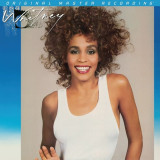
Whitney did more than turn Whitney Houston into a pioneering sensation known around the world by her first name. Originally released in June 1987, the singer's blockbuster sophomore record became the first album by a female artist to debut at No. 1 on the Billboard 200 chart — a position it claimed for a total of 11 weeks en route to selling more than 10 million copies in the U.S. The Diamond platinum effort also contains four No. 1 Hot 100 hits that, when combined with the three chart toppers from her 1985 debut, gave her seven consecutive No. 1 singles — an accomplishment that no other artist has accomplished. Commercially and creatively, Whitney stands on hallowed ground — especially now that the record plays with a sound that puts into perspective just how extraordinary, engaging, and vital Houston's music remains.
Mastered from the original master tapes and pressed on MoFi SuperVinyl at RTI, Mobile Fidelity's 180g 33RPM SuperVinyl LP of Whitney invites listeners to experience the Rock & Roll Hall of Fame inductee's pivotal album in audiophile quality for the very first time. Free of the dynamic limitations and tonal flatness prevalent on prior vinyl and CD pressings, it lets the music breathe and reveals the copious detail, nuance, and texture within the immaculately produced songs. MoFi's SuperVinyl profile offers further advantages in the forms of a nearly inaudible noise floor, dead-quiet surfaces, and superb groove definition.
In addition to featuring extreme clarity and immediacy, this numbered-edition reissue does wonders for the attribute that inspired more than 20 million people around the globe to add Whitney to their record collections: that inimitable voice. Houston's trademark mezzo-soprano — an acrobatic instrument equally capable of taking off on fantastic flights and unwinding for hushed meditations — benefits from the fantastic airiness and transparency afforded by this meticulously restored edition. Whitney has never sounded or looked better. The crossover landmark deserves nothing less.
Issued just two years after Houston's breakthrough debut, Whitney immediately signalled the genre-defying singer's intent to continue to push ahead and expand her palette. Shot by photographer Richard Avedon, the album cover depicts an iconic image of Houston — captured with a gleaming smile, bright eyes, teased-out afro, toned arms, and a right hand that appears to wave a friendly hello — whose active, athletic profile stands in contrast to the extremely formal sit-down shot of her that graces her '85 record. The change is telling: Whitney overflows with unfettered joy, rhythmic vibes, and deep-seated emotions that forever endeared her to the hearts and minds of countless listeners — and which set the standard for the wave after wave of divas that followed in her footsteps.
It's no coincidence that the first track on Whitney is the declarative "I Wanna Dance with Somebody (Who Loves Me)." Like Michael Jackson's "Billie Jean" and Madonna's "Material Girl," the feel-good smash is one of the quintessential '80s gems — a lithe, melodic, celebratory release of pent-up energy and loneliness that glides across club floors, shouts to the rooftops, and shrugs off any concerns about vulnerability or embarrassment. Houston's swooping voice moves in sync with the sleek beats and dipping-and-diving synths. She practically takes her fellow musicians by their hand and leads them in a blissful dance that nobody would dare sidestep. Focusing on Houston's singing — a task made challenging only because of the impossible-to-ignore hooks and grooves — showcases the virtuosic facets of not only her register but her control, discipline, smoothness, and warmth.
That she replicates those feats for the entirety of the nearly 53-minute-long album makes Whitney that much more special. Houston reaches back and channels her childhood gospel training on the R&B-flared "So Emotional"; effortlessly slips into Quiet Storm mode on the duet with her mother, gospel great Cissy Houston, on "I Know Him So Well"; flirts with smooth jazz and collaborates with tenor saxophonist Kenny G on the lush "Just the Lonely Talking Again"; conjures dreamscapes and shadow-boxes with supple funk on a romantic cover of the Isley Brothers' "For the Love of You"; and, for the majestic power ballad "Didn't We Almost Have It All," displays the sky-scraping reach of her vocals amid a grand arrangement made even bigger by Houston's sweeping performance and triumphant finish.
Houston's once-in-a-generation talents weren't lost on the adoring public, radio deejays, or industry experts. In addition to harbouring four No. 1 hits and receiving nominations for four Grammy Awards, Whitney generated another Top 10 success in the guise of the Afro-Cuban-leaning "Love Will Save the Day." The album also netted Houston four American Music Awards; two Billboard Music Awards; back-to-back People's Choice Awards; a Soul Train Award; and various other accolades. It all makes the crux of the Washington Post's July '87 review of the album appear prophetic: "Her voice sounds stronger still and the songs are varied but so consistent she could garner 10 Top 10s out of a field of 11."
That claim still holds true. A brilliant fusion of pop, R&B, smooth jazz, and soul, Whitney is a showstopper – and one of the key reasons Houston is the most-awarded female artist of all time.
One of the inventors of the modern bebop style of drumming, Blakey is known as a powerful musician and a vital groover; his brand of bluesy, funky hard bop was and continues to be profoundly influential on mainstream jazz.
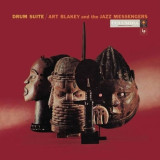
For more than 30 years his band, Art Blakey & The Jazz Messengers included many young musicians who went on to become prominent names in jazz. Recorded in 1956, Art Blakey's Drum Suite is a wonderful hybrid of African, Latin, and hard bop rhythms that prefigures the concept of Afro-beat by at least a decade. The sheer energy, not to mention its very special and fresh-sounding intimacy, make it especially astounding.
Even more amazing is that the three parts of the suite -- Blakey's "The Sacrifice," Ray Bryant's "Cubano Chant," and Oscar Pettiford's "Oscalypso" -- were recorded straight through live, and were only intended to be a pre-take run-through. As is obvious here, Blakey and company nailed the whole thing right out of the box.
Groundbreaking for its time, and still sounding vital, powerful, and visionary, the Drum Suite album is somewhat of a lost masterpiece that deserves a fresh audience.
"Art Blakey's first release for Columbia Records is essentially two records. Side one is a percussion ensemble playing what would, ten years later, be called Afro-Cuban drumming. Side two is the mid-fifties version of the Jazz Messengers featuring Jackie McLean on saxophone. Side one features Blakey, Jo Jones and Charles Wright on drums, Candido and Sabu on bongos, and Oscar Pettiford and bass and cello. The group plays three compositions, one by Blakey, one by Pettiford and one by Ray Bryant, fusing African, Cuban, and calypso percussion into a well-integrated suite.
"The group recorded a run through and it was so perfectly executed that they used the practice run for the release, unedited except to add some Swahili chants by the percussionists during a few passages. One cannot help but think of Olantunji's Drums of Passion, another Afro drumming landmark, here. Blakey's drum suite was recorded at Columbia's 30th Street studios in New York in 1957 and is in mono. The almost stereoscopic image is truly remarkable. Mastered by Kevin Gray and pressed at RTI, Drum Suite is a valuable record of one of the most important figures in jazz history. Recording: 9/10. Music 9/10." - Dennis Davis, Hifi+
"...The three-part suite was laid down in one take with no arrangements, and begins with a few tympani thwacks followed by an African chant. Soon the ensemble kicks in and the group takes off an a sweaty Afro-Cuban-bop journey that will leave you breathless, as the thing crackles with terrific energy. Side Two is more conventional hard bop, but given this group's mastery of if not invention of the style, these tracks are extremely satisfying. Kevin Gray's remastering is detailed and immediate, with plenty of bit and air, if not the widest dynamic range. For anyone interested in percussion of this genre, this is not to be missed." - Wayne Garcia, The Absolute Sound
Miles Davis created just one studio album with his original sextet: Milestones. And he made every moment count. Pairing with Cannonball Adderley, John Coltrane, Red Garland, Paul Chambers, and Philly Joe Jones, Davis not only laid the groundwork for the modalism that immediately followed but tailored a genuine modern-jazz masterwork laden with performances among the most explosive of his distinguished career. Sandwiched between the more famous 'Round About Midnight and the epochal Kind of Blue, Milestones remains a seminal work of art.
Sourced from the original master tapes and pressed on dead-quiet SuperVinyl, Mobile Fidelity's numbered-edition 180g LP grants each musician their own space amid broad soundstages. Afforded the benefits of a nearly non-existent noise floor and supreme groove definition, this vinyl reissue doubles as a time machine back to the February-March 1958 recording sessions.
Colors, shapes, and dimensions appear in the manner that resembles what you'd glean from behind a studio control room's window. Davis' burnished trumpet is rendered in three-dimensional perspective and seemingly coaxes the band to play with unburdened zest. Coltrane's trademark saxophone teems with lifelike tonality and images with specificity; his solos work in tandem with and against the driving rhythms. Garland's swaggering piano lines? Visualize the keys as he hits full stride, the chords and fills slithering around skeletal frameworks.
Inducted into the Grammy Hall of Fame and selected as a "Core Collection" record by the Penguin Guide to Jazz, Milestones is as famous for its title track – widely considered ground zero for modalism and bolstered by Jones' hallmark "Philly Lick" rim shot – as the players that produced it. The launching pad for many of Davis' improvisational flights, the album teases the explorations Coltrane would soon chase. Davis' own solo work broaches territories that far exceed what he had done in his bop-rooted past. Every song is a highlight.
Take the bravado "Dr. Jackle," featuring a hot-foot pace and bebop strains, or "Sid's Ahead," which continues the album's blues theme while juggling edgy harmonics and inside-out structures. On "Billy Boy," distinguished with an arco bass solo from Chambers, Garland gets a turn in the spotlight and channels the openness practised by one of his heroes, Ahmad Jamal. Even more instructive is the band's reading of Dizzy Gillespie's "Two Bass Hit." Three years removed from the version Davis and company recorded for the trumpeter's Columbia debut, this interpretation demonstrates the extent to which the group had jelled in a relatively short amount of time.
Then there's "Straight, No Chaser," the definitive rendition of Thelonious Monk's signature piece. Coltrane's marbled playing pulls at the tune's borders, Adderley takes liberty with solos, and Davis dances around his mates, at one point quoting "When the Saints Go Marching In" while demonstrating his knowledge of tradition and casting an eye towards the future.
About that future. Garland already had one foot out the door during the Milestones sessions to the extent Davis spells him on "Sid's Ahead." Jones would stick around for a bit longer but soon plot his exit. History proves Davis navigated the changes with visionary aplomb. Yet the chemistry, excitement, and beauty the sextet achieves on Milestones cannot be overstated. This reissue helps put the album in proper perspective – and presents the music the fidelity it deserves.
- A1: Just Like Honey
- A2: Sometimes Always (Feat. Isobel Campbell)
- A3: Black And Blues (Feat. Isobel Campbell)
- A4: Amputation
- B1: All Things Pass
- B2: Some Candy Talking
- B3: Head On
- B4: The Living End
- B5: Cracking
- C1: Teenage Lust
- C2: I Hate Rock 'N' Roll
- C3: Reverence
- C4: Blues From A Gun
- D1: Far Gone And Out
- D2: Between Planets
- D3: Half Way To Crazy
- D4: In A Hole
Recorded at the Hollywood Palladium, Los Angeles in 2018, ‘Sunset 666’ is a new live album from The Jesus and Mary Chain, due out August 4th 2023 on Fuzz Club. In 1990, a young American band, full of a precise kind of noise and darkness, were special guests on the US tour being undertaken by a group who had noise and darkness, poise and catharsis of their own. The young band: Nine Inch Nails. Those headliners: The Jesus and Mary Chain. Almost thirty years later, an invitation was extended. Would the Reid brothers care to reverse the roles and open for Nine Inch Nails on their own North American tour? Trent Reznor had been a fan of the Mary Chain, and influenced by them since hearing 'Psychocandy', so it felt a good fit and the Reid brothers accepted. The resulting tour ended with a run of six shows at LA’s Hollywood Palladium and the seventeen tracks captured on the ‘Sunset 666’ double album were recorded from the desk on two of those nights. Sides A, B and C are from the final show, December 15. Those twelve songs were the full set that night, in sequence, meaning the show began with the here-we-f*cking-go drums of ‘Just Like Honey’ and ended with the ferocious euphoria of an eight-and-a-half minute ‘Reverence’. Side D of the vinyl record is taken from the December 11 show and serves almost as a mini-showcase of the ‘Automatic’ album, featuring versions of ‘Blues From A Gun’, ‘Between Planets’ and ‘Halfway To Crazy’.
Julian Cannonball Adderley's only Blue Note album, Somethin' Else, would likely forever be famous in music lore if just for the presence of Miles Davis. The iconic composer/trumpeter steps into the role of sideman on the 1958 set, one of just a handful of times he'd make such a move after the calendar passed the mid-1950s. Yet evaluating Somethin' Else strictly on Davis' involvement misses the big picture. Plain and simple, Adderley's jubilant work remains a jazz landmark due to the chemistry of its Hall of Fame personnel, enthusiasm of its participants, and sophistication of its arrangements – not to mention the reference-grade production and inclusion of the definitive renditions of two all-time jazz standards.
Limited to 6,000 numbered copies, pressed on dead-quiet MoFi SuperVinyl at RTI, and mastered from the original master tapes, Mobile Fidelity's ultra-hi-fi UltraDisc One-Step 180g 45RPM 2LP collector's edition pays tribute to the record's merit and includes the bonus track "Allison's Uncle." Offering reference-calibre sonics, this spectacular collector's version provides a clear, transparent, ultra-dynamic, and up-close view of a cornerstone effort that witnesses Adderley and Davis sharing horn duty alone for the only time in their fabled careers – an arrangement that occurred as a result of Adderley having joined Davis' majestic sextet a year prior.
The premium packaging and beautiful presentation of the UD1S Somethin' Else pressing befit its extremely select status. Housed in a deluxe slipcase, it features special foil-stamped jackets and faithful-to-the-original graphics that illuminate the splendour of the recording. No expense has been spared. Aurally and visually, this UD1S reissue exists as a curatorial artefact meant to be preserved, touched, and examined. It is made for discerning listeners that prize sound quality and production, and who desire to fully immerse themselves in the art – and everything involved with the album, from the iconic photos to the gorgeous finishes.
The vibrant potency reveals itself openly on an analogue set that provides full-range reproduction of an ensemble that also includes pianist Hank Jones, bassist Sam Jones, and drummer Art Blakey. Each and every snare hit, downbeat, and cymbal splash registered by the latter take on realistic proportions, blooming and decaying as they would right in front of you on a stage. Jones' foundational bass lines register with uncommon depth and palpability, the litheness of the strings and fullness of the instrument epitomizing the definition of rhythm. Stellar, too, are the surefooted 88s. Sublime in scale, tonality, and attack, with the delineation such you can practically separate the white and black keys in your mind. As for that liquid interplay between Adderley and Davis? Breathtakingly lifelike in timbre, naturalism, purity, and presence. This collector's version takes you there – there being Rudy Van Gelder's legendary New Jersey studio in March 1958 to witness it all unfold, again and again.
For reasons that extend far beyond the outstanding playing and flawless repertoire, Somethin' Else is without question a record you'll always want to watch and hear come together. As veteran critic Bob Blumenthal observed writing about the album four decades after its release, "The instant rapport achieved by the quintet is thus the product of much shared and common history, though the tensile strength that they create throughout created a totally unique feeling that can be attributed to the sensitive musicianship of all concerned, including the supposedly hard bopping leader and drummer." Such inimitable feeling, or emotion, courses throughout every passage, and no where more obviously than on "Autumn Leaves" and "Love for Sale."
Without question, the discreet interpretations of the Johnny Mercer and Cole Porter songs, respectively, found on Somethin' Else have long been considered part of jazz's alluring mystique. Adderley and Davis bring contrasting approaches to the table yet sound of a singular mind on "Autumn Leaves," with the latter's muted trumpet and the headliner's lush alto saxophone dovetailing into a performance that endures as a blueprint for expression, counterpoint, sophistication, fluidity, and linearity. Blues, melody, and romance pour from their horns. Their bandmates, picking up on the intimate vibe and calm mood here – as well as on the spry, head-over-heels spirit of "Love for Sale" – join in on the conversation with sharp economy and float-on-air roundedness.
Not to undersell the other three numbers, all deserving five-star status. Twelve measures in length, the title track offers a slow burn in swing. Written by Adderley's brother, Nat, the 12-bar "One for Daddy-O" transmits funk flavors. The closing "Dancing in the Dark" pops with lushness and temptation, its stream of bold colours and understated textures calling for a moonlight twirl, or at least fantasies suggestive of a memorable night. Somethin' else, indeed.
- A1: Maroon Commandos - Bi Sophia N°1 (El Sofia)
- A2: Issa Juma & Waanyka - Ateka (El Corín Tellado)
- B1: Orchestre Shika-Shika - Diabanza (La Gallina Java)
- B2: Viva Makale - Safari (La Mecedora)
- B3: Les Mangelepa - El Trouble Pt 1 (El Trouble)
- C1: Nairobi Matata Jazz - Dada Mwajuma (La Pistola)
- C2: Les Volcano - Hakuna Dawa Ya Mapenzi (La Guitarra Sónica)
- D1: Lawi Somona - Safi (El Mapache)
- D2: Les Kilimambogo - Wakumbuke Wazazi (El Coyote)
- D3: Les Mangelepa - El Trouble Pt 2
This compilation takes us on a journey to the Colombian coast where the passion for African music burns bright.It's impossible to understand this love affair without first looking to San Basilio de Palenque - the first free town in colonial Latin America, established in 1691 as a place of refuge and autonomy for black slaves. It's a place where pride in African heritage and culture could be kept alive, just 50 km away from Cartagena de Indias.
The Afro Caribbeans' connection to their roots gave rise to the "picós" - artisanal, high-powered sound systems akin to those found in Jamaica. These music aficionados have a keen ear for African melodies, leading to a vibrant collector's scene that brought Afro sounds to the streets of Barranquilla, Cartagena, and Santa Marta. This compilation showcases the best of Kenyan Benga music - a unique style with a distinct guitar-picking method that draws from traditional instruments like the nyatiti and orutu. Learn everything about the history and stories behind these African tracks, from the carefully guarded "exclusives" to the piconema - the practice of renaming songs in Spanish based on their lyrics or the reaction of the dancefloor.
The project has been led by Spanish vinyl collector Joan Pujol aka Golfo De Guinea surrounded by a team of passionate music lovers including Don Alirio, a musicologist from Barranquilla who offered a coastal perspective, and George Ouma, a Kenyan DJ, collector, and Benga advocate who helped with track selection and securing rights. The result is a compilation that captures the joy and energy of sub-Saharan polyrhythm, bringing together a vibrant mix of genres that are sure to move your feet. So sit back, turn up the volume, and let yourself be transported to the vibrant streets of the Colombian coast and the shores of Lake Victoria.
The collaboration between Klara Lewis and Nik Colk Void somehow seemed inevitable. Both artists having seen their releases published by Editions Mego, individually carving out idiosyncratic voices in the worlds of extreme, abstract electronic music. With Full-On, Lewis and Void explore and assimilate the very edge of their individual practice where a unique collaborative interface allows two voices to combine and morph into a third voice.
Lewis and Void play ping pong with the conversation of sounds, generating ideas and bouncing them off each other, simultaneously encouraging the other to go further with their ideas opening up an opportunity to engage with previously unexplored terrain. Guitars, synths, euro rack modular systems, voice, sampling and outboard processing are folded in a playful unification with a propensity to tease, explore and extract new ideas and shapes, sometimes brutal, sometimes playful.
Trust was also a compositional tool allowing instinct to freely move on any aspect of the sound and space. This sound/feeling/instinct/association let this wild and wonderful material grow organically into something new.
The result of this exploratory interplay are 17 intense miniatures reveling in the process of unadulterated experimentation and whimsical interplay, not just between the humans, but the machines themselves. United in an endless series of sonic U-turns, this daring duo intertwine pop and noise whilst also bringing together visions of tender techno and forthright ambient.
The various zones which manifest from all this reveals vocals shifting in mysterious ways, dust drenched beats churning limpidly and devilish string loops navigating a disorientating domain. The experience of listening to Full-On is to be confronted with a range of ideas resulting in a platter of emotions. A place where beauty and the beast collide with the impulsive and outright weird. What a wonderful world.
Dot Allison returns with a new solo album, Consciousology. After over a decade away, the former One Dove singer and songwriter broke cover in 2021 with Heart-Shaped Scars and this new album follows just two years later, as she hits a purple patch of songwriting. It’s also her first full release for Sonic Cathedral after contributing to Mark Peters’ acclaimed Red Sunset Dreams last year. Consciousology finds multi-instrumentalist Dot joined by the London Contemporary Orchestra, her new labelmate Andy Bell from Ride, who plays guitar on two tracks, and Hannah Peel, who is responsible for some of the string arrangements with both the LCO and a stellar group of Scottish string players. It expands on the styles and themes of the previous album, all while pushing everything just that little bit further – the songs sound bigger, more avant-garde and experimental and, occasionally, properly out-there and psychedelic. “I wanted to make some albums that felt like a set, exploring love, what lies beyond the visible and how all these aspects dovetail together,” explains Dot. “I see Consciousology a more psych Heart-Shaped Scars with a far fuller, more immersive sound and so, in that sense, it’s a more wayward, bolder, rule-breaking partner.” Right from the eye-catching artwork by PJ Harvey collaborator Maria Mochnacz it definitely does not play it safe. It veers from the techno-played-as-folk of opener ‘Shyness Of Crowns’ and ‘220Hz’ and the Linda Perhacs-meets-The Velvet Underground chug of the first single ‘Unchanged’ to the Mercury Rev-style fantasia of ‘Bleached By The Sun’, the Brian Wilson-esque harmonies of ‘Moon Flowers’ and the kaleidoscopic colour trip of ‘Double Rainbow’. Elsewhere there are echoes of Desertshore-era Nico, Jack Nitzsche’s work with Neil Young, Karen Dalton and Anne Briggs before the relative simplicity of the Tim Hardin-inspired closer ‘Weeping Roses’. It’s a brilliant, breathtaking record.
- 1: A Handful Of Summer
- 2: The Summer Isles (Sunrise)
- 3: Fairy Falls
- 4: I Just Love You
- 5: Our Time
- 6: Suburban Pines
- 7: Samalaman Bay
- 8: Notes From A Holiday
- 9: Arcadia
- 10: Letter To The Boy
- 11: Childhood
- 12: Let It Be A Long Time
- 13: Leave That Light On
- 14: Remember Fall In Montreal
- 15: The Summer Isles (Sundown)
Der britische Folk-Singer/Songwriter Roo Panes kündigte sein neues Album 'The Summer Isles' dieses Jahr mit ersten Konzerten an namhaften Orten in London (Union Chapel), Amsterdam (Paradiso) und Berlin (Heimathafen) an. Zu Panes' durchdachtem Gitarrenspiel gesellen sich himmlische Harmonien und klangvolle Strukturelemente, die sich mühelos zu stimmungsvollen Bildern verbinden, während Roo von Schätzen, Jacarandas, unberührten Blumen und ruhigen Meeresnächten singt. Durchweg sicher und atmosphärisch, trägt die klare Produktion des Albums zur natürlichen Thematik bei.
- 'Mit seiner grandiosen Gitarrentechnik verzaubert er die Ohren, mit den Texten die Herzen der Hörer*innen. Der Aufbau und die Harmonik seiner Songs stammen nicht selten aus der klassischen Musik.' - heimathafen-neukoelln.de
It’s June 2022. After months of rehearsing, Tim Sanpher decided to take the band into Brighton Road Recording Studio for a weekend.
Having yet to play a gig he was interested to hear how they’d respond to being put on the spot and wanted to give them something to focus on. With the very late addition of a second guitarist they set up and recorded nine songs live in one afternoon. Only the vocals would be replaced the following day.
The recording was purely for posterity and there had been no plans to release it yet...on hearing the roughly mixed playback it was already obvious...they’d captured something special. Something more than just the five members combined. It was a true “lightning in the bottle” moment.
It was clear that Shaw’s Trailer Park had its own individual sound and character.
And here are those recordings captured on album for the first time!
Punchy rocking workouts like Don’t Do That and She’s Alright sit alongside live favourites - psych workouts Sun Device and Rainbow Man.
Put Webbed Wing’s Taylor Madison up against some of rock’s most celebrated songwriters––he’s ready. On their new EP, Right After I Smoke This..., the Philly-based guitarist and singer puts on the kind of unforgettable performance that can take everyday people and turn them into musical heroes for the masses.
For those in the know, Webbed Wing––incomplete without Jake Clarke (drums) and Mike Paulshock (bass)––have long-since reached cult status; the project follows Madison and Clarke’s already-decorated career in their band, Su- perheaven. Here, each member freely flexes their innate genre-bending musicality, taking notes from the likes of The Lemonheads, Teenage Fanclub, and Weezer.
In just three songs, Right After I Smoke This... channels everything lyrically-gripping about rock music and everything vibrant about pop. There’s as much earnest twang in their toolkit as there is snotty skate-park punk and intense metal; it’s a celebration of the genre as they’ve come to love it, resulting in something highly palatable and new.
Third Man Records is delighted to present Michael Kiwanuka's contribution to the TMR Blue Series of releases. Kiwanuka, a 25 year-old UK native of Ugandan heritage, was raised in north London where he split his time between session work and local gigs. Along the way, having found footing as a solo artist, he was signed to Communion Records, then Polydor, and has since performed throughout Europe and North America too—touring in direct support of Adele. He made his way through Nashville this past summer with just enough pause and aplomb to commit these morsels to tape. The A-side "You've Got Nothing to Lose" is an original composition, featuring The Buzzards' Dominic Davis on upright bass and Cory Younts on piano, joined also by fellow balladeer Lillie Mae Rische on fiddle. Their contributions transform his work into a stone-cold groove with almost orchestral underpinnings, making it a fitting extension of their previous Blue Series. PRODUCED by Jack White (not collaborated with, so please fight your every urge to put "collaborator" in your headline!), the single also features a chilling rendition of Townes Van Zandt's infamous "Waitin' 'Round to Die" on the B-side, the perfect compliment to the timbre and mood of the A-side.
Today, powerhouse mande jazz ensemble Balimaya Project announce
their second album When The Dust Settles to be released by New Soil in partnership with Jazz re:freshed on July 21, 2023
A dynamic maturation of the group's thrilling big band sound, When The Dust Settles is a personal and cathartic expression of grief, rage, love and joy.
Fusing West African rhythmic tradition with the energy of London's jazz continuum, the album celebrates the restorative power of Black male brotherhood among diaspora communities in London.
Led by composer/arranger and UK-based Djembe player Yahael Camara Onono, Balimaya Project have established themselves as one of the most exciting and forward-thinking ensembles in Britain.
Enlisting guest vocalists Afronaut Zu, Obongjayar and Fassara Sacko across ten groove- laden and punchily percussive tracks, each song on When The Dust Settles engages intentionally with the significance of folkloric rhythms to illuminate themes that include the death of Camara Onono's older brother, losing a child, becoming a father, migration, survival and a search for truth.
As Camara
Onono describes: "One thing that's really linking us is that concept of family and the bonds are getting stronger every time ... It was important to me to go deeper and address not just tradition and culture, but also address emotion."
Codek is the brainchild of Jean-Marie Salaun who grew up in Paris influenced by the folklore of the inner city. In 1978 he joined art rock group SpionS and collaborated with Robin Scott (M 'Pop Music'). He began working as Codek, a play on the brand name Kodak with the 'Me Me Me' single released in 1980. In 1981 the 'Tam Tam'/'Closer' single was released on West African Music, a tiny label from the Ivory Coast, and re-released a year later by Island Records in the UK (where the B-side was re-named 'Tim Toum'). 'Tam Tam' was inspired by Burundi drummers playing in the plaza in front of Beaubourg where the song was recorded. Jean-Marie enlisted one of the drummers from the circle, Georges Atta Dikalo, to lay down percussion for the song. The female singers were from the French Caribbean and added falsetto tribal chants. Claude Arto achieved complex rhythmic patterns using a modular synthesizer and heavy processing. Jean-Marie recorded himself beating his chest for the thump noises. The recording of spanned over two years. They started on 16-track in Studio d'Auteuil, where Jean-Marie blew the woofers, before resuming in Studio Centre Georges Pompidou with an added 8-track recorder.
In 2017 we reissued the 'Tam Tam'/ 'Closer' single and shortly after the 24-track master tapes were discovered in Paris by original engineer Gérard Chiron. We arranged for graphic designer Maycec to pick up the tapes and immediately began to think of remixers for this project. First up is producer and DJ Daniele Baldelli who gave the original single a spiritual home in the Cosmic 80s scene of Italy. Here he's teamed up with Marco Dionigi for two remixes. Remix A goes full on funky disco baseline while Remix B a more balearic affair. We remember Justin sharing a memory of DJing the original Island Records promo at the Mudd Club in 1981 so we had to ask him for remix. He teamed up with his Whatever/Whatever production partner Bryan Mette and delivered an hypnotic pulsing house remix and an extended edit. All songs have been mastered for vinyl by George Horn at Fantasy Studios in Berkeley. The jacket is new twist designed by Eloise Leigh on the 1981 edition artwork by Angela Boy, inspired by primitive electronics and African paintings.
After taking time out from working together to focus on separate musical projects, maverick composer Alan Roberts (Jim Noir) and crowd-rousing vocalist Leonore Wheatley (International Teachers of Pop / The Soundcarriers) have re-joined forces to introduce Co-Pilot. Each the other’s wing person, they’re plotting an escape through Manchester’s claustrophobic grey skies with the pencil case colour of a hand-sewn multi-coloured primary school patchwork quilt. “We are both the creators in charge of navigating Co-Pilot’s overall sound which changes from track to track,” Leonore hints at what to expect. “There are about 6 different genres on one album, it's a pick n mix record!”
Happy in the haze of many boozy hours the album was recorded over just a few months whilst holed up and hanging out in Al’s city centre Dookstereo studio. The former Mill allowed the pair to relax, laugh and create without constraint. Armed with their original demos and vocal recordings from Al’s flat, they’d nip by the offie to pick up some Dutch courage before setting to work: building arrangements from a drum beat and basic chord pattern, the pair were so in tune they rarely spoke, allowing only the music to lead the way. “We’d communicate through nods of agreement or grimaces of dismay,” Leonore recalls. “Using the instruments with Al in production mode, we let the sound dictate the process whilst being drunk enough to follow it.”
The sound of life coming full circle after honing their separate crafts, Leonore had previously played keys and vocals in Jim Noir’s live band before moving on to front International Teachers of Pop for two critically lauded albums of joyous dancefloor filling bangers - their self-titled debut (2019) and Pop Gossip (2020). During that time Al would further expand Jim Noir’s universe with AM Jazz, which was celebrated as the no.1 album in Piccadilly Records’ ‘End of Year Review’ (2020), followed by the Deep View Blue E.P. (2021) cementing his status as one of Manchester’s finest songwriters.
As Leonore added her vocal magic to Al’s early demos of what would eventually become Co-Pilot’s ‘Spring Beach’ and a crooked original version of closing track ‘Corner House’, the vibe was prophetic “like the ending of Grease as Danny and Sandy take flight through the clouds”, letting their imaginations fly. The songs were the catalyst to spark a new phase of the pair working together, picking up where they left off. “From messing about with sounds during rehearsals in the very beginning it was always clear we liked the combination of sounds we made,” Leonore recalls.
Powered by a ‘try anything’ approach, Co-Pilot blends the musical DNA of what you’ve come to expect from each of the pair’s previous flight paths. “Whatever is switched on or nearby gets used. There's no 'correct' for us. If it sounds good, record it,” Al tells. United through typically turbulent wonky pop and lurking samples, whether culled from 70s TV themes or recreations of past and found sounds (see Al’s 60s tropicalia guitar on ‘Brick’, or the innocent ‘Swim to Sweden’ which opens with an ice cream van jingle Al recorded from his bedroom window) their process offers up a bucket load of Easter eggs. The album even features snippets from dearly departed pal Batfinks whilst ‘Motosaka’ is perhaps the most expensive 2-minutes on the album, featuring a Columbia Records Japan-cleared sample of Ryuichi Sakamoto’s ‘Thousand Knives’. Its synth squelches and Tom Tom Club funk also received the blessing of Haroumi Hosono, Godfather of Japanese Electronica, who agreed to being sampled in an original version of the song. “We just kept listening back and hitting gold,” Al recalls. “I was thinking ‘yeah, not sure what this is but I like it! We were buzzing with what we had made.”
But the sound wouldn’t come without self-imposed instrumental challenges. Thanks to an old mellotron sample on ‘Move To It,’ the moog riff and nautical accordion breaks on ‘Swim To Sweden’ and the 6/8 and 7/8 jaunt of ‘Brick’, time signatures were lovingly skewed to create Co-Pilot’s unique mood. “It was a bastard getting the drums right,” Leonore reveals, “but I like the wonkiness”. Levelling up through the lyrics, the words of smoky and evocative ‘She Walks In Beauty’ are based on a Lord Byron poem, with the sentiment of remembering Leonore’s late grandparents. “I wanted to see how much I could get away with just singing on one note, and how I could harmonically change everything else around it vocally,” she says. Elsewhere ‘Can You See’ was written from the perspective of a concerned sister to a brother which tells of keeping someone safe. “The lyrics are quite metaphorical about day-to-day happenings, people loved and lost. Others are rhythmic nonsense! It’s up to the listener to figure out what’s true.”
It’s clear from Al’s productive production techniques and Leonore’s knack for vocals and lyricism, Co-Pilot’s course is engineered by two aeronautically adept sonic storytellers. “We share a pretty similar sense of humour,” Al tells, “It is funny listening to this quite serious album but knowing we were giggling as we recorded it all. It’s been great to have another brain to bounce off.” Their destination might be unknown, but the clouds are about to part for a sound that is light years ahead. “You'll like at least one song,” Leonore suggests, “and hopefully them all.”
- A1: Track 1
- A2: Track 2
- A3: Track 3
- A4: Track 4
- A5: Track 5
- A6: Track 6
- A7: Track 7
- A8: Track 8
- A9: Track 9
- A10: Track 10
- A11: Track 11
- A12: Track 12
- A13: Track 13
- A14: Track 14
- A15: Track 15
- A16: Track 16
- A17: Track 17
- A18: Track 18
- B1: Track 19
- B2: Track 20
- B3: Track 21
- B4: Track 22
- B5: Track 23
- B5: Track 24
- B6: Track 25
Imagine a world in which you are permitted, by a warlock, to go back in time to use an advanced yet primitive submarine to investigate the deepest waters in and around Japan, for the first time in human history. You are not permitted, but two Japanese scientists were allowed on such an aquatic adventure!
Here we have an underwater in-submarine field recording of their adventures, intermixed with a slippery-watery score, that surely represents the lurking fresh surroundings of the deep as they retreat further and further to the bottom of the ocean. The cameras, the retracting mechanical sea tentacle, their communication devices, are all audible now for you, as Deep Sea Animals is played out as a fresh digital radio play. All the audio has been preserved at Studio Isabellalei, by Milan W. from the original laserdisc, which was a part of the cinematic curatorial program at the opening for Spencer Clark’s album Avatar Blue, in Antwerp, Belgium.
With a purchase of the vinyl album of Deep Sea Animals on Pacific City Discs, you not only return to the prehistoric times of 1986, when two brave Japanese submarine pilots were to record deep underwater creatures, but you are also thus thrust back in time to Antwerp 2018, to a romantically titled, Event Horizon Cactus Cooler Laserdisc Theater. Just as well, the proceeds of this disk, tirelessly edited by Spencer Clark, will be donated to the preservation of the ocean, via the inspiring Sylvia A. Earle’s foundation, Mission Blue. Its not that you may or may not believe what I am now discussing with you, its that you can believe, because this disk is real, and thanks to Pacific City and Discrepant we will ride further into the super-natural realms of real life.