House music has truly gone worldwide and here at Local Talk Records we like to think that we're open-minded to all shades of our beloved 4/4 rhythms...
This time we've given North Africa an opportunity to showcase their take on electronic deep house...with soul of course.
Egyptian producer Adham Zahran has been on our radar for quite a while now.
With a blend of dark yet beautiful electronic themes we like to think that his sound lands somewhere between Ron Trent, Atjazz or the more electronic Glenn Underground tracks.
For his debut on Local Talk, Adham presents 'Stripped Years', a beautiful production that takes us down below with big strings, supa deep chords and a light yet bumpy 4/4 kick.
Not hard, not pumping, just sexy and deep.
In order to make the North African theme even stronger we asked Moroccan producer Cee ElAssaad to take 'Stripped Years' further beyond the limits of the original version. The result is quite Chicago-ish, slightly more soulful but still very electronic and thumping. Cee gives us two versions, the original remix but also a massive beatless version that works just as well without beats.
Shape of the Unknown’ is kind of a double LP that fully embraces the idea of exploration. It is CHLOÉ’s most expansive and immersive work to date. ‘Shape of the Unknown’ is CHLOÉ’s fourth proper studio album. Its predecessor, ‘Endless Revisions’, was released in 2017. Nine years have passed. Nine years during which CHLOÉ has continued digging for music, DJing at internationally renowned clubs and festivals including Rex Club, Robert Johnson, Panorama Bar, Nuits Sonores, Glastonbury and many more, releasing EPs and remixes, while also allowing herself the time to explore entirely new creative paths.
The challenge is to capture the unknown, make it her own, endlessly reshape its textures, and ultimately preserve its mystery.
The first single ‘Drifter’, released back in June, already offered a striking glimpse of the sonic territories the album would venture into, driven by its hypnotically contoured basslines. The album's two other singles offer different windows into her world. 'Shapeshifter' captures CHLOÉ at her most hypnotic, balancing stripped-back techno and melodic house through deep rolling grooves, expansive bass chords and subtle rhythmic shifts that constantly reshape the listener's perception without ever disrupting the flow. Later, 'Repeating The Obvious' takes a more leftfield route, pairing staggered rhythms with retro-inspired harmonics and an understated indie dance pulse that feels simultaneously familiar and unpredictable.
CHLOÉ has ventured into live performance through new formats, notably alongside percussionist Vassilena Serafimova; immersed herself in film scoring with soundtracks for Paris la Blanche, Arthur Rambo, The Mountain, Blanquita, Guru and Unsubmissives; and developed compelling collaborations, from High Season, her project with Ben Shemie of Canadian band Suuns (which resulted in the album The Call), to her own organic, experimental audiovisual performances under the name Slo/Mo AV.
Throughout Shape of the Unknown, CHLOÉ blurs the boundaries between deep house, hypnotic techno, electronica and cinematic sound design with remarkable fluidity. The album unfolds as a continuous narrative rather than a sequence of tracks, moving effortlessly between beatless ambient passages, rolling analogue grooves and emotionally charged club music. Organic percussion, sweeping bass movements, melancholic harmonies and richly textured synthesisers create a body of work that constantly evolves, where no section feels static and every transition reveals another layer of depth. There is an unmistakable warmth running through the record, with grainy analogue textures and spacious production giving even its most driving moments an intimate, almost tactile quality.
The album’s title is no coincidence. It evokes a form that has yet to be named, something language itself struggles to grasp. CHLOÉ approaches it through an organic creative process. Each piece must first be performed in the studio, almost as if it were being played live. The album will be followed by a series of live performances and DJ sets, including a show at the Olympia on March 18, 2027.
She is joined by a handful of steadfast collaborators. Jazz trumpeter David Enhco appears on two tracks, ‘Undertow’ and ‘Inner Bass’. But above all, there are the voices: Ben Shemie lends his unmistakable presence to the radiant ‘More Than Just a Feeling’. Olivia Merilahti, singer, songwriter and one half of The Dø, appears on the otherworldly ‘TWYR’. Working with Olivia’s already hypnotic voice, CHLOÉ has approached it like a sculptor, enhancing its strangeness and dreamlike quality.
And finally, impossible to miss is the instantly recognizable voice of Kittin. A longtime accomplice, she lends her distinctive phrasing to CHLOÉ’s music here for the very first time. The strongest collaborations are often those that take their time, arriving only when the moment is right. Same kind, same bass, same vibe, same pride.
The result is an enigmatic, nocturnal record, drifting between introspective listening and dancefloor functionality, revealing an artist who remains far more interested in atmosphere, movement and emotional storytelling than conventional club structures. It is an album that invites us to dream more deeply and to dance again, both within ourselves and out in the open.
Battlefield sees No Ice Cream Sound knock on the door of the real foundations of Roots Reggae and Dancehall culture with a heavyweight, riddim-focused multi-vocalist release.
The release perfectly balances a bold and fresh contemporary sound while retaining the spirit; energy and rawness of the classic riddims we all know and love. Battlefield creates a sturdy platform for the carefully curated selection of vocalists to showcase their respective styles and patterns.
At the heart of the release is a unique vocal link-up that reflects the ever-growing globalisation of the Reggae Sound-system culture. Each of the men behind the microphones invites us to embark on a journey; connecting the dots on the map that represent the places they call home. We start in The South West of England and track across country to Southend-on-Sea; from here we make the mission all the way down to Madrid before taking a bearing on the North Star to guide us over hills and valleys to Scotland.
Where the riddim creates a constant, the vocals provide variety. Made by design the track allows them a spacious environment for the individual styles and messages to come across with precision and clarity.
Hailing from different backgrounds; accents of different origins, insights and perspectives drawn from their own stories all come together over one sound. This could be seen as an analogy of the ethos and motivation behind Reggae music itself. Reggae music as a genre tells the same story, Reggae artists tell their version of the story. Via this timeless format we are always building on the teachings of yesteryear while simultaneously learning something new. The gift that will forever more continue to give!
Das zweite Album der "Colors"-Trilogie! Der aufstrebende Metal(core)- und Alternative-Künstler hält seine über 2 Millionen TikTok-Follower in Atem. Arankai stammt aus Wisconsin (USA) und trat erstmals 2022 mit einer Reihe von Independent-Veröffentlichungen in Erscheinung. Durch die Kombination von Elementen aus Metal, Alternative Rock und emotionalem Storytelling baute er sich dank seines rohen Sounds und seiner markanten Präsenz in den sozialen Medien schnell eine treue Fangemeinde auf. Nach der "The Portrait Tour" im Mai und Juni 2026 - seiner ersten Headliner-Tournee, die mehrere ausverkaufte Shows in den USA umfasste - wird Arankai ausgewählte Headliner-Konzerte in Europa spielen (darunter einen Auftritt beim Reeperbahn Festival). Anschließend nimmt er diesen Schwung mit ins Frühjahr 2027, wenn er gemeinsam mit Melrose Avenue als Support-Act durch Europa tourt. Arankai in his own words: ""The Shape of Blue", like its predecessor "A Portrait of Red," covers a range of human experiences: rebellion, pride, sacrifice, to name a few that stick out. I tend to draw from personal experiences, but with this particular record I found myself writing songs that reflected specific situations involving other people; sometimes I wasn't even a part of those situations, it was just a powerful moment I found inspiring. I really wanted this record to be something special. I did a lot of things I haven't done before, wrote songs in styles that were new to me; I really wanted to give people a new, exciting experience. I believe "The Shape of Blue", as an album, is a strong, emotive piece. And I hope people enjoy it as much as I loved making it."
There's a tendency in metal to mistake aggression for honesty, volume for depth. To confuse the performance of darkness with its actual weight. Hidden Fires Burn Hottest, the new album from San Francisco-based post-black metal band Bosse-de-Nage, sidesteps this entirely. It’s the group’s most fully realized work yet, precisely because it refuses to be pinned down.
Bosse-de-Nage have been working with The Flenser for over fifteen years. They were one of the first bands the label ever partnered with and have the longest active relationship in the label's history. But unlike most bands who build momentum through constant touring and visibility, Bosse-de-Nage has largely existed apart from the music world's usual machinery. They've evolved on their own terms, in relative isolation, allowing the work to develop without outside pressure or influence. What began rooted in black metal anonymity has mutated into something that actively defies categorization. The aggression is still there, but it's no longer the point. Hidden Fires Burn Hottest finds the band treating emotions like physical objects, feelings with spatial properties. “No Such Place"" describes a space that can't exist but does anyway, somewhere between thought and location. ""Immortality Project"" examines infinite possibility not as promise but as problem, endless options collapsing under their own weight. These songs don't use metaphor to describe emotion. They make emotion into something you could theoretically touch.
Tracked by Jack Shirley (Deafheaven, Oathbreaker) at Atomic Garden East and mixed and mastered by Richard Chowenhill of Agriculture, Hidden Fires Burn Hottest was years in development, with some tracks beginning in 2018.
The long writing process offered time that most records don't get. Time to live with ideas, revise endlessly, to let structures settle. For the first time, lyricist Bryan Manning wrote everything in advance, creating a surplus to pull from rather than working under deadline pressure. The difference shows.
Coming off Further Still, an album built on constraint and economy, Bosse-de-Nage sought the opposite: sprawl, strangeness, fewer rules. Space for ideas to develop without rushing them. Dynamics that move through quiet as much as noise. Presence earned through atmosphere instead of volume. The record even includes ""Mementos,"" which might be considered the first love song the band has ever written.
Nothing here coheres into a theme. These are pieces pulled from low moments and private feelings made public through sound. The band has never been interested in positivity, in music that resolves cleanly or offers comfort. But bleakness doesn't mean humorlessness. There's something darkly funny running through much of it, even when it shouldn't be.
Hidden Fires Burn Hottest doesn't explain itself. It just insists: what you feel is as real as what you can see."
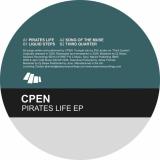
CPEN is the alias of Chris Penny and his 'Pirates Life' EP on Seasons Recordings back in the 2000s is one of our all-time favourites. It was used on Craig Richards's fabric mix and still sounds original more than a quarter of a century on as the man behind it has gone on to work with Luke Solomon and Honey Dijon on a Grammy-winning album. It's the title cut that does it for us with the way the groove is so languid and loose as it hangs just above the floor and deep space sounds colour the airwaves. 'Song Of The Muse' is a beautiful synth scape stripped of rhythm and 'Liquid Steps' has a little more bite but still roll on nice soft kicks with life-affirming keys up top. 'Third Quarter' is a majestic post-club comedown with all of CPEN's signature synth sounds and even some brassy smears, making it an utter downtempo delight.
We are honoured and excited to share the fourth Dream Space EP with the world: Domenic Cappello - Celestial Wave.
For more than three decades, Domenic Cappello has been at the helm of Subculture - the innovative and vastly influential Saturday night at Glasgow’s Sub Club. A true master DJ with deep rooted influences from Detroit & Chicago, Dom has consistently pushed things forward over the years and remains at the cutting edge of modern dance music.
Throughout the 90’s and early 2000’s, he put out high-quality records under various monikers on labels such as Soma, 20:20 Vision & Seventh Sign. Fast forward to recent years and Domenic has been on nothing short of a hot streak - releasing music under his own name on Craigie Knowes, Clone Royal Oak and his outstanding ‘Basement Philosophy’ LP on Alien Communications.
He brings the heat once more for this record; blurring the lines of house, techno and electro to deliver four awe-inspiring cuts of electronic music.
‘The Secret Moon Party’ sets things off, nodding to a certain Highland gathering by some of Scotland’s finest purveyors of quality tunes. A warm, gritty bassline carries the track, evolving into a symphony of precise sound design that is in equal parts playful and euphoric.
Dom’s knowledge of the dancefloor shines through on ‘Acid & Love’. This early night floor filler is the alchemy of just about everything you want to hear when things are getting going. Pure warmth and bliss throughout, also holding its place played deep into the late hours.
‘We Loved Your Ears (in memory of Keith)’ is a heartfelt tribute to the one and only Keith McIvor aka JD Twitch of Optimo. Dom wrote this track as something he thought Keith would have loved, and for this one, we’ll let the music do the talking.
Keith was, and continues to be, an enormous inspiration for us and so many others. In his memory, all proceeds from the digital sales of ‘We Loved Your Ears’ and 25% of all vinyl sales will be donated to Beatson Cancer Charity and The Scottish Brain Tumour Research Centre of Excellence.
Closing the EP is title track ‘Celestial Wave’, which does exactly what it says on the tin. A beautiful piece of music and fitting soundtrack for star gazing, moon dancing and dreaming.
Y-3, the pioneering sports-fashion collaboration between adidas and Yohji Yamamoto, has for three decades dwelled calmly within the ''tensions of existence''. In conceiving the brand's long-awaited return to runway format at Paris Fashion Week, these codes laid the groundwork leading up to the Spring/Summer 2025 season. Whilst the focus for runway is traditionally placed on garments, models, styling, environment, and the pageantry in between, it was crucial that music play an integral role in the conversation. Three seasons later, sound has informed creative direction from the very earliest phases of ideation. Commissioning all-original compositions has become a natural part of this ideology. The return to runway has invited the opportunity to define a new sonic palette for the brand, and beyond that, to usher in a new era of sound for Y-3 that echoes across music & culture. Following this ethos, and with a mandate to support obscure talent, Montreal duo Solitary Dancer have emerged as the first collaborators in shaping the intimate brand architecture of noise & feeling. With a body of work now spanning over a trilogy of seasons, the genre-defying Y-3000 imprint provides an outlet to disseminate & recontexualize the original compositions beyond the traditional runway. The label embodies Y-3's enduring commitment to explore innovation within opposing cultural forces. The works, originally released on Y-3000 as a series of white labels, are now being featured as a 6x 12'' vinyl compilation. Designed by Trevor Jackson and limited to just 99 examples, the recordings will also be made available both digitally and on streaming services for the very first time.
Tooflie's anonymous archivists return for another trip through the past, this time leaving geography behind for the unruly musical landscape of the 1980s. Four edits bring together the creme de la creme of Polish rock, Danish new wave, Soviet avant-garde and Georgian synth-pop, giving each source a fresh dancefloor angle while keeping what made the original so distinctive. A Balearic rework, an Hi-NRG treatment and two more leftfield interventions turn these unlikely archival finds into records that work just as well at home as they do on a larger system. The original records behind these edits are notoriously hard to find, making Tooflie 008 a rather useful detour for diggers and collectors, as well as anyone with a soft spot for overlooked musical oddities.
It’s a rare occurrence for a band to continue making music into their fifth decade, even fewer top off that achievement with one of their most recent albums being named one of “2023’s Best Albums” by a venerable magazine like SPIN. But The Church did just that with The Hypnogogue, an album so adored by critics and fans alike that it ushered in an entirely new era for the Australian band.
Now armed with their 28th album Lacuna, the psychedelic dreampop legends continue to evolve and transform, remaining not only relevant but consistently delivering music that is innovative yet true to their signature sound. “Intense, forlorn, and exultant,” is how bassist/vocalist/founder Steve Kilbey describes the album.
With a measured command of melody and instrumentation that only comes with experience and age, it’s an album rife with indelible musical clasps that fasten hold of your attention and refuses easy surrender. It’s a steadfast talent that Kilbey hosts close to his chest that’s been ever-present in the 27 albums that preceded it (best evidenced by the jubilant, nearly sold out 2025-2026 Singles Tour legs across Australia and North America, featuring night after night of incredible three-hour sets).
Starting in 1980, The Church continued expanding their highly cinematic and atmospheric blend of indie rock, shimmering post-punk, icy dreampop and psychedelic post-rock without retreading their steps. Beginning with classic early albums Of Skins and Heart, The Blurred Crusade, and Heyday which built a sturdy foundation, 1988’s Starfish broke into the mainstream and gave The Church the international hit “Under the Milky Way.” The hit single has been regarded as one of the most influential and recognizable Australian rock anthems of all time.
In collaborating with iconic vocalists Matthew K. Heafy (Trivium), Josh Middleton (Sylosis) and Anthony Lucero (Cult Leader), Burner take a striking step forward to claim new territory while consolidating their extreme and unique sound into the heaviest and bleakest incarnation of their craft yet. Vocalist Harry Nott elaborates on the themes behind the new album: "If It All Returns To Nothing looked outwards to the world's chaos throughout history, No One Is Coming To Save Us instead looks inwards at its proposed cause; humanity's violent, animalistic nature, begging us for change. This is an album about human behaviour: that people create endless cycles of violence by repeating the mistakes of the past, forging a brutal history that we fail to learn from. But, at the same time, the album is about questioning whether we can ever get past those sins and repetitions. This is a record that is mournful as much as it is angry and engaged. It longs to bitterly recall the moments of greatness and sacrifice in our shared history that created the better world we currently destroy. It longs to look back at these moments for inspiration and optimism, at a time where it feels like hope is running thin. The album is also a struggle for hope, not just that humanity can overcome hatred and violence, but that we can look back on our greatest moments and take courage to build a better world. No One Is Coming To Save Us reflects this duality in its title: that no one will come to save us from the violence and tragedy we create as part of our humanity. But it also proposes that it's up to us to change - to overcome a violent human nature and usher in a better tomorrow."
It’s been 10 years since ‘Love Over Will’. In that time I have been experimenting with music outside of the purely electronic, working with musicians, other tuning systems and the role of sound in healthcare, amongst other things.
Is With Us is a return to what I love most about electronic music: the combination of sound design, rhythm and emotion. It doesn’t fall into any specific category but is rather a reflection on those elements I find interesting within the context of beats-led music.
Where ‘Love Over Will’ was slightly brooding, ‘Is With Us’ strikes a more positive note, something which wasn’t a conscious decision. It is just a moment in time.
Sometimes things go quickly. After meeting Canadian artist Pascale Project early this year (twice in one month) on the same dancefloor of a crusty underground club in Neukolln, we sent this Berlin-based DJ and producer a short appreciation email to show curiosity and interest in her unreleased music. Our hope was to listen to it and maybe just maybe start a record-release project. Pascale sent back quickly, and she shared some fantastic club music with us. We had separate listens to the full playlist, and, funnily/coincidentally, we chose the same 4 tracks as highlights from the big playlist. One week later, Pascale emailed us back, mentioning the tracks she would feel/see/love to be released on the label, and they were the exact same ones we had naturally and unanimously chosen. Stars aligned for sure. Having long been active in the Montreal music scene, Pascale absorbed the essence of all her different experiences and years of training and creating, and then let it all start Sparkling into the 22nd Basic Moves release entitled "Watch EP". The record is based on the concept of losing and breaking things up, and eventually finding it all back. Reflecting hope in between the fog of life. It is clever modern underground club music rooted in the textures and energies of the golden days of progressive house, breakbeats and (real!) tech-house. These 4 tracks reflect an artist who expresses herself honestly, fully understands how to creatively arrange and produce club music, and never loses sight of the dancefloor, as she is often found on that dancefloor herself. Dive in and let us know what you think of it. We are stoked to play out and vibe on these tunes for real!
Psychedelic rock, pop punk, and trippy hop tracks against animal exploitation.
Canine Cracks is the new artistic project of Benedetta and Romain Play (aka Camion Bazar). Known as DJs, event organizers, producers, and vinyl collectors, they're now returning to their roots and their first love: rock, post-punk, and massive mosh pits, instruments plus drum machines, and intense live performances. Everything is created in their own studio, located in the French countryside, where they retreat to escape the mad world. These two friends are animal rights activists fighting for animal liberation and are using this album and project to say ""fuck"" to animal exploitation and human supremacy over minorities."
Children of Zeus return with their third studio album ‘As The World Burns…’
Five years on from their highly-acclaimed sophomore album ‘Balance’, Manchester’s kings of hip hop soul, Tyler Daley and Konny Kon, bring us a brand new 16-track opus.
Sonically the duo continue their story where they left off; crafting an amalgamation of street soul, alternative r&b and boom bap hip hop, with a sprinkle of flavours taken from their original multi-genre pirate radio influences, and a dash of forward-thinking new sounds, ensuring all tracks are destined to become future classics.
The features are sparing but powerful, enlisting the talents of revered UK rapper Knucks (‘Before We Drown’), Colorado-native Young Old Soul (‘Dopamine’), MCR family K S R (‘Do You Want To Get High’, & Australian/Mauritian up & comer Anieszka (‘Water & Vibes’).
As with previous projects, this album is largely produced by the duo themselves, though there are guest productions from previous collaborators too, including Grammy Award-winner Beat Butcha, Grammy-nominated Teo, and broken beat pioneer K15, along with an assortment of new players making moves in the underground neo-soul & beats circuit.
Conceptually, this project continues on with the story to date. An eternal search for sunsets and soulfood, as a respite to the anxieties of the modern world; personally, professionally and globally. Assertive swagger is matched with brutal but sincere candidity. As ever, it encapsulates the rough with the smooth, with reflections on where they’ve been, where they’re at and where they’re headed. There’s no preaching to be found here; just an acceptance of things as they are, an embrace of the environment and people they were nurtured by, and a celebration of some of the finer things in life; slow jams, weed & rum, water & vibes. Raps for listeners, blunt heads, fly ladies and prisoners. All packaged together as another perfect sonic love letter to sound system culture. 50 minutes of big people music.
Since the release of their anthemic debut single ‘Still Standing’ a decade ago, to the subsequent EP ‘The Story So Far’, and their critically-lauded debut album ‘Travel Light’, the duo have received numerous accolades, including nominations for AIM Awards & Worldwide Awards both, along with tons of ‘Album of the Year’ nods care of Clash Magazine, Bandcamp, Complex, Wordplay and many more. This along with huge swathes of support from DJs, radio stations, press outlets, tastemakers, luminaries & fellow artists across the globe.
Children of Zeus have performed sessions for COLORS, Soulection (Apple Music), DJ AG, Boiler Room, BBC 6 Music and at the infamous Maida Vale studios for BBC 1Xtra as well as touring across Europe, Australia and South Africa. This is in addition to collaborating & touring with Mercury Award Winner’s Ezra Collective, including a Wembley Arena show. Other collaborations over the years have included Shy FX, Juls, Goldie, Black Milk, Kofi Stone and the late great Lenzman.
From the Broke ’n’ English / Hoodman-era, to the present day, Children of Zeus have been omnipresent in the fabric of British black music. Proud ambassadors of Manchester music, and of UK soul, it really is “Zeus to the world”.
Children of Zeus have been adorned with plenty of flowers over their career. The unbridled quality and poignance of the music and the message on display throughout this project will see the algorithmic needle move some more. It’s undoubtedly set to be a Zeus Summer. As the world burns…
Available on all digital platforms and physical formats, Friday September 4th 2026.
t 07: Do You Want To Get High? (feat. K S R ) - Children of Zeus03:26
t 07: Do You Want To Get High? (feat. [ K S R ]) - Children of Zeus03:26
[t] 07: Do You Want To Get High? (feat. [ K S R ]) - Children of Zeus03:26
[g] B3 | Do You Want To Get High? (feat [ K S R ]) - Children of Zeus03:26
We are so excited to welcome back Tigerskin with a brand-new Album. This 12” is the vinyl version
showcasing six deep, euphoric and banging tracks taken from the full album.
The digital album features twelve brand new tunes by Alex Krüger and delivers his 3rd studio album as Tigerskin.
“Image” not only continues his search for the ultimate dance floor deepness, and contrary to just imitating his own “best selling” club grooves, it rather displays his ongoing artistic progress as a producer and composer of electronic music.
Opposed to his 2013 album “All Those Goodbyes”, which musically rooted in the early 90s and included a ton of collaborations with friends and long time partners, “Image” focuses more on Alex’s general musical roots and shows his compositional preferences. Apart from a few samples, this time around it doesn’t feature any co-productions at all nor did Alex use crazy or special gear to create the tunes. Many sounds are coming from natural and acoustic sources. Expect 80s New Wave references or spooky Wagner-esque bits to pop up next to dusty downbeat interludes. Euphoria next to relaxation. Tigerskin’s journey leads him from ironic comments on the present times via deep, occasionally melancholic or dark and hypnotic material up to the final tune, a homage to the infamous German brothers, Thomas and Klaus.
Tigerskin’s love for experimentation and cross-genre diversity on “Images” is more tangible than ever before.
The annual Bonkers Music compilation is back with another dose of high-energy bangers. For its seventh anniversary, the series takes a fresh step forward, exploring a slightly evolved musical direction while keeping the distinctive sound that defines it. “Year VII” lands on 12” vinyl.
A1 David Meyer & Ludviq – Mandanga 2.0 (Feat Nick Hanzo)
The collaboration between Ludviq and David Meyer strikes a compelling balance between tension and movement. Drawing from underground electronic influences, Mandanga 2.0 evolves through hypnotic layers, acid-driven momentum, and a powerful groove, resulting in a distinctive cut that feels both immersive and uncompromising. Mandanga 2.0 is a dark, hypnotic electronic track built around squelching acid sequences, deep rolling grooves, and haunting vocal elements from Nick Hanzo. Atmospheric textures and a relentless rhythmic drive create a tense, immersive journey through shadowy soundscapes, blending raw energy with a refined sense of space.
A2 Neskeh – Liquid Sky
A raw trip built entirely around samples from Liquid Sky, Neskeh’s one of all-time favorite films. Crunchy saturated highs, basement-shaking low end, heroin-soaked wonky vocals, and freaky alien leads drifting through the mix. A warped tribute to an iconic soundtrack. Welcome to the space trippy club
A3 Your Reference – Afterparty
Julia Konor aka “Your Reference” one of the hidden gems of Barcelona’s underground scene, lands for the first time on the label with “Afterparty”
”Afterparty” draws inspiration from abandoned industrial spaces, empty warehouses, and nights where the only thing that mattered was the music. No rules, no expectations. Just raw energy, dusty air, concrete, and people completely immersed in the moment. The track is a personal postcard from that world.
B1 Lebollet & Mar Bravo – Aleta
“Aleta” is one of those Colombian words that somehow made its way into our shared language. We use it for raw, intense, dark tracks. Hard to translate. Makes sense when you feel it.
B2 Funboys – Skin In The Game
“Against the persistent ebb and flow of a breaking heart’s pulse, echoes of half-faded memories tease your attention… On the edge of forgetting, you can almost remember. And then it hits you – the coalescence of feeling into colour and form, warm in its familiarity, powerful in its simplicity. Uncanny, because it was right there all along. Don’t hold your breath… Listen!”
B3 Milla Campollo – Brote Psicodélico
“Brote Psicodélico” emerges from a hypnotic intersection of acid rhythms, psychedelic textures and raw downtempo energy. The track slowly unfolds through repetition and movement, creating a constantly evolving state between tension and release. Dark, trippy and physical, it is built around a groove that pulls you deeper with every layer. Distorted elements and acidic patterns weave in and out of the rhythm, giving the track an organic yet alien character. A journey designed for listening, less about following a linear narrative and more about entering a state of mind, where the boundaries between rhythm, body and psychedelia begin to blur.
A DJ, producer and significant figure in contemporary electronic music, Marcel Dettmann steps forward to contribute to Running Back’s ongoing Mastermix series. Whereas previous editions of Mastermix have taken an ear to the sound of lapsed, legendary clubs such as Wild Pitch and Front, Dettmann’s curation deftly captures the man himself in ongoing perpetual motion, raiding the vault for his own precision-tooled edits, long-employed on dancefloors to devastating effect. Alongside a continuous mix, this release arrives as a 3LP gatefold, and as a limited edition cassette.
Closely associated with Berlin’s techno landscape, Dettmann was born and raised in the former GDR, then later immersed in the bleary-eyed counter cultural landscape of post-unification Berlin. Initially oriented by post-punk, industrial and new-wave music, Dettmann has been DJing since 1993, always expanding and perfecting his repertoire. He later began working behind the counter at the city’s tastemaking rave boutique Hard Wax, and a decade after he first dropped a needle, became (and remains) resident at notable local nightspot Berghain/Panorama Bar, where his instincts have helped sculpt the signature sound of both main dancefloors.
Of course, you’re probably not asking, “Who is Marcel Dettmann?” More importantly, you might want to know; just what treats has he gifted us here? The trip begins with a simple pitch-shift skywards, transforming Identified Patient’s creeping ‘The Female Medical College of Pennsylvania’ into a peak-time freakout, before an alternate take on Toctronic’s ‘Bis uns das Licht vertreibt’ emerges from the vaults for the first time. Dating from 1995, and one of Dettmann’s all-time favourites, Cristian Vogel’s ‘Untitled’ clambers back into the box with respectable cuts, while John Bender’s ‘Victims of A Victimless Crime’ kicks off the flip sporting a new arrangement, transporting us back to the foundations of a confident, stripped-back sound.
A few subtle edits to Clark’s perilously funky ‘Dirty Pixie’ takes us to Dettmann’s remix of Junior Boys. Produced in 2010, it transposes the Canadian duo’s sophisticated pop with our curator in his minimal prime, and has since become an irresistible prize for high-minded diggers. The same can be said for Experimental Products’ explosive proto-electro anthem ‘Who Is Kip Jones?’, empowered from pricey Discogs purgatory with just the slightest of tweaks. It’s deservedly sandwiched between the guiding influences of Chicago and Detroit in the form of Mutant Beat Dance’s raw ‘The Human Factor’ and a shimmering new version of previous solo production ‘Water’, featuring close friend and Ostgut Ton ally, Ryan Elliot.
The second half of the Mastermix seamlessly connects the mechanical past and digital present of EBM and industrial in the dance, with Dettmann’s instincts as a guiding hand. Severed Heads’ iconic ‘We Have Come To Bless This House’ emerges with mere nips and tucks, while Nitzer Ebb’s ‘Shame’ is significantly reimagined as a highwire act of rhythm and tension, setting up a sensual second take on a 2017 remix of ‘Limbo’ from Swiss synth heroes, Yello.
Core musical memories are shaken and stirred with a context-shifting take on Frank Duval’s emotional classic ‘Ogon’, while Ian North’s ‘Sex Lust You’ and Ford Proco’s notable Coil collaboration ‘Expansion Naranja’ effectively throb with only minor adjustments, respectfully imagined as “shadow versions”. Meanwhile, a simple breakbeat lifts Albert Kuningas’s ‘Astraalprojektio’ in the direction of wide-eyed dancefloors, while a fresh take on K-Alexi Shelby’s ‘Season of The Real’ inexplicably emerges somehow even funkier than before.
The conclusion of the compilation leads back to Das Tier from the prolific experimentalist Conrad Schnitzler, whose swirling synths and hypnotic vocals are duly tightened by Dettmann, but only as he puts it, “in conversation with the original.” Concluding three discs and thirty years of commitment to the dancefloor, this Mastermix not only offers us the opportunity to eavesdrop on this endless exchange, but to gain some sought-after material for our own record collections.
Channeling his honed sample craft towards the ominous portent of modern times, Romare returns with his fifth album Oblivion, with the previous 3 out of 4 LP's appearing on Ninja Tune. Across a suite of downtempo, broken beat, bubbling grooves and brooding reveries Archie Fairhurst threads a narrative that wrestles with the big questions of the present moment — the tipping points of the planet and technology, the fight for social justice and the power structures that govern our existence. While his trademark source material continues to cast a long line back through recorded history, this is Romare at his most contextual.
Nothing is placed by accident. 'Machines' hums its throbbing 4/4 pulse along to a German language recital of Johann Wolfgang von Goethe's 'Blessed Longing' — an enduring reflection on the human condition that rings true from way back in the 19th Century when it was written. 'Computer Love' slinks into a sumptuous trip-hop lull laced with sci-fi flourishes sculpted from samples of old computer documentaries — a bittersweet romantic backdrop to our complicated situationship with the devices in our lives. 'Take Us' goes one step further on its hard-stepping boom-bap strut as a subtle tale of possession by screens unfolds around Romare's signature strain of technicolour mutant funk.
There is space for optimism in the message on Oblivion as well — the strength of the suffragettes as a benchmark for social justice and activism amidst the speakeasy slink of ‘Deeds, Not Words', and spring-loaded acid house joint 'Change' pointing to the need for positive action in the face of imminent calamity.
The artwork for the album follows Fairhurst's thought process, drawing on Edvard Munch's iconic 'The Scream' along with Philippe Halsman and Salvador Dali’s ‘Voluptuous Death’ to help render the ideas of the album visually.
The wild ride of Oblivion races towards a final beguiling opiate on 'The Last Lullaby' — the perfect sedative after the rush of information and emotion that comes with a full-length trip through Romare's vivid, uniquely creative world of sound.
Faitiche presents the debut solo album by cellist, sound artist, and composer Topu Lyo: “quiet scenes from tokyo” brings together sixteen miniatures for solo cello and tape echo that oscillate between abstracts drones and rhythmic pizzicato sketches – all recorded at Topu’s Tokyo apartment. The constant traffic noise from a nearby highway has become an accompanying soundtrack for his compositions and can be heard on the recordings. Topu’s playing is marked by a distinctive idiom oriented more towards abstract electronic studio effects than classical technique.
The artist spoke to Jan Jelinek about his work:
JJ: A solo cello album may seem like an odd fit for a label that has to date released only music that is electronic in the broadest sense. But I think “quiet scenes from tokyo” complements the Faitiche repertoire exceptionally well. Its sixteen miniatures showcase the cello in all its complexity: the bowed passages sometimes recall a tape feedback drone; the pizzicato playing conjures up the percussion recordings of Moondog; and the abstract textures might be mistaken for the product of a granular sampler rather than rapid finger work on the cello. I’m constantly surprised by just how rich and varied this album is – without ever losing the charm of its sketch-like quality. Could you say a few words about the making of your album – first of all, from a rather technical perspective: what production tools did you use, and why?
TL: My production tools were very sparse. Just a solo cello and my Roland 301 Space Echo, which I only used at the end, running everything through it during mixing, tape only. After years of working with electronics, pedals, and synthesizers, moving to Tokyo pushed me toward minimizing my setup. But my aesthetics shifted too, toward simplicity. I wanted to strip everything back to just the acoustic cello and see how far I could push it — replicating some of my favorite electronic effects through extended technique: slow portamento, LFOs, filters, detune, noise. I’d also been listening to a cassette of ocean sounds for years. When I moved to Tokyo I was horrified to find myself living directly across from a freeway. Eventually the freeway started sounding almost identical to the ocean — and that ended up playing a prominent part in the recording.
JJ: That’s super interesting: mimicking electronic production as a compositional idea for the cello! You say the sound of the freeway is crucial to the album: I, too, tend to interpret steady traffic noise as a positive soundscape – do we hear the freeway on the album? I can also hear other field recordings, for example on “a street car with announcements”. Can you say a bit about how these field recordings influence your playing?
TL: Yes, you can hear the freeway on the album! The freeway is most prominent in “old trees in lonely spring”, “yuyake koyake”, and “the moon” (you can clearly hear individual cars). When I first began recording I had my balcony door shut tightly, but after a while I began leaning into the highway sound and slowly opening the door little by little to control the amount of noise. “streetcar with announcements” was a moment I was recording and a car passed by making announcements in the background. I loved how it sounded! Same thing with “yuyake koyake”, and later I realized that every day at 5pm the same song plays to mark sunset, telling children it’s time to go home. Having this bedrock of sound puts less pressure on me to put music on top or to play more notes.
JJ: It’s astonishing how much this differs from what I’d imagined: I’d been picturing peaceful landscape recordings, but had never thought of a freeway. Which goes to show how open to interpretation traffic noises are. So the room by the freeway had a major influence on the album – how are you going to perform it live?
TL: The contrast between the freeway and the beautiful landscape in my head couldn’t have been starker. I too was imagining a beautiful landscape in which to create the album, but somehow it still worked out. I've been going back and forth a lot on live shows and I think the most honest way is to have it the most stripped down. I was thinking of using traffic samples etc., but I think the duet really comes from the background sounds from every unique venue/environment. So as it stands, I’ll just be doing acoustic solo cello.





![Unknown Artist - Tooflie Edits 008 [Hand Stamped,Colored Vinyl]](https://www.deejay.de/images/l/9/5/1270195.jpg)










