Y-3, the pioneering sports-fashion collaboration between adidas and Yohji Yamamoto, has for three decades dwelled calmly within the ''tensions of existence''. In conceiving the brand's long-awaited return to runway format at Paris Fashion Week, these codes laid the groundwork leading up to the Spring/Summer 2025 season. Whilst the focus for runway is traditionally placed on garments, models, styling, environment, and the pageantry in between, it was crucial that music play an integral role in the conversation. Three seasons later, sound has informed creative direction from the very earliest phases of ideation. Commissioning all-original compositions has become a natural part of this ideology. The return to runway has invited the opportunity to define a new sonic palette for the brand, and beyond that, to usher in a new era of sound for Y-3 that echoes across music & culture. Following this ethos, and with a mandate to support obscure talent, Montreal duo Solitary Dancer have emerged as the first collaborators in shaping the intimate brand architecture of noise & feeling. With a body of work now spanning over a trilogy of seasons, the genre-defying Y-3000 imprint provides an outlet to disseminate & recontexualize the original compositions beyond the traditional runway. The label embodies Y-3's enduring commitment to explore innovation within opposing cultural forces. The works, originally released on Y-3000 as a series of white labels, are now being featured as a 6x 12'' vinyl compilation. Designed by Trevor Jackson and limited to just 99 examples, the recordings will also be made available both digitally and on streaming services for the very first time.
Buscar:just
Analog Fingerprints Vol. 0 is a compilation bringing together the early 2000s works of Marco Passarani under his Analog Fingerprints alias, collecting key tracks originally released on Rome’s Plasmek and Pigna labels.
For Numbers, the story starts long before the label itself. In their formative years, digging in Glasgow’s Rubadub, Passarani’s records felt like dispatches from a future city. Releases on his own Nature Records and on labels such as Generator and Interr-Ference Communications were mind blowing: rooted in Detroit techno, Chicago house and electro, yet pushing somewhere new. Much like fellow travellers Autechre, who would remix him in 2001, Passarani’s music balanced machine funk with restless experimentation.
Information was scarce, and you would hear these records first on the dancefloor or at listening stations in shops like Rubadub. Print fanzines like Ear and early web outposts such as Forcefield offered only fragments. But there was a palpable axis forming between Detroit techno and a new European wave of record labels including Skam, Rephlex, Clone, Viewlexx and Nature itself. It was the sound that defined Saturday nights at Rubadub’s ‘69’ parties in Paisley, just outside of Glasgow.
Passarani’s records, in particular, were instrumental in bringing together the future Numbers co-founders. Richard had already booked him pre-Numbers; meanwhile Calum (Spencer) and Jack (Jackmaster), then 16/17 year olds working alternate Saturdays in Rubadub, were so enamoured with the Roman sound that they travelled to Rome for the Bitz Festival in 2003 to seek out Passarani and Lory D at their source.
The first Analog Fingerprints release landed as a 12” on Plasmek in 2001, following the fractured, IDM-leaning 6 Katun material. For Passarani, the project marked a recalibration. A DJ first and foremost, he had moved into production via early computer setups, from a Commodore Amiga through primitive PC audio, Cubase and Logic, later experimenting with Ableton. The IDM scene had offered a playground for trial and error, but there was always a tension between abstraction and the dancefloor. Analog Fingerprints became the bridge: still intelligent, but with more dance than distance. After years of broken beats and complex arrangements, he wanted directness without surrendering identity.
Working closely with Francesco de Bellis and Mario Pierro in the Pigneto district, the trio formed Pigna as a vehicle for reclaiming a more accessible dance sound, deliberately steering away from the minimal wave beginning to dominate Europe. Sessions were fast, instinctive, often stretching late into the night with friends dropping by. It was a studio as social space, production as collective energy.
“In that constant search for balance, Analog Fingerprints was my way of expressing something closer to the classic dance floor. The track 'Tribute' - a tribute to my favourite early Detroit techno track of all time, 'First Bass' by Separate Minds - came after I realised I had almost lost my connection with the dance floor. The simplest step was to take inspiration from early Chicago and Detroit and twist it in our Roman ‘Pigna’ way. My goal was to create more accessible dancefloor tracks by mixing my unconscious Italo roots with my teenage love for that early US sound, ensuring the result was as far as possible from the minimal sound that was starting to dominate everywhere.” - Marco Passarani
Technically, the Analog Fingerprints tracks span a transitional era: Roland TR-909, SH-101 and Alpha Juno hardware met early software experiments. A Novation Drumstation rack stood in for the unattainable TR-808, syncing with TB-303 and TR-606. Yet the true secret weapon was Jeskola Buzz, a tracker-style modular environment that allowed step-by-step parameter control and strange melodic constructions, later exported into the audio sequencer. Even the lead on ‘Tribute’ came from an early PPG Wave-style plugin. It was hybrid thinking at a moment when digital tools still felt unstable but full of possibility for technologists like Passarani.
Behind the music sat Finalfrontier, a loose Roman collective orbiting Nature and Plasmek. Distribution and production were intertwined; importing obscure records into Italy built connections with like-minded outsiders across Europe and the US. Expensive phone bills and fax machines forged an “electronix network” that linked Rome to Clone, Viewlexx, Skam, Rephlex, Rubadub and Detroit’s Underground Resistance. There was a shared sense of survival and resistance, of operating against commercial systems.
Passarani recalls “The first time I found a sheet of paper inside an Underground Resistance 12” with info about upcoming releases... and a huge picture of Spock on the back. Imagine that: you love the music, you love Star Trek, and there’s someone on the other side of the ocean sharing those same values and sounds. It was the perfect match. We even gave our original company the suffix ‘Finalfrontier’: that says it all.”
Feedback in that era arrived physically: distributor faxes, conversations with visiting DJs, the experience of playing abroad and meeting kids who had connected with the records. Glasgow became a key node in a scattered outlier network. Passarani personally brought the first two Nature releases to Fat Cat in London, playing them in-store. Shortly after, a fax arrived from Rubadub in Glasgow requesting copies.
“I still remember that phone buzz and the fax paper slowly sliding out, with someone I didn’t know saying they wanted 75 copies of Nature 001. Or like the time we got a fax from the Rephlex crew just saying, “Hello Nature Records, Keep up the good work.” That was how we knew the message was getting through. It was a fantastic feeling; just one piece of thermal fax paper as an analog notification - the mood for the entire week would change.” - Passarani
The connection to Glasgow has since stretched across generations. As Passarani reflects, links often fracture as scenes renew themselves, but in Glasgow something different happened. New and old mixed seamlessly. There was a visible trust in what came before, and a willingness to carry it forward rather than discard it. Observed from Rome, it was deeply encouraging.
Analog Fingerprints Vol. 0 captures that moment of exchange: Rome to Glasgow, Detroit to Europe, experiment to dancefloor. It documents an artist recalibrating his sound and a network of scenes discovering one another in real time, connected by vinyl, faxes and shared intent.
New series for Jodey Kendrick with volume 1, pure 90s Acid sprinkled with funky rhythms like FSOL, Humanoid and 808 State. Exploring an escalation of breaks that are as sexy as they are captivating and progressive already open that this series will become a classic. Just quality music!
Vakula presents a new 4-track release: fully-formed electronic compositions built with weight, depth, and intention.These pieces aren’t just for the dancefloor — but under the right DJ, they can still shift the room.
2026 Repress
Maltese talent Human Safari debuts on Mutual Rytm with jazz-influenced techno EP, 'Culture Shock'.
Human Safari is a key player in his native scene in Malta. He's a resident at Glitch Festival, has played cult spots, and has a dynamic sound that brings jazz improvisation to techno, often featuring live instrumental elements. His music has found its place on top labels like R&S Records, and most of this new EP for SHDW's Mutual Rytm imprint was produced during his Colombian summer tour last year - written and recorded amongst inspiring and unusual settings with just a laptop and headphones.
"This EP represents embracing new beginnings that, though might bring uncertainty and fear, the
light always guides you to where you were always meant to be." - Human Safari.
Opener 'Mouse on Keys' has been a key cut for the label boss across the past year, a unique track that peaks curiosity from dancers to DJs whenever it's played. Its cantering techno rhythm is overlaid with delicate, heartfelt piano keys straight from a smoky jazz bar, making for a great counter to the physical drums. 'Fragments' is a deeply personal track dedicated to the artist's late grandfather. It's a funky, soulful techno roller with blissed-out and sunny chords full of hope.
Next, 'Classique' gets more gritty with loopy drums and bass and glitchy percussion that fizzes with energy, while 'The Labyrinth' features piano motifs recorded in just one take. It brings a dark paranoia in the uneasy, off-grid keys which dart about with nervous energy over the booming low ends. There is just as much intensity and edge to the unresolved keys that loop over the raw drums on 'A Rainy Day in Bogota', before digital bonus cuts 'Dorian' and 'Phantom' bring more jazzed out techno madness with warped keys and expressive elements bringing great invention.
2026 Repress
French talent Hyden makes label debut on Mutual Rytm with conceptual new techno EP, 'To Whom It May Concern'. Hyden is a potent force in the French underground, creating powerful techno with dense percussion, immersive grooves and subtle nods to classic influences - all through his own unique lens. Having delivered standout releases in recent years, here he offers up sounds "anchored in psychoanalysis, time, and emotional residue" as he makes his mark on SHDW's Mutual Rytm imprint, delivering influences of dream logic and surrealism as the palette moves between brutality and introspection. "It's hypnotic music for moments of rupture where something breaks or breaks through". Opener 'Manifest Content' is inspired by Freudian theory and explores the surface illusions of thought and dream. It's about the dissonance between what we perceive and the deeper meaning that slips away beneath and is a deep and dubby techno track with flashes of unsettling melody. 'Bruises' is emotional trauma made sonic. This piece delves into invisible scars and traumas, residues of past conflict or intimacy - it's slow-burning, heavy and raw. 'Jikan' is a meditation built on time and its erosion. Inspired by the Japanese concept of impermanence, it reflects fleeting moments, decay and the tension between stillness and motion with jacked up but warm drums and turbulent bass. Next, 'Free Will' is born from inner conflict and plays with deterministic rhythms and evolving layers, questioning whether we are truly in control or just passengers in a prewritten sequence. The vocal mentions, "creatures, you're out of time" to bring darkness to the intense but sleek rhythms. The streamlined physicality of 'Swarm' channels the primal force of collective movement and is a nod to the loss of individuality in group behaviour. In addition, the package is loaded with digital bonus cuts. 'Yumehara' is a dive into surreal dream-states and evokes subconscious landscapes where logic dissolves and emotion reigns, while 'Lu Bu' is brutal and warlike and named after the legendary Chinese general that captures impulsive violence, betrayal and reckless glory with relentless energy and rhythm. Lastly, 'Neon Pale' is a synthetic dreamscape about fading beauty under artificial light - a melancholy ode to cities at night and the loss of warmth in modern life.
Peach Discs continues into 2026 with a deeply jacking record from the king of the live house jam Demuja. If you've seen him on the 'gram you'll know just how incredibly prolific he is – the tracks that make up this EP were whittled down, tweaked and finessed from close to 100 demos, and we're thrilled with what we've put together, together. In his own words, the EP is "a little love letter to the dancefloor that lives within the idea of a long, sweaty night out. All the tracks were made at very different stages – some produced a while ago, others more recently – and I hope that’s part of what makes the EP interesting as well."
The "title.txt" EP embodies a pure distillation of Demuja's sound– rooted in classic house techniques with a dubbed-out sensibility and, the record's five tracks all stem from live-jams bashed out with focused intention in his Austrian studio on a plethora of drum machines, synths and effects units.
Things kick off with probably the wiggliest of the lot, as "Stop Asking Me" worms a long-range bassline around snappy, stripped-back drums before leaning towards techno (can you hear a snare on the 2 and the 4 cos i can't) on "Oldhead," as its dusty samples drag it back towards house, with a sprinkling of dubstep flavour tucked away in the breakdown. The A-side wraps up in a dubbed-out mode with "Say No More's" deep, modulating textures wrapping themselves around skippy, insistent percussion.
Those dub sounds carry over onto the B-side's "Tool 6," as classically filtered chords peek through the mix (though that bassline is definitely talking tech-house), and Pulse brings it home with strutting drums, disembodied vox and arcing synthlines.
We've also thrown in two bonus tracks you won't find on the 12" but will be available to those that pick up a copy of the record through the Peach Discs Bandcamp. Tasked with picking one fave each, Gramrcy went for "Almost Cherry," a barreling ride across an insistent Reese bassline reminiscent of Samuel L Sessions' best bombs, while Shanti chose the wiggling, diva-wailing "Art of Failing."
Cooperation, democracy, dignity, diversity, equality, freedom, harmony, inclusion, innovation, integrity, justice, liberty, peace, pluralism, prosperity, respect, responsibility, security, solidarity, stability, sustainability, tolerance, transparency, trust, unity.
The first SOULMEEX label compilation arrives shaped by the core values that unite us all in Europe, featuring music from the very talented Alberto Melloni, Llewellyn, Prom Night, and Storken. DCSIS delivers the artwork, Lopazz adds his magic in the mastering, and the vinyl pressing comes from Mad Vinyl Music. A group of music enthusiasts Made in Europe. Fabricado en Europa.
- A1: Mungo Sound Machine - Spiral Run
- A2: Dj Split - Make Me Make
- B1: Eira Haul - Radio Talk
- B2: Dombee - Now Then Soundboi
- C1: Big Red Button & Bawab - Call This # Now
- C2: The Apricots - The Cat Of Tomorrow
- D1: Joolmad & Screech – Pdm
- D2: Darren Roach - We Are Talking About Humanism
- E1: Sweely – Nunchuk
- E2: Brett Johnson - Fantasy Machine
- F1: James Andrew - Proper Bopper
- F2: Tarde Loco - Garfunk
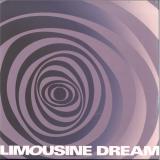
A joke that doesn’t make you laugh is just a sentence. Music that doesn’t make you dance and feel is just noise aimed in your direction. To make a circuit where energy flows freely, you must have feedback. Without feedback, connection is absent. As Limousine Dream enters the Age of Aquarius, we open up. Instead of trying to grow, we let it grow. Instead of building a pyramid, we see a constellation where we are all stars, and every star can equally stand out and fit in. We invite you to join us, just like we want to join you. This is where we begin our Life Spiral.
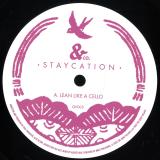
&Co. debut on A Quiet Village. The US-based trio drop the third release on Quiet Village’s eponymous imprint March 20th. &Co. Is a project from multi-hyphenate and Bianca Chandon founder, Alex Olson, pianist, composer and producer Alberto Bof (known for his work on ®Oscar ®Bafta ®Golden Globe and ®Grammy award winning ’A Star is Born’) and DJ/fashion luminary, Paul Takahashi. The trio’s second release, ‘Staycation’ follows 2015’s ‘Best of Friends’, and sees these rare talents create a two-tracker that explores a uniquely evocative, cinematic and dubby Balearic aesthetic. ‘Staycation began as a follow-up to the first EP, Best Friends.
As a result, ‘Staycation’ came together in fragments. The first track was built over a handful of short studio sessions, each only about an hour long, driven by brainstorming and reworking ideas. With Alex away, Alberto and I continued refining the piece in Los Angeles, sharing updates for Alex’s approval until it was completed. The track remained unmastered and was quietly circulated to a small circle as a promotional piece. The second track, “Lean Like a Cello,” was initially conceptualized together. However, with Alex now based in New York and less available, we completed the arrangement in Los Angeles, sending versions back and forth for Alex’s input and feedback. Nearly a decade later, the idea resurfaced, and the recordings were finally mastered and released. A friend, Justin Van Der Volgen, handled the mastering. What began as a plan to give the tracks away as a promo evolved when Justin encouraged the group to shop the release. With help from Eric Duncan of Rub N Tug, the music reached Matt (Edwards, aka Radio Slave/ 1/2 of Quiet Village).
Ten years after the first sessions, Staycation arrives as a document of distance, collaboration, and time. A project shaped as much by separation as by shared intention.’ (Paul Takahashi, Feb 2026)
A piece of art from a powerhouse creative team operating at the intersection of skate culture, music, design and fashion, ‘Staycation’ by &Co. Arrives on The Quiet Village 12” and digital/streaming on March 20th.
- A1: Another World
- A2: Fleeting
- A3: I’m Bored
- A4: Easy Man
- A5: Killincs
- A6: My Sister’s Loom
- B1: Mountain Song
- B2: Belljar Convenience
- B3: Fated To Pretend
- B4: Waiting Game
- B5: A Light
A Profound Non-Event, the debut album by Sydney-based three piece Daily Toll, comprises 11 songs traversing three years of forged friendships, collaborative experimentation and a shared love of growing through words and song.
Those attuned to the ever-vibrant Australian underground may already be well familiar with Daily Toll, their consistent live presence since their inception in 2021 embroidered by a handful of (mostly) home-recorded, (mostly) digital self-releases that have steadily accumulated an appreciative following. Initially the project of self taught musician, poet & artist Kata Szász-Komlós(they/them) and Jasper Craig-Adams(he/him), and expended to a three piece with the more recent addition of friend Tom Stephens(he/him), Daily Toll represents the union of three unique creative dispositions, of relationships blooming through the push and pull of creative practice. Mapping the band’s existence through their recorded output is to bear witness to the flux of three people learning to respond to one another and gently ossify into a collective vision that at once calls to mind folk song intimacy, post-punk dynamics and the artful poeticism of an adjacent Flying Nun legacy.
If those earlier recordings reflect a band imagining themselves into being in real time, A Profound Non-Event observes a clear shift in both conviction and approach. Recorded in just three days with Alex Bennett at the purely analogue Sound Recordings studio in Castlemaine and holing up at night in the century old cottage situated beside the studio, sheltering from the late-June wind and rain within walls littered with instruments and microphones, lighting fires to stay warm. Kata describes the experience as defined by “candle light and creative camaraderie”, an idyllic account of a collection of songs that glide with an undeniably warm, easy charm, evidenced in particular in the record’s second half as the tone turns increasingly introspective, the very sound of a cold evening’s drift into night. When contrasted with the moody swirl and sing-song bounce of the opening trio of tracks, there’s clear evidence of a band not simply in the process of becoming, but committed to finding their truth in that process.
Still, if Daily Toll display a reluctance to be wholly defined, then album centerpiece ‘Killincs‘ (positioned in the middle for a reason) might just be their Rosetta Stone. A verbose rumination on unsettled feelings of isolation and longing, exploring the challenges in making peace with one's decisions amidst the uncertainty of an often harsh world and the realisation that some things remain best unresolved - “I have the keys still, but I’ve buried the path”.
300 pages, 175 x 129mm paperback book w/ french flaps.
DINTE mint their short run book publishing imprint, The End books, with this vast collection of flyers for dances, clashes and blues parties from across the UK between the early 1970s and mid 1990s. Comes complete with intro by David Katz (People Funny Boy: The Genius of Lee 'Scratch' Perry, Solid Foundation: An Oral History of Reggae) and outro by Kevin Le Gendre (Don't Stop the Carnival: Black British Music, Children of the Ghetto: Black Music in Britain). Colour scans sit alongside scuzzy photocopies amassed over several years with the assistance of multiple archivists. The material presented in A Night to Remember is not just valuable musical history, but the story of a community and a culture that revolutionised sound culture in the UK.
"The flyers collected in A Night To Remember speak to the burgeoning sound system underground that flourished in Britain in the 1970s, 80s and early 90s. There are held events on hallowed ground as well as lesser-known sets. Flyers for house parties remind that shebeens remained an important feature of social life in black communities and the many sound clash and cup clash events emphasise the rivalry and camaraderie that has always been at the heart of the culture, as friends go head-to-head with their dub plates, vying for that definitive crown. Dances featuring guest appearances by name-brand artists such as Sugar Minott, Lone Ranger, Barrington Levy and Admiral Bailey, as well as sound systems such as Jack Ruby, King Jammies, Ray Symbolic, Arrows, Black Scorpio and Metro Media remind how closely the local sound systems remained to their Jamaican roots, even as sounds such as Saxon, Unity, Java and Diamonds carved out a distinctly British niche. All hail the enduring sound systems of Britain – long may they reign!" — David Katz
A label long synonymous with raw, off-centre electronics and uncompromising club tools, Bjarki’s bbbbbb recors welcomes a producer whose approach feels cut from the same cloth, London’s Henry Greenleaf. In an era where functionality often outweighs feeling, ‘Brawn’ is a record that doesn’t court approval; it insists on impact. Built for high-pressure systems and low ceilings, it channels force not as spectacle, but as design.
Greenleaf’s catalogue to date, spanning labels such as Par Avion, YUKU, and ARTS, sketches a restless trajectory between precision and collapse. His productions operate where rhythm becomes architecture: kicks land like poured concrete, subs buckle and flex beneath shifting percussive grids, and textures are stretched until they fray at the edges. Sound is treated as a physical material, layered and stress-tested, reshaped until the familiar mutates into something tactile and strange.
Across the EP, that philosophy takes full form. A1 ‘Brawn’ sets the tone with dense, piston-like drums and tightly coiled low-end pressure, balancing brute force with meticulous spatial control. ‘Jump Up To Be’ follows with a more fractured swing, percussive shards ricocheting across a framework that feels perpetually on the verge of rupture. On the flip, ‘Gawk’ strips things back to skeletal components, carving negative space between distorted pulses and menacing, warped rhythmic figures, before ‘UNTUNTUNT’ closes the record in driving fashion, delivering a raw, functional workout that reduces the groove to its bluntest, most hypnotic form.
True to the label’s ethos, ‘Brawn’ doesn’t chase trends or smooth its edges. It folds air and pressure into motion, pares club music down to its working parts, and leaves room for spontaneous chaos to erupt within the grid; moments where structure splinters, energy misbehaves, and control gives way just enough to keep things volatile. Engineered yet unpredictable, utilitarian yet unruly, the EP embodies the tension, unpredictability, and uniqueness that have long defined bbbbbb recors.
- A1: Skyscraper (Live In Uelzen)
- A2: It's A Hard Life (Live In Paderborn)
- A3: I Got My Eyes You (Live In Uelzen)
- A4: Strange Feeling (Live In Uelzen)
- A5: Goldrush (Live In Uelzen)
- A6: It's Good To Know (Live In Uelzen)
- A7: Just Get Back (Live In Paderborn)
- B1: Dirty Slapstick (Live In Paderborn)
- B2: Heart In Danger (Live In Paderborn)
- B3: We Don't Want It No More (Live In Paderborn)
- B4: Legend (Live In Uelzen)
- B5: Subways Of Your Mind (Live In Uelzen)
- B6: Waiting Song (Live In Uelzen)
We are pleased to announce the first FEX live album, Don't Look Back. The release features selected recordings from two concerts in Paderborn and Uelzen, both captured in 1985. All tracks on the album are previously unissued, including entirely unheard songs such as It's a Hard Life, Just Get Back, Legend, and Waiting Song, alongside a previously unreleased version of Subways of Your Mind, widely known as "The Most Mysterious Song on the Internet."
One of the most striking aspects of the album is the remarkable sound quality of the live recordings, as well as the strength of the performances themselves - particularly given that FEX were still considered a newcomer band at the time. The four-piece lineup consisted of singer, guitarist, and primary songwriter Ture Rückwardt, Michael Hädrich on keyboards and occasional second guitar, Norbert Ziermann on bass, and Hans-Reimer Sievers on drums. In 1985, the band was preparing for broader exposure through a nationwide tour organized by the small promotion company HBM-Musikbüro.
The album opens with the psychedelic Skyscraper, a track Rückwardt reportedly regarded as a personal favorite to perform. Hädrich contributes dynamic synthesizer layers, while Ziermann underpins the track with a distinctive slap bass groove. This is followed by the energetic rock number It's a Hard Life, which once again demonstrates that the band possessed multiple songs capable of matching the impact of their best known track Subways of Your Mind.
After this energetic opening, the album shifts into a more restrained mood with the synth-pop ballad I Got My Eyes On You. It is followed by Strange Feeling, presented here in a particularly compelling live version that arguably surpasses the previously released studio demo featured on the Skyscraper LP, with Rückwardt delivering one of his most expressive vocal performances. On Goldrush, another fan favorite, it is Hädrich's DX7 synthesizer work that stands out.
Don't Look Back continues to flow seamlessly, moving between styles such as new wave, synth pop, and a blues-influenced form of classic rock. On It's Good To Know, a song addressing the theme of stardom, the band returns to a heavier rock sound. In contrast, the synth-driven Just Get Back reflects on the conflict in Northern Ireland, then ongoing at the time. Lines such as "It's the money, it's the money why they come along" are directed at mercenary soldiers, while "even Sunday's a killing time" directly references Sunday Bloody Sunday by U2.
Previously known songs such as Dirty Slapstick and Heart in Danger lead into We Don't Want It No More, perhaps the band's most striking pop ballad. It is easy to imagine that the track had the potential to achieve radio success in the 1980s. The following piece, the epic Legend, explores themes of loneliness and love simultaneously. With poetic and abstract lines such as "some isolate in the falling rain" and "that's why I count all the reasons they call out for living, sadness is falling inside," it builds an almost eerie atmosphere.
One of the final highlights of the album is Subways of Your Mind, recorded in Uelzen. In this version, Rückwardt's vocal performance is even more on point than on the previously issued recording from Paderborn. Another notable moment is the driving, 1970s-inspired rock 'n' roll track Waiting Song. Both the composition and its live performance carry an energy that could easily stand alongside the repertoire of bands such as AC/DC. It was usually the track that FEX ended their concerts with, calling out each band member at the end of the song.
This leads to a broader reflection: it is striking that FEX did not achieve a wider breakthrough at the time. The performances captured here suggest a band capable of delivering consistently, song by song, note by note. It is not difficult to imagine FEX performing in large venues and engaging sizeable audiences. In reality, however, most performances in 1985 took place in front of relatively small crowds. The recordings featured on this album originate from the Roxy club in Paderborn and a small, unknown venue in Uelzen, likely in front of fewer than fifty attendees.
An essential figure behind these recordings is the engineer known only under his nickname Hase (German for "rabbit"), who was responsible for capturing not only these concerts but many other surviving FEX recordings. Bringing his own mixing desk to performances, he developed a deep familiarity with the band's material and was able to shape the live sound with precision, including the timely use of vocal effects. The original recordings existed only on cassette and required careful and extensive restoration work. Zoey Cairs was finally responsible for bringing them to their present quality.
This album marks the beginning of the Live Waves series, following the rediscovery of additional recordings that have gained international attention since November 2024, when they surfaced through what has been described as the largest "lost wave" music search to date. The title of this first live LP Don't Look Back carries a certain paradox. While the album invites listeners to revisit recordings from forty years ago, FEX themselves were always oriented toward the future. In that spirit, further releases of brand new material are already planned.
The cover artwork is once again based on an image by Magnussen from the Kiel archive, depicting the Prinz-Heinrich-Brücke. The bridge, once located in the northern part of the city, no longer exists. As a symbol, however, it remains fitting: a bridge stands for movement and connection - qualities that FEX sought to embody on tour, bringing their music to different places and audiences.
You blink; eyes crusty. Last night went a little too late again, and as you stumble towards the kitchen you stare at the record player like it’s a cup of coffee. The rest of your life can wait. You stare at the record again and hit the lever and the needle falls.
First up: Gastón Cabrera’s Inhumano, a little relentless and unforgiving, like being thrown in the back of an Aston Martin and driven away. The groove builds to a haunting peak, and you want more. Then the record blurs into Alfalfa’s La Fiebre, which tickles your ears with eerie bells, and builds from bass fundamentals into something more driving. It’s hopeful, but makes you work for it – wading through acid; climbing the hill.
Everything stops. Fuck it. You flip the record, and Marcos Coya’s The Underdog starts off easy, but slips you down a dark path to a pool of churning, hypnotic synths. There’s a strange moment of quiet before the final track. vault. and Isaac Elejalde close with authority on Just Melt: a raw and writhing finale spiked with voices and sirens that will leave you out of breath, somewhere else.
Introducing The Goods. Four tracks; one abduction. Limited to 300 copies – vinyl exclusive, forever.
Few artists can conjure up the sort of spirituality that Fred P manages whenever he turns on his machines - and this brand new label from the artist means we'll be getting a shedload more of it. Sometimes it's deep, muggy, insular, at others more outward-looking and cosmic. And that's what we have here - emotionally dense sounds on 'Galaxy Walk (Journey mix)' with jazzy motifs off in the distance, spoken words in the foreground and dancing percussion that is optimistic and hopeful. 'Modern Art Talk' is just as balmy as you journey through a sound world that feels as infinite as space itself, while Fred himself muses on his art. 'Inner Channels (edit 4)' is a dusty shuffler marbled with muted chords and brighter melodic stars that feel impromptu and layered in live.
This is the long-awaited reissue of Mukai’s first release on the Better Days label, bringing together jazz dynamism and fusion’s vivid flair. With a spirituality reminiscent of his early works, bossa nova touches that hint at what would come later, plus tropical and rock beats and plenty of funk, it’s a crossover gem packed with diverse appeal.
Celebrating 30 years of the legendary label, we pick legendary bombs and unreleased gems from Black Vinyl Records rich catalogue. From its inception back in 1996 Black Vinyl Records has always been a label for the serious DJs. Tony Humphries, Paul Trouble Anderson, Ricky Morrison, Justin Berkman, David Morales, Bobby & Steve and most serious Underground DJ’s supported the original vinyl release of Kerri Chandler’s early masterpiece ‘My Old Friend Alan’, dedicated to label founder Alan Russell, and it gained many more supporters following its recent digital re-Master. The David Harness remix of Tedd Patterson’s ‘Roots’ appears on vinyl for the first time here and was featured in no less than 25 Traxsource DJ charts after it’s digital release in 2022, including luminaries such as DJ Pope, Quentin Harris, Kevin Yost, Charles Dockins, and many more. The vocal mix of ‘Fever Tension’ by Fresh & Low has always been a sought after gem, only ever appearing on a ‘Re:Cuts’ release in early noughties, and ‘Rising Into Joy’ by Arnold Jarvis was championed by Danny Rampling, Paul Trouble Anderson, Andy Ward, Deli G and all the 'heads' and is the definition of a Soulful House Classic.
- A1: Sensation 04:33
- A2: Tropics 9500 05:31
- B1: Lumbago 05:33
- B2: Idiocracy 04:18
- B3: You Suck Me Dry 03:23
Step into a candy box of sound: sweet Italo-infused house and tangy, bass-heavy breaks. Some tracks hit like hard candy, daring you to bite, while others are sticky and irresistible, gluing you to the dancefloor. B.Visible tasted all the sweet treats without losing a tooth, but the synths took a proper beating. On this DJ tool, you'll find a track for every part of your set, with a package that nods to '90s electronic music without losing its timeless charm.
B.Visible is a Vienna-based DJ and producer. His sets blend danceable beats with a strong musical vision - ranging from disco and house to breaks and experimental electronics, complemented by rare vinyl discoveries. Each selection is surprising, versatile, and curated with great attention to detail. His productions are just as multifaceted as his DJ sets: warm drums and organic textures meet carefully crafted electronic elements designed with the dancefloor in mind. The result is a distinctive signature style - accessible, diverse, and independent. His music is regularly featured on Austrian radio stations such as FM4 and receives international
support from BBC DJs including Gilles Peterson, Tom Ravenscroft, and Don Letts. B.Visible's music thrives on surprise and depth - whether in the studio or on stage, it always unfolds with a unique dynamic, drawing audiences in from the very first moment.
2026 Repress
Bosconi Records, the Florence-based imprint run by Fabio Della Torre, is back with something truly special. Over the years, the label has built a reputation for pushing house, funk and electro in all their shades, always keeping a strong link between the local scene and international legends. And when it comes to legends, there are few names that shine brighter than Alexander Robotnick.
The Italian electro pioneer – aka Maurizio Dami – has already collaborated with Bosconi on The Hidden Game and Italcimenti Under Construction. Now he returns with My La(te)st EP, a vinyl-only release that pulls five standout cuts from his 2007 CD My La(te)st Album and finally makes them available on wax. All tracks have been remastered for the vinyl format, enhancing their depth and dynamics to deliver the best possible experience on wax.
The EP opens with “Jette Le Masque (Extended Version)”, driven by a pumping bassline and jagged sawtooth synths, with whispered French vocals by Robotnick himself. Stretched out and more DJ-friendly than the original, this version is tailor-made for the dancefloor.
On “We Love The Music” things get fun and funky: vocoder vocals, an electro-funk bounce and that unmistakable Robotnick irony. A killer cut to start a set on the right foot.
Flip the record and you dive into the acidic depths of “I’m Getting Lost In My Brain”. Old-school Chicago vibes, a hypnotic groove and basslines that just don’t quit – a peak-time weapon that feels raw and timeless.
Then comes “A Coffee Shop in Rotterdam”, one of those secret gems: melodic, laid-back and warm, built on a slapping bass and dreamy arpeggios. It has that Riviera house touch from the ’90s, but with Robotnick’s unmistakable twist.
Closing the EP is “Addio” – a track that wears its heart on its sleeve. Romantic, emotional, and driven by a bassline that nods back to Robotnick’s all-time classic Problèmes d’Amour. A perfect goodbye track, the kind that leaves a smile on your face as the lights come on.
This is a must-have for vinyl lovers and Robotnick fans alike – five cuts carefully remastered for the vinyl format, pressed exclusively on wax and ready to work the floor from start to finish. Don’t sleep on it: limited copies, vinyl only.