Beatrice M. just dropped a standout album on Techntonic and now shows they are just as adept at the A&R game by signing up Tokyo-born, Bristol-based Manami to their Bait label. Across four cuts, the DJ, producer and pianist blends crackly lo-fi ambience with bright, broad synth smears on opener 'Unsaid'. 'Treading Dub' completely flips the script with a punishing and weighty low end that is fast and urgent beneath rattling dub techno chords. 'Moonlight' (feat Eklipse) is pure subterranean immersion with spoken word consciousness and crashing hits and closer 'Loosen' is a speedy techno rhythm with a sprinkling of percussion. Four atmospheric and experimental sounds from a unique mind.
out of Stock
Last delivered 5 days ago available to reorder, subject to availability
The follow up to her UK number 1 album This Is How Tomorrow Moves, the stark and striking fourth album by beabadoobee is named for the electricity towers that dot every major artery in the world—the strong, spindly structures that reminded Beatrice Laus of her connection to friends and family at home while she was staring down extreme disconnection and isolation on tour over the past few years.
The title can also be read as an allusion to Laus’ spiky, forceful new sound—the waves of distortion that crash and shatter across this record’s 14 songs mirroring the intense crackle you hear when walking under power lines. The pylon is also a fitting symbol for an album that reckons with the repetitive anxieties of your mid-twenties: What if I’m always going to be this way? What if life is just pylon after pylon on the road?
The album’s first single is available to stream and buy from today: “Sun Has Set” introduces Pylon as, in essence, a set of songs that began as diary entries, words that Laus thought she’d never be able to say out loud. “A lot of the songs on this record are things I wish I could have said to someone,” she says. “This song has this petty tunnel vision—it’s like, I hate you. You’re gonna stay here and listen to how much I hate you. Because I never got to say that.” The single comes accompanied by a striking first person video directed by Bea’s partner and longtime visual collaborator Jake Erland.
Ever a devotee of pure rock music—both as something to be cherished and something to be played with—Laus casts these feelings in songs that touch on classic grunge, midwest emo and ‘90s radio rock, zeroing in on a sound that is both harsher and more direct than any of her previous records. She says the music she’s loved has “always been an influence” on her music, and so for B4 she went straight to the source. A fair few of Beabadoobee’s composite influences contributed to Pylon, a fact that speaks to the goodwill and respect Laus has amassed over the course of her relatively brief career.
Hayley Williams sings on “Nothing to Prove,” a deeply anthemic indie-rock song about getting your power back from fairweather friends who just want a bit of your success. The moody “Powerlines” features a verse from Turnstile singer Brendan Yates, a master of matching vocal force with emotional nuance. Elsewhere, you’ll find contributions from Pinegrove’s Evan Stephens Hall, Deftones’ Chino Moreno, and Title Fight’s Shane Moran, as well as, on “Write Me A Letter”, production work from Laus’ longtime friends and collaborators Matty Healy and George Daniel of The 1975.
Beabadoobee will debut songs from the record on the Powerlines Tour, her first ever arena shows and biggest tour to date, taking in shows across North America, the UK and Europe this autumn-winter. The Powerlines Tour kicks off 1 October and includes stops at Madison Square Garden, The Kia Forum, The O2 and more (full routing below). Support comes from Wisp in the US, Canada and UK and Violet Grohl in France, The Netherlands, Belgium and Germany.
Born in the Philippines and raised in London, Beatrice Laus emerged as a British alternative music icon across three acclaimed albums and five EPs. She has garnered multiple BRIT Award and BBC Sound Of nominations, and won NME’s Radar award, whilst amassing over 10 billion streams worldwide and more than 12 million followers across her social channels.
This Is How Tomorrow Moves became her first record to reach number 1 on the UK Official Album Chart in 2024, following her Top 10 albums Fake It Flowers (which reached number 8) in 2020 and 2022’s Beatopia (#4). Earlier this year, beabadoobee released the one-off single ‘‘All I Did Was Dream Of You,” teaming up with Grammy-nominated best New Artist The Marías, the result of a longtime mutual creative admiration between María Zardoya and Bea.
out of Stock
Last delivered 5 days ago available to reorder, subject to availability
Die Heavenly Remixes-Reihe präsentiert weiterhin die besten Remixe, Versionen, Meditationen, Re-Rubs und Dubs von Künstlern aus der ganzen Welt, die auf der Liste des aufregendsten Plattenlabels des Landes stehen. In den meisten Fällen handelt es sich bei den Alben um die erste physische Veröffentlichung eines Remixes, die sie von den Streaming-Playlisten in ihr rechtmäßiges, spirituelles Zuhause auf superschwerem Vinyl (oder glänzender, supergepackter Compact Disc) befördert.
Heavenly Remixes Volume 8 beginnt mit Space Afrikas üppiger, ambienter Neuinterpretation von BEAM/S der Orielles, bevor Justin Robertson Amber Arcades' Turning Light zu acht Minuten elektronischem Dub dehnt.
out of Stock
Last delivered 5 days ago available to reorder, subject to availability
At its heart, this is truly a classic love story...
Musician, songwriter, and entertainer George Butts has always worked in the spirit of independence and love.
Beginning his musical journey on the East Coast, George spent his formative years playing in bands before eventually making his way to Southern California, ready to step out and pursue his own musical vision.
It was here that music and fate would meet, leading him to something equally important: Kathie, the woman who would become his lifelong partner- personally, professionally, and creatively.
Together, they embraced that same independent spirit and began building something of their own. In the mid-1980s, they established K-Star Productions, a label that became the home for George’s music and marked the beginning of a new chapter in their lives.
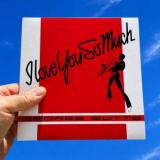
In 1986, that journey produced “I Love You So Much,” a song title that feels especially fitting once you learn the story behind it. Written as a dedication to their newly formed relationship, the song carries a sense of warmth that somehow feels familiar to us all. Built around the distinctive sound of a Linn drum machine, layered with lush synths and George’s unmistakable horn melodies, the record radiates heartfelt affirmations of love, capturing not only the spirit of independent ’80s Modern Soul, but the energy of two young hearts coming together and dancing in rhythm.
The record would soon become a dancefloor favorite among local DJs and clubgoers alike. But what began in Southern California would carry George much farther than they could have imagined. The success of the music helped establish him as a respected musician and entertainer, leading to performances and residencies throughout the 1980s and ’90s, from lounges along California’s golden coast to stages as far away as Japan.
Nearly four decades later, these recordings have been lovingly remastered from the original source material by Ron Leeper, the original recording engineer, allowing the warmth and spirit of the music to shine once again.
But this is more than the reissue of a rare independent record.
These classic songs evoke feelings of love and unity, filled with warm melodies, soulful grooves, and an undeniable sense of joy, all brought to life through the partnership of George and Kathie.
Together, they created their own label, followed their dreams, and lived life on their own terms- proving just how far a shared vision can take you.
Today, the music carries that same spirit: heartfelt, uplifting, and alive with the optimism of two people creating something they truly believed in. What they started with K-Star Productions helped launch a musical legacy that would take them around the world and back, a journey that continues today with George still performing live.
out of Stock
Last delivered 5 days ago available to reorder, subject to availability
The Return of The Vagabond – Revisited! On The New Way
There are figures that do not belong to any single era. They traverse .me, watch the world evolve, and
con.nue their journey guided by a singular compass: music.
Born from a concept by Use Vinyl Records, The Return of The Vagabond – Revisited! On The New Way is a
compila.on that sets the "Vagabond" back in mo.on—an iconic symbol for those who live music as a
journey without boundaries of .me, genre, or genera.on.
His return takes shape through a curated selec.on of .meless interna.onal disco, funk, and rock classics,
reinterpreted with fresh soundscapes while remaining deeply faithful to the spirit of the originals. This
musical odyssey is helmed by Daniele Baldelli & Marco Dionigi, Marco Fra=y, (Ino)2, DJ Mauri, and
Corrado Pres@, proving that great music can transcend .me, reinvent itself, and con.nue to inspire.
More than just a compila.on, The Return of The Vagabond – Revisited! On The New Way is a sonic voyage
that rediscovers legendary tracks through a modern lens. It is a project that demonstrates how authen.c
music never belongs to the past: it evolves, changes its skin, and con.nues to resonate deeply with the
present.
out of Stock
Last delivered 5 days ago available to reorder, subject to availability
Beneath the sleek, confident guitar line that powers “Overdrive,” the lead single of All Over You, another guitar marks the time more impatiently, as if the groove its locked into is the timebomb- tightness of a pre-hookup heartbeat. Its energy isn’t nervous — after all, it’s hard to be nervous with Will Schwartz cooing come-ons like “I just wanna get you in the bed / Light you up like a cigarette” in your ear — but it is urgent. Excited. Titillated.
That’s the word that best describes the prospect of a new Imperial Teen record: titillating. They come out every five or six years, each new album acting as, to quote Roddy Bottum, “an episodic piece of where we are now, where the world is now, who we have become, and the geography of our collective consciousness.” There is considerable distance between Imperial Teen, its members — Bottum (guitars, keyboards, vocals), Schwartz (vocals, guitars, keyboards), Jone Stebbins (bass, vocals), and Lynn Truell (drums, vocals) — having made lives for themselves in different cities, but the collective consciousness that exists between them makes distance and time seem immaterial to the listener.
Time, especially time together, is not immaterial to Imperial Teen: it is precious. “For the last few records,” Stebbins explains, “the process has been similar. We live great distances away from each other, so initially, we get together to collaborate, write, and create. When we have enough material, we reconvene to record. Both scenarios, creating and recording, take multiple trips, sometimes with big lapses of time in between due to our various schedules.” Bottum concurs: “The biggest challenge in writing and recording is the distance between us, but the longing and desire and the ultimate coming together becomes more potent as a result.”
All Over You is a triumph of maximized moments together, four people bringing the force of their personalities to bear on years of built-up ideas. Title track “All Over You,” initially built over the computer, gained its charming sneer in the studio, where Stebbins’ buoyant, fuzzed out bassline added bounce to the song’s punchy, sloganeering lyrics, a perfect set-up for Truell to drive the song home, screaming the last line of the chorus, “We’ve got nothing to do,” like a rallying cry for a generation that’s been given nothing and told to deny themselves everything. “In my head,” Truell says, “I just went back to punk, to that feeling of prowling around looking for anything to do and being so mad about how boring everything is that you just have to yell.” The track had an attitude, it had an unexpected texture thanks to Truell’s playing improvised percussion, but her scream is what took it to the next level, transforming it into a signature Imperial Teen song.
One of Imperial Teen’s less magical concerns on All Over You is the effect capitalism has on the creation of art. This expresses itself in the headspinning rush of music industry success and disappointment that plays out in “Hands All Up,” and also in Imperial Teen’s sound. All Over You features the band’s most expansive, textured palette to date, and much of it’s steeped in — bubblegum music and boy/girl harmonies, electro beats and grungy distortion, power pop mall anthems and kiss-off lyricism — has been dismissed, at one point or another, as a fad. Time, of course, has proven otherwise, and All Over You makes a case for Imperial Teen as four of that time’s architects, inheriting, preserving, and pushing the boundaries of what pop music can be from one song to the next.
“We want to make people dance and think and feel,” says Schwartz. In all of those ambitions, All Over You crushes, brought to life by four musicians who found each other in the clubs of San Francisco over three decades ago and have remained family ever since. It is less a return from hiatus than a broadcast from the sonic utopia Imperial Teen has long ruled over, where the music is bratty and sexy and the parties don’t stop until everyone’s found euphoria. A raveup for mind, body, and soul, best enjoyed in a dark room packed with as many sweaty bodies as possible
Beneath the sleek, confident guitar line that powers “Overdrive,” the lead single of All Over You, another guitar marks the time more impatiently, as if the groove its locked into is the timebomb- tightness of a pre-hookup heartbeat. Its energy isn’t nervous — after all, it’s hard to be nervous with Will Schwartz cooing come-ons like “I just wanna get you in the bed / Light you up like a cigarette” in your ear — but it is urgent. Excited. Titillated.
That’s the word that best describes the prospect of a new Imperial Teen record: titillating. They come out every five or six years, each new album acting as, to quote Roddy Bottum, “an episodic piece of where we are now, where the world is now, who we have become, and the geography of our collective consciousness.” There is considerable distance between Imperial Teen, its members — Bottum (guitars, keyboards, vocals), Schwartz (vocals, guitars, keyboards), Jone Stebbins (bass, vocals), and Lynn Truell (drums, vocals) — having made lives for themselves in different cities, but the collective consciousness that exists between them makes distance and time seem immaterial to the listener.
Time, especially time together, is not immaterial to Imperial Teen: it is precious. “For the last few records,” Stebbins explains, “the process has been similar. We live great distances away from each other, so initially, we get together to collaborate, write, and create. When we have enough material, we reconvene to record. Both scenarios, creating and recording, take multiple trips, sometimes with big lapses of time in between due to our various schedules.” Bottum concurs: “The biggest challenge in writing and recording is the distance between us, but the longing and desire and the ultimate coming together becomes more potent as a result.”
All Over You is a triumph of maximized moments together, four people bringing the force of their personalities to bear on years of built-up ideas. Title track “All Over You,” initially built over the computer, gained its charming sneer in the studio, where Stebbins’ buoyant, fuzzed out bassline added bounce to the song’s punchy, sloganeering lyrics, a perfect set-up for Truell to drive the song home, screaming the last line of the chorus, “We’ve got nothing to do,” like a rallying cry for a generation that’s been given nothing and told to deny themselves everything. “In my head,” Truell says, “I just went back to punk, to that feeling of prowling around looking for anything to do and being so mad about how boring everything is that you just have to yell.” The track had an attitude, it had an unexpected texture thanks to Truell’s playing improvised percussion, but her scream is what took it to the next level, transforming it into a signature Imperial Teen song.
One of Imperial Teen’s less magical concerns on All Over You is the effect capitalism has on the creation of art. This expresses itself in the headspinning rush of music industry success and disappointment that plays out in “Hands All Up,” and also in Imperial Teen’s sound. All Over You features the band’s most expansive, textured palette to date, and much of it’s steeped in — bubblegum music and boy/girl harmonies, electro beats and grungy distortion, power pop mall anthems and kiss-off lyricism — has been dismissed, at one point or another, as a fad. Time, of course, has proven otherwise, and All Over You makes a case for Imperial Teen as four of that time’s architects, inheriting, preserving, and pushing the boundaries of what pop music can be from one song to the next.
“We want to make people dance and think and feel,” says Schwartz. In all of those ambitions, All Over You crushes, brought to life by four musicians who found each other in the clubs of San Francisco over three decades ago and have remained family ever since. It is less a return from hiatus than a broadcast from the sonic utopia Imperial Teen has long ruled over, where the music is bratty and sexy and the parties don’t stop until everyone’s found euphoria. A raveup for mind, body, and soul, best enjoyed in a dark room packed with as many sweaty bodies as possible
Individually, Justo the MC & maticulous have impressive resumes in the underground hip hop circuit. Justo, who came up under the Gang Starr Foundation, has worked with Lord Finesse, Rockwilder, Marco Polo and DJ Skizz, releasing numerous projects, most recently “Black Ops,” produced entirely by Showbiz of DITC.
maticulous, who came up under Fat Beats NY, has delivered several producer albums and instrumental projects having produced for the likes of MF Doom, Masta Ace, Your Old Droog, Fame Of MOP, Blu, RA the Rugged Man and many more.
After a chance meeting at SiriusXM studios, the duo started to craft what would become “Mind Of A Man.” This album showcases the feeling of Brooklyn hip hop that stands firm on tradition, giving you true school flavor you’ve been missing. Featuring guest appearances by Kev Brown, Rasheed Chappell, DJ Eclipse and Davenport Grimes.
Limited edition of 300 hand-numbered copies, with the first 100 pressed on black / grey A-side B-side vinyl, the remaining 200 pressed on black vinyl.
Gabriella Cilmi's talents were undeniable from a young age, leading her to sign to Australia's Mushroom Records when she was just 13-years-old. Just a few years later, the breakthrough success of 'Sweet About Me' and her Gold-certified UK Top 10 debut album 'Lessons To Be Learned' took the teenager global. But she discovered that the more success she had, the more she was subjected to countless opinions on what she should do next - an awkward situation for an artist who just wanted to be herself. 'Pure Love' is a record she made having discovered the confidence and freedom to make exactly the kind of album she wants to make: a soulful organic one, on which she could sing from the heart. And it's certainly worth the wait, a triumphant return in which her warm, throaty, unmistakably expressive contralto wraps itself around the deep soul, jazz and classic rock that has always been closest to her heart.
he Congos possess what all bands look for, that unique distinctive sound that draws the listener in. Alongside the great songs, lead singer Cedric Myton's singing, phasing and falsetto voice makes that just the case.
The Congos were formed by Cedric Myton (b. 1947, St Catherine, Jamaica) around the mid-Seventies when the
Rasta message was central to the reggae sound coming out of Kingston, Jamaica. But he had started out in the
Rocksteady era, when he formed the vocal group 'Tartans', taking lead vocal duties alongside Devon Russell, Prince Lincoln Thompson and Lindbergh Lewis.They cut 'Dance All Night' (1967) and 'Coming On Strong' (1968). The line-Up became The Royal Rasses and from this Cedric moved on to form the Congos on meeting Roydel Johnson, who had previously sang with Ras Michael and the Sons of Negas. Cedric's Rasta roots were firmly in place when he went to work with producer Lee Perry to cut the seminal album 'Heart Of The Congos' at Perry's just built, Black Ark Studios in 1977. Cedric Myton has carried on the mantle, cutting a set of tunes with the help of his good friend Mr Brent Dowe, who had previously sang lead vocals with the Melodians.This is the Dub set to the vocal album released on the Kingston
Sounds label called 'The Congos Feast'(KS008).With such strong songs, rhythms and vocals it always had the chemistry for a great dub set. Hope you agree and enjoy the dub excursion...
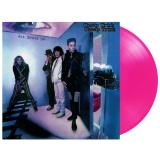
All Shook Up is the fifth studio album by the American rock band Cheap Trick, originally released in 1980 and produced by legendary producer George Martin, best known for his work with The Beatles.
The album followed the huge success of At Budokan and Dream Police and found the band working with a new producer for the first time in several years. George Martin gave the recordings his own touch, while Cheap Trick remained true to the sound and songwriting that had made them popular. The album features memorable tracks like "Stop This Game", "Just Got Back", "Baby Loves to Rock" and "World’s Greatest Lover". All Shook Up reached number 24 on the Billboard 200 and was certified Gold in the United States. It remains a strong album from an important period in Cheap Trick’s career and a great addition to their classic catalogue.
All Shook Up is available as a limited edition of 2000 individually numbered copies on magenta vinyl and includes an insert.
A space is often described by its dimensions. The height of the ceiling, the expanse between walls. Division into functional elements of varying density follows. We have ideas of how such dimensions should be balanced to work well for sound — the classical concert hall, a Northward mastering room.
It’s tempting to try and use this idea of space to understand Space the group (Lisa Ullén, Elsa Bergman, Anna Lund). To calculate their cartesian co-ordinates: dynamics that run from whisper soft to punishing, shaking force; Ullén’s piano running the full expanse of the frequency spectrum; the mix of sudden, surprising and suggested variations in density (the space) that generates their musical structures.
But (a) space is a social phenomenon where meaning is accumulated and possibilities created by and through a constantly shifting set of social relations and their histories and entanglement inside and beyond the physical structures of a room or building. Reduced to its raw dimensions, Cafe OTO shouldn’t sound good: the low ceiling, the hollow void underneath the stage-not-stage, the hard glass windows out onto the street. But OTO as a social space — for gathering close to listen; the serious pursuit of a convivial good time (its productive mythology that an OTO audience is both up for it but also expects more); and then the idea of all that has happened before and what will come; that this is also part of ‘the music’ and changes what sounds to the point that none of those cartesian co-ordinates matter.**
It’s less of shock that Space sound good. Lisa Ullén is easily the most singular pianist in Sweden right now and Elsa and Anna’s ability to reroute in realtime reaffirms just how well they function as a group. The trio might have got their shit together holding down the rhythm section for the first incarnation of Anna Högberg Attack — but much like Högberg’s ongoing pursuit of artistic renewal, the trio avoid being shackled to any ideas about what a piano trio should be and there is something that happens (happened) in that room, on that night, with those people that made for something beyond just good.
It’s a gift that the sound of every concert at OTO gets recorded. A choice handful of these transcend their decoupling from that social space and radiate the room’s attendant energies. This record is one of them.
** See Jack Halberstam in Fred Moten & Stefano Harney, The Undercommons (2013): “…we must refuse the idea that music happens only when the musician enters and picks up an instrument; music is also the anticipation of the performance and the noises of appreciation it generates and the speaking that happens through and around it, making it and loving it, being in it while listening."
Thursday, 2025. Philadelphia. South Philly, to be precise. A basement, to be even more precise. And not just any basement, but the subterranean headquarters of Zillas On Acid.
Which is where Roman Flügel found himself, presumably with good intentions. Some time before that, he had decided to wake Sister Midnight from its slumber.
But rather than simply carrying on where things had left off, a new idea was needed. Enter Sister Midnight Special Products: a new series dedicated to collaborations, chance encounters and other musical situations that deserve to become records.
No grand manifesto, no five-year plan. Just making music with people you like, in places you happen to find yourself, and seeing what happens. Special Product 01 is “Conga Dream,” born from a basement jam with Zillas On Acid and apparently unwilling to behave itself ever since.
Three musical free spirits meet somewhere between the basement, the dancefloor and the more pleasantly confused corners of the mind. Club music is involved, certainly, but functionality has been politely asked to wait outside. Instead: pocketprotector synthesizers, a little E-mu Proteus 3, assorted electronic activity and, as advertised, congas.
The result is less a tool than a small trip. Or perhaps a tool for taking small trips.
Either way, it works.
Zillas On Acid put it like this:
“A basement jam deep beneath the streets of Zilladelphia yields surprising results: pocket protector synths, a dash of E-mu Proteus 3, and yes of course the aforementioned congas.”
And with that, Sister Midnight Special Products is officially open for business.
"Cinematic Visionaries Calibro 35 and Noir Master James Ellroy Pay Homage to L.A. with a Pure Crime-Funk Original Soundtrack. Out October 9" There are collaborations that feel inevitable like they were waiting to happen in some shadowed corner of culture. The union between Italian cinematic funk visionaries Calibro 35 and internationally acclaimed master of noir fiction and New York Times bestselling author James Ellroy is undoubtedly one of them. When Calibro 35 were invited to compose the original soundtrack for Francesco Zippel's documentary Ellroy vs L.A., they didn't simply write music for film. They stepped directly into Ellroy's universe the most dangerous corners of American crime fiction and discovered, to no one's surprise, that its darkness felt strangely familiar. The result is Ellroy vs L.A., the band's new album out October 9 on Record Kicks. Twelve brand new tracks of cinematic crime funk, psychedelia, and hypnotic groove that don't accompany Ellroy's world so much as inhabit it. The soundtrack's move through Ellroy's fictional and real-world mythologies with deliberate precision. Stylistically, the album finds Calibro 35 in their most natural yet most cinematic state: crime funk, psychedelia, and hypnotic groove pushed into darker, more narrative-driven territory by the weight of Ellroy's world. From the gloomy, suspense-laden groove of the opener Black Dahlia to the evocative closing piece Moonlight Sonative, the album unfolds as a complete cinematic arc, showcasing Calibro 35 at their very best. L.A. Confidential delivers a super-suspenseful, thrilling tension that feels like a chase through neon-lit streets, while Riots erupts into explosive cinematic funk, capturing chaos and urban unrest in full force. LSD on Sunset Boulevard drifts into a hazy, instrumental soul journey psychedelic, warm, and disorienting, like a late-night hallucination of the city itself. The Big Nowhere (Part I & II) expands the narrative into a slow-burning, atmospheric descent, unfolding like a two-act crime saga. Welcome to the Land of Vacation and Probation hits with kick-ass, uptempo crime-funk madness, urgent and relentless in its propulsion, while White Jazz is a mood of suspended, noir-infused jazz tension cool, shadowy, and unresolved. Together, the tracks map Los Angeles as a fractured yet hypnotic landscape suspended between glamour and violence, beauty and decay, myth and reality Born in Milan in 2007 with the mission of excavating the golden age of Italian film music Morricone, Piccioni, Trovajoli, Calibro 35 have spent nearly two decades transforming that initial obsession into a singular artistic language. Their work bridges vintage Italian soundtracks with contemporary jazz and cinematic funk, earning them a global following rare for an Italian instrumental act. Their music has been sampled by Dr. Dre (Compton, "One Shot One Kill" feat. Snoop Dogg), Jay-Z ("Picasso Baby"), and Damon Albarn's The Child of Lov. Rolling Stone described them as "the most fascinating, retro-maniac and genuine thing that has happened to Italy in the past few years," while Far Out Magazine called them "one of the most skilful and innovative instrumental outfits on the planet right now." The band (Enrico Gabrielli, Massimo Martellotta, Fabio Rondanini, and Tommaso Colliva) continue to evolve without losing their core identity. In 2025 they released the critically acclaimed Exploration, further expanding their sonic universe, and were invited to perform at the closing ceremony of the Winter Olympic Games at the Arena di Verona, confirming their growing international stature. With Ellroy vs L.A., Calibro 35 don't just compose a soundtrack they translate a mythology into rhythm, tension, and groove. Between fiction and reality, they find a city that never truly sleeps, only pulses in darkness. Press play, and Los Angeles begins to unfold in sound.
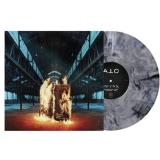
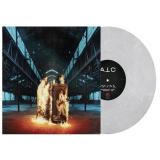
Celebrating 50 years since the release of the iconic Cathedrals album, U.S. disco legend D.C. LaRue returns with never-before-released remixes of all four original classics—pressed on strictly limited vinyl.
Top contemporary disco producers The Reflex, Dr. Packer, and Mannix breathe new life into LaRue’s 1976 masterpiece:
The Reflex (Stevie Wonder, Cerrone) delivers dancefloor-driven edits using digitized analog multitracks.
Dr. Packer (First Choice, Loleatta Holloway) reinvents one of LaRue’s biggest hits with fresh, soulful energy.
Mannix, head of Dafia Records, adds deep, dubby textures to complete this dynamic remix package.
Each track is respectfully reimagined—maintaining the emotional depth of the originals while enhancing clarity, rhythm, and relevance with modern production.
Bonus: Includes two standout remixes from LaRue’s second LP The Tea Dance—"Overture" (The Reflex) and "O Ba Ba" (Mannix).
These remixes aren’t just nostalgic—they’re timeless. Essential for collectors, DJs, and anyone who lives for disco.
Grab your copy before it’s gone.
out of Stock
Last delivered 12 months ago available to reorder, subject to availability
5 year anniversary release of fever, available on vinyl for the first time!
Against The Current is officially back and louder than ever. Formed in 2011 when vocalist Chrissy Costanza, guitarist Dan Gow, and drummer Will Ferri were just 15, the band has evolved from a teenage dream into one of modern rock’s most exciting forces. As they celebrate their 15th anniversary in 2026, Against The Current is gearing up for a massive year: writing new music, planning a global tour, and preparing to unleash their most ambitious era yet. Following the breakout success of their 2021 EP Fever, the trio entered a bold new chapter as independent artists. Their 2024 singles “silent stranger,” “blindfolded,” and “good guy” marked this new era with unapologetic energy and authenticity, amassing over 40M streams worldwide. Fans have been eagerly awaiting what comes next, and the band is set to deliver their first full-length album since 2018’s Past Lives in 2026.
5 year anniversary release of fever, available on vinyl for the first time!
Against The Current is officially back and louder than ever. Formed in 2011 when vocalist Chrissy Costanza, guitarist Dan Gow, and drummer Will Ferri were just 15, the band has evolved from a teenage dream into one of modern rock’s most exciting forces. As they celebrate their 15th anniversary in 2026, Against The Current is gearing up for a massive year: writing new music, planning a global tour, and preparing to unleash their most ambitious era yet. Following the breakout success of their 2021 EP Fever, the trio entered a bold new chapter as independent artists. Their 2024 singles “silent stranger,” “blindfolded,” and “good guy” marked this new era with unapologetic energy and authenticity, amassing over 40M streams worldwide. Fans have been eagerly awaiting what comes next, and the band is set to deliver their first full-length album since 2018’s Past Lives in 2026.
Creole Culture is the triumphant return of Dawn Richard’s King Creole era. Steeped in history but with its flag planted firmly in the future, Creole Culture pulls elements from Richard’s heritage as a Black and Native American woman who has spent a lifetime making and engaging with music. Following New Breed (2019) and Second Line (2021), Creole Culture is akin to a panel of a triptych: a fully-realized sonic and narrative universe in which Richard, as King Creole, rebuilds her hometown of New Orleans in her image. She not only honors her city for what it was or what it gave her, but stakes a claim for it as a cradle of global culture now and for all time.
Creole Culture follows two acclaimed avant-garde R&B albums with composer Spencer Zahn — the later of which, 2024’s Quiet in a World Full of Noise, found Richard exorcising the specters of grief and trauma in the wake of her father Frank Richard’s health struggles and the killing of her cousin Cisco. It is a softer take on the brass-soaked swagger of Richard’s previous King Creole efforts, an evolution brought about when she realized she had left a crucial viewpoint out of her exploration of New Orleans: her own. “New Breed was the story of New Orleans through my father’s eyes,” Richard explains. “I used his samples, his music, his cultures, his work with Chocolate Milk, his side of the family. Second Line was my mom — her interludes riddled the album with her depiction of what is meant to be a Creole woman in New Orleans. The masculine and feminine sides of King Creole had expressed themselves through them, but the story felt unfinished, like my version of the story was untold.”
That story is, for lack of a better word, complex: at turns triumphant and tragic, sexy and mournful, braggadocious and contemplative. Creole Culture presents Richard’s New Orleans as a utopian soundscape — an intoxicating blend of R&B, soul, hip-hop, pop, and jazz — that’s survived and thrived despite the dystopian circumstances visited upon it. Richard presents the melange of influence and artifact on Creole Culture with the care of a botanist nurturing new hybrids in a rose garden.
What emerges from that care is at once delightful and unexpected, enlisting a crew of guest stars including Big Freedia, Anjelika “Jelly” Joseph, Tarriona “Tank” Ball, and Durand Bernarr for features that play against type. Tank’s turn at spoken word verse on “l v r” serves to add dimension to King Creole’s New Orleans, as does Joseph’s undeniable voice on “chuuuurch.” “I’m not normally a features girl,” says Richard, ”but King Creole can’t build a world from scratch without help. What’s beautiful about the features here — which is also true of my band and producers — is they come from people who understand the materials of the world they’re from, they’re people I love, and they’re people who are just extraordinary at what they do. They’re part of the atmosphere of this place. You need them for the record to breathe.”
In the end, that’s what King Creole creates: a space where Dawn Richard can breathe, can be at peace with herself, and let loose with others. From finding love in opening single “enough” to relishing in the Afrocaribbean futurism of “fiesta,” Creole Culture is a tremendous, freeing breath of fresh air. It captures the resolve of a woman and a place who’ve survived the unimaginable and sees the future not as something to be endured, but as something to be created. Dawn Richard has been making that future one album at a time over the course of her career. Creole Culture is her most stunning one yet.
Creole Culture is the triumphant return of Dawn Richard’s King Creole era. Steeped in history but with its flag planted firmly in the future, Creole Culture pulls elements from Richard’s heritage as a Black and Native American woman who has spent a lifetime making and engaging with music. Following New Breed (2019) and Second Line (2021), Creole Culture is akin to a panel of a triptych: a fully-realized sonic and narrative universe in which Richard, as King Creole, rebuilds her hometown of New Orleans in her image. She not only honors her city for what it was or what it gave her, but stakes a claim for it as a cradle of global culture now and for all time.
Creole Culture follows two acclaimed avant-garde R&B albums with composer Spencer Zahn — the later of which, 2024’s Quiet in a World Full of Noise, found Richard exorcising the specters of grief and trauma in the wake of her father Frank Richard’s health struggles and the killing of her cousin Cisco. It is a softer take on the brass-soaked swagger of Richard’s previous King Creole efforts, an evolution brought about when she realized she had left a crucial viewpoint out of her exploration of New Orleans: her own. “New Breed was the story of New Orleans through my father’s eyes,” Richard explains. “I used his samples, his music, his cultures, his work with Chocolate Milk, his side of the family. Second Line was my mom — her interludes riddled the album with her depiction of what is meant to be a Creole woman in New Orleans. The masculine and feminine sides of King Creole had expressed themselves through them, but the story felt unfinished, like my version of the story was untold.”
That story is, for lack of a better word, complex: at turns triumphant and tragic, sexy and mournful, braggadocious and contemplative. Creole Culture presents Richard’s New Orleans as a utopian soundscape — an intoxicating blend of R&B, soul, hip-hop, pop, and jazz — that’s survived and thrived despite the dystopian circumstances visited upon it. Richard presents the melange of influence and artifact on Creole Culture with the care of a botanist nurturing new hybrids in a rose garden.
What emerges from that care is at once delightful and unexpected, enlisting a crew of guest stars including Big Freedia, Anjelika “Jelly” Joseph, Tarriona “Tank” Ball, and Durand Bernarr for features that play against type. Tank’s turn at spoken word verse on “l v r” serves to add dimension to King Creole’s New Orleans, as does Joseph’s undeniable voice on “chuuuurch.” “I’m not normally a features girl,” says Richard, ”but King Creole can’t build a world from scratch without help. What’s beautiful about the features here — which is also true of my band and producers — is they come from people who understand the materials of the world they’re from, they’re people I love, and they’re people who are just extraordinary at what they do. They’re part of the atmosphere of this place. You need them for the record to breathe.”
In the end, that’s what King Creole creates: a space where Dawn Richard can breathe, can be at peace with herself, and let loose with others. From finding love in opening single “enough” to relishing in the Afrocaribbean futurism of “fiesta,” Creole Culture is a tremendous, freeing breath of fresh air. It captures the resolve of a woman and a place who’ve survived the unimaginable and sees the future not as something to be endured, but as something to be created. Dawn Richard has been making that future one album at a time over the course of her career. Creole Culture is her most stunning one yet.
Danielle Ponder is done waiting for a future version of herself to arrive. Now, the Rochester-born, Atlanta-rooted singer-songwriter is unapologetically living in the moment. This realization powers Everything Has Changed, Ponder's anticipated sophomore album (and debut on Dead Oceans in partnership with Phoebe Bridgers). The LP is Ponder’s most self-assured statement to date: it was crafted through a period of immense transformation as the beloved vocalist propelled from being a lawyer to a full-fledged musical powerhouse. That artistic freedom threads the album, as heard on lead single, “Power”, which serves as both a declaration and an affirmation for the Black diaspora. Other highlights include the revelatory “Sun and Moon”, the towering blues ballad “God of You”, and the devastatingly vulnerable “Open Windows”. Everything Has Changed dismantles the stories Ponder once told herself and finds peace in what remains—all themes that have shaped much of her journey. Music was always a constant presence throughout her life, but practicality initially took over in adulthood. While performing with her family’s band and later developing her own projects, Ponder pursued a legal career focused on criminal justice reform.
It wasn’t until her late 30s that she allowed herself to seriously imagine music as more than a side pursuit. In 2021, at age 39, she finally took the leap, leaving law behind to pursue her artistry full-time. The gamble paid off: she signed her first record deal in 2022, becoming a trailblazer on her own unusual path to worldwide renown. Her debut album Some of Us Are Brave introduced Ponder as one of soul music’s most compelling new voices, thanks to singles like “Someone Like You”, “Roll The Credits,” and the empowering title track. The LP earned critical acclaim along with dozens of major sync placements, including the latest Apple campaign for the iPhone 16 Pro. She’s since had four major TV appearances, including Jimmy Kimmel Live! Ponder has also sold out shows across North America and Europe, including festival appearances at Bonnaroo, Lollapalooza, Afropunk, and the Montreux Jazz Festival.
But if that album documented her arrival, Everything Has Changed documents her evolution.
Danielle Ponder is done waiting for a future version of herself to arrive. Now, the Rochester-born, Atlanta-rooted singer-songwriter is unapologetically living in the moment. This realization powers Everything Has Changed, Ponder's anticipated sophomore album (and debut on Dead Oceans in partnership with Phoebe Bridgers). The LP is Ponder’s most self-assured statement to date: it was crafted through a period of immense transformation as the beloved vocalist propelled from being a lawyer to a full-fledged musical powerhouse. That artistic freedom threads the album, as heard on lead single, “Power”, which serves as both a declaration and an affirmation for the Black diaspora. Other highlights include the revelatory “Sun and Moon”, the towering blues ballad “God of You”, and the devastatingly vulnerable “Open Windows”. Everything Has Changed dismantles the stories Ponder once told herself and finds peace in what remains—all themes that have shaped much of her journey. Music was always a constant presence throughout her life, but practicality initially took over in adulthood. While performing with her family’s band and later developing her own projects, Ponder pursued a legal career focused on criminal justice reform.
It wasn’t until her late 30s that she allowed herself to seriously imagine music as more than a side pursuit. In 2021, at age 39, she finally took the leap, leaving law behind to pursue her artistry full-time. The gamble paid off: she signed her first record deal in 2022, becoming a trailblazer on her own unusual path to worldwide renown. Her debut album Some of Us Are Brave introduced Ponder as one of soul music’s most compelling new voices, thanks to singles like “Someone Like You”, “Roll The Credits,” and the empowering title track. The LP earned critical acclaim along with dozens of major sync placements, including the latest Apple campaign for the iPhone 16 Pro. She’s since had four major TV appearances, including Jimmy Kimmel Live! Ponder has also sold out shows across North America and Europe, including festival appearances at Bonnaroo, Lollapalooza, Afropunk, and the Montreux Jazz Festival.
But if that album documented her arrival, Everything Has Changed documents her evolution.
Bella Kay will release her first-ever full length on vinyl, My Reckless Abandon on 9th of October via Atlantic Records.
At just 20 years old, Bella has quickly established herself as an unmatched songwriter and one of the most emotionally resonant new voices in pop
The Texas-born singer-songwriter experienced a meteoric rise after her series of 3-Pack song releases and singles, but My Reckless Abandon lives as a complete 13-song journey to self-acceptance and introspection after a lot of messy and ‘reckless’ ups and downs.
The album was written and produced by Bella Kay and executive produced by Idarose (Becky G, Suki Waterhouse, Joji) and was recorded between New York and Los Angeles throughout 2026.
The Chronicles of Narnia: The Voyage of the Dawn Treader is a 2010 fantasy-adventure film based on The Voyage of the Dawn Treader (1952), the third novel in C. S. Lewis’ fantasy series The Chronicles of Narnia. It is also the third and final installment in the original Chronicles of Narnia film series. Set three years after the events of Prince Caspian, the film follows the two youngest Pevensie children, Edmund and Lucy, as they return to Narnia to join the new king Caspian in his quest to rescue seven lost lords and to save Narnia from a corrupting evil that resides on a dark island.
Composer David Arnold scored the film, with themes composed by Harry Gregson-Williams (who scored the first two films). It was Arnold’s fourth collaboration with director Michael Apted. He created specific themes for the characters The Dawn Treader and Reepicheep, and used themes from the previous films for the opening and closing scenes as well as recurring characters, to ensure that the film is consistent with the franchise. The score was performed by an 87-piece orchestra and a 40-piece choir, resulting in an epic soundtrack with just the right magical touch to compliment this film.
It took a long time – ten years – for his talismanic song, ‘Ça ira tu verras’, to prove his prophecies right, at a time when, everywhere else in the world, nothing seems to be going right. And if everything is going well for Séverin, it’s because he’s managed to build himself a bulwark, an impregnable citadel, and his records now exude a whiff of simplified idealism, with the influence of Souchon and Voulzy never far from his pen and guitar as he brings his bittersweet moods to life in verses and choruses.
But above all, he knows how to invent new settings for himself, push back the boundaries, step beyond the walls of his Parisian studio to go and see how things sound elsewhere. Recorded at Chale Abbey Studios on the Isle of Wight (UK), Séverin once again wanted to let the collective spirit of his regular collaborators take centre stage. Ambroise ‘Sage’ Willaume and Jérémie Arcache, who featured on the previous album *Nouveaux Dinosaures*, once again form the backbone of the band, on guitar and keyboards respectively. Bassist Théodora Delillez (Astral Bakers) and Canadian drummer Robbie Kuster complete the band’s core line-up, which, in just six days at this electric priory, went on to achieve – judge for yourselves – nothing short of miracles.
Whilst all around us the war on falsehood rages – from AI to post-truth, all these fake debates, hypocrites and false values – here is an album that doesn’t cut corners when it comes to emotions, nor in the way it sets them to music.
Originally released in 2017, Zara McFarlane’s Arise represents a classic moment in Brownswood Recordings catalogue. Just before the global spotlight landed on London's new jazz generation, Zara McFarlane was already forging her own path - connecting jazz, soul, reggae and Afro-Caribbean traditions with a confidence and clarity that remains striking nearly a decade later. Arise captures an artist operating with singular vision, creating a body of work that sounds every bit as fresh and forward-thinking today as it did on release.
The album also stands as an early landmark in the career of Moses Boyd, who produced and co-composed the record while serving as Zara's longtime drummer and musical collaborator. Years before his Mercury Prize-nominated breakthrough, Boyd helped shape Arise into a deeply personal exploration of heritage. The credit list is remarkable: Moses Boyd, Binker Golding, Shabaka Hutchings, Nathaniel Cross, Peter Edwards and Shirley Tetteh all contribute to a record that now reads like a roll call of British jazz royalty. The iconic cover shot was taken by Adama Jalloh, around the corner from Brownswood’s North London HQ.
Upon release, Arise was met with widespread critical acclaim. The Guardian praised “A Class Act" and celebrated its exploration of African-Caribbean musical lineage, while Clash Magazine described it as “enchanting and intriguing”. All About Jazz called the album's fusion of jazz and Jamaican rhythms "spellbinding".
As Brownswood celebrates its 20th birthday, we're proud to return one of the label's defining releases to vinyl, with the original copies being highly sought after. Pressed on limited edition gold vinyl, this special anniversary reissue is both a celebration of Zara McFarlane's artistry and a reminder of a record that was both ahead of its time, and whose influence resonantes today.
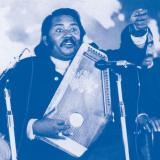
Black Truffle is thrilled to announce a second volume of unheard concert performances from legendary Pakistani kyhal singer Salamat Ali Khan, recorded at Berlin’s Neue Nationalgalerie as part of the MetaMusik festival in 1974. Like the first volume, the immaculate recording by Michael Hönig (of krautrock legends Agitation Free) captures Khan performing a single extended raag in the company of Shaukat Hussein Khan on tabla and Hussein Bux Khan on harmonium. In addition to his stunningly inventive and moving vocal performance, Khan is heard accompanying himself on a specially tuned alpine zither (in place of the traditional swarmandal, an Indian style of zither). The lack of an underlying tanpura drone gives the music its characteristic floating quality, with the three instruments and voice masterfully dancing around one another as they sketch the outlines of this grand, 40-minute Raag Chandrakauns.
If anything, this epic performance of the late-night Raag Chandrakauns is even more seductively spacious and psychedelic than the music heard on the first volume. Obeying the traditional shape of Hindustani classical vocal music performance, a gradual rise in both pitch and rhythmic activity, the music hovers for twenty minutes in a reflective calm, the pulse only gently stated by the tabla while harmonium ornamentation and zither strums float by. In this meditative space, Khan gradually orients us to the contours of the raag, beginning with long notes at the bottom of his register. His improvisation at once builds with a stunningly firm sense of internal logic and seems liberated to explore every melodic and ornamental byway that comes up along the way. By the time we turn to the record’s second side, the music has grown into something far more frenetic, with virtuoso tabla passages at times occupying centre stage between Khan’s increasingly rhythmic melodic variations. Concluding with a sequence of unison tabla and voice passages of breathtaking complexity, the performance is met with rapturous applause. Arriving in a blue-toned variant of the first volume’s sleeve, with acclaimed musicologist Peter Pannke’s liner notes in the original German, Metamusik Festival Berlin ’74 Volume II is not to be missed. Essential listening not just for Hidustanti classic aficionados, but for anyone who needs reminding of the magic of collective music making in the moment.
GER Erstes Album mit Hopeless der Atlanta Nu-Deathcore-Band LEFT TO SUFFER! Left To Suffer zählen zu den intensivsten und eindringlichsten Acts der modernen Heavy-Musik, eine Band, die mit der Wucht einer Abrissbirne und der Präzision eines Skalpells zuschlägt. Ihr Sound entsteht an der Schnittstelle zwischen Moshpit-tauglicher Brutalität und eindringlicher Melodik; er richtet sich an Hörer, die ihre Katharsis laut, körperlich spürbar und kompromisslos erleben wollen. Von zermalmenden Breakdowns bis hin zu unheimlicher, atmosphärischer Spannung haben sich Left To Suffer eine ganz eigene Nische geschaffen. Hier existieren Wut und Verletzlichkeit unmittelbar nebeneinander, getragen von messerscharfem Songwriting, gewaltigem Tiefenfundament und Hooks, die wie Nachbeben einschlagen. Left To Suffer jagen keinen Trends hinterher. Sie erschaffen etwas, das schwerer, schärfer und unüberhörbarer ist, und dieses Kapitel hat gerade erst begonnen. Oranges Vinyl, Digisleeve CD Hopeless debut from rising Atlanta Nu-Deathcore band LEFT TO SUFFER! Left To Suffer are one of modern heavy music's most visceral acts, a band that hits with the force of a wrecking ball and the precision of a scalpel. Their sound lives at the collision point of pit-starting brutality and haunting melody, built for listeners who want their catharsis loud, physical, and uncompromising. From pulverizing breakdowns to eerie atmospheric tension, Left To Suffer have carved out a lane entirely their own. One where rage and vulnerability coexist in the same breath, anchored by sharp songwriting, massive low-end weight, and hooks that land like aftershocks. Left To Suffer aren't chasing trends. They're building something heavier, sharper, and harder to ignore, and this chapter is just getting started. Orange coloured vinyl, digisleeved CD.
John Coffey built a reputation as one of the most explosive live bands in Europe - even becoming an internet sensation with the legendary “beer catch”. From Graspop to Sziget, Wacken to Pinkpop, Vainstream to Jera On Air, 2000trees and Hurricane/Southside - the Dutch group has played several of the biggest festivals, sold out the Melkweg in Amsterdam and even launched their own punk rock festival - Coffey Fest - to celebrate community and uncompromising music. Never shying away from the world around them, John Coffey actively uses their platform to speak out on social justice and political urgency. The new studio album "Not Alone" is about the power of connection. About discovering that there are other people who feel what you feel. Whether you find that connection through a partner, a friend, a helpline, or a room full of people feeling the same music. Talking helps. Singing helps. Screaming along helps. Armed with new music, a fierce activist ethos, and upcoming European tour dates, the band proves that engagement and heavy rock ’n roll are a perfect match.
De Kloe: their name is as hard to explain as the music they channel from a total oddball universe. Rumour has it a wormhole sits hidden between the beer crates and a broken dartboard in the basement of the DPG Media building in Antwerp. Leon Jespers, Elian Van den Eynde and Midas Heuvinck stepped through and came back with De Kloe’s first full-length album.
Needless to say, De Kloe operates in the cracks - splicing obscure samples, fractured lyrics, jagged basslines, and serrated guitar riffs into something volatile and alive. Club rhythms pulse underneath, but nothing stays in place for long. Tracks mutate, structures dissolve, and both live and on record the band leans into instinct over control.
After the singles ‘Our House’ & ‘The Fish’ the trio finally presents their debut album ‘Vanity Fair’: more extravaganza tunes you didn’t know you need it, but soon will be addicted to.
A place where pop music collides with dubbed out samplemania, short sharp no wave riffs, sun-gazing psychedelica, 90’s indie sleaze, post everything vibes and endless sonic fun & happiness.
Some people would say Vanity Fair is a musical exploration of glossy machinery, the dacay of celebrity and a secret wink to John Bunyan’s Pilgrim’s Progress where
everything is on display and nothing is quite what it seems.
Other will say ‘Vanity Fair’ is a splendid record with 12 marvelous songs you just have to listen to and buy it because your life will only gets better from then on.
We believe both of them.
Credits
All songs written and produced by De Kloe
Elian Van den Eynde: guitar
Leon Jespers: electronica & keyboard
Midas Heuvinck: bass
Guest musicians
Kiara Govaert & Nina Brügger: vocals
Kiara Govaert: ocarina
Co-production and mixing by Martijn De Bondt
Recording by Simon Beeckaert
Mastering by Gert Van Hoof
Graphic design and layout cover by Leon Jespers
Pierre Mariétan (1935–2025) was a prolific Swiss composer, sound artist, and pioneer in acoustic ecology who spent most of his life working in France. Over his long career, he composed more than 300 instrumental, orchestral, vocal, and electronic pieces. Mariétan studied under avant-garde legends like Pierre Boulez, Karlheinz Stockhausen, and Bernd Alois Zimmermann. In 1966, he founded GERM (Groupe d’Étude et de Réalisation Musicales), a music collective that blurred the lines between strict composition and free improvisation. In 1969 the French BYG label released a GERM album and the same year GERM played at the legendary 5-day Festival in Amougies, Belgium, sharing stage with Pink Floyd, The Soft Machine, Frank Zappa, Don Cherry,…
In 1979 Mariétan founded the Laboratoire d'Acoustique Urbaine (Urban Acoustics Laboratory) to bridge environmental sounds, urban architecture, and musical composition. Mariétan was also a professor at the University of Paris where he taught the relationship between sound and space. Later in life, he remained active as a director for the Movement of Environmental Sound and continued developing permanent, immersive sound installations across the globe. His album Musique d’été was originally released on cassette back in 1983 by Éditions Salabert and Costin Miereanu’s Poly-Art International, and it has been slightly tweaked for this LP reissue. The record splits his vision of "Summer Music" into two different vibes. Side A is a deep dive into an electronic, synthesizer-driven landscape, while Side B features raw acoustic field recordings of forests and traditional Swiss alphorns.
Adjust the intensity of the sound at the same level, if not just above the background noise specific to the place of diffusion.
A quick scan of the world’s favourite crowdsourced discography reveals that Sonic Youth co-founder Lee Ranaldo was not a total stranger to crackling electric experimentation in the years following his songwriting turns of the 20-teens. Yet »The System«, ingeniously culled and sequenced from Ranaldo’s soundtrack work for Dutch filmmaker Joris Postema’s ›eco-doc‹ of the same name, nonetheless feels like a reawakening. Quietly released in a vastly different (and much more ›filmic‹) form by Doxy Music/Riva Media Records in 2025, this LP reimagines and reconfigures the initial release, including unreleased material written and recorded for the film, to lend it new stature as both a return to drone-improv form and a reunion with introspective Downtown angst.
Given the state of the world, it’s not surprising that the film Ranaldo scores – a documentary on three climate activists bruising their fists on the black iron prison of techno-fascist deathkultur – is a study in despair and futility. But rather than wallowing in navel-gazing doom and gloom, the film documents the unstoppable spirit that has animated human resistance since the time of the Pharaohs.
As it turns out, the gorgeous scope of Lee Ranaldo’s guitar palette is a perfect manifestation of the hope and despair that animates the film. But like other high-water marks in the guitar-centric soundtrack canon – the high plains raga of Bruce Langhorne’s »Hired Hand«, Neil Young’s sparse and ghostly solo transmissions on »Dead Man«, or the monolithic mantras of Popol Vuh’s »Nosferatu« – its devotion to spectral gestures and meditative song forms launches it firmly outside of the OST orbit into a universe fully its own.
It might seem like a long journey from the Lower Manhattan rhythmic grime of the album’s opener »Tajikistan (Nice to Meet You)« (reminiscent of guitar opuses like Robert Quine and Jody Harris’s »Escape«) to the ringing cowboy chords of the final track, but the narrative logic of the LP pulls the listener along as solidly as a pack horse. As the LP unwinds, and collaborators like Jim Jarmusch, cellist Leila Boudreil, Yeah Yeah Yeahs snare shaman Brian Chase, and guitarist Yonatan Gat take their places, new vistas unfurl: the ritualistic thrum of »Berlin Blockade«, the haunted overtone palaces of »Bergelmir«, and the cavernous acoustic strumming of »Instruments of Violence«. It all winds up with the high lonesome standard »Cool Water«, each unhurried note trailing off into long-tail reverb, layers of shifting vocal harmonies pulling everything skyward – a hopeful note in an album where existential dread never lurks too deeply below the surface.
In the end, »The System« functions both as a film score and a hallucinatory (mostly) instrumental guitar record, revealing a sensibility not too often spotted in the 21st century – a liminal space where the song, the jam, and the meditation merge into a blurred whole. »The System«’s expansive fabric, emerging from a collective sound circling around Ranaldo’s signature tones, envelops and ampl amplifies the contributions of its community of creators – the perfect antidote to narcissistic despair. Much like the subjects of the film light the way towards intra-generational resistance, the music of »The System« reveals a path through gathering darkness. The world could be yours if you follow.
A quick scan of the world’s favourite crowdsourced discography reveals that Sonic Youth co-founder Lee Ranaldo was not a total stranger to crackling electric experimentation in the years following his songwriting turns of the 20-teens. Yet »The System«, ingeniously culled and sequenced from Ranaldo’s soundtrack work for Dutch filmmaker Joris Postema’s ›eco-doc‹ of the same name, nonetheless feels like a reawakening. Quietly released in a vastly different (and much more ›filmic‹) form by Doxy Music/Riva Media Records in 2025, this LP reimagines and reconfigures the initial release, including unreleased material written and recorded for the film, to lend it new stature as both a return to drone-improv form and a reunion with introspective Downtown angst.
Given the state of the world, it’s not surprising that the film Ranaldo scores – a documentary on three climate activists bruising their fists on the black iron prison of techno-fascist deathkultur – is a study in despair and futility. But rather than wallowing in navel-gazing doom and gloom, the film documents the unstoppable spirit that has animated human resistance since the time of the Pharaohs.
As it turns out, the gorgeous scope of Lee Ranaldo’s guitar palette is a perfect manifestation of the hope and despair that animates the film. But like other high-water marks in the guitar-centric soundtrack canon – the high plains raga of Bruce Langhorne’s »Hired Hand«, Neil Young’s sparse and ghostly solo transmissions on »Dead Man«, or the monolithic mantras of Popol Vuh’s »Nosferatu« – its devotion to spectral gestures and meditative song forms launches it firmly outside of the OST orbit into a universe fully its own.
It might seem like a long journey from the Lower Manhattan rhythmic grime of the album’s opener »Tajikistan (Nice to Meet You)« (reminiscent of guitar opuses like Robert Quine and Jody Harris’s »Escape«) to the ringing cowboy chords of the final track, but the narrative logic of the LP pulls the listener along as solidly as a pack horse. As the LP unwinds, and collaborators like Jim Jarmusch, cellist Leila Boudreil, Yeah Yeah Yeahs snare shaman Brian Chase, and guitarist Yonatan Gat take their places, new vistas unfurl: the ritualistic thrum of »Berlin Blockade«, the haunted overtone palaces of »Bergelmir«, and the cavernous acoustic strumming of »Instruments of Violence«. It all winds up with the high lonesome standard »Cool Water«, each unhurried note trailing off into long-tail reverb, layers of shifting vocal harmonies pulling everything skyward – a hopeful note in an album where existential dread never lurks too deeply below the surface.
In the end, »The System« functions both as a film score and a hallucinatory (mostly) instrumental guitar record, revealing a sensibility not too often spotted in the 21st century – a liminal space where the song, the jam, and the meditation merge into a blurred whole. »The System«’s expansive fabric, emerging from a collective sound circling around Ranaldo’s signature tones, envelops and ampl amplifies the contributions of its community of creators – the perfect antidote to narcissistic despair. Much like the subjects of the film light the way towards intra-generational resistance, the music of »The System« reveals a path through gathering darkness. The world could be yours if you follow.
It’s safe to say that Rochester, NY rapper of Italian descent Pounds’ work ethic is unmatched: he’s constantly on the grind, loud in the lab but quiet on the outside, he wastes no time unlike many other big mouthed rappers these days and then, all of a sudden, he drops a bomb on you. To kick off 2018 in the best of ways, he released a 4-tracks collaboration EP with West Coast producer , 1/2 of Gangrene, Oh No entitled “Borgata”. The record opens up with “Last Supper” and with a clear statement of intent: “Run for your life, my cousin brought a drum and a knife, break my hand on your face I need a bucket of ice” just so you understand where this project is headed since the first song. His style is always direct, without any frills, with his trademark voice spitting gritty crime-themed bars that revolve around drug and the street life that raised him. A “borgata” in Italy is a “hood”, and Pounds, being the definition of an artist that talks the talk and walks the walk, couldn’t pick a better title for this project.
Limited edition vinyl release of 500 hand-numbered copies with etched B-side, black vinyl.
BerettaMusic's compilation series is mouthwatering just from reading the names of the artists involved. First up is Detroit mainstay Dez Andres, who opens with 'Ready Disco,' a warm and typically hip-hop-inflected tone that Curiel's 'Keep You That Way' and Evan Rhodes' 'We Go Low' both build on comfortably, with the latter a particularly contagious minimal house shuffler with a bassline that really pops. DJ Cent's 'Malfunction' gets more heavy and threatening with steely drums marching into darkness, before Ryan Sadorus closes with 'Cultivate,' a storming disco-house workout. It's less a scattered various-artists grab bag and more a real document of Detroit's current house scene. Unsurprisingly, then, it is superb.
A year after the release of Adriatique’s debut LP, ‘Nude’, Afterlife presents a seven-track remix package to breathe new life into the originals.
The album found Adriatique, the duo of Adrian Shala and Adrian Schweizer, explore a more downtempo, contemplative sound than they were known for. Its profound musicality makes rich source material for a set of dancefloor interpretations, which Tale Of Us have curated together with Adriatique for the label’s 30th release.
First is Tale Of Us and Mathame’s version of ‘Mystery’, where they extend the blissful tones and Jono McCleery’s vocals into a euphoric dancefloor cut. Next Solomun brings some electro flair to the vocoder-led title track, before Kobosil toughens up ‘Tachykardia’ with a warehouse-ready kick drum and twists the serene voice of Delhia De France. Rampa is another new name for Afterlife Recordings; he gives ‘Nude’ a slick, techy overhaul to complete the vinyl release in fine style.
The digital release contains an Agents Of Time epic in their remix of ‘Buchla’s Dreaming’, Johannes Brecht’s shimmering take on ‘Ray Reincarnation’ and a chopped-up remix of Mystery by Isoleé. A diverse, tastefully-executed remix EP which does justice to the quality of Adriatique’s album.
From the joyful swing of "Santa Claus Is Back In Town" and the evergreen charm of "Blue Christmas" to the peaceful reassurance of gospel favorites like "Peace In The Valley" and "Take My Hand, Precious Lord," this collection showcases Elvis at his most heartfelt and inspiring. Perfect for the holiday season and beyond, this vinyl is a musthave for fans of classic Christmas music and powerful gospel performances.
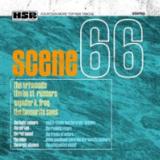
Rhythm & Blues, Club Soul, Hammond Grooves and Pyschedelic Mod - 1966 was a very mixed bag of musical styles! The US influences continued to seep into how records were being made but signs of the burgeoning later UK sound is evident too as 'Scene 66' takes you on a musical journey through a real turning point in how bands wanted to be heard
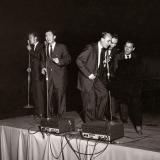
DINTE presents a collection of southern gospel sides from late 1940s to mid 1950s capturing the post-WWII departure from rural folk & shape-note singing traditions that had previously defined the music, to quartets and vocal harmony groups embracing of driving, uptempo boogie-woogie rhythms and spirituals borrowed from the black church. Meticulously transferred and restored from the original 78 RPM and transcription discs by collector James Zurek
Das Skelett eines Urzeitmenschen lockt Justus, Peter und Bob in den kleinen Ort Citrus Grove. Kaum sind sie dort, als es auch schon zu rätselhaften Zwischenfällen kommt. Erwacht der Urmensch zu geheimnisvollem Leben? Und wieso legen sich plötzlich alle Bewohner von Citrus Grove zum Schlafen in den Park ...?