Originally from West Yorkshire, but now resident in Manchester, composer, bassist and producer Phil France is probably best known as a key collaborator alongside Jason Swinscoe in the Cinematic Orchestra, where he co-wrote, arranged and produced on classic albums including Everyday, Man With The Movie Camera, Ma Fleur and also the triple award winning soundtrack for The Crimson Wing nature documentary. In 2013 France released his debut solo album, The Swimmer (GOND016), an emotive, epic record influenced by the great second wave of film composers including John Carpenter and Vangelis, as well as minimalist composers such as Steve Reich and Philip Glass
Five years later, France presents the follow up, the enigmatically titled, Circle, which again represents a very personal journey for the artist. For France the album is an extension of work he began on The Swimmer. A process he has described as: " blocks of sound containing intricate minimal arpeggiated patterns and electronic textures that develop and shift in subtle, original and melodic ways. The trancelike quality, mood and electronic character of title track Circle led France to think of the circular patterns which eventually became a potent concept for the album. "Ideas and fashions repeat themselves in cycles. Events are said to travel 'full circle' and this is important to me because it represents my own recent personal and musical journey after 15 years touring as bassist and composer with The Cinematic Orchestra. I consider circles to be a strong symbol of unity, strength and inclusiveness and ultimately I've aspired to make something beautiful with those values at its heart".
The album opens with the title track, Circle, built on a minimal looped pattern with melodic embellishment and shifting additional harmonic textures. Bells was developed from the arpeggiator and offers a nod to the melodicism and atmosphere of French electronic music. The Jackal features an idea originally developed for The Crimson Wing score but which finally bears fruit here. Cathedrals features an improvised intro, Philip Glass inspired organ and vocal textures inspired by the work of Colin Stetson. Finally, the album ends with a reprise of Circle this time featuring layered pianos. But it isn't the conclusion of the journey, for France: "The Circle is infinite - During the process of making this record, I have been constantly reminded that nothing ever stays the same and that all is in constant flux. The challenge for me is always to respond positively, be aware of and seize the opportunity for progression constant change provides" And it is that sense of movement and flow, but also calm and beauty that permeates Circle and make it such a worthy successor to The Swimmer.
Universalist is the first album by ACT! Baroque, kaleidoscope electronics; material sound for a disembodied world. The energy is optimistic and posi - even naive - a statement of unity in the age of psychic dislocation.
10 Tracks of phosphorus midi and brittle digi textures feel indebted in spirit to the masters of psychic jazz as much as the physical euphoria of the club. Above all, this album belongs to the catalogue of Halocline Trance, yet subtle references connect it to a larger lineage of free sound. The empty, divine heaviness of songs like Ecstatica / On Patrol invokes Yusef Lateef's Little Symphony, while the computerized spontaneity of Lava Valley feels somehow connected to Yasuaki Shimizu's Music for Commercials. Non-musical sounds and evocative melodies sit side-by-side - new psychedelia for love and life in the digital jetstream.
ACT! is a project from Toronto-based musician David Psutka. Building on a diverse body of releases as Egyptrixx, Ceramic TL, Anamai and various other collaborations, ACT! denotes a new chapter of creative output from Psutka and the Halocline Trance label. Universalist follows a prolific string of releases in 2017 with Anamai - What Mountain; Ceramic TL + Ipek Gorgun - Perfect Lung; and Egyptrixx - Pure, Beyond Reproach, and synthesizes recurring themes of materiality and the unifying potential of sound.
Re-mastering by: Ray Staff at Air Mastering, Lyndhurst Hall, London
Genius work from the Detroit underground of the 70s - one of the greatest records ever on the now-famous Tribe Records label, and a masterpiece of soul, jazz, and righteous spirit! The session's headed by tenor player Wendell Harrison - and it's got an all-star Motor City lineup that includes Marcus Belgrave on trumpet, Phil Ranelin on trombone, Jeamel Lee on vocals, Charles Eubanks on electric piano, and Charles Moore on flugel horn. The tracks have a spacious spiritual approach that recalls some of the later Archie Shepp on Impulse - a blend of soul jazz with slight touches of electric instrumentation, some vocals, and a very progressive spirit overall - stepping proud in the new freedoms of the 70s, yet still swinging and very groovy.
Released on Leeds Jazz & Soul labelATA Records, the debut LP fromThe Lewis Express takes the rich legacy of the soul-jazz outfits of the 1960s as the initial blueprint of their sound. Taking inspiration from the likes of Ramsey Lewis, Young-Holt, Eddie Cano, Ray Bryant and Cannonball Adderley, they present a collection of tracks that range from introspective spy film themes to burning Brazilian jazz.
Primarily based in Leeds, The Lewis Express is comprised of many of the musicians that have graced previous ATA releases: George Cooper, Piano (Abstract Orchestra) Neil Innes, Bass (The Sorcerers, The Magnificent Tape Band, Tony Burkill), Sam Hobbs, Drums (Dread Supreme, Tony Burkill, Matthew Bourne) and Pete Williams, Percussion (The Sorcerers, The Magnificent Tape Band, Tony Burkill). Recorded over an intense two-day session by the band of the same name, "The Lewis Express" is a nod to the classic soul jazz recordings of The Young Holt Trio / Young-Holt Unlimited and Ramsey Lewis, from who this group take their name. But, delivered with a distinctly European feel. As with many of the classic Ramsey Lewis cuts, this album was recorded live, capturing the rich inter-relationship between the players.
Kicking off the album isLove Can't Turn A Man, a slow burner that introduces the piano of George Cooper as he works over a rock solid backbeat.Cancao De Momentois an up-tempo Brazilian Workout in the style of Milton Banana with rhythmic piano punctuated by percussion.Brother Move Onis probably the most recognizable as being in the soul jazz vein, with nods to such classics as Ramsey Lewis'The 'In' CrowdandSoulful Strutby Young Holt Unlimited, particularly the latter. Moving intoHawkshaw Philly(their nod to session music legend and leader of The Mohawks, Alan Hawkshaw) the band create what sounds like a rare library cut.Theme From The Watcheris a nod to the cinematic soul-jazz of the 60s, conjuring up the sort of imagery that coincides with the black and white spy thrillers, espionage and intrigue.Last Man In The Chain Ganghas a very strong Ramsey Lewis feel and offers some of the most powerful piano playing of the whole album. The final track,Straight Seven Strut, is the only vocal track of the album. The staccato swing and French vocals lend it some of the qualities of 60s yé-yé music but with a far jazzier backbone, spiced with percussive handclaps.
The young virtuoso producer Prins Emanuel follows up his acclaimed debut album on Music For Dreams with something quite different than what we're used to hearing from him. While Arbete & Fritid was an epic odyssey into the furthest corners of disco with an array of studio wizardry and complex rhythms, Diagonal Musik is a sparse and delicate exploration of the acoustic guitar. Steering away from his comfort zone, the Prins follows his intuition for experimentation and lands somewhere in a field of genre-defiant folk-jazz meditations; a development that fits like hand in glove for the eccentric nature of Music For Dreams. The album reads like a soundtrack to the country house Emanuel shares with his family and friends, a place on the map called Oran. From atop a hillside overlooking a lake, Oran is lodged deep in the heart of the Skåne landscape, the southern part of Sweden that once belonged to Denmark. This place encompasses the whole of the album, as the track titles all pinpoint crucial locations on the courtyard and its surroundings. 'Orön' which opens the album is named after the small half-island that sits in the centre of the lake. There's the hand-built sauna ("Bastun") at the edge of the yard, and behind that in a slope the old root cellar ("Jordkällaren"). While the nature here is anything but balearic, the overwhelming calm of the country life seems to inspire the same laid-back attitude and passion for all things organic (and not just musically, as this is where Emanuel also makes cider from local apples according to the vin naturel school). Upon listening to Diagonal Musik one might be keen to draw references to works in similar style, such as the output of late 80's new age label Windham Hill or the dreamy lullabies of long-time friend and Music For Dreams affiliate 55 Cancri e. This is all circumstantial however, surprising as it may seem.
6 track LP pressed on 12" black vinyl with black centre label, black disco insert, black laminated sleeve with barcode detail.
* London based label SM-LL presents its second main label 12" LP release, Zimní Král, from Italian artist Andrea Taeggi.
* Andrea Taeggi works in Berlin as a composer, live performer and electronic music producer. Besides his solo practice
— on his own name or under the moniker Gondwana, he is co-leading long-standing electroacoustic project Lumisokea. His music has been released on vinyl and dubplate on labels Opal Tapes, Type, and Präsens Editionen.
* The music on this record was made using a vast array of rare analog machines Taeggi had the chance to work on at the Willem-Twee synthesis studio in Holland (built with the iconic Studio di Fonologia RAI as a blueprint). Most of the percussive sounds come from an Analog Computer, which has been rarely used only as a music instrument (its main purpose was flight simulation). In fact, during the Cold War times it was also used as a measurement tool by civil engineers and even by the army. At present, no one has ever officially released music recorded at the Willem-Twee synthesis studio.
*The music on this record further explores cyclical, minimal and hypnotic concoctions - a particular investigation focused on unusual rhythms that Taeggi had already started on his well-received 'Mama Matrix Most Mysterious', released on Type in 2015. Think walls of sub frequencies, snappy rollercoasters of the mind, labyrinths in hyperspace & snakes eating their own tails.
Re-press of A Sagittariun's debut 2011 EP on Elastic Dreams. 'The Circle Stops Somewhere' has been a
defining release for the British techno explorer, long since out of print since its release seven years ago.
Now the label re-press the original vinyl release that features two amazing MD2 (AKA Mike Dehnert) remixes.
Resident Advisor summarised the debut A Sagittariun release in a glowing review 'The Circle Stops Somewhere"
is definitive driving music, even down to the evocation of onrushing traffic in the form of cold, blurred synth stabs.
It's also a nostalgically-observed piece of electronic jazz, the dominant motifs of which transport one into a
crepuscular world of uncertainty and disquiet. The reliable Mike Dehnert turns in two contrasting mixes...'
WRWTFWW Records is overjoyed to announce the release of two never-released-before soundtracks by French award-winning composer, audio experimenter, electroacoustic and musique concrète magician, and all-around sound visionary Bernard Parmegiani, sourced from the original reels, and neatly packed together in a gatefold sleeve double LP with English and French liner notes. The 2 albums are also available in an all-in-one digipack CD. Les Soleils de l'Île de Pâques (1972), by French director Pierre Kast, is a sci-fi feature which secured itself a well-deserved place in the pantheon of mysterious cult films thanks to hallucinatory (and superb) cinematography, exploration of supernatural phenomenons and occult symbolism, and one hell of a trippy atmosphere. La Brûlure de Mille Soleils (1965) also comes from Pierre Kast, but this time with the help of none other than writer, photographer, multimedia artist, homme à tout faire Chris Mar
Mindshift Records Is Proud To Present Trouble12, "homan Square", By Area Featuring Remix Appearances By Murdoc And Drmlgcc, Culminating In A Stellar Release Pressed On Limited-edition Vinyl, Out Of Continued Respect For The Vinyl Medium.
The Release Begins With "dark Days", A Strong Cut With Deep Kicks, Hard Claps, And Solid
Basslines All Combined To Create A Euphoric Experience For Both Listeners And Dancers.
Up Next, A Remix Of "alta" By Murdoc Brings Us To The Next Level With Pulsating Bass, Haunting Vocals And Crafty Syth-work, Sure To Please Closing Out The A-side Very Nicely.
Opening The B-side, We Have Drmlgcc's Remix Of "dark Days", A Bass-heavy Rendition Of The Original, Featuring Unique Synth Pads, Great Percussion, And Rhythmic Pauses Throughout The Progression Of The Track.
Concluding The Release Is The Original Mix Of "alta", A Unique Composition
Returning Us Full-circle And Closing Out The Ep "homan Square".
out of Stock
Last delivered 4 years ago available to reorder, subject to availability
Music From Memory return with a further six tracks from Dutch musician Richenel. Continuing with recordings taken from his debut album 'La Diferencia', originally released in 1982 on the cult Amsterdam cassette only label Fetisj, the tracks on Music From Memory's second EP 'Perfect Stranger' includes alternate takes drawn from Richenel's personal copy of the album alongside a further composition which didn't make it onto the original Fetisj cassette.
.
Studying set and costume design whilst making a name for himself as a singer and performer in Amsterdam's underground clubs, Richenel played with several disco acts and cultivated an extravagant cross-gender stage persona before connecting with members of the local label. Hooking up through their time together at the Rietveld art academy in Amsterdam, Fetisj was an experimental multi media collective which revolved around a loose mix of various young artists and musicians. Having developed a house band with artists going by a number of different pseudonyms the label set up their own small makeshift studio and would produce and sell the cassettes through their distribution network and at events across the city. Recorded amongst the turmoiled punk and squatter scene of Amsterdam against a backdrop of drugs and social unrest, the 'La Diferencia' sessions reflect a unique mix of punk aesthetics with a synthesized bedroom funkiness.
A somewhat illustrious figure in Dutch pop history with his flamboyant appearance as well as having one of the more exceptional male voices to come out of the country, Richenel would go on to record a number of successful albums and hit singles in the Netherlands and beyond. This largely unknown album on Fetisj however, seems to embody the spirit of another time; a particularly unique and richly creative moment in Amsterdam's musical and cultural history and one that is deserving of a much wider audience.
'Perfect Stranger' is co-compiled by Orpheu De Jong
Of all the releases on Italy's legendary Cramps Records, Raul Lovisoni and Francesco Messina's seminal LP from 1979 has long remained among the most beloved. Prati Bagnati Del Monte Analogo not only introduced the world to the work of two gifted composers, but also is notable for being produced by electronic pioneer Franco Battiato. A sister album to Prati Bagnati would be Giusto Pio's breathtaking Motore Immobile, likewise graced with the maestro's gentle hand around the same time.Lovisoni and Messina are both central figures within the Italian avant-garde. Part of a generation of artists who contributed to a radical rethinking of musical practices and composition, they reveal Minimalism as it's rarely known: delicate melodies, subtle harmonic interplay, incorporating diverse creative traditions and slowly giving way to an ever-expanding open space.Prati Bagnati Del Monte Analogo's meditative title track, inspired by René Daumal's surrealist novel Le Mont Analogue, features Messina on synthesizer and Michele Fedrigotti's impressionistic piano, while on Lovisoni's "Hula Om" and "Amon Ra," solo harp, crystal glasses and Juri Camisasca's radiant vocal drones further ascend into the stratosphere. Skirting the outer edges of ambient, new age and experimental music, Prati Bagnati has a transformative beauty unlike anything else.Superior Viaduct's edition reproduces the original sleeve design and is recommended for fans of Jon Hassell, Luciano Cilio and Popol Vuh.
out of Stock
Last delivered 18 months ago available to reorder, subject to availability
"Square Landscapes" is the latest album of Tbilisi based producer Rezo Glonti under the Aux Field moniker. This work is a synth-curved journey influenced by mutated urban landscapes of his native city. Art-work by Amsterdam based artists Graphic Surgery.
It has been exactly ten years since Finders Keepers Records rst liberated Luboš Fišer's immaculate soundtrack music for Valerie And Her Week Of Wonders (Valerie A Týden Divu) from the vaults of the Barrandov Studio in Prague. As the inaugural release of an ongoing discography of previously unreleased scores from the hugely creative 'Film Miracle' that occurred during and after the Czech New Wave (CNW), this score will always retain a special place in the heart of the label as well as our listeners who consistently request an updated repress of this signi cant vinyl milestone. Having grown in status from an obscure and misunderstood socialist-era art house oddity, via the hands of risqué foreign uff merchants, to nally nd its rightful audience as a bona de surrealist cinematic masterpiece of world class standards, this 1970 lm adaptation of Vítezslav Nezval's 1935 avant-garde novella (a lm that literally cross-pollinated Max Ernst's A Week Of Kindness and Lewis Carols Alice In Wonderland) has garnered widespread critical acclaim. Inspiring ongoing generations of visual artists, musicians, writers and lmmakers - all of whom regard this truly individualistic and inimitable surrealist lm poem to be an indelible in uence - Valerie continues to impregnate their daily artistic referential fabric.
Muse have announced that their eighth studio album, 'Simulation Theory'. The eleven-track record was produced by the band, along with several award-winning producers, including Rich Costey, Mike Elizondo, Shellback and Timbaland. Each of the album's songs will be accompanied by a video.
Recent singles, 'Something Human', 'Thought Contagion' and 'Dig Down', as well as brand new track 'The Dark Side', are all available immediately as a download when you pre-order the album. 'The Dark Side' is instantly recognisable as a classic Muse track, featuring Matt Bellamy's unmistakable soaring vocals and blistering guitars and the driving rhythm section of Chris Wolstenholme and Dominic Howard that have become a hallmark of Muse's stadium-filling sound.
'Simulation Theory' follows 'Drones', released in 2015. Since then the internationally acclaimed three piece have toured extensively, taking the ground breaking 'Drones World Tour' to fans across the globe. This concert was filmed and released in cinemas worldwide for 'One Night Only' in July 2018.
Muse is Matt Bellamy, Dominic Howard and Chris Wolstenholme. Their last studio album, Drones, was released in June 2015 and debuted at No. 1 in 21 countries around the world including their first No. 1 album in the United States. The album went on to win the Grammy Award, their second, for Best Rock Album in February 2016. Since forming in 1994, Muse have released seven studio albums selling in advance of 20 million albums worldwide.
Widely recognised as one of the best live bands in the world, Muse have won numerous music awards including two Grammy Awards, an American Music Award, five MTV Europe Music Awards, two Brit Awards, ten NME Awards and seven Q Awards, amongst others.
Hive Mind Records are delighted to present Congo, the debut album from Brazilian guitarist and composer Rodrigo Tavares.
Maintaining a meditative mood across it's nine instrumental pieces, Congo blends composition and improvisation with subtly experimental yet sophisticated arrangements that evoke the mood and rhythms of classic Brazilian artists such as João Gilberto, Dorival Caymmi, Tom Jobim, Milton Nascimento and Caetano Veloso.
Rodrigo's work draws on elements of jazz, post rock, minimalist composition and disparate global sounds to create a deep listening experience that falls between genres and wilfully defies categorisation. Congo is a lush soundworld that rewards exploration and will appeal to fans of music as diverse as Joshua Abrams and Natural Information Society, Collocutor, BadBadNotGood, Slint or late Talk Talk, as much as it does to lovers of classic Brazilian music.
Hive Mind Records are proud to be releasing Congo on vinyl in gatefold sleeve designed by Brazilian graphic artist, Andrea Gomes, and featuring the original painting of celebrated Brazilian artist, Cristiano Lenhardt.
Unreleased baroque jazz horror score to controversial lesbian sex cult witchcraft exploitation drama from 1973, composed by the man who wrote the Catweazle theme! Hell yeah!
HISTORY:
Ted Dicks is not that well known as a composer these days, but back in the mid 1960s he was composing library music as well penning some of the greatest comedy songs of the era, including 'Hole In The Ground' and 'Right Said Fred'. His work was performed by Kenneth Williams, Petula Clarke, Bernard Cribbins, Topol and more. But until now, little has been known of his brief flirtation with film music.
Virgin Witch was his first brush with film scoring - one of only two score he wrote. The film was produced by legendary wrestling commentator Ken Walton (under his Sexploitation pseudonym of 'Ralph Solomans'), with the help of Hazel Adair, a woman famed for co-creating the long running UK TV soap Crossroads. Virgin Witch was a racey film, turned down at least once for certification by the BBFC, passed uncut with an X for release just in London, then cut and passed for general release shortly afterwards.
The score itself is a unique and quite beautiful pop baroque work, utilizing the cimbalom, an instrument more than likely played here by 'Ipcress file' musician John Leach.
This is a very limited release of a most unique 1970s pop horror lesbian witch score. Get it before they are all sold and you start moaning you didn't order it in time.
First Time Out is a cosmic soul transmission from Nigeria's own Diana Ross, Theadora Ifudu. The arty co-host of hit TV program, 'The Bar Beach Show' hooked up with the guys from Monomono to created an album that is sultry, sexy and effortlessly cool. It's a smoky, New York Soul Club on wax. A graduate of the New York film school, Ifudu considered herself an artiste, and the opening track, 'Hello There!' Is arresting in its cinematic scope and intriguing strangeness. After briefly channelling Miriam Makes in 'Gbata Ngwa', she moves into full diva mode. '(When Will It Be) Right Time' features vocal runs that Mariah Carey would be proud of and 'That Man' has a smoky, jazz club vibe. It's easy to imagine Theadora, under a single spotlight, dazzling in a sparkling figure-hugging crowd, holding a hard-to-please New York audience in her thrall. At times funky, laidback and smooth, the greatest compliment that can be paid to First Time Out is that it sounds international. The musicianship is first class, the vocals faultless and the mood super smooth. Theadora Ifudu, the self-proclaimed 'moon watcher, ragdoll and artiste', created an Afro soul masterpiece for the ages. - Peter Moore,
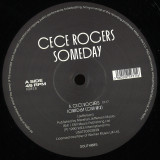
Ce Ce Rogers' spine tingling, seminal hit 'Someday' gets a much-welcomed official remastered, reissue 31 years after it first took the scene by storm. Produced by Chicago's master, Marshall Jefferson, every element is unmistakable - from the dynamic bass and sweeping flutes that set the scene for that instantly recognisable piano riff, to the raw soulful beauty of Rogers' vocals. 'Someday' is a record that truly captures the euphoric, loving nature of the early house music scene - epitomising a timeless spirit and hope for future harmony within society.
Often cited as one of the greatest dance records of all time, it's influence is clear to be seen from the sheer number of covers and records that have since sampled it. An indisputable masterpiece, complete with dub mix and accainstrumental versions, this is an essential 12" for any record collector out there - house head or not.
out of Stock
Last delivered 12 months ago available to reorder, subject to availability
Planet Mu Are Very Happy To Be Releasing 'vicious Circles', The Debut Ep By Sinjin Hawke And Zora Jones, Who Aside From Producing Music Also Run The Audio-visual Production Unit 'fractal Fantasy'. Zora Released Several Collaborations On Last Year's 'visceral Minds 2' Including 'dark Matter' With Planet Mu's Jlin, While Sinjin Has Collaborated With Dj Rashad, Just Blaze And Mikeq, And Also Produced Music For Monoliths Like Kanye West And Frank Ocean. Remarkably, Given The Breadth Of Their Work, 'vicious Circles' Is Their First Collaborative Ep, And The First Time Either Have Released A Vinyl Record Too. The Ep Is A Great Showcase For The Duo's Emotional, Maximalist Chimeras Of Abstract Pounding Beats. From The Punchy, Circular, Grandiose Build-ups Of Opener 'vicious Circles', To The Unyielding Melancholy Of 'god' With Its Sinister Bulgarian Choir Sample Against A Peak Timbaland-era Rhythm, The Record's Potent Synths And Manipulated Vocals Are Both Simultaneously Fierce And Friendly. 'source Of Conflict' Is A Poised Dance Between Pulsing Ambient Textures And Drilling Beats, While 'lurk 101' Pits A Volley Of Abstracted Juke Toms Up Against A Hammering Drumline. 'babyboysosa' Feels Like Drum-less Drill, Manipulating Vocals Into Strange Alien Shapes Over A Bassline Before Spiraling Toms And Hi-hats Start To Form A Forceful March. The Ep Concludes On The Love Anthem 'and You Were One' With A Chipmunked Vocal Running Through Its Wonky Chorus Of Bent Notes And Chords.
It is said that every generation casts its mind back to a previous era in times of crisis; the resources that will allow us to decode the questions of our moment may lie in the myths of another era.
Le Renard Bleu, the new musical and cinematic collaboration between Lafawndah and composer Midori Takada, and filmmakers Partel Oliva, takes a cross- generational echo as ground zero for recovering a crucial myth for uncertain times: the blue fox.
As transmitted by Takada, the fox appears in both ancient Senegalese and Japanese folktales as the trickster archetype; belonging both to the heavens and to the earth, the fox is the agent of chaotic good, shaking the world up when its energy has become stagnant. Above all else, the fox is famous for its cunning nature.
Renard Bleu marks the first new music released by Takada in nearly twenty years; it would be difficult to overstate the importance of her return to the public eye. Her first solo record, 1983's Through the Looking Glass, has been rediscovered and heralded as a lost classic; the influence of her percussion trio, the Mkwaju Ensemble, continues to permeate and inspire a new generation entranced by its lucid beauty, playfulness, and sensual patience. Takada has performed in numerous film score orchestras, including the ensemble for Akira Kurasawa's Dreams, coincidentally a key influence on Renard Bleu.
In the ensuing years, Takada has worked closely with theater group the Suzuki Company of Toga on productions of Electra and King Lear, an experience, she says, that allowed her to pursue 'a unity of music, body and space.' Recent live solo performances have evinced the depths of her exploration of all three.
Equally, it is Lafawndah's freedom of tone, decentralized maps of ancient and modern music cultures, and alloying of devotional intensity with modern songcraft casts her as a distinct relative of Midori Takada's.
Over the course of two EPs, self- directed music videos, and countless live performances, Lafawndah has drawn out an uncompromising exploration of how theater, situational intervention, and choreography can amplify the affective palate of forward pop music. One can trace the influence of artists such as Meredith Monk, Carlos Sara, and Andy Kaufman as much as musical antecedents AR Rahmann, Missy Elliott, or Geinoh Yamashirogumi.
It is in a mutual commitment to this unity that Lafawndah, Takada and Partel Oliva find fertile aesthetic common ground.
The music of Renard Bleu originated in Takada's preoccupation with the legend of the fox; after constructing a vivid instrumental composition dramatizing the spirit animal's journeys through waterphone, bells, marimba and various forms of drums, Lafawndah responded - in her inimitable mix of fairytale and undertow-- with melodies and lyrics capturing a dialogue between her and the fox himself. Eventually, the duo met in Tokyo for a week of communing with the material at Avaco Creative Studios, where new elements were composed on site.
Created in partnership with KENZO and premiered today via their channels, it was Partel Oliva who imagined a contemporary cinematic frame for the myth of the fox to re- appear, creating a hybrid of choreography and narrative around Takada and Lafawndah's performance of their joint composition (also titled Le Renard Bleu.) Returning to film in Japan for the third time, Partel Oliva's moving image work (Club Ark Eternal, The Pike and the Shield) has set the standard for and revolutionized the fashion art film. Their deployment of original music, dance, and a highly stylized mis en scene coalesces here in the casting of Los Angeles krump artist Qwenga as the eponymous fox, stalking the halls of the ancient Noh theater in which Takada and Lafawnda's performance takes place.
Why call up the myth of the fox now In Le Renard Bleu, Lafawndah and Takada's collapsing of distance between generations, styles, and milieus intimates that the relationship to time must be shaken. The future lies in fragments in the past; to remember is to recover it; the fox rises to thicken the plot.
Lucrecia Dalt's Anticlines is a volume of bodily and geological substrates within poetic theory and sound. It is a place where skins and minerals dissolve and commingle, where gaseous subterranean leaks inflate lungs, where brain cavities echo interplanetary waves bent from passing through atmospheres.
A former geotechnical engineer from Colombia currently residing in Berlin, Dalt's concern with boundaries and edges shape the lyrics and music of Anticlines, her sixth album. Paying careful attention to pace, breath, and texture, Dalt microtonally shifts the distance between speech and song while using traditional South American rhythms to support her contemporary electronic composition.
Lucrecia arrived at the atmosphere of Anticlines after several months of studying and creating new patches for the Clavia Nord Modular, forming a rhythmic feedback flow with it, a Moogerfooger MuRF, and her voice. The overall effect of cavernous space backdroping Dalt's intimate vocal phrasing rewards contemplation, supported in the physical formats of Anticlines by a lyric booklet documenting Lucrecia's collaboration with Australian artist Henry Andersen.
The album opens with Edge,' bordering on a pathological circlusion of self upon other. The lyrics depart from the Colombian myth of El Boraro, an Amazonian monster who turns its victims insides to pulp before sucking them dry and inflating their bodies like balloons to lifelessly float away. Tar' ponders human dependence on earth at the boundary of the heliopause, where to inhale might be like breathing tar. Dalt's distant and obscured vocals end with, we touched only as atmospheres touch.'
The sonic rise and fall of Analogue Mountains' is inspired by martian traces found in Antarctica embedded by meteorite ALH84001, suggesting that we might well be living in mountains transferred from Mars.' The steadily winding music on Concentric Nothings' descends with the lyrical exercise of dissolution let my touch be indistinct and instinctive.'
Interspersed with the lyrical pieces of Anticlines are instrumental interstitials that demonstrate preceding concepts — as if to say, this is what antiforms sound like, and this is what the universe's indifference sounds like.' Dalt's ongoing experiments with visual artist Regina de Miguel support these ideas, their practice allowing the objects of their attention to slip in and out of being.
Mystic of matter, Lucrecia Dalt has previously performed and worked with Julia Holter and Gudrun Gut, her slippery spoken word and performative nature recalling the work of Laurie Anderson, Robert Ashley, Asmus Tietchens, or Lena Platonos. While touching stones, The Thing by Dylan Trigg, Cascade Experiment by Alice Fulton, and Wretched of the Screen by Hito Steyerl are but a few formative scripts that support Dalt's exploration of the betwixt and between.
In preparing a live set for Anticlines, Dalt plans to stage an uninterrupted configuration, like a kind of alienated lecture, aiming for gestures that create tensions with non-existent objects.' Dalt intends to provide meaning and a place for the listener to meditate or relate to the concerns and ideas' she presents.
- Lucrecia Dalt is a Colombian recording artist, songwriter, and producer.
- After studying civil engineering in Colombia, Dalt worked at a geo-technical company for two years and has since lived in Barcelona and Berlin, where she currently resides.
- She has released five solo albums and has collaborated with musicians Julia Holter, Laurel Halo and Rashad Becker, to name a few.
- Dalt has composed for sound design installations and performance pieces for institutions such as the Santa Monica Art Centre, Reina Sofia Museum and the Maisterravalbuena gallery of Madrid, in collaboration with visual artist Regina de Miguel.
- Anticlines is Dalt's sixth solo record, and her first on RVNG Intl., following the release of 2015's Ou.
- Anticlines explores the boundaries and limitations of human consciousness. The album's poetic lyrics were written collaboratively between Dalt and Henry Andersen during a weekend in Brussels, Belgium.
1954 is the fifth vinyl release on the Modern Cathedrals label by recent Detroit export Altstadt Echo. Staying true to the themes of the the 'year series' that began with the 1913 EP and was followed by the 1905 EP, the artist continues to explore somber, broken beat techno with an eroded, highly-textured percussive focus.
In the previous two EPs from this series, Altstadt Echo was joined by Varg, Abdulla Rashim, Stave, and Evigt Morker on remix duty. For the 1954 EP, he's commissioned UK artist Szare, who delivers a highly danceable revision that combines the ghostly vocals of the original with highly frenetic percussive injections.
The artwork of the EP is aligned with the label's greyscale documentation of Detroit, this time featuring the stunning architecture of the New Center district of the city. The photos were taken by the artist prior to his move to Berlin in Fall 2017.
Hypnotizing rhythms and stormy bass cuts make up Various Visions 2, as D-Operation Drop, Zygos, Hebbe and mrshl unite on the Copenhagen based label's 9th vinyl release.
Various Visions is a new series of vinyl releases by Circle Vision, launched to present an umbrella of artists from around the globe, who share the label's vision of sound design and affection for immersive bass music.
On her Unterton debut, Their Specters, Borusiade offers four different takes on atmospheric, industrial electronics and chopped rhythms, composed around the themes of ecological and human self-destruction. 2018 has already been an active year for the Romanian-born, Berlin-based electronic musician, who released her debut LP A Body on Co´meme in March and has since toured her live set throughout Europe. Known for a hybrid sound between noisy electronics, techno, post-punk, and dark disco, she has also released EPs and 12's on labels such as Minimal Wave sublabel Cititrax and Jennifer Cardini's Correspondant. EP opener 'Forewarned Is Forearmed' sets the tone as a massive drum march, stomping forward between rolling snares, clanging metal percussion and guttural drones, while evolution-themed 'Common Ancestor' is a tribal head-nodder, with booming sustained kicks offset by overdriven snare brushes and fluttering synths. New forms from a primordial sonic pool. On 'Doublethink' wailing synths and stuttering rhythms vie for dominance in a storm of off-kilter techno, while the mammoth, slow melodic closer 'Atlas' moves to the pace of waves crashing and hypnotic, detuned, interwoven melodies. Big sounds for the end of days.
* The second vinyl release on Mirae Arts comes courtesy of Michiru Aoyama, a Japanese ambient producer from the quiet seaside city of Kamakura, just south of Tokyo. Michiru Aoyama's music was hand-chosen by legendary composer Ryuichi Sakamoto in 2006 for a Japanese radio audition and he later flew out to Berlin in 2008 to further his studies in electronic music production. Since then, Michiru has released projects on prominent ambient labels such as Organic Industries, taâlem, and Somehow Recordings.
* Michiru Aoyama's Brilliant Days comprises of two long tracks featuring untitled songs that weave in and out of each other. Michiru's signature guitar harmonics are treated with serene electronic filters and met with youthful under-layers of electronic experimentations and glitchy backdrops. Instead of telling a story, Brilliant Days leaves the listener to their own narrative of nostalgic youth, love, and memories. Mastered by James Plotkin.
* 180g vinyl pressed at the highly reputable Gotta Groove Records, Cleveland, Ohio.
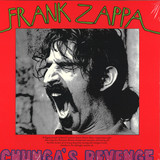
Over the last several years, the Zappa Family Trust and UMC have lovingly been restoring Frank Zappa's iconic catalog together by reissuing his classic albums on CD and pressing long-out-of-print records back on vinyl. Next up in the ongoing vinyl initiative, coming on the heels of the reissue of his enigmatic Burnt Weeny Sandwich, is Zappa's 1970 stylistically diverse and subversive album, Chunga's Revenge, which will receive a 180-gram audiophile repressing on black vinyl on July 20. Supervised by the ZFT, the record, which has been unavailable on vinyl for more than three decades, will be press pressed at Pallas In Germany and feature reproductions of the original artwork. Chunga's Revenge, although released under Frank Zappa's own name, introduced a new Mothers lineup that included former Turtles members Howard Kaylan and Mark Volman, aka Flo and Eddie, as well as keyboardist George Duke, drummer Aynsley Dunbar and multi-instrumentalist Ian Underwood. The album is one of Zappa's most eclectic efforts, encompassing the improvisational title track, the raucous guitar jam "Transylvania Boogie," the bluesy "Road Ladies" and the jazzy "Twenty Small Cigars," along with more conventional rock numbers like "Tell Me You Love Me," "Would You Go All the Way" and "Sharleena."
Classic singles like Billy Fury's 'Halfway To Paradise', Dusty Springfield's 'I Only Want To Be With You' and The Walker Brothers' 'Make It Easy On Yourself' would not have been hits without Ivor Raymonde. As their arranger, and in the case of 'I Only Want To Be With You' songwriter too, he shaped the final recordings. He decided on the orchestration and backing
vocals, chose the instruments and determined what was heard on the radio - and what record buyers bought.
'Paradise: The Sound Of Ivor Raymonde' is a long-overdue celebration of Ivor Raymonde, collecting his work as an arranger, musical director, producer, singer and songwriter. The story of a British musical great is told for the first time.
Billy Fury, Dusty Springfield and The Walker Brothers are heard. So is the only vocal performance for which Ivor Raymonde received a credit on a record label. He worked with the pre-fame David Bowie and Tom Jones. He spotted the potential of Los Bravos, steering them into the charts with 'Black Is Black'. Near-misses and obscurities made with Brit-girls Cindy Cole and
Helen Shapiro, the soulful Sonny Childe and confrontational protopsychedelic London band The Flies are as fantastic as the hits. With these and more, 'Paradise: The Sound Of Ivor Raymonde' distils the essence of the magic of Ivor Raymonde.
'Paradise: The Sound Of Ivor Raymonde' is released by Bella Union, the label run by Ivor's son, former Cocteau Twins member Simon Raymonde.
Compiled by Simon and Kieron Tyler, it is a very personal tribute to a sadly missed father. Born in 1926, Ivor Raymonde passed away in 1990. The previously untold story is revealed through a moving reminiscence written by Simon and in-depth liner notes and a track-by-track commentary by Kieron. Ivor Raymonde played on the ocean liner The Queen Mary in 1949. In the Fifties, British television viewers saw him in legendary comedian Tony Hancock's 'Hancock's Half Hour' but music was always going
to be most important - the hits with Billy Fury and Dusty Springfield in 1961 and 1963 meant he was in demand. The 26 selections balance the wellknown with collectable rarities and tracks drawn from - until now - barely heard-of singles. Each is a gem and each shows the magic of an Ivor Raymonde recording.
'Paradise: The Sound Of Ivor Raymonde' is issued on CD and 180g heavyweight double vinyl album with digital download code. The vinyl version is sequenced slightly differently for listening flow. Every track was originally issued as a single issued in mono for the pop market until 1968 / 1969. Keeping the integrity of the compilation in mind, all but four tracks appear in mono as they did originally. The masters used are those of the original singles.
It has been exactly ten years since Finders Keepers Records rst liberated Luboš Fišer's immaculate soundtrack music for Valerie And Her Week Of Wonders (Valerie A Týden Divu) from the vaults of the Barrandov Studio in Prague. As the inaugural release of an ongoing discography of previously unreleased scores from the hugely creative 'Film Miracle' that occurred during and after the Czech New Wave (CNW), this score will always retain a special place in the heart of the label as well as our listeners who consistently request an updated repress of this signi cant vinyl milestone. Having grown in status from an obscure and misunderstood socialist-era art house oddity, via the hands of risqué foreign uff merchants, to nally nd its rightful audience as a bona de surrealist cinematic masterpiece of world class standards, this 1970 lm adaptation of Vítezslav Nezval's 1935 avant-garde novella (a lm that literally cross-pollinated Max Ernst's A Week Of Kindness and Lewis Carols Alice In Wonderland) has garnered widespread critical acclaim. Inspiring ongoing generations of visual artists, musicians, writers and lmmakers - all of whom regard this truly individualistic and inimitable surrealist lm poem to be an indelible in uence - Valerie continues to impregnate their daily artistic referential fabric.
Bergsonist is the moniker of Moroccon born and NYC based Selwa Abd. 'Solyaris' follows the self-released '' and a prolific slew of releases for labels such as Styles upon Styles, Borft, and Angoisse amongst others. For Selwa her uncompromising & otherworldly, hypno technoid creations aim to capture a given moment in time, contextualising her often direct, hugely affective, & unpolished approach to production.
Selwa describes 'Solyaris' as 'an ode to the present broken education system that allowed me to sustain my dreams in NewYork', explaining, 'As an immigrant from Morrocco, I felt always fearful of the future, pressured to succeed at school. The only way I was able to channel all that anxiety was through music'.
There's a undeniable physicality to Bergsonist's work, and the idea of expunging anxiousness into her music is felt from the oft as 'Solyaris' strides into vision with it's quickening roaring pulse and scrambled explorative electronic probes. This sense of anxiety eases as layers of rhythm build - heads begin to turn down and lush minimalist swathes eventually envelope bodies in calm unity, Anxiety diverted.
'Conflict in Yeman' opens with a gambit of off-kilter percussive experiments & electronics, conveying a sense of determined urgency. Things grow more & more intricate & immediate as we progress - layers of disruption weave around a reoccurring 140BPM shuffle, anchoring Selwa's constant explorative concrete diversions.
'Former Alien who has been naturalized by a U.S Citizen' brings things down a notch - skittering drums linger below a truly haunting whispered melody, occasionally broken down by collapsed rewinds and thunderously raw in the red beat grit - to dizzying effect. Whereas previously 'Solyaris' had taken its cues from Drexciyan Detroit Electro 'Former Alien...' stands closer to a Fantastic Damage era EL-P instrumental rather than anything aimed at the floor.
The EP rolls out with 'Fidel Gastro', a structured & focused piece of Machine Funk & end of days drop cues, conjuring an effective mix of both euphoria & imminent dread.
Bergsonist cuts a unique figure for electronic music in 2018 as someone explicitly exploring the relationship between head & body music. Although undeniably more than oft aimed at the dancefloor, Selwa's work also holds an equal respect and understanding of the head & heart. From her politically loaded Track titles, to her ideologically aligned guise of 'Bergsonist', to most significantly - her music's ability to elicit a spectrum of finely tuned emotional responses within the confines of each track
Echocord's Echo Echo sub-label continues with its third releases this August, courtesy of German producer and Credo founder Alex Bau with his 'Zenstory' EP. Germany's Alex Bau has been a prominent name on the underground DJ circuit on his home turf, and further afield, for three decaces as well as racking up an impressive back catalogue as a recording artists for labels like Cocoon, CLR, Sleaze and of course his very own Credo label which has been a platform predominantly for his own material whilst welcoming the likes of Kyle Geiger, Takkyu Ishino and Electric Rescue onto the imprint also. Here though we see Bau joining the roster of Echocord's fledgling sub-label Echo Echo with a new four-track EP and taking the lead on the package is 'Clouds' with pulsating low-end tones, hissing analogue noise and dusty drums samples all flowing in unison with ethereal chords and sweeping pads. 'Contour' follows, tipping the focus over to bubbling delayed stab hits, fluttering sub bass and evolving white noise bursts throughout. The 'Prelude' of 'Zenstory' opens the flip side and as the name would suggest it's a cinematic build up to the title-track featuring tension-building, expansive atmospherics ahead of the original mix which features a thumping muted kick, stuttering atmospheric echoes and spoken word vocal tucked into the depths of the record.
currently the rediscovery of long forgotten japanese electronic, jazz and new age music is at a peak like never before. but although many re-issues already flood the record stores around the world: the large, diverse musical culture of japan still got some gems in store that are really missing.
for example, it is still quiet around the the work of japanese bass player, new-age and ambient musi-cian motohiko hamase. when the today 66-years old artist started to be a professional musician in the 1970's, he quickly gained success as a versed studio instrumentalist and started to be part of the great modern jazz isao suzuki sextett, where he played with legends like pianist tsuyoshi yamamoto or fu-sion guitar one-off-a-kind kazumi watanabe.
he also was around in the studio when legendary japanese jazz records like 'straight ahead' of takao uematsu, 'moritato for osada' of jazz singer minami yasuda or 'moon stone' of synthesizer, piano and organ wizard mikio masuda been recorded.
in the 1980's hamase began to slowly drift away from jazz and drowned himself and his musical vision into new-age, ambient and experimental electronic spheres, in which he incorporated his funky medi-tative way of playing the bass above airy sounds and arrangements.
his first solo album 'intaglio' was not only a milestone of japanese new-age ambient, it was also fresh sonic journey in jazz that does not sound like jazz at all. now studio mule is happy to announce the re-recording of his gem from 1986, that opens new doors of perception while being not quite at all.
first issued by the japanese label shi zen, the record had a decent success in japan and by some overseas fans of music from the far east. with seven haunting, stylistically hard to pigeonhole compo-sitions hamase drifts around new-age worlds with howling wind sounds, gently bass picking and dis-creet drums, that sometimes remind the listener on the power of japanese taiko percussions. also, propulsive fourth-world-grooves call the tune and all composition avoid a foreseeable structure. at large his albums seem to be improvised and yet all is deeply composed.
music that works like shuffling through an imaginary sound library full of spiritual deepness, that even spreads in its shaky moments some profound relaxing moods. a true discovery of old music that oper-ates deeply contemporary due to his exploratory spirit and gently played tones. the release marks another highlight in studio mule's fresh mission to excavate neglected japanese music, that somehow has more to offer in present age, than at the time of his original birth.
out of Stock
Last delivered 11 months ago available to reorder, subject to availability
Fresh from touring with Hugh Masekela ( The Boy's Doin' It'), Gboyega Adelaja goes into the lab to drop heavy keyboard science on his Moog and Fender Rhodes. Its Joe Sample meets the Afro Funk of BLO. With names like Jake Sollo on guitars, Mike Odumusu (BLO, Osibisa) on bass guitar and Gasper Lawal on percussion. This is a top quality, Afro-Funk, all-stars affair that shines from the inspired interventions, masterly arrangements to the sublime production.
.
Additional Notes:
I was already following Hugh Masekela when I met him, he was an outstanding musician and I knew of his collaboration with
Hedzoleh, that band brought him nearer to many of us, because he was playing authentic African melodies with the Hedzoleh
sound which was mostly percussion oriented. Yes I knew about Hugh's music before I met him. Infact when we started playing
together, he insisted that I stay with him in our three bedroom apartment, other members of the band had their own apartments,
but Hugh and myself shared the same 3 bedroom apartment'.
We were touring, under Casablanca owned by Neil Boggart, we toured as professional musicians, flying to our gigs. There was
a time when we were touring with George Clinton and Parliament Funkadelic we had two luxury buses deployed for our use.
We made many friends where ever we went to play, we met many big and popular musicians who came to watch our shows, the
Spinners came to see us in Detroit, we met Wayne Shorter of Weather Report, Freddie Hubbard, we played a gig with Herbie
Hancock at the Carnegie Hall New York City, we toured almost all the 50 States of the US.'
After a liittle hiatus of 2 years the label which was formed back in 2013 by the founder of the ground breaking hedonistic undergound parties Bohemian Grove of the industrial city of Manchester is back. The label will be bringing all kinds of electronic sounds mainly from the reaches of the cities industrial smog but some reaching further around the cosmos. This time we have debuting artist DANE WEAVER with his first release on the label.
Goatherder is the seventh album from underground London producer Kristian Craig Robinson, AKA Capitol K. This ace manipulator of audio and punk warlord of groove has crossed a tapestry of styles and approaches with his own secret compass since 1998.
Along with everything from Chinese pop to the marching band music of the United Arab Emirates in his early musical vocabulary, the influence of rave, new wave, grunge, and noise-core would collide to create a bold new sound. His early studio experiments gave birth to his debut, Sounds of the Empire (Planet Mu, 1999) built upon a heady balance of samples and live sources that placed Capitol K at the forefront of the UK's electronic scene. The follow-up, 2002's Island Row, was released via XL Records, with lead single Pillow becoming a daytime Radio 1 crossover. Nomad Junk (2005) combined Asian field recordings into a vibrant psychedelic collage, while Notes From: Life On The Wire With A Wrecking Ball (2008) paid homage to London's squats and free anarchistic artistic spaces of which K was a part for many years. Andean Dub (2012) was an exploratory South American-influenced album of heavy synth laden cumbia sound system tracks.
The last seven years have seen Capitol K's stature as a producer elevated with his establishment of the renowned Total Refreshment Studio and recording work with musicians such as the Mercury Music prize nominated The Comet Is Coming, global dance act Ibibio Sound Machine (Merge), the pan-Arabic Flamingods (Moshi Moshi), Serafina Steer and her BAS JAN project, and contemporary folk artist Rozi Plain, among many more.
This latest work was developed and recorded in his native Malta, where he built a studio in a cave (a former goat stable). K gathered bamboo instruments collected around the world, including an ancient Quecha reeded pipe (his new-found lead instrument), and various resonating vessels and percussive objects including dry fennel storks collected from Punic troglodyte sites, and atonal flutes built from fresh cut farmland reed. Ritualistic improvisations took place over a series of seasonal visits, awakening genetic memory and plant communication.
Back in London the tracks were interfaced and expanded with post-industrial machine beat and bass guitar lock down. Homage is paid to New Age synthscapes, while a Spirit Jazz overtone arrives from K's recent years as the sonic muscle behind a plethora of luminous albums born in his Total Refreshment Studio. Goatherder follows on from the 2016 collaborative incarnation LOOSE MEAT and sonically abridges 2012's Capitol K album Andean Dub.
Outside of studio production and his solo repertoire as Capitol K, Kristian has toured as guest musician with multiple bands over the last 15 years, including Brazil's Cibelle (Crammed Discs), Archie Bronson Outfit (Domino) (whom he also co-produced), and recently Du Blonde (Mute Records).
His last project, Loose Meat, was a collaborative album of poetic dance music received lots of radio play in the UK and toured across the country for a year, performing a number of festivals.
He established the Faith and Industry record label which handled his subsequent releases and through which now he releases a number of other artists that he develops and produces.
* Bristol dubstep mainstay Gemmy, a key figure in pioneering the city's electronic music identity alongside fellow 'purple trinity' producers Joker and Guido, is set to release his latest EP 'Unruly' on his World Of Wonders imprint.
* Since his acclaimed 2008 debut with 'Bk 2 The Future' on Peverelist's Punch Drunk imprint, Gemmy has released on respected labels including Pinch's Tectonic, Mike Paradinas's Planet Mu, Soul Jazz and Earwax before forming his own imprint in 2011. The new three-track EP follows on from his 'Bamboozled' EP for World Of Wonders last year and shows off Gemmy's keen talent for crafting purple wave influenced dubstep.
* 'Unruly' offers three tracks that serve as measured excursions in melody and restraint. 'Na Tek Bak Chat' is an intensely rhythmic and darkly spacious production, whilst the searing 'Sonicboom' bristles with funky, grime-inflected rhythm. The propulsive 'Stop Dat!' is a vividly expansive and minimal exploration of bass music.
* 'Unruly' brings another solid release from one of dubstep's most influential producers. World Of Wonders will release 'Unruly' on July 27th.
Brooklyn trio Forma's latest LP continues their mission to 'broaden the idea of what an electronic music ensemble can sound like.' Semblance emerged from exploratory sessions at The Schoolhouse, the Bushwick loft where members Mark Dwinell and John Also Bennett live, then was tracked at Gary's Electric studios, where their previous album Physicalist was also recorded.
Inspired by polyrhythmic composition, the human voice, and conceptual improvisation strategies, the songs are striking in their textural detail and emotional nuance, alternately synthetic and sentient, futuristic and intuitive. Incorporating flute, piano, guitar, saxophone, acoustic drums and cymbals alongside an array of synthesizers, the record persuasively demonstrates the group's unique playing abilities and fluid chemistry - attributes they credit to 'techniques we've developed to trick our electronic machines into mimicking the spontaneous character of live instruments.'
Members George and John Also Bennett also cite as an influence their recent stint in minimalist composer Jon Gibson's ensemble, performing his 1973 proto-ambient masterwork Visitations. The long- form modal piece requires restraint and deep listening to execute, qualities especially apparent in the more muted moments of Semblance, such as 'Rebreather' and 'New City.'
The group states the intent of the new album as 'to be more direct and exacting', which it is. Over half a decade spent writing and recording together has distilled Forma's hybrid electro-acoustic interplay into an attuned and astounding language, capable of articulating impossible symmetries and reflective states.
The stunning visuals of the artwork are by frequent collaborator of the group Peter Burr.
The music on this EP was conceived in China, between 1989 and 1993. The original tracks were mixed to DAT in real time, in a small neighbour-proof studio inside my apartment in Macau, a 19th floor with a view to the hurricanes. There's a small, unexpected or improbable story behind each track, some little magic fused with the local atmosphere, certainly guaranteeing their lasting authenticity 25 years later.
TAIPEI DISCO
Late 80s Guangzhou was an exotic city where the traditional past coexisted in harmony with the present and even already with the future.
I'd rather spend my weekends in Guangzhou than diving into Hong Kong consumerism - as most ex-pats in Macau did. I took a cab at the border and travelled 150 Km through chaotic roads with family and friends until reaching the hot, humid, mega South China metropolis.
We ate on street joints in the evenings, went on to a karaoke bar and ended up at Taipei Disco, the only proper club in town. All the others were inside hotels and played generic music or they were seedy, sleazy, smoky cabarets.
Taipei Disco used to be a cinema and played cantonese pop music and anglo-saxon pop/rock (that was new). The spacious dance floor was generously lighted, the atmosphere was airy and modern. Boys and girls were in the habit of dancing in pairs, one in front of the other, observing a respectful yet sensual distance. When the girl took a few steps back, the boy went along and vice versa. With legs and feet (more than the upper bodies) synchronized with the music, they never exceeded in extroversion. Cool.
I always carried a MicroComposer and a portable DAT recorder in my travels through China and weekends in Canton. Any spontaneous musical idea was imediately recorded and memorized. The MicroComposer allowed multitrack recording, which was very handy on the road. Based on the emphatic choreography of Taipei Disco's dancers, i started to compose a rhythm track while sitting at a table, with headphones, listening to Cantopop in the background. As if by magic - not a rare occasion in music - everything began fitting together. Odd as it may seem, the track ended up sounding more germanic (Kraftwerkian) than Cantonese pop.
The story ends in a circle: the cantonese DJ at Taipei Disco, whom i used to ask to play certain records, wanted to play my music at the disco when it was basically only just a rhythm track and little else. From a cupboard under his set up he took out a battered keyboard (unrecognizable brand) and invited me to play over the track with the available sounds on the keyboard. The circle was complete, with Cantonese clubbers happily dancing forwards and backwards, as if it were another Cantopop hit.
I didn't get payed but the house offered us free ice cream cups in which little Portuguese flags were sticked.
The track would be finished later, in studio, with vocoder strings ensemble and synth solos.
TAIPEI DISCO (LIVE)
The live version of 'Taipei Disco' was recorded during a live set at the China Pop venue, in Macau, 1993. China Pop was a rock club built in the ample space of an old fishing warehouse, located in the labyrinthic Inner Harbour area. It was decorated with large Mao Zedong and Cultural Revolution posters and memorabilia and had a unique atmosphere, fusing Pop Art with film noir. We began our performance at 1AM, pretty early for Macau's nightlife standards. We were lucky. An audience showed up. And in Macau there were always several friends among the audience, which tranformed a musical performance into a relaxed party.
The atmosphere was particularly surreal on that night. The front row was dominated by French Crazy Horse dancers, a sort of Oriental Moulin Rouge. The girls had finished their last performance of the evening at the Crazy Horse and were still energized from their show. During our performance, right in front of us and perfectly synched, we could hear the famous irreverent screams of can-can dancers. You always had to expect the unexpected in Macau.
RED MAMBO (IMPROMPTU)
I was familiar with the Portuguese-speaking African countries well before having lived in China. I found myself returning several times to one in particular, always attracted by its magic and very distinct, identitary culture and music: Cape Verde.
During the early years of DWART a lot of the inspiration for drum machine rhythms (Roland's TR series) came from African music, especially from new musical trends that gained full autonomy with Cape Verde's independence from Portugal, as was the case with funaná.
I had the privilege of having known and befriended some of the greatest Capeverdian composers, musicians and singers during the 70s and 80s, such as Bana, Luís Morais, Cesária Évora, Paulino Vieira, Chico Serra, Tito Paris, and historical bands such as Bulimundo (ambassadors of funaná) and Os Tubarões (great innovators of morna, coladera and funaná, with the sonic impact of an afro-beat big band).
When Luís Filipe de Barros began playing Os Tubarões for the first time on Portuguese radio, that was the turning point for African music in Portugal. The 'Tabanca' album was so widely heard and talked about that it quickly got a Portuguese release through one of the big labels of the time.
The mystic of this band from the Santiago Island would reach the East. Os Tubarões played to a packed room in Macau in 1992, and after the bombastic gig we arranged a dinner and party at my place.
We ate and drank generously and the moment came for a jam session at the small studio on the 19th floor. Because Os Tubarões didn't all fit in the studio, we recorded an impromptu with only three of the musicians: Tótó Silva (electric guitar), Mário Russo Bettencourt (bass) and Zeca Couto (piano). And there we were improvising without barriers, suddenly detached from cultural roots, labels and constraints, a truly unique moment. The track is now being released exactly as it was recorded, imbued with the real communion between the musicians. And it could only be titled 'Red Mambo'. I wish to dedicate it to the memory of Ildo Lobo and Jaime do Rosário, founders of Os Tubarões, sadly and too soon departed from the land of music.
Following the quickly sold out limited edition red coloured vinyl that was exclusively released for Record Store Day 2017 Space Age Recordings are pleased to announce a new vinyl pressing of Spacemen 3's fourth and final studio album "Recurring'. This album is again pressed on heavyweight 180 gram vinyl with printed card inner sleeve but this version is the standard black vinyl version.
The Soul Brothers Inc. hail from Houston, Texas and were likely one of the most important funk/soul groups in the city in the late 1960s until they broke up in the mid '70s. Tramp released The Story of the Soul Bros. Inc. in late 2010, now it is time to pick two lesser known songs for release on 45rpm single. Both sides are equally great, especially Put It On Him with its heavy drums and and wah wah guitar throughout the song.
If you dig this 45rpm single release feel free and check the full-length album of the Soul Brothers Inc., released back in October 2010. (The Story of the Soul Bros. Inc., TRCD/LP-9009
Parallel Berlin head Daniela La Luz returns to her home away from home, HOUSEWAX with a few friends to rework her modern classic, "Did You Ever".
Originally released in 2014 "Did You Ever" was an instant classic amongst decerning house heads, but it was when Detroit legend, Moodymann dropped it as closing track on his DJ Kicks compilation the year later. The light well and truly spun onto La Luz and her sublime approach of house and techno.
Now to kick off 2018 Housewax have invited Virgo 4, Dah Ruh and Cinthie to offer their spin on "Did You Ever". Together they each offer 3 unique takes from house to deep techno, yet managing to stay true to the soulful flavor of the original.