Lucky Pepper is a spicy french old school rock"n"roll band led by Geoffrey Lucky Pepper. Add some mississippi/swamp bluesflavor, a spontaneous big energy and a vintage SciFi comicsaesthetic to the meal and there it is! After the release of his EP "Rock"n"RollAttack!" in 2019, Lucky Pepper releasesits new album "Easier Said Than Done"in 2023. 12 original tracks with raw energy,mixing swamp blues and rock"n"roll.
After almost 25 years a new studio album of the German prog rock legend in original lineup! Agitation Free was one of the leading representatives of German experimental rock
music in the early 1970s. The Berlin band developed long, for that time unusual, free
instrumental improvisations from the end of 1967. They achieved cult status as early as
1972 with an independent mixture of improvised rock paired with electro, ethno, jazz and
trance elements.
Extensive live activities gave the band a steadily increasing level of recognition throughout
Europe. For example, the group performed in the cultural program of the Olympic Games
in Munich in the summer of 1972, toured France for two months in early 1973, performed
at the "German Rock Super Concert" in Frankfurt in May, produced the second album "2nd"
and then went on tour through France and major German cities. In 1974, the band began
to show signs of fatigue, which led to their temporary breakup at the end of the year after
a farewell concert.
Although a number of albums (with recordings from 1972 to 1974) were released after the
group's breakup and the studio album "River of Return" was released in 1999, it took
almost 35 years for the original band to reunite for concerts. In February 2007, Agitation
Free, with the original lineup from 1974, gave a series of concerts at Tokyo's "Shibuya
O'West."
In retrospect, it became clear that the experimental circle Agitation Free was one of the
important bands of the "Berlin School" and furthermore a career springboard for several
German musicians. Christopher Franke, for example, helped the band Tangerine Dream
achieve worldwide recognition. Michael Hoenig worked with Klaus Schulze and Tangerine
Dream before he became known as a film composer in Hollywood after a solo album
(among other things, the film music for the blockbuster "9 1/2 Weeks" with Kim Basinger
and Mickey Rourke). Axel Genrich moved to Guru Guru, Burghard Rausch became a
founding member of Bel Ami. Gustl Lütjens, toured with Shirley Bassey and Nena and later
found a large audience with his new age band Living Mirrors, especially in the USA. Lutz
"Lüül" Ulbrich joined Ashra, worked with ex-Velvet Underground singer Nico, produced
solo records in addition to theater music, and has enjoyed success with the 17 Hippies since
the late 1990s.
In the line-up Michael Hoenig (keyb, syn, el. perc), Burghard Rausch (dr, el. per), Lutz GrafUlbrich ((git, acc. git, bj), Gustl Lütjens (git acc. git, vocals) and Daniel Cordes (b, syn) the
new studio album "Momentum" was recorded.
After almost 25 years a new studio album of the German prog rock legend in original lineup! Agitation Free was one of the leading representatives of German experimental rock
music in the early 1970s. The Berlin band developed long, for that time unusual, free
instrumental improvisations from the end of 1967. They achieved cult status as early as
1972 with an independent mixture of improvised rock paired with electro, ethno, jazz and
trance elements.
Extensive live activities gave the band a steadily increasing level of recognition throughout
Europe. For example, the group performed in the cultural program of the Olympic Games
in Munich in the summer of 1972, toured France for two months in early 1973, performed
at the "German Rock Super Concert" in Frankfurt in May, produced the second album "2nd"
and then went on tour through France and major German cities. In 1974, the band began
to show signs of fatigue, which led to their temporary breakup at the end of the year after
a farewell concert.
Although a number of albums (with recordings from 1972 to 1974) were released after the
group's breakup and the studio album "River of Return" was released in 1999, it took
almost 35 years for the original band to reunite for concerts. In February 2007, Agitation
Free, with the original lineup from 1974, gave a series of concerts at Tokyo's "Shibuya
O'West."
In retrospect, it became clear that the experimental circle Agitation Free was one of the
important bands of the "Berlin School" and furthermore a career springboard for several
German musicians. Christopher Franke, for example, helped the band Tangerine Dream
achieve worldwide recognition. Michael Hoenig worked with Klaus Schulze and Tangerine
Dream before he became known as a film composer in Hollywood after a solo album
(among other things, the film music for the blockbuster "9 1/2 Weeks" with Kim Basinger
and Mickey Rourke). Axel Genrich moved to Guru Guru, Burghard Rausch became a
founding member of Bel Ami. Gustl Lütjens, toured with Shirley Bassey and Nena and later
found a large audience with his new age band Living Mirrors, especially in the USA. Lutz
"Lüül" Ulbrich joined Ashra, worked with ex-Velvet Underground singer Nico, produced
solo records in addition to theater music, and has enjoyed success with the 17 Hippies since
the late 1990s.
In the line-up Michael Hoenig (keyb, syn, el. perc), Burghard Rausch (dr, el. per), Lutz GrafUlbrich ((git, acc. git, bj), Gustl Lütjens (git acc. git, vocals) and Daniel Cordes (b, syn) the
new studio album "Momentum" was recorded.
The A side of this new 45 from Colemine records can be described as sophisticated lounge-pop for dinnertime at a hip debutante ball in 1962. Featuring a track off of Durand Jones & The Indications third LP, Too Many Tears depicts a story of heartbreak, with Aaron Frazers silky falsetto mournfully painting a scene of betrayal. The B-side has become a theme for a whole new generation of sweet soul lovers. Featuring Y La Bomba, a latin indie alternative/experimental band led by singer-songwriter and guitarist Luz Elena Mendoza, this track is a homage to lowriders everywhere. So we are proud to present this heater of a 45. Let's cruise..
Sea Glass Blue Vinyl. The A side of this new 45 from Colemine records can be described as sophisticated lounge-pop for dinnertime at a hip debutante ball in 1962. Featuring a track off of Durand Jones & The Indications third LP, Too Many Tears depicts a story of heartbreak, with Aaron Frazers silky falsetto mournfully painting a scene of betrayal. The B-side has become a theme for a whole new generation of sweet soul lovers. Featuring Y La Bomba, a latin indie alternative/experimental band led by singer-songwriter and guitarist Luz Elena Mendoza, this track is a homage to lowriders everywhere. So we are proud to present this heater of a 45. Let's cruise..
»Tropic of Capricorn« is the second album by Lawrence English and Werner Dafeldecker. Based on field recordings made by the prolific Room40 owner that were subtly but decisively altered with electroacoustic techniques through the German improv legend, these two long-form pieces blur the lines between acoustic ecology and aesthetic interventions, concrete local sound worlds and boundary-defying art. They put a focus on our relationship with nature as listeners as much as they call into question where nature ends and human perception begins. They are deeply confusing, disorienting perhaps, in the most beautiful ways.
English recorded the material that form the basis of the duo’s Hallow Ground debut on two different field trips. One led him from the Western coast to the Pilbara region in the North of the country called Australia, the other to the central desert into the lands of the Arrernte people. »These are vast spaces, and in some respects they shun contemporary ideas of civilisation which seek not to listen to the country,« says English. When recording the soundscapes, the artist put a focus on the residues of failed colonial aspirations. »The buildings and objects that remain from the failed cattle pastures and other endeavours create uneasy sound worlds of their own,« he says of the regions that are also places of extraction, especially the heavily mined Pilbara. »There is a distant drone of industry in even the most remote of places; an unsettled sense of heavy breath on the land.« He brought home a document of natural reclamation in time.
The rich source material was then given to Dafeldecker. Spatialising the recordings with transducers applied to different surfaces such as wood, stretched animal skin, glass, or metal surfaces and also re-recording parts of the recordings, he created discrete events that were inserted into, or rather enmeshed with English’s recordings. You’ll hear plenty of birdsong, insect noises and the sound of rain during these 39 minutes; the sounds of a life you can tap into if you tune into your environment. But there are also other things, things that are impossible to categorise even after repeated listens and that call into question whether or not those were really birds, insects, or the sound of rain in the first place. What »Tropic of Capricorn« invites its listeners to listen beyond the preconceived notions of how nature is supposed to be represented in sound and to instead embrace the immediacy of the sensation.
An artist as imaginative and unique as Ana Mazzotti doesn’t come around often. Dubbed a “super-musician” by fellow Brazilian virtuoso Hermeto Pascoal, Mazzotti’s short but rich musical career culminated in just two studio albums: Ninguem Vai Me Segurar (1974), and Ana Mazzotti (1977). Outside circles of Brazilian funk aficionados, these two gems of spellbinding samba-jazz, lysergic funk and trippy bossa have remained relatively obscure. This was partly as a result of Mazzotti’s premature death (she lost her battle with cancer in her mid-thirties), but also due to financial restraints and the prejudice she faced as a female songwriter in a fundamentally sexist society.
Born in Caixas, in Brazil’s Rio Grande do Sul municipality, Mazzotti began to play the accordion aged five, before moving with prodigious ease onto the piano. By the age of twelve she was already conducting her convent school’s choir, and at twenty-one she led her city’s premier chorus, the Coral Bento Goncalves. When rock and roll hit South America in the sixties, a young Mazzotti was one of the early adopters, fronting various guitar groups including an all female Beatles cover band, and an eclectic, eight-piece psychedelic group Desenvolvemento. Before moving to Sao Paulo to start her career proper, Mazzotti met drummer, producer and fellow music educator Romido Santos, who she would later marry. Romildo introduced Mazzotti to jazz, and music by the likes of Chick Corea and Hermeto Pascoal who she would later befriend and perform with.
In 1974 Mazzotti recorded her first album Ninguem Vai Me Segurar (1974), enlisting the in-demand arrangement talents of Azymuth’s original keyboard maestro Jose Roberto Bertrami who co-wrote several of the tracks and plays organ, piano and synthesizers on the album. It also features Azymuth’s bassist Alex Malheiros and percussionist Ariovaldo Contestini, with Romildo Santos who produced the album on drums. Recorded in Estudio Haway around the same time Azymuth recorded their debut album there, it’s no wonder the samba jazz-funk pioneer’s distinctive aesthetic is present throughout, and Mazzotti’s sensational compositions are made even more beautiful for it.
Kicking off with the swirling samba-jazz-dance masterpiece ‘Agora Ou Nunca Mais’, the album hosts several groove-heavy Brazilian cult-classics including ‘Roda Mundo’ and ‘Eu Sou Mais Eu’. Deeper moments come in the form of the alluring future soul synth sounds on ‘Bairro Negro’ and ‘Sou’, and Mazzotti’s tender, hallucinatory version of ‘Feel Like Making Love’ (made famous by Roberta Flack) perfectly reflecting the idiosyncratic genius Mazzotti achieved with Bertrami’s visionary arrangements, and Romildo’s impeccable production approach.
Far Out Recordings is proud to present the official reissue of this cult favourite Brazilian treasure. Remastered and pressed to 180g vinyl, Ninguem Vai Me Segurar (1974) will be available on vinyl LP, CD and digitally from 13th September.
out of Stock
Last delivered 8 months ago available to reorder, subject to availability
Reissue of the highly sought-after 7” from 1979 by Chicago
reggae outfit Gypsy Fari.
Gypsy Fari was a project born in the south side of Chicago
after a chance meeting between St Kitts expat Leroy Webster
and local music grad Kevin Coleman. The pair set out to blur
the boundaries of genre with their unique brand of music,
spearheaded by Webster’s Caribbean roots and fused with
the soul and blues the midwest is famous for.
A striking stand-out of the band’s repertoire comes via their
debut recording, laid down at Curtis Mayfield’s legendary
Curtom Studios. The EP opens with Chi-Town Reggae - a
super-charged blend of reggae and disco, led by Websters
infectious vocal, steeped in soul and powered by a relentless
rhythm section. Hail Jah follows closely, written on the hilltops
of the outskirts of Kingston, Jamaica, it’s a deadly roots reggae
missile that pays homage to Websters beginnings.
Once dubbed by a local news outlet “Gypsy Fari are to
Chicago reggae what Muddy Water is to Chicago blues” -
now remastered, repackaged and made available again for
the first time since its initial release
out of Stock
Last delivered 2 years ago available to reorder, subject to availability
It was not only in Brittany that progressive rock bands went under the radar in the 1970s This was the case with the New Zealand quintet Dragon, born in 1972 in Auckland. Author of two albums released by Vertigo, certainly appreciated by amateurs, the group unfortunately did not meet with the expected success in its country of origin, which led it to emigrate to Australia from 1975. From there, they would spin the perfect love with the kangaroo public and the rest of the world in the 80s. Since then, between splits and reformations, they are still touring! But let's come back to this second album "Scented Gardens For The Blind" published for the first time in 1975 and today emerged from the shadows by the Replica and Musea labels. Note that from the first title, they try to get out of the shackles of progressive pop with Ivan Thomson's keyboards which push the combo to venture towards very English lands that the Zombies then Argent knew how to borrow. It is both marked by the 70s and a real desire to seduce the charts. What they did next in Australia. For the time being, on most of the album, the work remains a paragon of progressive rock marked by long guitar solos and beautiful flights of keyboards. Masterfully reissued.
Nick Leon, Swimful, DJ Znobia. One of the first artists from outside of Africa to sign to Hakuna Kulala, WULFFLUW XCIV brings his borderless productions to the label's ongoing Whitelabel series following a slew of dancefloor agitations from T5UMT5UMU, Menzi & Scratchclart, and others. "Toxica EP" builds on the mutant fusion of 2020's acclaimed "Ngoma Injection", stripping back the woozy psychedelia and chromium ambience and replacing it with pure soundsystem pressure. 'Take a Ride' bends acid techno machinery around rubbery East African rhythms, anchoring block party hedonism with a 4/4 bump that wouldn't be out of place in Kreuzberg and vocal shakes straight from São Paulo. But this isn't a mindless mashup of aesthetics, its a conversation with the world's fringe agitators, using stylistic and rhythmic strokes to highlight commonality, not exclusivity. Hakuna Kulala's own Chrisman appears on 'Tetemeka', and the two producers adapt the syrupy tarraxinha inversions the Congolese engineer perfected on last year's "Makila" full-length. Low, resonant gqom atmospheres underpin the entire track, but WULFFLUW XCIV's squeaky toy synths prevent it from slipping into darkness. Elsewhere 'Kluck' distorts the timeline completely, wedging flute-led Latin American tribal sounds into a riddim vs. trap superstructure, and 'Exp' sublimes speed dembow into delirious trance and minimal techno vapors. The boundaries between dance subgenres are slowly dissolving, and WULFFLUW XCIV's digital-era intermixture sounds like the cyberpunk carnival we're all desperately in need of
Introducing Count Buffalo! An ambitious work that explores the sound of the next generation with innovative arrangements and outstanding performances. A new era opens here.
Akira Ishikawa, a drummer who led groups such as Midnight Sons, Genchers, and Count Buffaloes and has released countless works to the world. This work, the earliest recording under the name of Count Buffalo, features Ken Muraoka, Hiromasa Suzuki, Kiyoshi Sugimoto, Masahiko Sato, and others. Hip jazz-rock “Cougar” led by disquieting strings, “Greensleeves” with a hint of avant-garde, his own interpretation of “Hey Jude”, and a dry jazz-rock version of a folk song such as “Makouta”. , so dense that you don’t even have time to breathe. It is one of the most important works in the history of Japanese jazz-rock, not only in content, but also considering the era of 1969.
text by Yusuke Ogawa (UNIVERSOUND/DEEP JAZZ REALITY)
Guachinche Records is a label that has taken on board the best of the Andalusia and Tenerife breakbeat scenes. Led by the experienced groups Mutantbreakz and Bubble Couple, the label is known for its good taste, variety and good judgement when it comes to selecting the music that makes up its catalogue. All those years experience of broken beats have inevitably led to the release of this brilliant GUACH001 The label first vinyl offering is a compilation album that offers a perfect summation of its essence and quality.
The record opens with a sure-fire hit by the legendary Rasco, who, together with Bubble Couple, has created Old Groove. Featuring piano and the kind of baselines to stick in the memory and make your hair stand on end, it's a track that many of you have been waiting to get hold of in vinyl format. The trip continues in the hands of Suga 7, who offers a true taste of the Canary Islands on his classy track Hideaway, a sheer delight with the high tempos and playful basses so beloved of the Islanders.
We then move on to the B-side, which features an absolute gem of a sound by the duo Mutantbreakz. A musically elaborate track with quality touches and passages of guitar, piano and vocals, it grabs you right from the start of a sonic trip that will prepare you for the final denouement Raverman brings things to a close with the epic Sayonora and a slice of acid electro-trance. This striking ending rounds off the kind of record that doesn't come along every day.
Mastered by Simon Davey at the Exchange Vinyl in London.
out of Stock
Last delivered 14 months ago available to reorder, subject to availability
The drums of fire scorch the age. With his young and talented Sound Limited, Takeshi Inomata heralds the arrival of the golden age of jazz rock in high spirits. Drummer Takeshi Inomata, who led the Japanese jazz scene with his precise stick work and musicality with an eye on the times, formed Sound Limited at the end of the 1960s, influenced by the brass rock music that was flourishing at the time. He said, “I wanted to fuse jazz and rock and bring together young musicians to play music with vitality. I want this group to be a group with a large scale that is not confined to the small frame of modern jazz,” he said, launching a new axis. Their first album, “The Sound of Sound Limited” (1970), became their masterpiece. It is a masterpiece that is full of energy and enthusiasm throughout the album, starting with “Theme~Mustache,” which has become one of the most beloved and iconic songs of the band.
After her album with producer High John on MPM in 2019 and collaborations with agajon, Àbáse, KUOKO, Cap Kendricks and Move 78, soul singer douniah returns with her debut solo project!
douniah imparts her debut solo project "A Lot, Not Too Much" to an unexpecting audience. Thoughtfully, the singer-songwriter invites us to embark on our own saviour. The collection of songs is steeped in artistic and emotional integrity. Production was ledand executed by Dhanya Langer, one half of band project Modha, and producer of JujuRogers' 2019 album "40 Acres N Sum Mula". Written amid the pandemic, this piece is aneffort of immense proportions - experimenting with her sound in time, wading through spirals of arduous personal challenges. 'A first impression of how my journey sounds.'Agadir-born and Hamburg-raised, douniah engages in the practice of interpreting herspirit, impressively, in German, Darija and English. We find here, a body of work that threads together the tenets of free-form poetry and romanticism, backdropped by neo-experimental jazz tendencies. In euphony, a worldly array of instruments act insymbiosis to carry us through "A Lot, Not Too Much". douniah's voice is one to fall into; her message is enunciated with every word, delivered delicately with an inventory ofriffs and ranged tone. The utilisation of choppy, note-like, freestyles bridges the EP's strong singles, into a rhapsodic whole.
out of Stock
Last delivered 2 years ago available to reorder, subject to availability
The phoenix symbolizes a new beginning. The fire burns off the last vestiges of the past as the bird spreads its wings and takes flight into the future. The Polyphonic Spree harness the flames of rebirth on their 2023 full-length offering, Salvage Enterprise. Led by frontman, founder, producer, multi-instrumentalist, and visionary Tim DeLaughter, the group embark on their next season. They're reverent of their history, yet they're also ready for an even brighter tomorrow. "Across all of the music I've done, lyrically there's a sense of desperation and a moment of convincing myself I'm going to make it through regardless of how the music dresses up," notes Tim. "On this one, I struggled with the amount of vulnerability I was experiencing and was willing to share both musically and lyrically, but ultimately decided to let it play out. Now that it's done, I'm happy with the dance between the two. It's a `rising-from-theashes' record." Salvage Enterprise beckons complete immersion. Opener "Galloping Seas (Section 44)" affixes softly strummed acoustic guitar to an orchestral hum as Tim urges, "Hold on through the galloping seas." "We're all galloping through rough waters," he says. "I tried to describe the process as well as I could and encourage people to keep their heads above the storm and the waves. Ride it out. It's going to be okay. It starts off very calm and introspective, and you can envision where it's going." Flute echoes over nimbly plucked guitar during "Shadows On The Hillside (Section 48)" as keys twinkle. A glorious harmony amplifies the nostalgia of "Hop Off The Fence (Section 49)." It concludes with "Morning Sun, I Built The Stairs (Section 52)." Optimism strains through his hopeful intonation, "I learned to fly, the more that I become a new reason, I want to try," uplifted by boisterous horns and cinematic strings. It crashes into an Ennio Morricone-style crescendo bolstered even higher by operatic vocals. "There is an arc of leaving the world behind, stripping your old self away, and becoming new again," he offers. "You're shedding off this old world, and you're heading into the future. It's an epic ending. You've made it. You're going to be alright." In the end, The Polyphonic Spree are the soundtrack to that light at the end of the tunne
Ancient Infinity Orchestra is a 14-member jazz ensemble led by double-bassist and composer Ozzy Moysey, based in the bustling creative city of Leeds in the North of England – home to one of the most innovative and community-based jazz scenes in the UK. Saxophonist Matt Cliffe who also performs with Matthew Halsall is a key member and the rotating line-up which includes drums, two bassists, keyboards, harp, violin, cello, two tenors, alto, oboe, flute and percussion. "River of Light’ drinks deep from the well of spiritual jazz and is especially inspired by the soulful sounds of Pharoah Sanders, Alice and John Coltrane but also channels a certain Northern sensibility that can be heard in the music of Matthew Halsall or Alabaster de Plume. Melodic, warm and honest this is music that is happy to wear its heart on its sleeve.
The phoenix symbolizes a new beginning. The fire burns off the last vestiges of the past as the bird spreads its wings and takes flight into the future. The Polyphonic Spree harness the flames of rebirth on their 2023 full-length offering, Salvage Enterprise. Led by frontman, founder, producer, multi-instrumentalist, and visionary Tim DeLaughter, the group embark on their next season. They're reverent of their history, yet they're also ready for an even brighter tomorrow. "Across all of the music I've done, lyrically there's a sense of desperation and a moment of convincing myself I'm going to make it through regardless of how the music dresses up," notes Tim. "On this one, I struggled with the amount of vulnerability I was experiencing and was willing to share both musically and lyrically, but ultimately decided to let it play out. Now that it's done, I'm happy with the dance between the two. It's a `rising-from-theashes' record." Salvage Enterprise beckons complete immersion. Opener "Galloping Seas (Section 44)" affixes softly strummed acoustic guitar to an orchestral hum as Tim urges, "Hold on through the galloping seas." "We're all galloping through rough waters," he says. "I tried to describe the process as well as I could and encourage people to keep their heads above the storm and the waves. Ride it out. It's going to be okay. It starts off very calm and introspective, and you can envision where it's going." Flute echoes over nimbly plucked guitar during "Shadows On The Hillside (Section 48)" as keys twinkle. A glorious harmony amplifies the nostalgia of "Hop Off The Fence (Section 49)." It concludes with "Morning Sun, I Built The Stairs (Section 52)." Optimism strains through his hopeful intonation, "I learned to fly, the more that I become a new reason, I want to try," uplifted by boisterous horns and cinematic strings. It crashes into an Ennio Morricone-style crescendo bolstered even higher by operatic vocals. "There is an arc of leaving the world behind, stripping your old self away, and becoming new again," he offers. "You're shedding off this old world, and you're heading into the future. It's an epic ending. You've made it. You're going to be alright." In the end, The Polyphonic Spree are the soundtrack to that light at the end of the tunne
The phoenix symbolizes a new beginning. The fire burns off the last vestiges of the past as the bird spreads its wings and takes flight into the future. The Polyphonic Spree harness the flames of rebirth on their 2023 full-length offering, Salvage Enterprise. Led by frontman, founder, producer, multi-instrumentalist, and visionary Tim DeLaughter, the group embark on their next season. They're reverent of their history, yet they're also ready for an even brighter tomorrow. "Across all of the music I've done, lyrically there's a sense of desperation and a moment of convincing myself I'm going to make it through regardless of how the music dresses up," notes Tim. "On this one, I struggled with the amount of vulnerability I was experiencing and was willing to share both musically and lyrically, but ultimately decided to let it play out. Now that it's done, I'm happy with the dance between the two. It's a `rising-from-theashes' record." Salvage Enterprise beckons complete immersion. Opener "Galloping Seas (Section 44)" affixes softly strummed acoustic guitar to an orchestral hum as Tim urges, "Hold on through the galloping seas." "We're all galloping through rough waters," he says. "I tried to describe the process as well as I could and encourage people to keep their heads above the storm and the waves. Ride it out. It's going to be okay. It starts off very calm and introspective, and you can envision where it's going." Flute echoes over nimbly plucked guitar during "Shadows On The Hillside (Section 48)" as keys twinkle. A glorious harmony amplifies the nostalgia of "Hop Off The Fence (Section 49)." It concludes with "Morning Sun, I Built The Stairs (Section 52)." Optimism strains through his hopeful intonation, "I learned to fly, the more that I become a new reason, I want to try," uplifted by boisterous horns and cinematic strings. It crashes into an Ennio Morricone-style crescendo bolstered even higher by operatic vocals. "There is an arc of leaving the world behind, stripping your old self away, and becoming new again," he offers. "You're shedding off this old world, and you're heading into the future. It's an epic ending. You've made it. You're going to be alright." In the end, The Polyphonic Spree are the soundtrack to that light at the end of the tunne
JD McPherson presents what he calls "A truly romantic garage rock record". Undivided Heart & Soul produced by Dan Molad (Lucius) & McPherson, and developed largely in the studio (that studio being the historic RCA Studio B in Nashville), carries a sense of immediacy and irreverence. Putting the hands of Dan Molad on the wheel of the record ensured that the music didn't take too many expected turns. "Having toured with Lucius and befriended Dan, I knew he was the guy to push my buttons and challenge me to try new things. He's a tireless worker. He's constantly tinkering away on something... and music just falls out of him." The vintage recording equipment and instruments still housed in RCA Studio B greatly informed the direction of the record. "Each night, at the end of tracking, someone would invariably say, "You wanna put vibes on this?", speaking of the old RCA Vibraphone. I mean, you can hear THAT vibraphone on Roy Orbison's "Crying"... we couldn't keep our hands off of it. It guided some of the songs into some strange and wonderful places. "Lucky Penny" took such a cool turn once Ray (Jacildo, keys) added some to it. We wrote several songs on the piano that Floyd Cramer played "Last Date" on. We were soaking up so much of the phantom energy in that room, it led to some incredible sonic territory." "Most folks know
Desroi and Robin Tasi, techno enthusiasts from the Ruhr area, connected through a chat group where they shared 90s and early 2000s music. This led to the creation of the "Furious Funk" label. The record includes Robin Tasi's rhythmic and tribal A1,Desroi's energetic galloping baseline A2, the nostalgic and engaging vocal dialogue in B1 "Bird Saliva" by Desroi, and Robin Tasi's ambient and gritty B2 track, "Atmo."
out of Stock
Last delivered 2 years ago available to reorder, subject to availability
Coral Red Vinyl. Frank Zappa was instrumental in getting former Mothers Of Invention member Lowell George and his new band, Little Feat, featuring Roy Estrada, RIchie Hayward and Billy Payne, a contract with Warner Bros. Records. The eponymous first album delivered to Warner Bros. was recorded mostly in August and September 1970, and was released in January 1971. Despite good reviews of their sophomore effort, lack of commercial success led to the band splitting up, with Estrada leaving to join Captain Beefheart's Magic Band. In 1972 Little Feat reformed, with bassist Kenny Gradney replacing Estrada. The band also added a second guitarist in Paul Barrere, who had known George since they attended Hollywood High School in California, and percussionist Sam Clayton (brother of session singer Merry Clayton and the brother-in-law of the jazz saxophonist Curtis Amy) and as a result the band was expanded from a quartet to a sextet. This new lineup radically altered the band's sound, leaning toward New Orleans funk. The group went on to record 'Dixie Chicken' (1973) - one of the band's most popular albums, which incorporated New Orleans musical influences and styles - as well as 'Feats Don't Fail Me Now' (1974), which was a studio-recorded attempt to capture some of the energy of their live shows. This recording was made in between the 'Dixie Chicken' and 'Feats Don't Fail Me Now' albums. Recorded live in Denver on July 20, 1973 at Ebbet's Field.
Coral Red Vinyl. Frank Zappa was instrumental in getting former Mothers Of Invention member Lowell George and his new band, Little Feat, featuring Roy Estrada, RIchie Hayward and Billy Payne, a contract with Warner Bros. Records. The eponymous first album delivered to Warner Bros. was recorded mostly in August and September 1970, and was released in January 1971. Despite good reviews of their sophomore effort, lack of commercial success led to the band splitting up, with Estrada leaving to join Captain Beefheart's Magic Band. In 1972 Little Feat reformed, with bassist Kenny Gradney replacing Estrada. The band also added a second guitarist in Paul Barrere, who had known George since they attended Hollywood High School in California, and percussionist Sam Clayton (brother of session singer Merry Clayton and the brother-in-law of the jazz saxophonist Curtis Amy) and as a result the band was expanded from a quartet to a sextet. This new lineup radically altered the band's sound, leaning toward New Orleans funk. The group went on to record 'Dixie Chicken' (1973) - one of the band's most popular albums, which incorporated New Orleans musical influences and styles - as well as 'Feats Don't Fail Me Now' (1974), which was a studio-recorded attempt to capture some of the energy of their live shows. This recording was made in between the 'Dixie Chicken' and 'Feats Don't Fail Me Now' albums. Recorded live in Denver on July 20, 1973 at Ebbet's Field.
More Fun Than An Open Casket Funeral is Accused's second full-length release from 1987 The Accused created a genre of music called "splatter- rock" which was screaming, speeding punk/ metal. Led by their blood thirsty, knife- wielding, avenging mascot, Martha Splatterhead, The Accused plays an original style of ghoulishly fused punk and thrash metal. Their lyrics range from politics to horror, death & destruction. First reissued on Unrest Records back in 2011, More Fun Than An Open Casket Funeral has been out-of-print on wax for years and now due to popular demand it's being repressed on vinyl and packaged in a gatefold sleeve with a huge 60x60cm poster!
Dirty Electronics (John Richards) and Oliver Torr met in a bar in Prague. One thing led to another. After collaborating at Prague Quadrennial to create a sound-installation in a repurposed ice-hockey arena, gigs followed. They vowed to make an album together, which
finally happened in the geographical space between Prague, London, Brno and Athens. The album brings together disparate spaces and connected artists as a distorted memory trace.
Improvised group scenarios and abrupt electronic episodes are placed side-by-side in a brutal marriag
Matt Tolfrey’s Leftroom imprint makes a triumphant return here with a remix package featuring Mathew Jonson, Silverlining, Maher Daniel and Sakro, all reworking cuts from his 2020 ‘All Shapes And Different Sizes’ LP. Across the past two decades the UK’s Matt Tolfrey has been at the forefront of the underground House and Techno scene, releasing material on many seminal labels in the industry such as REKIDS, Cocoon, Music For Freaks, Crosstown Rebels, mix compilations for fabric and Classic, and of course his very own Leftroom which returns here following its last vinyl release back in 2020 from Detroit’s Norm Talley and Ataxia.
Up first on remix duties is Canadian machine maestro Mathew Jonson who remixes ‘How It’s Gonna Be’ featuring Tim Fuller, offering up his signature twitchy synth work, robust analogue drums and cinematic leads running alongside the original’s hooky vocal lines. Maher Daniel steps up next to remix ‘Feel The Same’, opting for an intricate electro tinged drum workout, wavey subs and hypnotic vocal chants.
London’s Silverlining then reworks ‘Fantasy’ featuring Shaun J. Wright next, diving deeper via a skippy, swinging drum groove, airy dubbed out chords, snaking bass groove and soulful, intricately processed vocal licks. Lastly to round things out, Sakro remixes ‘Under The Skin' featuring Lil Mark, the Mexican artist reshapes the original with his unique drum-led, groove driven style, fusing crisp snares and shuffled percussion, alongside an amalgamation of choppy bass hits, bleepy synths and sweeping atmospherics.
out of Stock
Last delivered 7 months ago available to reorder, subject to availability
"For every copy of one of the great and collectible rock albums one finds on Peru's stalwart MAG label, one has a dashed dream about finding Tarkus, one of South America's whispered hard rock holy grails. I've never found one, and I've been looking for the better part of two decades. It's a fiery set of Black Sabbath style jamming and worthy of its praise." - Eothen Alapatt aka Egon (Now Again) The Peruvian-Argentinian band Tarkus was only together for six months and recorded only one album, but the record's unprecedented sound and the limited number of copies released made it legendary for fans of hard rock in Latin America. Recorded under the influenced by the Argentinian groups Almendra, Pappo, Manal and Led Zeppelin and Black Sabbath from the United Kingdom. Details: The only album released by Peruvian band Tarkus (featuring members of Telegraph Avenue), from 1972, is a heavy psych/hard rock masterpiece with echoes of Led Zeppelin, Black Sabbath and Deep Purple. Only a handful of promotional copies were made available at the time of its release, making it for years a true lost classic and one of the rarest records of Latin American rock. Tarkus was born after the 1971 split of Telegraph Avenue, one of the most popular Peruvian bands at the time. TA member Walo Carrillo was joined by Argentinian musicians Guillermo Van Lacke, whom he had met previously in Lima, and 16-year-old Darío Gianella. They got together and started making music very influenced by bands such as Black Sabbath, Led Zeppelin, Cream, Deep Purple_ They immediately developed a heavy, hard rock sound uncommon in Peru, and asked former Telegraph Avenue member Alex Nathanson to join them. They recorded their first album between April and May of 1972 for the MAG record label, which was expecting something closer to Telegraph Avenue and didn't know how to market such a heavy sound. Soon after, guitarist and main composer Darío Gianella decided to leave the band to follow his religious faith, just before they presented their debut LP live. As a result, the band disintegrated without making their official debut and only a few copies of the album were actually distributed. Time has given this LP the significance it rightly deserves as one of the foundations of Latin American hard rock, and Munster is proud to present this new vinyl reissue.
and Sebastian Kokus and the prolific Ulf Schütte, the Hamburg-based trio has tirelessly expanded upon its sound and extended its musical style. After 2022’s »S/T« documented the results of their first jam sessions as a newly-founded group, »V.A.« started even more modestly and became an even bigger undertaking. Originally conceived as a small one-off release, it grew into a full record which sees the group embracing dub music, collaborating with Peaking Lights’ Aaron Coyes and inviting other artists—No UFO’s, Seekers International, Coco Em—who reworked select tracks in true dub style. »V.A.« is marked by inconsistency, openness, and heterogeneity in the best sense of those words: ever-changing, constantly surprising and consistently in motion.
The starting point for »V.A.« was a Hamburg concert in December 2022 together with Coyes, who played a solo set as Peaking Lights. On the request of the event organiser, Cloud Management teamed up with him for a jam session after the gig, laying the foundation for a track that the group took to the studio before sending it to Coyes to record vocals for it. Another song quickly followed and even though the band initially intended to release »PST« and »0rten Pitch« as standalone 7” single, they soon decided to have others create versions of the two tunes to round them off in the form of a 12” EP. Once more though, one thing led to another and now »V.A.« collects five original pieces by Cloud Management as well as three—four on the digital version—remixes by other artists.
Collaborating with Leipzig-based Canadian producer No UFO’s, the Canadian Seekers International collective, and Kenyan multi-disciplinary artist Coco Em came about organically. As fans of their friend Konrad Jandavs’ work for labels such as Spectrum Spools, Root Strata and his own Nice Up International, Korf, Kokus and Schütte asked him for a remix and granted him full creative freedom for his take on »PST«. Jandavs also connected them with the prolific Richmond-based soundsystem worshippers, who present their take on the same track on this record as well as a version of »Electric CD.« Also this track appears three times on the record, having been re-rubbed by Emma Mbeki Nzioka, who was introduced to the the trio by its label Altin Village & Mine.
There isn’t really a common thread running through the rough digi-dub of No UFO’s take on »PST«, Seekers International’s traditionally-minded yet infinitely playful dub-psychedelia and Coco Em’s bass-heavy, percussive, pulsating take on »Electric CD.« However, as a group dedicated to staying in flux at all times, Cloud Management ended up embracing the creative differences between their own work and those of their respective collaborators. In calling it »V.A.,« they paid tribute to their somewhat loose, but conceptually consistent concept of giving various artists full creative licence over their own work. Neither a true album in the strict sense of the world nor just a compilation, »V.A.« is actually the essential Cloud Management record: ever-changing, constantly surprising, consistently in motion.
In his “Pulse Music” compositions of the mid-1970s, composer John McGuire forged a unique interpretation of European serialism. A student of Karlheinz Stockhausen, Krzysztof Penderecki and Gottfried Michael Koenig, McGuire moved to Cologne, Germany in 1970, where he become associated with the world-leading Studio for Electronic Music at Westdeutscher Rundfunk (WDR) in Cologne. Like Stockhausen, McGuire found his musical imagination both constrained and inspired by the technology that was available to him.
A conversation with sculptor Hans Karl Burgeff led McGuire to think beyond the horizon and into limitless space. For “Vanishing Points” (1985–1988), McGuire used an entirely digital set-up for the first time: a digital sequencer, eight Yamaha DX-7 synthesizers and a Studer 24-track digital tape recorder. The piece was conceived as a “sequel” to the Pulse Music series, but also a step forward from it. Whereas the Pulse Music pieces had employed steady streams of pulses, with Vanishing Points McGuire employed pulse layers that accelerate or decelerate against one another, vastly increasing the resulting rhythmic complexity.
McGuire's exploration of music technology continued in “A Cappella” (1990–1997), written for his wife, the soprano Beth Griffith, known for her recording of Morton Feldman’s “Three Voices” made in 1983. Using samples, he created a four-voice choir of voice samples and arranged them into interacting parts. The composition faced challenges due to the organic nature of the human voice compared to the precision of synthesized sounds. This process involved extensive editing and a negotiation between the "material" and the "original conception". This sort of negotiation applies as much to the composition of a single piece as it does to the work of two decades.
This re-issue faithfully replicates the original 1995 Polydor Records UK 2LP release with gatefold sleeve and 12 page booklet and is pressed onto high quality 180g vinyl.
Originally released on Polydor Records in October 1995, All Change reached No 7 in the UK charts, and spawned four Top 20 singles. Cast were formed in 1992 and were something of a scouse supergroup, with leader, guitarist John Power previously bassist in The La's and bassist Peter Wilkinson coming from Shack. Originally a loose conglomerate with various members, Power added guitarist Liam 'Skin' Tyson and drummer Keith O' Neill, and by 1994 Cast were signed to Polydor.
Led by singles Finetime and Alright, Cast's blend of ultra- melodic Merseybeat Britpop proved that they were the right band at the right time. All Change became a runaway success, selling over a million and becoming the fastest-selling debut album in Polydor's history, bolstered by further singles Sandstorm and Walkaway. The catchy, upbeat album closed with the eight- minute epic Two Of A Kind, showing that the band had sufficient skills to take on any Britpop heavyweight.
Discover the second album of the emblematic crew Africanism All Stars led by Bob Sinclar and featuring, among others, Bibi, S.U.M.O, Liquid People and Martin Solveig. Including the hits "Heartbeat", "Wintersong" and "Slave Nation".
out of Stock
Last delivered 38 days ago available to reorder, subject to availability
With this reissue, Verve By Request celebrates the 20th anniversary of this landmark, genre-busting album, conceived, led, and produced by trumpeter Roy Hargrove, who considered it a tribute to his childhood love of hip hop. Featuring a 10-piece band, special guests include D’Angelo, Q-Tip, Erykah Badu and Anthony Hamilton. This Verve By Request title is pressed on 180-gram vinyl at Third Man in Detroit.
In 2021 Nijs and Smolders started a series of free improvisations. Each came from a different background (see bio’s) and wanted to explore musical horizons that they were not used to. As a next step they decided to record an album of composed tracks. The experimental platform shifted from long improv sessions to composition and structure, with the work of Delaere as a source of inspiration. The material of his work, the unevenness, the detail of pigments clashing, superimposing on the canvas served as a metaphor and inspiration for sonic canvases that they constructed.
The result has become a record full of surprises. Rhythm, drone, dynamics, timbre, notes, tones, all have been thrown in the tumble dryer and during the process many times led the two musicians towards an outcome they couldn’t have possibly foreseen. But here we are. Our own experience is that the music works best when it’s played loud. Crank up the level of your amp and dive into these 35 minutes of colorful sounds.
I want to introduce this work ‘Halos of Perception’ to you in the way Lisa introduced me to it, through the sharing of experiences.
Lisa and I met for a walk near South Yarra station to talk about this work, when inclement weather made it too wet to visit the tunnels. Moving almost seamlessly from a world of leisurewear, infinite milk alternatives and blaring neons to stretches of green by the water that brimmed with sounds and life, we saw a few people climbing the Burnley bouldering wall, butterflies suspended in the hot wind and lots of plants I wish I knew the names of. Overhead the cars rumbled like a ceaseless animal as we talked about hidden ecosystems, imagined spaces and networks of care.
Stemming from a serendipitous encounter with an original Cave Clan member that led to many underground adventures, this work explores the worlds that exist outside of our perceptions. By the river, I leafed through a selection of tunnel photos Lisa had printed off at Officeworks, revealing alien textures, tunnels that stretch on into abysses of their own, underground flowing streams. Light is sparse and delicate, something reflected by the flickering and wavering in Lisa’s piano compositions.
As we walked, we noticed the ways in which infrastructure is often designed to keep people out—cut doors into fencing and clipped wires show an active and ongoing defiance of this. We spoke about how her Cave Clan friend used to go down to this painted room and read in solitude, using candles for light. The way sound exists underground, encased in these hollow cement tunnels, a painted room with its own deep hum. How people used to hold underground shows, how there were rules for safety (no exploring after rain, never alone) that was shared with each other. This warmth and absorption of other’s experiences is present in Lisa’s work—it’s immersive, like wading in water.
We paused on the walk to eat berries and talk about how The Caretaker creates transitory worlds with recorded sound, how this technology captures memory, and the exploratory pursuits of Pauline Oliveros’ Deep Listening Band. These citations of memory and deep listening inform Lisa’s use of analogue and classical instruments, playback artefacts and acoustic feedback in her own world-building. When speaking about ‘Halos of Perception’, she describes it as a fascination with timbre and acoustic artefacts.
Ideas of networks and enmeshment are felt deeply in Lisa’s compositions, motifs overlaid over each other evoking the image of many hands interlinking playfully, tenderly, softly. The way her compositions delve into refraction and echo makes me think about the tunnels and the way they splinter off into many possibilities. Manipulated textures reminiscent of the chalky, earthy, moss air that perfumes the tunnels’ subterranean air. Tactile details that gesture towards close attention, verging on obsession.
This work is also about imagining ecosystems of potential. Lisa shared with me that during this project, she has been reimagining subterranean networks in dreams, thinking about oral traditions, and the way water moves—from the sky to the earth, through the ground, connecting all these spheres. Realised in collaboration with hyperreal video artist Tristan Jalleh, Lisa’s dream landscape melds waterfalls, leaks, flower graffiti, and hidden messages lit up by imagined light sources with existing subterranean networks. There’s a real sense of wonder in this world she has built, how the city can reveal itself to you with some patience and care, how the city and its secrets can find its way into your dreams.
Die Psychedelic Porn Crumpets sind mit ihrem sechsten Studioalbum zurück. Das australische Psych-Rock-Fünfergespann hat seit der Veröffentlichung von "Night Gnomes" im Jahr 2022 an "Fronzoli" gearbeitet - ein Titel, der so viel bedeutet wie "etwas Unnötiges, das als Dekoration hinzugefügt wurde". Dilemma Us From Evil" ist die neueste Singleauskopplung aus dem Album und ein Paradebeispiel für Psychedelic Porn Crumpets' verblüffende Mischung aus schweren, melodischen Gitarren, harmonischen Texten und exzentrischem Songwriting. Es folgt auf die Singles "Nootmare (K-I-L-L-I-N-G) Meow!" und "(I'm a Kadaver) Alakazam", die Anfang des Jahres veröffentlicht wurden. Das Album strotzt nur so vor dem überdrehten, glitzernden Sound der Band aus Perth, der Einflüsse von klassischen Rockgrößen wie Black Sabbath, Led Zeppelin und den Beatles sowie experimentellen elektronischen Jazz enthält. Diese Rockeinflüsse sind auf "Fronzoli" deutlich zu hören, mit thrashigen Grunge-Tracks wie "Sierra Nevada" und dem frenetischen "Hot! Heat! Wow! Hot!", in denen die hyperaktiven Gitarren und die schrägen Texte der Band zur Geltung kommen. Die Band, die als Freunde begann, bevor sie sich zusammenfand, ist stolz auf ihre fröhliche und ungeschliffene Unordnung, wenn es um Songwriting und Produktion geht. "Diese Platte ist mein bisheriges Lieblingswerk", sagt Songwriter und Frontmann Jack McEwan, "jede Nuance wurde diskutiert, verleumdet und sorgfältig in die richtige Position gebracht, es wird sporadisch außerhalb der Linien gemalt, so dass diese extravertierten Schnörkel übrig bleiben." Jede LP-Farbe ist auf nur 250 Exemplare limitiert. Die CD ist ein aufklappbares Digipack, 500 Stück gepresst.
The sound that swallows jazz rock, mode jazz, and free jazz is serious and profound.
A magnificent concept album that will remain in the history of Japanese jazz with the theme of global anti-war and peace
Hiromasa Suzuki, a rare pianist/composer/arranger who showed his skills in the groups of Terumasa Hino and Akira Ishikawa. Collaborating with Big Soul Media, led by Jiro Inagaki, one of the best jazz rock groups of our time, this work is unusual for a Japanese jazz work, and the concept is based on the theme of “global anti-war and peace.”
The sound that swallows jazz rock, mode jazz, and free jazz is serious and solid, but at the same time, it is full of overwhelming dynamism.
Suzuki’s ability to manage a big band and create a masterpiece sound is also splendid, and Big Soul Media, which listened to Suzuki’s intentions and responded to his request, is also splendid.
Both Suzuki and Inagaki’s activities in the jazz-rock era are at their peak, and this work is also important in that it captures the overlap.
text by Yusuke Ogawa (universounds/Deep Jazz Reality)
Composition/Arrangement/Conductor: Hiromasa Suzuki
Performed by Jiro Inagaki and Big Soul Media
Jiro Inagaki (S.Sax, T.Sax)
Shigeo Suzuki (A.Sax)
Tadayuki Harada (B.Sax)
Takehisa Suzuki (Trumpet)
Tetsuo Fushimi (Trumpet)
Takeshi Nomura (Trumpet)
Shigemichi Domoto (Trombone)
Tadataka Nakazawa (Trombone)
Kazuo Usui (Trombone)
Tsunehide Matsuki (Guitar)
Masaru Imada (Piano, Organ)
Hiromasa Suzuki (Piano, Organ)
Yasuo Arakawa (Bass) / Gen Ishimatsu (Drums)
out of Stock
Last delivered 2 years ago available to reorder, subject to availability
Having toured the world with Mczo and been at the helm of his own studio Pamoja Records since he was just 18, influential Singeli producer Duke, now 25, is one of Tanzania's busiest club alchemists. On his acclaimed solo debut "Uingizaji Hewa" we were introduced to his idiosyncratic "hip-hop Singeli" sound, a slower cousin to the Dar Es Salaam-rooted hard 'n fast club template that takes as much special sauce from Busta Rhymes and Eminem as it does the 200BPM clatter of genre veterans Jay Mitta and Sisso. On September's "Sounds Of Pamoja," we were treated to a closer look into Duke's studio, and specifically at his work with the city's best young MCs like Dogo Kibo, Pirato MC and MC Kuke. "Early Instrumentals" allows us to witness the depth of Duke's evolution with a selection of unearthed genre melting Singeli mutations laid completely bare without vocals. This 11-track set features some of his most arresting hybrid dance music yet, expressing his visionary fusion of contemporary rave sounds, US rap attitude, and Tanzanian dance history. While the roots of Singeli are in taraab, a popular fusion of East African and Middle Eastern traditional dance rhythms and melodies, Duke steers the sound into a synth-led, syncopated firework display that sounds spry and futuristic. Centered arounda bumping staccato melody and urgent synth strings 'Dukelo Fl Sing' echoes the lo-swung swagger of early Dr. Dre productions, but kicks the tempo into overdrive, decorating any gaps with flickering late-nite synths. 'Beat Kali Duke' meanwhile drives carnival trance leads through hard and fast rolls of kick drums, whistles and woodblock cracks. It's not all completely high speed either: 'Duke Selecta' is almost afro-house, with slow, sexy bass and woozy vocal melodies, and 'KKKKKKKKKKKKKKK' absorbs the propulsive spirit of South African gqom. "Early Instrumentals" is the most varied picture we've been presented yet of Duke's rousing dance cocktail. IT's a physical call to action that assures listeners the genre is for movement, not headphone listening
Introducing the 2nd Volume of Super Biton of Segou’s Afro.Jazz.Folk collection, led by Malian conductor Amadou Bah, also known as “The Armstrong Malian”.
Deviation Records is thrilled to present this collaboration with The Mieruba Label Team, showcasing the diverse musical roots of 1970s Mali, combining Afro-Latin percussion, Mandingo songs, jazzy brass, and funky guitar. The album also features the captivating ArtCollage of Emma Margo incorporating visuals of Segou, Mieruba Art Center, and Françoise Huguier.
The graphic design is conceived by Les Mouches Graphic Design, with a selective varnish made from traditional Bogolan fabric of the Segou area. The audio was remastered by Raphael Jonin and cut by MB Mastering Studio in Aubervilliers.
Get ready for a full sensory experience!
out of Stock
Last delivered 2 years ago available to reorder, subject to availability
The Sad Clown Bad Dub series first started as a string of limited cassette tapes and CD-R's for Atmosphere to sell exclusively on tour. Since its inception in 1999, the Sad Clown series has seen over a dozen iterations in numerous formats, including rare 4-track demos, live recordings, a DVD of behind-the-scenes tour footage, a mixtape, 7” vinyl singles and more. To this day, one of the earliest volumes – Sad Clown Bad Dub 2 – still remains one of the most celebrated and coveted installments from the series.
Originally released in 2000, Sad Clown Bad Dub 2 was a rather stripped-down DIY release – a simple CD tucked behind an illustrated cover with handwritten tracklist and liner notes. The recordings were equally as rough, consisting of a dozen raw 4-track demos that hadn't been treated to any sort of mixing or mastering. Although Atmosphere initially produced only 500 copies of these CD's to sell on the road for extra cash, the buzz and the subsequent demand from fans eventually led the group to pressing more of the CD's, this time stamp- ing the cover art with the phrase "Authorized Bootleg" as a sly nod to those who'd been ripping and sharing the files. The unpolished nature of Sad Clown Bad Dub 2 was no deterrent from the appeal of its contents though.
Generally considered an underground classic in hip-hop circles, Sad Clown Bad Dub 2 is often mentioned as one of the standout releases in Atmosphere's extensive discography. It is a deeply introspective project that explores a range of complex thoughts and emotions, counter-balanced by occasional moments of darkly humorous sarcasm and wit. Slug's writing is sharp and insightful with a knack for turning his personal struggles into universal themes that listeners can relate to. Ant's production is minimalistic, moody, even eclectic in nature, full of atmospheric textures and unconventional rhythms. This release is very clearly one of the early stepping stones in developing their unique and distinctive sound together, helping to establish their reputation as one of the most innovative and boundary- pushing acts in hip-hop.
We're excited to reintroduce the legendary Sad Clown Bad Dub 2, digitally remastered from the original 4-track tapes and available on vinyl for the first time ever!
out of Stock
Last delivered 2 years ago available to reorder, subject to availability
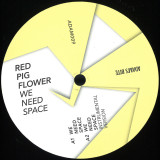
Up first is the original version of title-track ‘We Need Space’, a merging of winding bass grooves, skippy percussion, modulating, bubbling synths ebbing and flowing amongst one another while a hypnotic, spoken word vocal winds within the groove throughout.
An instrumental version follows next, as the name would
suggest, pulling back the vocal elements for a more robust, drum driven feel.
‘Separation’ then opens the flip-side with a more frenzied feel via and amalgamation of vacillating synth flutters, dubbed out percussion and bumpy low-slung drums which all dynamically evolve and retract throughout. ‘The Feeling’ then completes the EP, diving back into deeper realms with murky atmospherics, vocal chants and
gritty stabs at its core, underpinned by a bouncy stab led bass groove and crisp, crunchy drums.
out of Stock
Last delivered 2 years ago available to reorder, subject to availability
1988 in Hamburg gegründet (und 1991 wieder aufgelöst), war die Kolossale Jugend neben OZSWMK und Cpt. Kirk eine der ersten maßgeblichen Bands, die der so genannten "Hamburger Schule" zugeordnet wurden. 1989 erschien beim Label L'age d'or die erste LP "Heile Heile Boches" und 1990 folgte das zweite Album "Leopard II". Die dritte LP des Boxsets enthält Raritäten (Sampler-Beiträge, Single-Versionen) und Aufnahmen eines bislang unveröffentlichten Live-Konzerts aus dem Forum Enger (22.9.1989). "Heile Heile Boches" erschien 1989, im Jahr des Mauerfalls. International gab es zwar Hip Hop, Crossover, Hardcore und Alternative-Punk; in Deutschland lediglich deren Simulation oder Imitation, und außer einem inzwischen längst redundanten, wenn auch unverwüstlichen Deutsch-Punk nur wenig, das in der Musik als Bollwerk gegen den neu aufkeimenden Nationalstolz hätte dienen können. Aber es gab die Kolossale Jugend. Seit jeher am reingrätschen, nerven, ständig sich austauschend, vorantreibend und völlig immun gegen Versuche der Politik, Wirtschaft und Volksgemeinschaft sie für die heraufbeschworene Pop Nation Deutschland zu vereinnahmen. Schicksalsjahre einer Kaiserin: die Wendezeit. Das zweite Album, 1990, wurde folgerichtig "Leopard II" betitelt. Mithin sind Musik und Text auch denkbar schlecht für eine groß angelegte Verwertung geeignet; sie passieren in einem irrwitzigen Tempo. Die Texte sind maßlos, schwer zu fassen und immer einen Schritt voraus. Scheinbar ohne Anfang und Ende prasseln und hämmern sie so gewaltig drauflos, wie die Band auf ihre Instrumente drischt. Wir hören, wie jemand denkt und seine Kollegen verschaffen ihm den musikalischen Nach- und Ausdruck, den das Denken in so intellektfeindlichen Zeiten damals wie heute verdient. Aber das hat mehr mit Rockmusik zu tun, als das eingangs erwähnte, auch wenn man damit glaubte, nah am Original zu sein, denn die Reduktion und die Leerstellen sind kolossal. Und doch stand die Kolossale Jugend - die Band, die vom Himmel fiel, weil sie aus keiner klar definierbaren Tradition kam - am Anfang von etwas Neuem. Als sie sich 1992 auflöste, konnten sich weitere Akteure in und außerhalb Hamburgs an neuen Referenzrahmen mit Überschriften wie "Halt's Maul Deutschland"* oder "What's so funny about L'Age Poly d'Or" ** orientieren. Pascal Fuhlbrügge gründete und verließ L'Age d'Or, machte danach Musik mit Erneuerbare Energien, Sand 11 oder 8, sowie für Theaterproduktionen. Heute entwickelt er neben der Musik eigene Theaterstücke und spielt sie auch. Christoph Leich war dann lange Schlagzeuger bei Die Sterne und ist heute in der Musikbranche im Bereich Logistik tätig. Klaus Meinhardt zeichnete das L'Age d'Or Logo, gestaltete die Jugend-Cover, war Gitarrist beim Heinz Krämer-Werner Hornig Sextett und arbeitet als Illustrator. Kristof Schreuf starb völlig überraschend am 9. November 2022, er war Bourgeois with Guitar, Autor, Sänger und Texter der Band Brüllen. Seine Texte u.a. für taz, Jungle World und die Süddeutsche Zeitung waren Ereignisse. Die vorliegende Wieder- und teilweise Neuveröffentlichung ist ihm gewidmet.