Third time’s a charm. Or a chant in this case.“Antologia De Música Atípica Portuguesa” is back.Following two sold out volumes, the unplanned trilogy comes to a close with chants and hymns whilst continuing to merge music genres and presenting them as a world building concept.
If the first two volumes were dedicated to work (“O Trabalho”) and regions (“Regiões”), it only made sense to close the trilogy with ceremonial music, connecting the real – each musicians’ creation – with a fantasied celebration of Portuguese folk, traditions, and ghost methods within these unusual anthems.
If you’ve listened to Niagara before, you probably felt this whole ceremonial thing going on. A perfect opener then, for this volume with Niagara’s deep dive into proto religious-ambient music with “Paulo, Apolo e Pedro”. It sets the tone for the next 35-minutes of ethereal like songs. Either you listen to musicians working within their natural habitat (João Pais Filipe or Filipe Felizardo) or feel them exploring new areas in their realm (Niagara, Joana Guerra or Serpente), this third volume manages to combine eight of the best underrated visionaries working in current day Portugal.
In the past, “Antologia da Música Atípica Portuguesa” created an imaginary folktale where current day creations could live with the idea of archive or fake-folk. This volume forgets the world building and actually lives in it. Because this is the real Portugal. This is our folk. These are our chants. Embrace the otherworldly.
Search:k natural
- A1: Erotic Aroma 04 28 Min
- A2: Pachamama 05 34 Min
- A3: Cool Dudes In Hot Water 05 43 Min
- B1: Ipsum 04 55 Min
- B2: Dance 04 28 Min
- B3: Awry 05 16 Min
- C1: The Coming 04 49 Min
- C2: Cosmic Pratt 05 54 Min
- C3: Htp 06 02 Min
- C4: Hot Mm & Hmm’s 03 09 Min
- D1: Way With Fantasy 04 11 Min
- D2: Yardmaster Pt Ii (Feat. Eden Burns) 06 15 Min
- D3: Hot Mm & Hmm’s (Club Mix) 05 45 Min
Sharing with you the debut Album of Nice Girl titled “Ipsum”.
As a natural progression from her prior singles on Public Possession the music has a very capturing energy, although essentially machine music every single sound on the record seems connected with mother earth.
It’s rooted in the common ground that is home to all of us: the soil that nurtures flora & fauna, the air we breath, the water we drink, the sun & moon that shine upon our bodies.
One tribe, a million rituals, a common ground: The Dance (the Beat). Repetitive rhythms creating a sense of community & togetherness.
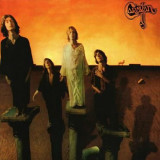
For their first album, Caravan was surprisingly strong. While steeped in the same British psychedelia that informed bands such as Love Children, Pink Floyd, and Tomorrow, Caravan relates a freedom of spirit and mischief along the lines of Giles, Giles & Fripp or Gong. The band's roots can be traced to a British blue-eyed soul combo called the Wilde Flowers. Among the luminaries to have passed through this Caravan precursor were Robert Wyatt, Kevin Ayers, and Hugh Hopper and Brian Hopper (pre-Soft Machine, naturally). The Caravan album never sold in serious numbers, and for much of 1968 and early 1969, the members were barely able to survive -- at one point they were literally living in tents. Suddenly, Caravan was an up-and-coming success on the college concert circuit, even making an appearance on British television's Top of the Pops. With national exposure and a growing audience, the group was at a make-or-break moment in their history. They rose to the occasion with their second Decca LP, In the Land of Grey and Pink, which showed off a keen melodic sense, a subtly droll wit, and a seductively smooth mix of hard rock, folk, classical, and jazz, intermingled with elements of Tolkien-esque fantasy.
Bill Evans catapulted to the top of the jazz world in June 1961 after reeling off three straight masterpiece sessions at New York's Village Vanguard with his trio. Yet the emotional highs came to a screeching halt shortly thereafter when bassist Scott LaFaro died in a car accident. Devastated, Evans refrained from playing for nearly a year. If not for an inspirational collaboration of tremendous creative outpouring, one wonders what fate may have befallen Evans. Undercurrent, the outcome of two studio sessions with guitarist Jim Hall, is that project.
Mastered on Mobile Fidelity's world-renowned mastering system and pressed at RTI, this Silver Label LP edition bursts forth with brilliant textures, you-are-there realism, and extraordinary tonalities. No other version outside of this analogue copy brings you face-to-face with these two jazz giants' sonic communion, a kind of spiritual musical summit on which Evans' deft keyboard touches and Hall's reliably subtle phrasings seamlessly mesh and wonderfully dance, the compositions streaked with natural instrumental decay, full-frequency extensions, and poignant emotionalism that, on this LP, you can feel.
While Evans managed to sit down for a few one-off takes between LaFaro's passing and these April-May 1962 dates, he largely remained on hiatus and abstained from recording. Whether it owes to the intimate pairing, he and Hall's brotherly chemistry, or the exquisite selection of program material, the results consistently come across as the equivalent of a private meditation - such is the level of introspective depth and quietly shaded interplay throughout. For Evans, the duet clearly functions as therapy, a healing episode in which his partner patiently lays back, shadowing moves and suggesting others, neither musician interested in the spotlight but each striving for (and achieving) transcendent beauty.
In tackling standards such as Rodgers and Hart's "My Funny Valentine" and the Broadway classic "Darn That Dream," as well as the Hall original "Romain," the pair traverses complex harmonies with the astute elegance of a figure skater. At times, Evans and Hall go for broke on a hard-swinging romps, yet it's their implied melancholy and drifting, softly struck melodic refrains on waltzes and ballads that bestows Undercurrent with a nuanced romanticism and whispered atmosphere befitting the record's title.
Indeed, even the album's cover - an iconic photograph by Toni Frissell - exhibits the surreal, almost-hallucinogenic properties of the fare contained within.
Renowned Finnish jazz innovator and band leader Iro Haarla takes a detour towards progressive rock Iro Haarla Electric Ensemble to release their debut album in October Known for her large number of works in the field of acoustic free jazz, Iro Haarla is a notable Finnish pianist, composer, arranger and band leader. Now, having inked a deal with Finnish cult label Svart Records, Haarla takes an eye-opening sidestep towards progressive rock. Her new band consisting of renowned Finnish musicians, Iro Haarla Electric Ensemble weaves a vastly colourful world of sound around Haarla’s peculiar melodies, and welcomes us to new sonic territory: a vibrant world where black music influenced rhythms, acoustic instruments, analog synthesizers and spacelike, valiant electric guitars converge. In her long career as one of the most distinctive creative powers in modern scandinavian jazz, Haarla’s history includes both the works with her past life partner Edward Vesala (d. 1999) and an extensive repertoire of her own innovative solo works, recorded for the renowned ECM Records. For What Will We Leave Behind - Images from Planet Earth Haarla has put together a band whose musical expression is strong and profound. The rhythm of the music lies in the dynamic hands of bass player Ulf Krokfors and drummer Aniida Vesala, and together with Sami Sippola’s (Hot Heroes) responsive tenor saxophone and Finnish rock legend Jukka Orma’s (Sielun Veljet) imaginative ability to dive into new dimensions with his electric guitar, What Will We Leave Behind grows into an unforgettable experience for both prog rock and jazz enthusiasts. Out on the 29th of October 2021, the Iro Haarla Electric Ensemble debut is a homage to nature - our common planet and home. Inspired by nature, the album is also a cry for help in the age of natural disasters and depletion of natural resources around us. “I admire nature’s grand beauty, which arises from extreme phenomena and the battle for survival. The thread of life is unbroken”, Haarla says. Each album track portrays a place on Earth: between the humane opening track The Song We Loaned From Our Children and the hopeful closing track What Will We Leave Behind? vibrates a variety of soundscapes from lakesides, oceans, glaciers and rainforests, all the way to the winds and rumbles of mountains and man-made cities. Adding even more depth to the musical themes and landscapes, the album’s cover art was picked up from environmental art pioneer Teuri Haarla’s photo collection.
One of the most important harmony groups in the entirety of Jamaican music, the Paragons have a long and complicated history. First formed in the ska years by Bob Andy and Tyrone Evans as the duo of Andy and Ronnie, the group soon expanded to a quartet through the addition of Howard Barrett and John Holt, the latter naturally assuming lead duties, following the subsequent departure of Andy, Holt, Evans and Barrett made the Paragons the quintessential rock steady trio. They had an incredible run of hits for Duke Reid and Coxsone during the mid-to-late '60s, and also issued some self-produced work, before Holt's solo career skyrocketed, leaving the group on the back-burner. Then, in the mid-1970s, the Paragons reformed, cutting material for New York-based labels such as Clocktower and Clintones, which led to this intriguing album, which saw material recorded in Jamaica at Harry J for Bunny Lee mixed with work cut at Bullwackie's studio in the Bronx, along with re-workings of classics such as 'Left With A Broken Heart' and 'Memories By The Score' is a whole range of new material, dealing with contemporary themes.
Maxi Lp[10,04 €]
2021 repress on black vinyl, first released in only 50 copies in the legendary Bunker Mantra Box, but now for a short time available to the general public. Dark and manic house from the Acid Coloniae of Cologne, by Andreas Gehm (aka The Minister), whos profile has been raised recently with a ton of hyped releases and remixes for o.a. Snuff Traxx & Robert Ownes. First part of a two parter.
- A1: In Search Of A Rose (2008 Remastered Version)
- A2: Song From The End Of The World (2008 Remastered Version)
- A3: A Man Is In Love (2008 Remastered Version)
- A4: Bigger Picture (2008 Remastered Version)
- A5: Natural Bridge Blues (2008 Remastered Version)
- B1: Something That Is Gone (2008 Remastered Version)
- B2: The Star And The Sea (2008 Remastered Version)
- B3: A Life Of Sundays (2008 Remastered Version)
- C1: Islandman (2008 Remastered Version)
- C2: The Raggle Taggle Gypsy (2008 Remastered Version)
- C3: How Long Will I Love You (2008 Remastered Version)
- C4: Upon The Wind And Waves (2008 Remastered Version)
- C5: Spring Comes To Spiddal (2008 Remastered Version)
- D1: The Trip To Broadford (2008 Remastered Version)
- D2: Further Up, Further In (2008 Remastered Version)
- D3: Room To Roam (2008 Remastered Version)
- D4: The Kings Of Kerry (2008 Remastered Version)
The Waterboys 1990 album ‘Room to Roam’ was the bands fifth album. It continued the Folk-Rock sound of 1988's Fisherman's Blues and was recorded at Spiddal House in Galway, where the last recording sessions from the preceding album, Fisherman's Blues, had been recorded. Room to Roam would be the last of The Waterboys' Folk-rock sound until the release of Universal Hall in 2003. Fiddler Steve Wickham, who had been a large inspiration for the change to that sound for Fisherman's Blues, left the band shortly before Room to Roam was released.
This new vinyl has been produced to compliment The Magnificent Seven CD/DVD/Book box set. Mastered for Half-speed and cut by Miles Showell at Abbey Road and made into a double album running at 45rpm. The original artwork has been presented in a new 5mm wide spine sleeve, polyline inners and insert.
Balearic floatation tank vibes from another choice debutant to Good Morning Tapes, introducing Nueen with a romantically introspective suite of fluttering electronic productions gilded with glyding subbass, recommended if you're into the sferic label, Bola/0161-era Skam, Eno & Budd, Roméo Poirier or Perila.
Blessed with a play of warmth and dappled light recognisable to anyone who has visited or lives in the Mediterranean, ‘Nova Llum’ presents Nueen’s diaristic account of days lolling and contemplating life in the Balearic isles. Drawing inspiration from its sunbleached rocky mountains and brilliant blue waters unusually devoid of lobster-tanned holidayers during lockdown, Nueen lets his mind and arps drift unimpeded across the landscape in nine sublime parts with a sound bound to appeal to lovers of classic Eno & Budd or Roméo Poirier as much as strains of vapourwave, Perila’s ASMR textures and cult Grabaciones Accidentales.
With a light touch Nueen takes us there, beautifully evoking a slippage of time from afternoon to noche between the glitching butterfly net sweeps capturing the isle’s sleepy ambience in ‘Once You Have It,’ to the shimmering shorelights of ‘Viejo Roble del Camino’ that draw the album’s velvet curtains to a close. Where the backdrops feel still, ancient, natural, Nueen channels a gently vibrant human energy via his melodic and harmonic signature, with daubs of field recordings lending an intangible effervescence to the the tip-of-tongue strings in ‘Centro Gris,’ and with sparing use of percussion and subs giving it a sort of subliminal drive and saline buoyancy, especially in the skin-stroking bliss of ‘Hum.’
Selectors Choice is a collection of Reggae tunes from some of the best producers and artists cut to limited edition vinyl. The 7"s feature new releases, remixes and classics that deserve to be repressed and tunes that have never been pressed to vinyl.
The 12"s concentrate on compiling tracks of the same riddim that have never been released together that include unreleased versions and brand new releases.
They are specifically catered for any Reggae collector, selector and DJ.
This release features the Rasta anthem ‘Picture on the Wall’ by the Natural ites by the dub and the vocal and dubs for I Want Your Love
A fascinating thing about jazz is what can arise through force of
circumstance rather than the result of planning. The drummer
scheduled to appear in a trio with Jan Lundgren at the Ystad
Sweden Jazz Festival had to cancel because of the pandemic,
which forced Lundgren to rethink the gig. The pianist - who is
also artistic director of the festival - quickly realised that things
could also work without a drummer. Serendipitously, the name
of Emile Parisien came to his mind... and a new trio was born.
The three musicians had never played together in this
configuration before; so, after a single day of rehearsals, the
band took to the festival’s main stage on 1 August 2020.
Jan Lundgren is one of those pioneers who gave European jazz
its distinct identity and freed it from American jazz. The Ystadbased pianist combines virtuosity, an acute sense of tonal
colour, awareness of form from European classical music and
his own folk music tradition. For him, to make music where
many different genres coalesce is both inevitable and natural.
Lars Danielsson’s bass playing is unmistakably melodic and
lyrical. He is one of just a handful of bassists who stand out
both as creative composers and as distinguished band leaders.
Technical brilliance, outstanding musical imagination and an
almost telepathic understanding of his fellow musicians - his
presence is ideal in this trio.
Soprano saxophonist Emile Parisien found his way into this
band practically out of nowhere. The vivacious Frenchman lives
jazz with body and soul and his honesty and authenticity ring
true in every note he plays. Parisien is a visionary of jazz,
aware of its legacy but always looking forward in an innovative
way.
This unique performance leaves the listener begging for more.
Having started this new venture so auspiciously, Jan, Lars and
Emile are surely going to want to aim even higher.
Recorded live in concert by Mattias Dalin (Eurosound AB) at
Ystad Sweden Jazz Festival, August 1, 2020. Mixed by Bo
Savik, Jan Lundgren and Lars Danielsson at Tia Dia Studios,
Mölnlycke, Sweden. Mastered by Bo Savik.
A full length collaboration from DUANE PITRE and ELEH. PITRELEH use high resolution analog and digital tools to create music utilizing natural vibrations and harmonics as rhythm and melody. Inspiration is drawn directly from vibrational waves (sound, gravity, water). The electronics, of which both pieces are constructed, are tuned using pure intonation which utilizes the prime numbers: 1-3-5-7. The debut live performance of Pitreleh was recently presented at the Issue Project Room in Brooklyn as well as the Museum Of Contemporary Art in Cleveland.
Tartelet has a knack for uncovering virtuosic, off-kilter electronic music. Max Graef—born, bred and still holding it down in Berlin's Prenzlauer Berg—is their latest artist in this mold. Though adventurous dance music is thick on the ground in the German capital, Graef's 2013 run of singles, cropping up on Graef's own Box aus Holz, plus Melbourne Deepcast, The Gym, Heist and Tartelet, continually surprised, infusing worn-in house with manic energy and acrobatic elasticity. Where many of his peers make languid, self-consciously laid-back tunes, Graef makes brilliantly restless ones. Dropping the needle on one of his EPs, you nearly expect it to pop right off again.
Rivers of the Red Planet, Graef's first full-length and Tartelet's latest album project, takes all that wildness and refines, expands, updates and scrambles it. It's as ambitious and deviously entertaining a record as you'll hear in 2014, the fulfillment of Graef's desire to make anything but another contemporary house music album. At any given moment, Rivers of the Red Planet feels like it could have been recorded through the smoke at a jazz club in the booth at a techno club 30 years from now or inside an MPC stocked with crusty dollar-bin samples. (We'd guess the staff at Graef's beloved OYE Records in Berlin will have a difficult time settling on which section to file it in.) If it sounds sampled, it's a testament to Graef's natural musicianship and production prowess —the record is heavy on sounds he played himself, from drums and Rhodes to fat synth melodies wrung out of an old Crumar Performer water-damaged to perfection. For vocals, Graef enlisted Nigerian singer Wayne Snow, whose rugged soulfulness makes him a natural pairing. On cuts like "Drums Of Death" and "Speed Metal Jesus," the club- readiness of his EPs lives on. But Rivers of the Red Planet may be most at home in your living room, with a good bottle of red and a roaring fire's crackles mixing with the pops and hiss of the vinyl—a playful listen that sinks in, burrowing deep and getting you all warm and gooey on the inside.
Legendary Brazilian group Orquestra Afro-Brasileira are reborn for first new album in over fifty years, produced by Beastie Boys collaborator Mario Caldato Jr.
Led by maverick composer Abigail Moura, Orquestra Afro-Brasileira were one of the most influential yet overlooked groups in Brazilian music history. Operating for almost thirty years until 1970, they released just two albums - the first of which, Obaluayê, has recently been reissued by Day Dreamer Records - and left behind a legacy of Afro-Brazilian consciousness that continues to resonate today.
Combining Yoruba spirituality, folk tales, Candomblé chants and West African percussion with the instrumentation of the big band jazz tradition in the United States, the Orquestra placed Afro-Brazilian heritage in a new and vital context. Weaving emancipatory narratives into complex poly-rhythms and powerful, syncopated horn lines, the group educated and enlightened all those who saw them perform.
For Abigail’s protégé and percussionist on the group’s 1968 album Carlos Negreiros, the message of the group’s music had a profound impact: “I became aware of what it is to be black,” he says, “discovering the extraordinary potential of the Afro-Brazilian culture in the making of the national ethos.” Now the last remaining member of the original Orquestra, Carlos was tracked down by producer Mario Caldato Jr. - whose credits include Beastie Boys, Marcelo D2 and Seu Jorge among others - to oversee the first new album of Orquestra Afro-Brasileira material since 1968.
“I was overwhelmed with the percussive rhythms, beautiful deep vocals and combined energy,” Caldato Jr. explains. “It felt like the most authentic Brazilian roots music I had ever heard. It was raw and dynamic, a pure organic sound and energy. It was a spiritual experience.”
Alongside arranger Caio Cezar, Carlos assembled his Orquestra to record five tracks at Berna Ceppas’ Estudio Maravilha 8 studio in Rio De Janeiro. With percussion, horns and vocals cut in single takes over three days, the session captured the intuitive, pure and natural spirit of the group in full flow.
Following the success of the initial session, five additional tracks were recorded at the iconic Estudio CIA dos Tecnicos in Copacabana to complete the album. Mixed by Caldato Jr., 80 Anos is a contemporary incarnation of Abigail Moura’s vision, bristling with the flair of the original recordings.
strumentalist Teddy Lasry's story is noteworthy not just in regards to the music he released, but in the ways approached the craft of composing and experimenting with sounds and sonics.
Always intrigued with the capabilities of instruments, their groove and their feel, it was very much his family’s influence that helped to fuel these life long affections. As a performer in a parisien cabaret, Teddy’s father Jacques would mingle with giants like Serge
Gainsbourg and Charlie Chaplin (impressed by his ability to improvise, Chaplin wanted him to become his accompanist, but the pianist politely refused). Jacques and his wife (Teddy’s mother Yvonne), would later become members of the innovative experimental group Les Structures Sonores, and surround their children’s lives with sounds. Electronic music was still in its infancy and Les Structures Sonores, with their resonators that produced long, mysterious tones, were deemed ‘cosmic’. It was the era of the launching of the first Russian Sputnik and every time a radio or television station wanted music for their science fiction programs, they turned to one of their compositions. Showing a natural ability with multi instrumentalism, Teddy was rewarded with a spot in the band, allowing him to really explore unconventional methods of composition.
Following a brief stint with Ariane Mnouchkine's avant-garde Théâtre du Soleil after graduating school, Teddy joined the pioneering prog band Magma, with whom he would record three groundbreaking records during the early 1970s (According to former member
Laurent Thibault, their album Mëkanïk Dëstruktïẁ Kömmandöh and its sound were strong influences on David Bowie during the recording
of Low and Iggy Pop’s The Idiot at Hérouville). Despite the successes with these projects, Teddy was constantly searching for new ways
of expressing himself through music, leading him into the beginnings of a solo career that would last the better part of three decades.
Teddy’s transition into his solo career came with contrasting fortunes, in that he was now becoming a music to image composer but with the unfortunate realisation that his eyesight was gradually worsening (due to being diagnosed with retinitis pigmentosa at an early age). Nonetheless, his solo career would begin in 1975, and for the rest of the decade his sound would become increasingly mired in electrified Funk-Fusion and its endless sonic possibilities. The resulting music would serve to highlight Teddy’s love affair with the possibilities found within tireless instrumentation, with the flute and particularly synthesisers becoming a mini-obession of his (he once spent a 7,000 Francs loan, which was meant to be spent on fixing his roof, on synths).
To this day Teddy continues to record and experiment with music, a passion which in many ways has never left his sid, even at the age of 75. His career was one that was fuelled by innate curiosity and an intrinsic desire to discover new methods of expressionism, be it through the realms of Jazz-Funk, ambient electronics, Swing music or indeed through the medium of instrumentation itself. On this compilation, we look to encapsulate the essence of his innovative sound, and from start to finish a sense of his ingenious approach to composing structure and mood is made abundantly clear. The funk-jazz fusion style that embodied the majority of his 70s work is on full display here, with the vibrant flute driven "Los Angeles", the Miles Davis inspired "Blue Theme", the progressive and driving
"Chamonix", and the deeply intricate "Krazy Kat", along with one of his finest 80s slow jams, "Funky Ghost". Two cuts off the ‘Back To
Amazonia’ album are also featured (Teddy’s last album including his Prophet T8, Yamaha DX7 and Oberheim drum machines). "Raising
Sun in Bali" and the title piece both emphasise an ever present passion for synthesisers. "Birds of Space", a standout track off the e=mc2 album, closes the comp, and is a fitting way to end this journey.
Pulled together in close collaboration with Teddy and his family, this collection of songs looks to introduce new listeners to his work and we are proud to present this limited and carefully remastered compilation on vinyl, including extensive liner notes.
- A1: Set Me Free
- A2: It Grieve My Heart
- A3: Jah Is The One
- A4: Leaders Of Babylon
- A5: Do Right
- A6: Liberation
- B1: I Love My Life
- B2: Soddom & Gomorrah
- B3: I've Been Around
- B4: Pure Rankin
- B5: Natural Mystic
- B6: Totally Free
- C1: Set Me Dub
- C2: It Grieve My Dub
- C3: Dub Is The One
- C4: Leader Of Dub
- C5: Dub Right
- C6: Liberation Dub
- D1: I Love My Dub
- D2: Dub Gomorrah
- D3: Dubbing Around
- D4: Pure Dubbing
- D5: Natural Mystic Dub
- D6: Totally Dub
• Horace Andy is a legendary Jamaican roots reggae singer-songwriter, known for his
distinctive vocal style, hit songs such as ‘Skylarking’, and his acclaimed collaborations with
Massive Attack.
• ‘The King Tubby Tapes’ was first issued on Jet Star Records’ ‘Charm’ imprint. The album
contains selections from Horace Andy’s 1979 album ‘Pure Ranking’ and a second LP of dub
remixes. Includes performances by legendary reggae session musicians such as Robbie
Shakespeare, Carlton “Santa” Davis, Tony Chin and Bernard “Touter” Harvey.
• Demon Records is proud to present the first vinyl reissue of ‘The King Tubby Tapes’, pressed
on 140g black vinyl.
Deepfunk / soul super rarity flipped with one of the best deep soul sides ever recorded, the family had some great images so we opted for a picture sleeve on this one, 400 copies only. forget about finding an O.G. Researched by our man, Brian Sears
Papa Bear And His Cubs were the brainchild of Eddie Disnute Sr., aka Papa Bear. A native resident of Hampton, Arkansas. Eddie started his music career in gospel then transitioned into secular music after moving to Milwaukee, Wisconsin in 1963. While living in Milwaukee with his wife and children, Eddie played with a group called the Fenders but eventually decided to start a group of his own with his kids aptly named Papa Bear And His Cubs.
Eddie Sr., a naturally gifted musician, taught his children how to play music. Creativity is a part of the Disnute DNA and before long Eddie's cubs were perfecting chops of their own. Papa Bear And His Cubs started performing together around the late 1960s. Although a few memorable gigs came their way, Wisconsin proved to be too cold for the Disnutes so they made their way back to Hampton, Arkansas.
The family continued to perform in Arkansas then made another move to Houston, Texas where they hoped to break into the music scene down south. They lived there for nearly three years and even recorded at SugarHill Studios, yet nothing materialized and the recordings remain a mystery to this day. For their final move, the Disnutes returned home to Hampton after Eddie's wife Christine (aka Mother Goose) received word that her father was ill.
In 1975 the group recorded their only vinyl record at Sam Griffith's home recording studio in Camden, Arkansas. Disnute Sr. recalls it only taking "one night, and one take" for both "Sweetest Thing On This Side Of Heaven" and "You're So Fine" to be born. Both songs have an entrancing quality that is inescapable and will surely resonate with listeners for years to come.
The group continued to perform until the early 1980s, at which point the cubs were bears themselves, who decided to go their own separate ways. When thinking back to their prime days, one thing will always remain clear in Eddie Sr.'s memory, "we could play, all it took was a countdown of 1, 2 ,3, 4 and we're gone".
Truly adventurous and life enhancing music that invigorates your soul. TIP!
Press Release:
Gordan join traditional Serbian singing with abstraction, energy and minimalism. Their music is marked by radical reduction, seemingly endless ascension and a passion for experiments.
The Serbian singer Svetlana Spajić is an internationally recognized and acclaimed artist. She, like almost no other contemporary singer, is a master of all the complex local stylistic variations of singing from Balkan music. Guido Möbius plays bass and various electronic sound generators. Additionally he uses guitar amps, microphones and effects to provoke feedback which either harmonize or are juxtaposed with the song. It is a dialogue between sound and noise which is accentuated or fragmented by means of Andi Stecher’s expressive drumming. With a rich pool of ideas the percussionist drives the sound forward breathlessly and grounds it. Together the trio form a dynamic body of sound.
Gordan recorded their debut during the first wave of the Covid19 pandemic in Europe in March 2020. Due to the lockdown in Berlin at that time the city didn’t have many distractions to offer, so the trio just concentrated on work. The atmosphere of being isolated in a recording studio had a big impact on the musical results. All three band members came up with ideas for new pieces, which were immediately tested, worked out and recorded. On abstract instrumentals provided by Stecher and Möbius, Svetlana Spajic sometimes reacted with personal interpretations of serbian traditionals, and the other way around. Most of the time it was as if the music just happend to the band; playing together felt natural from the first moment on.
Some of the old serbian traditional songs that Spajic sang are extinct forms with a specific local melodic mode. The skillful improvisation of their lyrics and ornaments was of great importance and very estimated among village singers. The title song Down In The Meadow for instance originally is a love song from the village of Odevce in eastern Kosovo, Serbia. The singing manner is of a great intensity and sonority, with lots of specific local ornaments. It disappeared along with the village communities from the area. Oh, my Rose flowers is from the region of Kopaonik mountain (southwest Serbia) and the mode, scale is known as ”kopaonički glas” (Kopaonik mountain air). Svetlana adopted the style from the late singer Veličko Veličković from the village of Ostraće. It is an old mountain solo chant, rich in fast ornamentation movements and microtonal intervals. Don’t ask how I live is Svetlana’s homage to the new popular folk music movement from the 80ies known as Južni Vetar (Southern Wind) led by a musician and composer Mile Ilić, known as Mile Bas (“Mile the Bass”) which revolutionized popular music introducing tabooed oriental music and original arrangements.
All music by Spajic Stecher Möbius except ‘Don’t Ask How I Live’ by Miodrag M. Ilić, original title Što me pitaš
All lyrics are traditional, except ‘Don’t Ask How I Live’
Svetlana Spajic — vocals
Andi Stecher — drums & percussion
Guido Möbius — bass, feedback, electronics
Recorded by Alberto Lucendo at UFO sound studios Berlin in March 2020 mixed by Morphosis
Mastering by Neel at Enisslab, Rome
Artwork by Lorenzo Mason Studio
GENRE: Modern Classical, Experimental, Ambient Metal. RIYL: György Ligeti, Sarah Davachi, Stars Of The Lid. 180g LP pressed at Optimal, 350gsm jacket, inner & DL card. Jessica Moss Also Known For Her Tenure In Thee Silver Mt. Zion (2002-2015), Black Ox Orkestar (2002-2007), Recordings By Vic Chesnutt, Carla Bozulich, Arcade Fire, Basia Bulat, Roy Montgomery, Sarah Davachi, Big Brave & More. A phosphene is “the phenomenon of seeing light without light entering the eye.” The title of the heart-rending and resolute new album by composer/violinist Jessica Moss could not be better chosen. Moss is by now a seasoned practitioner of immersive isolation music; across three previously acclaimed solo records of minimal and maximal post-classicism, her acoustic, amplified, and electronically-shifted violin is the raw material for deeply expressive, palpably haunted, wholly committed compositions. But Phosphenes inscribes fleeting halos of refracted ghostly light out of a prevailing darkness with especially plangent determination and intensity. This is the most overtly searching, mournful and inexorable music Moss has made to date. The pieces on Phosphenes exquisitely navigate consonance and dissonance, building patiently from single notes to multiple voicings, harmonic stacks and clusters. These compositions channel themselves like slow-moving water in a dark cave, finding small eddies and catching glints of luminescence from within. Signal processing is kept to a minimum in the three-movement “Contemplation” suite on Side One, where Moss deploys amplification chiefly in the service of activating overtones and pitch-shifts, thickening and widening the sonics, carving out her unique timbral space. Based on a four-note sequence that sets whole tones against one another, “Contemplation” is a bona fide requiem that finds Moss at her most instrumentally naturalistic, measured, and modern. Side Two unfolds in a more foreboding vein: “Let Down” is marked by cavernous octave-dropped arco and pizzicato, providing a gothically-inflected substratum upon which hauntingly wordless vocal invocations and cumulative gyres of violin melody unfurl. “Distortion Harbour” grinds with noisier grit and a more harrowing complexion, highlighting Moss’s ambient-metal sensibility and her distinctive palette of industrial-inflected power electronics a reminder of why she’s also been a go-to player on albums by the likes of Big Brave, Oiseaux-Tempête and Zu in recent years. These two songs also feature upright bass from old friend and former bandmate Thierry Amar (Godspeed You! Black Emperor, Thee Silver Mt. Zion, Black Ox Orkestar). Album closer “Memorizing & Forgetting” is inarguably the most tender and beautiful song in Jessica’s oeuvre: a keening lullabye of sorts, on which she plays piano, violin and guitar, joined by her partner Julius Levy in a lustrous ambient vocal duet. Everyone has been trying to find a way through and out of pandemic, lockdown, social isolation and often darkened hope and for many musicians, the absence of touring, of live performance, live sound, live audiences, and a living. For Moss, it’s also been “like when you press your fists hard against your eyes and eventually there is fireworks.” The light gets in where it can, even or maybe especially as imaginative sensory simulacra (if/when we shut down our screens and are left to our own devices). Phosphenes is a stoic, acutely sensitive, superlative musical statement from Moss
Red Vinyl
nown for her delicate compositions, soaked in dream-like surrealism, Icelandic musician Sóley has attracted a huge following since launching her solo career back in 2010. Her 2012 single ‘Pretty Face’ went on to generate an enormous amount of buzz, and quickly became a viral sensation. Now, with three solo LPs under her belt, Sóley is preparing to debut a completely new sound via the release of her new concept album, Mother Melancholia, on October 22nd.
Described by the artist as "Nosferatu meets Thelma and Louise in a vampire church under the watchful eye of David Lynch", Mother Melancholia is the soundtrack to the end of the world as we know it. As a self-confessed news addict, Sóley became obsessed with the idea that the world is ending. Having surrounded herself with real-life stories of global warming and patriarchal politics she couldn’t shake the feeling that she was going to die. This feeling was so all encompassing that it sparked the idea for a new project. Could there be a soundtrack for the last days of humans on earth? How would that sound?
“I read books about possible dystopian worlds and started writing poems about irrational and in love characters who live in gray and cold imaginary loneliness. In each other’s burning arms. Walking in circles with no way out” she explains. “After all, the album reflects our life here and now. Our life and reality is a kind of dystopian world.”
Whilst writing the album, which serves as a tongue-in-cheek eulogy to our planet, Sóley began reading about ecofeminism, a branch of feminism which uses the concept of gender to analyse the relationship between humans and the natural world. Ecofeminism emphasizes that both women and nature must be respected but also separated. Since the beginning of time, the natural world has been synonymous with female identity, phrases like Mother Nature are commonplace. “The patriarchy views women as volatile and hysterical. Earth and women are either our saviours or our destroyers,” explains Sóley. “It’s so easy to abuse the earth, like the patriarchy has abused women since the dawn of time, then ask for forgiveness afterwards and promise they´ll never do it again”.
The new album sees Sóley move away from the indie-pop of her previous releases. She began by experimenting with writing songs on the accordion, allowing her a new sense of freedom in her writing. The process allowed her to broaden her horizons even further and experiment with a whole range of new and exciting sounds. “I bought myself a theremin as I was really excited about the unpitched sound and there is no perfect pitch during the end of days,” she laughs. “I also bought a mellotron, my first moog and a cello and taught myself how to play each of them. All of these new instruments are particularly suitable for the kinds of aesthetic inconveniences which I have learned to embrace.”
Album opener ‘Sunrise Skulls’, one of the most cinematic moments on the album, was inspired by the Me Too and SlutWalk movements and tells the story of a group of women who rise up and fight the patriarchy. ‘Blows Up’, a track that would be at home on any horror soundtrack, is a sarcastic love letter from the Earth to humans. Standout track ‘Desert’ is an incredibly moving song dedicated to the next generation. “It’s about the guilt you feel, as a mother, for having children and leaving them on the frontline. My daughter, for example, will take over this inevitable war” explains Sóley.
In true soundtrack style, the album flows through the end of the world in chronological order, closing with the Earth’s final moments. ‘Sundown’ is a dark piano ballad detailing human kind’s final day on Earth. “And everyday, I dig my own grave, and as I dive in you´ll hold my hand” she sings, over twinkling piano and swirling synths. We then hear the world end on ‘XXX’, a dark and swirling soundscape that swells before fading to silence. On ‘Elegía’ the silence then turns to the sound of the ocean, as we hear the Earth, like a woman finally free from a violent relationship, healing on her own.
Mother Melancholia is the mark of an artist confidently striding into more experimental territory. With a lengthy and successful career behind her, Sóley felt compelled to try something new and express the real her. The music might be shrouded in darkness but it’s a move that fills her with joy and freedom. “I hope that people not only enjoy the new sound, but also that Mother Melancholia might raise some questions in people, particularly women,” she says. “I’m under no illusions that this album will change the world but I hope that people can connect with the idea”.