Running Back welcomes Andreas Grosser for the start of it's non-dancefloor series 'Running Back Incantations'. Think Tornado Wallace's 'Lonely Planet' or Suzanne Kraft's 'Missum' who both would have been good and early contenders for a series like that, and you are half way there. Andres Grosser though, was 'there' and that way before. Probably best-known for his 1987 collaboration 'Babel' with Klaus Schulze, Grosser is a bit of a dark horse in the universe whose big bang was krautrock and that went on to be called cosmic, space music or simply new age.
A native East-Berliner, Grosser crossed the Wall in 1981 and next to studying piano, his day job was to advise, sell, maintain and invent electronic music instruments. Naturally, Grosser had a good connection to and support from local Berlin musicians and groups, while working at night in his own studio and in those of others. Fast forward 37 years and Andreas is now one the worlds leading microphone technicians specialising in German and Austrian vintage types.
'Venite Visum' is an anthology of recordings made between 1976 and1980. Released in 1981 on UK's York House Recordings as a cassette tape only, it features some of the most out there, hypnotic and still state-of-the art space music ever to be known to man. For the first time transferred onto vinyl, compact disc and available as a digital download, it was perhaps best described by one reviewer at the time as; "powerfully relentless, repetitive themes which are constantly embellished and subjected to variations in tone colour and instrumentations. The music surges, coming in waves that approach and recede, but with each surge the waves seem to be higher up the shore.'
Now carefully transferred from an archived tape, remastered and compiled on a double album for the first time, it features the previously unreleased and not less mesmerizing 'The Quantum Leap'. Come and visit the hidden and almost forgotten
Search:k natural
There are some records that manage to sound both of a time and utterly timeless and Bon Voyage Organisation's Jungle Quelle Jungle (a nod to Supertramp's Crisis What Crisis) is one of those albums. Its silken-smooth production, irresistible grooves, funk-tinged guitars, lush soundscapes and general glowing presence could easily lead one to believe that have dug up a lost disco gem from the 1970s. However, behind the disco-pop gleam lies eerie dystopian sci-fi ruminations of a futuristic bent and tones that can often feel as French as they do Asian or African.
This sort of cross-continental exploration is an expansion on BVO's previous two EPs, the man behind the Organisation, Adrien Durand, says. 'I tried to continue the musical expedition between dystopian Science-Fiction Haunted Africa - plus Haitian Vaudou on 'Soleil Dieu' - and futuristic Asia. Addressing, in a double entendre manner, some of the political issues that I am sensitive to.' In fact the jungle in question in the album's title is a metaphorical one and one that creates a vast series of environments for Durand to explore such subjects as world trade, utopian ideals and themes of idols, as well as of time and communication. However, one will need to speak French to decipher such explorations, as well as shake off the natural impulse to move with every glorious beat on its 13 tracks, of which are moved along by Maud Nadal and Agathe Bonitzer's golden vocals.
Durand is a full-time producer based in Paris, working with the likes of Amadou & Mariam, so it makes sense that this record would absolutely sparkle in this department. Durand feeds off the variety of musicians coming and going during recording sessions as well as the rotating members and numbers of people involved with the band but fundamentally he writes all songs on piano first before bringing them to record live. 'We recorded a rhythm section of five - drums, percussion, guitar and myself on bass/synth bass and keyboards - at La Frette which is a studio located in a mansion outside of Paris and fitted with a beautiful 1973 NEVE desk. We only used analogue gear, by taste really, and found it a pretty reliable way of doing things. This simply consists of putting good players together in a room and waiting for the right take to happen.' Two four-day sessions and a 'cooling off' period (to let the recordings settle) soon followed before Durand picked the material back up to give it a final polish.
The resulting album is one loaded with intricacies and idiosyncrasies, something that Durand puts down to his own unique approach. 'I don't consider myself much of a songwriter but I love arranging rhythm sections and I'm pretty proud of the ones on this record.' This applies when it comes to working with such musicians as Inor Sotolongo Zapata, who with Durand used traditional Cuban percussive instruments and explored Haitian rhythms. When Durand expands on some of the ideas and influences that were funnelled into the record, you begin to get a sense of the vastness of the sounds that fill his world, from Trevor Horn's production work on ABC's Lexicon of Love, to the literary work of JG Ballard to the visual flair of the original Blade Runner and even the Tuareg sounds of Tinariwen, due to the fact that his studio neighbours their manager's and he would hear their rhythms bleeding through the walls. You therefore end up with an album that offers tracks such as 'GOMA' that fuses Chinese and African rhythms as well as 'SI D'Adventure' a piece of pop music that is dazzlingly hook-laden.
As a result of this cooking pot of sounds, influences, thoughts and creations, Durand has more of a gumbo approach to making this music than a set-out scientific formula. 'There is no definite recipe for me to like the production of a record,' he says. 'Of course it really sticks out that my work is really influenced by the 1978-1983 period, the golden age and last stand of analogue studios and session musicians.' Whilst Durand adores the traditional and conventional music, he really views this as something bigger and wider. 'I have a taste for the otherworldly vibe from records coming from less sought-after musical scenes, particularly Poland, Haiti, Ethiopia, Somalia, Congo and early Cantonese pop. Languages and the rapport of the people involved in the making of those records really inspires me. I particularly hate the use of the word 'World Music' as a potpourri for everything that doesn't sound quite western enough.'
Daytoner are a 7 piece funk & soul remix band based in Cornwall, UK fronted by Lucy Richards and led by 'vintage breaks' producer, Moss Daytoner. They have been touring UK festivals since 2016 playing stages including Bestival, Boardmasters, Boomtown, Wilderness, NASS along with special events such as the opening of the Blue Whale exhibit at The Natural History Museum and supporting Craig Charles at his Funk & Soul Club nights.
Daytoner's debut single release as a band features 2 live favourites: the new northern soul stomp of 'Needed You' and the remake of a 60s jazz dance classic 'Sicka' delivered by the southern soul powerhouse that is Lucy Richards, backed with a unique 6 piece band. A second single appropriately titled 'Second Stomp' is to follow on 7' vinyl in May ahead of Daytoner's debut LP in their full live band line-up. Daytoner head off on an LP tour in April, taking in festivals such as Shindig, Great Estate & Boomtown plus support gigs for The Craig Charles Funk & Soul Show.
Radio Airplay: 4 plays on The Craig Charles Funk & Soul Show on BBC6 Music // BBC Introducing Feature on BBC Radio One // Repeat daytime plays on BBC Radio Cornwall and evening on BBC Introducing in Cornwall
DJ Support: Smoove, The Allergies, Renegades Of Jazz, Mr Bird
Techno Album of the month March 2018 in Mixmag UK!
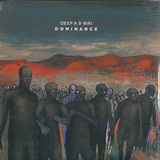
Central to the Israeli club scene, Deep'a & Biri have long been defying expectations even within a community they helped construct. Serving as resident DJs, activists and bookers for Tel Aviv's legendary Barzilay Club, the pair helped build a transcendent club scene. Hugely influential artists such as Robert Hood, Derrick May, Rødhad, Ben Klock and Moritz Von Oswald passed through the club, enjoying legendary crowds and what they could surely sense was a genuine air of anarchy, rebellion and unadulterated rave pleasure.
As the duo held down dozens of parties with dozens of DJs, there was no 'eureka' moment for their emerging sound; just a steady stream of brilliant, inspiring electronic music, much of which left an indelible imprint on the pair. Now based in Berlin, for Deep'a & Biri, things are much the same, even if the landscape and the city is different. Always rooted in the fertile ground between machines and emotion, on their second full-length LP, 'Dominance', the duo demonstrate their unique grasp of the sensitive, unfolding relationship between man and machine. Steadfast in their insistence never to remain in one lane in terms of their sound, 'Dominance' flawlessly segues between forcefulness and weightlessness. From beginning to end, this is not a record afraid to show its teeth with an uncompromising, instantly recognisable techno palette that kicks the foundations of any sound system with menace, anger and determination, particularly on tracks such as the dense 'Voltage' and pulsing throughout the more industrial flourishes of 'Ecole De Nancy' and 'Seeking Solace'.
Beyond these grittier, although never mindless, moments of authority, a sense of escapism and curiosity imbues the album. 'Alpha Cephei' offers the first hint of Deep'a & Biri's more wistful concepts, producing a smoke trail of twinkling electronics out of a smudged but distinctive bassline. That understated sense of emotional catharsis carries throughout, to be found between the complex-yet-familiar bells that drive 'Flow Diverter's' rhythm to a Detroit-indebted landscape that will surely instantly elasticate any keen dancers, while 'False Memories' offers big-room techno fulfillment with none of the character or sincerity removed for cheap thrills. Saving the most remarkable moments for last, the pair sign off 'Dominance' with the poignant and purifying 'Astral Trails', fusing an ethereal, ambient landscape with the more pronounced rhythms of their hardware.
The album's distinctive artwork comes from the studio of Jewish orthodox artist Avraham Guy Barchil, who forged a powerful connection with Deep'a, both was immediately drawn to 'weird atmosphere, amazing technique and emotions involved with his work'. Perhaps one of the most interesting painters from Israel, Avraham is known for his unique perspective, taking his inspiration from the Zohar - the foundational work in the literature of Jewish mystical thought known as Kabbalah. The ambiguous figures represent mystical aspects of the Torah (the five books of Moses), as well as material on mysticism and mythical cosmogony.
Ensuring their natural, conscious touch always remains at the forefront of this unapologetically machine-driven music, Deep'a & Biri have produced an album in the lineage of their heroes and greatest influences. Cerebral yet satisfying, deep yet always engaging, 'Dominance' both reasserts and evolves Deep'a & Biri's forward facing and singular sound.
Next to the entire All is an astonishing work by Danish experimental sound quartet We like We, consisting of Katrine Grarup Elbo (violin), Josefine Opsahl (cello), Sara Nigard Rosendal (percussion) and Katinka Fogh Vindelev (voice).
Although classically trained, all four share a desire for exploring, experimenting and shaping a sound of their own, something which is truly present on this album. Both instrumentation and composition feel glued together with an abundant sense of playfulness and vision. The record starts with the beautiful I'm not for More which sets the tone for the 10 pieces, hurling you back and forth in a whirlwind of sound and musical intuitivity.
Genre bending as the record can be, it can be seen as somewhat of a contrasting work - as much of northern folk traditions as of an avant-classical work in the spirit of György Ligeti and Meredith Monk. Forest Sketches, as an example, starts with minimal woodblocks and percussive rattling while slow building violins, cello and vocals pull themselves in through the unknown before bursting into a Pagan sounding wormhole of screams and looped cellos. The piece ends with minimal vocal sound scapes fading away into almost pure silence. It could be mirrored with a merger of both the opening and closing scene of Kubrick's classic movie 2001 - creating the sense of beginning of humanity versus the far future, with abstractation and the unknown.
Next to the entire All is both a mind bending and grounded piece of work fitting naturally next to other Sonic Pieces releases such as Hauschka & Hildur Gudnadottir's Pan Tone or Christoph Berg's Conversations, while adding a northern minimalism. A record as hard to shake off as it is to describe.
* From the pumping heart of The Magnetic System comes the 'dirtiest' Da-Da-dancefloor anti-jams with this lost 1979 blueprint of Italian conceptual cosmic disco played by the cream of the Goblin studio band. Ultra-rare and unscrubbed,Finders Keepers finally snip the trip from the cash machine to the trash machine.
* Carving its own grubby niche as an early prototype of cosmic disco cum Italo space funk whilst simultaneously harbouring Dada hat stand satire with a junkshop glam aesthetic, this ecological illogical poplitical crab cabaret clearly broke the mould before way before the jelly had set.
* Fans of 'other' obtuse outernational agit-camp might find a fantasy fusion between France's JP Massiera and Sweden's enviroMENTAL marvel Kaptain Zoom while trying to unravel the Madfilth tangle - but rest assured there were method men behind this madness and a portal to Italian funk royalty still festers
at the bottom of the psych rap scrapheap.
* Originally drip-fed out of Cesare Andrea Bixio's Cinevox stable as one of a tight grip of non-soundtrack LPs, made to test the label's commercial potential, Madfilth would follow the band Goblin (and their non-cinematic Roller) as well as the hens' teeth eponymous long player by the group The Motowns in what was perhaps the last-ditch attempt at custom built popsploitation - combining the skills of overqualified composers with undercooked conceptual mind belches. Naturally, after almost 40 years in the barrel, this micro-brewed oddity finally quenches the acquired taste of a new breed of shambolic psychotropic guzzlers proving that 1979 was obviously good year for fool's gold. The Madfilth medicine has finally come to cure your psychic ills so open wide and don't bite the spoon.
* It is beneath the flamboyant rhythm rants and vari-speed osric slop of alt-comedic sarcy-satirist Alberto Macaro (a genetic beneficiary of a vaudevillian comic bloodline) that we find The Magnetic System maestros Franco Bixio and Vince Tempera as the sonic driving force behind this unmarked treasure trove of
B-musical diamanté discoids. It will also come as little surprise that
Cinevox/Dario Argento favourites Goblin were not too distant from the whiff of this curate's egg with the men who many consider to be the group's greatest assets - bass player Fabio Pignatelli alongside sports rock drummer Agostino Marangolo. It was this unison that remained consistent throughout Goblin's career, weathering the temporary departure of Claudio Simonetti and
maintaining the stylistic heartbeat of the group. Madfilth's inclusion of Goblin synth Maverick Maurizio Guarini and the band's mid-period guitarist Carlo Penessi (founder of the band Etna) pinpoints the jobbing Goblin session group during the time they recorded the soundtracks for the films 'Buio Amiga' and 'Squadra Antigagsters'. This lesser-celebrated late 70s era also witnessed the mutating Goblin rhythm section providing discoid backbeats for records such as Giorgio Farina's 'Discocross' album, Simonetti's own Capricorn alter-ego and the homoerotic nightclub spin-off Easy Going - all of which, alongside Madfilth,
provide a strong mutual stylistic support system for their claim to cosmic disco's deep red bloodline.
The third chapter in the vinyl installments on Gaze ill's Danish Cue Line Records is written by Belgian artist Zygos, Georgio Roumans. An unforgettable piece formed by 3 distinct original tracks plus an outstanding remix by Italy's most wanted, DPRTNDRP (D- Operation Drop).
The EP opens with the toxic symphony of 'Laicism'. By chest pressuring hits right from the beginning, we're pushed into another world where everything is moving though it feels like time stands still for a moment. Mellow melodies formed in layers of feedback alike sounds and endless reverberated stabs generate a persistent tension held tight by the static, marching drums. The title track 'Sudd' forms part 2 of the journey through Georgio Roumans' explorative universe. To think everything can move this fast yet keeping a minimal expression is beyond reality. From 8th to 16th to 24th notes - variations through the bass, percussion, and melody sections - a discreetly conducted progression is reached throughout the track. Accompanied by weird background soundscapes the sub bass takes the lead on the tight Halfstep- package of 'Tapered'. The drums are simple and hard, which is just what's needed to tame and control the strong movements from the sub. Super minimal for the sound system. Italian DPRTNDRP brings new life to 'Sudd', which awakens in a completely different light than the tempo- filled original. Strange sounds and rhythms, raw and dirty. DPRTNDRP makes the remix a must hear.
The vibe is intense from start to end, and the EP hits perfection due to Georgio's naturally alive style, and the clever remix from the ever boundary pushing DPRTNDRP. Signature sound, deluxe on 180 grams heavyweight vinyl!
Bubblewrap Collective and The Gentle Good are proud to present 'Y Gwyfyn', a new EP entirely in the Welsh language to celebrate Welsh Language Music Day 2018. The EP contains brand new tracks and previously unreleased material as well as outtakes and an album track from the recent Welsh Music Prize winning 'Ruins/Adfeilion'.
In keeping with the'Ruins/Adfeilion'album, themes of the naturalworld,cultural identityandsocial justice feature prominently in 'Y Gwyfyn' EP. The title track describes a hot summer evening as perceived through the senses of a moth, whilst 'Briwsion' (Crumbs) is a critique of social inequality in today's modern world. Fan favourite track 'The Fisherman' (Y Pysgotwr) is reworked into the Welsh language, followed by a brand new recording of traditional Welsh folk song 'Cariad Cyntaf' (First Love). The EP ends with an epic 8 minute instrumental, 'Golwg y Gwdihw' (An Owl's Eye View), a musical representation of a nocturnal woodland scene originally recorded as part of a project for National Museum Wales. The EP features some of the finest musicians in Wales, including Jack Egglestone on drums, Callum Duggan on bass and Georgia Ruth on vocals. The EP also gives a platform to the stunning string arrangements of Cardiff based composer Seb Goldfinch, performed beautifully by the Mavron Quartet.
Nat Birchall charts new paths toward spiritual communion, connecting jazz with classical Indian influences guided by the wistful flow of the harmonium.
Cosmic Language sees the UK-based saxophonist, composer and arranger return to Jazzman Records with a cross-cultural approach: an exploration of the parallel musical paths of jazz and Indian ragas. Here he takes influence from spiritual jazz forebears such as Alice Coltrane and Yusef Lateef and introduces the Indian harmonium to his band, where it takes the place of the piano. Making new connections to realise his transcendental ambitions, it's a logical next step in making music as spiritual cleanser.
The idea for the album was spawned from a one-off performance at a meditation centre, the Maharishi Golden Dome in West Lancashire. Seeking to bring a band set-up that was fitting to the quiet-minded setting, Birchall brought the harmonium with him. A small pump organ, it's an instrument he'd been in possession of for many years but hadn't previously used in his music. Building on the spiritual context of that show, and the associations of that instrument, it led naturally to the musical approach undertaken on the album.
Both the album and the show which preceded it were recorded with the same tight-knit group of players which have featured on Birchall's previous albums. All members of the group are part of the same like minded circle of Manchester-oriented jazz musicians, sharing stages and acquaintances with the likes of Matthew Halsall (a longtime collaborator with Birchall) and GoGo Penguin.
Birchall has always channeled wide-ranging ideas into music that's simple to understand, and this album is no exception. Album opener 'Man From Varanasi' is an ode to Bismillah Khan, one of Birchall's heroes of Indian music who hailed from the northern Indian city named in the title. It also sees him taking cues from the Indian raga tradition which, as with most other traditional Indian music, is a foundation which underpinned Khan's music.
Crucially, the ragas tap into the idea of of music as a means of spiritual release. As Birchall explains, "The whole act of making music is a spiritual experience. It's during performance and when playing music that I look for a kind of truth. It's with music where I find myself feel closest to attaining that 'enlightened' kind of feeling." "On rare occasions I've actually felt as though I was listening to the music being played rather than being involved in making it, almost like an out-of-body experience."
This natural feeling comes from Birchall's attitude toward jazz music. He sees it as an essential part of day-to-day life: instead of brightly-lit, occasional entertainment in lugubrious concert halls, he considers it an everyday, vital source of inspiration. At a moment where jazz-influenced music is undergoing creative renewal and wider appreciation, it's an important perspective that's found resonance elsewhere. His experiences and the world around him are filtered through his music, and he looks to have his music - be it live or on record - absorbed in the same quotidian way. "To me, it's an integral part of society, an everyday thing," he says. "You should hear the music every day."
Up next from the Rhythm Buro label is an EP from Cyspe, who might be better known as Robin Koek or for being one half of the almighty Dutch techno duo Artefakt. RB003 marks a special occasion for the label in releasing a full EP from a single artist. After This World seems to proceed forward fittingly on the same path once paved by Cyspe's debut record 'Amnesia', released on Koek's own label, Insula, in 2014.
From the label's inception, Koek has been a supporter and close friend of the Rhythm Buro team. Playing live at Rhythm Buro parties as Cyspe as well as live with Artefakt, the two have worked and partied close together. A release from Cyspe became a very welcome natural step for all.
A1 bursts open with 'Nexus,' a cerebral-atmospheric-blanket of a dance track, arguably the strongest offering on 'After This World'. Apparently, quite the story can be told in just seven and a half minutes for those attuned to listening. 'Mindscape' comes next, providing a notably nice ambient contrast to its dance floor-feeding predecessor. A2 maintains a similar vein and flavor of the sublime, if not a further development toward the heavenly and spiritual. The B-side proves to be a prime example of what 'deeper techno' is capable of: grooves that drive the dancer from this realm to the next. Both 'Earwitness' and the title track are sure to be rich vehicles for those sacred 'closed-eyes' moments on the dance floor.
The latest SM release presents two Spanish artists, three are the tracks for ethical Error, composed of new order sounds, tight and industrial synths, with bassline that bring the dancefloor back into a disturbing atmosphere.
Includes a track by Jose Poju that detects a sort of ritual, a mechanical sequence and bassline hard and decisive.
B. Fleischmann, the longest-tenured solo artist on Morr Music, returns with indie-spirited, electronica-enhanced moments of bliss on his new album Stop Making Fans': Recorded with a little help from friends including vocalist Gloria Amesbauer, Markus Schneider (guitars), and Valentin Duit (drums), it's a two-part reflection on artistic self-reliance vs. fame-seeking conformism, another deeply personal, utterly idiosyncratic album by the Indietronic trailblazer.Stop it and just DO,' Sol LeWitt once wrote to sculptor Eva Hesse - and listening to B. Fleischmann's new album, he indeed does both: He slams on the brakes and stops looking at what anyone else is doing, stops pleasing, stops being restrained, and at the same time he floors the accelerator and delivers the kind of high-paced work that bursts at the seams with polyphonic energy and an urgency unique to his music.Arriving with interlocked bleeps, the hustle and bustle of an invisible grand station's atrium ( Here Comes The A Train'), Fleischmann's trademark vocals serve as a gentle reminder to resist the siren calls, to not trust the latest hype. Energy levels remain high throughout the first part of the LP - whether it's the mumbling, personal stocktaking of what feels like an underwater hymn ( There Is A Head'), the robotic, immodest pop tune It's Not Enough' (feat. Gloria Amesbauer) or the return to light-speed mode on Wakey Wakey' - the first half of this album is indeed all about letting off some steam.After the collected canter of 7-minute instrumental Hand In,' the multi-instrumentalist & his studio mates kick off the slower-paced part II with the title song: a note to self, a reminder to never buckle or water down an original vision... and indeed, it's a sonic tapestry that's impossible to compare or pigeonhole when he changes the rhythm in mid-track and turns yet another corner when you thought you had discovered a fixed pattern. That said, B. Fleischmann certainly knows how to orchestrate an entire funfair full of sonic attractions. Guest singer Gloria Amesbauer returns for soothing tunes The Pros of Your Children and "Hello Hello . B. Fleischmann guides us to his almost jazz-tinged Little Toy , and leaves behind an Endless Stunner — another typically dense and shape-shifting stream of harmonies that keeps winding its way until the very end of this album It's rare that an album is great because it does not live up to its title - but here's one. Stop Making Fans,' his first full-length release in five years, is another totally unique, and thus potentially fan-base enhancing release. But then again, it's always been like that: We're usually at our best when we care the least - look at the delightful ways of toddlers or really old people. That natural ease, those invisible shrugs of shoulders: it's what does the trick. And you can hear a lot of that on Stop Making Fans'.
Ilija Rudman presents Andre Espeut 'Tears To Sound'
featuring Ron Trent Mix
Over the last decade and a half, Ilija Rudman has been responsible for many high quality releases, delivering distinctly warm, sun-kissed, analogue-rich material on labels including Bearfunk, Instruments Of Rapture, Compost , 20/20 Vision, Electric Minds, Is It Balearic Recordings, Rong Music , Classic Music Company and of course, his own Red Music imprint.
Even so, the Croatian has rarely made anything quite as deep and sensual as the material showcased on this first full EP for NuNorthern Soul. Top billing must go to the "Aquapella" version of "Tears To Sound", a spellbinding acapella cut that puts the enchanting vocals of storied soul man Andre Espeut front and centre.When Rudman sent the track to old friend Phil Cooper, the NuNorthern Soul boss thought it sounded like something he'd hear from US deep house legend Ron Trent. So, he approached the Prescription co-founder to see if he fancied remixing it. As you might expect, the results are astonishingly good.
Rich in rising and falling new age melodies, darting synthesizer motifs, languid piano flourishes and heavy analogue bass, Trent's wonderfully ultra-deep interpretation naturally gives pride of place to Espeut's seductive vocal. Even by the Chicagoan's infamously high standards, his epic Vocal Mix is incredibly special.
All versions of the single also feature two other original Rudman productions, both of which are wonderfully deep and dreamy. "Distant Feelings" is fluid, deep and yearning, with twinkling electric piano motifs and dreamy chords reclining over sizzling drum machine cymbals, no-nonsense beats and a gently pulsing analogue bassline. Those who enjoy the Balearic side of Rudman's work should also check out "Deep Sensation", a jazzy and breezy fusion of tumbling, vibraphone style melodies, rolling electric piano riffs and rubbery boogie bass. Both tracks are every bit as magical in their own way as the producer's thrilling Andre Espeut collaboration.
Captivating, ethereal and majestic, Mammal Hands (saxophonist Jordan Smart, pianist Nick Smart and drummer and percussionist Jesse Barrett) has carved out a refreshingly original sound from a disparate array of influences: drawing on spiritual jazz, north Indian, folk and classical music to create something inimitably their own. Hailing from Norwich, one of Britain's most isolated and most easterly cities, they have forged their own path away from the musical mainstream and their unique sound grew out of long improvised rehearsals. All three members contibute equally to the writing process: one that favours the creation of a powerful group dynamic over individual solos. Their records are entrancing and beautiful affairs, while their hypnotic live shows have seen them hailed as one of the most exciting bands in Europe as they push their unique line-up to the outer limits of its possibilities.
Shadow Work is their third album and the first they have self-produced. Recorded at 80 Hertz Studios, Gondwana Records home from home in Manchester, it is the result of 18 months of intensive touring and mammoth writing sessions. The energy from their exhilarating live performances has fed into the writing process and yet there is a quiet reflective side to this album, giving it an expanded emotional range that draws the listener deep into Mammal Hand's sound world. One that builds on the sound of their previous recordings, Animalia and the beautiful Floa, but is wider than ever, with the use of prepared piano strings, more prominent effects and field recordings all adding to the band's most ambitious and accomplished album to date. The striking artwork is by Daniel Halsall and reflects the organic, natural influences underpinning the band's music alongside a darker, modern minimalism.
"I Can't Love You Anymore" is the first single by hard working soul performer Carlton Jumel Smith recorded with Cold Diamond & Mink, and the man has revealed his middle name just for the occasion. Otherwise known simply as Carlton J. Smith, there's no doubt he has swallowed a large pill of soul since seeing James Brown live at the Apollo Theatre as an 8-year old.
Smith's Timmion debut single sinks him into drum heavy southern flavored deep soul, a style that comes out of him naturally as water from a mountain spring. Backing him up on the falsetto parts is Pratt, who recently turned some heads with his Pratt & Moody release "Lost Lost Lost" on Stylart Records, and together the two basically NAIL IT.
When looking for artists, who just seem to move through time effortlessly with a steady air of confidence, passion and precision, one might pick up the phone and give CJS a call. Even though his discography of couple of late 2000's albums and some guest spots in early 90's soulful house 12"s is a bit mysterious, there seems to be not one bit of difficulty to his craft or personality. As a recording artist, "I Can't Love You Anymore" is a new opening into raw soul territory, and it is just what the world needs today. He laid down an album worth of tracks on his last Helsinki visit, and this might be something to look forward to.
Cute Heels is the project of Victor Lenis, a contemporary electronic artist living in Berlin, Germany. He grew up in Bogotá, Columbia during the 1990s, surrounded by the radial punk scene. Over the years, Victor's passion and fascination for synthesizers and drum machines to produce and compose resulted in his debut album 'Spiritual" for Dark Entries in 2014 as well as the Third Skin' EP in 2016. Inspired by equal parts Liaisons Dangereuses, Drexciya and Black Devil Disco Club, Cute Heels connects the dots between Detroit techno, early Chicago house and Belgium electronic body music.State of Mind' is a 4-track EP featuring the vocal talents of Berlin artist Aga Wilk, of electro-punk projects Walkman Music and 77TM, on the the title track. On the A-side are two fresh compositions recorded in New York and Bogota between 2016 and 2017. Victor says, 'State of Mind refers to the subconscious as dominated by real facts, natural, unnatural ,metaphysical or virtual and dynamism of the body as physical shield.' The track is a slow building foray into techno, elegantly suited for intangible moments. 'Golden Tears' kicks off with Cute Heels' signature metallic EBM funk played with punchy, percussive analog synths. On the flip we present two banging club remixes. The first is from LA-4A, techno DJ and producer Kevin McHugh aka Ambivalent, who adds a strong kick drum and lacerating hi-hats that build up to a mind melting breakdown with a full on acid squelch attack. The second remix comes from Noncompliant, Midwest US-based producer Lisa Smith aka DJ Shiva, who creates a raw, thumping exercise though off-kilter mechanics and punishing percussion. All songs have been mastered for vinyl by George Horn at Fantasy Studios in Berkeley. The record comes in a custom-made die-cut jacket designed by Eloise Leigh featuring suggestive rope bondage graphic printed spot black matte on black hi-gloss finish. Each copy includes a postcard.
Fernando Pulichino is no stranger to Leng Records. The bass guitar-wielding Argentine made his first appearance on the label five years ago via the cosmic disco/psychedelic rock fusion of Blue Impala, returning two years later with the similarly inclined brilliance of Giant Desert. Pulichino then resurfaced on Leng late last year with a superb, digital-only three-tracker called Natural 77.
Now he's back on wax, buoyed by the success of the acclaimed Shining EP on Is It Balearic
Recordings. This time round he's in Search of Indigo, shaping hazy, sun-baked soundscapes around his distinctive basslines, echo-laden synthesizers, meandering Fender Rhodes solos,
gentle dub vibrations and glistening, early morning jazz guitars. This is music for the heads, hips and feet, soaked in Fernet and left in the afternoon sun to slowly ripen.
Arguably the most arresting of the four cuts is the title track, a head-in-the-clouds vocal number rich in bubbly electronic riffs, laidback electro beats, ricocheting percussion hits, swirling wind
effects and rubbery funk-rock bass.
Pulichino's penchant for intergalactic disco shufflers once again comes to the fore on killer Sundown Visions', a saucer-eyed chugger that simultaneously throbs, pulses and sparkles
thanks to sparring synthesizer motifs and eyes-closed space rock guitars. We suspect Daniele Baldelli and Andrew Weatherall would approve.
Elsewhere, Pulichino indulges his passion for sofa-surfing jazz-funk on solo-laden EP closer Frontera', a relaxed and undulating jam rich in cascading electric guitars, fluid electric piano, delay-laden flourishes and deep space synthesizers. You won't know whether to lie down, dance enthusiastically or wearily shuffle, either way, play at sunrise or sundown for maximum
enjoyment.
The EP also boasts a first vinyl outing for the title track of last year's digital-only EP, Natural '77'. Seemingly partly inspired by legendary West Coast funkateers Steely Dan, it's a lazy, low-
slung affair full of languid guitar solos, freestyle vocal improvisations, bongo-laden drums and one of his most inspired and elastic basslines to date.
Typically outstanding, cultured, listenable techno by the co-founder of this excellent Finnish label, adroitly traversing dub and ambient. Nothing lunky or domineering, dystopian or Gothic, this debut LP generates senses of immediate, natural being out of field recordings (Waiting Halls, Winners, Temple) and the foibles and hiccups of the music-making process itself (New to the System, Sloth, A Small Flood).
The legendary Finnish pianist/composer Olli Ahvenlahti returns with his first new jazz album in 31 years! The new album "Thinking, Whistling" will be released 8 Dec by Helsinki's We Jazz Records.
The new record finds Ahvenlahti teaming up with the Jaska Lukkarinen Trio, one of the most highly-regarded ensembles in Finnish jazz. From funk-influenced acoustic jazz to heartfelt ballads, the band are delightfully in a world of their own, drawing from Ahvenlahti's effortless pianism and the trios natural swing.
As Ahvenlahti sums it up: "For me, jazz music has always been about three things: melody, harmony and rhythm."
Olli Ahvenlahti is one of the living legends in the Finnish jazz scene. His debut album was released in 1975 by the famed Love Records. DJs are likely to know him from such highly-regarded rare groove classics as "Grandma's Rockin' Chair" and "Countenance". The new album "Thinking, Whistling" presents Ahvenlahti's knack for writing catchy jazz music with a solid groove base, plus his more introspective side through the heartfelt ballads found on the new record.