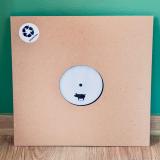
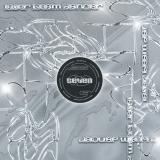
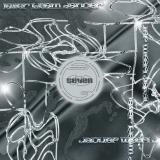
'Come Into My Life' is a deep vocal house spine-tingler from Nathalie Capello and Rose Lonegran that is the subject of three separate remix EPs on Jus-Ed's top drawer Underground Quality label. This one begins with German house head Damiano Van Erckert layering in some humid chord work, before Reggie Dokes's Jazzy Adlib has fingers dancing nimbly across the piano keys to bring a brighter sound and Machillado's House Again remix is pulled apart and rebuilt as a rough-edged and dusty beatdown. Kossi Emmanuel keeps things bouncy and chord-laced for the ultimate soulful release.
Following hot on the heels of the Frequency Damage EP, DJ Quest returns to Cyberfunk with Squeaks / Snake Style— a two-track release that dives deep into the unmistakable sound that made Quest’s productions stand out during the early 2000s.
Rather than simply recreating the past, both tracks tap directly into the DNA of the original Cyberfunk sound: rolling breakbeats, huge basslines, twisted analogue synths and the kind of distinctive production that became synonymous with DJ Quest at the height of the Bassline Breaks era.
Built around original analogue synth work throughout, Squeaks / Snake Style is a deliberate throwback to the raw, futuristic sound of the early 2000s, produced with the weight and clarity needed for today’s sound systems.
It’s classic Quest, strange noises, big bass, rolling drums and plenty of attitude.
A. Squeaks
Everything DJ Quest became known for rolled into one track. Squeaks is an unapologetic throwback to the classic Quest sound of the early 2000s, driven by heavyweight breaks, deep bass and original analogue synth work throughout.
Twisted electronic squeaks and evolving analogue sounds weave their way around the drums, giving the track that instantly recognisable combination of funk, darkness and futuristic weirdness that characterised so many of Quest’s early productions.
Raw, energetic and built firmly for the dancefloor, Squeaks takes the spirit of the original Bassline Breaks era and brings it straight back onto a modern sound system.
AA. Snake Style
On the flip, Snake Style takes the same analogue-driven approach but moves into deeper rolling territory.
A more hypnotic, heads-down breaks roller, the track develops around a heavyweight bass groove, rolling drums and constantly shifting analogue synth lines. There’s less emphasis on the immediate impact of the A-side and more on building a groove that locks into a DJ set and keeps moving.
Still unmistakably Quest, Snake Style combines the rawness and character of early-2000s breakbeat with modern low-end weight and production, proper rolling Cyberfunk business.
Special Vinyl Edition
Making this release particularly special for collectors, the 12” vinyl comes with an exclusive book showcasing the artwork from some of DJ Quest’s biggest and most memorable releases.
The book looks back through Quest’s extensive catalogue and the visual identity that accompanied the records, bringing together a selection of classic release artwork from across his career plus photo collages of memories made across his journey.
It turns Squeaks / Snake Style into more than just a new DJ Quest 12”, it’s also a celebration of the music, artwork and history surrounding one of the original pioneers of the Bassline Breaks sound.
For long-time followers it offers a piece of Quest history alongside two brand-new productions, while newer listeners get an introduction to the catalogue and imagery behind the sound
Reissued in 2026 for its 10th Anniversary on limited edition double vinyl 1 X Blue 1 X White, showcasing sought-after tracks from the catalogue.
Rebirth 10, a limited double CD released in 2016, celebrated the 10th anniversary of Rebirth Records. Curated by one of the greatest names in House Music, Larry Heard, aka Mr. Fingers, it featured key releases from the label's first decade.
Featuring original music and remixes from Larry Heard himself alongside further legends of the scene such as Motor City Drum Ensemble, Joe Clausell, Andrés, Jamie 3:26, Ripperton, and Mr Fingers himself. This compilation shines a light on forgotten classics from one of House Music’s most influential labels of the past 20 years. True house from THE house producer of the scene.
Verdad Y Error (2026) resides in the tension between the thrashing of external noise and beating centred internal calm. Gibrana Cervantes is known for her work across experimental music and contemporary performance, a practice with focussed intensity and surging physicality, often pushing the limits of endurance, presence, and embodiment. A central axis of her performance practice is her ongoing collaboration with acclaimed choreographer Florentina Holzinger, including composing the music for SEA WORLD (2026), Florentina Holzinger’s critically acclaimed installation for the Austrian Pavilion at the Venice Biennale. Alongside this, she is a core member of the experimental ensemble Amor Muere (Mabe Fratti, Concepción Huerta, and Camille Mandoki). Cervantes maintains an active recording practice that directly informs her live output including her collaboration Memoria (2025), with Colombian Drone Mafia (Nyksan) for Ambie-Tón (Tratratrax),
Verdad y Error is a record of her artistic approach which expands her body and the violin’s horizon of possibility to near breaking point. Cervantes uses a register closely associated with Metal, yet buried deep in the alchemy of these pieces are motifs which hark back to her classical background. Across these pieces the violin is used as an instrument with a fragmented and shifting voice — blurred, repeated, and reshaped through distortion. “Many of these pieces come from images, memories, and sensations that have stayed with me for years. I'm interested in the blurring of what actually happened and what time transforms.” The recordings are built with layers of violin tones which oscillate between recognisable, processed, stretched and shifted, and lay embedded in a frequency stratum of volatile static and noise. “The violin on this album doesn't appear as a clean instrument. I process it, repeat it, distort it, and multiply it until it begins to feel more like memory than melody. Something blurry, shifting, difficult to grasp.” The origins of the album were born at a time when Cervantes was seeking inner calm amidst a relentless external noise, questioning the validity or possibility of memory and its radically changing perception in relation to experience. Subsequent reflection on this contemplative moment allowed her to develop a relational music which moves through memory, erosion, repetition, and emotional ambiguity. Creating a space that feels both intimate and unstable, mercurial with the patina of lived imperfection.
Akin to the unreliable narrator and linguistic instability, each piece functions as an emotional landscape suspended between clarity and confusion. An album which balances melody, brutality, fragility and noise
throughout its sprawling recordings and artwork, which operates as an analogue to the music. The visual world of the album developed in collaboration with Mauro Ventura was compiled across various media with a mix of handwritten texts, burned typography, metallic textures, and fragile physical materials. “I wanted the record to feel tactile and imperfect — something emotionally direct but physically worn.” says Cervantes. More than offering explanations, verdad y error exists as a conversation between memory and disappearance, noise and stillness, truth and error.
With her fifth solo studio album, Half An Owl And A Full Moon Rising, landing on Dekmantel Records, Steffi harnesses the energy of the dancefloor for a powerful, uplifting ride into the core of what makes this culture so transformative. From her years as a dedicated raver in the late 80s, through to her global tours, prolific production and ceaseless love for music in its many forms, Steffi's innate understanding of the dancefloor informs this new body of work. Key to all of this is the joy of the club experience: the high energy and the vibrational field that's created when the DJ, their musical selections and the dancers align on the same wavelength. The "Feel Factor" as she calls it. Even the title is a reference: half an owl meaning half a pill.
Each track is imbued with pure, unfiltered club energy. Steffi's approach with her albums is to start from scratch, working up and out from a core idea rather than compiling music from an existing collection, and Half An Owl And A Full Moon Rising is comprised of eight cuts, whittled down from over 40. Opening with 'The Rolling Wave', the album immediately transports the listener into a world of emotionally and physically moving soundscapes. Across all eight tracks Steffi weaves together potent drum programming with ethereal pads, strings, heartrending melodies and straight up grooves: honest, no fluff productions that are designed for a very specific purpose. Listening to cuts like 'Sweeping Leaps', you can hear echoes of the huge variety of house and techno Steffi has absorbed. The title track wraps you up in its scintillating rhythms and heady strings, while, midway through, 'Acoustics Of Space' fires on all cylinders with its dynamic tempo, relentless drums and euphoric pad work.
David Norland is an Emmy-nominated English composer, known for his scores for drama and documentary, alongside his experimental choral and electronic music. Bringing stories to life through sound, he received critical acclaim for his debut solo album ‘Glam Tear Stain’ (2019) and is set to release follow-up album ‘La Source’ in June 2026 via Denovali Records.
Relocated back to his London home after many years in Los Angeles, and free from years of drug and alcohol problems, recent commissions for two choral works allowed Norland to return to the innocent origin of his musical world, and his experience as a parent prompted a lot of outward reflection. What kind of world are we leaving to our children?
Inspired by his score to the forthcoming silent black and white film ‘Carousel’ (2026), Norland found other music emerging that refused to be ignored. The film’s director opened the door to an entirely free scoring process – no temp music, no expectation, no guidelines, just pure intuitive expression. ‘La Source’ draws on this experience, alongside his childhood as a touring chorister, the honkytonk upright piano in the north-east London bedroom of his early 20s, his early recording experiments with a TASCAM 4-track cassette recorder, and his intense preoccupation with bells, flutes, stone architecture, and mysticism.
From the haunting, choral beauty of ‘E-Car Soul’ to the breezy album title track, Norland blends minimalist classical structures with electronics. A unified tapestry of blended voices, harmonies and textures, ‘La Source’ is a deeply emotional and melancholic journey for Norland. “In the end, I’m looking to find meaning through the music, like when I was a kid singing in choirs. But I get the most sense of meaning through transcendent experiences, rather than anything intellectual or dogmatic. I have to feel it, not think it. I’m trying to make work that’s luminous, wondrous, shimmering and strange, so I can keep having those experiences,” says Norland.
On his inspiration for the album, Norland adds, “I love making patterns in things and finding patterns. That’s why minimalism was so enticing to me, the patterns are so explicit. I love word play and anagrams. The big sadness coming through as I was making the record is this clarity over the future of my kids. Everything else is a complete distraction. This incredible nurturing planet and its ecosystem are being rapidly destroyed, and the forces destroying it are relentless and punitive. And they seem to be fine with consigning our children to live in an ever-more-hostile wasteland. You can’t pretend that’s not coming, if you do I think you’re lying to yourself. And perhaps eventually it will be the fact that people love their kids that will stir wider fear and action. It’s hard to think of anything more connected to the idea of spirit.” The result is the reflective, ecstatic, mystical and sad world of ‘La Source.’
Norland’s screen work includes the award-winning documentary Anvil! The Story Of Anvil (2008), directed by Sacha Gervasi, and since 2010, he has composed much of the music for US broadcasting giant ABC’s primetime news documentaries. His work for ABC is broadcast in the US and around the world on a daily basis.
In 2012, he was the music supervisor for Hitchcock (2012) featuring Anthony Hopkins, Helen Mirren & Scarlett Johansson and in 2017, he teamed up once again with Gervasi for the score to November Criminals starring Chloe Moretz and Ansel Elgort. The following year, he composed the score for the Emmy-nominated HBO film My Dinner With Herve, starring Peter Dinklage and Jamie Dornan.
Norland will be performing the score of Carousel later this year, and the score itself will be a forthcoming release on Denovali. 2026 will also see the release of documentary All Permits Secured, a valentine to the history of EDM, featuring Norland’s score.
Seven years after 2019’s ‘The Dusk Loom’, Petrels returns with a pair of new albums, Infangthief and Outfangthief. The first of these releases, Infangthief, was originally written and recorded in 2022, before being reworked in light of a subsequent album, Outfangthief, due to be released later this year.
The two albums act as companion pieces, mirrors revealing facets of the other, overlapping in sound and subject matter. Though Outfangthief may have been written after Infangthief, it is no mere follow-up, with it's own creation causing a re-visiting and re-working of the earlier album, which in turn informed the writing of its twin.
Taking their titles from Old English legal terms ("thief seized without" and "thief seized within”), the central thread running through both albums is the illusion of assumed human authority - that which is given and that which is taken by force. With Western society seemingly hellbent on willingly embracing a brutally destructive economic model (even in its death throes), these albums attempt - in their own small way - to undertake the essential task of imagining alternative ways of being.
Petrels is the solo project of musician and artist, Oliver Barrett. Since releasing his debut, Haeligewielle, in 2011 (#9 in A Closer Listen's Best Albums of the Decade), Petrels has toured across Europe and shared a stage with the likes of Jóhann Jóhannsson, Tim Hecker, FIRE!, Nate Young (Wolf Eyes), Trouble Books, Demdike Stare, Nadja, and Hans-Joachim Roedelius (Cluster). Working from his home in Somerset, UK, Barrett has released numerous albums through his Floating Limb imprint, as well as mixing and/or mastering hundreds of releases for the likes of Keiji Haino, Loren Connors & Alan Licht, Judith Hamann, Incapacitants, Mette Rasmussen & Sofia Jernberg, Yasunao Tone and more
“Petrels sidesteps the chilliness found in much of the music of his peers, replacing it instead with an almost spiritual ecstasy, his ravishing synths and almost choral vocal treatments calling out in cosmic, wide eyed wonder at the universe.” – Paul Margree, Louder Than War
"Things are looking better than ever for GENERATION STEEL! The quintet from Wetzlar/Germany, has reinvented itself on all fronts and is set to take the music world by storm with its upcoming third studio album, Steelmachine.
With the addition of guitar wizard and songwriter Thilo Herrmann - who made his debut in 1985 on the FAITHFUL BREATH classic “Skol” and has written heavy metal history throughout his career with RISK (including “Ratman”), RUNNING WILD (including “Black Hand Inn”, “Masquerade”), and GRAVE DIGGER (including “Ballads of a Hangman”) - bandleader and guitarist Jack the Riffer now has a living legend by his side.
There has also been a change behind the mic: from now on, Swedish vocalist Mike Stark - who currently sings for the Argentinian band FEANOR and the Swedish group STORMBURNER - is setting the tone. His powerful, high-pitched yet dynamic voice gives the new tracks an absolute seal of quality.
GENERATION STEEL stands for authentic, traditional, '80s-influenced heavy metal, combining the styles of ACCEPT and JUDAS PRIEST.
The ten neck-breaking tracks on the band's third full-length album were produced by Piet Sielck (IRON SAVIOR), who has previously refined classics by GAMMA RAY, GRAVE DIGGER, HEADHUNTER, STORMWARRIOR and BLIND GUARDIAN.
The cover artwork, designed by Gyula Havancsak (who has also created artworks for POWERWOLF, ACCEPT and BLIND GUARDIAN, among others), is equally eye-catching.
Anyone who loves honest, traditional German metal will quickly embrace “Steelmachine”, because the quintet not only takes us back to the '80s, but also shows just how timeless true metal is. Ten home runs, including the four singles “Steelmachine”, “Witches Cross”, “Wings of Fire” and “Fields of Pain”.
Stay Metal – Stay Steel!"
Produced by François Tétaz and Luke Howard and recorded primarily at Melbourne's Synth Temple, Tina Arena's Way Of The World reimagines “True Faith” (New Order), “Way of the World” (Max Q / Michael Hutchence), “Enjoy the Silence” (Depeche Mode), “Ordinary World” (Duran Duran), “Torno Bambina” (Ada Mori) and “Cayendo” (Frank Ocean) through stunning orchestral arrangements, prepared piano, analogue synthesis and electronic textures.
Rather than traditional cover versions, these are complete artistic reimaginings that reaffirm Tina Arena as one of Australia's most expressive and enduring vocalists. Of first single “True Faith”, Tina says: “Making the deliberate choice to focus on the lyric of true faith was musically revelatory for me. It presented a blank musical canvas with endless vulnerability and space for me to explore.”
François Tétaz, a Grammy and ARIA-winning producer known for his work with Gotye, Kimbra and Architecture in Helsinki, contributes synthesisers, Rhodes, prepared piano and drum machines throughout, while pianist and composer Luke Howard shapes the EP's restrained, cinematic language. The pair are joined by an ensemble including the Budapest Art Orchestra, Peter Knight, James Rushford, Mindy Meng Wang and orchestrator Felix Watson, giving the collection its rich, orchestral backbone.
The EP announcement lands amid a landmark 50-year career anniversary for Tina — one of Australia's highest-selling artists of all time, having sold more than 10 million albums worldwide.
After establishing their identity with their debut EP, Alma de Baile, Geneva-based duo Roshâni unveil Planet R, their first album, set for release on October 15, 2026, via Stonepixels and distributed by The Orchard.
More than just a record, Planet R is a world of its own: a planet shaped like a disco ball, where languages blend, synthesizers intertwine with organic grooves, and dancing becomes a form of futuristic therapy. Sung in Farsi, Spanish, French, and English, the album moves freely between futuristic disco, alternative pop, experimental electronic music, and contemplative ballads, never seeking to belong to a single scene or territory.
Re-release of Steffi's successful debut album Yours & Mine on her new imprint. The classic house album that reminds of early Detroit and Chicago tracks with a modern touch!!!
Label co-founder CRYME releases his third solo EP on the Berlin-based imprint, paving the way for a new, more subtle direction. Across these four tracks we find the artist diving deeper into a sound he's been shaping over the last few months. More adventurous, experimental, still driving and dancefloor-focused. This one is for the early mornings at festivals - that moment when the sunlight starts to break through the fog and the night turns into day. From bubbly, techy and quirky minimal on the A-side to more dubbed and spaced-out cuts on the B-side with a more atmospheric feel. Overall complex music full of movement that's still easy to listen to but keeps the crowd moving.
Label co-founder CRYME releases his third solo EP on the Berlin-based imprint, paving the way for a new, more subtle direction. Across these four tracks we find the artist diving deeper into a sound he's been shaping over the last few months. More adventurous, experimental, still driving and dancefloor-focused. This one is for the early mornings at festivals - that moment when the sunlight starts to break through the fog and the night turns into day. From bubbly, techy and quirky minimal on the A-side to more dubbed and spaced-out cuts on the B-side with a more atmospheric feel. Overall complex music full of movement that's still easy to listen to but keeps the crowd moving.
Originally released by Umor Rex on cassette in 2018, Rafael Anton Irisarri’s Sirimiri is now available on vinyl for the first time, newly remastered for this edition. This LP marks the fourth and final installment in a series of four reissues released throughout 2026 to celebrate the 20th anniversary of Umor Rex.
It is a fitting way to close such a special anniversary year. Rafael is not only an artist who has released three albums on Umor Rex, but someone who has been part of the label’s history for more than a decade. His sensibility and way of listening have complemented and nourished the label throughout the years, while his mastering work has helped shape the sound of many of our releases. A close friend, and an essential part of what Umor Rex is today.
Sirimiri roughly translates as “drizzle” in Basque, and we can’t think of a better word to describe its content. The album consists of four long-form pieces, each shaped through different processes and with its own distinct identity, in which Irisarri seeks to blend subjective time with the listening experience through loops, repetition, and subsequence-based sound. Following Eno, nothing happens in quite the same way twice: perception is constantly shifting, and nothing stays in one place for long. The desolation and despair—in a strangely positive way—that we heard in The Shameless Years (Umor Rex, 2017) and later in FAÇADISMS (Black Knoll, 2024) are present here, but the impression is more concrete, unfolding through rawer, less rhetorical landscapes. If The Shameless Years existed somewhere between beauty and active tragedy, this record travels through the beauty and melancholy of an observing eye—a quiet, rebellious insurrection.
Written, produced, mixed & mastered by Rafael Anton Irisarri at Black Knoll Studio, NY. Carl Hultgren: Guitars on “Sonder”, Taylor Jordan: Electric Piano on “Mountain Stream”. Design by Daniel Castrejón.
Fontaines D.C. announce their fifth studio album, Dopamine Chamber, released on 16th October via XL Recordings. Produced by James Ford, it is the follow-up to 2024’s UK platinum-certified Romance – and the sound of a band moving decisively away from the guitar language of their early records into something colder, stranger and more synthetic. It arrives today alongside lead single “Marianne” and its accompanying video, directed by Dave Meyers.
Dopamine Chamber arrives like a constellation behind undulating sighs of smog: potent balladry, anthemic melodies glinting through the murk. In a world tipping towards collapse, it asks how pleasure mutates amid peril—and what our pursuit of it reveals about us. Across the album, Fontaines D.C. – Grian Chatten, Carlos O’Connell, Conor Curley, Conor Deegan and Tom Coll – move between gratification and dread until the two meld together, reflecting the overwhelm of artificial intelligence, environmental collapse and political violence all riding the same algorithms as memes, jokes and celebrity culture. “The album itself is a dopamine chamber,” says Chatten. “You step inside and we test these different mind- or mood-altering pieces of music on you.”
Where Romance held its tension in balance, this record tips it. “I think Romance was maybe 60 per cent human and 40 per cent corrupted by automation, and a loss of feeling,” says Chatten, who spent time among the faded grandeur of Venice, Vienna and Sicily in search of lyrical inspiration. “This one feels more like 60 per cent corrupted — the mask is wearing the face a little more.” He resisted any pull towards easy optimism: “I felt it would be more powerful to leave the hope out and reflect the ugliness honestly. This one needed to feel more like a catastrophic warning.”
“Our albums have always questioned a sense of place,” says bassist Conor Deegan. “First Dublin, then being away from Dublin, and then trying to find the romance elsewhere. On this record, the question became: where do you escape to?” Into the self, perhaps – or hedonism, fantasy, cosmetic perfection, eternal youth or the endless refresh of a screen.
Fontaines D.C. have spent five albums refusing to repeat themselves – from Dogrel (2019) through A Hero’s Death (2020), the No. 1 Skinty Fia (2022) and the anarchic, kaleidoscopic Romance (2024). Dopamine Chamber is their most radical turn yet: cold synthesiser tones, marching drums, samples and triggers, several songs with no guitars at all, and the swooning strings of 1960s Italian pop pulled into something synthetic. For guitarist Conor Curley, the aim was to break from the band’s own reference points: “I was trying to find stuff that pointed into the future.” It was made with James Ford between London, the English countryside and Palermo, where Chatten recorded vocals in a makeshift booth built from mattresses and cushions.
“There’s a poignant sense of us being on the brink of some other kind of form of humanity, or non-humanity,” says Chatten. For their fifth album, Fontaines D.C. have built the chamber. What happens to the listener inside it will be the experiment.
Fontaines D.C. announce their fifth studio album, Dopamine Chamber, released on 16th October via XL Recordings. Produced by James Ford, it is the follow-up to 2024’s UK platinum-certified Romance – and the sound of a band moving decisively away from the guitar language of their early records into something colder, stranger and more synthetic. It arrives today alongside lead single “Marianne” and its accompanying video, directed by Dave Meyers.
Dopamine Chamber arrives like a constellation behind undulating sighs of smog: potent balladry, anthemic melodies glinting through the murk. In a world tipping towards collapse, it asks how pleasure mutates amid peril—and what our pursuit of it reveals about us. Across the album, Fontaines D.C. – Grian Chatten, Carlos O’Connell, Conor Curley, Conor Deegan and Tom Coll – move between gratification and dread until the two meld together, reflecting the overwhelm of artificial intelligence, environmental collapse and political violence all riding the same algorithms as memes, jokes and celebrity culture. “The album itself is a dopamine chamber,” says Chatten. “You step inside and we test these different mind- or mood-altering pieces of music on you.”
Where Romance held its tension in balance, this record tips it. “I think Romance was maybe 60 per cent human and 40 per cent corrupted by automation, and a loss of feeling,” says Chatten, who spent time among the faded grandeur of Venice, Vienna and Sicily in search of lyrical inspiration. “This one feels more like 60 per cent corrupted — the mask is wearing the face a little more.” He resisted any pull towards easy optimism: “I felt it would be more powerful to leave the hope out and reflect the ugliness honestly. This one needed to feel more like a catastrophic warning.”
“Our albums have always questioned a sense of place,” says bassist Conor Deegan. “First Dublin, then being away from Dublin, and then trying to find the romance elsewhere. On this record, the question became: where do you escape to?” Into the self, perhaps – or hedonism, fantasy, cosmetic perfection, eternal youth or the endless refresh of a screen.
Fontaines D.C. have spent five albums refusing to repeat themselves – from Dogrel (2019) through A Hero’s Death (2020), the No. 1 Skinty Fia (2022) and the anarchic, kaleidoscopic Romance (2024). Dopamine Chamber is their most radical turn yet: cold synthesiser tones, marching drums, samples and triggers, several songs with no guitars at all, and the swooning strings of 1960s Italian pop pulled into something synthetic. For guitarist Conor Curley, the aim was to break from the band’s own reference points: “I was trying to find stuff that pointed into the future.” It was made with James Ford between London, the English countryside and Palermo, where Chatten recorded vocals in a makeshift booth built from mattresses and cushions.
“There’s a poignant sense of us being on the brink of some other kind of form of humanity, or non-humanity,” says Chatten. For their fifth album, Fontaines D.C. have built the chamber. What happens to the listener inside it will be the experiment.
Tenuous Links welcomes Torino’s very own VIOLA to the label with his new ‘Wrinkles’ EP. As the label owner of Reflue Records, VIOLA first caught my attention with his debut full-length release, a body of work that showcased a deep, rugged sound and a clear technical prowess shaped by his surroundings rugged coastlines and industrial landscapes of Torino in northern Italy. After speaking with Cristiano for over a year, it felt like a natural progression to bring his music to Tenuous Links. “The music I write almost always functions as a visceral soundtrack to whatever environment surrounds and infects me while I'm creating. Deeply rooted in the architectural contrasts of the places I’ve inhabited.”
‘Wrinkles’ is VIOLA’s second full-length body of work, yet the years of graft and dedication behind it are immediately apparent. Across three original tracks and a remix from London’s Jay Duncan, the EP delivers pure grit and crunch, inhabiting large, cavernous atmospheres grounded by pummelling bass, dynamic drums and intricate rhythmic detail.
The title track ‘Wrinkles’ is an ode to club spaces and the scene that revolves around them. Its broken rhythm channels the dancefloors of Cristiano’s formative years, spent partying in abandoned bunkers and warehouses in and around Torino. VIOLA explains: “Crafting such a raw, gritty bassline felt like an absolute necessity during the writing process, retracing memories of long nights spent dancing in silence.” The track’s cavernous atmosphere mirrors those pitch-black, unlit spaces, drawing us deeper and deeper into the abyss, with only brief glimmers of light offering reprieve from its relentless, all-enveloping bassline.
‘Mon Tom’ draws heavily from VIOLA’s hometown and his complicated relationship with Torino ,a city where tranquillity and beauty sit alongside heavy industry. The calm of the coastline is violently interrupted by vast steelworks and plumes of black smoke, leaving an imposing industrial mark on both the landscape and its people. The track reflects these contrasts. Metallic yet fluid, it moves at a faster pace, built around a driving 4/4 rhythm designed to suspend the listener while skittering percussion creates an increasingly uneasy sense of movement. It’s a meeting point between the beauty and brutality of the environment that inspired it.
‘P Maggiore’ was written between 2019 and 2020 while VIOLA was living in Rome’s chaotic Porta Maggiore district. Surrounded day and night by the grinding noise of trains, screeching tram brakes and beaten metal, he translated those raw auditory memories directly into high-pressure sound design. Yet, in contrast to the intensity of his surroundings, VIOLA deliberately pulls back the tempo.
Rounding off the EP is a skeletal remix of ‘Wrinkles’ from London’s Jay Duncan. She strips the original back into a techy, rolling cut, retaining its atmosphere and darkness while introducing a lighter touch of minimal-esque sound design. The result is a subtly transformed take on the title track that provides a fitting conclusion to the EP.
‘Wrinkles’ EP is a record shaped by place, by architecture, industry, memory and the physical spaces that leave their mark on us. From Torino’s industrial coastline to the chaos of Rome and the darkness of abandoned club spaces, VIOLA turns his surroundings into sound. Coming to vinyl and digital October 16th of October.