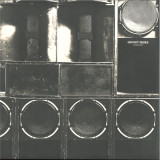
Mannequin Records presents Electronic Corporation 1998–2006, a compilation bringing together rare and long unavailable recordings by the German electronic projects H.E.I.M. Elektronik and MAS 2008.
Active around the turn of the millennium, both projects share the involvement of producer Ive Müller while developing distinct collaborations and approaches to electronic music. H.E.I.M. Elektronik was founded in 1996 by Holger Erlenwein and Ive Müller (after the two artists split in 1999, Müller continued using the name), while MAS 2008 is the project of Ive Müller together with René Kirchner. Though separate entities, the two projects explored a similar sonic territory: stripped-down electro, minimal electronics and machine-driven body music shaped by analog hardware and a raw DIY production ethos.
The roots of Müller’s work go back to the final years of the DDR. As a teenager he worked as a licensed DJ — officially known as a “Schallplattenunterhalter” — operating a travelling disco across Saxony. With limited access to official Western releases, music circulated through cassette recordings taped from West German radio stations such as RIAS Berlin, NDR2 and Bayern3. Together with friends he travelled between youth clubs and discos around Leipzig with a “rolling discotheque”: a Russian Wolga pulling a trailer loaded with Electro-Voice sound systems sourced through the black market.
At the turn of the 2000s this background in underground electronic culture resurfaced in a series of recordings rooted in electro, EBM and minimal machine music. The tracks collected on Electronic Corporation 2000–2002 capture this moment: cold sequences, driving rhythms and stark synthetic textures produced with a direct and uncompromising approach.
Compiled and remastered by Rude 66 from the original sources, Electronic Corporation 2000–2002 documents a small but fascinating chapter of German underground electronics from the early digital era.
Cerca:k rad
Thessaloniki is a hotbed of electronic talent. Tendts are testament to this. The triumvirate of brothers Christos and Fotis Papadakis, joined by guitarist Elias Smilios, have carved out a truly unique sound. Blending disdainful punk with synth‑pop sheen, the group arrive at the Bordello with Ghost Boys. Cymbals crash in the title piece, a lone key circling percussive precipitation before rich guitar strings bring balance and ballast. The song, an emotion‑stripped story of missed opportunities and narrowing prospects, is sensitive and sharp; an emblazoned anthem to the lost and forgotten. Distilled down to a powerful essence, the radio version focuses on the throaty message, meandering synth melody, and smoky strings.
Lauer steps in for remix duties, dipping the original into a blue acid‑electro syrup before it re‑emerges as a fresh‑faced reimagining, its chorus lanced with vocoders while a minimal melody simmers beneath Chicago‑style knob twists. Taking another direction, Boys’ Shorts melt broken‑beat revelry into their countrymen’s original. Smilios’ guitar riff becomes a central column around which samples spin and house warmth emanates. Sheer quality from needle drop.
BLACK VINYL[25,84 €]
Following the reissue of The Pocket of Fever, Ambient Sans presents the second chapter in Masahiro Sugaya’s visionary work for the avant-garde performing arts company Pappa TARAHUMARA.
Founded by Hiroshi Koike in 1982, Pappa TARAHUMARA blended dance, theater, music, and visual art into abstract, immersive stage worlds. Sugaya’s compositions became the sonic counterpart to this radical aesthetic—minimal yet deeply evocative, combining electronics, ambient textures, and delicate melodic gestures into a sound language both intimate and expansive.
Music From Alejo marks his first original stage score for the company: a work where repetition and silence intertwine with shimmering synthesizers and dreamlike motifs, conjuring atmospheres that feel suspended between reality and reverie. More structured than The Pocket of Fever yet equally poetic, the album reveals Sugaya’s gift for translating movement into sound, balancing modern composition with subtle echoes of Japanese tradition.
Reissued for the first time on vinyl, Music From Alejo includes a printed insert featuring an exclusive interview with the artist, alongside photographs from our visit to his home in Japan. Essential listening for anyone drawn to the ambient minimalism of Hiroshi Yoshimura, Midori Takada, or Brian Eno—reimagined here through the lens of Tokyo’s experimental scene of the 1980s.
Danny Krivit pays tribute to the royal family of soul with a double A-side of classic house remixes from Michael and Janet, both appearing on 7-inch for the first time. Standouts from the revered era of ’90s house, these tracks have remained a steady presence in Krivit’s sets, a testament to their timeless appeal.
Mr. K’s edit of ‘Remember The Time’ takes E-Smoove’s punchy Late Nite remix from the original 1992 12-inch single — already considered the strongest mix on the release — and carefully condenses it to fill a 7-inch, retaining all the best elements while adding a highly mixable intro and a unique acapella ending. This edit might now be the definitive version of this classic club tune! The original mix of Janet’s ‘Any Time, Any Place’ hit radio in 1993, but it wasn’t until the following year when Darryl James and David Anthony’s smoothly uplifting and funky remix really took off in all the clubs, and it’s this D&D remix that Krivit turns his attention to for the flip side of this new MEU 45. A favorite of Frankie Knuckles, and Body & Soul, ‘Any Time, Any Place’ has remained a go-to cut for Mr. K, who shares his personal edit here on the compact format for the very first time.
Mit Money landete Mozzart 1987 einen echten Euro-DiscoHit, der bis heute als Club- und Genreklassiker gefeiert wird.
Treibende Beats, eingängige Synthesizer-Melodien und der typische 80er-Jahre-Disco-Sound machen diesen Track zu einem zeitlosen Highlight der europäischen Dance-Ära.
Jetzt ist „Money“ endlich wieder erhältlich – als limitierte Maxi Single auf farbigem Vinyl. Neben der originalen Version aus dem Jahr 1987 enthält diese Veröffentlichung brandneue Remixe, die dem Klassiker einen frischen, modernen Twist verleihen, ohne seinen ursprünglichen Charme zu verlieren.
Diese Maxi Single ist ein Muss für Sammler, DJs und alle Fans von Euro- und Italo-Disco.
Pixl has been sending me so much of the music that he's been doing solo as well as his collabs with Duburban, Ark X & Peeb. I've been playing quite a few of them on my shows on NTS Radio & it only made sense to eventually put together a full release of them, so here is Old Citrus by him & Peeb, representing the atmospheric style of jungle that they are both excellent at.
Big up to both of them on this release & to Equinox for his fantastic remix of Old Citrus.
He runs a label called Western Lore which I've featured on previously, with 2 different remixes I did of Plastic Face by Response & Pliskin, as well as a track featured on the first Blunted Breaks compilation. It only made sense to eventually work on a joint label project as his label is a key figure in the current wave of jungle music, plus I hadn't put any music from him on Future Retro London yet so now I can finally tick him off the list!
Big up to Dead Man's Chest for his work on the collaborations & for his involvement in making this release a reality.
Detroit’s DJ Minx debuts on Rekids with the ‘Energy’ EP. The First Lady of Wax completed 2025 with a remix for Radio Slave and Kameelah Waheed following her appearance at Rekids’ Panorama Bar takeover. Release Date: 13th February 2026.
Legendary Detroit House and Techno pioneer and Women on Wax founder, DJ Minx, drops her debut ‘Energy’ EP for Rekids 13th February 2026. She follows her 2025 appearance on the House of Rekids mix series, and at the label’s Panorama Bar showcase in Berlin, before closing the year remixing Radio Slave & Kameelah Waheed’s ‘All Rize’. Known for championing women in the music industry, particularly Detroit DJs and producers, Minx recruits Florida-native, two-time Grammy Award-winning singer-songwriter Kendra Foster for a larger-than-life, jacking title cut. Robust drums, bright synth stabs, and Foster’s uplifting vocal bring the energy before Minx’s ‘You Can’ features an inspirational spoken word vocal, while low-slung rhythm and a deep, crawling bassline drive the track forward.
DJ Minx has been a central figure in Detroit’s musical history since the 90s. Minx has hosted radio shows on WGPR and CJAM, held a residency at Club Motor, and performed at every edition of Movement since 2000. Her contributions have been recognized with the Spirit of Detroit Award and honors from Mixmag and Time Out. Recent highlights include her ‘Queendom’ EP on HE.SHE.THEY., a BBC Radio 1 Essential Mix, releases on Planet E and Rules Don’t Apply, collaborations with Kevin and Dantiez Saunderson as e-Dancer, and continued headline performances worldwide.
To celebrate reaching its 50th Anniversary, electro pioneers Kraftwerk have announced three new editions of their landmark 1975 album Radio-Activity for release on 15 May 2026. Using the original 16-track master tapes, Kraftwerk founder Ralf Hütter with engineer Fritz Hilpert have created a brand-new Dolby Atmos Mix which takes Kraftwerk’s first all-electronic album and brings vivid new shading, forensic detail and richly layered cinematic depth to the most boldly experimental album in the Kraftwerk catalogue.
The new Dolby Atmos Mix is available as a Blu-ray audio disc and digital release, and the stereo album is pressed as a stunning vinyl picture disc featuring updated artwork.
Single picture disc vinyl LP in a spined sleeve, with die-cut to front cover, shrinkwrap, mktg. sticker.
DJ Homicide is a celebrated American DJ, musician, rapper, singer, record producer and radio personality. With a career that spans more than three decades, he has left a lasting mark, mostly as a key member of the multi-platinum band Sugar Ray, though he has also made some fine solo moves. And he backs that up here with a couple of full-fat jams on CA to get the new label underway in style. 'Pause Lion' starts things off with some raw, guttural vocals and low slung boom-bap drums that are direct and edgy and on the flip, 'Ghetto Scenario' rides a more smooth groove with some ragga vocals that call to mind the best of Sean Paul.
- 77: Blackout
- Bust The Bust Stop
- Never Give Up
- Voodoo Gates
- Come Back 4 Real Love
- Shameless
- Life During Wartime
- The Girl From Outer Space
- Black Butterfly
‘Black Butterfly’ is Brooklyn Funk Essentials eighth studio album and includes the bands recent hits ‘Never Give Up’, ‘Bust The Bus Stop’ and ‘Life During Wartime’. Playlisted on BBC Radio 2 and Jazz FM and supported by Craig Charles and Cerys Matthews at 6 Music as well as many stations across Europe and the Americas. The album was produced and co-written by bassist Lati Kronlund and features Alison Limerick, Ebba Åsman and Desmond Foster on vocals.
Kronlund and Limerick have been enjoying the recent renewed interest in ‘Where Love Lives’. Kronlund wrote and produced it for Limerick in 1990, it was remixed by Frankie Knuckles and David Morales and became a club classic and was featured in this year’s John Lewis Christmas TV Ad. Arthur Baker heard the original in a club in 1991 that he contacted Kronlund about working together and they then formed Brooklyn Funk Essentials.
Since then, Brooklyn Funk Essentials have built a devoted international following and notched up over 100 million streams. Fusing Soul, Hip Hop, Spoken Word, Jazz, Latin, and, of course,
Funk, the band’s journey began experimenting with drum machines and loops in Baker’s Shakedown Sound Studio in Jersey City—hunting for that perfect beat. The early recordings featured greats such as Maceo Parker, Lenny Pickett, Tower of Power Horns, Michigan & Smiley, and Dizzy Gillespie, leading to the acclaimed debut ‘Cool & Steady & Easy’ (1994). Fast-forward to April 2024, when Kronlund reunited with Baker in Miami, rediscovering recordings featuring percussion prodigy Bashiri Johnson, which inspired new creative sparks for the next chapter of Brooklyn Funk Essentials.
- 1: Intro
- 2: Eyes Of Chavez
- 3: Moment Of Clarity
- 4: Chopping Block
- 5: See The Future
- 6: Cactus Snake - Part 2
- 7: Fools Errand
- 8: In The Water
- 9: Interlude
- 10: Over The Mountain
- 11: Tried & True
- 12: Be Your Own Man
- 13: Never Enough
- 1410: 000 Immortals
- 15: Gold Coin
- 16: Electric Pollen
Irgendwo in den Hügeln von Cincinnati gibt's einen Sender, der Radiowellen in alle Richtungen schickt. Der Strom fließt durch die Luft und trifft auf deinen Empfänger mit einer Ladung, die, wenn sie verstärkt wird, einen organischen Sound erzeugt, der nur von Doctor Bionic kommen kann. Sie sind zurück mit einem brandneuen Album - dem vierten Teil der Terrestrial Radio-Reihe mit dem Titel Electric Pollen. Wie seine Vorgänger wurde das Album von dem in Cincinnati ansässigen Produzenten Grimez aufgenommen, produziert und gemischt. Er holt sich eine wechselnde Besetzung talentierter Musiker, um Instrumentals aufzunehmen, die man am besten als Organic Groove beschreiben kann. ,Wir kommen zusammen, um gemeinsam zu jammen und die Musik zu machen, die uns am meisten inspiriert", sagt Grimez. ,Wir haben uns auf die Musik konzentriert, die wir lieben, und das Ergebnis ist ein Album, das wir mit ganzem Herzen lieben. Ich würde sagen, 90 % unserer Musik ist improvisiert." Fans des Projekts werden in den Liner Notes viele bekannte Namen entdecken. Obwohl die Aufnahmen locker und spontan sind, folgt jedes fertige D.B.-Album immer einem konzeptionellen Thema. Das Thema wird oft durch ein Kunstwerk bestimmt, das Grimez inspiriert. ,Ich kaufe oder lizenziere ein Kunstwerk, das mir ins Auge fällt, und setze dann Musik dazu", erklärt er. ,Ich habe viele Werke, die sich als Albumcover eignen würden, aber ich habe noch nicht die richtige Musik dafür gefunden." Dieser Prozess ist Teil dessen, was die Musik von Doctor Bionic von anderen Instrumentalproduzenten unterscheidet.
- A1: Boundaries
- A2: Cyber Dreams (Patrice Scott Remix)
- A3: Nasty (Feat. Marquinn Mason)
- B1: Cyber Dreams (Feat. Domenica Fossati)
- B2: Foster Child
Water Sign is the debut EP from producer and instrumentalist John Silas: a five-track suite that moves fluidly between peak-time dance and inward reflection. Deeply aligned with the open-eared ethos of NYC’s Love Injection Records, the release channels house and jazz into an emotive personal chronicle shaped by movement, memory, and community.
At its thematic center is “Boundaries,” a dynamically arranged dance-floor meditation that begins with piano, 4/4 kick and restless hi-hats before blooming into radiant synth work reminiscent of classic disco auteur Patrick Adams. Midway, the track shifts—electric piano, whistles and percussion reframing the groove into what Silas calls “hues of vulnerability.” The result mirrors the arc of love, release and renewal.“Cyber Dreams” leans into lush escapism, buoyed by surging keys and impassioned flute from Domenica Fossati, while a remix from Detroit mainstay Patrice Scott (Sistrum Records) adds unmistakable Motor City weight. “Foster Child” nods to Silas’ hero, the late Paul Johnson with exuberant Chicago spirit, and “Nasty” delivers a concise workout featuring Marquinn Mason’s robust saxophone.
Water Sign reflects Silas’s trajectory—from a childhood steeped in Soul Train, coming of age with hip hop, to MPC craftsmanship, his Detroit musical family and present-day Brooklyn—into a deeply personal record equally suited to discerning DJs and deep listeners.
Austrian musician, painter, and filmmaker Kimyan (formerly Kimyan Law) combines sound and visual design in an impressively direct way to create a comprehensive artistic experience. He takes an open, intuitive approach to his compositions, connecting the
resonances of traditional instruments and rhythmic patterns from Central, North, East, and Sub-Saharan Africa with sophisticated production techniques. Kimyan's current album,
“Coloria,” in which he explores the concept of timbre in a multifaceted way, marks the pinnacle of his artistic development to date.
For his Live -concerts, Kimyan relies on the organic element of playing, using instruments such as electronic drum pads and MIDI controllers.
This gives his pieces a spontaneous, physical presence on stage that goes far beyond mere reproduction and makes his performances a lively interplay between improvisation and structure. In conjunction with his self-designed artwork and videos, corresponding audiovisual worlds are created in which cultural influences and identities, moods and timbres shine together radiantly. Kimyan's works tell stories in many colours, yet always in one language: his own.
[f] B2 Chara [Joy] 03:50
Over the last two decades, The Field has refined a language of repetition that feels not assembled but uncovered. His loops don’t just cycle; they gather weight over time, so the tracks seem set in motion rather than composed – patterns established early, then
gently altered, their emotional temperature shifting almost imperceptibly.
On this five-track EP for Studio Barnhus, the Swedish producer’s first solo release in 8 years, The Field returns to the sonic architecture that defined his seminal debut From Here We Go Sublime, but with a (dare we say
Studio Barnhus-esque) looseness that allows the structures to breathe.
Tracks like In Our Dreams and 333 706 move forward on meditative chords, harmonies stretching their reach until the tracks feel elated by their own momentum.
The B-side tilts the frame. Another Day introduces some melodic immediacy, folding a tender vocal presence into The Field’s glittering matrix of sound, softening the grid without dissolving it. Now You Exist is a grand finale radiating with restrained euphoria.
The Field’s music never insists, it just draws you in and keeps you there. In a landmark crossing of paths for the Stockholm label, Studio Barnhus proudly presents Now You Exist, out May 15 on vinyl and all digital platforms.
- A1: Archangel (Feat. Sølv)
- A2: Split In Two Minds (Feat. Seantommy)
- A3: Yosemite (Feat. Interplanetary Criminal)
- A4: Take Me
- B1: Fade Away (It’s A Feeling)
- B2: Man With A Second Face
- B3: If U Want My Heart (Feat. Dj Heartstring)
- B4: Do Not Go Gentle
- C1: 11Th Of January
- C2: Air Maxes (Feat. Shady Nasty & Fred Again..)
- C3: Gotta Have It
- D4: I Believe (Feat. Prospa)
- D1: It Gets Better
- D2: Air Maxes (Kettama Mix)
- D3: Sort It Out (Feat. Clouds)
One of electronic music’s most sought-after names, producer and DJ KETTAMA today announces the release of his long-awaited debut album, Archangel, out 3rd of October. The announcement arrives in tandem with new single “Sort It Out” featuring Clouds, and a landmark moment in his career: his biggest ever London headline show, taking over Brixton Academy on Saturday, October 4th, followed by an expansive tour across Europe, North America, and Australia.
A decade in the making, Archangel is the definitive statement from KETTAMA (Evan Cambell), the Galway-born, London-based artist. The 15-track project is a powerful blend of hard-house energy, trance-inflected euphoria, hip-hop sample-based attitude, and unmistakable emotional depth—sonic signatures that have placed KETTAMA at the cutting edge of contemporary dance music.
The album showcases a curated roster of collaborators who reflect KETTAMA’s reach and relevance across today’s underground and mainstream scenes, including Interplanetary Criminal, Fred again.., Clouds, Prospa, DJ HEARTSTRING, Shady Nasty, SØLV and seantommy. Their contributions amplify the project's scope, offering a multi-sided view into KETTAMA’s musical universe.
Among its early singles, the Interplanetary Criminal collaboration “Yosemite” is a high-velocity anthem marrying speed-garage grit with ecstatic rave melodies, while his track “Air Maxes” with Fred again.. And Shady Nasty blends introspective vocal sampling with wide-eyed club emotion. On “If U Want My Heart” with DJ HEARTSTRING featuring KLP, the ensemble channels high-energy trance, breakbeats, and vocal euphoria into a soaring anthem that fuses emotional intensity with peak-time club energy. Meanwhile, his collaboration with Clouds, released today, “Sort It Out” dives headfirst into industrial-techno territory, conjuring a dark, cathartic energy destined for warehouse euphoria. And reigning as one of the undeniable anthems of the summer so far, “It Get’s Better (Forever Mix)” delivers euphoric waves of uplifting synths and relentless rhythm, bringing an irresistible surge of energy that’s become synonymous with this summer’s club moments.
Archangel has already found a home on the world’s biggest stages and radio airwaves, with early support from key tastemakers including Jack Saunders, Danny Howard, Sarah Story, and Tim Sweeney. Simultaneously, a grassroots groundswell continues to bloom across social platforms—where viral snippets and show footage capture the visceral reaction of a fast-growing, global fanbase.
This year, KETTAMA has elevated his status to a full-blown festival phenomenon, performing at major stages including Coachella, Glastonbury, Creamfields, Portola, Seismic, and ARC Festival, to name a few. In June, he played to 20,000 people in Belfast for a b2b with Chris Stussy—one of the UK’s largest DJ events in recent memory—and is currently mid-way through a 16-week Ibiza residency at Amnesia, playing every Monday night throughout summer. Full list of upcoming live dates can be found below.
Perhaps the clearest signal of his surging popularity is the jaw-dropping response to his upcoming Boiler Room live set, with over 15,000 fans signing up to attend— the set’s release is now highly anticipated as a time capsule moment in a breakout year for the artist.
KETTAMA’s rise to prominence has been anything but conventional. Eschewing the traditional gatekeepers of the industry, KETTAMA cultivated an underground following through the likes of SoundCloud and TikTok, where raw uploads, bootlegs, and viral edits generated a tidal wave of grassroots momentum. Over the years, these platforms became launching pads for a fiercely loyal global community, drawn to his unfiltered energy and boundary-pushing sound. This subversive path to recognition has made him not just a fixture of the scene but a symbol of how new-generation artists can forge success on their own terms.
From his humble roots in the Irish underground to the world stage KETTAMA is now pushing the limits of what a next-gen DJ-producer can achieve. With Archangel, he fuses the sound of his native ‘G-Town’ with a futuristic vision that’s unapologetically global—marking a creative milestone that cements his place among electronic music’s most compelling voices.
Two decades into his winding voyage through music, culture and creativity, Tom Trago has become part of the densely woven fabric of the Dutch electronic scene - a producer, DJ, label owner, collaborator, remixer, radio host and DJ's DJ who is renowned not only for his impressive productivity, but also the genuine depth and variety of his work. While it was Trago's distinctive DJ sets that once grabbed headlines - he famously held residencies at renowned Amsterdam institutions Trouw and De School, and for a decade spent much of his time jetting between some of the most renowned clubs in Europe - in recent years Tom has cut down on appearances. Today, he chooses to be far more selective about where (and when) he DJs or performs live, often working with a handful of cherished venues and festivals while ensuring that his travels are sustainable and inspiring. Instead of the grind of touring and hedonistic night-time activity, Trago has chosen to focus on music-making, alongside semi-regular forays into radio broadcasting (NTS, Radio Radio, BBC Radio and EchoBox). He now spends most of his days producing and remixing at his new SR-3 studio in Alkmaar and his seaside home-come-studio in Bergen aan Zee. As part of these lifestyle and career changes, Trago took time to look deeper, not only inside himself, but also for musical inspiration. Tom has always loved, and devoted time to, digging into a wide variety of production styles, using this inspiration to develop a trademark personal production style, but in recent years he has taken it even further. Fuelled by a desire to challenge himself, Tom consistently tries new things in the studio while channeling all he's learned during a career that has moved forwards at breakneck speed. Since making his debut in 2006, Trago has released six critically acclaimed albums (two of which, the eclectic, beat-focused, career-spanning, Patta-released archive dive, 18, and the dancefloor excursion, Trembala, appeared in 2022); extensively worked with Dutch electronic music institutions Rush Hour and Dekmantel; collaborated with countless friends and contemporaries (Charlie Soul Clap, Awanto 3, Maxi Mill, Steffi, San Proper, Seth Troxler, and BokBok included); remixed artists including New Order, Carl Craig, Cassius, Tiga and Erol Alkan, and championed a swathe of fellow Dutch producers via the Voyage Direct label he founded in 2009. In 2025 Tom returns to legendary Dutch label Magnetron Music, home to Fatima Yamaha, DMX Krew, Legowelt, Staygold and many other, to release his Magnus Opus; Ignorance.
From Germany to Montreal, a cross-continental dialogue takes form as Oovation and Jares unite for The Shift, a sweeping coalition of emotion and rhythm marking both artists’ debut on W. Anchored in cinematic depth and driven by kinetic pulse, The Shift stands as a powerful first statement, further expanded through stunning reinterpretations by Coeus, ACNØR, and Turker.
The original take of “The Shift” finds Oovation & Jares constructing a restrained groove before thumping kicks and meandering blips send us off on a highly narcotic affair. With the foundations in place, a swaying bassline takes control of the piece, infusing it with an irresistible sense of movement. As we venture deeper inside the rabbit hole, a lush arpeggio rummages across the piece, taking us closer to an airy break where echoes osurrender to a new directive.
For the first reimagining, Coeus drives “The Shift” into more dangerous, sensual territory. Built on a thunderous rhythmic foundation, the Serbian producer laces the mix with ghostly vocal traces and a relentless synthetic tension. The result feels cinematic in scope: an after-hours odyssey pulsing with urgency and redemption, where desire and danger move in lockstep.
Next, ACNØR transforms The Shift into a perpetual motion device where tension breathes and recedes like a living organism, shimmering under dim light. Reflective and transportive, this version feels like moving through mirrored corridors. Each twist refracts a new emotion, a new identity, culminating in a tantalizing entropy.
Finally, Turker closes the circle with a radiant reconstruction that leans toward transcendence. Textured percussion, raspy stabs, and a gleaming lead line spiral upward, pushing “The Shift” toward a horizon bathed in gold as vocal phrases drift in and out of focus, painting the mirage in full technicolor for a finale that feels both cathartic and luminous.
- A1: Init
- A2: Terminal Feeling
- A3: Higher Resolution
- A4: Daydream
- A5: Remission
- A6: Side Effects
- B1: Clarity
- B2: Breathe
- B3: Dawn
- B4: Kosmos
- B5: Inner_Mission Lp
- C1: Better Today Better Tomorrow
- C2: The Legend Of
- C3: Audio Machina
- C4:
- C5: Time
- C6: Missed Connections
- D1: <<
- D2: Television
- D3: String Theory
- D4: Touch
- D5: Hold For Applause
- D6: Trinitron
Kasablanca deliver their long awaited debut album ‘Higher Resolution’. Hitting milestone after milestone over the past five years, Kasablanca has quickly risen through the ranks of dance music must-see acts. Launching into the scene with their first singles in 2020 they struck gold early on with their hit collaboration ‘Run’ alongside Lane 8. With over 40M streams on the track since, the duo hasn’t looked back since. Hailing from Toronto, Canada the band has been explosive over the years since their first ‘Human Learning EP’ in 2020. Most widely known for their enthralling live performances, Kasablanca has played some of the world’s most well-known venues and festivals, like Printworks, Coachella, Red Rocks, Carnival in Brazil and The Gorge to name just a few. Their songs have also been heard worldwide across radio airwaves including features on BBC Radio 1 and Sirius XM (which brought in their #1 hit with ‘Run’) as well as thousands of spins from stations across North and South America, Europe and Asia.
Julius Rennert returns with a warm, soulful House release that channels the timeless spirit of Jack while bringing his own modern sensitivity to the floor. Blending smooth and deep-driven grooves with a partly unmistakable French House touch, the EP radiates a comforting glow - lush chords, shimmering samples, and subtly swinging drums that wrap the listener in a sense of effortless uplift.
Despite arriving in the colder months, this record feels like a beam of mid-summer light: nostalgic yet forward-thinking, deep yet wonderfully accessible. Its refined production and heartfelt energy make it equally suited for intimate late-night sets, cozy living-room listening sessions, and dancefloors craving a touch of emotion.
Warm, groovy, and irresistibly soulful - Julius Rennert's new release is set to brighten the season and warm hearts long after the last note fades.
Techno pioneer Robert Hood debuts on Rekids with a blistering release entitled ‘Nothing Stops Detroit’ ahead of an album this winter.
Over the last three decades the Underground Resistance alum has continually been at the forefront of the techno genre whilst releasing on many of electronic music’s finest labels to boot. In recent years his solo outings have appeared on a select few labels such as Dekmantel, Music Man Records, not to mention his very own M-Plant. Having made appearances on Rekids in the past remixing label boss Radio Slave - both as Robert Hood (‘Don’t Stop No Sleep’) and Floorplan (‘Feel The Same’) - the Detroit originator now drops a four track release in his official debut on the label.
With its machine aesthetic, ‘Nothing Stops Detroit’ is unmistakably Hood from start to finish. Precision kick drums propel the title track forward as stuttering effects and deep stabs work alongside a march band rhythm. ‘7 Mile Dog’ is next with its grainy synths and scintillating pads, making way for the meandering bassline, rattling atmospherics and trippy, oscillating top line of ‘Ignite A War’. Finally, ‘The Cure’ is a cacophony of twisted percussion and rumbling low-end that energetically concludes matters.
After a short break, Vibes and Grooves is back with Collab Grooves Part 2. Following the success of our initial collaborative venture, we continue our mission of uniting visionary producers under a single sonic umbrella. This time Jemaho, Shaka and DFRA come together for another deep collaboration.
With “Joudia’s Groove (Drifting Away – The DAT Version)” on the A side, we are delighted to have Jemaho on board. He delivers an outstanding, warm and soulful vocal house cut driven by a smooth, uplifting groove and rich musical depth. With its unique tape sound aesthetic, a true masterpiece. Certainly a future club classic.
The B side opens with „Sparkling Soul“ from label resident Shaka. A jazzy house affair that blends vibrant piano melodies, a hypnotic lead synth line, and a tight bassline. It radiates warmth, sophistication, and an ever-present sense of romance.
The second track comes from DFRA, the man from Buenos Aires, who is already well known on the label for his outstanding tracks from the latest Collab Grooves. With “New York Style”, DFRA delivers a deep house tune shaped by warmth, restraint, and a steady underground groove. Subtle textures and raw rhythms create a smooth, flowing atmosphere that feels natural and unforced.
Timeless in feel and refined in production, Collab Grooves Part 2 captures an effortless flow that speaks directly to both the heart and the dancefloor.
Nacho Marco drops Colors in Dub Vol.1—deep house soaked in warm analog dub. From the hypnotic “Midnight Blue” and its Satoshi Tomiie remix to the raw pulse of “Bumblebee Yellow” and “Electric Green,” this wax rides late-night frequencies straight from Valencia to Paris.
DJ Feedbacks :
Francois Kevorkian (Wave) : Love the Satoshi mix
Eddie Fowlkes (Detroit Wax, Rekids, Classic Music Company) : thanks
Travis Kirschbaum (Warehouse Preservation Society) : Loving this. Especially Midnight Blue!
Sascha Dive : Midnight Blue for me!!
Brothers' Vibe (Luv4Wax) : Super ep, great works!!
Radio Slave (Rekids) : Another superb ep from Phonogramme and Satoshi's mix is great.
Giles Smith : "midnight blue" is nice
Alexkid (Rawax / FUSE / NG Trax) : Totally my vibe. <3
Aleqs Notal : Yes !!
Italojohnson (Italojohnson) : Track 1 for me!
Ben Sims : Now downloading... will check asap!
Okain (Talman / Infuse / Pleasure Zone) : Electric Green is dope!
Satoshi Tomiie (Abstract Architecture) : Receiving great feedback from the dance floor!
Steffi (Dolly) : lovely release!!
Laurent Garnier : Cool tracks
DJ Bone (FURTHER) : Electric Green and Satoshi Tomiie remix work for me.
Harri (Sub Club) : lovely stuff, will play and support
Rob Pearson (Evasive Records / Sine 102.6fm) : lovely - right up my street, cheers ;-)
Felix Dickinson (Futureboogie, Rush Hour, Cynic) : Solid E.P. current fave Electric Green
Jorkes (Freeride Millenium) : lovely, thanks so much. xo
Kassian (Phonica White / Heist Recordings) : wicked
Jaye Ward (Dalston Super Store / Netil Radio) : massive quality as ever!! super deep and pulsing gear, electric green is ace! thx
Tim Sweeney (Beats In Space) : Sounds great
Chloe Caillet (Smile Records) : love this!
Stevie Cox (Sub Club) : really lush, thank you !
Raresh (ar:pi:ar) : thanks
Ame (Innervisions) : thanks
Geir Aspenes (G-Ha (Sunkissed)) : Thank u
Saoirse (Body Movements) : Super nice dubby vibes
Amotik : Very nice :)
Kai Alce (Real Soon) : Satoshi remix is hot!
Domenic Cappello (Subclub) : nice dubby house
Cee ElAssaad (ENSOULED) : Just the way I like it! dubby and groovy.
Mike Shannon (Cynosure) : Excellent work here from Valencia's finest!
With this new chapter, Blackwater Label presents an EP exploring the frontier between ethereal, electronics and sonic horror. Two tracks move like ambiguous presences, evoking atmospheres suspended between dream and nightmare, body and shadow. "Hypnoptera" is a journey through dense textures, oblique frequencies and subtle pulsations that seep into the listener, keeping alive the tension typical of the label's most radical productions. A work that does not seek comfort, but disorientation: a sonic ritual digging into the dark matter of imagination.
The A-side opens with "Gomma", a sonic mass that deforms, viscous and elusive. Gomma moves through dry hits and elastic reverbs, a living organism mutating at each beat. The atmosphere oscillates between tribal and industrial, like a ritual dance seen through distorted lenses. A track that fascinates with its physicality and hypnotic nature, suspended between attraction and unease. "Dulcis in Fungus" descends into a humid and cavernous sonic landscape where sweetness and decay coexist. It layers ethereal drones and underground pulses, creating an environment that feels both organic and alien. The piece develops like the growth of a fungus-silent yet unstoppable, seductive and corrosive at the same time.
LIMITED QUANTITIES TO 100
Lapalux (Stuart Howard) is a UK-based experimental electronic music producer known for his emotionally charged sound design, intricate textures, and immersive sonic storytelling. With releases on Brainfeeder and widespread critical acclaim, Lapalux has built a loyal global following and earned consistent airplay on BBC Radio 1, BBC 6 Music, and NTS. His work has been championed by DJs including Mary Anne Hobbs, Benji B, and Tom Ravenscroft, and praised by outlets such as The Guardian, Resident Advisor, XLR8R, and Clash. Lapalux's music occupies a unique space between IDM, ambient, and leftfield electronica — rich in atmosphere, detail, and feeling.
On the Grid is Lapalux's latest EP — a deeply intricate, hardware-driven exploration of rhythm and emotion that fuses fragmented IDM with warm analogue tones and deep dynamics. The EP showcases Lapalux's continued evolution as a producer, balancing intricate sound design with powerful melodic undercurrents. It follows years of refinement in the studio, drawing on his signature use of modular synthesis, Digital and analogue hardware and organic imperfections. With a limited vinyl pressing and strong fan demand, On the Grid stands as a key release in Lapalux's catalogue and a compelling addition to any store's forward-thinking electronic selection.
Mike Shannon drops the ‘Off World Synthetics’ EP on Rekids. The Cynosure label boss follows up his ‘Shadow Moves’ EP on sister imprint RSPX on January 16th, 2026
Canadian DJ and producer Mike Shannon kicks off the year on Radio Slave’s Rekids with the ‘Off World Synthetics’ EP, landing 16th January 2026 and marking his first appearance on the label since 2023’s ‘Shadow Moves’ for sub-label RSPX. A long-standing force in Minimal and House with a discography stretching two decades, collaborations on Richie Hawtin’s Plus 8, and his own Cynosure and Haunt Recordings labels, Shannon has carved out a reputation as a respected staple in the booth and the studio.
Inspired by Alejandro Jodorowsky and Möbius’ INCAL graphic novels, Mike Shannon’s ‘Off World Synthetics’ EP opens with ‘Synthetic Salsateca’, where a static groove drives a playful, squelching synthline. ‘Back To The Hood’ follows with rattling, mechanical energy before the fl ip reveals ‘Off World Sparkle’, its wonky sequences bending around rubbery low-end. Closing cut ‘Only Noodles’ pushes deeper into warped clicks, scratches, and subtly shifting textures, rounding off an EP that’s raw, restrained, and devastating in the right hands and on the right system.
RED VINYL VERSION[29,37 €]
Following the reissue of The Pocket of Fever, Ambient Sans presents the second chapter in Masahiro Sugaya’s visionary work for the avant-garde performing arts company Pappa TARAHUMARA.
Founded by Hiroshi Koike in 1982, Pappa TARAHUMARA blended dance, theater, music, and visual art into abstract, immersive stage worlds. Sugaya’s compositions became the sonic counterpart to this radical aesthetic—minimal yet deeply evocative, combining electronics, ambient textures, and delicate melodic gestures into a sound language both intimate and expansive.
Music From Alejo marks his first original stage score for the company: a work where repetition and silence intertwine with shimmering synthesizers and dreamlike motifs, conjuring atmospheres that feel suspended between reality and reverie. More structured than The Pocket of Fever yet equally poetic, the album reveals Sugaya’s gift for translating movement into sound, balancing modern composition with subtle echoes of Japanese tradition.
Reissued for the first time on vinyl, Music From Alejo includes a printed insert featuring an exclusive interview with the artist, alongside photographs from our visit to his home in Japan. Essential listening for anyone drawn to the ambient minimalism of Hiroshi Yoshimura, Midori Takada, or Brian Eno—reimagined here through the lens of Tokyo’s experimental scene of the 1980s.
a1. Straight Line Floating In The Sky
a2. Oldfashioned
b1. An Afternoon When Fish Appeared
b2. Mistral
b3. Alejo's Theme
- A1: Hurts And Noises
- A2: Wake Up
- A3: I Don't Wanna Be A Rich
- A4: Terrorist Bad Heart
- A5: Provocate
- A6: Lucifer Sam (Pink Floyd)
- B1: Happy!?
- B2: So Lazy
- B3: I Feel Down
- B4: Stupido
- B5: Guilty
- B6: Caroline Says (Loo Reed)
UILTY RAZORS, BONA FIDE PUNKS.
Writings on the topic that go off in all directions, mind-numbing lectures given by academics, and testimonies, most of them heavily doctored, from those who “lived through that era”: so many people today fantasize about the early days of punk in our country… This blessed moment when no one had yet thought of flaunting a ridiculous green mohawk, taking Sid Vicious as a hero, or – even worse – making the so-called alternative scene both festive and boorish. There was no such thing in 1976 or 1977, when it wasn’t easy to get hold of the first 45s by the Pistols or the Clash. Few people were aware of what was happening on the fringes of the fringes at the time. Malcolm McLaren was virtually unknown, and having short hair made you seem strange. Who knew then that rock music, which had taken a very bad turn since the early 1970s, would once again become an essential element of liberation? That, thanks to short and fast songs, it would once again rediscover that primitive, social side that was so hated by older generations? Who knew that, besides a few loners who read the music press (it was even better if they read it in English) and frequented the right record stores? Many of these formed bands, because it was impossible to do otherwise. We quickly went from listening to the Velvet Underground to trying to play the Stooges’ intros. It’s a somewhat collective story, even though there weren’t many people to start it.
The Guilty Razors were among those who took part in this initial upheaval in Paris. They were far from being the worst. They had something special and even released a single that was well above the national average. They also had enough songs to fill an album, the one you’re holding. In everyone’s opinion, they were definitely not among the punk impostors that followed in their wake. They were, at least, genuine and credible.
Guilty Razors, Parisian punk band (1975-1978). To understand something about their somewhat linear but very energetic sound, we might need to talk about the context in which it was born and, more broadly, recall the boredom (a theme that would become capital in punk songs) coupled with the desire to blow everything off, which were the basis for the formation of bands playing a rejuvenated rock music ; about the passion for a few records by the Kinks or the early Who, by the Stooges, by the Velvet mostly, which set you apart from the crowd.
And of course, we should remember this new wave, which was promoted by a few articles in the specialized press and some cutting-edge record stores, coming from New York or London, whose small but powerful influence could be felt in Paris and in a handful of isolated places in the provinces, lulled to sleep by so many appalling things, from Tangerine Dream to President Giscard d’Estaing...
In 1975-76, French music was, as almost always, in a sorry state ; it was still dominated by Johnny Hallyday and Sylvie Vartan. Local rock music was also rather bleak, apart from Bijou and Little Bob who tried to revive this small scene with poorly sound-engineered gigs played to almost no one.
In the working class suburbs at the time, it was mainly hard rock music played to 11 that helped people forget about their gruelling shifts at the factory. Here and there, on the outskirts of major cities, you still could find a few rockers with sideburns wearing black armbands since the death of Gene Vincent, but it wasn’t a proper mass movement, just a source of real danger to anyone they came across who wasn't like them. In August 1976, a festival unlike any other took place in Mont-de-Marsan – the First European Punk Festival as the poster said – with almost as many people on stage as in the audience. Yet, on that day, a quasi historical event happened, when, under the blazing afternoon sun, a band of unknowns called The Damned made an unprecedented noise in the arena, reminiscent of the chaotic Stooges in their early adolescence. They were the first genuine punk band to perform in our country: from then on, anything was possible, almost anything seemed permissible.
It makes sense that the four+1 members of Guilty Razors, who initially amplified acoustic guitars with crappy tape recorder microphones, would adopt punk music (pronounced paink in French) naturally and instinctively, since it combines liberating noise with speed of execution and – crucially – a very healthy sense of rebellion (the protesters of May 1968 proclaimed, and it was even a slogan, that they weren’t against old people, but against what had made them grow old. In the mid-1970s, it seemed normal and obvious that old people should now ALSO be targeted!!!).
At the time, the desire to fight back, and break down authority and apathy, was either red or black, often taking the form of leafleting, tumultuous general assemblies in the schoolyard, and massive or shabby demonstrations, most of the time overflowing with an exciting vitality that sometimes turned into fights with the riot police. Indeed, soon after the end of the Vietnam War and following Pinochet’s coup in Chile, all over France, Trotskyist and anarcho-libertarian fervour was firmly entrenched among parts of the educated youth population, who were equally rebellious and troublemakers whenever they had the chance. It should also be noted that when the single "Anarchy in the UK" was first heard, even though not many of us had access to it, both the title and its explosive sound immediately resonated with some of those troublemakers crying out for ANARCHY!!! Meanwhile, the left-wing majority still equated punks with reckless young neo-Nazis. Of course, the widely circulated photos in the mainstream press of Siouxsie Sioux with her swastikas didn’t necessarily help to win over the theorists of the Great Revolution. It took Joe Strummer to introduce The Clash as an anti-racist, anti-fascist and anti-ignorance band for the rejection of old-school revolutionaries to fade a little.
The Lycée Jean-Baptiste Say at Porte d’Auteuil, despite being located in the very posh and very exclusive 16th arrondissement of Paris, didn’t escape these "committed" upheavals, which doubled as the perfect outlet for the less timid members of this generation.
“Back then, politics were fun,” says Tristam Nada, who studied there and went on to become Guilty Razors’ frontman. “Jean-Baptiste was the leftist high-school in the neighbourhood. When the far right guys from the GUD came down there, the Communist League guys from elsewhere helped us fight them off.”
Anything that could challenge authority was fair game and of course, strikes for just about any reason would lead to increasingly frequent truancy (with a definitive farewell to education that would soon follow). Tristam Nada spent his 10th and 11th unfinished grades with José Perez, who had come from Spain, where his father, a janitor, had been sentenced to death by Franco. “José steered my tastes towards solid acts such as The Who. Like most teenagers, I had previously absorbed just about everything that came my way, from Yes to Led Zeppelin to Genesis. I was exploring… And then one day, he told me that he and his brother Carlos wanted to start a rock band.” The Perez brothers already played guitar. “Of course, they were Spanish!”, jokes their singer. “Then, somewhat reluctantly, José took up the bass and we were soon joined by Jano – who called himself Jano Homicid – who took up the rhythm guitar.” Several drummers would later join this core of not easily intimidated young guys who didn’t let adversity get the better of them.
The first rehearsals of the newly named Guilty Razors took place in the bedroom of a Perez aunt. There, the three rookies tried to cover a few standards, songs that often were an integral part of their lives. During a first, short gig, in front of a bewildered audience of tough old-school rockers, they launched into a clunky version of the Velvet Underground's “Heroin”. Challenge or recklessness? A bit of both, probably… And then, step by step, their limited repertoire expanded as they decided to write their own songs, sung in a not always very accurate or academic English, but who cared about proper grammar or the right vocabulary, since what truly mattered was to make the words sound as good as possible while playing very, very fast music? And spitting out those words in a language that left no doubt as to what it conveyed mattered as well.
Trying their hand a the kind of rock music disliked by most of the neighbourhood, making noise, being fiercely provocative: they still belonged to a tiny clique who, at this very moment, had chosen to impose this difference. And there were very few places in France or elsewhere, where one could witness the first stirrings of something that wasn’t a trend yet, let alone a movement.
In the provinces, in late 1976 or early 1977, there couldn’t be more than thirty record stores that were a bit more discerning than average, where you could hear this new kind of short-haired rock music called “punk”. The old clientele, who previously had no problem coming in to buy the latest McCartney or Aerosmith LP, now felt a little less comfortable there…
In Paris, these enlightened places were quite rare and often located nex to what would become the Forum des Halles, a big shopping mall. Between three aging sex workers, a couple of second-hand clothes shops, sellers of hippie paraphernalia and small fashion designers, the good word was loudly spread in two pioneering places – propagators of what was still only a new underground movement. Historically, the first one was the Open Market, a kind of poorly, but tastefully stocked cave. Speakers blasted out the sound of sixties garage bands from the Nuggets compilation (a crucial reference for José Perez) or the badly dressed English kids of Eddie and the Hot Rods. This black-painted den was opened a few years earlier by Marc Zermati, a character who wasn’t always in a sunny disposition, but always quite radical in his (good) choices and his opinions. He founded the independent label Skydog and was one of the promoters of the Mont-de-Marsan punk festivals. Not far from there was Harry Cover, another store more in tune with the new New York scene, which was amply covered in the house fanzine, Rock News (even though it was in it that the photos of the Sex Pistols were first published in France).
It was a favorite hang-out of the Perez brothers and Tristam Nada, as the latter explained. “It’s at Harry Cover’s that we first heard the Pistols and Clash’s 45s, and after that, we decided to start writing our first songs. If they could do it, so could we!”
The sonic shocks that were “Anarchy in the UK”, “White Riot” or the Buzzcocks’s EP, “Spiral Scratch” – which Guilty Razors' sound is reminiscent of – were soon to be amplified by an unparalleled visual shock. In April 1977, right after the release of their first LP, The Clash performed at the Palais des Glaces in Paris, during a punk night organised by Marc Zermati. For many who were there, it was the gig of a lifetime…
Of course, Guilty Razors and Tristam were in the audience: “That concert was fabulous… We Parisian punks were almost all dressed in black and white, with white shirts, skinny leather ties, bikers jackets or light jackets, etc. The Clash, on the other hand, wore colourful clothes. Well, the next day, at the Gibus, you’d spot everyone who had been at this concert, but they weren’t wearing anything black, they were all wearing colours.”
It makes sense to mention the Gibus club, as Guilty Razors often played there (sometimes in front of a hostile audience). It was also the only place in Paris that regularly scheduled new Parisian or Anglo-Saxon acts, such as Generation X, Siouxsie and the Banshees, the Slits, and Johnny Thunders who would become a kind of messed-up mascot for the venue. A little later, in 1978, the Rose Bonbon – formerly the Nashville – also attracted nightly owls in search of electric thrills… In 1977, the iconic but not necessarily excellent Asphalt Jungle often played at the Gibus, sometimes sharing the bill with Metal Urbain, the only band whose aura would later transcend the French borders (“I saw them as the French Sex Pistols,” said Geoff Travis, head of their British label Rough Trade). Already established in this small scene, Metal Urbain helped the young and restless Guilty Razors who had just arrived. Guitarist for Metal Urbain Hermann Schwartz remembers it: “They were younger than us, we were a bit like their mentors even if it’s too strong a word… At least they were credible. We thought they were good, and they had good songs which reminded of the Buzzcocks that I liked a lot. But at some point, they started hanging out with the Hells Angels. That’s when we stopped following them.”
The break-up was mutual, since, Guilty Razors, for their part, were shocked when they saw a fringe element of the audience at Metal Urbain concerts who repeatedly shouted “Sieg Heil” and gave Nazi salutes. These provocations, even still minor (the bulk of the skinhead crowd would later make their presence felt during concerts), weren’t really to the liking of the Perez brothers, whose anti-fascist convictions were firmly rooted. Some things are non-negotiable.
A few months earlier (in July 1978), Guilty Razors had nevertheless opened very successfully for Metal Urbain at the Bus Palladium, a more traditonally old-school rock night-club. But, as was sometimes the case back then, the night turned into a mass brawl when suburban rockers came to “beat up punks”.
Back then, Parisian nights weren’t always sweet and serene.
So, after opening as best as they could for The Jam (their sound having been ruined by the PA system), our local heroes were – once again – met outside by a horde of greasers out to get them. “Thankfully,” says Tristam, “we were with our roadies, motorless bikers who acted as a protective barrier. We were chased in the neighbouring streets and the whole thing ended in front of a bar, with the owner coming out with a rifle…”
Although Tristam and the Perez brothers narrowly escaped various, potentially bloody, incidents, they weren’t completely innocent of wrongdoing either. They still find amusing their mugging of two strangers in the street for example (“We were broke and we simply wanted to buy tickets for the Heartbreakers concert that night,” says Tristam). It so happened that their victims were two key figures in the rock business at the time: radio presenter Alain Manneval and music publisher Philippe Constantin. They filed a complaint and sought monetary compensation, but somehow the band’s manager, the skilful but very controversial Alexis, managed to get the complaint withdrawn and Guilty Razors ended up signing with Constantin with a substantial advance.
They also signed with Polydor and the label released in 1978 their only three-track 45, featuring “I Don't Wanna be A Rich”, “Hurts and Noises” and “Provocate” (songs that exuded perpetual rebellion and an unquenchable desire for “class” confrontation). It was a very good record, but due to a lack of promotion (radio stations didn’t play French artists singing in English), it didn’t sell very well. Only 800 copies were allegedly sold and the rest of the stock was pulped… Initially, the three tracks were to be included on a LP that never came to be, since they were dropped by Polydor (“Let’s say we sometimes caused a ruckus in their offices!” laughs Tristam.) In order to perfect the long-awaited LP, the band recorded demos of other tracks. There was a cover of Pink Floyd's “Lucifer Sam” from the Syd Barrett era – proof of an enduring love for the sixties’ greats –, “Wake Up” a hangover tale and “Bad Heart” about the Baader-Meinhof gang, whose actions had a profound impact on the era and on a generation seeking extreme dissent... On the album you’re now discovering, you can also hear five previously unreleased tracks recorded a bit later during an extended and freezing stay in Madrid, in a makeshift studio with the invaluable help of a drummer also acting as sound engineer. He was both an enthusiastic old hippie and a proper whizz at sound engineering. Here too, certain influences from the fifties and sixties (Link Wray, the Troggs) are more than obvious in the band’s music.
Shortly after a final stormy and rather barbaric (on the audience’s side) “Punk night” at the Olympia in June 1978, Tristam left the band ; his bandmates continued without him for a short while.
But like most pioneering punk bands of the era, Guilty Razors eventually split up for good after three years (besides once in Spain, they’d only played in Paris). The reason for ceasing business activities were more or less the same for everyone: there were no venues outside one’s small circuit to play this kind of rock music, which was still frightening, unknown, or of little interest to most people. The chances of recording an LP were virtually null, since major labels were only signing unoriginal but reassuring sub-Téléphone clones, and the smaller ones were only interested in progressive rock or French chanson for youth clubs. And what about self-production? No one in our small safety-pinned world had thought about it yet. There wasn’t enough money to embark on that sort of venture anyway.
So yes, the early days of punk in France were truly No Future!
- 1: Sentimental Value
- 2: The House
- 3: Childlike
- 4: Lighter And Lighter
- 5: Riksarkivet
- 6: Agnes
- 7: Rachel
- 8: Speaking To The Past
- 9: Gustav
- 10: Nora
Black Vinyl[24,33 €]
Recorded between the iconic Abbey Road and Polish Radio studios, Hania Rani"s original music for Joachim Trier"s Cannes and Golden Globe winning, Oscar and Bafta nominated "Sentimental Value" is a deeply intuitive collaboration, composed before a single frame was edited. For Hania Rani composing for the most recent film by Joachim Trier was nothing less than a true joy and a real artistic adventure. As she explains: "It doesn"t happen often that I"m asked to work on a film by a director whose work I know so well and which resonates with me so naturally. What I understood while working with such an intriguing mind and intelligent artist as Joachim is that the role of a film composer is to wander along with the director, hand in hand, rather than follow one another. The collaboration should be a partnership - evenly balanced and able to invigorate people on both ends - otherwise it will always feel superficial, imposed, and timid".
- 1: Sentimental Value
- 2: The House
- 3: Childlike
- 4: Lighter And Lighter
- 5: Riksarkivet
- 6: Agnes
- 7: Rachel
- 8: Speaking To The Past
- 9: Gustav
- 10: Nora
Black Vinyl[24,33 €]
Recorded between the iconic Abbey Road and Polish Radio studios, Hania Rani"s original music for Joachim Trier"s Cannes and Golden Globe winning, Oscar and Bafta nominated "Sentimental Value" is a deeply intuitive collaboration, composed before a single frame was edited. For Hania Rani composing for the most recent film by Joachim Trier was nothing less than a true joy and a real artistic adventure. As she explains: "It doesn"t happen often that I"m asked to work on a film by a director whose work I know so well and which resonates with me so naturally. What I understood while working with such an intriguing mind and intelligent artist as Joachim is that the role of a film composer is to wander along with the director, hand in hand, rather than follow one another. The collaboration should be a partnership - evenly balanced and able to invigorate people on both ends - otherwise it will always feel superficial, imposed, and timid".
- A1: Design - Premonition
- A2: Vision - Lucifer’s Friend
- A3: Richard Bone - Alien Girl
- A4: John Howard - I Tune Into You
- A5: Ian North - We’re Not Lonely
- A6: Selwin Image - The Unknown
- B1: Harry Kakoulli - I’m On A Rocket
- B2: Rich Wilde - The Lady Wants To Be Alone
- B3: Billy London - Woman
- B4: Alan Burnham - Science Fiction
- B5: The Microbes - Computer
- B6: The Goo-Q - I’m A Computer
- C1: Gerry & The Holograms - Gerry & The Holograms
- C2: The Warlord - The Ultimate Warlord
- C3: Die Marinas - Fred From Jupiter
- C4: Dee Jay Bert & Eagle - I Am Your Master
- C5: Peta Lily & Michael Process - I Am A Time Bomb
- C6: Sole Sister - It’s Not What You Are But How
- D1: Alasdair Riddell - Do You Read Me?
- D2: Karel Fialka - Armband (The Mystery Song)
- D3: John Springate - My Life
- D4: Idncandescent Luminaire - Famous Names
- D5: Disco Volante - No Motion
- D6: Dream Unit - A Drop In The Ocean
2025 REPRESS ON TRANSPARENT GREEN VINYL
Compiled by Philip King “And then came the rise of synth pop : blokes with dodgy haircuts hunched over keyboard-operated machines stuffed with wires and do-it-yourself tone oscillators making sounds like a brood of geese passing gas in a wind tunnel. Whoopee! This is the way the ‘70s ended : not with a blood-curdling bang bang but with a cheap, synthesized, emasculating whimper.” NICK KENT, NME. All The Young Droids: Junkshop Synth Pop 1978-1985 is a new compilation that charts the underbelly of the epoch-defining sound of the synthesiser in 80s popular music. Compiled by Philip King (previously seen compiling All The Young Droogs, Glitterbest and Boobs - The Junkshop Glam Discotheque), the music here connects the dots between DIY synth enthusiasts grappling with new, cheap synthesisers at the tail-end of punk and wannabe, jobbing songwriters enthral to the new music pioneered by Gary Numan, Depeche Mode and Daniel Miller’s Mute Records. Featuring rare tracks of auto-didactic progressive pop music, proto-techno punk, shoot-for-the-stars-land-in-the-gutter chart flops and heralded, underground synth classics, School Daze paints a picture of beautiful failure. Complete with extensive sleeve notes written by King and never before seen imagery, all 24 tracks were remastered by RPM in-house engineer Simon Murphy, many from vinyl copies due to lost master tapes. The story told on All The Young Droids is one of the dawning opportunity presented by both the emergence to the market of cheaper analog synthesisers and the distribution networks plus indie labels that exploded with the advent of punk music in 1976. While the music that sprouted out all over the globe in the wake of these factors was decried as fake, plastic, a refutation of punk’s guitar-led revolution, it’s telling that much of the music on All The Young Droids.. was created in bedrooms, ramshackle studios and home-made set ups with often borrowed equipment. In the era of record labels jumping to capitalise on the success of The Sex Pistols, The Clash (both on major labels, of course) these artists struggled to stand out from a new gold-rush with next to no budget or PR team. With radio and labels desperate for the new Yazoo, what resulted was a testament to necessity being the mother of invention. At the time, the synthesiser was the music of the future, a shiny new machine that could paint like an orchestra with a single finger and a 4-track. In the hands of Manchester avant-pranksters Gerry & The Holograms it’s a pulsing, sardonic weapon.. the only instrument on the Messthetics classic lampooning of New Wave fashion. In Hamburg, a 16 year old Andreas Dorau used it to write and record (with his female classmates on vocals) a global smash in Fred Vom Jupiter (later licensed to Mute Records). The hard-to-find English version (Fred From Jupiter, natch) is included here. Many artists with alreadystoried careers caught the bug and recorded synthesiser-fuelled peons to space, computers, the future and, of course, love-interests. Harry Kakoulli, late of Squeeze, recorded a solo album in 1979 that included the incredible power-synth-pop smash-that-never-smashed I’m On A Rocket. Similarly, Ian North of Neo and American Power Pop stalwarts Milk ’n’ Cookies bought a Korg MS20 and used a tape machine to record We’re Not Lonely, an absolute lost-classic of minimal synth pop. We’re Not Lonely also features on the Junkshop Synth Pop sampler 7” twinned with John Howard unreleased track You Will See, released April 12th 2025. There are plenty of compilation debuts in evidence. Sole Sister were a mysterious trio who were featured on the Scaling Triangles compilation of female-fronted, queer-adjacent post-punk / underground music that also featured The Petticoats. Selwin Image were from San Francisco and featured members of the recently defunct power pop/punk group The Pushups. Their stupidly catchy The Unknown fizzes with New Wave energy - think XTC to Sparks but remains unreleased until now. Dream Unit’s A Drop In The Ocean is an early synth wave cut, positively teaming with Joy Division instrumentation, previously only released on a long-forgotten and super rare, self-released EP. Incandescent Luminaire’s Famous Names belies an archetypal struggle of a small-town trying to make it in a cruel industry but is a thrilling New Romantic-Synth Wave cross over with a OMD gloominess that’s a joy to hear. Feminist Minimal Wave track I Am A Time Bomb by performance artist Peta Lilly and Michael Chance is a revelation destined for new found cult status. It was released on 7” and lost until now. The flipside to the subterranean, never-made-it synth pop mentioned above are the ambitious, even fruity attempts at success that have a perennial elegance to their confidence. New Jersey-ite Billy London (real name Ed Barth) tried to cash in on the synth boom with Woman, released by a major label, a lurching new wave track built on the Louie Louie rhythm and a wonderfully camp Lou Reedstyle sleazy vocal before exploding in the synthesised chorus. The song bombed but with a chorus like this, you have to wonder why? Ex-Glitter Band member John Springate’s My Life is truly epic, with doomed chord progressions and massive sounding drums turning into at least 3 different songs in the course of the track. Before you wonder what’s going on the song resolves with a glorious return to the main refrain. The dry-ice-dressed dance floor is well catered for too. Design’s Premonition and Vision’s Lucifer’s Friend are stone-cold minimal synth bangers, well loved but given a new lease of life here. The Warlord’s The Ultimate Warlord was released in 1978, a homespun proto Hi NRG banger that was later re-recorded by The Immortals in Canada who had a club hit with it. One-man- band Disco Volante’s No Motion was re-issued by Synth wave label Medical in 2012 but makes its first vinyl compilation appearance here. Close your eyes and you can imagine what Lawrence of Felt would have sounded like with some cheap Korgs a little earlier in his career. Gibraltar-based trio The Microbes imagined a computer programming people to dance - how prescient - and ended up with a propulsive, robo-funk track with splendid rubbery bass playing over a tectonic drum machine. Previously picked up by Belgian label Stroom TV, Dee Jay Bert & Eagle’s heavily Euro-accented I Am Your Master demands the listener to “come to paradise!” In a frankly terrifying manner. All The Young Droids is the first compilation to peel away from the narrative that dour, Minimal Synth and Cold Wave were the only musical children of the first rush of synth pop. Philip King and School Daze Records describe a much more complicated world: along with the austere, Brutalist children of Daniel Miller (who produced Alan Burnham’s Bowie-Low-influenced Science Fiction here) was a plethora of desperate cash-ins, accidental mainstream hits, ambitious pop dramas and major label punts that went nowhere. Crucially, the compilation blurs the line between junk and treasure. What if the two things are interchangeable. What if it’s all science fiction?
- A1: Mark Barrott - Coming Up For Air
- A2: Earthtones - Letting Go, Letting Flow
- A3: Ocean Moon - Glass Bamboo
- A4: Alex Albrecht - Sundial
- B1: Daniel O'sullican - Crystal Palace (Feat Rose Keeler)
- B2: Lord Of The Isles - Night Blooming Jasmine
- B3: Chihei Hatakeyama - Angels & Ambergris
- B4: Steve Roach - In The Light Of Night
Good ambient will always been a comfort blanket during harsh times. Whether from a global or more personal perspective. This collection on Secrets of Sound brings together some real dons of the genre, from Mark Barrott - to Steve Roach, and sequences them into one soothing, calming trip that touches son all different sub-sound and styles from New Age to celestial. A spoken word intro from long-running ambient radio Jaroslav Kovaracek sets the scene before you're then cast adrift in supreme sonic lushness.
Inspired by Sam Kidel’s ›mimetic hacking‹ concept, Berlin-based composer Jasminev Guffond pipes opiated brass and woodwind motifs into a reverb chamber modelled on an Amazon fulfilment centre.
»Muzak for the Encouragement of Unproductivity« is a poetic inversion of Muzak’s traditional role in stimulating seamless productivity in the workplace. Beginning as a pre-radio music distribution network (1934, U.S.), Muzak was transmitted along electrical wires with the intention of being at once ubiquitous and indiscernible, always present yet easily ignorable. As a pseudo-science the aim was to capitalize on the potential of music to have a psychological effect on listeners, and with the goal of maximum productivity, was employed as a sonic disciplinary force in the work place.
Previously installed for Dystopia Sound Art Biennial (2024), at the Amazon Packing Station located before HAUNT-Frontviews in Berlin, Muzak for the Encouragement of Unproductivity sonically addresses utopic notions of seamless, efficient productivity, inherent to capitalist cultures, and their very real dystopic effects from labour exploitation to the impacts of over-production on the environment. This poetic inversion, further developed as an album, is not meant as a kind of melodic control but rather a reflective space in which to consider the benefits personally, globally and environmentally, of slowing down.
Reverb, essential to the Muzak aesthetic, is programmed (using convolution reverb) with the dimensions of the Berlin Amazon fulfillment centre, DBE2. Amazon fulfillment centers are global contemporary factories, promising a consumer utopia of next day delivery of almost any product imaginable. Inspired by Sam Kidel’s concept of »mimetic hacking«(1), the reverberation characteristics of the DBE2 facility perform a symbolic sonic break-in to the guarded Amazon fulfillment center, a trespass to the flow of production.
Guffond’s ambient Muzak with its drifting horn, clarinet and synth-like modulations is just too down-tempo for upbeat spending. If this is Muzak it is possibly Muzak for the end of the world, thoughtfully seeking transcendence through implied questioning after all avenues for shopping have been exhausted.
Desert Island Broadcast, the new album from Mirror People—the project of Portuguese musician and producer Rui Maia—is out September 26 on vinyl and across all digital platforms. The release is accompanied by the single Any Color U Like, following the earlier teaser track Million Questions, unveiled on May 9.

Described by Maia as “a radio transmission from a desert island—an imaginary space where different styles and references meet and coexist,” the record completes a trilogy begun with Voyager (2015) and Heartbeats Etc. (2022). “I wanted to create an album that felt both familiar and unexpected, like a lost signal reaching the right listener at the right time. It’s a celebration of music as companionship, even in isolated places,” says Maia.
Written between 2022 and 2025, Desert Island Broadcast features longtime collaborators and special guests, including vocalist Rö (Maria do Rosário), percussionist Ryoko Imai, saxophonist João Cabrita, and backing vocalists Ana Vieira and Isa Gomes.
With a career that has resonated both in Portugal and abroad, Mirror People continues to assert its relevance in the independent scene, delivering captivating songwriting and meticulous production.
Mirror People is the alter ego of musician, producer, and DJ Rui Maia, also known as the keyboardist of X-Wife. Conceived as a collaborative project with artists from diverse cultural backgrounds, Mirror People explores the intersections of disco, funk, and electronic music.
The return of Jonne Lydén aka 53X is an exhilarating welcome for Emotional Especial with 4 more seismic analogue psychedelic jams that are becoming recognisably a unique and hypnotic statement.
Lydén’s studio time is distillation for personal contemplation and perfection just 3 releases in 5 years that are worth the wait. The heady demand for his debut ‘Synapse’ and the following ‘Zen ‘23’ on Especial (limited repress incoming!) show constant development a sound of widescreen technoscope where dub beats trance pyrotechnics and 303 mind-melt swirling in a cosmic matter.
His return takes this further his music heritage in Finland’s hardcore punk scene to finding the techno of Detroit and Berlin before submerging in synths and drum programming jamming recording and mixing these trip-out electronic journeys live.
This heavy 4/4 jack is apparent on opening Sanctuary. Like his recent outings ‘Radar’ found on the Especial 50th “sampler” release ‘Gracias Especial’ (EES050) and also ‘Simulaato’ hidden away on blink and you miss it cult label Avidya (AVI003) this is a pure undiluted bang. Straight forward heavy bass kicking charged with acid 303 and monotonic vocal insights the track is a flourishing temple a call of embrace.
The eponymous Cyan Haze showcases 53X’s cinematic finest panoramic audio and sound design creating expansive phonics. BPMs drop samples flourish around break drops and rolling bass – breathing looping shouting lifting.
Owls enlightens. Hardware rumbles cerebral a temporal universe awakening. The collage of found sound successive sequential all encased by hypnotic broken chords rolling bass and melancholic piano refrain. Meta worming braindance ecstatic tribal industrial gliding by Shiva into the night.
Dust closes apt its basement collage pounds Lydén to techno genesis. Proto-zeitgeist steppa dark room incantation pulling and expanding the fantasy to strange dreamscapes. Reincarnation and hope in 2026.
Detroit Legend, Rick Wade joins Collect Records for the first time with Just Beneath EP. A key figure in Detroit's second generation of house producers and founder of Harmonie Park, Rick Wade delivers three deep and hypnotic cuts rooted in jazz, soul and classic machine funk. Warm, stripped-down and functional, with one acid-leaning track adding extra tension to the EP. Underground house music for late night hours. Collect Records operates from Collect, the Lisbon-based record shop and radio located in Cais do Sodre, a meeting point for DJs, collectors and the local underground scene.
"For Toronto outsider pop auteur Saya Gray, music is a glittering mosaic of endless influences. Her debut album is akin to a sonic chimera; its limbs assembled from disparate, but complimentary musical organisms. Does she make pop? Folk? Rock? R&B? The moment you think you’ve got her pinned, she’s gone like a flash.
Gray’s often collage-like sonicspheres, blanketed with layers of riffs upon layers of electronic chatter, demonstrate the limitless potential of music as an art form.
Saya Gray has received support from Pitchfork, The Guardian, The Times, Colors, The New York Times, BBC Radio 1, BBC Radio 6, NTS, Fader and has recently recorded an incredible Tiny Desk session to be release around her new album. "