4 10 is the fourth full length album from Superlynx, recorded in 2022 and released in September 2023 as they celebrate their 10th anniversary as a band.
Jamming has always been important to Superlynx in addition to songwriting. This time all the music on the album was created through jamming sessions where the music that came out of it lead the way and turned into these songs.
The focus on 4 10 is imagination, dreams, connection and an open view. Here Superlynx further explores fuzzed out heavy psych, improvisation and the depths of dreams and surrelism.
Superheaven and Run For Cover Records have teamed up to commemorate the ten year anniversary of the band's breakthrough debut album JAR. After first hitting stores in Spring of 2013, this latest update to the legacy of one of Run For Cover's most important titles comes out April 28, 2023. The eastern-Pennsylvania four piece had been building anticipation for their first full-length for years, releasing multiple EPs and playing shows with local contemporaries like Tigers Jaw and Balance and Composure. Working with producer Will Yip (Turnstile, Title Fight) at Studio 4 in Conshohocken, PA, these songs showcase a talent for writing both jarringly heavy and delicately emotional songs, mixed with the size and clarity of major label grunge breakthrough records like Nirvana's Nevermind or Failure's Fantastic Planet. The revamped anniversary edition features new, updated packaging as well as two bonus tracks - "Siblings," a Jar-era one-off single and "Lucky," a vinyl-exclusive b-side from the LP sessions.
"SUPERCALIDEEPSTATE encapsulates the transformative power of music born from deep introspection and a heightened state of consciousness. Composed over the course of may and june 2022 in the heart of an Iraq base camp. These four tracks emerged as a result of intense meditation sessions, fueled by inspiration and a profound connection to inner peace.
The creative process was marked by an unshakable sense of flow, as if the music itself were a channel for the artist's heightened awareness.
The resulting tracks are a mesmerizing blend of ambient, experimental, and electronic sounds. Each composition is an invitation to explore altered states of consciousness, with the music serving as a portal to uncharted territories of the mind. The album offers a glimpse into Andrea's inner world, where sound, inspiration, and introspection create a deeply moving and spiritually enriching musical journey."
Vinyl Pressing by AFG Media Company.
Produced and mixed by Andrea Carolini.
Mastered by MaSpaventi Studio.
Graphic Project by Studio Natale.
Analogue Productions (Atlantic 75 Series) Celebrating the 75th Anniversary of Atlantic Records! 180-gram 45 RPM double LP Mastered by Bernie Grundman from the original analog tape Contains Otis Redding's posthumous hit "Sittin' On the Dock Of the Bay" Appeared on Rolling Stone's 500 Greatest Albums of All Time, rated 161/500! Pressed at Quality Record Pressings Gatefold old-style "tip-on" jacket by Stoughton Printing Hybrid Mono SACD Mastered directly from the original master tape by Bernie Grundman The guts of the story are this: While on tour with the Bar-Kays in August 1967, Otis Redding's popularity was rising, and he was inundated with fans at his hotel in downtown San Francisco. Looking for a retreat, he accepted rock concert impresario Bill Graham's offer to stay at his houseboat at Waldo Point in Sausalito, California. Inspired, Redding started writing the lines, "Sittin' in the morning sun, I'll be sittin' when the evening comes" and the first verse of a song, under the abbreviated title "Dock of the Bay." He had completed his famed performance at the Monterey Pop Festival just weeks earlier. While touring in support of the albums King & Queen (a collaboration with female vocalist Carla Thomas) and Live in Europe, he continued to scribble lines of the song on napkins and hotel paper. In November of that year, he joined producer and esteemed soul guitarist Steve Cropper at the Stax recording studio in Memphis, Tennessee, to record the song. Cropper remembers: "Otis was one of those the kind of guy who had 100 ideas. ... He had been in San Francisco doing The Fillmore. And the story that I got he was renting boathouse or stayed at a boathouse or something and that's where he got the idea of the ships coming in the bay there. And that's about all he had: 'I watch the ships come in and I watch them roll away again.' I just took that... and I finished the lyrics. If you listen to the songs I collaborated with Otis, most of the lyrics are about him. ... Otis didn't really write about himself but I did. Songs like 'Mr. Pitiful,' 'Fa-Fa-Fa-Fa-Fa (Sad Song)'; they were about Otis and Otis' life. 'Dock of the Bay' was exactly that: 'I left my home in Georgia, headed for the Frisco Bay' was all about him going out to San Francisco to perform." Redding and Cropper completed the song in Memphis on Dec 7, 1967 with tragedy, unknowingly, looming. Just two days later Redding lost his life on a routine commute to a performance when the small plane he was in crashed. The other victims of the disaster were four members of the Bar-Kays — guitarist Jimmy King, tenor saxophonist Phalon Jones, organist Ronnie Caldwell, and drummer Carl Cunningham; their valet, Matthew Kelly and pilot Fraser. Cropper and bassist Donald "Duck" Dunn completed the music and melancholic lyrics of "(Sittin' On) The Dock of the Bay' which was taken from the sessions — Redding's final recorded work. Cropper added the distinct sound of seagulls and waves crashing to the background. This is what Redding had wanted to hear on the track according to Cropper who remembered Redding recalling the sounds he heard when he wrote the song on the houseboat. One of the most influential soul singers of the 1960s, Redding exemplified to many listeners the power of Southern "deep soul" — hoarse, gritty vocals, brassy arrangements, and an emotional way with both party tunes and aching ballads. At the time of his tragic death he was 26. ‘(Sittin’ On) The Dock of the Bay’ was released just a month following Redding’s death and became his only ever single to reach number one on the Billboard Hot 100 in January 1968. The album, which shared the song's title, became his largest-selling to date, peaking at No. 4 on the pop albums chart. "Dock of the Bay" was popular in countries across the world and became Redding's most successful record, selling more than 4 million copies worldwide. The song went on to win two Grammy Awards: Best R&B Song and Best Male R&B Vocal Performance. With the album, Redding confirmed himself as a talent lost far too soon. All the hallmarks of a top-notch Analogue Productions reissue are here for you to savor: Mastered directly from the original master tape by Bernie Grundman and cut at 45 RPM. Pressed on 180-gram vinyl at Quality Record Pressings, and housed in tip-on old style gatefold double pocket jackets with film lamination by Stoughton Printing.
FOLLOWING THEIR RECENT REUNION, THE DELGADOS REISSUE THEIR FOURTH STUDIO ALBUM HATE ON COLOURED VINYL AND CD TO MARK ITS 21st ANNIVERSARY
Ushering in a new era of emotionally vulnerable and cinematic songwriting for celebrated Glasgow group The Delgados, 2002’s Hate is the group’s most ambitious recorded statement to date. Recorded amidst a backdrop of personal change and international crisis, Hate’s internal alchemy transmogrifies darkness into light. It’s an enclosed universe full of tragedy and magic, a swirling galaxy of lush orchestration, misanthropy dealt with kindness and black humour. Above all it showed a band coming to terms with their fragility with a new power and grace.
In Hate, the band’s ambition saw them striving to reflect the breadth of human experience, both the joy and tragedy of living in tumultuous times. Initially commissioned by The Barbican in London to compose music for a film about artist Joe Coleman, the instrumental music that instigated Hate was laden with darkness from the outset. The Delgados’ worldview has always been informed by nuance, an oblique but incisive lyrical perspective but on Hate a new rawness is woven throughout the songs. Coleman’s original subject matter - portraits of troubled historical figures like Ed Gein, Mary Bell and Jayne Mansfield - influenced the tonality of the music but the songs were written against a backdrop of international tumult and personal life changes for the band members. Beginning writing sessions following a family bereavement in drummer Paul Savage’s family, Hate was then recorded while both Alun Woodward and co-singer/guitarist Emma Pollock were expecting new additions to their young families, the latter with drummer Paul Savage. In the background to the recording process were the attacks on the World Trade Center of September 2001 and their aftermath. In this context, it’s remarkable that an album was made at all, let alone one so grand and compassionate. It’s a masterclass in restraint and imagination.
Hate sounds like the world in all its ugly glory. Recorded in Glasgow and New York with Tony Doogan, Dave Fridmann and the band as producers and using over 20 additional musicians, Hate grabs the baton from the group’s breakthrough critical and commercial success The Great Eastern. Bolder, broader and more all-encompassing than anything the band had previously attempted, the album’s palette is furnished by a string section, brass and reed instrumentation, a choir and electronic elements augmenting the core group of Emma Pollock, Alun Woodward, Paul Savage and Stewart Henderson. Far from being over the top, the group’s skill is in attention to detail, in honing and refining each arrangement, allowing each element its space.
It’s a fine balancing act that pays massive dividends. Woodward’s new lyrical vulnerability is spotlighted on tracks like The Drowning Years, which throws elegiac string arrangements against the narrative of characters living in darkness, punctuated by couplets that bring a real-life documentary feel to the narrative. All Rise brings a black comedy to the idea of a confessional before a transcendent, choir-led refrain brings ecstatic resolution to Woodward’s vocal in its highest register. On the single All You Need Is Hate, Woodward’s trick of subverting the Beatles standard showcases the dark humour at the centre of Hate. Here The Delgados’ perversity is in full flow, nurturing a glowing light from darkness, the resolving melody and Fridmann production recalling contemporaries The Flaming Lips (whose Michael Ivins assisted in mixing) or Mercury Rev. The perversity is the surging serotonin induced by the group while singing the lines “Hate is everywhere, inside your mother’s heart and you will find it there. You ask me what you need? Hate is all you need.”
It’s a dark magic that pervades Hate, indeed it’s almost the driving force throughout the album. Flipping minor to major and back again, Favours is fuelled by fear and violence before blasting into the heavens with the gauche line “and you’re feeling fine,” operating in stark contrast to the verses’ tone. Album opener The Light Before We Land finds Emma Pollock in the aftermath of recent family trauma. Her vocal is effortless; a study in steady restraint against the massive, Fridmann-patented drum sound powering Savage’s playing and Henderson’s instantly recognisable melodic basslines. Coming In from the Cold is Pollock in full flight, lifted to the heavens by wide-screen, instrumental texture. Her presence on Hate highlights her knack for lyrical impressionism, the timbre of her voice lending itself to drama while always retaining a mystique. Never Look At The Sun, inspired by the Coleman painting The Big Bang Theory (itself an explosives-themed study), revels in paranoia, her performance ringing out in the eye of the storm conjured by the swirling arrangements. It reaches the peak of a redemptive arc while seemingly parodying the very idea of redemption.
Hate was the sound of The Delgados completely fulfilling their potential, a fully realised vision buoyed by the weight of coming through a darkness into light. For its 21st anniversary, the album is being reissued on the band’s own Chemikal Underground on coloured vinyl and CD. Hate is all you need
Jason Grimez is a Cincinnati-based DJ and producer. He has a long history of record collecting, sampling, and creating new sounds with analog gear. Grimez works with some of Cincinnati's finest studio musicians to create raw, soulful, instrumental hip-hop under the moniker Doctor Bionic. The next LP, In The Infinite, is due out 12/01/2023 via Chiefdom Records. Grimez fell in love with music during the golden era of early 90's east coast hip hop - when digging for jazz and funky samples were the backbone of beats. He became comfortable scratching on a pair of 1200s and sampling records with an MPC 3000 in high school. After years of collecting music and working on his sound behind the scenes, he has compiled a huge discography of original songs. In 2015, Grimez started his independent label Chiefdom Records. His studio persona Doctor Bionic was one of the first to see a release on the new imprint. The project features a studio band of session musicians. Grimez is responsible for writing, recording, producing, mixing, and releasing the records. He gathers a group of musicians in his studio, presents a few ideas, and hits record. Due to a rotating cast of musicians and ever-changing inspirations, no two sessions are alike. "There's no set pattern," Grimez explained. "I'll invite some session players and have them jam on a few ideas. Sometimes we'll start with a drum break and add melodies over top. It's mostly improv, and I can always go back and chop it up." One common thread is the fresh, original sounds. "I like to call it Organic Groove," he shared. "I'm inspired by all kinds of music - instrumental hip-hop, soul, classic rock, jazz, you name it. When we get in the studio, all of the pieces add up to a new sound." In The Infinite features some of the best players in the Cincinnati music scene. Cameron Brown played guitar on several tracks. Brian Batchelor-Glader, an award-winning pianist, was also involved. All 12 tracks provide the perfect backdrop for hanging with a group of good friends or cruising in the car. The drums are solid, consistent, and lay an effortless foundation for all kinds of instrumentation. Jazzy trumpet lines, ethereal keyboards, choppy soul guitar licks, and much more. "Do You Remember?" (track 2) heroes a busy, poppy guitar and a head-bobbing bassline. The record scratching and tape-recorded drum tones on "Plastic Art" (track 7) feels like a hip-hop instrumental from the early aughts. From top to bottom, this record has a lot to offer. Pick up a copy of In The Infinite on vinyl or stream the album on 12/01/2023
out of Stock
Last delivered 2 years ago available to reorder, subject to availability
1976 hatte Michael Hoenig eine kurze Zusammenarbeit mit Manuel Göttsching von Ash Ra Tempel in Berlin; eine 48-minütige Aufnahme einer der Sessions, die 1995 unter dem Titel "Early Water" auf Bernd Kistenmachers Label Musique Intemporelle veröffentlicht wurde. Das Album wurde gestrichen und war lange Zeit nicht erhältlich. Nun wird es endlich eine Wiederveröffentlichung von "Early Water" geben. Michael Hoenig erinnert sich noch: "Während ich an dem Album "Departure From The Northern Wasteland" arbeitete, hatte mich Manuel Göttsching gefragt, ob ich mit ihm für einige Konzerte in Frankreich zusammenarbeiten würde, da seine Gruppe gerade eine Winterpause eingelegt hatte. Wir probten drei oder vier Wochen bei mir zu Hause. Eines Abends bekamen wir einen Anruf wegen einer fehlenden Garantie, woraufhin wir beschlossen, die Tournee abzusagen. Nur zum Spaß spielten wir ein letztes Mal eines der geplanten Sets. Obwohl ich mich nicht daran erinnern kann, eine Aufnahmetaste gedrückt zu haben, hat jemand kürzlich ein Revox-Band mit eben diesem Set ausgegraben. Nach einer digitalen Klangarchäologie wurde es soeben unter dem sehr passenden Titel "Early Water" veröffentlicht." Und Manuel Göttsching fügt hinzu: "Leider wurden einige Konzerttermine nicht rechtzeitig bestätigt und wir mussten die komplette Tournee erst am Tag vor der Abreise nach Frankreich absagen. Dennoch haben wir an diesem Abend unsere letzte Probe "für alle Fälle" aufgenommen. Es ist ein fließendes, harmonisches Stück geworden, das viel von der optimistischen Stimmung des Jahres 1976 widerspiegelt. In den frühen 1980er Jahren zog Michael nach Los Angeles. Als wir uns im November 1994 wiedertrafen, schlug ich vor, dieses alte Stück von uns zu veröffentlichen. Michael nahm das Originalband mit nach Los Angeles, restaurierte es liebevoll und nun, hier ist es wieder!"
out of Stock
Last delivered 13 months ago available to reorder, subject to availability
Record Kicks presents two northern soul belters on limited edition 45 from The Tibbs
Record Kicks presents a new Soul 45 from Dutch combo The Tibbs that features two northern soul belters taken from the new album "Keep It For Yourself". The 45 will hit the streets on January 12. On the A side the soul stomper "Ain't It Funny" which is also the first single taken from the upcoming album, while on the B side "Give Me a Reason" an uptempo R&B soul stomper. Copies are limited to 500 worldwide, which makes it an instant collector's item and an essential buy for soul fans and djs.
Produced by Paul Willemsen (Lefties Soul Connection, Michelle David & The Gospel Sessions) both tracks are taken from the new album Keep It to Yourself, the third Long Play from The Tibbs that is set for release on January 26th on LP, CD and digital format. Based around Amsterdam, The Tibbs took off in 2012 working right from the start with producer Paul Willemsen (Beans & Fatback, Lefties Soul Connection, Michelle David & The Gospel Sessions). In 2016, their first LP Takin' Over marked their debut with Milan-based imprint Record Kicks. The release of Takin' Over delivered the band rich rewards, like playing sold-out shows and wonderful festivals across Europe. In late 2018, singer Elsa decided to focus on a solo career and The Tibbs duly began their search for a truly worthy successor, bringing astonishing vocalist Roxanne Hartog and the band together for the first time with their sophomore album Another Shot Fired, released in November 2020. Now, with new recordings in the bag and an astounding third album ready to be released, The Tibbs are once more ready for lift off.
out of Stock
Last delivered 16 months ago available to reorder, subject to availability
“Strange Universe” was birthed amongst the numerous blunted, Colt 45 malt liquor-fueled sessions Non Phixion had with DOOM at their Area 51 studio in Canarsie in '98.
Necro provided the beat, which everyone thought sounded like something DOOM would have made. It was one of the first songs recorded for “The Future Is Now".
With her captivating voice and richly detailed songwriting, Sarah Jarosz has emerged as one of the most compelling musicians of her generation. A four-time Grammy Award-winner and ten-time nominee at the age of 30, the Texas native started singing as a young girl and became an accomplished multi-instrumentalist by her early teens. After releasing her full-length debut Song Up in Her Headat 18-years-old, she went on to deliver such critically lauded albums as Follow Me Down, Build Me Up From Bones, and Undercurrent, in addition to joining forces with Sara Watkins and Aoife O’Donovan to form the acclaimed folk trio I’m With Her. Her fifth studio album, World On The Ground, produced by John Leventhal, went on to win the Grammy award for Best Americana Album. In 2021 Jarosz released the Grammy-nominated Blue Heron Suite, a much-anticipated song cycle which she composed after being the recipient of the FreshGrass Composition Commission.
The seventh album from Sarah Jarosz finds the highly decorated songwriter at the apex of change. A Texas native, she’s spent most of her adult life living in New York City, but shortly before writing the album Jarosz left her adopted home to join her soon-to-be husband in Nashville, TN. The geographic shake-up led to a sonic one as well for Polaroid Lovers. For the first time in her career she opened herself up to collaborators, leading to writing sessions with Daniel Tashian, Ruston Kelly and Natalie Hemby. The creative reorganization of her writing process evolved to include a much richer and more electric sound in the studio and being in Nashville meant access to a world of hot shot players. She tapped guitarist Rob McNelley (Miranda Lambert, Carrie Underwood), Tom Bukovac (Tom Petty, Vince Gill) on guitar and organ, her husband- bassist Jeff Picker (Nickel Creek), and drummer Fred Eltringham (Sheryl Crow, Lucinda Williams) for the album recording. Tashian took the helm as producer and the whole album was laid down at the legendary Sound Emporium.
As it goes with all change, Jarosz’s major life events had her feeling contemplative. While sitting on the precipice of adulthood, Polaroid Lovers finds her reflecting on past loves, childhood dreams, the places she lived in and all the versions of herself that she’s been. Although the listener experiences the sonic shift forward, the album’s subject matter is a photo album of the past. Jarosz has never sounded more assured. Polaroid Lovers is filled with the kind of confidence that comes from hard won life experiences and the conviction of someone who truly knows herself.
Previously Unreleased Album. In the Fall of 1993, between contracts with Capitol and RCA, The Smithereens ventured into Crystal Sound Studios NYC to write and record a new album for their own label. The results of those one month marathon recording sessions is this album, unheard by the outside world until now, and appropriately titled “Lost Album”. The Smithereens’ take no prisoners sound, reflecting their Garden State roots, has resonated with fans worldwide over the course of 17 albums and 2500+ live shows. They've also inspired generations of musicians, including Kurt Cobain, who counted The Smithereens as a major influence. Founded in New Jersey in 1980, The Smithereens have been creating electrifying, original rock’n’roll for 41 years. Jim Babjak (guitar) Dennis Diken (drums) and Mike Mesaros (bass) grew up together in Carteret and lead singer, the late Pat DiNizio, hailed from Scotch Plains. The Smithereens’ fame escalated, they were in heavy rotation on MTV and appeared on The Tonight Show, Conan O'Brien, and Saturday Night Live.
Night Trains were formed in 1987 by bassist, producer and DJ Hugh Brooker and along with Galliano became part of the first wave of acts to sign to Acid Jazz Records.
Originally a sax and Hammond organ-led 5 piece, Blue Note inspired instrumental combo, the band first cut their teeth at Soho's legendary Wag Club's Monday night Acid Jazz sessions, along with DJs and label founders Eddie Piller and Giles Peterson.
Hugh Brooker currently DJs globally and has been co-writing with and remixing and producing for artists.
out of Stock
Last delivered 2 years ago available to reorder, subject to availability
This EP contains six tracks previously released as three 7" singles in 2003, and have not been available for almost two decades. Emerson Kitamura played his favourite songs from different eras and places with his organ equipped with bass pedals and accompanied by the legendary drum box TR-808.
Having had a long career playing keyboards in bands and sessions, Kitamura came to the fore in Japan with his self released 7" on his Bubblingnotes label. In 2018, he burst onto the international scene with his EP for EM Records, The Countryside Is Great, which gave him an opportunity to stretch out his inimitable style to make a bass/dub re-work of the Thai hit. The EP also debuted his collaboration with the guitarist/singer/songwriter/ mmm, with their cover of George McCrae's Rock Your Baby. The duo went on to release their LP Chasing Giants on Kitamura's label, and to grace Europe with a few legendary gigs.
This EP represents Kitamura's roots, with two Jackie Mittoo covers, some jazz evergreens, and a stellar version of the Lou Rawls classic
'Treeless Plain', ursprünglich im November 1983 veröffentlicht, ist das Debütalbum der australischen Indie-Folk-Band The Triffids. Aufgenommen in zwölf Sessions von Mitternacht bis zum Morgengrauen, entstand dieses düster-melancholische Album in den Emerald City Studios in Sydney. Zum 40-jährigen Jubiläum wurde das Album vom ursprünglichen Toningenieur Nick Mainsbridge neu abgemischt und erscheint nun als limitierte weiße Vinyl im Original Gatefold Sleeve.
The incomparable trumpeter Clifford Brown recorded two leader sessions for Blue Note in 1953—a co-led quintet date with Lou Donaldson and his own sextet date—that were compiled on the 12" LP Memorial Album (BLP 1526) shortly after his tragic death in 1956. Brownie’s star burns bright from the blistering ‘Cherokee’ to the stunning ballad ‘Easy Living’. This Blue Note Classic Vinyl Edition is mono, all-analog, mastered by Kevin Gray from the original master tapes, and pressed on 180g vinyl at Optimal.
The amazing bebop piano genius Bud Powell made his most enduring recordings as a leader for Blue Note. Powell’s 1949 and 1951 quintet and trio sessions were compiled on the 12” LP The Amazing Bud Powell, Vol. 1 (BLP 1503) in 1955 featuring the pianist with the likes of Sonny Rollins, Fats Navarro, Roy Haynes and Max Roach on bebop classics including ‘Un Poco Loco’ and ‘Bouncing with Bud’. This Blue Note Classic Vinyl Edition is mono, all-analog, mastered by Kevin Gray, and pressed on 180g vinyl at Optimal.
It's not hyperbole to state that Touché Amoré's third album Is Survived By is the band's most pivotal album. Released 10 years ago on September 24th, 2013 via Deathwish Inc., Is Survived By tackles the complicated nature of leaving a lasting legacy and the uncertainty that surrounds that; ultimately resulting in a record about learning to find the validation and love within one’s self. Produced by the legendary Brad Wood (Sunny Day Real Estate, Liz Phair, mewithoutYou), the recording sessions were a lesson in growth for the Los Angeles quintet - vocalist Jeremy Bolm, guitarists Nick Steinhardt and Clayton Stevens, bassist Tyler Kirby, and drummer Elliot Babin - as the band transformed from a group of individuals who play hardcore songs to the established headlining act that Touché Amoré is today. Is Survived By received critical acclaim from the likes of Pitchfork, The A.V. Club, The Needle Drop, and more - resulting in the album being 13th highest rated album of 2013 per Metacritic. It was also the band's first record to chart on the U.S. Billboard 200, peaking at 85. But most importantly, Is Survived By is beloved by fans new and old.
Known for weaving together complex rhymes with style, Elzhi has been rapping circles around the competition for more than two decades. After years as a member of iconic group Slum Village, Elzhi’s impressive solo career has included projects produced by acclaimed artists like Black Milk, Georgia Anne Muldrow, Khrysis, and Will Sessions. Now, the Detroit emcee is linking with California beat maestro Oh No for the new collaborative album Heavy Vibrato. A multitalented underground hip-hop luminary, Oh No has built a formidable resume behind the boards, crafting tracks for Mos Def, Freddie Gibbs, MF DOOM, Action Bronson, Talib Kweli, Ab-Soul, Danny Brown, and more. Heavy Vibrato is a thrilling showcase for Elzhi’s lyrical wizardry and cinematic storytelling, as Oh No breathes new life into a compelling tapestry of jazz samples, producing the entire collection. “The only thing you need to absorb this experience is an open mind,” says Elzhi. With guest appearances by Blu and Guilty Simpson, Heavy Vibrato taps into an undeniable frequency.
Silvana Noris, Italian-German singer, is an artist who has embraced theater, sport (she has been awarded on various occasions in various martial arts disciplines), writing and singing.
The cult song "Din Don" published under the pseudonym of Evo in 1983 for the Italian label "Cultura & Musica".
With Silvana's voice in a very deep and dark intonation, accompanied by synthesizer chords creating a sort of melancholic cosmic-disco, defining an underground hit that has been only recently rediscovered by DJ-Harvey and played into his exclusive "Sarcastic-disco" sessions. Today Best Record Italy presents it again in a limited
edition remastered from the original master tapes at the highest level of quality possible!
out of Stock
Last delivered 12 months ago available to reorder, subject to availability
New Zealand juggernaut Fat Freddy’s Drop return with a new studio album, ‘Special Edition Part 1’, due for digital release on 15th November, with 2LP Vinyl and CD following up on 10th January. The 45rpm vinyl edition is produced with
a different track order across four sides and promises to deliver super fat loud audio.
Part 1 of a double album, ‘Special Edition Part 1’, comprises of six tracks of which ‘Raleigh Twenty’, ‘Trickle Down’ and
‘Six-Eight Instrumental’ were written and recorded undercover at the band’s Wellington studio, BAYS, while the other
tracks; ‘Special Edition, ‘Kamo Kamo’, and ‘OneFourteen’, have all been developed and evolved from the band’s celebrated live jam sessions, whilst on the road in front of audiences worldwide.
Supremely crafted at Freddy’s own BAYS studio in hometown Wellington, the deep musical and rich vocal layers reflect
Freddy’s inspiration from the black music lexicon and is a response to the crowd energy at their world dominating live
shows.
‘Special Edition Part 1’ is the first release of a long envisaged double album project with separate chapters. The next
journey, Part 2 will be released in 2020 after stringent road-testing with audiences over 35 shows across New Zealand, UK and Europe celebrating the release of the Part 1. These upcoming live performances will allow the band to fully explore new song-writing technology and give rise to a slamming Part 2. The new album follows on from 2015’s ‘BAYS’ LP, which saw support from Financial Times, Resident Advisor, Dummy, the DJ Mag and Clash-acclaimed ‘Blackbird,’ second album ‘Dr Boondigga and the Big BW’ - which gained rave reviews by The Guardian and BBC Music - and the band’s record breaking debut album ‘Based on a True Story’, which went nine times platinum and remained in New Zealand’s top 40 charts for over two years after its release in
2005.
The album cover artwork is by Wellington artist Otis Chamberlain, a continuing evolution from his creation for the its first single ‘Trickle Down’, a work that's morphed from digital cover art to the band’s massive summer tour backdrop and the recently released late-night buttery steppers ‘Kamo Kamo’. Fat Freddy’s Drop have been performing and recording together for more than 15 years, establishing themselves as one of New Zealand's most internationally successful acts. Considered one of the best live experiences in the world, they will embark on their biggest European and UK tour since they sold out a double hitter at London’s 02 Academy Brixton in 2018. Including an already sold out show in Dublin, the band will headline Cardiff’s Motorpoint Arena on 29th April 2020, Liverpool’s Invisible Wind Factory on 30th April, returning back to London’s Alexandra Palace on 1st May – the palace was the scene of two triumphant sold out headline concerts in 2014 and 2017 - before heading north to Glasgow’s Barrowland on 3rd May.
out of Stock
Last delivered 23 months ago available to reorder, subject to availability
2001, Yorkshire, England. SUBDUB is in full strength shaking down Leeds' city walls with regular parties, community events & sound system sessions. Active since 1998, the devoted crew push UK Dub music forward, inviting key players of the scene to play at their events powered by the mighty Iration Steppas sound system. Session after session, the SUBDUB imprint nurtures a loyal community of skankers while building close ties top artists in the field. A solid reputation that resonates amongst dub-heads around the globe. After 3 years of existence and having already put out 3 singles on their Tandori Space Records label, the idea of putting out a SUBDUB compilation album sparks. Producers get involved and the ‘Digital Africa’ project takes shape! But when the test presses finally arrive, the difficult financial situation and bleak state of the vinyl market at the time force the project to get shelved…
22 years on, while on a pilgrimage to SUBDUB and stopover at the Tribe Records HQ, the Dubquake team see the dusty test presses emerge from the record store vaults and get a taste of the incredible music through the shop's speakers… Unreleased & exclusive tracks by Iration Steppas, Jah Warrior, D.BO General, Vibronics, The Disciples, Tena Stelin, Nucleus Roots, The Bush Chemists & Freedom Masses. 12 undiluted UK Dub cuts from the 90s pressed on to 2x12” vinyl discs, with a 13th bonus digital track. Pure sound system business, raw dubs inna vanguard style!
‘Digital Africa’ is finally coming out on Dubquake Records in time to celebrate SUBDUB’s 25th birthday. A forgotten compilation full of history, curated by Simon Scott & Mark Iration. Guaranteed to bring back sweet memories to veterans of the dance, a great piece of dub music education for the rest of us!
out of Stock
Last delivered 2 years ago available to reorder, subject to availability
Enlisting the help of Eric Drew Feldman, the sessions for the album were
happening concurrently in Los Angeles, California, at Wild Hamster, while Ash
was recording their album Meltdown (2004). Described as a pop punk and power
pop record, Hatherley's vocals on Grey Will Fade earned her comparisons to Bjork,
Tanya Donelly, and PJ Harvey. Label Last Night From Glasgow have reissued the
album on transparent vinyl.
Hatherley came to prominence as guitarist for rock band Ash. She
has released solo work since 2004 and has worked as a touring
nstrumentalist for KT Tunstell, Bryan Ferry, Bats for Lashes, among
others.
The Chronicles Of Father Robin ist eine norwegische Prog-Rock-Supergruppe, deren Mitglieder von den norwegischen Symphonie-Prog-Masters Wobbler, den immer undefinierbaren Tusmørke, den erfahrenen Post-Rockern The Samuel Jackson Five und dem schwer fassbaren Prog-Juwel Jordsjø stammen. 'The Songs & Tales Of Airoea', an dem seit 30 Jahren gearbeitet wird, ist ein zusammenhängendes Dreifach-Konzeptalbum mit insgesamt 18 Songs, die über einen Zeitraum von drei Jahrzehnten in einer alternativen archaischen Welt angesiedelt sind. Die erste beiden Alben, 'Book I' & 'Book II', erscheinen nun als CD und LP. Durch lange Jam-Sessions und fein abgestimmte Arrangements entwickelte die Band ein fortlaufendes System, in dem jeder Song mit den anderen verknüpft ist. Ganzheitliche Impulsivität und Ideen, altruistische Freundschaft, Musik, Fantasien und ein schlüssiges Konzept.
Beginnend mit dem sakralen und atmosphärischen Over Westwinds führt 'Book II' weiter auf eine dynamische musikalische Reise durch üppige und abwechslungsreiche Klanglandschaften, die Visionen der goldenen Ära des Progressive Rock hervorrufen. Mit dem geschmackvollen Einsatz verschiedener Instrumente wie Flöte, Mellotron und Glockenspiel und alles verpackt in einer dynamischen und organischen Produktion, sind beide Alben Juwelen, die es für jeden Fan von Progressive Rock zu entdecken gilt.
'Book III' erscheint hoffentlich zeitnah.
An autumnal treasure, East Village’s Drop Out has spent the past thirty years finding new ears to bewitch and new hearts to melt. The only album from this British four-piece, recorded and released in the early nineties, it’s long been considered one of the hidden jewels of its time, and is talked of with hushed reverence by people who know. Bob Stanley of Saint Etienne once called it “an elegy for a particular brand of eighties guitar music, sweet minor chords and Dylanesque lyrics”, which captures what makes it so special; in summarising its era, though, it also effortlessly transcends it.
Like all great guitar gangs, East Village fell together as a four-piece; having relocated from High Wycombe to London in mid ‘80s, brothers Martin and Paul Kelly on bass and guitar, set on forming a group together, were joined by John Wood (guitar) and Spencer Smith (drums). Wood and the Kellys shared writing and vocal duties; it was an ideal combination, and one of the many charms of East Village is their various song writing voices, a tip of the hat, seemingly, to the 60s folk-rock groups who influenced them.
Originally influenced by garage-rock and freakbeat, the band eventually came through via the same scene as groups like Felt, The Go-Betweens, The Weather Prophets, and Primal Scream. They’d formed as Episode Four, releasing an EP, Strike Up Matches, in 1986, which has gone on to become one of most sought after releases of the C86 era. Their first two singles as East Village, ‘Cubans In The Bluefields’ (1987) and ‘Back Between Places’ (1988), were released on Jeff Barrett’s Sub Aqua label.
When it came time to record Drop Out, East Village found a supporter in Bob Stanley, who bankrolled the album sessions until Barrett re-signed the band to his new imprint Heavenly Recordings in 1990. The album that took shape is dusky, heartfelt, lamplit, full of chiming minor chords, close harmonies, rattling organs, all buoyed by a rhythm section that moves as one, steady and elegant. There’s melancholy here, certainly, on songs like ‘What Kind Of Friend Is This’, but also pleasure and freedom, on ‘When I Wake Tomorrow’ and ‘Silver Train’. The group were obsessed with Dylan’s Eat The Document at the time, and the album’s rich with references to the film; Drop Out’s character is also somehow close to the thin wild mercury sound of Blonde On Blonde, and the lambent light of the Byrds’ Notorious Byrd Brothers.
In one of life’s gentler surprises, ‘Silver Train’ became an unexpected radio hit in Australia when released there as a single in 1993. The story of East Village seems marked by such unexpected turns and surprising events. None was more surprising for their fans at the time, though, than their onstage split in 1991, leaving an unreleased album in the can. Encouraged by Jeff Barrett the band revisited the tapes two years on and while mixing the album for its posthumous release in 1993 invited Debsey Wykes (Dolly Mixture, Coming Up Roses, Saint Etienne, Birdie) to sing the quietly devastating album closer, “Everybody Knows”, a perfect, sad-eyed sign-off.
Listening now to Drop Out, its timelessness is clear. It could have been recorded by young folk-pop hopefuls in the late sixties, taking their shot at the big time; but it could just as easily have been recorded yesterday, by a group that’s both reverent to music’s past, but forward looking in spirit and temperament. It’s that kind of album. Drop Out’s pop poetry is fully formed, with a singular charm that takes in wistfulness, romance, and good times, and a clutch of deeply moving songs that are overflowing with melody and gracefulness. It’s pretty much everything you’d want from a guitar pop record.
It's also an album that’s slowly accrued its own legend. From its stunning cover art, photographed by Juergen Teller originally for a Katherine Hammett campaign, to the ten perfectly formed songs within, Drop Out’s significance in the scheme of things is such that, a decade ago, it was given a rare 10/10 rating in Uncut magazine, who called the album “the lost classic of its era”. Drop Out comes round every decade or so, each edition introducing new fans to its understated beauty, and this latest reissue is its most elegant and deluxe yet.
The 30th anniversary edition of Drop Out lands in two formats: an LP with tip-on style jacket and four-page insert, designed to partner with the 2019 vinyl reissue of their singles and rarities compilation, Hot Rod Hotel; and a double CD, featuring an extra disc compiling the group’s early singles and alternative versions. This CD edition previously has only been available in Japan, though it now features a new, superior mix of their second single, ‘Back Between Places’. Both feature new, typically eloquent liner notes from writer Jon Savage.
The members of East Village have all gone on to do inspired things: Martin Kelly joined Jeff Barrett at Heavenly and has managed label mainstays Saint Etienne since 1993; Paul Kelly formed Birdie with Debsey Wykes, and is now a renowned film director and graphic designer; both Paul and Spencer Smith played in Saint Etienne’s live band; John Wood moved to China to teach, and released a lovely, understated folk album, Quiet Storm, in Japan in 2006. But with the hazy perfection of Drop Out, they’ve all already etched their names in the firmament.
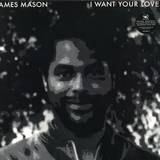
Proto-house classic 'Nightgruv' gets a re-release and includes a longer unreleased edit!
James Mason is mostly known for his late 70's album 'Rhythm Of Life', which is a soul-jazz classic. Soon after music trends shifted to (electronic) disco and James' music became out of fashion, leaving 'Rhythm Of Life' to be the only album he released to date. The early early 80s saw him have a few studio sessions from which more electronic output like Wuf Ticket's 'The Key (Prelude Records) resulted. James also produced various disco acts like Disco 3, Earl Flint and Brenda Bayton.
out of Stock
Last delivered 87 days ago available to reorder, subject to availability
All the music from the iconic Mr Benn cartoons, available for the only time. Recorded in two sessions - Olympic Studios in 1969, and Gateway Studios in 2004. All the music was written by Duncan Lamont, and featured some iconic session musicians including
Kenny Wheeler, Ray Swinfield and Duncan Lamont himself. Ray Swinfield used the same instruments as he used on The Beatles Penny Lane on these recordings. Mr Benn has an enduring popularity, and was shown on The BBC every year from 1971 - 1999, then on Nick Jnr till 2010. The sessions have ben fully remastered, and sound fabulous! It was due to Nick Jnr that a 14th Mr Benn cartoon was made, and the second session features re-working of some of the original tunes as well as lots of new tunes for Gladiator.
The packaging features an insert with Mr Benn dressed in all his adventure outfits, and a game to match all the souvenirs to each adventure. Not to be missed. A must for everybody that grew up with Mr Benn. All the sleeve notes have been written by The Mr Benn cartoon producer Clive Juster, and are full of insights from the recording sessions.
Seven suites of deep and sprawling sonic meditations built around ‘call and response’ improv sessions between Randy Raine-Reusch and Michael Red.
Slow and tempered recordings of Asian flutes, African harps, temple gongs and a myriad of obscure instruments from Randy Raine-Reusch's deep collection mutate and ebb into swirling gossamers of tone. Sonic incantations stretched and magnified further by Red's Sends. An otherworldly play between light and shadow worlds; at times idyllic and light-filled, at times dark and eerie– all engrossing. Dream-reality reconciliations weave between the spectral world of Michael Red's sound processes and the direct physicality of Raine-Reusch's playing. The tension across the pieces builds between the live playing and processing techniques, dutifully revealing a growing familiarity with collective transcendence through sound (bigger than the sum of its parts). Real-time interactive dream music.
Initially realized over the course of a few days in Randy’s instrument museum in Vancouver BC December, 2014 'ERAS' is made up of processed, and sometimes multi tracked, improvisations between Randy and Michael. Through these sessions Randy would choose instruments he sensed possibilities within, and Michael then revealed and sculpted these possibilities. Both resonating, sensing sonic structures, environmental nuances, and further worlds in each other’s art, all within the moment. Being present for each other, they acted on instinct, trusting a first thought, trusting each other; committing, responding to that commitment, then mutating and letting go. Always moving forward, synthesizing and letting the living moment lead the way.
The recordings were left to distill and mature for many years before the composers felt it was ready. With minimal judicious edits and a very light dusting of FXs, both careful to preserve the direct and intuitive process that permeates the recording, ERAS now emerges.
Telephone Explosion proudly presents the self-titled debut LP from Toronto’s UH HUH, out physically and digitally on April 14, 2023. The album features eight tracks of dub-damaged art rock which conjure a potent vision of spaced-out 1980s post-punks feeding their angular rhythms and bass-heavy grooves through layer upon layer of grime-spattered spring reverb.
There is a palpable sense of discovery and exploration throughout UH HUH’s 37 heady minutes. Elastic basslines and serpentine guitar phrases throb and glide, cutting through dubwise reverberations like hands moving through an opaque cloud of reefer smoke.
Formerly known as Teenanger, the reconfigured (and reinvigorated) group’s newfound sense of sonic identity is put on display the moment the door kicks open. The percolating spaciousness of opener “Somewhere Beyond” is followed by the cyclical grooves of “Redemption Pause.” Vocalists Christopher Swimmings and Melissa Ball each take respective turns at lead vocal duties, showcasing their contrasting yet complimentary styles.
“Babylon”, a slab of overcast, loping funk features both singers on the same track, alternating between Swimmings’ stoned syncopation and Ball’s saccharine melancholy. This juxtaposition leans against a backdrop of reverb-soaked drums, watery guitar chords and rippling trumpet.
The slinking, fractured grooves of “Rain (In The Afternoon)” and “Citrus Song” call to mind the deranged minimal dub-wave of Naffi or Vivien Goldman. Both songs feature lyrical content heavily inspired by the Florida swamplands, although the aural landscape on these tracks is decidedly more brutalist than Boca Raton. Two of the songs included here are reworkings of previously released Teenanger numbers. “Blinds Drawn” is reduced to its core elements of bottom-heavy rhythm, spliced guitar shanks and Swimmings’ murmured ruminations. “Good, You”, on the other hand, is completely re-imagined as a blissed-out melt of opiated bossa nova.
After countless hours of experimentation during the album’s recording sessions at Toronto’s Studio Z, the band decided to send their drum machines, snare drums and percussion through an obscure 1960’s Japanese Guyatone guitar amp with a notoriously ecstatic spring reverb sound. The result was immediately inspiring.
The dank, busted and clanking tones produced by the Guyatone evoke a muggy, humid atmosphere that mimics the photo on UH HUH’s cover. The process of re-amping is literally the means through which UH HUH found the sound of this record. UH HUH is a record that asks more questions than it does provide answers. This is searching music that requires that the listener lean into it, the more time you spend in between the beats, bars, notes contained within, the more vivid the picture becomes.
An innovative and idiosyncratic pianist, Thelonious Monk has been hailed as one of Be-Bop’s founding figures, with unexpected melodic shifts and dramatic hesitation hallmarks of his work. Monk By Five is one of the lesser-known sessions recorded for Riverside in the late 1950s and is one worthy of a wider audience; it features the bright swing of the new ‘Jackie-ing’ and the more dissonant ‘Played Twice,’ alongside engaging revisits of ‘Straight No Chaser,’ ‘I Mean You’ and ‘Ask Me Now,’ the interplay between Monk, cornetist Thad Jones and saxophonist Charlie Rouse especially noteworthy. Definitely worth investigating.
In 2006, THE DRAFT was formed by Hot Water Music members Jason Black, George Rebelo, and Chris Wollard shortly after singer/guitarist Chuck Ragan's departure. The three remaining members of the band wanted to continue making music together but chose not to continue under the Hot Water Music name, opting for a fresh start instead. The initial writing and demo sessions included the legendary punk rock guitarist Brian Baker (known for Minor Threat, Dag Nasty, Bad Religion). However, due to conflicting schedules, Baker couldn't commit as a full-time member, leading fellow Florida resident and former Discount member Todd Rockhill to join the band. After releasing their debut album "In a Million Pieces" (produced by the esteemed Brian McTernan) on Epitaph Records in 2006, the band embarked on extensive tours with acts like Samiam, The Gaslight Anthem, and Paint It Black. They also released several singles on the renowned No Idea Label before disbanding in 2008. With both "In a Million Pieces" and all 7" records being out of print for years, THE DRAFT has now teamed up with End Hits Records and Equal Vision Records to release a deluxe vinyl version on double vinyl. For the first time, you can find every track ever recorded by THE DRAFT: Included are the twelve album tracks, six songs featured on three 7" records, two unreleased demo versions, as well as four songs recorded during a radio session in the UK that have never been released before. Not only were all songs remastered specifically for vinyl by Brian McTernan, and detailed liner notes have been added to tell the band's history from beginning to end, but the packaging has also been completely overhauled. A special feature for collectors: the European and American versions come in different gatefold covers, which together form a complete work of art.
Silver Biplanes are Tim Vass (one half of Razorcuts - the Creation-signed indie pop darlings) and Vanessa Vass (singer of Radcliffe jangle pop favourites The Melons. "A Moment In The Sun" is the debut long player by silver biplanes, a melodic indie band based in Bedfordshire, England. The band features wife-and-husband team Vanessa Vass and Tim Vass alongside drummer Rob Scott and the album is the pinnacle of a musical career which has previously seen Vanessa and Tim release songs on no fewer than 30 different labels between them! The band are lifelong fans of the highways and bi-ways of music and the album draws upon a wide range of influences. It's a heady mix of choruses, hooks and catchy tunes in which you'll hear traces of psychedelia, post-punk, krautrock and more. Tim was bassist and lyricist in cult indie band Razorcuts, co-writing all of their songs. Razorcuts releases regularly featured in the higher reaches of the independent charts throughout the late 80s, and included two top five albums recorded for the famous Creation label. Both albums were reissued in sellout deluxe vinyl editions in 2020. Razorcuts continue to appear on numerous compilations and their influence is often cited in books and internet articles. Tim has also played in Red Chair Fadeaway, Dandelion Wine and the Forever People. Vanessa was the singer in 90's indie band The Melons who are probably best remembered for their two legendary live sessions on Mark Radcliffe's Radio 1 show. The Melons released 6 singles and were regularly featured in the British music press.
“Now And Then” is the last Beatles song, written and demoed by John Lennon in the mid/late 1970s. With John’s voice now pristine in the mix, “Now And Then” features elements from the 1995 sessions including George Harrison’s guitar parts, and vocal and instrumental parts recorded by Paul McCartney and Ringo Starr in 2022, along with a new arrangement for strings. Produced by Paul and Giles Martin, “Now And Then” is the last song recorded by all four Beatles, a powerful and fitting finale for the band’s timeless recordings.
out of Stock
Last delivered 2 years ago available to reorder, subject to availability
Noisia & Foreign Beggars are extremely proud to present I Am Legion's much anticipated self-titled, 16 track, debut album.
"The album was made during countless sessions (no more than 40 full studio days max) over the last five years. Many passes of production and scrutiny reached every track, alongside a plethora of feedback spread sheets and whiteboard summaries. We never set a deadline for ourselves; the whole idea of a full album only took shape later in the process when we realized how much material we had generated and how cool it could be to put it out as one big thing." I Am Legion nods to rap's erstwhile forays into electronica, absorbing elements of its present whilst laying out a reassuringly disturbed vision of what's to come.
out of Stock
Last delivered 2 years ago available to reorder, subject to availability
Van Halen did more than announce to the world the earthshaking arrival of a revolutionary guitarist. Performed by an enterprising California quartet that took its name from two of its principal members, the 1978 debut ripped headlines away from punk, injected fresh energy into a then-moribund rock 'n' roll scene, reimagined how heavy music and throwback pop could coexist, and invited everyone to experience the top-down pleasures of a beach-front Saturday night every day of the week no matter where they lived. Painstakingly restored by Mobile Fidelity Sound Lab, and the first of a multi-album series in an exciting partnership between the famous reissue label and Van Halen, Van Halen delivers feel-good thrills and hormonally charged desires like never before.
Limited to 12,000 numbered copies, pressed on dead-quiet MoFi SuperVinyl at RTI, and mastered from the original analogue master tapes, Mobile Fidelity's ultra-hi-fi UltraDisc One-Step 180g 45RPM 2LP collector's edition pays tribute to the record's merit and allows fans to experience Van Halen's original blend of raw power, Hollywood flair, and vaudeville fun for generations to come. Playing with reference-setting sonics that elevate a 10-times-platinum landmark whose importance cannot be quantitatively measured, this definitive version provides a clear, clean, transparent, balanced, and turn-the-volume-up-to-11 view of an album that birthed entirely new styles. Since MoFi's unique SuperVinyl compound allows you to crank the decibels to your wildest desires without risking noise-floor interference, prepare to not only hear but feel Van Halen in your chest, no fifth-row concert seat necessary.
The premium packaging and gorgeous presentation of the UD1S Van Halen pressing befit its extremely select status. Housed in a deluxe box, it features special foil-stamped jackets and faithful-to-the-original graphics that illuminate the splendor of the recording. No expense has been spared. Aurally and visually, this UD1S reissue exists as a curatorial artefact meant to be preserved, touched, and examined. It is made for discerning listeners that prize sound quality and production, and who desire to fully immerse themselves in the art – and everything involved with the album, from the iconic cover art to the meticulous finishes and, yes, of course, Eddie Van Halen's pioneering fretwork and his brother Alex's double-bass percussion.
Indeed, could a piece of music that transformed how countless guitarists approached their instrument be more fittingly named than "Eruption"? Likely not, and in just 102 seconds, Eddie Van Halen rewrote, reimagined, and reconfigured a vocabulary last significantly updated a decade earlier by fellow six-string wizard Jimi Hendrix. Akin to the Washington State legend, Eddie Van Halen developed his own techniques and tones all the while making his seismic accomplishments seem effortless. Devoid of the pretence, ego, and showiness that infected many of his imitators, the Dutch native sticks to a straightforward approach that underlines the authority, prowess, and visionary scope of his playing and then-unheard-of finger-tapping skills. Throughout Van Halen, he establishes himself as an instant idol – a savant whose otherworldly combination of breadth, poise, feel, speed, force, and melody seems beamed in from another galaxy.
As does nearly every song on the record, whose cohesiveness and dynamic put into perspective the advanced chemistry and one-for-all spirit the youthful band had out of the gates. Having paid its dues for years in bars and clubs – going as far as recording a 24-track demo for Kiss bassist Gene Simmons at Village Recorders only to be spurned by management companies that felt its music wouldn't go anywhere – Van Halen finally got a deserved break when Warner Bros. executives signed the group in 1977. The subsequent recording sessions further testify on behalf of the band's synergy and alignment. Completed in just a few weeks with producer Ted Templeman, Van Halen was primarily cut live in the studio with minimal overdubs and edits. The explosiveness, energy, and electricity remain definitive, and as heard on this UD1S set, put the group on a private stage – humming amplifiers, Frankenstrat guitar, bright spotlights, sweaty headbands, and then some.
Van Halen yielded just one hit in the form of a Top 40 single (a breathless cover of the Kinks' "You Really Got Me") but practically every song on the revered LP has become a staple. Named the 202nd Greatest Album of All Time by Rolling Stone and considered by countless experts as one of the best debuts in history, the record displays what can happen with four distinct talents gel and strive for the same purposes. In Van Halen's case, the latter almost always involved partying, freedom, sex, and, in the immortal words of singer David Lee Roth, living "life like there's no tomorrow." The celebration manifests from the opening notes of the strutting "Runnin' with the Devil" – announced with the blare of droning car horns, Michael Anthony's robust bass line, and Alex Van Halen's thumping drumming – and continues through the conclusion of the white-hot "On Fire," goosed by Eddie Van Halen's race-track-ready lines, Roth's flamboyant deliveries, and the rhythm section's cat-like pounce.
Picking out individual highlights on Van Halen is akin to trying to count all the stars in a clear nighttime desert sky: There are far too many to identify, once you see one you notice another dozen you didn't spot before, and the cluster is best enjoyed as a whole. What's evident over repeat listens is the sheer diversity, a fact that's often overlooked: The high harmonies and background funk of "Jamie's Cryin'"; the insistent cane-and-a-tophat shuffle and doo-wop shoo-bop vocal break on "I'm the One"; the throwback acoustic blues that spreads into fast-paced, single-entendre wildfire on the Roth-led standout interpretation of John Brim's "Ice Cream Man." Like the man says, on Van Halen, all the flavours are guaranteed to satisfy.
More About Mobile Fidelity UltraDisc One-Step and Why It Is Superior
Instead of utilizing the industry-standard three-step lacquer process, Mobile Fidelity Sound Lab's new UltraDisc One-Step (UD1S) uses only one step, bypassing two processes of generational loss. While three-step processing is designed for optimum yield and efficiency, UD1S is created for the ultimate in sound quality. Just as Mobile Fidelity pioneered the UHQR (Ultra High-Quality Record) with JVC in the 1980s, UD1S again represents another state-of-the-art advance in the record-manufacturing process. MFSL engineers begin with the original master recordings, painstakingly transfer them to DSD 256, and meticulously cut a set of lacquers. These lacquers are used to create a very fragile, pristine UD1S stamper called a "convert." Delicate "converts" are then formed into the actual record stampers, producing a final product that literally and figuratively brings you closer to the music. By skipping the additional steps of pulling another positive and an additional negative, as done in the three-step process used in standard pressings, UD1S produces a final LP with the lowest noise floor possible today. The removal of the additional two steps of generational loss in the plating process reveals tremendous amounts of extra musical detail and dynamics, which are otherwise lost due to the standard copying process. Every conceivable aspect of vinyl production is optimized to produce the most perfect record album available today.
MoFi SuperVinyl
Developed by NEOTECH and RTI, MoFi SuperVinyl is the most exacting-to-specification vinyl compound ever devised. Analogue lovers have never seen (or heard) anything like it. Extraordinarily expensive and extremely painstaking to produce, the special proprietary compound addresses two specific areas of improvement: noise floor reduction and enhanced groove definition. The vinyl composition features a new carbonless dye (hold the disc up to the light and see) and produces the world's quietest surfaces. This high-definition formula also allows for the creation of cleaner grooves that are indistinguishable from the original lacquer. MoFi SuperVinyl provides the closest approximation of what the label's engineers hear in the mastering lab.
Gaucho — Steely Dan's Grammy-winning seventh studio album now on UHQR!
Definitive reissue Ultra High Quality Record, the pinnacle of high-quality vinyl!
45 RPM LP release limited to 20,000 numbered copies
Mastered by Bernie Grundman from a 1980 analogue tape copy originally EQ'd by Bob Ludwig
Pressed at Quality Record Pressings using 200-gram Clarity Vinyl®
Purest possible pressing and most visually stunning presentation and packaging!
Tip-on old style gatefold double pocket jackets with film lamination by Stoughton Printing
Gaucho — the iconic seventh studio album by Steely Dan, released in November 1980 — and Grammy-winner for Best Engineered Non-Classical Recording, was also Grammy-nominated for Album of the Year and Best Pop Performance by a Duo or Group with Vocals. The album represents the band's musical evolution towards a more polished and sleek sound, featuring a collection of meticulously crafted songs that blend jazz, rock, and pop music, while exploring themes of decadence, longing, and disillusionment.
Gaucho opens with the title track, a jazzy instrumental piece that sets the tone for the rest of the album. The standout tracks on the album include "Hey Nineteen," a catchy and upbeat tune that features a memorable saxophone riff and lyrics about an older man's attraction to a young woman, and "Babylon Sisters," a funky and groovy track that showcases the band's impeccable sense of rhythm and melody.
The sessions for Gaucho represented the band's typical penchant for studio perfectionism and obsessive recording technique. To record the album, the band used at least 42 different musicians, spent more than a year in the studio, and far exceeded the original monetary advance given by the record label. Still, the album features multiple layers of instrumentation, carefully crafted arrangements, and the use of top-notch session musicians to create a lush and sophisticated sound that is uniquely Steely Dan.
Despite its critical and commercial success, Gaucho was a challenging album to make. During the two-year span in which the album was recorded, the band was plagued by a number of creative, personal and professional problems. MCA, Warner Bros. and Steely Dan had a three-way legal battle over the rights to release the album. After it was released, jazz musician Keith Jarrett was given a co-writing credit on the title track after threatening legal action over plagiarism of Jarrett's song "'Long As You Know You're Living Yours."
Gaucho marked a significant stylistic change for the band, introducing a more minimal, groove- and atmosphere-based format. The harmonically complex chord changes that were a distinctive mark of earlier Steely Dan songs are less prominent on Gaucho, with the record's songs tending to revolve around a single rhythm or mood, although complex chord progressions were still present particularly in "Babylon Sisters" and "Glamour Profession." Gaucho proved to be Steely Dan's final studio album that Donald Fagen and Walter Becker would make together until the year 2000.
Gaucho reached No. 9 on the U.S. album chart and was certified platinum-selling. "Hey Nineteen" reached No. 10 on the U.S. Singles Chart and went to No. 1 in Canada. Pitchfork, in its review, describes the almost "pathologically overdetermined production" as elegant, arid and a little forbidding. "Every last tinkling chime sounds like it took 12 days to mix, because chances are, it did." The New York Times deemed Gaucho the best album of 1980, beating out Talking Heads' Remain in Light and Joy Division's Closer.
Founded by core members Walter Becker (bass) and Donald Fagen (vocals, keyboards), Steely Dan's popularity rose throughout the late 1970s on, and their seven albums throughout that period of time blended elements of jazz, rock, funk, R&B, and pop. Steely Dan created a sophisticated, distinctive sound with accessible melodic hooks, complex harmonies and time signatures, and a devotion to the recording studio. Becker and Fagen, with producer Gary Katz, gradually changed Steely Dan from a performing band to a studio project, hiring session musicians to record their compositions. The duo didn't perform live between 1974 and 1993. But their popularity nevertheless grew throughout the '70s as their albums became critical favorites and their singles became staples of Adult Oriented Radio and pop radio stations.
After a brief battle with esophageal cancer, Walter Becker died on September 3, 2017 at the age of 67. Steely Dan has sold more than 40 million albums worldwide and were inducted into the Rock and Roll Hall of Fame in March 2001. VH1 ranked Steely Dan at No. 82 on their list of the 100 Greatest Musical Artists of All Time. Rolling Stone ranked them No. 15 on its list of the 20 Greatest Duos of All Time.
This stereo UHQR reissue will be limited to 20,000 copies, with gold foil individually numbered jackets, housed in a premium slipcase with a wooden dowel spine.
Gaucho remains a testament to Steely Dan's enduring musical legacy and their ability to create timeless music that transcends genre and style.
Ayyuka was founded in the year 2001.They've started to make their own music which was mostly improvisation and influenced by a lot of different styles. Some time later the band had it's name naturally which Is AYYUKA that has two meanings: ''to the highest part of the sky' and 'an idiom to tell that a secret has been revealed'" . After university years they moved to Istanbul and started to perform their music at some live venues. Since their self-titled debut album release, the band have performed in various music festivals and venues in a number of cities including Istanbul, Berlin, Lyon, Sao Paulo. They also have opened up for some major artists like Jonathan Richman, R.E.M., Sonic Youth. With very direct live performance energy in their compositions, Ayyuka fuse characteristic elements from a variety of genres such as Anatolian Rock, arabesque, surf rock, punk, spaghetti western, psychedelic rock, and funk. They released their second studio album 'Kiraci Odalari' on October 2013. 'Sömestr' is Ayyuka's third studio album, the sound moves between psychedelic rock, afro rhythms and much else besides. The album was made by the improvising recording sessions that they recorded at their studio. TRACKLIST: 1. Sömestr, 2. Tek Teker, 3. Geceleri Zor Uyurum, 4. Gün 1B, 5. Gabor, 6. Guaruja, 7. Aryton Senna, 8. Bu Bi Rüya Olmali.
Sourced from the Original Master Tapes and Presented in Audiophile Sound for the First Time: Mobile Fidelity’s Numbered-Edition 180g SuperVinyl LP Plays with Riveting Detail
Three decades before he released The Philosophy of Modern Song — an insightful book devoted to 66 tunes that both impacted his career and the music world at large — Bob Dylan issued Good As I Been to You. The under-heralded 1992 album, Dylan’s first solo acoustic album in nearly 30 years and first all-covers effort in nearly 20 years, can be seen as a prophetic prelude to what has become the Nobel Laureate’s celebrated late-career arc. It’s also an absorbing continuation of the custom Dylan has embraced since he first picked up a guitar.
Sourced from the original master tapes, pressed at RTI, and housed in a Stoughton jacket, Mobile Fidelity's numbered-edition 180g SuperVinyl LP of Good As I Been to You reveals the immediacy, detail, and stripped-down nature of recording sessions that took place in Dylan’s garage studio in California. Simple, raw, and unplugged, the record presents Dylan in peak form — and showcases a diversity of vocal phrasing, soulful chording, harmonica accents, and close-up ambience that on this reissue emerge like never before. As the first-ever audiophile edition of this almost-lost classic, this LP also benefits from SuperVinyl’s extraordinary properties: a nearly inaudible noise floor, superb groove definition, and dead-quiet surfaces among them.
Recorded and mixed by Micajah Ryan, and supervised by Debbie Gold, Good As I Been to You took shape at Dylan’s home shortly after the singer-songwriter completed sessions in Chicago with a full band. Unaccompanied, he again gravitated to existing works — in this case, traditional folk music — and, with Gold serving as a trusted advisor, performed the songs in multiple keys and tempos until he arrived at what he desired. That careful, determined albeit loose, organic approach emanates from this reissue, on which each note, movement, and space come across more directly, fully, and immediately than on the original formats. It helps draw a through-line to Another Side of Bob Dylan (1964) as well as the similarly themed follow-up, World Gone Wrong (1993) and immersive old-world storytelling of Tempest (2012) and Rough and Rowdy Ways (2020).
Well before Dylan made those renowned 21st century LPs, however, he needed to find a way out of a funk that — save for his 1989 collaboration with Daniel Lanois, Oh Mercy — followed him for years. As author Clinton Heylin reported Dylan admitting in 1997: “My influences have not changed — and any time they have done, the music goes off to a wrong place. That’s why I recorded two LPs of old songs, so I could personally get back to the music that’s true for me.”
Truth: Few, if any, concepts better encapsulate Good As I Been to You. It resonates with the same originality, honesty, resolve, and age- and time-defying relevance as the seminal Anthology of American Folk Music that fired Dylan’s imagination as a kid in small-town Minnesota and, later, per Greil Marcus’ That Old Weird America book, informed Dylan and the Band’s Basement Tapes sessions. This record also contains the type of music Dylan was playing during his acoustic sets at his period Never Ending Tour shows; within a year of the record’s release, Dylan would play half the album’s songs live.
As for those songs: Rife with strange mystery, common circumstance, and epic adventure, the stories appeal to our base instincts. Their themes — jealousy, temptation, sacrifice, love, revenge, identity, opportunity — operate on a fundamentally human level immune to trends, generations, or eras. They’re ancient and modern, serious and comical, open and disguised, simple and multi-layered. They talk of vengeance and justice (“Frankie & Albert”; “Jim Jones”), romance and tenderness (“Tomorrow Night,” “Froggie Went a Courtin’”), the troubled and trouble-free (“Hard Times,” “Sittin’ on Top of the World”). They lend voice to lovers scorned and freed (“Blackjack Davey”), the used and users (“Diamond Joe”), the powerful and powerless (“Arthur McBride,” “Canadee-I-O”), the followed and followers (“Little Maggie”). And akin to much of Dylan’s finest output, things are not always what they appear to be.
Spanning country, folk, sea shanty, bluegrass, and blues motifs, Good As I Been to You re-confirms Dylan’s position as an elite interpreter and sculptor — not of just structure but emotion. Dylan delivers the tunes as if he’s known them forever. He plays with a subtle sense of mischievousness and retains a largely upbeat demeanour; his eyes seemingly twinkle as he sings and picks. His guitar serves as the guidepost for shuffles, boogies, ballads, and mess-arounds while his innate feel for each specific arrangement and melody helps inform pacing, tone, attack.
Like a great author, he understands the importance of adhering to concision, luring an audience, holding their attention, and maximizing the impact of details, actions, and unexpected turns. Though already coarse and ragged, his voice feels ideal for the subject matter and his phrasing — from the clever ways he stretches syllables to underline meanings on the surprise twists of “Canadee-I-O” to the sheer delight he gets from singing “rowdy-dow-dow” on the protest song “Arthur McBride” — outstanding.
The American singer-songwriter tradition has always been tethered to a rustic austerity, the sort of front-porch authenticity that suggests an age where home electronics are still considered luxury items. But there's also the ongoing influence of Bob Dylan and The Band's Basement Tapes-that strange and beloved document of the magic that happens when private experiments with the folk template flourish into layered and lush songs-and its genesis through informal recording sessions. In our modern age, these kinds of casual DIY constructions are perhaps the more honest contribution to the Americana lineage-the true homespun artform. When Michael Nau and Whitney McGraw struck out on their own in the wake of the dissolution of their beloved indie-folk outfit Page France, they continued their songwriting practice with a new project called Cotton Jones Basket Ride. As legend has it, Nau and McGraw were working on the material for their debut full-length Paranoid Cocoon (2009) when they realized they had an entire album's worth of odds-and-ends from various recording sessions. The resultant album - The River Strumming - was released in 2008 on St. Ives in a batch of 300 unique hand-packaged LPs. As the label advertised it back in the day, the band "initially set out to make a cohesive record, and made just the opposite." Like The Basement Tapes, The River Strumming is a document of a band exploring possibilities without the weight of expectation. The band would eventually condense their name to Cotton Jones and make a name for themselves in the indie world for their fusion of dreamy folk and psychedelic baroque pop. But in the beginning, there was this weird and wonderful collection of songs made by musicians who were enjoying the private process of finding their path. Suicide Squeeze is proud to present a 15th-anniversary vinyl reissue of this long out-of-print classic with updated artwork by Kayleigh Montgomery-Morris.
Southern Exposure is proud to present the debut solo EP from Mike Midnight. Angel Hours was originally self-released digitally but has been lovingly pressed on heavyweight vinyl for the first time with design from Jeffrey Annert.
Angel Hours current rise felt like it was imminent from the first listen, with contributions from Noa (Voice Actor/Stroom) and 3NDLES5 (Low Life). Mike’s production across the release feels akin to 90’s artists like I:Cube, Thievery Corporation or certain Weatherall moments. The heavenly references are well deserved with multiple moments on the release feeling truly divine, whilst others take a low-lit and alluring feel. Mike Midnight feels singular in the Australian music landscape, like a mix between the best parts of Paul Mac, Single Gun Theory and Ian Eccles-Smith.
Angel Hours continues the lineage of Australian music breaking through to international recognition with the release becoming a mainstay on NTS Radio, breakfast show host Flo Dill dubbing it “music that when listened to at night makes you feel unstoppable.” Remastered by Corey Kikos (Sleep D/Butter Sessions), the balance of each track of downtempo bliss feels like you’re not only unstoppable but weightless.
Big thank you to Theodore, Mitch, Jeff, Mon, Noa, my friends, family and all the collaborators for their continued patience and support.
out of Stock
Last delivered 4 months ago available to reorder, subject to availability
Seven Steps to Heaven arrived at a crucial junction in Miles Davis' career. Recorded at two separate locations in spring 1963, it served as Davis' first release in more than a year – a layoff that was then unprecedented for the jazz visionary who had issued at least one LP a year since debuting in the early '50s. Equally notable, Seven Steps to Heaven marks the point at which the core of Davis' Second Great Quintet started to assemble. The twice Grammy-nominated effort is also Davis' final studio record to blend standards with originals. And it happens to be one of the expressive, well-played albums in the jazz canon.
Sourced from the original master tapes, pressed at RTI, and housed in a Stoughton gatefold jacket, Mobile Fidelity's 180g SuperVinyl LP of Seven Steps to Heaven adds yet another step (or more) towards the bliss suggested by the album title. Playing with standout clarity, detail, tone, and balance, this audiophile reissue pulls back the curtain on the instrumentalists. Afforded the tremendous advantages of SuperVinyl – including a nearly inaudible noise floor, dead-quiet surfaces, and superb groove definition – this numbered-edition version presents Davis and Co. amid a wide, deep soundstage whose dimensions and solidity help bring the record's historical importance and musical merit into focus. Warm, organic, and present, the SuperVinyl LP of Seven Steps to Heaven is what great-sounding hi-fi is all about.
And there's nary a passage on this 1963 landmark that isn't great. That Davis manages to make it feel so cohesive and seamless is a testament to the inspired performances and engaging compositions. Davis didn't draw it up the way it unfolded. No matter. He held trump cards that stayed up his sleeve for the next three decades: A drive to be nothing less than superb, a refusal to settle for mediocrity, and standards to which nearly no other composer or player could match. "The toughest critic I got, and the only one I worry about, is myself," Davis wrote in the liner notes. "The music has to get past me."
Davis' demanding approach partly explains why he switched up his band between the first and second sessions – and underscores how fast his mind was racing with new ideas. Seven Steps to Heaven acts as the stable bridge between the transitional period that followed the dissolution of his First Great Quintet and formation of the Second; without it, Davis perhaps doesn't invite then-23-year-old Herbie Hancock and a still-teenage Tony Williams into the fold. The trumpeter not only got his men – he preserved in amber for the only time (well, magnetic tape anyway) the chemistry and vibe he achieved with pianist Victor Feldman, drummer Frank Butler, tenor saxophonist George Coleman, and bassist Ron Carter.
That line-up gels for half of the six songs on Seven Steps to Heaven. Captured in Los Angeles April '63, the quintet stretches out on a luxurious reading of the late '20s New Orleans staple "Basin Street Blues"; lays on the romance for a candlelit stroll through the '40s standard "I Fall in Love Too Easily"; and explores the rounded contours and melodic crevices of the early blues "Baby Won't You Please Come Home." The performances are refined, elegant, emotional; the band lets the feelings linger and gives the listener time to absorb the colours and textures.
A month later, Davis returned to New York City with Coleman and Carter, and partnered them with Hancock and Williams. Tellingly, the quintet tried its collective hand at the title track and "Joshua" – Feldman-penned songs already recorded in Los Angeles – as well as the yearning "So Near, So Far." Those are the tunes that comprise the other piece of Seven Steps to Heaven, with the revised quintet's liquid pulse, articulate dynamics, and timing shifts a harbinger of things to come.
It's also worth mentioning that the interpretations of the bounding "Seven Steps to Heaven" – a showcase for Davis' trumpet – and interlocking "Joshua" netted considerable radio airplay and attracted the attention of other contemporaries who covered the songs. Keeping Carter and Williams as the rhythmic engine, and Hancock as the anchor between solo flights and structural motifs, Davis would soon soon welcome Wayne Shorter into the family and transform jazz. Again. The aptly – and, in hindsight, perhaps prophetically titled Seven Steps to Heaven – is how he got there.