2025 Repress
Hypnotic Mindscapes unearths fragments from the temporal abyss with the 1998-2000 Compendium, a re-issue of selected works from LA based, Hawaii-born producer Matt K.Turner aka Kamahele. 4 deep cuts fitting for versatile use. Recorded 26 years ago, Kamahele‘s creations linger in a space where futuristic visions and dystopian longing intertwine, their relevance evading the decay of time.
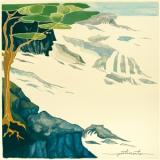
Artwork painting by Abbas Rizvi.
quête:ka f
Auf ihrem neuen Album setzt das Trio ein kraftvolles Zeichen – musiɞ kalischɎ emotional und kulturellɍ Der Titel stammt aus dem RomanesɎ der Sprache der Sinti und RomaɎ und bedeutet „Wir sehen uns“ɍ Das Album verbindet VergangenheitɎ Gegenwart und Zukunft zu einer musikalischen ErzählungɎ in der sich die Instrumente in fantasievolɞ len Arrangements mit tiefer Melancholie und feurigem Temperament begegnenɍ Dabei trägt das Trio die klangliche Tradition der Vorväter frisch und weltoffen in die Zukunftɍ
It's dedicated to the 1988 Experimental / Electronic masterpiece by the Italian contemporary guitarist Riccardo Giagni, originally released on Stile Libero (Italy) + a special Balearic Remix by SIMON PETER.
Archeo Recordings is a reissue record label that regenerates old, lost, obscure and forgotten rare gems of mostly Italian music but also all over the world of the 70s, 80s and 90s.
All outputs are licensed by the artists and the vintage labels; audio tracks are remastered in their original form; the sleeves and center labels are graphically recreated for today but all based on the original images.
Archeo would like to make the music available to a wider audience of collectors, DJs, music lovers of a forgotten time.
All releases are hand-numbered limited edition vinyl. The first copies of each release are pressed in coloured vinyls.
In 2024, Kyoto Jazz Massive released their third album as a digital-only project, 30 years after their debut. It now receives the honor of a special vinyl edition, featuring brand-new exclusive mixes by Young Pulse—elevating these already great tracks to even greater heights, for both your ears and your feet.
This marks the first and exclusive collaboration between KJM and Echoes Of A New Dawn Orchestra (aka Jéroboam), the unique Parisian band that has been performing live with KJM across Europe for the past three years. On this occasion, KJM recorded four new tracks with EOANDO, including three original songs ("Power", "Love Wars", and "Impulsive Procession") and a new rendition of “Stand Up”, a previously released composition. To complete the album, you'll also find a stunning cover of KJM’s iconic track "Substream" by EOANDO, as well as their signature piece, “EOANDO's Theme”.
"Power" and "Stand Up" were recorded with Vanessa Freeman, while "Love Wars" features Bembe Segue. This London-based duo has been singing live with KJM since 2004.
"Power" is a crossover anthem, blending jazz-funk and French disco with a gospel touch. Vanessa Freeman’s uplifting lyrics call for collective awareness and energize audiences. "Love Wars" is a live-band interpretation of broken beat with a boogie spirit, enhanced by Bembe Segue’s sharp and spiritual vocals. “EOANDO’s Theme” was specially composed by Echoes Of A New Dawn Orchestra for KJM, capturing the Okino Brothers' love for boogie-funk jams with Brazilian and Balearic influences reminiscent of Azymuth.
“Impulsive Procession” fuses Afro, funk, jazz, fusion, soul, rock, house, and techno—drawing inspiration from several of KJM’s most respected musical heroes. A brand-new version of “Stand Up”, originally released in 2008, was re-recorded live in the studio with EOANDO and fresh vocals by Vanessa Freeman.
The album closes with a reimagined version of “Substream”, one of KJM’s most beloved tracks, covered by EOANDO for the official Tokyo Crossover/Jazz Festival 2023 compilation. This new version was recorded as an organic disco interpretation at Danilo Plessow’s studio in Paris.
180 gram pressing.
Producer, DJ, multi-instrumentalist and live performer Alek Lee returns with his second LP, an immersive instrumental journey shaped by his raw, smoky, guerrilla-style production. Cold Feet invites you deep into the Alek Lee universe, rich with swirling synths, layered percussion, Balearic guitar lines and dub-infused horns.
From the psychedelic, Sade like grooves of the title track and “Too Soon,” both steeped in cinematic mystique, to the sun drenched energy of “Pino Pino” and “The Right Thing,” which shimmer with Balearic disco flair, the album glides effortlessly across moods and tempos. A highlight arrives with the summer dub anthem “Was Was Was,” featuring long time collaborator and former Shame On Us bandmate Yovav Arzi on electric guitar.
The journey winds down with “Illusions,” a sultry, downtempo banger laced with an oriental twist, before dissolving into the final track “Cold Feet Desert”, a return to stillness, barefoot on white desert sand beneath a star strewn sky.
With a career spanning over two decades, Alek Lee has carved out a unique space in the global music scene. Known for his long, genre defying DJ sets and dynamic live performances, he moves fluidly between dub, house, and his own idiosyncratic productions. As a solo artist and through projects like Shame On Us and Project Runaway, Alek has played some of Europe’s most respected venues and festivals, including Sisyphos, Kater Blau, Glastonbury, Garbicz and Fusion. His releases have earned radio play from BBC6’s Iggy Pop and NTS’s David Holmes and featured on Peggy Gou’s Boiler Room and France’s legendary Radio Nova.
Now based in Athens, Alek continues to evolve his distinctive sound with Cold Feet, his most expansive statement yet.
Bad Brains is the self-titled debut studio album recorded by American hardcore punk/reggae band Bad Brains. Recorded in 1981 and released on (then) cassette-only label ROIR on February 5, 1982, many fans refer to it as "The Yellow Tape" because of it's yellow packaging. Though Bad Brains had recorded the 16 song Black Dots album in 1979 and the 5-song Omega Sessions EP in 1980, the ROIR cassette was the band's first release of anything longer than a single. The release includes the original liner notes by Ira Kaplan of Yo La Tengo. This reissue marks the second release in the remaster campaign on the band's own Bad Brains Records imprint with Org Music. In coordination with the band, Org Music has overseen the restoration and remastering of the iconic Bad Brains' recordings. The audio was mastered by Dave Gardner at Infrasonic Mastering.
Das 2004 erschienene MM..FOOD von MF DOOM wird inzwischen als Hip-Hop Klassiker-Album voller einfallsreicher Produktion, brillanter Wortspiele und einzigartiger Themen gewürdigt. Gefeiert für seine nahtlose Mischung aus Humor, Witz und sozialem Kommentar, entführt das Album den Hörer in eine bizarre Welt voller Lebensmittel-Metaphern und zeichnet ein bitter-komödiantisches Porträt eines Lebens, das von Laster, Gewalt und Eifersucht verdorben ist. Ein brillantes und damals neuartiges Konzept, das DOOM viel Raum zur Erkundung der Themen des Albums gab. Im Verlauf von MM..FOOD bettet DOOM komplexe Ideen in scheinbar einfache Erzählungen ein. Der Album-Opener "Beef Rapp" ist eine vielschichtige Metapher, die den Hörer an die Gefahren erinnert, die mit der Verherrlichung von Konflikten verbunden sind, insbesondere im Rap. "Hoe Cakes" leiht sich seinen Namen von den süßen, mit heißem Wasser gefüllten Maismehlfladen, die er als Symbol benutzt, um über Genuss und Exzess zu reimen. Mit dem von Madlib produzierten "One Beer" setzt DOOM das Motiv fort, um Schichten von Tiefe über Eskapismus und Ego zu falten, während das populäre "Rapp Snitch Knishes" die Verkaufsdiskriminierung und widersprüchlichen Verhaltensweisen einiger Rapper kritisiert. Insgesamt ist MM..FOOD sowohl ein sozialer Kommentar als auch ein Stück Gesellschaftssatire, das MF DOOMs Fähigkeit unter Beweis stellt, ernste Themen mit seinem einzigartigen, verspielten lyrischen Stil zu verbinden. Zur Feier des 20-jährigen Jubiläums des Albums wurde MM..FOOD mit einem komplett neuen Artwork von Sam Rodriguez neu verpackt!
Give It Up Or Turnit a Loose (Edit) by James Brown b/w Web (Edit) by Hampton Hughes / Give It Up or Turnit a Loose (Bonus Breaks) by James Brown| Galaxy Sound Company — GSC45-044, test pressing | The long-running @galaxy_sound_company imprint has been responsible for some superb re-edits over the years, most of which are pleasingly purist in tone — meaning they are pro rearrangements with no added effects but & needless new beats or cheap trickery like so many out there— making any of their releases cop-on-site. & as you can hear from the test pressing, the 44th in the stellar series delivers yet again.
Side A is a masterclass in breakbeat editing of a b-boy classic sample source. Yes, there are many killer JB edits out in the universe, but when you see that the legendary Black Cash & Theo AKA Thelonious Beats take a turn, you know you gotta cop this mutha on site. Here the edit master bravely returns to one of the main sources of the dawn of hip-hop — JB’s comp “In The Jungle Groove” which was released in 1986 to capitalize on it’s popularity in the genre at the time. The comp is named for a breakdown section that appears in “Give It Up Or Turnit a Loose” which is the workout we have here. JB quiets the band down to handclaps, footstomps & congas played by Johnny Griggs. After he raps a little, JB cues legendary drummer Clyde Stubblefield back in, followed by bassist Bootsy Collins & the rest of the band. JB wasn’t intentionally trying to create a perfect batch of hip-hop samples in the late 60s & early 70s, but he couldn’t have succeeded any better if he had been. This edit may enter well-worn territory but he uniquely delivers an edit that showcases why it inspired so many & still delivers the goods to help you get your party started off right & quickly.
Next up on the flipside we are treated to an edit of “Web” by Hampton Hughes, from his 1974 David Axelrod produced & arranged album “Northern Windows”. Heads will recall it as the core sample for “Off the Record” by Hieroglyphics, from the 1998 LP “3rd Eye Vision”. This jazz-funk burner features a stellar line-up:
Piano/keyboards = Hawes
Trumpet = Allen DeRienzo, Snooky Young
Trombone = George Bohanon
Sax/flute = Jackie Kelso, Jay Migliori, William Green
Electric Bass = Carol Kaye
Drums = Spider Webb
But wait, GSC ain’t done yet! We get some bonus beats from the A-side. Another reason why doubles are highly recommended when you need assistance in your set.
Released by Hegoa Records and Night School Records.
Greatest Heads is the fourth album by the radical Basque- Berlinesque group Al Karpenter. A deconstruction of structured “rock” music, here Al Karpenter re-imagine “the band” to explore the intersection between Free music, afro-beat, the avant garde and gonzo rock.
If Theodore Adorno wrote “To Write Poetry after Auschwitz is Barbaric” in 1949, Al Karpenter attempts to answer the difficult question today; what kind of music can be done in the face of a genocide? Álvaro Matilla, Marta Sainz, Enrique Zaccagnini & Mattin’s response to the planet’s slipping into a vortex of hate is to create a music ecstatic, a music of protest bursting with multiple musical languages and glossaries, full of overlapping histories and thrilling tensions.
Greatest Heads posits a plurality of musics both in opposition and intertwined: Al Karpenter play rock instruments pulled apart in the studio in post-production. Distorted rhythm chunks bit-crushed and dissipated, segments of freedom oppressed by waves of sound invading from every direction. The interplay between the chief instrumentalists and renowned, storied sound artist Mattin creates something akin to ESP freedom-seekers Cro Magnon playing in Miles Davis’ early 70s groups, The Los Angeles Free Music Society tightening up into a clenched fist of plunderphonics and runaway percussion.
We Are All Karpenters opens Greatest Heads with the most straight-forward song refrain of the record accompanied by a band that soon crash into eruption, imagining Sun City Girls in full free rock mode.
The modulating synth sound soon sucks the band into its wake to create a spine-chilling climax of distorted sound, made fully orgasmic with mastering engineer Rashad Becker’s attention to detail. On Izugarrizko Buruak (Greatest Heads), Matilla intones in Basque over a mangled distorto-beat. A Brand New Astraphobia creates a black space for a heavily processed guitar to blow up before falling to earth at night, a gentle figure serenading the coming end.
On Side B, the band begins by being masticated by a brutal phaser, squelching and stretching the music into new territories. The overt message of Stop The Genocide! is besieged by violence before Worm City aggressively samples the ghosts of soul music, mixing in noise bursts, prepared piano and swiping, abstracted sound. Epic closer Perfect Love feels like a beat poetry performance on a burnt world, still grasping for community, for home, for some sort of human love. A Mad love, then; an angry love fuelled by solidarity and collaboration.
The band’s cascading layers of references and polyglottal musics attempt to create the perfect lover, alive with rage and disorientating ecstasy: Al Karpenter.
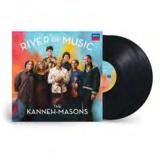
River of Music, das neue Album der „musikalischen Zauberer“ der Kanneh-Masons (The Guardian), bringt
nach dem Erfolg von Carnival (2020) alle sieben Geschwister - Isata, Braimah, Sheku, Konya, Jeneba, Aminata und Mariatu - wieder zusammen. Auf dem Album sind neue Arrangements von klassischen Werken
bis hin zu Folk-Songs zu hören. Das Herzstück bildet Schuberts Forellenquintett - ein Lieblingsstück der
Familie, das die Geschwister seit ihrer Kindheit gemeinsam hören. River of Music wurde im Sommer 2024
in den Abbey Road Studios aufgenommen und erzählt, wie die Liebe der Kanneh-Masons zur Musik über
Generationen hinweg weitergetragen wurde. Von der walisischen Großmutter, die ihrer Liebe über das Meer
nach Sierra Leone folgte, bis hin zum antiguanischen Großvater, der seine eigenen Träume einer Musikkarriere weitergab, feiert dieses Album die musikalischen Wurzeln der Familie Kanneh-Mason.
”Dies ist eine Geschichte über unsere Familie und die Quellen unserer Musik. Musik fließt wie ein Fluss
durch die Generationen, und unsere Leidenschaft, Musik zu hören und zu spielen, stammt von unseren
Großeltern und ihren Geschichten, von den Orten und Träumen, die sie weitergegeben haben...”
Konya Kanneh-Mason, Grandad’s Dream
- A1: Highway No Kage ~ Daiichi No Giwaku
- A2: Matteita Onna ~ Daiichi No Wana
- A3: Highway No Kage ~ Main Theme
- A4: Nazo No Onna ~ Wana!?
- A5: Matteita Onna ~ Main Theme
- A6: Highway No Kage ~ Wana E No Chosen
- B1: Sachiusu No Onna ~ Namiko No Tsuioku
- B2: Nazo No Onna ~ Main Theme
- B3: Highway No Kage ~ Teki Wo Motomete
- B4: Sachiusu No Onna ~ Main Theme
- B5: Matteita Onna ~ Variations
- B6: Highway No Kage ~ Kanashii Ketsumatsu
Composed, Arranged, and Conducted by: Norio Maeda
Has there ever been a soundtrack so thrilling and beautiful? This is the pinnacle of cine-jazz, crafted by the master Norio Maeda.
Released in 1971, Shadow Of The Highway is a suspense-action film produced and starring Jiro Tamiya, and directed by Jun Fukuda.
True to its tagline—“A sports car tearing vertically through Japan, from Kagoshima to Hokkaido”—the film features a Mitsubishi Galant GTO racing
across the country. Often compared to the American New Cinema classic Vanishing Point, it stands as a Japanese road movie gem.
The music was composed by the legendary Norio Maeda. His piano corners with elegance, the vibraphone dashes forward with flair, the bass charges
ahead with power, and the drums shift gears with precision. Motion and stillness, obsession and desire, joy and sorrow—thrilling performances and
beautiful melodies elevate the film to new heights.
As a soundtrack, it is exceptional. But even more, it represents an extraordinary level of quality for Japanese jazz in 1971. The performances are so
remarkable that it’s unfortunate the exact personnel remain unidentified. However, it has long been rumored that the musicians may have been associated
with Takeshi Inomata’s Sound Limited—or possibly The Third.
Text by Yusuke Ogawa (UNIVERSOUNDS / DEEP JAZZ REALITY)
- 1: Ich Kann Gar Nichts
- 2: Vom Anderen Stern
- 3: Joker
- 4: Lalelu
- 5: Schattenboxer
- 6: Knock Dich Selbst Aus
- 7: Schrott
- 8: Versailles
- 9: Hands Down
- 10: Nie Wieder Verlieren
- 11: Seltsame Welt
Was tun die Menschen um uns herum? Wie tun sie’s? „Wollen wir das nicht alle die ganze Zeit verstehen?“, fragt Alli Neumann, die mit ihrem dritten Studioalbum methaphorisch als funkelnder Stern auf hartem Asphalt landet. Als „ROQUESTAR“ muss sie sich dort erstmal orientieren. Inspiriert von David Bowies Ziggy Stardust, der fürs Seltsamsein bekannt wurde und sich was traut, auch um gesehen zu werden, blinkt Alli zwischen Auffallen und Anpassung. Die Musikerin bewegt sich längst fließend in dieser Dualität und changiert zwischen den Polen – man will ja doch von allen geliebt werden, oder?! Die Musikerin spielt mit diesem ambivalenten Gedanken, der unlösbar scheint und liefert mit ihrem Album „ROQUESTAR“ 12 Songs, die von genau diesem dringlichen Hunger nach Anerkennung getrieben sind. „Sie erzählen von dem Willen, geliebt zu werden.“ Eine Wahrheit und auch psychosoziale Utopie, vielleicht, „in der sich viele wiederfinden“, meint Alli, und ja doch schambehaftet daherkommt, weil deutlich wird: Wir sind schrecklich abhängig vom Außen, von dem wir so oft die Schnauze voll haben. Mit „Ich kann gar nichts“ schreibt Alli genau dagegen an: Eine selbstironische Hommage an die Imperfektion – wider jeder Erwartung. Geliebt werden wollen, trotz oder gerade wegen ... Rockstar sein, Alli sagt: „everybody’s favorite misfit“. Wie es geht, das mit dem Lieben, das ja auch immer damit einhergeht, wie es um die Liebe zu sich selbst steht, zeigt sich in der Gleichzeitigkeit ihrer Songs: Während Alli in „Vom anderen Stern“ zu Funk eine neue Liebe als Eskapismus zeichnet, „Baby lass dich fallen, um fliegen zu lernen“, erinnert sie in der Grungerock-Ballade „Nie wieder verlieren“ daran, wie giftig es sein kann, sich für einen Menschen aufzugeben. Auf „ROQUESTAR“ scheint alles in Bewegung. Es sind Anstöße, die die Musikerin gibt. Manchmal Anklagen, Aufforderungen, aus denen Sehnsüchte sprechen, nur nie Antworten. Auch weil das nicht zu Alli, der Artist, passen würde, die sich doch so gerne bewegt, wie die Welt, durch die sie fliegt. Durch Genres und Formate – als Musikerin, Schauspielerin, auf Bühnen, auch im Fernsehen, eine Künstlerin, die sich erfährt, (er)lebt, ein bunter Hund, Alli liebt, auch ihre Integrität. Und während die Songs in sich und auch im Miteinander organisch aufgehen, hört man mit etwas Genauigkeit zwei ungewöhnliche Instrumente spielen. Zwei barocke, die Allis „ROQUESTAR“-Modus musikalisch markieren. Zusammen mit ihrer Produzentin Novaa lässt sie Cemberlo und Fagott sich an vorherrschende Synthie- und Kraut-Pop-Sounds schmiegen, während das Fagott von den allermeisten aus der Popmusik verbannt wird. Sich wirklich zeigen, das kann Alli. „Being loved for not being loved“, beschreibt sie selbst, nur immer als Versuch. Bemerkenswert ist, dass die Musikerin bei ihrem Tempo und ihren Kurven der vergangenen Jahre nie Splitter ihres Ichs verloren hat. Während sie also 2025 zwischen den Zeilen über eine „ROQUESTAR“-Identität textet, ist sie es längst: Ein Stern, der vom Himmel auf den Boden einer steinigen Realität fällt, sich umschaut und unaufhörlich probiert. Im ewigen Gerangel zwischen laut und leise, Kraut und Folklore, Protest und Rückzug. Zwischen amüsiert und politisch, Großstadt und Landleben, 80ies und Barock. Alli und ihre Musik strahlen manchmal gleißend hell und manchmal gedimmt hinein in diese Welt, aber leuchten, das tun sie wirklich immer.
- Gasoline
- If You Can Hold Your Breath
- Trophy
- What Is Sleep?
- Bad Tattoo
- Every Sister
- Bodies
- Caffffeine Or Me?
- This, Plus Slow Song
- New Martini
- Wake Up, Decide
- It's 98 Stop
- New New
- The New Hangout Condition
- On Cutting
- Die Die
- Today Or Tomorrow
- There Are Ghosts
- The Same Stars
- Diazapam
- The Last Wars
- Bass Sounds
- Up Nights
- Fatal Strategies
- Outside Is The Drama
- Not To Call The Police
- Cherry Coke
- Remembering To Forget
- Hard Song
- First Time
- Dating Is Stupid
- Starfifish
- Schwinn
- Remembering Reprise
- Death Kit
- Nerve
- Cherry Coke (7" Version)
- The Schwinn (7" Version)
- Operation: Sand
- Empty There
Die ersten fünf Jahre von Karate, verpackt im klassischen Numero-Stil und kommentiert von Frontmann Geoff Farina. Diese Collage aus DC-Posthardcore, De Stijl und Django Reinhardt umfasst auf fünf LPs ihr selbstbetiteltes Debütalbum, In Place of Real Insight", The Bed Is In The Ocean", 7"-Singles aus dieser Zeit und eine bisher unveröffentlichte Demoaufnahme aus dem Jahr 1993. Insgesamt 41 Geschichten aus dem späten Millennium über nächtliche Radtouren um 2 Uhr morgens, Punk-Hauspartys, Nacktbaden, unglückliche Tattoos und Pendeln auf der Interstate 95, allesamt remastered von den Originalbändern und verpackt in robusten Tip-On-Hüllen für den anspruchsvollen Karate-Fan.
- A1: Time Turns As An Engine
- A2: Joanne
- A3: Your Love Is Not Your Own
- A4: How Many Years
- A5: Just One Man To Be Turned Loose
- A6: If We’ll Ever Be Here Again
- B1: Things Have Surely Changed
- B2: Days Have Come And Gone
- B3: Endless Twisted Root
- B4: Many An Friend Too Kind
- B5: Known Thieves
Matt Watts (1987–2024) was born in Philadelphia, in the USA. He recorded his first songs along the banks of the Missouri River in Montana when he was 15, touring the north-western states extensively as a young troubadour. He arrived in Belgium at the tender age of 19 and grew into a full-fledged singer-songwriter that combines a profound respect for the folk tradition with contemporary influences.
His solo album, Songs from a Window, was released in 2014 by Starman Records and received glowing praise in the press.
Matt Watts played dozens upon dozens of shows in the Benelux, often together with Stef Kamil Carlens and Nicolas Rombouts. While his predecessor Songs from a Window was a true solo album, How Different It Was When You Were There includes personal stories by Watts that have been subtly seasoned with wonderful musicians such as Nathalie Delcroix, Bjorn Eriksson, Geert Hellings (Stanton, Guido Belcanto), Maarten Moesen (Guido Belcanto), and bassist and this album’s producer, Nicolas Rombouts (formerly with Dez Mona, Stef Kamil Carlens, The Colorist, Guido Belcanto, and many others).
One of the highlights of this album, which truly showcases Matt Watts’ awakening, is “Many a Friend Too Kind”: a fabulous duet with Stef Kamil Carlens. Watts also performed in Zita Swoon Group’s production, The Ballad of Erol Klof. Sadly, Matt Watts passed away in June 2024.
MORE QUOTES
“Watts, who washed up in Belgium, sings his personal, poetic lyrics in a high, whispering voice that immediately brings Nick Drake to mind.” 4/5 **** (De Standaard)
‘This is an album full of sincere sentiment and stimulating, evocative stories in fine songs that have been beautifully coloured by Watts and his band, and on which he brings the narrative aspect to the fore more than ever.’ (daMusic)
‘Sensitive songwriter, exceptional storyteller... Introverted, dark, more country, less Nick Drake.’ (OOR)
‘This is real, raw, authentic. Well done, Matt, very well done.’ (Keys And Chords)
‘And no matter how young Matt Watts may be, the singer/musician writes timeless songs reminiscent of those by David Blue and John Martyn...’ (Rootstime)
‘Matt knows how to strike that chord in the same way as Cohen, which immediately moves you. From the beginning to the end of this record.’ (Gigview)
‘A singer-songwriter who believes in simplicity (not a note too many), but grabs you by the scruff of the neck from the start and confronts you with the painful beauty of romance.’ (Luminous Dash)
‘Let's be honest here: Belgium has simply become too small for an album like “How Different It Was When You Were There”. Song material of this calibre deserves a much, much wider audience!’ 4.5***** (ctrl.alt.country)
- A1: Music Is My Life Ft. Unlimited Touch
- A2: You Got Me Dancing Ft. Audrey Wheeler & Cindy Mizelle
- B1: Come Away Ft. Kerri Chandler
- B2: Seven Mile Ft. Moodymann
- C1: The Star Of A Story Ft. Lisa Fischer
- C2: Change Your Mind Ft. Bernard Fowler
- D1: All My Love Ft. Robyn
- D2: Free To Love Ft. Karen Harding
- E1: Feel So Right Ft. Honey Dijon
- E2: How He Works Ft. Nico Vega
- F1: Joy Universal Ft. Two Soul Fusion
- F2: Igobolo Ft. Joaquin Joe Clausell
- G1: It's All Good Ft. Bebe Winans, Debbie Winans Lowe & Korean Soul
- G2: Touch The Sky Ft. Tony Momrelle
- H1: Love Has No Time Or Place (Louie Vega & Elements Of Life)
- H2: Dreamin Ft. Cindy Mizelle
Limited repress!
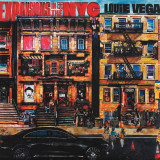
What is it about New York City, that concrete jungle that continually inspires the creative spirit? From Warhol’s Factory to Larry Levan’s Paradise Garage to David Mancuso’s Loft, collectives that celebrate and nurture unfettered, organic artistry have been absolutely intrinsic to the story of this sprawling metropolis. Its latest chapter is being written at the hands of ‘The Maestro’, Grammy Award winner Louie Vega and his Expansions NYC parties, the sound documented in his latest album Expansions In The NYC (Nervous Records).
Starting in February 2019 in Manhattan and Brooklyn venues, Vega’s Expansions NYC parties have their origin not in his revered prowess as a DJ but rather his whole-hearted appreciation of the different elements of the dance floor surrounding him: the dancers, the musicians who bring their instruments to join him ad-hoc on the night, the small, dedicated crowd of clubbers whose ears to the ground keep them informed on the underground party information. The events included 6-hour DJ Sets with Louie under his select curation, and would usually end with 3 AM jam sessions involving keyboardists, guitar players and poets all performing in front of a jam packed crowd. In just a few short years the Expansions NYC events have evolved into an NYC-clubland institution, an intimate celebration of house, funk, disco, afro, R&B and more.
As with his parties, so goes his album. The collective vibe that forms the beating heart of Expansions NYC parties is absolutely front and centre in Expansions In The NYC, Vega drawing in one of the most comprehensive lists of collaborators in recent memory. House heavyweights Honey Dijon, Joe Claussell, Moodymann, Kerri Chandler and Anané rub up against legendary vocalists Bernard Fowler, Cindy Mizelle, Lisa Fischer, Audrey Wheeler and Tony Momrelle. Gospel royalty BeBe Winans and Debbie Winans, pop icon Robyn and rising star Karen Harding sit alongside disco-era champions Unlimited Touch, Cuban jazz pianist Axel Tosca, Nico Vega, Two Soul Fusion with Josh Milan and Vega and underground legend DJ Spinna. At the centre of it all, fingerprint on every beat, touch on every groove, sits a master at work, weaving the individual threads into a rich dance music tapestry.
"In the past few years I’ve found new inspiration both from the musicians I’m working with and the audiences coming to see me at my DJ shows,” Vega says. “So for me this album represents new beginnings, bringing together a beautiful mosaic of artistic perspectives to express musically what we call Expansions In The NYC."
At its heart, Expansions In The NYC is a love letter to New York, as much as melting pot as the city it represents, the scope of its line-up possible only because of the influence and reverence of Vega the artist, the DJ, the producer, the curator. In creating this album, Louie Vega has once again utterly enriched the lives and libraries of music lovers the world over, far beyond the hustling streets of NYC that have so indelibly left their mark on his work.
- A1: Joon - Papa Don't Preach
- A2: Desire - Angel
- A3: Sally Shapiro - Holiday
- A4: Dlina Volny - Hollywood
- A5: Farah - Gang Bang
- B1: Mothermary - Like A Virgin
- B2: Club Intl - Lucky Star
- B3: Love Object - Frozen
- B4: Orion - Into The Groove
- B5: Number One Pop Star - Hung Up
- B6: Double Mixte - La Isla Bonita
- C1: Juno Francis - Beautiful Stranger
- C2: Glüme - Material Girl
- C3: In Mirrors - I'm Addicted
- C4: Causeway - Crazy For You
- C5: Mothermary - Like A Prayer
- D1: Jorja Chalmers - Justify My Love
- D2: Pink Gloves - What It Feels Like For A Girl
- D3: Lou Rebecca - Burning Up
Since 2006, listeners have been curious about the origin of the label name Italians Do It Better. Some say it's an homage to Italo Disco, others guess it's related to ancestry, but in fact it's a nod to the iconic T-shirt Madonna wears in the "Papa Don't Preach" video circa 1986.
Fast forward to a world pandemic... To encourage creativity & lift spirits, Italians Do It Better President, Megan Louise asked every artist “If you could cover your favourite Madonna song…What would it be?”
As a tribute to their label muse & the impact Madonna’s music has had on the world around us, Italians Do It Better are sharing a compilation of covers simply titled “Italians Do It Better”. One of the tracks (“Lucky Star” by Club Intl) is even produced by Max Kamins, the son of Mark Kamins, the New York DJ who helped break Madonna in the early 1980's. From the experience he says “Dance music was the soundtrack of my early childhood. Working on "Lucky Star" reconnected me not only to my father, but also reminded me that a good song is timeless".
Executive produced by Johnny Jewel, the compilation is a passport to 20 covers from the bedrooms of 19 artists across 10 different countries.
- Winter Breaking
- Abstract Spring
- Downhill
- Vision In The Verse
- In The Summer The Streets Burned
- Idiom
- Fruits Of My Tending
- Forbidden Kiss
- The Canvas
- Lucentum
- Wake You Well
- Triumph Of The Heart
- September Song
pen·ti·men·to - eine sichtbare Spur früherer Malerei unter einer oder mehreren Farbschichten auf einer Leinwand - frühes 20. Jahrhundert: aus dem Italienischen, wörtlich "Reue". Auf ihrem ersten Album seit "Still Life" (2022) bewegt sich Carson McHone an der Grenze ihrer musikalischen Vorstellungskraft und kanalisiert so unterschiedliche und überraschende Einflüsse wie Gitarrenrock, pastoralen Folk, Poesie, Feldaufnahmen, visuelle Kunst, Erinnerung, Familie und Landschaft zu ihrem bisher tiefgründigsten Werk. "Pentimento" ist ein kühnes und lohnendes Album. Es ist auch eine Abrechnung: Wie können Liebe und Schönheit in der Gegenwart von Brutalität existieren? Beunruhigend. Dissonant. Gegen ihren Schatten und mit ihre Spuren. Das ist es, was McHone und ihre Mitstreiter (zu denen Daniel Romano, Steve Lambke von den Constantines und andere gehören) auf "Pentimento" mit der Subtilität von Aquarellmalerei und dem Reichtum von Versen einfangen, mit Geisterstimmen und Kinderstimmen gleichermaßen. Jede Schicht ist ein Universum für sich und offenbart den Puls, der Carson McHones kreativen Antrieb belebt. Hier arrangiert und als Ganzes ausgedrückt, ist es ein Meisterwerk. "Alle Lieder von Pentimento entstanden als Gedichte vor dem Hintergrund globaler Krisen, nationaler Grenzen, ziviler Unruhen, Geburt, Tod, schlechter Liebe, neuer Liebe, wahrer Liebe. Sie wurden im Frühling und Sommer in der Wüste geschrieben. Dort werden Geschichte und Zeit in der Dramatik großer Felsbrocken sichtbar, in Schichten auf einer Felswand - das Potential und die vergangene Energie des alten Meeresbodens. Einige dieser Texte wurden auf Postkarten und in Briefen geschrieben. Andere entstanden als Verzierungen auf Aquarellbildern oder als Bildunterschriften für ein Foto in einem Tagebuch, oder sie wurden als Antworten am Rande eines Tagebuchs an ein neugeborenes Kind aus einer vergangenen Generation geschrieben. Diese "Artefakte" des Schreibens/Lebens gaben Aufschluss darüber, was schließlich zum Material für diese Aufnahmen wurde. Später, am Meer und während des ersten Schnees der Saison, kam eine besondere Gruppe von Musikern zusammen, um das Album zum Leben zu erwecken. Während die Hälfte der Songs nach einem strengen "Plan" aufgebaut wurde, kam die andere Hälfte bei dieser Gelegenheit zum ersten Mal zusammen und wurde an Ort und Stelle geprobt und live eingespielt. Über sechs Tage hinweg wurde alles auf einem 8-Spur-Bandgerät aufgenommen, einschließlich zufälliger Rückkopplungen, Bassdröhnen und spontanem Gelächter." - Carson McHone
- A1: Pseudo Silk Kimono (2017 Remaster)
- A2: Kayleigh (2017 Remaster)
- A3: Lavender (2017 Remaster)
- A4: Bitter Suite: Brief Encounter / Lost Weekend / Blue Angel / Misplaced Rendezvous / Windswept Thumb (2017 Remaster)
- A5: Heart Of Lothian (2017 Remaster)
- B1: Waterhole (Expresso Bongo) (2017 Remaster)
- B2: Lords Of The Backstage (2017 Remaster)
- B3: Blind Curve: Vocal Under A Bloodlight / Passing Strangers / Mylo / Perimeter Walk / Threshold (2017 Remaster)
- B4: Childhood's End? (2017 Remaster)
- B5: White Feather (2017 Remaster)
- Winter Breaking
- Abstract Spring
- Downhill
- Vision In The Verse
- In The Summer The Streets Burned
- Idiom
- Fruits Of My Tending
- Forbidden Kiss
- The Canvas
- Lucentum
- Wake You Well
- Triumph Of The Heart
- September Song
pen·ti·men·to - eine sichtbare Spur früherer Malerei unter einer oder mehreren Farbschichten auf einer Leinwand - frühes 20. Jahrhundert: aus dem Italienischen, wörtlich "Reue". Auf ihrem ersten Album seit "Still Life" (2022) bewegt sich Carson McHone an der Grenze ihrer musikalischen Vorstellungskraft und kanalisiert so unterschiedliche und überraschende Einflüsse wie Gitarrenrock, pastoralen Folk, Poesie, Feldaufnahmen, visuelle Kunst, Erinnerung, Familie und Landschaft zu ihrem bisher tiefgründigsten Werk. "Pentimento" ist ein kühnes und lohnendes Album. Es ist auch eine Abrechnung: Wie können Liebe und Schönheit in der Gegenwart von Brutalität existieren? Beunruhigend. Dissonant. Gegen ihren Schatten und mit ihre Spuren. Das ist es, was McHone und ihre Mitstreiter (zu denen Daniel Romano, Steve Lambke von den Constantines und andere gehören) auf "Pentimento" mit der Subtilität von Aquarellmalerei und dem Reichtum von Versen einfangen, mit Geisterstimmen und Kinderstimmen gleichermaßen. Jede Schicht ist ein Universum für sich und offenbart den Puls, der Carson McHones kreativen Antrieb belebt. Hier arrangiert und als Ganzes ausgedrückt, ist es ein Meisterwerk. "Alle Lieder von Pentimento entstanden als Gedichte vor dem Hintergrund globaler Krisen, nationaler Grenzen, ziviler Unruhen, Geburt, Tod, schlechter Liebe, neuer Liebe, wahrer Liebe. Sie wurden im Frühling und Sommer in der Wüste geschrieben. Dort werden Geschichte und Zeit in der Dramatik großer Felsbrocken sichtbar, in Schichten auf einer Felswand - das Potential und die vergangene Energie des alten Meeresbodens. Einige dieser Texte wurden auf Postkarten und in Briefen geschrieben. Andere entstanden als Verzierungen auf Aquarellbildern oder als Bildunterschriften für ein Foto in einem Tagebuch, oder sie wurden als Antworten am Rande eines Tagebuchs an ein neugeborenes Kind aus einer vergangenen Generation geschrieben. Diese "Artefakte" des Schreibens/Lebens gaben Aufschluss darüber, was schließlich zum Material für diese Aufnahmen wurde. Später, am Meer und während des ersten Schnees der Saison, kam eine besondere Gruppe von Musikern zusammen, um das Album zum Leben zu erwecken. Während die Hälfte der Songs nach einem strengen "Plan" aufgebaut wurde, kam die andere Hälfte bei dieser Gelegenheit zum ersten Mal zusammen und wurde an Ort und Stelle geprobt und live eingespielt. Über sechs Tage hinweg wurde alles auf einem 8-Spur-Bandgerät aufgenommen, einschließlich zufälliger Rückkopplungen, Bassdröhnen und spontanem Gelächter." - Carson McHone
Black Truffle is thrilled to present the first ever solo Donso n’goni recording from octogenarian Swedish multi-instrumentalist Christer Bothén. Active in the Swedish jazz and improvisation scene since the 1970s, often heard on bass clarinet, Bothén travelled to Mali in 1971, eventually making his way to the Wassoulou region in the country’s south where he encountered the Donso n’goni, the sacred harp of the hunter caste of Wassoulou society. Though playing the instrument has traditionally been restricted to those who belong to the hunters’ brotherhood, Bothén found an enthusiastic teacher in Brouema Dobia, who, after many months of intensive one-on-one lessons, gave Bothén his blessing to play the instrument both traditionally and in his own style. Returning to Sweden, he would go on to pass on what he had learned to Don Cherry and play the Donso n’goni in a wide variety of inventive settings, including the driving Afro-jazz-fusion of his Trancedance (reissued as BT118).
The seven pieces of Christer Bothén Donso n’goni offer up a stunning showcase of Bothén’s work on this remarkable instrument, heard entirely unaccompanied, except for the final piece where he is joined on a second Donso n’goni by his student and collaborator, the virtuoso bassist Kansan/Torbjorn Zetterberg, and Marianne N’Lemvo Linden on the metal Karanjang scraper. Recorded in three sessions in Stockholm between 2019 and 2023 in richly detailed high fidelity, the instrument’s buzzing, sonorous bass strings make an immediate, overwhelming sonic impression. Hyper-focused on hypnotically repeating pentatonic patterns, the seven pieces are at once relentlessly single-minded and endlessly rich in subtle variations. The concentrated listening environment turns small details, such as the deployment of the instrument’s segesege rattle on two of the pieces, into major events. Six of the seven pieces are traditional, with Bothén contributing the remaining ‘La Baraka’, but the line between tradition and the individual talent is imaginary here: as Bothén explained in a recent interview with The Wire’s Clive Bell, ‘I play traditional and untraditional, and I play the music forward and backward’. While the traditional Wassoulou pieces provide the rhythmic and harmonic elements, Bothén’s individuality as a performer is alive in every moment, felt acutely in boundless variations of attack, improvisational flourishes, and unexpected accelerations and decelerations. Captured entirely live and bristling with spontaneity, this music is undeniably the product of almost half a decade of Bothén’s devotion to the Donso n’goni and its traditional music.
Accompanied by detailed new liner notes by Bothén and stunning colour photos from his time in Mali, Christer Bothén Donso n’goni is a stunning document of a remarkable instrument, played with an almost spiritual intensity by one of contemporary music’s great explorers.