For fans of post-punk and new wave, some songs aren’t just classics — they’re emotional landmarks. Joy Division’s “Love Will Tear Us Apart” and The Cure’s “A Forest” (both released in 1980) helped define an era, shaping decades of alternative music with their stark honesty, atmosphere, and unmistakable sound. Revisiting them is no small task.
Reimagining them successfully is even rarer. This special, limited 7” release — pressed to just 300 copies — does exactly that, thanks to legendary Dutch electronic producer Maarten van der Vleuten. A joint effort between Maarten’s own Signum Recordings and American chill-out imprint re:discovery records, he brings these two towering songs into new territory through the hands of an artist who understands both history and transformation. On one side, Maarten delivers a striking cover of “Love Will Tear Us Apart,” taking on Ian Curtis’ immortal lyrics himself. Rather than mimicking the original’s desolation, this version reframes the song into something unexpectedly inspirational and equally moving. It’s respectful, deeply personal, and emotional. Flip the record and “A Forest” is reborn as an ambient-electro journey, marking the vocal debut of Melbourne-based Linda Kastanja.
The result is dynamic and powerful, retaining the song’s eerie tension while expanding its atmosphere into something spacious and cinematic. Honoring their legacy while reshaping their form, it offers longtime fans and new listeners a rare opportunity to hear familiar emotions from a completely new perspective. Todocument this release, a music video has been made for “Love Will Tear Us Apart,” directed by Maarten and edited by Tobias Grönvall, aka Unit 21.
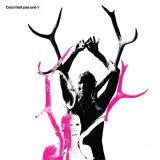
Cerca:ka one
- A1: Intro + Dreams Feat Liv East
- A2: Fruits Of The Universe Feat Douniah
- A3: Define Us Feat 30/70 & Dreamcastmoe
- A4: High Feat Cor.ece
- B1: Vibin Feat Ben Westbeech & Sanity
- B2: Without The Sun Feat Oliver Night
- B3: Bells
- C1: Rearrange Yourself Feat Ben Westbeech & Obi Franky
- C2: Downstream With Life On Planets
- C3: Be Real Feat Life On Planets
- D1: Looks Like It (Space Talk)
- D2: Illusions (Midnight Dub) Feat Ava Lavá & Life On Planets
- D3: Simulate Feat Goya Gumbani & Javonntte
DJ Support: Laurent Garnier, Dennis Cruz, Girls Of The Internet, Horse Meat Disco, Stacey Pullen, Elliot Schooling, Solomun,Marco Carola, Joseph Capriati, The Martinez Brothers, Dam Swindle, Soul Clap, Luke Solomon, Riva Starr, Franky Rizardo, Archie Hamilton, Silvie Loto, Fouk, Austin Ato, Salomé Le Chat, Blackchild, Jean Pierre, Black Loops, Kassian, Seamus Haji, Melvo Baptiste, Rimarkable, Sophie Lloyd
In-demand Amsterdam-based duo Makèz step into new ground with the release of their album ‘Arriving Home Elsewhere’, via ANOTR’s No Art label. A kaleidoscopic project that moves between deep house, cosmic jazz, R&B, broken beat, and club-ready energy, the record is both a declaration of identity and a dissolution of boundaries - proof of the duo’s rare ability to merge worlds without diluting or compromising their true essence.
Where most albums that span electronic realms lean on functionality, ‘Arriving Home Elsewhere’ reaches for something much more expansive. The project is a true hybrid: half shaped for the intimacy of a headphone listen, half designed for the electricity of the dancefloor. together forming a seamless continuum between reflection and release. Tracks like ‘REARRANGE YOURSELF’, ‘BE REAL’, and ‘LOOKS LIKE IT (SPACE TALK)’ are stripped to the core of house music’s driving pulse, made for bigger systems and peak-time release. In contrast, ‘Dreams’, ‘Fruits of the Universe’ (with douniah), and ‘Without The Sun’ (with Oliver Night) explore lush, textured arrangements where live instrumentation and improvisation carry equal weight to rhythm and groove.
Collaboration is at the heart of the LP, with Makèz inviting a constellation of voices who each expand the project’s palette. Ben Westbeech, Liv East, and SANITY bring soulful intensity; 30/70 and dreamcastmoe connect Amsterdam to Melbourne and DC; Cor.Ece and Oliver Night weave delicate threads of emotion; Goya Gumbani and Javonntte guide the production with their vibey, groove-led performances; while Life on Planets reprises his role as a core creative partner, appearing across the album on tracks including the standout ‘BE REAL’ and the previously released ‘ILLUSIONS’ alongside rising Amsterdam talent AVA LAVÁ. Together, these contributions shape an album that feels less like a singular statement and more like a living, breathing ecosystem.
For Makèz, ‘Arriving Home Elsewhere’ is as much about philosophy as it is about music. The title encapsulates a tension central to their art: the feeling of belonging to multiple worlds without ever being confined to one. Jazz, house, soul, and experimental club sounds are not separate influences but parallel languages, and in merging them, the duo has created a record that mirrors the fluidity of contemporary identity and expression. And while it may speak in many voices, the LP tells one clear story - that of Makèz, arriving, again and again, home elsewhere.
The long-awaited reissue of Toba makes it clear, once and for all, to fans and industry insiders that disco music produced in Italy between the late 70s and early 80s had no chance of success. What was disparagingly called "spaghetti disco", considered a poor imitation of real American disco music, only good for Japanese cartoons. This was the main reason that prompted Italians to record their songs abroad, as Fratelli La Bionda with their pseudonym D.D.Sound in Munich. Luigi Figini, with "Supercool" and "Percussion Sundance" by Edo Martin and Pino Santapaga (the same as "Step By Step" by Koxo), claimed that Kash was a one-off Swedish disco project, a lie that came to light when an Italian test pressing from the previous year, made by GDB, was posted !!! Amin-Peck followed the trend of passing off their songs as foreign music on the intuition of their Roman producers. So ''Love Disgrace'' was released on 7'' by a label called Connection, which never really existed, created for the purpose by Giancarlo Meo, confident that this would bring success to the Bolognese duo who were already creating 'proto Italo-Disco tracks' with a new-wave trend. To make the whole operation seem real, the London agency Ellie Jay Ltd. was involved, contacting Andy Fernbach of Jacobs Studios Ltd. The vinyl was also produced in the UK, otherwise the deception would have been discovered, then imported to Italy by Best Record. Italo-Disco was officially born after this, in 1982, not before! Everything makes sense now ! Real events that actually happened and purely invented names and anecdotes. Just think, even the image of Tony Balch used for the cover of Toba was taken from Grand Theft's 1978 album "Have You Seen This Band?" and reproduced on the new redesigned cover, as were the heads of the other musicians. The idea of a real band called Toba had finally come to fruition and would lead to a second sensational success the following year. Now it all makes sense! Facts and anecdotes that really happened and names and circumstances that are purely fictional. Finally, everything adds up! Real things and invented names of musicians and collaborators. It's important to clarify what we've said above, but we haven't talked about "Make Your Mind Up" and "Don't Take It" and the two masterful remixes performed by Dave Mathmos. In short: with the original versions we'll make Italo-Disco purists happy, with the remix versions we'll please new younger followers with more modern sounds and versions more in line with today's tastes and trends.
Rolando’s back in the game with Syncrophone Remixes Vol.2—flipping DJ Qu’s “Undescribed3,” Detect Audio’s “Synchronize,” and Anthony Shake Shakir’s “Arise.” Three exclusive remixes, pure underground techno for real heads. Detroit spirit, cop this 12” before it disappears!
DJ Feedbacks :
Honey Dijon : DJ Qu is the one for me. Will def support!
Raresh (ar:pi:ar) : super! thanks
Truncate : Thanks!
The Advent : Smooth bgrooves on here.. 3 - Anthony 'Shake' Shakir - Arise (Rolando Remix)
Anika Kunst (Symbolism / RSPX) : Cool release. Arise rmx is beautiful. Thanks!!
Harvey Sutherland (MCDE / PPU / Voltaire Records) : DJ Qu flip for me, thanks!
Scott Grooves : The Shake is the one
Satoshi Tomiie (Abstract Architecture) : Wooow hot hot hot
Roman Fluegel (Roman Fluegel, Dial, Cocoon, Playhouse, Robert Johnson) : The Remix for Shake is the one for me.
Erol Alkan (Phantasy Sound) : Downloading Thanks!
Enrica Falqui (ERIS, Plexus 4) : I like it!
Daniel Avery (Phantasy / Fabric) : Awesome
Laurent Garnier : cool release
Elisa Bee : Only love for Rolando, thanks x
Slam (Soma) : Brilliant - thanx
San Proper (Perlon / Rush Hour / Proper's Cult) : Totally what i needed to hear, Rolando remixing Shake & Q, my heroes lined up. I will enjoy playing all 3 mixes. One Love.
Axel Boman (Studio Barnhus) : killer remixes!
Terry Farley : DJ Qu mix my fave - heads down LETS GURN
D'Julz (Bass Culture) : great work !
gilbr (Dj Gilb'R / Chateau Flight (Versatile)) : Like the Shakir remix thanks for sending
Ben Sims : Now downloading... will check asap!
Lea Lisa (Phonica Records / Folklor Club) : mental, really good one
Dj Deep (Deeply Rooted) : Super nice package! Dj Qu's Undescribed3 remix for me here! Thank you
Mike Shannon (Cynosure) : Rrrrreeeeemix!! Thx
Efdemin (Dial) : Wonderful remix package!
Inland (Inland) : Hellooo. These are great. Qu and Shake versions both killer! Thanks
Kai Alce (Real Soon) : DJ QU remix bangin
Uncertain (RSPX, WRKTRX, Suara) : remix 1 for me
Harri (Sub Club) : very nice all three will play and support
Blasha & Allatt (Meat Free) : Thank you!
Marcel Dettmann : thx
Richie Hawtin (M_Nus) : downloaded for r hawtin
Luke Solomon (Classic / Freaks / Music For Freaks) : all killer
Luke Slater : Thanks Ro!
Ame (Innervisions) : thanks
Felix Dickinson (Futureboogie, Rush Hour, Cynic) : I like this
Geir Aspenes (G-Ha (Sunkissed)) : Thank u
Alienata (about blank) : Very nice remixes, all of them, thx!
Nat Wendell (Depth of My Soul, Courtesy of Balance, Love & Loops) : Dope remixes!
Dave Clarke (white noise radio) : Not my sound, but please keep them coming !
Faitiche welcomes a new artist: Christina Kubisch belongs to the first generation of sound artists. Her practice ranges from performances, concerts, to works with video and visual art, but she is best known for her sound installations and electro-acoustic compositions.
TUNING brings together three pieces by Christina Kubisch from different periods of her oeuvre. What they have in common is the way they transform sound phenomena originally considered “non-music” into compositions.
Jan Jelinek: Gaming in Silence (2024) is the most recent work on this compilation. It’s a collage of electromagnetic waves, voice, and abstract sound textures. How did this combination come about?
Christina Kubisch: Gaming was commissioned as a fixed-media composition for the Sound Dome at ZKM Karlsruhe. Since Resonances: The Electromagnetic Bodies Project (2005), I’ve been making recordings in the old and new server rooms at the ZKM and in their permanent collection of historical computer games. Computer games like Asteroids (Atari, 1979) and Poly-Play (VEB Polytechnik, 1986) have specially generated analogue electromagnetic waves that interest me in particular on account of their density, rhythms and textures. I originally studied painting and to me the work of composition often feels like painting an abstract picture. I alter my source material as little as possible, layering and overlapping until a distinctive sound space emerges. In recent pieces, I sometimes combine magnetic waves with field recordings or live instruments. In Gaming it’s my recording of a Chinese song about silence.
JJ: Two persons walking through a street in Madrid (2004) is a recording from your Electrical Walks series. Here we should give a brief explanation of one of your best known works: participants in an Electrical Walk move through public spaces wearing prepared headphones that allow them to receive electromagnetic waves from their surroundings – for example from security gates, ATMs or neon signs. They discover a situation that normally is inaudible to the human ear and they can actively shape it by choreographing their movements. I really admire this piece, not least because there’s no clear dividing line between participants and artist. What exactly do we hear in Two persons walking through a street in Madrid (2004)?
CK: With this early work, I wanted to understand what is heard by people participating in an Electrical Walk in the same place but moving in different ways. The Spanish composer Miguel Alvarez-Fernàndez and I set off from opposite ends of a major shopping street in Madrid, met briefly in the middle, and then continued to the end. We both recorded our walks and I then layered them over one another. You might call it a work of electromagnetic conceptualism.
JJ: Diapason (2009 version) is an installation that plays a composition based on sounds from fifteen tuning forks. This setting is audible in the recording: there’s no dramatic arc, no beginning or end – instead, it recalls a piece of aleatoric music focussing on the decay phase. How did you come to make this work and could you tell us something about your compositional method?
CK: Diapason is part of a series of three pieces that deal with “non-instruments” or instruments that no longer exist: electrical mine bells used to send signals to the workers underground; a historical glass harmonica originally used for medicinal purposes; and tuning forks that were used by doctors to test people’s hearing. All of these methods are no longer in use. The sound of the tuning forks, audible only if held close to the ear, was recorded at the electronic studio at Berlin’s Technical University in such a way that even their decay remained audible. The frequencies range between 64 and 2048 Hertz and they can be adjusted at micro-intervals using small movable weights. The sequence and the duration of the pauses are dictated by chance and were not defined in advance. The 2009 version was created for an installation in the historic Holy Cross Church (Korskirken) in Bergen. Visitors could enter and leave the space at any time, deciding for themselves where and for how long they wished to listen to the sounds played back over an array of small loudspeakers placed on the floor of the apse.
Credits:
Gaming in Silence: commission of the ZKM/Hertzlab, Karlsruhe 2023
elektronic sound processing: Tom Thiel
sound engineering and mixing: Eckehard Güther
Diapason: produced at Elektronisches Studio of TU Berlin
rearrangement: Eckehard Güther
Christina Kubisch, published by Edition Christina Kubisch / Random Musick Publishing
image front: Transitionen 2021 by C. Kubisch, sonagrams of electronic waves (courtesy: Galerie Mazzoli Berlin)
image back: Diapason Tuning Fork, property of Folkmar Hein, Photo: Archiv Christina Kubisch
design by Tim Tetzner
mastered by Giuseppe Ielasi
Thanks to Miguel Álvarez-Fernández, Folkmar Hein, Dominik Kautz and Mario Mazzoli
Tapping into the otherworldly frequencies of the UFO series, UK-born, Lisbon-based prodigy Rene Wise arrives on Dekmantel with an assured demonstration of his position at the cutting edge of real techno.
Andrew Shobeiri appeared in the cut and thrust of the scene fully-formed around 2017, instantly bringing his Rene Wise alias to top-tier labels with a razor-sharp combination of functional minimalism and mind-warping flair. There's no grey area fluctuation in his hypnotic, intentional sound — this is deep, captivating techno for the long haul, music to submit yourself to.
True to his sound, Rene Wise makes his presence felt on Dekmantel UFO with a varied spread of sounds, leading with the melancholic charm of the melodic sequences weaving through 'Johnson's Theme' before sinking into the engrossing folds and low-end rumble of 'Granite Skin'. There's a lighter atmosphere at play in the vaporous impulses that mark out 'Flow' before rolling into the rhythmic urgency and strafing bleeps of 'Kanga'.
This is the Dekmantel UFO experience as expressed by one of the leading lights in modern techno — an artist who understands the psychoactive power contained within the subtleties of production and pursuit of the ultimate loop.
- A1: The Bird
- A2: Heart Don't Stand A Chance
- A3: The Waters (Feat. Bj The Chicago Kid)
- A4: The Season / Carry Me
- B1: Put Me Thru
- B2: Am I Wrong (Feat. Schoolboy Q)
- B3: Without You (Feat. Rapsody)
- B4: Parking Lot
- C1: Lite Weight (Feat. The Free Nationals United Fellowship Choir)
- C2: Room In Here (Feat. The Game & Sonyae Elise)
- C3: Water Fall (Interlude)
- C4: Your Prime
- D1: Come Down
- D2: Silicon Valley
- D3: Celebrate
- D4: The Dreamer (Feat. Talib Kweli & Timan Family Choir)
Ten years ago, Anderson .Paak didn't just release an album; he staged a full-scale takeover of the soul and hip-hop landscape. Released on January 15, 2016, Malibu served as the definitive arrival of an artist who had spent years grinding in the underground before a star-making turn on Dr. Dre’s Compton. While his previous work hinted at his potential, Malibu was the moment the world met the "Cheeky Andy" persona in full—a virtuosic drummer, a raspy-voiced crooner, and a sharp-witted rapper all rolled into one. The album is a sprawling, sun-drenched journey through the Southern California coast, blending 1970s funk, church-reared gospel, and gritty boom-bap into something that feels both nostalgic and entirely futuristic. With a heavyweight production lineup including 9th Wonder, Madlib, Kaytranada, and Hi-Tek, the record maintains a warm, analog texture that was a breath of fresh air in an increasingly digital era. It’s an album that breathes, full of intentional imperfections and the kind of "in-the-pocket" groove that can only come from a seasoned live performer. Beyond the infectious, dance-floor-ready energy of tracks like "Am I Wrong" and "Come Down," the album is a deeply autobiographical masterwork. .Paak uses the 65-minute runtime to unpack his life story with startling clarity, touching on his mother’s gambling addiction, his father’s incarceration, and his own brushes with homelessness with a sense of resilience that never feels heavy-handed. He weaves these heavy themes through a lens of triumph, grounded by vintage surfing documentary samples that give the project its cinematic, coastal atmosphere. It’s a celebratory record born out of struggle, anchored by his impeccable technicality on the drums and a guest list—featuring ScHoolboy Q, Rapsody, and The Game—that feels hand-picked to complement his specific brand of West Coast swagger. A decade later, Malibu stands as a modern classic and the blueprint for the soulful revivalism that would eventually lead .Paak to global superstardom and Grammy-winning heights. It remains a testament to the idea that the most profound music often comes from the most personal places, proving ten years on that the best way to move forward is to stay rooted in the groove.
- A1: The Bird
- A2: Heart Don't Stand A Chance
- A3: The Waters (Feat. Bj The Chicago Kid)
- A4: The Season / Carry Me
- B1: Put Me Thru
- B2: Am I Wrong (Feat. Schoolboy Q)
- B3: Without You (Feat. Rapsody)
- B4: Parking Lot
- C1: Lite Weight (Feat. The Free Nationals United Fellowship Choir)
- C2: Room In Here (Feat. The Game & Sonyae Elise)
- C3: Water Fall (Interlude)
- C4: Your Prime
- D1: Come Down
- D2: Silicon Valley
- D3: Celebrate
- D4: The Dreamer (Feat. Talib Kweli & Timan Family Choir)
Ten years ago, Anderson .Paak didn't just release an album; he staged a full-scale takeover of the soul and hip-hop landscape. Released on January 15, 2016, Malibu served as the definitive arrival of an artist who had spent years grinding in the underground before a star-making turn on Dr. Dre’s Compton. While his previous work hinted at his potential, Malibu was the moment the world met the "Cheeky Andy" persona in full—a virtuosic drummer, a raspy-voiced crooner, and a sharp-witted rapper all rolled into one. The album is a sprawling, sun-drenched journey through the Southern California coast, blending 1970s funk, church-reared gospel, and gritty boom-bap into something that feels both nostalgic and entirely futuristic. With a heavyweight production lineup including 9th Wonder, Madlib, Kaytranada, and Hi-Tek, the record maintains a warm, analog texture that was a breath of fresh air in an increasingly digital era. It’s an album that breathes, full of intentional imperfections and the kind of "in-the-pocket" groove that can only come from a seasoned live performer. Beyond the infectious, dance-floor-ready energy of tracks like "Am I Wrong" and "Come Down," the album is a deeply autobiographical masterwork. .Paak uses the 65-minute runtime to unpack his life story with startling clarity, touching on his mother’s gambling addiction, his father’s incarceration, and his own brushes with homelessness with a sense of resilience that never feels heavy-handed. He weaves these heavy themes through a lens of triumph, grounded by vintage surfing documentary samples that give the project its cinematic, coastal atmosphere. It’s a celebratory record born out of struggle, anchored by his impeccable technicality on the drums and a guest list—featuring ScHoolboy Q, Rapsody, and The Game—that feels hand-picked to complement his specific brand of West Coast swagger. A decade later, Malibu stands as a modern classic and the blueprint for the soulful revivalism that would eventually lead .Paak to global superstardom and Grammy-winning heights. It remains a testament to the idea that the most profound music often comes from the most personal places, proving ten years on that the best way to move forward is to stay rooted in the groove.
- A1: The Bird
- A2: Heart Don't Stand A Chance
- A3: The Waters (Feat. Bj The Chicago Kid)
- A4: The Season / Carry Me
- B1: Put Me Thru
- B2: Am I Wrong (Feat. Schoolboy Q)
- B3: Without You (Feat. Rapsody)
- B4: Parking Lot
- C1: Lite Weight (Feat. The Free Nationals United Fellowship Choir)
- C2: Room In Here (Feat. The Game & Sonyae Elise)
- C3: Water Fall (Interlude)
- C4: Your Prime
- D1: Come Down
- D2: Silicon Valley
- D3: Celebrate
- D4: The Dreamer (Feat. Talib Kweli & Timan Family Choir)
Ten years ago, Anderson .Paak didn't just release an album; he staged a full-scale takeover of the soul and hip-hop landscape. Released on January 15, 2016, Malibu served as the definitive arrival of an artist who had spent years grinding in the underground before a star-making turn on Dr. Dre’s Compton. While his previous work hinted at his potential, Malibu was the moment the world met the "Cheeky Andy" persona in full—a virtuosic drummer, a raspy-voiced crooner, and a sharp-witted rapper all rolled into one. The album is a sprawling, sun-drenched journey through the Southern California coast, blending 1970s funk, church-reared gospel, and gritty boom-bap into something that feels both nostalgic and entirely futuristic. With a heavyweight production lineup including 9th Wonder, Madlib, Kaytranada, and Hi-Tek, the record maintains a warm, analog texture that was a breath of fresh air in an increasingly digital era. It’s an album that breathes, full of intentional imperfections and the kind of "in-the-pocket" groove that can only come from a seasoned live performer. Beyond the infectious, dance-floor-ready energy of tracks like "Am I Wrong" and "Come Down," the album is a deeply autobiographical masterwork. .Paak uses the 65-minute runtime to unpack his life story with startling clarity, touching on his mother’s gambling addiction, his father’s incarceration, and his own brushes with homelessness with a sense of resilience that never feels heavy-handed. He weaves these heavy themes through a lens of triumph, grounded by vintage surfing documentary samples that give the project its cinematic, coastal atmosphere. It’s a celebratory record born out of struggle, anchored by his impeccable technicality on the drums and a guest list—featuring ScHoolboy Q, Rapsody, and The Game—that feels hand-picked to complement his specific brand of West Coast swagger. A decade later, Malibu stands as a modern classic and the blueprint for the soulful revivalism that would eventually lead .Paak to global superstardom and Grammy-winning heights. It remains a testament to the idea that the most profound music often comes from the most personal places, proving ten years on that the best way to move forward is to stay rooted in the groove.
- Moonside
- On Our Own Time
- Blum House
- Virtue Signaling
- Help Is On The Way
- High School
- Lay Low
- Selfish Soother
- Poppi
- The Me (I Know)
- Me Time
- Beyond The Thicket
- Fight For Frequency
- Circling The Dream
Winnies Welt war nicht immer einfach. Manche sagen, er hätte berühmt werden können, aber es gab Probleme. Er hatte kurz Erfolg, aber das Leben kam ihm dazwischen. ,Manche Leute kümmern sich zu sehr. Ich glaube, das nennt man Liebe." Also lag es an Winston Hightower, die Chance zu ergreifen, sie festzuhalten und sich Gehör zu verschaffen. Ein Mann, der den Sound des amerikanischen Lofi liebt. Was befindet sich im Aschenbecher von Winston Hightowers "Day in the Life"? 14 Songs, die einem wehmütigen Herzen eine unbeschwerte Tarnung verleihen - es strahlt durch und durch. 33 RPM. Ein Pianist, der kein Klavier spielen kann und seine Melodien auf der Gitarre transponiert. Angenehme Klänge, überlagert von Gesprächen mit sich selbst. Was sieht dieser Ohio Player, wenn er in den Spiegel schaut? Nudge Squidfish? Daniel Johnson? Studio One Oldies Comps? Nach über 126 Songs auf Band sind wir immer noch dabei, das herauszufinden.
- A1: The Bird
- A2: Heart Don't Stand A Chance
- A3: The Waters (Feat. Bj The Chicago Kid)
- A4: The Season / Carry Me
- B1: Put Me Thru
- B2: Am I Wrong (Feat. Schoolboy Q)
- B3: Without You (Feat. Rapsody)
- B4: Parking Lot
- C1: Lite Weight (Feat. The Free Nationals United Fellowship Choir)
- C2: Room In Here (Feat. The Game & Sonyae Elise)
- C3: Water Fall (Interlude)
- C4: Your Prime
- D1: Come Down
- D2: Silicon Valley
- D3: Celebrate
- D4: The Dreamer (Feat. Talib Kweli & Timan Family Choir)
Ten years ago, Anderson .Paak didn't just release an album; he staged a full-scale takeover of the soul and hip-hop landscape. Released on January 15, 2016, Malibu served as the definitive arrival of an artist who had spent years grinding in the underground before a star-making turn on Dr. Dre’s Compton. While his previous work hinted at his potential, Malibu was the moment the world met the "Cheeky Andy" persona in full—a virtuosic drummer, a raspy-voiced crooner, and a sharp-witted rapper all rolled into one. The album is a sprawling, sun-drenched journey through the Southern California coast, blending 1970s funk, church-reared gospel, and gritty boom-bap into something that feels both nostalgic and entirely futuristic. With a heavyweight production lineup including 9th Wonder, Madlib, Kaytranada, and Hi-Tek, the record maintains a warm, analog texture that was a breath of fresh air in an increasingly digital era. It’s an album that breathes, full of intentional imperfections and the kind of "in-the-pocket" groove that can only come from a seasoned live performer. Beyond the infectious, dance-floor-ready energy of tracks like "Am I Wrong" and "Come Down," the album is a deeply autobiographical masterwork. .Paak uses the 65-minute runtime to unpack his life story with startling clarity, touching on his mother’s gambling addiction, his father’s incarceration, and his own brushes with homelessness with a sense of resilience that never feels heavy-handed. He weaves these heavy themes through a lens of triumph, grounded by vintage surfing documentary samples that give the project its cinematic, coastal atmosphere. It’s a celebratory record born out of struggle, anchored by his impeccable technicality on the drums and a guest list—featuring ScHoolboy Q, Rapsody, and The Game—that feels hand-picked to complement his specific brand of West Coast swagger. A decade later, Malibu stands as a modern classic and the blueprint for the soulful revivalism that would eventually lead .Paak to global superstardom and Grammy-winning heights. It remains a testament to the idea that the most profound music often comes from the most personal places, proving ten years on that the best way to move forward is to stay rooted in the groove.
From Wisdom Teeth’s recent compilation nagoyaka na kaze / 和やかな風 (quiet wind)—which cast a spotlight on the Japanese city of Nagoya—emerges “2++”, a new label launched by abentis, who curated the compilation alongside Facta and K-LONE as a central figure in the scene. Conceived as a series introducing facets of Nagoya’s underground electronic music to the world on vinyl, its inaugural release is abentis’ debut album, Dim Grow.
Across the album, intricately designed electronic mallet sounds—created using Ableton Live’s physical-modeling synthesizer—take center stage. Fresh and percussive like marimba or kalimba, yet simultaneously carrying an otherworldly, unreal quality, these tones form the core of the record’s sonic identity. In moments of near-silence, a crystalline resonance poised between glass and metal shimmers with subtle shifts in temperature, giving the album its distinctive texture.
While resonating with the sonic sensibilities of fellow Wisdom Teeth affiliates such as K-LONE, Tristan Arp, and Salamanda, abentis’ uniquely strange palette can be traced back to one of his strongest influences: Haruomi Hosono. In particular, Hosono’s mid-’70s tropical-infused solo albums — Tropical Dandy (1975), Bon Voyage Co. (1976), and Paraiso (1978) — serve as a key reference point. Symbolically reflected in Hosono’s marimba and vocal performance at a 1976 live show in Yokohama Chinatown, the marimba functioned as a central instrument for constructing imagined exotic landscapes inspired by Martin Denny and Hawaiian music.
For abentis—who worked at a local jazz bar before becoming active as a hip-hop beatmaker—the language of “tension chords,” a harmonic vocabulary rooted in jazz and R&B that hovers ambiguously between brightness and darkness, forms a consistent grammar throughout Dim Grow.
Behind the album’s core theme of “mallets + tension chords” lies a broad musical lineage: the harmonic sensibility of Claude Debussy, who anticipated the tensions of jazz; the proto-minimalist spirit of Erik Satie; the marimba-centered structures of Steve Reich; their continuation in Japan through Mkwaju Ensemble (with Midori Takada and production by Joe Hisaishi); and the subsequent branches into post-rock, electronica, and ambient music.
Growing up in Nagoya—an industrial city where creative independence is deeply valued—and being rooted in punk and hip-hop counterculture scenes naturally fostered abentis’ affinity with these predecessors. His practice between genres, combined with an encounter with the highly cross-pollinated musical perspective cultivated around Wisdom Teeth, provided the framework through which his own musical language crystallized. Dim Grow stands as the natural culmination of that journey.
- A1: Irresistable U Are
- A2: Intense
- A3: I Am, I Feel
- A4: Alisha Rules The World
- A5: White Room
- A6: Stone In My Shoe
- B1: Personality Lines
- B2: Indestructable
- B3: I Won't Miss You
- B4: The Golden Rule
- B5: Just The Way U Like It
- B6: Air We Breathe
- B7: Adore U
Alisha's Attic were one of the defining English pop duos of the late 1990s and early 2000s. Formed by sisters Shelly and Karen Poole, the pair first appeared in 1988 under the name Keren & Chelle, releasing their single "Sugar Daddy". In 1996 Alisha's Attic released their debut single "I Am, I Feel" which reached the #14 in the UK Singles Charts. Their debut album, Alisha Rules the World was released in November 1996, produced by Dave Stewart of Eurythmics. The album became a major success, achieving Platinum in the UK and generated a string of single "Alisha Rules The World", "Indestructible" and "Air We Breathe" all of which reached the UK Top 15.
Sakura is without doubt the most loved and lauded entry in Susumu Yokota’s catalogue.
The music unravels like cascades of petals falling from the eponymous cherry blossom trees. Yokota intended to ‘express ki-do-ai-raku (the four emotions; joy, anger, sorrow, and happiness) through music’, and throughout Sakura, the effect fluctuates between profound tranquillity, hesitation, melancholy and joy with ease, addressing the fickle nature of human emotion, while transcending the inclination to label moods entirely.
Sakura became Yokota’s best selling album. It was greeted with universal acclaim, lauded by Philip Glass and Brian Eno and launched Yokota internationally.
‘A bittersweet beauty, heightened by the sadness that all things must one day end.’ - Martyn Pepperell
- A1: Life Spark
- A2: (Mind Apple Intro)
- A3: Affinity (Cloud Four Four Mix)
- A4: Opening A Portal
- A5: Miracle Mile (Feat. Bikôkô)
- B1: Triton
- B2: Photographs That Don;T Exist
- B3: Throw The Ember Feat. Juga-Naut
- B4: We Move Feat. Ell Murphy
- C1: Big World Feat. Lou Hayter
- C2: Waterfall Reverse
- C3: Sickly, Sweetly, Summer Movie
- D1: Scattergun
- D2: Home Feat. Merry Lamb Lamb
- D3: Fruit Rots, Water Floats Downstream
- D4: Ascension.png
DJ Support: Paul Woolford, Machinedrum, Kettama, LDLDN, Sinistarr, A.Fruit, Machine Woman, Octo Octa, Paco Osuna, Bradley Zero, Tzusing, Lefto, Synkro, John Tejada, 12x12 and many more
BBC6Music - Gilles Peterson
NTS - LDLDN
BBC6Music - SHERELLE - DJ Mix and Interview
NTS - Ross Allen
Enter the kaleidoscopic world of Lone - returning to Greco-Roman for his first album in five years, ‘Hyperphantasia’
An artist who has been soundtracking dancefloors since the early 2000s, Lonemade his production debut in 2008 with “Lemurian”, a hip-hop inspired release before moving into the vibrant future-facing soundscapes we have come to know. His back catalogue ranges through house, rave, ambient and electronica, and on ‘Hyperphantasia’, Cutler sets himself the challenge to bring all of those influences together for one body of work that he describes ‘like an album in my mind’. Referring back to the album title, the definition of hyperphantasia is a condition characterized by exceptionally vivid and detailed mental imagery and for this album he tested himself to see how close he could get the music to sound exactly like what he was hearing in his imagination.
On Hyperphantasia, Lone deepens his relationship with vocals. Having previously relied on vocal samples or more abstract live vocal treatments, this latest album marks a shift toward richer, more pop-leaning sensibilities. Cutler makes a clear lyrical statement, enlisting a diverse and carefully chosen cast of collaborators: London-based artists and fellow Greco-Roman affiliates Ell Murphy and Lou Hayter, Barcelona’s breakthrough singer Bikôkô, cult Nottingham rapper Juga-Naut, and Hong Kong-born, London-based musician Merry Lamb Lamb. Together, they contribute to what stands as a career-defining project.
The end result is a cinematic experience exploding full of colour. You are introduced to the album with an old school rave anthem ‘Life Spark’ and an interlude welcoming you into this musical world. Like chapters in a novel, the album ebbs and flows beautifully between stripped-back melodies ‘Opening A Portal’, ‘Photographs That Don’t Exist’, ‘Sickly, Sweetly, Summer Movie’ and ‘Fruit Rots, Water Floats Downstream’, bubbling feel-good house ‘Affinity (Cloud Four Four Mix)’, ‘Triton’ and ‘ Wemove’, the rap-influenced ‘Throw The Ember’ and epic future-pop tracks ‘Miracle Mile’, ‘Big World’, ‘Scattergun’ and ‘Home’. The album ends with a full circle moment, back to the early hardcore and jungle rave scene, on ‘Ascenscion.png’.
The fifth release on Objekt’s Kapsela imprint is (re)weave, an EP of crystalline club tracks from Detroit-born, London-based producer Tristan Arp.
(re)weave was written during a prolonged period of flux for the artist. “When I started making this record, my life and the world felt like a maze,” he recounts. As he routed and re-routed through past and future homes – Mexico to New York to Detroit to Mexico and finally to London – his output bore the marks of this repeated uprooting. “I was thinking about making music that reflected these twists and turns, and the knotty pathways through them. I was also re-reading Borges around this time, which must have influenced my interest in labyrinths.”
Accordingly, the EP is a mycelial puzzle, a tangle of spidery, undulating ostinatos and earthy percussion, stitched through with syncopated kicks. Employing the sounds of multitudinous critters and kin – whales, insects, thunder, water, forests – the arrangements sum to a sentient mesh of organic matter, the compositions living and breathing like earthly beings. Kaleidoscopic tendrils explore in every direction but are always underpinned by a driving, percussive backbone. It’s not easily classifiable: it’s bass-driven, but to simply call it “bass music” would sell it short.
In keeping with the winding geographical paths traced over the EP’s creation, (re)weave saw Tristan Arp revisiting and reinterpreting unfinished sessions and incorporating them into newer ideas. Rhythms and sounds have been transplanted and self-recycled from previous projects and woven into the fabric of the record. In this way, (re)weave also describes a looping back over time, a recalibration of the self from past to present through interlocking rhythms, channeling and communing with versions of oneself from times gone by.
The closing track, Wish Server, slows the EP to walking pace and hints at tentatively emerging from the deepest jungle into a delicate, innocent light. Tristan Arp imagines it as a dialog with a baby-self. “Some of my earliest memories are of sitting at my mother’s loom,” he offers. “The sequence of these tracks traces these feelings and follows the thread back to the primordial soup… through mazes… to a feeling of levitation.”
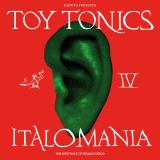
- A1: Elado - I Wanna Dance
- A2: Gee Lane & Dante Feat Jose Barranquero - Rhythm Roots
- A3: Marla Kether - One Time
- B1: Alma Negra Feat Pat Kalla - Soleil (Extended Version)
- B2: Musta - Afro Tonic
- C1: Alot - Mi Casa (Extended Version)
- C2: Arpy Brown & Kapote - Drop It Low
- C3: Daniel Monaco & Bop Feat Candy Voice - Sobby
- D1: Paul Older - Xylo
- D2: Melon Bomb – Galia
WILDSTYLE HOUSE is a new compilation series where Toy Tonics invites producers and DJs that have a very special, funky, unique sound to make one new track. The compilation should show the variability and diversity of house and disco TODAY. Like the wild music mix you can hear at the Toy Tonics events and the way Toy Tonics DJs combine many different styles of "4 to the floor" music into one new soulful, multi-style, and warm-sounding blended "genre." It's about the groove, about a new soul sound, the human feel, the organic and Y2K-inspired dance music that is growing and appeals to a new generation of dance music lovers.
This first part of the compilation includes unreleased music by:
Afro-funk and salsa-house producer talents ELADO, MUSTA, and ALMA NEGRA.
Garage house maestros MELON BOMB and Italian musician DANIEL MONACO (known for his New Wave disco and proto-house releases on Rush Hour and his work for Antal).
MARLA KETHER, the London bass player and DJ, who is known for her work with Little Simz, Oscar Jerome, and Loyle Carner, and has now started to release her own tracks.
Argentinian singer, musician, and DJ ALOT, combining proto-house vibes with Spanish rap.
Funk house producer and edit maestro PAUL OLDER, who is starting to become one of the key names of the new soul house scene (supported by DJs like Folamour, David Penn, Seth Troxler, Kirollus, Breakbot...).
And also Toy Tonics' own GEE LANE, KAPOTE, and ARPY BROWN contributed new tracks.
„ behind horizons at the end of a breath why I love luna parks *_* „
Ben Kaczor debuts his first LP on St. Odes. Sirene showcases a more experimental and cinematic approach to sound. Tracks such as Amusement Impressions and Phantom Blues emerged from his fine art studies, while Sirene and Oval Waves reflect his work with the Buchla Easel. The artwork features a photograph by the artist himself, making the record one of his most personal works to date.
artwork by : Ben Kaczor / mastering by : Isabel Schröer
DJ Support: Eprom, Visages, Gaslamp Killer, Drone and more
Following his last extended body of work ‘Entanglements’, Alix Perez taps into slower tempos for his new mini LP ‘Sabotage’. This record focuses on the 130-140 bpm realm, featuring collaborations with SP:MC, Trim, Cesco & Hijinx. From light to dark, Alix further explores his penchant for that world of music.
“We know what jazz is when we hear standards or music that is close to the same source, to a recognized pattern. But what is jazz? Here, a starting point. "Blow" showcases an accumulated CITIZEN:KANE techno vocabulary but it quickly tones down the sensation by introducing frequent breaks in the rhythm, as in "Peiote". But even there we are able to "feel" techno by recalling Wolfgang Voigt's M:I:5 and its parallel yet contrasting rhythmic grids. Elsewhere, manifestations of opposite forces: the beat keeps a body firm on the floor, eminently physical but not commanding; and melodies, cosmic threads, suggest ascension as well as a drive towards the within, creating space for feelings and/or rationalization. "The Fence" or "Montreal" stand as good examples. One less evident aspect of beauty in this record is the apparent coldness of the music, almost rigid and devoid of passion, and thus we declare it more true. As the mind performs a synthesis of what was learned after a class, last track "Family" (expressively) gathers impressions of what went before, adding poetry to the moment. "Blow" may be a reference to the most familiar instruments used in jazz but it can also figuratively mean an explosion, an aesthetic liberation, even with (our) knowledge that for now, and theoretically, the artist chose to concentrate on this thing called jazz.”
Between electronic shadows and cinematic textures, this new album from QUENUM draws its influences from the likes of Massive Attack, Archive, and Burial. Started and produced in London, it reflects a change of time — both in the climate and within.
This project represents a personal and artistic turning point for QUENUM. He wanted to experiment with new ideas, not necessarily music for the club. The album was created in close collaboration with his son Zac, a talented musician who contributed both as a singer and instrumentalist on several tracks. They shared wonderful moments creating this album together.
He also worked hand in hand with his long-time friend Christophe Calpini, who played a key role in mixing and in developing the textures and atmospheres that shape the album’s sound. The result is an intimate, personal, and timeless journey, deeply rooted in the now.
Quenum elaborates: “The idea for my album was born during Covid in London, when concerts, museums, and social activities suddenly stopped. To cope, I started running daily and spending hours in the studio creating music. In our garden cabin I worked alongside my son Zac who was practicing piano, preparing for his entry into Trinity Laban Conservatoire. He listened to my tracks, and eventually contributed vocals with his ex-partner on two songs, ‘Blue Sky’ and ‘Never Like Before’. The album’s dark atmosphere reflects that period. Once it was complete, I asked my longtime friend Christophe Calpini to handle arrangements and mixing.”
A true pioneer of electronic music, QUENUM has been shaping the global techno and house scene for over two decades. One of his most celebrated tracks, “Orange Mistake”, co-produced with Luciano in 2001, became a turning point in his career. The success of this collaboration led them to launch the legendary Cadenza label, which rapidly grew into one of the most recognisable and respected imprints in the scene, known for its vital releases and unforgettable parties worldwide.
Over the years, QUENUM has continued to explore new creative paths and refine his artistic identity, constantly reinventing his sound while maintaining his unique musical signature. His insatiable curiosity and openness to new influences have kept him consistently in demand, from intimate underground venues to the world’s most respected festivals and clubs.
- A3: Diplo & Seth Troxler – Waiting For You (Feat. Desire)
- B1: Diplo & Sidepiece – On My Mind (Purple Disco Machine Remix)
- B3: Diplo & Joeski – Fortress (Feat. Rhye)
- B4: Diplo & Melé – Right 2 Left (Feat. Busta Rhymes)
- C2: Diplo & Ry X – Your Eyes (Barry Can’t Swim Remix)
- C3: Diplo & Damian Lazarus – Don’t Be Afraid (Feat. Jungle)
- D1: Diplo & Miguel – Don’t Forget My Love (John Summit Remix)
- D3: Aluna, Diplo & Durante – Forget About Me (Nite Version)
- D5: Aluna, Diplo & Durante – Forget About Me (Nite Version)
- E2: Diplo - High Rise (Feat. Amtrac & Leon Bridges)
- E3: Diplo & Seth Troxler – Waiting For You (Feat. Desire)
- E4: Diplo & Tsha – Let You Go (Feat. Kareen Lomax)
- F1: Diplo & Damian Lazarus – Don’t Be Afraid (Feat. Jungle)
- F2: Diplo & Melé – Right 2 Left (Feat. Busta Rhymes)
- F4: Diplo - One By One (Feat. Elderbrook & Andhim)
- A1: Paul Woolford, Diplo, Kareen Lomax – Looking For Me (Extended)
- A2: Diplo & Tsha – Let You Go (Feat. Kareen Lomax)
- A4: Diplo & Lil Yachty – Humble (Jay Dunham Remix)
- B2: Diplo & Lil Yachty – Humble (Extended)
- C1: Diplo, Paul Woolford & Kareen Lomax – Promises (Extended)
- C4: Diplo & Whomadewho – Make You Happy (Extended)
- D2: Diplo & Sidepiece – On My Mind (Extended)
- D4: Diplo & Miguel – Don’t Forget My Love (Extended)
- E1: Diplo & Melé – Make Me Believe (Extended)
- E5: Diplo & Whomadewho – Make You Happy (Melle Brown Remix)
- F5: Diplo & Miguel – Don’t Forget My Love (Acoustic)
- F3: Aluna, Diplo & Durante – Forget About Me (Nite Version)
Diplo—the prolific artist's self-titled album and first full-length of electronic/dance music in 18 years—is the realization of a three-year deep dive into the house music that first blew Diplo's mind as a teenager and that he has now founded Higher Ground to champion worldwide. A titan of electronic music, he’s now turned his focus back to these roots.
The album includes the Grammy-nominated “On My Mind” with Sidepiece, "Don't Forget My Love" with Miguel, “Looking For Me” and “Promises” with Paul Woolford and Kareen Lomax, “Don’t Be Afraid” with Jungle and Damian Lazarus and “One By One” with Elderbrook and Andhim—classic house records that have soundtracked the reopening of clubs worldwide—as well as collaborations with Aluna, TSHA, Leon Bridges, Lil Yachty, Busta Rhymes, Seth Troxler, Amtrac, RY X and more.
A special Australian export edition from Sweat It Out featuring a curated selection of remixes by Barry Can’t Swim, DJ Seinfeld, Andhim, and more. This 3x LP set is the exclusive physical home for these remixes. Each of the three discs comes in a unique color: Green, Red, and Blue.
b A2 - Diplo & TSHA – Let You Go (feat. Kareen Lomax) [Sebastian Ingrosso & Desembra Remix]
[c] A3 - Diplo & Seth Troxler – Waiting For You (feat. Desire) [Extended]
[e] B1 - Diplo & SIDEPIECE – On My Mind (Purple Disco Machine Remix) [Extended]
[g] B3 - Diplo & Joeski – Fortress (feat. Rhye) [Extended]
[h] B4 - Diplo & Melé – Right 2 Left (feat. Busta Rhymes) [AMÉMÉ Remix]
[j] C2 - Diplo & RY X – Your Eyes (Barry Can’t Swim Remix) [Extended]
[k] C3 - Diplo & Damian Lazarus – Don’t Be Afraid (feat. Jungle) [Soulwax Remix]
[m] D1 - Diplo & Miguel – Don’t Forget My Love (John Summit Remix) [Extended]
[o] D3 - Aluna, Diplo & Durante – Forget About Me (Nite Version) [DJ Seinfeld Remix]
[q] D5 - Aluna, Diplo & Durante – Forget About Me (Nite Version) [Andhim Remix] [Extended]
[s] E2 - Diplo - High Rise (feat. Amtrac & Leon Bridges) [Major League DJz Remix]
[t] E3 - Diplo & Seth Troxler – Waiting For You (feat. Desire) [Kalabrese Troxler Alternative Mix – Edit]
[u] E4 - Diplo & TSHA – Let You Go (feat. Kareen Lomax) [Extended]
[w] F1 - Diplo & Damian Lazarus – Don’t Be Afraid (feat. Jungle) [Extended]
[x] F2 - Diplo & Melé – Right 2 Left (feat. Busta Rhymes) [Extended]
[z] F4 - Diplo - One By One (feat. Elderbrook & andhim) [Sofia Kourtesis Remix] [Extended]
[b] A2 - Diplo & TSHA – Let You Go (feat. Kareen Lomax) [Sebastian Ingrosso & Desembra Remix]
[c] A3 - Diplo & Seth Troxler – Waiting For You (feat. Desire) [Extended]
[e] B1 - Diplo & SIDEPIECE – On My Mind (Purple Disco Machine Remix) [Extended]
[g] B3 - Diplo & Joeski – Fortress (feat. Rhye) [Extended]
[h] B4 - Diplo & Melé – Right 2 Left (feat. Busta Rhymes) [AMÉMÉ Remix]
[j] C2 - Diplo & RY X – Your Eyes (Barry Can’t Swim Remix) [Extended]
[k] C3 - Diplo & Damian Lazarus – Don’t Be Afraid (feat. Jungle) [Soulwax Remix]
[m] D1 - Diplo & Miguel – Don’t Forget My Love (John Summit Remix) [Extended]
[o] D3 - Aluna, Diplo & Durante – Forget About Me (Nite Version) [DJ Seinfeld Remix]
[q] D5 - Aluna, Diplo & Durante – Forget About Me (Nite Version) [Andhim Remix] [Extended]
[s] E2 - Diplo - High Rise (feat. Amtrac & Leon Bridges) [Major League DJz Remix]
[t] E3 - Diplo & Seth Troxler – Waiting For You (feat. Desire) [Kalabrese Troxler Alternative Mix – Edit]
[u] E4 - Diplo & TSHA – Let You Go (feat. Kareen Lomax) [Extended]
[w] F1 - Diplo & Damian Lazarus – Don’t Be Afraid (feat. Jungle) [Extended]
[x] F2 - Diplo & Melé – Right 2 Left (feat. Busta Rhymes) [Extended]
[z] F4 - Diplo - One By One (feat. Elderbrook & andhim) [Sofia Kourtesis Remix] [Extended]
XKatedral Anthology I is the first in a series of archival releases dedicated to presenting music by XKatedral affiliated composers working within the realm of slowly evolving harmonic and timbral music. This double-vinyl set contains an array of pieces dating from 2010 - 2020. Four of the works included here were originally released on cassette tape early on in the label's history, while the two remaining pieces are presented by the label for the first time.
"The works Ir Himinn, Grooenn by Kristoffer Svensson, Disquiet (Heart) by Marta Forsberg and Lamé by Isak Edberg were first released on the compilation XKatedral Volume II in 2016. Svenssons piece from 2014 combines justly tuned gamelan percussion and prepared piano intricately interwoven in a way that obscures the boundaries between the two instrument groups. Forsberg and Edbergs pieces both use a monolithic form to explore the timbral and harmonic spaces provided by the Düben Baroque organ situated in Tyska Kyrkan in the oldest part of Stockholm. While similar in terms of instrumentation the two works differ formally - Edbergs Lamé composed in 2010 uses the registers of the organ to articulate a seamless spectral transformation while Forsbergs Disquiet (Heart) from 2014 deals in blocks of sound with a varying degree of opacity, saturation and intensity.
Glory for two electric guitars by Caterina Barbieri and Kali Malone was composed and recorded in Tempo Reale in Florence, Italy, and was originally released on the cassette compilation XKatedral Volume III in 2016. This music takes the form of an ever-evolving hypnotic pattern shared by the two instruments articulated through an additive and subtractive canon. Dissolving Ceremony, composed in 2012 by Edberg/Erlandsson/Lisinski, was first presented publicly on the self-released record Stratum. The music contained in that release was formed from a collection of gamelan percussion instruments augmented by two sets of live-electronic instruments tuned to the harmonic framework formed by the partials of the metal percussion. Originally positioned in the center of the record running order between two long monolithic process-based pieces, Dissolving Ceremony now stands on its own as a memory of a time and methodology from the not so distant past.
The newest piece in this set is Shipwrecks by Daniel M Karlsson. While this work is a recent one Karlsson should be considered one of the forerunners of the musical expression contained within this record set. Active within new music for two decades his strongly articulated musical ideas and constantly evolving craftsmanship has resulted in an enormous body of work, and has served as an inspiration for many of his fellow composers. This piece is a celebration of transposition and its immense capacity for timbral transformation using a vast array of instruments performed, recorded and electronically treated by the composer to form a liquid uncanny topography where a deeply personal harmonic language constantly shifts, slides and shivers."
Artist and multi-instrumentalist Flaer looks to the landscape to explore pastoral melancholy on debut release, Preludes. It is released in a second edition black vinyl, with an alternate cover artwork.
Ensconced in his family home in rural Leicestershire in the early months of 2020, painter and musician Realf Heygate (b. 1994) picked up his childhood cello for the first time in several years and began to play. Setting himself parameters to only record onto 4-track tape with acoustic instruments – cello, piano and acoustic guitar – he assembled a suite of instrumental compositions that form the basis of Preludes, his debut album as Flaer and the inaugural release on Odda Recordings.
Channelling the tension and unease between the pastoral idyll of the English countryside and the darkness which lurks beneath the surface, the mini-album draws inspiration from the analogue aesthetic of 1970s folk horror films, weaving field recordings of birdsong, church bells and the natural environment into chimerical melodies that reflect on Heygate’s childhood experiences of rural England.
“It was really important not to isolate the sound from its environment,” he explains, describing the compositional and recording process as “site-specific”. Developed over a series of intuitive musical enquiries, the mini-album’s uncanny quality emerges from combining raw demo takes with overdubs of almost orchestral grandeur.
Heygate points to the final track as indicative of the work as a whole: “‘Follow’ really is the mantra for the release and embodies the practical approach I was taking to music making: not to force the music but see where it takes you.”
As a painter, Heygate’s practice takes artefacts through sequences of reproduction that embrace the fluctuating materiality of the copy. Since obtaining a degree in Fine Art from Central Saint Martins in 2017, he has exhibited solo at Peter von Kant and Springseason galleries in London, and has participated in group shows at Saatchi Gallery, Cob Gallery and Senesi Contemporanea.
Describing his artistic practice as one of self-erasure, music instead provides Heygate with a more personal and autobiographical outlet. Where the two worlds combine is on Preludes’ striking artwork, which features paintings of 13th century stone carvings from the font of the church in the town where he grew up.
Speaking to a time where people were connected to the land in a more profound way, each symbol is assigned to a track on the album, which Heygate likens to giving them a title.
“To add that one juxtaposition might open a whole new interpretation or language that might be hard to find otherwise,” he explains.“Over time it might reveal itself to you, which is why I'm excited about it being released. To throw them out there and see what comes of it.”
- 1: Stray Dogs (With Iron & Wine)
- 2: Dark Circles (With Fenne Lily)
- 3: Rollercoaster
- 4: Things Change, Even Now
- 5: The Ocean (With Uwade)
- 6: Big Sky (With Ken Pomeroy)
- 7: Charlie, Short For Charlotte
- 8: When I Look At You
- 9: Your Voice (With Ken Pomeroy)
- 10: Swimming Pool
- 11: Home Movies
Hrishikesh Hirway, Musiker, Komponist und Podcast-Ersteller, bekannt für seinen preisgekrönten Podcast und die Netflix-Serie ,Song Exploder" sowie Kompositionen für Film und Fernsehen, darunter ,Companion", Save The Date, Our Nixon und Everything Sucks!, begann sein eigenes Musikprojekt unter dem Namen One AM Radio und änderte seinen Namen mit der Veröffentlichung von To Call My Own EP im Jahr 2022. Produziert vom Grammy-Gewinner Philip Weinrobe (Big Thief, Adrienne Lenker, Theo Katzman, Cass McCombs), In the Last Hour of Light ist eine Erinnerung daran, loszulassen - von Menschen, von Erinnerungen, vom Wunsch, die Zeit davon abzuhalten, zu schnell zu vergehen. Die Songs entstanden nach dem Tod von Hrishikeshs Mutter, als die Jahre sie immer weiter in die Vergangenheit drängten; in den Momenten, in denen er in seinem Krankenhauszimmer darauf wartete, dass sich sein Vater erholte; in dem Traum von einer Tochter, die er nie haben wird. Es gibt auch Liebeslieder - aber es ist die Art von Liebe, die die Patina eines langen gemeinsamen Lebens trägt, in dem man ebenso viel Zeit hinter sich hat wie vor sich. Die Band von Hrishikesh bestand aus Shahzad Ismaily (Feist, Arooj Aftab), Ken Pomeroy, Mike Haldeman (Moses Sumney, Dawn Richards) und Joshua Crumbly. Zur Besetzung von Hrishikeshs Band gehörten Shahzad Ismaily (Feist, Arooj Aftab), Ken Pomeroy, Mike Haldeman (Moses Sumney, Dawn Richards), Joshua Crumbly (Leon Bridges, Kamasi Washington), Oliver Hill (Kevin Morby, Broken Bells, Vagabon), Sean Mullins (Sam Evian) und Cole Kamen-Green (Beyoncé, Taylor Swift); mit Gastauftritten von Iron & Wine, Fenne Lily, Ken Pomeroy und Uwade Hart (St. Vincent), Zosha Warpeha (L'Rain) und Dustin O'Halloran.
“duo,” a collaboration between norwegian jazz heavyweight bugge wesseltoft and german house visionary henrik schwarz, is finally being reissued. it stands as one of the finest albums in the history of club music to so beautifully fuse jazz and electronic music. deep and experimental yet irresistibly melodic, this gem of a record possesses a captivating sensibility that draws in listeners of every kind. newly remastered by kuniyuki, this long-awaited reissue comes pressed on 180g vinyl. the refreshed artwork has been created by emerging japanese artist joji nakamura
happy 15th anniversary!
„Duo“, eine Zusammenarbeit zwischen dem norwegischen Jazz-Schwergewicht Bugge Wesseltoft und dem deutschen House-Visionär Henrik Schwarz, wird endlich neu aufgelegt. Es gilt als eines der besten Alben in der Geschichte der Clubmusik, das Jazz und elektronische Musik so wunderschön miteinander verbindet. Tiefgründig und experimentell, aber dennoch unwiderstehlich melodisch, besitzt dieses Juwel von einem Album eine fesselnde Sensibilität, die Zuhörer aller Art in ihren Bann zieht. Neu gemastert von Kuniyuki, erscheint diese lang erwartete Neuauflage auf 180-Gramm-Vinyl. Das überarbeitete Artwork stammt vom aufstrebenden japanischen Künstler Joji Nakamura.
Herzlichen Glückwunsch zum 15-jährigen Jubiläum!
After their recent LP Mirages (Kraak Records, 2025) with French turntablist Guilhem’All, the group continues to explore collaborations with artists and instruments from diverse musical traditions. Building on decades of uncompromising acoustic exploration, Razen delves deeper into their practice with five improvisational pieces that unfold slowly in time and space. The duo’s radical core - Brecht Ameel and Kim Delcour - finds in Van der Harst a longtime kindred spirit, united by the impact of sound, intonation, and the sheer joy of playing.
To be released on April 24 via VIERNULVIER Records, the artwork for Stained Glass Starling was created by American visual artist Robert Beatty (Oneohtrix Point Never, Christina Vantzou, The Weeknd, Tame Impala). The physical release comes with a 16-page booklet including artwork and an interview.
A long-standing artistic kinship lies at the heart of this project, with first encounters dating back to the early 2000s in Belgian musical improv theatre. Van der Harst’s lifelong experience in improvised music and music theatre, spanning back to the 1980s, combined with a vast arsenal of rare and historical instruments, opens new tonal territories within the Razen universe.
These explorations are not incidental: his family roots in the former Dutch East Indies — through his great-grandfather — provide a quiet backdrop to his enduring affinity for Asian musical traditions. Instruments such as erhu, Javanese kacapi, and others introduce timbres
that bring the music its most pronounced Asian inflections to date.
Yet despite this shift in colour, the underlying ethos remains unmistakably Razen. Working from sound rather than form, the ensemble approaches music as painters approach a canvas: adding layers, contrasts and shades with care. There is no soloist’s ego here; all voices are equal, echoing principles found in gamelan traditions.
Over the decades, Razen and Dick Van der Harst have crossed paths repeatedly, notably through cult theatre productions by Belgian theatre maker Eric De Volder, including Zwarte vogels in de bomen (2002) and Huis der Verborgen Muziekjes I–II (2000–2006). Recording an albumtogether had long been a shared aspiration — a wish that crystallised after a 2024 concert at Concertzaal Miry in Ghent, part of the Ruiskamer series by VIERNULVIER Art Centre.
Zürich-based musician Angelo Repetto returns with his new album Between Worlds: Interference, released on Subject to Restrictions Discs. The record is the result of a unique collaboration with Argentinian visual artist Clara Grabowiecki, extending their immersive live project Between Worlds into a sonic and tangible form.
«This album is a continuation of the deep conversations Clara and I had about concepts of perception that led us to question silence, time, transcendence, and the future», says Repetto. «It’s not about finding answers, but about opening spaces where sound, image, and emotion can flow freely.»
Between Worlds: Interference oscillates between hypnotic rhythms, kraut-inspired synth layers, and psychedelic atmospheres – hallmarks of Repetto’s style that listeners may recognize from earlier releases such as Sundown Explosion and Kamiokande. At its core it is an invitation into an open dimension where disciplines, experiences, and realities dissolve into one another. It is both a deeply personal statement and a collective journey into new perceptual spaces.
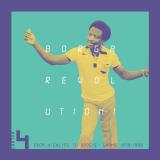
- A1: Super Boiro Band - So I Si Sa
- A2: Bembeya Jazz National - Armée Guinéenne
- A3: Kaloum Star - Maliba
- A4: Balla Et Ses Balladins - Nyo
- B1: Quintette Guinéenne - Douga
- B2: Le Simandou De Beyla - Festival
- B3: Horoya Band - Zoumana
- C1: Kaloum Star - Gbassikolo
- C2: Sombory Jazz De Fria - Nana
- C3: Syli Authentic - Fabara
- D1: Balla Et Ses Balladins - Paulette
- D2: 22 Band Kankan - Deny
On October 2 1958, after over 60 years of colonial rule, Guineans voted overwhelmingly for their independence, and Guinea was declared a Republic with Sékou Touré as President. Guinea was the first of West Africa’s Francophone colonies to gain independence. To free Guinea from its colonial legacy, president Touré sought to restore dignity to his nation and give cause for Guineans to take pride in their culture, history and newfound freedom. To achieve this, he instructed his government to implement new cultural policies that were intended to revitalise and celebrate indigenous culture. The focus of these new policies was on music.
In 1961, President Touré launched authenticité, the name of his new cultural policy for Guinea. One of its first acts was to assemble the best Guinean musicians into a new state-sponsored orchestras that were tasked with presenting traditional Guinean music in a new and modern style. All musicians in Guinea’s orchestras were officially designated as members of the public service. During the years of Sékou Touré’s presidency (1958 – 1984), the government’s cultural policy of authenticité was applied strictly to the creative arts. Guinea’s sole political party, the Parti Démocratique de Guinée exercised complete authority over artistic production. The scale of the Guinean government’s commitment and efforts to invigorate its indigenous musical cultures was unmatched in Africa, and it presented a clear contrast to the minimal endeavours undertaken by Guinea’s former colonial rulers.
From 1967 to 1983, Guinea’s government presented selections of songs from the Voix de la Révolution catalogue on its own recording label, Syliphone. These recordings were described as ‘the fruit of the revolution’. Syliphone was revolutionary in many aspects: it was the first recording label to feature traditional African musical instruments such as the kora and balafon within an orchestre setting; it was the first to present the traditional songs of the griots within an orchestre setting; and it was the first government-sponsored recording label of post-colonial Africa. Syliphone represented authenticité in action, and over 750 songs were released by the recording label on 12-inch and 7-inch vinyl discs. All are highly sought after by collectors worldwide.
This is the second of a two-volume release which presents a selection of the best songs from Guinea's Syliphone recording label. This volume focuses on recordings from the 1970s, when Guinea’s authenticité policy had transformed the nation's music through a network of over 30 orchestras, each representing their local region, and each presenting Guinean musical traditions alongside the influences of Cuban music, jazz and funk.
- A1: Sonido Amazonico 4 17
- A2: Primavera En La Selva 4 02
- A3: Mi Platto De Barro 2 21
- A4: Tres Pasajeros 4 04
- A5: The Hungry Song 4 06
- B1: El Borrachito 4 54
- B2: Pavane 3 46
- B3: Six Pieds Sous Terre 3 33
- B4: Un Shipibo En Espana 3 09
- B5: Indian Summer 4 58
- C1: La Cumbia Del Zapatero 2 41
- C2: Popcorn Andino 5 19
- C3: Yo No Fui 2 30
- C4: Gnossiene No 1 4 33
Standard[29,20 €]
2024 Repress.
Chicha Libre’s debut album, Sonido Amazonico is finally available on vinyl in Europe. The double album contains all original tracks first published as a CD back in 2008. The vinyl edition is comprised of 3 sides of music, and a fourth side with an etching of iconic Venezuelan saint Jose Gregorio.
Chicha, Peruvian psychedelic cumbia, was first popularized outside of Peru by a compilation released by Chicha Libre's own Olivier Conan and entitled "The Roots of Chicha." The music proved popular around the world, being championed by people such as Elijah Wood, Matt Groening, Alex Kapranos and director Almadovar.
The Brooklyn band Chicha Libre started out as a tribute to Peruvian pioneers but quickly evolved into an original project which MTV has called “one of the world's preeminent Tropical Psychedelic band”. Indeed, while they remain true to their Chicha roots, Chicha Libre's quickly took a more psychedelic turn drawing from its members' alternative background.
Made up of Mexican, Venezuelan, French and American the band used surf guitar, organ sounds and Latin percussion to play a mixture of borrowed and homegrown sounds – but its music remains a freeform reinvention, not an exercise in nostalgic duplication.
The re-release coincides with the release of a new EP “Tequila y Aguardiente”, in collaboration with Son Rompe Pera and La Sonora Mazuren.
Presenting the third thematic volume on the “Aquapelagos" series - a collection of split LPs where selected artists offer their own take into water surrounded cultures and communities. After the initial release of the Anthology compilation Aquapelago in 2022 (Discrepant ,CREP91) and the split LP Atlantico by Lagoss & Banha da Cobra (Keroxen, KRXN027) as well as the direct collaboration LP Índico by Mike Cooper & Pierre Bastien we proudly introduce an the third volume in the series in the shape of no other than two inspiring artists, Vica Pacheco and Pak Yan Lau. Two different sound journeys inspired by the majestic and peaceful Pacific Ocean, the vastest, largest and deepest ocean of our planet.
Vica Pacheco’s composition takes a calm meditation approach where water flutes and synths brush shoulders to create a ever expanding mind journey whereas Pak Yan Lau’s ambitions Neo classical piece, The Ocean in Us, talks about that grand overwhelming feeling, that vast space deep under, on the bottom of the Pacific. Both compositions were recorded and created with the particular wet acoustics of the Tank in Santa Cruz de Tenerife in mind.
From Philip Hayward and Matt Hill’s liner notes: ‘’The Pacific is a complex space, comprising a third of the Earth’s surface. A cascade of islands runs along its eastern flank, down from the Kamchatka peninsula, through Japan, Taiwan, The Philippines, Melanesia and on to Australasia. In its watery heart the islands of Micronesia and Polynesia stretch across huge distances, north-east to the Hawaiian archipelago, south east to Rapa Nui and south west to Aotearoa and Chatham island. Closer to the shores of the Americas lie Tierra del Fuego, the Galapagos Islands, Haida Gwaii and the Aleutians. This is a space that resists easy characterisation. The Pacific laps the shores of Japan and Chile, the beaches of Australia’s East Coast and the cold, damp coasts of British Colombia and Alaska alike. Indeed, the space is so vast that it is a world in itself and one rarely navigated in its entirety. In this manner, strands of genres and the songs that reflect them are components in an intricate mesh of associations.‘’ Philip Hayward and Matt Hill, April 2022
Alex Kardo was initially a choreographer and dancer for Riccardo Cioni, with whom he shared his most important successes in the 1980s (he is one of the two dancers dressed in red in Cioni’s legendary video “In America”). He is still very active today as a dancer and singer.
In 1988, he released “Music Flying”.
This 12″ 45rpm, in addition to the original and instrumental versions, includes a powerful Chicago house (Ron Hardy… / Electro Italo remix by Delphi, one of the Tiger & Woods who has a drum machine instead of a heart and who has been setting dancefloors in Rome and beyond on fire for over twenty years. Also included is a house version by Kardo’s loyal friend, DJ Alex Gomma.
The union of Antwerp synthesist David Edren and Tokyo minimalist Hiroki Takahashi is a fit so natural as to feel preordained. Both traffic in subtle shades of contemplative electronics, marked by patience, space, and poetic restraint. And both have rich histories of curation and collaboration – Edren in the duo Spirit & Form alongside Bent Von Bent, and Takahashi as proprietor of the Kankyō record shop, as well as one fourth of cosmic ambient quartet UNKNOWN ME. Mutual fans of one another’s work, they began sharing stems in the latter half of 2020, which slowly blossomed into a collection of multi-hued compositions inspired by notions of connectivity and impermanence, translated for east and west: Flow | 流れ.
Opener “Dusk Decorum | 黄昏 礼節” maps the mood of what’s to come, elegantly pirouetting and percolating through an expanding vista of looming stars and half-light horizons. Takahashi describes Edren’s arrangements as evoking “a strange feel, something we haven't heard much of before.” The sensation is one of “in-betweenness,” a restless current whispering beneath the beauty, like seasons seen in time-lapse footage: flickering but infinite, transience turned permanent. Takahashi’s signature sculpture garden tones plot spiral patterns over which Edren cascades dazzling pointillist synthesizer coloration. The pieces veer between delicate and dilated, micro and macro, their aperture forever softly in flux.
From the oscillating orchestral lullaby of “Stalactime | 鍾乳石時計” to the sweeping, sparkling dream sequence closer, “Shift Register | シフトレジスタ,” the album achieves the elusive goal of being more than the sum of its parts. This is music of rare air, elevated and amorphous, shimmering just out of reach. Though Edren and Takahashi have yet to cohabitate the same room in person (a fact that should be rectified soon by an astute festival booker), their palettes and poise are perfectly paired, twin fragilities woven into seven radiant and regenerative vibrational states. The cover design of a beatific, beaded leaf rippling on the surface of a hidden pond aptly captures the record’s muted majesty. Takahashi’s quiet pride is justified: “We are very happy with this time-consuming and carefully crafted work.”
Certain paths necessitate and call for one singular long sequence in order to arrive at a fully formed conversation or reasoning. Nothing seems to broadcast it more clearly than the trajectory Brussels based Italo-Vietnamese artist Nguyễn Zen Mỹ embarked on during the last decade as Radio Hito.
After a string of highly cherished and sought out tape releases, Radio Hito’s new album ‘L’uso e gli attributi del cuore’, co-released by Maple Death & Meakusma, unfolds with devastating
clarity, a profound balance of depth, minimalism and emotional grounding. A ten-sequence song cycle for voice and MIDI soundfonts adapted from the 2021 book by French poet Claude
Royet-Journoud.
Written and recorded between January 2023 and August 2025, the cycle evolved through nearly 80 live performances from Galicia to Kazakhstan before arriving at its recorded form. Set to an Italian libretto adapted from Royet-Journoud’s text ‘L'usage et les attributs du cœur’ (POL, 2021), the work revisits the tradition of the 19th-century Lied — art song built on existing poetry— transposed into a radically economical contemporary setting: voice and Casio CTK workstations.
"I was interested by this incompleteness CRJ mentions - by the ‘suspension’ of meaning questioning readability and intelligibility. I ‘resisted’ to CRJ’s texts since I met him and got to know his work. … It seems to me that when playing the songs, I submit an object to be completed by the audience."
Radio Hito’s distinctive approach to setting poetry to music — spare arrangements, strophic repetition, and a voice suspended between recital, fm transmission and canzone — creates a language of its own, reaching new heights on ‘L’uso e gli attributi del cuore’, songs that are formally rigorous, emotionally restrained, and shaped by the discipline of sustained live performance, interlocking into a coherent cycle.
Rather than illustrating the poem, Radio Hito approaches it as a space of suspension. Royet-Journoud described poetry as a “profession of ignorance” where meaning remains incomplete; these songs extend that trembling state, allowing repetition, digital timbre, and restraint to hold the text open.
Often misread as minimal synth or romantic chanson, Radio Hito’s practice is rooted instead in the lineage of the art song and song cycle: open structures, close attention to language, and a live performance economy that pushes the voice at the heart of the stage. The choice of accessible keyboard workstations — light, portable, and embedded in contemporary popular culture — replaces the historical piano.
Radio Hito creates fantastical, mirage-like songs, intimate yet elusive. Her music is forlorn chanson for the digital age; bringing her haunting and beautiful vocalisations into conversation with MIDI soundfonts and humble-yet-deep casio compositions. Music that strides for simplicity, yet lands miraculously within an entire new universe, a uniqueness achieved from like-minded spirits such as Ghedalia Tazartès, Savina Yannatou & Lena Platonos, Dorothy Carter, cycles that trickle down into estuaries.
“Radio Hito's set is superb. Sitting on the altar steps with a synth, her fabulously expressive vocals colour sparse, pensive compositions.” The Wire
- 1: Two Lucks
- 2: Jackpot
- 3: Debt Forest
- 4: Talon
- 5: Charity Dinner
- 6: Drumming With Izzy
- 7: My Blush (Strength Of The Critic)
- 8: Shoplifting
- 9: Legs In A Snare
- 10: Yard Sale (230 Take)
- 11: 200 Bottles On Eviction
Lip Critic’s 2024 Partisan debut Hex Dealer was one of the most-hyped experimental releases of that year (“Like the B-52s on ketamine” -Paste) and signaled the Brooklyn band’s arrival as a borderline-batshit creative force. Theft World is their next chapter, built again from the chaos of two drummers locked in psychic combat, a sampler that sounds like it was struck by lightning, and frontman Bret Kaser’s paranoid preacher energy. But where Hex Dealer leapt from one absurdist vignette to the next, Theft World plays like a fully locked-in transmission. Themes orbit around the concept of theft, not just as a political force or digital dilemma, but as a surreal, emotional constant. Club rhythms and hardcore breakdowns pull as much from Tyler the Creator’s ‘Igor’ and Korn as they do Skrillex and Soul Coughing, coming together to soundtrack a world that’s constantly being striped apart and resold.
- A1: Deep Sea Ranch - From "Ponyo On The Cliff By The Sea
- A2: Path Of The Wind - From "My Neighbor Totoro
- A3: The Wind Of Time - From "Porco Rosso
- A4: 6Th Station - From "Spirited Away
- A5: One Summer's Day - From "Spirited Away
- A6: Dragon Boy - From "Spirited Away
- A7: Princess Mononoke - From "Princess Mononoke
- B1: Castle In The Sky - From "Laputa Castle In The Sky
- B2: Jinsei No Merry Go Round - From "Howl's Moving Castle
- B3: Tatara Women Work Song - From "Princess Mononoke
- B4: Madness / Kyouki - From "Porco Rosso
- B5: Spring Waltz - From " The Tale Of Princess Kaguya
- B6: Ashitaka And San - From "Princess Mononoke
- B7: The Destruction Of Laputa - From "Laputa Castle In The Sky
Die US-Kultband veröffentlicht ihr viertes Album.
Als die Idee für ein viertes Album (zum zweiten Mal) aufkam, war American Football klar, dass es düsterer werden würde. Nach einer einjährigen Welttour mit ausverkauften Konzerten zum 25-jährigen Bandjubiläum und der Veröffentlichung eines Coveralbums (mit Songs von Iron & Wine, Ethel Cain, Blondshell, u.a.) tat sich das Quartett mit Produzent/Toningenieur Sonny Diperri (My Bloody Valentine, M83, Kurt Vile) zusammen, um sein bis dato essentiellstes Album aufzunehmen. LP4 verbindet atmosphärische Soundlandschaften mit emotionaler Katharsis im Post-Rock-Stil. Anders als alles, was American Football bisher aufgenommen hat, fügt sie sich dennoch nahtlos in ihren stetig wachsenden und beeindruckenden Katalog ein. LP4 ist ein ambitioniertes künstlerisches Statement einer Band, die die Grenzen von Genre und Kultur immer wieder neu definiert. Es ist ein wunderschönes und vielschichtiges Album, das sich Zeit nimmt, seine Schönheit zu entfalten, während es gleichzeitig die dunkleren Seiten anklingen lässt, die sich so gut wie möglich verbergen. Das Album enthält Gastvocals von Brendan Yates (Turnstile), Wisp und Caithlin De Marrais (Rainer Maria).
- 1: Man Overboard
- 2: No Feeling
- 3: Blood On My Blood
- 4: Bad Moons
- 5: The One With The Piano
- 6: Patron Saint Of Pale
- 7: Wake Her Up
- 8: Desdemona
- 9: Lullabye
- 10: No Soul To Save
Die US-Kultband veröffentlicht ihr viertes Album.
Als die Idee für ein viertes Album (zum zweiten Mal) aufkam, war American Football klar, dass es düsterer werden würde. Nach einer einjährigen Welttour mit ausverkauften Konzerten zum 25-jährigen Bandjubiläum und der Veröffentlichung eines Coveralbums (mit Songs von Iron & Wine, Ethel Cain, Blondshell, u.a.) tat sich das Quartett mit Produzent/Toningenieur Sonny Diperri (My Bloody Valentine, M83, Kurt Vile) zusammen, um sein bis dato essentiellstes Album aufzunehmen. LP4 verbindet atmosphärische Soundlandschaften mit emotionaler Katharsis im Post-Rock-Stil. Anders als alles, was American Football bisher aufgenommen hat, fügt sie sich dennoch nahtlos in ihren stetig wachsenden und beeindruckenden Katalog ein. LP4 ist ein ambitioniertes künstlerisches Statement einer Band, die die Grenzen von Genre und Kultur immer wieder neu definiert. Es ist ein wunderschönes und vielschichtiges Album, das sich Zeit nimmt, seine Schönheit zu entfalten, während es gleichzeitig die dunkleren Seiten anklingen lässt, die sich so gut wie möglich verbergen. Das Album enthält Gastvocals von Brendan Yates (Turnstile), Wisp und Caithlin De Marrais (Rainer Maria).
- Sea Ceremony (With Karen Vogt)
- Coral And Bones (With Laryssa Kim)
- Heartsea (With Vargkvint)
- Naiade (With Mt Fog)
- Moon And Mirrors (With Elska)
- Daughter Of The Abyss (With Singer Mali)
- Serpentine (With Nightbird)
- Their Voices Rise Above The Waves (With Yellow Belly)
- For All The Sea-Girls (With Nadine Khouri)
- Ondine (With Astrid Williamson)
- Coda (With Camilla Battaglia)
Oceanine, Jolanda Moletta’s third album and her first for Beacon Sound, is a powerful and ethereal statement of artistic community. Expanding on her previous work, each track represents a collaboration with a different female vocalist, with the foundational elements being generated entirely by her own voice. By turns haunting, enchanting, and inspiring, you won’t want to come up for air once you’ve been pulled under. Representing a
musical practice that is distinctly feminist, this is an album with a longer view in mind, to an age when the altars were to goddesses and women were centered as powerful beings representing the earth’s cycles of regeneration and renewal. Oceanine then, in all its beauty, can be viewed as an album of survival. It is deeply transportive, accessing something that lies within all of us. As the late, great Lithuanian folklorist and archaeologist Marija Gimbutas noted, “We must refocus our collective memory. The necessity for this has never been greater as we discover that the path of 'progress' is extinguishing the very conditions for life on earth.”
Jolanda Moletta is a multimedia artist and one-woman electronic choir. She creates wordless compositions through extended vocal techniques, integrating wearable-controlled live processing, alongside symbolic visuals. Moletta considers her performances to be a collective ritual and creates her Sonic & Visual Spells following the cycles of nature and the moon. Jolanda's 2022 critically acclaimed album Nine Spells was released on the Ambientologist label, followed by Night Caves on Whitelabrecs in 2025. Moletta’s artistic practice is a radical and spiritual journey through sound art, ritual, and the symbolic archaeology of the feminine.
Oceanine is inspired by sirens, water nymphs, and the timeless call of the sea. At its core lies Jolanda’s deep, lifelong connection to the Mediterranean Sea and to the ancient and modern myths and folklore that have emerged from its waters. Growing up by the Mar Ligure, Jolanda was surrounded by stories carried by salt, wind, and waves: legends of sirens, echoes of ancient voices, and the sea as both origin and oracle. This intimate relationship with the Mediterranean is not merely a backdrop, but a living source that shapes Oceanine’s emotional, symbolic, and sonic world.
Each track features a different female vocalist, creating a rich tapestry of voices, styles, and perspectives. This artistic choice not only broadens the album’s sonic palette, but also deepens its narrative core: celebrating the power, beauty, and mystique of feminine energy through myth, history, and sound.
The entire album is built exclusively from the human voice, processed and layered, yet always remaining voice, and nothing else. For each piece, Jolanda invited every vocalist involved to contribute a raw stem: a short, unedited melodic fragment of just a few seconds, inspired by the album’s themes. These intimate vocal seeds became the foundation of each track: the guest artists’ voices appear as brief, melodic stems, while the entire surrounding “orchestral” fabric is created solely from Jolanda’s own layered and processed voice. In this way, Jolanda’s voice becomes the Ocean itself, embracing, absorbing, and carrying the sirens’ calls within a vast, immersive soundscape. Every song is a unique expression of the feminine experience, revealing its depth, complexity, and emotional range, echoing the call of the sea and the many faces of the siren archetype.
The figure of the siren has transformed across centuries. In myths of Ancient Greece and Rome, sirens were hybrid beings, part woman, part bird, whose irresistible songs lured sailors to their doom. During the Middle Ages, the image shifted toward the half-woman, half-fish figure, often associated with temptation and danger. Historically, the voice of women has often been feared. Sirens were considered harbingers of misfortune not simply because they seduced or destroyed, but because they were powerful liminal beings.
In Ancient Greek, sirens functioned as psychopomps: figures who existed between worlds and guided souls, especially between life and death. Their songs were believed to carry forbidden knowledge, including prophetic insight and the ability to reveal truths about fate and the future. The danger of the sirens lay in what they revealed: knowledge that humans were not meant, or ready, to hear.
Oceanine confronts this legacy head-on. The voices heard throughout the album are not merely beautiful: they are dark and luminous, wild and enchanting, magical, soothing, dreamy, and at times fractured or distorted. They whisper, lament, beckon, and enchant. Like sirens, they skim the surface of the water and sink into its depths, hovering on the edge between tenderness and danger, vulnerability and power. They rise toward the sky, dissolve into mist, and return as echoes charged with raw, elemental emotion: voices that seduce, warn, mourn, and remember. They refuse to be reduced to decoration.
Alongside the album’s release in May, Oceanine will also unfold as a visual and performative work through a short art film. The film includes a live session recorded inside a sea cave facing the Mar Ligure, the very coastline where Jolanda spent her childhood, dreaming of sirens and listening to the sea as if it were speaking directly to her. This site-specific performance reconnects the music to its place of origin, allowing the voice to resonate within stone, water, and air, and transforming the cave into both a sanctuary and a threshold between myth and reality.
What if the sirens’ songs were considered dangerous because they carried another truth, an ancient truth long forgotten?
Oceanine embraces the idea that we are still deeply woven into myth. Though we may see ourselves as rational and modern beings, our world is saturated with ancient symbols and archetypes, often distorted, simplified, or stripped of their original meaning. And if those symbols are allowed to shift, if the mirror once held by the siren becomes an invitation to look beyond appearances and into what has been obscured, then we may finally uncover a deeper truth and reclaim the voice that was always ours.
Oceanine is not just an album. It is a reclamation, a spell, and a call from the depths.