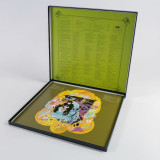
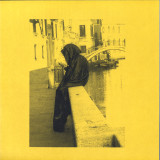
The group was formed by three members of Descendents (Bill Stevenson,
Karl Alvarez, and Stephen Egerton)
The ninth release from the original high octane pop punkers, Problematic furthers
the ALL vision by innovating the genre they helped create. ("Go for ALL")
Caffinated, sharp- witted lyrics over tight, highly memorable riffs and choruses
continue to set them ahead of the pack from others who have followed in their
footsteps.
Features 18 classic romantic- angst ridden tunes that will be certain to please
fans ALL over the world.
Cerca:karl f
This new album compiles several songs made in the years following Black To Comm's classic "Alphabet 1968" album. Originally released on the seminal Type label in 2009 (and to be reissued on Cellule 75 this year) "Alphabet 1968" combined the sound of vintage shellac and vinyl loops with broken electronics and field recordings, the press release mentioning disparate influences "ranging from Moondog to Basic Channel by way of Bernard Herrmann". In a beautiful one-page review in The Wire magazine (later reprinted in his book Ghosts Of My Life) Mark Fisher compared Richter's music to JF Sebastian’s miniature automata in Blade Runner ("with their bizarre mixture of the clockwork and the computerised, the antique and the ultramodern, the playful and the sinister"), ETA Hoffmann's inventor-magicians and Auguste Villiers de l'Isle-Adam's 1886 tale of Thomas Edison's (fictitious) construction of an artificial human.
Now titled "Coh Bâle" (inspired by a strange dream) these recordings were supposed to become a follow-up to said album but for reasons unknown it never materialized and the album seemed forever lost. At the time Richter started to dive deeper into several strains of (so-called) world music aka the folk music of Southeast Asia and Eastern Europe as well as liturgical and medieval music, the Kraut-Electronica of Harmonia and several certain Mediterranean experimentalists from the 1980's who started to merge their mostly electronic and field recording based compositions with traditional musics from all over the world by way of new sampling technology.
Many of the songs for the album were recorded while travelling and at various residencies around Europe: a detuned piano in a Thessaloniki basement (Richter played at a children's birthday party there), vintage synthesizers in the GRM studios in Paris, decaying acoustic instruments found in an old Black Forest mansion, childrens' voices at a workshop in Karlsruhe's ZKM Institute; then mixed on headphones in the ICE trains running between these places and his hometown Hamburg.
"Coh Bâle" is taking inspirations from old Nonesuch Explorer and Ocora LP's, Crammed Records, 80s Mediterranean Ambient (Nuno Canavarro, Roberto Musci) combined with the DIY spirit of Deux Filles and Flaming Tunes and the playfulness of Asa Chang & Junray. The songs are both mysterious and transparent, intricate and frugal, vibrant and patient. One of the album's unexpected climaxes is a gorgeous (artificial) berimbau version of the Welsh traditional "Iechyd o Gylch".
No two songs feature the same instrumentation and many acoustic sources (pianos, flutes, wood percussion, viola, tablas, autoharp) were disassembled and later coalesced into new configurations or used as virtual instruments; later combined with samples, field recordings, electronics and (on a few tracks) autotuned vocals reminding of recent works by the likes of Claire Rousay or More Eaze.
We had to wait for a worldwide pandemic for Richter to dig deep into the vaults and finally bring these recordings to light. This is the 2nd release from his archives after the "Diode, Triode" LP which presented Musique Concrète/Acousmatic recordings made at INA/GRM and ZKM. Another massive Double-CD (MM∞XX Vol. 1 & 2) was released last year featuring collaborations with 33 artists such as Andrew Pekler, Richard Youngs, Eric Chenaux, Maja Ratkje, Radwan Ghazi Moumneh of Jerusalem In my Heart, GRM boss François Bonnet (Kassel Jaeger), Felix Kubin, Timo van Luijk (In Camera, Af Ursin), Luke Fowler and many others, showing Richter's versatility and his willingness to reinvent himself for every new release.
Marc Richter is widely known under his Black To Comm moniker, having released (at least) 12 albums under this alias in the last 20 years. He is currently signed to the Thrill Jockey label. Richter composes soundtracks for film and has worked with visual artists such as Mike Kelley and Ho Tzu Nyen. He also records as Jemh Circs and Mouchoir Étanche for his own Cellule 75 label (named in tribute to the late Luc Ferrari).
An Italo Disco rarity from 1985 now available again on color 12“ Maxi Single:
Karl Olivas - Follow Me ...!!!
Side A contains the rare original version and as a highlight we proudly present two new and exclusive remixes by Flemming Dalum and F. Ricci on side B.
- A1: Schaue Dir
- A2: Insbesondere, Wenn
- A3: Deines Standortes
- B1: Besonderen Blick Werfe Bitte
- B2: Dürfen Vermeiden
- B3: Jetzt Einwände Kommen
- B4: Immer Wieder Situationen Geben, Bei
- C1: Haben Doch Keine Sorge
- C2: Werden Wir Auch Noch Ausführlich
- C3: Oder Mit Dem Rücken Zur
- C4: Oft Außerhalb
- D1: Durch Den Unscharfen Vordergrund
- D2: Immer An Derselben Stelle Gestanden
- D3: (Genau Genommen Die Erddrehung)
- D4: Orientieren
"Bastian Epple makes an eagerly anticipated return to marionette under his elusive MinaeMinae guise that imagines rich sonic architectures for the journeying spirit to voyage to. Räumlichkeit is Epple’s debut album and third release to date following Gestrüpp from 2020, venturing further into melodic electronic nostalgia and percussive beat oriented soundscapes.
Growing up in a small village in southern Germany, Bastian Epple was never interested in kitschy folk sounds, rather he took solace in the time he would spend meditating to repetitive and hypnotic patterns. His guitar strumming and what sounded to his mother like a young Philip Glass on a cheap Casio keyboard encouraged little Epple to tread on this self-taught path of developing his own musical language. This led him to start experimenting with a tape recorder and layering sounds with non-musical samples to eventually working with a DAW.
Bastian went on to study Media Art at the Center for Art and Media (ZKM) in Karlsruhe and graduated with a diploma in film and documentary media - where he now works as a freelance filmmaker and lecturer at Stuttgart Media University. However, this never stopped him from creating and playing with wide-eyed sounds, eventually amassing a vast collection of tunes and finally emerging from this anonymity.
Utilizing modular synth, self made tape echos, synthetic sounds, recordings of ethnic percussion and guitar, MinaeMinae understands musical material similar to documentary footage which he would splice, repitch, and rearrange intuitively into captivating worlds."
Lisa Bassenge ist zurück, und sie hat Blumen mitgebracht. Mit "Wildflowers" vollendet sie ihre Trio-Trilogie, wieder mit Jacob Karlzon am Klavier und Andreas Lang am Bass - wie schon bei "Borrowed and Blue" (2018) und "Mothers" (2020).
Elf Songs sind es diesmal, scheinbar querbeet und doch aus einem Guss. Von Dolly Parton bis Depeche Mode reicht die Bandbreite auf "Wildflowers", von Bob Dylan bis Death Cab for Cutie. Dazu Lisa Bassenges hintergründig-melancholische Eigenkomposition "Morning Song". Ein bunter Strauß, aber so wie die drei ihn arrangieren und darbieten, wirken die einzelnen Stücke nicht zusammengewürfelt, sondern wie Kapitel einer Erzählung. Jedes schillert für sich, doch das Ganze ist mehr als die Summe seiner Teile.
Das gilt auch für das Trio selbst. Die beiden Musiker - Jacob Karlzon aus Schweden und Andreas Lang aus Dänemark - betten Lisa Bassenges unverwechselbare Stimme in einen warmen, im besten Sinn skandinavischen Sound: entspannt, aber stets verbindlich; sehr spielfreudig, aber nie aufdringlich. "Dieser Sound hat uns gefunden", sagt Lisa Bassenge. Und auf "Wildflowers" haben die drei ihn zur Vollendung gebracht. Jeder Takt des Albums bezeugt die unglaubliche Chemie zwischen der Sängerin und den Musikern.
Was die Songs außerdem verbindet, ist die Qualität der Lyrics. Es sind poetische Texte von existentieller Tiefe, und in Lisa Bassenges eindringlicher Interpretation und glasklarer Phrasierung werden sie zum berauschenden Kopfkino.
Ist das nun Jazz, Pop oder Chanson? Mit "Wildflowers" zeigt das Lisa Bassenge Trio einmal mehr souverän, wie fließend die Grenzen zwischen vermeintlich ganz unterschiedlichen Genres sind. Diese Musik braucht keine Schublade. Es geht ihr um die Schönheit und Wahrheit der Songs.
Delroy George Wilson (5 October 1948 – 6 March 1995) was a Jamaican ska, rocksteady and reggae singer. Wilson is often regarded as Jamaica's first child star, having first found success as a teenager. His youngest son, Karl "Konan" Wilson, has found success as part of British duo Krept and Konan. His voice matured as he left his teens, around the time of ska's transition to rocksteady and this period in the late 1960s produced many hits including one of the first rocksteady records, "Dancing Mood", "Jerk in Time" (with the Wailers), "Feel Good All Over", "I'm Not a King", "True Believer in Love", "Rain From the Skies", "Conquer Me" and "Riding for a Fall". "Won't You Come Home", a duet with Ken Boothe on a rhythm originally cut by The Conquerors for Sonia Pottinger has become one of the most-versioned Jamaican tracks ever. After leaving Studio One he recorded for other labels, with varying degrees of success, and set up his own short-lived W&C label. He enjoyed success with Bunny Lee in the late 1960s and early 1970s with tracks such as "This Old Heart of Mine", "Footsteps of Another Man", and "Better Must Come". His double A-side "It Hurts"/"Put Yourself in My Place" was a skinhead favourite and narrowly missed UK chart success. He recorded a version of "Run Run", a song he had originally recorded for Dodd, for maverick producer Keith Hudson. Wilson toured the UK and recorded for Trojan Records in 1970.
* Strictly limited-edition 12” vinyl in full colour sleeve
* V Recordings is excited to bring you the latest addition to their 'Legends' series, featuring none other than the legendary Jungle and Drum & Bass producer, Dillinja. You know the drill by now, two tracks, much sought after made available for the very first time.
* Dillinja, aka Karl Francis, has been a staple in the Jungle and Drum & Bass scene since the early days. With his poinerring basslines, intricate rhythms, and futuristic sound design, he's earned a reputation as one of the most innovative producers in the genre. His music continues to be celebrated by fans and DJs alike and remains just as fresh as the day it was created.
* On the hunt through the vaults Bryan Gee, came across these two tracks, 'Lionheart VIP' from 1994 and 'Love 4 You VIP' from 1999/2000, and knew instantly they needed to be part of the collection getting the transf erred to digital and remastered for this release. The result? A taste of Dillinja's unmistakable production style, giving us a glimpse into his creative process during the early days of Jungle and Drum & Bass.
* V Recordings is celebrating 30 Years in the game this year and Dillinja has been a part of the family from the start, with tracks like 'Unexplored Terrain', 'Grimey', and '40Hz' amongst many others that are widely considered as timeless classics that have made a lasting impact on the genre.
* This vinyl release is a must-have for anyone who loves Jungle and Drum & Bass. The 'Legends' series is all about showcasing previously unreleased gems from the archives and taking fans on a journey through the history of the genre. So, don't miss out on this limited edition release and add a piece of Jungle and Drum & Bass history to your collection today!
- 1: Inexorable (Perracide)
- 2: The Grotesque (Benediction)
- 3: In The Eyes Of Suffering (Perracide)
- 4: Raped (Deströyer 666)
- 5: Satanic Sacrifice (Nifelheim)
- 6: Domedagen (Nasum)
- 7: The Decisive Slaughter (Perracide)
- 8: Horripilation (Perracide)
- 9: The Dreams You Dread (Benediction)
- 10: Black Evil (Nifelheim)
- 11: Cut To Fit (Nasum)
- 12: Torn From The Grave (Interment)
- 13: Silence The World (Perracide)
- 14: Satanic Speed Metal (Deströyer 666)
Jeder, der den extremen Metal-Underground in den letzten drei Jahrzehnten auch nur halbwegs verfolgt hat, sollte mit Schlagzeug-Phantom-Lord Perra Karlsson vertraut sein. Von seinen bescheidenen Anfängen bei Wortox/Altar über frühe Vorzeigebands wie Suffer und Nasum bis hin zur Präsentation seines einzigartigen Schlagzeugspiels bei legendären Bands wie Nominon, In Aeternum, Benediction und Deströyer 666 und dem Verleihen seines Könnens an neuere Bands wie Kvaen, Devil's Force und AngelBlast scheint die Liste seiner Beiträge zum Metal schier endlos.
Nach einem Leben, das er im Underground verbracht hat, mit einer nie erlahmenden Hingabe an das Handwerk des Metals, ist sein Name zum Synonym für harte Arbeit und eine wahre Liebe für alles, was mit Metal zu tun hat, geworden. Frustriert über den Mangel an Aktivität in seinen derzeitigen Stammbands, nutzte Perra seine Unzufriedenheit, um das Feuer der Kreativität zu schüren, und so wurde "Underdog" geboren.Um dieses Monster von einem Album zu realisieren, rief der außergewöhnliche Drum-Lord zu den Waffen, die von einem Geschwader von Legenden des Metal-Undergrounds beantwortet wurden, die selten auf einem Album versammelt sind.
Mit herausragenden Leistungen von Marc Grewe (Morgoth, Insidious Disease), Hellbutcher (Nifelheim), John Zwetsloot (Dissection, Cardinal Sin), Anders Jacobsson (Nasum, Necrony, Axis of Despair), Dave Hunt (Benediction, Anaal Nathrakh), Jörgen Sandström (Grave, Entombed, Torture Division), Simon Wizén (Valkyrja, Die Hard), K. K. Warslut (Deströyer 666, Bestial Warlust) und Gord Gord Olson (Darkened) wird dieses Biest weder verleugnet noch enttäuscht werden.
When approached several years back by the highly revered Toy Tonics crew/ record label to participate in a remix for artists Karl Hector & Nicolas Tounga for their song titled Ngunga Yet Fofa; just on the strength of a sincere enthusiasm showed by the request alone, it wasn't long after that Joaquin Joe Claussell accepted the challenge to remix an already original dope composition. Originally released, and still available on their Mushroom House Concept 12" EP 4 Cat number TOYT 068; on it Joaquin produced a unique remixed and married Acoustic art with electronic ecstasy. Fast Forward to today Sacred Rhythm with the blessings of Toy Tonics brings forth a dope 12" the compliments that precious version, but with dope different, more experimental takes all in the rhythm of Afro Electronics.
Housed in Limited Red vinyl more dopeness is about to take its place in the airwaves. Let's take flight...
Following the devastating loss of close friend and founding member Ole Sletner in 2019, Norway's finest return with restorative riffs for heavy hearts! Norway's heavy and hard-hitting power trio Saint Karloff return this June with their new album Paleolithic War Crimes on Majestic Mountain Records
Sound Like: Black Sabbath, Fu Manchu, Kyuss
- A1: 1916 (1:11)
- A2: Elastic Rock (4:05)
- A3: Striation (2:14)
- A4: Taranaki (1:38)
- A5: Twisted Track (5:19)
- A6: Crude Blues (Part 1) (0:54)
- A7: Crude Blues (Part 2) (2:38)
- A8: 1916 (The Battle Of Boogaloo) (2:58)
- B1: Torrid Zone (8:41)
- B2: Stonescape (2:39)
- B3: Earth Mother (5:15)
- B4: Speaking For Myself, Personally, In My Own Opinion, I Think… (1:31)
- B5: Persephone’s Jive (2:14)
Nucleus's Elastic Rock is undisputedly a milestone in Jazz-Rock. A beautiful and vital debut album, it was first released on Vertigo in 1970. Original copies are now very tricky to score and, like all the Nucleus records, it’s aged ridiculously well. This Be With re-issue, re-mastered from the original analogue tapes, shows off just why this deserves to be back in press.
Genius trumpeter and visionary composer Ian Carr was one of the most respected British musicians of his era. He was a true pioneer and saw the potential in fusing the worlds of jazz with rock, just as Miles Davis and The Tony Williams Lifetime did in the US. In late 1969, following the demise of the Rendell-Carr quintet, and tiring of British jazz, Carr assembled the legendary Nucleus. Regarding music as a continuous process, Nucleus refused to “recognise rigid boundaries” and worked on delivering what they saw as a “total musical experience”. We can get behind that.
Under bandleader Carr, Nucleus existed as a fluid line-up of inventive, skilled musicians. This constant evolution and revolution was all part of the continuous musical exploration and discovery that took jazz to new levels. And the music has kept relevant. To steal a line from a review of our re-issue of Roots, when it comes to anything Nucleus “it’s basically already hip-hop”.
The very title Elastic Rock could be regarded as the group's MO, describing a melting point between their rock and jazz impulses. Indeed, housed in a memorable gatefold jacket designed by Roger Dean, the die cut molten teardrop shape on the front sleeve opens to reveal a fiery volcanic crater. On the back, Dean's drawing has Carr with saxophonist Brian Smith, guitarist Chris Spedding, drummer John Marshall, bassist Jeff Clyne and sax, oboe and pianist Karl Jenkins in a circle, the central core of a movement and the basis for its activity.
Recorded over four days in January 1970, Elastic Rock didn't sound like any other British jazz album. Exploding out the gate, "1916" opens with Marshall's frantic pounding before melancholic horns enter. The smooth title track, "Elastic Rock" is just a gorgeous electric blues track. Light drums, gentle melodic horns, piano and a solid bassline serve as the perfect bed for Spedding's graceful bluesy guitar melodies. The serene "Striation", a Clyne and Spedding collaboration, is led by bowed bass and is the epitome of calm before the late night laid back vibe of "Taranaki" breezes along sweetly and smoothly with great trumpet and tenor.
The truly emotional "Twisted Track" is elegant with horns, while guitar is gently played with drums and bass. Initially deeply soothing, it gradually builds with various solos and duets. "Crude Blues (Part 1)" features an excellent oboe part by Jenkins with laconic guitar helping out. "Part 2" is livelier, with a heavy backbeat and great wind parts. "1916 (Battle Of Boogaloo)" features a steady bassline and great call and response parts from the horn section.
The highly-charged centrepiece of the record, the mesmeric epic "Torrid Zone" features an hypnotic bassline and hi-hat with some of the ensemble's best soloing. Brilliantly encapsulating the jazz fusion aesthetic so desired by the group, the rhythm section is rock-influenced but magically retains a laid-back jazz vibe. Just perfection. Spacey jazz in the style of In a Silent Way, the semi-ambient "Stonescape" features smooth, muted brass, warm, smokey keys and a barely-there rhythm section. Heavenly.
The bubbling, fragile restraint of "Earth Mother" partially utilises the "Torrid Zone" bassline but takes the energy in a different direction with Marshall's frenetic drumming and Spedding's unpredictable riffing. Next comes the very idiosyncratic drum solo track by Marshall in the appropriately-titled "Speaking for Myself, Personally, in My Own Opinion, I Think." The album closes with the raucous "Persephones Jive", a track that ends the album frantically, riotously, just as it began.
This Be With edition of Elastic Rock has been re-mastered from the original Vertigo master tapes, Simon Francis’ mastering working together with Cicely Balston's cut at AIR Studios to weave their usual magic with these wonderful recordings. The stunning die-cut gatefold sleeve has been restored in all its molten glory.
Their masterpiece? With breaks for dayyyyyys and an almost ambient, heavy jazz atmosphere throughout, *this* is the apex of British jazz-rock fusion. We'll Talk About It Later was first released on Vertigo in 1971 and original copies are now very tricky to score. Like all the Nucleus records, it’s aged ridiculously well and this Be With re-issue, re-mastered from the original analogue tapes, shows off just why this deserves to be back in press.
Genius trumpeter and visionary composer Ian Carr was one of the most respected British musicians of his era. He was a true pioneer and saw the potential in fusing the worlds of jazz with rock, just as Miles Davis and The Tony Williams Lifetime did in the US. In late 1969, following the demise of the Rendell-Carr quintet, and tiring of British jazz, Carr assembled the legendary Nucleus. Regarding music as a continuous process, Nucleus refused to “recognise rigid boundaries” and worked on delivering what they saw as a “total musical experience”. We can get behind that.
Under bandleader Carr, Nucleus existed as a fluid line-up of inventive, skilled musicians. This constant evolution and revolution was all part of the continuous musical exploration and discovery that took jazz to new levels. And the music has kept relevant. To steal a line from a review of our re-issue of Roots, when it comes to anything Nucleus “it’s basically already hip-hop”.
We'll Talk About It Later is arguably Nucleus's best album. Not only that, it's in the top 5 of all fusion albums. By the time Nucleus entered Trident Studios in September 1970 to record Elastic Rock's successor, they had already won a best group award at the Montreux Jazz Festival. Once again presented in a Roger Dean designed die-cut gatefold sleeve it continued to demonstrate the chemistry and interplay that worked so brilliantly on Elastic Rock; Carr's sumptuous trumpet and flügelhorn lines, Karl Jenkins's funk-filled electric keyboards, Chris Spedding's wah-wah guitar, Brian Smith's sax and the rhythmic foundation of drummer John Marshall and bassist Jeff Clyne.
The group work and insane musicianship Nucleus were famed for is in evidence from the off. The intensely funky "Song for the Bearded Lady" is absolute FIRE, blasting out the speakers to leave listeners floored. Counterpoint riffing segues into a spacious groove and a Carr trumpet solo demonstrating the influence of electric Miles from the period. The stop-start funk of "Sun Child" would appeal to Soft Machine devotees whilst the genuinely touching "Lullaby for a Lonely Child" is a lovely downtempo ballad. Featuring an understated, reflective horn line from Carr and Smith and atmospheric, shimmering bouzouki from Spedding, there's an exotic flavour which contributes to the bliss. The ominous, sleazy title track retains a swaggering menace and is not the only track to lend a sort of heavy stoner rock atmosphere. The guitars and bass are deep and low throughout, conjuring heavy psych moments to go with the actual jazz and even funk. To say this album was in conversation with Bitches Brew would not be overstating the sheer brain-frying brilliance.
The Weather Report-adjacent "Oasis" opens Side B, a colossal track featuring nearly 10 minutes of steadily building melodic horns, keys and choppy guitar riffs. So ace, it could easily go on for another 10. Mesmeric. Spedding adds unique vocals to the undeniable groove of "Ballad of Joe Pimp" whilst saxophonist Smith's duet with drummer Marshall at the conclusion of "Easter 1916" - inspired by the Yeats poem about the Irish nationalist uprising in Dublin - adopts the wildness of the most incendiary free jazz.
This Be With edition of We'll Talk About It Later has been re-mastered from the original Vertigo master tapes, Simon Francis’ mastering working together with Cicely Balston's cut at AIR Studios to weave their usual magic with these wonderful recordings. The stunning die-cut sleeve has been restored with the original gatefold window pane depicting the Irish uprising in 1916. Incredible, timeless, guaranteed spine-chills.
FÜR FANS VON: HEAT, Eclipse, Nestor, Hardline, Brother Firetribe
Mit ihrem neuen Album „Code Red“ schlägt die deutsche Hard Rock Band DEVICIOUS aus Karlsruhe ein neues Kapitel auf. 2017 gegründet, veröffentlichen sie nun ihr 5. Album in fünf Jahren. Nach einigen Klangexperimenten auf dem Vorgängeralbum „Black Heart“ kehren sie nun zurück zu ihren Wurzeln, zu dem, was sie am besten können. Große Arena-Melodien kombiniert mit bombastischen Chorarrangements und einer großen Produktion.
Das Album wurde von Bandleader und Songwriter Alex Frey selbst produziert und in den Mastersound Entertainment Studios in
Steinheim, Deutschland von Alexander Krull gemischt und gemastert. Er ist der Hauptakteur hinter den Bands ATROCITY und LEAVE’S EYES sondern steht auch auf der Producer- und Mastering-Liste von Bands wie ATROCITY, LEAVE’S EYES, DORO, CREMATORY, VELVET VIPER oder ZAR. Das neue Kapitel von DEVICIOUS beinhaltet auch einen neuen Sänger. Antonio Calanna verließ die Band nach dem letzten Album auf freundschaftlicher Basis, um sich auf andere Projekte zu konzentrieren. Sein Nachfolger ist niemand geringerer als der ehemalige TNT-Sänger Baol Bardot Bulsara, der bereits
auf dem „Black Heart“-Album einige Backing-Vocals gesungen hat und bei einigen Black Heart-Headliner-Shows an Bord war. Mit Baol ist die Band flexibler, da er eine breitere Bandbreite hat und alles von melodischen Balladen bis hin zu Power Metal-Melodien singen kann.
Mit „Code Red“ liefern DEVICIOUS ihr bisher kraftvollstes und ausgereiftestes Werk ab. Ein melodisches Meisterwerk mit allen DEVICIOUS-Markenzeichen.
Oscillate / verb – to move or swing back and forth in a regular rhythm. Alexander Flood has developed and refined a strong, progressive voice and style on his kit through his 17 years performing and studying. Previously graduating top of his year, he has been the recipient of many prestigious awards including Australia's Best Up-andComing Drummer in both 2012 and 2016, The John ‘Slick’ Osborne Scholarship in 2017 and the Helpmann Academy Jazz Award for Top Overall Graduate in 2018. In 2020 he signed with 6x Grammy nominee Christian Scott aTunde Adjuah to release Alex’s debut LP “HEARTBEAT” and “The Space Between” in 2022. 2023 finds Alexander aligning w/ Berlin’s Jakarta Records to release LP “Oscillate” - a blistering, hard-hitting meld of infectious rhythms, pulsing keys, and a swingin’ groove that melds into a genre-defying conglomeration of creative compositions and collaboration. In mid 2022 Alex travelled from Australia to Berlin, where he assembled a dream team crew of creative innovators featuring Hungarian keyboard player Àbáse, Australian bass guru Horatio Luna, and Brazilian flautista Paulo Cedraz. Together the group cut six unique dance tracks at Berlin’s iconic Jazzanova Studios, engineered by Grammy nominated Axel Reinemer. From the shuffling broken beats and dancing flute melodies in title track “Oscillate” to the experimental uptempo “Deja Vu”, the momentum of the music ceases to stop. “U R THA 1” features a driving jungle sound of repitched drums, vocal chops and 808 bass, and “Berlin” captures a classic funky 90s house feel powered by 4-on-the-floor kick and melodic basslines from Horatio Luna. Paulo Cedraz shines on flute in the Caribbean influenced “Ginealach”, and the LP finishes with the head-bopping “Hüpf” giving the listener a taste of some down-tempo beat music atop a bed of Àbáse’s lush rhodes. From top to bottom, the unique voices and powerful musicianship of each band member is obvious. Australian influence is at the core of the sound not only through the bass and drum chair, but through the punchy characteristic mix by Melbourne’s Lewis Moody and master by Gareth Thomson. The final piece of the puzzle was bringing in Alex’s childhood drum and percussion teacher Joel Prime, where they overdubbed additional percussion parts together in London. Artwork was stunningly put together by Robert Winter (Suff Daddy, Bluestaeb, K, Le Maestro) with visualizers put together by the stalwart KARL-F. Jakarta is ecstatic to share such a high-water mark of an album, out everywhere physically / digitally May 12th. Check the accompanying Press Sheet for Campaign Schedule and more. Besides online promotion from the label and artist profiles, the album will further be promoted by external agencies within the US and UK.
- A1: Erstes Kapitel (Verschliffen)
- A2: Zweites Kapitel (Ruckartig)
- A3: Drittes Kapitel (Ungesagt, Dann Vergessen)
- A4: Viertes Kapitel (Bewusstseinsfrei)
- B1: Fünftes Kapitel (Kreuzweis)
- B2: Sechstes Kapitel (Herausgewunden)
- B3: Siebentes Kapitel (Verflochten)
- B4: Letztes Kapitel (Halb Vermutet, Halb Gesehen)
11th album by the one-of-a-kind collective: psychedelia and free form jazz (not jazz) trigger a sophisticated excursion into weird textures with drastic turns. Dislocated dense music full of secret connections!
Kammerflimmer Kollektief – "Schemen"
Before reason prevails, invoked by those who want everything to remain as it is, Kammerflimmer Kollektief disrupts the established supply chains of sound. It seeks more interesting ways to assemble them. Trusting in this, because of the fact that every sound that still comes out of a guitar, a bass, a harmonium, drums and electronic devices has already been taken into the common mangle of meaning anyway. Enough of all that. Here, nothing is explained. Here we speak in schemes. Polished and jerky.
The images that Kammerflimmer Kollektief conjures up therefore happen not in the focus of consciousness, but rather in its outer realms. In those to which one does not give one's full attention at the moment, but which are nevertheless perceived. For example, when a leaf falls from the ground back up to the tree in the corner of your eye, and for an instant you think this is possible, before you realize it was a small bird flying into the tree; it is in just such irritating moments between perception and realization that the art of the Kollektief also unfolds. On "Schemen", familiar fragments float gently around their core – a Fender Rhodes tone, a bass figure, a guitar motif, a masterful drum shuffle, a moment of icy stasis borrowed from the harmonium playing of Christa 'Nico' Päffgen. Triggering brief associations, they slowly rush off in other directions through free jazz-informed editing work, whereupon such zones can also arise in which perception has a few tricks ready and earlier experience suddenly breaks into the now in a completely different way. Half suspected, half seen.
Half-music like Can from Cologne – also masters of improvised editing – sometimes produced a few decades ago in their in-between moments. The first minutes of "Future Days" for example, which fade in gently, sketch a barely graspable figure emerging from all directions of the room. Kammerflimmer Kollektief also engages in similarly open moments of development. Loosely, it eludes the first formative impressions, keeping itself ready for moments that do not follow any logic of appointment. This looseness in handling makes Kammerflimmer Kollektief so fluidly audible, even when dissonant peaks and free playing arise. What Karlheinz Stockhausen is to Can's understanding of composition, the recordings of The Cocoon are to Kammerflimmer Kollektief. The Cocoon, a meeting of garage psychedelics from the Hannover area with free jazzers from the Galaxie Dream Band, whose album "While The Recording Engineer Sleeps", recorded in 1985 in unguarded moments, operates in a very similar way with decentralized perceptual ambivalences and only appeared more or less secretly four years later on Wilhelm Reich Schallspeicher. Other traces of "Schemen" lead to the debut album of Quicksilver Messenger Service. The guitars of Gary Duncan and John Cipollina, which refer to themselves in an unforced manner, are instructions to let go. They don't want to be traced in every note as a solo, but they give their music a sense that the essential takes place off center, in the mutual and intuitive gift of loving attentions. Consciousness-free.
Loving turns like the little guitar phrase that, like a kind of leitmotif, is repeatedly ghosting more or less unchanged through all of the Kammerflimmer Kollektief albums. A Coricidin induced, very catchy slide idea filtered out of ancient Æther, which – who knows – maybe even centuries ago found its way from somewhere to America – the old, the eerie – and from there wafted on through the ages to southern Germany, to a smoky studio in the Upper Rhine lowlands. A memory of which even the memory no longer knows what it once reminded. Unsaid, then forgotten.
In Kammerflimmer Kollektief you will also find a friend of slowly building, unhurried music, which probably would have been appreciated by the old Franz Mesmer, who 200 years ago, after tranquilizing treatments, sometimes used to play for his patients ambient melodies on the enormous glass harmonica. However, in order not to surrender completely to the flow of one's own life energy, as Mesmer had in mind with his therapies, Kammerflimmer Kollektief occasionally adds hectic tensions, gently embraced by the droning of a sine wave generator, as if a trance could briefly refesh. This old analog sine wave generator is new in the Kammerflimmer assortment of sounds. So, the art of the Kollektief likes to dock occasionally in modern times, yet with the past in mind. Mental states begin to flicker between imagination and certainty, between culture-bound art expression and coincidences: A cawing and scraping can always just be a cawing and scraping with Kammerflimmer Kollektief, the way Andy Warhol's mushroom eater just eats a mushroom.
Heike Aumüller's cover works, which illustrate all the Kammerflimmer Kollektief albums, additionally act as amplifiers of unexplained refractions. Her style consists of eye-corner art that remains so, even when looked at directly. Her shots remain disquieting because they do not jolt themselves into a reassuring order, even in retrospect. Rather than evading the fear that arises when looking at them by trying to impose some irrational rhyme or reason, that fear must simply be endured. This strategy of endurance is equally applicable to the music. The trick is to let parts be parts without compulsively seeking delusional patterns that lull us into a false sense of security and in doing so, possibly delude ourselves. In this context, freedom means not having to anxiously attach a fantasized superior meaning to everything. "Schemen" has an conspiracy disintegrating effect.
b A2 Zweites Kapitel (ruckartig) [feat. Heike Aumüller]
Modular synthesizers / electronics + a drum kit enhanced with triggers and sensors: on its self-titled debut album, the duo hÄK / Danzeisen creates a sonic energy that oscillates between high-precision rhythm patterns, analogue sounds and frenzy climaxes.
One must imagine hÄK / Danzeisen as a man-machine apparatus. A collection of cables, resonating bodies and restless limbs that together question all routines. Who overthrow conventional role of instruments and explore the possibilities of a new sound language. Bernd Norbert Würtz alias hÄK operates modular synthesizers, self-soldered circuits and control knobs. Philipp Danzeisen plays a drum kit enhanced with triggers and sensors. These two poles are connected to an interdependent whole in which a constant musical dialogue takes place. The dependencies within this system have been meticulously defined by hÄK / Danzeisen: Drum rolls and sound modulations are interconnected in such a way that there is no contradiction between the strict technological structure and the creative outburst that is possible at any time.
What drives hÄK / Danzeisen is the basic idea that the contrast between acoustic drums and synthetically produced sounds must be overcome in order to create a new experience. Würtz, Danzeisen and their combined instrumentation simultaneously rub up against the same edges, finding a single, piercing voice.
Ideal manifestations of this approach are the duo's live performances: raw energy that oscillates as precisely as it surprises between drones, abstraction and noise attacks, driven by an impudent take on jazz. Constantly oscillating between the registers of "composed" and "improvised", each performance by hÄK / Danzeisen ultimately becomes one of a kind. (Arno Raffeiner)
Fred und Luna hatten schon immer eine Vorliebe fürs Symmetrische. Das zeigt sich an den Motiven ihrer Albumcover und auf dem aktuellen Album nun auch an der Länge der Musikstücke, die sich allesamt an der Fünfminutengrenze bewegen.
„Im Fünfminutentakt“, so der entsprechende Name ihrer neuen Schöpfung, ist „Fred und Lunas“ vierter Longplayer, eine erlesene Auswahl zeitgemäßer Instrumental- und Gesangsstücke mit einem sensiblen Gespür für repetitive Rhythmen, bezaubernde Melodien und hypnotisierende Klänge.
Besonders hervorzuheben sind das in drei Sprachen gesungene Stück „Es ist so schön“ ? mit seinem sensiblen Gespür für die Freude, seine Liebsten nach Monaten der pandemiebedingten Einsamkeit endlich wiederzusehen ? und das dancefloororientierte „Tanz mit mir“, das erahnen lässt, wie sehr selbst computerhafte Stimmen Sehnsüchte und Träume erwecken können.
Wer sind Fred und Luna?
Fred und Luna wohnen in einem Modehaus in Karlsruhe. Die beiden Mannequins sind die Musen des Musikers, Poeten und Foto- und Filmemachers Rainer Buchmüller.
Von seinen Mannequinfreunden und der Liebe zu deutscher elektronischer Musik der letzten Jahrzehnte inspiriert, produziert Rainer Buchmüller unter dem Namen „Fred und Luna“ moderne musikalische Abenteuerreisen mit einer Kombination aus sich wiederholenden Beats, elektronischen Klanglandschaften und Elementen der Krautrock-Ära. Oder wie er es wahlweise nennt: Elektrokraut beziehungsweise Krautelektro.
Unterwegs mit Fred und Luna (Das Luna-Prinzip)
Weil die beiden Mannequins Fred und Luna ihr Modehaus nie verlassen, übernimmt Rainer Buchmüller unter dem Pseudonym Sugar Ray Buckmiller bei Liveshows die Rolle von FRED.
LUNA hingegen erfindet sich von Konzert zu Konzert neu und wird von einem oder mehreren kurzfristig ausgewählten, wechselnden Musikern vertreten. So wird jeder Auftritt zu einem überraschenden und einmaligen Ereignis für das Publikum und die Musiker selbst.
Achtung: Die nächste Luna könntest du sein!
- A1: Analoid - Sans Issue
- A2: Alena - Les Ailes De La Nuit
- A3: Abitbol & Desperiez - Substance M
- A4: Martin Dupont - Nice Boy
- A5: Warum Joe - Ralph Und Karl
- A6: Les Magistrats De Syracuse - Genèse
- B1: Codek - Demo
- B2: Tintin Reporter - Chocs Émotionnels
- B3: Tokow Boys - Swinging-Pool
- B4: X Ray Pop - L'eurasienne
- B5: Elise Cabanes - Loup Garou
- B6: Les Stagiaires - Charles-Hubert
- C1: Les Anonymes - La Prochaine Crise
- C2: Opéra De Nuit - Ami! Amant!
- C3: Takenoko - Lee Harver Oswald
- C4: Nini Raviolette - Je Tu Nous
- C5: Megaherz - Manche Atlantique
- C6: Merveilles Attendues - Performance
- D1: Spleen Ideal - Encore Un Jour
- D2: Berlin 38 - Guerre Après Guerre
- D3: Oto - Anyway
- D4: Jours Meilleurs - Petruchka
- D5: Raison Pure - Data Girl
- D6: Atom Cristal - Boulevard Circulaire
Through the 24 pieces, rare and unpublished, carefully selected for this double LP, BEATITUDE agnès b. MUSIQUE and Kwaidan Records offer a retro-futuristic sound journey through this musical period so rich, so diverse and so innovative. And, in order to properly celebrate the launch of this long-awaited volume 3, the 1st DES YOUNG GENS MÖDERNES festival will be organized in November 2020 at La Station - Gare des mines, with an intergenerational line up highlighting the musical lineage and the influence that this cold wave scene continues to exert on many emerging artists.
The group was formed by three members of Descendents (Bill Stevenson, Karl Alvarez, and Stephen Egerton). Mass Nerder brings you sixteen searing cuts that never dip below 210 beats
per minute. Produced by the band’s own Bill and Stephen at Bill’s Blasting Room studio in Fort Collins, CO, and featuring Descendents’ vocalist Milo Aukerman on backing vocals, Mass Nerder is the house blend for dweebs and cool guys alike and is not available in decaf. Reissued on vinyl for the first time ever in Europe to celebrate the 25th anniversary of the release!
Dominic Miller wurde von Peter Ruedi in der Weltwoche als ”großer, gelassener Erzähler” bezeichnet, und Vagabond, die dritte Aufnahme des Gitarristen für ECM, könnte sich als sein bisher poetischstes Werk erweisen. Auf dem Album erzeugt er gemeinsam mit Ziv Ravitz am Schlagzeug, seinem langjährigen Begleiter Nicolas Fiszman am Bass und Pianist Jacob Karlzon Texturen besonderer Intensität. Das Quartett – jeder Musiker für sich ein versierter Bandleader – versteht es, tiefe Grooves mit subtilem Zusammenspiel zu untermauern und nuancierte melodische Linien mit zarten Harmonien zu verweben, und zeichnet dabei einen gestalterisch bedachten Weg durch das Programm. Als langjähriger kreativer Begleiter von Sting, versteht Dominic es, den Song als oberste Priorität zu behandeln: ”Es war nie meine Absicht, ein Gitarrenalbum zu machen.
Dank der großartigen Sängerinnen und Sänger, mit denen ich im Laufe der Jahre zusammengearbeitet habe, sehe ich mich eher als instrumentalen Songwriter. Und so wie sie sehe ich es als meine Aufgabe an, mich mit den besten Musikern zu umgeben, die das Narrativ in den ’Songs’ verstehen. Ich bin froh, mit Vagabond die perfekte Besetzung dafür gefunden zu haben.” Das Album wurde
in Südfrankreich aufgenommen und von Manfred Eicher produziert.
Ritual Cloak take a more introspective and meditative direction with new EP, Vanished in Transition, venturing into new musical territories that draw influence from ambient, jazz, doom metal and George Harrison’s indian explorations. Leaning into down-tempo rhythms, drums have been exchanged for heart-beats, as if this EP is the duo breathing deep in readiness to face the next chapter.
Featuring Rob Smith of Wonderbrass and Wylderness bandmate, Harri Rees (Vanished in Transition) and Karl Griffiths of Morning Arcade (Half of My Life), Vanished in Transition showcases Ritual Cloak’s continued love of collaboration.
Recorded at home and their own studio in Cardiff, Vanished in Transition’s theme plays with the fascination of disappearing, although the duo have no such plans of vanishing any time soon.
The group was formed by three members of Descendents (Bill Stevenson,
Karl Alvarez, and Stephen Egerton)
Mass Nerder brings you sixteen searing cuts that never dip below 210 beats per
minute. Produced by the band's own Bill and Stephen at Bill's Blasting Room
studio in Fort Collins, CO, and featuring Descendents' vocalist Milo Aukerman on
backing vocals, Mass Nerder is the house blend for dweebs and cool guys alike
and is not available in decaf.
Reissued on vinyl for the first time ever in Europe to celebrate the 25th
anniversary of the release!
From 1985, the beginning of their collaboration in Amsterdam, Peter Bosch and Simone Simons have been involved in performances, concerts and theatre productions. Since 1990, however, they have focused in particular on the development of autonomous music machines.
All these machines are dynamic: Sound and movement are constantly evolving. »Krachtgever« is their best-known piece for its Golden Nica, received at Prix Ars Electronica, Linz, 1998. The other projects on the LP are »Cantan un Huevo«, commissioned by the Ives Ensemble in 2000 and awarded in 2002 at the 29th edition of the International Competition of Electroacoustic Music and Sonic Art, Bourges, France, and one of their first installations, »Was der Wind zum Klingen bringt«, from 1989/90, shown in the Stedelijk Museum, Amsterdam, 1990, as part of the exhibition »Energieën«, and in 1991 at the Multimediale 2, Z.K.M., Karlsruhe. The LP demonstrates that sound produced by the Bosch & Simons music machines can also be listened to as autonomous »music«.
PURPLE VINYL
A Wednesday song is a quilt. A short story collection, a half-memory, a patchwork of portraits of the American south, disparate moments that somehow make sense as a whole. Karly Hartzman, the songwriter/ vocalist/guitarist at the helm of the project, is a story collector as much as she is a storyteller: a scholar of people and one-liners. Rat Saw God, the Asheville quintet's new and best record, is ekphrastic but autobiographical and above all, deeply empathetic. Across the album's ten tracks Hartzman, guitarist MJ Lenderman, bassist Margo Shultz, drummer Alan Miller, and lap/pedal steel player Xandy Chelmis build a shrine to minutiae. Half-funny, half-tragic dispatches from North Carolina unfurling somewhere between the wailing skuzz of Nineties shoegaze and classic country twang, that distorted lap steel and Hartzman's voice slicing through the din. Rat Saw God is an album about riding a bike down a suburban stretch in Greensboro while listening to My Bloody Valentine for the first time on an iPod Nano, past a creek that runs through the neighborhood riddled with broken glass bottles and condoms, a front yard filled with broken and rusted car parts, a lonely and dilapidated house reclaimed by kudzu. Four Lokos and rodeo clowns and a kid who burns down a corn field. Roadside monuments, church marquees, poppers and vodka in a plastic water bottle, the shit you get away with at Jewish summer camp, strange sentimental family heirlooms at the thrift stores. The way the South hums alive all night in the summers and into fall, the sound of high school football games, the halo effect from the lights polluting the darkness. It's not really bright enough to see in front of you, but in that stretch of inky void - somehow - you see everything. The songs on Rat Saw God don't recount epics, just the everyday. They're true, they're real life, blurry and chaotic and strange - which is in-line with Hartzman's own ethos: "Everyone's story is worthy," she says, plainly. "Literally every life story is worth writing down, because people are so fascinating." But the thing about Rat Saw God - and about any Wednesday song, really - is you don't necessarily even need all the references to get it, the weirdly specific elation of a song that really hits. Yeah, it's all in the details - how fucked up you got or get, how you break a heart, how you fall in love, how you make yourself and others feel seen - but it's mostly the way those tiny moments add up into a song or album or a person.
- A1: Robert Lippok - How Would I Be? What Would I Do?
- A2: No Home - Plans
- A3: David Prior - Thinking Out Loud
- A4: Tujiko Noriko - Afterimage
- A5: Ale Hop - Tensegrity Rhythms
- B1: Adrian Corker - Drawing A Circle To Step Out Of It
- B2: Adam Janota Bjowski - Samael
- B3: Silvia Kastel - Forme Impercettibili
- B4: Richard Skelton & Corey Fuller - Embrace Fiercely The Burning World
Constructive is pleased to announce, 'Utopia or Oblivion', a new compilation featuring ten artists inspired by the pioneering work of R. Buckminster Fuller, with each track inspired and in response to Fuller's work specifically Utopia or Oblivion', first published in 1963.
From the irregular glitch pop scintillation of 'How Would I Be? What Would I Do' by German artist & founding member of To Rococo Rot, Robert Lippok, to the heartfelt ambient and seraphic voices of 'Afterimage' by Japanese artist Tujiko Noriko (Editions Mego, PAN, Room40), through to the tensile, eruptive, dub-contoured emittances of 'Tensegrity Rhythms' by Peruvian experimental composer Ale Hop (Karlrecords).
Elsewhere, there are appearances from the Bafta-nominated composer Adam Janota Bjowski (Saint Maud OST), musician & Constructive co-founder Adrian Corker, London-based experimentalist No Home, Italian artist & NTS Radio resident Silvia Kastel (Blackest Ever Black, Palto Flats, Youth), British sound artist David Prior, and a unique collaboration between the British DIY experimental musician Richard Skelton & Corey Fuller, a descendant of R. Buckminster Fuller.
Tape
A Wednesday song is a quilt. A short story collection, a half-memory, a patchwork of portraits of the American south, disparate moments that somehow make sense as a whole. Karly Hartzman, the songwriter/ vocalist/guitarist at the helm of the project, is a story collector as much as she is a storyteller: a scholar of people and one-liners. Rat Saw God, the Asheville quintet's new and best record, is ekphrastic but autobiographical and above all, deeply empathetic. Across the album's ten tracks Hartzman, guitarist MJ Lenderman, bassist Margo Shultz, drummer Alan Miller, and lap/pedal steel player Xandy Chelmis build a shrine to minutiae. Half-funny, half-tragic dispatches from North Carolina unfurling somewhere between the wailing skuzz of Nineties shoegaze and classic country twang, that distorted lap steel and Hartzman's voice slicing through the din. Rat Saw God is an album about riding a bike down a suburban stretch in Greensboro while listening to My Bloody Valentine for the first time on an iPod Nano, past a creek that runs through the neighborhood riddled with broken glass bottles and condoms, a front yard filled with broken and rusted car parts, a lonely and dilapidated house reclaimed by kudzu. Four Lokos and rodeo clowns and a kid who burns down a corn field. Roadside monuments, church marquees, poppers and vodka in a plastic water bottle, the shit you get away with at Jewish summer camp, strange sentimental family heirlooms at the thrift stores. The way the South hums alive all night in the summers and into fall, the sound of high school football games, the halo effect from the lights polluting the darkness. It's not really bright enough to see in front of you, but in that stretch of inky void - somehow - you see everything. The songs on Rat Saw God don't recount epics, just the everyday. They're true, they're real life, blurry and chaotic and strange - which is in-line with Hartzman's own ethos: "Everyone's story is worthy," she says, plainly. "Literally every life story is worth writing down, because people are so fascinating." But the thing about Rat Saw God - and about any Wednesday song, really - is you don't necessarily even need all the references to get it, the weirdly specific elation of a song that really hits. Yeah, it's all in the details - how fucked up you got or get, how you break a heart, how you fall in love, how you make yourself and others feel seen - but it's mostly the way those tiny moments add up into a song or album or a person.
- A1: Angekommen
- A2: Erste Parade
- A3: Das Kreuzzeichen
- A4: Zweite Parade
- A5: Ritenuto
- A6: Afrika
- A7: Dritte Parade
- A8: Ein Verschlossenes Zimmer
- A9: Der Himmel Der Dritten Nacht
- A10: Die Spiegel
- A11: Tanz Im Freien
- A12: Galoppade I
- B1: Vierte Parade
- B2: Der Verpatzte Tanz
- B3: Mittag
- B4: Eine Ruderpartie
- B5: Parkanlage
- B6: Was Die Liebe Kann
- B7: Galoppade Ii
- B8: Doppelter Abschied
- B9: Funfte Parade
- B10: Unsere Worte
- B11: Grosses Panorama
A reissue of Nikolaus Utermöhlen’s »Karlsbad« album, originally released in 1989. Utermöhlen was a founding member of Die Tödliche Doris and this is his sole solo release. A collection of 23 witty oddball compositions for clarinet, accordion, percussion, recorder, violin, guitar, organ. It definitely has a Doris dose but even more so it shines for its totally singular mélange of tribal dada chamber folk, dilettante dissonant poetry, hard to compare with anything else. A slice of flamboyant wellness.
The recordings of this album were made for the "Georgette Meunier" film by Tania Stöcklin and Cyrille Rey-Coquais. Issued from the original master tapes and includes the 8 page booklet with engravings from the Karlsbad spa era.
- A1: The Leaders - Wait A Minute
- A2: Archie Shepp - Song For Mozambique
- A3: Oliver Lake Quartet - Tap Dancer
- A4: Karl Berger And Friends - Guitar Vibes
- B1: Sun Ra Arkestra - Mayan Temples
- B2: Muhal Richard Abrams Octet – Laja
- B3: Andrew Cyrille & Maono - Metamusicians’ Stomp
- C1: The John Carter Octet - Ode To The Flower Maiden
- C2: Diedre Murray, Fred Hopkins - Zebra Walk
- C3: Joseph Jarman, Don Moye Feat Johnny Dyani - Mama Marimba
- D1: Sun Ra Arkestra - Love On A Far Away Planet
- D2: The Don Pullen Quartet - The Sixth Sense
- D3: World Saxophone Quartet
Woke rhythms and high-spirited grooves from the vaults of two seminal Italian jazz labels, between the 70s and 80s. Intensely curated by Khalab.
Hyperituals is a philological investigation that deeply delves into the possibilities of sound, rhythm, remix, and endless sampling. Inspiring listening, interpretation, and reinterpretation.
This volume is dedicated to the catalogue of the Italian Black Saint. Thanks to a constant, cutting-edge, and meticulous commitment, Black Saint & Soul Note established themself as two of the most important imprints for international jazz. They always placed the artists, their visions, and their music at the centre, giving them total freedom of creative expression. By combining jazz tradition with the political vanguard sentiment of the time, the two labels were able to press and produce more than five hundred records, many of which are by some of the brightest names in creative jazz or the ‘avant-garde’ of the era.
Curated by Khalab, the selection - focused on rhythms, grooves, and Afrocentric traditions - blends moments in which the rhythmic aspect is powerfully explicit, with others in which the kinetic aspect dialogues on different levels with African American cultural contexts.
- 1: Novaks Kapelle - Garbage Man
- 2: Charles Ryders Corporation - White Flames
- 3: Expiration - It Wasn't Right
- 4: Maybe Hair - War
- 5: The Seals - Stop This War
- 6: The Cop Stigh - War History
- 7: Albatross - I Am Dead
- 8: Rocky F. Holicke - Ready For Take Off
- 9: Beatniks - Fernost...komm Wieder
- 10: Jack Grunsky - Sally Mc Gregor
- 11: Les Sabres - Yes I See
- 12: V-Rangers - Make Love
- 13: Les Marquis - Silence On The Shore
- 14: The Hush - Giny
- 15: Generation 2000 - All Right
- 16: Wallflowers - Blumen Im Haar
The Schnitzelbeat goes on ..... und wir finden uns am Übergang zweier Jahrzehnte wieder. Woodstock hat gerade das offizielle Ende des Summer Of Love besiegelt, die Beatles befinden sich im Stadium des Zerfalls und The Stooges läuten mit unbarmherzigem Lärm ein neues Zeitalter ein. Zurück in Österreich ... die Stadt Wien dämmert weiterhin selig im bornierten Mief der Nachkriegszeit. Gelegentlich weht der Wind den Klang einer Ziehharmonika und eines Jodlers vom Land in Richtung Stephansdom. Die eingeweihten Hörer der Schnitzelbeat-Serie ahnen es allerdings bereits: da war noch etwas Anderes, etwas Wildes, Ungutes, ein dröhnender Faustschlag in die hornbebrillten Gesichter der Spießbürger. Doch wer hätte gedacht, dass die gelungenste Annäherung an den Proto-Punk der Blue Cheer oder MC5 ausgerechnet auf dem Volksmusiklabel Alpenton erscheint? (Albatross, "I am dead"). Da fährt schon ein Aufschrei des Entsetzens aus der Lederhose. Und ein Lächeln puren Glücks in die Gesichter aufgeklärter Fans obskurer Rockmusik. Auch The Seals erweisen sich 1969 als würdige Kämpfer im Krieg der Generationen: "You know nothing about the new generation / because you live in the U-Bahn-Station" stellen die Psychedelic-Punks aus Wien interessanterweise in ihrer Nummer "Stop this War" fest. Und auch sonst ist der Krieg ein geläufiges Thema: der 2. Weltkrieg (The Cop Stigh, "War History"); der Vietnamkrieg (Maybe Hair, "War"); der Krieg der Geschlechter (Young Society, "It's War"). Doch was wäre die Zeit der Hippies und Kommunarden ohne freie Liebe, Blumenarrangements und von allerlei Substanzen unterstützte Ausnahmezustände? "Nicht auf die Blumen in dem Haar, auf euer Herz kommt es an / denn Liebe nur allein alles ändern kann" singt die Casting-Boyband The Wallflowers, aufs trefflichste begleitet von einem Kinderchor, der leider nicht immer ganz textsicher ist. Die Aussage an sich würden aber sicher auch The V-Rangers unterschreiben ("Make Love"). Oder Hannes, Erich, Peter und Arno von der Salzburger Beatband Les Marquis, die einen Westcoast-Liebestraum an den Stränden des Salzkammerguts lebendig werden lassen ("Sand on the Shore"). Zur Halbzeit von Schnitzelbeat Vol. 3 wird ein unvergesslicher Höhepunkt gereicht. 1973 veröffentlicht Rocky F. Holicke die ultimative psychedelische Hymne aus heimischer Produktion: "Ready for Take Off" ist ein unbeschreibliches Monument eines Songs, eine wahrhaft überirdische Erfahrung musikalischer Transzendenz. Wenn es schon über die Wolken geht, dann bitte so, Herr Reinhard Mey. Und natürlich auf Holickes eigenem Label, Aero-Sound. Wo sonst? Während Hide & Seek auf den Spuren von Cream wandeln und ebenfalls von jeder Flugangst befreit durch den Orbit segeln ("I can fly"), blasen aus den Triebwerken von Karl Ratzers Gitarre längst sengend heiße "White Flames". Der legendäre Musiker und Frontmann der Charles Ryders Corporation ist nicht nur einer der besten Jazzgitarristen die Österreich je hatte - er nimmt es auch mit James Marshall Hendrix auf, wenn alle Effektpedale bis zum Bühnenboden durchgedrückt sind. Etwa zur selben Zeit findet sich eine oberösterreichische Ministrantenband - heimlich, nächtens - am Wochenende im Musikzimmer einer Mühlviertler Volksschule ein. Und nimmt dort eine brandgefährliche Granate hochexplosiven, psychedelischen Garagenpunks auf. Mit mehr Fuzz, Wah-Wah, Echo und Farfisa-Orgel als selbst der Leibhaftige persönlich erlaubt hat (The Hush, "Giny"). Und dies ist nicht die einzige weithin unbekannte Super-Rarität, die der Archivar, Subkulturforscher und Rare-Track-DJ Al Bird Sputnik und sein Team von den Trash Rock Archives zusammengetragen haben: die verschollene erste Single von Novaks Kapelle erscheint hier erstmals in einer komplett restaurierten Version, ohne Nadelhüpfen und mit relativ wenigen lästigen Nebengeräuschen ("Garbage Man"). Von den lediglich 10 angefertigten Exemplaren der einzigen Platte der Austrian Brothers ("Brother") konnte die einzige Kopie ohne Pressfehler aufgetrieben werden. Und um endlich der 7" von The Cop Stigh habhaft zu werden, musste sogar jemand sein letztes Hemd verkaufen und die Hose bis zu den Knöcheln runterlassen. Aber "All right", um es mit den Worten der steirischen Acid-Rocker Generation 2000 zu sagen: es hat sich ausgezahlt. Schnitzelbeat Vol. 3 fügt der vergessenen Frühgeschichte der österreichischen Rockmusik wieder zahlreiche faszinierende Kapitel hinzu. Begeben Sie sich mit Al Bird Sputnik und den Labels Konkord und Digatone auf eine weitere Reise in die Tiefen wohlsortierter Plattenkisten und pilgern Sie vor einem Himmel voller Schwedenbomben und Mannerschnitten über Gebirge verzerrter Gitarren in die entlegensten Regionen der österreichischen Popkultur. NOVAK
- A1: Quasimodo - Esmeralda
- A2: Cortex - Pourquoi
- A3: Janko Nilovic - Pop Impressions
- A4: Philippe Sarde - L'appartement (O S.t. "Deux Hommes Dan
- A5: Daniel Janin - Red Mood
- A6: Jack Arel - Tracking (O S.t "Aux Frontières Du Possible
- B1: Claude Thomain - Un Soir De Banco
- B2: Jean-Claude Petit - Turn Around
- B3: Daniel Janin - Rolly Pollyb
- B4: C C.p.p. - Clavinet Shit
- B5: Jean Vasca - Moi Je Suis De La Nuit
- B6: Godchild - Pas Un Brin De Vent
- C1: Edition Spéciale - Tu Naîtras Demain
- C2: Claude Denjean & Synthesizer - Kiss This
- C3: Tony Barthele - Running Bass
- C4: Francis Lai - Somewhere In The Night (O S.t. "Madly")
- C5: Cliff Cardwin - Funky Music
- D6: Serge Gainsbourg - Fugue (O S.t. "Les Loups Dans La Ber
- D1: Cortex - A Winning Team
- D2: Bernard Estardy - Ala Mia Thra
- D3: Bruno Leys - Maintenant Je Suis Un Voyou
- D4: Gilles Pellegrini - Caravan
- D5: Karl-Heinz Schäfer - La Victime (O S.t. "Les Gants Blan
With French Connection, discover rare tracks of Funk, Soul and Jazz made in France. 23 avant-garde nuggets from the 60"s and 70"s gathered in a nice double vinyl! With: Cortex, Janko Nilovic, Godchild, Francis Lai, Bernard Estardy, Philippe Sarde, Edition Spéciale, Bruno Leys, Jean-Claude Petit, Serge Gainsbourg...
- A1: Shahrokh Dini / Illinois Now We Can Dance (Lehar’s Italo Vanguardista Remix) (6 26)
- A2: Shahrokh Dini / Illinois Now We Can Dance (Original Vocal) (6 58)
- A3: Shahrokh Dini Ubuntu (Tooker Remix) (7 18)
- B1: Shahrokh Dini Ubuntu (David Mayer Remix) (7 38)
- B2: Shahrokh Dini / Illinois Now We Can Dance (Kovi Remix) (5 42)
- B3: Shahrokh Dini / Illinois Inner Core For Love (Omer Tayar Remix) (7 16))
Shahrokh Dini delivered two top notch EPs in 2022, “Now We Can Dance” w/ Illinois and “Ubuntu”. After gathering some decent remixes, a proper vinyl release became self-evident. Here we go now with splendid re-works by the likes of Lehar, David Mayer, Omer Tayar, Tooker, Kovi, Patrick Zigon and Apoena. A superb package!
Shahrokh Dini left Karlsruhe, while he is even more active than ever in his old and new basecamp Berlin. Not even that he played a lot of nice gigs during summer (Amsterdam, few times on Ibiza, lot of gigs in Berlin, Italy, Corfu, Sardinia), he is also busy in the studio with several releases and remixes (btw.: one for Compost artist Felix Laband). “Now We Can Dance” with the strong and lovely vocals by Illinois is a contemporary house smash with an 80ties indie dance twist. Shahrokh met Illinois at the Garden Of Babylon parties, where Shahrokh is virtually the resident DJ, too.
Further we have stunning remixes by Lehar (Diynamic Music, Connaisseur Recordings), David Mayer (formerly Keinemusik, Ouïe), Apoena (Freerange), Omer Tayar (The Gardens of Babylon/Tel Aviv), Patrick Zigon (Biotop, Traumraum), Tooker (Ouïe, Crosstown Rebels), Kovi (Compost, Frau Blau).
Shahrokh Dini has a long lasting release history, among them a lot on Compost, also under his moniker Shahrokh Sound Of K. Check both his discographies on Discogs.
- A1: Valerie Dore - King Arthur (Extended Version)
- A2: Rex Abe - I Can Feel It
- A3: Savage - So Close (Long Version)
- A4: Kel-Air & Band Band - Tuareg (Long-Hair-Boy Version)
- B1: Martinelli - Voice In The Night (Extended)
- B2: Dave Rodgers - Rich And Famous
- B3: Karl Olivas - It's Alright
- C1: Peter Richard - Walking In The Neon (Club Mix)
- C2: Linda Jo Rizzo - Perfect Love (Maxi Version)
- C3: Grant Miller - Wings Of Love
- C4: Ryvon - Up And Down
- D1: Ken Laszlo - Don't Cry (Swedish Remix)
- D2: Radiorama - Chance To Desire
- D3: Charlie - Spacer Woman
ZYX Italo Disco: Best Of : The ultimate new vinyl compilation series
dedicated to our Italo Disco fans around the globe enters its 5th
round.
Of course, also this edition is released as a 2LP set on colored
vinyl.
Dance and sing along to 14 unforgettable hits and rarities from the
80s in best sound quality.
Enjoy songs like Valerie Dore - King Arthur / Savage - So Close
/ Ken Laszlo - Don‘t Cry / Radiorama - Chance To Desire and
many more.
After several years of intense performance activity, the Italian sound artist and
vocalist SARA PERSICO releases her debut EP "Boundary", to be followed by a full album.
Born and raised in Naples, Berlin-based sound artist / vocalist SARA PERSICO cut her teeth
experimenting on the fringes of Naples' fiery underground experimental/noise scene, developing a
technique that would integrate her voice with analogue electronics, field recordings, and samples.
PERSICO holds a BA from the Conservatory of Napoli and a Master's Degree from the
Conservatory of Bologna and gained several residencies and scholarships like Temp Studio,
Lisbon (2018), Amplify Berlin (2021), Sonoscopia, Porto (2022), Sardegna Teatro - V2 Unstable,
Argentiera (2022). She presented her work in festival and events like Ballroom Blitz Beirut, CTM
Festival, Ortigia Sound System Festival/Bosco Colto, Codex Club, Documenta Fifteen, Dancity
Festival, Radical DB, Life Libertas Festival, among others.
As improviser and performer, she has collaborated with a wide spectrum of artists, joining EVELYN
SAYLOR's vocal ensemble for CATERINA BARBIERI's acclaimed "light-years" show at Rewire
Festival and London's Southbank Centre, and worked on projects alongside THE EX's ANDY
MOOR, TONY ELIEH (KARKHANA), LUDWIG WANDINGER, DIRAR KALASH, ELVIN BRANDHI,
RECORDAT, and many others.
She's also a fearless DJ who's able to straddle vastly different worlds, offering just as much
attention to abstract electronic sounds as she does bass-heavy club music, noise, and vocal
experiments. She is currently a resident on Bethlehem's Radio Alhara.
All this energy and experience radiates from her solo debut "Boundary": PERSICO's expressive
vocals play a central role, but her command of precisely sculpted electronic textures and dynamic
rhythmic structures is just as crucial to the overall experience.
Deconstructed beats, experimental voice, harmonic music, distorted rhythms craft a dense
introspective work that explores intimately the boundaries of the self. Identity rupture as a survival
technique, a voice-research climax with an unconventional approach - multi-faceted ideas melt in a
heavy-aesthetical 6 track solo EP that brings together different styles like noise and clubby sounds.
Electronic music legend and head of Editions Mego, Peter Rehberg, teams up with zeitkratzer mastermind Reinhold Friedl. 3 side-long pieces melting electronic / contemporary avantgarde. Uncompromising.
When Peter "Pita" Rehberg and Reinhold Friedl first met each other, they did not like each other "at all," as Friedl emphasises with a hearty laugh. The two would however eventually bond over the years thanks to a mutual respect for each other's music. In the summer of 2021, they entered the studio together for the first time. Their joint album for Berlin's Karlrecords is a faithful document—no editing, no overdubs—of their improvisations during two recording sessions shortly before Rehberg's sudden and untimely passing on July 22nd of that year. The three pieces see Rehberg working with electronics and Friedl with his inside piano, proving that they had indeed managed to find a common ground—up to a point where it at times becomes hard to tell who plays what on this record.
Friedl ran into Rehberg in Zbigniew Karkowski's tiny Tokyo apartment in 1999 while organising the first edition of the Off-ICMC that was set to take place in the following year. "I came uninvited and slept a night at Zbigeniew's before Peter arrived and I had to move out," remembers Friedl, who ended up inviting the Mego founder to perform at the Off-ICMC even though he found it hard to relate to his music. "We had very different backgrounds: he came from industrial and I had roots in classical music and improv, a high-brow prick!" After having met several times at different concerts without ever really speaking to each other in the following years, a concert in Vienna in the late 2010s marked a turning point in their relationship (or lack thereof). Playing their sets back to back and loving every second of what the other was doing, the two finally clicked on musical level. "We met for dinner on each of the three following nights!," remembers Friedl.
The two would go on to become good friends, meeting regularly to discuss music and everything else while both were living in Vienna just a few minutes away from each other. Rehberg put out Friedl's collaboration with Eryck Abecassis, "Animal Électrique" on his Editions Mego label in 2020 and eventually they entered the studio twice for sessions that were completely improvised with no prior preparation. "Caciara," "Chiasso," and "Clamore"—named retrospectively after three Italian words for "noise"—capture the spontaneity of two artists who had always been outliers in their respective fields finding a common ground in sprawling dynamics and sonic intensity as well as enabling each other to expand their individual sound palettes. "Peter gave me cover," explains Friedl. "I had the feeling that I was able to do things I otherwise wouldn't play."
- 1: Jean-Jacques Perrey - E.v.a
- 1: 2 Janko Nilovic - Drug Song
- 1: 3 Vladimir Cosma - Exkalibur (O.s.t. "Sam Et Sally")
- 1: 4 Michel Magne & David Gilmour - I Must Tell You Why (O.s
- 1: 5 Syntaxe - L'anthropofemme (Chanson)
- 1: 6 Philippe Sarde - L'appartement (O.s.t. "Deux Hommes Dan
- 1: 7 Paul Martin & Jean-Pierre Castaldi - Le Troublant Témoi
- 1: 8 Bernard Lloret - Digen
- 1: 9 Jacques Arconte - Movie Town
- 1: 0 Cliff Cardwin - Work City
- 1: Janko Nilovic - Soul Impressions
- 1: 2 Jean-Claude Pierric - Move Man
- 2: 1 Edition Spéciale - Monsieur Business
- 2: Jean-Claude Petit - Skyway
- 2: 3 Christian Chevalier - Tecumseh
- 2: 4 Francis Lai - Somewhere In The Night (O.s.t. "Madly")
- 2: 5 Eden Rose - Reinyet Number
- 2: 6 Karl-Heinz Schäfer - Kidnapping (O.s.t. "Les Gants Blan
- 2: 7 Bruno Leys - Dans La Galaxie
- 2: 8 Francis Lai - Young Freedom
- 2: 9 Daniel Janin & Jean Luc Ferré - Dig Yourself Up
- 2: 10 Le Patchwork - Patchwork
- 2: 11 Roger Renaud - Turn Me On
Rare Groove Collection Explore the fusion of world music with soul, funk and disco through the Rare Groove Collection. With this new volume, discover unique groove tracks straight from Jamaica! Fully remastered original versions French RARE GROOVE This "French Rare Groove" volume offers us a oneâÇ`way ticket to France from the late 60"s to the early 80"s. From confidential releases to forgotten movie soundtracks, discover the grooviest tracks from the french scene. Have a good trip!
The Ethiopians was one of Jamaica’s most popular bands during the late ska, rocksteady and early reggae periods. As a much loved harmony group. After a series of major ska and rock steady hits, the group began working with producer, Karl ‘J.J.’ Johnson, with whom they subsequently enjoyed some of the biggest reggae sellers of the late sixties and early seventies, most notably ‘Everything Crash’, ‘What A Fire’, ‘Feel The Spirit’, ‘Hong Kong Flu’ and ‘Woman Capture Man’. The Reggae Power album is chock-full of these tasty melodies and rhythms and comes wrapped in a cool sleeve photo of future Carry On Girls actress Pauline Peart.
Reggae Power is available as a limited edition of 750 individually numbered copies on solid orange coloured vinyl.
Heinz & Franz was a home recording project by Heinz Havemeister and Frank Bretschneider. The recordings took place in 1987 and ’88 in the DIY studio “Sonnenklang” in Karl-Marx-Stadt (now Chemnitz), always at night. The mixing desk was self-built. 50 copies of the tape were released on Bretschneider’s label klangFarBe. Heinz Havemeister was a guitarist with the Bolschewistische Kurkapelle and co-editor of the art samizdat “LIANE”. Frank Bretschneider is considered an electronic pioneer of the GDR underground scene. He worked in a range of projects, including with the legendary band AG Geige. In 1995, Bretschneider co-founded the Rastermusic label, which cooperated with musician Carsten Nicolai’s noton label. Both labels merged in 1999 to form Raster-Noton, an influential label for experimental music in Germany. Bretschneider’s work has appeared on labels such as Mille Plateaux, Quatermass or Staalplaat.
MEMORIAM needs no introduction ‐ they are living legends of Old School Death Metal. Not only because the former fields of activity of the Brits belonged and still belong to the pioneers of UK Death Metal, but because they managed to follow their master plan more than precisely. MEMORIAM has built up their own loyal fan base over the past
seven years and developed its own musical identity. It would certainly have been easy for them to just follow the old paths, but the true art of the band is that they never deny their origins, but gradually incorporate something new ‐ with every album a few new nuances and facets are added.
The sheer speed of their creative output shows how consistently MEMORIAM follow this path: Following the initial success of the HELLFIRE DEMOS trilogy, MEMORIAM signed with Nuclear Blast in 2016. The band went on to release FOR THE FALLEN (2017), THE SILENT VIGIL (2018) and REQUIEM FOR MANKIND (2019) ensuring within a very short time that MEMORIAM were firmly established among loyal Death Metal fans. This wassupported by dozens of concerts, which have taken the band from selected club shows to major festival appearances (e.g. Hellfest, Wacken, Summer Breeze, Graspop). Following the success of this initial trilogy, MEMORIAM switched to the young label Reaper Entertainment. The album TO THE END, the first of a new trilogy, was released in 2021. The second album of the trilogy, RISE TO POWER, will be released in early 2023.
RISE TO POWER will not only once again offer an atmospherically dense Dan Seagrave cover, the war theme stylized on it also runs through Karl Willetts’ lyrics: With 'Never Forget, Never Again (6 Million Dead)' about the Holocaust and the, unfortunately, more than current 'Total War' about the war in Ukraine, Karl is more political than ever. "I am
writing 'our burden and shame' instead of 'their' as I believe it is our collective responsibility to ensure that something like the Holocaust never happens again. I feel that it is my responsibility as a frontman and lyricist to write about the things that I feel are important," explains Karl. MEMORIAM transforms aggression and grief into
uncompromising Death Metal energy. Also musically the mentioned above development process continues.
While the opener still serves the essential Death Metal groove, MEMORIAM becomes more variable with each additional song and keeps adding new dynamics into their Old School Death Metal sound ‐ from brutal grooves ('Annihilation's Dawn') via doomy‐melodic parts like in 'I Am The Enemy' up to aggressive Nordic riffing like in 'Total War'. RISE TO POWER is an extremely varied album, as Karl confirms: "That's Scott's style, he comes from a different generation than Frank, Spike and me. He brings in influences from bands I haven't even heard of. It gives us the balance between old and new, and it works pretty well for us.” (Thomas Strater)