It took a certain determination (and a fair amount of recklessness) to embark on the path of coldwave music in 1982, in Nancy, eastern France. Spatsz worked the machines while Mona sang and played guitar. KaS Product, an unusual duo, debuted with Try Out, a true slap in the face. Synths sent out waves of varying degrees of unease, while Mona Soyoc's voice lent a suave, at times even jazzy tone to this dark, interl...
Suche:kas product
Music is like literature: getting through a second novel or second album is often a perilous exercise. Spatsz and Mona Soyoc, propelled into the limelight by their explosive Try Out, headed off to New York to record a follow-up to this fabulous debut. By Pass (1983) follows in the musical and sonic footsteps of its predecessor. The same sticky synth layers, the same flayed vocals capable of voluptuous flights, KaS Product still navigates the murky waters of a nervous, unhealthy cold wave, somewhere between the gall of Suicide and the gothic melodies of Siouxsie. And the melodies are always there, as on the stunning "Tina Town" and "T.M.T", two of the most successful tracks on an album that holds up remarkably well, and also deserves a closer look at its detours, such as "Taking Shape" or "Tape" at the end of the disc.
- A1: Legacy
- A2: First Step
- A3: Auditory Hallucination
- A4: Between Worlds
- A5: Healing
- B1: God Of War
- B2: Next Dimension
- B3: Through The Roof
- B4: Foggy Times
- C1: Thought Bubble
- C2: Dark Corners
- C3: Purgatory
- C4: Eyes Of A Ghost
- C5: Lump Sums
- D1: Overnight
- D2: Feeling Strange
- D3: The Climb
- D4: Problematic
- D5: Blind Faith
High Focus Records are proud to present the latest collaboration from Verb T & Illinformed. ‘Stranded in Foggy Times’ both continues and completes the trilogy that began back in 2015, with ‘The Man with the Foggy Eyes’, before broadening the horizons with last year’s release ‘The Land of the Foggy Skies’. This final chapter returns to the same conceptual landscape as its predecessors, but also sees Verb T & Illinformed returning to a more classic approach to album making. In spite of its concept, the Foggy Trilogy is something of a personal outpouring for Verb T, with the original aim being to vicariously discuss the trials and tribulations that play a part in his life, including his struggles with chronic illness and the feeling of alienation from leaving his hometown, while also reflecting on the state of the world as a whole. Their approach to making the album meant taking it back to the most natural form, where the idea for the track would be outlined, Illinformed would make the beat, Verb T would write to it and then they would tweak and adjust accordingly. The result is 19 of the most finely crafted tracks to emerge from the UK shores this year. As with the previous albums, ‘Stranded in Foggy Times’ finds Illinformed moving away from the more rugged sound that has shrouded the British scene over the last few months, thanks to his collaborations with the likes of Datkid and Wish Master, instead providing Verb T with an arguably more mellow backdrop. From the string and piano driven introduction on ‘Legacy’, to the blissful head-nod vibes of the closing track, ‘Blind Faith’, the union between beats and rhymes sits at the perfect level. The album also boasts one of the most impressive guestlists of the year, one that is very much a product of both players’ worlds. Thanks to Illinformed’s Bristol connection, there are features from the likes of Res One, Datkid, Leaf Dog, Smellington Piff and Chillman, as well as some locally sourced cuts from DJ Rogue. While on Verb T’s side of the fence, we have features from Rye Shabby and Moreone, along with a collaboration that reignites the same creative spark he found in his early days, as King Kashmere steps into the booth on Feeling Strange. All in all, ‘Stranded in Foggy Times’ does exactly what it sets out to do, by drawing the trilogy to a close while also providing insights into Verb T’s personal world and the world at large. The fact that it also happens to be one of the strongest rap albums of the year is the icing on the cake
Arodes & Alessio Cristiano / Super Flu / Moeaike / Martim Rola & Mats Westbroek
Unreleased Records Vinyl Sampler
Unreleased Records is the label founded by Arodes, recognized for its afro-house, melodic, and club-oriented sound within the international electronic music landscape. Through a combination of high-quality productions, a strong and carefully developed artist roster, and an expanding live platform, Unreleased Records positions itself as a forward-thinking imprint that bridges underground credibility with international audience reach, and are now, after much demand, debuting on vinyl, with this standout 4 tracker EP with 3 tried and tested club bangers, and 1 unreleased gem.
So far, “Gwele,” “Don’t Mind,” and “Nothing’s Changed” have already been supported by heavyweights of the scene, including, Ante Perry, Black Coffee, Bluckther, Camilo Franco, Carl Bee, Chus & Ceballos (Ceballos), Cincity, Deer Jade, Djuma Soundsystem, Enoo Napa, Facundo Mohrr, Hyenah, Jonathan Kaspar, Joseph Capriati, Mauricio Brigante, Moeaike, Nicolas Masseyeff, Queen Rami, Sasha Carassi, Simone Vitullo, THEMBA, and Xinobi.
- A1: Intro + Dreams Feat Liv East
- A2: Fruits Of The Universe Feat Douniah
- A3: Define Us Feat 30/70 & Dreamcastmoe
- A4: High Feat Cor.ece
- B1: Vibin Feat Ben Westbeech & Sanity
- B2: Without The Sun Feat Oliver Night
- B3: Bells
- C1: Rearrange Yourself Feat Ben Westbeech & Obi Franky
- C2: Downstream With Life On Planets
- C3: Be Real Feat Life On Planets
- D1: Looks Like It (Space Talk)
- D2: Illusions (Midnight Dub) Feat Ava Lavá & Life On Planets
- D3: Simulate Feat Goya Gumbani & Javonntte
DJ Support: Laurent Garnier, Dennis Cruz, Girls Of The Internet, Horse Meat Disco, Stacey Pullen, Elliot Schooling, Solomun,Marco Carola, Joseph Capriati, The Martinez Brothers, Dam Swindle, Soul Clap, Luke Solomon, Riva Starr, Franky Rizardo, Archie Hamilton, Silvie Loto, Fouk, Austin Ato, Salomé Le Chat, Blackchild, Jean Pierre, Black Loops, Kassian, Seamus Haji, Melvo Baptiste, Rimarkable, Sophie Lloyd
In-demand Amsterdam-based duo Makèz step into new ground with the release of their album ‘Arriving Home Elsewhere’, via ANOTR’s No Art label. A kaleidoscopic project that moves between deep house, cosmic jazz, R&B, broken beat, and club-ready energy, the record is both a declaration of identity and a dissolution of boundaries - proof of the duo’s rare ability to merge worlds without diluting or compromising their true essence.
Where most albums that span electronic realms lean on functionality, ‘Arriving Home Elsewhere’ reaches for something much more expansive. The project is a true hybrid: half shaped for the intimacy of a headphone listen, half designed for the electricity of the dancefloor. together forming a seamless continuum between reflection and release. Tracks like ‘REARRANGE YOURSELF’, ‘BE REAL’, and ‘LOOKS LIKE IT (SPACE TALK)’ are stripped to the core of house music’s driving pulse, made for bigger systems and peak-time release. In contrast, ‘Dreams’, ‘Fruits of the Universe’ (with douniah), and ‘Without The Sun’ (with Oliver Night) explore lush, textured arrangements where live instrumentation and improvisation carry equal weight to rhythm and groove.
Collaboration is at the heart of the LP, with Makèz inviting a constellation of voices who each expand the project’s palette. Ben Westbeech, Liv East, and SANITY bring soulful intensity; 30/70 and dreamcastmoe connect Amsterdam to Melbourne and DC; Cor.Ece and Oliver Night weave delicate threads of emotion; Goya Gumbani and Javonntte guide the production with their vibey, groove-led performances; while Life on Planets reprises his role as a core creative partner, appearing across the album on tracks including the standout ‘BE REAL’ and the previously released ‘ILLUSIONS’ alongside rising Amsterdam talent AVA LAVÁ. Together, these contributions shape an album that feels less like a singular statement and more like a living, breathing ecosystem.
For Makèz, ‘Arriving Home Elsewhere’ is as much about philosophy as it is about music. The title encapsulates a tension central to their art: the feeling of belonging to multiple worlds without ever being confined to one. Jazz, house, soul, and experimental club sounds are not separate influences but parallel languages, and in merging them, the duo has created a record that mirrors the fluidity of contemporary identity and expression. And while it may speak in many voices, the LP tells one clear story - that of Makèz, arriving, again and again, home elsewhere.
For Metro Beirut’s latest release, Cem Mo steps forward with his debut vinyl EP, a record that bridges the roots of Chicago and Detroit house with his own deep and textured approach to groove.
Born in Ankara and having taken piano lessons at an early age, Cem drifted from classical into jazz, re-teaching himself harmony and improvisation before finding his way into production. After moving to Amsterdam in 2016, the city’s community and music scene expanded his horizon, shaping a sound that treats producing like improvising, with curiosity for grain, color, and repetition, where subtle shifts make all the difference. Along the way, Cem has released on Handy Records and Rhythm Section, while his project Nowhere People has appeared on Artisjok Records.
This EP brings together a tight circle of artists who deepen its character. Saxophonist Moritz Schuster, known for his work across electronic music and past work with Cem and Malik Kassim, formerly known as Retromigration, delivers a striking, free-flowing performance charged with raw intensity. On “The Hard Way”, Franco Corica joins Cem for a deep, soulful, jazz-leaning moment that feels both reflective and quietly defiant. Finally, longtime friend Malik pulls up with a dancefloor remix that preserves Cem’s melodic sensibility while adding his own loose, resulting in a circular dialogue between two artists who’ve grown side by side.
Artwork: Shahd Issa
Category 1 Music Sampler - Vol. 4 represents a unique blend of contemporary house music’s most influential and respected personalities. “What I Want” showcases the remixing wizardry of Eric Kupper, who has worked with numerous superstars including Usher, Alicia Keys, Donna Summer & Miley Cyrus; along with the producing genius of Chicago’s great house trailblazer, Ron Carroll. “Call Me” showcases a multi continent contingent of musical talent from the UK, South Africa and the U.S. combining to deliver a soulful house gem that’s highlighted by Stacy Kidd’s distinctive Chicago influenced vibe. Joe Smooth, another Chicago house legend, lends his deep house sound to the appropriately titled, “Soul Deep”, featuring the classic vocals of Ed Ramsey coupled with Sweet Georgie’s impeccable production.
Concluding this house music journey is Ron Carroll’s “Underground”, a Garage banger that’s the creative concept of Marc Cotterell, 1 of the leaders of the U.S./UK Garage genre. “Underground” is the perfect way to end another Category 1 Music house excursion.
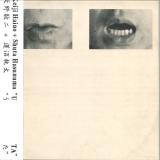
Haino sings. Hasunuma plays. It’s a minimal framework, but what emerges is a boundary-blurring sonic exploration. Across the album, Haino’s voice threads through Hasunuma’s layered soundscapes built from analog synths, electric guitar, piano, field recordings, and more. Haino entered the studio with only lyrics in hand, improvising melodies in response to Hasunuma’s evolving arrangements. The result is a work of deep trust, intuition, and sonic tension.
Keiji Haino and Shuta Hasunuma’’s creative connection began in 2017 with an impromptu performance in Shibuya—Hasunuma on a Buchla modular synthesizer, Haino responding with the Japanese national anthem, “Kimigayo.” That moment sparked their unlikely collaboration.
In 2018 Haino appeared at the Hasunuma-organized event “MUSIC TODAY IN KYOTO” at Rohm Theater, alongside Nobukazu Takemura, Manami Kakudo, Elena Tutatchikova, Kukangendai among others. In September 2021 during the pandemic, the two performed "U TA" for the first time at in Shibuya. They began planning the album soon afterwards.
For the recording of U TA, Haino entered the studio with only the lyrics in hand, with no knowledge of what sounds Hasunuma would produce. Responding to Hasunuma’s music in real time, Haino composed the melodies and layered in his voice on the spot. With additional sessions at Hasunuma’s private studio and Haino’s preferred studio, the album was completed.
All melody and vocals by Keiji Haino
All instrument, written, played, arranged, mixed and produced by Shuta Hasunuma
Recorded by zak at st-robo studio, Shuta Hasunuma at Studio i.M.O and windandwindows
Mastered by Rashad Becker at clunk
Production Management: Eishin Yoshida, Kento Ono (windandwindows)
For Temporal Drift: Yosuke Kitazawa, Patrick McCarthy
Art Direction: Aiko Koike
Special Thanks to Toshihiko Kasai, Ryoichi Kiyomiya, zAk, Yumiko Ohno
license
Jonathan Kaspar returns to These Eyes with his long-awaited Time EP - his third release on the label after six years. Known for his deep, emotive productions, Kaspar takes a bold step forward on this EP, exploring more unconventional, off-kilter sounds while still delivering his signature groove. The release also features a special moment for the artist: “Where Are You”, his very first ambient track, showcasing a new, introspective side of his sound.
Indo Warehouse / Kunal Merchant ft. Raja Kumari
Indo Warehouse presents Bombay Acid (Incl. SYREETA Remix)
Indo Warehouse presents ‘Bombay Acid’ on Crosstown Rebels, featuring Kunal Merchant and Raja Kumari. The hypnotic new single, fusing heritage and future-focused touches, lands with a remix from SYREETA
Making their debut on Crosstown Rebels, New York collective Indo Warehouse unveils ‘Bombay Acid’. The release is a collaboration between co-founder Kunal Merchant and acclaimed vocalist Raja Kumari, capturing the Indo Warehouse ethos: hypnotic grooves, ancestral textures,and underground energy fused into one expansive, ritualistic journey.‘Bombay Acid’ pairs Merchant’s meticulously layered production, melding deep, hypnotic grooves with textures drawn from South Asian musical traditions, with Kumari’s commanding vocals. The track unfolds as both a club-ready cut and an immersive ritual, bridging cultural heritage and contemporary electronic sounds. A Grammy-nominated rapper, singer, and classically trained dancer, Raja Kumari bridges Indian tradition with contemporary global music. She has collaborated with Timbaland, Dr. Dre, Gwen Stefani, John Legend, and Iggy Azalea, and has performed at Coachella, Wireless, and India’s NH7 Festival. Her imprint, Godmother Records, and projects such as ‘The Bridge’ (2023) and ‘Kashi to Kailash’ (2025) explore resilience and spiritual depth, making her one of the most distinctive voices in modern music.
On the flip, SYREETA delivers a striking rework. Authentic and fearless, the UK favourite has shattered glass ceilings while drawing on chunky basslines and energetic grooves from house and techno to craft her own sound and style. Her remix injects ‘Bombay Acid’ with that signature low-end punch, while driving and harnessing the track’s cosmic energy for late-night dancefloors.Kunal Merchant has spent years building a sound that is simultaneously drawn from his South Asian lineage and futuristic. From appearances at Coachella, Hï Ibiza, Fabric London, and Brooklyn Mirage, to releases across the Indo House spectrum, he has become a central figure in shaping the genre and bringing South Asian voices to the global electronic stage. Indo Warehouse, co-founded by Merchant and Kahani in 2022, has evolved from its underground origins in New York into an international movement. Their live shows are immersive experiences, rituals where identity, tradition, and club culture collide, and their releases continue to push the boundaries of house and techno while remaining deeply grounded in their origins. With ‘Bombay Acid’, Merchant and Kumari deliver a production that is both hypnotic and expansive, inviting listeners
into a universe where rhythm, culture, and underground energy meet in unison.
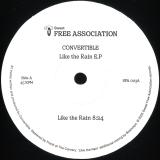
Sweet Free Association is back with new productions this time, an essential debut EP from London-based producer Convertible.
A three track 12inch that touches on all areas of house but stays driving and DEEP! TIP!
The label says:
"Every once in a while something special comes along and this is one of those moments!
Sensitively crafted over time, the result is lush and timeless electronic music that is full of emotion and depth and that invokes the highest feelings of ecstasy!
Teased over the last 6 months in clubs and on radio, the music is consistently the highlight of my set, with the reaction from both the floor and the amount of messages I have received about these ‘unknown’ being staggering. But try it for yourself and you will find out!
Support from Chaos in the CBD, Ryan Elliott, Alex Kassian, Kléo and Millos Kaiser."
All tracks written and produced by Convertible.
Mastered by Frank at The Carvery.
Like The Rain additional mixing by Brain Rays.
Comes in gradient-coloured sleeve.
180 G. BLACK VINYL WITH LINER NOTES IN CREOLE, FRENCH, ENGLISH
Originally released in 1979, "Spiritual Sound" lives up to its name, a soaring, triumphant album, six tracks of spirit magic from Guadeloupe.
Telluric, intense, terribly alive, the gwoka drums of Guadeloupe carry the identity of a painful and fervent island. Marked forever by the crime of slavery, Guadeloupe's créolité cherishes the ka drums and their natural environment: the low-pitched boula drum with male goatskin, the high-pitched soloist makè drum with female goatskin, the chacha, ti bwa, triangle, calabash and other percussion instruments that surround them, and the voices - the fiery, proud, timbred, urgent voices of the gwoka.
This album is also a legend for its voices: in his then dazzling youth, singer Lukuber Séjor was one of the first gwoka artists to largely feminize the chorus of répondè, who converse with his text delivered in a straight and powerful voice.
And everything here sets new standards. In 1979, Mizik Filamonik - Spiritual Sound proclaimed a spiritual patriotism of ferocious intensity. The album by Lukuber Séjor - whose spelling alone is a battle - sets out to give Guadeloupe the intangible weapons of self-respect and self-knowledge, through a singular practice of traditional music.
The genesis of gwoka music is less straightforward than one might imagine... The drums performed the servile task of accompanying the work of slaves in the fields and during the “corvées” imposed by the administration, before being freely practiced by the common people after the abolition of 1848. At the heart of the conviviality of the Guadeloupeans furthest from the cities - geographically and socially - the gwoka drums come out for carnival, funeral wakes and neighborhood celebrations, but also during strikes, fits of anger and armed vigils of the riots and revolts that have punctuated the island's history. For generations, governors of the colony and then the prefects of the overseas department of Guadeloupe have been viewing the gwoka as a potential for turbulence and a threat to public order.
But as the Beatlesmania, “chanson engagée” and rock revolutions unfolded in Europe, young people turned to the drums of mizik a vié nèg (“bad negro music”, in Creole), which Guadeloupeans had learned to despise by following the “assimilation” process advocated by the school system and most of the political class. At the end of the sixties, in a Guadeloupe mourning the deadly repression of the May 1967 social movement, they played traditional music, refusing to wrap it up in tourist prettiness and madras folk costumes. Instinctively, they played a rough and contemporary gwoka, led by the incendiary Guy Konkèt. This was the era of decisive 45 rpm records such as Robert Loyson's Kann a la richès, which brought to light the fieriest words of union rallies.
At his home in Sainte-Anne, Lukuber Séjor played with flautist Olivier Vamur and his brother Claude Vamur, who cobbled together a drum kit from tin crockery and became, a few years later, the most influential drummer in Kassav'.
These were the years of the Bumidom program, when young Guadeloupeans were encouraged to emigrate to mainland France. At the age of twenty, Lukuber Séjor embarked on the liner Irpinia, disembarking at Le Havre and taking the train to the Gare Saint-Lazare - the route taken by thousands of young West Indians who went on to study or looked for work, all the while trying to maintain a link with their homeland. In this case, it's at the Antony university residence, where Lukuber played the drum and participated in a thousand gwoka updates and aggiornamentos, while exile reinforced the need for a spiritual link with the native land.
In 1978, Guy Konkèt played at the Salle Wagram, a historic event for West Indian music. After serving as répondè - i.e. backing vocalist - on one of his home-recorded albums, Lukuber joined his live band. Little by little, he became one of the key artists on a circuit parallel to French show business. At a student party in Caen, he met a young woman from Martinique who, at the time, was more motivated by her ambitions as a visual artist than by her vocation as a musician. Her name was Jocelyne Béroard and, a few years before she plunged into the Kassav' adventure and became the greatest West Indian singer of her generation, she designed the cover of Lukuber Séjor's LP.
This ambition was obvious and imposed its will. A more or less regular band was formed, with Roger Raspail, Rudy Mompière and Éric Danquin on ka drums, Claude Vamur on ti bwa, Olivier Vamur and Françoise Lancréot on flutes and Annick Noël on keyboards. Lukuber Séjor is set on wanting to extend the gwoka palette to other instruments, as the jazz-rock revolution opens a thousand new doors. Annick Noël will play a wide range of timbres and textures on electric piano and synthesizer. Another novelty: the répondè are two men and two women, Roger Raspail, Olivier Vamur, Françoise Lancréot and Maryann Mathéus ...
Mizik Filamonik - Spiritual Sound is a self-production in which the singer and leader sank all his savings, allowing him no more than a single day in the studio. The first side is more of a musical manifesto, with the first two tracks, Éritage and Penn é plézi, being instrumentals. The third, Son, forcefully celebrates the need for Guadeloupeans to connect with the gwoka. In fact, Jocelyne Béroard's cover shows a tambouyé in the shadow of a cloudy sky, against which a radiant sun is rising and whose light will soon flood the entire landscape. The silhouette and face of this man strongly evoke the immense Vélo, master of the ka, rejected at the time on the fringes of society.
The second side of the LP is surprising. Formally, three tracks are explicitly linked like the three parts of a triptych. Primyé voyaj evokes the appalling tribulation of Africans deported as slaves to Guadeloupe; dézyèm voyaj speaks of the Bumidom program and the economic, political and social forces driving young Guadeloupeans towards the mirage of prosperity in France; twazyèm voyaj closes the cycle with the emigrants' return from Europe after years away from their island...
This gwoka, obsessed with the need to save Guadeloupe spiritually, appeals far beyond the politicized audience. Mizik Filamonik - Spiritual Sound instantly became a classic, although Lukuber Séjor never really made a career for himself as a musician.
After all, the album was released in 1980, with no promotional resources in France or Guadeloupe - and therefore no concerts. The thirty-two-year-old author, composer and performer made his own third trip back to Guadeloupe. He set up a small woodworking business, which he lost in Hurricane Hugo in 1989. His other activity, teaching in a medical-educational institute, became the core of his professional life. He continued to be an active campaigner - a campaigner for the Creole language, a campaigner for the reawakening of identity, a campaigner for special education, a campaigner for a thousand causes that he ignited with his generous and perceptive enthusiasm, such as the defense of breadfruit fries...
The echoes of his 1979 album have not died down. Of course, the use of Penn é plézi as the theme tune for Radio Guadeloupe's funeral notices from 1980 to 1992 kept him in the collective memory, but he continues to sing and compose sporadically, as with his all-female
vocal group Vwapoulouéka... Still convinced that music is a means of liberating the spirit, he continues the journey of a young man eager to deploy the power of Creole music and language.
Bertrand Dicale
With their debut album Channels on !K7 Records, Kassian (Joe Danvers-McCabe and Warren Cummings) have come full circle, focusing on the warmer, sample-based, and house-inspired sonics that brought them together. Kassian periodically revisited these initial pieces throughout the last five years until they felt able to journey deeper, using their rapidly developing craft and refined production techniques to build a debut album that momentarily steps away from some of their more club-focused excursions. “As we were writing, we realized that all the tracks had the unique potential to tell a story,” reflects Cummings, with Channels leading the listener through a series of different atmospheres and emotional terrains.
Essential to Channels is Kassian’s focus on time’s ability to reorient human perspective. Kassian worked on the album over an extended period, with instrumentation, field recordings, and percussion first constructed and then subsequently stripped away and refined.
Channels contains their early love of tube warm, sample based sounds and live instrumentation as the foundation for this album. The working process for these rippling pieces used both sequenced workflow and improvisational arrangement, live instrumentation inspired by an array of deeper emotional content. Both members of Kassian experienced great personal loss during the period of making this album, and a tenderness is felt throughout the record.
This record is an earthy thing, its naturalistic track names evoking recognisable and cyclically familiar moments, Kassian have provided a map for the listener at the forefronts of their minds. Channels features Ezra Collective’s Joe Armon-Jones on keys, and Timothy Kraemer on cello distilling this body of work into a deep stream between the organic and improvised, and the sequenced and planned.
"LATZFONSER KREUZ / FELTUNER HÜTTE scheduled for release on September 20th 2024 is the third single to be lifted from Ulrich Troyer's TRANSIT TRIBE due later this year.
Mamadou Diabate, originally from Burkina-Faso and now resident in Vienna, who is also a world-famous virtuoso balaphon player, collaborates on "Latzfonser Kreuz" with fellow countryman Hamidou Koita to produce a remarkable percussion track, both singing and employing talking drum and djembe to come up with a sound that can only be described as dubbed-out Nyahbinghi-style electro-beats! The track references the little church at Latzfonser Kreuz, which is the highest pilgrimage spot in South Tyrol, one of the highest in Europe; every year in June, the Black Lord, a black carved Gothic wooden cross, is brought from the village church in Latzfons to thepilgrimage church, where it remains throughout the summer.
On the flip for "Feltuner Hütte" Ulrich Troyer is joined by co-producer Osman Murat Ertel, founding member of the electro-psych-folk group Baba Zula from Istanbul, who has worked internationally for many years collaborating with the likes of Jaki Liebezeit, Fred Frith and Mad Professor. But here Murat takes us on a dub psych-out trip with his favoured electric saz, with wha wha FX, delay and echo, like Link Wray meeting King Tubby on the old streets of Istanbul."
Steve Barker (DJ, Radio Presenter - On the Wire, BBC 1984 – 2023, now Slack City Radio & reggae/dub columnist and contributor to The Wire)
Credits:
Mamadou Diabate: vocals (A) & talking drum (A)
Osman Murat Ertel: electric saz (B)
Hamidou Koita: vocals (A), djembe (A)
Didi Kern: percussion (A), drums (B)
Flip Philipp: percussion (B)
Ulrich Troyer: analog synthesizers & drum-machines, sampler, field recordings, dub effects (A+B)
A written by Mamadou Diabate, Hamidou Koita & Ulrich Troyer
B written by Osman Murat Ertel & Ulrich Troyer
Recorded by Ulrich Troyer at 4Bit Studio & 4Bit Bungalow, Vienna - except electro saz on track B recorded by Osman Murat Ertel at Saniki Studio, Istanbul
Mixed & arranged by Ulrich Troyer at 4Bit Bungalow, Vienna
Produced by Osman Murat Ertel & Ulrich Troyer
Mastering & Lacquer Cut by Kassian Troyer at Dubplates & Mastering, Berlin
Cover Drawing by Ulrich Troyer
Special thanks to Steve Barker, Mamadou Diabate, Osman Murat Ertel, Diggory Kenrick, Eva Kelety, Didi Kern, Hamidou Koita and Flip Philipp
Kindly supported by the City of Vienna (MA7 - Kultur), Federal Ministry Republic of Austria (Arts, Culture, Civil Service & Sport), SKE-FONDS (AT) & Amt für Kultur, Bozen (IT
"Following on from May's "ECHOES Part 1 & 2" this is the second single of three to be released as an introduction to the next album project of Ulrich Troyer - TRANSIT TRIBE - to be released later this year.
This time it's one for the reggae fans and dubheads with contributions from Diggory Kenrick who has been busy over the last few years adding the distinctive sound of his flute to many new reggae productions. He is also an associate of the U.K. reggae label Pressure Sounds that specialises in reviving classic sounds from the roots and dancehall eras of the genre. Also joining the production is Takafumi Noda aka Mystica Tribe, a Japanese producer and musician who has specialised in a new form of dub techno and is known for adding the signature sound of his melodica to productions of dub friends from around the world.
The subject of travel, especially along modern, fast routes has long been subject to fascinate musicians, from the days of Kraftwerk's "Autobahn" and now the whole genre of dub techno seems to be one built for listening on long journeys. The Autostrada Del Brennero / Brennerautobahn is one of the most important motorways in Italy, as it connects the Po Valley with Austria through the Brenner Pass and features many modern bridges and overpasses that are ready built illustrations for the covers of dub techno albums! On this release this major European truck route is celebrated musically by Ulrich Troyer with inputs from Diggory and Taka to create two modern dub classics."
Steve Barker (DJ, Radio Presenter - On the Wire, BBC 1984 – 2023,
now Slack City Radio & reggae/dub columnist and contributor to The Wire)
Credits:
Diggory Kenrick: flute
Taka Noda: melodica
Didi Kern: drums
Ulrich Troyer: analog synthesizers, analog drum-machines, sampler, dub effects
A written by Diggory Kenrick & Ulrich Troyer
B written by Taka Noda & Ulrich Troyer
Recorded by Ulrich Troyer at 4Bit Studio & 4Bit Bungalow, Vienna - except flute recorded by Diggory Kenrick at Holloway Studio, London / melodica recorded by Taka Noda at Mystica Sound Studio, Tokio
Mixed & arranged by Ulrich Troyer at 4Bit Bungalow, Vienna
Produced by Osman Murat Ertel & Ulrich Troyer
Mastering & Lacquer Cut by Kassian Troyer at Dubplates & Mastering, Berlin
Cover Drawing by Ulrich Troyer
Special thanks to Steve Barker, Osman Murat Ertel, Diggory Kenrick, Eva Kelety and Takafumi Noda
Kindly supported by the City of Vienna (MA7 - Kultur), Federal Ministry Republic of Austria (Arts, Culture, Civil Service & Sport), SKE-FONDS (AT) & Amt für Kultur, Bozen (IT)
‘Diré’, Idrissa Soumaoro new album, comes as a surprise to Malian and international audiences. Composer, singer, guitarist and master of the kamalen n’goni Idrissa Soumaoro presents here a beautiful collection of songs on his third album, Diré, named in honor of the town where he met his wife and where his first daughter, who is no longer with us, was born.
In 1971, after his studies at the INA in Bamako, Idrissa was transferred to Diré to teach music at the lPEG (Pedagogical Institute of General Education). He was 22 years old when he arrived in Diré. Idrissa has always been nostalgic for this beautiful place in the 333 Saints of Timbuktu region. As Idrissa sings in ‘Diré taga’ (Going to Diré), the track that opens the album, the city evokes deep emotions for the artist, as if it were a long-lost friend or lover. Celebrating the memory of the city of Diré leads the artist to retrace stories and lived situations that marked and animated him in years gone by: ‘I really miss the people, the colleagues, the friends and that period. Despite the time that has flown by, I would ardently wish to see Diré again’. Today, at the difficult time Mali is experiencing, remembering the city of Diré in the 1970s also means for the artist not giving up hope for peace: ‘The memory of Diré, a beautiful town in northern Mali, strengthens my hope for peace, union and real independence for the happiness of my people’; as he sings in ‘Sababou’, ‘Without hope, there is no life. Together we will succeed’.
The ten highly original compositions of the album are strongly based upon traditional music of Mali, but Idrissa’s life experiences, travels, education, collaborations and personal musical career have led him to compose and perform music with other influences. As Idrissa quotes: ‘My inspiration generally comes from the donso n'goni, a Bambara instrument played by and for hunters throughout Mali. This is a pentatonic instrument, similar to the blues exported to the USA by black African slaves. I've also spent so much time playing a variety of music that my music also reflects rumba, salsa (as well as Bamanan blues and a few derivatives: jazz, country, soul, rhythm and blues) etc. I have looked for and hope to have found my own form of expression from these influences’.
Throughout the album, his strong, clear voice sings in French, Bambara and English. It rides seamlessly upon a complex rhythmic sea of distinctly West African stringed instrumentation and percussion with accents of flute and balafon. There are keyboards in a few songs, but these, happily, do not dominate the music as we hear so often in today’s music. This album presents the music of a mature artist who has ‘been there, done that’ and returned to celebrate his country, his roots and his dreams in a flawlessly produced collection of songs of love, reassurance, fatherly advice and hope.
The album already has a long history: it was initiated in 2012 by Marc-Antoine ‘Marko’ Moreau, former producer and manager of Amadou and Mariam. Moreau had plans to produce the album and invited Idrissa Soumaoro to start recording in Manjul's studio in Bamako. When Moreau suddenly passed away, work on the album was still missing. The pandemic still added time for the production to continue. With the help of Climax Orchestra, arrangements and orchestrations were finalized in France. At the artist's behest, 'Diré' will finally be presented to the public by Mieruba, the independent label based in Ségou, the home of the blues in Mali. 'Let's stand together so that Mali can flourish': from conception to production and distribution, this is the message that 'Diré' carries.
- A1: Oriana Ikomo - Never Forget
- A2: Moodprint - Eartha
- A3: Kin Gajo - Exit, Gajo!
- A4: Adja - Told You So
- A5: Bodies - Brioche
- B1: Orson Claeys - Conversations
- B2: Bodem - Kleine Mars
- B3: Honey - Bossa Dolce
- C1: Azmari - Sheep Party
- C2: Le Ministère - De L'amour
- C3: Ciao Kennedy - Parcifal Pt. I
- D1: Echofarmer - Beginning Would Have Been Outside
- D2: Kassius - Escapism
- D3: Bruno X Soet X Moene - Ott
Vol. 1[22,27 €]
Vol.2 Black Vinyl[24,79 €]
Vol.2 Limted Red Vinyl[26,01 €]
Vol. 3 Transparent Violet Vinyl[27,52 €]
Standard version on 2LP black vinyl in gatefold sleeve. ‘Lefto presents Jazz Cats' is back with volume 3 and still doing what it does best: putting you in the front row of what the thriving Belgian jazz scene currently has to offer and revealing a melting pot of the musical talent.
'Lefto presents Jazz Cats' is back with volume 3 and still doing what it does best: putting you in the front row of what the thriving Belgian jazz scene currently has to offer and revealing a melting pot of the musical talent coming out one of the smallest countries in Europe. Never change a winning team they say, so we're happy to have Belgian DJ and eclectic connoisseur Lefto on board again.
Although you expect thecompilation to be talking jazz, volume 3 explores a broader array of styles, genres, and sounds than ever before, arriving at a point where the 'young cats' of today don't bother no more. It may focus on the Belgian scene, but let's face it, seeing the influences, this one could be compiled from all over the world. From the empowering and bittersweet voices of Oriana Ikomo and Adja, over the more acoustic-electronic productions of Moodprint, Ciao Kennedy, Kassius and echofarmer. It's even expanding the Jazz Cats universe to dub and bass-heavy tracks with Kin Gajo and Le Ministère, Ethio-jazz from Azmari, while sending you back to earth with bodies' swirling sax and drums. That saxophone still rings in your ears when you end up in the orbit of the march-like drums of Bodem, Orson Claeys' piano testing your ability to follow him, slamming the breaks to go smooth cruisin' with HONEY (Morricone meets Khruangbin, anyone?), to crashing in a raging tempo on that last track of Bruno x Soet x Moene. And there you are, back with us.
2018's 'Lefto presents Jazz Cats' included tracks from some of Belgium's biggest hitters, including Black Flower, STUFF. De Beren Gieren and Glass Museum who have all gone on to receive global acclaim. The album was given the accolade of 'Album of the Week' on Worldwide FM and also received further radio support from Jazz FM in addition to numerous glowing reviews. The 2022 follow-up 'Jazz Cats volume 2' paved the way for a new generation inspired by its peers, entering another era of very talented individuals and collectives. Maybe even more so than 4 years before. It uncovered a beautiful balance of more established but also obscure musicians and artists. Opening up to electronics and dance, enter bands like ECHT!, Stellar Legions and TUKAN. Thrilling innovative soundscape grooves and jazz fusion with Bandler Ching and L?p?GangGang, not to forget about the weaving musical odyssey that is M.CHUZI. In addition, there's the balanced unease of One Frame Movement, the laidback 'acoustic electronica' of Boombox Experiments, the classic funky jazz stylings of Cargo Mas and cinematic The Brums, all of these have set volume 2 on the map as an essential release for any jazzhead with a passion for new sounds.
Tastemaker, selector, curator, DJ and producer, these words often get mentioned when Lefto's name pops up in discussions. And rightly so. If you've ever had the pleasure to listen to one of his incredible Boiler Room sets or one of his many radio shows, you'll know why. Famed for his gloriously eclectic taste on the decks, he switches effortlessly between hip hop, funk, breaks, neck-snapping beats, future bass, South-American influences, bruk riddims, some wild African rhythms and of course, jazz.
Growing up as a child, his father would have the sounds of jazz flowing through the speakers. Which led him to bars around town to hear the latest jazz ensembles. Falling in love with the genre, he would later refine his knack for record digging and fine ear for music working at Belgium's legendary Music Mania record store in his hometown Brussels. Which makes that Lefto is consistently a couple steps ahead. He doesn't wait for the next thing to land in his lap, but actively seeking it out.
Lefto on Jazz Cats volume 3:
"Another release in less than two years! I am very impressed by the amount of creative "jazz" talent we've managed to compile over the last couple of years. Thanks to the internet, young musicians find inspiration from around the globe and incorporate diverse influences into their work. Given the history and heritage of jazz in this country, it has managed to create a healthy jazz scene supported by festivals, venues, press, and labels. Therefore, I am very proud to present to you the thirdinstallment of Jazz Cats. This compilation is dedicated to the young and hardworking musicians who are the present and the future of Belgium's jazz scene."
The Viennese audio-architect with South Tyrolian roots delivers two exciting new tracks, co- produced by Osman Murat Ertel (Baba Zula) from Istanbul.
Ulrich Troyer's MOMENTS transforms classical & acoustic guitar recordings through tape machine treatment, guitar effect pedals, analog & digital effects into a shimmering soundscape. The combination of textures and effects generates excitement and invites to listen repeatedly, surprising each time with new details.
Fractured tones, beautifully rooted and held together by the tune underneath.
Credits:
Guitars, Tapemachine & Electronics: Ulrich Troyer
Recorded & Mixed by Ulrich Troyer @ 4Bit Bungalow, Vienna
Written by Ulrich Troyer
Produced by Osman Murat Ertel & Ulrich Troyer
Mastering & Lacquer Cut by Kassian Troyer at Dubplates & Mastering, Berlin Cover Art © Eva Kelety & Ulrich Troyer
Period of creation: 2021-2022
Be As One is excited to release the long overdue "Romantic & Dead" LP, the debut Album from one of the most talented artists of the recent generational Techno movement, and the label regular "Kashpitzky".
Being the hyped Berlin based producers most crafted project to date, the Buzzing 11 tracks LP is spread over 2 vinyls, astonishing covered artwork and shiny polished product, and reflecting the different shades of techno from several moments of the night, tailored straight from the mind of the most sought after artist of the recent couple of years.
Lining with the label's raw and old school influenced sound Aesthetics of re defining the term "House influenced Techno", Kashpitzky fits right in as one of the imprint's leading figures, compiling the 5th full length artist album to date from the label, after industry icons such as Kenny Larkin, Samuel L Session, Orbe and the label head Shlomi Aber.
As its title, the Romantic & Dead LP is an excepional abstracted and mixtured techno journey for the heads and collectors both, and marks a significant milestones for the young artist and the established label.
Limited release.
After “The Legend of Kaspar Hauser” directed by Davide Manulli, Vitalic is once again putting his music to moving images with “Disco Boy” by Giacomo Abbruzzese (awarded a Silver Bear at the 2023 Berlinale). Electronic, intense and navigating between a variety of different atmospheres, the soundtrack - much like the film it accompanies - is full of promise and mystery. “The Swamps”, “La Guerre” and “Helicopter” are reminiscent of the intense, dark and foreboding productions of Thomas Bangalter for “Irreversible” by director Gaspar Noé. In contrast, “Winter is Coming” and “Lost Time” are places of melancholy and sweetness where all bass has completely disappeared. As for the eponymous theme for the film, “Disco Boy”, it pays true electronic homage to the sound of disco. The retro-futurist soundtrack to “Disco Boy” oscillates between devastating kick drums, moist ambient and dreamlike swathes. Vitalic has created uncharted sonic landscapes that invite us on a voyage of initiation and self-discovery.
Gingerblack is a dynamic House Music DJ duo better known as Lilly & Kazan. With classic Chicago House beats Gingerblack are bringing sexy grooves back to the dancefloor while their original Lilly & Kazan moniker stands for trippy dj-sets & productions pushing Cosmic Disco and Indie Techno.
The duo has been enchanting dancefloors at renowned clubs and festivals across Europe while co-founding clubs like “Kasette” in Istanbul, “Christa Kupfer” in Berlin and the beach festival “Bloom” on the Mediterranean Sea.
Lilly's promoter expertise and Kazan's two decades of experience in the electronic music scene as a DJ, producer, and promoter make them a multi-discipline force to be reckoned with. The duo is known for spreading unique joy and passion on stage.
Through one of their club nights Lilly & Kazan made friends with „All That Jelly“ label boss Mr. Fonk who became a resident at their club. In „Christa Kupfer“ they also hosted House music legend Robert Owens, playing unforgettable nights with them. It was a match made in heaven!
Now all four of them have collaborated for this 12“ of the purest oldschool House Music, brought to perfection by the flamboyant prince of Vocal House and remixed by Wareika member Jakob Seidensticker and his producing partner MELINA.
Following releases on Love On The Rocks and Pinchy & Friends (the massive 'Leave Your Life' and 'Strings of Eden' which now goes for big bucks on Discogs) Alex Kassian arrives with the first release on the new label from the Test Pressing team.
Lead track 'Voices' arrives in three mixes that run from an expansive journey, to a pure club version, followed by the ambient excursion 'Lifestream' - an electronic piece focussing on what Alex does best, quality production with amazing sounds and melody. This is the first in a three part series of Alex Kassian releases building to an album next year.
"We Are Power", Galaxian's first album in over a decade, cuts a new path. On this Foul-Up and Shipwrec joint release, Kastner presents a rumination on the confrontation and power clash between humankind, nature, the spiritual and mechanistic industrial growth societies. What is authentic power? What is granted power? What is innate natural power? How is power accessed, wielded, utilised, felt? On this album the blistering beats and razor-edged rhythms that characterise the Glaswegian's productions have been softened, the menace melted, the angst soothed (well almost.) Across eleven tracks, distinct audio vistas are surveyed. The human form takes centre stage from the opening monologue of "Out of Balance" with the entire record searching for balance between humankind, nature, orthodox culture & the machine. At times the machine wins. "We Are Power" is a corruption of voice, samples chopped, sliced and fed into controllers and sequencers to produce a dense decibel wall. That wall grows ever higher in the terrifying drone of "Anatomy of a Modern Lie." At other points, a perfect symmetry between artist and tool is found. The racing interchanges and pulses of "Universal Truths" give rise to dawning reprises and warmth. For those after an electro fix, Galaxian abides. The speed snares of "Messianic Delusions" or dripping drums of "Fields of Meaning" are soaked in the history of machine music, yet they are grander in their delivery and more nuanced in their composition. Fresh territories are explored, the playful solar dreams of "Without Form" or the cinematic grandeur of "In Reverse". This album is unmistakable Galaxian, it marks a high-point and brings with it a culmination of intense expression.
For our fifth release, P&f Recordings is pleased to welcome Berlin-based musician, producer, and DJ, Alex Kassian.
Over the past few years, Kassian has made a name for himself in Berlin and beyond as a solo act, as well as with his project Opal Sunn, via a clutch of well received, dancefloor-focused 12s. But on our first release of 2021, Kassian swaps the techy pulse of the German capital for a sound that’s altogether more melodic and atmospheric.
Side A kicks off with 'Leave Your Life (Lonely Hearts Mix)' which began as a way for the producer to realize some of his early—and so far unrequited—dreams of playing in a rock band.
Next up he delivers 'Leave Your Life (Dance Mix)', which ups the energy and echoes some of the production that made the musician’s 'Oolong Trance' (Love on the Rocks) one of 2020’s best club tunes.
On the flip, the gorgeous 'Spirit of Eden' unfurls like a lost Lyle Mays classic, but with a mesmerizing loop that keeps the song’s feet placed firmly on the dancefloor.
Concluding the EP is a bass-heavy remix from none other than U.S. dub legend Bill Laswell. 'Eden’s' melodic focus is underpinned by a propulsive groove and filtered through Laswell's trademark sonic dynamics.
The EP, comes packaged in a full-color jacket from Parisian artist Alexis Jamet with OBI strip.
Fresh from the release of André Hommen’s More Than This album earlier this year, October will see the German talent follow up with the first of two special remix packages. Set for release on his own imprint, These Eyes, More Than This Remixes Pt. 1 includes stellar offerings from two Kompakt regulars: Robag Wruhme and Jonathan Kaspar.
Beginning with the punchy sounds of Robag Wruhme ’s remix, hard-hitting drum combos are swiftly complemented by reverberating vocals, as up-tempo hats create rhythm to forge a no-nonsense dancefloor cut. Jonathan Kaspar ’s remix rounds things off gently, with a softly-building bassline that ebbs and flows alongside whispering hats and warm, soothing pads.
André Hommen ’s international following should come as no surprise given his already storied career. As label head of These Eyes, the imprint has welcomed standout releases from the likes of Ane Brun and Marc Romboy previously. Another staple of Germany's ever-flourishing music scene, Robag Wruhme ’s productions have found a welcome home on labels as acclaimed as Koze’s Pampa Records, Kompakt and Mute to name a few, whilst fellow prolific-producer Jonathan Kaspar has released two EP’s on These Eyes, then also Objektivity and Acid Pauli’s Ouië in an already-storied career.
Berlin club and party-starters Sameheads return to black wax on April 10th with “ZEUG!”, a 4-track EP from various celebrated artists, who join forces in new and unheard ways for a stack of outernational and spaced-out dancefloor jams for creative dance floors worldwide and beyond.
Berlin-based CROSSLUCID, AKA Sylwana Zybura and Tomas C. Toth, have delivered another stunning example of their perception-bending otherworldly viewpoint with the artwork for the release. A purely analog production, fusing clever lighting tricks, hand-made props, and a healthy dose of shaving foam and dry ice… This “Cult of the Cosmic Swamp” chimes with the weird tribal rhythms contained on the record.
First up is Mameen 3 (a side-project from Brussels selector DJ Sofa) & Romanian pioneer Rodion G.A with ‘Planet Cluj’, a suitably off-world excursion through a fun-packed disco hall in some far-off colony where layered synths are stacked, elements seeping through one another to form a mesh of groove.
Anatolian Weapons’ cosmic fireside ritual, ‘Chant 3’, heats up the A2 with vibrant and punchy percussion loops woven together with a worldwide chorus of chanters. Building continuously, the tough workout is dosed up with a bassline saturated in attitude for a high-energy finish.
Picking up on the B side are KRENG (a morphic form composed of Don’t DJ and Dane Close), who slow the pace down with a latticed beatwork combining robust dance formulas and blasting syncopation. Letting the rhythm do the legwork for the first half of the track, the pair then pour out a sludged mess of grime-infused bass over the percussive chaos.
Silvia Kastel and Wilted Woman close proceedings as SHAKEY with a dubwise workout that straddles b-side house obscurity and stoned live dub improvisation: steel drums patter at the windows of Paradise Garage as Larry Levan fights off the vampires alongside Scientist.
The release is celebrated at Sameheads on April 10th with an extremely rare live show from Rodion G. A., an appearance from INVERSIONS label owner Milo Smee, and a b2b from Don’t Dj & Dane Close. Limited to 300 pieces, this record will find a home in the stacks of DJ’s willing to step outside genre and convention.
Clear Vinyl Edition[21,43 €]
Black vinyl repress. Wie in het voorjaar van 2025 het voorrecht had om de theatertour van Het Zesde Metaal bij te wonen, kon daar op de koop toe genieten van een handvol gloednieuwe songs. Het resultaat is de EP Randgevallen: vijf songs, vijf vertellingen uit het persoonlijke en wereldse leven die andermaal bewijzen dat Het Zesde Metaal als geen ander kan beschrijven, beklijven en betoveren.
Wie in het voorjaar van 2025 het voorrecht had om de theatertour van Het Zesde Metaal bij te wonen, kon daar op de koop toe genieten van een handvol gloednieuwe songs. En daarna vaststellen dat die helaas nergens te (her)beluisteren waren. Tot nu, want de goesting om de songs vast te leggen voor de eeuwigheid werd op den duur wel heel groot. En dus kampeerden Wannes Cappelle en co afgelopen zomer enkele dagen in Waimes (DAFT Music Studios), voor het eerst in de nieuwe bezetting met Kasper Cornelus op gitaar/toetsen en Sander Verstraete op bas.
Het resultaat is de EP Randgevallen: vijf songs, vijf vertellingen uit het persoonlijke en wereldse leven die andermaal bewijzen dat Het Zesde Metaal als geen ander kan beschrijven, beklijven en betoveren. Een staalkaart bovendien van de muzikale en tekstuele veelzijdigheid die de band al jaren kenmerkt. Opener Service is een opgewekte popsong waarin Cappelle sappig de drang naar reviews en hartjes in het dagelijkse en economische leven fileert: 'wa' vind je van onze service? / zou j'ons geen tiene willen geven? / asteblieft, want anders is den directeur vies.' In Traagskes Groeien verstilt het tempo en keert de blik naar binnen, het persoonlijke leven in, mijmerend over kinderen die stilaan het nest ontgroeien. 'ge moet u zo nie' spoeien / ge moet traagskes groeien / ge moe' laagske per laagske groeien', probeert Cappelle het loslaten nog even uit te stellen.
Wie dacht dat Oud En Nieuw daarna gaat over feestvieren in de donkerste dagen van december, is op het verkeerde feestje beland. Wiegend op hypnotiserende bas, drum en pedal steel passeert opnieuw de vergankelijkheid van het leven, dit keer met een bredere maatschappelijke blik. 'alles da' oud is, was ooit nieuw / en groot is ooit kleine begonnen / veel komt van weinig / glad was eerst ruw / zelfs de waarheid wierd ooit verzonnen'. Wanneer naar het einde toe pulserende synths het tempo opheffen en de song licht euforisch uitwaaiert in een instrumentale coda, kun je alleen maar de ogen sluiten en stilstaan bij wat was en nog komen zal.
Label is het enige nummer dat speciaal voor de EP werd geschreven en baadt net als Service in meer dartele klanken, terwijl Cappelle met trefzekere oneliners een beeld van zichzelf schetst. 'de meeste middens mijd ik, ik hore bie de randgevallen thuis / misschien verdiene 'kik ook een label'. Moeten we altijd proberen de ander in een vakje te duwen? Kan iedereen niet 'gewoon' anders zijn? En ironisch draait Cappelle de rollen om: 'atypisch is de norm / ge moogt buiten de lijntjes kleuren / gewoon is niet verboden / normaal zijn doet geen zeer / as ze mor hunder plekke kennen / de rare zijn met meer.'
Het slotakkoord is voor het beklijvende Duizend Soldaten van Willem Vermandere, dat Cappelle en Filip Wauters begin dit jaar brachten voor het tv-programma Ik Vraag Het Aan. Nu zet het een pakkend punt achter een EP die nogmaals de tijdloze klasse van de band onderstreept. Meeslepend, verhalend, herkenbaar, grappig, ontroerend, scherp. Het Zesde Metaal is het allemaal en heeft daar slechts vijf songs voor nodig.
Randgevallen werd opgenomen met Frederik Segers (productie) en Jasper Maekelberg (mix) aan de knoppen, en komt uit op 4 oktober. Met de plaat onder de arm én aan de merchandisetafel herneemt de band zijn theatertour, maar dan in het groot, langs fantastische zalen in onder meer Brugge (Concertgebouw), Gent (Capitole) en Nederland.
The Heinz Beauvaix project dates back to the mid-1990’s when Niels Rønne and Flemming Kaspersen played in Danish ambient act Swimwear Catalogue. On an ever growing number of DAT tapes they recorded semi-improvised synth/sampler/sequencer jams that mixed influences from ambient, electro and industrial. Later they began working with more detailed studio productions.
The seven tracks on “Vision Man” combine complex synth pads, interweaving monophonic synth lines, discrete drum rhythms, and strange voice samples. The sound is experimental and melodic at the same time. Influences range from early industrial to IDM, techno and synth pop. Rønne and Kaspersen originally met through a shared obsession with Canadian industrial giants Skinny Puppy. And if there is one seminal album that has influenced the Heinz Beauvaix sound, it is the obscure Skinny Puppy side project Doubting Thomas and their solitary album “The Infidel”, released in 1990.
Others have mentioned influences from bands such as Coil, Severed Heads, Bill Leeb and Rhys Fulber’s Delerium and Future Sound Of London.
“Vision Man” is old school synthesizer music with tunes you can hum.
- A1: Kee'ahn, Pataphysics, Ojiaji, Yusuf Harare Jnr, Kawel Che, Kasinda Fa'ase - Heavy
- A2: Kee'ahn, Jake Amy, Anthony Liddell Featuring Sensible J And Kasinda Fa'ase - This Is Not The End
- B1: Kee'ahn, Jake Amy, Anthony Liddell, Sensible J, Elle Shimada - At Least For Now
- B2: Kee'ahn, Jake Amy, Anthony Liddell, Sensible J, Basil Byrne, Elle Shimada - The Way I Love
- B3: Kee'ahn, Pataphysics - Better Things
Kee'ahn, whose name is derived from kee’an, the Wik word meaning to dance and to play, is a proud Yalanji, Jirrbal, and Badulaig artist. Her music is steeped in connection to culture, community, Country, and self and with her soulful voice and storytelling, Kee’ahn has had a powerful impact on the Australian music scene, earning her the Archie Roach Foundation Award and Music Victoria’s Best Emerging Artist award. She has since performed at the 2025 AFL Grand Final collaborating with Baker Boy, Thelma Plum, Emma Donovan, Dallas Woods, Alice Ivy and shared stages with the likes of Julia Jacklin, Hiatus Kaiyote, Greentea Peng and Angie McMahon.
Kee’ahn’s debut EP “for me, for you x” is a collection of lush cinematic soul and rnb love letters. Across 5 tracks, Kee’ahn explores the pursuit of hope, compassion, connection, heartbreak, and healing. This project naturally and authentically came together, detailing moments across 5 years of Kee’ahn’s life. Each song begins on guitar and vocals with demo production in Kee’ahn’s Brunswick bedroom - they are diary entries to herself, formed into messages that hit the hearts of its listeners.
Each song is reminiscent of classic 60’s jazz soul to 90’s neo-soul rnb, to early 2000’s inspired soul pop weaving dynamic soundscapes with clear and meaningful catchy lyricism.
- A1: Un-Muting Beyond Misspelt Borders ()
- A2: Un-Muting Beyond Misspelt Borders ()
- A3: Un-Muting Beyond Misspelt Borders (A3)
- A4: Un-Muting Beyond Misspelt Borders ()
- A5: Un-Muting Beyond Misspelt Borders ()
- B1: Un-Muting Beyond Misspelt Borders ()
- B2: Un-Muting Beyond Misspelt Borders ()
- B3: Un-Muting Beyond Misspelt Borders ()
- B4: Un-Muting Beyond Misspelt Borders ()
- B5: Un-Muting Beyond Misspelt Borders ()
"Visual artist, musician and composer Satch Hoyt will release a new 10” vinyl album, Un- Muting, on 3 October 2025 on newly minted record label traza, run by Andrea Zarza Canova and distributed by Honest Jon’s Records. This album is the first to document Hoyt’s ongoing, long-term project of un-muting historical African instruments held in Western museum collections and includes his composition: Un-Muting Beyond Misspelt Borders.
Originally commissioned by Nottingham Contemporary for the exhibition Your Ears Later Will Know to Listen, Hoyt’s composition invites listeners to engage with what he calls ‘sonic restitution’, a performative challenge to the silent confinement of instruments within Western conservation standards and ethnographic museums, awakening and celebrating the hybridity, resilience and creativity of the transnational African diaspora.
The composition began with a recording session in October 2023 at the British Museum in London, where Hoyt was granted access to a selection of African instruments held by the British Museum’s Department of Africa, Oceania and the Americas. In the presence of curators and conservation staff, he played the instruments without written scores, responding instead to their physical and sonic presence.
The recordings were then further developed in Hoyt’s studio, combined with additional performances on both African and Western instruments from his own collection."
For Hoyt, un-muting is both a creative and political act:
"To Un-Mute is to gain access into ethnographic museum collections where I play and simultaneously record the abandoned ancient African musical instruments. These restituted recorded motifs and rhythms accompany my live concerts and recordings. Un-Muting is also concerned with the chapters of patriarchal and racist supremacy which accompany the instruments’ abductions, vehemently opposing the current continuum of this supremacy, its ongoing colonial expansion and continued capital extractivism. It remains focused on the retention of spiritual belief and stalwart visions of liberation leading to eventual global emancipation and self-realisation."
- Satch Hoyt, June 2025
The 10” vinyl record includes a newly commissioned text by critic and scholar Tavia Nyong’o.
The album will be released on vinyl and digital formats on 3 October to coincide with the opening of Satch Hoyt’s solo exhibition Satch Hoyt: Afro-Sonic Mapping Chapter 4 at KARST Plymouth.
Ancient African instruments: Trumpets (Kuba), Sanzas (Chokwe, Lega, Kongo, Yao), Ilimba (Nyamwezi), Whistles (Chokwe, Luba, Pende, Bambara), Talking Drum (Yoruba), Slit Drum (Kuba, Yaka, Tetela, Songye), Bell (Tetela), Rattles (Yoruba, Luba, Bamileke, Pende) and Flutes (Kuba, Kongo, Mossi, Bambara)
Western instruments: Flute, Electric Flute, Roland Handsonic, Synthesizers, Glockenspiel, Wooden Xylophone and assorted hand percussion
Composed, arranged, produced and performed by Satch Hoyt
Engineered and co-produced by Dirk Leyers
Recordings of musical instruments held by the Department of Africa, Oceania and the Americas at the British Museum by Adam Laschinger
Studio recordings of African instruments from Satch Hoyt's collection by Dirk Leyers
Uncredited Female Chant on wax cylinder recording by Karl Edvard Laman (c. 1910), held by the Berlin Phonogramm-Archiv
Additional sound design and production by Call & Response Studios
Mixed by Hendrick Valera (Cali, Colombia)
Mastering and lacquer cut by Kassian Troyer at Dubplates & Mastering
Cover art: Satch Hoyt, Score #1, 2020
Design by Elisabeth Klement
Direction by Andrea Zarza Canova
INTEMPORARY AND INDETRONABLE FRENCH COLD WAVE CLASSIC in a SPECIAL EDITION to celebrate the 40th anniversary of this mythical album.
This edition includes a 45T with 2 previously unreleased tracks, available nowhere else.
Thierry Müller, who initiated the RUTH project, is not at his first try when the album POLAROÏD/ROMAN/PHOTO including the eponymous track is released in 1985. His older brother Patrick along with one of their cousins make his musical education and he quickly becomes familiar with contemporary and experimental music. He starts quite early to tinker sounds on old tape recorders by himself but it is in 1977 that Thierry launches with some friends his first group, ARCANE, while studying at the School of Applied Arts. Their sound is weird, a mixture of saturated scratches and feedback tapes: there is no discographic or scenic testimony of this experience.
Alongside ARCANE, Thierry is already working solo on his ILITCH project / concept, an experimental and innovative work, whose first album Periodmindtrouble is released in 1978 on the Oxigène label. Despite insubstantial sales, this album brings Thierry recognition and success in the very elitist circles of experimental and underground music.
ILITCH’s musical bias was too narrow for Thierry’s ceaseless experimental curiosity, parallel to these activities, he therefore develops a Punk project called RUTH ELLYERI with the author, actress and photographer Murielle Huster. The title is an anagram of Thierry Müller (the complete name is Ruth M. Ellyeri). The character is meant to impersonate one of his schizophrenic facets and allows him to extend his field of expressions to musical styles differing from those in ILITCH.
From this work, the very cult punk piece Mescalito emerges, song that can be found on the mythical but unfortunately very rare compilation 125g de 33 1/3 tours (1979) of the Oxigène label (first “french punk” sampler). At the end of 1978, he meets Philippe Doray at the Oxigene office. Doray is another big name of French experimental music. Thierry moves to his home near Rouen, a remote farmhouse with a music studio made of odds and ends.
They work on their respective creations but meet from time to time on experimentations in common, including CRASH (a tribute to JG Ballard) As early as 1982, a first version of the track Polaroïd/Roman/Photo is out under the name of the project RUTH. “I wanted to write a piece to make the girls dance and make fun of the boys. I plugged a small handmade clock on my Farfisa organ as a sequencer. I had a small Roland synth-guitar, I put the organ in it and that’s how it started.” Philippe is quite amused by the idea of working on a more Pop project and offers to write the text. Thierry works on other tracks for the future LP and asks some friends to write other texts : Edouard Nono, visual artist, writes the lyrics of Mots, Frédérique Lapierre those of Misty Mouse and Tu m’ennuies . It is her voice you hear on these 2 tracks and on the first version of Polaroïd/Roman/Photo. Later, Thierry settles down in the Anagramme recording studio to carry out acoustic sound recordings. But when the sessions are over, the 2 musicians are not too happy with the results of Polaroïd/Roman/Photo: according to them, they lack “flamboyance”. They decide then to record a new female voice with a professional singer and the sound engeneer Patrick Chevalot offers to mix the track in the Synthesis studio “so that it blows out”.
With his tape ready and the help of Jacques Pasquier (S.C.O.P.A. / Invisible records where Ilitch’s second album, 10 Suicides, is released) he starts to contact record companies. “I visited almost all the major record companies and was thrown out every time. Only at RCA’s I found someone interested in my music. It was Francis Fottorino who had signed Kas Product but when it reached the the big boss, no way! Philippe Constantin from Virgin records raised some hope but in vain.
The album was finally released in 1985 with Paris Album, a small independant label.” The album barely sells 50 copies in 1985, despite the eponymous title as a potential success. « In 2004, 2 DJs Marc Colin and Ivan Smagghe discover the track Polaroïd/Roman/Photo and decide to exhume it from oblvion. They release it on a compilation called So Young but so cold (Tigersushi) and then with Born Bad records on the BIPPP compilation in 2008. Thanks to them, the track and the album start a new life.
Alongside his activity as graphic designer, Thierry Müller carries on producing music under his name, those of ILITCH and RUTH for his own creations and various collaborations.
- A1: Service
- A2: Traagskes Groeien
- A3: Oud En Nieuw
- B1: Label
- B2: Duizend Soldaten
BLACK VINYL EDITION[21,43 €]
Limited edition on clear vinyl. Wie in het voorjaar van 2025 het voorrecht had om de theatertour van Het Zesde Metaal bij te wonen, kon daar op de koop toe genieten van een handvol gloednieuwe songs. En daarna vaststellen dat die helaas nergens te (her)beluisteren waren. Tot nu, want de goesting om de songs vast te leggen voor de eeuwigheid werd op den duur wel heel groot. En dus kampeerden Wannes Cappelle en co afgelopen zomer enkele dagen in Waimes (DAFT Music Studios), voor het eerst in de nieuwe bezetting met Kasper Cornelus op gitaar/toetsen en Sander Verstraete op bas.
Het resultaat is de EP Randgevallen: vijf songs, vijf vertellingen uit het persoonlijke en wereldse leven die andermaal bewijzen dat Het Zesde Metaal als geen ander kan beschrijven, beklijven en betoveren. Een staalkaart bovendien van de muzikale en tekstuele veelzijdigheid die de band al jaren kenmerkt. Opener Service is een opgewekte popsong waarin Cappelle sappig de drang naar reviews en hartjes in het dagelijkse en economische leven fileert: 'wa' vind je van onze service? / zou j'ons geen tiene willen geven? / asteblieft, want anders is den directeur vies.' In Traagskes Groeien verstilt het tempo en keert de blik naar binnen, het persoonlijke leven in, mijmerend over kinderen die stilaan het nest ontgroeien. 'ge moet u zo nie' spoeien / ge moet traagskes groeien / ge moe' laagske per laagske groeien', probeert Cappelle het loslaten nog even uit te stellen.
Wie dacht dat Oud En Nieuw daarna gaat over feestvieren in de donkerste dagen van december, is op het verkeerde feestje beland. Wiegend op hypnotiserende bas, drum en pedal steel passeert opnieuw de vergankelijkheid van het leven, dit keer met een bredere maatschappelijke blik. 'alles da' oud is, was ooit nieuw / en groot is ooit kleine begonnen / veel komt van weinig / glad was eerst ruw / zelfs de waarheid wierd ooit verzonnen'. Wanneer naar het einde toe pulserende synths het tempo opheffen en de song licht euforisch uitwaaiert in een instrumentale coda, kun je alleen maar de ogen sluiten en stilstaan bij wat was en nog komen zal.
Label is het enige nummer dat speciaal voor de EP werd geschreven en baadt net als Service in meer dartele klanken, terwijl Cappelle met trefzekere oneliners een beeld van zichzelf schetst. 'de meeste middens mijd ik, ik hore bie de randgevallen thuis / misschien verdiene 'kik ook een label'. Moeten we altijd proberen de ander in een vakje te duwen? Kan iedereen niet 'gewoon' anders zijn? En ironisch draait Cappelle de rollen om: 'atypisch is de norm / ge moogt buiten de lijntjes kleuren / gewoon is niet verboden / normaal zijn doet geen zeer / as ze mor hunder plekke kennen / de rare zijn met meer.'
Het slotakkoord is voor het beklijvende Duizend Soldaten van Willem Vermandere, dat Cappelle en Filip Wauters begin dit jaar brachten voor het tv-programma Ik Vraag Het Aan. Nu zet het een pakkend punt achter een EP die nogmaals de tijdloze klasse van de band onderstreept. Meeslepend, verhalend, herkenbaar, grappig, ontroerend, scherp. Het Zesde Metaal is het allemaal en heeft daar slechts vijf songs voor nodig.
Randgevallen werd opgenomen met Frederik Segers (productie) en Jasper Maekelberg (mix) aan de knoppen, en komt uit op 4 oktober. Met de plaat onder de arm én aan de merchandisetafel herneemt de band zijn theatertour, maar dan in het groot, langs fantastische zalen in onder meer Brugge (Concertgebouw), Gent (Capitole) en Nederland.
- A1: Ersatz
- A2: Demain Berlin
- B1: Mauve
- B2: Peine Perdue
First time reissue of this French cold-wave / minimal-synth treasure.
November 1981 – In the heart of autumn, we set off in two cars along the Nationale 1 (!) to reach Choisy-le-Roi, where a 16-track studio was waiting for us—a place where, over the course of a weekend, we would finally be able to carve our own grooves into vinyl. We were quite nervous, as Guerre Froide had already been around for a year and a half. Our elders in Kas Product had already released two EPs—one with four tracks, the other with three—in 1980, even though they’d started only a few months before us. Admittedly, there wasn’t really a sense of urgency—some of us came from the punk movement, where the prevailing mood was still very much No Future, even if we’d long since stopped believing in it... And yet others had truly lost everything, like those from the generation before us. The reasons, ironically, were often the same: heroin and/or love—hard drugs, in both cases.
Speaking of which, I had a terrible stomach ache—due to nerves or some form of tension—which forced us to make a pit stop in the Oise region so I could rush to the toilet of a local café. That same stomach discomfort would hit me again once we arrived at the studio—whose name, incidentally, I’ve since forgotten...
We had gotten there thanks to the generous initiative of a friend, Sylvain S., known as “Perlin” (what a phonetic coincidence!?), who had specifically created the Stechak Products label to produce our record. Stechak because it was consistent with his earlier association called Tchernoziom, and Products as a plural tribute to the trailblazers from Nancy.
Guerre Froide originally consisted of four members: Fabrice Fruchart on guitar-synth (Korg MS-20), Patrick Mallet on bass, and Gilbert Deffais, known as “Bébert”, on Korg drum machine. At the time, I was already singing in a rock/post-punk band called Stress, and that’s how Guerre Froide picked up the bad habit of rehearsing in the same basement in Amiens as Stress. Within a month or two, we had half a dozen songs. We then had the opportunity to record a 4-track demo with a friend from Radio France Picardie, and to perform in October at a festival held at the Amiens municipal circus. Then came the now-legendary concert on November 11 at B.J.’s Club. After that, we self-produced and released 50 completely DIY copies of a cassette titled Cicatrice. A few concerts later—after Jean-Michel Bailleux had joined us on bass and Patrick had switched to guitar, which felt more natural to him—and with more concrete plans starting to take shape, we had to find a new rehearsal space and start renting a room.
Then came the moment when Fabrice told us he was leaving to go study in Lille... After the June 19, 1981 concert, which was naturally dubbed “Farewell to 2F,” Marie-José, Bébert’s wife, offered to take over on synth.
That’s when Perlin, who was a close friend of the Deffais couple and a great fan of our music, offered to fully finance the production of a 4-track 12-inch EP—covering the studio time, mastering, pressing, and artwork. What up-and-coming band would have turned that down? An improvised contract was signed with each member of Guerre Froide. The first step was choosing which four songs we would record. Berlin 81 was an obvious pick, having already become the group’s flagship track. We wanted to avoid reusing songs from Cicatrice, so the focus shifted to new material—some written before, some after Fabrice’s departure. Ersatz, for example, was his composition, but Mauve and Peine Perdue, which were also selected, were both written by Patrick.
- A1: Believe (Feat Anda)
- A2: Five Days (Feat Dj Epik)
- A3: Lost & Found (Feat Sally Green)
- A4: Evergreen (Feat Tony Ozier)
- A5: Take A Ride (Feat Jp Patterson)
- B1: Eight Nine (Feat Sally Green)
- B2: Sure Shot (Feat Dj Epik)
- B3: How Ya Gonna Do It (Feat Kate Moe Dee)
- B4: Cruise Control (Feat Nice Rec)
- B5: Turn It Out (Feat Brothermartino)
Neo funk rising star Buscrates aims high with Blasting Off, his first full-length album. The Pittsburgh-based keyboard cosmonaut has been grabbing ears since his days hooking up beats with the hip hop crew East Liberty Quarters, but after slinging spicy one-offs to a slew of hot labels like Omega Supreme, Voyage Funktastique and Razor N Tape (as well as contributing production to Wiz Khalifa and Curren$y's 2009 project), the time has come for a full-length featuring his growing modern funk repertoire.
"I'm a '90s hip hop dude, but I grew up on that '80s funk stuff," Buscrates acknowledges. DJ gigs provided a working knowledge of the jams that moved a contemporary crowd, and as his collection of keyboards and drum machines grew he began blending the best of both decades with his personal futuristic edge. "I was nice on the MPC but I wanted to have a little more dynamic range with what I was doing," he notes. The self-described "certified synth geek" was soon branching into sounds that recalled '80s legend Kashif crossed with the hip hop bounce of DJ Spinna, and the modern funk community took notice.
For his first full-length, Buscrates has crewed up with an ace team of collaborators, featuring vocalist Sally Green on the bouncy lead single "Lost And Found" and "Eight Nine." Kate Moe Dee takes over mic duties for the second single, "How Ya Gonna Do It," a slinky groove that slides in place alongside groups like the Sunburst Band and Rene & Angela as an exemplar of sophisticated R&B. Adding to those credentials are the sultry vocals of Anda on "Believe," but of course, it wouldn't be a Buscrates set without some stank, neck-snapping instrumentals. "Five Days" and "Sure Shot," both collabos with the drum technician DJ Epik, will rattle speakers and have already been lighting up message boards on recent Buscrates DJ sets. Round things out with some easy gliding, jazzy funk ("Turn It Out" with Brothermartino on flute and "Evergreen" featuring Tony Ozier) and you've got all the ingredients for a high-flying cosmic ride with Buscrates at the controls.
In truth, singing is not all that different from acting. Performing a song is very similar to playing a role in a theatrical production. A singer's delivery — the way they interpret and emphasize certain parts of a song — is much like what an actor does with their character.
That's why we often find singers who go on to gain popularity as performers — some on stage, but more often on the silver screen (film).
These are called 'singing stars' — vocalists who are also featured actors, usually given roles specially created to suit their primary strength: singing.
Among them, a few have become even more famous for their acting talents, which sometimes surpass their singing ability. However, the number who manage to do this successfully is very small. Oslan Husein is lucky enough to be counted among that small number. As his fame as a singer began to rise sharply, he also began his film career as an actor. It's true that he had previously appeared in a film, but only as an extra, alongside the orchestra he performed with.
Following that, he appeared in several other films, including Detik-detik Berbahaya, 1000 Langkah, Kasih Tak Sampai, Hadiah 2.000.000,-, Maut Menjelang Magrib, and Antara Timur dan Barat. Six films over a span of just about 2.5 years — quite an impressive achievement.
Over time, a number of songs that Oslan had performed in his films began to accumulate. Together with a few additional songs — also from films — there were eventually enough to compile into one long-playing (LP) record.
And so, accompanied by Jack Lemmers — who, for this project, created special arrangements and musical treatments unlike the usual (for example, the use of four guitars at once) — Oslan carried out the recordings at Irama studios.
By releasing this LP of songs from the silver screen, Irama took an exciting step forward and opened many new possibilities in its history. Because the world of recorded music and the world of film, wherever they are in the world, are like siblings — and they work best when they collaborate, shoulder to shoulder, in harmony.
- A1: Original
- B1: Instrumental
Local Philadelphia singing sensations Al and Tyrone Chestnut self produced the classic 12" single "Sweet Little Rita” mixed in New York in 1983
by the highly regarded Steve Goldman, who was the chief engineer for Mighty M productions and whose mixes for Kashif, Evelyn Champagne King, Melba Moore, George Benson and others, became radio staples. Like most Street Level releases,
"Sweet Little Rita" was recorded inPhiladelphia, mixed in New York, and originally released in Canada. Presented here is the original 12" version plus bonus instrumental version.
SOULMEEX is excited to unveil Groovin’ High, the debut release on the label from emerging electronic artist Frederik Neu. With a fresh approach to house and disco, Frederik merges textured melodies and compelling rhythms to craft an immersive sonic experience that stands out in today’s dance music landscape.
The release gains extra dimension thanks to exclusive remixes by acclaimed producers Kasper Bjørke and Michael Lane. Kasper Bjørke’s reinterpretation infuses an acid and trippy vibe while Michael Lane adds his signature euphoric and hypnotic touch, offering fresh perspectives on Frederik’s originals.
This collaboration highlights SOULMEEX’s dedication to nurturing innovative talent and bridging the gap between established artists and newcomers. Frederik Neu’s Groovin’ High is a promising addition to the label roster, poised to captivate listeners and DJs alike with its emotional depth and dancefloor appeal.
Prepare to discover a new sound that balances nostalgia with forward-thinking production.
- A1: Actarus
- A2: Connection Transpacifique Feat Sandra Zettpunkt
- A3: Wolkman
- A4: Donovan Magic Orchestra
- A5: Macadam Bubblegum
- A6: Pack Ur Patience Feat Sandra Zettpunkt
- B1: Fréquence Gaie Feat Maxwell Farrington
- B2: Lust Pill!
- B3: Memphis Sounds
- B4: Why Ya Wanna Wait Feat Eric D Clark
- B5: Danceteria Feat Alex Alkiu
Hologram Teen is the solo project (and anagram) of former Stereolab keyboardist Morgane Lhote. Her colourful playful songs are heavily influenced by disco and 80s French pop.
Initially from Paris, Morgane relocated to Los Angeles where she concentrated on her solo material. Captain Fluo is a disco-fuelled love letter to 1980s Paris and its underground nightlife, record store discoveries and the exhilaration of growing up as a gay teenager in a world of self-discovery.
Produced and mixed by Andrew Claristidge (Acid Washed) at Duca Sonora Studios in Brittany Captain Fluo is a vibrant fusion of propulsive beats, bouncy synths and funky basslines. Morgane’s signature keyboards weave through a constellation of guest vocalists including Sandra Zettpunkt, Maxwell Farrington, Eric D Clark and Alex Aikiu. From the euphoric pulse of ‘Lust Pill’ to the radio crooner nostalgia of ‘Fréquence Gaie’ each track is a portal to the dance floors and late-night airwaves of a bygone era.
Drawing inspiration from French pop icons like France Gall, Michel Berger and Louis Chedid alongside the sleek productions of Italo disco pioneers Kasso and the genre-defining touch of David Bowie, Nile Rogers, Quincy Jones and Depeche Mode, Captain Fluo is a heartfelt ride through an era when music was liberation.
- A1: Bosski X P.a.f.f. - Najlepsza Wyprawa Nocna
- A2: Kobik - Skrzypek Na Dach
- A3: Hamish - Odkorkowałem Hennessy
- A4: Gettoblaster - Znowu
- A5: Zwola - Wciąż O Tym Samym
- B1: Camel & Grochubartt - Modelki Za Samare
- B2: Ufocore - Kamikaze
- B3: S1Lencio - Bezpardonowy Rage
- B4: Dsn - Siekierap
- B5: Abracham Montana - Kasa, Kasa
- C1: Kafu - Halo X
- C2: Arson - Świadomość
- C3: Tobi - Dość Mam
- C4: Barrad Squad - Siła Wsteczna
- C5: Camel, Grochybartt, Hamish, Mc Robak, Abram Montana, Zwola, Emceen, S1Lencio, Arson - Mapa Miasta
- D1: Papaj, Sabot, Tobi, Ind, Bosski, Solo Gki, Ordy, Wuerski, Klint, Kafu - Stara Banda
- D2: Wysoki Lot - Głowa Do Góry
- D3: Mc Robak - Tylko W Krakowie
- D4: Emceen - Jetlag
- D5: Ida 2024 Promo Jungle Scratch - Tuse, Mad Cannabeatz, Sabot, Cheeba, Dj Dammdanny, Dj Ride
KRK Rap Atak 2.0 is a limited-edition compilation that unites Kraków's old and new school hip-hop talent. Mastered by DJ Eprom and featuring artwork by Maciej Wroblewski, this album showcases the city's vibrant rap culture. Each vinyl copy is hand-numbered, making it a true collector's item. With exceptional production and a unique artistic identity, KRK Rap Atak 2.0 celebrates the evolution of Kraków’s hip-hop scene.
The Acidboychair music project started in the early noughties as a commentary on what journalist Simon Reynolds would summarise a few years later as Retromania. Initially conceived by Thomas Baldischwyler and Andreas Diefenbach as a performative revival travesty with large-format drum computers and synthesizers reconstructed from cardboard, everything took a surprising turn when DJ Mooner (the man behind the now defunct Munich music label Erkrankung Durch Musique) took an interest in the adventurous audio material produced by Baldischwyler. In 2005, the LP 1987 (EDM1016), produced almost exclusively with long-forgotten software (SoundEdit 16, RB-338, etc.), was released on Mooner's label. As a result of the growing number of bookings, Baldischwyler had to think about improving the performability of his intentionally amateurish productions. Fortunately, the Ableton Live programme became a DAW with a MIDI sequencer and support for VST plug-ins as early as 2004 - and this made it easier for him to execute his intuitive, error-friendly version of acid house. This can be heard on the first two sample-heavy tracks on the A-side of Come Down Easy, which were recorded in 2005 and 2006 respectively at Acidboychair gigs at Hamburg's Golden Pudel Club and Munich's Registratur. The first two tracks on the B-side (produced sometime between 2006 and 2008) were actually supposed to be part of a solo release on the Acido label run by Dynamo Dreesen, but this never materialised. However, the final tracks and the 133.3 BPM lock grooves that follow are the title and central to this catalogue number TBG123: Through ethno-musicologist Arthur Boto Conley, who had already released a one-sided 12 on his label with material from one of Baldischwyler's audio installations, he met Florian Meyer (Don't DJ) and Marc Matter (Spoken Matter), who introduced him to their collaborative project Institut F?r Feinmotorik (IFFM). Baldischwyler's attempt to approach the sound aesthetics of IFFM led to the tape 60 Minutes Of Barely Modified Lock Grooves (TCCC06), recorded in Rome in 2018. A buyer of this tape introduced him to the Detroit collective Pure Rave, which he immediately contacted and introduced to the work of the IFFM. It was important for Baldischwyler to have an analogue update made and so both the Detroiters and IFFM, who now live in Berlin, were given 8 copies of EDM1016's backstock to remix the material in their own way. At their jam in Detroit, Pure Rave opted for the almost identical material that IFFM had also used for a live performance in the Hamburg project space Beek. The dominant jumps in both arrangements come from the track Eightyseven, produced in the early 2000s for the LP 1987, an awkward remix of the Spacemen 3 track Come Down Easy, which is also referred to in the liner notes on the inner sleeve of TBG123. The almost two-decade-old revival idea thus turns into false memory syndrome and runs into a - in keeping with our times - clean-cut (endless) groove. Kassem Mosse (The KM of MM/KM) on Come Down Easy after a first listening session: I think it all works very well as a mix, no matter where you start it carries you further forward back in the loop. if I understand the liner notes correctly, it's about the music's turn from tradition preservation (doing everything right) to ecstatic delusion (not doing everything right when intoxicated). Now that I'm reading again instead of listening, the titles give me a different understanding of the connections; how the skipping belongs together, which playtime is connected. Now I can name my favourites. Thank you for the journey!