Follow up to Goodge's 2023 album Echoes Of Yesterday. Previous releases found on Hip Dozer and Cascade Records. Tracks found on the popular Spotify Mellow Beats playlist. 11th in 'Jet Set' Cold Busted series. Designed and manufactured similar to the vintage 60's style rice paper sleeves. In his latest EP, Sunday Soul, Goodge takes listeners on a four-track journey through the heart of funk, masterfully blending elements of R&B, jazz, and chilled lo-fi. Released as part of Cold Busted's Jet Set series, this four-song offering follows Goodge's 2023 album Echoes Of Yesterday and showcases his dedication to crafting timeless music. "Lights Out" kicks off the EP with heavy funk and stirring breakbeats, accompanied by a scratchy guitar that summons the revolutionary spirit of the '70s. Horns serve as a call to action, while a rollicking bass line and chunky electric piano might inspire listeners to go out and fight crime. "Promised Land" follows, featuring a formidable funk bass guitar and lead guitar chords that rhythmically play off the delightfully busy drums, creating an atmosphere reminiscent of the city's bustle. The title track, "Sunday Soul," is a rowdy affair with a speech-over-beats leading to crispy snare rolls and chiming electric piano. Shaker magic, staccato horn bleats, and spiral flute bits combine to create a swirling vintage-hued photograph of sound. The EP concludes with "Within Myself," a spacier sonic experience that could serve as the soundtrack for chasing someone across rooftops. It's funk spelled with a capital K. Sunday Soul is a must-listen for fans of of the heavier side of funk, solidifying Goodge's position as a master of his craft, creating a nostalgic yet fresh soundscape that keeps listeners grooving back for more.
Djrum's first release since 2019, the Meaning’s Edge EP is an introduction to a whole new world. For the artist also known as Felix Manuel, it was created in the final stretches of six rather traumatic years work. Having carefully honed his techniques and aesthetics, and learned some hard-won emotional lessons over this time, finally he began to work in a quicker, lighter fashion – and to cleanse his palate a little by bringing in a fresh ingredient: his own flute playing. For listeners, though, it will serve as an appetiser, a way into the delights and complexities of this new phase of his creativity.
It’s a serious work in its own right, mind. The use of flutes – including Bansuri, Shakuhatchi, Western Classical, and synthesised all blending and blurring into one another – gives it a coherence and a sense of airiness that unites the five tracks over half an hour, however divergent their beats get. And as in all his music, Felix’s whole life is in here. Ethnomusicology studies, untold hours of DJing everywhere from the gnarliest squat raves to the most rarefied deep house clubs, explorations of his own neurological and emotional makeup, and the technical finesse of someone who is never not creating music or art, all roll into an experience that’s dazzling, delightful and keeps on giving.
Just the opening track ‘Codex’ alone touches on OG dubstep, Aphex Twin-like braindance, post-classical exploration, movie themes and more. The gentle tones and melodies that rise up out of it perfectly conjure Felix’s running theme of a protective bubble that provides a sense of safety and tranquillity even as the beats and acid gurgles and spurts all around it conjure up the slings and arrows of life’s difficulties.
The tone set, the EP moves through ultra-rarefied glass-like percussion in an almost ambient setting, hints of grime’s counterintuitive patterns, and even more hectic patterns influenced by Tanzania’s hyperspeed singeli style of dance music – but always with that perfect balance of chaos and control, unpredictability and protection. It rewards playing and replaying endlessly, it’s a profound and often joyous experience… and it’s only just the beginning. This is the return of a master craftsperson more focused than ever on his vision and vocation and ready to blow your mind all over again.
Mastered and cut on 140g black vinyl by legendary mastering engineer Matt Colton at Metropolis Studios, London. Pressed at optimal media, Germany.
Ltd Edition! Das Darkwave Elektronik-Duo BOY HARSHER aus Northampton, Massachusetts veröffentlichen nochmals ihre Katalog-Klassiker in verschiedenen Farben!
The fifteenth album by Stevie Wonder, originally released in October 1972. As the second of five consecutive albums which made up Stevie's classic period, Talking Book found Wonder at the top of his game, combining tight song writing with warm electronic arrangements and effervescent vocal performances. Released in 1972 and sandwiched between the release of Music of My Mind and Innervisions, Talking Book saw the then 22 year-old Wonder enjoying more artistic freedom from Motown, taking over the production reins and playing most of the instruments himself. As a result, the sound of the album is sharply defined by Wonder's exquisite keyboard work, and his use of the Hohner clavinet model C on Superstition became widely regarded as one of the definitive tracks featuring the instrument. Despite making the majority of Talking Book himself, the album also benefits from the talents of guest guitarists Jeff Beck, Buzzy Feton and Ray Parker, Jr who featured on Maybe Your Baby and Lookin' For Another Pure Love.
In 1996, Busta Rhymes delivered his debut album, The Coming, three years after the Leaders of the New School unofficially disbanded. Though his talents were evident on those Leaders of the New School releases, Busta went on a series of features that only built up the public's desire for a solo Busta album. Right out of the gate, Busta dropped his classic debut single "Woo Hah!! (Got You All in Check)" that made it abundantly clear he was to be mentioned among Hip Hop's greatest solo artists. The energy and originality packed on that one song set a tone for the album that displays Busta's raw talent and ability to bend words with his ever rambunctious flow. The album features production by Easy Mo Bee, DJ Scratch, Q-Tip, and J Dilla. Songs such as "Everything Remains Raw", "Abandon Ship", and "Still Shining" all rise above as The Coming's stand-out tracks, but "Ill Vibe" is the album's crown jewel moment. Busta sounds right at home over this J Dilla beat, trading verses with his Native Tongue cohort Q-Tip. The Coming was a critical and commercial success for Busta Rhymes. It reached #6 on the Billboard 200 chart in 1996 and has since received a platinum certification from RIAA. As mentioned, The Coming boasts the hit single "Woo Hah!! Got You All in Check " which reached #8 on the Billboard Hot 100 chart in 1996. It was nominated for a 1997 Grammy Award for Best Rap Solo Performance. It also ended up sporting another hit single, It's a Party featuring Zhané. The Coming shows amazing variety where Busta can break free from the bells and the whistles of the Busta Dungeon Dragon flow to explore other ways of leaving our jaws open by his incredible lyricism. The Coming surely lives up to its title, as Busta delivers a performance that ignited his impeccable solo career.
RANDY'S 50th ANNIVERSARY CHAPTER ONE / VARIOUS - First time on vinyl for Chapter Two second part of the acclaimed previously CD only set that was released to celebrate the 50th Anniversary of Randy's Records. From Augustus Pablo's groundbreaking 'Java' to Carl Malcolm's UK pop crossover hit 'Fattie Bum Bum' Chapter Two showcase classic after classic from a all-star line up of the 70's reggae music greats including Black Uhuru, Horace Andy, Dennis Brown, Gregory Isaacs, The Heptones & Big Youth. Beautifully packaged with inner sleeves featuring rare photos and liner notes by reggae historian, Dennis Katz.
Rob Smith, RSD is not only a successful dubstep producer and pioneer of the Bristol sound, but also a very popular deejay travelling the world sharing his music. Coming from a reggae background and well-versed in sound system culture, Rob kept some of his best productions for his exclusive use when deejaying, the only way you would hear these gems was being played in one of Rob's sets. Fortunately, we've managed to persuade Rob to let Reggae Archive Records share these dubplate specials with a wider audience on a limited-edition vinyl LP. Compiled and sequenced in conjunction with Rob, the LP features nine tracks newly edited and mastered by Rob to enhance the bass playback on vinyl - it's cut heavy!
The tracks were recorded between 2006 and 2011, a time when one strand of dubstep heavilyembraced reggae and dub. Rob calls these tracks reggae infused dubstep and that's what they are, but Reggae Archive Records is a reggae label and this selection of dubstep tracks will most certainly appeal just as much to reggae and dub fans. Fusing dubstep beats, reggae samples, and seriously heavy basslines, this is a joyous celebration of musical cross fertilisation that has been tried and tested in clubs worldwide. In keeping with the dubplate origins of the tracks, we have designed the labels to replicate an old school acetate, while the sleeve pays tribute to seventies pre-releases albums with a replica stamp giving just the artist and title on a plain white sleeve with aged effect.
Knocked Loose kündigen mit "You Won't Go Before You're Supposed To " ihr neues Album an.
Die Hardcore-Band aus Louisville, Kentucky, die für ihre mitreißenden Live-Shows bekannt ist, verbindet verschiedene Einflüsse aus Hardcore, Metal
und Punk und verspricht ein überwältigendes neues Werk.
Devotional music most often gets distilled into earthy chants and ancient folklore, it doesn't always ascend to the sky like Julinko’s ‘Naebula’ an album that from the first organ note clearly trades in terrestrial dreams for ethereal visions. A feverish quality permeates the whole record, as if a ritualistic performance was being captured from start to finish, a collection of hallucinatory doom, synthetic neo-folk hymns and ghostly art-rock.
Julinko, stage name for Giulia Parin Zecchin, has long been one of the best kept secrets of the experimental community in North-East Italy, with three records that helped define her unique blend of heavy psychedelia, slowcore and dark ambient. On ‘Naebula’ what really stands out is how powerful and soaring her voice is, a weapon of undeniable force that can transform into a vessel of raw fervour or glide effortlessly as a delicate lament. Her unconventional approach shines through on tracks like ‘Jeanne De Rien’, where a marching pulse acts as a pillar for an extended mantra, almost verging into powwow territory. ‘Peace Of The Unsaid’ uses its arrhythmical structure to create space, a crepuscular night ode that reaches the heights of Sinead O’Connor’s most intimate force-fulness while retaining a sweet composure. Whether it’s glacial murderous shrieks or gospel-esque vitality, songs like ‘Cloudmachine’ or ‘Kiss The Lion’s Tongue’ seem to draw as much from a tradition of European minimalism, the use of drones and repetition, to the tradition of folksongs as hymns, where modal harmonies make way for an apparent stasis. Another key element in Julinko’s songwriting is the seamless blend of her minimalistic approach with these dense textures borrowed from a distant outsider metal heritage, Lynchean noir on steroids or wordless exorcisms with deep undercurrents.
REVIEWS
"Utterly gorgeous. This magnificent album is the gift that keeps on giving. Downright essential"
Electronic Sound (No. 6 Album Of The Year 2022)
"A cosmic swoon that plays with closeness and distance in the realm of revelation"
Pitchfork - 7.6
"Gloriously introspective"
Sunday Times
2022 Album Of The Year
The Thin Air
Nous'klaer Audio presents Nikos: A central figure and driving force of the Rotterdam nightlife, behind the scenes as well as on stage with powerful, ever-evolving live performances. Four tracks to make your body move, cut loud and going deep. The release marks the start of a new series on the label dubbed Spine. Supporting the head, connecting the brain to the body, a base for movement. The Spine series will focus on flow, while remaining energetic and driving. The sound design is bending and twisting, the solid sub bass will keep you grounded. The release comes in a special sleeve designed by Alice Vink aka Dirtydms.
In Gianfranco Rosi’s portrait of Naples, Sotto le Nuvole, the ground shakes periodically. Between Mount Vesuvius and the Tyrrhenian Sea, the fumaroles of the Phlegraean Fields hiss volcanic gas and steam. Below the sleeping volcano, modern day Naples emerges in black and white and fills with voices, with lives. From the traces of history and the concerns of the present, Rosi documents a city immersed in its continuous past, with Daniel Blumberg’s minimal soundscape hovering in a sonic space between liquid and air.
Tasked with creating a soundscape that would suspend space within Rosi’s film, Blumberg called upon the extended technique of saxophonists Seymour Wright and John Butcher to create a gossamer fabric of traces and sounds abstracted from their instruments. Having transitioned from theoretical physics to the saxophone, John Butcher has always deeply considered space in the context of his playing. His concerns are with flow, density and how the saxophone is situated in the living world. Zeroing in on the core sonic properties of the mechanical and acoustic components of the saxophone, Seymour Wright has integrated its every breath, reed vibration, keypad clatter and hissed microtone of his alto into his own, unique improvisational language. In his work with these two seminal players, Blumberg makes his most concentrated soundtrack to date - reinforcing the film's sense of overlapping time and space, and pushing at the limits of experimentation.
Initially recorded in Daniel’s flat in London, Butcher and Wright centre themselves around long, consistent tones, so soft that it seems breath is being gently pulled from the saxophone's bell by an invisible hand. Blumberg himself adds haunting bass harmonica, and recordings of Wright’s launeddas - a traditional and ancient triple pipe polyphonic reed instrument from Sardinia, Italy. Blumberg then travelled to the volcanic region of Baia, next to Pompeii. Once a flourishing classical Roman city loved by Nero, Baia slowly sank under hydrothermal pressure, leaving the city in a kind of geological purgatory. Using specialised geophones and hydrophones, Blumberg took those initial recordings and amplified them underwater, sending them calling out across the ruins of Baia’s mosaics, Nymphaeum statues and villas.
“It was important to me that the music was whispered in the same landscape that Gianfranco has worked for the past three years, so that you can hear the volcanic air gulping, the lapping of the waves, the steam and bubbles popping against John and Seymour’s saxophone breaths – an echo from a suspended time.”
What emerges is deeply melancholic, tender, subtle and right at the edges of audio technology. Submerged in an aquarian mausoleum, the mysterious vibrations of the saxophone and its bell become an echo of an echo, wading from the future into the past. ‘Sotto le Nuvole’ is less a soundtrack than a process of aeration - a sonic puncture in the material of the film which allows its central message to breathe, and a remarkable experiment at the limits of the saxophone’s possibility.
Wax Digits keep rolling out the groovy jams with an eight instalment, and this time it is back to the Various Artists format. Fingerman is the label owner and he goes first here with 'Phunkee Party', a seductive sound with twanging bass riffs and chunky drums under soaring vocals. The talented I Gemin then drops 'Sambalike', a more nuance and subtle groove that worms its way under your skin and then the love gets dialled up on the flip side thanks to Chuggin Edits and 'Anita's Mystery', a blissed-out roller bathed in sun. Smokecloud Records boss Osmose shuts down with some bright, retro disco soul in the form of an edgy rework of 'Ur Luv.'
Often credited as the father of multi-media theatre, Alwin Nikolais (1910-1993) took complete creative control over his productions - including cutting-edge approaches to lighting and costume that transformed human bodies into shifting sculptural shapes, while also composing wildly innovative electro-acoustic and synth-based audio as accompaniment.
After initially experimenting with musique concrète and tape manipulation (as demonstrated on the 1959 LP Choreosonic Music of the New Dance Theatre of Alwin Nikolais) Nikolais became the first owner of Robert Moog's synthesizer at the Audio Engineering Society convention in New York in late 1964. Relying heavily on the Moog and later the Synclavier synth/sampler, these 21 tracks document Nikolais' highly-prescient compositions across the mid 1960s through to the late 1980s - existing not only as extensions of his other-worldly choreographic productions, but standalone pieces of foundational mid-century American electronic and experimental music.
"Born in Southington, Connecticut in 1910, Nikolais’s early years and early career were in acting, music and puppetry. It was not until the late 1930s that he began his work as dancer/choreographer in Hartford, Connecticut, where he was commissioned by the Avery Memorial Theatre, a part of the Wadsworth Atheneum, to create an evening-length work to the music of Ernst Krenek. Previously his work and study as a pianist-organist found him accompanying silent films. This sort of accompaniment required from the musician not only a playing skill but also a versatility in improvisation, matching movement to sound, and evoking mood to situation.
Nik was drawn initially to dance by his involvement with the percussion scores used by the illustrious early twentieth century German dancer Mary Wigman. In trying to learn more about percussion, he was lured into dance class and thus his career began. His development of music and dance occurred simultaneously. His introduction to the twelve-tone technique opened his mind to the expanding areas of atonal music, and his dealing with music as sound per se. In 1948, after being appointed director of the Henry Street Playhouse in New York, Nikolais formed the Playhouse Dance Company, later known as the Nikolais Dance Theater, and began his aesthetic orientation toward dance as a study of motion. By the 1950s, he had ceased creating literal dances and began his explorations and eventual milieu as an abstractionist.
Sound became an important part of his abstract theatre. For his first dances, which involved his new thinking of dance as both a visual and kinetic art, he used live percussion scores in which he directed his dancers to play instruments of all nature. There was a combination of children’s toy instruments as well as harsh and resonant automobile brake drums, and other pitched auto parts which he also used to accompany classes. Once he installed his own tape recording machines, he quickly used the limited range these instruments provided in a new way, slowing and increasing speed and reversing sound. He also made the sounds adhere to the choreographic structure (not the other way around), thereby giving the dance its independence from the musical phrasing. But the real need remained: the search for new sound. Nik made a sound library, recording noises and percussion and vocal sounds, which the French aptly called musique concrète. Needless to say, he became a master at splicing bits and pieces.
From 1956 to 1962 Nikolais composed eleven major scores for his theatre pieces using such techniques. In 1963, James Seawright, who at the time was assisting Nik in his productions and also working at the Columbia-Princeton Center for Electronic Music, recorded a sound bank for the production Imago (1963). With this material, Nikolais created his first synthesizer score. Imago won the Paris Grand Prix in 1968 and launched the Nikolais Dance Theatre towards its national and primarily international acclaim.
During the same period, Seawright came to Nik and told him of a young man who had invented and constructed a simplified synthesizer and insisted that Nik visit the electronic fair currently being held in New York. Nik did so and met Robert Moog. He was completely taken by the new machine and after making some suggestions to Moog, (which Moog made), Nik bought the inventor’s first machine with the aid of a Guggenheim Fellowship. Moog himself was astonished by what his machine could produce for Nik. This machine was later acquired by the Museum of Musical Instruments at the University of Michigan at Ann Arbor as the first Moog synthesizer. The Synclavier was Nik’s next source of sound and since the mid-1970s remained the major instrument in the Nikolais soundroom.
Alwin Nikolais has been honored and awarded throughout the world. He has received the French Legion of Honor, the Kennedy Center Honors, National Medal of the Arts, two Guggenheim Fellowships, as well as Mellon, Ford, and Rockefeller grants. He has been a recipient of NEA grants since 1966, been awarded five honorary doctorates, all for his remarkable achievements in Dance Theater. His genius has influenced several generations of artists."
—Murray Louis
New York's contemporary deep house guardian Fred P has a smoky, spiritual sound that is always inescapably immersive and evocative. For this new EP on Base, he kicks off with something brighter and more extroverted: 'Pardon Me' has long been a staple of his sets and balances his signature musicality with a more playful sax lead and bold rhythm that will get floors bumping. 'Freedom Fam' has one of his classic spoken word monologues drifting next to starry cosmic keys like a voice from the heavens. 'In The Light (Still Wanting)' rewires soulful house in his own vision - deep, insular, brilliantly humid. 'Factory Sound (Edit 1)' is as peak as Fred gets - a driving, musical house rhythm that twists and turns freely as sustained chords layer in some of that trademark emotional pull. Superb.
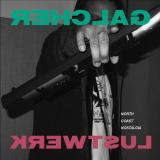
Galcher Lustwerk's 'Vestibule EP' is one of the best of the year if you ask us, (and the remix package by some genuine heavyweights is also worth seeking out). That the leftfield US producer is now back with another outing is literal and metaphorical music to our ears. This one strips away his usual muttered vocals and opens with the stuttering, dubby rhythms of 'North Coast Nostalgia' before 'Cat Video' suspends you in uneasy synths and a skeletal minimal rhythm. 'Thick Description is a deeper, more insular sound for the afters and 'Mock Tudor' is dusty, beautifully imperfect analogue house that is scuffed up and soulful in Lustwerk's signature low-key style.
A Chicago dancefloor gem from the mid 80s by Melodious Myles & Bo! "Odyssey Love" has a lean, melodic house vibe that holds up incredibly well – with insistent beats, a catchy and prominent bass groove, and atmospheric keys floating in and out. It fills out the whole side and it's irresistible the whole way through. The remix that kicks off the other side is pretty great, too, tricking out the keyboards a bit for a more cosmic vibe, but also staying true to feel of the original. The hypnotic, swirling and more experimental "Ebol Yessydo" closes the single nicely.
Breakbeat Paradise Recordings returns with another heavy dose of raw funk and breakbeat pressure in the ever-growing Toxic Funk series – this time bringing together two seasoned groove specialists: The Fritz & Funkanizer. On Toxic Funk Vol. 21 the duo delivers two party-starting cuts packed with vintage breaks, heavyweight basslines and undeniable dancefloor energy.
Opening the A-side, Big Crush rolls in with chunky drums, infectious funk guitars and a soulful groove that feels tailor-made for packed club floors and sweaty late-night sessions. Flipping over to the B-side, Respect 900 turns up the heat with crisp breaks, old-school attitude and a driving funk workout loaded with signature Toxic Funk flavor. Both tracks blend classic funk roots with modern breakbeat production, perfectly capturing the spirit of the series.
With Toxic Funk Vol. 21, The Fritz & Funkanizer continue the tradition of delivering timeless DJ weapons for funk heads, breakbeat lovers and vinyl collectors alike. Another essential 7-inch release from Breakbeat Paradise Recordings, guaranteed to keep the grooves spinning and the dancefloor moving.
Recently hailed by The Guardian as "British techno's great survivor," Nigeria-born, UK-based Ibrahim Alfa Jnr continues with the fine form shown on his recent Infinite Black Inside LP with this first EP on his newly minted label Infinite Black Audio. The music was made after the end of a time of bad health, which means there is a feeling of both relief and reflection here. The nameless tracks are all overtly technological in their DNA - spanned synths warp around mechanical kicks on the opener as detuned jazz keys tumble through the mix. ''Track 2' floats on skittish breakbeats, there's moody downtempo on 'Track 4' melodically-inspired hope on 'Track 6.' An adventurous and rewarding EP.
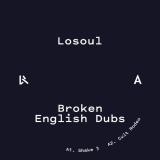
A key architect of European minimal house returns here and it seems that the years have only deepened the German's craft. Following the acclaimed Belongs on the legendary Playhouse label, Losoul's latest for Logistic Records is organic and rich with musical narrative that reveals itself slowly. 'Cult Rodeo' is a deep cut and dubby swinger that teases with crowd noise and 'Shake' then gets more glitchy as sounds pan across the setter field and a jerking rhythm slowly manifests. 'No Jacks Given' swings low and heavy as a freaky vocal injects arresting immediacy and 'Some Pals Were Sleepers' slips into a more foggy and atmospheric minimal dub world. 'The Peek A Boo Scratch' is an abstraction of the afterparty kind and improves with time.