2025 Repress
Clear Vinyl
If we do the unthinkable would it make us look crazy? Probably yes, although we don't really care. Tip top, heartfelt beats with soul by some unknown geezer pressed on clear transparant 12'' vinyl with a silver sleeve. They're bound to sell like hotcakes, don't sleep on it!
out of Stock
Last delivered 33 days ago available to reorder, subject to availability
‘(Listen for) The Rag and Bone Man’ - Reissued and available on vinyl for the first time, was the album that marked the renaissance of the band in 2007, bringing them out of the quietest and most hermetic period of their existence and setting them back on course to establishing themselves as the global, underground phenomenon that they are today.
This new, remastered, edition includes six previously unreleased pieces, written during the same period but not included on the original album.
A work that takes us on a dreamlike journey through dark landscapes coloured by a guitar that brings to mind the trademark sound of their formative years and populated by characters as diverse as the nursery rhyme like ‘A man with a drum’ to William Faulkners ‘Candace’.
The vinyl comes as a gatefold, double album. Also available on CD with booklet including lyrics and photographs. ‘And Also The Trees’ are currently writing their sixteenth studio album and will be performing live in numerous European venues throughout 2025.
out of Stock
Last delivered 13 months ago available to reorder, subject to availability
Limitierte 7" mit zwei superben Remixen zum Debütalbum der Künstlerin Ellen Beth Abdi aus Manchester. Die Kultveteranen von A Certain Ratio verleihen ihrem Remix von "Sad Chord" genau die Dynamik und Energie, die man von ihnen erwartet. Während die aufstrebende Produzentin Paige Kennedy Ellens Debütsingle "Tenterhooks" mit frechen Garage-Grooves neu erfindet.
- "Something of a masterclass." - Louder Than War
- "Sharp lyrical insight with a distinctive sonic identity." - Backseat Mafia
Silum Records proudly presents their latest addition to their discography – Wavetest’s “Directions” EP. Four distinct tracks showcase a range of styles from ambient through disco to acid, all inspired by different directions (“Uffi”: up, “Ahi”: down, “Ihi”: inside, “Ussi”: outside) in Liechtenstein dialect. Stay tuned as Silum continues delivering top-notch records that will keep you wanting more!
out of Stock
Last delivered 8 months ago available to reorder, subject to availability
In Guadeloupe, many people think that jazz and ka music are like a ring and a finger. To some extent, the same could be said about so called Latin music and the music played in the French West Indies.
Both aesthetics were born in the Caribbean and bear so many connections that they can easily be considered cousins. In constant dialogue, there are lots of examples of their fruitful alliance and have been for a while. The English country dance that used to be practiced in European lounges came to be called kadrille in Martinique and contradanza in Cuba. They both featured additional percussion instruments inherited from the transatlantic deportation. Drawing from shared feelings about the same traumatized identity – later to be creolized – it would be hard not to assume that they were meant to inspire each other. The golden age of the orchestras that graced the Pigalle nights during the interwar period further proves the point. As soon as the 1930s, Havana-born Don Barreto naturally mixed danzón and biguine music in a combo based at Melody's Bar. In the following decade, Félix Valvert, a conductor who was born and raised in Basse-Terre in Guadelupe, also worked wonders in Montparnasse with La Coupole, which was an orchestra made up of eclectic musicians. Afro- Caribbean performers of various origins were often hired on rhythm and brass sections in jazz bands, which used to enliven the typical French balls of the capital. In the 1930s and onwards, Rico’s Creole Band was one of them.
Martinican violinist-clarinettist Ernest Léardée, who would become the king of biguine music as well as the main figure of French Uncle Ben's TV commercials (a dark stigma of post-colonial stereotypes), had musicians from the whole Caribbean sphere play at his Bal Blomet – and they all enchanted "ces Zazous-là" (according the words of Léardée's biguine-calypso piece). In les Antilles (French for French West Indies), music history started to speed up in the 1950s, when trade expanded and radio stations grew bigger. The Guadelupean and Martiniquais youth tuned in their old galena radio sets to South American and Caribbean music. As for the women traders, les pacotilleuses, they bought and sold goods across different islands (the "passing of items through various hands" was thought to be most pleasurable) and brought back countless sounds in their luggage. Such was the case of Madame Balthazar, who once returned from Puerto Rico with the first 45rpm and 33rpm to ever enter Martinique.
Out of this adventure was created the famous Martinican label La Maison des Merengues, a music business she opened and undertook with her husband and which proved to be a major landmark. At the end of the 1950s, in Puerto Rico, Marius Cultier competed in the Piano International Contest playing a version of Monk's Round 'Midnight. He won the first prize and this distinction foreshadowed everything that was to come. Cultier, the heretic Monk of jazz, was quickly praised for writing superb melodies, always tinged with a twist that conferred a unique sound to his music. It didn't take long for the gifted self-taught musician to get to play with Los Cubanos, making a name for himself thanks to his impressive maestria on merengues.
The rest is history. Besides, in the late 1950s, Frantz Charles-Denis, born into the upper middle class in Saint-Pierre and better known by his first name Francisco, went back home after working at La Cabane Cubaine – a club located rue Fontaine where he had caught the Latin fever. Francisco's music was therefore heavily marked by his Cuban cousins' influence, which gave the combos he led a specific style and also led to renewal. Things were swinging hard in La Savane, located in the main square in Fort-de-France. He set up the Shango club close by and tested out the biguine lélé there, a new music formula spiced up with Latin rhythms. Soon afterwards, fate had him fly to Puerto Rico and Venezuela.
As for percussionist Henri Guédon (percussions were only a part of his many talents), he was born in Fort-de-France in May 22nd 1944, the day marking the celebration of the abolition of slavery. As an old man, he could remember that in " his father's Teppaz, a lot of hectic 6/8 music was constantly playing...". In the opening lines of his Lettre à Dizzy, a small illustrated collection of writings published by Del Arco, he highlighted the huge impact that cubop had on him as a teenage boy, around 1960. He eventually turned out to be the lider maximo in La Contesta, a big band steeped in Latin jazz. He was also the one who originated the word zouk to describe music which brought the sound of the New York barrio to Paris. It was the culmination of a journey that started in Sainte-Marie: "a mythical place for bélé, the equivalent of Cuban guaguancó". In the early 1960s, the tertiary economy developed to the detriment of agriculture. Yet rural life was where roots music emerged in Martinique and in Guadeloupe.
Record companies played a major part in the process of Latin versions sweeping across the islands – before reaching everywhere else. Producer Célini, boss of the great Aux Ondes label, and Marcel Mavounzy, both the head of Émeraude records - a firm which was founded in 1953 - as well as the brother of famous saxophonist Robert Mavounzy, were big names to bear in mind. Although there were many of them - all of whom are featured on this record - Henri Debs was definitely the major figure in the recording adventure. He proved to be so influential that he even got compared to Berry Gordy. In the mid 1950s, when he acquired his first Teppaz, he worked on his first compositions: a bolero and a chachacha. Then, he became the one man who made people discover Caribbean music, from calypso to merengue. He was among the first ones to rush out to San Juan, Puerto Rico, to buy records and distribute them through a store run by one of his brothers in Fort-de-France. He had members of the Fania All Star come and perform there, which he was madly proud about. He was also the first one to pay attention to Haitian music, such as compas direct and various other rhythms which would soon flood the market. As a result, many of the combos hitting his legendary studio would end up boosted by widespread "Afro-Latin" rhythms. However, he never denied his identity: gwo ka drums were given a major role, although they were instruments which had long been banned from the "official" music spheres. The present selection bears witness to such a creative swarming. Here are fourteen tracks of untimely yet unprecedented cross-fertilization: all types of music rooted in the Creole archipelago have found their way, whatsoever, to the tracklisting. Whether originating from the city or being more rural, they all go back to what Edouard Glissant, in an interview about the place of West Indian music in the Afro-American scope, called "the trace of singing, the one which got erased by slavery." "It is so in jazz, but also in reggae, calypso, biguine, salsa... This trace also manifests through the drums, whether Guadelupean, Dominican, Jamaican or Cuban... None of them being quite the same. They all point to the idea of a trace, seeking it out and connecting to each other through it. This is the hallmark of the African diaspora: its ability to create something new, in relation to itself, out of a trace. It may be the memory of a rhythm, the crafting of a drum, a means of expression which doesn't resort to an old language but to the modalities of it." The opening track features one of the emblematic orchestras of this aesthetic identity, criscrossing many music types from the archipelago. The 1974 Ray Barretto guajira – Ray Barretto was a major New York drummer influenced by Charlie Parker and Chano Pozzo – is magnificently performed by Malavoi, a legendary Fayolais group (i.e from Fort-de-France). Additionally, the compilation ends on a piece by Los Martiniqueños de Francisco. It symbolically closes the circle as it is a genuine potomitan of Martinique culture which also functions as a tireless campaigner for Afro-Caribbean music. Practicing the danmyé rounds (a kind of capoeiria) to the rhythm of the bèlè drum, it delivers a terrific Caterete, a kind of champeta of Afro- Colombian obedience which was originally composed by Colombian Fabián Ramón Veloz Fernández for the group Wgenda Kenya. The icing on the cake is Brazilian Marku Ribas, who found refuge in Martinique in the early 1970s, bringing his singing to the last trance-inducing track. These two "versions" convey the whole tone of a selection composed of rarities and classics of the tropicalized genre, swarming with tonic accents and convoluted rhythms. It is the sort of cocktail that the West Indians never failed to spice up with their own ingredients. For instance, the Los Caraïbes cover of Dónde, a famous Cuban theme composed by producer Ernesto Duarte Brito, has a typical violin and features renowned Martinique singer Joby Valente and his piquant voice.
The track used to be – or so we think – their only existing 45rpm. The meaningful Amor en chachachá by L'Ensemble Tropicana, a band which included Haitian musicians among whom was composer and leader Michel Desgrotte, also recalls how Latin music was pervasive in the tropics in the mid-1960s. They were the ones keeping people dancing at Le Cocoteraie in Guadelupe and La Bananeraie in Martinique. Around the same time, another "foreign" band, Congolese Freddy Mars N'Kounkou's Ryco Jazz, achieved some success on both islands by covering Latin jazz classics – such as their adaptation of Wachi Wara, a "soul sauce" by Dizzy Gillespie and Chano Pozo whose interweaving of strings and percussions can have anyone hit the dancefloor. How can you resist Dap Pinian indeed, a powerful guaguancó by Eugene Balthazar, performed by the Tropicana Orchestra and published by the Martinique-founded La Maison des Merengues? It also acts as a symbol of the maelstrom at work. Going by the name Paco et L'orchestre Cachunga, Roger Jaffory used to play guaguancó too: his Fania-inspired Oye mi consejo is one example of his style. Baila!!!!! Dancing was also one of the Kings' focus points. Oriza is a Puerto Rican bomba and a "classic" originally composed by Nuevayorquino trumpeter Ernie Agosto, which reserves major space for brasses, giving it a special sheen.
Emerging from the New York barrios crucible was also La Perfecta, a Martinique group originating from Trinidad, whose name directly references the totemic Eddie Palmieri figure as well as his own band, also called La Perfecta. Here they borrow Toumbadora from Colombian producer and composer Efraín Lancheros and interpret it by emphasizing percussions, which set fire to the track even more than the wind instruments. The same goes for Martinique's Super Jaguars, who use Tatalibaba – a composition by Cuban guitarist Florencio "Picolo" Santana which was made famous by Celia Cruz & La Sonora Matencera – as a pretext for sending their cadences into a frenzy. In a more typically salsa vein, the Super Combo, a famous Guadelupean orchestra from Pointe-Noire that was formed around the Desplan family and had Roger Plonquitte and Elie Bianay on board, adapt Serana, a theme by Roberto Angleró Pepín, a Puerto Rican composer, singer and musician also known for his song Soy Boricua. Here again, their vision comes close to surpassing the original. In the 1970s, L'Ensemble Abricot provided a handful of tracks of different syles, hence reaching the pinnacle of the art of achieving variety and giving pleasure. They played boleros, biguines, compas direct, guaguancó and even a good old boogaloo - the type they wanted to keep close to their hearts for ever, "pour toujours", as they sang along together in one of their songs. Léon Bertide's Martinican ensemble excelled at the boogaloo which had been composed by Puerto Rican saxophonist Hector Santos for the legendary El Gran Combo.
Three years later, in 1972, Henri Guédon, with the help of Paul Rosine on the vibraphone, tackled the Bilongo made famous by Eddie Palmieri. Such a classic!!!!! And so were the Aiglons, the band from Guadelupe: choosing to execute Pensando en tí, a composition by Dominican Aniceto Batista, on a cooler tempo than the original, they noticeably used a wonderfully (un)tuned keyboard in place of the accordion. On the high-value collectible single – the first one released by Les Aiglons under the Duli Disc label – there is a sticker classifying the track under the generic name "Afro". Now that is what we call a symbol. Jacques Denis
out of Stock
Last delivered 6 months ago available to reorder, subject to availability
Balearic sounds and Mediterranean warmth are the inspirations for Bruno Belissimo’s Bordello A Parigi debut. Drawing on disco, house and funk, Ottimo! is a four tracker of electronic exuberance with Belissimo’s musical ability and range immediately spilling from the speakers. Guitar strings curve around synthlines in the title piece, percussive textures giving way to the mantra-like refrain of “Ottimo!” Thick bass echoes into beaming keys for “Meduse.” Bright notes cascade, grooves melting with vocoder lyrics as classic disco tones are reimagined in this modern mirrorball medley. Organic rhythms introduce the flip. “Mirage” opens to ripples of bongos and toms as a loose structure takes hold. Hedonistic chants rise to a shimmering chord, kicks and snares funnelling the building energy as bold blasts and samples shriek with delight. “Las Piramides De Ibiza” brings the quartet to a close. Clean drum patterns support joyous notes, a machine dipped voice calling time.
out of Stock
Last delivered 7 months ago available to reorder, subject to availability
Seeking overlooked beauty and prizing reflection in a distracted world, Hammock creates cinematic music for the road less traveled. In stirring works of shimmering post-rock ambience that swell with hope and melancholic nostalgia, the Nashville-based duo of Marc Byrd and Andrew Thompson immerse listeners in living visions of moments long past, animating life's fond remembrances and scarring losses with gentle lens-flare harmonics, heart-surging neoclassical drama, and pensive silence. A direct challenge to the passive existence of modern life, where everything can be experienced but precious little is felt, Hammock demands, and richly rewards, patience and contemplation. One of Hammock's career defining works, the Mysterium, Universalis, and Silencia trilogy came to a close in 2019. The first chapter, Mysterium, was written following the death of Byrd's 20-year-old nephew and dealt with incomprehensible, shattering loss. Difficult understanding came on Universalis, and an altered reality understood through quiet reflection took hold on Silencia. Emerging from the silence, a period that brought with it the global pandemic of Covid-19 that has kept loved ones apart, conscripted months upon months of isolation, and roused directionless longing for escape, Hammock presents Elsewhere. Recorded by Byrd and Thompson at their homes, apart and with minimal equipment, Elsewhere serves as a gateway to another place, materializes feelings of separation and loss without closure, and calls listeners back to live their lives - not spend them longing to be something or somewhere else. - Wyatt Marshal
out of Stock
Last delivered 13 months ago available to reorder, subject to availability
I was aware of Submerse from a long time ago, mainly for when he was making hip-hop & footwork tunes but I had noticed that a few years ago, on his SoundCloud page, he was uploading jungle tunes that he had started making, which got me interested in keeping tabs on what he was doing.
But it wasn't until I met him in Tokyo where he's based, when I played after him at an event at Circus (venue in Osaka & Tokyo) and then met up with him again later on that week that I realised how much he had been making.
He sent me some of the stuff he'd been doing that wasn't available publicly yet and I was really impressed by how strong the melodies were and how much influence from video game soundtracks he had in his tunes, I knew I had to get him on Future Retro London for a release.
Big up to Submerse for allowing me to put out this EP of his on Future Retro London, look out for more music from him to come on Future Retro London and other labels!
out of Stock
Last delivered 13 months ago available to reorder, subject to availability
Neo funk rising star Buscrates aims high with Blasting Off, his first full-length album. The Pittsburgh-based keyboard cosmonaut has been grabbing ears since his days hooking up beats with the hip hop crew East Liberty Quarters, but after slinging spicy one-offs to a slew of hot labels like Omega Supreme, Voyage Funktastique and Razor N Tape (as well as contributing production to Wiz Khalifa and Curren$y's 2009 project), the time has come for a full-length featuring his growing modern funk repertoire.
"I'm a '90s hip hop dude, but I grew up on that '80s funk stuff," Buscrates acknowledges. DJ gigs provided a working knowledge of the jams that moved a contemporary crowd, and as his collection of keyboards and drum machines grew he began blending the best of both decades with his personal futuristic edge. "I was nice on the MPC but I wanted to have a little more dynamic range with what I was doing," he notes. The self-described "certified synth geek" was soon branching into sounds that recalled '80s legend Kashif crossed with the hip hop bounce of DJ Spinna, and the modern funk community took notice.
For his first full-length, Buscrates has crewed up with an ace team of collaborators, featuring vocalist Sally Green on the bouncy lead single "Lost And Found" and "Eight Nine." Kate Moe Dee takes over mic duties for the second single, "How Ya Gonna Do It," a slinky groove that slides in place alongside groups like the Sunburst Band and Rene & Angela as an exemplar of sophisticated R&B. Adding to those credentials are the sultry vocals of Anda on "Believe," but of course, it wouldn't be a Buscrates set without some stank, neck-snapping instrumentals. "Five Days" and "Sure Shot," both collabos with the drum technician DJ Epik, will rattle speakers and have already been lighting up message boards on recent Buscrates DJ sets. Round things out with some easy gliding, jazzy funk ("Turn It Out" with Brothermartino on flute and "Evergreen" featuring Tony Ozier) and you've got all the ingredients for a high-flying cosmic ride with Buscrates at the controls.
out of Stock
Last delivered 11 months ago available to reorder, subject to availability
Hätt ich dich heut erwartet, hätt ich Tür zu gemacht - Wenn alle Stricke reißen, macht"s wie Theilen: Niederbrennen Weitermachen Was nach DIY klingt, soll auch DIY sein. Die Punkband vom Niederrhein, deren Mit- und Ohneglieder ganz konstruktiv aus Düsseldorf UND Köln kommen, präsentieren in gewohnt destruktiver Manier ihr Debüt-Album Niederbrennen Weitermachen. Die Texte sind deutsch, das Weltuntergangsgefühl kennt keine Ländergrenzen. Aufgenommen und abgemischt wurde das Ganze im Sommer 2024 von Hütte (Fantom Studio Ost) in Hannover, der Stadt mit dem gewissen Nichts. Das Mastering übernahm Marvin vom Tide Studio in London. Auf der Platte geht es meist politisch zu, beispielsweise in der Debüt-Single Hadamar, die von der NS-Tötungsanstalt im gleichnamigen Ort handelt, oder der Fuck-Fast-Fashion-Hymne Rana Plaza. In Dorfmatratze wird gegen die Doppelmoral heteronormativer Vorstellungen davon angebrüllt, wer mit vielen Menschen schlafen darf und wer nicht (Spoiler: Frauen*), und worum es bei Kein Freund Kein Helfer geht, kann sich wohl jede/r vorstellen. Dass der Humor trotz allem noch nicht ganz verloren ist, zeigen Songs wie Autobahnkirche, Tür zu oder Brautstrauß. Ein veganes 8-Bit-Sahnehäubchen wurde auch versteckt, und zwar in Form eines "Tür zu"-Remixes von the one and only Kem Trail. Bei Bike Punx darf sogar gute Laune aufkommen, aber bitte nur kurz. Wer Bock auf eingängigen Punk mit ein bisschen Schnörkeln und Emo-Vibes hat, der ist bei Theilen richtig abgebogen.
Connection is the new ten song LP from Los Angeles powerhouse Orgone featuring collaborations with Cyril Neville, Kelly Finnigan, Pimps of Joytime, and more. The album is the inaugural release on 3 Palm Records, distributed by Colemine Records and Secretly Distribution. A spiritual follow up to fan favorite Bacano, Connection is gritty, lean, and tight soul and funk at its best. It explores the invisible threads that bind us all, spiritually, emotionally, and artistically. Much like the collage that adorns the cover, this hard hitting collection of songs illuminates the essence of Orgone: a musical pastiche of different vocalists, heavy riffs, vintage production, and a core rhythm section that never disappoints. The synergy created in these songs demonstrates that the whole is truly greater than the sum of all the individual parts and players.
"Kein Hinterfragen, kein Überdenken. Ich möchte mein Leben so leben, dass ich die Dinge tue, die mir wichtig sind, und ich denke, dass jeder so leben sollte", sagt Mei Semones über ihr gestärktes Selbstvertrauen. Die 24-jährige Songwriterin und Gitarristin aus Brooklyn hat sich durch die kontinuierliche Verfeinerung ihrer unverwechselbaren Mischung aus Indierock, Bossa Nova, Jazz und Kammerpop, die ihre technischen Fähigkeiten auf der Gitarre unterstreicht, schnell als innovative musikalische Kraft etabliert. Seit der Veröffentlichung ihrer hochgelobten "Kabutomushi"-EP im Jahr 2024, einer Reihe von üppig instrumentierten Reflexionen über die Liebe in ihren vielen Phasen, ist Mei ausgiebig durch die USA getourt, hat sich dort eine treue Fangemeinde aufgebaut und ihr mit Spannung erwartetes Debütalbum "Animaru" geschrieben und aufgenommen. Animaru bedeutet ,Tier' auf Japanisch und ist die Verkörperung von Meis tieferem Vertrauen in ihre Instinkte - eine Sammlung von musikalisch beeindruckenden Tracks, die Mei abenteuerlicher, verletzlicher und selbstbewusster klingen lassen als je zuvor. Meis neues Selbstbewusstsein ist zum Teil auf die Erfahrungen des vergangenen Jahres zurückzuführen, denn 2024 war ein Jahr der Veränderung für die Band Mei Semones. Sie traten unter anderem mit Liana Flores, Elephant Gym und Kara Jackson auf, und Mei ging dazu über, Vollzeit Musik zu machen. Inmitten der häufigen Tourneen nahmen Mei und ihre fünfköpfige Band das Album im Sommer 2024 in der Ashlawn Recording Company auf, einem Farmstudio in Connecticut, das von ihrem Freund Charles Dahlke betrieben wird. Zu diesen Sessions brachte sie eine Reihe von Stücken mit, die, nicht anders als Kabutomushi, raffinierte Erklärungen einer nicht-romantischen Liebe sind: Liebe zum Leben ("Dumb Feeling"), Liebe zur Familie ("Zarigani"), Liebe zur Musik und zu ihrer Gitarre ("Tora Moyo"). Animaru veranschaulicht Meis bezaubernde Bandbreite als Songwriterin und Musikerin und enthält einige der anspruchsvollsten und einfachsten Lieder, die Mei je geschrieben hat. Die schlichteren Momente auf Animaru sind ebenso fesselnd wie wenn Mei auf der Gitarre schreddert oder ihre Bandkollegen ein kompliziertes Arrangement ausführen. "Donguri", eine reduzierte Jazz-Duo-Performance zwischen Akustikgitarre und Kontrabass, ist der einfachste Song, den Mei je geschrieben hat. Er wird von Mei zum Leben erweckt, indem sie auf süße Weise (meist auf Japanisch) beschreibt, wie sie sich das Leben als Waldbewohner vorstellt. Das vorletzte Stück des Albums, das helle, spritzige "Zarigani", ist eine nostalgische Liebeserklärung an ihre Zwillingsschwester, in der Mei singt: "We'll always have each other / I love you like my guitar / I love you like no other". Obwohl "Animaru" ein Statement für Meis Autonomie und Selbstvertrauen an diesem Punkt in ihrem Leben ist, sind es die verschiedenen Lieben, mit denen sie sich umgibt - ihre Familie, ihre Freunde, ihre Band, ihre Musik - die sie dazu befähigen, Dinge zu tun, die sie sich wünscht.
Two years after Jazz N Palms served up his sumptuous Ses Rodes album, the Ibiza-based Italian is back with a series of 'Revisades', which means reviews in local language. Each track on this double 12" takes the original instrumentals into fresh realms with new mixes, new drum arrangements and the recovery of old takes not used on the original album.
The Jazz N Palms label and producer is Riccio, an artist who makes lush jazz-fusion, jazz dance, Balearic and downtempo instrumental music. Ses Rodes was inspired by the quiet, organic, slower side of Ibiza. It was written with young, talented local musicians, Riccio met at a jazz night at the famous Pikes hotel, and the record harks back to the island's beautiful natural charms that have been captivating visitors for hundreds of years. ‘They didn't ask me, but I did it anyway,’ he says of these magical new Revisades.
The reworks kick off with a smooth but busy broken beat rework of 'Manana', which is doused in romantic chords. 'Mediodia' becomes a jazz-funk gem, 'Tarde' picks up the pace with silky disco licks and 'Noche' glows warm with dreamy pads and soft focus vibraphone. The gentle grooves of 'Mar' are led by a sexy sax line and intimate interplay between funky bass and jazzy keys, 'Playa' is loved-up, sun-down bliss, 'Bosque' is an irresistible invitation to dance and 'Cielo' is a rich tapestry of horns, keys and percussive patter to soothe the soul.
With its deeper textures and looser grooves, Ses Rodes (Revisades) is a love letter to Ibiza’s slower side and healing spirits.
out of Stock
Last delivered 3 months ago available to reorder, subject to availability
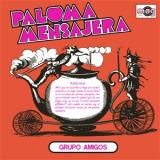
"Paloma mensajera" (featuring members of New Juggler Sound / Laghonia) shows the shift that was taking place within Peruvian rock away from psych and hard rock which had predominated during the early 70s. The style adopted by Grupo Amigos (and other bands and artists during this period) highlights the influence of soft rock, UK, US and Latin American folk rock and, above all, the desire to keep the melodic greatness of The Beatles alive. This reissue includes bonus tracks and extensive liner notes. DESCRIPTION "Paloma mensajera" (featuring members of New Juggler Sound / Laghonia) shows the shift that was taking place within Peruvian rock away from psych and hard rock which had predominated during the early 70s. The style adopted by Grupo Amigos (and other bands and artists during this period) highlights the influence of soft rock, UK, US and Latin American folk rock and, above all, the desire to keep the melodic greatness of The Beatles alive. The positive reception albums by artists such as We All Together, Telegraph Avenue and Zulu garnered between 1972 and 1975, marked a change of paradigm and in preferences within the Peruvian rock scene. Eclecticism gained new ground, to the detriment of the sectarian and orthodox, while melody grew more present and visible, moving away from the progressive experimentation that typified underground Peruvian rock up to the beginning of the 70s. For their first single on MAG, included on this reissue, the band adopted a formula in which Beatles harmonies converged symmetrically with folk motifs. 'Dirty Girl' was a hit on the radio. A full album followed but only a fairly small number of copies of the album were pressed, which seems to have been the main reason for omitting it from the historical accounts of Peruvian rock music from the late 90s onwards. In "Paloma mensajera" all compositions were penned by the group, after several years during which cover versions were a staple. Some of the musical resources that the band had at their disposal in terms of composition and arrangements are striking and even surprising, considering that they were a debut band, whose members were under the age of 20. The arrangements included the clever use of a Moog synthesizer which had just arrived at the MAG studio. The success achieved by the Beatles tribute performances played by the members of Grupo Amigos for decades have eclipsed the songs that Edmundo, Andrés Da Ros and Simón Ames composed with youthful enthusiasm and energy between 1972 and 1973 to the point where they have almost been forgotten. This re-release of "Paloma mensajera" should help rectify this major injustice. It includes bonus tracks and extensive liner notes.
Ronan - die Jubiläumsausgabe zur Feier des 25 Jährigen Jubiläums des gleichnamigen Debütalbums von
Ronan Keating. Das Album enthält zusätzlich zum ursprünglichem Album noch 15 weitere Songs und auch
Ronans Auftritt in der Royal Albert Hall aus dem Jahr 2000 und das zum allerersten Mal auf einer 2LP
Colour Vinyl! Außerdem ist das Album auch als 2CD erhältlich.
Ken Jacobs, an essential figure of avant-garde cinema, developed the »Nervous Magic Lantern« in the 1960s — a self-made apparatus containing a spinning shutter, a light source, and lenses set in a wooden frame. Hand-painted circular slides, gently moved by hand, produce flickering imagery: geometric patterns, Rorschach-like inkblots, and three-dimensional forms that seem to float beyond the screen. These hallucinatory visions challenge perception and suggest what Jacobs once called »a whole new play of appearances«.
Unlike Jacobs’ politically charged works, the »Nervous Magic Lantern« is patently abstract, examining how the brain regulates perception. For these performances, Jacobs requested »sounds of daily life« — environmental recordings that anchor the phantasmagoria in reality. Field tapes of Chinatown streets, conversations, and other uncategorisable sounds became the material for Aki Onda’s sonic compositions, adding narrative resonance to the abstract visuals and creating an almost documentary dimension.
This album documents a performance of »Nervous Magic Lantern« at Spiral Hall, organised by Sound Live Tokyo on November 3, 2015. Jacobs’ selection and sequencing of slides offered improvisatory space, mirrored by Onda’s flexible arrangement of cassette recordings. The result is a work where life and art dissolve into one another — a soundtrack for life in the depth of illusion.
Music by Aki Onda Cassette field recordings by Ken Jacobs
As with The Limiñanas, rock is here an affair of the heart. Between new wave pleasures, psychedelic sensibilities and nods to the great sixties icons, Her Wild Love maintains the passion, without ever curbing the love of risk. Faithful to its intuitions, the duo refines the contours of a singular style. From Sarah's words to Rafael's notes, the pieces embroidered by Her Wild Love find their own balance. Crossed by cinematographic atmospheres and melancholic effluences, their music evokes the black magic of Mazzy Star, the incantations of PJ Harvey, but also the audacity of a band like Warpaint.
Welcome to the first instalment of a new collaboration between The Reflex’ DISCOLIDAYS label and Because Music in Paris, remixing gems from the Zagora catalogue.
Created in 1975 by producer Daniel Vangarde (father of Daft Punk’s Thomas Bangalter), the Zagora label created some of the most exciting disco music in France, ranging from cult underground artists Who’s Who and Starbow, to massive international hits by the Gibson Brothers, la Compagnie Créole and Black Blood. Unearthing the multitrack for obscure cuts, The Reflex shifts the focus on the great studio musicians involved in these recordings (Wally Badarou amongst others) and delivers stunning revisions of ‘Harlem Bound’, a
131bpm jazz-funk disco powerhouse cut (1977) and ‘Dancin’ The Mambo’, a 122bpm Chic-esque meets early piano House monster laced with that unmistakable French sound, originally released in 1980.
Both first time-ever remixes from the stems, released on 180g vinyl with custom artwork on card sleeve designed by Al Kent / Million Dollar Disco.
Three more releases will follow, to complete the 4 x 12” vinyl and digital package spread over several months in 2024.
out of Stock
Last delivered 7 months ago available to reorder, subject to availability
Anushka's third album Ancestry comes out on BBE Music as both digital and vinyl and represents a massive hitting of the duo's potential as songwriters, musicians and performers following their well received and critically acclaimed previous releases on Brownswood and Tru Thoughts respectively. Indeed Ancestry represents their best album to date and one which befits a release on one of the UK's (and the world's) premiere independent record labels. Anushka is the collaborative name for Victoria Port and Max Wheeler. The duo first met in the vibrant club, music and arts scenes in that creativity incubating south coast town that is Brighton.
With their first single, Yes Guess, gaining support from major broadcast influencers such as Gilles Peterson they released their debut album, Broken Circuit, in 2014. With major airplay support from Mary Anne Hobbs, Annie Mac, the aforementioned Gilles Peterson and others the second album Yemaya was released in 2021. On this second record they experimented with their sound, exploring darker and more complex songs and palettes. Both albums forged Anushka's sound and production values, combining a deep respect for the UK's electronic club culture mixed with Jazz and Soul. Now, with the release of Ancestry on BBE Music, the duo has created an album that furthers their sound, their songwriting, their arrangements and their production. Victoria's songwriting for Ancestry is influenced by her love of Ella Fitzgerald, Sampha, Jimmy Cliff and Georgia Anne Muldrow.
Max's approach to the production on Ancestry is driven by his own ancestral back catalogue of music from Moodymann and Theo Parrish and further back to Larry Heard, Wu Tang Clan and the 90's electronica of Tricky, Portishead and David Holmes. It definitely bears repeating that list of influences has resulted in Ancestry being Anushka's best album yet. Releasing on BBE Music, on both digital and vinyl formats, Ancestry is an album that is a must for lovers of the highly innovative, jazz and soul fuelled club sound that is part of the UK's contemporary music scene.
In an ever-expanding musical universe, Azymuth have long existed as a celestial giant, drawing countless artists, musicians and followers into their orbit. Marking fifty years since their 1975 debut album Azimuth, their new album Marca Passo proves that the band’s alchemic brew of Brazilian jazz-funk and cosmic samba soul remains as vital as ever, as the group honours the profound legacy of their departed founders.
Recorded in Rio de Janeiro, Marca Passo is the first full-length release since the passing of founding drummer Ivan "Mamão" Conti in 2023, following the earlier loss of keyboardist José Roberto Bertrami in 2012. Alex Malheiros, the sole remaining original member, sees his stewardship of the band’s musical legacy as his spiritual duty. He is joined by the equally devoted Kiko Continentino (Milton Nascimento, Djavan) on keyboards, who has been with the group since 2016, and new recruit Renato Massa (Marcos Valle, Ed Motta) on drums.
Yet since their earliest recorded music, Azymuth have always been far greater than the sum of their parts. The "three-man orchestra’s" unmistakable sound is rooted in Brazil's MPB studio scene of the 1970s and early 1980s—a time when artists blended traditional Brazilian rhythms with global jazz, rock, and emerging psychedelic and progressive elements. Marca Passo continues this legacy, seamlessly fusing Brazilian musical traditions with global influences while showcasing the exceptional musicianship that powers Azymuth's distinctive, multi-dimensional sound.
The album is produced by studio mastermind Daniel Maunick, responsible for Azymuth’s two previous studio albums, Fênix in 2016 and Aurora in 2011. Daniel’s credits also include albums by Marcos Valle, Sabrina Malheiros and Terry Callier. Azymuth also invited Daniel’s father, British jazz-funk royalty Jean Paul “Bluey” Maunick, of Incognito, to play guitar on a new version of Azymuth’s eighties classic “Last Summer In Rio”, in tribute to the song’s composer, José Roberto Bertrami. Equally, “Samba Pro Mamao” is a new composition dedicated to Azymuth’s beloved original drummer, Ivan “Mamão” Conti.
Produced, Engineered, Mixed & Arranged by Daniel Maunick
Co-Produced & Arranged by Alex Malheiros
Executive Producer: Joe Davis
Recorded by:
Daniel Maunick & Leonardo Vieira @ Estúdio Nos Trilhos, Santa Teresa, Rio, Brazil
Daniel Maunick & Amadeu Signorelli @ Sigstudio, Niterói, Rio, Brazil
Daniel Maunick & Alex Malheiros @ Estúdio Basslab, Piratininga, Rio, Brazil
Mixed by Daniel Maunick @ The Sugar Shack, Carluke, Scotland
Artwork & Design: Tyler Askew
out of Stock
Last delivered 11 months ago available to reorder, subject to availability
*2025 RE-PRINT - Originally issued in 2013 ** ** No advertisements **
Wax Poetics takes you on a voyage through the music cosmos — from disco’s heyday to the underground scenes that gave birth to house, techno, and hip-hop.
We explore the rise, fall, and rebirth of disco, the backlash that tried to bury it, and the resilient Black and queer communities who kept the scene alive. From Nile Rodgers and Gino Soccio to De La Soul, Slum Village, J Dilla, and Teddy Riley’s genre-blurring New Jack Swing — this issue maps the interstellar lineage of dance music.
Das von Kritiker:innen gefeierte niederländische Elektronik-Duo, Weval (bestehend aus Harm Coolen und Merijn Scholte Albers) ist mit seinem lang erwarteten neuen Album, „CHOROPHOBIA“, auf dem Ninja Tune-Sublabel Technicolour zurück!
Als es darum ging, ihr viertes Album, „CHOROPHOBIA“, zu produzieren, stellten sich Weval ihren Ängsten. Obwohl Harm Coolen und Merijn Scholte Albers seit ihrer 2013 veröffentlichten Debüt-EP, „Half Age“, in der Dance-Szene verankert sind und mit ihrer fünfköpfigen Band Festivalbühnen wie Nuits Sonores, Lowlands, Primavera, Best Kept Secret, Pukkelpop und DGTL Amsterdam bespielten, haben sie sich aktiv davon entfernt, als Floorfiller-Act bekannt zu sein. Doch als die beiden vor kurzem über den Begriff Chorophobie stolperten - was so viel bedeutet wie Angst vor dem Tanzen -, beschlossen sie, sich der Ironie hinzugeben und aus ihrer Komfortzone herauszukommen. „Bis zu diesem Zeitpunkt hatten wir immer mit einer ‚Zuhör‘-Mentalität an unseren Platten gearbeitet.“, sagt Harm über die Herangehensweise beim zweiten und dritten Weval-Album („The Weight“ von 2019 und „Remember“ von 2023), „und uns wurde klar, dass wir während unserer gesamten Reise als Produzenten Angst davor hatten, Tanzmusik zu machen.“.
Der Sprung ins kalte Wasser hat zu Wevals bisher extrovertiertesten Tracks geführt. Während sie diese neue Richtung bereits mit der groovigeren „Night Versions“-EP von 2024 für Technicolour angedeutet hatten, erforderte das Loslassen ihrer Hemmungen eine geduldige künstlerische Entwicklung. „Wir wollten uns auf eine Art und Weise engagieren, die sich noch immer befreiend und wahrhaftig anfühlt.“, erklärt Harm und fügt hinzu, dass die Bezeichnung als Dance-Album sich nicht nur wie eine Kehrtwende anfühlt, sondern sie auch von den Grenzen und Klischees bestimmter Kategorien befreit.
"Cutthroat ist eine wilde Fahrt. Es ist für den unerfahrenen Fahrer. Für denjenigen, der einfach nur schnell fahren will, ohne einen anderen Grund als den, dass es Spaß macht. Es wird von Hunger angetrieben. Hunger nach etwas Besserem. Nach etwas, von dem man einem gesagt hat, dass man es nicht verdient. Es ist instinktiv. Es ist roh. Es ist kompromisslos. Es ist die Person, die unangekündigt auf der Party auftaucht. Denn wenn du am Boden liegst, gibt es nur einen Weg - nach oben. Wenn du nichts hast, hast du nichts zu verlieren." - shame "Cutthroat" ist shame in seiner besten Form. Das neue Album mit Grammy-Preisträger John Congleton am Ruder ist unerbittlich, aufgemotzt und überladen. Es ist genau da, wo man shame haben möchte. "It's about the cowards, the cunts, the hypocrites", sagt Sänger Charlie Steen und ergänzt: "Seien wir ehrlich, von denen gibt es im Moment eine Menge." Die fünf Freunde aus Kindertagen - Charlie Steen, die Gitarristen Sean Coyle-Smith und Eddie Green, Bassist Josh Finerty und Schlagzeuger Charlie Forbes - sind noch in ihren Zwanzigern und haben shame exponentiell wachsen lassen, mit ehrgeizigen klanglichen Ideen und den technischen Möglichkeiten, sie umzusetzen. shame haben sich mit ihren legendären Liveshows und drei von der Kritik gefeierten Alben bereits mehrfach bewährt und waren bereit, mit "Cutthroat" ein neues Ground Zero zu schaffen. "Hier geht es darum, wer wir sind", sagt Steen. "Unsere Live-Shows sind keine Performance-Kunst - sie sind direkt, konfrontativ und roh. Das war schon immer der Kern von uns. Wir leben in verrückten Zeiten. Aber es geht nicht um 'Armes Ich'. Es geht um 'Fick dich'." Entscheidend für diese aufrüttelnde neue Sichtweise war Produzent John Congleton (St. Vincent, Angel Olsen). Von ihrem ersten Treffen an wurde Congletons "No-Bullshit"-Herangehensweise zu einer treibenden Kraft, um die Ideen der Band zu optimieren. Das Album ist durch und durch von shames typischen Sinn für Humor geprägt und nimmt sich der großen Themen unserer Zeit an und spielt fröhlich mit ihnen. Mit Trump im Weißen Haus und shame in den Salvation Studios in Brighton, werfen sie einen gnadenlosen Blick auf Themen wie Konflikte und Korruption, Hunger und Begehren, Lust, Neid und den allgegenwärtigen Schatten der Feigheit. Auch musikalisch spielt die Platte mit neuen Ideen, die ins Herz gehen. Coyle-Smith, der auf Tournee zum Spaß elektronische Musik macht, hatte die Loops, die er herstellte, zuvor als etwas anderes betrachtet als das, was er für shame schrieb. Dann wurde ihm klar, dass sie das vielleicht gar nicht sein müssen. "Diesmal konnte man alles verwenden, wenn es gut klang und man es richtig machte", sagt er. Die erste Single und der Titeltrack von "Cutthroat" greifen diese Idee auf und machen daraus den vielleicht besten Song, den shame je auf Band gebracht haben. Es ist ein Knäuel kaum zu bändigender Attitüde, verpackt in drei Minuten Indie-Dancefloor-Hedonismus. Er führt auch meisterhaft in die lyrische Perspektive des Albums ein: eine, in der selbstsichere Arroganz und tiefe Unsicherheit zwei Seiten der gleichen Medaille sind. "Ich habe viele Stücke von Oscar Wilde gelesen, in denen sich alles um Paradoxe dreht", erklärt Steen. "In 'Cutthroat' geht es um diese ganze Idee aus 'Lady Windermere's Fan': 'Das Leben ist viel zu wichtig, um ernst genommen zu werden'." Auch diese freche Selbsterkenntnis ist wichtig. So sehr shame die Seifenblasen des Getöses und des Egos zerplatzen lassen wollen und uns ermutigen, in den Spiegel zu schauen und uns zu fragen: "Wer den ersten Stein wirft...", so sehr verstehen sie auch, dass das Leben im Grunde genommen oft lächerlich ist. Das Ergebnis ist ein Album, das in den Idiosynkrasien des Lebens schwelgt, eine Augenbraue hochzieht und die unangenehmen Fragen stellt, die so oft taktvoll übergangen werden. Aber die einzige Antwort, die "Cutthroat" mit durchschlagendem Erfolg gibt, ist, dass shame im Moment nie besser klangen.
"Cutthroat ist eine wilde Fahrt. Es ist für den unerfahrenen Fahrer. Für denjenigen, der einfach nur schnell fahren will, ohne einen anderen Grund als den, dass es Spaß macht. Es wird von Hunger angetrieben. Hunger nach etwas Besserem. Nach etwas, von dem man einem gesagt hat, dass man es nicht verdient. Es ist instinktiv. Es ist roh. Es ist kompromisslos. Es ist die Person, die unangekündigt auf der Party auftaucht. Denn wenn du am Boden liegst, gibt es nur einen Weg - nach oben. Wenn du nichts hast, hast du nichts zu verlieren." - shame "Cutthroat" ist shame in seiner besten Form. Das neue Album mit Grammy-Preisträger John Congleton am Ruder ist unerbittlich, aufgemotzt und überladen. Es ist genau da, wo man shame haben möchte. "It's about the cowards, the cunts, the hypocrites", sagt Sänger Charlie Steen und ergänzt: "Seien wir ehrlich, von denen gibt es im Moment eine Menge." Die fünf Freunde aus Kindertagen - Charlie Steen, die Gitarristen Sean Coyle-Smith und Eddie Green, Bassist Josh Finerty und Schlagzeuger Charlie Forbes - sind noch in ihren Zwanzigern und haben shame exponentiell wachsen lassen, mit ehrgeizigen klanglichen Ideen und den technischen Möglichkeiten, sie umzusetzen. shame haben sich mit ihren legendären Liveshows und drei von der Kritik gefeierten Alben bereits mehrfach bewährt und waren bereit, mit "Cutthroat" ein neues Ground Zero zu schaffen. "Hier geht es darum, wer wir sind", sagt Steen. "Unsere Live-Shows sind keine Performance-Kunst - sie sind direkt, konfrontativ und roh. Das war schon immer der Kern von uns. Wir leben in verrückten Zeiten. Aber es geht nicht um 'Armes Ich'. Es geht um 'Fick dich'." Entscheidend für diese aufrüttelnde neue Sichtweise war Produzent John Congleton (St. Vincent, Angel Olsen). Von ihrem ersten Treffen an wurde Congletons "No-Bullshit"-Herangehensweise zu einer treibenden Kraft, um die Ideen der Band zu optimieren. Das Album ist durch und durch von shames typischen Sinn für Humor geprägt und nimmt sich der großen Themen unserer Zeit an und spielt fröhlich mit ihnen. Mit Trump im Weißen Haus und shame in den Salvation Studios in Brighton, werfen sie einen gnadenlosen Blick auf Themen wie Konflikte und Korruption, Hunger und Begehren, Lust, Neid und den allgegenwärtigen Schatten der Feigheit. Auch musikalisch spielt die Platte mit neuen Ideen, die ins Herz gehen. Coyle-Smith, der auf Tournee zum Spaß elektronische Musik macht, hatte die Loops, die er herstellte, zuvor als etwas anderes betrachtet als das, was er für shame schrieb. Dann wurde ihm klar, dass sie das vielleicht gar nicht sein müssen. "Diesmal konnte man alles verwenden, wenn es gut klang und man es richtig machte", sagt er. Die erste Single und der Titeltrack von "Cutthroat" greifen diese Idee auf und machen daraus den vielleicht besten Song, den shame je auf Band gebracht haben. Es ist ein Knäuel kaum zu bändigender Attitüde, verpackt in drei Minuten Indie-Dancefloor-Hedonismus. Er führt auch meisterhaft in die lyrische Perspektive des Albums ein: eine, in der selbstsichere Arroganz und tiefe Unsicherheit zwei Seiten der gleichen Medaille sind. "Ich habe viele Stücke von Oscar Wilde gelesen, in denen sich alles um Paradoxe dreht", erklärt Steen. "In 'Cutthroat' geht es um diese ganze Idee aus 'Lady Windermere's Fan': 'Das Leben ist viel zu wichtig, um ernst genommen zu werden'." Auch diese freche Selbsterkenntnis ist wichtig. So sehr shame die Seifenblasen des Getöses und des Egos zerplatzen lassen wollen und uns ermutigen, in den Spiegel zu schauen und uns zu fragen: "Wer den ersten Stein wirft...", so sehr verstehen sie auch, dass das Leben im Grunde genommen oft lächerlich ist. Das Ergebnis ist ein Album, das in den Idiosynkrasien des Lebens schwelgt, eine Augenbraue hochzieht und die unangenehmen Fragen stellt, die so oft taktvoll übergangen werden. Aber die einzige Antwort, die "Cutthroat" mit durchschlagendem Erfolg gibt, ist, dass shame im Moment nie besser klangen.
"Double Infinity" folgt auf das Grammy-nominierte Album "Dragon New Warm Mountain I Believe In You" und wurde im letzten Winter in der New Yorker Power Station aufgenommen. Drei Wochen lang pendelte die Band mit ihren Rädern auf vereisten Wegen zwischen Brooklyn und dem Studio in Manhattan hin und her, um dort Tag für Tag zusammen zu spielen, zu improvisieren und zu arrangieren. Daran war neben der Kernbesetzung Adrianne Lenker, Buck Meek und James Krivchenia eine Community von zehn Musikerinnen und Musikern beteiligt. "Double Infinity" wurde so live mit minimalen Overdubs vom langjährigen Band-Partner Dom Monks aufgenommen, der auch Engineering und Mix übernahm.
"Double Infinity" folgt auf das Grammy-nominierte Album "Dragon New Warm Mountain I Believe In You" und wurde im letzten Winter in der New Yorker Power Station aufgenommen. Drei Wochen lang pendelte die Band mit ihren Rädern auf vereisten Wegen zwischen Brooklyn und dem Studio in Manhattan hin und her, um dort Tag für Tag zusammen zu spielen, zu improvisieren und zu arrangieren. Daran war neben der Kernbesetzung Adrianne Lenker, Buck Meek und James Krivchenia eine Community von zehn Musikerinnen und Musikern beteiligt. "Double Infinity" wurde so live mit minimalen Overdubs vom langjährigen Band-Partner Dom Monks aufgenommen, der auch Engineering und Mix übernahm.
out of Stock
Last delivered 13 months ago available to reorder, subject to availability
"Double Infinity" folgt auf das Grammy-nominierte Album "Dragon New Warm Mountain I Believe In You" und wurde im letzten Winter in der New Yorker Power Station aufgenommen. Drei Wochen lang pendelte die Band mit ihren Rädern auf vereisten Wegen zwischen Brooklyn und dem Studio in Manhattan hin und her, um dort Tag für Tag zusammen zu spielen, zu improvisieren und zu arrangieren. Daran war neben der Kernbesetzung Adrianne Lenker, Buck Meek und James Krivchenia eine Community von zehn Musikerinnen und Musikern beteiligt. "Double Infinity" wurde so live mit minimalen Overdubs vom langjährigen Band-Partner Dom Monks aufgenommen, der auch Engineering und Mix übernahm.
The "THEE 30TH" project, launched to commemorate the 30th anniversary of THEE MICHELLE GUN ELEPHANT's debut, is re-releasing the vinyl version
of their 6th album "Rodeo Tandem Beat Specter."
Released as a 2-disc set on 180g heavyweight vinyl cut from the latest remaster.
Barbara, das sind die Brüder Henry und John Tydeman aus Brighton, inspiriert von den Popgrößen der 1970er, The Kinks, ABBA, ELO, aber auch von charmanten, exzentrischen Werken britischer Schriftsteller wie George Orwell und Harold Pinter. Ihre Songs erzählen Geschichten von seltsamen Charakteren, die vom Leben hin- und hergerissen sind. Trotz der unvorhersehbaren Texte steckt in Barbaras Musik immer ein Hauch von Spaß, Uncoolem und – am wichtigsten – Tanz. Also, kommt zum Tanzen… und bleibt für die Geschichten. Oder auch andersrum. Barbara war mit The Divine Comedy, Haircut 100 und zuletzt Paul Weller auf Tour und erhält Probs von ihnen, den Medien, und dem legendären Produzenten Steve Lillywhite (Peter Gabriel, U2, Simple Minds, XTC, Ultravox).
- "Barbara ist eine der besten Gruppen überhaupt. Live sind sie großartig und ihre Songs auch. Clever und melodisch. Die Babs sind fabelhaft!" - Paul Weller
- "Sie sind genau mein Ding ... wirklich straffes Songwriting, sehr poptastisch!" - Neil Hannon (The Divine Comedy)
- "Diese Band ist mit nichts zu vergleichen, was ich je gehört habe, und ich liebe sie!" - Steve Lillywhite
- "Barbara ist wunderbar. Ich liebe ihre Songs und ihren Humor. Wir brauchen mehr Barbara in unserem Leben!" - Chris Difford (Squeeze)
- "Haircut One Hundred liebt Barbara. Sie sind so mutig wie unsere Blechbläser! Bacharach mit Schlägern und Bällen. Wir lieben sie!" - Nick Heyward (Haircut 100)
- "Barbara ist einer der einfallsreichsten und originellsten Musik-Acts, die ich je gesehen habe Eselsjahre! Sie machen in der britischen Musikszene bereits viel Lärm, und mit ihrer wunderbaren und originellen Herangehensweise an Text und Melodie, kombiniert mit einem mitreißenden und fröhlichen Vortragsstil, ist ihr zukünftiger Erfolg in einem unvermeidlich verrückten Musikgeschäft sicher. Geht hin und seht sie euch an!" - Dean Friedman
- "Barbara ist eine wahnsinnig talentierte Band mit einem angeborenen Gespür für Melodie und Arrangement ... Der ehrgeizige Umfang und die mitreißende Unmittelbarkeit ihres Sounds lassen ihr junges Alter nicht erahnen." - Phill Jupitus (BBC)
- "So ein fröhlicher, eingängiger und faszinierender Song." John Kennedy (Radio X) über "Property-Owning Democracy"
- "Ein absoluter Killersong ... eine Pop-Symphonie im Taschenformat!" Gary Crowley (BBC Radio) über "Property-Owning Democracy"
Zopelar has built a distinguished place in the Brazilian electronic music industry. He is known as a complete and versatile DJ and music producer, and is a key figure in São Paulo’s underground music scene.
With his signature “retro-futuristic-funky-groovy” style, Zopelar has made some celebrated albums and EPs released by labels like Apron Records, Clone Records, Tartelet Records, Soul Clap Records and others.
A prolific producer and sound designer, Zopelar’s work extends beyond music production into the realm of contemporary art and film scoring. His sound pieces have been showcased in prestigious
exhibitions and galleries, including New Museum (NYC) and the Venice Biennale.
Zopelar is now back for his third solo release on Apron Records - LP titled "Call it Love” The first single "We Can Make It" feels nostalgic but with a modern to the future twist which compliments the Apron DNA! It features Brazilian artist Ashira, she lays her beautiful voice over Zopelar classic R&B production..
The second single Je t'aime features French born Brazilian based L’Homme Statue plus Amsterdam’s Retromigration” giving a tropical and very hot Brazilian house for the dance floors and the last single
features US Virgina Beach very own MC “Hernbean5150” With a soulful downtempo smooth production with a perfect complimentary vocal, Some say he reminds them of MF Doom”.
Overall this LP slams in every way and its very well put together, whether at home, driving, in nature or in the clubs, it takes you on a journey for your listening pleasure!
out of Stock
Last delivered 15 days ago available to reorder, subject to availability