Radio support from Benji B & B Traits (BBC Radio 1), Nemone (BBC 6 Music), . DJ support from Ben UFO, Joy Orbison, Caribou, Tessela, Mosca, Kowton, Ron Morelli, Bok Bok
Print features confirmed in Groove, Beat Mag, Faze (DE), Tsugi (FR), DJ Mag (IT), Volkskrant (NL), The Gap (Austria)
Print reviews confirmed in Mixmag, The Wire, Crack, DJ Mag, Uncut (UK), Blow Up, Rumore, Rockerilla (IT), Irish Times (IE), Musikexpress, Doppelpunkt, Westzeit (DE), Exclaim (CA)
Online features / premieres: The Fader, NPR, XLR8r (USA), The Quietus, Dummy (UK), Wasabeat (JP),
Hessle Audio are excited to announce the release of the self-titled debut album by Pearson Sound, aka label co-head David Kennedy. Characteristically minimalist in approach, its nine tracks use a handful of elements to craft mesmerising, self-contained worlds, alive with motion and near-subliminal detail: from vast and inky landscapes, to electrifying rhythm tracks, where layers of percussion and bass tumble over one another like rocks in a landslide. Recorded between 2013-4, Pearson Sound documents a distinct phase of Kennedy's studio explorations. "I had a signal chain set up that I was really happy with, and I started sending my machines through the same processes" he says. Expanding upon the techniques underpinning his recent REM and Starburst 12"s, its tracks emerged swiftly through improvised jam sessions, some were captured in a minimum of takes, while others later took shape through extensive sculpting and post-processing. "A lot of it was made by feeding the the same sounds between two different pieces of equipment and they'd end up feeding back between each other and snowballing. On some tracks it's about harnessing that and taking it to the brink before it disintegrates, and some of them are about just letting it go full-blown out of control." The result is a record of striking contrasts: bold, stark and visceral, yet also subtle, harmonically complex and deceptively playful. While Pearson Sound's livewire percussive energy remains inextricably rooted in the club, this exploratory studio process has created Kennedy's most wide-ranging yet coherent body of work to date: a suite of thrillingly impulsive, expressive and open-ended music, untethered from restrictions of form.
This EP was made during a period where my whole outlook on everything was transforming. The Voidloss project started as an investigation, I was conducting a lot of research and study on the mind, the occult, on different thought modes, and the Voidloss project represented this. The idea was about a leap in to the void. A leap of abandonment into the dark, with total acceptance, total commitment. The idea was to lose myself to the void. This was mainly a spiritual journey for me, and could be best explained by 3 things, the void of Miyamoto Musashi from Go Rin No Sho, The concept of the Tao from the writings of Lao Tzu, and the concept of the abyss from the works of Aleister Crowley. Part of this journey deep inside the self was frightening and horrific, the total loss of self, of all identity and ego, and part of it was beautiful and enlightening. I wanted the music to reflect this, and I wanted the music to change as I changed, as I went to and through all these interesting places. In essence this was about freedom. So fast forward some years and I felt I had sharpened my mind quite effectively, the music had twisted and changed and flowed with me. At the point I began making the music for this EP, I had grown quite angry with the amount of conformity I was perceiving in life. Politically, socially, musically, there was this drive of conformity in the world. I think part of it, and only a part, comes from the prevalence of social media, the need to belong and to be liked, the idea of judging yourself and your works through the perception of others. Musically I felt that within techno there was a tendency for the music to fit within a set of confines dictated by fashion and hype, and this was reducing the diversity of the music, it seemed also that the practices of commercial music were seeping in to techno as the music became more popular. Hype and business driven decisions, brand building and so on. I always felt techno was more about art, and I began to get frustrated. Equally I felt that politically there was less and less choice, as all decisions seemed to lead to the same outcomes. I became more interested in the concept of anarchism, of the idea that government was no longer needed. I have always in my life had a drive to question everything. I've always been 'naughty' and rebellious and done things my way, to my advantage or my disadvantage, I could never accept being anything other than myself all the way. If everyone walks in one direction, I will walk the other way, even if it takes me over the edge of a precipice, just to see what is there. All this stuff influences my music, and during the period of making this EP I was angry, kicking against the things I no longer liked or wanted, screaming dissent. There is a lot of anger and rage, and of course rebellion. I wanted the music to capture that unbridled fury you have when you are in your late teens, when you just start learning about yourself and you start rebelling and questioning things around the time the world is really pushing you to conform. I was soundtracking my own philosophical riot. Previous to this my Voidloss stuff had been more introverted, more pensive and melancholy, more self destructive, more cerebral. For this new music I wanted something more immediate but without being too obvious. In terms of the choices I made I still leaned more towards broken rhythms for beat structure. I find it very difficult to do anything interesting with 4x4 kicks any more, it's too rigid for me, it limits my freedom. I like the looseness you get from more 'drummer' like beats, I guess probably because I have been playing drums all my life. The challenge is to get the same rolling power from broken rhythms as you get from 4 to the floor. It's not easy, there is a ridiculous amount of trial and error and the rejection percentage is high. I also was trying to use less 'synthy' sounds. I wanted to try to take a more acousmatic approach to sound design. With the current modular synth revival in techno I was hearing a lot of 'old' synth sounds re-emerging, and this didn't seem like a progression to me. I wanted to make sounds that were hard to source for the listener, where they weren't sure if it was synth or real world sample, digital or analogue. This involved a lot of experimentation. My process involved a lot of field recording, especially with contact microphones, which open up a whole new world of interesting sounds. You are effectively recording sounds through objects in the environment, 'hearing' the world as these objects hear them, I was using guitars, feedback loops, handmade instruments as well. So I was combining this with different synthesis, granular synthesis, sample synthesis, physical modelling, FM synthesis and of course analogue. Everything was reprocessed and re-synthesised, I tried hard to obscure the source and make something new as much as possible. The stuff on this EP was part of my live PA for some time, so as I learned how the music worked live I could go back and make changes, sometimes the environment I was playing in transformed the sound as well, and so I would try to go back an incorporate this in to the music. For remixes I wanted to choose artists that I respected for their vision as well as for their output, so my list of people I wanted was extremely short. Inigo Kennedy has always been an artist I have respected greatly. His music has always been unique to himself, he remains outside of fashions and trends even though his name has become very big recently. He takes risks with his work, experimenting and exploring, yet remaining relevant to the club, and just tirelessly forging ahead, seemingly for the sake of art above all else. And he's just a really nice guy to deal with. His remix is everything I expected it to be in that it is the unexpected. Regis is another artist who forges his own path in music, you cant really even begin to discuss the avantgarde in techno without including his name, he is one of the foundation stones for artistry and the outsider mentality in techno. His music is always unique to his own vision, and along with it comes an interesting artistic philosophy taking in situationism, post punk and industrial ideology and a good dose of tricksterism ala PT Barnum, all of which comes out in his music and the way it is presented. The man is a truly singular force and it is an honour to have him on this record. Overall the concept here is that of rebellion and dissent. Of asking questions, following your own path, of maintaining some place in yourself that burns like a forest fire.
Whether or not I have succeeded I guess is down to the listener, I'm never happy with my music, I keep wanting to move forwards, or somewhere else, and am constantly trying and failing to capture some essence of perfection. But like Bukowski said
'It's the only good fight there is'
Selected feedback:
Miki Craven (Dead Rose Records/Kobayashi/TWD/Outpost, Barcelona)
'Like all the tracks. Hard to say'
favourite track: Displacement rating: 4/5
J.C. (AHD, Tresor, Deeply Rooted House, Soul People Music)
'Tyskie Bey remix is pretty cool!'
favourite track: Displacement (Tyskie Bey Remix) rating: 5/5
MARCEL DETTMANN (Berghain, Berlin)
favourite track: Displacement rating: 5/5
Juho Kusti (Deep Space Helsinki)
favourite track: Displacement (Tyskie Bey Remix) rating: 4/5
Angel Molina (Barcelona)
'Displacement (original & Tyskie Bey Rmx)' do especially for me, these are the 2 tracks I'll test from here. thanks!'
favourite track: Displacement (Tyskie Bey Remix) rating: 4/5
Tomohiko Sagae
'cool.A2 for me.'
favourite track: Edict rating: 5/5
NX1 (Nexe Records, Barcelona)
'Very nice originals and remixes. full support for this label.'
favourite track: Edict rating: 5/5
Dj Developer (Modularz, USA)
'track 1 & 2 !! thanks'
favourite track: Displacement rating: 4/5
Arnaud Le Texier (Children Of Tomorrow /Safari Electronique)
'Thx I will play!'
favourite track: Displacement (Tyskie Bey Remix) rating: 4/5
Paul Mac (UK)
'All about the Elec Pt.1 version. Heavy Vibes :)'
favourite track: Displacement (Elec Pt.1 Remix) rating: 4/5
Takaaki Itoh (Japan)
'really like edict, full support.'
favourite track: Edict rating: 5/5
Inigo Kennedy (Asymmetric UK)
'Both the Displacement remixes work well for me!'
favourite track: Displacement (Elec Pt.1 Remix) rating: 4/5
Dj Deep (France)
'Nice release'
favourite track: Displacement rating: 4/5
Kwartz (Pole Group, Spain)
'Cool EP! The four tracks are great, thanks!'
favourite track: Edict rating: 4/5
Anthony Parasole (Brooklyn, NYC)
'Tyskie Bey for me, thanks!'
favourite track: Displacement (Tyskie Bey Remix) rating: 4/5
Vincent de Wit (The Hague, The Netherlands)
'WTF ! Great tunes to play. Realy some insane 909 tracks!!'
favourite track: Displacement (Elec Pt.1 Remix) rating: 4/5
Bell Gardens combines the musical visions of Kenneth James Gibson (formerly of Furry Things, now recording as
*Bell Gardens' origins began arguably as more of an experiment than the duo's current 'experimental' projects - McBride's drone- and string-laden ambient symphonies, and Gibson's ventures in dub and minimalist techno - as they sought to manifest their mutual reverence for folk, psychedelia and chamber pop in a traditional band structure without cannibalising any particular past genre. Bell Gardens' sound is less reliant on effects and studio trickery than the pairs' independent guises, laying bare as it does vocals and live instruments with emotional sincerity, and presenting songs imbued with an almost pastoral or gospel simplicity and timelessness.
Slow Dawns for Lost Conclusions was again recorded mostly at home studios, but additionally the band made use of a friend's desert cabin in Wonder Valley, California, and it seems this willingness to retreat from the city has lent an expansiveness to the tracks, in particular the spacious, ceremonial 'Silent Prayer' (written in a snowbound mountain cabin in Idyllwild, C.A.) and the crepuscular 'She's Stuck in an Endless Loop of Her Decline' (mapped out under the stars in the desert).
While the addition of strings (contributed by Lauren Chipman of The Rentals and The Section Quartet) and trumpet (Stewart Cole of Edward Sharpe and The Magnetic Zeros) provides a double rainbow of tonal textures throughout, the nine tracks of Slow Dawns for Lost Conclusions are united by an understated elegance belying the newly expanded, communal effort in the studio: each instrument earns its place, nothing is overwrought or conspicuous. Moreover, it is McBride and Gibson's artistry in building stirring soundscapes from the barest of materials in their other guises that lends such assurance and sophistication to these arrangements.
The band is a result of the complimentary cross-pollination of Gibson and McBride's musical tastes - borne from a late-night conversation between the two that grew wings - and it is the universality of the sentiments and their restrained, reflective approach to writing and recording that allows the music to simultaneously straddle the past and the present. The music avoids pastiche, its pedal steel, sleigh bells and harmonies giving a nod to the ghosts of musical genres past, but never overriding or distracting from the emotional content of the sum of its parts.
The album ends with the glorious 'Take Us Away' - one of the first demos Gibson gave McBride when he was on tour with Stars of the Lid - neatly bringing their work to date full circle and exemplifying the band's mindfulness of their own serendipitous beginnings: the dawning of an auspicious, unique musical force.
Bell Gardens - Take Us Away -
Harmonies alert!! Actually, this is rather lovely. Slow-tempo, just the right side of 'twee' and packed full of strings, as if Air and Midlake had been taking balloon trips over the mid-West and sprinkling good-vibes dust across the land. From L.A. and subconsciously plugged into the '60s dream-pop scene, taking in a little bit of Mercury Rev and Brendan Perry en route, stopping off at Pearls Before Swine and Big Star's house for inspiration, before getting stoned with '70s era Brian Eno and Harold Budd.
Limited Red Vinyl Pressing!
Kenneth Christiansen & Dennis Bøg presents Pattern Repeat part 7. After a litle break Pattern Repeat is back with a new EP. This time Pattern Repeat delievers 2 very powerfull Techno Tracks with heavy chords and dubby elements. Kenneth is also running the labels Echocord and Echocord Colour, and Dennis is known from his Baum Label, and his Resoe releases. Its still all about dub-techno but with a heavy metallic sound that defines the project Pattern Repeat. This one will be in Red Coloured vinyl. Both tracks will be perfect for the peaktime hour.
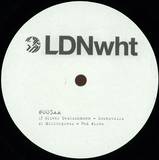
LDN003 sees yet another diverse selection of upfront Techno in the form of a four track VA. Featuring exclusive tracks by Token Records artist Inigo Kennedy from London, Berghain & Panorama Bar resident Oliver Deutschmann, Italian co-head of Children Of Tomorrow Antonio De Angelis and last but not least Mirrorpress a brand new dual-alias project from Londoners Chris Stanford and Andrew Wright.
Mastered by Matt Colton at Alchemy Studios. Vinyl only, sub label project. Supported by... Peter Van Hoesen, Rolando, Ø Phase, Rødhåd, Francois X, Samuli Kemppi, Jonas Kopp, Ben Sims, Jeroen Search, Answer Code Request, Psyk and many more...
out of Stock
Last delivered 9 years ago available to reorder, subject to availability
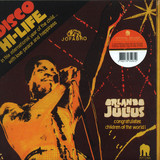
Hot Casa Records reissues Disco Hi-Life, a real treasure album composed and interpreted by Afro-Soul maestro, Orlando Julius. Comes as delux 180 gramms vinyl with tip on jacket & inserts with interviews & photos. Check!
Following up to the 12inch release (HC07 / 2009), here comes the remastered version of a real mindblower piece from 1976 including four unreleased tracks, all recorded with the best Nigerian musicians, between Ginger Baker' Studio in Lagos and the American Star Studio in West Virginia, USA.
Orlando Julius Aremu Olusanya Ekemode was born in 1943 in Ikole-Ekiti, Nigeria and can be considered as a main figure of the Afro-Soul music history. One of the first African musician to get signed on a 'Major' label (Polydor), he delivered many hit single as a composer and effortlessly performed live as a tenor sax and singer. He worked and met with some of the 'greatest', such as Louis Armstrong, James Brown (for his Nigerian tour with Bootsy Collins), The Crusaders, Gil Scott Heron, or Hugh Masekela.
In the middle of 1975, just after they finished the recording of The Boys Doing It' album with Hugh Masekela, they all flew to Ghana and Lagos. It was holyday and Orlando had also plenty of time to focus on his own songs. He wrote 'Disco Hi-Life' in Yoruba and 'Children of the World' in English. And he immediately planned a recording session including 12 finest musicians, such as the great singer Dora Ifudu Avery, Adelaja Gboyega on keys, Kenneth Okulolo on Bass guitar, Butley Moore on drums, Fela's collaborator Tunde William on Trumpet, and also Ade, who helped sang 'Love Peace & Happiness'.
Originally released by Nigerian label Jofabro in partnership with the UNICEF association for the 'International year of the Child', it was only available in few promotional quantity... here comes the very first official reissue of this dancefloor masterpiece!
It's always a treat here at Circus Company to be able to shed the light on a lesser known talent. After all, it's a philosophy we have built the label on, but there's no denying we need to have that personal connection with the artists whose music we release. In the case of San Francisco act Moniker, our own dear Dave Aju has a previous history with Kenneth Scott from the duo, having lent some vocals to his 2009 jam 'What Do I Do' So it is that we come to release this, the first fully fledged vinyl offering from Scott and his studio partner Emilio Orlandi after years spent treating Californian crowds to their live, hardware-driven sound. The machines definitely rule the roost in the world of Moniker, but unlike so much of the current obsession with analogue noise and the lo-fi aesthetic, Scott and Orlandi instead coax heartfelt emotion and hand-crafted grooves from an array of beat boxes and synthesisers without making any self-conscious moves to demonstrate how .undigita' they are. Instead, the music takes priority, coming forth in soothing waves of harmonious chords, captivating leads and understated drums that speak volumes for simplicity and soul within deep house. The live aspect of Moniker's mission undoubtedly shines through, manifesting itself in smart switch-ups and breakdowns, impulsive edits and subtle variations that can only result from an on-the-fly jam. Mainly though, this is an exercise in satisfaction, speaking to the same pleasure neurons that would have been tickled the first time you heard Metro Area. In keeping with the warm tones of the original material, Patrice Scott makes for a thoroughly welcome addition to the fold.
Following on from their inaugural release DSNT Records are back with a second helping of unvarnished, pummeling tracks in-keeping with the label's clear focus of releasing only the highest quality techno.
Dead Sound (aka Paul Carroll) has made a name for himself after breakthrough releases with Videohead on Ali Wells' heavy duty Perc Trax imprint ('Murder EP', 'The Chosen'), as well as on Australia's Elektrax Recordings, ('DSGL EP'), and sub-label Gynoid Audio ('Your Move', 'Behind Time'), Acroplane Recordings and Counter Pulse ('It's Over').
Bolstering and reinforcing the power of the originals, this release comes fully equipped with some of the finest names in deep, dark and visceral techno on remix duties: Stroboscopic Artefacts' Xhin, Pole Group's Exium and an abstract cut from Monster X.
Support from:
Truss/MPIA3, AnD, Bas Mooy, Perc, Dj Skirt, Sawf, Inigo Kennedy, Raiz, Lakker, Roman Lindau, Donor, Sunil Sharpe.
Lee Perry's time at WIRL Records, later to be renamed Dynamic Sounds Studios, was a very productive time
in his career. A run of great singles and the shaping of a new sound, the beginning of what we know today as
Reggae .
Lee Perry (b. Rainford Hugh Perry, 28 March 1936, Hanover,Jamaica) began his entry into the music business at
the age of 16.Moving up to Kingston Town and working around various Sound Systems, before finding
employment at Coxonne Dodd's Studio One set up, in the late 50's early 1960's. Perry started out as a record
scout, organising sessions and supervising auditions at Dodd's record shop on Orange Street. Helping to make
hits for Delroy Wilson ( 'Joe Liges','Spit In The Sky') and the Maytals, which would lead to his own vocal records
released through Studio One.The musical backing for which, came from legendary Studio One house band The
Skatalites. Another important relationship for Perry, his first recordings with Bob Marley came in the form of
the Wailers, also providing backing, alongside the Soulettes who featured Rita Marley. Cutting such tunes as
'Chicken Scratch' around 1965/1966. This tune was also to provide him with one of his future nicknames
'Scratch'. A dispute over credits and money saw Perry leave Studio One and work with various producers
including Clancy Eccles and J. J. Johnson, before arriving at the door of producer Joe Gibbs in 1967. Here he
would write songs and produce hits for artists such as, Errol Dunkley and the Pioneers. A tune cut during his
time with Gibbs, voiced a snipe at fellow employee Dodd, a trademark that would become an outlet for his
frustrations in the business.This particular tune 'The Upsetter' would also provide another moniker and a name
for his label 'Upsetter'. Again lack of musical credit and financial reward saw Perry move on this time to WIRL
(West Indies Records Limited) Records, working alongside manager Clifford Rae, who would provide studio
time and pay for pressings in return for helping to promote and distribute WIRL product, which Perry would
carry out on his trusted Honda 50 motorcycle around Kingston town.
This period at WIRL saw some inspired work from Perry. 'Run For Cover' was another musical blow to a
previous employer, Coxonne Dodd and featured the Sensations on backing vocals and Lynn Taitt's guitar
picking skills. 'People Funny Boy' was a massive hit for Perry going on to sell over 60,000 copies. Joe Gibbs
would be at the end of this musical attack. Perry had felt Joe Gibbs had turned his back on him, after he had
provided hits for groups like, The Pioneers amongst others. The song would be one of the first records to
feature a New Beat (Reggae) inspired by the sounds coming out of a Pocomania Church, Perry had heard one
night.The congregation inside, wailed in a more slower way than the current musical style of the time Ska!. Perry
worked up this new style with Clancy Eccles, who would come under attack himself in 'You Crummy'. Their
closeness, which as detailed in that song would find them, 'Even shared the same Gal' but 'Now it's plain to see we
reached the end'. 'Set Them Free' was an answer record to Prince Buster's 'Judge Dread' (which had
featured Perry on it) a plea to the Judges in Jamaica that handed out extremely harsh sentences to the young
offenders of the time. The track was cut on the same rhythm as 'Run For Cover' . 'Django Shoots First'
inspired by the Spaghetti Western film of the same name, features Sir Lord Comic. One of the early DJ's who
used a jive talking style over rhythms. 'Night Doctor' was a hit instrumental that featured the organ talents
of Ansel Collins, that really push the tune along. 'Something You Got' was a cover of an USA R& B track by
Chris Kenner and 'Wind Up Girl' was cut at the same session. 'Water Pump' was a rude style track that
was cut later and originally released in 1974.As was 'People Sokup Boy' a later version of 'People Funny Boy'.
'Labrish' which means idol talk and gossip, was one of the first great talk over tunes that features Lee Perry
and producer Bunny 'Striker' Lee talking about the Political situation in Jamaica at the time and their own
financial situation and stories of various comrades.The track was originally released in 1973.
Bunny Lee would play a major part in lee Perry's career around this time and they were very close, often
sharing sessions and rhythms. Ironically it would be Bunny Lee that took over Perry's roll at WIRL and become
responsible for the labels products in years to come. Clifford Rae who give control to Bunny for a lot of the
WIRL product and even gave him his shop 101 Orange Street. So here we have a collection of music born out
of a time spent at WIRL Records and providing an important chapter in Lee Perry's career and indeed to the
story of Reggae itself.
Hope you enjoy the set.
Six years have passed since the last album by Andi Otto alias Springintgut, ("Park and Ride", City Centre Offices, 2007). In this period, Otto has done nothing less than inventing a new instru- ment: His "Fello" is a cello with movement sensors attached to the bow and a corresponding software. The development has been kicked off at STEIM in Amsterdam already in 2007. Since then, Otto has achieved vital refinements of the system, cooperated with artists of various fields as diverse as choreographers in Macedonia, theatre in Nigeria and Techno DJs in the Berghain Kantine in Berlin or the Fusion Festival. He even played solo with his instrument on different continents. For this third album, "Where We Need No Map" Otto takes the "Fello" to his studio in Hamburg for the first time. He records his instrument which has until today only been presented live on stage. In these Fello Sessions, the bow gestures immediate- ly modulate and process the amplified cello sound. In the subsequent editings he selects and cuts these sessions and merges them with other styles, such as Skweee, House and Jazz. Springintgut's trademark sound, this unique playfulness, is pre- sent throughout, while the live-processed cello adds an unrivaled deepness. The artist's expeditions even add more colour. Two tracks have been recorded in India. The lead voi- ce in "Bangalore Kids" is a field recording of a schoolboy in Cubbon Park, Bangalore. Andi Otto spends three months in Japan as artist- in-residence in the Villa Kamogawa in Kyoto. Du- ring this concentrated period he produces the more contemplative tracks of the album, like "Ka- mogawa Cycling" and "Western Kyoto". In Sri Lan- ka, finally, he meets Sasha Perera, the voice of Berlin's Dub Techno band Jahcoozi. They record two songs together. Especially in "Bullet" one can sense the lazy, muggy, peaceful heat of the after- noons in which this beautiful track has been com- posed. These stories may help to locate the music's orig- ins but still the sound of "Where We Need No Map" points us to unknown territories. The journey itself is the reward, let's listen!
Sechs Jahre sind seit dem letzten Album "Park and Ride" (City Centre Offices, 2007) von Andi Otto alias Springintgut bereits vergangen. Diese Zeit hat der Pingipung-Mitinhaber genutzt, nicht weni- ger als ein eigenes Instrument zu erfinden: das "Fello", ein Cello mit Bewegungssensoren auf dem Bogen und einer dazu gehörigen Soft- ware. Die Grundlagen dafür entstehen bereits 2007 am STEIM in Amsterdam. In der Folgezeit gelingt es Otto, das Instrument immer weiter zu verfeinern, mit unterschiedlichen Künstlern zu kooperieren und international aufzutreten. Für "Where We Need No Map" trägt Otto das Fello erstmals ins Hamburger Studio und nimmt unzählige Sessions auf, in denen die Gesten des Bogens direkt den verstärkten Sound des Cellos verändern und neu formen. Diese Fello-Sitzungen werden anschließend editiert und mit anderen Ein- flüssen vermengt, die von Skweee über House bis hin zum Jazz reichen. Der Markenzeichen-Sound von Springintgut, diese ureigene Verspieltheit, ist weiterhin vorhanden, gewinnt durch das live-pro- zessierte Cello aber eine bisher unerreichte Tiefe. Weitere Farbe erhält das Album durch Ottos zahl- reiche Tourneen in ferne Länder. Zwei Stücke ent- stehen in Indien. Die Stimme von "Bangalore Kids" ist eine Feldaufnahme eines Schuljungen im Cubbon Park in Bangalore. In Japan verbringt Andi Otto drei Monate als "Artist in Residence" in der Villa Kamogawa in Kyoto. Während dieser kon- zentrierten Zeit entstehen die ruhigeren Tracks des Albums wie "Kamogawa Cycling" und "Western Kyoto". In Sri Lanka lernt er dann Sasha Perera kennen, die Stimme von Jahcoozi. Sie nehmen zwei Songs zusammen auf. Vor allem in "Bullet" kann man der faulen Nachmittagshitze nachspü- ren, in der die Stücke entstanden sind. So lassen sich die vielfältigen Entstehungspunk- te von "Where We Need No Map" zwar karto- graphieren, aber der Sound des Albums schickt einen trotzdem in unbekanntes Terrain. "Der Weg ist das Ziel, frag nicht viel, hör mal..."
RE-PRESS - The hidden and parallel musical research by Fabrizio Lapiana (Attic), Vol.2
Second release for the new project signed Fabrizio Lapiana (the man of Attic Music).
This label will express his hidden and parallel musical research. Played and Supported by Norman Nodge, Markus Suckut, Terence Fixmer, Inigo Kennedy, Cio D'Or, Alan Fitzpatrick, Conrad Van Orton, Developer and more.
out of Stock
Last delivered 14 months ago available to reorder, subject to availability
Kenneth Christiansen & Dennis Bøg presents Pattern Repeat part 6.
This time Pattern Repeat gets a little more harder and darker on PR00/6.
The A side is a moody dark track with deep hypnotic almost nightmare kind of groove, with a old school kind of atmosphere.
The B side gets hard straight from the beginning of the track with a pounding almost industrial kick drum, that builds from a minimal groove that really will kill the PA system in the club.
Pattern Repeat has stepped up, and shows the harder and deeper side of the Copenhagen Techno scene.
Deep and pumping EP including brilliant remixes by Inigo Kennedy, Raiz & Forward Strategy Group! A
must have for every serious techno-addict! Coming as limited special edition on blue transparent vinyl!!!
out of Stock
Last delivered 6 years ago available to reorder, subject to availability
Played and Supported by DVS1,Norman Nodge,Lucy,Marcel Dettmann,Chris Liebing,Alan Fitzpatrick,Par Grindvik,Tommy Four Seven,Inigo Kennedy,Samuel L Session,Samuli Kemppi,Truncate,Kevin Gorman,Jonas Kopp,Max M,Dadub,Dustin Zahn,Bas Mooy and more.
out of Stock
Last delivered 12 years ago available to reorder, subject to availability
Pattern Repeat is a new music-project and label by Kenneth Christiansen, Echocord & Echocord Colour Label boss, and his partner Dennis Bøg aka Resoe, running the Baum Label.