Buscar:kern

Estilos
Todo
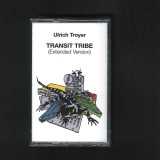
Ulrich Troyer - Transit Tribe MC (TAPE)

Ulrich Troyer has been producing music now solidly for over twenty years within a largely genre free framework, but whilst navigating forms such as avant-garde, techno, leftfield, field recording, electronica, glitch and ambient it is the aesthetics of dub that guide his creative direction. Not really recognisable in an orthodox form as remixed versions of roots reggae songs but in the way sonics are manipulated with space, the application and layering of delay, reverb and echo that fixes his output well within the scope of what might be called futurist dub.

The nearest comparisons to his new album TRANSIT TRIBE can only be established by a synthesis of some of the more adventurous explorations in modern music such as African Head Charge, Jon Hassell, Pole (Stefan Betke), Bill Laswell or even Miles Davis; featuring a diverse selection of artists and friends not only from Vienna and environs but also from around the world, sounds are not so much fused but allowed to float along the continuous flowing tide of warm waves of bass.

Rather than to allow the names of Ulrich Troyer's collaborators be merely listed in the album credits, what they bring to this joyful affair needs to be outlined, albeit briefly: Co-producer credits go to Osman Murat Ertel from Istanbul, who employed a variation on the old foolproof Nick Lowe method for checking out the impact quality of his own sound productions by playing tracks through his car sound system speakers!

Murat is a member of the electro-psych-folk group Baba Zula where he plays electric saz, oscillators and theremin and played a key part in the creative development of the album. Mamadou Diabate, the balafon master originally from Burkina Faso and now resident in Vienna, has developed his own unique technique of playing solos that replicate the sound of three instruments playing in unison; however the multi-talented Mamadou is engaged here on singing and playing the talking drum. From South Tyrol Reinhilde Gamper is a member of the experimental trio Greifer who are bringing the sound of the zither into the twenty-first century using new playing techniques and electronic gadgets. Susanna Gartmayer is an Austrian composer and bass clarinetist specialising in improv and multimedia sound research. Diggory Kenrick has been engaged with creating new dub fusions and also re-energising classic rocksteady and roots reggae classics, renowned for his interventions on flute. Didi Kern is an electronic dance musician and drummer from Vienna with a focus on free improvised music. Hamidou Koita, a singer and multi-instrumentalist, is from a traditional Griot family in Burkina Faso but now resident in Vienna and a regular musical partner of Mamadou Diabate playing drums and calabash. Austrian Lukas Lauermann is both a studio and live musician playing cello, also working on electronic sound design and writing string arrangements. He has recorded extensively and appeared on stage with both Mark Lanegan and Hans-Joachim Roedelius. Martin Mallaun is a Tyrol-born specialist in both the development of the zither in modern music and also as a researcher in the effects of climate change on the vegetation of Alpine ecosystems. Mystica Tribe is the musical alias of Tokyo-based dub/techno producer Taka (Takafumi) Noda. He collaborated with Vienna's own Vegetable Orchestra on 2020's "Transplants (Mystica Tribe Version)". After studying classical percussion Flip Philipp is now a jazz vibraphone player and member of the Vienna Symphony Orchestra. Wolfgang Pfistermüller is a member of the Vienna Trombone Quartet and the developer of the incredible bass-trombone Aurora with its uniquely warm and resonant sound. Roger Robinson is a renowned British poet, winner of many contemporary poetry prizes and member of the experimental music group King Midas Sound. Kwame Yeboah is a Ghanaian born UK based keyboard wizard who tours regularly with Yusuf / Cat Stevens, Ms. Dynamite and Pat Thomas.

So contained on the album is an astonishing mix of musicians and instruments: sounds of cowbells recorded in the South Tyrolean alps processed by modular synthesizers and heavy analogue bass synths combined with instruments such as zither, bass-zither, electro saz, flute, talking drum, trombone, cello, vibraphone, marimba, djembe, contra-alto clarinet, melodica, Farfisa - all bound together by organic live-drums and dub effects.

Liner notes by Steve Barker

Disponible

En el almacen y preparando para el envío

14,92
Ulrich Troyer - TRANSIT TRIBE

Ulrich Troyer has been producing music now solidly for over twenty years within a largely genre free framework, but whilst navigating forms such as avant-garde, techno, leftfield, field recording, electronica, glitch and ambient it is the aesthetics of dub that guide his creative direction. Not really recognisable in an orthodox form as remixed versions of roots reggae songs but in the way sonics are manipulated with space, the application and layering of delay, reverb and echo that fixes his output well within the scope of what might be called futurist dub.

The nearest comparisons to his new album TRANSIT TRIBE can only be established by a synthesis of some of the more adventurous explorations in modern music such as African Head Charge, Jon Hassell, Pole (Stefan Betke), Bill Laswell or even Miles Davis; featuring a diverse selection of artists and friends not only from Vienna and environs but also from around the world, sounds are not so much fused but allowed to float along the continuous flowing tide of warm waves of bass.

Rather than to allow the names of Ulrich Troyer's collaborators be merely listed in the album credits, what they bring to this joyful affair needs to be outlined, albeit briefly: Co-producer credits go to Osman Murat Ertel from Istanbul, who employed a variation on the old foolproof Nick Lowe method for checking out the impact quality of his own sound productions by playing tracks through his car sound system speakers!

Murat is a member of the electro-psych-folk group Baba Zula where he plays electric saz, oscillators and theremin and played a key part in the creative development of the album. Mamadou Diabate, the balafon master originally from Burkina Faso and now resident in Vienna, has developed his own unique technique of playing solos that replicate the sound of three instruments playing in unison; however the multi-talented Mamadou is engaged here on singing and playing the talking drum. From South Tyrol Reinhilde Gamper is a member of the experimental trio Greifer who are bringing the sound of the zither into the twenty-first century using new playing techniques and electronic gadgets. Susanna Gartmayer is an Austrian composer and bass clarinetist specialising in improv and multimedia sound research. Diggory Kenrick has been engaged with creating new dub fusions and also re-energising classic rocksteady and roots reggae classics, renowned for his interventions on flute. Didi Kern is an electronic dance musician and drummer from Vienna with a focus on free improvised music. Hamidou Koita, a singer and multi-instrumentalist, is from a traditional Griot family in Burkina Faso but now resident in Vienna and a regular musical partner of Mamadou Diabate playing drums and calabash. Austrian Lukas Lauermann is both a studio and live musician playing cello, also working on electronic sound design and writing string arrangements. He has recorded extensively and appeared on stage with both Mark Lanegan and Hans-Joachim Roedelius. Martin Mallaun is a Tyrol-born specialist in both the development of the zither in modern music and also as a researcher in the effects of climate change on the vegetation of Alpine ecosystems. After studying classical percussion Flip Philipp is now a jazz vibraphone player and member of the Vienna Symphony Orchestra. Wolfgang Pfistermüller is a member of the Vienna Trombone Quartet and the developer of the incredible bass-trombone Aurora with its uniquely warm and resonant sound. Roger Robinson is a renowned British poet, winner of many contemporary poetry prizes and member of the experimental music group King Midas Sound. Kwame Yeboah is a Ghanaian born UK based keyboard wizard who tours regularly with Yusuf / Cat Stevens, Ms. Dynamite and Pat Thomas.

So contained on the album is an astonishing mix of musicians and instruments: sounds of cowbells recorded in the South Tyrolean alps processed by modular synthesizers and heavy analogue bass synths combined with instruments such as zither, bass-zither, electro saz, flute, talking drum, trombone, cello, marimba, djembe, contra-alto clarinet, Farfisa - all bound together by organic live-drums and dub effects.

Disponible

En el almacen y preparando para el envío

23,49
Dada Pogrom - The Black Light Spectrum LP

After years of reluctance, finally a new album from Dada Pogrom. The Icelandic musician Kenneth Walter Balys has created a masterpiece of elaborated synth passages with wonderful pop melodies. His performances are few and far between, but in March 2024 he had already played some of the new songs in front of a full sold out house at the Kernkrach Festival. The audience was thrilled and demanded encores. The synth god in perfection!

Disponible

En el almacen y preparando para el envío

26,01
Ulrich Troyer - Latzfonser Kreuz / Feltunerhütte

"LATZFONSER KREUZ / FELTUNER HÜTTE scheduled for release on September 20th 2024 is the third single to be lifted from Ulrich Troyer's TRANSIT TRIBE due later this year.

Mamadou Diabate, originally from Burkina-Faso and now resident in Vienna, who is also a world-famous virtuoso balaphon player, collaborates on "Latzfonser Kreuz" with fellow countryman Hamidou Koita to produce a remarkable percussion track, both singing and employing talking drum and djembe to come up with a sound that can only be described as dubbed-out Nyahbinghi-style electro-beats! The track references the little church at Latzfonser Kreuz, which is the highest pilgrimage spot in South Tyrol, one of the highest in Europe; every year in June, the Black Lord, a black carved Gothic wooden cross, is brought from the village church in Latzfons to thepilgrimage church, where it remains throughout the summer.

On the flip for "Feltuner Hütte" Ulrich Troyer is joined by co-producer Osman Murat Ertel, founding member of the electro-psych-folk group Baba Zula from Istanbul, who has worked internationally for many years collaborating with the likes of Jaki Liebezeit, Fred Frith and Mad Professor. But here Murat takes us on a dub psych-out trip with his favoured electric saz, with wha wha FX, delay and echo, like Link Wray meeting King Tubby on the old streets of Istanbul."

Steve Barker (DJ, Radio Presenter - On the Wire, BBC 1984 – 2023, now Slack City Radio & reggae/dub columnist and contributor to The Wire)

Credits:

Mamadou Diabate: vocals (A) & talking drum (A)

Osman Murat Ertel: electric saz (B)

Hamidou Koita: vocals (A), djembe (A)

Didi Kern: percussion (A), drums (B)

Flip Philipp: percussion (B)

Ulrich Troyer: analog synthesizers & drum-machines, sampler, field recordings, dub effects (A+B)

A written by Mamadou Diabate, Hamidou Koita & Ulrich Troyer

B written by Osman Murat Ertel & Ulrich Troyer

Recorded by Ulrich Troyer at 4Bit Studio & 4Bit Bungalow, Vienna - except electro saz on track B recorded by Osman Murat Ertel at Saniki Studio, Istanbul

Mixed & arranged by Ulrich Troyer at 4Bit Bungalow, Vienna

Produced by Osman Murat Ertel & Ulrich Troyer

Mastering & Lacquer Cut by Kassian Troyer at Dubplates & Mastering, Berlin

Cover Drawing by Ulrich Troyer

Special thanks to Steve Barker, Mamadou Diabate, Osman Murat Ertel, Diggory Kenrick, Eva Kelety, Didi Kern, Hamidou Koita and Flip Philipp

Kindly supported by the City of Vienna (MA7 - Kultur), Federal Ministry Republic of Austria (Arts, Culture, Civil Service & Sport), SKE-FONDS (AT) & Amt für Kultur, Bozen (IT

Disponible

En el almacen y preparando para el envío

11,13
Ulrich Troyer - Autostrada Del Brennero

"Following on from May's "ECHOES Part 1 & 2" this is the second single of three to be released as an introduction to the next album project of Ulrich Troyer - TRANSIT TRIBE - to be released later this year.

This time it's one for the reggae fans and dubheads with contributions from Diggory Kenrick who has been busy over the last few years adding the distinctive sound of his flute to many new reggae productions. He is also an associate of the U.K. reggae label Pressure Sounds that specialises in reviving classic sounds from the roots and dancehall eras of the genre. Also joining the production is Takafumi Noda aka Mystica Tribe, a Japanese producer and musician who has specialised in a new form of dub techno and is known for adding the signature sound of his melodica to productions of dub friends from around the world.

The subject of travel, especially along modern, fast routes has long been subject to fascinate musicians, from the days of Kraftwerk's "Autobahn" and now the whole genre of dub techno seems to be one built for listening on long journeys. The Autostrada Del Brennero / Brennerautobahn is one of the most important motorways in Italy, as it connects the Po Valley with Austria through the Brenner Pass and features many modern bridges and overpasses that are ready built illustrations for the covers of dub techno albums! On this release this major European truck route is celebrated musically by Ulrich Troyer with inputs from Diggory and Taka to create two modern dub classics."

Steve Barker (DJ, Radio Presenter - On the Wire, BBC 1984 – 2023,

now Slack City Radio & reggae/dub columnist and contributor to The Wire)


Credits:

Diggory Kenrick: flute

Taka Noda: melodica

Didi Kern: drums

Ulrich Troyer: analog synthesizers, analog drum-machines, sampler, dub effects

A written by Diggory Kenrick & Ulrich Troyer

B written by Taka Noda & Ulrich Troyer

Recorded by Ulrich Troyer at 4Bit Studio & 4Bit Bungalow, Vienna - except flute recorded by Diggory Kenrick at Holloway Studio, London / melodica recorded by Taka Noda at Mystica Sound Studio, Tokio

Mixed & arranged by Ulrich Troyer at 4Bit Bungalow, Vienna

Produced by Osman Murat Ertel & Ulrich Troyer

Mastering & Lacquer Cut by Kassian Troyer at Dubplates & Mastering, Berlin

Cover Drawing by Ulrich Troyer


Special thanks to Steve Barker, Osman Murat Ertel, Diggory Kenrick, Eva Kelety and Takafumi Noda

Kindly supported by the City of Vienna (MA7 - Kultur), Federal Ministry Republic of Austria (Arts, Culture, Civil Service & Sport), SKE-FONDS (AT) & Amt für Kultur, Bozen (IT)

Disponible

En el almacen y preparando para el envío

10,88
Hammershøi - Dedales LP

Hammershøi

Dedales LP

12inchHERTZ075
Kernkrach
25.06.2024

Hammershøi is a French Synth duo born out of confinement and human-machine communication. Their musical style is based on music from the 80’s (Minimal Synth, EBM, French Wave, Synth Wave) and some artistic influences such as german expressionism, word art, and painting.

Disponible

En el almacen y preparando para el envío

26,68
Drew Schlesinger - Radar Signals LP

Drew Schlesinger has been playing synthesizers and composing electronic music since the early 1970s. In 1986, he began developing third-party sounds for Casio CZ synths, leading to a career designing presets for over 200 products from 30 companies including Roland, Korg, Kurzweil, Alesis, E-mu, Ensoniq, TC, Lexicon, Eventide, and others. After a 20-year hiatus in the corporate world, he has recently returned to music and sound design. His latest release is the album RADAR SIGNALS (Recorded 1981-82).

Disponible

En el almacen y preparando para el envío

20,59
Kölsch - I Talk To Water LP 2x12"

I Talk To Water, the fifth album for Kompakt by Danish producer Kölsch, is the artist’s most personal statement yet. While all the trademarks that make his music so popular and powerful are still present – lush, melodic techno; swooping, trance-like figures; sensuous, shivery texturology – I Talk To Water is also a deep and intimate rapprochement with family and history, a beautiful, finely detailed document of loss and memory, and a tracing of the long, unbroken thread of grief that runs through our lives once we’ve lost those we loved.

The emotional core of I Talk To Water, then, is a cache of recordings by Kölsch’s father, Patrick Reilly, who passed away in 2003 from brain cancer. With time rendered elastic by the pandemic and its associated lockdowns, its sudden, alienating shifts in everyday living, Kölsch found himself reflecting on his father’s passing and ongoing spiritual presence, thinking about how best to memorialise such a significant figure in his own life. Those recordings opened a gateway, of sorts, for Kölsch to move through – a way to bring past and present together and entwine them in a sensitive, poetic manner.

Kölsch’s father was a musician – “touring in the sixties and seventies, in the Middle East especially, he was doing the whole hippy trail, playing guitar, and wrote some songs over the years,” he recalls. “But all in all, he decided to focus on family rather than pursue a musical career.” Reilly kept playing and writing music over the years, though Kölsch hadn’t listened to the material for some time: “I’d never had the guts to listen to it, because I just felt too fragile listening to his voice. It’s such a tough thing to go through.”

During the pandemic, though, Kölsch listened through the fragmented body of work that his father had produced over the years. “I decided I’m gonna finally release my dad’s music twenty years after his passing,” he reflects. “This whole album is about the process of loss, and for me it’s been one of my main driving forces in my musical life, the whole emotional aspect of whatever I’ve done has been based in that feeling that he’s not there anymore.”

Recordings of Reilly appear on three songs across I Talk To Water. His guitars drift pensively across “Grape”, offering a lush thread of melody that Kölsch wraps with clicking, driftwood rhythms and droning, melancholy bass. “Tell Me” is a lovely three-minute art song, a sadly beautiful reflection, minimally adorned with gentle keys and a muted pulse. And on the closing “It Ends Where It Began”, Kölsch lets his father’s acoustic guitar take centre stage for a lament that’s unexpectedly folksy, a guitar soli dream, which Reilly originally recorded in 1996. “He actually recorded it for my first album that never came out,” Kölsch reveals, “and I had it sitting around forever. That is purely him.”

These three imagined collaborations between father and son are poised and delicate. But their relationship also marks the gorgeous music Kölsch has made across the rest of I Talk To Water, from the itchy yet lush “Pet Sound” (titled in tribute to one of Reilly’s favourite albums), the flickering synths and yearning vocal samples that slide through “Khenpo”, the ecstatic shuddering that marks “Only Get Better”, or “Implant”’s slow-motion pans and subtle reveals.

There’s also the title song, where Kölsch is joined by guest Perry Farrell (Jane’s Addiction, Porno For Pyros), singing a mantra for internal reflection: “I talk to water / Searching for myself / Looking for answers / Oceans of you.” Farrell’s appearance brings another timbre, another spirit to the album, aligning neatly with his recent interest in electronic music. “He was completely taken by this idea of talking to water,” Kölsch says, thinking about the ways we collectively lean towards the natural world as a comfort and a listener, a guide through mourning, a way to map out the terrain of the heart. This mapping is something that Kölsch has proven remarkably adept at through the years; dance music for both body and mind, but also both for the here-and-now, and for the hereafter.

“I Talk To Water”, das fünfte Album des dänischen Produzenten Kölsch für Kompakt, ist zweifellos das persönlichste Statement des Künstlers bislang. Während alle Markenzeichen, die seine Musik so beliebt und kraftvoll machen, immer noch präsent sind – üppige, melodische Techno-Tracks; schwebende, tranceartige Elemente; sinnliche, fiebrige Texturen – ist “I Talk To Water” auch eine tiefe und intime Annäherung an Familie und Geschichte. Es ist ein wunderschönes, fein ausgearbeitetes Dokument des Verlusts und der Erinnerung, und es verfolgt den langen, ungebrochenen Faden der Trauer, der durch unser Leben läuft, sobald wir diejenigen verloren haben, die wir liebten.

Der emotionale Kern von “I Talk To Water” besteht aus Aufnahmen von Kölschs Vater, Patrick Reilly, der 2003 an Hirnkrebs verstarb. Durch die Pandemie und ihre damit verbundenen Lockdowns, die plötzlichen, entfremdenden Veränderungen im Alltag, fand Kölsch sich in Gedanken an den Tod seines Vaters und seine fortwährende spirituelle Präsenz wieder. Er überlegte, wie er eine so bedeutende Figur in seinem eigenen Leben am besten verewigen könnte. Diese Aufnahmen öffneten ihm sozusagen ein Portal, um Vergangenheit und Gegenwart miteinander zu verbinden und sie auf sensible und poetische Weise zu verweben.

Kölschs Vater war Musiker – “er tourte in den sechziger und siebziger Jahren, vor allem im Nahen Osten, auf dem Hippie Trail, spielte Gitarre und schrieb im Laufe der Jahre einige Songs”, erinnert sich Kölsch. “Aber alles in allem entschied er sich, sich auf die Familie zu konzentrieren, anstatt eine musikalische Karriere zu verfolgen.” Reilly spielte und schrieb jedoch im Laufe der Jahre weiterhin Musik, obwohl Kölsch das Material lange Zeit nicht angehört hatte: “Ich hatte nie den Mut, es anzuhören, weil ich mich einfach zu zerbrechlich fühlte, seine Stimme anzuhören. Es ist so schwer, das durchzustehen.”

Während der Pandemie hörte sich Kölsch jedoch durch das fragmentierte Werk, das sein Vater im Laufe der Jahre produziert hatte. “Ich beschloss, die Musik meines Vaters zwanzig Jahre nach seinem Tod endlich zu veröffentlichen”, reflektiert er. “Dieses ganze Album handelt von dem Verlustprozess, welcher für mich generell eine der Hauptantriebskräfte in meinem musikalischen Leben ist. Der ganze emotionale Aspekt von dem, was ich getan habe, basierte auf dem Gefühl, dass er nicht mehr da ist.”

Auf “I Talk To Water” sind Aufnahmen von Reilly in drei Songs zu hören. Seine Gitarren ziehen nachdenklich durch “Grape”, bieten einen üppigen Melodiefaden, den Kölsch mit klickenden, treibenden Rhythmen und dröhnendem, melancholischem Bass umwickelt. “Tell Me” ist ein schönes dreiminütiges Kunstlied, eine traurig-schöne Reflexion, minimal geschmückt mit sanften Tasten und einem gedämpften Puls. Und auf dem Abschlusstrack “It Ends Where It Began” lässt Kölsch die akustische Gitarre seines Vaters im Mittelpunkt stehen, ein überraschend folkiger Klagegesang, den Reilly ursprünglich 1996 aufgenommen hatte. “Er hat es tatsächlich für mein erstes Album aufgenommen, das nie veröffentlicht wurde”, enthüllt Kölsch, “und ich hatte es ewig liegen.”

Diese drei erdachten Kollaborationen zwischen Vater und Sohn sind ausgewogen und zart. Aber ihre Beziehung prägt auch die wunderschöne Musik, die Kölsch im Rest von “I Talk To Water” geschaffen hat, angefangen bei dem nervösen, aber üppigen “Pet Sound” (benannt als Hommage an eines von Reillys Lieblingsalben), den flimmernden Synthesizern und sehnsüchtigen Vocal-Samples in “Khenpo”, den ekstatischen Erschütterungen in “Only Get Better” oder den langsamen Schwenks und subtilen Enthüllungen in “Implant”.

Es gibt auch den Titelsong, in dem Kölsch von Gast Perry Farrell (Jane’s Addiction, Porno For Pyros) begleitet wird, der ein Mantra für die innere Reflexion singt: “I talk to water / Searching for myself / Looking for answers / Oceans of you.” Farrells Auftritt bringt eine weitere Klangfarbe, einen weiteren Geist in das Album, der gut zu seinem jüngsten Interesse an elektronischer Musik passt. “Er war völlig fasziniert von der Idee, mit Wasser zu sprechen”, sagt Kölsch und denkt darüber nach, wie wir kollektiv zur Natur als Trost, Zuhörer, Führer durch die Trauer neigen, um die Gelände des Herzens zu kartieren. Diese Kartierung ist etwas, in dem Kölsch im Laufe der Jahre erstaunlich geschickt war; Tanzmusik für Körper und Geist, sowohl für das Hier und Jetzt, als auch für das Leben danach.

Disponible

En el almacen y preparando para el envío

25,17
GUNSHIP - Unicorn 2x12"

Gunship

Unicorn 2x12"

Pict-VinylHITH023LP
Horsie in the Hedge
29.09.2023

'Imagination Is A Weapon' lautet der Slogan des neuen GUNSHIP Albums. Diese Aussage fasst das Kernthema ihrer dritten Platte zusammen. GUNSHIP lädt seine Zuhörer ein, die Macht der Vorstellungskraft zu feiern und sich auf die Suche nach dem Einhorn in ihrem eigenen Leben zu begeben. Taucht schwelgend ein in die Fantasie – findet Euer Einhorn. Die entschlossenen Träumer werden die Welt verändern, wenn ihre Visionen in die Realität umgesetzt werden. Mit ihrem dritten Album UNICORN sprengen GUNSHIP weiterhin die Grenzen des Synthwave-Genres. Zu den besonderen Gästen zählen: John Carpenter, Gavin Rossdale (Bush), Dave Lombardo (Slayer), Carpenter Brut, Timmy Cappello (Lost Boys), Health, Tyler Bates (John Wick, Guardians Of The Galaxy), Lights, Power Glove, Charlie Simpson, Britta Phillips (Jem) und Milkie Way (Wargasm).

Disponible

En el almacen y preparando para el envío

38,24
John Tejada - Year Of The Living Dead 2x12"

With his new album, Year Of The Living Dead, Vienna-born and LA-based producer John Tejada finds a blissful extended moment of balance between the new and the familiar. Anyone who’s followed his career to date, which has included four previous albums for Kompakt, outings for storied labels like Plug Research, Playhouse and Cocoon, and numerous remixes and collaborations – most recently, his Wajatta duo with actor and musician Reggie Watts – will immediately sense the warmth and eloquence that Tejada brings to his gilded, pliant techno and electro hybrids. But there’s more here, too; an explorer’s glimmer in the producer’s eye, as he gets to grips with new ways of working and being, while offering a reflective opening for the listener, something echoed in artwork by graphic designer and ‘contemplative artist’ David Grey.

“The album was started using tools I was unfamiliar with, which became an interesting exploratory process,” Tejada says. “Staying away from the obvious and having to re-learn simple things was a fun challenge.” You can hear these new creative pulsions pushing the eight tracks on Year Of The Living Dead ever-forward; the album has an unique cast, and though there are trace elements of the genres Tejada has indulged previously, he’s never quite put them together this way before. There’s the dubwise glitter sprinkled across the moody opener “The Haunting Of Earth”, the kind caresses found amongst the deftly woven textures of “Sheltered”, and the churchy melancholy, all hymnal and golden, of “Echoes Of Life”.

Year Of The Living Dead also speaks obliquely to its moment, though Tejada works this implicitly, allowing the strange circumstances of 2020 to cast their inevitable shadow without being obvious or didactic. “The production process began right before lockdown and continued through what felt like a very serious time for all of us,” he recalls. “Not being able to see or touch our loved ones made me feel we are all like ghosts. We can observe from a distance but cannot really be there. We are isolated and alone.” And yet, Year Of The Living Dead’s tenderness offers an out for that anxiety and loneliness, its intimate immensities gifting the album a redemptive and compassionate core. Compact and glistening, Year Of The Living Dead sculpts unassuming beauty.

Mit seinem neuen Album “Year Of The Living Dead“ findet der in Wien geborene und in Los Angeles lebende Produzent John Tejada die richtige Balance zwischen Neuem und Vertrautem. Wer seine bisherige Karriere verfolgt hat, seine vier Alben für Kompakt, Beiträge für Labels wie Plug Research, Playhouse und Cocoon, zahlreiche Remixe und Kollaborationen wie zuletzt das Projekt Wajatta zusammen mit dem Schauspieler und Musiker Reggie Watts, spürt sofort wieder die Wärme und Eloquenz, die Tejada in seine geschmeidigen Techno-Elektro-Hybride einbringt. Doch es geht auch noch einen Schritt weiter. Da ist dieses Aufblitzen des Entdeckers im Auge eines Produzenten, der sich mit neuen Arbeits- und Seinsweisen auseinandersetzt und dem Zuhörer gleichzeitig etwas sehr Offenes und Nachdenkliches anbietet, etwas, das im Artwork des Grafikdesigners und "kontemplativen Künstlers" David Grey nachklingt.

"Ich hatte angefangen, das Album mit mir noch unbekannten Tools zu produzieren, was sich zu einem interessanten Forschungsprozess für mich entwickelte", sagt Tejada. "Sich vom allzu Offensichtlichen zu trennen und einfache mal Dinge neu lernen zu müssen, war eine recht spaßige Herausforderung.“ Man kann diese neuen kreativen Impulse hören, die “Year Of The Living Dead“ auf einer Länge von 8 Tracks nach vorne treiben; das Album hat einen einzigartigen Ansatz, denn obwohl es Elemente der Genres gibt, denen Tejada zuvor gefrönt hat, hatte er sie doch noch nie zuvor so zusammengefügt wie hier. Da ist dieses dubbige Glitzern im atmosphärischen Opener "The Haunting Of Earth", die freundlichen Zärtlichkeiten, die man in den Texturen von "Sheltered" findet, und schließlich die heilige Melancholie im hymnischen "Echoes Of Life".

Auch “Year Of The Living Dead“ enthält Andeutungen auf die momentane Situation und erlaubt es, den seltsamen Umständen des Jahres 2020, ihren unvermeidlichen Schatten zu werfen, ohne dabei zu offensichtlich oder gar belehrend zu sein. "Der Produktionsprozess begann kurz vor dem (ersten) Lockdown und setzte sich in einer Zeit fort, die sich für uns alle als eine sehr ernste Zeit anfühlte", erinnert er sich. "Da wir nicht in der Lage waren, unsere Lieben zu sehen oder zu berühren, hatte ich das Gefühl, dass wir alle wie Geister sind. Wir können nur distanzierte Beobachter sein, aber wir können nicht wirklich anwesend sein. Wir sind isoliert und allein." Und doch scheint die Zärtlichkeit von "Year Of The Living Dead" einen Ausweg aus dieser Angst und Einsamkeit anzubieten, die grenzenlose Intimität des Albums enthält einen erlösenden und mitfühlenden Kern. Derart konsistent und schillernd formt "Year Of The Living Dead" eine unprätentiöse Schönheit.

Disponible

En el almacen y preparando para el envío

24,33
Crushed Soul - Family Of Waves

Berlin-based, Dutch-born Steffi possesses near-boundless prowess. As a DJ, she’s proved her effortless mastery of disco, house, electro, and techno; as helm of labels Klakson and Dolly, she’s long maintained her status as tastemaker; as a producer, she has graced us with three solo LPs and numerous 12”s. Dark Entries is now honored to unveil the debut of her project Crushed Soul, a moniker she had used only once in 2013 for an Ostgut Ton compilation track. The mutual esteem of Steffi and DE has been previously fruitful, with Steffi providing a remix for Cute Heels’ 2016 EP on DE, but this is their first full-length collaboration.

The Family of Waves EP represents both familiar and novel pastures for Steffi. While her love of electro and classic Detroit techno have been oft-evident, here we witness the darker shades of new wave and industrial creep to the forefront. This turn for the twisted feels not just natural, but predestined, an inevitable succumbing to morbid forces. But Steffi also views Family as “a playful association...a mix of my past and new modern waves". There is a kernel of whimsy, even joy, lurking within the record’s temporal jumblings. The A-side opens with “Gravitational Field”, which juxtaposes its gnarled bassline with unearthly percussives and a recurrent resonant gong. The wild sonic palette speaks Steffi’s singular voice. “Scalar Property” continues the paranoid propulsion with an unhealthy dose of what can only be described as Metroid-funk, its staccato bass jabs interlaced with ghastly vocal pads. The B-side contains a diptych of slower tracks that juggle reference points both retro and futurist. In “Family of Waves”, a churning EBM-esque bassline battles acerbic yelps. On this track, the collision of past and present is most pronounced, as if A Split Second were covering Mike Parker. “Diffusion of Heat” closes the EP with what feels like a perfect synthesis of Steffi’s musical passions: funky, warbling chord stabs; intricate rhythmic diversions; the ecstasy of repetition. Here, disco, new wave, and techno marry harmoniously, if only to inform us of the disharmony of our present.

All songs have been mastered for vinyl by George Horn at Fantasy Studios. The sleeve and accompanying postcard were designed by Eloise Leigh using video art stills by Goldenliustra.

Disponible

En el almacen y preparando para el envío

13,87
Wrong Assessment / Rommek / Fabrizio Lapiana / Deepbass - Various Artists 001

For the inauguration of the label, Disconnekt brings you a fine selection of artists that have played in the event series based in Berlin. Trying to catch a specific moment of those nights, each one of them from a different artist, each one of them with a different sound, this VA compilation features well-established techno producers Wrong Assessment, Rommek, Fabrizio Lapiana and Deepbass.

The A-side represents the darker and harder side of the Disconnekt nights, with Wrong Assessment delivering an up-front dance floor killer, and Rommek evoking the feeling of self-immersion inside an evolving, but aggressive synth-line driven by a hard hitting groove.

The B-side, on the other hand, brings a more melodic and hypnotic side. Fabrizio Lapiana and Deepbass both bring to the record their signature sound, with their own characteristic voice.

Disponible

En el almacen y preparando para el envío

8,03
WIDOWSPEAK - ROSES

WIDOWSPEAK

ROSES

12inchCTLPC1391
Captured Tracks
05.06.2026
  • 1: The Hook
  • 2: No Driver
  • 3: Roses
  • 4: If You Change
  • 5: Wondering
  • 6: Angel Number
  • 7: Soft Cover
  • 8: Heaven Is Waiting
  • 9: Actor
  • 10: Hourglass

Ein Album mit dem Titel ,Roses" würde sich mit romantischen Gesten befassen. In den zehn Titeln, aus denen sich das siebte und neueste Widowspeak-Album zusammensetzt, werden intime Räume und Phasen der Liebe durch eine nostalgische, mit Vaseline überzogene Linse eingefangen. Kerzen brennen in rotem Glas, während sich Liebende in einer Lederbank näherkommen. Porträts von Prominenten blicken wie Engel in einem Restaurant herab. An anderer Stelle sind Nelken in ein schwarzes Buch gepresst, und Tänzer ziehen sich gegenseitig an sich. Widowspeak ist eine Band, die große Emotionen thematisiert, ohne sich selbst allzu ernst zu nehmen. Die Süße, ja sogar Albernheit einer ausgedehnten Verliebtheitsphase, die so alles verzehrend wird wie ein kitschiger Taschenbuchroman. Autos und ihre Fahrer dienen als Mittel, um über gegenseitige Abhängigkeit zu sprechen. Wenn Musik gleichzeitig naturalistisch und noir, gesättigt und üppig sein kann, dann ist das Widowspeak. Sie sind eine Band, die es versteht, eine Szene zu inszenieren. Diese Songs nutzen intime Momente, um über tiefere Herzschmerzen zu sprechen: die der modernen Existenz innewohnende Unruhe, das Herumwarten darauf, dass etwas geschieht. Oder das Gefühl, im Widerspruch dazu zu stehen, eine Rolle im eigenen Leben zu spielen. ,Roses" mag das romantischste Widowspeak-Album sein, aber es ist auch das zutiefst realistischste: Die Bühne wird nicht mit dramatischen Ouvertüren bereitet, sondern vor dem Hintergrund der Kleinigkeiten und Wiederholungen alltäglicher Handlungen. Kleine Beobachtungen vor, während und nach der Arbeit: das Ritual, Kunden Wasser einzuschenken, sich an seinem freien Tag eine Erkältung einzufangen. Davon zu träumen, im Lotto zu gewinnen, oder vielleicht zu erkennen, dass man bereits gewonnen hat. Hier ist Liebe ein Mittel, um darüber zu sprechen, was uns antreibt, und Widowspeak suggerieren, dass sie der eigentliche Sinn sein kann. Das Licht, das die dunklen Ecken eines Tages, eines Lebens erhellt. Ein Grund, weiterzumachen, trotz des Schmerzes, den es verursachen kann. Widowspeak sind eine der produktivsten und fleißigsten Bands der Szene, die knapp unter der Oberfläche brodeln. Molly Hamilton und Robert Earl Thomas bilden den Kern der Gruppe und sind ihre Songwriter; sie haben ihren Sound über sechzehn Jahre hinweg und mit einem beeindruckend konsistenten Werk verfeinert. Als eine von vielen Bands, die in der fruchtbaren New Yorker Musikszene entstanden sind, begannen sie damit, ihre Ausrüstung zwischen mittlerweile geschlossenen Veranstaltungsorten und ihrem Proberaum im Monster Island Basement hin- und herzuschleppen. Widowspeak ist heute ein Ehepaar, das in der eigenen ,Nebensaison" Tagesjobs ausübt. Robert ist Tischler, Molly Kellnerin. ,Roses" ist Widowspeak in Bestform und schöpft aus zeitlosen Einflüssen. Die Magie der Band liegt nach wie vor im Zusammenspiel zwischen Molly und Robert in ihren beiden Hauptrollen: ihrer trägen, facettenreichen Stimme und seinem instinktiven Gitarrenspiel. Im Kern ist ihre Musik etwas Besonderes, weil sie echt ist: vor allem für die Menschen, die sie machen. Zerbrechlich und vergänglich, und doch lohnend, wie die Liebe selbst.

Reservar05.06.2026

debe ser publicado en 05.06.2026

24,79
OH HIROSHIMA - AND THE DEAD TREE GIVES NO SHELTER
  • 1: Servant Of All
  • 2: Meridian
  • 3: Angelos
  • 4: Skeleton Key
  • 5: Tree Of Life
  • 6: Broken Sunlight
  • 7: Ivory Tower
  • 8: Exit Cloud
También disponible

BLOOD ED.[24,79 €]


Aus der fruchtbaren skandinavischen Post-Rock-Landschaft hervorgegangen, haben sich Oh Hiroshima einen Ruf dafür erarbeitet, Introspektion in einen weiten, cineastischen Klang zu verwandeln. Mit ,And the Dead Tree Gives No Shelter" setzen Oh Hiroshima ihr Streben fort, das Gleichgewicht zwischen Verletzlichkeit und Kraft zu verfeinern. Im Kern des Sounds von Oh Hiroshima liegt ein filigranes Wechselspiel zwischen Zurückhaltung und Entladung. Ihre Kompositionen bauen behutsam Spannung auf und lassen jede Ebene organisch entfalten: Klingende Gitarren, ferne Nachklänge und minimale rhythmische Impulse - die scheinbar schwerelos in der Luft schweben - bilden einen Kontrast zu jener wuchtigen Kraft, die sie entfesseln können. Klare, schimmernde Gitarrentöne breiten sich wellenartig durch dichten Hall und subtile Delays aus, während sich einzelne Linien oft in sanftem Kontrapunkt miteinander verflechten. Während sich diese Ebenen schichten, intensivieren sie sich allmählich und steuern auf jene Momente zu, in denen Verzerrung und Lautstärke die einst fragile Atmosphäre in etwas Immenses und Kathartisches verwandeln.Wenn die Musik ihre emotionalen Höhepunkte erreicht, tritt die Perkussion zwar bestimmender hervor, bleibt dabei jedoch behutsam in die Gesamtatmosphäre eingebettet. Oh Hiroshima beweisen beständig ein wachsendes Selbstvertrauen darin, die Grenzen ihres Sounds auszuloten. Durch die Verschmelzung von Harmonien, einer immersiven Produktion und einem tief intuitiven Gespür für das richtige Tempo haben Oh Hiroshima ein Album geschaffen, das von Intimität durchwoben ist und sich zugleich weit und raumgreifend anfühlt. Für Freunde von Alcest, Mogwai, God Is an Astronaut. CD, klassisch schwarzes und farbiges (limitiertes) Vinyl erhältlich.

Reservar05.06.2026

debe ser publicado en 05.06.2026

21,81
OH HIROSHIMA - AND THE DEAD TREE GIVES NO SHELTER

Aus der fruchtbaren skandinavischen Post-Rock-Landschaft hervorgegangen, haben sich Oh Hiroshima einen Ruf dafür erarbeitet, Introspektion in einen weiten, cineastischen Klang zu verwandeln. Mit ,And the Dead Tree Gives No Shelter" setzen Oh Hiroshima ihr Streben fort, das Gleichgewicht zwischen Verletzlichkeit und Kraft zu verfeinern. Im Kern des Sounds von Oh Hiroshima liegt ein filigranes Wechselspiel zwischen Zurückhaltung und Entladung. Ihre Kompositionen bauen behutsam Spannung auf und lassen jede Ebene organisch entfalten: Klingende Gitarren, ferne Nachklänge und minimale rhythmische Impulse - die scheinbar schwerelos in der Luft schweben - bilden einen Kontrast zu jener wuchtigen Kraft, die sie entfesseln können. Klare, schimmernde Gitarrentöne breiten sich wellenartig durch dichten Hall und subtile Delays aus, während sich einzelne Linien oft in sanftem Kontrapunkt miteinander verflechten. Während sich diese Ebenen schichten, intensivieren sie sich allmählich und steuern auf jene Momente zu, in denen Verzerrung und Lautstärke die einst fragile Atmosphäre in etwas Immenses und Kathartisches verwandeln.Wenn die Musik ihre emotionalen Höhepunkte erreicht, tritt die Perkussion zwar bestimmender hervor, bleibt dabei jedoch behutsam in die Gesamtatmosphäre eingebettet. Oh Hiroshima beweisen beständig ein wachsendes Selbstvertrauen darin, die Grenzen ihres Sounds auszuloten. Durch die Verschmelzung von Harmonien, einer immersiven Produktion und einem tief intuitiven Gespür für das richtige Tempo haben Oh Hiroshima ein Album geschaffen, das von Intimität durchwoben ist und sich zugleich weit und raumgreifend anfühlt. Für Freunde von Alcest, Mogwai, God Is an Astronaut. CD, klassisch schwarzes und farbiges (limitiertes) Vinyl erhältlich.

Reservar05.06.2026

debe ser publicado en 05.06.2026

24,79
GREG MENDEZ - BEAUTY LAND

GREG MENDEZ

BEAUTY LAND

12inchDOCLP373
Dead Oceans
29.05.2026
  • 1: I Wanna Feel Pretty
  • 2: Looking Out Your Window
  • 3: Mary / Dreaming
  • 4: Everybody Wants To Be Your Friend (Except Me)
  • 5: Gentle Love
  • 6: Frog
  • 7: It Breaks My Heart
  • 8: Sunsick
  • 9: No Evil
  • 10: Geranium
  • 11: Interlude In D Minor
  • 12: Serving Drinks
  • 13: So Mean
  • 14: Concussion
También disponible

CRYSTAL CLEAR VINYL[23,49 €]

Cassettee[14,08 €]


Greg Mendez war schon immer ein sparsamer Songwriter - er nutzt Zurückhaltung und Einfachheit als Werkzeuge, um den Kern seiner Songs zu schärfen. Auf Beauty Land, seinem neuen Album und Debüt-LP für Dead Oceans, werden wir von einem ironischen, aber nachsichtigen Erzähler begleitet, einem Underdog, der gelernt hat, Zynismus und Glauben in Einklang zu bringen. Diese Songs sind zurückhaltend, ohne selbstmitleidig zu sein, sorgfältig konstruierte Altäre der Unvollkommenheit, vermittelt durch Pop-Melodien, schimmernde, aber eindringliche Gitarren und eine Stimme, die nach der Unschuld eines Chorknaben strebt. Der Großteil von ,Beauty Land" wurde direkt auf Band aufgenommen, fast ganz allein in Mendez' provisorischem Heimstudio in Philadelphia - einem kleinen Raum ohne Tageslicht. Es ist sein erstes Album in voller Länge seit seinem unerwarteten Durchbruch mit dem selbstbetitelten Album im Jahr 2023, das nach 15 Jahren des Schreibens und Aufnehmens von Musik in relativer Unbekanntheit zwischen Philly und New York ein langsamer Erfolg wurde. ,Beauty Land" knüpft dort an, wo wir vor drei Jahren aufgehört haben - es lotet die Tiefen von Trauer, Liebe und Sucht aus -, aber seine intensive, ruhige Klarheit zeigt Mendez von seiner besten Seite als Songwriter. Teile von ,Beauty Land" fühlen sich wie ein luzider Traum an, in dem angeschlagene Charaktere sich ihren Weg durch eine karikaturhafte und verzerrte Welt bahnen - der gebrochene Uhrentakt von ,I Wanna Feel Pretty", das klingende Spielzeugklavier in ,Gentle Love". ,Mary / Dreaming" beginnt als spärliche, fingergezupfte Klage, bevor es abrupt zu einer enttäuschten, Beach-Boys-artigen, aber verkorksten Auflösung übergeht, die sowohl Melancholie als auch Freude hervorruft; ein Gefühl, dass alle Dinge gleichzeitig wahr sein können. Keiner der 14 Tracks ist länger als drei Minuten, aber sie erzählen Geschichten, die ein ganzes Leben umfassen. Der Tod schwebt durch das Album, sei es als Erinnerung oder als Bedrohung. Alles fühlt sich prekär an. Die Art und Weise, wie diese Songs aufgebaut sind, hat etwas Zerbrechliches: die Art und Weise, wie die Begräbnisorgel neben dem Morphium in ,Looking Out Your Window" erklingt, die verheerende Einfachheit von ,Frog" mit seinem verlangsamten Keyboard und dem nackten Refrain: ,Bitte vergib mir meine Fehler." Beauty Land fühlt sich manchmal unmöglich einsam an. Umso mehr zählt es, wenn das nicht der Fall ist - wie zum Beispiel, wenn Mendez gegen Ende von ,So Mean" im Duett mit seiner Frau und Bandkollegin Veronica singt und es sich wie ein lang ersehntes Wiedersehen anfühlt, wie ein flüchtiger Moment der Erlösung, wie eine vorübergehende Teilung der Meere.

Reservar29.05.2026

debe ser publicado en 29.05.2026

22,27
GREG MENDEZ - BEAUTY LAND

GREG MENDEZ

BEAUTY LAND

12inchDOCLPC1373
Dead Oceans
29.05.2026

Greg Mendez war schon immer ein sparsamer Songwriter - er nutzt Zurückhaltung und Einfachheit als Werkzeuge, um den Kern seiner Songs zu schärfen. Auf Beauty Land, seinem neuen Album und Debüt-LP für Dead Oceans, werden wir von einem ironischen, aber nachsichtigen Erzähler begleitet, einem Underdog, der gelernt hat, Zynismus und Glauben in Einklang zu bringen. Diese Songs sind zurückhaltend, ohne selbstmitleidig zu sein, sorgfältig konstruierte Altäre der Unvollkommenheit, vermittelt durch Pop-Melodien, schimmernde, aber eindringliche Gitarren und eine Stimme, die nach der Unschuld eines Chorknaben strebt. Der Großteil von ,Beauty Land" wurde direkt auf Band aufgenommen, fast ganz allein in Mendez' provisorischem Heimstudio in Philadelphia - einem kleinen Raum ohne Tageslicht. Es ist sein erstes Album in voller Länge seit seinem unerwarteten Durchbruch mit dem selbstbetitelten Album im Jahr 2023, das nach 15 Jahren des Schreibens und Aufnehmens von Musik in relativer Unbekanntheit zwischen Philly und New York ein langsamer Erfolg wurde. ,Beauty Land" knüpft dort an, wo wir vor drei Jahren aufgehört haben - es lotet die Tiefen von Trauer, Liebe und Sucht aus -, aber seine intensive, ruhige Klarheit zeigt Mendez von seiner besten Seite als Songwriter. Teile von ,Beauty Land" fühlen sich wie ein luzider Traum an, in dem angeschlagene Charaktere sich ihren Weg durch eine karikaturhafte und verzerrte Welt bahnen - der gebrochene Uhrentakt von ,I Wanna Feel Pretty", das klingende Spielzeugklavier in ,Gentle Love". ,Mary / Dreaming" beginnt als spärliche, fingergezupfte Klage, bevor es abrupt zu einer enttäuschten, Beach-Boys-artigen, aber verkorksten Auflösung übergeht, die sowohl Melancholie als auch Freude hervorruft; ein Gefühl, dass alle Dinge gleichzeitig wahr sein können. Keiner der 14 Tracks ist länger als drei Minuten, aber sie erzählen Geschichten, die ein ganzes Leben umfassen. Der Tod schwebt durch das Album, sei es als Erinnerung oder als Bedrohung. Alles fühlt sich prekär an. Die Art und Weise, wie diese Songs aufgebaut sind, hat etwas Zerbrechliches: die Art und Weise, wie die Begräbnisorgel neben dem Morphium in ,Looking Out Your Window" erklingt, die verheerende Einfachheit von ,Frog" mit seinem verlangsamten Keyboard und dem nackten Refrain: ,Bitte vergib mir meine Fehler." Beauty Land fühlt sich manchmal unmöglich einsam an. Umso mehr zählt es, wenn das nicht der Fall ist - wie zum Beispiel, wenn Mendez gegen Ende von ,So Mean" im Duett mit seiner Frau und Bandkollegin Veronica singt und es sich wie ein lang ersehntes Wiedersehen anfühlt, wie ein flüchtiger Moment der Erlösung, wie eine vorübergehende Teilung der Meere.

Reservar29.05.2026

debe ser publicado en 29.05.2026

23,49
Artículos por página
N/ABPM
Vinyl