‘Diré’, Idrissa Soumaoro new album, comes as a surprise to Malian and international audiences. Composer, singer, guitarist and master of the kamalen n’goni Idrissa Soumaoro presents here a beautiful collection of songs on his third album, Diré, named in honor of the town where he met his wife and where his first daughter, who is no longer with us, was born.
In 1971, after his studies at the INA in Bamako, Idrissa was transferred to Diré to teach music at the lPEG (Pedagogical Institute of General Education). He was 22 years old when he arrived in Diré. Idrissa has always been nostalgic for this beautiful place in the 333 Saints of Timbuktu region. As Idrissa sings in ‘Diré taga’ (Going to Diré), the track that opens the album, the city evokes deep emotions for the artist, as if it were a long-lost friend or lover. Celebrating the memory of the city of Diré leads the artist to retrace stories and lived situations that marked and animated him in years gone by: ‘I really miss the people, the colleagues, the friends and that period. Despite the time that has flown by, I would ardently wish to see Diré again’. Today, at the difficult time Mali is experiencing, remembering the city of Diré in the 1970s also means for the artist not giving up hope for peace: ‘The memory of Diré, a beautiful town in northern Mali, strengthens my hope for peace, union and real independence for the happiness of my people’; as he sings in ‘Sababou’, ‘Without hope, there is no life. Together we will succeed’.
The ten highly original compositions of the album are strongly based upon traditional music of Mali, but Idrissa’s life experiences, travels, education, collaborations and personal musical career have led him to compose and perform music with other influences. As Idrissa quotes: ‘My inspiration generally comes from the donso n'goni, a Bambara instrument played by and for hunters throughout Mali. This is a pentatonic instrument, similar to the blues exported to the USA by black African slaves. I've also spent so much time playing a variety of music that my music also reflects rumba, salsa (as well as Bamanan blues and a few derivatives: jazz, country, soul, rhythm and blues) etc. I have looked for and hope to have found my own form of expression from these influences’.
Throughout the album, his strong, clear voice sings in French, Bambara and English. It rides seamlessly upon a complex rhythmic sea of distinctly West African stringed instrumentation and percussion with accents of flute and balafon. There are keyboards in a few songs, but these, happily, do not dominate the music as we hear so often in today’s music. This album presents the music of a mature artist who has ‘been there, done that’ and returned to celebrate his country, his roots and his dreams in a flawlessly produced collection of songs of love, reassurance, fatherly advice and hope.
The album already has a long history: it was initiated in 2012 by Marc-Antoine ‘Marko’ Moreau, former producer and manager of Amadou and Mariam. Moreau had plans to produce the album and invited Idrissa Soumaoro to start recording in Manjul's studio in Bamako. When Moreau suddenly passed away, work on the album was still missing. The pandemic still added time for the production to continue. With the help of Climax Orchestra, arrangements and orchestrations were finalized in France. At the artist's behest, 'Diré' will finally be presented to the public by Mieruba, the independent label based in Ségou, the home of the blues in Mali. 'Let's stand together so that Mali can flourish': from conception to production and distribution, this is the message that 'Diré' carries.
Search:key to life
Yes, *that* Al Hirt record. Featuring the godlike "Harlem Hendoo", looped unforgettably by De La Soul for the legendary Buhloone Mind State cut, "Ego Trippin' (Part Two)"!
Al Hirt's infamous Soul In The Horn is inextricably tangled up in crate-digger lore. Originally released in 1967, the album has been in heavy, heavy demand for over 30 years, entirely down to the majestic soul-jazz fire of "Harlem Hendoo". And it's a song so good, so vital, so timeless, that it will always tower above everything else in its proximity. This one track alone is worth the price of admission - even if the cost of entry were $100 or even $1000.
However, it would be an error to dismiss this record as merely a one tracker, loaded as it is with dope samples for adventurous beat makers. Certainly the funkiest Al Hirt record, it definitely lives up to the "soul" in the title. Thanks to composer Paul Griffin and arranger Teacho Wiltshire, Hirt got uncharacteristically free and groovy throughout. It comes on more like an obscure KPM library funk record than the easy listening Al was notorious for.
A Louisiana trumpeter and band leader who made Allen Toussaint’s “Java” famous, Al Hirt was also known for TV themes, Dixieland, Swing and being a minority owner of the New Orleans Saints. Unlike every other Al Hirt record - and despite most "diggers" claiming otherwise - this here gem is genuinely hard to come across "in the wild". Normally, you can't give Al Hirt records away, except this particular one, which raises pulses in the crate digging community to life-threatening levels. For every owner claiming to have found their copy for a dollar, there's scores more claiming to have *never* unearthed one in the field. So, paradoxically, you can consider this the most tricky-to-pull "thrift store record", ever. This is why we're finally making it available for everyone, not just those with endless hours to spend scouring the global goodwills!
Soul In The Horn represented an expressive detour into authentic soul-jazz for Al Hirt. Throughout, we're struck by a fierce, fiery energy that's otherwise absent from his typically easy listening work. Without question, the slinky, magical "Harlem Hendoo" is the standout, here. It's also the reason why the record is so scarce and commands awe among crate diggers, sounding like something from an obscure and deeply revered spiritual jazz record. As is often the case, the true genius of the song is tricky to do justice to; it's like a minor miracle of songwriting and performance that simply swooned down from the heavens on the back of horns, bells and harpsichord. It's one of the sweetest musical compositions ever recorded inside a studio - it's only failing is that it's just too short. Sampled brilliantly by De La Soul, it has also been used by The Roots for "Stay Cool" and Nightmares On Wax for "Damn".
The rest of the record makes for a mighty fine listen. From the opening cover of Booker T. & The MG's "Honey Pot", to the propulsive, ultra-funky "Mess Around", it's nothing but a good time. Given its title, the elegant stepper "Calypsoul" sounds exactly as you'd hope whilst the melancholic, wistful "Long Gone" hurts so good. Truly, this is just dying to be looped up, Al's muted playing capturing a soulful longing only horns can often achieve. The bluesy, slo-mo swing of "Sweetlips" oscillates between cool disaffection and swelling pride whilst the graceful, low-key funky "Girl" closes out the A-Side in the fine style. Ushering in the B-Side, the brief but brilliant strut of "Love Ya' Baby" shines brightly before the skipping funky-jazz of true highlight "Sunday-Goin' To Meetin' Time" demands both your attention and your dancing shoes. The mellifluous piano-funk of bass and horn-drenched "Snap Back" serves as the sumptuous prelude to "Harlem Hendoo"'s main character energy before the irrepressible, upbeat R&B of "Ludwig" closes out this quite remarkable album. An album deserving of a place in every serious record collection.
The audio for Soul In The Horn has been carefully remastered by Be With regular Simon Francis, ensuring it sounds better than ever. Cicely Balston's expert skills have made sure nothing is lost in the cut whilst the records have been pressed to the highest possible standard at Record Industry in Holland. The original sleeve has been restored here at Be With HQ as the finishing touch to this long overdue re-issue. This is after-hours music. Let it speak for itself. Listen. Listen to the soul in Al Hirt's horn.
" Official reissue of a German pop rap obscurity in addition with a bombastic HADE rework. Comes in picture sleeve with the original artwork. Limited to 300 copies.
The project fes consisted at its core of Fred Schwalbacher and Herry Schmitt. Their impetus was to combine the local dialect of the German Saar area with modern musical styles. After a full length release in 1984, the single 'Altstadtking' was released in 1986.
At that time musicians were encountered with rap music and some experimented with and included it into their musical output. 'Altstadtking' (old town king) is the result. The old town part of Saarlouis was a mecca for all kind of braggadocio back then, it was all about seeing and beeing seen. This tongue-in-cheek song is the story of a man showing off and bragging at nighttime while living an ordinary life at daytime.
For the flipside jack of all trades and any-bpm-powerhouse HADE (baumusik, OYE Records, Razor-N-Tape) did a stunning rework. He chopped and cooked down all instrumental parts of the original into a new dub version, added keys & bass on top and an extra punch to the mixdown for his vision of a dancefloor-ready 'Altstadtking'.
Rock it! "
- A1: Bakeren (Feat Faye Houston)
- A2: O Mar E A Lua (Feat Olav Wöllo)
- A3: Bergen Sunrays (Feat Selim Mutic)
- A4: Belle Époque
- A5: Den Franske Gitaren (Feat Aich)
- B1: Don`t Fall Asleep (Feat Faye Houston)
- B2: Rory`s Sunrays
- B3: Nada Pode Me Calar (Feat Olav Wöllo)
- B4: La Psychosomnie
- B5: Den Franske Gitaren (Feat Martin Halla)
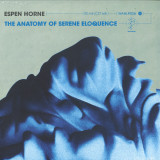
2023 sees the return of multi-talented Norwegian producer Espen Horne to Wah Wah 45s, after a 24 year hiatus. The man behind the label's very first release, the now seminal Magnetica, never lost his connection with the imprint and has remained very much part of the Wah Wah family, making a comeback this year with his first solo material under his own name since that club classic from 1999.
Back in the spring, the first single from the project, the gorgeous soul-jazz beauty Bakeren, featuring the stunning vocals of Resonators' Faye Houston, quickly found a home on Gilles Peterson's internationally renowned BBC Radio 6 show as well as that of Jazz FM legend Robbie Vincent, Bandcamp Weekly and the Fresh Finds Jazz Spotify playlist.
Following that, Bergen Sunrays, became a weekly fixture on the Craig Charles Funk & Soul Show on BBC 6 Music, with the limited 7-inch of both singles selling out within hours of release.
Next up was the wistful Den Franske Gitaren, a lugubrious soul-jazz piece with drum & bass leanings featuring Bergen based MC and vocalist Aich, which found favour with legends Laurent Garnier and Jazzanova as well as hot Japanese production outfit Dazzle Drums.
This was closely followed by the final single to be taken from the album, the stunning and outspoken vocal jazz waltzer Nada Pode Me Calar (which roughly translates to Nothing Can Shut Me Up!) featuring the sublime talent of Olav Wöllo on vocals and Juno - anotherr big one with Gilles Peterson on Worldwide FM and Deb Grant on BBC 6 Music.
And now the full album, entitled The Anatomy Of Serene Eloquence is available for your aural delectation. Recorded largely during lockdown, the LP is a sophisticated and composed piece of work that sees the Norwegian producer make connections with musicians from across Europe, and some closer to home, to collaborate on this sedate and peaceful collection of songs.
The aforementioned Faye Houston also appears on the soulful, dub flavoured Don't Fall Asleep, a piece of music that explores the feeling of being isolated whilst sharing a mutual love and drive to explore new sonic possibilities.
Elsewhere, Olav Wöllo pops up again too, this time on O Mar E A Lua and once again singing in Portuguese to give this track a certain Tropicalia feel, as Espen explains:
"Olav Wöllo is a close friend, an excellent musician and vocalist, and a capoeira professor here in Bergen. He has spent much of his life living in Brazil and speaks Portuguese fluently. He wrote the lyrics for this tune years ago and had just been waiting for the right collaboration to come along.
We went to his lovely studio out on this remote island, made a massive gyoza meal, had some serious good wine and stayed the whole night to record his vocal harmonies and outspoken lyrics."
The single Bergen Sunrays also appears on the album in instrumental form with featured keys courtesy of London based player Rory More - here entitled Rory's Sunrays. His Lowrey organ adds a more melancholic feel to the track, as it does on the stunning Belle Époque, alongside the ivory work of Eirik Blåsternes - an emotional, contemplative and atmospheric track that was tested and shaped in the eclipse of Covid.
As with Belle Époque, La Psychosomnie is a playful yet explorative cut that examines insomnia, paralysis and hypnosis courtesy of some enigmatic French spoken word spinning around a framework of drums, bass and swirling keys.
And finally, the album offers up an alternative version of the single Den Franske Gitaren, this time featuring Martin Halla, a vocalist out of the Bergen Grieg Jazz Academy and winner of the Norwegian version of The Voice back in 2012! The perfect flip to Aich's more mournful interpretation of this bass and drum future classic.
To describe an album as "electronic music" has long been an understatement. "Romanticismo siempre" is a good example. Recorded mainly using synthesizers, the album travels a territory that borders on the experimental and the dancefloor, entering at times in both fields.
Andrés Téllez, Delone, states in its title a clear commitment: "an ode to life, to never lose that passion that is the engine that pushes everything, no matter how many obstacles there are along the way, such as love, madness or death". The need to express this is at the origin of the record.
His musical language is rich and varied. Among synthesizers, analog experimentation, drones and psychedelia, many of the subcultures that have shaped what was once called "electronic music" appear. Flashes of trip hop, new age and proto-electronics are amalgamated throughout the album, together with hints of mutant house, breakbeats, IDM and trance. Other genres peripheral to club sounds, such as post-rock or kraut, also appear.
The idea of creating something that could almost be considered a soundtrack is present, but Delone's singularity has taken the album down a different path, using his own musical vocabulary to articulate a narrative that leads him towards his desired destination, keeping experimentation and dance culture, constants in his career, very much in mind.
In 2014 and together with his partner and friend Carlos Trujillo, Andrés created Riverette, a record label that became a record store in the center of Madrid, with his studio in the basement. From there he unleashed his productions as Dos Attack and his first works as Delone. Riverette quickly became a key creative pole in the Spanish electronic underground, and the label has released records by Legowelt, Kornel Kovacs or HAAi.
Throughout the eleven tracks of "Romanticismo siempre", a story materializes in which the protagonism falls on the adrenaline of passion. Through a very personal sound, with a certain introspective vocation, Andrés tells us a wonderful tale with the help of exquisite arrangements and a rich expressiveness.
"Romanticismo siempre" is a polyhedral album that can change with every listen, with every track, and reinterpret itself almost with every playback. It is a complex record, delicate and full of nuances, at the same time charged with a powerful and primitive energy.
It’s True What They Say is the debut EP from Edinburgh-based, husband-and-wife duo Sarah/Shaun (pronounced simply Sarah Shaun), aka Sarah and Shaun McLachlan (pronounced “McLochlin”).
“Sarah and I both have a love for nostalgia,” explains Shaun. “We watched that amazing old 80’s Sci-Fi, (John) Carpenter movie, Starman, a few months back. Myself and my brother David used to watch it all the time. We must have been, roughly, 5-7 at the time. I remember loving the movie but the end, you know, with the beautiful, atmospheric, synth ending, I love that particular moment the most - best part of the movie, you know, when he goes home… It’s heartbreaking but stunning, all the same. It’s the music that moves you most… It did when I was 5 and it still does to this day. It must have had some form of a (much deeper) impact on me.”
The duo narrates stories across themes of love, hope, family, friends, dreams and sadness - the good that comes with the bad in everyday life, not just on a personal scale but within a community as well.
“Starbed is the first song I have ever written and just came out of the blue really, with Shaun playing a melody and me singing along,” says Sarah. “It’s simple and just about two people in love. Love songs are always the best songs, after all… Music has been a big part of my life from a young age. I was unwillingly dragged to piano and violin lessons, which I’m thankful for now! I’d say the first band I really became obsessed with growing up were the Beatles, and on the back of that a lot of 60s music and fashion. From then on, I had a love for music.”
“Shaun definitely opened my ears to a lot of sounds and got me thinking about soundtracks and all the noises that can be made,” she goes on. “We love just spending time experimenting in the house with instruments, pedals etc and Ali is a real magician to work with, too…”
The recordings took place over the summers of 2022 and 2023, with fellow Delta Mainline member Ali Chisholm (aka Jaguar Eyes) plus long-term friend and collaborator Gavin King. Further collaboration then came via the ‘net from the (international) likes of Chris Dixie Darley (Father John Misty), Darren Coghill (Neon Waltz) and Daniel Land (The Modern Painters), among others (see a full list of credits below).
Both Sarah and Shaun have a love for uber-soundtrack producers such as Hanz Zimmer, Max Richter, Cliff Martinez plus live acts such as Beach House, Spiritualized, M83, Suicide, Moby and OMD (to name a few). Shaun also credits the work of Kyle Dixon & Michael Stein (from Survive) on the Stranger Things score… “Even a moment in a movie, whether it be just 30 seconds during a particular scene, it grips you,” he says. But there’s something much deeper at play as well. “Music is a healer,” he goes on, “and I write from my own perspective but more so for others. Once I've done my bit, it doesn't belong to me any longer. It belongs to whoever wants it or needs it.”
The result is a cinematic, synth-wavey, dream poppy and downright beguilingly beautiful body of work. And they’re just getting started…
REVIEWS/RADIO/FEEDBACK:
“Starbed is folky, flavoured by pedal steel, cello, and brass. Dust Tears, in stark contrast, is a mini synth-pop rave epic. Part Bicep. Part Human League. Keep Your Eyes Closed summons a mood that’s romantic, but also dark and potentially doomed – like David Lynch’s Twin Peaks meets Cliff Martinez’s Drive score. My pick though is It’s True What They Say, whose interwoven jangle and picking recalls New Order’s more introspective moments (Love Vigilantes, Love Less… ). Drums crashing, cathartic. Guitar raising dramatic arcs. Its chorus a rush, like a reprise of Pains Of Being Pure Of Heart’s ‘Higher Than The Stars’.” BAN BAN TON TON
"Dust Tears sees them sharing vocal duties over a synth foundation reminiscent of Moby’s Go - Artist Of The Week” THE SCOTSMAN
"Woozy pop" NEMONE (Mary Anne Hobbs Morning Show, BBC 6Music)
"Nice one, very David Lynch meets Euro dream pop" YOUTH (Killing Joke, Paul McCartney, U2, The Orb, Spiritualized etc)
"Music sounds killer! Real emotion” DAVID HOLMES
"I’m enjoying it” TIM BRINKHURST aka LONDON (IKLAN, Young Fathers, Callum Easter)
“Oh, this is lovely!” SEAN JOHNSTON (A Love From Outer Space)
"It’s totally my cup of tea with milk and biscuit" BRENT RADEMAKER (Beachwood Sparks/GospelBeach)
"Beautiful, ecstatic electronica! Short and to the point" KEVIN BALES (Spiritualized, Julian Cope, Soulsavers, BE)
"Makes me wanna sit in the sun and sip an Arnold Palmer" CHRIS DIXIE DARLEY (Father John Misty)
“Really beautiful - Cocteau Twins / Spiritualized vibes but has its own thing going on, too - worth checking out!” JULIAN CORRIE (Franz Ferdinand, Miaoux Miaoux)
‘Sounded nice on a sunny day, makes me think of Twin Peaks, nice moods’ EAMON HAMILTON (Sea Power)
"Dealing in nostalgia, no bad thing at all, great to play that (Dust Tears) for you” RODDY HART (BBC Radio Scotland)
“I'll give the vocal tracks a spin before the release." VIC GALLOWAY (BBC Radio Scotland)
"Rather good!" IAIN ANDERSON (BBC Radio Scotland)
CREDITS:
Lyrics, Guitars, Keys, Synths, Drums, Drum Programming, Percussion, Mandolin, Glockenspiel: Shaun McLachlan
Lyrics, Vocals, Keys by Sarah McLachlan
Guitars, Synths, String Arrangements, Drum Programming, Engineering: Jaguar Eyes Percussion/Drums/Effects, Fire Extinguisher: Darren Coghill (Neon Waltz)
Guitars by Daniel Land
Slide Guitar by Chris Dixie Darley (Father John Misty)
Brass by Bruce Michie
Keys, pre-production & engineering on “It’s true what they say”: Gavin King
All produced by Jaguar Eyes and Shaun McLachlan and then mixed at Glasgow’s Chem19 Studios by David McCaulay (From Scotland With Love, Rick Redbeard, BBC TV’s Attenborough and The Mammoth Graveyard score).
Artwork: Jamie Walman (Fourteen Admirals)
MORE INFO:
Although Shaun released a pair of solo singles (When We Dance and Give Your Love To Me) during Lockdown, he will be better known to many via his work as the multi-instrumentalist in Edinburgh band Delta Mainline. With two albums released to date, Oh! Enlightened and Bel Avenir, both rapturously received by fans and critics alike, Delta Mainline have developed an international, cult following. Oh Enlightened (2013) achieved widespread critical acclaim on release, earning the band comparisons to Arcade Fire and Echo & The Bunnymen, while 2019’s Bel Avenir pulled in references to The Flaming Lips, Pink Floyd, David Bowie and krautrock. A third DM album is currently being mixed and due for release later this year…
After a successful career in the corporate world, marketing guru and full-time mom Cristina has taken a bold step into the music scene, inspired by the minimal grooves emanating from Romania.
Her Satya debut EP, titled "Plan B," showcases a unique and tasteful fusion of drum-based dance floor beats and hypnotic melodies.
Growing up composing on the piano and studying harmony, Cristina's musical roots strongly influence her creative process, resulting in tracks that offer a perfect balance between rhythm and musicality. With a focus on key themes such as family, music, and life philosophy, "Plan B" is a strong musical package filled with intention.
Her collaboration with friend and fellow artist Francesco Mami - "Les Filles” - a peak-time jam dedicated to their respective daughters - adds spice to the already flavorsome solo concoctions.
Sepp’s remix of the title track, infused with his Romanian and Macedonian folk roots, rounds the EP in a wonderfully playful manner.
Scheduled for release on May 17, 2024, "Plan B" is poised to make waves and gain attention from house music connoisseurs! Cristina's transition from the corporate world to the dance floor promises a refreshing and dynamic addition to the ever-evolving music landscape.
É Soul Cultura captain, originator of Manchester’s legendary Electric Chair and definitive people’s champion, Luke Una taps into a lifetime’s worth of musical discovery for the second volume in our Mr Bongo Edits series. A cosmic coming together that sees two of Luke’s secret weapons, re-edited and re-contextualised by the man himself to provide optimal dancefloor euphoria.
A stalwart of the underground for nearly 40 years, Luke has become an appointed leader of the late night disenfranchised, with an unquestionable ability to pick records that make minds tick. Not least through his two É Soul Cultura compilations released on Mr Bongo over the past two years.
A taste that traverses genres as much as it does emotions and decades, who better to give an insight into the tracks he has chosen to edit, than the man himself. “I've been an avid collector of afro-beat house, techno and underground black heart disco since before the basement soul days of Electric Chair 30 years ago. Both these bombs were very much holy grail finds, plucked from the last four decades of digging in random crates of dusty vinyl all over the world.”
First up, Thandi Zulu & The Young Five’s interpretation of Pure Energy’s early ‘80s disco power play – ‘Love Game’. With a distinctive South African synth bass and killer keys combo, Luke explains the original has this “bonkers alchemy of heavy machine soul, uptempo rawness and a majestic disco evangelism”, making it ripe for a re-edit.
On the B side, Lionel Pillay’s Jazz dancer ‘Plum’. “The original was a relentless 18-minute raw jam”, Luke states, “which despite its late ‘70s South African origin kinda reminded me of a 1986 Chicago piano House record”.
“These edits strip the tracks back and rebuild them, giving them more sonic weight with that looped up drum jacking militancy from the days of Chicago, combined with a boosted sense of transcendental, psychedelic, cosmic disco. They have always had such an explosive reaction on so many dancefloors including the heavier electronic club, so it felt only right to reshare them”.
Mode_1 Reclaim EP by DIG Records
Cover // Augmented reality by Omer Avarkan
********************************AUGMENTED REALITY COVER ***********************************
After a stellar debut release in 2023, vinyl-only label Dust in Grooves, sees its anticipated second EP Reclaim, showcasing one of Dublin's gleaming underground talents Mode_1. Establishing DIG as a progressive sonic platform, founder Olivia Mendez is also curating a series of dynamic augmented reality covers for each EP. Adding more layers into the sound experience of the Reclaim vinyl is motion designer and visual artist Omer Avarkan.
Mode_1's dedication to uncovering layers of tough but rhythmic grooves, both as a DJ and a producer, has led him to make a mark on legendary techno imprints such as Knotweed, FiedelTwo, Truncate and Naked Lunch. Staying true to his advancing, dynamic sound laid with dexterous technique, Robert Kavanagh delivers a collection of four ominous tracks, pulsating with incandescent pads and pacey drums.
The EP opens with the relentless and driving Sigma, setting the tone for a swiftly moving ride across the record. With playful shifting of gears and jacking rhythms, the A2 flows into the next track Dusty Room, utilising the bleepy pitches in contrast to the expansive spheric tones, offering an energetic boost of a melodic techno work-out, with hints of sharp dub edges.
Reclaim on B1 highlights the versatility of Mode_1, comprising multi-layered scales, evolving spiral sounds and a build-up of reverberating tones that escalate with poise. As a closing track of the record, Platform 8 is one of those B2 sides that you keep reaching out to. This ultimate big-floor tool is loaded with advancing movement, keys with mystical undertones, and depth of texture that play with the infinite nature of the number eight.
Unlocking the animated cover of the EP and seeing it come to life virtually, adds a new dimension to the classic format of the vinyls. To unlock its motion, follow the riddle on the back.
All tracks mastered by Nihad Tule.
Words by Lora Mateeva, Orb Mag
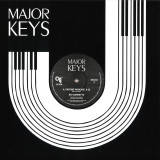
Pastime Paradise, first released by Stevie Wonder in 1976 got a new lease of life when sampled by Coolio on his Grammy Award winning Gangsta’s Paradise. It has also over the years been covered by Patti Smith as well as our fave version, courtesy of Latin percussionist Ray Barretto. First released on CTI in 1981, to this day it remains a staple for both the jazz and soul rooms. Never before released on a 12 inch, Major Keys continue their fine form with this extended floor filler that will appeal to DJ’s and collectors alike. It also flips it with La Cuna and Mambotango taken from the same 1981 LP. This is a special EP and one that you will want for your collection.
Official reissue of Dortmund's self-released single from 1981. For those in the know a sought-after gem, for everybody else the single you didn't know you need in your life! Comes in picture sleeve with the original artwork. Limited edition.
'Titanic' - quite self-explanatory - is about the queen of the ocean and her sinking as a ship believed as unsinkable. Starting off with its morse code-like sounds it evolves into a heavy grooving mélange of alternative rock, funk, new wave and synth pop.
The B-Side 'The Deep' explores depths you didn't know about. This instrumental jazz boogie funk fusion piece takes you on a five minute journey that will be your life-saver on any day.
In the early 1980s the scene of the Ruhr area was alive and kicking but still under the radar. Musicians played in different bands and projects of various styles. Three guys gathered simply under their city name "Dortmund" and did their own thing which led to this conceptual single - their only release.
Before that Elmar Krohn (keyboards) and Thomas Meyer (vocals, bass, guitar, keyboards) were part of the "Mardi Gras Band", a funk and soul band with a great reputation for their live shows. They were also involved in writing 'Blame It On The Boogie' which got performed by "The Jacksons" in 1978 but that is another story. On the drums they were joined by Siegfried Hermes who also played in the band "Die Salinos".
Juan Manuel Cidrón, hailing from Almeria (Andalusia), is a legendary Spanish synthesist who embarked on his musical journey in 1976. A veteran of analog electronic sounds, his early influences come from the Berlin School of the seventies (Tangerine Dream, Klaus Schulze, etc.) and American Minimal music.
Cidrón has independently released 16 albums on his label, Extrarradio, with very limited distribution. ‘Juan Manuel Cidrón has always been immersed in music. As a child, he fell in love with a radio adorned with flashing lights – radio is now one of his professions. He was equally captivated by the music that enveloped him. With whatever little money he had as a child and during his youth, he would spend all his money on records and analog machines. Music is everything to him, and that’s why we understand his compositions as a celebration of life. The vastness that his electronic keyboards offer us is akin to the immensity of the desert, snow, and wind. Albums like ‘Tau’ or ‘Sonido Para Acciones’ belong to the realm of Spanish electronic music and are cherished by enthusiasts of sonic poetry. This vinyl edition holds a special place as it marks a return to analog, a medium Cidrón reveres and continues to embrace. In this way, it becomes a classic, a testament to his unwavering commitment to the quality that arises from the harmonious blend of natural and artificial rhythms. The result is always him: a tangible presence that brings us closer to dreams and the unadorned face of the world.’ (F. Labordeta Blanco)
‘SLG3’ is a long-awaited double album with four lengthy tracks (one per side), available in a limited edition of 300 copies. It’s the first release exclusively on vinyl in over a decade (since ‘Patagón’ on Geometrik in 2012), considering that Cidrón has mainly released his recent works on CD.’The tracks S, L, and G evoke the personal perceptions that I could imagine for each of the three elements comprising our planet in all its forms, manifestations, and presences. The track ‘3’ evokes my unique interpretation of how an imaginary being from another world might perceive Earth – its discovery, journey to it, exploration filled with admiration, bewilderment, hope, and respect. However, all of this is open to free interpretation and imagination for those who listen.’ (Juan Manuel Cidrón, 2023)
All tracks were written, produced, and mixed by J.M. Cidrón between 2017-2019 at the Extrarradio Studio in Almeria.
- A1: Intro Feat Persa
- A2: Endless Dream
- A3: Live Your Live Feat Jae Franklin & Persa
- B1: Fred P Skit
- B2: Track For Clau
- B3: K-Brain Tribute Feat Nblue & Damian Schwartz
- C1: I Thought You Were The One Feat Jae Franklin & Persa
- C2: Rl Stadium 92 <3
- C3: Friends And Family Skit Feat Letras
- D1: Halftime Report (For Little José)
- D2: For Princess L Feat Jae Franklin
- D3: Mg Skit
- D4: Outro
Accomplished Spanish artist José Cabrera enters a fresh creative chapter with the new album Le Bateleur. The storytelling and hugely personal record arrives on his own A Harmless Deed label and is a deep dive into the house music he has always loved.
Over the last two decades and under several aliases, Madrid- born Cabrera established himself as a leading techno producer. He has released on influential labels like Fred P's Soul People Music, Tresor, Deeply Rooted and Ron Moreli`s' L.I.E.S. records and co-runs A Harmless Deed with friend Damian Schwartz. As a DJ he has toured Europe, Asia, North and South America and proven himself to be an experimental DJ with a long-standing residency at Tresor in Berlin.
When the pandemic hit in 2020, Cabrera felt detached from the techno world so used his time at home to explore new sounds. He has always had a love of house so set work on making a proper house record in the mold of greats who went before. He worked with other musicians and vocalists, made use of an array of Roland drum machines, Juno synths and Casio keys to cook up a raw and authentic sound and drew from a wide range of the back music that has soundtracked his life. The resulting album is packed with life and energy, skits from friends and timeless grooves.
The album opens up with cosmic synths radiating warmth and jazzy melodies then 'Endless Dream' is a steamy house thumper with aching r&b vocal fragments next to swirling pads. It's a passionate house cut followed by 'Live Your Life' feat Jae. This one brings classic piano energy and another gorgeous female vocal that explores dancers to cut loose and live. Following a dusty downbeat skit that features spoken word encouragement from former collaborator Fred P, 'Track For Clau' is hyper-speed future house with bumping kicks and busy synth arps bringing the light.
A prog rock guitar rings out in the cosmos during 'K-Brain Tribute' feat. NBlue and Damian Schwartz, and 'I Thought You Were the One' feat. Jae & Persa layers up booming kicks and claps with a spine tingling vocal and fat bassline. 'RL Stadium 92' taps into classic Chicago house and 'Halftime Report (For Little José)' gets down and dirty with a menacing bassline and dusty 909 sounds. Another US house heavyweight in DJ Qu features on the atmospheric ''Friends and Family Skit' alongside some of Jose associates and 'For Princess L (I Love You)' feat Jae is an exquisite deep house cut with crisp snares and a heart swelling that is loved up and blissed out. Another skit leads into the outro which is a melancholic ambient synth excursion that sends you off feeling utterly calm.
Le Bateleur is another captivating entry into the ever-evolving discography of José Cabrera.
Earl Lindo production from 1984... TIP!
Teenage twins Ruffy & Tuffy deliver an apocalyptic slab of synth drenched Rub a Dub with what could be the first use of Vocoder in Reggae for 1982’s If The 3rd World War Is A Must. This release draws from both the original 12” and the master tapes combining the best vocal cut and dub versions.
Though not prolific musicians, many may recognize the twins sparring in matching red Pony track suits in Ted Bafaloukos’ iconic 1978 film Rockers. Ahead of its time in almost every way, the lyrics dealing with global war and the nefarious use of technology, sadly seem as relevant now as they did in 1982 though some of the actors may have changed. Surrounded by elite reggae musicians from childhood it was nothing unusual for the brothers to be in the presence of elders like Gregory Isaacs, Burning Spear, Augustus Pablo, Jacob Miller and especially Bob Marley at recording sessions and in daily life.
If The 3rd World War was their first venture into the studio as solo artists in 1982 first at Channel One and then Tuff Gong where Wailers alumni Earl Wire Lindo and Tyrone Downie (keys and Vocoder) laid down their space age additions to the track creating a genre bending Reggae /Electro/ Dub concoction that still sounds fresh 41 years later. Wire Lindo & the twins took the mastertapes to Texas based mechanical engineer and producer Stephen “Iya” James who ran Marcus Garvey Records and the label African Unity Productions in the unlikely Reggae hub of Austin Texas. The track was not released until two years later in 1984 as a 12” which had a run of only 500 copies and is no easy find these days.
Skatebård is one of the very best Classic Techno producers from Norway since the early 2000's - the distinction from others simply lies within his sense of melody, rhythm and live arrangements. The 2002 release "Skateboarding Was A Crime" on Tellektro had a clear thread of Detroit Techno and Electro, a craft and influence that also heavy club hitters "Conga", "Ta-Ta Arr" and "Emotional Bits" on Sex Tags Mania strongly carried. It's unarguably always a "classic touch" in his dance music, but still it always sounds like a Skatebård production - there is simply no blueprinting in true inspiration.
"Spektral LP" has been compiled and edited by DJ Sotofett with material from Skatebård's 2001-2005 recording archive. In short it's recordings nobody else cold get a hold of – fine tuned and restored into a synergetic and consolidated world of riding, mechanical and electronic funk - released on Skatebård's own Digitalo Enterprises.
Tracks "Seventh" and "Vaskemaskin" are both cymbal driven Techno cuts by the former metal drummer, one with chorded synth stabs growing in harmony, the other leaning on a dark sci-fi pad and a flipped vocal loop. There's a bit more of Skatebård's vocals on the beautifully robotic "Ei Anna Framtid", an alternate take of "Future" which Finlands Keys Of Life released in 2003. DJ Sotofett's mix of "Den Anarkistiske Anode" is nothing but a distorted head-schredding basement Techno blaster, while "Strengje", "Bassi" and "Spektral Elektro" punctuates the catchy Electro & Italo grooves Skatebård crafts so much better than most current producers.
I Talk To Water, the fifth album for Kompakt by Danish producer Kölsch, is the artist’s most personal statement yet. While all the trademarks that make his music so popular and powerful are still present – lush, melodic techno; swooping, trance-like figures; sensuous, shivery texturology – I Talk To Water is also a deep and intimate rapprochement with family and history, a beautiful, finely detailed document of loss and memory, and a tracing of the long, unbroken thread of grief that runs through our lives once we’ve lost those we loved.
The emotional core of I Talk To Water, then, is a cache of recordings by Kölsch’s father, Patrick Reilly, who passed away in 2003 from brain cancer. With time rendered elastic by the pandemic and its associated lockdowns, its sudden, alienating shifts in everyday living, Kölsch found himself reflecting on his father’s passing and ongoing spiritual presence, thinking about how best to memorialise such a significant figure in his own life. Those recordings opened a gateway, of sorts, for Kölsch to move through – a way to bring past and present together and entwine them in a sensitive, poetic manner.
Kölsch’s father was a musician – “touring in the sixties and seventies, in the Middle East especially, he was doing the whole hippy trail, playing guitar, and wrote some songs over the years,” he recalls. “But all in all, he decided to focus on family rather than pursue a musical career.” Reilly kept playing and writing music over the years, though Kölsch hadn’t listened to the material for some time: “I’d never had the guts to listen to it, because I just felt too fragile listening to his voice. It’s such a tough thing to go through.”
During the pandemic, though, Kölsch listened through the fragmented body of work that his father had produced over the years. “I decided I’m gonna finally release my dad’s music twenty years after his passing,” he reflects. “This whole album is about the process of loss, and for me it’s been one of my main driving forces in my musical life, the whole emotional aspect of whatever I’ve done has been based in that feeling that he’s not there anymore.”
Recordings of Reilly appear on three songs across I Talk To Water. His guitars drift pensively across “Grape”, offering a lush thread of melody that Kölsch wraps with clicking, driftwood rhythms and droning, melancholy bass. “Tell Me” is a lovely three-minute art song, a sadly beautiful reflection, minimally adorned with gentle keys and a muted pulse. And on the closing “It Ends Where It Began”, Kölsch lets his father’s acoustic guitar take centre stage for a lament that’s unexpectedly folksy, a guitar soli dream, which Reilly originally recorded in 1996. “He actually recorded it for my first album that never came out,” Kölsch reveals, “and I had it sitting around forever. That is purely him.”
These three imagined collaborations between father and son are poised and delicate. But their relationship also marks the gorgeous music Kölsch has made across the rest of I Talk To Water, from the itchy yet lush “Pet Sound” (titled in tribute to one of Reilly’s favourite albums), the flickering synths and yearning vocal samples that slide through “Khenpo”, the ecstatic shuddering that marks “Only Get Better”, or “Implant”’s slow-motion pans and subtle reveals.
There’s also the title song, where Kölsch is joined by guest Perry Farrell (Jane’s Addiction, Porno For Pyros), singing a mantra for internal reflection: “I talk to water / Searching for myself / Looking for answers / Oceans of you.” Farrell’s appearance brings another timbre, another spirit to the album, aligning neatly with his recent interest in electronic music. “He was completely taken by this idea of talking to water,” Kölsch says, thinking about the ways we collectively lean towards the natural world as a comfort and a listener, a guide through mourning, a way to map out the terrain of the heart. This mapping is something that Kölsch has proven remarkably adept at through the years; dance music for both body and mind, but also both for the here-and-now, and for the hereafter.
“I Talk To Water”, das fünfte Album des dänischen Produzenten Kölsch für Kompakt, ist zweifellos das persönlichste Statement des Künstlers bislang. Während alle Markenzeichen, die seine Musik so beliebt und kraftvoll machen, immer noch präsent sind – üppige, melodische Techno-Tracks; schwebende, tranceartige Elemente; sinnliche, fiebrige Texturen – ist “I Talk To Water” auch eine tiefe und intime Annäherung an Familie und Geschichte. Es ist ein wunderschönes, fein ausgearbeitetes Dokument des Verlusts und der Erinnerung, und es verfolgt den langen, ungebrochenen Faden der Trauer, der durch unser Leben läuft, sobald wir diejenigen verloren haben, die wir liebten.
Der emotionale Kern von “I Talk To Water” besteht aus Aufnahmen von Kölschs Vater, Patrick Reilly, der 2003 an Hirnkrebs verstarb. Durch die Pandemie und ihre damit verbundenen Lockdowns, die plötzlichen, entfremdenden Veränderungen im Alltag, fand Kölsch sich in Gedanken an den Tod seines Vaters und seine fortwährende spirituelle Präsenz wieder. Er überlegte, wie er eine so bedeutende Figur in seinem eigenen Leben am besten verewigen könnte. Diese Aufnahmen öffneten ihm sozusagen ein Portal, um Vergangenheit und Gegenwart miteinander zu verbinden und sie auf sensible und poetische Weise zu verweben.
Kölschs Vater war Musiker – “er tourte in den sechziger und siebziger Jahren, vor allem im Nahen Osten, auf dem Hippie Trail, spielte Gitarre und schrieb im Laufe der Jahre einige Songs”, erinnert sich Kölsch. “Aber alles in allem entschied er sich, sich auf die Familie zu konzentrieren, anstatt eine musikalische Karriere zu verfolgen.” Reilly spielte und schrieb jedoch im Laufe der Jahre weiterhin Musik, obwohl Kölsch das Material lange Zeit nicht angehört hatte: “Ich hatte nie den Mut, es anzuhören, weil ich mich einfach zu zerbrechlich fühlte, seine Stimme anzuhören. Es ist so schwer, das durchzustehen.”
Während der Pandemie hörte sich Kölsch jedoch durch das fragmentierte Werk, das sein Vater im Laufe der Jahre produziert hatte. “Ich beschloss, die Musik meines Vaters zwanzig Jahre nach seinem Tod endlich zu veröffentlichen”, reflektiert er. “Dieses ganze Album handelt von dem Verlustprozess, welcher für mich generell eine der Hauptantriebskräfte in meinem musikalischen Leben ist. Der ganze emotionale Aspekt von dem, was ich getan habe, basierte auf dem Gefühl, dass er nicht mehr da ist.”
Auf “I Talk To Water” sind Aufnahmen von Reilly in drei Songs zu hören. Seine Gitarren ziehen nachdenklich durch “Grape”, bieten einen üppigen Melodiefaden, den Kölsch mit klickenden, treibenden Rhythmen und dröhnendem, melancholischem Bass umwickelt. “Tell Me” ist ein schönes dreiminütiges Kunstlied, eine traurig-schöne Reflexion, minimal geschmückt mit sanften Tasten und einem gedämpften Puls. Und auf dem Abschlusstrack “It Ends Where It Began” lässt Kölsch die akustische Gitarre seines Vaters im Mittelpunkt stehen, ein überraschend folkiger Klagegesang, den Reilly ursprünglich 1996 aufgenommen hatte. “Er hat es tatsächlich für mein erstes Album aufgenommen, das nie veröffentlicht wurde”, enthüllt Kölsch, “und ich hatte es ewig liegen.”
Diese drei erdachten Kollaborationen zwischen Vater und Sohn sind ausgewogen und zart. Aber ihre Beziehung prägt auch die wunderschöne Musik, die Kölsch im Rest von “I Talk To Water” geschaffen hat, angefangen bei dem nervösen, aber üppigen “Pet Sound” (benannt als Hommage an eines von Reillys Lieblingsalben), den flimmernden Synthesizern und sehnsüchtigen Vocal-Samples in “Khenpo”, den ekstatischen Erschütterungen in “Only Get Better” oder den langsamen Schwenks und subtilen Enthüllungen in “Implant”.
Es gibt auch den Titelsong, in dem Kölsch von Gast Perry Farrell (Jane’s Addiction, Porno For Pyros) begleitet wird, der ein Mantra für die innere Reflexion singt: “I talk to water / Searching for myself / Looking for answers / Oceans of you.” Farrells Auftritt bringt eine weitere Klangfarbe, einen weiteren Geist in das Album, der gut zu seinem jüngsten Interesse an elektronischer Musik passt. “Er war völlig fasziniert von der Idee, mit Wasser zu sprechen”, sagt Kölsch und denkt darüber nach, wie wir kollektiv zur Natur als Trost, Zuhörer, Führer durch die Trauer neigen, um die Gelände des Herzens zu kartieren. Diese Kartierung ist etwas, in dem Kölsch im Laufe der Jahre erstaunlich geschickt war; Tanzmusik für Körper und Geist, sowohl für das Hier und Jetzt, als auch für das Leben danach.
Known principally as a smooth titan of blue-eyed soul, Bobby Caldwell transcended genre tags with consummate ease; he was a musical icon of real class and versatility, cherished the world over. Tragically passing away in March 2023 at the too young age of 71, it still feels as if Bobby's true artistry is profoundly under-appreciated. His double platinum self-titled album from 1978 is a timeless masterpiece of sophisticated jazzy soul brilliance and is strictly canonical. Yes, it's perfect, yet it's been out of press on vinyl for years. We're deeply honoured to present the long-awaited reissue this summer.
Whilst Ned Doheny is known in Japan as "Mr California", native New Yorker Bobby Caldwell has always been "Mr AOR" to his Far-Eastern friends. His distinct charm is an irresistible blend of soul, jazz, and pop influences. He possessed phenomenal songwriting prowess, smooth vocal performances, was both a great soul guitarist and dextrous keyboard player and known for genius chord progressions. It all added up to a multi-layered brilliance entering the studio, and the singular sound he landed on was laced with soulful, sweeping strings and funky horns, touching lightly on disco, while allowing his supple voice to carry the stunning tracks he'd crafted.
String-swept opener "Special To Me" immediately sets the tone with its lush instrumentation, rich harmonies, and Caldwell's velvety-smooth vocals. Next up, a huge one. The infectious, mid-tempo bounce of "My Flame" showcases Caldwell's ability to effortlessly blend catchy pop hooks with soulful arrangements. It's an exquisite, emotive ballad that, at the same time, absolutely SLAPS. Game recognise game, and all that, so, accordingly, Notorious B.I.G. memorably ran with “My Flame” for his 1997 single “Sky’s The Limit”. The rolling, disco-very "Love Won't Wait" is a slick, uptempo track containing heartfelt lyrics intertwined with elegant strings and a horn section to die for. Aching - and achingly cool - single "Can't Say Goodbye" is a real fan favourite, and it's no surprise. It's a laconic, slow-mo jazz-funk stepper, with fantastic, very deliberate playing that closes out the A Side quite exceptionally. "Come To Me" slows proceedings down elegantly to open Side B before the universally agreed-upon masterpiece enters proceedings.
"What You Won't Do for Love," the standout hit that became a classic in its own right, perfectly captured Bobby's ability to infuse a contagious groove with introspective and relatable lyrics. With its instantly recognisable horn riff and Caldwell's soulful delivery, this timeless, chiller anthem continues to captivate audiences and define his musical legacy. He scored huge with the track, taking over the pop and R&B airways with this mellow soul stepper. It has remained a perennial favourite and has been heavily sampled, such is its unique allure; Aaliyah sang over snatches of it on "Age Ain’t Nothing But A Number" and you can hear Caldwell’s vocal sample used for the hook on Tupac’s posthumously released “Do For Love”.
Upon submitting the finished album to his label, they requested more material in hope of a big single. As Bobby remembered to Wax Poetics a few years ago: “Now at this point, I’m mentally exhausted...and bear in mind that I got so close to all the songs I’d written. I gave each song a profound amount of thought, and maybe too much. So, in haste, I went in and cut this song, "What You Won’t Do For Love". Wrote it in a day, cut the rhythm track, overdubbed the horns, I sang the song, and literally turned it in three days after. And lo and behold, the one song I gave the least thought to,” Bobby laughed, “ended up being a national anthem.”
The mysterious, magical "Kalimba Song" is a cosmic, kalimba-driven melodic-funk instrumental - short but oh, so sweet. It's followed by the supreme tear-jerker "Take Me Back To Then", Bobby's otherworldly voice deeply longing for a simpler time, "when life was mellow". I think we can all get behind this sentiment. The final cut is arguably its deepest, its low-key finest moment. For us, it is, anyway. The glorious, driving, effortlessly funky guitar-soul jam "Down For The Third Time" is a huge melancholic Be With favourite and has been played by discerning genre-hopping DJs with significant glee for years. Hypnotic, melodic, beautiful. Like the album it elegantly rounds out.
Bobby sadly passed away on 23rd March 2023, after a long struggle with mitochondrial damage and oxidative stress, due to an adverse effect from a fluoroquinolone antibiotic. The reissue of his wonderful eponymous album will be available on vinyl across the globe, ensuring that fans of his incomparable talent - and soul music enthusiasts worldwide - can radiate in the deep beauty of this seminal album. Meticulously remastered and cut by both Simon Francis and Cicely Balston respectively, it has been pressed to the highest possibly quality at Record Industry in Holland.
Beyond Paradise returns with a sumptuous slice of tripped out business from the mind of Richard Hardcastle aka Solid State, complete with two stunning remixes from Richard Sen and The Veteran Delinquents.
Over 35 years in the game, as a club DJ, radio presenter and producer since the late ‘80s, Richard Hardcastle is a true veteran of the scene and certainly knows a thing or two about what works on the dancefloor. ‘Seven More Minutes Of Funk’ delves into the psychedelic side of his production with a club-ready cosmic stomper complete with twisted guitars, hypnotic synths and wall shaking bassline.
‘Rhodes To Nowhere’ is more beachside than basement, a funked up retro electro cut with dazzling keys, ‘80s snares and a serious shot of feel-good flare.
On the flip, the title track gets the remix treatment from Richard Sen and The Veteran Delinquents, the former warping the original into an EBM powerhouse whilst the later turns into an end of the night, electro-infused chugger.
For Fans Of: Laibach, Trepaneringsritualen, Ulver, Skinny Puppy, industrialized Dead Can Dance, Celtic Frost. FORGOTTEN SUNRISE is a band both legendary and current; inventors in one era, and innovators in the present day. Celebrating their 30th anniversary this year, the group has evolved and morphed over time into its current formation of Anders Melts, Kadri Sammel, and Jaan Pullerits. A huge part of the Estonian cultural landscape that comprises dark music, Forgotten Sunrise began life as a death metal band in the early 90s, part of the movement that spawned groups such as Amorphis, Beherit, Anathema, My Dying Bride, and Katatonia. As styles converged, and electronics entered the picture, the group incorporated newer techniques and a more industrial approach over time, consolidating their methods into a unique strain they call “OUTDUSTRIAL” – outsider industrial. elu is the first album in the “HALL-ELU-JAH” trilogy. Starting in the middle, the band has an expansive story arc set across 3 albums. In this first presentation of the trilogy, elu synchronizes the classic Death Metal style vocal with ethereal female voice, horror atmosphere, and pounding EBM rhythyms to create 8 memorable and visceral tracks. From high-energy dancefloor-fillers like “Orthotoxic Waste” and “Deep Emoceans” to heavy industrial grinders like “Near Bye” and “iSaid” to the emotional close of “Meating 8:08” into “Elukas”, the album provides a serene metamorphosis, guiding the listener through the many-worlds-as-one experience of Forgotten Sunrise. – Forgotten Sunrise are: Anders Melts – Vocals, bass, guitars, cymbals, djembe, thunder tube, knife and fork. Kadri Sammel – Vocals, bass, keyboards, shaman drum Jaan “Suva” Pullerits – Controlling the arrangements of chaos Ants “Ank” Lill – B(l)ack vocals on “Elukas” Recorded, mixed, and mastered at In Dreams 2020-2022 Artwork by Rene 13 Cover Picture by hellish.cav Executive Producer for Ohm Resistance – Alexandra Portaluppi
Radio Slave drops ‘Wild Life’ on Rekids this May
Following the recently dropped ‘Strobe Queen’, which picked up support from Honey Dijon, Sean Johnston, Laurent Garnier, BBC Radio 1’s Pete Tong and Danny Howard amongst many more, Radio Slave returns with another standout House cut ‘Wild Life’, turning in two exceptional Disco and Dub mixes.
“I’ve always adored the “Wildpitch” era of DJ Pierre, Roy Davis Jnr, DJ Duke and labels like Power Music It’s definitely influenced my work as Radio Slave and “Wild Life” started out as a nod to that early nighties sound. Conceived during the pandemic, I had the track mapped out and then with help of a good friend I decided to add live bass, loads of analogue keyboards and record the whole thing live and it became this super funky disco jam.” - Radio Slave
Radio Slave aka Matt Edwards is one of dance music’s undisputed heavyweights. Having made his name as a DJ in the 90s, he went on to become the king of edits, twisting pop, R&B and indie cuts into essential versions that consistently set clubs alight. Since the mid-2000s, Edwards’ originals have helped define modern dance music, tackling techno, house, breakbeat, minimal and disco whilst exploring dub, balearic sounds and ambient across the myriad of other aliases and projects.