Paul Murphy’s Claremont 56 label welcomes a genuine legend of UK music to its roster – Chaz Jankel, the man whose dizzying musicality and love of soul, funk and disco did much to shape the sound of Ian Dury’s Blockheads band in the late 1970s and early ‘80s.
A virtuoso keyboardist with a deep love of Black American music, Jankel’s arrangements and compositional skills were key to the success of their records, the funkiest of which not only became crossover pop hits – see ‘Hit Me With Your Rhythm Stick’ and ‘Reasons To be Cheerful, Part 3’ in particular – but also saw heavy rotation in now iconic New York clubs including the Paradise Garage and Studio 54.
This continued during the formative years of his solo career, with ‘My Occupation’, ‘Questionnaire’ and ‘Glad To Know You’ (later famously re-edited and dubbed out for nu-disco dancefloors by Todd Terje) all becoming club hits. The great Quincy Jones also covered Jankel’s infectious single ‘Ai No Carrida’, while experimental, club-ready synth-jam ‘3,000,000 Synths’ was also influential during the early years of the electro movement.
For his Claremont 56 bow, Jankel has delivered an all-new workout recorded earlier this year, the simply titled ‘Rhumba Jam’. A typically warm, groovy and rolling affair, it features Jankel delivering infectious, stretched-out Rhodes electric piano solos over toasty bass, clipped guitar licks, warm bass, accordion-style synth motifs and a densely layered Rhumba rhythm. While relaxed and sun-soaked, it also has bags of Balearic dancefloor potential.
Murphy remixes under his now familiar Mudd alias, leaning into the track’s languid Balearic vibe while keeping a firm focus on the dancefloor. Beginning with an enticing mix of metronomic drums and jangly acoustic guitars, Murphy slowly layers up key elements of Jankel’s original – think rubbery bass, rhythmic handclaps, mazy synth sounds and those wonderful, stretched-out solos. It’s a version that pays due reverence to the quality of Jankel’s musicianship, production and arrangement while subtly extending it and reframing it for 21st century Balearic dancefloors.
Search:keyboard
Renowned Vienna-based keyboardist and producer Philipp Quehenberger is known for his improvisational approach to electronic music. With a history of notable releases on respected labels like Cheap Records and Editions Mego and his energetic live sets, Quehenberger has built a reputation for a distinctive sound.
His latest release, the vinyl EP "Hot Water", comes as the inaugural offering from the newly established label "other machines".
Opening with "Emortal" a slowed down four on the floor beat is acompanied by a heavy bassriff and wobbly psychedelic synthlines, the record picks up speed but maintains its dark but catchy vibe with the house -like "Heaven" featuring strings and another wallshaking bassline.
Order now and we will order the item for you at our supplier.
- Vagrant Star
- Magus Atoma
- Space BeastLP Side B
- Doorways On Hilltops
- Freak Of NatureLP Side C
- All In One
- IcarosLP Side D
- Diamond Fire
- Cascades
- Orion
Space is a place in Kongsberg/Norway. Meadows & io fire up their spacerock jet engines for a double album release. An enchanting escapade into the ether and fabric of dreams. Claus A. Breda Gulbrandsen with Vegard Eggum, Svein Olav Eriksen and Julian Bugge Moe deliver soothing and gritty guitars intertwined, Lucious synts, and a cinematic and pleasantly drifting trip into a celestial plane. "Above and Below" just keeps on giving with those delicious keyboard leads and atmospheres... This is superb stuff that shouldn"t be overlooked by any prog and psychedelic space-prog nerd." - The Progspace.
expected to be published on 28.11.2025
“In a concert, I show something with a beginning, a middle and an end. But, there is no end. Of course, there is no end. Because I am the music, and I am still here.” - Sophie Agnel
‘Learning’ - Sophie Agnel’s first solo LP, feels like the dark, physical inversion of her excellent ‘Song’ which came out on Relative Pitch earlier this year. Sinking her unique sound into vinyl for the first time, the LP arrives as Agnel recovers from a brain tumour - a shocking discovery that will require Agnel to start again with the piano. It’s a terrifying prospect, but Agnel has been here before, having reorientated herself almost entirely away from her early classical training over the last 4 decades of her work.
‘When I was young I had very good ears, oriole absolute. Then later I began to make strange sounds with my piano, to do different kinds of music. I was more interested in the sounds than the melody, for example. I remember once I sat down in a shop to try to read the scores of Schubert and there was a light emitting a very strong bzzzzzzz. And I couldn't listen to my oriole internal - I couldn't read the score. I was entirely subjugated by the sound of the light. And I understood that something had changed. Ten years before I could read and not hear the light. Now I understood that my ears were completely different. I was more open to the sounds of life.”
Born in Paris in the 60’s and playing her parents piano as soon as she could stand up, Agnel quickly grew tired of the classical world. What frustrated her was the strange disconnect between the frame of the piano and its keyboard - a weird boundary that seemed to form some hushed code of etiquette. “The first thing I put inside the piano was a plastic goblet. I’d seen a few pianists do it: Fred Van Hove, for example, put rubber balls inside his. But what didn’t appeal to me was that there seemed to be no link between the pianos outside and inside.”If you see Agnel play now, the body of her piano is littered with fish tins, ping pong balls, wooden blocks - not that you’d recognize their sounds. Having absorbed the language of the European avant-garde, Agnel is known for pulling the piano’s interior outside of itself by tipping her handbag into it. But these ‘strange sounds’ don’t just come from Cage - they also share the poetic force of Cecil Taylor and ‘Learning’ demonstrates that Agnel’s work on the piano's keyboard is just as important as what she’s littered on its strings. The record lets loose her ability to unleash a formidable sound mass and then rope it back to one single, clarifying note. With one hand, Agnel plays 88 tuned drums and on the other an enormous guitar - with the LP rotating through oncoming trains, and blues harmonica and feedback. It’s single minded stuff, borne out of a dedication to a wholly personal language of gesture, accumulation and deft reduction. “Maybe when I’m 80 I will not need anything,” Agnel says in a recent film made at her home. “I will do the same but with one note, and one finger. Maybe it's enough.”
‘Learning’ arrives in a reverse board sleeve designed by Jereon Wille. Recorded live at Cafe OTO by Billy Steiger on 6th June 2023 and 4th June 2024. Mixed by James Dunn and Benjamin Pagier. Side B edited by Benjamin Pagier. Mastered and cut by Loop-O. Front photograph by Aimé Agnel. Typography and layout by Jeroen Wille.
expected to be published on 21.11.2025
- A1: Kromax (Theme from Kromax AKA Real State)
- A2: A Cold Fog Is Still Descending (KCP Sound Collage)
- A3: Model Express
- A4: Who You Want I'll Be
- A5: What Can I Do
- A6: What I Need (Alternate Version)
- B1: Dry Dive
- B2: Burning Candle
- B3: Left Hand Path
- B4: Are You Lonesome Tonight?
- B5: Don't Let Me Down
- B6: Diamond Ring
- B7: Be My Shining Star (Instrumental Version)
Cindy Lee, the performance and songwriting vehicle of Canadian artist Patrick Flegel (who fronted influential indie group Women earlier), previously stunned listeners with Act Of Tenderness, a heart-wrenching statement informed by the noirish core of celebrity, and has continued to enchant with every album, including the startling What's Tonight To Eternity released earlier this year.
Model Express originally appeared as a self-released edition of 100 gold cassettes. The arch, filmic drama of Cindy Lee's songwriting – realized with keyboards, guitars, aching voice and collaged, lo-fi production – traverses a wide range of emotional and sonic terrain. The red velvet psych-pop of "What Can I Do" gives way to the fluid "Diamond Ring" like radio bursts from space. Model Express finds Flegel at both their most experimental and immediately melodic, and this first-time vinyl release recognizes the collected tracks as a pillar in the Cindy Lee catalogue.
Cindy Lee (who uses the gender neutral pronoun they) is a drag persona drawing on suburban closet queens and mid-century divas. In keeping with Flegel's interest in the faultlines of identity, gender expression, performance and media, Model Express delivers an intense and diverse set of unforgettable songs.
Order now and we will order the item for you at our supplier.
- Live Like Ya Mean It
- Worth Fighting For
- It’s Going To Be Alright
- Heaven In This Hell
- Running Back To Your Heart
- Lethal Dose Of Lose
- Archer’s Song
- Seeing Is Believing
- No One Wins
- Hang On Til Tomorrow
- When The Summer Ends
Seit Midnite City 2017 wie ein Tornado die Welt im Sturm eroberten, die müde Musikszene am Kragen packten, ihr wieder Leidenschaft, Spaß, Melodie und Farbe einflößten und sich an die Spitze kämpften, wurden sie zu den wahren Königen des Hair Metal! Die Formation veröffentlichte bisher vier von den Kritikern gefeierte Alben, wobei ihr zweites Werk „There Goes The Neighbourhood“ neben vielen anderen Auszeichnungen als eines der besten Alben in der Geschichte des japanischen Burrn Magazin gelistet wurde. Seitdem tourt Midnite City mit ihrer mitreißenden, energiegeladenen Show durch die ganze Welt, headlined unzählige Tourneen in Großbritannien, spielt Shows in ganz Europa, Amerika, Brasilien und Australien, und absolvierte zwei ausverkaufte Tourneen in Japan, wobei sie eine ständig wachsende Fangemeinde auf der ganzen Welt, bekannt als „The Midnite Army“, begeistert. Im November 2025 kehren die Briten mit ihrem bisher stärksten Album, „Bite The Bullet“, zurück, das alle Erwartungen erfüllt, die Fans an ein Midnite City-Album haben. Von superpoppigem, eingängigem und hooklastigem Partyrock über melodische Rockmonster bis hin zu arena-tauglichen Powerballaden und Glam-Metal-Hymnen mit Attitüde und einer Prise Glam – knüpft „Bite The Bullet“ dort an, wo Platin-Bands Ende der 80er Jahre aufgehört haben. Und keine andere Band der Szene schafft dies derzeit mit mehr Authentizität, Überzeugung, Stil oder Selbstbewusstsein, wodurch die Midnite City wie ein leuchtendes Licht in einem Meer an Nachahmern scheint. Gemischt vom Grammy-preisgekrönten Produzenten Chris Laney (Europe, Crash Diet, Crazy Lixx etc.) liefert „Bite The Bullet“ einen Sound, der wie geschaffen ist für die größten Stadien rund um den Globus und auf einen Schlag alles zurückbringt, was den Hair Metal der späten 80er Jahre so aufregend, energiegeladen und extravagant machte. Midnite City liefert erneut ein Album, das dafür gemacht ist, aufgedreht und laut gespielt zu werden! Die Party fängt gerade erst an ... und alle sind eingeladen. Seht euch die Band auf ihrer Tour 2025/2026 an. Line-up: Rob Wylde (vocals, guitar), Miles Meakin (lead guitar), Josh Williams (bass guitar), Ryan Biggs (drums), Shawn Charvette (keyboard)
expected to be published on 21.11.2025
For his last solo record ‘Through a Room’, Bill Nace shifted his usual saturated guitar sound and added tapes, hurdy gurdy, doughnut pipe, bird calls and the mysterious Japanese taishōgoto. Setting up for the final night of his three day residency at OTO with only the taishōgoto soundchecked, Nace hoped that Parker would arrive with his small soprano as its opposite. “I’ve been interested in state change, you know, playing until there’s a shift in time.” Known for his development of multiphonics to produce a constantly shifting pattern, Evan Parker has evolved an instantly recognizable sound - his work the soprano most distinct. Happily, it was the soprano Evan brought with him and as soon as the two start to play they entwine - taking off in a double helix of keys and reed primed for endless reconfiguration. Space warps under the velocity of playing, the pitch rising unrelentingly. It felt like unending lift off in the room, sheer energy until the last note makes remember your feet have been on the floor the whole time. Total time bending shredding.
–
"They had never played together before. They had never even met each other before this springtime 2024 concert at London’s Café Oto.
Evan Parker, circular breathing maestro of the saxophone, a legend in the universe that is Free Improvisation since the late 1960s and Bill Nace, one of the most intriguing experimental “noise” guitarists of the 1990s/2000s underground scene.
For those of us who have been enamored by the live and documented work of both these gents, this Café Oto duo was a must-hear event. It could have gone anywhere musically and that would have been totally fine. Particularly with Evan having a history of being thrown into a variety of challenging collaborations throughout his career, employing the learned elegance of trust in his own sensitivity to listening, responding, leading, following, sparring, intertwining, dialoguing, creating in the instant and, essentially, dignifying the non-hierarchical grace of chance.
The aesthetics of socialist consideration in Evan Parker’s playing, in his community of expanded and personal technique, for a younger player such as Bill Nace, strikes an exemplary model. This notion of respect would be entirely the reason Nace, when offered a residency at the most critical “new music” room in England, would request to play in duo with Parker.
Bill Nace came to prominence mostly during the apex of experimental music activity in and around Western Massachusetts in the early days of the aughts, with a focus on visual art and free improvisation guitar action. He could be found in the daytime hours, his head hanging down over a notepad, penning fine-tuned illustrations and abstract line drawings, while in the evenings he’d be attending any number of basement noise gigs, many of which he’d be participating in. His guitar style came across as being informed as much as by the physicality of his writing utensils in friction to the page as it was to his hearing and redefining of radical recordings ranging anywhere from the Black Unity Group to Black Flag.
Utilizing various metal files and other small cylindrical objects Bill would allow his guitar and amplifier to be in tandem with the improvisatory movements of his body as the instrument balanced, intentionally and, at times, precariously, upon his lap. The performances came across thrilling and daring and they would be mostly in the context of venues nothing more than a low-ceilinged damp and dank New England basement, a clutch of people hanging onto rusty pipes or sitting up on dilapidated washer/dryer machines, the shards of Bill’s “file guitar” sounds ringing out like the most alive music on Earth.
By the time Bill reached Café Oto in early 2024 he had relocated to Philadelphia all the while releasing a succession of collaborative LPs on his Open Mouth label to present his developing progression of solo and collaborative work. He also would find himself considerably engaged with playing the electric taishōgoto, a keyboard-activated string instrument from Japan which can exist as a one, two, four, five, or six string oblong sound object. Bill’s approach to the taishōgoto would not be too unlike his approach to the traditional electric guitar, though no outboard implements such as files, sticks, and rocks are utilized. The similarity would lie wholly with Bill’s full immersion of high velocity action-playing where, with the taishōgoto, an electric drone beauty occurs. The flurry of sonics and resultant harmonics emanating from the amplifier (which Bill opts to dial into with borderline loud-as fuck volume settings) furthers the meta-mantra properties of the instrument in an astounding display of drone dynamism.
This sound world of Bill’s two-stringed taishōgoto on this Café Oto night worked beautifully with Evan Parker’s improvisatory saxophone conceptions. The duology achieved instant lift off at ground zero only to find it’s eventual finale as if it were organically ordained. Time seemingly morphed from its ancient human construct of control, rendered inconsequential to the torrential transcendence of the room wildly activated by the magic resonance of the multi-directional pan-spatial sonance of the music as if it were some beatific blessing. It was one of those nights where art as a liberating force of spirit gifted the listeners with an offering of exaltation and joy. It was entirely mystical and mind blowing. A night of Total Music."
Thurston Moore, London, 2025
expected to be published on 21.11.2025
- Crown Of Thorns
- Out Of The Blue
- Night After Night
- Sunshine
- Empty Days Of Wonder
- World's On Fire
- Down In A Hole
- Hide In The Dark
- Sweet Sweet Addiction
- Lost In A Storm
„Good things take time“; this saying fits perfect for the new and fifth studio album „High On Fire“ of the inernational Classic Hard Rock group SAINTED SINNERS, featuring vocalist Jack Meile (Tygers Of Pan Tang), founding member and guitar player Frank Pané (Bonfire), Ernesto Ghezzi (Gotthard) on Keyboards, Samy Saemann (ex-Fredom Call) on bass and Berci Hirleman on drums. With almost three years in the making, the band returns with their newest collection of songs under the bands own motto: The Essence of Rock’n’Roll. „High On Fire“ delivers a feeling of good time Rock’n’Roll vibes! Let‘s forget and escape from all the bad things in life and enjoy life to the fullest with freedom of expression and a overall positive attitude. With „High On Fire“ you should feel uplifted by music. The album features ten new tracks, including a surprise The Who cover-version, done in the SAINTED SINNERS style!
expected to be published on 21.11.2025
Tõnu Naissoo is an esteemed Estonian jazz keyboardist and composer, with a career spanning over five decades. Known for his mastery of the Rhodes and Moog synthesizers, he has been at the forefront of experimental jazz since the 1970s. His innovative approach blends genres and eras, making him a revered figure in both jazz and progressive music circles. With numerous acclaimed recordings to his name and his work continues to push musical boundaries, earning him a dedicated following among jazz enthusiasts and beyond.
Repress!
expected to be published on 17.11.2025
Shortly after the breakup of Flower Travellin’ Band, guitarist Hideki Ishima released his first and only solo album in 1973—a hauntingly beautiful work that stands apart in the landscape of ’70s Japanese rock. Known for his later work as a sitar player, Ishima showcases a signature floating guitar sound throughout the album, blending psychedelic rock, acid folk, and introspective singer-songwriter elements into a deeply personal and atmospheric record.
Contributing to this richly textured sound are some of the most notable names from the era: fellow Flower Travellin’ Band member George Wada (drums), future Transam collaborators Chito Kawachi (drums) and Nobuhiko Shinohara (keyboards), and Katsuo Ohno (keyboards) of PYG.
Now reissued with a bold, powerful remaster by Makoto Kubota, this overlooked gem captures a vital moment in Japan’s underground rock evolution and demands a fresh listen from those exploring the outer edges of the genre.
expected to be published on 14.11.2025
Yamauchi Tetsu (Bass, Guitar, Vocal) / Eleanor Barooshian (Vocal) / Narita Masaru (Vocal) / Pipi Shibata (Guitar) / Ohno Katsuo (Keyboards) / Harada Hiroomi (Drums, Percussions) / Tsunoda Hiro
(Drums, Percussions) / Charlie (Percussions)
Strong groove and sharp guitar sound
Yamauchi Tetsu's first solo album recorded in Japan while still in Free
Yamauchi Tetsu, who became the bassist for the British band Free after playing for Mickey Curtis & Samurai, recorded his first solo album during a temporary return to Japan in 1972.
This is a full album with plenty to listen to, including the edgy guitars on "Wiki Wiki," the groovy funk rock on "First Time," "How To Cook," and "Orange Dog," and Eleanor's languid vocals
on "Alexander Stone," "Why," and "Baby Blue." Reissued with remastering by Makoto Kubota.
Commentary: Shinichi Ogawa
Remastering: Makoto Kubota
expected to be published on 14.11.2025
- FIRE (LUKE 12:49)
- NATURE IS A SONG
- SPRINGTIME (IN AUSTRALIA)
- MASS-EMMANUEL
- MESSE DU SAINT ESPRIT
- LIGHT (JOHN 8:12)
- O BROTHER (MATT. 7:1-5)
- MARY WAS HERE
- TEENAGER'S CHORUS
- O GREAT MYSTERY (JOHN 6)
- CHRIST OUR KING (COL. 1:13)
- KESHUKORAN
FIRE VINYL[24,79 €]
Fire of God's Love ist das legendäre Album der australischen Nonne Schwester Irene O'Connor aus dem Jahr 1973 - eine aufrichtige, gefühlvolle und unbewusst psychedelische Songfolge, die der Selbstreflexion und dem Erwachen des inneren Geistes gewidmet ist. Das Album ist eine Sammlung von originellen spirituellen Folksongs, die von O'Connor geschrieben und mit Gitarre, E-Orgel, Drumcomputer und ihrer engelsgleichen Stimme interpretiert wurden. Es wurde von ihrer Mitschwester und Toningenieurin Sister Marimil Lobregat auf erstaunlich futuristische Weise aufgenommen und abgemischt. Freedom To Spend bietet die erste autorisierte Neuauflage dieses heiligen Grals seit 1976; das Album wurde mit Sorgfalt und Bedacht aus den besten verfügbaren Quellen restauriert und remastered. Als junge römisch-katholische Nonne im Orden der Franziskanerinnen von Maria begann Schwester Irene 1953 ihre musikalischen Aktivitäten, als sie von Sydney in ein Kloster in Singapur zog und begann, Kinder mit Lernschwierigkeiten zu unterrichten. Nachdem sie sich eine Akustikgitarre zugelegt und drei einfache Akkorde gelernt hatte, blühten Irenes Lieder dank der Begeisterung der Kinder auf. Durch einen glücklichen Zufall arbeitete ein Elternteil eines Schülers bei einem kommerziellen Radiosender in Singapur, und Irene wurde eingeladen, im Studio des Senders aufzutreten und aufzunehmen. Sie ging hin, trug ihre Ordenstracht und hatte ihre Gitarre dabei, und nahm dort 1965 ihren ersten eigenen Song auf. Unter dem Pseudonym Myiriam Frances, um innerhalb ihres Ordens anonym zu bleiben (,Nonnen machten so etwas nicht", bemerkte O'Connor), veröffentlichte Phillips Ende der 1960er Jahre eine Reihe von Platten von Schwester Irene. Im Kloster in Singapur lernte Schwester Irene Schwester Marimil Lobregat kennen, eine Mitbrüderin aus dem Franziskanerorden, die Anfang der 1960er Jahre von den Philippinen auf die Insel gezogen war. Mehr als ein Jahrzehnt später trafen sie sich, wie durch göttliche Fügung, in einem anderen Kloster in Point Piper in Sydney wieder. Marimil, ebenfalls Musikerin und Klangenthusiastin, arbeitete als Audio- und Videotechnikerin beim Catholic Radio and Television Centre in Homebush im Westen Sydneys. Schwester Irene, die treu an ihren musikalischen Fähigkeiten feilte, und Schwester Marimil schmiedeten den Plan, sich an mehreren Sonntagnachmittagen im Zentrum zu treffen und die Lieder zu komponieren, die später auf ,Fire of God's Love" erscheinen sollten. Die Lieder von ,Fire of God's Love" werden von Schwester Irene mit ihrer engelsgleichen Sopranstimme gesungen (mit Texten in Englisch, Latein und Malaiisch) und von Schwester Marimil produziert und auf einem Teac 3340S 4-Spur-Tonbandgerät aufgenommen. Marimil trug maßgeblich dazu bei, die unheimliche Jenseitigkeit zu zaubern, die das Album durchzieht. Die kristallklare Stimme von Schwester Irene wird exquisit von einem schimmernden Mosaik aus Hall und analogen Synthesizer-Klängen umhüllt, während sie wie eine Glocke in der Dunkelheit erklingt und so lange nachhallt, bis die Wahrheit oder das Göttliche erscheint. Themen wie Barmherzigkeit, Gnade, Licht und Geheimnis werden von sanften Akustikgitarrenklängen und ewigen Pianotönen untermalt, die sich langsam auf vibrierenden Fäden drehen. Bei den Songs mit Keyboards spielte Schwester Irene alle Parts live in Echtzeit, einschließlich der Basspedale. Die Drum Machine wurde von derselben Orgel erzeugt, die sie spielte, und gleichzeitig ausgeführt. All dies trägt zu einer Atmosphäre erhöhter Präsenz bei, einem organischen Blitz, der tief aus dem Unterbewusstsein kommt. Entstanden aus Ideen, die in einem ruhigen Kloster und abgeschieden von weltlichen Einflüssen entstanden sind, wird der liturgische Rahmen des Albums durch die innige Hingabe zweier Schwestern gefiltert - ihre eigene Interpretation von Popmusik, befreit von Anmaßung und oberflächlichem Glamour. Der Titel des Albums stammt, wie viele seiner Songs, aus einem Bibelvers, in diesem Fall Lukas 12:49. Aber Schwester Irene und Schwester Marimil haben ihn in einen Raum gebracht, in dem alle spirituell Suchenden die Übertragung oder: ungewöhnliche Hermeneutik schätzen können. Die Texte sprechen universelle Bedürfnisse, Wünsche und Sehnsüchte an: ewige Liebe und Zuneigung, ein Ende der Einsamkeit, eine neue Form der Erleichterung, Befreiung von der Angst vor dem Tod. Anstelle von Hymnenformeln bedient sich Schwester Irene, vielleicht unbeabsichtigt, der damals modischen Folk- und Psychedelic-Musik, um eine Predigt zu halten, die sich wie Liebesbriefe an eine göttliche Präsenz liest und über jede formale Religion hinaus zur Seele spricht. ,Fire of God's Love" ist ein inspirierendes Archiv früher elektronischer Experimente zwischen zwei befreundeten Frauen und Mystikerinnen, eine Dokumentation ihrer göttlichen Energie, die auf disziplinierte Weise kanalisiert wurde. Bei seiner Erstveröffentlichung war es weder ein durchschlagender Erfolg noch ein Misserfolg, sondern wurde vor allem mit Neugierde aufgenommen. Die beiden haben nie wieder gemeinsam Musik gemacht, und in den 50 Jahren seitdem zieht ihre einmalige Zusammenarbeit weiterhin Zuhörer an, die sie in Plattenläden entdecken (sei es die Originalpressung von Phillips oder die klanglich überlegene Neuauflage von 1976 bei Alba House Communications) oder eher über YouTube, als zufällig entdeckter und heiß diskutierter Kultklassiker. Heute lebt Schwester Irene in Sydney, Australien, und freut sich, dass ein neues Publikum in ihrer Musik mit Schwester Marimil einen Sinn findet. Ihre Geschichte ist ein Beweis dafür, dass man nicht viel braucht, um ein visionäres, zeitloses Album zu schaffen: ein Tonbandgerät, Freundschaft und ,The Fire of God's Love", um den Weg in die Zukunft zu ebnen. Das kann ein spiritueller Freund sein oder ein irdischer Begleiter direkt neben einem. Sister Irene O'Connors ,Fire of God's Love" wird am 14. November über Freedom To Spend auf Vinyl, CD und als digitale Ausgabe veröffentlicht.
expected to be published on 14.11.2025
Fire of God's Love ist das legendäre Album der australischen Nonne Schwester Irene O'Connor aus dem Jahr 1973 - eine aufrichtige, gefühlvolle und unbewusst psychedelische Songfolge, die der Selbstreflexion und dem Erwachen des inneren Geistes gewidmet ist. Das Album ist eine Sammlung von originellen spirituellen Folksongs, die von O'Connor geschrieben und mit Gitarre, E-Orgel, Drumcomputer und ihrer engelsgleichen Stimme interpretiert wurden. Es wurde von ihrer Mitschwester und Toningenieurin Sister Marimil Lobregat auf erstaunlich futuristische Weise aufgenommen und abgemischt. Freedom To Spend bietet die erste autorisierte Neuauflage dieses heiligen Grals seit 1976; das Album wurde mit Sorgfalt und Bedacht aus den besten verfügbaren Quellen restauriert und remastered. Als junge römisch-katholische Nonne im Orden der Franziskanerinnen von Maria begann Schwester Irene 1953 ihre musikalischen Aktivitäten, als sie von Sydney in ein Kloster in Singapur zog und begann, Kinder mit Lernschwierigkeiten zu unterrichten. Nachdem sie sich eine Akustikgitarre zugelegt und drei einfache Akkorde gelernt hatte, blühten Irenes Lieder dank der Begeisterung der Kinder auf. Durch einen glücklichen Zufall arbeitete ein Elternteil eines Schülers bei einem kommerziellen Radiosender in Singapur, und Irene wurde eingeladen, im Studio des Senders aufzutreten und aufzunehmen. Sie ging hin, trug ihre Ordenstracht und hatte ihre Gitarre dabei, und nahm dort 1965 ihren ersten eigenen Song auf. Unter dem Pseudonym Myiriam Frances, um innerhalb ihres Ordens anonym zu bleiben (,Nonnen machten so etwas nicht", bemerkte O'Connor), veröffentlichte Phillips Ende der 1960er Jahre eine Reihe von Platten von Schwester Irene. Im Kloster in Singapur lernte Schwester Irene Schwester Marimil Lobregat kennen, eine Mitbrüderin aus dem Franziskanerorden, die Anfang der 1960er Jahre von den Philippinen auf die Insel gezogen war. Mehr als ein Jahrzehnt später trafen sie sich, wie durch göttliche Fügung, in einem anderen Kloster in Point Piper in Sydney wieder. Marimil, ebenfalls Musikerin und Klangenthusiastin, arbeitete als Audio- und Videotechnikerin beim Catholic Radio and Television Centre in Homebush im Westen Sydneys. Schwester Irene, die treu an ihren musikalischen Fähigkeiten feilte, und Schwester Marimil schmiedeten den Plan, sich an mehreren Sonntagnachmittagen im Zentrum zu treffen und die Lieder zu komponieren, die später auf ,Fire of God's Love" erscheinen sollten. Die Lieder von ,Fire of God's Love" werden von Schwester Irene mit ihrer engelsgleichen Sopranstimme gesungen (mit Texten in Englisch, Latein und Malaiisch) und von Schwester Marimil produziert und auf einem Teac 3340S 4-Spur-Tonbandgerät aufgenommen. Marimil trug maßgeblich dazu bei, die unheimliche Jenseitigkeit zu zaubern, die das Album durchzieht. Die kristallklare Stimme von Schwester Irene wird exquisit von einem schimmernden Mosaik aus Hall und analogen Synthesizer-Klängen umhüllt, während sie wie eine Glocke in der Dunkelheit erklingt und so lange nachhallt, bis die Wahrheit oder das Göttliche erscheint. Themen wie Barmherzigkeit, Gnade, Licht und Geheimnis werden von sanften Akustikgitarrenklängen und ewigen Pianotönen untermalt, die sich langsam auf vibrierenden Fäden drehen. Bei den Songs mit Keyboards spielte Schwester Irene alle Parts live in Echtzeit, einschließlich der Basspedale. Die Drum Machine wurde von derselben Orgel erzeugt, die sie spielte, und gleichzeitig ausgeführt. All dies trägt zu einer Atmosphäre erhöhter Präsenz bei, einem organischen Blitz, der tief aus dem Unterbewusstsein kommt. Entstanden aus Ideen, die in einem ruhigen Kloster und abgeschieden von weltlichen Einflüssen entstanden sind, wird der liturgische Rahmen des Albums durch die innige Hingabe zweier Schwestern gefiltert - ihre eigene Interpretation von Popmusik, befreit von Anmaßung und oberflächlichem Glamour. Der Titel des Albums stammt, wie viele seiner Songs, aus einem Bibelvers, in diesem Fall Lukas 12:49. Aber Schwester Irene und Schwester Marimil haben ihn in einen Raum gebracht, in dem alle spirituell Suchenden die Übertragung oder: ungewöhnliche Hermeneutik schätzen können. Die Texte sprechen universelle Bedürfnisse, Wünsche und Sehnsüchte an: ewige Liebe und Zuneigung, ein Ende der Einsamkeit, eine neue Form der Erleichterung, Befreiung von der Angst vor dem Tod. Anstelle von Hymnenformeln bedient sich Schwester Irene, vielleicht unbeabsichtigt, der damals modischen Folk- und Psychedelic-Musik, um eine Predigt zu halten, die sich wie Liebesbriefe an eine göttliche Präsenz liest und über jede formale Religion hinaus zur Seele spricht. ,Fire of God's Love" ist ein inspirierendes Archiv früher elektronischer Experimente zwischen zwei befreundeten Frauen und Mystikerinnen, eine Dokumentation ihrer göttlichen Energie, die auf disziplinierte Weise kanalisiert wurde. Bei seiner Erstveröffentlichung war es weder ein durchschlagender Erfolg noch ein Misserfolg, sondern wurde vor allem mit Neugierde aufgenommen. Die beiden haben nie wieder gemeinsam Musik gemacht, und in den 50 Jahren seitdem zieht ihre einmalige Zusammenarbeit weiterhin Zuhörer an, die sie in Plattenläden entdecken (sei es die Originalpressung von Phillips oder die klanglich überlegene Neuauflage von 1976 bei Alba House Communications) oder eher über YouTube, als zufällig entdeckter und heiß diskutierter Kultklassiker. Heute lebt Schwester Irene in Sydney, Australien, und freut sich, dass ein neues Publikum in ihrer Musik mit Schwester Marimil einen Sinn findet. Ihre Geschichte ist ein Beweis dafür, dass man nicht viel braucht, um ein visionäres, zeitloses Album zu schaffen: ein Tonbandgerät, Freundschaft und ,The Fire of God's Love", um den Weg in die Zukunft zu ebnen. Das kann ein spiritueller Freund sein oder ein irdischer Begleiter direkt neben einem. Sister Irene O'Connors ,Fire of God's Love" wird am 14. November über Freedom To Spend auf Vinyl, CD und als digitale Ausgabe veröffentlicht.
expected to be published on 14.11.2025
- 1: Dølgsmål
- 2: Sommermørket
- 3: Cæsar
- 4: Trosten
- 5: Helgen
- 6: Astralreiser
- 7: Sjelefred
Something is brewing in the state of Norway! Kronstad 23 are the latest trailblazers from northern Scandinavia: a creative force exploring the boundaries of musical genres, including but not limited to: psych rock, jazz, post-rock & scandinavian folk music. The group of young players follows the footsteps of Motorpsycho, Elephant9 & El Paraiso’s own Lotus, Fra Det Onde & Kanaan, carving out their path through the musical landscape in seemingly effortless ways! One minute you’re floating on cosmic Pharoah Sanders waters, the next you’re ascending on electrified if-Tortoise-played-Allman Brothers-style jamming.
The band describes their approach as: “Sommermørket is an escape from inhumane technology and politics in search of something that feels authentic. The music breathes in the little that is left of old air and rises slowly into the hazy summer twilight like brittle thoughts that try to connect and fade away.”
Kronstad 23 was formed in Kronstad, Bergen, Norway in the Autumn of 2023. As old friends and musical collaborators, they rekindled a creative spark that had been dormant for over 10 years. Rarely rehearsed and often caught on first take, Sommermørket was recorded live on tape in the studio of Keyboardist Øyvind Vie Berg in Bergen, Norway. The record captures three sessions across one year, from spring and late summer in 2024 to winter of 2025.
expected to be published on 14.11.2025
Daniele Baldelli
Considered one of the first DJs in Italy, Daniele Baldelli began his career in 1969 mixing vinyl at the Tana Club in Cattolica (his hometown),
predating the birth of the modern DJ by several years. In the following years, he solidified his talent and technique at histor such as the Tabù Club, Baia degli Angeli, and Cosmic. From 1979 to 1984, Baldelli created his unique and eclectic style, blendi ic clubs ng seemingly distant sounds and musical styles, complementing them with tempo adjustments (bpm) and deliberately extreme equalization,
creating a truly distinctive sound, known as "Afro Disco." Soundscapes and tribal percussion blend with early electronic music experiments, and Baldelli's sets become truly mystical experiences, where, for the first time, the temples are replaced by the dance floor.
The documentary film "A Cosmic Life" has just been released, starring Daniele Baldelli alongside other illustrious guests from the nightclub scene, recounting the history and formation of this movement from the 1970s to the present.
Gaudi
A producer/musician among the most highly regarded on the international dub/electronic scene, over the past 30 years Gaudi, from his
London studio, has contributed significantly to expanding the boundaries of musical genres with high-profile releases and innovative
music production techniques. Recently nominated for a Grammy Award with 'Mass Manipulation', the album he produced for the reggae
band Steel Pulse, and also nominated for a World Music Award with his album 'Dub Qawwali' with Pakistani singer Nusrat Fateh Ali
Khan, Gaudi has collected a series of number 1s on the international charts: Billboard - with the album 'Heavy Rain' by Lee "Scratch"
Perry, 'Vessel of Love' by singer Hollie Cook and with 'Mass Manipulation' by Steel Pulse -, UK Chart n.1 with the album 'Prism' by the
band The Orb (with whom he has collaborated as a producer and keyboardist since 2008), with 'Blue Monday' - by Gaudi himself with
the band Dub Pistols -, UK Dance Chart n.1 with 'Jus Come rmx' produced with DJ Angelino for Cool Jack. He also reached no. 41 the UK charts with the album ‘Midnight Rocker’ by reggae singer Horace Andy (known to the general public for his hits with Massive in
Attack), no. 13 with the album ‘Dubwise 2’ by the band Dreadzone and no. 5 in the Italian charts with the song ‘Lasciala Andare’, written
by him for Irene Grandi. With 19 solo albums and 350 remixes and productions under his belt, Gaudi, with his artistic versatility, has
worked with Groove Armada, UB40, Simple Minds, Brian Ferry, Devo, Big Audio Dynamite, Damian Marley, Seun Kuti, Mad Professor,
Trentemøller, Grandmaster Flash ft KRS-One, Lamb, Don Letts, The Beat, Deep Forest, African Head Charge (in which Gaudi is a keyboardist and dubmaster), Elisa, Scientist, Dub FX, Roedelius, Caparezza, Caravan Palace, EMF, Sizzla, Jovanotti, Sly & Robbie, Piero Pelù, Youth of Killing Joke, and Maxi Priest, to name just a few. Capleton,
Daniele Baldelli & Gaudi
DJ Daniele Baldelli and producer Gaudi first met three years ago at the Jazz Cafe in London. Mutual respect and an innate need to
create new stylistic fusions were the catalysts for Baldelli and Gaudi, leading to a series of subsequent meetings that inevitably culminated in the need to create music together. The project began at Gaudi's Metatron Studio in London using analog equipment and later
moved to Baldelli's studio in Cattolica, where the two organically defined their sound, also inspired by Baldelli's precious record collection. The duo consolidated a powerful compositional symbiosis, and the project, born from a simple initial groove, later transformed
into an entire EP consisting of four original tracks and a highly innovative sound, featuring fusions of psychedelic-funk, tribal-dub,
electronic-disco, and, of course, "Afro-Cosmic"! Daniele Baldelli and Gaudi began their sonic collaboration without setting any stylistic
direction and with the intention of not creating pre-established goals to achieve; it is a project of pure artistic freedom guided by their
compositional instinct and their experience. Constantly active with their evenings and live concerts, Baldelli and Gaudi have performed
individually in many of the best international clubs and festivals.
- A1: This is how I feel
- A2: A fun Sunday
- A3: Why were we born?
- A4: That can't be good
- A5: A long night
- A6: Blistering chatter
- A7: The white room where you were <bonus track>
- B1: Pierrot
- B2: Bloom!! Old man
- B3: Time flows - Goodbye baby
- B4: A worn-out goldfish
Segawa Hiroshi (vocals, guitar) / Ishima Hideki (guitar) / Harada Hiroomi (drums) / Nomura Mitsuro (drums) / Kozuki Jun (drums) / Yamauchi Tetsu (bass) / Ohno Katsuo (keyboards)
Segawa Hiroshi's solo album, pursuing country rock and southern rock in Japanese
A treasure of Japanese rock, bringing together members of Flower Travellin' Band, Samurai, and PYG
After the GS boom subsided and New Rock was in full swing, Segawa Hiroshi was one of the few bands pursuing country rock and southern rock in Japanese, while most bands were aiming for British rock.
The album "Pierrot," one of the culminations of this endeavor, was produced with the help of a lineup of representative Japanese new rock artists, including Ishihama Hideki and Kozuki Jun from
Flower Travellin' Band, Yamauchi Tetsu and Harada Yushin from Samurai, and Ohno Katsuo from PYG.
The album has been reissued with the additional recording of the single "The White Room Where You Were," released the year after "Pierrot," and remastered by Kubota Makoto.
Commentary: Ogawa Shinichi
Remastering: Kubota Makoto
expected to be published on 07.11.2025
- A1: Beginning Again
- A2: Bumpin' On Sunset
- B1: Straight Ahead
- B2: Change
- B3: You'll Stay In My Heart
When Straight Ahead hit the shelves in 1974, it marked another bold chapter for Brian Auger’s Oblivion Express. The band—Steve Ferrone on drums, Barry Dean on bass, Jack Mills on guitar, and Lennox Langton on congas— was firing on all cylinders, pushing jazz fusion into fresh, uncharted territory.
Critics took notice, with Billboard praising the album as “excellent in development and inventiveness, ” and it found its way onto multiple charts at once.
The journey begins with “Beginning Again, ” a lively opener built on Langton’s congas and Ferrone’s muscular groove. Auger’s electric piano sparkles here, immediately setting the album’s adventurous tone. Then comes their take on Wes Montgomery’s “Bumpin’ On Sunset. ” Darker in mood and drenched in atmosphere, Auger stretches out into improvisation while still honoring Montgomery’s spirit. The interpretation struck such a chord that, years later, Wes’s widow wrote to Auger to tell him it was her husband’s favorite version of his much-loved tune.
The title track, “Straight Ahead, ” shifts gears into funk, showcasing the group’s ability to slide effortlessly between genres. “Change” pushes further, blending rock’s raw energy with jazz’s improvisational freedom, driven by Auger’s command of the Hammond organ. To close, “You’ll Stay in My Heart” brings the tempo down with a tender, soulful ballad—an intimate ending to an album full of bold explorations.
At the time, reviewers hailed the record as a gem. One called it “a minor masterpiece of incredibly engaging and melodic keyboard-centric jazz-rock fusion. ” Another singled out “Bumpin’ On Sunset” as “the best reason to own this recording.”
Half a century later, Straight Ahead still resonates. It captures that fertile moment in the 1970s when jazz, rock, and funk were colliding, and artists like Auger were busy redrawing the map. To this day, it stands as proof of Auger’s fearless curiosity and his knack for breaking boundaries—music that looked forward then, and still feels ahead of its time now.
expected to be published on 07.11.2025
- A1: The Street Enters The House
- A2: Overthere Comes Overhere
- A3: A Tunnel With Curves
- A4: Surrounded By Trees
- A5: A Light Moves Across Curtains
- A6: Weightless
- A7: No Longer
- B1: Running In The Dark
- B2: Moving In The Rain
- B3: On A Beach Lost At Sea
- B4: The End Of The Road
- B5: And Fall Asleep
- B6: An Empty Corridor
- B7: Outwards And Across
- B8: Goodnight
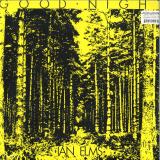
Ian Elms’s cult isolationist synth masterpiece Good Night returns via Dark Entries. Originally released in 1982, Good Night blends Berlin school minimalism and BBC Radiophonic weirdness with the aesthetics of then-nascent DIY punk electronics throughout its fifteen short tracks. According to Elms, these pieces were composed in two broad but interrelated modes: pieces with voice and synthesizer, which are obliquely narrative, and instrumental synthesizer pieces that aspire to capture fleeting emotions. Ian met with producer David Hoser at Octopus Studios and they began constructing pieces using a Polymoog Keyboard 280a, sampled drum tracks, and Elms’s synthesizer. On “The Street Enters the House”, live drums lurch along with skeletal motifs while Elms’s elliptical lyrics evoke domestic discontent. “A Light Moves Across Curtains” features metronomic pummeling and icy strings buttressing the scant cryptic lines from Elms. Instrumental gems like “Goodnight” and “Surrounded by Trees” are built around detuned riffs in round-like structure, both drifting and static like the motion of waves. With original pressings fetching three digits – if you can even find a copy – this reissue is essential listening for fans of John Bender, Transparent Illusion, and the early 80’s DIY cassette scene. Each copy of Good Night comes with a postcard featuring a photograph and notes by Elms. “This record is intended for anyone who by accident or design spends most of their time alone (whether in the body or in the mind).” – Ian Elms.
Order now and we will order the item for you at our supplier.
Repress!
200 COPIES ONLY
Nils Frahm has unexpectedly confirmed details of a new collection of solo piano music, his first album since 2022’s three-hour Music For Animals. Day will be released by LEITER on March 1st, 2024, and it will be available on limited edition vinyl as well as via all digital platforms. Recorded in the summer of 2022 in complete solitude and away from his studio at Berlin’s famed Funkhaus complex, it is preceded by a single, ‘Butter Notes’, out on January 19. Day may come as a surprise to those who, over the last decade, have watched Frahm shift slowly away from the piano compositions with which he first made his name in favour of a nonetheless still-distinctive approach that’s considerably more instrumentally complex and intricately arranged. In addition, in 2021, having spent the early part of the pandemic arranging his archives, he released the 80 minute, 23-track Old Friends New Friends, a compilation of previously unreleased piano music intended to enable him to ”start over” with a clean slate. Judging from the extended, ambient nature of Music For Animals, it proved a successful gambit, but Frahm has never been able to resist returning to his first love, and those who enjoyed earlier acclaimed albums like The Bells, Felt and Screws will once again revel in Day’s familiar, personal style. Day, which contains six tracks, three over the six-minute mark, is the first in a pair of albums Frahm has lined up for 2024. In keeping with their nature, however, he won’t be making a song and dance about the release. Instead, he’ll resume his ongoing world tour, which has already included fifteen sold-out dates at Berlin’s Funkhaus as well as a show at Athen’s Acropolis. It will continue with shows all over the world, among them several sold-out dates at London’s Barbican in July 2024, where he previously curated a weekend of music, film and art, Possibly Colliding, in 2016. The album is best enjoyed in the manner in which it was recorded, in the intimacy of a peaceful, cosy room. There are muffled pedal creaks on the cyclical, quietly jazzy ‘You Name It’ and, during the palliative ripples of ‘Butter Notes’’ arpeggios, the sound of dogs barking in the streets outside. The compassionate, hesitant ‘Tuesdays’ and emotionally ambiguous ‘Towards Zero’ linger with the poignant persistence of Harold Budd’s earliest work, while ‘Hands On’ is a sometimes brighter, airier tune that sets its own, deliberate pace, and, as he has on occasions before, ‘Changes’ sees Frahm employing elements of his instrument’s construction in a ‘prepared piano’ fashion. Characterised by its confidential mood, Day confirms that, while Frahm is arguably now best known for elaborate, celebratory concerts calling upon an arsenal of pianos, organs, keyboards, synths, even a glass harmonica, he’s still a prolific master of affecting simplicity, tenderness and romance.
Order now and we will order the item for you at our supplier.
Elations Recordings presents "Depois do Silêncio", an intimate, forward-looking acoustic bass, digital keyboard and synthesiser recording by Brazilian avant-garde jazz luminaries Zeca Assumpção and Lelo Nazario. This release celebrates almost fifty years of the duo's friendship and musical affinity, continuing a musical dialogue between long-time collaborators. The duo began working together with Hermeto Pascoal's "Grupo Vice Versa" in the mid 1970s before forging one of Brazil's most adventurous experimental jazz groups "Grupo Um" in 1976; releasing three albums with a shared avant-garde and lateral, exploratory approach to sound fusing jazz and contemporary synthesis with expanded and prepared acoustic playing.
"Depois do Silêncio" reflects the duo's long development of a shared conception of music, resulting in a work that is both timeless and modern. The music on the album was primarily recorded in Nazario's UTOPIA Studio, São Paulo, in 1994, featuring Assumpção on acoustic bass and Nazario on his newly acquired Ensoniq TS-12; these recordings were supplemented with acoustic bass for "Quintal da Memória" in 2018 and completed with an additional layer of rich, complex analog and virtual synthesis following their rediscovery of the material in 2022.
Assumpção's deeply expressive acoustic bass playing forms the backbone of these compositions, augmented by Nazario's expansive and exploratory approach to synthesis, its constantly shifting timbres "making music a living organism, which adapts to situations as they appear." Nazario explains that "although the themes are written, much of the music is improvised based on an organic development of ideas, all intertwined and interrelated exactly as happens in a living organism".
The album title "Depois do Silêncio" (After Silence) references a phrase by the writer Aldous Huxley; "after silence, that which comes nearest to expressing the inexpressible is music". Assumpção and Nazario continue a search for new forms of musical expression, and here they succeed in creating music that "expands the sound of musical instruments, so opening new horizons in the minds of listeners".
Order now and we will order the item for you at our supplier.
An electrified meeting of minds, Candy Girl is a lost 1975 session by jazz pianist Mal Waldron, recorded in Paris with core members of the mighty Lafayette Afro Rock Band, the American funk unit who had made France their home and whose deep grooves would later be mined by generations of hip-hop producers.
By 1975, Waldron was a decade into his self-imposed exile from the United States—a transformed musician who had reassembled his sound in Europe and Japan after a devastating breakdown in the early '60s. His post-1969 output had stripped jazz down to its core elements: modal intensity, locked grooves, and hypnotic repetition. Candy Girl doesn’t interrupt this trajectory—it extends it, wrapping Waldron’s minimalist mantras around the funked-up chassis of the Lafayette rhythm section.
Originally released in microscopic quantities on the Calumet label and long shrouded in obscurity, Candy Girl was recorded spontaneously in the studio of French producer Pierre Jaubert, whose Paris HQ had become the workshop for both avant-garde jazz (Archie Shepp, Art Ensemble of Chicago, Steve Lacy) and psychedelic funk (Lafayette Afro Rock Band AKA Ice). This session finds Waldron jamming freely with bassist Lafayette Hudson, drummer Donny Donable, and keyboardist Frank Abel on clavinet, Moog and more—laying down raw, unfiltered instrumental funk with an experimental edge.
Highlights include the low-slung vamp of “Home Again”, the crisp, break-laden groove of “Red Match Box”, and the mesmeric swirl of the title track “Candy Girl” —a minor-key electric piano waltz with hints of cosmic soul. There's even a deep cut for the crate diggers: the somber yet meditative “Dedication to Brahms”, where Waldron deconstructs the Romantic composer’s third symphony into a sparse jazz reverie.
Unlike his polished sessions for Japanese labels or the avant-garde swing of his earlier Prestige work, Candy Girl feels more spontaneous, even accidental — and that’s part of its power. It’s a document of Waldron as bandleader, collaborator, and explorer, captured in the midst of a vibrant, cross-cultural scene in mid-70s Paris. Never officially issued with a cover and barely released at all, Candy Girl is a rare convergence of two underground traditions: Waldron’s Euro-exile electric jazz and the raw, sampled-future funk of the Lafayette Afro Rock Band. Now finally resurfaced, it deserves its rightful place in both stories.
Order now and we will order the item for you at our supplier.
- AGAIN AND AGAIN
- DON'T LET THEM TELL YOU (IT'S FAIR)
- ANOTHER WORLD
- CINEMA
- BACK OF MY HAND
- HEY YOU
- IF YOU'VE GOT THE
- TIME
- SMILING
- BURNING UP
- PRICE OF A MAN
SKY BLUE VINYL[23,49 €]
Nach der Neuauflage von The Belair Lip Bombs' (dem ersten australischen Signing des Labels) Debütalbum ,Lush Life" im Jahr 2023 durch Third Man Records - das breite Anerkennung fand, darunter eine ?-Bewertung im NME, eine 7,8-Bewertung von Laura Snapes in Pitchfork, einen Artikel in der Rubrik ,Ones To Watch" im Guardian und eine Auszeichnung als ,Best Rock or Punk Work" bei den Victoria Music Awards erhielt, bereitet sich die vierköpfige Band aus Melbourne auf die Veröffentlichung ihres mit Spannung erwarteten zweiten Albums ,Again" am 31. Oktober vor. Unter der Leitung von Maisie Everett (Gitarre, Keyboard, Gesang) und ergänzt durch ein talentiertes Trio von Musikern bestehend aus Mike Bradvica (Gitarre), Jimmy Droughton (Bass) und Daniel Devvlin (Schlagzeug) wurde das Album mit Produzent Joe White von Rolling Blackout Coastal Fever aufgenommen. (,Again" festigt die Position von Lip Bombs (als feste Größe in der aktuellen Indie-Szene). ,Hey You", die erste Singleauskopplung aus dem Album, fängt das großformatige Songwriting und das angeborene Gespür der Band für mitreißende Melodien ein.
expected to be published on 31.10.2025
Nach der Neuauflage von The Belair Lip Bombs' (dem ersten australischen Signing des Labels) Debütalbum ,Lush Life" im Jahr 2023 durch Third Man Records - das breite Anerkennung fand, darunter eine ?-Bewertung im NME, eine 7,8-Bewertung von Laura Snapes in Pitchfork, einen Artikel in der Rubrik ,Ones To Watch" im Guardian und eine Auszeichnung als ,Best Rock or Punk Work" bei den Victoria Music Awards erhielt, bereitet sich die vierköpfige Band aus Melbourne auf die Veröffentlichung ihres mit Spannung erwarteten zweiten Albums ,Again" am 31. Oktober vor. Unter der Leitung von Maisie Everett (Gitarre, Keyboard, Gesang) und ergänzt durch ein talentiertes Trio von Musikern bestehend aus Mike Bradvica (Gitarre), Jimmy Droughton (Bass) und Daniel Devvlin (Schlagzeug) wurde das Album mit Produzent Joe White von Rolling Blackout Coastal Fever aufgenommen. (,Again" festigt die Position von Lip Bombs (als feste Größe in der aktuellen Indie-Szene). ,Hey You", die erste Singleauskopplung aus dem Album, fängt das großformatige Songwriting und das angeborene Gespür der Band für mitreißende Melodien ein.
expected to be published on 31.10.2025
A Place In My Memory Is All I Have To Claim is the new album by Australian atmospheric pop trio Hydroplane, the storied 'offshoot' formed by three quarters of independent pop group, The Cat's Miaow. On this, their first music after two decades plus of radio silence, Andrew Withycombe, Kerrie Bolton and Bart Cummings return to the gentle, close-quarters musical world they shared around the turn of the century.
Recorded during 2024 in Melbourne and Ballarat, A Place In My Memory… picks up the thread Hydroplane set down with its precursor, 2001's The Sound Of Changing Places, though you can hear echoes of their other releases, too, with Withycombe noting a through-line from the group's 1998 "Failed Adventure" single. There's little quite like A Place In My Memory…, then or now, though. Maybe you can draw some connections between Hydroplane and their sister group, The Cat's Miaow, while fellow travellers might include Empress, The Ah Club, and further back, Young Marble Giants, Veronique Vincent (the muffled, ticking drum machine also makes me think of Robin Gibb's Robin's Reign).
There's also an umbilical to the bedroom-crafted electronica doing the rounds in the late nineties and early noughties. Hydroplane hint at this through their approach to songwriting, which often builds creatively around loops as structural devices. Through all this, the trio achieve an effortless, organic weightlessness across these nine lovely songs. Many feature Bolton's clear singing voice, drifting along, while guitars, keyboards, drum machines and loops tickertape away. The constituent parts fit together, but they also have a curiously detached quality - think of abstract cloud formations sharing the same sky.
Hydroplane and The Cat's Miaow often dealt in emotional ambiguity and uncertainty, and the uncertainty of the nostalgic. This was always one of the most appealing facets of their music, and A Place In My Memory… is thus named perfectly. I couldn't dream up a better title for the album and its reflections on history, lived experience, and the inevitable tangle between these two phenomena. These reflections variously address such concerns as human cruelty, flight, space travel, adventurism and spiritualism. There's also "To the Lighthouse", not a direct reference to the Virginia Woolf book, but a great title, nonetheless. (They've always had excellent titles, often borrowed, for songs and albums.)
A beautiful collection of drowsy, sleepy pop, humble and quiet, but resolute in its craft, A Place In My Memory Is All I Have To Claim is dream work in practice; a lovely reintroduction. Welcome back, then.
Order now and we will order the item for you at our supplier.
- A1: Kenya Kurungara (1977)
- A2: Ke Wapendane (1977)
- A3: Kwandikwo Ti Guciarwo (1976)
- A4: Gari La Trela (1982) with City Sound Band
- A5: Wa Mwene Ni Umwe (1976)
- B1: Njohi Ndiri Mwarimu (1966)
- B2: Karolina (1982) with Kamaru Super Stars
- B3: Ngunia Nguru (1985) with Kamaru Mixed Grill and Kamaru Super Stars
- B4: Kimiiri (2007)
- C1: Ikihanda Munyugi (1988)
- C2: Chunga Rurimi (1989) with City Sound Band
- C3: Riria Mugutwenja (1975) with City Sound Band
- C4: J.M. Kariuki (1975) with Kamaru Celina Band
- C5: Ndari Ya Mwarimu Pt. 2 (1969)
- D1: Muhiki Wa Mikosi (1988)
- D2: Andu A Madaraka (1969)
- D3: Ni Kirume (2007)
- Ähnliche Artikel
Eine essentielle Einführung in den Katalog des "King of Kikuyu Benga", Joseph Kamaru! 17 Tracks, die seine ganze Bandbreite abdecken – von schwungvollen Dancefloor-Chants, High-Life-esken Gitarren über Afro-Funk, Drum-Machine- und Keyboard-lastigen Disco-Grooves bis zu folkloristischen Klageliedern. Die Musik ist rau, direkt, tanzbar und voller einprägsamer Hooks. Die prägnanten Texte reichen von Protestliedern bis hin zu Beziehungsratschlägen. Joseph Kamaru war in seiner Heimat Kenia eine unglaublich populäre Persönlichkeit und verband sie alle – von einflussreichen Politikern bis zur ländlichen und städtischen Arbeiterklasse. Seine Musik verdient ein viel größeres internationales Publikum.
expected to be published on 31.10.2025
- A1: PALM ST
- A2: SMALL DYNAMITE
- A3: PENATEN
- A4: CRAZY LOVE
- B1: THE 4TH DIMENSION BUTTERFLY
- B2: COCONUTS HIGH
- B3: LAZY LOVE
- B4: Mr.COOL
After leading the Flying Mimi Band, Izumi Kobayashi gained attention for her keyboard work in Masayoshi Takanaka's band and for her work on the music for
the anime series Urusei Yatsura. This LP reissues her funky, tropical solo debut album from 1981!
expected to be published on 31.10.2025
Mehr als 40 Jahre nach seiner Erstveröffentlichung ist Heartbeat City nach wie vor das kommerziell erfolgreichste Album von The Cars, das in den USA mit 4-fach-Platin ausgezeichnet wurde und weltweit die Charts erreichte. Produziert von Robert John „Mutt“ Lange, enthält es sechs Hitsingles, darunter „Drive“, „You Might Think“ und „Magic“.Die Deluxe-Edition zum 40. Jubiläum ist ein 4-CD-Set, das unveröffentlichtes Material enthält, darunter B-Seiten, Remixe, frühe Mixe, alternative Versionen und ein komplettes Konzert aus dem Jahr 1984, das in Houston aufgenommen wurde. Eine Replik der originalen Vinyl-LP sowie ein wunderschönes 16-seitiges, 12x12 Zoll großes Farbbuch sind ebenfalls Teil dieses Sets. Es enthält außerdem Track-by-Track-Kommentare von Keyboarder und Bandmitglied Greg Hawkes.
expected to be published on 31.10.2025
Where we welcome you to the Fourth installment of 'Divine Harmonics" Featuring Kuniyuki Takahashi. Music produced in collaboration with friends
Here we present Part one of a Two Part Series.
Recorded in a full-fledged Recording Studio in Brooklyn New York, the idea behind this current project was to assemble a few admires of Kuniyuki's music and invite them to participate in the composition.
The musicians on this project include master percussionist composer Lekan Babalola on African Drums and Percussion, Lead Guitarist James Bergeau , Joaquin Joe Claussell Main Voice and Percussions; And of course, the artist himself Kuniyuki Takahashi and Acoustic Piano, Keyboards and Drum Programming.
Artwork Created by the one and only artist Akemi Shimada.
Order now and we will order the item for you at our supplier.
Wally Badarou is a synth pioneer and musical polymath. But rarely does he sing over his sumptuous tracks. The 6 songs that comprise new record Simple Things finally realise Wally's vision for select backing tracks from his beloved Colors Of Silence.
The tracks were originally developed back in 2001 for the release of the original CD; here, Wally has “simply" added overdubs and vocals to their mastered mixes with some discerning edits. Simply put, Simple Things is another slice of simply stunning Wally Badarou genius.
Simple Things has been decades in the making. Indeed, Wally struggled not only with the idea of singing these wonderful songs himself but singing them in English and writing his own lyrics, while wrestling with the sensational backing tracks, which themselves seemed to have taken on a life of their own.
As Wally explained to us: "In addition to the instrumental artist I have been known as, so far, there has always been a singer who simply was not sure he was, up until now. Even though “Back To Scales Tonight”, my very first album, was, indeed, a song album."
Opener "It Couldn't Be You" embellishes the uptempo groove of soca-funk gem "The Lights Of Kinshasa". As Wally explained to us, it's about “a simple love story somewhere, one rainy night, under the lights of Kinshasa. A woman, a man, online dating, quite usual in our times. Then they meet, almost missing each other." The guide vocal Wally had laid for Colors Of Silence - with an organ sound - seemed striving for words in Linguala, a Congolese language he could not speak. Therefore the decision to do it himself was not an easy one, for it had to be in English to fit his singing. We think it turned out pretty good!
"You Can't Hide Always" vocalises Wally's deep concerns set to the propulsive "Smiles By The Millions": "Populism, ostracism, radicalism, ethics and values all turned upside down worldwide, are they all inevitably exacerbated by our social networks? It could all melt down one day, like a house of cards in the ocean of fake news and false prophecies”. Wally wanted to keep the track as bare as possible but, inevitably, the backing vocals and the synth-brass arrive ultimately to present a welcome 70s flavour, with no snare-drum added.
The bright and breezy "We'll Make It Again" adds vocals to "Where Were We", a tropical, reggae-tinged bounce through the islands. Here's Waly: "Where were we when we last said: "I love you"? Simple words to express something quite common, but never quite simple to deal with. A simple song about the resilience of the broken hearts.” The reggae came from it being conceived when Wally was scoring for “Third World Cop”, a 1999 Jamaican action movie.
"Walk Straight Ahead" provides Wally's gorgeous, contemplative and idiosyncratic vocals to the deep serenity of Colors Of Silence highlight, "Amber Whispers". It's a gliding, divine, mini melodic masterpiece. It'll make you swoon in its extreme beauty. As Wally describes, "it started as just whispers, sweet amber whispers. Then the colour turned darker, as darker skies seemed to fall upon us while the whole world keeps on walking ahead, straight ahead, regardless of the blatant warnings, feeling much too comfortable in conformity. Initially, the verses were to be spoken only. I realised they could be sung all the while, without overshadowing the ethereal atmosphere." Amen.
The serene, celestial "Painting My Life Blue" presents the vocal version of "Days To Wonder". Says Wally, "how does it feel when your second half is gone after decades of riding life together? Past the temporary loss of your bearings, you come to realise you've been blind to the essential, and suddenly you can see...For this most intimate song of mine, I had tried to come up with a melody on top of the existing backing track, long before realising the melody was in the keyboard part already. It just needed to be properly mixed with it."
The profoundly emotional "Just Two Lovers" works up the formerly-too-brief and glorious "Crystal Falls" into a much fuller masterpiece and features acoustic guitar sparkle before fully glistening with some gentle head-nod percussion. Waly explains further: "Dear little green men, please tell me, what is it about us that makes you want to come and visit us so often (contrary to Fermi's assertion)? And here is the reply I believe I heard them sing: "You've got the key you've been searching for: Love”. I reverted to the initial backing track I had made around 1985, which already bore the melody, and which I added acoustic guitars to, before singing it." An astounding closer.
A synth specialist, there can be few artists more under-appreciated given their vast influence than Wally Badarou. His solo work practically defined the sound of the Balearic DJs of the 1980s, and thus the more sophisticated sound of dance culture thereafter. He was one of the Compass Point All Stars (with Sly and Robbie, Barry Reynolds, Mikey Chung and Uziah "Sticky" Thompson), the in-house recording team of Compass Point Studios responsible for a series of albums in the 1980s recorded by Grace Jones, Tom Tom Club, Mick Jagger, Black Uhuru, Gwen Guthrie, Jimmy Cliff and Gregory Isaacs. Badarou's keyboard playing could also be heard on albums by Robert Palmer, Marianne Faithfull, Herbie Hancock, M (Pop Muzik), Talking Heads, Manu Dibango and Miriam Makeba. He also produced Fela Kuti. Phew!
When we asked Wally about the significance of this collection's title, he explained: "These are "Simple things” that everyday’s life seems to build upon. The simplest are the harder to describe, but when satisfactorily described i.e. with simple words, they are the more genuine and authentic to express and share. I’ve immersed myself in other classic song lyrics, something I hardly did before, just to appreciate the genius behind the simple words they were made of, and had a great time studying how powerful they were in expressing complex ideas such as love."
Recording was twofold: first, most of the backing tracks were recorded in 2001, in Wally's studio in Normandy, mostly using hardware synths and Yamaha digital consoles. Then, he fine-tuned the melodies and wrote the lyrics in late 2023, then added some overdubs and sang them all during summer 2024. States Wally, "Digital Performer was and remains the DAW I’ve been using throughout, ever since the 80s."
Wally's sophisticated synth textures and expressive keyboard runs are so full of character, so full of life, that this work of art transcends any easy genre categorisation. Meticulously remastered and cut by both Simon Francis and Cicely Balston respectively, it has been pressed to the highest possibly quality at Record Industry in Holland. Sometimes, the simple things are the most extraordinary.
Order now and we will order the item for you at our supplier.
- Deathday
- What's Really Happening
- The Titles
- Longwood
- Cloudy
- Stepping
- Two Ruffys
- Inner Day
- The Blinded Bird
- I Don't Do / Grand Central
- Thanksgiving (Three Dead Walls)
- 11: 12.24
- Anniversary
In March 2024, Jim White released his first-ever solo album, All Hits: Memories. Coming forty years into his career, it felt like some kind of breakthrough happening. His second solo album confirms it: Jim"s deep percussive intuition is fueling a new musical vehicle in his life. Inner Day finds him dancing ever more deftly with himself on an expressionistic set of drum kit and keyboard duets. Developing meditations on his personal arcana into expressive keyboard feels, he crafts parts as he would on the kit, further interacting with them on drums as well. Jim takes another big step on Inner Day, singing on two standout tracks, "Inner Day" and "I Don"t Do / Grand Central," his words and voice in the mix for the first time. A drummer of exquisite powers, great and small - his Dirty Three compatriot Warren Ellis contends his playing long ago "split the atom" - Jim"s capable of driving a band one minute, then slipping past accompaniment and into the cracks of the subliminal in the next breath. He"s got qualities - deep pockets, a lovely sense of the moment - that serve him and those he drums with well. His collaborators include Bill Callahan, Cat Power, Marisa Anderson, Daniel Blumberg, T. Griffin, Phosphorescent, Jess Ribeiro, Ed Kuepper and Mess Esque, alongside communal experiences in Xylouris White, The Double, Beings, The Hard Quartet and Dirty Three. And all that"s just in the past five years!
expected to be published on 24.10.2025
- Fly Higher
- Love Is Still The Answer
- Don't Be Silent
- Roots
- Love Will Find A Way
- Ashim
- A Piece Of Gold
- To Be Free
- BJP (Big John Price)
- Nothing We Could Do
Die britischen Afro-Dub-Meister Soothsayers liefern mit "Fly Higher" ihr wohl bestes Werk ihrer drei Jahrzehnte langen Geschichte ab. Ihr mittlerweile 12. Studioalbum spiegelt die Essenz der Band aus Afrobeat, Soul, Jazz und Dub-Grooves wider. Die mitreißenden, eingängigen Melodien kommen durch dreistimmige Harmonien, Bläser-Hooks und hypnotisierende Basslines voll zum Ausdruck. Der Sound ist organisch und warm im originellen Soothsayers Songwriting-Stil, der eine Vielzahl von Einflüssen kombiniert, aber Klischees und Vorhersehbarkeit vermeidet. Featuring u.a. Youthsayers, die jamaikanische Jazzikone Tommy McCook, die britisch-nigerianische Sängerin Lizzy Donsumu, den ehemaligen Fela Kuti-Keyboarder Dele Sosimi und die britische Jazzmusikerin Julia Biel.
[i] BJP (Big John Price) [feat. Youthsayers]
expected to be published on 24.10.2025
- A1: Do What You Gotta Do
- A2: Looking For A Fox
- A3: Slippin' Around
- A4: I'm Qualified
- A5: I Can't See Myself
- A6: Wind It Up
- B1: Part Time Love
- B2: Thread The Needle
- B3: Slip Away
- B4: Funky Fever
- B5: She Ain't Gonna Do Right
- B6: Set Me Free
Clarence Carter, blind from birth, was a blues singer with lascivious wit, a talented guitarist, a songwriter with a twinkle in his eye, and a champion of down-to-earth soul grooves who taught himself to play the guitar.
He sang in a gospel choir, completed a degree in music, and grounded the duo Clarence & Calvin but was not however very successful.
After a car crash involving Calvin Scott, Carter started on a solo career and signed a contract with Rick Hall and the Fame label as a soloist.
Among the earliest singles recorded at the Muscle Shoals studio were a few hits. After leaving Fame for Atlantic, he managed to enter the Top 20 of the R & B charts with "Looking For A Fox". His breakthrough came with "Slip Away", which sold a million copies and was awarded a Gold Record.
The legendary Fame Studios in Muscle Shoals remained the home basis, as it were, for Carter during his career with Atlantic. "This Is…" begins with a contemplative, soft sound. "Do What You Gotta Do", written by Jim Webb, is a lovely, melancholic mid-tempo ballad, saturated with Barry Beckett’s keyboard and smothered by lush, plaintive winds.
But the man is primarily funky here … as three danceable, finger-snapping tracks prove; "Wind It Up", with further witty improvisations and a fervid organ solo, the highly syncopated, playful "Thread The Needle", and the smoky, irresistible "Funky Fever" – all written by Carter himself.
Dan Penn’s and Spooner Oldham’s "Slippin’ Around" has an unorthodox bossa nova-like beat that is reminiscent of Ray Charles’s "What’d I Say", while Carter’s unmistakable chuckle is to be heard for the first time on the riotous funk-rock number "I’m Qualified", which has the very same unique, infectious groove as was to be heard on Wilson Pickett’s "In The Midnight Hour". "She Ain’t Gonna Do Right", composed by the same man, brings more Alabama Country to the mix, whereby Beckett contributes a catchy, persistent organ riff in the refrain.
expected to be published on 24.10.2025
- A1: Skank On Dub
- A2: Way Out Rockers
- A3: Pablo's Express
- A4: Pablo's Happy Feeling
- A5: Soldier Man Dub
- A6: Well Frozen Dub
- A7: Sweet Cassava Dub
- B1: Talking Dub
- B2: Pablo's Connection
- B3: Skanking With Pablo
- B4: Pablo's Delight
- B5: Death Trap Dub
- B6: Rockers Downtown
- B7: New Train Dub
2024 Repress
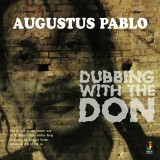
If anyone in the reggae circles could be described as having their own sound it would have to be Mr Augustus Pablo, born Horace Swaby 1954 St Andrew Jamaica. He took the humble melodica a wind blown mouth keyboard and made it shine.
His musical journey started one sunny day in 1969. Walking into Herman Chin- loy's Aquarius Records shop and on playing his melodica so impressed its owner that he was taken off to Randy's Studio 17, the very next day to cut his first record 'Iggy Iggy'. But it was his second tune under the guidance of Clive Chin again cut at Randy's, the seminal 'Java ' that put the young Augustus Pablo on the map. Clive Chin continued his work producing Pablo's debut album 'THIS IS AUGUSTUS PABLO' . An instrumental affair on which the neo-mystical ''Far East'' sound synonymous with Pablo's work emerged.
Having worked with most of the top producers of the time,Lee Perry,Keith Hudson, Bunny Lee, Augustus decided to set up his own label "Rockers", named after his brothers sound system. Where many of his tunes would first be heard.The label came to define a new and exciting chapter in reggae history.Even when versioning acknowledged classic Studio One rhythms there was a precious maturity and depth to Pablo's productions that kept him at the top throughout the late 1970s and into the 1980s. His 'King Tubby meets the Rockers Uptown' set which featured some of these rhythms reworked; Swing EasySkanking Easy, Frozen SoulFrozen Dub, stands as one of the true dub classic albums of any reggae education.
This set of dubs are taken from his classic 70's period.All rare dubs straight from the masters. You may have heard the tune, but not these versions. So sit back and enjoy the Original Rocker..... STILL SOUNDS SWEET.
RESPECT....JAH FLOYD.
expected to be published on 17.10.2025
Stone classic Bullwackies (as excursioned by Rhythm & Sound for Burial Mix), sensationally featuring two unreleased dubs, newly extracted from the master reels. Both are equally unmissable but quite different, with contrasting effects: the second dub adds ninety seconds, including whip-dem spring reverb. Drawn from the Selective Showcase LP, the vocal mix is more open and dubwise than the Sing & Shout LP offering, with less keyboards.
Asked whether it should be mash or march, after some pondering Bullwackies replied: "That's a good question.'
Order now and we will order the item for you at our supplier.
STANDFIRST Titanic, the project spearheaded by Mabe Fratti and Hector Tosta (aka I. la Católica), return with a sumptuous and life-affirming new album.
In her sensational 1929 biography Tiger Woman, dancer and socialite Betty May claimed her ‘coster’s eye’ meant she liked to wear as many colours as possible. “Colours to me are like children to a loving mother. Each is my favourite, yet I can never bring myself to deny the others by preferring one.” May’s bold and inclusive strategy is one that manages to transfer itself, almost a century later, to Hagen, the new record by Titanic.
Many will know Titanic as the Mexico City-based brainchild of cellist and singer Mabe Fratti and multiinstrumentalist Hector Tosta who is now operating under the pseudonym, I. la Católica, (taken, rather unusually, from the name of the street the pair live on). With Hagen, and their previous release, Vidrio, (2023), the pair are creating a distinctive signature sound in modern alternative pop music. Nobody else sounds quite like them. Both records have an open hearted nature and simple, winning melodies that play off against a taste for drama, spectacular orchestration and a feeling of otherworldly mystery. Hagen is the more ambitious, sometimes more mystical effort. From the opening handclaps of ‘Lágrima del Sol’, (a wonderfully uptempo playground chant translating as a tear from the sun but, surely, not referencing the brand of pineapple wine?), the record dances its way through various mid-to-late-eighties inspirations, lush and widescreen passages of melancholy and vertiginous contrasts.
Mystery is often found in the simple but slightly odd song titles. English translations of various track titles give, ‘you swallowed the gum’, ‘leak’, ‘a tear from the sun’, ‘raising the trophy’ ‘digging dimensions’, ‘the owner’, ‘the decapitated hen’ and ‘the trap is exposed’. All denote striking images, metaphysical hints and emotional cues or simple, even childlike actions. Though Fratti and Tosta don’t reveal its provenance, the album’s title could even be a crafty play on words: the listener would be forgiven in thinking the moments of brash contrast and eyebrow raising theatricalism in the music constitute a musical nod to German punk chanteuse, Nina Hagen.
On Hagen, singer and cellist Mabe Fratti once again displays her brilliant knack of speaking to us directly. There is never the suspicion of her playing to the gallery, and the directness of many of the lyrics don’t allow it. Parallel to this, Fratti has an almost magical ability to give Hector Tosta’s melodies, and her and Tosta’s lyrics ones imbued with an insight and meaning that feels otherworldly. Tosta admitted it was “pretty wild to hear Mabe take the interpretations to a different place” and the listener can pick up on the delight Fratti takes in (literally) adding a voice to the many narratives.
Two examples can be shown here: ‘Gotera’ (Leak) uses harsh slashes of cello and tough, gunfire-like guitars and drums and multiple vocal lines that could be acting as a Greek chorus. They play off brilliantly against Fratti’s soft, slightly baleful vocal take that delivers lyrics such as: ‘nobody knows where the leak is / but I know where it is / they fight in front of the door and / nobody can go in’. With ‘La Gallina Degollada’ the somewhat blithe melody melody line, sung with what could be sarcastic brio by Fratti, plays against an itchting rhythm and rasping guitar part. The punch comes when you see that the song is about a chicken that has been decapitated and read lyrics such as: ‘I already saw it, it moved, the decapitated chicken’ / ‘could it be that I'm broken’ and ‘Two people hurt each other by thinking that they no longer agree’/ ‘Hours pass and the chicken represents what scares me’.
There may be death and fights to deal with, but there is also a quality of chirpy self-reliance about Hagen that is a key part of its nature. Like Betty May and her colourful outfits, Hagen’s sound often revels in its own sense of richness. Throughout, the record delivers vaulting string sections or glutinous guitar squeals that could, like the powerful, driving ‘Escarbo Dimensiones’ (Digging Dimensions) have come directly from a glossy 1980s TV series. Fratti sees this “glam sound” developed by Tosta on the aforementioned track and ‘Te Tragaste el Chicle’ (You Swallowed The Gum), as moments that were truly “revealing” for the album as a whole during its making.
What else? The thud and thump of ‘La Trampa Sale’ (The Trap is Exposed), and its sudden change of tempo and mood betrays a monstrously ambitious piece of music, the players almost greedily creating the sounds. Other moments are heart wrenching: ‘Libra’ ends on a poppy chord switch that cleverly ramps up the emotion inherent in the music’s notation. You could almost imagine a teenager in a bedroom forty years ago, rewinding the track over and over on a small, cheap cassette player, unable to get enough of that sugarsweet switch. Elsewhere, Oneohtrix Point Never adds stardust and an unearthly sense of space on the changeable, slightly moody meditation, ‘Pájaro de Fuego’ (Firebird). The record ends with ‘Alzando el Trofeo’ (Lifting the Trophy), a track that could soundtrack a state wedding, what with its beautiful cascading piano parts, a sugary vocal and short triumphal guitar riffs that add a rich patina to the overall sound. Fratti: “When I doubled those vocals on ‘Alzando el Trofeo’ I felt there was an epiphany happening, right at that moment.”
Making a good record is a team game. Tosta and Fratti recall seeing Randall from Circular Ruin Studios in NYC “tweak the drums in ‘Libra’ to make that amazing effect of the gated reverb”, or the shaping of ‘Gotera’, “when (recording engineer) Nate Salon added some synths to the track.” Drummer Eli Keszler, “an amazing and versatile player” had the songs down pat in a couple of days” and, according to Tosta, Oneohtrix Point Never “just came to one of the sessions and we hung out, and after all the recordings he and Nate were together in some studio and out of nowhere they sent us some beautiful tracks for ‘Pájaro de Fuego’! Fratti concurs. “He decided that he wanted to record because he was listening to the record (Nate works closely with him) and he really liked it! It was a total honour, indeed!”
Bedazzled by the playing, the skyscraping ambition in the arrangements and the giddy moments of contrast thrown up by Hagen, we could allow ourselves a brief moment of flippancy and state that Titanic’s new record is Yacht Rock meets Aeschylus, full-on. It’s also worth speculating that, in this hyper-sensitive, intemperate age, Titanic’s music has the power, however fleetingly, to heal hurts. Hagen is a brilliant showcase for a fresh and enriching form of pop music: displaying a magpie eye for what glints and plundering what has gone before.
Like Vidrio, Hagen was partially and additionally recorded at Fratti and Tosta’s house, aka Tinho Studios in Mexico City, as well as Golden Girl Studios & Circular Ruin Studios in New York City. Mixing was done by Santiago Parra in Pedro y el Lobo Studios, Mexico City and mastered by Rafael Anton Irisarri at Black Knoll Studios, New York City. The recording engineer was Nate Salon.
Hagen featured Mabe Fratti on cello, vocals & backing vocals, I. la Católica on guitar, keyboards, prepared piano, bass & backing vocals, drums by Eli Keszler and synths in ‘Pájaro de Fuego’ from Daniel Lopatin and Nate Salon.
All compositions on Hagen are written by I. la Católica, except ‘Escarbo Dimensiones’ & ‘Pájaro de Fuego’, which were composed by I. la Católica and Mabe Fratti. The record was produced by I. la Católica and co-produced by Nate Salon & Mabe Fratti. And all lyrics are by I. la Católica except ‘Escarbo Dimensiones’, ‘Gotera’, ‘Gallina degollada’ & ‘Pájaro de Fuego’, which were written by I. la Católica & Mabe Fratti.
Order now and we will order the item for you at our supplier.
STANDFIRST Titanic, the project spearheaded by Mabe Fratti and Hector Tosta (aka I. la Católica), return with a sumptuous and life-affirming new album.
In her sensational 1929 biography Tiger Woman, dancer and socialite Betty May claimed her ‘coster’s eye’ meant she liked to wear as many colours as possible. “Colours to me are like children to a loving mother. Each is my favourite, yet I can never bring myself to deny the others by preferring one.” May’s bold and inclusive strategy is one that manages to transfer itself, almost a century later, to Hagen, the new record by Titanic.
Many will know Titanic as the Mexico City-based brainchild of cellist and singer Mabe Fratti and multiinstrumentalist Hector Tosta who is now operating under the pseudonym, I. la Católica, (taken, rather unusually, from the name of the street the pair live on). With Hagen, and their previous release, Vidrio, (2023), the pair are creating a distinctive signature sound in modern alternative pop music. Nobody else sounds quite like them. Both records have an open hearted nature and simple, winning melodies that play off against a taste for drama, spectacular orchestration and a feeling of otherworldly mystery. Hagen is the more ambitious, sometimes more mystical effort. From the opening handclaps of ‘Lágrima del Sol’, (a wonderfully uptempo playground chant translating as a tear from the sun but, surely, not referencing the brand of pineapple wine?), the record dances its way through various mid-to-late-eighties inspirations, lush and widescreen passages of melancholy and vertiginous contrasts.
Mystery is often found in the simple but slightly odd song titles. English translations of various track titles give, ‘you swallowed the gum’, ‘leak’, ‘a tear from the sun’, ‘raising the trophy’ ‘digging dimensions’, ‘the owner’, ‘the decapitated hen’ and ‘the trap is exposed’. All denote striking images, metaphysical hints and emotional cues or simple, even childlike actions. Though Fratti and Tosta don’t reveal its provenance, the album’s title could even be a crafty play on words: the listener would be forgiven in thinking the moments of brash contrast and eyebrow raising theatricalism in the music constitute a musical nod to German punk chanteuse, Nina Hagen.
On Hagen, singer and cellist Mabe Fratti once again displays her brilliant knack of speaking to us directly. There is never the suspicion of her playing to the gallery, and the directness of many of the lyrics don’t allow it. Parallel to this, Fratti has an almost magical ability to give Hector Tosta’s melodies, and her and Tosta’s lyrics ones imbued with an insight and meaning that feels otherworldly. Tosta admitted it was “pretty wild to hear Mabe take the interpretations to a different place” and the listener can pick up on the delight Fratti takes in (literally) adding a voice to the many narratives.
Two examples can be shown here: ‘Gotera’ (Leak) uses harsh slashes of cello and tough, gunfire-like guitars and drums and multiple vocal lines that could be acting as a Greek chorus. They play off brilliantly against Fratti’s soft, slightly baleful vocal take that delivers lyrics such as: ‘nobody knows where the leak is / but I know where it is / they fight in front of the door and / nobody can go in’. With ‘La Gallina Degollada’ the somewhat blithe melody melody line, sung with what could be sarcastic brio by Fratti, plays against an itchting rhythm and rasping guitar part. The punch comes when you see that the song is about a chicken that has been decapitated and read lyrics such as: ‘I already saw it, it moved, the decapitated chicken’ / ‘could it be that I'm broken’ and ‘Two people hurt each other by thinking that they no longer agree’/ ‘Hours pass and the chicken represents what scares me’.
There may be death and fights to deal with, but there is also a quality of chirpy self-reliance about Hagen that is a key part of its nature. Like Betty May and her colourful outfits, Hagen’s sound often revels in its own sense of richness. Throughout, the record delivers vaulting string sections or glutinous guitar squeals that could, like the powerful, driving ‘Escarbo Dimensiones’ (Digging Dimensions) have come directly from a glossy 1980s TV series. Fratti sees this “glam sound” developed by Tosta on the aforementioned track and ‘Te Tragaste el Chicle’ (You Swallowed The Gum), as moments that were truly “revealing” for the album as a whole during its making.
What else? The thud and thump of ‘La Trampa Sale’ (The Trap is Exposed), and its sudden change of tempo and mood betrays a monstrously ambitious piece of music, the players almost greedily creating the sounds. Other moments are heart wrenching: ‘Libra’ ends on a poppy chord switch that cleverly ramps up the emotion inherent in the music’s notation. You could almost imagine a teenager in a bedroom forty years ago, rewinding the track over and over on a small, cheap cassette player, unable to get enough of that sugarsweet switch. Elsewhere, Oneohtrix Point Never adds stardust and an unearthly sense of space on the changeable, slightly moody meditation, ‘Pájaro de Fuego’ (Firebird). The record ends with ‘Alzando el Trofeo’ (Lifting the Trophy), a track that could soundtrack a state wedding, what with its beautiful cascading piano parts, a sugary vocal and short triumphal guitar riffs that add a rich patina to the overall sound. Fratti: “When I doubled those vocals on ‘Alzando el Trofeo’ I felt there was an epiphany happening, right at that moment.”
Making a good record is a team game. Tosta and Fratti recall seeing Randall from Circular Ruin Studios in NYC “tweak the drums in ‘Libra’ to make that amazing effect of the gated reverb”, or the shaping of ‘Gotera’, “when (recording engineer) Nate Salon added some synths to the track.” Drummer Eli Keszler, “an amazing and versatile player” had the songs down pat in a couple of days” and, according to Tosta, Oneohtrix Point Never “just came to one of the sessions and we hung out, and after all the recordings he and Nate were together in some studio and out of nowhere they sent us some beautiful tracks for ‘Pájaro de Fuego’! Fratti concurs. “He decided that he wanted to record because he was listening to the record (Nate works closely with him) and he really liked it! It was a total honour, indeed!”
Bedazzled by the playing, the skyscraping ambition in the arrangements and the giddy moments of contrast thrown up by Hagen, we could allow ourselves a brief moment of flippancy and state that Titanic’s new record is Yacht Rock meets Aeschylus, full-on. It’s also worth speculating that, in this hyper-sensitive, intemperate age, Titanic’s music has the power, however fleetingly, to heal hurts. Hagen is a brilliant showcase for a fresh and enriching form of pop music: displaying a magpie eye for what glints and plundering what has gone before.
Like Vidrio, Hagen was partially and additionally recorded at Fratti and Tosta’s house, aka Tinho Studios in Mexico City, as well as Golden Girl Studios & Circular Ruin Studios in New York City. Mixing was done by Santiago Parra in Pedro y el Lobo Studios, Mexico City and mastered by Rafael Anton Irisarri at Black Knoll Studios, New York City. The recording engineer was Nate Salon.
Hagen featured Mabe Fratti on cello, vocals & backing vocals, I. la Católica on guitar, keyboards, prepared piano, bass & backing vocals, drums by Eli Keszler and synths in ‘Pájaro de Fuego’ from Daniel Lopatin and Nate Salon.
All compositions on Hagen are written by I. la Católica, except ‘Escarbo Dimensiones’ & ‘Pájaro de Fuego’, which were composed by I. la Católica and Mabe Fratti. The record was produced by I. la Católica and co-produced by Nate Salon & Mabe Fratti. And all lyrics are by I. la Católica except ‘Escarbo Dimensiones’, ‘Gotera’, ‘Gallina degollada’ & ‘Pájaro de Fuego’, which were written by I. la Católica & Mabe Fratti.
Order now and we will order the item for you at our supplier.
- A1: THIS IS A NEVER ENDING STORY (YOU JUST NEED TO CLOSE IT)
- A2: HIDDEN ROAD (FOR YOO JAE-HA)
- A3: IT MUST'VE BEEN THE SUNSET (THAT ALTERED MY MEMORY FROM THAT DAY)
- A4: GOOD MORNING, HARRISON, IT'S TIME TO GO
- A5: LET'S WALK DOWN TO THE SWAMP TOGETHER
- B1: RAINY NIGHT RIDE WITH ROY
- B2: CROWS OVER MY SHOULDER (TAKE ME)
- B3: SPIRAL DANCE (UP OR DOWN, I'M NOT TOO SURE)
- B4: DEAR ODDIE, TODAY RAINBOWS ARE FALLING FROM THE SKY
- B5: LYING HERE HALF AWAKE, I HEAR KIDS OUTSIDE LAUGHING WITH THEIR HEARTS
Unlike anything we have heard from her before, Okkyung Lee returns to Shelter Press with "Just Like Any Other Day: Background Music For Your Mundane Activities", a deeply intimate body of recordings at the juncture of ambient music, minimalism, and the baroque, that stands as radical intervention with what experimental music can be, and the place that organisations of sound occupy in our lives. For more than two decades, Okkyung Lee has stood at the forefront of the most radical trajectories of experimental music: a virtuosic cellist and improviser, renowned for her creative rigour and emotive depth. Particularly noteworthy for her range, dexterity, and adaptability, over the last five years Lee's output has revealed unexpected shifts and developments that move far afield from the realms of free improvisation for which she is most well known. 2020's "Yeo - Neun", a heart-wrenching, ambient chamber work - drawing inspiration from the Korean popular music of her youth - was issued by Shelter Press to great critical response, followed closely by "Teum (The Silvery Slit)" - one of a series engrossing electroacoustic works created at Groupe de Recherches Musicales in Paris - on Portraits GRM, and then "Na-Reul" in 2021, regarded by Lee as a closing statement of more than two decades living in New York, which set the precedent of her allowing her emotions to fully occupy the forefront of the music for the first time. Marking her return to Shelter press, "Just Like Any Other Day": Background Music For Your Mundane Activities", encounters Lee upturning the apple cart once again, weaving a profoundly intimate artistic statement on completely unexpected terms. Like its three aforementioned predecessors, "Just Like Any Other Day" belongs to broadening shift in Lee's approach to composing that roughly aligns with her return to her native South Korea, having lived in the United States since her late teens. Infused with a deep reengagement with her own culture and relationship to memory, it is equally a response to those critical challenges and questions provoked by significant life change. Worked on in isolation, and continuously returned to, over the course of four years, the album's nine pieces began with a simple recognition that experimental music is not always what we imagine it to be. It is a practice and a pursuit - a music for which, at its inception, the outcome is unknown - rather than an idiom defined by certain syntaxes, approaches, and qualities of structure and sound. From this departure point, Lee began to inquire after the utility of music itself: what is it for, what does it do, and what place does it (or can it) occupy in our lives? This solitary and durational journey, each composition gradually moving through different phases and evolutions over years, led Lee toward uncharted ground: a music that is not only playful, introspective, and seductive, but also intended to provoke a relationship to experimental music beyond its normative expectations. Rather active or deep listening, it pursues passive listening. Rather than a grand statement, it is discreet. Rather than virtuosity, it embraces the elegant and direct. Even more strikingly, for the first time, the music of "Just Like Any Other Day" encounters Lee leaving the cello entirely behind. Created at home on keyboard, computer, and an inexpensive cassette recorder, "Just Like Any Other Day" presents a remarkable form of ambient music - organisations of sound that become their own environment, to be occupied - intended, as the album's subheading infers, as Background Music For Your Mundane Activities. An expansion of the creative pathways opened by the Korean pop imbued compositions of Yeo - Neun, aspects of electronic process explored by "Teum (The Silvery Slit)", and the emotive foregrounding of "Na-Reul", each of the pieces presented across the two sides of "Just Like Any Other Day" implies something far greater than the limits of its own temporarily: a mood, provocations of memory and place, mirrors for the solitude within which it was made, and palpable emotion lingering just out of grasp. For Lee, each of the album's compositions could be continued or looped for an indeterminate duration: straddling a ground between the minimal and the baroque, enveloping the listener in endless cycles of appreciating, repetitive and rhythmical notes, flirting with the melodic and implying a disembodied imagism that borders on the profound. Remarkably beautiful and direct, Okkyung Lee's "Just Like Any Other Day: Background Music For Your Mundane Activities" - issued by Shelter Press on vinyl - represents a radical reconfiguration of experiential music, stripped to its bare essence in defiance of the widely presumed aesthetic signifiers. Unlike anything we've heard from her before, this immersive body of intimate recordings not only reveals new dimensions of Lee's striking range as an artist, but also of how we might regard and occupy music itself: an ambience to lived and felt like a second skin.
Order now and we will order the item for you at our supplier.
Originally released in 1981, Mr. Circle’s Thi Nam should really have been recognised decades ago as a jazz dance classic. A beautiful example of European jazz fusion at its most sophisticated and optimistic, the album is immersed in the sonics and rhythms of pan-Latin fusion and Brazilian samba, but with one foot in the upful jazz fusion exemplified by Roy Ayers or the Mighty Ryeders.
Taking inspiration from Ursula Dudziak, Flora Purim, and Norma Winstone, singer Monika Linges uses the crystalline tone of her voice as an instrument within the ensemble. The LP is built around the interaction of her vocalising with bandleader Mikesch van Grümmer’s keyboard versatility, all underpinned by the surging Brazilian rhythms laid down by drummer Gerd Breuer and percussionist Ponda O’Bryan.
The result is a unique set of sunlit, Brazilian-inspired jazz fusion. Aimed squarely at the feet throughout, the album kicks off with a double whammy: the funky title track, followed by. the percussion-rich Juntos. The long form Suka begins with a shimmering intro before taking flight halfway through into an urgent jazz samba with Linges’ vocals to the fore. Featuring the vocals of Bill Ramsay, Tides is another driving jazz-dancer with a Brazilian twist, while the summery, propulsive Schoch-Schach features virtuosic interplay between Linges and alto saxophone.
Order now and we will order the item for you at our supplier.
Unleash the groove with this rare jam – a Street Funk remix of a legendary track from one of hip-hop’s most iconic voices and his powerhouse Flipmode Squad. Known for delivering countless hits and unforgettable anthems, this collective has once again blessed the decks with something truly special. Previously unreleased on 7” vinyl, this DJ-friendly edit is a treasure for any serious DJ and collector.
The pressing quality is simply mesmerizing, built with clubs and dancefloors in mind. From bouncing beats to fluid basslines, from uplifting keyboard chords to soulful vocals and razor-sharp rap verses – it’s got all the ingredients of a certified smash. Whether you're setting the tone or saving a set, this 7” is a go-to weapon for DJs worldwide. There’s not a problem this squad can’t fix and for sure this 7” will save a DJs life every night…
Order now and we will order the item for you at our supplier.
pictured cover sealed in shrink wrap (first time ever on Samosa)
Samosa Records comes back with a real summer bang in the form of the ‘Afro-Ritmo EP’ – a four-track journey into afro soaked vibes courtesy of Anura & Sr. Lobezno and featuring label boss De Gama!
First up on side A is the EP’s title track, the mesmerising ‘Afro Ritmo’. Anura & Sr. Lobezno announce their arrival on Samosa Records with this spicy West African rhythm bomb. Kakaki trumpet fanfares meld with intricate synth stabs and ethereal Oja flute, whilst the solid tribal beats and rolling bass dictate the dance moves. And dance you must…
Track 2 is the deliciously glitchy, conga bonanza ‘Sungu Sa’. Make no mistake, ‘Sunga Sa’ is out to get you from the very first beat – tempting you to go behind the curtain as the haunting guitar lures you ever closer to its secret door. Dark, uplifting and ritualistic, the chant of ‘Sunga Sa’ will live in your head rent free well after the sun has gone down. Don’t say you weren’t warned.
Over on Side B De Gama takes the title track ‘Afro-Ritmo’ and applies his unique sonic rubs, balms and enhancers to create a pulsating after hours jam full to the brim with Afrotropic sparkle and magic dust. Like an unstoppable chugging train steaming through a savanna, De Gama is the conductor supreme as the raspy synth, bluesy guitar riff and uplifting brass fanfares entwine around that pounding beat.
Finally, Track 4 gives us the seriously powerful Javier Morrilas remix of ‘Afro-Ritmo’. The original is stripped right down and given the Big Beat treatment for this insanely good take – a peak time switcheroo of a track that keeps you guessing as to where it’s taking you. As the flutey breakdowns and broken beat madness get you, you will fall in love with this one instantly.
The ‘Afro Ritmo’ EP is a powerful, masterful four tracker from Anura & Sr. Lobezno which is well at home in the Samosa Records cooking pot. Spread the word, buy the vinyl. You won’t be disappointed.
• Reviewed with love by The Black Light Disco
Written, Produced, Arranged and Mixed by Anura & Sr. Lobezno.
Keyboards & Percussions: Anura.
Trumpet: Jimmy Garcia
Sax & Flute: Carlos Ligero
Trombone: Prudencio Valdivieso
*Remix and Additional Productions by Stefano Gamma aka De Gama for De Gama Rec - Rome.
Jazz Guitar & Acoustic Bass by Pietro Nicosia.
** Remix and Additional Productions by Javier Morillas.
All tracks mastered by Francesco Pierguidi at L’n’P Studio – Rome.
Artwork and computer graphics by Nerina Fernandez.
SMS038
Order now and we will order the item for you at our supplier.