Familiar. Usually reserved for things we think we know. A face, a place, a feeling, a record perhaps. Until, of course, they aren’t quite the same anymore. Or maybe you aren’t.
Jennifer’s debut album lives somewhere around there.
It’s a record about time, which is already a fairly ambitious subject considering nobody seems to have figured that one out yet. More specifically, it’s about what
time does to a person. The old versions, the new versions, and all the ones in between that you only notice when something suddenly brings them back. Someone you
haven’t seen in years. A room you used to know. A certain way the light falls. That sort of thing.
There’s a bit of a doppelgänger situation going on, too. Finding something completely new and somehow recognising it. Meeting yourself again without immediately realising who you’re talking to.
Which can be nice. Or strange. Usually both. The songs on Familiar sit comfortably with that contradiction. Looking backwards without wanting to go back. Missing things without necessarily wanting them
returned. Realising that people who once occupied most of your waking hours can become people whose address you don’t know. Meanwhile, some tiny, seemingly irrelevant detail from fifteen years ago remains perfectly intact.
Memory has its own filing system. Not a particularly sensible one.
Jennifer wrote a series of poems alongside the album. In them, familiarity appears in melting snow, rough coastlines, a kitchen already warm in the morning, somebody’s hands fitting into yours. Elsewhere she wonders about someone she
once knew everything about and now knows nothing about. They could live around the corner. They could live on another continent. They could, technically, be dead. Probably not. But that’s time for you.
Maybe Familiar is less about remembering who you were than realising you never entirely stopped being them. Things get added. Things disappear. Things come back looking slightly different.
And somehow, you recognise them.
There’s this feeling that House Music is sometimes diluted into a pleasant, non-offensive and conformist formula. Well, Jackie Gritness - you may have heard of her big bro Gary - is bringin’ all the sweat, the attitude and the filth down - take it or leave it.
Jackie introduces herself from both sides on this well-strapped debut 12” - the slick swingin’ & sangin’
on the bass-heavy A side, and the raw clave trax and cunty snarls of the acid-laced B side.
No trace of over-production or tired sampling here: this is just Jackie, her mic and her lil’ groovebox -
gettin’ raw in the studio just like she does onstage. Only thing added is some wall-shaking mastering by New York OG Dietrich Schoenemann.
This is the kinda House that’s supposed to make regular folks wanna turn it off. This ain’t rated E for Everyone, it’s rated F for Freaks.
It’s music from the underground, for the underground - as it was first revealed on the runway of Glastonbury’s infamous NYC Downlow last summer.
And if that’s more than you can take - it’s alright. It’s not like Jackie will hold it against you.
Jackie Gritness
“Gary’s little sister.” His studio session resume reads like a House music who’s who - from David Morales to Fred P. He’s also been rockin’ clubs with the Playin’ 4 The City and MLIU crews - but she’s also been seen on Gideon’s fierce Homo-Centric Records. See, this bitch’s true feelings about House are stripped-down, bare-bones, and unapologetically sexual. With a radical ‘live’ attitude, she’s serving the realness with an irresistibly acidic zing.
Fontaines D.C. announce their fifth studio album, Dopamine Chamber, released on 16th October via XL Recordings. Produced by James Ford, it is the follow-up to 2024’s UK platinum-certified Romance – and the sound of a band moving decisively away from the guitar language of their early records into something colder, stranger and more synthetic. It arrives today alongside lead single “Marianne” and its accompanying video, directed by Dave Meyers.
Dopamine Chamber arrives like a constellation behind undulating sighs of smog: potent balladry, anthemic melodies glinting through the murk. In a world tipping towards collapse, it asks how pleasure mutates amid peril—and what our pursuit of it reveals about us. Across the album, Fontaines D.C. – Grian Chatten, Carlos O’Connell, Conor Curley, Conor Deegan and Tom Coll – move between gratification and dread until the two meld together, reflecting the overwhelm of artificial intelligence, environmental collapse and political violence all riding the same algorithms as memes, jokes and celebrity culture. “The album itself is a dopamine chamber,” says Chatten. “You step inside and we test these different mind- or mood-altering pieces of music on you.”
Where Romance held its tension in balance, this record tips it. “I think Romance was maybe 60 per cent human and 40 per cent corrupted by automation, and a loss of feeling,” says Chatten, who spent time among the faded grandeur of Venice, Vienna and Sicily in search of lyrical inspiration. “This one feels more like 60 per cent corrupted — the mask is wearing the face a little more.” He resisted any pull towards easy optimism: “I felt it would be more powerful to leave the hope out and reflect the ugliness honestly. This one needed to feel more like a catastrophic warning.”
“Our albums have always questioned a sense of place,” says bassist Conor Deegan. “First Dublin, then being away from Dublin, and then trying to find the romance elsewhere. On this record, the question became: where do you escape to?” Into the self, perhaps – or hedonism, fantasy, cosmetic perfection, eternal youth or the endless refresh of a screen.
Fontaines D.C. have spent five albums refusing to repeat themselves – from Dogrel (2019) through A Hero’s Death (2020), the No. 1 Skinty Fia (2022) and the anarchic, kaleidoscopic Romance (2024). Dopamine Chamber is their most radical turn yet: cold synthesiser tones, marching drums, samples and triggers, several songs with no guitars at all, and the swooning strings of 1960s Italian pop pulled into something synthetic. For guitarist Conor Curley, the aim was to break from the band’s own reference points: “I was trying to find stuff that pointed into the future.” It was made with James Ford between London, the English countryside and Palermo, where Chatten recorded vocals in a makeshift booth built from mattresses and cushions.
“There’s a poignant sense of us being on the brink of some other kind of form of humanity, or non-humanity,” says Chatten. For their fifth album, Fontaines D.C. have built the chamber. What happens to the listener inside it will be the experiment.
Fontaines D.C. announce their fifth studio album, Dopamine Chamber, released on 16th October via XL Recordings. Produced by James Ford, it is the follow-up to 2024’s UK platinum-certified Romance – and the sound of a band moving decisively away from the guitar language of their early records into something colder, stranger and more synthetic. It arrives today alongside lead single “Marianne” and its accompanying video, directed by Dave Meyers.
Dopamine Chamber arrives like a constellation behind undulating sighs of smog: potent balladry, anthemic melodies glinting through the murk. In a world tipping towards collapse, it asks how pleasure mutates amid peril—and what our pursuit of it reveals about us. Across the album, Fontaines D.C. – Grian Chatten, Carlos O’Connell, Conor Curley, Conor Deegan and Tom Coll – move between gratification and dread until the two meld together, reflecting the overwhelm of artificial intelligence, environmental collapse and political violence all riding the same algorithms as memes, jokes and celebrity culture. “The album itself is a dopamine chamber,” says Chatten. “You step inside and we test these different mind- or mood-altering pieces of music on you.”
Where Romance held its tension in balance, this record tips it. “I think Romance was maybe 60 per cent human and 40 per cent corrupted by automation, and a loss of feeling,” says Chatten, who spent time among the faded grandeur of Venice, Vienna and Sicily in search of lyrical inspiration. “This one feels more like 60 per cent corrupted — the mask is wearing the face a little more.” He resisted any pull towards easy optimism: “I felt it would be more powerful to leave the hope out and reflect the ugliness honestly. This one needed to feel more like a catastrophic warning.”
“Our albums have always questioned a sense of place,” says bassist Conor Deegan. “First Dublin, then being away from Dublin, and then trying to find the romance elsewhere. On this record, the question became: where do you escape to?” Into the self, perhaps – or hedonism, fantasy, cosmetic perfection, eternal youth or the endless refresh of a screen.
Fontaines D.C. have spent five albums refusing to repeat themselves – from Dogrel (2019) through A Hero’s Death (2020), the No. 1 Skinty Fia (2022) and the anarchic, kaleidoscopic Romance (2024). Dopamine Chamber is their most radical turn yet: cold synthesiser tones, marching drums, samples and triggers, several songs with no guitars at all, and the swooning strings of 1960s Italian pop pulled into something synthetic. For guitarist Conor Curley, the aim was to break from the band’s own reference points: “I was trying to find stuff that pointed into the future.” It was made with James Ford between London, the English countryside and Palermo, where Chatten recorded vocals in a makeshift booth built from mattresses and cushions.
“There’s a poignant sense of us being on the brink of some other kind of form of humanity, or non-humanity,” says Chatten. For their fifth album, Fontaines D.C. have built the chamber. What happens to the listener inside it will be the experiment.
ADULT. kooperiert nicht. Seit über 25 Jahren verkörpert die dystopische Detroit-Synth-Punk-Institution, gegründet von Nicola Kuperus und Adam Lee Miller, unbeirrbare Frustration, Misstrauen und Beklemmung. Man könnte erwarten, dass sich die Kanten mit der Zeit abschleifen, doch ADULT. hat kein Interesse am Komfort eines Vermächtnisses. Noch nie klang die Musik des Duos so unmittelbar, so dringlich und so unverhohlen wütend wie auf dem abschließenden, kompromisslosen Kissing Luck Goodbye.Mit aufgerüstetem Equipment und einer neuen Klangbibliothek gebaut, ist das Material erdrückend dynamisch, lauter - und zugleich klarer. Kuperus' dominante Darbietung rückt im Mix stärker in den Vordergrund und skizziert ein Arsenal aus lebhaften, ätzenden Rufen, Sprechchören und Gedankensplittern. Lachen - ob in den Texten oder als besessene Präsenz - fungiert als Leitmotiv und verweist auf die bedrohliche Absurdität der modernen Zeit.,THE CHAOS IS WHAT THEY WANT", singt sie in ,R U 4 $ALE" - zugleich eine Absichtserklärung: einer brennenden Welt aus Gier und Unordnung mit trotzigem, meisterhaft zusammengebautem Chaos zu begegnen. ,Du hast in dieser Höllenlandschaft, in der wir gerade leben, zwei Möglichkeiten: kämpfen oder depressiv sein", sagt Miller. ,Beides ist okay. Aber, na ja, die Entscheidung war einfach."ADULT. ist bekannt für hochriskante Katharsis auf der Bühne und griff kürzlich auf seinen Backkatalog an Bassgitarren-Songs aus den 2000ern zurück, wobei sie die vorausschauende Anxiety Always-Ära erneut nachzeichneten - teils aus Notwendigkeit angesichts der heutigen politischen und technologischen Angsttemperatur. Die Reaktion war sofort spürbar: ,Wir waren in Paris, und die Kids sind von der Bühne gesprungen. Und ich dachte nur: Das ist großartig. Das ist irgendwie die Energie, in die ich wieder zurückwill", sagt Kuperus.Diese Erkenntnis fiel mit einer Reihe von Rückschlägen zusammen - Kuperus' Anfällen von chronischem Schwindel, dem Verlust ihres engen Freundes und Kollaborateurs Douglas McCarthy von Nitzer Ebb, dem das Album gewidmet ist - alles unter dem drohenden Regime noch einmal erheblich verschärft. ,Wir dachten nur: Alles zerbricht. Wir zerbrechen. Wir sind kaputt." Dieses Gefühl hielt jedoch nicht an, denn letztlich waren sie viel zu sehr von Wut aufgeladen, um stillzuhalten. Die Stimmung vor Kissing Luck Goodbye waren vier Mittelfinger, die kerzengerade nach oben zeigten.Anstatt sich zurückzuziehen, konzentrierten sie sich auf den Prozess und überarbeiteten ihr Setup - inklusive der ersten neuen Mikrofone seit 20 Jahren. Hält man das Album an irgendeiner Stelle an, zählt man wahrscheinlich ein Dutzend Dinge, die gleichzeitig passieren, in seltsamer, schwindelerregender und dissonanter Harmonie. ,No One Is Coming" attackiert Untätigkeit angesichts des Faschismus - ,NO ONE IS COMING TO YOUR RESCUE". ,None of It's Fun" feuert mit atemloser Dringlichkeit, rasenden Glissandi und pointierten Zeilen wie: ,OH I AM TEARING MY GUTS OUT / LOOK AT ME_ DO YOU THINK THAT THIS IS AMUSING?"Eine geradlinige Basslinie und Kickdrum prallen im Abschlusstrack ,Destroyers" auf pulsierende Mantras, werden dann vollständig gesättigt und kakophonisch. Ihre jüngeren Ichs hätten den Song vielleicht sich selbst zerstören lassen, doch hier gelang es ihnen, die Lautstärke durch alle Extreme hindurch zu stabilisieren und Raum für ein eindringliches, abschließendes A-cappella zu schaffen: WE PAY THE PRICE FOR THOSE IN POWER EXPLOITING YOU EXPLOITING ME CONSUMING YOU CONSUMING ME SICK SICK SICK SICKENING IT IS US THAT ARE DEVOURED BY EVERYTHING I WILL EAT YOUR HATE
The Lemonheads release a strictly limited edition 12” single on 21st September featuring three classic tracks on white vinyl. Lead cut is ‘Roky’, Evan Dando’s homage to the late, great outsider genius Roky Erickson (of garage psyche legends 13th Floor Elevator and much solo strangeness).
"If Roky Erickson had vanished from the face of the earth after The 13th Floor Elevators released their epochal debut single, ‘You're Gonna Miss Me’, in early 1966, in all likelihood he'd still be regarded as a legend among garage rock fanatics for his primal vocal wailing and feral harmonica work." AllMusic
‘Roky’ is Evan's incisive take on the songwriter’s struggles and features a searing guitar break from the song's co-writer Nick Saloman (The Bevis Frond)
The Bevis Frond toured with The Lemonheads in support of the latter’s much-praised ‘Love Chant’ album of 2025 from where ‘Roky’ originally comes. And, to complete this unique package, the Frond cover two Lemonheads’ songs, ‘The Great Big No’ and ‘My Drug Buddy’; both sounding like the kind of UK-based left field power pop that inspired Kurt Cobain in the formative days of grunge – indeed, they could have snook out on the original Rough Trade or 53rd & 3rd labels at any time.
Fact fans looking for Roky-styled curveball ley line between events, might note that The Lemonheads covered The Bevis Frond’s ‘Old Man Blank’ on 2019’s ‘Varshons II’, the same year that Roky sadly passed.
Stars & Quotes:
“One of the most distinctive voices of the ‘90s” The New York Times
“The Lemonheads are one of my favorite bands” Jimmy Fallon
“Gloriously euphoric melancholy” MOJO (on Roky)
Yesca is back on Shall Not Fade with ‘Paint on Walls’ 12” EP.
2024’s Yesca EP on SNF - “Mood Loops” - set a high bar, so when we say this record is something special you should take note. Of course if you already know Yesca’s music or have had the pleasure of a Yesca DJ set then you will have already this queued up.
Sweet Spot: Ben Sims, Deetron, Oliver Ho, Vince Watson, Grain (Artwork’s Techno alias). Planet-E, Primate Recordings, Paul Mac & Stimulus Recordings found the sweet spot.
According to the OED the first use of the phrase “Sweet Spot” was in 1976 in reference to tennis rackets and golf swings. It’s where everything hits just right. And that’s what this EP does, hits just right. What strikes me is how descriptive the phrase ‘Sweet Spot’ is. Given enough swings and some luck we all know what it feels like to hit the sweet spot in some regard. Finding the sweet spot regularly though takes time and skill. But being able to hit the sweet spot by design every time, well that’s something different. That’s what makes the greats great.
For us at SNF there’s a consensus that in the lineage of electronic music there have been many moments where artists & labels converged on a sweet spot. One such sweet spot for us is in Techno
around 2003 when at the tail end of Hardgroove tempos began to slow and a groovier more refined tech house infused goodness appeared in the racks from a group of killer techno labels & artists (some mentioned above) that moment before the fuller emergence of the 2nd wave of Tech House in the mid 00’s.
That sound, while often emulated, never quite hit the same for us at least – until Yesca came along. His music has everything that we love about that sweet spot. Raw driving groove, rolling basslines and hip shaking percussion. What’s different on ‘Paint on Walls’ is that Yesca stepped on - he had already found the sweet spot on 2024’s Mood Loop EP - now his sound (or swing) is natural. Repeatable, refined and seemingly effortless. To revisit the tennis and golf analogy, this is the start of a Grand Slam run from an artist ready to etch their name in dance music history. Tiger..... Serena......Yesca.
Run the Tracks:
‘How I Do It (They Wonder)’ - A masterclass in less is more, and a serious DJ tool. Full of groove - slow it down and it will light the touchpaper in a house set - speed it up and you’ve got techno weaponry. Forget gatekeeping, this will make you feel like you just found a 2004 techno white label from the likes of Grain or Ben Sims.
‘I Desire’ - House music that I reckon Deetron would be proud of... Blissed out machine funk, whispered vocals, slick jazzy chords and dubbed out techno stabs are all grounded by Yesca’s impeccable, loopy drum programming. The best tunes always end too soon.
‘Domination’ - The ever rising bass, err, dominates this track and this track will dominate on many a dancefloor, but Yesca's knack for dubbed out swinging synth lines has to get a shout out here too. He turns what would be melodic elements into what feels like part of the percussion. Double Threat. Hands Up and Heads Down business.
‘Paint on Walls’ - It would be a tough call to say Yesca’s saved the best til last with the EP’s eponymous track given what’s come before, but Paint On Walls works all the highlights from the rest of the EP into a latin techno/house infused anthem. Skittering percussion, a hint of Detroit goodness and a deep deep rolling bassline and THAT vocal. In every way hopeful yet resistant, and that is what techno is all about.
With over 26 years, 8 full-length albums and performances in 40+ countries, GOTHMINISTER is regarded as “one of the most iconic gothic/industrial acts” (Terra Relicta). For the first time, the entire album is fully recorded, produced, mixed and mastered by Bjørn Alexander Brem himself – delivering the raw and uncompromising sound he always envisioned. Gothminister, an acclaimed icon in the gothic industrial metal scene, delivers a monumental masterpiece with “We are all Demons.” This 11-track album plunges into the depths of our inner darkness, revealing that we all carry demons beneath the surface. Through its bold thematic arc, the album urges listeners to confront their darkness, embrace strength within it, and emerge fearless. Musically, it’s a powerful fusion of gothic industrial metal and modern EDM elements. Expect ferocious synths, thunderous drums, and industrial guitars that cut like steel. Screaming vocals intertwine with female duets, soaring operatic moments, and grand choral sections. All of this creates a dark yet beautiful atmosphere—one that culminates in unity and completion. This is not just an album; it’s a legendary sonic journey, cementing Gothminister’s iconic status.
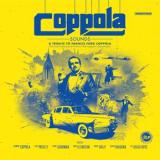
Mit Music From The Films Of Francis Ford Coppola erscheint eine sorgfaltig kuratierte Doppel-LP, die die unverwechselbare Klangwelt eines der einflussreichsten Regisseure des modernen Kinos wurdigt. Von Der Pate uber Apocalypse Now bis hin zu The Conversation und The Outsiders vereint diese Sammlung Musik aus Filmen, die das amerikanische Kino seit den 1970er Jahren nachhaltig gepragt haben. Die Zusammenstellung zeigt eindrucksvoll, wie entscheidend Musik fur die emotionale Wirkung von Coppolas Filmen war. Neben den Kompositionen von Carmine Coppola finden sich Aufnahmen von Kunstlern wie Buddy Holly, The Beach Boys, Elvis Presley oder Richard Wagner. Die Doppel-LP beleuchtet das Zusammenspiel von Bild und Ton und richtet sich gleichermaßen an Filmfans, Soundtrack-Sammler und Liebhaber klassischer Filmmusik.
Vor 30 Jahren, im Jahr 1996, kamen Paul, Gene, Ace und Peter wieder zusammen – um diesen bedeutsamen
Anlass zu feiern, wurden Auszüge aus „Alive!“ und „Alive II“ zusammengestellt und unter dem Titel
„You Wanted The Best, You Got The Best“ veröffentlicht. Diese Sammlung, die nun erstmals aus dem
KISSTERIA-Vinyl-Boxset herausgelöst wurde, erscheint auf 180-Gramm-Schwarzvinyl in einer erstmals
erhältlichen Gatefold-Hülle mit erweiterten Fotos.
‘A Great Day in Newcastle’ is musical documentation of the North East working class experience.
Through a storytelling approach with the aid of new member, genius poet, Cooper Robson, the record details dark topics like substance abuse, crime and toxic masculinity through this Geordie Jazz Noir soundscape, whilst still feeling light hearted and playful, fully embodying the classic Northern optimism.
With the introduction of Cooper’s poetry combined with Stan’s developing composition skills, King’s genius orchestration and groove composition and Ferg’s classic melodic sound, the record shows the growth of the bands sound wholeheartedly, returning to their roots of rock, supported by producer and friend Geordie Greep.
Alongside longstanding members Sandro Shar (keys) and George Johnson (tenor sax), the band reaches new highs of intensity throughout the 45 minute epic.'
On its latest album »Music For Air«, the Berlin-based interdisciplinary duo Gamut Inc explores new possibilities of the computer-controlled pipe organ — from hypervirtuoso excess to nuanced automation and rhythms beyond the fixed grid. Composed and recorded during a two-week residency in Toulouse, the pieces move between harmony and noise, conjuring a euphorically intoxicating maelstrom of overlapping, accelerating sound.
Gamut Inc’s work with the computer-controlled organ actually began in 2009 with a commission from ON – Neue Musik Köln for the Kunst-Station Sankt Peter — at a time when few congregations were ready to open their instruments to this kind of work. When the duo of Marion Wörle and Maciej Śledziecki officially founded the ensemble in 2013 as an interdisciplinary project, they first developed their own music machines with instrument builder Gerhard Kern, returning to the organ in 2018 when more churches and venues had opened their doors … and Gamut Inc carried their practice across Europe and beyond, developing AGGREGATE (first a concert series and then an annual festival) into a platform dedicated to organ music of the 21st century.
Sharpening a critique of mechanisation, digitality, and the human in between, the project is conceived around the construction of pre-modern instruments and the control of these instruments by contemporary technologies, resulting in an aesthetic that bridges the very old and the very new. Recent works include the human-machine trilogy »Over The Edge Club« (2021), »Rossum’s Universal Robots« (2022), and »Zeroth Law« (2023, performed at Deutsche Oper Berlin with the RIAS Chamber Choir and the Logos Robot Orchestra), and »Black Square« (2025), a wind-dynamic modular organ built by Tony Decap, inaugurated at CTM Festival and broadcast on Deutschlandfunk Kultur and SWR Kultur. Their organ installation AGGREGAT#10, commissioned by Sónar Festival, was acquired for the permanent collection of Palau Güell Barcelona in 2022.
Gamut Inc’s latest album »Music For Air« was composed and recorded during a two-week residency in Toulouse on the wind-dynamic organ »L’Explorateur«, with individually computer-controlled wind pressure per pipe. The seven pieces move between harmony and noise, conjuring a euphorically intoxicating maelstrom of overlapping, accelerating sound and again exploring new possibilities of the computer-controlled pipe organ — from hypervirtuoso excess to nuanced automation and rhythms beyond the fixed grid. Sensual and ecstatic.
(remastered classic incl DL card) Environ is proud to present the Metro Area 15th Anniversary Edition, Metro Area's eponymous debut album, meticulously remastered using the original source tapes and generously spread across three slabs of vinyl. The12-track triple LP and digital package combines all the songs from both the original US and licensed European releases, and features new commemorative artwork unique to this edition. In the late nineties, the budding producers Morgan Geist and Darshan Jesrani bonded over their shared love of slower tempos and '70s and '80s NYC club culture. Obsessed with record digging and the sounds they heard on late-night "club classics" radio shows—and turned off by current releases they saw as artlessly "updating" sublime disco by sampling, filtering and subjugating them with huge kick drums —the duo set out to discover how their favorite old 12" records were made. They naturally gravitated towards extended dubs of songs—full of strange mistakes and echoing backing tracks—instead of the better-known vocal versions. Lacking the big budgets and gear that made so many of their favorite classic records come together, they were forced to take a guerrilla approach. They reprogrammed their techno-oriented arsenal of secondhand synths and samplers, using novel digital recording technology to capture live instrumentation and prioritizing mood over hooks, and the resulting music was just wrong enough to sound unlike anything else being released at the time.After just four underground 12" releases, the duo—now well-known as Metro Area—released their first and only album, Metro Area, in the fall of 2002. Fifteen years later, it's time to celebrate the culmination of their shared history and inspiration once again. Environ is proud to present the Metro Area 15th Anniversary Edition, Metro Area's eponymous debut album, meticulously remastered using the original source tapes and generously spread across three slabs of vinyl. The 12-track triple LP and digital package combines all the songs from both the original US and licensed European releases, and features new commemorative artwork unique to this edition.
Murmuration’ is the low hum made by vast, beautifully choreographed flocks of starlings as they simultaneously flap their wings and take to the sky. Some people say that the frequency of this unique, rumbling, oscillating sound can cure diseases...
One of the most exciting live bands in the UK, British Birds combine the garage-punk energy of Billy Childish, the wry English sophistication of XTC and the witty pop inventiveness of The Lovely Eggs. Like a murmurating flock of starlings, they create a unique sound, and might even be able to cure diseases.
Based in Chorley, Lancashire, British Birds are a resolutely DIY band. Bobby records and mixes all the music; Emma creates all the artwork. Their first two albums were self-released, selling hundreds of copies at gigs and at a few chosen record stores. British Birds didn’t wait for permission to take flight. They just got on with it. Their songs are sophisticated, hard-hitting, and very skilful. It may be DIY, but it’s big and it’s ambitious.
Sessions for Marc Riley and Gideon Coe have followed, along with tours supporting The Bug Club, BC Camplight and Lovely Eggs.
‘Murmurate, Oscillate’ kicks off with Lie Down With Dogs, Stand Up With Fleas, a rousing expression of exasperation at our passivity in the face of lame authority. British Birds are acute observers of the English political scene, shrouding their observations in humour and surrealism. Polka Dot Eyes is another piece of sharp social observation: it portrays Lancashire lads – friends from school – who join the Army and return home physically and mentally damaged. The song is simultaneously disturbing, funny and catchy as hell. From the fog of disinformation and doubt that surrounds us all in 2020s Britian, British Birds embrace the darkness, but with wit and verve – no slogans, no easy answers – and with an energy that helps us escape the mundanity of a declining island. This might all sound a bit bleak, but it’s not: every single one of the songs on this album has a chorus as big as a house.
There are personal songs too: Scary Movies is a poignant description of Bobby and Emma’s grandfather, who delighted in showing them horror films when they were kids – giving them sneak previews of the darkness they’d come to embrace as adults; Just Like Them is a celebration of introversion: it might not be fun, but it’s better than being an idiot. (Paradoxically, any other introverts who hear this song will feel impelled to join in in the chorus.) Blame Game and Thunder Claps examine the darkness inherent in relationships: there is always an impending storm, if you recognise the low hum of the imminent thunder. Once again: the choruses of these songs confound the melancholy sentiment.
You’ll get the same impression if you see British Birds live: Bobby’s ferocious guitar and dark lyrics are counterpointed with Emma’s sometimes haunting, sometimes playful vocal responses and insistent rhythms. You’ll be swept away by the energy of a band who don’t know the meaning of limits. And as the songs get darker and darker the smile on your face gets wider and wider.
The core members of British Birds are siblings Bobby and Emma Townson, working from their HQ-cum-nest in Chorley. Drums are by Dominic Lawson (apart from Michael Aindley on ‘Just Like Them’). Bass is by James Robinson.
British Birds will be embarking on a headline tour of the UK in early 2027.
Teen of Denial: Joe’s Story is a freshly reimagined take on Car Seat Headrest’s beloved breakout, Teens of Denial, now celebrating its 10th anniversary.
On the original album, Toledo often used the name “Joe” as a pseudonym – a sly homage to Daniel Johnston. Revisiting Teens in the run-up to its 10th birthday, he felt called to give Joe a unique backstory and began tweaking the album to tell that tale. The group returned to the studio with Teens producer Steve Fisk to update accordingly – tweaking lyrics, revising arrangements, and recording new songs in the “Denial-style,” including ‘Optimistic Son” and the anthemic ‘Joe Drives Again’. The result retains Teens’ dark edge and youthful cynicism, but allows a bit of hard-won compassion into the mix.
From Will Toledo:
Sometime last year, it was suggested to me that we do something for the ten-year anniversary of ‘Teens of Denial,’ so I started looking back on the album to see what we might do. In spite of some of its songs being a regular part of my life for the past decade, it wasn’t a record I’d thought much about as a whole since it came out. Most of the songs I’d come up with over a two-year period at the end of my college days, when I was struggling a lot with cynicism and misplaced aggression. But by the time the songs were done, I was living in Washington, Car Seat Headrest was a full band with a record label, and in spite of the turmoil of the writing process, the final album was pretty enjoyable for everyone to work on.
This time, looking back at the songs, I started to feel like there was a story being told through the album, though I’d never imagined it as being a narrative work. On ‘Hi, How Are You?’ Daniel Johnston had used the name “Joe” in the titles of a few tracks –“No More Pushing Joe Around,” “Keep Punching Joe” – as a sort of joke, a stand-in for himself. I borrowed the idea, and the name, for titling songs on ‘Denial.’ This time, I started thinking - who is Joe? And how do the songs, in the way they’re sequenced on the album, reflect what he’s going through? As I started asking this question, a story emerged with startling wholeness and clarity, like finding the foundations of an ancient city while digging in my backyard. As I kept digging, certain songs from the original album fell by the wayside, as they seemed misplaced in this new context; others asked for new lyrics, to fully give birth to the story contained in the music.
The resulting work feels more like the album ‘Teens of Denial’ was meant to be. When you’re writing from a dark space, it’s hard to have perspective on where you’re at. This time, I could pull from memories of that darkness, and use the distance and additional perspective of ten years of life to shed a fuller light on the experience. Joe is a character going through some of what I experienced, and some of his own problems. Telling his story, and not just my own impressions of life at the end of the teen years, brought a new level of compassion and wholeness to the album. It gave us the opportunity to write new material in “Denial style”, embracing a snappy and simple(ish) rock aesthetic, and in an additional blessing, we were able to team up once with Steve Fisk, a joy and inspiration to get back into the studio with after ten years. We mixed the material at his house in Tacoma, and were constantly amazed at the lack of divide between past and present, as we’d punch in vocal overdubs ten years later into the same gear, hearing my voice now running alongside a 2015 Will. For someone coming across this album or this band for the first time, this is how they’d hear the record, not as a relic of the past but as a new piece. It was immensely rewarding to experience that on our side.
For anyone familiar with ‘Teens,’ comparisons with the original will be inevitable, but I do hope that as much as possible, people can come to this album on its own terms, approaching it as a teen, hearing the music and story for the first time. I believe music is an ongoing story, and albums don’t always do justice to its dynamic, ongoing nature. What gives it life is the new ears that hear it, and the new hearts that engage with it. I’m so grateful that this is a work that people have kept coming to, and I hope that this presentation does them honor with a fresh offering to the conversation. We’ve known that “it doesn’t have to be like this”; now we can wonder - “what it if were like this?”
Wewantsounds it delighted to announce a deluxe reissue of Frank Foster's 'The Loud Minority' LP. Released on Bob Shad's Mainstream Records in 1972, it's a landmark album and one of the key political works of the 70s. Featuring an all-star cast of superb musicians including Elvin Jones, Stanley Clarke, Airto, Cecil Bridgewater and Marvin 'Hannibal' Peterson, it is also Dee Dee Bridgewater's earliest full recordings. This special edition includes a 20-page booklet featuring amazing unseen session photos recently unearthed, an introduction by Judd and Mia Apatow (Shad's grandchildren), an essay by British journalist Kevin Le Gendre and an exclusive interview of Cecil and Dee Dee Bridgewater by Paul Bowler. The album's original artwork as been recreated with original photos and the audio newly remastered from the original tapes.
When he recorded "The Loud Minority" in 1972 for Bob Shad's Mainstream Records, Frank Foster had been a solid sax player for nearly twenty years, playing with the likes of Donald Byrd, Thelonious Monk and The Count Basie Orchestra. For this special session, he gathered a stellar line up of old fellow musicians like Elvin Jones and Harold Mabern and young turks including Stanley Clarke, 'Hannibal' Marvin Peterson, Cecil and Dee Dee Bridgewater. Cecil Bridgewater remembers: "Frank, his thing was, any group that he had he wanted to give young musicians a chance." As usual for Mainstream sessions, the studio was booked for two days and the record was cut live, supervised by Bob Shad's trusted men, arranger Ernie Wilkins and engineer Carmine Rubino.
What came out of these two days is now the stuff of legend, four long funky jams fuelled by two distinct line ups playing simultaneously augmented with a powerful 6-piece brass section led by Foster. The album kicks off with the anthemic "The Loud Minority" (sampled by United Future Organization and DJ Shadow) with its long brass introduction followed by Dee Dee Bridgewater fiery poem, a politically charged statement expressing the fight for civil rights, before the whole group comes together for a funky explosion clocking at 14 minutes. "That was a period where we were really into our African consciousness" reminisces Dee Dee in the interview.
The album continues with the funky uptempo "Requiem for Dusty" while "J.P.'s Thing" adopts a slightly more spiritual feel, with a beautiful Fender Rhodes solo and Foster's soprano sax improvisation. The album ends with "E.W. Beautiful People", a long dreamy improvisation climaxing with Dee Dee Bridgewater's poignant vocals.
The Loud Minority is a key militant jazz manifesto and one of the landmark jazz funk albums of the 20th Century. The album was recorded in two days but its legacy lives on and still resonates loudly in the BLM days. Wewantsounds is delighted to reissue this major works with newly remastered audio and a deluxe 20-page booklet full of breathtaking unseen session photos and insightful texts telling the whole story of this superb album.
A stylish selection of city pop, funk and modern soul from Japanese label Nippon Columbia, selected by DJ Notoya and featuring cult classics and rarities by Hiroshi Sato, Hatsumi Shibata, Hitomi 'Penny' Tohyama & many more.
Annotated by Notoya with journalist Nick Luscombe and artwork by Optigram.
Newly remastered audio.
The selection on ‘Tokyo Glow’ starts with 'Kimugare' a relaxed mid-tempo track by Kumi Nakamura, actually a famous actress who only recorded one album in 1980 for Columbia.
The set continues and flows effortlessly with the sunshine grooves of Miyuki Maki, Hatsumi Shibata and cult keyboard player Hiroshi Sato before the pace starts going faster and funkier with New Generation Company, Kengo Kurozumi - with his superb boogie, 'Juggler'
- and one of the queens of the genre, Hitomi 'Penny' Tohyama with 'Tuxedo Connection'.
Another fine example on the set is the mid-tempo groove of "I Wander All Alone Part III" by New Generation Company, an aggregate group of some of the best Japanese session musicians led by arranger Katz Hoshi and including Hiroyuki Namba (key), Kazuo Shiina (gtr) and Yutaka Uehara (ds) who all played with Tatsuro Yamashita among many others.
There are many other excellent examples in 'Tokyo Glow', showcasing the diversity and specificity of Japanese City Pop during the late 70s and 80s.
Nippon Columbia opened their much-guarded vaults to curator DJ Natoya. Tracks were remastered in Tokyo and the result, ‘Tokyo Glow’, is a unique insight into a most creative period in Japanese music.
Tomorrow’s World is the new album from synth-punk/darkwave artist N8NOFACE. Fully produced by Dave Sitek of TV on the Radio, the record also features contributions from Hudson Mohawke, Snow Wife, and Angélica Garcia.
On Tomorrow’s World, N8NOFACE pushes beyond the DIY spaces that formed him, delivering his most ambitious album yet: a collection of hard-as-nails songs that manage to be furiously catchy. In line with N8's cyberpunk aesthetic, Tomorrow's World's title comes from the 1960s British TV show of the same name about tech and science. N8 came across the show when he found a clip of Kraftwerk performing and breaking down their music on it, with Tomorrow's World being credited in breaking the band to a wider audience. In N8's words, the album sees him “imagining what the punks and the street kids might be listening to in 2077.”
The Dutch composer and conductor, born in 1993, has assembled a powerful collective with his "hugely inventive and fast- thinking" (UK Jazz News) Brainteaser Orchestra, uniting the vanguard of the current Amsterdam scene - including guitarist Teis Semey , saxophonist Kika Sprangers , drummer Jamie Peet , violinists George Dimitriu and Yanna Pelser , trombonist Nabou Claerhout , clarinetist Federico Calcagno, and bassist Alessandro Fongaro. This lineup has been making international waves, highlighted by invitations to major European festivals and a recent performance alongside Pat Metheny at the North Sea Jazz Festival. Now comes Tonepool Paradox, the orchestra's second album, commissioned to celebrate the 50th anniversary of Amsterdam's legendary BIMHUIS. Wybenga's compositional approach radically breaks with big band conventions. His process mirrors that of a hip- hop producer: he records solo improvisations by his musicians, chops the material into pieces, and uses these fragments as samples to build entirely new tracks. Wybenga layers jazz, electronics, and contemporary classical music without ever sounding academic or overintellectualized. For Tonepool Paradox , he expanded this concept internationally, bringing in guests such as Berlin-based saxophonist Otis Sandjo, Parisian violinist Theo Ceccaldi, singer Lizz Wright , and hip- hop vocalist Pink Oculus . Mixed by Grammy winner Nic Hard (Snarky Puppy), the sound brings together the diverse musical styles of everyone involved, juxtaposing the angular lines of the horns with sweeping, melodic string passages.
Marcus Gad, one of France's top reggae artists, hailing from the Pacific island of New Caledonia, returns with a powerful new album, FOR ALL Produced with his longtime collaborator Tamal, along with instrumental backing from his band Tribe, the record brings 12 new songs that continue Gad's thoughtful and catchy approach to modern reggae. Lush production, killer musicanship, along with modern vibes and riddims all make the album one of his best yet. Lyrically, Gad tackles many of the topics that have concerned him for years - liberty, equality, fighting against injustice and the problems of the world today.