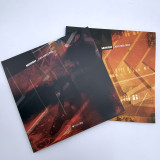
Seit der Veröffentlichung ihrer 2020 erschienenen Single "Cleansed Existence" werden die Industrial-Metalcore-Hellraisers HERIOT aus Bristol von Künstlern, Journalisten und Fans gleichermaßen als die nächste Hoffnung für extreme Musik gehandelt. "Devoured by the Mouth of Hell" verdoppelt nicht nur die erdrückende Klaustrophobie von HERIOTs früherem Material - es enthält auch Ideen, die sie zuvor nicht angerührt haben. Die Opener "Foul Void" und "Harm Sequence" beweisen das mit einem schwindelerregenden Doppelschlag, wobei der erste Song ein Kraftwerk des Grooves mit melodischen Anklängen ist, während der zweite ein Metalcore-Amoklauf mit Vollgas ist. In anderen Stücken wie "Opaline" und "Visage" werden die Ambient-Töne, die HERIOT zuvor nur angedeutet hatten, zu kompletten Songs verarbeitet. Die Band klingt immer noch so roh und direkt wie eh und je, doch es gibt eine Verfeinerung, die nur von ihrem schieren Drang kommen kann, etwas zu erschaffen, das dem ganzen Hype um sie herum würdig ist. Die internationale Aufmerksamkeit inspirierte HERIOT dazu, sich so intensiv wie möglich auf ihre Instrumente und ihr Handwerk zu konzentrieren, und "Devoured by the Mouth of Hell" wurde in monatelanger Schreib- und Aufnahmearbeit akribisch verfeinert. Allein das Komponieren und das Aufnehmen der Demo-Versionen nahmen fast ein Jahr in Anspruch - als die Band dann Anfang 2024 ins Studio ging, holte sie sich Hilfe vom Who's Who des modernen Metals: Sylosis-Leader und Ex-Architects-Gitarrist Josh Middleton produzierte, während Justin Hill von den Prog-Metal-Koryphäen Sikth das Schlagzeug bearbeitete und Grammy-Preisträger Will Putney (der bei den Metal/Hardcore-Schwergewichten End, Fit For An Autopsy und Better Lovers spielt) das Album abmischte. HERIOT haben ein dichtes, beklemmendes und doch abwechslungsreiches Meisterwerk geschaffen. Ihr Momentum wird sich fortsetzen, wenn die Metal-Massen ihre neuen Ideen gehört haben, und es wird nicht mehr lange dauern, bis die Band von den hellsten "Rising Stars" des Metals zu ganz normalen 'Stars' aufsteigt. "Devoured by the Mouth of Hell" ist erhältlich als: Standard CD Jewelcase, 180g LP und Digitales Album.
Cerca:klaus
Bevor Klaus Doldinger 1971 die legendäre Band Passport gründete, wandte er sich 1969 mit seiner Band Motherhood dem Rock-Jazz und der Fusion-Musik zu. Dieses selbstbetitelte Album ist das zweite der Band aus dem Jahr 1970. Im Line Up finden sich herausragende Musiker wie Keith Forsey am Schlagzeug und Gesang, der später mit Künstlern wie Amon Düül ll, Giorgio Moroder, Donna Summer, Boney M., Psychedelic Furs oder Billy Idol arbeitete. Er produzierte auch Soundtracks für Filme und Serien wie Beverly Hills Cop, Ghostbusters, American Pie, Futurama, Scrubs und viele mehr. Udo Lindenberg wurde zu einem der erfolgreichsten Künstler Deutschlands und spielt immer noch Arena-Shows. Doldinger selbst ist einer der führenden deutschen Jazzmusiker, der zahlreiche Alben und Soundtracks in verschiedenen Konstellationen veröffentlicht hat und für sein Lebenswerk mit dem Bundesverdienstkreuz oder dem Deutschland-Echo ausgezeichnet wurde. Das lange Zeit vergriffene Album wurde nun endlich für Vinyl remastert und als 1LP neu aufgelegt.
Futurismo präsentiert das nie erschienene Album der New Wave-Band Strange Party, einer stylischen Truppe exzentrischer Künstler, die 1980 in New Yorker Clubs eine neue Art von Performance-Art-Pop-Extravaganz erschufen. Von der Presse als 'beste Partyband in New York' gefeiert, gehörten Mitglieder auch zur Liveband von Downtown-Legende Klaus Nomi (hier mit einem Gastfeature). Strange Partys Spektrum aus Jazz, Funk, Disco, Latin und Punk wurde als Dada-Disco beschrieben und hatte einen immensen Einfluss auf andere Musiker (z.B. Talking Heads), ihre Faszination beruhte auf der Leftfield-Ästhetik ihrer visuellen Themen. "Sleepwalking Through Life", benannt nach der gleichnamigen 7"-Single, ihrem einzigen offiziellen Release, ist eine Momentaufnahme einer Zeit in New York, als Kunst, Musik, Mode und Clubleben eine integrative Einheit bildeten.
Nach der Veröffentlichung des bewegenden Konzeptalbums "Gates of Europe" (2023) über den russischen Überfall auf die Ukraine und einer anschließenden intensiven Europatour, ging Jerome Reuter - kreativer Kopf und Frontman von ROME - in Klausur und meldet sich nun mit einem brandheißen wie brandaktuellen, musikalischen Faustschlag zurück.
Die offensichtliche thematische Quellenlage dieses Kleinods vermindert nicht deren Wirkkraft beim Hörer. "World in Flames" ist ein drastisches, auf das Wesentliche verdichtete Werk. Im Gegensatz zu so manchem Vorgängeralbum ist "World in Flames" kein intimes Drama, sondern eine rücksichts- und schonungslose Sezierung der Großwetterlage.
Wie die Welt an sich, ist auch dieses schlagkräftige Mini-Album zweigeteilt. Wuchtige Industrial-Brachialkunst trifft auf ROME-typisches und hervorragendes Singer-Songwriting. Textlich wird eine zutiefst verstörende Einsicht von Reuter behutsam und genau nachgezeichnet: Der Zivilisationsbruch als neue Signatur dieser Epoche. Was die Lyrik dabei auszeichnet ist eine ganz eigene Art der apodiktischen Darstellung, eine hauseigene Poetik der Zäsur.
Prophetisch? Ein Weckruf!
DJ Support: Don Letts (6 Music), Piet Blank Blank & Jones / Dj Ease Nightmares On Wax / Macca Nts Radio / Coyote / Mike Salta Music For Dreams / Pete Gooding / Layne Fox 40 Thieves / Chris Coco / Richard Dorfmeister Kruder & Dorfmeister / Bill Brewster / Simon Mills [Bent. Plus Loads More.
DJ Feedback:
Lovely laid-back vibes. Excellent! - Francois K [NYC, USA]
Ay what a beauty! Takes you away from the madness for a moment. - Macca (NTS)
Following on from Los Rayos Del Sol (2021) & the follow up Los Rayos In Dub (2022) NuNorthern Soul presents ‘Moonbeams’ by Ibiza based producer, per-cussionist and sunset selector, George Solar.
Inspired by nocturnal moods and illuminated by the moon in all its phases, this collection follows the vibrations of 'Los Rayos Del Sol.' It's a journey into night-time peace and harmony, embracing the moonlit atmosphere.
MEDIA LUNA (feat. Ken Fan)
Opening with angelic dubby downtempo, this track translated is 'Half Moon,' sets the tone for the night.
MOONBEAMS (feat. Ken Fan)
Featuring love poet JEN, 'Moonbeams' captures the rise of the moon and the message of love.
COUNTERMOON (feat. Ken Fan)
Originally a slower cumbia demo, this track evolved into a retro dance piece with a minimalistic touch. Reflecting the off-center vibe of lunar forces.
LUNATICOTINA (feat. Ken Fan)
A tribute to the global beats scene, this ritual tune incorporates grooves from all continents, dedicated to Ibiza's 'global beats' oasis LAYLAH venue.
O LUAR
Influenced by Samba vibes and the Brazilian approach to moonlight, this track combines Solar dub and cosmic stardust.
MOONBEAMS reprise (for KS)
A tribute to Klaus Schulze, a secret Solar Moon band member, this reprise is a spontaneous improvisation recorded in memory of the spiritual godfather.
Auf ihrem selbstbetitelten Debüt machten sich WOMEN über eine gewisse lärmende Rotzigkeit her, die sich bei näherem Hinsehen als getränkt mit listigen Popmelodien entpuppte. Mit "Public Strain" macht sich die Band einen Sound zu Eigen, der diesem halldurchtränkten Noise treu bleibt, es den Popmelodien aber doch erlaubt, sich im Rampenlicht zu sonnen. Im Herbst 2009 begaben sich Patrick Flegel (Gesang/Gitarre), Matt Flegel (Bass/Gesang), Chris Reimer (Gitarre/Gesang) und Michael Wallace (Drums) mit einer Vielzahl Ideen ins Studio und arbeiteten um ihre individuellen Zeitfenster und Schichten auf dem Friedhof herum. CHAD VANGAALEN zeichnet sich einmal mehr für die Produktion verantwortlich, mit dessen Hilfe WOMEN sich die Mühe machten, im tiefsten Winter Kanadas ein Album aufzunehmen, das zeitlos klingt. Am Ende erscheint die knirschende, harsche Dissonanz in kleineren, kontrollierteren Dosen; Noise erscheint als Fundament des strukturierten, mehrere Schichten umfassenden Songwriting. Von den ersten Takten von "Can't You See" an ist klar, dass "Public Strain" so viel mehr ist als nur die Fortsetzung des Debüts. Manchmal ist das Album klaustrophobisch und beschwört Wachträume von sexueller Seelenpein und allgemeinem Zerfall herauf; anderswo schwingen sich Retrogitarren und Gesangsmelodien gen Himmel oder kollabieren in faszinierenden Arabesken. "Public Strain" kämpft sich durch Schlaflosigkeit, Paranoia, Resignation und Euphorie, um die Momentaufnahme einer Band einzufangen, die sich gerade genau im Klaren darüber ist, was sie leisten kann.
Limited Anniversary Edition: embossed, reverse board, hand numbered, limited edition blue vinyl, 500 copies available! Conrad Schnitzler (1937-2011), composer and concept artist, is one of the most important representatives of Germany"s electronic music avant-garde. A student of Beuys, he founded Berlin"s legendary Zodiak Free Arts Lab, a subculture club, in 1967/68, was a member of Tangerine Dream (together with Klaus Schulze and Edgar Froese) and Kluster (with Dieter Moebius and Hans-Joachim Roedelius) and also released countless solo albums. The blue album ("Blau") from 1974 was Schnitzler"s second solo LP
Northern German melodic power metallers Mob Rules are celebrating their 30th anniversary. Time to let it rip! With "Celebration Day - The Vinyl Tracks", the band around singer Klaus Dirks releases a compilation with hand-picked songs
Zehn energiegeladene, klassische Metal-Songs mit 70er-Rock-Attitüde aus den Straßen von New York City! Auf ihrem ersten Studioalbum seit fünf Jahren hauen New York Citys Tower mit Vintage-Metal-Appeal und klassischer Rockattitüde die Jams raus, die die Old-School in die Gegenwart bringen!
Der freie Charakter des Schreib- und Aufnahmeprozesses hat zu mehreren Neuerungen für Tower geführt: Während ihr typischer Vintage-Metal-trifft-70er-Rock Sound immer noch dominant ist, sind dieses mal Elemente wie Thrash und Doom in die Gleichung eingetreten.
Textlich befasst sich "Shock to the System" mit politischen Themen, persönlichen Verlusten und der Volatilität von Beziehungen und dem Leben im Allgemeinen. Das Cover-Artwork stammt von Morgan Jesse Lappin. Die Gefühle der Isolation, die die Pandemie hervorgerufen hat; die vergeblichen Versuche, einer klaustrophobischen und unangenehmen Umgebung zu entkommen, nur um festzustellen, dass sich die reale Welt drastisch verändert hat - werden hierbei perfekt abgebildet.
Hier gibt es nur noch eines zu tun - Shock to the System einschalten und auf 11 aufdrehen!
Endlich erscheint die LP im Gatefold und auf schwarzem Vinyl!
finally repressed !
ARCHIELONG LP album consists of 8 intensely rolled tracks dating between 2012-2020. The release unfolds on 4 discs of 180gr, with gatefold covers, coated in Sani Stranskiʼs artwork.
Throughout ARCHIELONG LP, we are absorbed by what typically characterizes his narrative: a peculiar style of story in constant development. Structure and flow are a hallmark feature of his selections, adding one more trippy, eerie minimal style on top of the other, creating a rich and quirky haunted sphere.
A – The opening track, I HEAR VOICES THROUGH THE PIPE sets the scene for whatʼs to come, stirring the imagination with its dreamy, cinematic, organic sounds in disguise. The track provides a guidebook to distilling story, emotion and image into sonic form.
B – EXCESS ALL AREAS – hypnotizes the dancers with endless, reverberating grooves and a punchy 4/4 beat, introducing the audience to his gloomy world of emotions.
C – LA MANIA – lights up some dark pitched atmosphere around you and makes you feel like you are on the mythical La Mania club dancefloor in complete harmony, surrounded by strange and beautiful trippers. The song is like a painting, with frames that evoke flashbacks.
D – NEW LIFE – is a perfect minimalist setup of a percussion loop, throbbing chords and a sinewy walking bass, and itʼs almost intimidatingly heady. Its militant kick and incessant hi-hats propel the beat – definitely a dancefloor highlight.
E – MELODROM – percolates with Latin percussion and shuffling snares, which commingle with an array of voices and whispers that come from every corner of the song. From toolish to melodic, itʼs the diversity that creates the magic.
F – SING AND RUN – is one of those tracks that gives you nostalgia and reminds us of early mornings at the end of the party when the sun would be coming in through the windows and the dancefloor was in total harmony. Could easily cast a spell with the right audience.
G –RUMBLING DREAM – is a ritualistic-sounding slice, crossing towards the kind of slow-burning, atmospheric cuts that doubtless inspire his intricate studio productions. The vocals are unusually illustrative and make a lasting impression.
H – KLAUS DID IT – is an intriguing interplay between dark functionality and high velocity grooves — the type of deep, trippy, IDM-tipped tunes. Its warped tones are forming dank, lurching rhythms that trap you like a spiderweb, venturing into a bizarre, rewarding territory. The conclusion? You can spend a decade honing a very particular personal vision and not run short of inspiration. Mihigh is a world-builder: everything he does is about further extending and reinforcing that world.
ARCHIELONG LP is capturing the beauty at the intersection of experiment and perpetual learning
repressed !
Along the west coast of Co Kerry in Ireland you will find the amazing Valentia Island.
Attached by a bridge to the mainland, it is a place of beauty touched by years of history and the songs of the sea.
I managed to obtain a house there for a few weeks, I took my computer and mic with me not knowing what to expect when I got there. In one of the rooms sat a piano, and as my fingers touched the keys I knew there was a story there waiting to be told.
The sound of the piano in that place was something very magical as 100mph winds battered the house and interrupted my recordings.
Other material has since emerged from those days spent on the island, but the main body of work that I recorded there makes up this album that I now present to you.
Album support from: Gilles Peterson, Skream, Laurent Garnier, Patrick Forge, Jean-Claude (IF), Soulclap, Joszif, Makoto, Breach, Flight, dBridge, Doc Scott, Trevino, Craig Richards, John B, Klaus
Fiehe. Mr Scruff....
The latest in a prolific string of solo and collaborative releases by James Rushford, Turzets collects a pair of new works primarily created and recorded last year while the Australian composer-performer was in residence at La Becque, an art center on Lake Geneva in Switzerland. The side-length piece "Fallaway Whisk" explores hesitation in its many forms_reticence of speech, sonic restraint_using live, abstracted translations of text from English to German against a lush and swelling soundscape. On the flip side, "Quire" is a work in ten movements influenced by the composer's study of late medieval repertoire on portative organ, weaving the instrument's woodsy interlocking melodies with angelic Yamaha CS-80 synth sweeps and stuttering glitches. The combined effort is somewhat a departure for Rushford, working in traces of Klaus Schulze, concrete poetry, and ars subtilior into a precise and ever-unfolding tapestry. Rushford's work draws from a wide range of collagist and improvisatory musical languages, staking out an idiosyncratic stylistic space that has been variously described as "electro-acoustic experimentation with a beating heart" (Boomkat) and "haunted Jacobean ASMR" (The Wire). Investigating the creases, cracks, and folds in traditions ranging from early music to New Age, Rushford's work subtly exaggerates seemingly liminal aspects such as atmosphere and the bodily presence of the performer until these take on a weight equal to musical elements such as pitch, rhythm, and timbre. In recent years, Rushford's solo work has been guided by his theorization of sonic images, particularly the shadow, which has inspired pieces as diverse as an hour-long companion to Federico Mompou's 1959-67 piano cycle Música Callada (2016) and a sumptuous translation of the play of light across flat surfaces into synthetic sound (The Lake from the Louvers, Shelter Press, 2021). His long-standing performance practice for piano, portative organ, synthesizers, and electroacoustic devices, is constantly infused with a delicacy of touch and a harmonic sensibility in which unorthodox tunings coexist with influences from fin de siècle Impressionism, the twentieth century avant-garde, and popular musical structures. He has worked with a vast range artists including Klaus Lang, Annea Lockwood, David Behrman, Tashi Wada, Haroon Mirza, Dennis Cooper, Ora Clementi, crys cole, Oren Ambarchi, Kassel Jaeger, Will Guthrie, and Graham Lambkin. He has performed as Golden Fur (with Sam Dunscombe and Judith Hamann) and Food Court (with Joe Talia and Francis Plagne).
- A1: I Am Missing You
- A2: Kahān Gayelavā Shyām Saloné
- A3: Supané Mé Āyé Preetam Sainyā
- A4: I Am Missing You (Reprise)
- A5: Jaya Jagadish Haré
- B1: Overture
- B2: Festivity & Joy
- B3: Love - Dance Ecstasy
- B4: Lust (Rāga Chandrakauns)
- B5: Dispute & Violence
- B6: Disillusionment & Frustration
- B7: Despair & Sorrow (Rāga Marwā)
- B8: Awakening
- B9: Peace & Hope (Rāga Bhatiyār)
Purple Vinyl[27,52 €]
Out of print as a stand-alone release for decades since its original 1974 issue. Produced by George Harrison, Shankar Family & Friends is an almost-forgotten masterwork – an emotional and sonic pact between two like-minded souls to both advance their spiritually minded bond and unite musical styles, cultures, and sounds in wondrous fashion Contributions from Ringo Starr, David Bromberg, Billy Preston, Nicky Hopkins, Jim Keltner, Klaus Voorman, and a host of virtuosic Indian musicians add to a diverse album that melds Eastern and Western traditions; encompasses jazz, funk, bhajan, Indian, and pop; and represents the spirit and breadth of Harrison's Dark Horse Records imprint.
Memorable contributions from an A-list of American and English musicians — Ringo Starr (drums), David Bromberg (electric guitar), Billy Preston (organ), Nicky Hopkins (piano), Jim Keltner (drums), Klaus Voorman (bass), Robert Margouleff (Moog), Malcolm Cecil (Moog), Tom Scott (saxophone) included — add to the richness of a set that melds Eastern and Western traditions. These “names” mesh with a host of Indian virtuosos — Alla Rakha, Ashish Khan, Kamala Chakravarty, Hariprasad Chaurasia included — who turn Shankar Family & Friends into a journey laced with percussive, string, and vocal components that aren’t soon forgotten.
Throughout, Shankar Family & Friends remains true to its title — a mesmerizing record named to reflect the group participation approach of its creators. The idea started when Shankar told Harrison about a ballet he wrote. The Beatle, who first met Shankar in June 1966 — roughly a year after Harrison became interested in Indian music after overhearing it in a restaurant while filming Help! — immediately was convinced they needed to record it. Harrison’s staunch admiration of Shankar and serious approach to Eastern styles are reflected throughout the album.
Indeed, for Harrison, Shankar Family & Friends marks the culmination of a years-long effort to master the sitar, study Hinduism, and incorporate elements such as drones, unusual chords, and expressive picking into his own songs. The seeds of this unique collaboration can be heard in Beatles works such as “Norwegian Wood,” “Love to You,” and “Within You Without You.” Both musicians were also fresh from performing at the 1971 Concert for Bangladesh shows. Yet Shankar Family & Friends remains entirely unique in each visionary artist’s history — and ultimately, led to a collaborative tour Harrison and Shankar staged across North America.
Encompassing jazz, funk, bhajan, Indian, and pop, Shankar Family & Friends is thematically split into halves. Side One reveals Shankar’s uncanny ear for melody — even when applied to Western forms. The lead-off “I Am Missing You,” the first single ever released by Dark Horse Records and reportedly the first pop composition Shankar completed, underscores his skills as a composer and global ambassador. Beautifully sung across three octaves by his sister-in-law, Lakshmi Shankar, the devotional song features multiple drummers and production that mirrors Phil Spector’s Wall of Sound approach. Harrison plays autoharp and guitar; Starr sits in on drums; Scott handles flute and soprano saxophone. It’s the inviting start of a musical adventure teeming with color, majesty, and mysticism.
A second version of the track — designated with a “(Reprise)” tag — appears minutes later. Unfolding in different ways, it follows a folk ballad structure stitched together with Indian instrumentation. Here, according to Shankar, the musicians “attempted to convey the sounds and atmosphere of Vrindavan, the ancient holy place where Krishna grew up.” Both renditions speak to the cross-continental fusion that came so naturally to Harrison and Shankar, whose oversight on the side’s other vocal tracks ensures listeners familiar with Western methods gain easy access to the hypnotic allure of his native country’s music.
Nowhere is this more evident than on Dream, Nightmare & Dawn (Music for a Ballet), the side-long piece that served as the genesis for Shankar Family & Friends. Launched with an airy overture and unfolding across three movements, the mostly wordless suite features everything from call-and-response interplay and classical lyricism to uptempo dance figures, stacked rhythms, and intoxicating grooves. Blurring the lines between contemporary and traditional, and Western and Eastern, the inspirational work is the exclamation point on a record that defined “world music” well before the term became co-opted as a catch-all genre.
tapetopia 015 The name L’Ambassadeur des Ombres goes back to the
French science fiction comic “Valérian et Laureline”. The Ambassadors of the Shadows combined pop appeal and experimentation as the soundtrack to the zero hour of their generation in the GDR’s waning days. The music was made in a children’s room, but the edifice of ideas was a demolition site. L’Ambassadeur des Ombres existed as a hybrid of the wave bands Die Vision and Neuntage. The open ensemble’s family tree can however be traced back to buried DIY projects such as the Mahlsdorfer Wohnstuben Orchester, Zerstörte Umwelt and dark-wave protagonists Fellini Prostitutes or Nontoxic. In the short time of their existence in 1988/89, L’Ambassadeur des Ombres did not give a single concert. The tape “Strike Me If I Shriek” was circulated among friends and musicians only as an on-request work report – it’s a long overdue discovery. The tapetopia series, using the original layouts and track lists, publishes cassette editions from the GDR underground of the 1980s, especially from the “walled-in” scene in East Berlin. More than three decades after their initial “release”, most of these tapes have yet to be heard on either vinyl or CD, even though they made an audible mark in the canon of GDR subculture. Despite the tiny original editions of the time, many of the bands were considered cult in countercultural circles, which made them highly suspect in informed circles.
- A1: Fred Und Luna - Intro (Future Sounds Of Kraut 2) (2 47) * Exclusive
- A2: Sankt Otten - Angekommen In Der Letzten Reihe (6 30)
- A3: Ghost Power - Vertical Section (2 14)
- A4: Fred Und Luna - Monotonikum (Edit) (4 46)
- A5: Formant B - Kater (Single Version) (4 24)
- B1: Thomas Fehlmann - Permanent Touch (3 23)
- B2: Roman Flügel - Rules (4 50)
- B3: Sordid Sound System - It's About Time (4 37)
- B4: I Cube - Basso (4:15) * Exclusive
- C1: Lucas Croon - Krautwickel (7 22) * Exclusive
- C2: Minami Deutsch - Your Pulse (5 22)
- C3: Gilgamesh Mata Hari Duo - Johan (4 46) * Exclusive
- D1: Kosmischer Läufer - Spargelspiegel (4 43) * Exclusive
- D2: Young Solo - Twin Shadow (3 51) * Exclusive
- D3: Schlammpeitziger - Runzreich (4 04) * Exclusive
- D4: Halwa - Schmetterling (5 45) * Exclusive
- D5: Fred Und Luna - Outro - Auf Wiederhören 2 (1 52) * Exclusive
Wir haben so großartiges Feedback zur Future Sounds Of Kraut Vol. 1 bekommen, also kommt hier Volume 2: 17 moderne Kraut-Elektronik-Tracks (9 davon exklusiv und vorher unveröffentlicht) inspiriert von Kraftwerk, Can, Neu!, Cluster, Harmonia, Klaus Schulze und vielen anderen. Kuratiert und zusammengestellt von Compost-Künstler Fred und Luna. Die Collage auf dem Cover wurde - wie schon auf Vol. 1 - exklusiv von der fantastischen Künstlerin Norika Nienstedt aus der Kraut-Metropole Düsseldorf gestaltet.
Gar nicht einfach oder im Grunde unmöglich, den Begriff "Kraut" stilistisch zu beschreiben. Dennoch begeben sich Compost Records und Fred und Luna auf eine Zeitreise, um die unterschiedlichen Elemente deutscher elektronischer Musik der 1970er- und 1980er-Jahre und ihre Auswirkungen auf die neuere deutsche und weltweite Musikszene zu entdecken.
Nach dem großen Erfolg von Volume 1 wurde umgehend ein Nachfolger gestartet, der stilistisch an seinen Vorgänger anknüpft und darüber hinaus - da dies eine der Grundideen der Reihe ist - das musikalische Spektrum Schritt für Schritt um neue krautige Elemente erweitert. Auf Volume 2 finden sich deshalb nun auch ein paar cluborientierte und experimentelle Tracks.
Compost und Fred und Luna wünschen viel Pläsier beim Krautifizieren!
Format: - Schwarze 2LP mit Content-Sticker inkl. 9 exklusiven/unveröffentlichten Tracks
DJ Quotes:
- "A great compilation with a unique approach!" - Hans Nieswandt
- "Amazing contributions from all the artist involved ! Love this album ! Thank you Fred & Luna !" - Peter Kruder
- "Very interesting compilation ... Great music" - Laurent Garnier
- "Superb in every way" - Nick Warren
Mit dem wachsenden Wunsch nach früheren Werken von ELOY, dem gemäß Musikpresse "deutschen Flaggschiff des Art-und Progressivrock" kommt nun am 23.02.2024 mit "Destination" ein Album aus dem Jahr 1992 erneut auf den Markt, welches schon seit langem nicht mehr verfügbar ist. Da zu jener Zeit der frühen Neunziger die Vinyl-Platte quasi komplett "out" war, erscheint "Destination" nun als physisches Produkt erstmals auch auf Vinyl. "Destination" ist ein Album, auf welchem wir viele unterschiedliche Inspirationen und stilistischen Elemente verarbeiteten und vermischten. Obwohl Bassist Klaus Peter Matziol während der laufenden Produktion erstmals wieder für die Band zum Bass griff, entstand das Material überwiegend in der Zusammenarbeit von Michael Gerlach und mir, und es kam eine Melange aus atmosphärischen, aber auch sehr rockigen Klängen dabei heraus, wobei ich mich noch im Satzgesang mit mir selbst herausforderte, und wir durch diverse Fremdinstrumente das noch immer nicht komplett neu besetzte Line Up auffüllten. Es herrschte nach dem Erfolg des Vorgängers RA, welches ELOY nach dreijähriger Pause sofort in die offiziellen deutschen Albencharts zurück katapultierte, rege Aufbruchsstimmung. Der Sound und die Melange der Musik gelangen so, wie geplant." (Frank Bornemann, 2023)
- A1: Transformation #1
- A2: Sanctuary
- A3: A Walk Home
- A4: A Soft Howl
- A5: Winter Drone
- A6: Patts Theme
- A7: Casino Drive
- A8: The Slots
- A9: Transformation #2
- A10: Drone (Dream Theme)
- A11: Soft Love
- A12: Soft Love (Slow)
- A13: Hockey Tryouts
- B1: Back Of Your Car
- B2: Making Love
- B3: Climbing Sadness
- B4: Heart To Heart
- B4: Crybate
- B5: Sudden Loss
- B6: Out Of Time
- B7: Climbing Sadness (The Funeral)
- B8: Outside The Rock
- B9: Somethings Building
- B10: Transformation #3
Ltd Edition! Augustus Muller (Boy Harsher) kündigt die Filmmusik für den Film My Animal an, unter der Regie von Jacqueline Castel feat. Amandla Stenberg (The Hunger Games, Star Wars) und Bobbi Salvör Menuez (I love Dick, Something In The Air).
Die Filmmusik ist Mullers Debüt als Spielfilmkomponist.
My Animal (Premiere auf dem Sundance Film Festival 2023), Drehbuch von Jae Matthews (Boy Harsher), erzählt die Geschichte von Heather, einer starken, aufmüpfigen jungen Frau, die in einer ländlichen Stadt im Norden lebt und unbedingt in der örtlichen Hockeymannschaft spielen möchte. Sie lernt Jonny kennen und verliebt sich in ihn, einen Eiskunstläufer, der neu in der Gegend ist. Ihre Beziehung gedeiht trotz Heathers versteckter persönlicher Probleme mit ihrer alkoholkranken Mutter, ihrer nicht akzeptierten sexuellen Orientierung und einem familiären Fluch, der sie, ihre Zwillingsbrüder und ihren Vater einmal im Monat in wilde Wölfe verwandelt. Das Stelldichein von Heather und Jonny gerät bald in Konflikt mit ihrer kleinen Gemeinschaft, bringt die Wahrheit ans Licht und führt zu einer leidenschaftlichen, gewalttätigen Nacht der persönlichen Verwandlung. Augustus Muller schrieb und nahm die Filmmusik in seinem Heimstudio in Northampton, MA, auf, wobei er hauptsächlich Hardware und analoge Synthesizer verwendete. Gemeinsam mit der Regisseurin Jacqueline Castel huldigt Muller Klaus Schulzes Musik für "Angst" und John Carpenters "Assault on Precinct 13" als Haupteinflüsse. Muller begann seine Karriere als Komponist im Jahr 2019 mit der Erstellung von fesselnden Filmmusiken für zwei Kurzfilme für die Erwachsenenfilm-Website "A Four Chambered Heart". Die Partituren mit dem Titel "Machine Learning Experiments" wurden 2020 veröffentlicht und stellten mit ihren innovativen Klangwelten sein Talent unter Beweis. Im Jahr 2023 arbeitete Muller erneut mit "A Four Chambered Heart" zusammen und komponierte zwei weitere Partituren mit dem Titel "Cellulosed Bodies".
Agitation Free zählte in den frühen 70er Jahren zu den führenden Vertretern der deutschen experimentellen Rockmusik. Die Berliner Band entwickelte ab Ende 1967 lange, für diese Zeit ungewöhnlich freie instrumentale Improvisationen. Kult-Status erlangte sie bereits 1972 mit einer eigenständigen Mischung aus improvisiertem Rock gepaart mit Elektro-, Ethno-, Jazz- und Trance-Elementen. Umfangreiche Live-Aktivitäten verschafften der Band in ganz Europa einen stetig ansteigenden Bekanntheitsgrad. So trat die Gruppe im Sommer 1972 im kulturellen Programm der Olympischen Spiele in München auf, tourte Anfang 1973 zwei Monate durch Frankreich, trat im Mai beim "German Rock Super Concert" in Frankfurt auf, produzierte das zweite Album "2nd" und ging anschließend auf Tournee durch Frankreich und deutsche Großstädte. 1974 machten sich bei der Band Ermüdungserscheinungen breit, die Ende des Jahres nach einem Abschiedskonzert zur vorläufigen Auflösung führten. Obwohl eine Reihe von Alben (mit Aufnahmen von 1972 bis 1974) nach der Auflösung der Gruppe erschienen und das Studio-Album "River of Return" 1999 herauskam, dauerte es fast 35 Jahre, bis sich die ursprüngliche Band wieder für Konzerte zusammenfand. Im Februar 2007 gab Agitation Free in der Originalbesetzung von 1974 eine Serie von Konzerten in Tokio"s "Shibuya O"West". Im Rückblick zeigte sich, dass der Experimentier-Zirkel Agitation Free eine der wichtigen Bands der "Berliner Schule" und darüber hinaus Karriere-Sprungbrett für einige Deutsche Musiker war. So verhalf Christopher Franke der Band Tangerine Dream zu weltweiter Anerkennung. Michael Hoenig arbeitete mit Klaus Schulze und Tangerine Dream, ehe er nach einem Soloalbum in Hollywood als Filmkomponist bekannt wurde (unter anderem die Filmmusik für den Blockbuster "9 1/2 Wochen" mit Kim Basinger und Mickey Rourke). Axel Genrich wechselte zu Guru Guru, Burghard Rausch wurde Gründungs-Mitglied bei Bel Ami. Gustl Lütjens, tourte mit Shirley Bassey und Nena und fand später mit seiner New-Age-Band Living Mirrors vor allem in den USA ein großes Publikum. Lutz "Lüül" Ulbrich schloss sich Ashra an, arbeitete mit Ex-Velvet Underground-Sängerin Nico, produzierte neben Theatermusik Soloplatten und feiert seit Ende der 90er Jahre mit den 17 Hippies Erfolge. In der Besetzung Michael Hoenig (keyb, syn, el. perc), Burghard Rausch (dr, el. per), Lutz Graf-Ulbrich ((git, acc. git, bj), Gustl Lütjens (git acc. git, vocals) und Daniel Cordes (b, syn) wurde das vorliegende Studioalbum "Momentum" eingespielt.
Step into the captivating world of Melody Fields as they release their transformative albums, "1901" and "1991." With a marbled musical background, these albums are crafted with the precision of a brushstroke by the likes of Pablo Picasso or Gustav Klimt. Each track is carefully composed, drawing inspiration from manic behavior, fixated obsessions, and the pursuit of something greater. Melody Fields explores themes of spirituality, faith, trust, and conviction in various forms, often leading to addiction or madness. During the pandemic, Melody Fields accumulated hours of material, embracing the freedom to experiment with drum machines and synthesizers in one session, and exploring oriental instruments in another. The result is a sonic tapestry that defies conventions and pushes boundaries. The primary album, "1901," can be described as a rock album with psychedelic influences. It features repetitive guitar riffs, distorted soundscapes, and mesmerizing three-part harmony vocals. As they traverse these musical landscapes, Melody Fields is joined by guest musicians from esteemed bands such as Goat and Holy Wave, adding an extra layer of sonic brilliance. The album culminates with the captivating track "Mayday," a haunting composition written by the legendary Klaus Dinger from Neu! In contrast, "1991" is a concept album that evolved from late-night jam sessions, experimental sounds, and danceable music. It presents four remixes, including contributions from Goat and Al Lover, breathing new life into the original composition “Jesus” from “1901”. Notably, "1991" includes the thought-provoking composition "Diary of a Young Man," written by Daniel Treacy from Television Personalities, which invites introspection and reflection. Melody Fields' "1901-1991" presents a sonic journey through time, combining elements of rock, psychedelia, and experimentalism. These albums showcase the band's dedication to musical craftsmanship and their willingness to embrace diverse influences. Prepare to be immersed in their sonic universe, where boundaries are shattered, and creativity knows no limits.
Black Vinyl[34,41 €]
After almost 25 years a new studio album of the German prog rock legend in original lineup! Agitation Free was one of the leading representatives of German experimental rock
music in the early 1970s. The Berlin band developed long, for that time unusual, free
instrumental improvisations from the end of 1967. They achieved cult status as early as
1972 with an independent mixture of improvised rock paired with electro, ethno, jazz and
trance elements.
Extensive live activities gave the band a steadily increasing level of recognition throughout
Europe. For example, the group performed in the cultural program of the Olympic Games
in Munich in the summer of 1972, toured France for two months in early 1973, performed
at the "German Rock Super Concert" in Frankfurt in May, produced the second album "2nd"
and then went on tour through France and major German cities. In 1974, the band began
to show signs of fatigue, which led to their temporary breakup at the end of the year after
a farewell concert.
Although a number of albums (with recordings from 1972 to 1974) were released after the
group's breakup and the studio album "River of Return" was released in 1999, it took
almost 35 years for the original band to reunite for concerts. In February 2007, Agitation
Free, with the original lineup from 1974, gave a series of concerts at Tokyo's "Shibuya
O'West."
In retrospect, it became clear that the experimental circle Agitation Free was one of the
important bands of the "Berlin School" and furthermore a career springboard for several
German musicians. Christopher Franke, for example, helped the band Tangerine Dream
achieve worldwide recognition. Michael Hoenig worked with Klaus Schulze and Tangerine
Dream before he became known as a film composer in Hollywood after a solo album
(among other things, the film music for the blockbuster "9 1/2 Weeks" with Kim Basinger
and Mickey Rourke). Axel Genrich moved to Guru Guru, Burghard Rausch became a
founding member of Bel Ami. Gustl Lütjens, toured with Shirley Bassey and Nena and later
found a large audience with his new age band Living Mirrors, especially in the USA. Lutz
"Lüül" Ulbrich joined Ashra, worked with ex-Velvet Underground singer Nico, produced
solo records in addition to theater music, and has enjoyed success with the 17 Hippies since
the late 1990s.
In the line-up Michael Hoenig (keyb, syn, el. perc), Burghard Rausch (dr, el. per), Lutz GrafUlbrich ((git, acc. git, bj), Gustl Lütjens (git acc. git, vocals) and Daniel Cordes (b, syn) the
new studio album "Momentum" was recorded.
Color Vinyl[36,93 €]
After almost 25 years a new studio album of the German prog rock legend in original lineup! Agitation Free was one of the leading representatives of German experimental rock
music in the early 1970s. The Berlin band developed long, for that time unusual, free
instrumental improvisations from the end of 1967. They achieved cult status as early as
1972 with an independent mixture of improvised rock paired with electro, ethno, jazz and
trance elements.
Extensive live activities gave the band a steadily increasing level of recognition throughout
Europe. For example, the group performed in the cultural program of the Olympic Games
in Munich in the summer of 1972, toured France for two months in early 1973, performed
at the "German Rock Super Concert" in Frankfurt in May, produced the second album "2nd"
and then went on tour through France and major German cities. In 1974, the band began
to show signs of fatigue, which led to their temporary breakup at the end of the year after
a farewell concert.
Although a number of albums (with recordings from 1972 to 1974) were released after the
group's breakup and the studio album "River of Return" was released in 1999, it took
almost 35 years for the original band to reunite for concerts. In February 2007, Agitation
Free, with the original lineup from 1974, gave a series of concerts at Tokyo's "Shibuya
O'West."
In retrospect, it became clear that the experimental circle Agitation Free was one of the
important bands of the "Berlin School" and furthermore a career springboard for several
German musicians. Christopher Franke, for example, helped the band Tangerine Dream
achieve worldwide recognition. Michael Hoenig worked with Klaus Schulze and Tangerine
Dream before he became known as a film composer in Hollywood after a solo album
(among other things, the film music for the blockbuster "9 1/2 Weeks" with Kim Basinger
and Mickey Rourke). Axel Genrich moved to Guru Guru, Burghard Rausch became a
founding member of Bel Ami. Gustl Lütjens, toured with Shirley Bassey and Nena and later
found a large audience with his new age band Living Mirrors, especially in the USA. Lutz
"Lüül" Ulbrich joined Ashra, worked with ex-Velvet Underground singer Nico, produced
solo records in addition to theater music, and has enjoyed success with the 17 Hippies since
the late 1990s.
In the line-up Michael Hoenig (keyb, syn, el. perc), Burghard Rausch (dr, el. per), Lutz GrafUlbrich ((git, acc. git, bj), Gustl Lütjens (git acc. git, vocals) and Daniel Cordes (b, syn) the
new studio album "Momentum" was recorded.
Blackfoxy is a jazz-funk group originating from Villeneuve La Garenne in the Parisian region. The group was formed in 2011 at the initiative of Kalid Bazi and Klaus Blasquiz (the singer of the legendary group Magma with Christian Vander, Jannick Top, etc.). They are notably known for the hits "Talk About Peace" (featuring Nina Attal, MB14, and Princess Erika), dedicated to the victims of the Bataclan attacks in 2015, as well as their performance on France 4 with 50 drummers on the Michael Jackson song "Don"t Stop" & "Til You Get Enough" One of their most notable features is their ability to innovate by skillfully and uniquely incorporating elements from "Blaxploitation" film music and African, Cuban, and Caribbean musical traditions into their funk, characterized by a high-quality brass section and arrangements borrowed from both 70s and 80s Funk. Blackfoxy"s music also stands out due to the complementarity of its two singers, Klaus Blasquiz (baritone and tenor, he sings over 5 octaves!) and Sista Wyndyz. Lastly, since the attacks of 2015, Blackfoxy has been involved in the movement (sponsored, among others, by Manu Katché) to promote the values of peace through music in popular neighborhoods and rural areas in France and elsewhere.
Color Vinyl[20,97 €]
In the decade or so that hard-working New York quartet Sunwatchers have operated, the group has steadily & subtly refined their sound - a brain-blasting mixture of jazz, psychedelia, krautrock, punk, noise, & Saharan blues - into something that is avant-leaning enough to appeal to the discerning jazz & experimental music fan & weird & wooly enough to get the true heads' toes tapping. "Music Is Victory Over Time" is the band's 5th album, and fourth for Chicago-based Trouble In Mind Records, seeing the long-running lineup of Peter Kerlin (bass guitar), Jim McHugh (guitars), Jason Robira (drums), and Jeff Tobias (alto saxophone and keyboards) in prime form. Album opener "World People" is a classic Sunwatchers number whose title expresses their Anarcho-Internationalist ideology (and the atypically multi-culti make up of their crowds), with an underlying melodic resonance to New Orleans funeral marches à la Albert Ayler _ a triumphant call to arms to all peoples. Live fave "Too Gary"'s gang vocal shout punctuates a motorik rager named for a phrase often uttered by a badass eight year old skateboarder McHugh knew with a speech impediment (it means "that's too scary"). "T.A.S.C." (or "Theme For Anarchist Sports Center") is inspired by Sonny Sharrock's maligned 80's output & sounds exactly like a wrathful, mutant version of a prime-time athletic show theme, replete with the requisite "sitcom ending." The sun- scorched "Foams" - a longform piece intended to depict natural stuff like tides, nightfall, and time slowly passing, ancient, peaceful and slightly gross all at once - practically jumps out of the speakers, its palpable intensity crackling in your eardrums. The title of "Tumulus" might reference an ancient burial mound, but the music itself might be the group's most high-tech song to date, complimented by an arpeggiating sequencer, three different forms of tape delay and an electric saxophone; ecstatic, fiery & deeply spiritual. "There Goes Ol' Ooze" is a smoky creeper that lets Tobias & Kerlin take a walk for a while, with respectful nods to the Stones and Steve Reich. "Song For The Gone" closes out the album, showcasing a sincerely tender moment for the gang, as an expression of love and resolve for dear friends who had recently, tragically died. Its cascading, bluesy melody attuning itself to our own collective unconscious grief. Having the distinct pleasure of being the first band to record in John Dwyer 's new LA-based recording studio Discount Mirrors, "Music Is Victory Over Time" boasts a beefed up sound. The band worked closely with in-house engineer Eric Bauer - facilitator, troubleshooter, sonic obsessive, a legendary freak and a DIY lifer. The band also had full access to the studio's epic armory of gear: amps, axes (it's Dwyer's Eddie Harris model electric sax), synths, a bass guitar once belonging to Klaus Flouride of the Dead Kennedys. Crucial for the sounds and the vibe. The album art was created by Josh MacPhee, the activist artist, author, archivist and founding member of both the radical artist collective Just Seeds and Interference Archive, a public collection of materials from social movements based in Brooklyn. MacPhee's participation in the project works as a statement of Sunwatchers' progressive utopian intentionality, and organically underscores their involvement in revolutionary projects within and without of their hometown. Listening to "Music Is Victory Over Time", Sunwatcher's rebellious spirit & unbridled enthusiasm remain fully intact, but the secret sauce is their infectious irreverence in the face of the horrors of this world. Much of our best cultural commentary is Trojan-horsed to the general public via humor & satire & the band has a knack for lacing the ridiculous with the radical. It's good to have them back. "Music Is Victory Over Time" is released worldwide digitally via most DSPs, on CD, black vinyl & a limited "Sunflare" blue/red splatter vinyl while supplies last.
Black Vinyl[20,97 €]
In the decade or so that hard-working New York quartet Sunwatchers have operated, the group has steadily & subtly refined their sound - a brain-blasting mixture of jazz, psychedelia, krautrock, punk, noise, & Saharan blues - into something that is avant-leaning enough to appeal to the discerning jazz & experimental music fan & weird & wooly enough to get the true heads' toes tapping. "Music Is Victory Over Time" is the band's 5th album, and fourth for Chicago-based Trouble In Mind Records, seeing the long-running lineup of Peter Kerlin (bass guitar), Jim McHugh (guitars), Jason Robira (drums), and Jeff Tobias (alto saxophone and keyboards) in prime form. Album opener "World People" is a classic Sunwatchers number whose title expresses their Anarcho-Internationalist ideology (and the atypically multi-culti make up of their crowds), with an underlying melodic resonance to New Orleans funeral marches à la Albert Ayler _ a triumphant call to arms to all peoples. Live fave "Too Gary"'s gang vocal shout punctuates a motorik rager named for a phrase often uttered by a badass eight year old skateboarder McHugh knew with a speech impediment (it means "that's too scary"). "T.A.S.C." (or "Theme For Anarchist Sports Center") is inspired by Sonny Sharrock's maligned 80's output & sounds exactly like a wrathful, mutant version of a prime-time athletic show theme, replete with the requisite "sitcom ending." The sun- scorched "Foams" - a longform piece intended to depict natural stuff like tides, nightfall, and time slowly passing, ancient, peaceful and slightly gross all at once - practically jumps out of the speakers, its palpable intensity crackling in your eardrums. The title of "Tumulus" might reference an ancient burial mound, but the music itself might be the group's most high-tech song to date, complimented by an arpeggiating sequencer, three different forms of tape delay and an electric saxophone; ecstatic, fiery & deeply spiritual. "There Goes Ol' Ooze" is a smoky creeper that lets Tobias & Kerlin take a walk for a while, with respectful nods to the Stones and Steve Reich. "Song For The Gone" closes out the album, showcasing a sincerely tender moment for the gang, as an expression of love and resolve for dear friends who had recently, tragically died. Its cascading, bluesy melody attuning itself to our own collective unconscious grief. Having the distinct pleasure of being the first band to record in John Dwyer 's new LA-based recording studio Discount Mirrors, "Music Is Victory Over Time" boasts a beefed up sound. The band worked closely with in-house engineer Eric Bauer - facilitator, troubleshooter, sonic obsessive, a legendary freak and a DIY lifer. The band also had full access to the studio's epic armory of gear: amps, axes (it's Dwyer's Eddie Harris model electric sax), synths, a bass guitar once belonging to Klaus Flouride of the Dead Kennedys. Crucial for the sounds and the vibe. The album art was created by Josh MacPhee, the activist artist, author, archivist and founding member of both the radical artist collective Just Seeds and Interference Archive, a public collection of materials from social movements based in Brooklyn. MacPhee's participation in the project works as a statement of Sunwatchers' progressive utopian intentionality, and organically underscores their involvement in revolutionary projects within and without of their hometown. Listening to "Music Is Victory Over Time", Sunwatcher's rebellious spirit & unbridled enthusiasm remain fully intact, but the secret sauce is their infectious irreverence in the face of the horrors of this world. Much of our best cultural commentary is Trojan-horsed to the general public via humor & satire & the band has a knack for lacing the ridiculous with the radical. It's good to have them back. "Music Is Victory Over Time" is released worldwide digitally via most DSPs, on CD, black vinyl & a limited "Sunflare" blue/red splatter vinyl while supplies last.
- 1: Gehe Zähle
- 1: 2 Einer Packt
- 1: 3 Louie, Louie
- 1: 4 Party
- 1: 5 Wohnung
- 1: 6 Dünne Finger
- 1: 7 Jahahihi
- 1: 8 Bessere Zeiten
- 1: 9 Mein Ernst
- 1: 0 Vater Kruses Fahrt Ins Glück
- 1: Bastard
- 1: 2 Heaven
- 2: 1 Kinderlied
- 2: Maul
- 2: 3 Alle Feind
- 2: 4 Osten War Rot
- 2: 5 Grüße Und Lügen
- 2: 6 Auf Dass Die Anderen
- 2: 7 Fertig, Raus
- 2: 8 Hund
- 2: 9 In Der Nähe
- 2: 10 Bitterwald
- 2: 11 Von Hier Zur Wand
- 2: 1 Lage Wie Laune
- 2: 13 Andersen
- 3: 1 Zurück In Den Usa
- 3: 2 Bang Bang
- 3: Kein Schulterklopfen
- 3: 4 Grüße Und Lügen
- 3: 5 Klump
- 3: 6 Stück Für Stück
- 3: 7 Bessere Zeiten
- 3: 8 Bang Bang
- 3: 9 Gehe Zähle
- 3: 10 Einer Packt
- 3: 11 Zurück In Den Usa
- 3: 12 Bastard
1988 in Hamburg gegründet (und 1991 wieder aufgelöst), war die Kolossale Jugend neben OZSWMK und Cpt. Kirk eine der ersten maßgeblichen Bands, die der so genannten "Hamburger Schule" zugeordnet wurden. 1989 erschien beim Label L'age d'or die erste LP "Heile Heile Boches" und 1990 folgte das zweite Album "Leopard II". Die dritte LP des Boxsets enthält Raritäten (Sampler-Beiträge, Single-Versionen) und Aufnahmen eines bislang unveröffentlichten Live-Konzerts aus dem Forum Enger (22.9.1989). "Heile Heile Boches" erschien 1989, im Jahr des Mauerfalls. International gab es zwar Hip Hop, Crossover, Hardcore und Alternative-Punk; in Deutschland lediglich deren Simulation oder Imitation, und außer einem inzwischen längst redundanten, wenn auch unverwüstlichen Deutsch-Punk nur wenig, das in der Musik als Bollwerk gegen den neu aufkeimenden Nationalstolz hätte dienen können. Aber es gab die Kolossale Jugend. Seit jeher am reingrätschen, nerven, ständig sich austauschend, vorantreibend und völlig immun gegen Versuche der Politik, Wirtschaft und Volksgemeinschaft sie für die heraufbeschworene Pop Nation Deutschland zu vereinnahmen. Schicksalsjahre einer Kaiserin: die Wendezeit. Das zweite Album, 1990, wurde folgerichtig "Leopard II" betitelt. Mithin sind Musik und Text auch denkbar schlecht für eine groß angelegte Verwertung geeignet; sie passieren in einem irrwitzigen Tempo. Die Texte sind maßlos, schwer zu fassen und immer einen Schritt voraus. Scheinbar ohne Anfang und Ende prasseln und hämmern sie so gewaltig drauflos, wie die Band auf ihre Instrumente drischt. Wir hören, wie jemand denkt und seine Kollegen verschaffen ihm den musikalischen Nach- und Ausdruck, den das Denken in so intellektfeindlichen Zeiten damals wie heute verdient. Aber das hat mehr mit Rockmusik zu tun, als das eingangs erwähnte, auch wenn man damit glaubte, nah am Original zu sein, denn die Reduktion und die Leerstellen sind kolossal. Und doch stand die Kolossale Jugend - die Band, die vom Himmel fiel, weil sie aus keiner klar definierbaren Tradition kam - am Anfang von etwas Neuem. Als sie sich 1992 auflöste, konnten sich weitere Akteure in und außerhalb Hamburgs an neuen Referenzrahmen mit Überschriften wie "Halt's Maul Deutschland"* oder "What's so funny about L'Age Poly d'Or" ** orientieren. Pascal Fuhlbrügge gründete und verließ L'Age d'Or, machte danach Musik mit Erneuerbare Energien, Sand 11 oder 8, sowie für Theaterproduktionen. Heute entwickelt er neben der Musik eigene Theaterstücke und spielt sie auch. Christoph Leich war dann lange Schlagzeuger bei Die Sterne und ist heute in der Musikbranche im Bereich Logistik tätig. Klaus Meinhardt zeichnete das L'Age d'Or Logo, gestaltete die Jugend-Cover, war Gitarrist beim Heinz Krämer-Werner Hornig Sextett und arbeitet als Illustrator. Kristof Schreuf starb völlig überraschend am 9. November 2022, er war Bourgeois with Guitar, Autor, Sänger und Texter der Band Brüllen. Seine Texte u.a. für taz, Jungle World und die Süddeutsche Zeitung waren Ereignisse. Die vorliegende Wieder- und teilweise Neuveröffentlichung ist ihm gewidmet.
Synthesizer king J.B. Banfi, a.k.a. Giuseppe 'Baffo' Banfi, hit the record market with the great italian prog rock outfit Biglietto per l'Inferno who released a legendary LP in 1974 on Trident and have been reivindicated in several occasions since with the release of lost recordings from the era as well as unearthing an unreleased 1974 live album. The band existed between 1972 and 1975, and had both Pilly Cossa on Hammond doing the virtuoso work and Baffo's keyboard explorations adding sound texture and atmosphere. Their second LP was recorded and mixes were to be produced by Klaus Schulze, but it remained unissued due to the Trident label flop. The band split shortly after this, but Baffo continued his experiments with electronic keyboards.
In 1978 Baffo released his first solo LP 'Galaxy My Dear', credited to J.B.Banfi and echoing huge influences from his friend and master Klaus Schulze, who would also produce his two next releases. A total DIY domestic home recording, with all the limitations implied but also with all its warmness within, 'Galaxy My Dear' is entirely played by Banfi and shows an accurate taste in his use of the synths, plus of course a strong kraut / cosmiche appeal that links the album's sound to that of the early Tangerine Dream or Ash Ra Tempel, but also brings a hint of Jean-Michel Jarre or even a certain reminiscence of the early electronic experiments by Franco Battiato and is a good contender to be filed along other Wah Wah reissues like those of Roberto Cacciapaglia or Franco Leprino.
Comes in original artwork with notes written by Baffo Banfi himself in a limited edition of 500 copies only.
Sorgfältig überarbeitete legendäre Studioaufnahme von 1977 für RIAS Berlin – inklusive Bonustrack „Despair“ "Manu hatte keinen Sequenzer. Alles, was nach Sequenzer klang, war seine hochkonzentrierte Gitarrenarbeit. Die langsam wechselnden Tonfolgen zum Beispiel. Dies war eine körperliche Leistung für sich. Sein minimalistisches Spiel ist immer noch Teil seiner Handschrift. Die Musiker aus Berlin, die im selben Genre arbeiteten, waren entweder befreundet, spielten zeitweise in Manuels ASH RA TEMPEL oder bauten ihre eigene Karriere auf. Die Szene war klein, aber mit
illustren Promis bestückt – Klaus S
- A1: Der Narr
- A2: Der Magier
- A3: Die Hohepriesterin
- A4: Die Herrscherin
- A5: Der Herrscher
- A6: Der Hohepriester
- B1: Die Entscheidung
- B2: Der Wagen
- B3: Die Gerechtigkeit
- B4: Der Weise
- B5: Das Glücksrad
- B6: Die Kraft
- C1: Die Prüfung
- C2: Der Tod
- C3: Die Mässigkeit
- C4: Der Teufel
- C5: Die Zerstörung
- D1: Die Sterne
- D2: Der Mond
- D3: Die Sonne
- D4: Das Gericht
- D5: Die Welt
2x12"[36,77 €]
DeLuxe Box. 2x 180g Vinyl in schwarzen gefütterten Innentaschen. Mit Karten der beteiligten Künstler, erklärendem Text und den Tarotkarten, welche in dem Album musikalisch behandelt werden.
Walter Wegmüller (1937 - 2020) war ein schweizerisch-jenischer Künstler und wuchs unter schwierigen Verhältnissen in Bern auf. Nach Ausbildungen in Basel, Bern, Paris und London begann er seine künstlerische Karriere. Neben der Malerei und plastischen Arbeiten beschäftigte sich Walter Wegmüller mit dem ganzen Spektrum der Kunst. Er erlangte vor allem ab 1974 mit der Publikation seines "Zigeuner-Tarot" international breite Beachtung. Er war auf zahllosen Ausstellungen in Europa und Übersee erfolgreich und wurde immer wieder mit Preisen und Auszeichnungen bedacht. Er vergaß dabei aber niemals seine Herkunft als Verdingkind und "Rom-Kind aus dem Stamm der Kalderasch". Im Jahr 1973 veröffentlichte er mit einer all-star-Band das Album Tarot. In der Band spielen erfolgreiche Musiker wie Klaus Schulze, Manuel Göttsching, Harald Grosskopf, Dieter Dierks, Hartmut Enke, Jürgen Dollase, Walter Westrupp Es blieb der einzige Ausflug von Walter Wegmüller in die Welt der Musik. Das Album wurde als Vinyl zuletzt im Jahre 1976 veröffentlicht. Als CD im Jahr 2000. Es liegt jetzt erstmalig remastert vor. Bei Sammlern besonders begehrt ist eine deLuxe Box, die neben 2 Vinylscheiben diverse Karten der Künstler sowie erklärende Texte zu dem TAROT Bezug darstellt und Reprints der Tarot Karten von Walter Wegmüller enthält. Diese Box wovon nur 1.000 Exemplare hergestellt wurden erzielt heute Preise von bis zu 800 Euro und mehr. Und selbst die CD-Ausgabe von 2000 ist unter 80 Euro nur schwer zu bekommen. Die originalen, analogen Masterbänder wurden mit höherer Auflösung überspielt und mit großer Sorgfalt remastert.
- A1: Alice George Perez & Sofa- Little Dogs 2 47
- A2: Jumbrel- Sintidesbald 4 38
- A3: T-Woc & Empress Of Nature- Rapper's Delight 3 54
- A4: Aroma Von Troisdorf (Feat Marla Bereska)- Das Ozeall 3 44
- B1: Puma & The Dolphin- How To Send Email 3 40
- B2: Mytron - Fajny Dzie? 4 19
- B3: Naomie Klaus- How Do We Make The Babies 4 20
- B4: Androo- Police Justice 1 03
- C1: A, C, And The Omni Ox3- Cyril's Stories 2 42
- C2: Felix Kubin Feat Bela Elektra- On Y Va 2 51
- C3: Sexo Y Fantasia- Gioca All'amore 5 33
- C4: Conny Frischauf - Ton Tour 5 11
- D1: Das Unkenduo- Fortifrogs 5 14
- D2: Oslo Karamell- T3 4 43
- D3: Little Boy & The Mindful Potheads- Krautkid 5 54
Belgian producer and curator soFa launches from Strangelove once again, this time with his celebrated compilation series. A second trip round the stars "elsewhere junior Vol 2" features a bunch of unknown and familiar offworld entertainers. Kosmische music lands amongst leftfield club krypton as our crew collaborate with young space cadets.
„Dein ist mein ganzes Herz“ ist das 5. Studio-Album von Heinz Rudolf Kunze aus dem Jahr 1985. Es wird nun wieder neu aufgelegt als 1CD und als 1LP einmal auf schwarzem und einmal auf blauem Vinyl. Die gleichnamige auf dem Album enthaltene Single erreichte Platz 8 in Deutschland und wurde wie auch das Album mit Gold ausgezeichnet.
Conrad Schnitzler (1937-2011), composer and concept artist, is one of the most important representatives of Germany"s electronic music avant-garde. A student of Beuys, he founded Berlin"s legendary Zodiak Free Arts Lab, a subculture club, in 1967/68, was a member of Tangerine Dream (together with Klaus Schulze and Edgar Froese) and Kluster (with Dieter Moebius and Hans-Joachim Roedelius) and also released countless solo albums. The red album ("Rot") from 1973 was Schnitzler"s first solo LP.
Das Album "La Düsseldorf" ist das Debütalbum der deutschen Krautrock-Band La Düsseldorf. Es wurde im Jahr 1976 veröffentlicht und wurde zu einem kommerziellen Erfolg.
Es gilt als eines der einflussreichsten Alben des Krautrock-Genres und hat zahlreiche Musiker wie Brian Eno beeinflusst. „La Düsseldorf sind definitiv der Soundtrack für die 80er!“
orakelte damals David Bowie. Ihre Kompositionen waren bereits Mitte der 70er Ihrer Zeit voraus und nahmen vieles an Musik und Sound vorweg, was ein paar Jahre später Usus
werden sollte. In Berlin nahmen Bowie & Eno mit „Low“ kurz darauf ihre ganz eigene Version des Krautrock auf, die ohne La Düsseldorfs Erstling nicht denkbar gewesen wäre.
Das Album ist eine Mischung aus experimentellem Rock, elektronischer Musik und psychedelischen Klängen. Die Texte sind größtenteils auf Deutsch und behandeln Themen wie
Liebe, Freiheit und das Leben in der Großstadt. Das Album wurde von Conny Plank produziert, einem bekannten deutschen Musikproduzenten, der auch mit anderen Krautrock-
Bands wie Kraftwerk und Can zusammengearbeitet hat. Neben dem gekonnt ausufernden Titelsong „Düsseldorf“ gilt vor allem das finale Stück „Time“ als Meilenstein.
La Düsseldorf wurde von Klaus Dinger gegründet. Neben Dinger gehörten auch sein Bruder Thomas Dinger und Hans Lampe zur Band, die später mit „Viva“ (1978) und „Individuellos“
(1981) noch zwei weitere kommerziell erfolgreiche Alben veröffentlichte. Dinger gehörte mit Ralf Hütter und Florian Schneider auch zu den ersten Urmitgliedern der elektronischen
Klangpioniere „Kraftwerk“, die er 1971 jedoch bereits nach ein paar Monaten im Streit wieder verließ um gemeinsam mit Michael Rother ihre eigne (legendäre) Krautrock-Band Neu!
zu gründen.
Fortunea Records continues its release schedule of 2023 with the 4th edition of their VA-series ‚Fortunea Cookies‘ to highlight the status quo in Austrian house music.
A band that is generating buzz in this country right now is Spitting Ibex. Their music is a mixture of funk and heavy rock, in the style of Red Hot Chili Peppers, Prince and Rage Against The Machine. Currently they are touring with their brand-new album ‚E.G.O.‘ through Europe and Peletronic had the honor to remix the title-track of their
previous record ‚Love Hate Fear Fate‘. In this ‚Disko Miks’ he transforms the song into a driving house weapon.
In 2021 Nick Hanzo released his ‚Candy Places‘ EP. And on this record was a memorable abstract lo-fi house track called ‚Saturn Nate’ that gets on FC4 a treatment by Klaus Benedek. In this new version he accelerates the speed and focuses even more on the aspect of space travel with the addition of sound fx, pads, pianos and a Italo disco-inspired baseline.
Of course this release has not only remixes of previous tracks, but also 2 originals!
The B-side features Dzc. again with her ‚Expressions‘ of night culture. Caution! This will catapult the crowd up to new heights. An energetic peak-time tune that delves deep into 90s house and trance sonic images.
And finally Markus Quittner returns from Linz and brought his ‚Game‘ to the table. A board full of bouncing dices, strong drum patterns and funky orchestrations. A pleasure for the ears.
Fortunea Cookies Vol. 4 will come out this summer on white limited vinyl. Don’t sleep on this!
Factory Benelux presents a special 35th anniversary edition of Here Comes Everybody, the highly-regarded second album by Scottish group The Wake, originally released by Factory Records in 1985. Just 800 copies will be made available for Record Store Day on 18 April 2020, pressed in crystal clear vinyl with a bonus 7-inch single + digital copy.
The Wake formed in Glasgow in 1981 after singer/guitarist Caesar left Altered Images. Joining Factory the following year, the group toured with New Order and released popular mini-album Harmony. Trailed by sprightly single Talk About the Past in 1984, second album Here Comes Everybody was eventually recorded as a trio, combining dreampop melodies and wistful lyricism typified by standout track O Pamela (later interpreted by artful French new wave covers project Nouvelle Vague).
Praise for Here Comes Everybody: “Holds up as a touchstone for aching, atmospheric synth-pop, all slinky guitars, crispy percussion, textured keyboards and limber bass" (Pitchfork); “The album stands as a pillar of moody synth pop, still bearing passing resemblance to New Order while retaining the bounce of the Postcard label bands and the cavernous production of Closer-era Joy Division, covering it all in some of the heaviest synth wash this side of Klaus Schulze" (Dusted)
Newly re-mastered for this special 35th anniversary edition, the original 8 track album is now augmented by companion singles Talk About the Past and Of the Matter, pressed on a bonus 7-inch single in a picture sleeve. Here Comes Everybody itself is pressed on clear vinyl, housed in a white reverse board sleeve with printed inner bag containing lyrics, images and liner notes by band members Carolyn Allen and Caesar.
- A1: Fred Und Luna "Intro (Future Sounds Of Kraut)
- A2: Baikonour "Oben Beg (Mk2)
- A3: Musiccargo "Ich Geh Den Weg Mit Dir
- A4: Abrão "Intensidade (Rina Remix)
- B1: Listening Center "Portable Electronic Musical Instrument
- B2: Higamos Hogamos Presents Spacerocks "Elkamonious Split
- B3: Gilgamesh Mata Hari Duo "Florian Schneider-Esleben
- B4: Kosmischer Läufer "In Der Stadt Und Auf Dem Land
- B5: Sankt Otten "Hymne Der Melancholischen Programmierer
- C1: Pyrolator "Die Geschichte Vom Heißgelaufenen Reißwolf
- C2: I Cube "Vantableu
- C3: Organza Ray "Preen Scene
- D1: Sula Bassana "Tropfsteinhöhle
- D2: Halwa "Drehwurm
- D3: Lionel, Julien, Marceau Et Rainer "Reise
- D4: Fred Und Luna "Outro (Auf Wiederhören)
16 moderne krautige elektronische Tracks inspiriert von Kraftwerk, CAN, Neu, Rother Klaus Schulze und Konsorten. Kuratiert und kompiliert von Compost Künstler Fred und Luna. Seine Auswahl (mit sechs exklusiven Stücken!) zeigt, wie gut jüngere Künstler die Kraut-Szene beleben. Die langjährig Bekannteren wie Pyrolator, Sankt Otten, I:Cube, sowieso. Und Vol. 2 ist auch schon in der Mache, folgt im Winter 2023. Die Collage auf dem Cover ist von der fantastischen Künstlerin Norika Nienstedt extra für die FSOK angefertigt worden. Sie lebt in der Kraut Metropole Düsseldorf.
Intro: Future sounds of Kraut, what’s it all about? Keine Ahnung, I don’t know. Überraschung, where we go...Alles andere als einfach oder im Grunde unmöglich, die Begriffe „Krautrock“ oder „Kraut“ zu definieren. Dennoch begeben sich Compost Records und Fred und Luna auf eine Zeitreise, um die unterschiedlichen Elemente deutscher elektronischer Musik der 1970er und 1980er Jahre und ihre Auswirkungen auf die neuere deutsche und weltweite Musikszene zu entdecken. Auf „Future Sounds Of Kraut, Vol. 1“ präsentieren die beiden Kuratoren Fred und Luna als erste „Forschungsergebnisse“ hauptsächlich Bands, die vom repetitiven Charakter vergangener deutscher Elektronika à la Kraftwerk, Can, Neu!, Harmonia und Cluster, beeinflusst sind.
Viel Vergnügen und erfolgreiches Krautifizieren!
- A1: I Am Missing You
- A2: Kahān Gayelavā Shyām Saloné
- A3: Supané Mé Āyé Preetam Sainyā
- A4: I Am Missing You (Reprise)
- A5: Jaya Jagadish Haré
- B1: Overture
- B2: Festivity & Joy
- B3: Love - Dance Ecstasy
- B4: Lust (Rāga Chandrakauns)
- B5: Dispute & Violence
- B6: Disillusionment & Frustration
- B7: Despair & Sorrow (Rāga Marwā)
- B8: Awakening
- B9: Peace & Hope (Rāga Bhatiyār)
LTD 180g[61,77 €]
World-renowned Indian musician Ravi Shankar’s Shankar Family & Friends was originally released in 1974. Produced by George Harrison, this was one of the first album releases on Dark Horse Records. Its East-meets-West musical styles puts Western musicians such as Ringo Starr, Billy Preston, Jim Keltner, Klaus Voorman, and Nicky Hopkins side-by-side with Indianmusic pioneers Alla Rakha, Ashish Khan, Shivkumar Sharma and Hariprasad Chaurasia. The album contains the first single issued on Dark Horse, “I Am Missing You,” featuring Lakshmi Shankar on vocals backed by a full Western rock band. Out of print for many years, the album was last reissued on CD in 2010 as part of the Collaborations boxset. Dark Horse is proud to present the original album remastered and reissued as a standalone release for the first time on CD and orchid purple color vinyl.