Sophomore album originally released in 1983 from Austin, TX, skate-punk stalwarts, Big Boys, now available on limited edition 180 gram pink vinyl. The Big Boys got their start in the late 1970's Austin punk scene. The band was fronted by the occasionally cross-dressing Randy "Biscuit" Turner, with Tim Kerr on guitar, Chris Gates playing bass, and a series of drummers - the best known of which is Rey Washam (Scratch Acid). Unlike the rest of the early hardcore scene of the day, they weren't afraid to stray away from superfast tempos in favor of some nice white boy skate funk. Beyond the funk tendencies, the band at times played an early brand of post-punk not unlike their contemporaries The Minutemen. Thanks to their inclusion on some of Thrasher magazine's first "skate comps," the Big Boys were hugely popular amongst the new 80's skate punk crowd. They were also known for the encouragement of crowd participation, breaking down the barriers between performer and audience. They even covered Kool & the Gang, never wavering when venturing into uncharted musical territory. Now y'all, go start your own band… Also Available From Big Boys: Where's My Towel / Industry Standard LP, No Matter How Long The Line Is At The Cafeteria, There's Always A Seat! LP
Buscar:know how
Debut album originally released in 1981 from Austin, TX, punk visionaries, Big Boys, now available on limited edition aqua blue vinyl. The Big Boys got their start in the late 1970's Austin punk scene. The band was fronted by the occasionally cross-dressing Randy "Biscuit" Turner, with Tim Kerr on guitar, Chris Gates playing bass, and a series of drummers - the best known of which is Rey Washam (Scratch Acid). Unlike the rest of the early hardcore scene of the day, they weren't afraid to stray away from superfast tempos in favor of some nice white boy skate funk. Beyond the funk tendencies, the band at times played an early brand of post-punk not unlike their contemporaries The Minutemen. Thanks to their inclusion on some of Thrasher magazine's first "skate comps," the Big Boys were hugely popular amongst the new 80's skate punk crowd. They were also known for the encouragement of crowd participation, breaking down the barriers between performer and audience. They even covered Kool & the Gang, never wavering when venturing into uncharted musical territory. Now y'all, go start your own band… Also Available From Big Boys: Lullabies Help The Brain Grow LP, No Matter How Long The Line Is At The Cafeteria, There's Always A Seat! LP
‘’Music is a gift and a burden I’ve had since I can remember who I was. I was born into music. The decision was how to make the best use of it.’’
Recorded during a tumultuous period in the 1960s, “Rebellious” is a compilation album that captures Nina Simone at the height of her artistic prowess. Soul, with its roots in gospel and R&B, is an integral part of Nina Simone's musical identity. The album serves as a powerful soundtrack to the civil rights movement, capturing the zeitgeist of the era and inspiring generations to come.
Mesmerizing and exuberant Argentinian La Yegros, probably the most magnetic artist on the South American continent, is back with a new album!
The undisputed Queen of "Nu Cumbia" has not rested on her laurels. Surrounded by the same accomplices who have supported her for the last ten years, but eager to renew herself, she has set about recording her fourth album, which stands out from her discography. Although her personal folklore is still rooted in South American folklore, La Yegros is now absorbing contemporary, global music, while tackling intimate, often melancholy and even painful subjects, which she overcomes with the same resilience that drives her in concert. Nothing stands in the way of this Argentinian whirlwind, all the more fascinating for the fact that personal considerations are now surfacing beneath the veneer of the party atmosphere she sets alight.
La Yegros returned to the stage in 2022 to celebrate the 10th anniversary of Viene de Mí, her single hit from the self-titled album, released in 2012 in Argentina and then worldwide in 2013, which catapulted her to international fame. We then discovered a singer who had grown up in the traditions of her country. Her parents come from Misiones, a province bordering Brazil and Paraguay, where balls are filled with the sounds of chamamé (a mix of polka and Guaraní music), Carnavalito (Andean folklore) and Colombian Cumbia. But she herself is a native of Buenos Aires, whose nights are enlivened by the bass of Dancehall and electronic music.
These influences have merged in two further successful albums, Magnetismo (2016) and Suelta (2019), followed by high voltage tours during which La Yegros has been able to display her generous nature, inexhaustible energy, exuberant personality and infectious enthusiasm.
To record her new album entitled 'HAZ', La Yegros has put her faith in the same team that has worked with her since Viene de Mí. On one hand, producer Gaby Kerpel (also known as King Coya), a pioneer of synthetic experimentation applied to traditional music, who has remained her faithful accomplice for over twenty years. On the other hand, composer Daniel Martín, who knows how to come up with melodies to dream about and hymns to sing along to. Inseparable and complementary, the trio continues to concoct this mesmerizing mixture where acoustic instruments meet samples and the rolling of machines. But the new productions don't rely on a tried and tested formula. Generally co-produced between France and Argentina, they break away from over-defined genres. La Yegros knits together new rhythms and incorporates sounds that are unheard of in her country, derived from the latest urban trends, as well as echoes of reggae and funk. As for the lyrics, signed alternately by the trio, they are embodied by La Yegros whose charismatic voice questions a period of her life tossed by waves of love and lovelessness, joy and sorrow, euphoria and anguish, indulgence and resentment.
The album is open to a wealth of musical styles. You'll hear funk guitar and Andean flutes, melancholy accordion and rolling drums, Tuareg blues enhanced by brass, house and electro Cumbia loops, and the bassoons of a chamber orchestra. The folklore 2.0 of La Yegros, nourished by its colorful inspiration, at times tender or exalted, has been imagined as a hymn to love and the contradictory feelings that come with it. As always, it has also been conceived with the stage in mind. Hatching in a storm of overturned emotions, the album is all the more explosive for the strength of the live show that accompanies it. In addition to the usual line-up of guitar, accordion and percussion, a musician handles synthesizers and machines to boost the electronic turboshaft. In any case, you can count on the singer to assert her increasingly clear-cut character with each new project. And, above all, she won't give up. L.a Yegros is back and her batteries are fully charged.
This is long overdue. I mean, looooooonnnnnng overdue. A solo album by Jim. The trap kit - so straightforward, so mysterious. What"s inside those things? Air and light - from which century? Which continent? Which planet? Depending on how and when you hit them it can be a vibration sent through a prehistoric breath, particles of Saturn"s atmosphere, the dead, wet leaves you walked through on the way to the first day of school. These are the memories of the drums on this record. Infinite and personal. Editing each other as they muscle to the front or soft shoe to the shadow. Cymbals can override/cancel everything out - wipe your memory clear or make the memory clearer. Drums are the instrument where you can feel the presence of the player the most - the full body - and sense the thoughts of the player the most. The instrument with the most choices to be made sends out the most brainwaves. A bouquet of brainwaves is on this LP. Jim oversees it all, surveys from the lost place we"re in, the void - the drumless song. We trust. We trust, Jim. His big green eyes search for the right tool (mallet, brush, etc), eyes that search you like you"re a song he wants to join, wants to see if he can add to or understand. Before humans, drums were playing - these drums. Genesis was a solo drum piece. After humans, these drums, this album. Someone - the last man - is out in a spaceship at the edge of space. He plays a single chord on a synth to set time free from its bind and then lets go. This album sets time free, lets it frolic, lets it graze, lets it remember. This is a record of thoughts, memories, surgery. A deft surgical operation you may not even realize is happening as it"s happening but you"re back on your feet when it"s over. Memories refreshed. Did you really even listen to it? -Bill Callahan, November 2023
Tyler Pope's latest EP is an absolute belter, and the primary concern these four tracks are asking of you is right up front: Pay Attention to the Bass. And, honestly, with a sense low-end like what's on display here, how could you not? This new release from Pope-a dance veteran who's also known as a full-time member of LCD Soundsystem as well as a collaborator with artists like Hercules & Love Affair and Pantha Du Prince-arrives on his always eclectic Interference Pattern label, an imprint that has previously spanned left-field electronic sounds, noise rock, and avant-R&B. As such, Pay Attention to the Bass is anything but straightforward, with ricocheting rhythms and alluring textures that are as easy to get lost in as they are to move your body to.
Listeners familiar with last year's Make Each Other Happy EP, which embraced dark disco grooves and crisp percussion, will be delighted at the new curveballs on display here: "Why Must I" euphorically merges the propulsive charge of UK funky with delicious piano-house stabs, while "OKay" anchors itself around a rubbery bass line like a lost cut from the Remain In Light sessions. The flip side gets dark and dank with it, as "Close the Door" echoes with spooky clatter and dubby wobbles before sprightly vibes break through-and the closing cut "Where r they Hiding" goes full-on tunnel techno with it, conjuring a mood that recalls the haunted house music of Sandwell District as well as the cold-sweat futuristic visions of jungle. With Pay Attention to the Bass, Pope expands his sound wider than ever, and it just so happens that it's an absolute blast to listen to as well.
- Here I Am
- My Rainbow Race (Seeger)
- Wild Horses (Jagger/Richards)
- Summer Weaving
- Between The Road Signs
- Together Alone
- Maybe Not For A Lifetime
- I Am Being Guided
- I Think It's Going To Rain Today (Newman)
- The Actress
- Pretty Boy Floyd (Guthrie)
- Lovers Cross (Croce)
- Maybe I Was A (Golf Ball)
- Song Of The South
- I Am Not A Poet
- Pine And A Feather
- Stoneground Words
- Do You Believe
- Holding Out
- Love To Lose Again
- Here I Am (Alt Version)
Originally rumoured to be a double album the plan was shot down - Dave Thompson in conversation with Melanie managed to work out what it would look like and here we present all newly mastered the deluxe version. Woodstock and Glastonbury Fayre icon Melanie had been working with Easy Action on the deluxe vinyl and CD rerelease of one of the most legendary albums in her long catalogue prior to her very sad passing. In 1972, Melanie and her producer and husband Peter Schekeryk began work on what she intended to be her most ambitious album yet. Stoneground Words was to be a double album - the first such statement from any female rock artist. It would also be the first worldwide release on Neighborhood Records, the label she and Schekeryk established in 1971 - another first, as she entered territory into which only The Beatles, The Stones and The Moody Blues had previously stepped. Even more crucially, however, it was her personal response to the enormous success, earlier in the year, of the hit "Brand New Key" - "the bicycle song," as so many people recall it. Stoneground Words returned to the drawing board. Ten songs were selected; the remainder were placed to one side; and the album was released to generally positive reviews which included Melody Maker's assertion that it was "the most sophisticated she's made. The naiveté of the past has been replaced by deeper, more comprehensive methods of expression." She is the first to admit that the new edition of Stoneground Words is not a true facsimile of the original. The paperwork for all three projects, after all, disappeared long ago, as did the tapes ("who knows where?"). Stoneground Words will be released in March 2024 by Easy Action/Neighbourhood Records o Issued for the very first time as a double LP o Completely remastered. o Limited pressing on Pink Vinyl, CD Presented in large deluxe gatefold sleeve with full colour booklet o Brand new artwork o Originally recorded in New York in 1972 and released on Melanie's own Neighbourhood Records label.
One of the rarest, and greatest, horn instrumental dub albums of the seventies featuring the soaring saxophone of Tommy McCook in combination with Glen Brown, 'The Rhythm Master', is finally given a legitimate release.
The original title for this long playing release was initially advertised on the label of the seven inch release of 'Determination Skank' as 'The Sannic Sounds Tommy McCook', however the album was released in Kingston in 1974 in very limited quantities on a white label in a plain recycled cover rubber-stamped 'Tommy McCook Dub'. Three years later the set was released through Grounation in London, once again on a white label and without a cover, where it was known as 'Horny Dub'. It gave music lovers a fascinating opportunity to compare and contrast the work of Tommy McCook, one of the architects and builders of the Jamaican sound, with Glen Brown's role in taking and breaking it into pieces...,
Dub Store Records is the Ska, Rocksteady, Reggae, Roots and Dancehall reissue label run by the eponymous Tokyo based record store. The label aims at accurately covering the 50-plus years of Jamaican music, and pass on many rare and magnificent recordings, which are non-commercial and highly artistic. Carefully handing down the tradition of reggae music, Dub Store Records has so far issued recordings from labels and artists such as Studio One, Federal Records (Federal, Kentone, Merritone), Bunny Wailer's Solomonic, Familyman's Fam's, Jammys, King Tubby's Firehouse, Derrick Harriott, Kiddus I, Redman International, BMN and much more to come.
Enid Valu normally relies on lenses and light to express herself. Known to create stunning visuals, to capture sonic worlds with her preferred instrument (the camera), the US-born, Munich-based photographer and video artist has been working with various bands, shooting concerts, creating music videos, visualizing what she hears. However, now that she’s become an indispensable part of the local scene, she for once ditches the cam and steps up to the mic instead – appearing as featured vocalist on two of the four brand-new covers Hochzeitskapelle recorded for the forthcoming EP entitled “We Dance.”
“It’s later than you think,” she reminds us, just like Stephen Malkmus once did in Pavement’s “We Dance” – beautifully rearranged and reworked some three decades later. Also musing about “Stockholm Syndrome,” just like Yo La Tengo’s bass player James McNews did back then, this new Hochzeitskapelle interpretation is obviously less reminiscent of Neil Young, if compared to the original take. Instead, their Yo La Tengo cover feels almost like a song recorded by The Notwist – which, interestingly enough, is not because two of The Notwist’s core members also play in Hochzeitskapelle. Nope, it’s the vibe of Enid Valu’s guest vocals that somehow points in that direction.
As for the two remaining cover choices, it’s all-instrumental business as usual. For Low’s classic “Silver Rider,” it’s the banjo that does Alan Sparhawk’s vocal part, whereas the trombone soon joins in, contributing Mimi Parker’s second vocal layer as the tune unfolds. Eventually adding a German song to the mix – Wir Sind Helden’s “Elefant” –, it’s an EP that comprises four beautiful half-forgotten indie classics that Hochzeitskapelle reworks, adding the group’s unique, charmingly handmade/oddball “Rumpeljazz” trademark. One can immediately tell how much they love the original tracks: these are recordings, done by fans and admirers who aren’t even trying to sound much like the musicians who wrote them. However, the new versions are so compelling in their own right, they make you want to revisit the original tracks as well… (Dirk Wagner)
This is a repress of Tycho's second release with Ghostly International to celebrate the 10 year anniversary of this masterpiece, while Ghostly International celebrates its 25th year anniversary. For nearly a decade, Tycho has been known as the musical alias of Scott Hansen, but with the release of Awake - his second LP for Ghostly International - the solo project evolved into a three-piece band. Relating closer to post-rock than ambient soundscapes, the record is situated in the present, sounding more like Hansen than drawing from his influences. This is, in many ways, the first true Tycho record. Following 2011's Dive LP, the San Francisco-based designer toured extensively, and with a full band on stage, his sound coalesced into a percussive, organic whole. Zac Brown (guitars, bass) rejoined Scott on the road for this tour, but it was the particular addition of Rory O'Connor's live drumming that ultimately sent Hansen back to the studio with a more precise vision. "After the tour, I decided that I wanted to capture the more energetic, driven sound of the live show on the next album," Hansen recalls. Bringing musicians into Tycho's creative process was a step towards expanding his own songwriting and advancing the project beyond its current sound. In a cabin near Tahoe last winter, Zac and Scott began fleshing out the structure of the new record, but it wasn't until they set up shop in the hills of Santa Cruz with Rory that it all fell into place. "It crystallized the vision of how the drums would come to the forefront on this record," says Hansen. The sound was much more stripped-down and concise with more organic instruments in the fold. Songs like "Montana" and "Awake" are a departure from Tycho's previous material - unique to the group effort poured into the songs on the new record - while "See" and "Dye" echo ideas from previous works, bridging a middle ground between the old and new. Working with Count Eldridge, who also engineered Dive, the team could fixate on the pulses that Tycho might previously layer under synthesizers and exhume them with distinct bass and guitar patterns. Also known for his design work as ISO50, Hansen's visual and sonic efforts have dovetailed throughout the course of his career. "This is the first time in my life I've dropped everything to focus on one artistic pursuit," notes Hansen. Previous Tycho releases came to fruition when an amalgam of songs were nearing completion, but Awake is where music becomes the focus and true expression becomes the result.
BLACKPINK have over 2.1 billion streams on their music released through UMG. They also have over 17 million TikTok followers. 75th most listened to the artist in the world on Spotify. Their single 'How You Like That' has surpassed 400m views on YouTube. They have had great recent chart success with two Top 20 UK singles in 2020- 'How You Like That' #20 and 'Sour Candy' with Lady Gaga #17. Before this they had a solo Top 40 single as well as another with Dua Lipa on 'Kiss And Make Up'. BLACKPINK has charted more Songs In The U.K. in a single year than any other Korean act. THE ALBUM charted at number 2 in the UK quickly earning the project the honour of being the highest-charting release by a South Korean all-female act in history.
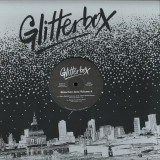
Following a string of releases that have cemented Glitterbox as the hub for independent house and disco worldwide, four sought-after mixes that have soundtracked the label's parties get a special outing on vinyl for the very first time. Who better to open Glitterbox Jams Volume 6 but head honcho Melvo Baptiste, featuring esteemed selector Jamie 3:26 & Annette Bowen with ‘Gonna Be Alright’, an instant classic that showcases the label’s very best. Next up, German hit maker Mousse T. and Davie ‘Take It Back’ to Summer of 2023 with their soulful house release, before East London house master and Snatch! Records owner Riva Starr’s ‘How It Feels’ lands on wax for the first time. Closing out this collection of Glitterbox favourites is a collaboration between legends, Shakedown & Bootsy Collins and the Shakedown Work That Mother Mix of ‘Funky And You Know It’. This four-track package from the Glitterbox camp is one you do not want to miss.
Cardinal Fuzz and Little Cloud Records bring to you the new LP from a band we hold dear, Firefriend – ‘Decreation Facts’ – From São Paulo in Brazil and now close to two decades of creating and honing what has become their trademark, a heavy reverb, minimalistic slow-burn menace which sends chills down your bones. If you don't know Firefriend from somewhere along the last decade, you must cut a safe course through music. ‘Decreation’ is the undoing of creation, something destructive and primal and that Firefriend carry through on all the twelve songs written for this LP. Yury explained that the album "is a commentary on our 21st century, so violent and radical. We live in times of accelerated transformation. We wrote and recorded this album between the pandemic and WW3 – times of ground-breaking changes – and somehow that uneasy feeling got into our songs. Reality is the most crazy trip, isn it? And we are always trying to explore new territories: we want a new album to take you to new places, so we were chasing the sounds, structures and moods to make this a truly new album to match this wild new world’ ‘Decreation Facts’ is all this as they simply inject you with a liquid paranoia for their dark conjuring’s that is hugely dark and foreboding – Julia and Yury’s uber cool stoned and detached delivery creates a seriously dark menace with Julia’s delivery having echoes of Nico – all the while THAT claustrophobic reverb and tremolo encloses and swirls around the inside of your head and vibrates your inner core. This is HEAVY shit. Decreation Facts’ is an unsettling sonic fuck you to those that seek to destroy this planet for their love of money and power and we think it is a stunning achievement. As Terence McKenna might once have said – ‘Firefriend should be consumed alone, in the dark, in silence, with your eyes closed’. Firefriend advises, “Express yourself through any method you want. That is how you become a transmitter, generating waves that will open connections with others vibrating on the same frequencies. That energy field will change the game.” Now that is a truly psychedelic perspective if there ever was one. RCKNRLL, FUZZ, FEED YOUR HEAD
Miles Davis' A Tribute to Jack Johnson is the best jazz-rock record ever made. Equally inspired by the leader's desire to assemble the "greatest rock and roll band you have ever heard,” his adoration of Johnson, and Black Power politics, Davis created a hard-hitting set that surges with excitement, intensity, majesty, and power. Bridging the electric fusion he'd pursued on earlier efforts with a funkier, dirtier rhythmic approach, Davis zeroes in on concepts of spontaneity, freedom, and identity seldom achieved in the studio — and just as infrequently accepted by the mainstream.
Sourced from the original analog master tapes, pressed on MoFi SuperVinyl, and housed in a Stoughton jacket, Mobile Fidelity's 180g LP reissue brings it all to fore with startling realism. Benefitting from SuperVinyl’s nearly inaudible noise floor, superb groove definition, and clean, ultra-quiet surfaces, this 180g LP showcases everything — from the bold tonality of the headliner's white-hot trumpet solos to the decay of crashing cymbals, carry of wiry guitar notes, and echoes of the studio — in reference fashion.
Bristling with exuberance, Davis' high-register passages explode with authority and commanding presence. Around him, a barrage of urgent backbeats, knifing riffs, and supple bass lines emerge amidst black backgrounds. One of the most prominent differences long-time fans will notice is how much more aggressive, immediate, and vibrant the music sounds, with those aspects central to the composer's original desires.
Utilizing wah-wah and distortion, the go-to instrumentalist of the performances— guitarist John McLaughlin — attacks with a nasty edge, slashing style, and vicious streak that allows A Tribute to Jack Johnson< cross the until-then-impenetrable divide between rock and jazz. Davis puts both feet in the former camp and erases any gap. The stories of the record’s creation are nearly as legendary as the sounds within: Two sessions, multiple jams, different sets of musicians (several uncredited), and near-miraculous production perfectionism that made it all appear cohesive.
The least-well-known masterpiece of Davis' career, the 1971 record — seamlessly assembled and spliced together by producer Teo Macero — was a victim of limited record-label promotion. Audiences also didn’t immediately know what to make of its original cover art — faithfully replicated here. In addition, the powers that be at Columbia Records were directing the public’s attention to Miles at Fillmore, a completely different kind of album guided by two keyboardists. A Tribute to Jack Johnson practically lives in a different universe, one from the future. To many listeners who did manage to hear it — among them critic/musician Robert Quine, Stooges leader Iggy Pop, and renowned critic Robert Christgau — it surpassed everything that came before.
Indeed, Davis treated it as a personal manifesto: An opportunity to salute the Black championship boxer admired for his threatening image to the establishment and impeccable taste in clothes, cars, women and music. Davis explains in the liner notes his affinity for Johnson — a stance mirrored by the defiant music, which hits with a prize fighter's force and reflects the graceful elegance with which a pugilist navigates the ring — and closes the album with a Johnson quote read by Brock Peters.
Inspired not only by Johnson but by Jimi Hendrix and Sly Stone, Davis changed his approach and his band. He surrounds himself with a cadre of musicians in their 20s and, in the case of bassist Michael Henderson, a 19-year-old fresh from touring with Stevie Wonder. Henderson gives Davis what he requested: boogie-based grooves that don’t lose shape or direction. Soprano saxophonist Steve Grossman, drummer Billy Cobham, and organist Herbie Hancock adhere to a similar aesthetic that prizes brazenness, innovation, and energy.
In that vein, during a portion of “Yesternow,” Davis segues into a separate performance (which became known in its entirety as “Willie Nelson”) played by guitarists McLaughlin and Sonny Sharrock, bass clarinetist Bernie Maupin, keyboardist Chick Corea, bassist Dave Holland, and drummer Jack DeJohnette. Dig it!
Talking with jazz scholar Bill Milkowski — who himself noted how McLaughlin’s unrestrained style, decibel-forward volumes, and rapid-fire power chords engendered himself to the rock crowd at the same time that his harmonics and syncopation still definitely made him a jazz player — guitarist Henry Kaiser summed up part of the appeal of A Tribute to Jack Johnson as well as anyone, saying: “It’s a jazz record that way way more open than other jazz records at the time, but still not free jazz. McLaughlin’s rhythm guitar playing on ‘Right Off’ — the use of different chords in a rock shuffle than what anybody had used before — was revolutionary.”
And to think that’s just one aspect of a record that contains multitudes. “Never let them forget it.” Indeed.

Violist, violinist and singer-songwriter Marla Hansen returns to Karaoke Kalk with "Salt", her second full-length album to date. Building upon the sonic palette the Berlin-based musician established with her debut "Dust" in 2020, "Salt" takes the delicate mixture of acoustic instruments such as viola, violin, piano and guitar combined with subtle electronics to the next level. The new album is both a remarkable departure and at the same time sheds a new yet reassuring light on Hansen's work and creativity. "Salt" features numerous collaborations with like-minded musicians and friends, e. g. producer and composer Simon Goff, The Notwist's drummer Andi Haberl and the renowned artist DM Stith.
The "Dust" has settled. After having recorded her solo debut of that name, in 2020 the world came to a grinding halt, leaving Marla Hansen left to her own devices in her adopted home of Berlin. For Hansen, who previously had lent her talent to many creative minds such as The National, Sufjan Stevens, The Hidden Cameras, Jay-Z and Ravi Coltrane, the collaborative aspect of writing and producing music had always played a crucial part in finding her own path as a solo artist.
"I started to explore synthesizers and electronic production myself," she remembers of the time when meeting other musicians in person was out of the question. "I am proud that I accomplished many of the electronic elements of the new album by myself, and otherwise laid the groundwork for the final electronic structures through my own experiments. I always wanted to record a 'big' record, one that has a lot of power and sound, and this one is 'bigger' than anything I have done so far."
"Salt" is big, indeed. The opener "Chains" is driven by a gliding bass line, bobbing 808 snares, deep chords and a mesmerizing chorus doubled by luscious strings, marking the beginning of a new chapter in her creative journey. A stark statement, both musically and lyrically. Meanwhile, the title track of the album is an almost abstract sounding ambient miniature, sketch-like, dark and haunting, showcasing Hansen's voice in a shy, brittle and fragile state. If This Mortal Coil/The Hope Blister were ever to record another album, these songs should be high up on the shortlist of tunes to pick. "The One Time" - a duet with Hansen's long-time friend DM Stith - gently meanders between a Philip Glass-inspired piece for chamber orchestra and a vocal ensemble performing on Top Of The Pops. In this range of styles and approaches, Hansen's vision is more present than ever.
For refining and finishing the songs, Hansen turned to Simon Goff, who produced the album and engineered much of the recording, merging Hansen's newly-found songwriting approach with the artistic delicacy which made her debut album an exceptional piece of work. Features include among others: Alice Dixon (Oriel Quartett) on cello, Kyle Resnick (The National, Beirut) on trumpet, Benjamin Lanz (The National, Beirut) on trombone and tuba, and Miles Perkin on bass. And then there is The Notwist's Andi Haberl, who "crafted perfect drum and percussion parts to move the songs wherever they needed to go, either into their driving grooves, slow-build explosions or gentle swells of feeling."
But what are songs actually about? "The themes revolve around a feeling of being trapped. Having to stay inside during the pandemic, with all the silence and stillness coming with it. Simultaneously, I was caught up in a professional situation that was not working for me, yet it required a lot of energy and time. I was thinking a lot about how to break old habits and patterns. Patterns in my life, patterns I saw my friends and loved-ones stuck in. There are a lot of ways that people can be trapped, and breaking out of that requires a lot of courage and energy - on all levels. The title 'Salt' seemed to fit, ocean themes showed up naturally in some of the songs, and I thought often about the quote: 'The cure for anything is salt water: sweat, tears or the sea.' Maybe I was just dreaming of the ocean, since it was inaccessible for the first time! But I wanted a cure for this feeling of being trapped, in a time of uncertainty and anxiety, salt as a remedy seemed to have some truth in it: sweat, tears or the sea."
Perseverance and the urge for freedom prevailed in the end. "Salt" is a bold artistic achievement, with songs as big as the biggest waves imaginable. With melodies as alluring as the most comfortable breezes. Perfect from start to finish.
Wer sich auf den Weg nach Louisiana macht, kehrt meist nicht auf dem gleichen Weg wieder zurück. Die Songs von BROTHER DEGE atmen die schwüle Luft der sumpfigen Wälder im Mississippi-Delta und beschwören die Geister der Bayous herauf. In den Adern des für den GRAMMY Award nominierten Singer & Songwriter Dege Legg, der seine musikalische Heimat an den Kreuzwegen aus mitreißendem Rock'n'Roll, wortgewandtem American Folk und psychedelischer Glückseligkeit gefunden hat, fließt das heiße Blut seiner Heimat in Form von surrenden Slide-Gitarren, unverfälschtem Gesang und schweißgetränkter Poesie. Mit der Magie des tiefen amerikanischen Südens zieht BROTHER DEGE auf seinem sechsten Album "Aurora" die Hörer in den Banner seiner üppigen musikalischen Welt. Sein Aufstieg fand beinahe im Stillen statt und das, obwohl der Amerikaner zig Millionen Streams generiert hat und seine breite Anerkennung sogar von keinem geringeren als Quentin Tarantino honoriert wurde, der persönlich den Song "Too Old to Die Young" für eine Schlüsselsequenz in seinem Film "Django Unchained" auswählte. Die Musik von Dege Legg lässt kühne Hooks über einer Unterströmung aus bluesiger Verzerrung aufblitzen. Dabei kanalisiert er seine Liebe für die Klassiker der Siebziger und Achtziger in einer höchst individuellen Variante des Southern Rock in den Sound des 21. Jahrhunderts. Aus diesem stilistischen Nebel erwächst eine unvergleichliche Klangvision, die Alt-Americana gleichermaßen Schärfe und Gusto verleiht. Als Dege Legg im Jahr 2004 unter dem Namen BROTHER DEGE mit seinem Debütalbum "Trailerville" in der Szene des Südens aufkreuzte, war sein höchst individueller Sound bereits voll ausgeprägt. Schon der zweite Langspieler "Folk Songs of the American Longhair" brachte gleich mehrere Hymnen hervor, darunter auch "Too Old to Die Young". Dege Legg nutzte diesen Schwung, um gleich eine ganze Reihe von Fan-Favoriten zu veröffentlichen: "How To Kill A Horse" (2013), "Scorched Earth Policy" (2015) und "Farmer's Almanac" (2018). Es lässt sich nicht leugnen, dass BROTHER DEGE stark von der Musik und den Klängen des Deep South der USA beeinflusst ist, gegen die er in seiner wilden Jugend noch rebellierte. Doch obwohl seine Wurzeln stark hervortreten, übersetzt der amerikanische Gitarrist und Sänger die Songs seines neuen Meisterwerks "Aurora" noch einen Schritt weiter in die universelle Sprache des Rock'n'Roll. Aber Vorsicht: Wer sich einfach zurücklehnt, die Augen schließt und dieses wunderbare Album auf sich wirken lässt, könnte in Louisiana aufwachen!