Driften is a room that you enter. It holds no space for distractions. It holds no riffs, nor melodies, nor choruses. You enter it.
You close the door behind you. You’re Blindfolded. You’re probably naked too. You’re alone, or with someone dear to you. You’re at your most perceptive (a state only you know how to achieve) You rely on us.
Jenny Wilson is a musician and producer.
Chris Ekvall is a translator of fiction and a singer/guitarist in Octopus Ride
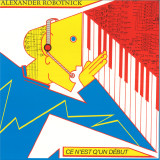
This Mini-LP was originally released on Materiali Sonori in 1984 in Italy and is long out of print. Alexander Robotnick (aka Maurizio Dami) is an Italian electronic musician. He made his debut on the Italian music scene as the founding member of Avida, a dance-cabaret band featuring Daniele Trambusti and Stefano Fuoch. in 1983 he attained international popularity with his track “Problèmes d’amour”, published first by the Italian label Materiali Sonori and then by Sire-Wea. “Problèmes d’amour” went on to become a “cult track” of the disco scene. After 40 years Spittle Records in joint venture with Materiali Sonori re-issues the mini album and the 12” with its original artwork.
"Once I was in Chicago, it was around 2010, I was just finishing my set and went outside the club to light a cigarette. Suddenly a police car stops nearby. I thought the policeman was here to fine me (I was more than 20 meters outside the venue), but he just lifted a poster of mine and asked to sign it. Then I realized that "Problèmes d’Amour" has been for a longtime the opening theme for a popular radio broadcast well-known between the black community (hence the policeman was black)”. - Maurizio Dami
In many ways, DJ Black Low's debut album, Uwami, shows the signs of an artist's first offering in any musical genre. Showcasing fluency in a broad range of styles and stuffing a number of ideas to the record's brim is the 20 year-old producer's attempt to both introduce himself to a wide listenership and stamp a recognizable sound in their minds. In other ways, somewhat out of the young South African producer's control, Uwami goes against the grain. The album comes at a time when South African electronic music is being fundamentally disrupted. Amapiano, the electronic music movement which first gained popularity with a small, core group of followers, now dominates the mainstream. Well-known and pervasive, amapiano borrows from a diverse palette of musical styles which are popular in South Africa's largely Black townshipsjazz, kwaito, dibacardi, deep and afro house among them. Instead of pandering to the seemingly insatiable local appetite and growing global penchant for amapiano though, on Uwami DJ Black Low seeks out the limits of the sound du jour and tries to stretch them. On his solo productions, he uses the samples and compositional norms that make amapiano hits the bedrock on which to experiment and improvise. With collaborators, DJ Black Low improvises within the boundaries of listener-friendly grooves. The sound he creates has foundations of what could easily have progressed into captivating amapiano songs on their own. But he uses improvised but structured electronic percussion and distortion sounds to drive the tracks in a particular direction. What remains is something like a deconstructed amapiano. For a young producer living in the townships of the greater Pitori area of South Africa's Gauteng province, there were few avenues available for Radebe to pursue a career in music. His trajectory shows the vulnerability of this pursuit. "I had started producing in 2013 and it so happened that I lost my equipment in 2014. I couldn't afford to buy equipment. In 2017, a friend of mine who had been making music found a job and decided to quit music. He gave me his equipment and I was able to start producing again. That's when I started getting back to it. I tried to pick up where I had left off, with hip hop and commercial house but I found that amapiano was the popular music. I liked it, so I started producing it."
out of Stock
Last delivered 4 years ago available to reorder, subject to availability
The amazing singer from our best selling artists duo The Swans of New England delivers this stunning soul take on the Eurithmycs classic from the 80’s givin’ evidence that soul music can turn everything from average limestone bricks to precious gold bars. Of course it was necessary to provide Coco’s vocals with the right arrangement but it’s just a slight contribution from Manny (the other half of the Swans) and myself to the developement of this very Tesla Groove fashioned sound exploration. We well know this experiment will kind of shock some of you but in all honesty we are all about takin’ on new paths of discovery.
Los Angeles-based harpist Mary Lattimore returns with Silver Ladders, the full-length follow-up to acclaimed album Hundreds of Days. Since 2018, Lattimore has toured internationally, released collaborative albums with artists such as Meg Baird and Mac McCaughan, and shared a friends-based remix album featuring artists such as Jónsi and Julianna Barwick. At one of her festival appearances, Lattimore met Slowdive’s Neil Halstead: “A friend introduced us because she knew how big of a fan I was and Neil and I had a little chat... The next day, I just thought maybe he’d be into producing my next record.” He was. Lattimore traditionally records her albums holed up by herself, so the addition of Halstead’s touches as a producer and collaborator leave a profound trace. “I flew on a little plane to Newquay in Cornwall where he lives with his lovely partner Ingrid and their baby. I didn’t know what his studio was like, he’d never recorded a harp, but somehow it really worked
Recorded over nine days at Halstead’s studio stationed on an old airfield, Silver Ladders finds Lattimore exercising command and restraint. Her signature style is refined, the sprawling layers of harp reigned in and accented by flourishes of low end synth and Halstead’s guitar. The music can feel ominous but not by compromising vivid wonder, like oceanic overtones that shift with the tides. This material is colored by specific memories for Lattimore; “Neil has this poster of a surfer in his studio and I’d look at it each day, looking at the sunlight glinting on the dark wave. In these songs I like the contrast between the dark lows and the glittering highs. The gloom and the glimmer, the opposites, a lively surfing town in the winter turned kinda rainy and empty and quiet.”
Lattimore and Halstead reformed three existing demos and improvised the remaining four songs. Among the batch she brought with her, the title track recalls a trip she took to Stari Grad, Croatia on the island of Hvar. “I spent some days there just swimming in the bay, silver ladders right into the sea.” The image stuck with her when she found herself performing at a cliffside wedding overlooking the Pacific. “Before anyone showed up, I had time to set up and play and this song came to me, ‘Silver Ladders (to the sea)’, so I made a little recording on my phone to remember it.” This sketch expanded; a delicately glittering harp melody comes over the horizon, swelling and rolling towards the shore on ebbs of synth and refractory delay.
out of Stock
Last delivered 5 years ago available to reorder, subject to availability
It’s time for the label founders to take control over our spaceship. Clusterhead offers four slices of proper abstract techno for those who know.
Release starts with Alteración del orden: a broken kick spiced with elastic synth washes and microdrones sets the pace while the rest of the percussive elements appear softly in the arrangement. The main sequence grows and mutates as minutes go by, reverb and stereo treatment goes heavier until repetition makes the desired effect on the virtual dancefloor.
Second cut Resiliencia Incesante again relies on broken kicks and processed synth lines. The BPM rate is higher here and the percussive elements are snapper and tighter. Sounds twist and change over time as the frequency range grows. An industrial ode to obscurity.
On the flip side, Automutilación creativa brings us again into oblivion, shuffled grooves obsessive sequences continuously moving and high pitched synthetic drums running through the stereo field.
Closing the release we have Notzing on board, still recovering from his amazing experimental work on our label, we give him again the commands of our spaceship to translate his mental obsessions in this superb rework of Automutilación creativa.
One more time we push the sound boundaries on behalf of timeless futuristic music in touchable format.
ESPAÑOL
Es hora de que los fundadores del sello tomen el control de nuestra nave
espacial. Clusterhead ofrece cuatro rebanadas de techno abstracto para aquellos que saben de lo que hablamos.
El disco comienza con Alteración del orden: ritmos rotos condimentados con sonidos elásticos de sintetizador y microdrones marcando el ritmo, mientras que el resto de los elementos percusivos aparecen suavemente en el arreglo. La secuencia principal crece y muta a medida que pasan los minutos, la reverberación y el tratamiento estéreo se vuelven más presentes hasta que la repetición produce el efecto deseado en la pista de baile virtual.
Como segundo corte Resiliencia Incesante nuevamente se basa en bombos rotos y líneas de sintetizador procesadas. La tasa de BPM es más alta aquí y los elementos de percusión son más rápidos y ajustados.
Los sonidos se retuercen y cambian con el tiempo a medida que aumenta el rango de frecuencia. Una oda industrial a la oscuridad.
En la cara B, Automutilación creativa nos trae de nuevo al lado oscuro, grooves mezclados, secuencias obsesivas en continuo movimiento y percusiones sintéticas de alto rango recorriendo el campo estéreo.
Cerrando el lanzamiento tenemos a Notzing a bordo, todavía recuperándonos de su asombroso trabajo experimental en nuestro sello, le damos de nuevo los comandos de nuestra nave espacial para plasmar sus obsesiones mentales en esta soberbia reelaboración de Automutilación creativa.
Una vez más empujamos los límites del sonido en nombre de la música futurista atemporal en formato táctil.
Magical is a fusion of a dozen genres, where every song opens up like a Russian doll, splitting into real songs within the song.
Hundreds of details are part of the different sonic worlds in which each song progresses.
Magical is no doubt hard to decipher for very good musicians, but it's easy to dance to for very normal people.
Since the orchestral introduction of the first song your senses will be automatically taken on a journey between irony and sadness, emotional intensity and vibing, extreme nerding and introspection. Magical is a dream that, through sound illusion, makes you meditate on the meaning of life, death and love, three fundamental topics in the album lyrics.
The album is a leap into a future where no tradition is missing.
Just a perfect way to discover the surprising world of Ze in the Clouds.
Ze in the Clouds is a cutting edge multi-instrumentalist and producer.
He created his own compositional style as the result of his jazz origins and his continuous studying and evolution. He shares his thousand faces without any stylistic boundaries with people and musicians who have the same vision.
Born in the Po Valley of Northern-Italy at the end of the last millennium, from a very young age Ze attracted the attention of promoters and artistic directors of the new avant-garde scene linked to jazz and electronic music. JazzMi and Jazz:Re:Found, the two most influential Italian festivals to focus on this kind of artistic proposal, immediately understood the potential of his amazing talent, showcasing him in their lineup. Jazz:Re:Found, captivated by his unique and inimitable style, decided also to reward his genius by inaugurating the catalog of the new record label project "Time is The Enemy" with his debut album.
out of Stock
Last delivered 5 years ago available to reorder, subject to availability
'Without You' is the second release from Athens of the North house band, it's a lovely deep house side with obvious influences. 'Without You' came together while warming up some new gear that had landed in the studio during lockdown and as often happens when you're not trying too hard something just comes together. For the vocal we had a multitrack tape of Avelino Pitts from the band Gold (Sadly he passed a few years ago) and Edinburgh singer Lucy (more to come from her soon). While we may be known for disco and funk AOTN crew grew up in the early 90s, so house is our bread and butter, so you will be hearing more.
On the flip side is something we have been wanting to do for some time, I always loved Mary Love's 'Come Out Of The Sandbox' but felt the structure of the track was a little tricky to play out. We went ahead and restructured the track as well as adding synth parts and created a 12-inch mix that never was (but should have been). We brought to the mix to Ady Croasdell at Ace Records (who currently own the rights) and asked if he would let us release the track legitimately, thankfully Ady liked it and kindly gave us the green light, so delighted that it's not only out but licensed correctly.
out of Stock
Last delivered 4 years ago available to reorder, subject to availability
"Matasuna" brings together two important pioneers of funk on its latest release: "The Meters" from "New Orleans"and "The Watts 103rd Street Rhythm Band" from "Los Angeles". The song "Giggin' Down 103rd" by "The Watts 103rd Street Rhythm Band" was first released as a single in 1968 (as Misspress) and is now available again for the first time. The song "Sing A Simple Song" by "The Meters" even premieres as a 45! Both tracks have been remastered to offer the best possible sound.
The A-side opens with "Sing A Simple Song" by "The Meters", a cover version of a song by "Sly & Family Stone" written by "Sly Stone". In direct comparison, "The Meters" cover sounds much more energetic and powerful. The ingredients are simple but effective: heavy drum breaks, funky guitar riffs, deepe bassline and a lively organ. A killer instrumental joint that exudes roughness & funkyness from the first second to the last!
On the flipside "The Watts 103rd Street Rhythm Band" follows up in similar fashion with the song "Giggin' Down 103rd". Instead of an organ like "The Meters", the band offers a super thight horn section backed by killer drums, guitars & bass. A special spicy recipe that thematically fits perfectly for this Funk45!
"The Watts 103rd Street Rhythm Band" was formed by "Charles Wright". Charles, a musician & composer born in 1940 in "Clarksdale, Mississippi", moved to "Los Angeles" in the 1950s. There he played as a singer & guitarist in various doo-wop groups. Beginning in 1962, he formed his own band, "Charles Wright & The Wright Sounds", which was joined in the following years by other musicians who would become known in the future band. The name "The Watts 103rd Street Band" was established in 1967. That same year they signed a record deal with "Warner Bros. Records" and released their first album. More LPs were released in the following years.
The band played mainly cover versions of popular R&B hits in the early years, but began to create their own songs and form their own sound in the late 1960s, which would have a strong influence on other musicians at the time.
Starting in 1969, the first members left the band to work on other projects. Charles also left the band in 1972 to further his solo career and release various albums.
In 1965, the group "The Meters"was founded by "Art Neville"with three other musicians in the musical epicenter of "New Orleans". They quickly made a name for themselves in the local scene. The musician "Allen Toussaint", who was to become one of the most influential record producers of the 1960s, discovered the band and signed them to his label "Sansu Enterprises". They first played as a backing band at live and studio performances of artists of the New Orleans scene, before getting their own record deal with "Josie Records". On this label they released three albums, before releasing more in the following years on "Reprise Records" and "Warner Bros. Records". The band officially disbanded in 1977 and reunited a few years later in 1989.
Since then they have been on stage in different formations as "The Meters", "The Funky Meters" or "The Meter Man".
Their innovative musical style, which was influenced by traditional New Orleans second line music, West African rhythms, Soul and rReggae, set a standard that would influence many musicians. Also, their music had a significant impact on the Hip Hop community, which sampled their songs hundreds of times.
out of Stock
Last delivered 4 years ago available to reorder, subject to availability
everything one needs to know about this album: a misshapen,
CHUD-like figure wanders in a graveyard bearing a cross,
while a mutated fish flops in a polluted ditch and a clutch
of factories belch their smoke above it all. The message of
the illustration is not to frighten or warn, but to celebrate
and admire.
Originally released in January of 1984, Disease Is Relative
is an unapologetic and wholesale embrace of death,
disease, and dystopia, with liberal doses of absurdism
and an unrelenting devotion to anything unexpected,
chromatic, or evil sounding. Sporting influences as
diverse as no wave, death rock, funk, post-punk, hardcore,
metal, and prog rock, this music somehow happened in the
midst of a first wave hardcore scene, before there was a
“post-” to be “post” of. Less surprising is that this happened
in Cleveland, which also inspired a desire to recreate the
feeling of the city’s post-industrial desolation in sound.
There’s also some epic screaming and crazy guitar playing.
The album features three songwriters (brothers Andrew
& Chris Marec, Robert Griffin), who also divide guitar,
bass, and vocals equally between themselves here.
Drummer Bruce Allen is the secret weapon, and provides
a clue to what a young Bill Bruford might have done in a
band like this. And yet, beyond all odds, the end result is
cohesive, cathartic, and utterly idiomatic. The distinct vibe
of the album, and its sheer quantity of killer riffs, songs
and performances have made it an album that people have
championed over time, while others have come to know it
through the interwebs as a result.
everything one needs to know about this album: a misshapen,
CHUD-like figure wanders in a graveyard bearing a cross,
while a mutated fish flops in a polluted ditch and a clutch
of factories belch their smoke above it all. The message of
the illustration is not to frighten or warn, but to celebrate
and admire.
Originally released in January of 1984, Disease Is Relative
is an unapologetic and wholesale embrace of death,
disease, and dystopia, with liberal doses of absurdism
and an unrelenting devotion to anything unexpected,
chromatic, or evil sounding. Sporting influences as
diverse as no wave, death rock, funk, post-punk, hardcore,
metal, and prog rock, this music somehow happened in the
midst of a first wave hardcore scene, before there was a
“post-” to be “post” of. Less surprising is that this happened
in Cleveland, which also inspired a desire to recreate the
feeling of the city’s post-industrial desolation in sound.
There’s also some epic screaming and crazy guitar playing.
The album features three songwriters (brothers Andrew
& Chris Marec, Robert Griffin), who also divide guitar,
bass, and vocals equally between themselves here.
Drummer Bruce Allen is the secret weapon, and provides
a clue to what a young Bill Bruford might have done in a
band like this. And yet, beyond all odds, the end result is
cohesive, cathartic, and utterly idiomatic. The distinct vibe
of the album, and its sheer quantity of killer riffs, songs
and performances have made it an album that people have
championed over time, while others have come to know it
through the interwebs as a result.
After appearing on the label's Time Is Now Allstars compilation, Bristol's own Wilfy D makes his second appearance with Shall Not Fade, adding to their new Time Is Now White label series. The young garage star serves up the smooth and soulful two-step he is known for, plus two killer remixes from Time Is Now family DJ Crisps and Soul Mass Transit System.
"Garage Tools" opens out the EP with staccato sampling and a rumbling sub bass wobble dominating the track, the most headsy on the record while "All About U (3am Mix)" takes on a gentler vibe. Using luscious vocal chops and glimmering synths, Wilfy D creates a kind of garage love song, delicate and soothing. He kicks things up a notch on "Know U Like It", a slice of speed garage that grooves along to an earworm melody.
On the B-side Wilfy D's original "Midnight Shift", a clean classic noughties garage sound palette, is reimagined twice by DJ Crisps and then Soul Mass Transit System. DJ Crisps gives the track a drum and bass edge replete with teeth-gritting sub bass power; Soul Mass close out the record with a dirty up-tempo remix perfect for a soundsystem.
out of Stock
Last delivered 3 years ago available to reorder, subject to availability
Build An Ark is well known as one of the greatest spiritual jazz bandsAin the 2000's led by producer Carlos NiNo and vocalist Dwight Trible.AThis EP includes remarkable 2 cover tracks from their first album"Peace With Every Step(2004)" of the astonishing project where he invited top jazz musicians, Phil Ranelin who led the Tribe label in the 70's and Nate Morgan from the Nimbus label led by Horace Tapscott, etc.AA-side is a cover of Pharoah Sanders' masterpiece "You've Gotta Have Freedom", one of the representative songs of spiritual jazz.AAnother side Includes a cover of "Vibes From The Tribe" which is Phil Ranelin's heavy breakbeats left on Tribe in 1975!
First album by Selda Bagcan, originally released in 1976- A collection of well-known poems and folk-songs, recorded in cooperation with the most progressive Turkish musicians / arrangers of the 70s: Mogollar, Dadaslar, Zafer Dilek & Arif Sag.
Combining traditional instrumentation from Anatolia with Western psychedelic grooves: fuzz-wah guitars, electric saz, funk drums and above all, Selda's passionate vocals.
*Original artwork in gatefold sleeve.
*Insert with detailed liner notes by Kornelia Binicewicz (Ladies on Records).
Ryley Walker currently resides in New York City. But his latest LP is a Chicago record in spirit. The masterful Course In Fable, the songwriter’s fi@h solo effort,
draws from the deep well of that city’s ferCle 1990s scene, when bands like Tortoise, The Sea and Cake and Gastr del Sol were reshaping the underground,
mixing and matching indie rock, jazz, prog and beyond.
Walker spent his formaCve years in Chicago, absorbing those heady sounds and finding ways to make them his own. Even though he emerged at first in folkrock
troubadour mode, it makes sense that he’s arrived at this point; each LP has grown more intricate and assured, his influences disClling into something
original and unusual. To put it simply: Course In Fable is Walker’s best record yet, full of acCve imaginaCon and endless possibiliCes.
Last October, Ryley went straight to one of the primary architects of the Chicago sound to make the LP. John McEn:re, Course In Fable’s producer/engineer/
mixer, can rightly be called a legend for his work with Tortoise, Stereolab, The Red Krayola, Jim O’Rourke and countless others over a prolific career that now
spans more than three decades. Seeing his name in an album’s liners is preVy much a trademark of quality.
Another Windy City exile, McEnCre is based on the west coast these days, working out of the Portland, OR studio he’s dubbed Soma West. On the seven songs
here, he delivers the signature shimmering and prisCne sonics he’s become known for over the years. But McEnCre was also inCmately involved with Course
In Fable’s overall creaCve process. “I told him to take the mixes and have at it,” Walker says.
The result is a rich, immersive affair — a headphones record if ever there was one. Course In Fable’s songs are twisty, labyrinthine things, stuffed full of ideas
(Walker half-jokingly calls it his “prog record”). But no maVer how complex it gets, the album is never overwhelmingly busy. Wiry guitars melt into gorgeous
string secCons (arranged by Douglas Jenkins of the Portland Cello Project). Tricky Cme signatures abound but feel as natural as can be. Melodies o@en dri@ in
unexpected direcCons but remain downright hummable. Like Walker’s beloved Genesis, the pop element is never too far from the surface even when shit
gets weird. (And speaking of weird, Ryley says that in addiCon to Genesis, much of the album’s inspiraCon comes from “Australian extreme scooter riders on
YouTube and balding gear heads on Craigslist.” Go figure.)
To help put together these various puzzle pieces, Ryley assembled a band made up of several longCme collaborators. Bill MacKay (another Chicago mainstay)
and Walker have made two excellent instrumental duo records of interlocking guitars and warm give-and-take — a rapport very much in evidence
throughout Course In Fable. The freakishly talented drummer Ryan Jewell has performed with Walker for years now in a variety of seangs, from
straighborward song-centric sets to blown-out improv extravaganzas. Bassist Andrew ScoJ Young (Tiger Hatchery, Health&Beauty) has logged many miles on
tour with Walker; he and Jewell are frequently astonishing, a buoyant-but-always-locked-in rhythm secCon, able to navigate someCmes dizzying turnarounds
with apparent ease. Listening to the interplay between Walker and these musicians and you might be fooled into thinking they’d spent a year roadtesCng
Course In Fable’s songs. But it all came together relaCvely fast, thanks to demos, rehearsals and the kind of musical empathy that comes from years of
playing together.
Beneath the wondrous interplay, you’ll find some of Walker’s most personal – if sCll typically crypCc — lyrics, hinCng at some of the trials the songwriter has
been dealing with in recent years. Balanced with necessary doses of dark humor and oddball poetry, Course In Fable feels most of all like a life-affirming
record, fresh air in the lungs, sun on your skin. “Fuck me, I’m alive,” Ryley sings at one point, a moment of both disbelief and pure joy.
Walker has released his albums on a who’s-who of independent labels over the past decade — Tompkins Square, Dead Oceans, Thrill Jockey and Drag City
among them. This Cme around, he’s doing it DIY-style, puang Course In Fable out on his own Husky Pants imprint. You’re in good hands. This is an album that
sounds great (mastered by Greg Calbi), looks great (artwork by Jenny Nelson and design by Michael Vallera). It probably even smells great. Whether you’ve
been onboard since the beginning or are new to the Ryley Walker universe, you’re in for a treat.
Formerly of the legendary band Liquid Liquid, Dennis Young is proud to announce his new vinyl recording titled ‘Open Roads.’
The new record is a proud testament of Young’s talent and ability to expand the boundaries of his music, excelling in all facets. The vocal acoustic recording consists of 14 new and original tracks, accompanied by cello/viola and bass guitar.
The exciting new recording shows that Dennis Young isn’t able to be locked into any boundary, and is continuing to surprise new listeners whilst satisfying his current audience with the sounds they have grown to adore, and embrace.
Best known as the marimba player and percussionist for Liquid Liquid, Dennis Young is a self-taught musician who started his music journey at a young age, picking up drums first – which led him to other instruments, later on.
Liquid Liquid was an American no wave and dance-punk group that only lasted 3 years, but released many legendary hits like ‘Cavern’ and ‘Optimo’ which have granted the band a cult-like status within music history. Originated in New York in 1980, the quartet consisted of members Sal Principato, Scott Hartley, Dennis Young, and Richard McGuire.
Dennis Young believes ‘Open Roads’ will become one of your favourite albums as it easy to consume in one sitting, whilst being intoxicating enough to draw you back in for continuous listens.
At first glance, Sarah Louise might seem an unlikely candidate
to credit technology as inspiration for her new album, Earth Bow.
After all, she has lived in rural Appalachia for the last decade,
foraging numerous species of wild mushroom, concocting
medicine from plants she gathers, and performing what she
terms “Earth Practices” to deepen her relationship with the
natural world. But it is precisely her ability to find connections
between false binaries that makes this album so novel and richly
immersive.
Louise conceived Earth Bow as an interconnected ecosystem,
meant to evolve, interact and grow. Known for her inventive
guitar playing, vocal harmonies and electronic experiments,
it was her use of the SP-404SX sampler that became a primary
inspiration for the album’s woven nature. “Improvising with the
404 during live shows allows me to collaborate with the music
as a living system, almost the way generative music works,” she
says. “I kept finding more and more samples that worked together
and realized I wanted to connect the entire record—and
that there were many ways it could be connected.”
Through this process, what began as eight core songs
blossomed into two sweeping suites. Samples—denizens of
her electronic forest—move around the record with changing
context like words in a sestina or phrases in the I Ching,
revealing new connections with each listen. Mesmeric sounds
abound on Earth Bow, from analog synth tones, to digitally
manipulated sonics that she stretches and layers with a painterly
touch. These electronic sounds inhabit the same environment as
field recordings, ceremonial percussion, guitars and empathic
vocals, weaving together her vast and borderless influences into
an enveloping world. “I want this record to take people on a
journey through the wonders of our incredible planet, to help
people feel held by the mysteries of nature,” she enthuses. “I
believe music can heal.” After a string of celebrated releases on
Thrill Jockey, Sarah Louise is self-releasing Earth Bow on her
new imprint of the same name.
All music improvised by Michael Wollny, Emile Parisien, Tim Lefebvre
and Christian Lillinger (except ‘Nostalgia for the Light’, written and
arranged by Michael Wollny).
The music we hear doesn’t fit into any category. We’re in uncharted
territory, so a good way to capture its essence might be to break it
down into its four component parts. First there’s Michael Wollny, here
for the very first time playing only on electronic keyboard instruments.
He creates a characterful world of retro-futuristic sounds that is very
much his own. We find the occasional nod to early Jean-Michel Jarre,
references to science fiction and horror movies and also vivid
memories of the sounds of avant-garde Krautrock: Can and Irmin
Schmidt and Klaus Schulze.
As for Tim Lefebvre, here is a musician who has plied his very great
craft with stars such as David Bowie, the Tedeschi Trucks Band, John
Mayer, Knower, Steely Dan, Elvis Costello and Wayne Krantz. Here
he is like a rock in a tempestuous sea. He propels the music forward
with a combination of bass and effects. He builds structures and
tames unruly elements. The way he lays down a groove is
overwhelming.
As a counterbalance we find the explosive yet highly sensitive playing
of drummer Christian Lillin-ger. He stacks layer upon layer of rhythms
and textures.
And the melodic lines of Emile Parisien on soprano saxophone
always have an astonishing springy inventiveness. Such is Parisien’s
latent energy, it seems as if at any moment he could suddenly
become airborne.
The players’ eager curiosity as to what the next turn, the next
impulse, the next push will be is palpable to the listener. One can
sense the tension between the urge to construct forms, lines,
grooves, harmonies, textures, versus the illicit joy of tearing such
fragile structures apart before they have even been heard. There are
beats and patterns from the 90s, 80s and 70s, all coalescing into
cinematic bacchanalia of sound. These four master improvisers and
composers all have the urge to rewrite the rules of their musical world
- and to do so in real time.
LP pressed on 180g vinyl with digital download code.
Sometimes, savagery is the most effective form of communication. For that, there are the Dueling Experts, the dark ninjas behind one of 2020’s most filthy, cohesive, and authentic hip-hop records. A masterclass of verbal carnage and bell-ringing beats that reminds you that if ain’t raw, it’s worthless. You may know Verbal Kent, the battle-scarred Chicago sensei, who has proven his mettle time and time again on wax -- both in his solo albums and in Ugly Heroes. But you’ve never heard him as serrated as he sounds alongside the Ghanian MC, Recognize Ali. Spitting pyroclastic flows over a treasure trove of lo-fi beats excavated from the legendary and mysterious producer, Lord Beatjitzu, the two craftsmen attack with meticulous rhyme schemes and hardbody vocals to spark melees. The beats are so adamantine that they could crush diamonds. Meanwhile, Kent and Ali exhibit a chemistry reminiscent of all-time greats like Billy Danze and Lil Fame of M.O.P., Raekwon and Ghostface, and Rock (Sean Price) and Ruck of the Boot Camp Click. This is the sound of war. Hip-hop to slap the proverbial taste of your mouth. The soundtrack to bloody knuckle brawls and broken glass. Beats that sound like they were dropped on the floor and coated in filth, boasting an almost Beta-like quality while simultaneously exemplifying sampling and chopping in a 90’s RZA-like fashion. This is the second installment "DE2: Sand the Floor
A. Smyth debut album, Last Animals, will be released early next year on 19th February. The album was produced by Darragh Nolan (Asta Kalapa) and mastered by JJ Golden. “…we made Last Animals in January of this year, moments before the world was to change forever. Throughout the record I reflect on the effect we as humans are having on our home, little did I know what was to come.... Last Animals is made up of 10 songs, some big, some small, but all with something to say”.
The forthcoming album’s first taster ’Hero’ (Oct 2019) racked up 338k streams with inclusion on Easy, Your Coffee Break and Breath of Fresh Eire Spotify playlists. It followed a series of equally well-received early singles released by A. Smyth over the last two years, including ‘Second Moon’, another add to Your Coffee Break playlist (alongside many other discovery playlists) with 642k Spotify streams to date, ‘Coming Back To You’ and ‘Fever’, both of which featured in ‘Made In Chelsea.’ With the singles gaining early support by major Irish radio stations RTE Radio 1 and Today FM.
A. Smyth has sold out Whelans in his hometown Dublin, and performed at Ireland Music Week and Other Voices festivals - with an appearance also on Other Voices TV show which aired this Spring. As well as performing UK/international showcases at Primavera Pro, Eastbound Festival and All Together Now (among others).
Five years on from Birdy’s last studio album ‘Beautiful Lies’, it may sound like a long break between albums but for Birdy, taking time to stop, experience the world and find out who she really is, was a necessary circuit break. Travelling to Nashville, home to the greatest heartache songs ever written and visiting LA drawing from classic artists Joni Mitchell and Nick Dave was the perfect way to seek inspiration. These gorgeous surroundings and collaborators seemed to know, instinctively, how to draw the words out from Birdy imbued Young Heart with strokes of the artists who had gone before.
‘Young Heart’ is quite the departure from Birdy’s previous album, 2015’s dramatic Beautiful Lies. Where Beautiful Lies was a fairy tale, Young Heart is a gritty realist portrait of the artist in pain, looking for the light.
Speaking of Young Heart, Birdy says: I’m so proud of this album, my last record was a lot more theatrical–there was a lot going on, it was a big production. Whereas this is quite stripped back -anything that didn’t need to be there, isn’t. There’s no decoration. This album just feels very personal – I’ve grown up a lot over the past five years and have experienced new things that have shaped my understanding of the world, but also of who I am as an artist. This album means a lot to me -I want to protect it.”
Rock band Ego Kill Talent—Jonathan Dörr vocals, Jean Dolabella [drums, guitar], Raphael Miranda [drums, bass], Niper Boaventura [guitar, bass], and Theo Van Der Loo [bass, guitar] —had been pivoting for most of 2020. The band was confirmed for a spring tour of South America with Metallica and Greta Van Fleet, set to perform at the majority of the Danny Wimmer Presents Festivals in the U.S., to tour with System of a Down in Europe, and to perform at many key European festivals. All told, EKT had booked 35 shows and 21 key festivals across three continents. They have supported Foo Fighters, (having been hand selected by Dave Grohl) and Queens Of The Stone Age
They are known for switching instruments amongst members while playing and were eager to show off their live prowess to audiences worldwide. However, due to the COVID-19 pandemic and the subsequent global shutdown, Ego Kill Talent, like so many others, were forced to get creative —revamping and revising tour and album release plans.
EKT elected to split their full-length The Dance Between Extremes into three EPs due to the pandemic. The Dance EP landed on June 27 and The Dance Between EP dropped Dec 4. The third, final, and full release The Dance Between Extremes arrives on March 19, 2021.
Recorded sporadically over five years from 2015 to 2019, Sixty Summers was shaped profoundly by Stone’s key collaborators on the album: Thomas Bartlett, aka Doveman, and Annie Clark, the Grammy-winning singer, songwriter and producer known as St. Vincent. Bartlett and Clark were the symbiotic pair Stone needed to realise her first pop vision. A wizard of production and songwriting, Bartlett helped coax Sixty Summers’ independent, elemental spirit from Stone, writing and recording over 50 demos with her at his studio in New York. Itself a thoroughfare for indie rock luminaries, some of whom, such as The National’s Matt Berninger and Bryce Dessner, ended up on the album, Bartlett’s studio was perfect fertile ground for Stone’s growth.
Clark was the incisive yang to Bartlett’s yin, a sharp musical polymath who, when presented with the work Bartlett and Stone had made together, quickly helped fashion Sixty Summers into the album it was destined to be. Contributing vocals and guitar in addition to production, Clark’s revered acidic touch ignited the sparks of Stone’s creations.
The scope of Sixty Summers is dizzyingly vast; miles away from Stone’s past work, it is a world unto itself, a surreal and breathtaking new landscape. Where Stone’s previous solo records, 2010’s The Memory Machine and 2014’s By The Horns, found her grappling with the natural darkness that comes with loving too much, Sixty Summers finds Stone claiming every part of herself: fire, fury, love, lust, longing. Touching on reference points as disparate as the avant-funk of Talking Heads (on ‘Break’) the romantic 2am musings of Serge Gainsbourg (‘Free’, ‘Dance’) and the sleek, ecstatic synth work of Lorde’s Melodrama (‘Substance’), Sixty Summers is an album you can dance to and one you can lose yourself in completely.
How would Roc Marciano and MF Doom sound if they were born in Athens to immigrant parents?
MC Yinka & DJ Booker provide an answer by teaming up to bring us their first LP “Night Lights”.
MC Yinka finds inspiration in blighted areas, urban struggles and multicultural subcultures. With a unique and characteristic voice, he touches on various social and spiritual matters and concerns.
Night Lights is fully produced by DJ Booker who surprises with his sample selection and the overall approach on the production. He balances between trippy and minimal sounds with dark and abstract samples. The beats vary from broken to “J Dilla – inspired” rhythms to discreet patterns that trigger the imagination and the expectations of the audience.
Not to mention the scratching skills of DJ Booker which spice up the music production and established him as one of the best scratch DJs in Europe according to British magazine “Undercover Hip-Hop”.
The album features one of the most “conscious” MCs, Mr. Lif, well known for his collaboration with the Thievery Corporation, and the hip-hop street performers Twinsanity who call our attention to the raw reality from Athens to Boston.
Night Lights will be released on vinyl by the label Mind The Wax in February 26th, 2021 and includes 10 tracks.
Recorded Live at The Forum, Darlington, 15th April 2006 999 are: Nick Cash - Vocals, Guitar Guy Days - Guitar, Vocals Pablo Labritain - Drums Arturo Bassick - Bass, Vocals Previously released on CD+DVD as Emergency in Darlington Cat No. SECDP188 in 2018.
Full mailout to relevant music press and radio.
Full promotion across social media platforms
Advertising in Record Collector, Viva le Rock, Shindig
180 gram Vinyl LP Producer - Jah Thomas Toyan aka Ranking Toyan (born Byron Letts, died 1991) was a Jamaican reggae deejay active since the mid-1970s and best known for his early 1980s recordings.
Toyan began his career in 1974, deejaying on Kingston’s sound systems, such as Socialist Roots and Romantic HiFi. He recorded his debut single, “Disco Pants” in the late 1970s for producer Don Mais. He went on to work extensively with Joseph Hoo Kim and Jah Thomas, resulting in a string of hits including “Girls
Nowadays”, “Kill No Man”, “John Tom”, and “Talk of the Town”, as well as combination hits with The Mighty Diamonds (“Pretty Woman”), Badoo (“Rocking the 5000”), and Freddie McGregor (“Roots Man Skanking”).
In 1981 he joined Henry “Junjo” Lawes’ Volcano Sound system, and toured Canada. With Lawes, he recorded the album How the West Was Won, and went on to produce his own work and that of others such as Billy Boyo and Anthony Johnson. He toured the United Kingdom with the Jah Prophecy band and performed in Jamaica alongside Dennis Brown. He was murdered in Jamaica in 1991.
Mailout to relevant music press and radio. Promotion across social media platforms Advertising in Riddim, Black Echoes and Record Collector Magazine
Originally released in 1961 on Prestige label, this album stands as one of Steve Lacy's earliest Monk's music explorations. A reflective journey through the visionary world of the high priest of Bop
featuring the great Don Cherry on trumpet, the solid Carl Brown on bass and the marvelous Billy Higgins on drums. An historical studio session based on a Monk/Ellington split track list including four Monk's compositions and two lesser known Ellington pieces. After sixty years, it's still pure joy, listening to the soprano sax master matching with Cherry's harmolodic pocket trumpet.
Deap Lips is Wayne & Steven from THE FLAMING LIPS with Julie & Lindsey from DEAP VALLY. This special collaboration came together after a friendship formed between the bands.- - The seeds of Deap Lips were first planted years ago, when Troy and Edwards each fell in love with the music of the Flaming Lips. The Lips' 1999 classic The Soft Bulletin is one of Edwards' top ten of all time. "You can listen to their entire catalogue and the experience is so intact, full of experiments, philosophy, hooks, and the sublime," says Edwards. "There are very few artists who can offer the same experience on a decades-spanning deep dive."
Flash forward to 2016 as Deap Vally were touring with Wolfmother and Coyne turned up at a show in Raleigh (Edwards was on maternity leave at the time). Wayne, in town scouting the best edible giant gummy props, came for the show and Troy and Coyne were introduced after the set.
After that chance meeting Coyne started following Deap Vally on Instagram and would tag them in random posts of the Lips in the studio, much to their delight and amusement. Deap Vally wondered:
is Wayne hinting at a collaboration? They had this theme on the brain as Edwards and Troy had recently embarked on a series of yet to be released collaborations with the likes of KT Tunstall, Peaches, Jamie Hince (The Kills), Soko, Jenny Lee (Warpaint), Jennie Vee (EODM), Zach Dawes (Queens of the Stone Age, Mini Mansions), and Ayse Hassan (Savages).
This reissue features 20 tracks, including two bonus tracks, by the virtuoso gypsy guitarist Django Reinhardt. Included are recordings with violinist Stephane Grappelli, co-founder of the Quintette Du Hot Club De France, Bill Coleman, Rex Stewart, Barney Bigard and Dicky Wells.
The 20-page booklet contains complete information with specially prepared liner notes by Penguin Guide to Jazz’s writer Brian Morton and by France’s prestigious Jazz Magazine. “Django’s virtuosity continues to astonish guitar masters and young musicians today. He passed away at the zenith of a short career, leaving behind a body of recordings that give indisputable proof of his authentic creative genius.” Jazz Magazine
p Solid Old Man Solid Rock
q Finesse Night Wind
out of Stock
Last delivered 5 years ago available to reorder, subject to availability
Negativland’s mirror image sequel to last year’s True False, The World Will Decide turns the focus away from the very human inability to accurately define reality, and towards the technologies being built to do a better job at it. But if sorting true from false seemed like a full time job back when all one had to keep track of was one’s own mind, life alongside the machines built to connect everyone only seems to multiply the uncertainties. On The World Will Decide, those uncertainties are made almost deliriously danceable: a netweb of densely sampled voices melting speech back down into music and back again, into what everyone can agree are the real questions—did that firefly really land on your finger? Would you like to be arrested? Does this app connect you to people, or replace them? Is this post an example of inauthentic behavior? Do people have to die? Or, as one of the many sampled voices on this work assures the listener: we can really feel like we’re here.
Hans Dulfer is an internationally acclaimed Dutch jazz musician, known for playing the tenor saxophone. His debut album The Morning After the Third was released in 1970. Its title track features the renowned Dutch guitarist Jan Akkerman, who was known for being a member of Focus at the time.
This rare, sought after jazz album is now available on coloured vinyl for the first time. It’s a limited edition of 1000 individually numbered copies on transparent yellow vinyl.
"Flowers Bloom, Butterflies Come" is the result of a dialog between the stunning Japanese photographer and artist Miho Kajioka and the wonderful UK musicians and composers Ian Hawgood and Craig Tattersall (The Humble Bee), initiated by IIKKI, between August 2019 and January 2021.
Born in the United Kingdom, Ian Hawgood spent most of his adult life living in Japan, Italy and Poland. Currently he calls Peacehaven (on the south coast, near Brighton) his home. Since 2009, he’s well-known with his work as the curator of the Home Normal label. He makes music using an array of reel-to-reel and tape machines in his studio by the sea, where he also master works for many labels and artists alike. You could often catch him on the coast with his faithful Nagra recorder, hydrophone and field microphones. These days his focus of music is on decayed ambient works using old synths and reels mostly, alongside his childhood piano. (site)
Craig Tattersall is a former member of The Remote Viewer and Famous Boyfriend bandmate Andrew Johnson. Tattersall's music can be found these days more often under his alias The Humble Bee; as a founder member of The Boats; and in his collaborative works with the likes of Bill Seaman in The Seaman And The Tattered Sail. He has run the wonderful label Cotton Goods from 2008 to 2015 and since 2009 he has recorded 12 albums on his moniker The Humble Bee.
Miho Kajioka (b. 1973, Japan, lives in Kyoto) is an artist and a photographer since 2011. Kajioka’s work has been exhibited in Spain, Italy, France, the Netherlands, the USA, Germany, Belgium, Portugal and the United Kingdom. Kajioka’s latest book ‘so it goes’ won Prix Nadar in October 2019. "Kajioka's artistic practice is in principal snapshot based; she carries her camera everywhere and intuitively takes photos of whatever she finds interesting. These collected images serve as the basic material for her work in the darkroom where she creates her poetic and suggestive image-objects through elaborate, alternative printing methods. Kajioka regards herself more as a painter/drawer than as a photographer. She feels that photographic techniques help her to create works that fully express her artistic vision. Her images evoke a sense of mystery in her constant search for beauty. The focused, creative and respectful way in which she uses the medium of photography to creating her works seems to fit in the tradition of Japanese art that is characterized by the specifically Japanese sense of beauty, wabi sabi. (…) According to her, photography captures moments and freezes them; printing impressions is like playing with the sense of time and getting lost in its timeline." (Ibasho Gallery)
out of Stock
Last delivered 5 years ago available to reorder, subject to availability
PM Warson grew up in an English town, in a post 9/11 world, drifting into financial crisis, against the staple suburban musical landscape of heavy rock, the ghost of the New Wave, and the fading star of the Indie Boom of the Noughties. He found his own fit in the form of Rhythm & Blues from half-a-century before, drawn in by records in the family collection, engaging at a visceral level, abstract from any subcultural connotations. While an outlier stylistically, he found camaraderie and direction among musically inclined peers, saving up two summers straight for a Rickenbacker guitar, getting the taste for playing live with an archetypal teenage power trio. After a move to London to study, he was without a band for a while. The Rickenbacker was sold for an archtop, and he delved deeper into his musical vocabulary - delta blues, Americana, early jazz and Rock'n'Roll. Meanwhile, via the capital's blues clubs and soul nights, he discovered a new setting for the music that had enticed him the first place, existing, not in a vacuum, but alive and in the moment.
A chance audition thrust him into full-time work as a touring musician. He found himself, blissfully under-qualified, serving an apprenticeship alongside conservatoire-trained jazz musicians and session pros. Meanwhile, the inevitable downtime in new cities on the road allowed for significant crate-digging between coffee spots and sound checks, while feeding off the knowledge of the players around him. Becoming more and more interested in production, ever-drawn to the Golden Era of record-making, he befriended the proprietors of Soup Studio, then an all-analogue facility based on Cable Street. He started moonlighting on production projects and learning the inner workings of a studio environment. A network was building, and when it was time to break out on his own, everything was in place.
Shedding the construct of a 'band' or a 'singer-songwriter', and perhaps the monoculture of contemporary music-making, he started cutting sides with a band of friends and acquaintances found along the way. Without any wider ambition, it was as much about the process as the outcome, evoking the R'n'B records of the '50s and '60s in practice rather than emulation. His first effort, the ramshackle "You Gotta Tell Me" became a de facto single, and after being urged to press a few copies to vinyl by a friend, it began to cause a few ripples on the local DJ scene. Meanwhile, a wild, off-the-cuff cover of 'Hit The Road Jack' caught the attention of a London music agency, giving his lineup an outlet for playing out. This included house-band sets at London establishments such as the Blues Kitchen, Old Street Records and notably at the opening of the Mary Quant Fashion Exhibition at the V&A Museum.
The term "Guitar Hero" is bandied about loosely these days. Seems like all you have to do is look good holding the thing and you qualify. But if you ask the actual guitar heroes---like Brian May, Jeff Beck, and Eric Clapton---who THEIR Guitar Heroes are, Steve Cropper is definitely on the shortlist. If all he had done were the records with Otis Redding that would be enough, but shortly thereafter he was leaving his fingerprints on records by Wilson Pickett, Sam & Dave, Johnny Taylor, Albert King, and virtually anybody worthy who came within earshot of Memphis. He was a Guitarist's Guitarist, and a Songwriter's Songwriter.
Fire It Up is Steve Cropper's first album of new Soul/R&B material in 10 years. The album was produced by Steve and Jon Tiven, and will be released worldwide on April 23, 2021 via Mascot Label Group/Provogue.
A ground-breaking new collaboration for fans of African music (Ali Farka Touré, Oumou Sangaré) as well as contemporary orchestral music (Max Richter, Olafur Arnalds, the London Symphony Orchestra)
Kôrôlén is a very special collaboration between two titans in music: Toumani Diabaté, the Grammy-winning Malian kora virtuoso, and the London Symphony Orchestra, renowned worldwide for their performances of orchestral music on record, film and stage.
Diabaté, a griot whose musical lineage stretches back generations, is well known as one of the most creative musicians on the African continent, and is almost single-handedly responsible for bringing the iconic sound of the kora to worldwide audiences. No stranger to a genre-defying collaboration, he has recorded two Grammy-winning albums alongside desert blues pioneer Ali Farka Touré, as well as projects with Taj Mahal, Björk, Béla Fleck, Damon Albarn and Afrocubism.
Commissioned as a special project by the Barbican Centre in London and produced by World Circuit, these recordings feature Diabaté and his group of eminent Malian musicians (including Kasse Mady Diabaté and Lassana Diabaté), accompanied by the soaring presence of the LSO, in dedicated arrangements by Nico Muhly and Ian Gardiner and conducted by Clark Rundell.
The title bestowed by Diabaté on this unique and groundbreaking release, ‘Kôrôlén’, translates from the Mandinka language as ‘ancestral’ - a fitting theme for an album that brings together ancient griot melodies and Western orchestral arrangements, resulting in an achingly beautiful and fresh Afro-neo-classical sound that will appeal to admirers of African, traditional and new classical, and ambient music.
New York Hip Hop revolutionaries Ced-Gee, Kool Keith, Moe Luv and T.R. Love, known as Ultramagnetic Mc’s dropped their seminal debut album Critical Beatdown in 1988. Immediately grabbing the attention and pushing the boundaries of hip hop into new horizons, it was hailed as a masterpiece by the underground. Influential hip hop magazines The Source and Hip Hop Connection both listed Critical Beatdown in their Top 100 charts, naming it one of the best 100 hip hop albums ever. The 1986 single “Ego Trippin” is one of the first tracks to use the SP1200 drum machine (programmed by producer Ced-Gee), and the SP1200 would later become the golden standard for many hip hop producers. This expanded edition features not only the original album with the 15 tracks, it also includes 6 bonus tracks: the original 12” versions of “Funky”, “Bait”, “A Chorus Line” featuring Tim Dog, “Mentally Mad” plus “Traveling At The Speed Of Thought (Hip House Club Mix)” and “Ego Trippin (Bonus Beats)” coupled for the first time ever on vinyl. It also contains a 4 page booklet with interviews, rare photos and liner notes written by Angus Batey, the author of Rhyming and Stealing: A History Of The Beastie Boys and a writer for Hip Hop Connection and Mojo magazine.
This first pressing also comes with an exclusive photograph of Ultramagnetic Mc’s on thick cardboard. The timeless classic Critical Beatdown is available as a limited edition of 2000 individually numbered copies on yellow vinyl.
Alan Vega’s name is synonymous with unfettered, tireless creativity. Beginning in the late 1950s, when he was a fine art student at Brooklyn College, through his years playing in Suicide, and all the way up until his death in 2016, Vega was constantly creating. That
process naturally led to a wealth of material that didn’t see the light of day immediately when it was recorded, which came to be known as the Vega Vault. Mutator is the first in a series of archival releases from the Vault that will come out on Sacred Bones Records.
Mutator was recorded alongside Vega’s longtime collaborator Liz Lamere at his NYC studio from 1995-1996, and it serves as a document of a particularly fertile time in his creative life. He had 11 full-length solo albums come out during the ’80s, ’90s and ’00s - plus numerous collaborations, and Suicide records A Way of Life and Why Be Blue. Mutator wasn’t shelved intentionally, but Vega’s back-to-thegrindstone M.O. meant that he had moved on to making his next record before this one was finished. Lamere and Vega’s friend and confidante Jared Artaud (The Vacant Lots) rediscovered the raw, unmixed recordings from the Mutator sessions in the Vault in 2019. Soon after, they mixed and produced them into the visionary album that was lurking within those tapes.
“Our primary purpose for going into the studio was to experiment with sound, not to ‘make records,’” Lamere recalls. “I was playing the machines with Alan manipulating sounds. I played riffs while Alan morphed the sounds being channeled through the machines.”
At the time of the Mutator sessions, Vega was massively inspired by what was happening in the streets of New York - not only the hip hop scenes that were exploding throughout the outer boroughs, but also the literal sounds of the streets, the traffic noise and industrial ambience of city living. That influence trickled into the sounds he and Lamere captured in those sessions. That sensibility, paired with Vega’s unmistakable voice and force of personality, is what made it the great album it is now. The final piece was the production job, completed by Lamere and Artaud 25 years after the songs were first captured.
Alan Vega’s name is synonymous with unfettered, tireless creativity. Beginning in the late 1950s, when he was a fine art student at Brooklyn College, through his years playing in Suicide, and all the way up until his death in 2016, Vega was constantly creating. That
process naturally led to a wealth of material that didn’t see the light of day immediately when it was recorded, which came to be known as the Vega Vault. Mutator is the first in a series of archival releases from the Vault that will come out on Sacred Bones Records.
Mutator was recorded alongside Vega’s longtime collaborator Liz Lamere at his NYC studio from 1995-1996, and it serves as a document of a particularly fertile time in his creative life. He had 11 full-length solo albums come out during the ’80s, ’90s and ’00s - plus numerous collaborations, and Suicide records A Way of Life and Why Be Blue. Mutator wasn’t shelved intentionally, but Vega’s back-to-thegrindstone M.O. meant that he had moved on to making his next record before this one was finished. Lamere and Vega’s friend and confidante Jared Artaud (The Vacant Lots) rediscovered the raw, unmixed recordings from the Mutator sessions in the Vault in 2019. Soon after, they mixed and produced them into the visionary album that was lurking within those tapes.
“Our primary purpose for going into the studio was to experiment with sound, not to ‘make records,’” Lamere recalls. “I was playing the machines with Alan manipulating sounds. I played riffs while Alan morphed the sounds being channeled through the machines.”
At the time of the Mutator sessions, Vega was massively inspired by what was happening in the streets of New York - not only the hip hop scenes that were exploding throughout the outer boroughs, but also the literal sounds of the streets, the traffic noise and industrial ambience of city living. That influence trickled into the sounds he and Lamere captured in those sessions. That sensibility, paired with Vega’s unmistakable voice and force of personality, is what made it the great album it is now. The final piece was the production job, completed by Lamere and Artaud 25 years after the songs were first captured.