Portuguese based Nørbak returns to Soma with his second single for the label, the Myelination EP. Nørbak is quickly making a name for himself in the global scene and has just completed his debut album to much critical acclaim. The young producer has built a wealth of knowledge on sound design and is clearly represented in his music which is deep and rich in sonic experiments whilst retaining dancefloor focus. This latest EP has Spanish techno maestro Oscar Mulero & fellow Portuguese talent Lewis Fautzi, deliver two fantastic remixes that perfectly compliment the originals.
Nørbak's "Myelination" starts the EP with driving percussive elements that propel the track from the opening. Swamped with light & ethereal FX, dark and droning sounds take the track down a ominous path. Lewis Fautzi steps up next with his remix of Myelination. With a more minimalistic interpretation he manages to continue the dark and direct momentum of the original. On the flip, Mirante rattle hards with steady and precise percussion, bolted together with heavy rolling kicks and sub and a perfectly muted rhythm throughout. Techno don Oscar Mulero closes the EP with his version of Mirante. He immediately ups the ante with driving 909 beats and huge atmospheric FX that guide the rhythms. Mulero always on point with his signature sound design and techno aesthetic.
Mastered By Conor Dalton @ Glowcast Mastering.
Suche:knowledge
Air Texture proudly announces its latest artist-curated compilation, “Hardwired,” assembled by Berlin-based musician JakoJako. This expansive collection celebrates the implicit connection between hardware-focused electronic producers, featuring contributions from Rødhåd, Acid Pauli, The Field, Neon Chambers, and many more.
“Hardwired” draws its conceptual foundation from synthesizer terminology. As JakoJako explains: “A hardwired synth has connections already soldered into the machine—it comes with certain functions without needing to patch cables externally. As a hardware producer, I feel whenever I meet someone who creates music as I do, we have this immediate connection, like a hardwired synthesizer. There’s no need for small talk—we can speak about gear.”
This metaphor of pre-established connections forms the emotional core of the compilation, celebrating the community of hardware enthusiasts who share an intuitive understanding and appreciation for machine-based music creation.
JakoJako has established herself as one of electronic music’s most intriguing voices, exploring the territory between technical precision and emotional expression. Her artistic approach balances rigorous knowledge with unrestrained intuition, creating works that reach beyond genre boundaries.
A Berghain resident with performances at Dekmantel and Fusion, to the Royal Albert Hall and the Barbican, JakoJako has released music on prestigious labels including Tresor, Mute, and Leisure System, and crafted remixes for artists like New Order and Martin Gore. Her deep relationship with analog and modular synthesis, including her ongoing connection to Berlin’s SchneidersLaden, informs her distinctive sound.
Following her recent Mute album “Têt 41,” this curation for Air Texture provides further insight into the musical universe that has shaped JakoJako’s artistic vision.
“Hardwired” showcases 23 tracks for its digital release, with a select 9 tracks pressed to vinyl. The collection spans the spectrum of contemporary electronic music while maintaining cohesive focus on hardware-driven production approaches.
Highlights include collaborative works between JakoJako and fellow producers Mareena and Frank Wiedemann, alongside contributions from established artists like Rødhåd, Acid Pauli, and The Field, plus emerging talents representing the hardware renaissance in electronic music.
Founded by James Parker Healy, Air Texture emerged from New York City’s late ’90s rave scene, carrying forward the fundamental PLUR (Peace, Love, Unity, Respect) ethos with a collaborative and curatorial focus. Air Texture has evolved from its roots in Manhattan’s club era and Brooklyn’s warehouse scene to embrace a global perspective, working with producers across diverse styles and regions worldwide through the label and its PLace: nonprofit series.
Bangladeshi Born Producer Lady Tazz, debuts ‘Sleaze’ with a killer remix from Radio Slave this June. At the heart of Lady Tazz’s mission is Mind Medizin, her label and event series that champions the sound of kindred spirits, now inviting Radio Slave to the mix this June.
Lady Tazz has overcome many cultural obstacles to achieve her rightful place as one of Toronto’s foremost electronic dance exports. A renegade of sorts, as a teenager, she would regularly visit the UK and Germany without her parents’ knowledge to attend London’s Sound Academy and to party in Berlin, whilst continuing to pursue her aspirations of becoming a DJ.
The Bangladeshi producer and DJ is proud of her heritage but is realistic about the social expectations of throwing raves in her hometown. She moved to Toronto in her teenage years, where she grew up, educating herself on music and a place that has perfected a sound that remains organic and raw. Her record label and party series, Mind Medizin, taps into an erotic lifestyle that embraces the unconventional and free-spirited, which inspires and motivates Lady Tazz on numerous artistic levels.
For Mind Medzin’s latest release, Lady Tazz will drop ‘Sleaze’ on the 27th June, to include a special remix from Rekids founder and UK godfather, Radio Slave, making his debut on her label.
Foreboding and dripping with lascivious intent, ‘Sleaze’ brazenly stalks into existence by way of warping synth fills and glitching hi-hats. The lyrical component consists of a series of smouldering vocal hooks which salaciously enrapture one’s senses, tightly wrapping around the creeping melody before succumbing to the beat’s stomping dominance.
On the flipside, Radio Slave’s remix revs and fires with shots of ringing overtones atop a deep thud, husky vocal and swooshing cymbals. Whilst upping the ante of the original, its stripped-back charm remains, culminating in a moody, chugging rework bubbling with tension and fraught with Radio Slave’s brand of dark, fractured house.
Since 2019, Amsterdam-based curator Pieter Jansen has used his yeyeh label as a vehicle for carefully considered (and sometimes unlikely) ‘first time’ collaborations between different experimental and avant-garde artists including Eversines, Carolina Eyck, Greetje Bijma and Oceanic. After pairing saxophonist/composer/producer Jerzy Maczyński with fellow Polish experimentalist Waclaw Zimpel on 2021 collaborative release Sariani (which was credited to Jerry&ThePelicanSystem in a nod to the former’s earlier album for Warner Music’s Polish Free Jazz series), yeyeh founder Pieter Jansen had an idea. That simple idea – getting Maczyński in the studio with Chicagoan DJ/producer Hieroglyphic Being – was the genesis of this record, the debut album by Universal Harmonies & Frequencies. In June 2022, Hieroglyphic Being flew to Amsterdam to spend five days improvising with Maczyński in a rented studio beneath Volkshotel, under the watchful eye of recording and mix engineer Rein De Sauvage Nolting, better known in electronic music circles for his work as RDS. During those sessions, 26 long, improvised compositions were recorded, with Maczyński contributing saxophones and electronic tools, and Hieroglyphic Being laying down synthesizer parts and vocals. These sessions were captured on film by VLF (Katarzyna Debska), who later created the artwork and visual language for this record release. Some days after the recording sessions, Sauvage Nolting – who had delivered artistic input during the improvisations – sat down with Jansen to select 13 pieces to put forward for the album and a loose conceptual framework. It was then that the hard work began. While a decision was taken to present some improvisations in full, most of what you will hear on Tune IN, as the album is titled, is based on fragments of improvisation. The resultant pieces were reconfigured, re-worked and re-produced by Maczyński and Sauvage Nolting over many months, and in discussion with Hieroglyphic Being. Maczyński added more layers of instrumentation, creating a “whole digital band of reed instruments” – a method he previously utilized on Sariani. What you hear when you play the record defies categorization. It is rooted in a specific moment in time and the spontaneity of musical improvisation – both Maczyński and Hieroglyphic Being are experienced improvisers, albeit with different musical instruments and tools – but also the product of extensive post-production and reflective re-shaping. It is not free-jazz, ambient, electronica, rhythmic cubism (as Hieroglyphic Being’s distinctive sound has previously been called), or avant-garde experimentalism, but something that combines all these musical approaches and more, with a sprinkling of far-sighted futurism mixed in. It is a magical and mystical meeting of musical minds that will pass the test of time in decades to come.
The Rhythm Section – raves first super group - consisting of Ellis Dee, Rennie Pilgrim, Newton and Ritchie T. The group disbanded in 1993 after the rise of jungle as the guys didn’t want to go in that direction and felt their job was done in building the rave scene to what it was. But then in 1995 they had a request to reform and tour America as the rave culture was growing out there. So, they did reform, minus Ritchie T, and embark on a rather rave induced tour of the US with all the antics that you would expect from those guys!
They also wanted to make some new music for the tour and The Sequel album was born. Though written in 1995, they guys purposely kept the sound retro, calling upon their knowledge of the late 80s and early 90’s London warehouse scene.
Released originally as a limited edition double album which commands a high price on Discogs, this is the second part of the album – part one being the 180g blue vinyl release on Vinyl Fanatiks last year.
Mary Yuzovskaya unveils the 'The More You Know' remix EP on her vinyl-only Monday Off imprint, releasing 6th June 2025. Featuring reworks from Spain's ORBE, 90s US Techno legend Mike Parker, Judas Records' JUDAS, and Duna founder CONCEPTUAL.
First up, Token and Mote-Evolver artist and Orbe Records boss ORBE remixes 'Ittiologia', maintaining the original's hypnotism by amplifying its eerie soundscapes for a loopy, deep space trip. JUDAS, shrouded in mystery yet known for his self-released EPs on his eponymous label and releases on ARTS, then revisits 'Micologia', completely reworking its tripped-out sequences into short bursts of droning synth work.
Tresor, Semantica, and Prologue's Mike Parker also provides a version of 'Micologia', with the US Techno lynchpin slowing down its rhythm while its weighted synthlines bubble up between its kicks and rides. Closing out this remix package, Italy's CONCEPTUAL reworks 'Ittiologia', building tension via the original's dark and shadowy atmospheres but switching up its low-end for an electric, late-night feel.
Mary Yuzovskaya is a storyteller. Through delicate, masterful curation and a deep knowledge of experimental, trippy Techno, she weaves together sonic journeys - with 'The More You Know - Remixes' making for another excellent addition to her Monday Off label.
Dr Packer once again works his magic, this time breathing new life into Mikki’s 1985 boogie-funk masterpiece Dance Lover. With his deep knowledge of disco, funk, and soul, the Ausie remix maestro delivers a sublime update that effortlessly bridges the gap between the past and present.
Staying true to the essence of the original, Dr Packer’s rework retains the flawless synth lines and Mikki’s powerhouse vocals, elevating them with finesse. The groove is deeper, the beats are heavier, and the energy is dialed up, making this an essential addition to any DJ’s arsenal.
Rolling basslines, crisp percussion, and a refined yet powerful disco-funk vibe, Dr Packer has crafted a mix that feels both nostalgic and refreshingly new. Whether you’re a longtime fan of the original or discovering Dance Lover for the first time, this rework is a must-have.
Private View is distinctly Blancmange while also expanding into new sonic terrain. There’s a deft marriage of futuristic electronic sounds, Neil Arthur’s unmistakable vocal hooks, and songs veer from buoyant and joyful to dark and brooding. Private View will be released on London Records almost exactly 40 years to the day since the label released Blancmange’s debut album Happy Families. This neat full circle of Blancmange re-signing to the same label that ignited things all those years ago is also reflected in the album itself, being the perfect crystallisation of four decades of creativity.
On Private View Neil returns with key collaborator Benge (Wrangler, John Foxx, John Grant), and David Rhodes (Kate Bush, Peter Gabriel, Scott Walker) also returns as the guitarist, having previously performed with the band as early as 1982’s Happy Families (as well as several other Blancmange albums).
Private View is a record that manages to capture an artist who is potently in the moment when it comes to creating new work, while also being able to draw on 40 years’ worth of knowledge, experience, and built-in intuition. “I'm really lucky to be able make the music completely on my own terms,” Arthur says. “Being able to just continue being creative...that's when I'm happiest.” As he said before: “within myself there are no limits.”
Blancmange is also reflected in the ongoing influence the music has on younger generations of artists and fans over the years. Contemporary electronic producers like Honey Dijon and Roman Flügel have paid tribute with remixes, Moby once called Blancmange “probably the most underrated electronic act of all time.”; while John Grant continues to profess his love for Arthur’s music, old and new, and has invited Blancmange to perform as part of Grace Jones’ Meltdown festival.
A multifaceted artist, who over his career has traversed between singer-songwriter, hit producer, DJ and curator, Ben Westbeech now arrives on Glitterbox Recordings with a fully realised artistic vision on his new album Everything Is Within You.
Encapsulating Ben’s appreciation of the power we all have within us to achieve joy and peace, as conveyed sonically by all the musicians involved, Everything Is Within You came together organically. His first full length solo LP since the acclaimed There’s More To Life Than This on Strictly Rhythm in 2011, Everything Is Within You showcases Ben’s artistic development as a songwriter, curator and producer as he steps into his role as producer and arranger, away from lead vocalist.
“This album is about speaking the truth. The truth from within. Luckily, I have been blessed to come across the paths of other artists that shared the same sentiment over the seas that dwell. These artists all feature heavily on this record. It isn’t about me or you. It’s about everything that is within.” – Ben Westbeech
Spotlighting featured artists such as Dames Brown (recorded by Moodymann in Detroit), RAHH, Karen Harding, DAVIE and Obi Franky, with co-production credits including Honey Dijon, Luke Solomon and Chris Penny, as well as Mousse T., the record was born out of a Glitterbox writing camp in London at Defected’s studios. The collection of records that were made that week became a catalyst for the full album, now arriving on Defected’s Glitterbox Recordings.
An artist with a rich musical history, from the release of his mature debut album Welcome to the Best Years of Your Life for Gilles Peterson’s Brownswood, to his chart-topping club records as Breach, and work as The Vision on Defected, the path to this new album has included periods of sobriety, self-work, spiritual exploration and the integration of a healthier outlook all round. Now based in Ibiza, the omnipresent energy of the magical island has permeated into the music on his new album, as well as the influence of his personal and spiritual growth.
Exploring a range of genres across the LP, from neo soul to house influences, the breadth of Ben’s musical knowledge is demonstrated throughout the eight tracks. From the blissed-out piano grooves of ‘Times Are Changing’, since remixed by house royalty Louie Vega and Josh Milan as Two Soul Fusion, to the uplifting ‘Do Me Right’ and the emotional soundscapes of ‘So Good To Me’, Everything Is Within You puts the emphasis on the guest vocalists. With exquisite live instrumentation and songwriting that give the record an evergreen feeling, this is a timely album that exudes a contagious, positive feeling throughout, something the world needs right now.
For our second release we invited Semoa who delivered an amazing blend of the minimal and electro genre. The EP includes a remix from the legendary Mihai Pol, who took the project to a whole new level.
"We gotta dance, cause it won't be long before we get lonely again.
To friends who talk in their sleep at night and the apartment next to the drugstore,
we'll go farther and farther away,
fed with the knowledge of life-saving advice."
-Stefan Baghiu
180 G. BLACK VINYL WITH LINER NOTES IN CREOLE, FRENCH, ENGLISH
Originally released in 1979, "Spiritual Sound" lives up to its name, a soaring, triumphant album, six tracks of spirit magic from Guadeloupe.
Telluric, intense, terribly alive, the gwoka drums of Guadeloupe carry the identity of a painful and fervent island. Marked forever by the crime of slavery, Guadeloupe's créolité cherishes the ka drums and their natural environment: the low-pitched boula drum with male goatskin, the high-pitched soloist makè drum with female goatskin, the chacha, ti bwa, triangle, calabash and other percussion instruments that surround them, and the voices - the fiery, proud, timbred, urgent voices of the gwoka.
This album is also a legend for its voices: in his then dazzling youth, singer Lukuber Séjor was one of the first gwoka artists to largely feminize the chorus of répondè, who converse with his text delivered in a straight and powerful voice.
And everything here sets new standards. In 1979, Mizik Filamonik - Spiritual Sound proclaimed a spiritual patriotism of ferocious intensity. The album by Lukuber Séjor - whose spelling alone is a battle - sets out to give Guadeloupe the intangible weapons of self-respect and self-knowledge, through a singular practice of traditional music.
The genesis of gwoka music is less straightforward than one might imagine... The drums performed the servile task of accompanying the work of slaves in the fields and during the “corvées” imposed by the administration, before being freely practiced by the common people after the abolition of 1848. At the heart of the conviviality of the Guadeloupeans furthest from the cities - geographically and socially - the gwoka drums come out for carnival, funeral wakes and neighborhood celebrations, but also during strikes, fits of anger and armed vigils of the riots and revolts that have punctuated the island's history. For generations, governors of the colony and then the prefects of the overseas department of Guadeloupe have been viewing the gwoka as a potential for turbulence and a threat to public order.
But as the Beatlesmania, “chanson engagée” and rock revolutions unfolded in Europe, young people turned to the drums of mizik a vié nèg (“bad negro music”, in Creole), which Guadeloupeans had learned to despise by following the “assimilation” process advocated by the school system and most of the political class. At the end of the sixties, in a Guadeloupe mourning the deadly repression of the May 1967 social movement, they played traditional music, refusing to wrap it up in tourist prettiness and madras folk costumes. Instinctively, they played a rough and contemporary gwoka, led by the incendiary Guy Konkèt. This was the era of decisive 45 rpm records such as Robert Loyson's Kann a la richès, which brought to light the fieriest words of union rallies.
At his home in Sainte-Anne, Lukuber Séjor played with flautist Olivier Vamur and his brother Claude Vamur, who cobbled together a drum kit from tin crockery and became, a few years later, the most influential drummer in Kassav'.
These were the years of the Bumidom program, when young Guadeloupeans were encouraged to emigrate to mainland France. At the age of twenty, Lukuber Séjor embarked on the liner Irpinia, disembarking at Le Havre and taking the train to the Gare Saint-Lazare - the route taken by thousands of young West Indians who went on to study or looked for work, all the while trying to maintain a link with their homeland. In this case, it's at the Antony university residence, where Lukuber played the drum and participated in a thousand gwoka updates and aggiornamentos, while exile reinforced the need for a spiritual link with the native land.
In 1978, Guy Konkèt played at the Salle Wagram, a historic event for West Indian music. After serving as répondè - i.e. backing vocalist - on one of his home-recorded albums, Lukuber joined his live band. Little by little, he became one of the key artists on a circuit parallel to French show business. At a student party in Caen, he met a young woman from Martinique who, at the time, was more motivated by her ambitions as a visual artist than by her vocation as a musician. Her name was Jocelyne Béroard and, a few years before she plunged into the Kassav' adventure and became the greatest West Indian singer of her generation, she designed the cover of Lukuber Séjor's LP.
This ambition was obvious and imposed its will. A more or less regular band was formed, with Roger Raspail, Rudy Mompière and Éric Danquin on ka drums, Claude Vamur on ti bwa, Olivier Vamur and Françoise Lancréot on flutes and Annick Noël on keyboards. Lukuber Séjor is set on wanting to extend the gwoka palette to other instruments, as the jazz-rock revolution opens a thousand new doors. Annick Noël will play a wide range of timbres and textures on electric piano and synthesizer. Another novelty: the répondè are two men and two women, Roger Raspail, Olivier Vamur, Françoise Lancréot and Maryann Mathéus ...
Mizik Filamonik - Spiritual Sound is a self-production in which the singer and leader sank all his savings, allowing him no more than a single day in the studio. The first side is more of a musical manifesto, with the first two tracks, Éritage and Penn é plézi, being instrumentals. The third, Son, forcefully celebrates the need for Guadeloupeans to connect with the gwoka. In fact, Jocelyne Béroard's cover shows a tambouyé in the shadow of a cloudy sky, against which a radiant sun is rising and whose light will soon flood the entire landscape. The silhouette and face of this man strongly evoke the immense Vélo, master of the ka, rejected at the time on the fringes of society.
The second side of the LP is surprising. Formally, three tracks are explicitly linked like the three parts of a triptych. Primyé voyaj evokes the appalling tribulation of Africans deported as slaves to Guadeloupe; dézyèm voyaj speaks of the Bumidom program and the economic, political and social forces driving young Guadeloupeans towards the mirage of prosperity in France; twazyèm voyaj closes the cycle with the emigrants' return from Europe after years away from their island...
This gwoka, obsessed with the need to save Guadeloupe spiritually, appeals far beyond the politicized audience. Mizik Filamonik - Spiritual Sound instantly became a classic, although Lukuber Séjor never really made a career for himself as a musician.
After all, the album was released in 1980, with no promotional resources in France or Guadeloupe - and therefore no concerts. The thirty-two-year-old author, composer and performer made his own third trip back to Guadeloupe. He set up a small woodworking business, which he lost in Hurricane Hugo in 1989. His other activity, teaching in a medical-educational institute, became the core of his professional life. He continued to be an active campaigner - a campaigner for the Creole language, a campaigner for the reawakening of identity, a campaigner for special education, a campaigner for a thousand causes that he ignited with his generous and perceptive enthusiasm, such as the defense of breadfruit fries...
The echoes of his 1979 album have not died down. Of course, the use of Penn é plézi as the theme tune for Radio Guadeloupe's funeral notices from 1980 to 1992 kept him in the collective memory, but he continues to sing and compose sporadically, as with his all-female
vocal group Vwapoulouéka... Still convinced that music is a means of liberating the spirit, he continues the journey of a young man eager to deploy the power of Creole music and language.
Bertrand Dicale
Red Pig Flower brings you her sensational debut album Practice Love, available on Sound Of Vast from 10th April. Her unique sound sits upon the apex of a three-sided pyramid. With Berlin, Tokyo and Seoul as the base, Red is a third culture kid, greater than the sum of her parts. The centre is filled with her incredible appreciation and knowledge of house and electronic music from every pin drop through history.

So taken with Red Pig Flower’s sound, Honey Dijon invited Red to her Southbank Centre show to play alongside her. Moxie loves her that much, that she invited Red to record a mix and to guest on her NTS show. Alan Fitzpatrick, and Just Her are amongst Red’s growing posse of followers.
Practice Love is a culmination of all of Red Pig Flower’s life experiences, brimming with her positive energy and an outlook on life of pure love. Red has collaborated with like-minded artists at every level: the music, the cover art and video all produced with talented friends, who get Red as the wonderful person she is and understand her vision. Her label partner and good friend, Knock in particular helped make Practice Love the incredible album it is. So intuitive is their musical symbiosis, they made 20 tracks and carefully curated and ordered nine of these, making an album of tracks that stand out on their own, yet flow perfectly as an album. Practice Love will make you feel joyous when you play it. By the end, you will feel like you know Red like a friend.
Practice Love kicks off with I don’t care, it makes you feel good: a dreamy, tribal mantra of a track that does exactly what it says on the tin. Next up is I Love To Dance. Red’s beautiful soft vocal is sweet yet poignant, leaving you in no doubt of her sincerity. Thirdly comes Feel Good Music. Are you getting a feel from the track names yet that this is an album of warmth and positivity? You can imagine this one at a Café Del Mar sunset, where those who get the spirituality of Ibiza come together, in the moment to appreciate the beauty of a sunset and understand that no matter how many you see, each is magical and unique.
The three tracks so far have taken you to twilight. The titular Practice Love takes you by the hand onto the dancefloor. There is a double meaning to ‘Practice Love’- The first is to make love your practice. The second is that you need to practice love to be able to become a practitioner of love. The video, shot by her friend Jelly, features Red Pig Flower in Brick Lane, London, wearing a little piggy mask and offering free hugs. The first passersby ignore her sign, but Red isn’t disheartened, spreading the right message, dancing with joy. Her optimism is rewarded, making peoples day better on a cold English afternoon.
Fifth track Sax and Drugs takes things a little sleazier, the beat is filthy and the synths are sexy. Your body starts to move to this one before your brain even realises. The incredible Declan McDermott joins on saxophone, the funkiest synths and Red’s sultry vocal washing your soul with Laurent Garnier inspired sunlight. On Thisiz House Music, again featuring Declan, Red takes you even further back. About Frankie Knuckles O’Clock, with a portal straight to 2025.
By now, you will agree with me that Practice Love flows so, so well. I Wanna Meet Somebody follows incredibly, continuing the feeling that if you close your eyes, you’re dancing with David Mancuso at the Loft. No Money completes this EP-within-an-album. Perfect vocal samples, valve synth riff and 808 drum patterns showing that producers as good as Red Pig Flower make it sound effortless. The best albums finish memorably and No Genre is one of those perfect finishers. Think Andrew Wetherall’s production on Screamadelica. The lights are up in the club, nobody wants to go home, arms in the air wanting more.
Red Pig Flower explains: Practice Love resonates deeply with me because house music has always been a sanctuary—a place for unity, joy, and self-expression. As a nomad and outsider, club culture and house music became my shelter. The cities I’ve lived in—Seoul, Tokyo, Berlin, and London and more—nurtured me and shaped who I am today. That’s why the cover, by the incredible Carlos Sulpizio features their skylines, and the album is multilingual, representing the diverse influences in my life.
Practice Love is like a meal that has been prepared lovingly. They always taste better. And there’s plenty more to come from Red Pig Flower. How was your appetizer?
DJ Support: The Shapeshifters, Riva Starr, Mousse T., Michael Gray, Dr. Packer, Richard Earnshaw
Serge Funk having made a recent name for himself as a wonderkid for disco- and funky-house versions. A re-editor for the diggers as opposed to the baitheads, 'Groovy Theme' and 'Cherry Bomb' are utter bangers devoid of much relation to their originals (indeed, there's no way of telling what the samples are without a record buyers' knowledge), in large part thanks to their working into beat-centric structures that drown out the vocals in favour of kick slappage and gut-punchage. Rhythm over theme; keeping things vibey, felt.
NEW LP PRESSING on Opaque Yellow Wax
Released in September 1978, a mere two months before YMO’s debut, Cochin Moon is a clear precursor to the groundbreaking synth and sequencer-dominated sounds that would come to define the iconic trio. Huge tip!
Credited to Hosono and Pop Art legend Tadanori Yokoo (who created the cover art), Cochin Moon is a fictional soundtrack to a journey into unknown worlds, inspired by Hosono and Yokoo’s trip to India.
The unbelievably prolific Haruomi Hosono is one of the major architects of modern Japanese pop music. With his encyclopedic knowledge of music and boundless curiosity for new sounds, Hosono is the auteur of his own idiosyncratic musical world, putting his unmistakable stamp on hundreds of recordings as an artist, session player, songwriter and producer. Born and raised in central Tokyo, his adolescent obsession with American pop culture informed his early forays into country music, which he would revisit later in his career. Hosono made his professional debut in 1969 as a member of Apryl Fool, whose heavy psychedelia was somewhat at odds with his influences, which leaned towards the rootsy sounds of Moby Grape and Buffalo Springfield. The latter was one of the main inspirations for his next group, Happy End, whose unique blend of West Coast sounds with Japanese lyrics proved to be highly influential over the course of three albums. After the band’s amicable break up in 1973, Hosono began his solo career with Hosono House, an intimate slice of Japanese Americana recorded inside a rented house with recording gear squeezed into its tiny bedroom. Hosono’s solo career would take many twists and turns from this point forward, with forays into exotica, electronic, ambient, and techno, culminating in the massive success of techno pop group Yellow Magic Orchestra (YMO).
Released in September 1978, a mere two months before YMO’s debut, Cochin Moon is a clear precursor to the groundbreaking synth and sequencer-dominated sounds that would come to define the iconic trio. Credited to Hosono and Pop Art legend Tadanori Yokoo (who created the cover art), Cochin Moon is a fictional soundtrack to a journey into unknown worlds, inspired by Hosono and Yokoo’s trip to India. Initially the album was to be a kind of ethnographic musical document, using found sounds and field recordings made by Hosono himself. Instead, after Yokoo introduced Hosono to the sounds of Kraftwerk and krautrock during the trip, Cochin Moon became something much stranger. Created almost entirely on synthesizers and sequencers with the help of future YMO collaborators Ryuichi Sakamoto and Hideki Matsutake, the music on the album is the perfect encapsulation of Hosono’s concept of “sightseeing music,” transporting the listener to an exotic place that may or may not exist. This highly sought-after album sees its first-ever official release outside of Japan.
- A4: Where They At (Ft Dj Twan)
- A6: I’ll Write The Hook
- B1: Trust Me
- B5: Talaban
- A1: Kill Da Dj (Ft Bobby Skillz & Sinjin Hawke)
- A2: Trax Da Prophet
- A3: I Want U To Ghost
- A5: House Of Werkz
- A7: We Can Go
- A8: Round 1
- B2: Tha Wolf
- B3: It’s Mine!!
- B4: I Bet U Think This Track Is About U!!
- B6: It Never Rains (Ft Dj Twan)
- B7: Day And Night Time
Anyone with a passing interest in footwork and juke will know of Traxman. Corky Strong has a long history of deep involvement in Chicago house, first releasing on the legendary Dance Mania label in the mid nineties, and since then splitting his productions between ghetto house, juke and footwork, releasing alongside Steve Poindexter and Fast Eddie and the late DJ Deeon and DJ Rashad, including an seemingly endless supply of self-released juke edits of whatever direction his deep knowledge of Black American music takes him. The third volume of 'Da Mind Of Traxman' is his first since 2014. In the intervening years he's kept things rolling, DJing regularly, releasing lots of music, becoming a grandfather and being a mentor for younger artists coming up in the scene.
This new album was crafted with the help of fellow Planet Mu artist Sinjin Hawke, who took on A&R duties to collate the best from hundreds of tracks dating back to 2005. Sinjin holds Traxman's status in high regard; "This album series is important and holds real documentarian value—working on it feels like the modern equivalent of curating a piece of Miles Davis’s catalog in the '60s and '70s." Volume 3 showcases Traxman's uncanny ability to take old music into the future without losing the feeling and energy of his samples and influences. He knows how to add a hi-definition modern chassis with the skill of someone who deeply and intuitively understands the craft of dance music. These are some of the purest, most innovative ideations of Chicago footwork.
a A1 Kill Da DJ (ft. Bobby Skillz & Sinjin Hawke) explicit
[d] A4 Where They At (ft. DJ Twan) [explicit]
[f] A6 I’ll Write The Hook [explicit]
[i] B1 Trust Me [explicit]
[m] B5 Talaban [explicit]
Marshall McLuhan said:
"Knowledge gets in the way. It is only the very ignorant person who can get past that problem because he is not fogged over by knowledge. When you're looking for new answers to new questions, it is knowledge itself that blocks progress. It is knowledge that creates rear currents just as wealth creates poverty. Knowledge creates ignorance."
We are very happy to announce the second instalment in our collaboration with SMEM. Dorian Concept spent 10 days at the Swiss Museum for Electronic Music Instruments to record Music From A Room Full of Synths. Even though he doesn't consider himself a "gear-guy," his unique approach led to a record defined by its playful curiosity and free-form arrangements. The entire album was recorded live, with no sequencing or programming involved. Thus, capturing the rawness of the moment, while celebrating the quirks and imperfections of older electronic-music gear, became the core of this project.
Dorian Concept is a highly respected electronic musician who has been releasing music for close to two decades. As a cross-genre "synthesizer virtuoso," he mixes experimental electronic sounds with jazz, ambient, and club music. Due to his unmistakable sound and singular live show, he has become a sought-after performer. Over the course of his career, he has collaborated with musicians and producers such as Flying Lotus, Thundercat, and Kenny Beats.
For 'The Ones', Chicago House and Disco producer, Rahaan has pulled together a plethora of musicians and vocalists to create a smokestack of soul fuelled excellence on this ten track album. From the amazing vocals courtesy of Marcus J. Austin and Nancy Clayton on the opener, 'We Are The Ones', through the amazing instrumental City Rain Supreme and the vocals of Spike Rebel on the anthemic 'Forever', this album absolutely excels. The promise made on the original three track EP released on BBE Music in the Summer of 2023 is well and truly delivered on. Working with live musicians throughout the recording process has added layers of finesse and genuinely unfeigned authenticity in the overall sound of this album. Carnell Newbill's basslines and keys, Todd Swope's Afrobeat inspired guitar licks and the horns of Ohio Players legend Kenny Anderson all blend organically with the aforementioned vocalists to create an album of sublime music befitting the best traditions of the Chicago House canon. Rahaan Young is a DJ and producer who has been DJing since playing at parties in his native Chicago the 1980s. As a DJ he's enjoyed residencies at both The Spot and Buddha Lounge as well as entertaining and moving dance floors around the globe with DJ sets that show his music knowledge and exquisite taste. The Ones is mastered at the Grammy nominated Carvery Studios and will be released on vinyl and digital on BBE Music, adding to the catalogue of innovative and highly pertinent releases from artists, musicians and producers from across the world.
You’re NEXUS 21, central to the dizzy zeitgeist of the 1991 adrenaline rammed UK House Music juggernaut, and you have just recorded a masterpiece of an album MIND MACHINES.
DON’T DO IT LIKE THAT - somehow even though your record label love the album it does not get released.
DO IT LIKE THIS - it finally gets issued now.
When Mark Archer and Chris Peat flew back from a seminal recording session at Kevin Saunderson’s KMS Studio in Detroit there was a palpable feel of excitement. Instead of merely paying homage to their Techno forerunners, they were now creating their own just as innovative waveforms.
In the can was a gem - DON’T DO IT LIKE THIS, DO IT LIKE THAT. Motor City songstress Donna Black had unconsciously seemed to add Ma to the start of her name and her recorded in the dark vocals helped conjure up an almost Madonna and a drum machine meets Techno hybrid. This it was agreed could be a huge breakthrough single which - preceded by strategically released set up tracks - would build up Nexus 21’s surely inevitable rise to glory. And the release of the MIND MACHINES album. But it never happened. Instead one day Mark and Chris burst into Network’s Birmingham office excitedly brandishing no less than 8 new recordings infused with a propulsive Rave energy flash compared to their more cerebral Nexus 21 work. The label agreed that the new tracks should be released under a new artist name and an initial suggestion. Alien 8 replaced by Altern 8. What was planned as temporary dalliance became a long term relationship. You all know the score - Altern 8 became surf riders supreme on the rave tsunami, not just music makers but myth creators. The plan has been to run Nexus 21 and Altern 8 parallel, a kind of schizophrenic experiment by two men, a drum machine and a mad for it record company. History shows that Altern 8 became too DOMIN 8 and the lovingly recorded Nexus 21 album was left on the proverbial shelf (actually a box in Birmingham)
So now MIND MACHINES finally meets the World. First thing that screams out that it hasn’t half aged well. Obviously it is a wet dream for the anoraks of electronica, that goes without saying. But above and beyond the history lesson of how 2 young UK techno mad kids got the dots from Detroit and deconstructed them to create something very British the music they created, sometimes naive but frequently knowledgeable, sounds .. well just great.
The four Detroit recordings - NEXODUS, TOGETHER, DON’T DO IT LIKE THAT, DO IT LIKE THIS and EVERYTHING (NO STATUES) - variously feature contributions from Motor City luminaries Marc Kinchen and Anthony Shakir.
Only two of the twelve recordings were properly released in 1990/1991 with two more making it on a withdrawn white label 12 inch at the time. Three of the tracks, including a live recording at London’s Brain Club that has been retrieved from a DAT that was thought to have disappeared, are previously unreleased. And as well as two previously unreleased much altered versions of Nexus 21 gems there is the legendary much tougher mix of the duo’s signature techno treasure Self Hypnosis.
NEXUS 21
LOST AND NOW FOUND
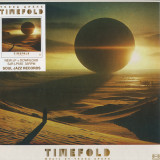
Trees Speak are releasing their new album TimeFold worldwide on 15 Nov 24 on Soul Jazz Records.
Trees Speak return with TimeFold, their sixth release on Soul Jazz Records, further expanding their ever-evolving sonic universe. This new album builds on their signature blend of hypnotic krautrock rhythms, post-punk angularity, and experimental soundscapes while venturing into new terrain by blending influences from avant-garde electronics to ceremonial sound forms.
On TimeFold, Trees Speak (comprised of the Tucson-based duo Damian Diaz and Daniel Martin Diaz) push their musical boundaries from expansive, intergalactic landscapes to eerie, imagined 1970s Italian and French sci-fi horror film scores. The album seamlessly weaves John Carpenter-esque synthesizer motifs with ambient sound sculptures, conjuring immersive worlds that are both cinematic and otherworldly.
The album also incorporates the duo’s deep-rooted influences, which span across electronic pioneers like Jean-Michel Jarre (Oxygene), Tangerine Dream, and Karlheinz Stockhausen. Drawing on the revolutionary techniques of Musique Concrète, TimeFold features experimental track splicing, looping, and collage work that harkens back to the golden age of avant-garde music. At times, the album channels the ceremonial tones and hypnotic rhythms reminiscent of early 1970s krautrock, fusing these sounds with organic instrumentation like dulcimers, adding an earthy, drone-like ritual quality to the experimental electronic framework.
A new element in this release is the inclusion of spoken word by Ashley Christine Edwards, which lends the album a haunting, apocalyptic edge. Her contributions evoke a tone reminiscent of the 1970s avant-garde scene, recalling literary and conceptual artists like Ruth White. The spoken words create a sensory experience akin to ceremonial chants, adding to the atmospheric intensity of the album. These vocal elements tie into the overall theme of TimeFold, which continues Trees Speak’s exploration of futuristic technologies and the communication of nature, with the evocative concept of trees and plants acting as organic hard drives storing data and knowledge.
Drawing further influence from Italian and French horror cinema, Trees Speak explore cinematic tension throughout TimeFold, creating a layered listening experience. The record transports the listener from the haunting, desolate beauty of Southwestern desert vast landscapes to an auditory space that melds early electronic experimentation with the contemporary urgency of conceptual art.
Since their debut Ohms in 2020, Trees Speak’s prolific output on Soul Jazz Records has continually redefined genre boundaries. TimeFold solidifies their position as visionaries in experimental music, offering an album that is as much a meditation on future technologies as it is a tribute to the avant-garde traditions that have come before.
Bicoastal disco aficionado, Super Elevation label/shop owner, and all-around legend of the scene, Tom Noble brings forth a sprawling project 15 years in the making with his House of Spirits full length LP on Razor-N-Tape.
Slow-cooked over more than a decade, the eight tracks that stretch across this double 12 inch pack are the realization of Tom’s unique vision of modern dancefloor soul, with lush live instrumentation and deviously catchy hooks. Boasting a near encyclopedic knowledge of decades of club music, Tom draws on influences like Patrick Adams & the Mizell Brothers to build a sound that’s both reverent to the past, but feels extremely fresh and immediately timeless.
The lead off singles ‘Times Are Changing’ and ‘Please Take Me There’ and respective remixes by Harvey Sutherland, Makez and Sizmo have already garnered huge support, and ‘Holding On’ the beloved original House Of Spirits single from 2020 appears with a shiny new mix. The album opens with ‘Love Trip,’ an uptempo invitation to the sonic world to follow, and moves through various moods, like the Brit-funk vibe of ‘Time Is Running Out,’ the mid-tempo groover ‘I Get Lifted’ and the downtempo R&B smoothness of ‘Diamond Eyes’ featuring dreamcastmoe on vocals.
The cheeky dollar bin artwork rounds out this package perfectly, and with the tracks mixed to perfection and cut tough for the floor, this is an essential record that will surely find a permanent home in the bag.
This is a repress of a highly collectable record that was originally released on A Guy Called Gerald’s Juicebox label in 1993. Over the years it increased in value, making it a holy grail within the hardcore rave/early jungle collector’s market.
But luckily Vinyl Fanatiks were already working with the producers on another repress – to be precise the SDR & Subsonic release of ‘Ideology/Abstrax’ which came out last year on the label. Both records were recorded by the same producers in the same year, under two different artist names.
Digital Pressure was an alias they created for Gerald, whilst the bulk of their output came out on their own label Shoebox.
A limited repress of 350 units on 180g heavyweight vinyl. Mastered by Dapz at Compound Audio and cut onto vinyl by the legend Beau Thomas at Ten Eight Seven, who is very knowledgeable about this sound as he was in the early 90’s groups The Genesis Project/Intense.
Watch Dis Space as this will sell out!
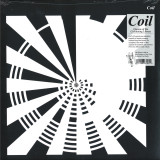
Queens Of The Circulating Library stands alongside Time Machines and Nurse With Wound's Soliloquy For Lilith as a post-industrial pinnacle of sensory-warping long-form drone.
Crafted by the distilled duo of Thighpaulsandra and John Balance, the 49-minute piece unfurls in swirling, cyclical waves, tidal as much as textural, channeling the spirit of levitational minimalism pioneered by La Monte Young. Touted as the first part in "a continually mutating series of circulating musickal compositions" upon its initial release in 2000, the album remains a compelling case study in Coil's exceptional capacity for mutation and extremes. The theatrical introductory monologue delivered by Thighpaulsandra's mother - a career opera singer, in her 80's at the time of recording - sets the stage for a grandiose ascension. Written by Balance, the text is declamatory but dreamlike, refracted through megaphone echo: "Return the book of knowledge / Return the marble index / File under "Paradox" / The forest is a college, each tree a university." As her voice fades, the lulling synthetic infinity deepens, congealing into transient crests of volume and haze, like slow-motion surf misting in moonlight. Thighpaulsandra describes their aesthetic intention as a "bliss out," static but shape-shifting, an amniotic drift towards an eternal vanishing point. A supreme sonic embodiment of the slogan on the sleeve of Time Machines, two years prior: "Persistence is all."
In 1969, singer and police lieutenant Pedro Gregorio López started recording a series of instrumental tracks and songs on the MAG record label in Peru, ranging from guaracha to cumbia, all cooked with musical eclecticism and simmered to appeal to a wide audience. Many of these musical ingredients combined on the 1971 album entitled "Cocinando", in reference to the similarities between Peruvian cooking and tropical music. López began his career as a singer and orchestra conductor many years earlier, when he joined the backing singers for Lucho Macedo's Sonora. After completing his police training, he adopted the stage name Martín López, in order to preserve the anonymity his job required. Between 1969 and 1971 Martín López y sus Estrellas recorded all the tracks comprised on this album, including salsa, guarachas, rumbas, chichas and boleros, proving their knowledge and mastery of the tropical music lexicon. It is not surprising since the orchestra was made up of the most talented label’s session stars: including the double bassist Joe di Roma, singer Pablo Villanueva "Melcochita", percussionists Ñiko Estrada and Coco Lagos, and trumpeter Tito Chicoma. "Cocinando" is an epic historical treasure that captures the explosive impact of the tropical music movement on Peruvian culture.
From director George Miller, originator of the post-apocalyptic genre and mastermind behind the legendary Mad Max franchise, comes Mad Max: Fury Road, a return to the world of the Road Warrior, Max Rockatansky. An apocalyptic story set in the furthest reaches of our planet, in a stark desert landscape where humanity is broken and almost everyone is crazed fighting for the necessities of life.
The film’s epic score is written by Tom Holkenborg, aka Junkie XL, a Grammy nominated and multi-Platinum producer, musician and composer. Junkie XL’s versatility puts him on the cutting edge of contemporary music, as well as in the vanguard of exciting film composers. He is able to draw on his extensive knowledge of classical forms and structures while keeping one finger planted firmly on the pulse of popular music. When this eclectic background is paired with his skill as a multi-instrumentalist (he plays keyboards, guitar, drums, violin, and bass) and mastery of studio technology, a portrait emerges of an artist for whom anything is possible.
Rick Holmes’ breath-taking track, ‘Remember To Remember’ gets its first ever officially licensed, remastered reissue on Gold Mink Records. With prices of the original topping £60 this one will be a welcome sight for many.
Title track, ‘Remember To Remember’ is a celestial, emboldening downtempo cut. Beginning with the timeless line, ‘Pass the information, extend the knowledge…’ Rick dives into a spoken word stream of inspirational black artists and key figures whose most memorable words and song titles are framed into snippets of wisdom that get ever more significant the greater in number they become. A powerful monologue, in Rick’s warm reassuring tones, shining a light on those men and women who have made ‘strong contributions to mankind because of their compassion and humanitarianism’, laid over instrumentation you lose yourself in just as easily.
‘Remember to remember, to never forget.
How Long… how long… how long will it take man?
For us to come together.
It will take us as long as you make it…’
Words that ring just as true today, as they did 40 years ago, yet with a new sense hope in the air and prospect of progress approaching.
The B side houses another of Rick’s mesmerising monologues – ‘To The Unknowledgeable One’ motivational, moving and smooth as you like.
Licensed from Uno Melodic Records, Inc, courtesy of Expansion Records.
We welcome Torn back to Samurai Music for a full length return trip.
Immortal ventures back into the abyssal realms that Ivans music inhabits with 13 meticulously crafted solo works. Meditative, brooding and hypnotic, it's a hauntingly immersive journey that shines a light on his singular vision and artistry.
From the outset, Torn descends into the subterranean with unmatched precision. Each track on Immortal is an intricate colage of raw, sinewy textures and eerie melodies,meticulously woven to create an intensely intoxicating experience.
Standout pieces like the title track 'Immortal', 'Into The Abyss', Unending Rails' and'Glacier' display the inimitable Torn style in its full glory. Immaculate rhythms and layered atmospherics, forever evoking a sense of inexorable momentum
What sets Immortal apart is its ability to maintain a cohesive narrative while exploring diverse sonic and rhythmic territories. Torn seamlessly transitions from the minimalist, almost meditative ambience of tracks like Reckless and I Dare to the more aggressive, beat-driven attacks of Inner Battle and Invisible Turmoil. Each piece contributes to the overarching foreboding atmospheric journey.
For aficionados of deep, shadowy atmospheric drum and bass, Torn's Immortal is indispensable, a tenebrous soundscape that is equal parts innovative, disquieting and enthralling.
We are proud to welcome Myungho Choi to the family of Sakskøbing for our twenty-third release. Residing in the big apple New York and baptised in the early 90’s of the warehouses of the Midwest we can safely say the man has seen and experienced the music first hand. Boss of Transit records with the first official vinyl release dating to 1999, Myungho has acquired a ton of knowledge through the years of digging and listening to the music on any medium it came on. Having an opportunity to witness his heroes and get inspired by them sufficiently to create his own story within the sound frequencies.
The EP is a boat of smooth sailing but with the turbo jets attached to it, to get to any needed destination as comfortable as possible. Heavy influenced by the sounds of Detroit and Chicago, having grew up with an abundance of the music that comes from there resulted in JET, the formation of the artist’s skill and knowledge which has been executed on the canvas that is a beautiful to look at and pleasure to listen - the 12” vinyl record we are beholding today.
- A1: Cabo Verde Band - Bo Terra Cabo Verde
- A2: Americo Brito & Djarama - Rapaz Novo E Malandro
- A3: Cabo Verde Show - Terra Longe
- B1: Elisio Vieira - Tchon Di Somada
- B2: Vlu - Rua D'lisboa
- B3: Galaxia 2000 - Coracao Dum Criola
- C1: Mendes & Mendes - Mitamiyo
- C2: Danny Carvalho - Roncanbai
- C3: Mendes & Mendes - Walkman
- D1: Jose Casimiro - La Mamai Ta Bem
- D2: Elisio Vieira - Bem Di Fora
- D3: Zeca & Zeze Di Nha Reinalda - Mocinhos
Arp Frique returns with a brand new release on his imprint Colorful World Records in collaboration with Rush Hour. A compilation of 12 Cape Verdean gems assembled with the help and knowledge of Americo Brito, there is a very special story behind it. Americo Brito, who features on Arp Frique’s original Nos Magia, is a proud and important member of the Cape Verdean community in Rotterdam. His story reveals the historical connections between radio, vinyl, Cabo Verde and Rotterdam’s international music scene in the 70s and 80s. Cape Verdean insiders say “we export all they have to other countries, only to import it back again”. Cape Verdeans have migrated all over the world, mainly to cities with big harbours, like New York, Boston and Rotterdam (Holland). Rotterdam became one of the main destinations (next to Portugal) on the European mainland. When Americo, like many of his friends and relatives moved to Rotterdam, he quickly became infected with the music virus. Surrounded on a daily basis by Cape Verdean music in Portuguese pensions and small hotels, this was where sailors ingested a dose of “sodade” through the interpretations of their beloved music by the local Cape Verdean artists. Americo took to the stage with his band Djarama in the 70s and 80s. The live music scene was buzzing and the Cape Verdean community had their own infrastructure for arranging shows, often in nightclubs where the band had to bring their own soundsystem. Interestingly, Americo didn’t stick to performing and recording music. He found another way to help spread the Cape Verdean magical secret of music across Rotterdam, Holland and beyond: “There was this spot in Rotterdam where all foreign radio stations were housed, all these different nationalities together, Surinam, Cape Verdean, Hindustani…Guy Ramos and some of my other friends made radio in the 80s there. I got involved in their radio activities. Later on I started to work as a technician and eventually as producer and radio DJ for “Radio Voz De Cabo Verde”. Radio became bigger and there were around 4 different Cape Verdean stations active at one point in Rotterdam. instrumental in the development of this was the attic of a Dutch friend, where “Radio Babalu” came to life. Radio has always held a special place in my heart.” Americo’s music collection stems from this era, also aided by his many travels across Europe to cities with Cape Verdean communities. Alongside Rotterdam local, Arp Frique, Americo unveils some of these songs: dancefloor hits and beloved radio gems known in the Cape Verdean scene by younger and older generations alike, and so far undiscovered by a “bigger” audience. The compilation showcases the worldly view of Cape Verdean music, incorporating knowledge from their travels in their compositions. It ranges from the obvious funana and coladeira, to the more unexpected influences of deep disco, new wave, uptempo reggae, jazz-funk and Brazilian pop music; demonstrating just the tip of the iceberg, but what an amazing t(r)ip it is!
- A1: Srirajah Sound System - Si Phan Don Lovers Rock
- A2: Perikas - Laberinto
- A3: Mac Thornhill - No Way To Control It
- A4: King B. - Love Is Crazy
- B1: L'innovateur Djoe Ahmed Et Le Zoukabyle - Amek Amek
- B2: Champagn’ - Bel Ti Négress
- B3: Androo - Lyriso
- B4: Hidrogenesse - La Carta Era Muy Larga (Dub)
- C1: Kajou - Tet Chajé
- C2: Conjunto Baluartes - Nira Gongo
- C3: Landshark - Tie Me Up - The Nas T Version Instrumental
- C4: Pellegrin El Kady - Selva De Carnaval
- D1: Lee Jackson - Call On Me
- D2: Lta - What Comes To Ya?
- D3: Urban Volcano - Ame No Uta (Rain Song)
Cream[27,31 €]
To celebrate 10 years of one of London’s most loved underground club nights, Tangent, Mr Bongo are thrilled to launch this new compilation series. Crafted by its two residents, John Gómez and Nick the Record, it aims to transmit a taste of Tangent’s spirit. A party rooted in inclusivity and open-mindedness, whose name captures the spontaneous switches in musical direction that are a defining element of their nights. For the compilation, the pair have cherry-picked a selection of their prized, rare and dancefloor-ready tracks from around the globe, that have soundtracked the past decade of parties.
Friends for close to 20 years, music lovers, record obsessives and internationally renowned DJs in their own right, John and Nick have two lifetimes worth of musical knowledge to draw from. John a long-standing NTS Radio resident and compiler for Music From Memory. Nick one of the UK’s go-to record dealers, resident DJ since the ‘90s at one of Japan’s pioneering parties, Life Force, and co-captain / co-edit-expert of Record Mission with Dan Tyler (Idjut Boys).
In 2014, the pair decided to bring some of Life Force’s grassroots principles to the UK, whilst channelling underground clubbing institution Plastic People’s meticulous attitude to sound. Tangent grew from being a small gathering of friends, to an established fixture in London’s nightlife, whilst always maintaining a strict no guest DJ policy. “As London’s clubs have become increasingly reliant on international guests, we wanted to emphasize the importance of a club night growing through its residents”, John and Nick reflect. With 10 years of the duo at the helm, an intimate connection between DJ and dancefloor has been built, allowing for freedom of expression on both sides of the decks.
Tangent reaches around the globe and across different eras to make connections that stimulate emotional reverberations in the unfamiliar. Where the blissfully Balearic ‘Laberinto’ by Miguel Perikás, goes hand-in-hand with the Cameroonian hip-house of King B.’s ‘Love is Crazy’. The thundering ‘Amek Amek’ by L'Innovateur Djoe Ahmed et le Zoukabyle, rubs shoulders with the soulful Caribbean-influenced touch of Champagn’s ‘Bel Ti Négress’. And Pellegrin El Kady’s afro-cosmic ‘Seiva de Carnaval’, crosses paths with Kajou’s Kompa disco anthem ‘Tet Chajé’.
Tangent’s longevity is in part down to it having always embraced contemporary sounds. The sub-rattling bass of Srirajah Sound System’s stunning Molam dub stepper ‘Si Phan Don Lovers Rock’ and the slow, woozy mantra of leftfield dancehall explorer Androo’s ‘Lyriso’, are two shining examples.
This compilation represents an ongoing dialogue between past and present, transporting listeners to the heart of a pure musical experience, where open minds and open hearts are eager to follow the tangent.
Ten years after his first full-length effort ‘Man Is Deaf’ landed him firmly in the runnings for DJ Mag’s album of the year, prodigal son Michael Anthony Wright AKA Brassica returns to Civil Music with a deeply accomplished, painstakingly whittled LP of hydraulic electro slickness, rich synthscapes, and hooky, peak-time tearjerkers for the most discerning front-left lifers. ‘Tribeless Gathering’ is a barnstorming testament to Brassica’s stylistic and timbral deftness, touching down in the elusive epicentre of the club/home listening venn diagram with ease.
From the elastic, neon acid pointillism of opener ‘Hop Kweng’ to the mardy, miasmic plod of closing chugger ‘Changa Hill’, Brassica seamlessly segues between avenues of influence, his notoriously omnivorous musical knowledge roadmapping each turn. Raised on a diet of everything from early rave standards to metal, and schooled in avant garde sonics as a student of sound design at LCC, Brassica does a peerless job of sublimating his countless influences into a record of refined, heterogeneous, and most crucially, catchy, club moods.
Less spartan than his more recent oeuvre on Feel My Bicep, and less baroque than his technicolour experiments in postmodern synth pop with vocalist Stuart Warwick, Tribeless Gathering represents Brassica’s triumphant return to the main room, replete with rushy hooks primed for the planet’s finest soundsystems, and passages of heads-down tension bound to draw listeners right to the edge of their seats. Overall it is a concise and refined testament to Wright’s command of spectral sonics and effortless ability to pressurise a dancefloor. It is no surprise that he has also worked as a prolific mastering engineer, tuning music from a plethora of dance disciplines for maximum club impact. This work extends to his own projects (including this one), cementing them as rare expressions of complete artistry from studio to turntable.
As we delve deeper into the record, we are ushered through a series of accomplished and varied club moods, each channelling a unique cocktail of influences, but retaining a warm, ebullient analogue sensibility unique to Brassica’s work. This playful scope of influence calls to mind James T Cotton or Machinedrum’s experiments in dance music form, but Wright manages it all under one roof, wrangling everything from sashaying wub-laden two step to snarling Dillinja-esque FM damage into something inherently his.
Choice cut ‘Change Yourself’ layers an almost Cerrone-like piano refrain over radiant surges of saturated bass, dubby, strobing chords and a jagged, driving break, building to a jaw-clenching apex of dancefloor elation, while the rude, playful half-step of ‘Elevation’ breaks down the vintage speed garage formula into linear fragments, utilising a tight palette of resonant bass slugs, infectious synth leads and Papua New Guinea-style vocal strobes. The aptly named ‘Hold Tight’ fuses heart-in-mouth UK ‘ardkore pads with glissando acid disturbance and surgical snare fills in a formula which recalls the ethereal grit of Nubian Mindz’ 00s experiments in big-smoke break science, while the questing melodic arcs and arpeggiated squarewaves of ‘Pinball Marinara’ could easily have soundtracked an 80s sci-fi epic, beset with sparkling, bare-bones drum programming and hazy beds of sub sediment.
With ‘Tribeless Gathering’, Brassica both irreverently fuses and pays homage to the many unique and weird permutations of UK dance music. The short lived gathering of junglists, ravers and house hotsteppas of a similar name may have long since dissipated, along with the tribes themselves, but across these 11 tracks, he lays a blueprint for a new sound of togetherness.
- A1: World Standard - Fellini & Rota
- A2: Masumi Hara - Your Dream
- A3: Normal Brain - M.u.s.i.c
- A4: Hiroyuki Namba - Who Done It? (Part 2)
- B1: Yasuaki Shimizu - Crow
- B2: Hiroyuki Namba - Tropical Exposition
- B3: Imitation - Exotic Dance
- B4: Pecker - Sha La La
- C1: Ep-4 - Db
- C2: Earthling - You Go On Natural
- C3: Masumi Hara - Camera
- D1: Geinoh Yamashirogumi - Rinne Kohkyogaku Meikei
- D2: D-Day - Ki·ra·i
- D3: Ryuichi Sakamoto - A Wongga Dance Song
Ever since he made his first trip to Japan to DJ, Optimo Music founder JD Twitch has been bewitched by Japanese music, and particularly the vibrant, imaginative, and often far-sighted sounds which emerged from the island nation during the 1980s. Now he’s put years of digging in Japanese record shops to good use on Polyphonic Cosmos, the latest release on his compilation-focused Cease & Desist imprint.
Subtitled ‘A Beginners Guide to Japan In The ‘80s’, the collection offers a personal selection of Japanese gems recorded and released between 1981 and ’86 – a period when advances in recording and musical technology offered the nation’s artists and producers a whole new tool kit to employ. When combined with the unique musical culture of Japan, where local traditions are frequently fused with Western styles to create timeless, off-kilter aural fusions, this embrace of locally pioneered music technology had spectacular, often unusual results.
Eight years in the making, Polyphonic Cosmos provides an endlessly entertaining musical snapshot of Japanese music of the early-to-mid ‘80s with all of the open-minded eclecticism and sonic twists that you would expect from the Glasgow-based DJ.
Compare and contrast, for example, the gently breezy, morning-fresh folk-plus-electronics bliss of ‘ばら二曲 Baranikyoku (Fellini&Rota)’ by World Standard – the most familiar alias of long-serving musician/producer Sohichiro Suzuki – and the hallucinatory, slow-motion tribal rhythms, post-punk rhythms and tape delay-laden electronics of Imitation’s ‘Exotic Dance’. Or, for that matter, the tipsy mid-‘80s electronic reggae of Pecker’s ‘Sha La La’, the grungy but melodic post-punk strut of ‘You Go On Natural’ by Earthling (a track Twitch accurately describes as “sheer unrelenting groove”), and the unearthly, swirling sonics, new age instrumentation and flotation tank vocals of prolific (and seemingly mysterious) act Geinoh Yamashirogumi’s ‘Rimme Kohkyogaku Meiki’.
It’s a credit to JD Twitch’s curatorial skills that the quality never dips, and sonic surprises lurk around every corner. Consider for a moment the hard to describe, far-sighted audio immersion of D-Day’s ‘Ki-Ra’ – all languid post-pop guitar, enveloping chords, spoken word vocals, shuffling 808 beats and marimba melodies – and the two contributions from video games soundtrack specialist (and driving instrumental synth-pop specialist) Hiroyuki Namba.
The collection naturally includes some selections that have long been favourites in Twitch’s DJ sets – see Masumi Hara’s ‘Your Dream’ – as well as a handful of tracks from artists who may be more recognisable to those with only rudimentary knowledge of Japanese musical culture. The great Yasuaki Shimizu, whose work as Mariah has become far better known in recent years thanks to reissues of some of his most magical albums, is represented via ‘The Crow’, a picturesque chunk of horizontal, hard-to-define jazz-not-jazz smokiness, while the collection fittingly concludes with a sublimely funky, oddball electronic workout from Yellow Magic Orchestra legend Ryuichi Sakamoto (the frankly incredible ‘Wongga Dance Song’).
Matt Anniss
Repress
Cinthie Christl is a powerhouse of a DJ, producer, label manager, record store owner and all-round house music aficionado. Shall Not Fade is excited to announce Cinthie is joining the family to mark the 60th release on the label. Free Fall EP shows off the German polymath's expansive musical knowledge, developed through decades of spinning vinyl.
The 4-tracker kicks off with "Offenbach Anthem" bounces along with a varied post-disco inspired beat and oh-so-deep bassline that strikes against the aerated chords of the melody. Dramatic strings add to the disco flavour, the fluid and glittery opener cruises into the tight, 4-to-the-floor business and stuttering stabs of "13 Steps To Heaven".
Rave energy takes over on "Oh No No No"; organ takes centre stage blending with crooning diva vocalisations - releasing the tension of the last track into an overflow of euphoria. "What You Mean To Me" closes the EP with a slice of the super-smooth classic house that Cinthie is known for; infectious grooves and perfect lulls forming a triumphant end to the record.
The wait is over and the underground viennese label Leap Records serves a brand new international VA vinyl record and celebrates its 10th release. On board are Federsen, Anton Kubikov, Mantsche and co-chef Alexander Wirth.
Side A is opened by viennese dub techno producer Mantsche. He released a 4-track EP on Leap Records in 2021 and is known for his timeless and reggae-influenced records. Ras Tawny accompanies him vocally.
In addition, the internationally renowned artist Federsen, based in San Francisco, is featured on the A side. Federsen is a household name for everyone in the scene and
with his analogue equipment and wide music knowledge he brings the Maurizio flavor back to the present.
Side B represents Anton Kubikov. His music career started in 1994 and Anton Kubikov has many vinyl releases to date, for example on the labels Tracks, Trapez,
Salo and many others. At this time Anton Kubikov shares the beauty of dub techno chords, accompanied with a crisp and juicy bass drum.
The last track is a mix of the co-founder of the well-known Innsbruck club Tante Emma Alexander Wirth and Mantsche. In this case, the Alpine Innsbruck and Vienna
meet and the result is a mix of sunrise dub house with soulful vocals and the extra vibe of the Round one to five series, which has its origins in the 90s.
avigating vibrant influences of Latin-jazz, Tropicália and joyful grooves; multi-instrumentalist, songwriter, singer and producer Inês Loubet presents her utterly gorgeous debut album ‘Senga’. The album covers Inês’ experiences over the past five years, originating in Portugal, travelling through Brazil, before finding home in London.
Previously, Inês co-wrote and performed on Caravela’s album 'Orla' on None More Records, which was praised by the likes of Gilles Peterson and The Line of Best Fit. Her music has been played on Jazz FM, BBC 6 Music, BBC Radio 3, NTS and Soho Radio. A relentless live performer, she’s played alongside Brazilian legends Gilberto Gil & João Bosco, graced the stage of The Royal Albert Hall, Union Chapel, and O2 Shepherds Bush, around UK and international tours.
The album explores a range of profound themes including nature, travel, grief, unconditional love, separation, family dynamics, and the nuanced experience of womanhood in contemporary society. Dedications to the music, philosophy and revolutionary history of samba (‘Sambo Mesmo Sem’), everyday observations of joy (‘Guri’), and motivating generational change for the better (‘Sab Sabim’); glide across romantic harmonies and the Brazilian rhythms at the melodic heart of the album.
“I started writing whilst living in Salvador da Bahia, Brazil, in February 2020”, says Inês. “I was shy and hadn't written fully composed tracks before then. During lockdown I received support from The Arts Council’s DYCP, started making demos, gained confidence and started playing them live”. In October 2022 Inês was presented with the Drake YoLanda award and went to Giant Wafer studio in Wales for three days, before recording the final vocals at her home studio and mixing and mastering in Porto, Portugal.
Inês is joined on the album by a band of close friends. Percussionist and long-time collaborator Jansen Santana from Salvador da Bahia brings the soul of the drums, the tambor. “I always have the Bahia drums present in my mind when I write a new composition. I studied Latin percussion at University and then lived in Salvador absorbing all that heritage and knowledge”. Playing four different stringed instruments on the album, Greg Sanders is a long-time friend and collaborator from London “I met him in a samba band in 2015 and he was the first person I ever showed my songs to and played with”. The band is completed by Ruta Sipola on flute, Jake Burgess on tenor sax, Peu Meurray who recorded a lot of the percussion and lead vocals, and bassist Julio de Castro from Sao Paulo. “I was blown away by his bass playing, his swing and creativity, his ton of experience and professionalism but also his voice - he's an amazing singer and I believe that adds a lot to the magic”.
Inês concludes, “Last year, I had a show in London and I asked everyone in the audience to write down what they felt when they listened to the music. These are some of the things they wrote: wholesome, refreshing, lifted, moving, joyful, happy, nostalgic, warmth, force, goosebumps, emotional, togetherness, transported, rooted”. ‘Senga’ captures all of these feelings and more in a memorable first impression from a highly talented musician.
- A1: Gwaing Reverie
- A2: Lucelle Sista Of The Soil
- A3: Mantis Praise
- A4: Amaseh Amen
- A5: For Peter & Ruth
- A6: Terug Blik
- A7: Threnody For The Khoisan
- A8: Ambient Khoi
- B1: Mcinci Song I
- B2: Morenga
- B3: Evidence Of Things Unseen
- B4: Lockdown Duet Milano-Cape Town
- B5: Roesdorp Requiem
- B6: The Ascension Of Milford Graves
Garth Erasmus is an artist and musician based in Cape Town, South Africa. 'Threnody for the KhoiSan' is his first album under his own name. Since 1985 his artistic interests have broadened to include music-making, designing and making his own instruments based on indigenous KhoiSan knowledge. From 1999 to 2012 he was a member of the South African First Nation activist group Khoi Khonnexion. In the past couple of years Garth Erasmus has also been a pivotal part of various international performance pieces and exhibition projects which brought him regularly to Europe. Most of these activities were developed and performed in collaboration with the Hamburg based band Kante and his band Khoi Khonnexion. In April 2024 Garth Erasmus will be part of the group exhibtion 'Oscillations' at Akademie der Künste, Berlin.
His works in music are predominantly characterized by a restless quest for alternative forms of expression and materials including self build instruments, field recordings or various electronic music devices.
In this context the music on 'Threnody for the KhoiSan' takes on a primal and metaphorical meaning. Rather than a formal, physical initiation, this process is more spiritually inclined, yet it is a spirituality which is consistently put into action.. “Ever since I was an art student I have experimented with alternative materials to release me from the Western education values I received. When I started to make these instruments in the 1980s, my intention was to create art objects but when I discovered the sound they made, it unlocked a door that transported me deeper in my quest in the realization that I was on the right path.
In fact all instruments which appear on 'Threnody for the KhoiSan' are products of a process of discovery starting from square one. All this is based and founded on the beauty of simplicity and minimalism as symbolized by the single string Khoisan musical bow and arrow as trance musical instrument. In this sense it soon became manisfest for Garth Erasmus to combine the bow instruments with various electronic instruments. Besides developing his own unique language in music he also shared an expressed interested in experimental sound aesthecis, Avantgarde composition and Free Jazz. However, his non - academic approach towards sound and music was always fueled by the desire for a reconnection to the land and to the idegenious knowledge of the KhoiSan, whose struggle for First Nation status continues.
Song for Morenga
This song is dedicated to a guerilla leader, named Jacob Morenga, who was the leader of the nama/herero anti-german uprisings that occured between 1904 and 1907.
Amaseh Amen
This is a classic mouthbow piece that conjures the spiritual nature of Khoisan cultural praxis.
Gwaing Reverie
It was composed as a personal gift to the other members of newly formed electro-acoustic trio „Gwaing". „Gwaing" is an ancient Khoisan place name, meaning the mouth of the river.
Mcinci Song
A typical meditation on the traditional Mcinci flute. This flute was originally played by shepherds and was made of reed.
The Ascension of Milford Graves
This piece attends to capture the risen spirit of the legendary African American drummer Milford Graves. It was composed soon after his death in 2021.
Song for The Sisters of the Soil
A live improvisation dedicated to Lucelle and Melissa (The Sisters of the Soil) on the occasion of visiting them at their residence, known as „Oppieyaart" on the Cape Flats. On 10 September 2022 there is an online event with them at Kunsthaus Hamburg.
Two powerfully effective club tracks by one of Berlin's most talented Juan Ramos. A clear cut exposé of his vastly amassed knowledge in dancefloor experience throughout over a decade of dedication to the craft of steering some of the most significant contemporary underground dancefloors. Can't really go wrong here, mandatory for any club focused record bag, with an entourage of 125 BPM percussion sample based mayhem on the A side and a slower industrial 115BPM chugger that grows into a tripped out narrative of playfully galloping transient elements.
- A1: Tadaaki Misago & Tokyo Cuban Boys – Sakura Sakura 7 32
- A2: Minoru Muraoka – Muraiki 3 55
- A3: Count Buffalo & The Jazz Rock Band – Mago-Uta 3 43
- A4: Kiyoshi Sugimoto Quartet – D-51 6 05
- B1: Toshiyuki Miyama & The New Herd– Adult's Day 9 25
- B2: Soul Media – Breeze 4 33
- B3: ジョージ・大塚カルテット– Sea View 5 03
- C1: Hozan Yamamoto, Masahiko Togashi, Yosuke Yamashita – Breath Prologue 5 08
- C2: Jiro Inagaki & Soul Media – Do It! 7 25
- C3: Hiroshi Suzuki – Romance 5 56
- C4: Masahiko Sato – Tochi Mo Kurumi Mo Fukiotose 3 01
- D1: Masahiko Togashi – Fourth Expression 6 45
- D2: Takeshi Inomata & Sound Limited – Mustache (Live) 8 50
- D3: Takeo Moriyama – Watarase 6 40
repressed !
● Essential 14 track collection of "WaJazz" music selected and compiled by renowned Japanese jazz expert Yusuke Ogawa, owner of the Universounds record store in Tokyo.
● Gatefold 180g heavy double vinyl LP. Comes with extensive track-by-track liner notes by Yusuke Ogawa.
● All tracks licensed by Nippon Columbia, Tokyo, Japan.
● Mastering and lacquer cut by Jukka Sarapää at Timmion Cutting Lab, Helsinki, Finland.
---
Universounds, HMV Record Shop and 180g team up for an exceptional release: from blazing hard bop to free jazz, to introspective saxophone solos and massive big band sounds, renowned Japanese jazz expert Yusuke Ogawa presents an essential 14 track collection of "WaJazz" music taken from the Nippon Columbia vaults. Featuring Jiro Inagaki, Minoru Muraoka, Hiroshi Suzuki, Hozan Yamamoto, Count Buffalo, Takeshi Inomata, and much more!
"Japanese jazz has been recognized and celebrated by music lovers worldwide for decades. The origins of this trend may be traced back to the rare groove movement that flourished in the 1990s, but its current deep and wide popularity seems to be connected to the fact that Japanese people have been reevaluating their own jazz since the mid-2000s, locally referred to as WaJazz ("Wa" meaning Japan but also theShōwa emperor period, from 1926 to 1989). Since the beginning of the 2000s, there has been a growing trend to move away from the DJ-focused perspective and to appreciate jazz with a deeper understanding. Nowadays, there is more and more interest in the background and roots in which jazz has developed in Japan, with Japanese jazz as a whole now considered as its own distinctive genre.
Of course, even if we speak about "WaJazz" as one genre, there is a truly wide variety of styles within it. However, when Japanese musicians play, there is something uniquely Japanese flowing through that creates a kind of synergy. It may be the melody, the rhythm, or even something deeper, like an inexpressible flicker. I would be happy if some of its charms and secrets emerge from the fourteen tracks included in this collection." (Yusuke Ogawa)
Yusuke Ogawa has been running the Universounds store in Tokyo since 2001, specializing in jazz and second-hand, rare, and collector records. He is also a reissue supervisor, label manager, DJ, and music writer. Known for his vast musical knowledge, eye for detail, and archival skills, Ogawa has worked on more than 250 reissues and compilations – including the highly praised Deep Jazz Reality and Project Re:Vinyl series. He is the co-author of the Wa-Jazz Disc Guide and the Independent Black Jazz of America books.
This batch of releases is what Deeper Knowledge Records is really all about - showcasing and making available fantastic music that has been rarefied, but with no correlation to its quality. That is to say, music that we feel is every bit as great as well known, much-loved and canonized classics, but just never reached the ears of as many folks, only due to its unavailability. And the music made by the close-knit foursome of Trevor Byfield and Clive Matthews as artists, and Norman "Fox Fire" Vassell and the late Clinton "Percival" Williams as producers, is just that. Starting in the late '70s and into the early '80s, this foursome cut some of the best and heaviest roots reggae tunes of the era. We will be issuing eight great singles from these folks. Trevor Byfield's "Tell Me That You Love Me" is one of the most dread love songs that we've heard, and the flip is one of the most truly psychedelic, heavy and unique Tubby's dubs ever mixed. In fact, the crew liked this rhythm for this song so much that they cut three tunes on it!
This batch of releases is what Deeper Knowledge Records is really all about - showcasing and making available fantastic music that has been rarefied, but with no correlation to its quality. That is to say, music that we feel is every bit as great as well known, much-loved and canonized classics, but just never reached the ears of as many folks, only due to its unavailability. And the music made by the close-knit foursome of Trevor Byfield and Clive Matthews as artists, and Norman "Fox Fire" Vassell and the late Clinton "Percival" Williams as producers, is just that. Starting in the late '70s and into the early '80s, this foursome cut some of the best and heaviest roots reggae tunes of the era. We will be issuing eight great singles from these folks. Clive Matthew's "Live Not For Vanity", a serious warning given thru a heavy tune, backed with a great dub mix.
After the success of the collaborations on 2019’s Tek 9 LP, Dego and Dom team up again for AKO Beatz, this time a whole LP’s worth of back and forth, which started collaborating in-person pre lockdown, to then be finished virtually.
The sound is a kind of fantasy 1997 where drum and bass had held on to one of its alternate futures. The year 1997 had experimental intricate beats, warm bass, and odd sounds; the skill of playing real instruments matching the knowledge of breakbeat science.
If they hadn’t chosen another path, this is what it could have sounded like. The sound is very now but from another time. Is it the future, is it the past? It’s just anachronistic.