First appearing on TV screens in September 1968, Joe 90 was a unique nine year old boy with the ability to absorb the brain patterns of top experts enabling him to become the most special agent of W.I.N. (World Intelligence Network).
Whilst there are arguably better-known scores amongst Barry Gray's sublime catalogue of work with the Andersons, the composer's work for Joe 90 is in many ways the most consistent and inventive selection he ever wrote.
Developing a theme for the new series was always the musician's starting point, and for Joe 90, the pop charts breezed into Gray's studio, with an opening tune featuring a genuine groove. Mixing Gray's inventive electronics with 60s "surf rock" guitars was an inspired decision. It is no wonder that this piece has gone on to enjoy a second life as a Northern Soul disco floor-filler.
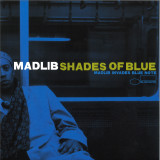
Der Sound von Blue Note wurde im Hip-Hop bereits in seinen frühen Tagen durch Samples und Remixe fest verankert. Aber als der DJ, Produzent, Rapper und Multiinstrumentalist Madlib 2003 die Blue-NoteArchive für sein Meisterwerk “Shades Of Blue” “plündern” durfte, legte er die Messlatte auf ein neues Niveau. Das Resultat war ein visionäres Album mit Remixen und Neuinterpretationen klassischer BlueNote-Aufnahmen von u.a. Donald Byrd, Bobbi Humphrey, Ronnie Foster, Bobby Hutcherson und Wayne Shorter.
out of Stock
Last delivered 2 years ago available to reorder, subject to availability
Leeds soul and funk label ATA Records are proud to announce the new single from The Sorcerers. Available on 7" vinyl and Digital Download from Friday 30th March, this single is a driving Ethiojazz track aimed squarely at the dancefloor, backed by the Yorkshire Film & Television's original recording of "The Anderson Spectrum" (Later re-recorded and re-named by The Sorcerers as "The Viking Of 5th Avenue")
Taking influences from Ethiopiques Ethiojazz as well as the soundtracks to the European horror films of the 60s and 70s, The Sorcerers seamlessly blend these disparate elements into one cohesive package. Based in ATA Records' home of Leeds, The Sorcerers are made up of the cream of the city's jazz and world scene. Forming the backbone of the ATA Records house band they incorporate bass clarinets, flutes, and vibraphone alongside bass, guitar organ and drums, providing Ellingtonian textures on top of a solid rhythmic foundation.
Initially inspired by the work of Ethiopian composer Mulatu Astatke, The Sorcerers have developed their sound from the foundations laid out on their debut LP "The Sorcerers"."In pursuit of Shai Hulud" eschews the atmospheric textures of their previous material, replacing them with driving percussion and propulsive bass. Organ and flute tear into the melody as temple blocks beat out an insistent rhythm throughout.
The B-Side ("The Anderson Spectrum") is the original track from The Yorkshire Film & Television Orchestra that The Sorcerers re-recorded and re-named "The Viking Of 5th Avenue" when they recorded it for their debut. Tremolo-fuzz guitar and heavy brass place the track firmly in the sonic realm of 1960s British Library Music, bringing to mind the work of John Barry and Portishead rather than Mulatu Astatke.
In March 2020, Jack reached out to Lee “Scratch" Perry to produce a dub remix album based on Jack’s most loved recordings. On 8/29/21 the project was brought to a halt as Scratch departed this physical world. In ‘22 Jack and Subatomic Sound System, Perry’s band of the last decade, connected directly and discovered they had all the pieces to bring Lee “Scratch” Perry’s 3 creations to completion. The LP also features dubs from Dennis Bovell, Scientist, Mad Professor, Nightmares on Wax & more.
out of Stock
Last delivered 3 years ago available to reorder, subject to availability
Here we‘ve got two tunes that come with a fascinating story. Recorded in the late 70’s, but never released, this music was thought to be lost.But let’s go back to the beginning. Rose was originally a member of family affair called „The Cornelius Brothers and Sister Rose“ heralding from Dania Beach, Florida. The group had early success with a recording contract with United Artists, which produced two albums in 1972 & 73 respectively, plus an extensive number of single release taken from these albums, which included the million seller ‘Too late to turn back now’.
But Rose’s story starts even further back, singing solo and as part of the Gospel Jazz Singers in the late 60’s, with even a solo appearance on The Ed Sullivan TV show. In 1970, at her mother’s request, she returned home to form the family group and to use her contacts in the music industry to move things forward. The group stayed together until 1976. Soon after Rose returned to a solo career, but few further releases appeared. During this time she recorded a number of tracks in Miami at The Music factory with producer Shirley Cowell, who later received a grammy nomination for her work with Lena Horne. Arrangement was done by gold-certified studio veteran Frank Owens. By this time the Disco sound had taken over much of the music industry and these tracks had a Hi-Energy feel that was much in favour at the time. This session produced the titles ‘Here’ and ‘I want you to stay with me’ but no release was forthcoming.
For many years they became almost forgotten, until the next chapter of the story.In 2018 DJ and record collector Dave Thorley saw an old & dusty acetate disc for sale online, credited to Rose Cornelius. When listening to it he realised that this was indeed Sister Rose of the aforementioned group and purchased it, initially with the intention of simply playing it in his DJ sets. Dave offered the disc to his friends of the Disco Bizarre crew from KitKatClub / Berlin for their record label. Rose, in turn, was contacted and she was kind enough to give permission for its release and additional contemporary remixes/ re-edits. Thus New York producer veteran DJ Duke and San Francisco Disco authority Jim Hopkins landed on the bill. You now have the results of this story on Disco Bizarre’s latest release - a story that has spanned fifty plus years. We at Disco Bizarre are excited about the final results and are happy we‘re able to share it with you.
out of Stock
Last delivered 3 years ago available to reorder, subject to availability
Opeth wurde von den Kritikern für ihre Kombination aus progressiven Einflüssen und vernichtendem schwedischem Death Metal gelobt. Diese farbigen 140g Re-Issues sind ein Muss für Fans und Sammler, denn sie wurden von keinem Geringeren als Jens Bogren (Opeth, Katatonia, Amorphis, Sepultura) mit Unterstützung von Mikael Åkerfeldt ein liebevoll remastert. Die Aufnahmen wurden mit halber Geschwindigkeit in den berüchtigten Abbey Rd von Miles Showell (ABBA, Beatles) geschnitten, und das gesamte Artwork wurde von Dan Capp sorgfältig restauriert und so gestaltet, wie es die Band ursprünglich beabsichtigt hatte.
Es gibt nur wenige Bands, die es mit den Schweden von Opeth aufnehmen können oder wollen. Seit ihrer Gründung 1990 in dem kleinen Stockholmer Vorort Bandhagen haben die Schweden alle Konventionen über den Haufen geworfen, sich trotzig gegen alle Widrigkeiten durchgesetzt und - was am wichtigsten ist -12 atemberaubend schöne und intensive Alben geschaffen und sich damit zu einer der besten Bands der Welt entwickelt.
Northwind Splatter Vinyl! Isolated at the rural fringe of Northern California, Bailey's Nervous Kats took Shasta County by storm in the early '60s. Combining surf, rock n' roll, exotica, and R&B, the Kats were a teenage dream draped in Magnatone amplifiers and crisp white polo tees. Their self-titled_and only_LP came at the dead end of the band's run, issued on Orville Simmons' one-shot Emma imprint in 1965. The mid-century modern LP of your dreams.
Isolated at the rural fringe of Northern California, Bailey's Nervous Kats took Shasta County by storm in the early '60s. Combining surf, rock n' roll, exotica, and R&B, the Kats were a teenage dream draped in Magnatone amplifiers and crisp white polo tees. Their self-titled_and only_LP came at the dead end of the band's run, issued on Orville Simmons' one-shot Emma imprint in 1965. The mid-century modern LP of your dreams.
Percy Sledge’s 1966 worldwide smash “When A Man Loves A Woman” did more to internationally establish southern soul than any record up to that time. The man from Leighton, Alabama subsequently became one of Atlantic’s biggest artists, charting 11 R&B/Pop hits in three years.
Nevertheless, as the 60s drew to a close, Atlantic’s interest in Percy inexplicably dwindled. Very few masters that his producer Quin Ivy sent from Sheffield, Alabama to New York saw contemporaneous release, although some eventually appeared in countries like South Africa, where Percy was revered.
The tracks on this exceptional ‘maxi single’ waited till 2010 to debut digitally. Percy’s terrific take on Aretha’s “Baby, Baby, Baby” dates from August 1969, the others from his penultimate session for Atlantic. Great songs too from Swamp Dogg and the late Gordon Lightfoot; either of which could have given Percy a hit in 1972.
We’ll never know why they weren’t issued then – but let’s be grateful to Soul4Real for making them available on vinyl now…
The next chapter of the Natural Information Society is here. Since Time Is Gravity, credited to Natural Information Society Community Ensemble with Ari Brown, presents a newly expanded manifestation of acclaimed composer & multi-instrumentalist Joshua Abrams nearly 15 year, 7 albums &-counting flagship ensemble. Joining the core NIS of Abrams (guimbri & bass), Lisa Alvarado (harmonium) Mikel Patrick Avery (drums) & Jason Stein (bass clarinet) are Hamid Drake (percussion), Josh Berman & Ben Lamar Gay (cornets), Nick Mazzarella & Mai Sugimoto (alto saxophones & flute), Kara Bershad (harp) & Chicago living legend of the tenor saxophone Ari Brown. Recorded live to tape at Electrical Audio & The Graham Foundation, cover painting Vibratory Cartography: Nepantla, by Lisa Alvarado. 2xLP on Eremite USA, 2xLP & CD on Aguirre/Eremite Europe. Out 14-04.
Since first developing Natural Information Society in 2010, Joshua Abrams has been gradually expanding the group’s conceptual underpinnings, its musical references & the sheer number of the group’s members. Its music is, in a sense, an expansive form of minimalism, based in repeated & overlaid rhythmic patterns, ostinatos & modality. Its roots, its scale & its meaning become clearer in time. If time is gravity, it also allows us to carry more. Having begun as fundamentally a rhythm section with Abrams’ guimbri at its core, the version here can stretch to a tentet, including six horns.
Abrams has been expanding his minimalism gradually, but he has long understood a key to minimalism’s potential: the breadth of its roots in the late 1950s & early 1960s, ranging from the dissatisfaction of young European-stream composers with the limitations of serialism to the simultaneous dissatisfaction of jazz musicians with the dense harmonic vocabulary of bop & hard bop. The former began exploring rhythmic complexity & narrow tonal palates in place of harmonic abstraction (Steve Reich’s Drumming, Philip Glass’ Music with Changing Parts; perhaps above all Terry Riley’s In C & his late ‘60s all-night organ & loop concerts); the later reduced dense chord changes to scales (signally with Miles Davis' Kind of Blue, but rapidly expanding with John Coltrane’s vast project). In the 1950s the LP record opened the world with documentation of Asian & African musics, key influences on both minimalists & jazz musicians. If John Coltrane’s soprano saxophone suggested the keening shehnai of Bismillah Khan, the instrument was rapidly taken up by two key minimalists, LaMonte Young & Riley, similarly appreciative of its flexible intonation, the same thing that kept it out of big bands.
If the guimbri, the North African hide-covered lute that Abrams plays with NIS, involves a rich tradition of hypnotic healing music associated with the Gnawa people, Abrams’ music also touches on other musics as well — other depths, memories & healings, different drones, rhythms & modes. As the group expands on Since Time Is Gravity, he has made certain jazz traditions in the same stream more explicit as well. If there is a mystical & elastic quality involved in the experience of time, both in direction & duration, you will catch it here. The parts for the choir of winds expand on the roles of Abrams’ guimbri, Mikel Patrick Avery & Hamid Drake’s percussion & Lisa Alvarado’s harmonium: at times, the winds are almost looping in the tentet version, each hitting a repeating note in turn, at once drone & distinct inflection on temporal sequence. The brilliance of the work resides in Abrams’ compositions, the NIS’ intuitive execution & in Ari Brown’s singular embodiment of the great tenor saxophone tradition, including the oracular genius of Eddie “Lockjaw” Davis, & Yusef Lateef. The three pieces by the expanded NIS featuring Brown —the opening “Moontide Chorus” & “Is” & the ultimate “Gravity”— have an immediate impact, & togther might be considered a kind of concerto for tenor saxophone. Here Brown presses almost indistinguishably from composed melody to improvised speech, getting so close to language that he might have a text. Everything here is a sign. Note the tap of the Rhythm Ace that links “Moontide Chorus” to “Is”, the attentive heart always present, even when signed by a machine. There’s a link here to the methodologies & meanings of dub music & the linear & vertical collage of beats, textures & tongues: treated with reverence, a sample of a beat-box can be as soulful, as hypnotic, as a mbira or a tamboura. If those pieces with Brown are heard as a suspended concerto, the three embrace & enfold the other works, like the sepals of a flower. That placement will also touch on the mysteries of our perception of time.
Particularly in “Is”, but elsewhere as well, a phenomenon of transcendence arises in which time appears to be tripartite, at once moving backwards & forwards & standing still. This is an act of technical brilliance certainly, but also an illumination of music’s ability to represent temporal consciousness through polymetrics. This particular listener has only heard it before in a few places, including the horn shouts & bowed basses of Coltrane’s Africa, in moments of Charles Mingus’ The Black Saint & the Sinner Lady, in certain pieces where tapes were literally running backwards, & earlier still in Dizzy Gillespie’s Cubana Be, Cubana Bop, in which the composer George Russell & conguero Chano Pozo found a music that spoke at once in the voices of Stravinsky’s Rite of Spring & the vestigial rites, rhythms & songs of the Yoruba language & Santeria religion of inland Cuba.
In Joshua Abrams’ compositions & the realization of them by the NIS, in the time of one’s close listening & memory thereof, distinctions between the “natural” & the “social”, the “quotidian” & the “transcendent” are erased, suspended or perhaps irrelevant. Consider two of the ensemble pieces, one named for nature, the other social science. In “Murmuration” the repeated wind figures of flute & alto saxophone combine with the interlocking patterns of harp, guimbri & frame drum (tar) to create a perfect moving stillness, not an imitation but a witness to the miracle of the starlings’ astonishing collective art, a surfeit of beauty that might be the ultimate defense tactic.
“Stigmergy” takes its name & concept from the Occupy movement’s Heather Marsh, who proposes a social system based on a cooperative rather than competitive models, one in which ideas are freely contributed & developed as ideas rather than an individual’s property. In its form, Abrams’ “Stigmergy” is the closes thing to traditional jazz, a series of accompanied solos by each of the wind players. However, the composed accompaniment is a radically collectivist notion: a repeated rhythmic figure, call it ostinato or riff, in which the different winds each play only a note or two of the figure, a concept both more collectivist & individualistic in its conception than any typical unison figure. It suggests another of the underlying recognitions that propel the Natural Information Society, the group as social organism, the teleology of hypnotic anarchy, all parts in place, functioning systematically, evolving & expressing itself, its nature & society, as a transformative organism.
George Lewis has described music as “a space for reflection on the human condition”. This suggests that, rather than a “distraction”, at least some music might serve as a distraction from distraction. It’s a focus, a clarity, a awareness, an external invitation to interiority, as if music itself is a model for form & contemplation, an organism contemplating for us or as us. If that is a possibility, & I am sure I have heard such musics, than this music is among them. How many of our rhythms, melodies & harmonies (cultural, historical, biological, psychic) might such music carry, translate & transform in the particulate ecstasy of our own murmuration? (Stuart Broomer, April 2022)
out of Stock
Last delivered 3 years ago available to reorder, subject to availability
Ibiza legend and all round well respected industry man Chris Coco is back with more of his seaside sounds. This time his Mediterranean magic is cast over 'La Guitarra' which as the title hints has Flamenco style acoustics with tropical house drums and heartfelt synths. There is a pair backed and delicious dub also, and then modern disco don Rune Lindbaek comes through with a mesmeric take that is laidback and lush in its design. Last of all is Daniel Braca with a Deep In Brooklyn remix thing brings some fine Latin house styles.
out of Stock
Last delivered 2 years ago available to reorder, subject to availability
After the success of their previous "Get Mine/I'm Gone" 7" vinyl 45 release LRK Records is proud to announce the digital single follow up by Bella Brown & The Jealous Lovers!!
Bella Brown & The Jealous Lovers are a Los Angeles based, transplanted fromChicago, unit that specializes in 60s/70s soul and funk. The band is fronted by the dynamically charismatic Bella Brown. A fiery female lead singer that is a mixture of Tina Turner and Sharon Jones, with a persona that is reminiscent of the empowered female
leads of 70s Blaxploitation films. Backed by the musicianship of The Jealous Lovers they form a unit that expertly expresses a uniquely modern interpretation of the traditionalsoul and funk genres.
Their new single "What Will You Leave Behind" exemplifies this
ideal. The track is a heartfelt call to action in these times of failed humanity and injustice. A Motown influenced message of hope that features sympathetic vocals, supportive horns, and a funky twist that asks us to create a better future by considering the effects of our present.
Look for "What Will You Leave Behind" March 3rd, 2023 on all streaming platforms, and stay tuned for an announcement from LRK Records regarding "What Will You Leave Behind" and a future Bella Brown & The Jealous Lovers 7" vinyl 45 released!
out of Stock
Last delivered 3 years ago available to reorder, subject to availability
Taken directly from the Impact Sound Studio master tapes and mastered for Vinyl for the
first time. A superb double-sided Philadelphia 60s Soul monster.
Exotica, ye-yé cumbia, guaracha infused twist, rock’n roll mambo, Spanish rumba, boogaloo beat, tropical garage and other unexpected bastard genres are featured in this festive compilation of bizarre hits taken from the glorious catalog of records released during the 60s and 70s on the Peruvian label Discos MAG. Some clearly unite genres, others are projects with creative names, but all are bold musical initiatives that got and will always get people onto the dance floor. “Sabroso Go Go” brings together fourteen musical mixes created in the recording studios of Manuel Antonio Guerrero (MAG), in which music directors combine rhythm with alchemy in a quest to find the philosopher's stone of the dance. Exotica, ye-yé cumbia, guaracha infused twist, rock’n roll mambo, Spanish rumba, boogaloo beat, tropical garage and other unexpected bastard genres are featured in this festive compilation. Although this compilation begins in 1957, experiments like this (some more memorable than others) were not new in Peru. The songs on this album were however much more successful hybrids. Some clearly unite genres, others are projects with creative names, but all are bold musical initiatives that got and will always get people onto the dance floor. At the end of the fifties, rock music shook the foundations of Peru, and orchestras rushed to cover hit songs and explore the possibilities of mixing them with tropical music. Lucho Macedo's orchestra took up the mantle and reinterpreted a well-known guaracha by Celia Cruz ('Rock and Roll') in mambo style, renaming it 'Rock and roll Mambo'. 'Maestro de Rock and Roll', a hit by the Cuban Conjunto Casino, received similar treatment. Another mix in this vein is the rock tune 'El Rock de los Chinos' by the Mexican Manolo Muñoz (author of 'Speedy González') recorded by the Chilean Choche Mérida for MAG in 1961. The following year, Chubby Checker’s 'The Twist' hit the scene and was immediately fused with guaracha by maestro Nelson Ferreyra. A legendary MAG musician, Carlos Pickling, composed 'La Charanga del Espacio' in 1963. The space sounds are produced by Pickling and his inseparable Hammond. He himself is the one who leads the orchestra that accompanies Benny Del Solar, Lita Branda and Pablo "Melcochita" Villanueva in the tropicalized version of Spanish Rumba, when the beats of the Iberian rumba were still exotic in South America. Around that time, the Chilean Willy Marambio was already living in Lima. In the track included on this album, the go-go style showcases his virtuosity on the trumpet. Another outstanding trumpet player, Roberto "Tito" Chicoma from Chiclayo, played as a session musician with MAG from 1959. A few years later, he became one of the most popular Colombian cumbia players, a talent he demonstrates in the song on this compilation, which blends the fun of go-go with yé-yé beats. 'Batijugando' was a hit from Mexico and was played in all the rhythms played across the Hispanic world since 1967. Inspired by the "Batman" series, it was performed at MAG by the Betico Salas orchestra, with vocals by the Panamanian lady crooner Nallye Fernández. 'Computador Electrónico' is another surprise on this album, performed by Panamanian vocalist Patty Pastel, it is the only known version in Spanish of 'Der Computer Nr. 3', originally sung in German by France Gall. Two other songs feature Edgar Zamudio. The versatility of Zamudio y Los Vikingos (originally a Chilean group) is demonstrated in the guitar-heavy song composed specifically for the late sixties skate fashion ('Go Go en Patines') and in his idiosyncratic protest song ('Día de Pago') performed in beat style. In the mid-seventies, Los Kintos, led by guitarist Francisco Acosta, developed different harmonic ideas in an instrumental track that veers from boogaloo to salsa, the fashionable rhythm of the day. Finally, in 1976, when the bumping hips dance craze swept the continent, Manuel Guerrero was quick to jump onto the bandwagon, composing a Bump song, together with his son Carlos. The Italian musician based in Lima, Luciano Luciani performed the song 'A Bailar Bump' backed by his band of local musicians Los Mulatos.
out of Stock
Last delivered 3 years ago available to reorder, subject to availability
Warmongers run the newspapers, the daily podcasts, the social media feeds. Capital creates and harvests our despair. Cultural heroes are as money-mad as bankers, standing on corpses, wearing diamonds. The songs of this age are hopeless. In this world of lies, Spider Bite celebrate truth: raw, ragged, and full of brave energy, bravely dreaming of possible futures in the immediate and active now, in this exact and ever active present: after the flood, in the ruins of love.
Spider Bite is the sound of Daniel Romano (The Outfit, Ancient Shapes, Attack In Black), Ian Romano (Daniel Romano’s Outfit, Career Suicide) and Steven Lambke (Constantines) returning to their roots in the thriving pit of DIY punk with a perspective, skill, and energy that can only be gained from long experience in music, art, and stubborn cultural creation. Spider Bite began in the depths of the first COVID-19 lockdown, a world poised between protests and rebellions, when a fearful silence held its breath, twitching the curtains, and strange imaginations ran unleashed through dark streets. Long-time collaborators Daniel Romano and Steven Lambke, who together established the artist run record label You’ve Changed Records in 2009, and monster drummer Ian Romano chose this moment to indulge their shared love of energetic street punk, releasing the self-titled debut as a Bandcamp-only release in May 2020. The album was enthusiastically embraced and even cracked the best of lists on some of the more adventurous independent music blogs.
But still. Time passes. More wars. More storms. More ruin caused by greed. Spider Bite reconvened in the spring of 2022, recording The Rainbow and The Dove, an album that assembles the wisdom teachings of punk elders into a passionate rejection of settler-colonialism, environmental racism, and the general exploitation of the world by monarchs and resource extraction companies. Every moment is historical. Spider Bite celebrate a continuity of protest and refusal, and the communal joy of loud energy. Animated by a surprising humor and immense instrumental power, Spider Bite create a vibrant portrait of living in violent times.
Black + White Haze Vinyl. With a sound that was swampy, primal and modern-urban all at once_as much in the tradition of rock n' roll and punk rock as it was a rejection of those things, the Scientists' formula was as universal as it was specific to their own experience. The themes of getting wasted, driving around in hotted-up cars, being trapped in crap jobs, and paranoia were their subject matter. Machine throb bass and drums with jagged car-wreck guitars were their modus operandi. Fitting into no place or time they spurned all but the most rudimentary and elemental of rock structures to create a sound all their own. Quadruple CD includes their complete studio recordings, live recordings, and a previously unissued set from Adelaide UniBar, plus dozens of previously unpublished photographs, discography, and fold out Perth Punk family tree. Double LP version boils the box down to 22 essentials, plus unpublished photographs, discography, and fold out Perth Punk family tree.
t 20 THIS IS MY HAPPY HOUR LIVE AT ADELAIDE UNIBAR
u 21 FIRE ESCAPE [LIVE AT ADELAIDE UNIBAR]
[v] 22 WHEN WORLDS COLLIDE [LIVE AT ADELAIDE UNIBAR]
[w] 23 RAVER [LIVE AT ADELAIDE UNIBAR]
[x] 24 THE SPIN [LIVE AT ADELAIDE UNIBAR]
[y] 25 CLEAR SPOT [LIVE AT ADELAIDE UNIBAR]
[z] 26 REV HEAD [LIVE AT ADELAIDE UNIBAR]
[xa] 27 SET IT ON FIRE [LIVE AT ADELAIDE UNIBAR]
[xb] 28 BURN OUT [LIVE AT ADELAIDE UNIBAR]
[xc] 29 THIS LIFE OF YOURS [LIVE AT ADELAIDE UNIBAR]
[xd] 30 SOLID GOLD HELL [LIVE AT ADELAIDE UNIBAR]
[xe] 31 BLOOD RED RIVER [LIVE AT ADELAIDE UNIBAR]
[xf] 32 DON'T LIE TO ME [LIVE AT THE LOFT]
[xh] 34 MELODRAMATIC TOUCH [LIVE AT STOREY HALL]
[xi] 35 SLOW DEATH [LIVE AT STOREY HALL]
[xj] 36 STRANGERS IN THE NIGHT [LIVE AT THE SYDNEY UNI]
[xk] 37 I'VE HAD IT [LIVE AT LE TOTE]
[xl] 38 GONNA MAKE YOU [LIVE AT THE PRINCE OF WALES HOTEL]
[xm] 39 WHEN WORLDS COLLIDE [LIVE AT SYDNEY TRADE UNION CLUB]
[xn] 40 GHOST TRAIN [LIVE AT THE PRINCE OF WALES HOTEL]
[xo] 41 THE OTHER PLACE [1985 FLEXI DISC]
[xp] 42 SHE CRACKED [1985 FLEXI DISC]
Nein, so richtig hatte keiner mit dem Erfolg von „Crucchi Gang“ gerechnet. Das Mitte 2020 erschienene Debütalbum des gleichnamigen Bandprojekts basierte schließlich nicht auf irgendeinem ausgeklügelten Business-Plan, sondern auf einer spontanen Idee von Musikmanagerin Charlotte Goltermann, Element of Crime-Sänger und Autor Sven Regener sowie Francesco Wilking (Die höchste Eisenbahn, Tele).
Deutschsprachige Musiker und Musikerinnen singen ihre eigenen Songs auf Italienisch. Mit auf der ersten Platte waren Von Wegen Lisbeth, Faber, Sophie Hunger und viele mehr.
Jetzt folgt mit „Fellini“ die zweite Runde. Sie ist eigentlich eine nahtlose Fortsetzung der ersten, denn auch Wilking und Reising fanden Gefallen an den kleinen Fluchten aus dem Alltag – und entschieden sich, ohne große Pause weiterzumachen. Diesmal sind Musiker und Musikerinnen wie Tocotronic, Tristan Brusch und
Antje Schomaker dabei und interpretieren ihre Songs auf Italienisch.
Das Album macht Lust darauf, sofort südwärts zu reisen. Es ist gleichzeitig der Beweis dafür, dass Musik eine Sprache ist, die man auch dann versteht, wenn man die eigentliche Sprache nicht versteht. Klingt kompliziert? Ist es überhaupt nicht.
Setzen Sie sich in ihren Lieblingssessel. Schließen die Augen. Schenken Sie sich einen Drink ein. Wenn Sie rauchen, zünden Sie sich eine Zigarette an. Wenn nicht, holen sie sich ein Eis aus der Gefriertruhe. Und jetzt drücken Sie auf die Abspieltaste – capirete cosa voglio dire.
out of Stock
Last delivered 3 years ago available to reorder, subject to availability
You heard them first on Brown Acid “The Thirteenth Trip”. We are very excited to present to you the full unreleased recordings from this amazing band from Detroit. Master Danse was formed in late 1973 in Detroit, Michigan when drummer Tom Riss and bassist Cary Fletcher, formerly of the Detroit band Licking Stick, went looking for a new guitarist/lead vocalist and jammed with John Giaier, who had most recently played in the band Crawdad. The three musicians hit it off immediately, and a new power hard rock trio was born. In 1973, Detroit was clearly “Rock City”, featuring such local icons as Bob Seger, Alice Cooper, Grand Funk Railroad, Ted Nugent, and Mitch Ryder, and the high energy punch of Master Danse reflected this proud heritage. Unfortunately, this union would only last one year, and by the end of 1974 the power rock trio known as Master Danse had disbanded. What was left for posterity were only two live reel to reel recordings and one promo 45 single. Some forty-seven years later, the 45 found its way onto the internet and a small cult following of audiophiles was born, people who appreciate the raw power and high energy of early ‘70s rock. Bands like Master Danse and others from this era were riding the wave of transition from the pop rock sound of the ‘60s to an edgier sound that would eventually lead to metal and punk music. With the help of modern-day tape restoration techniques, the two live recordings were restored, and together with the 45, the best versions of the eight songs that have survived the decades are featured on this album. Although recorded live forty-eight years ago on a two-track stereo tape recorder, you can still feel the power of Giaier’s Marshall stack, Fletcher’s twin Acoustic 360 amps, and the relentless attack of Riss’ Ludwig drums. So, sit back and enjoy. Rock on!
"Wa Do Dem" gilt als bestes Album des Künstler und wurde seinerzeit im Channel One Studio aufgenommen und von Overton "Scientist" Brown, Prince Jammy und Stanley "Barnabas" Bryan in King Tubby's Studio abgemischt. Eine erstklassige Produktion mit dem Gütesiegel Henry "Junjo" Lawes und den Roots Radics als Backing Band, inklusive zeitlosen Stücken wie "Ganja Smuggling", "Noah's Ark" und dem Album-Titelsong "Wa-Do-Dem". Als Riddims konnten der "Shank I Sheck" (B1), "Hot Milk" (B5), "Going Back To School" (A3), "Slowly But Surely" (A5) und "Hunter Man" (B2) identifiziert werden.
out of Stock
Last delivered 20 months ago available to reorder, subject to availability
The name NxxxxxS (pronounced "N-Five X-S”) sounds like it could be an equation, or a mystery. But to begin to unravel the identity of the French producer who just signed to Because Music and Mad Decent (the label founded by Diplo), you first have to look for clues on YouTube and Soundcloud, where so many underground artists have found a place to hone their craft. In the ten years preceding the release of his second album Short Term Agreement in 2023, NxxxxxS built up a solid reputation for himself in the international vaporwave, vaportrap & phonk scenes. This is no small feat considering he didn’t have any real knowledge of production or composition before deciding to take on these classic genres of “Internet music”.
The Paris native first gained exposure when he started making beats on YouTube, taking his inspiration from American rappers of the blog era - when artists, especially in hip hop, used digital technology to break away from traditional distribution models - like Mac Miller or Odd Future. Building on this initial success, NxxxxxS turned to Soundcloud, an essential platform for music enthusiasts, tastemakers or anyone on the lookout for the sounds of tomorrow.
Following in the footsteps of The Alchemist and other producers of the same ilk, NxxxxxS soon became one of the pioneers of vaporwave and vaportrap music. Featured prominently in modern productions, these styles originated on social media platforms such as Reddit or Tumbler in the 2010’s and are recognisable by their frequent use of commercial samples ranging from the 70’s to the 2000’s (taken from jingles, lounge, jazz or elevator music). Altered, chopped up and slowed down to around 60 to 70 BPM to match hip-hop standards, the music offered a critique or satire of capitalism, consumer society and any culture that grew out of it, most notably yuppies from the 80’s.
NxxxxxS put his own spin on the recipe by creating a new world filled with soaring melodies and countless references to movies and horror scenes, and eventually released his debut album Fujita Scale (a scale used to measure the damage inflicted by tornadoes) in 2014. The album reached a worldwide audience because of its composer’s story and of the secrecy around his French nationality, and even won over unexpected fanbases such as the highly closed off Chinese market. Fujita Scale landed on one of China's streaming platforms, making NxxxxxS an identifiable artist in Asia who went on to tour his album three times across the continent.
NxxxxxS kept the ball rolling, collaborating on a new series of more accessible projects, which aimed to be less niche in terms of the references or sub-genres they tapped into, so he could find a new audience. This led to his first hits, “Synthetic Corporation” - which would also become the name of his label - “Remember Last Summer” and “Formatted Excess”, as well as his most popular track to date, “Playa Shit”, with over 11M streams on Spotify. The upcoming album’s title, Short Term Agreement, is a playful reference to his unyielding desire for independence and productivity, and his eagerness to preserve the personal freedom he turned into strength.
Yet NxxxxxS is never one to refuse support, and he has now joined forces with Because Music & Mad Decent to further establish himself as a producer at the international level - alongside Diplo especially, who is a case in point - so that this understated and ever prolific artist can meet his ambitions of widening his audience and have his name known by all.
And so the tracks on Short Term Agreement serve as the foundation for NxxxxxS' new identity, featuring a rich and diverse array of sounds thanks to the numerous guests involved: London rapper Jeshi - a new British rap phenomenon also freshly signed to Because Music, French rappers 8ruki & Bitsu, Canadian Freddie Dredd and American underground talents Pollari . Avoiding the pitfalls of a compilation-like producer album, NxxxxxS has once again carved out his own style from the modern hip hop rule book.
In other words, NxxxxxS’ constant evolution has brought us this much closer to solving the mystery that is his name.
out of Stock
Last delivered 3 years ago available to reorder, subject to availability
Teenage melancholy from the original Miami Sound Machine. Backed by the infamous FAMU Marching 100 Band and Frank Williams' crack shot players The Rocketeers, I Am Controlled By Your Love compiles sides from Helene Smith's '60s tenure with the Deep City, Lloyd, Reid, and Blue Star labels. A sweltering album of 12 deeply soulful, alternate universe hits from the First Lady of Miami Soul!
out of Stock
Last delivered 3 years ago available to reorder, subject to availability
Thrills and Chills Transparent Vinyl! Teenage melancholy from the original Miami Sound Machine. Backed by the infamous FAMU Marching 100 Band and Frank Williams' crack shot players The Rocketeers, I Am Controlled By Your Love compiles sides from Helene Smith's '60s tenure with the Deep City, Lloyd, Reid, and Blue Star labels. A sweltering album of 12 deeply soulful, alternate universe hits from the First Lady of Miami Soul!
Often dubbed reggae's answer to the Buena Vista Social Club, the notorious Jamaican collective prove that they are still on top of their game with a new album, which journalist David Katz already declaring it was "their best one yet".
In addition to the usual cast of Inna de Yard legends, this new album features the pristine vocals of '70s icon Johnny Osbourne and '60s memorable duo Keith & Tex. Thirteen songs of pure emotions, exceptional musicality and authenticity gathered on a riveting album which promises to be a firm favourite amongst reggae lovers and general music fans alike.
Often dubbed reggae's answer to the Buena Vista Social Club, the notorious Jamaican collective prove that they are still on top of their game with a new album, which journalist David Katz already declaring it was "their best one yet".
In addition to the usual cast of Inna de Yard legends, this new album features the pristine vocals of '70s icon Johnny Osbourne and '60s memorable duo Keith & Tex. Thirteen songs of pure emotions, exceptional musicality and authenticity gathered on a riveting album which promises to be a firm favourite amongst reggae lovers and general music fans alike.
Clear Black Swirl Vinyl! "Are they black?" fragte Iggy Pop, als er sich das erstmals 2006 veröffentlichte Album der BLACK ANGELS zum ersten Mal in das Trommelfell schraubte. Mitnichten, aber trotzdem eine berechtigte Frage. Denn wann hatte man zuletzt solch ,bluesy pools of garage-scum shame mongering" (SPIN Magazine) gehört, wenn nicht wenigstens ein Schwarzer in der Band für den Sound verantwortlich war? Aus dem tiefsten Texas kommt dieses Quintett, das sich im Mai 2004 fand und knappe zwei Jahre später ein Debütalbum auf den Tisch legte, dass Schlagzeilen wie "The Black Angels could be your new favorite band" (Splendid) oder ,This is an advance warning: you will want to claim early ownership of the Black Angels." (Sydney Morning Herald) erntete. Inspiriert vom psychedelischen Sound der 60er Jahre, verloren sich THE BLACK ANGELS auf "Passover" nicht in unendlichen Drone-Schleifen sondern zelebrierten ihren selbsternannten Native American Drone'n'Roll in angenehm relaxter aber immer wieder aufs neue spannender Atmosphäre. Eben neuzeitlicher Psychedelic Rock mit einem konstant primitiven Beat, der den Spirit der 13TH FLOOR ELEVATORS und der frühen STONES wieder aufleben ließ.
Clear Black Swirl Vinyl! "Are they black?" fragte Iggy Pop, als er sich das erstmals 2006 veröffentlichte Album der BLACK ANGELS zum ersten Mal in das Trommelfell schraubte. Mitnichten, aber trotzdem eine berechtigte Frage. Denn wann hatte man zuletzt solch ,bluesy pools of garage-scum shame mongering" (SPIN Magazine) gehört, wenn nicht wenigstens ein Schwarzer in der Band für den Sound verantwortlich war? Aus dem tiefsten Texas kommt dieses Quintett, das sich im Mai 2004 fand und knappe zwei Jahre später ein Debütalbum auf den Tisch legte, dass Schlagzeilen wie "The Black Angels could be your new favorite band" (Splendid) oder ,This is an advance warning: you will want to claim early ownership of the Black Angels." (Sydney Morning Herald) erntete. Inspiriert vom psychedelischen Sound der 60er Jahre, verloren sich THE BLACK ANGELS auf "Passover" nicht in unendlichen Drone-Schleifen sondern zelebrierten ihren selbsternannten Native American Drone'n'Roll in angenehm relaxter aber immer wieder aufs neue spannender Atmosphäre. Eben neuzeitlicher Psychedelic Rock mit einem konstant primitiven Beat, der den Spirit der 13TH FLOOR ELEVATORS und der frühen STONES wieder aufleben ließ.
Limited Edition 500 LPs for RSD2023 – 250 ‘Sugar Mountain’ Gold LPs! / 250 ‘Restless Rollin’ Black LPs! (randomly inserted) . From the makers of 'Hillbillies In Hell'...
Full Throated, Big Chested Country, Hollyweird Pop and Velveteen Popcorn for the working stiffs.
Deluxe Gatefold LP with exclusive scholarly liner notes by Alvin Lucia! Non-Returnable.
Full dynamic range 2023 remasters direct from the first generation analogue master tapes!
Best known as one of the original Godfathers of '50s Rockabilly, Dorsey Burnette had a fascinating 1960s solo pivot to epic, widescreen vistas of Existential Incarcerations, Serpentine Temptations, Cold War Escapees, Luciferian Combats, Eco-Armageddons and Creationist Heavens.
Blessed with a bold set of tonsils and a song-writing genius, Burnette is largely forgotten today but his hits (and misses) offer a brash landscape of Spiritual-Crooner Belters and Hillbilly Backwoods Swelters.
Lusty, loud and proud, this set examines unheard and underrated sides cut for various mid-'60s labels as Burnette sought a home for his unique Hillbilly Popcorn Pop.
Antediluvian Survivalism and Biblical Environmentalism, Ancient Traditionalism and Passionate Hedonism.
The best of Dorsey Burnette's 1960s sides stand alone as Wry Depression-Era Fables, Swinging Tower of Babel Ballads, Devilish Tribulations and Forceful Masculine Declarations.
Eons in the making – ‘Hard Working Man' captures and chronicles the stellar output of a prodigious wordsmith and eccentric, arcane thinker. Fundamental Questions and Timeless Revelations, Dorsey
Burnette channelled Eternal Wisdom through Blood, Sweat and Big Beat Ballads.
Many of these sides are impossibly rare and are reissued here for the very first time. All for your primal listening pleasure
Das berühmt-berüchtigte jamaikanische Kollektiv, das oft als die
Antwort des Reggae auf den Buena Vista Social Club bezeichnet
wird, beweist mit seinem neuen Album, das der Journalist David
Katz bereits als "ihr bisher bestes" bezeichnet hat, dass es
immer noch auf der Höhe der Zeit ist. Neben der üblichen
Besetzung von Inna de Yard-Legenden sind auf dem neuen
Album auch die unverfälschten Vocals der 70er-Jahre-Ikone
Johnny Osbourne und des unvergesslichen 60er-Jahre-Duos
Keith & Tex zu hören. Dreizehn Songs voller purer Emotionen,
außergewöhnlicher Musikalität und Authentizität sind auf einem
fesselnden Album versammelt, das sowohl bei ReggaeLiebhabern als auch bei Musikfans im Allgemeinen zu einem
festen Favoriten zu werden verspricht.
Das berühmt-berüchtigte jamaikanische Kollektiv, das oft als die
Antwort des Reggae auf den Buena Vista Social Club bezeichnet
wird, beweist mit seinem neuen Album, das der Journalist David
Katz bereits als "ihr bisher bestes" bezeichnet hat, dass es
immer noch auf der Höhe der Zeit ist. Neben der üblichen
Besetzung von Inna de Yard-Legenden sind auf dem neuen
Album auch die unverfälschten Vocals der 70er-Jahre-Ikone
Johnny Osbourne und des unvergesslichen 60er-Jahre-Duos
Keith & Tex zu hören. Dreizehn Songs voller purer Emotionen,
außergewöhnlicher Musikalität und Authentizität sind auf einem
fesselnden Album versammelt, das sowohl bei ReggaeLiebhabern als auch bei Musikfans im Allgemeinen zu einem
festen Favoriten zu werden verspricht.
A legend. Electric. Transformative. The greatest of all time. There’s no superlative that
Richard Pryor hasn’t already earned, and with good reason. From the very start, his voice was
both singular, truly unmatched, and plural, containing multitudes. In a breath, he embodies a
full swath of humanity, dropping his audience into the raucousness of Hank’s Place,
becoming everyone from the streetwise handyman to the lecherous farmers, beautiful black
Irma who loved to tell people to kiss her ass to Weasel who spent all the time he wasn’t
signifying on negging potential marks. He dances between pimps Coldblood and Smooth,
dips into the persona of Tarcy the cop, and transforms into tight-lipped Jesse, the basketball
beast. In another, he paints an entire scene-within-a-scene with “Prison Play.” He’s everyone
(a not uncomfortable feature of his existence: having grown up Black in a Jewish tenement
in an Italian neighborhood, he jokes that the general attitude among the local toughs was
“Get him! He’s all of ‘em!”), everything, everywhere. Along the way, Pryor punctuates every
laugh with a jab, sharply rebuking all the social ills that seek to divide and conquer, all the
filthy, inhumane -isms that offend the senses (or rightly should). And he does it all while
assuring his audience they have nothing to fear from the Black man—except his thoughts.
“The crown prince of comedy.” That’s how Richard Pryor was introduced at The Redd Foxx
Club—and how he was known throughout the world. Was he also a righteous fool? No
doubt. Was he a king among kings? That, too. And did he sire generations to follow in his
comedic dynasty? You’re goddamned right he did. “'Craps' (After Hours)” finds Pryor at
perhaps his most carnal, deeply ruminating upon (when not absolutely enjoying) all the ways
fleshly pursuits from fighting and fornicating to drinking and drugging distract us, destroy us,
and make us utterly human. Along the way, we get classic Pryor character studies, from the
men enjoying the stage that was a Saturday night police lineup to the unfailingly polite white
clientele of the whorehouses in his childhood environs, fathers ready to defend their
daughters’ long-since departed honor, preachers enlivened by their personal relationships
with God, tricks plying their trade while lying through their teeth, and, of course, Wino &
Junkie, those staples of the streetcorner. Perhaps the most astounding thing is realizing that,
in 2023, not a moment of these records feels out of date or distant; it’s all right there, the
troubles of our times, unfolding then as they unfold now. At least then we had Richard Pryor
to guide us through.
Richard Pryor contained multitudes, each fully inhabited character funnier and more
insightful than the last, so it’s no wonder when he took the stage at The Comedy Store in
Hollywood in 1973, it’d be a full 15 minutes before he spoke to the adoring audience as
himself. No, he needed to start where he started, on the streetcorner, with all the wit,
wisdom, and general jackassery of Wino & Junkie. Throughout a set full of hard jokes and
detailed character sketches (including the men of the Saturday night police lineup in his
hometown of Preoria, Illinois—the first and riskiest stage he knew), the audience has the
chance to get caught up in the silliness so inherent to Pryor while never losing sight of the
issues America had yet to face (and hasn’t still). There are sex jokes that hit so hard the
women in the audience take an audible refractory period, drug advice that has you weighing
the relative trip-laden merits of dope and acid, and a call-and-response on sandwiches that
proves the irresistibility of zealous Black midwestern preachers; there’s a litany of celebrities
whose names and projects have blurred in Pryor’s mind, but whose faces and friendship so
clearly light him up; there’s even fighting advice (don’t fight Italians, their mothers get
involved, and try to avoid a paternal cowboy whuppin’, because no one wants to get hit with
a chair). And then you get hit with the hardest punch: Pryor reaching out from 50 years past
to make the truth plain. You never hear about civilians accidentally killing cops, so why is it
that cops are always “accidentally” killing Black men? As it turns out, 1973 and 2023 aren’t so
far apart that the legendary Richard Pryor can’t bridge the gap.
Originally released in 1962. Recorded July 24, 1962 at the 3rd International Jazz Festival D'Antibes/Juan-Les-Pins, this is classic 1960s Dizzy. It's smooth and swinging without losing any of his patented power. Produced by Quincy Jones, and featuring piano and arrangements from Argentinian master Lalo Schifrin, Gillespie shines here alongside underrated reed man Leo Wright. A great early '60s Dizzy group absolutely slaying live to a receptive audience.
Sylvie Vartan's most wonderful songs beautifully remastered by Mr. Nick Robbins at Sound Mastering... Super cute, lovely, yet Rock n Roll artwork by Mr. Allan NoMan
Detailed liner notes by M.Jean-Emmanuel Deluxe, author of the acclaimed, beautiful, and definitive book "Ye-Ye Girls of '60s French Pop"
Imagine..if you will...a world in which your dearest chic girl pop singer guests a couple of humour records, goes on to have hit after hit, is all over TV and media, with the coolest radio shows and magazines for youngsters being almost fanzines for her. Then she gets her own TV shows and um, marries Elvis, and does a multi-night stand at the Paris Olympia where The Beatles are supporting HER! That world existed, it was early 1960s France, a marvellous, self contained world of music, film and art, where Vince Taylor was not a weird guy in leather pants who never really clicked with the kids,but the major star he was in his own head! And..Well, obviously, it wasn't really Elvis, but the French-World analogue Johnny Hallyday (handsome, good hair, and a great dancer!), so..in France it WAS!... But the hits? The TV shows? And the magazines and radio? Yes! Those really happened....and The Beatles did support her (and it was a big and lucky night in their career!)...Now, don't you wish we were there, in that world? A bizarro technicolor mix of....I don't know, Viva Las Vegas/HELP!/Les Demoiselles de Rochefort? I certainly do...or maybe pop this record on and let's pretend? Oh, I think so, yes...
First time reissue of mega rare 1972 psych-folk album from Venezuela.
180g LP.
One of the most obscure records ever released in Venezuela that was originally distributed in tiny quantities as a promo-only album.
A magic blend of protest songwriting, with a strong environmentalist statement, and folky pop with psych ingredients —such as the use of sitar sounds— recorded by the collective of artists “Una Luz”, and “El Zigui” who was once described as the local Bob Dylan.
The late ‘60s was a short period of time, long enough to turn the world upside down.
Music, paying attention to the ancient Greeks who said that changes in society are also reflected in it, also undergoes violent transformations in its structure. The turbulent joy of rock and roll and twist gives way to the meditative sounds of the waves of the sea contained in surf to finally welcome music of soft and delicate harmonies with songs full of references in their lyrics to the state of society and their relationships with the environment.
On the other hand, in Venezuela, although the expansive wave of May 68 had not reached it, a certain degree of dissatisfaction began to be perceived, especially through the music of a singer-songwriter from the countryside of Venezuela known as Ali Primera, El Cantor del Pueblo. Thanks to a scholarship from the German government, he studied for a few years in that country, and it was there that he recorded his first album, with songs whose lyrics reflect the essence of authors such as Bob Dylan and Atahualpa Yupanqui. And Ali Primera becomes one of the greatest influences of our artist: El Zigui.
Guillermo Sánchez Corao —known as El Zigui for some strange reason— was born in the Venezuelan city of Maracay, capital of the State of Aragua, on January 13, 1948. From a very young age he began to study guitar playing and, already in his teens, we can find him as part of the duo El Zigui & Franklin together with Franklin Laudelino Mejías, another young man with a great musical pedigree.
It is during his bohemian phase as a troubadour, in the surroundings of the Ateneo de Caracas, when his music caught the attention of producer Mario Tepedino, the most important youth music producer at the time. Mario takes him to his TV show “2001 Juvenil”. With the incorporation of other musicians such as Rubén "Micho" Correa —who would later become a great arranger and record producer— he created the group El Zigui y Una Luz, which would later be joined by musicians such as Carlos "Nene" Quintero and Alfredo Padilla, members of the amazing Grupo Pan. Later on, another outstanding singer would also join Una Luz: Guillermo Carrasco.
With this formation they made it into a recording studio in 1972 where they managed to record, in just 30 hours, a long-playing album of which only 60 copies were pressed and has therefore gained cult status among collectors. As expected, the strong content of the lyrics was not supported by the media, making the promotion of the album impossible to accomplish. However, it was with the help of Mario Tepedino that they made it to television, with appearances on “2001 Juvenil” and “Antesala Lunar”, a show that was especially produced for the broadcast of the arrival of man on the Moon.
That was probably one of the main reasons for El Zigui to move to Canada and then France until 1978 when he returns to Venezuela. He would then join bands like Xabañón, Fogón and De Vuelta al Futuro, a 12-member super group. The former members of Una Luz had become well known musicians in the country, especially Guillermo Carrasco who was one of the greatest ballad artists in the ‘80s and targeted by the biggest record companies at the time. El Zigui died in a traffic accident on June 22, 1999. If he had lived through these crazy times... where would he have gone?
Carole King’s The Legendary Demos will be released April 24th, 2012 via Hear Music / Concord Music Group. A previously unreleased collection of 13 history-making Carole King recordings of some of her most celebrated songs, The Legendary Demos traces King's journey from her days as an Aldon staff writer in the 1960's, where she crafted hit after hit for other artists, to the dawn of her own triumphant solo career in the 1970's, and contains her original recordings of future standards like "(You Make Me Feel Like) A Natural Woman," "It's Too Late," and "You've Got A Friend." Featuring liner notes by acclaimed author and Rolling Stone contributing editor David Browne, the collection brings to light a heretofore missing link in the chain of King's career. Fittingly, The Legendary Demos serves as a companion to King’s long-awaited memoir, A Natural Woman, which is being released April 10th, 2012 via Grand Central Publishing.
Aldon Music used these demos—short for “demonstration records”—to pitch King's material to other artists, from Gene Pitney and Bobby Vee to Aretha Franklin and the Monkees. While the recordings have long been coveted and collected within the industry, they have never before been released to the public.
Whether it was a potential single for the Monkees or a solo performer like Pitney, King’s demos were remarkable in their completeness. “When she sat down to the piano and played a demo of one of her songs, the whole arrangement appeared right in front of your eyes magically,” recalls Brooks Arthur, who engineered a number of these efficient sessions for King at one of several midtown Manhattan studios. “A lot of the smarter producers would adhere to Carole’s demos. If you stuck to that, you’d come home a winner.”
King and then-husband / songwriting partner Gerry Goffin signed with Aldon Music in 1959, and anyone who listened to the radio during the first half of the ‘60s will recognize the songs of teen passion and devastating heartbreak heard in King’s original recordings. “Take Good Care of My Baby” was a No. 1 hit for Bobby Vee in 1961. Goffin’s gift for tapping into teen anguish—in this case, hiding behind a stoic public face—was never conveyed better than in “Crying in the Rain,” which the Everly Brothers took into the top 10 in early 1962. “Just Once in My Life” was the Righteous Brothers’ follow-up to their still-spine-tingling “You’ve Lost That Lovin’ Feelin’,” and King’s demo reveals how she and Goffin were instantly able to tap into the duo’s (and producer Phil Spector’s) dramatic, impassioned sound.
Like many of their fellow songwriters at the time, King and Goffin wrote songs for Don Kirshner’s TV show about a fictional, Beatles-derived pop band that debuted in September 1966. The Monkees turned out to be more credible singers (and musicians) than anyone initially expected, as their high-charting 1967 version of King and Goffin's “Pleasant Valley Sunday” revealed. The Monkees also cut “So Goes Love,” a dreamier ballad heard here, but the track didn’t make their first album and wasn’t released until long after they’d disbanded.
The Legendary Demos includes early takes of six tracks that formed the basis for King’s world-wide solo breakthrough Tapestry. King and lyricist Toni Stern’s ever-poignant “It’s Too Late” is here, along with King’s own “Way Over Yonder,” “Beautiful” and “Tapestry,” all three bursting with the artistic and spiritual renewal infusing King’s life during this period.
Among the collection’s numerous gems is the original 1967 demo for Goffin, King, and producer Jerry Wexler’s “(You Make Me Feel Like) A Natural Woman,” a song that would later appear on Tapestry and of course be famously cut by Aretha Franklin later that same year. King’s version offers several different takes from the Franklin and Tapestry versions. Her delivery in the opening lines is looser (check out the way she stretches out “Lord” in “Lord, it made me feel so tired”), and the bridge is even more imbued with palpable romantic and sexual heat.
And finally, there’s King’s initial take on “You’ve Got a Friend,” a classic entry in the Great American Rock Songbook. Milling around in the Troubadour balcony during soundcheck, her friend James Taylor heard King perform the song on a bare stage and was immediately taken with it; his own version, a massive hit, would arrive the following year.