Seasons Limited is the only place to go for the always stirring deep house of French legend Franck Roger. He's dropped a ton of the good stuff in recent times and is far from done yet if this new one is any sort of marker. His 'Seashore' EP starts with a title track perfect for early hours when the vibes are building or later on when the energy is simmering rather than boiling. The dub version is even more adrift in an ocean of warming rhythmic swells. 'L'Amour Fou' brings a little more bounce and some cosmic synth arpeggios that are gently loopy and constantly evolving. 'The Quest' shuts down with far-sighted astral reverie and a widescreen horizon that leaves you in awe.
Secret Society is catnip for all the cool cat minimal and tech heads scattered across the global underground and here they mark their first decade in the game with a whopping great big triple album V/A comp that celebrates in style. The label works with exciting talents both old and new, and their 20th outing is the first in a new series, Discipline of Time, featuring six sides of beats. Delphie warps space and time with a lithe, bendy, liquid minimal dub tech twister; Marceline taps into airy, dubby space tech on 'Sale Jugando' and Rh Cher's 'Gwen' (Edward Desert version) is a weird late-night ritual with paranoid voices belting in from the edges. Rhadoo closes with a classic Villalobos-era minimal gem that is wonderfully sparse but for warped lines and abstract FX. "Time is one of our most valuable resources, and how we choose to spend it shapes what we create and who we become" says the label. You could do far worse than spending your time listening and/or dancing to this.
Originally composed by Collage in 1985, Herzschlag returns in a newly recorded cover version by Berlin-based synth-wave duo Bionda e Lupo. Describing themselves as a “boy/girl band like no other,” Lupo recreated the NDW-electro tune from the ground up using an impressive array of vintage instruments and studio equipment, including classic synths such as a Pro-One, a Roland Juno-60, and a Farfisa Syntorchestra. Bionda’s distinctive voice adds a new emotional depth to Katrin A. Kunze’s lyrics while still remaining true to the original spirit of the song.
Lupo of Bionda e Lupo has long been a devoted fan of Mit den Puppen tanzen, Collage's only release at the time, originally issued as a 12" single in 1984. Despite never managing to acquire an original copy, he considers the record unique within the German NDW landscape thanks to its unmistakable "Bravo-breakdance-meets-synth-pop" character. Indeed, Markus Kammann, Jürgen Grah, and Katrin A. Kunze drew significant inspiration from the electro-funk pioneers of the era, particularly Afrika Bambaataa's iconic Planet Rock. When we approached Bionda e Lupo about re-editing a track from the Collage's Motel d'amour release, they instead proposed recording an entirely new cover version.
Work on the project began in spring 2025 in coordination with Markus Kammann, who, together with Jürgen Grah, originally composed the music. Sadly, Kammann, born in 1958, passed away unexpectedly on October 17, 2025. This release is dedicated to his memory.
The liner notes reveal additional details about Kammann's remarkable life and achievements. He was the founder of the legendary Beatbox club in Wuppertal, which was once recognized as the "Best Club in Europe," and a co-founder of the Groove Attack record store. Groove Attack would later grow into one of the world's most influential music distributors, especially for Hip-Hop.
The 12" release is limited to 200 copies. Pressed on transparent red vinyl with black "smoke" effects, it comes housed in a picture-disc sleeve with an accompanying sticker. As an additional highlight, the record includes a previously unreleased NDW bonus track recorded around 1983 by Collage. It features Katrin A. Kunze as well as Thomas Kohl, the vocalist of Schwarze Bewegung.
- Red transparend vinyl with black smoke
- Housed in a picture-disc sleeve with large sticker
- Released in memory of Markus Kammann (1958-2025)
- Contains A4-sheet with liner notes
- 5 tracks, including the vinyl only bonus track "Hallo E.T.",
- Quality lacquer cut by Manmade Mastering
After the resounding success of its first edition, the legendary Lagoa club, temple of techno and hard techno in Menin, strikes back with LAGOA TRAX Vol. 2, a second vinyl release that promises to shake dancefloors with four explosive tracks crafted by the club’s emblematic resident DJs: DJ HS, Manu Kenton, Jamie Dill, and Max Walder.
Faithful to the spirit of Lagoa, these four pillars of the club deliver a new collection of powerful productions, raw, energetic, and forged for peak-time moments. Each track embodies the unmistakable sound that has made Lagoa’s nights legendary: relentless rhythms, hypnotic synths, and an intensity that ignites the crowd from the first beat.
Already tested and approved on Lagoa’s iconic dancefloor, these tracks have quickly become essential weapons in the sets of the club’s residents. LAGOA TRAX Vol. 2 is much more than a collector’s item, it’s a pure concentrate of the club’s energy, a sonic tribute to its unique atmosphere, and a must-have for all lovers of techno.
Français
Après le succès retentissant du premier volume, le légendaire club Lagoa, temple de la techno et hard techno à Menin, revient en force avec LAGOA TRAX Vol. 2, un second vinyle explosif qui réunit quatre morceaux inédits signés par les résidents emblématiques du club : DJ HS, Manu Kenton, Jamie Dill et Max Walder.
Fidèles à l’esprit Lagoa, ces quatre figures incontournables livrent ici une série de productions puissantes, taillées pour le dancefloor. Des rythmiques percutantes, des montées hypnotiques et une intensité sans concession : chaque titre capture l’énergie brute et la signature sonore unique qui font la réputation des nuits Lagoa depuis plus de trois décennies.
Déjà testés et approuvés sur le système légendaire du club, ces quatre tracks sont de véritables bombes, prêtes à retourner n’importe quel dancefloor. LAGOA TRAX Vol. 2 s’impose ainsi comme bien plus qu’un simple vinyle : c’est une immersion totale dans l’âme du club, une déclaration d’amour à la techno, et un objet de collection pour tous les passionnés.
One of the most popular French TV extracts of all time is the black and white image of a young and extremely nervous-looking Françoise Hardy being given a firm dressing-down by Mireille Hartush (the famous music teacher who ran La Petite Conservatoire de la Chanson in the 1960s). Presented here is her debut studio album Françoise Hardy (issued as The Yeh-Yeh Girl from Paris! in the USA). It was released in France in December 1962 by Disques Vogue with the catalogue number LD 600-30. Originally issued with no title, except for her name on the cover, the album has therefore colloquially become known by the title of its most successful song, Tous les garçons et les filles, and later reissues added this title. This sensational album compiles the twelve original French versions from her first three EPs released by Vogue during 1962. Hardy would also record versions of songs from the album in Italian (1962, four tracks released on singles have been added here as a bonus), English (1964) and German (1965). The iconic LP combines rockabilly, folk, jazz and blues, and has been noted for its simplicity, featuring a minimalist jazz percussion, bass, and both acoustic and electric guitar. 180 GRAM - GATEFOLD COVER - LIMITED EDITION
Sophomore release from the acclaimed trio of Inspectah Deck (Wu-Tang Clan) And 7L & Esoteric. Features MF Doom, GZA, Method Man, Large Professor, Juju Of The Beatnuts, Ra The Rugged Man, & Meyhem Lauren. Packaged in a 70+ Page Hardcover CD Casebook / 2LP on Clear vinyl with Lyrics & Cover Art From L'amour Supreme (Mishka NYC). Includes a comic, written by Esoteric with artwork by Gilberto Aguirre Mata (El Ultimo Codice) & L'Amour Supreme. CZARFACE - Wu-Tang founding MC Inspectah Deck and veteran Boston duo 7L & Esoteric - isn't concerned with the glitz and the B.S. that modern consumer culture is pushing. And neither are the group's fans. In 2013, the trio appeared relatively unassumingly with their self-titled debut, which was chiefly produced by DJ 7L and included guests ranging from Ghostface Killah and Cappadonna to Vinnie Paz, Action Bronson and Roc Marciano. The soon-to-be acclaimed group found out quickly that there was a groundswell of hip-hop fanatics thirsting for the lunchpail, lyrics-above-all-else rap they fell in love with in the '90s. Several pressings of the album on CD, 2-LP and even cassette later, they are back and ready to up the ante. This time around the group is the same, but it's fair to say that all three men have stepped up their game. We knew how we felt about the last album, but weren't sure how it would be received by listeners,' explains MC Esoteric. But people really responded to it, even more than we had hoped. That gave us the confidence to really spread our wings and let loose on this one. The chemistry is even tighter this time around. We know exactly what lanes we are cruising in and what weight class we are fighting in for Round 2.' Inspectah Deck adds, Czarface is like the Danger Room for the X-Men, I can use all my weapons on there. When I'm in Wu-Tang, I have to come a certain way because we have a certain style of fan, when I'm here doing the Czarface projects, it allows me to actually be an MC, it allows me to actually just spit...I love that. I love when i can just spit freely and just be an MC.' The fighting analogy - whether drawn from pugilism or '80s wrestling, both which figure into Every Hero Needs A Villain - is an apt one, considering the unrelenting lyrical attacks that Deck and Esoteric unleash on track after track, each trying to one-up the previous verse. Best of all, it is friendly camaraderie, based around a loose theme of renegade mutant MC talents running wild. DJ 7L explains, All three of us are influenced by comics, sci-fi movies, TV, wrestling. Czarface encompasses all of that, and it helps with the visuals as well.' On the production side, 7L shows yet again - as he did with the group's debut - that he remains a formidable yet underappreciated musical force, constantly providing hard, funky and alternatingly ominous backdrops for the assembled MCs to use as lyrical luge paths. If that wasn't enough, it's all iced with a ridiculously intricate and beefy 70-plus page, hardcover CD casebook with lyrics and extensive artwork by Gilberto Aguirre Mata (El Ultimo Codice) and L'amour Supreme, and with Death & Abduction,' a comic written by Esoteric, and an explosive, comic-book-inspired cover by L'amour Supreme (Mishka NYC).
01. Don The Armor
02. Czartacus
03. Lumberjack Match
04. Nightcrawler (Feat. Method Man)
05. World Premier (Feat. Large Professor)
06. The Great (Czar Guitar)
07. Red Alert
08. Junkyard Dogs (Feat. Juju Of The Beatnuts)
09. Sgt. Slaughter
10. When Gods Go Mad (Feat. Gza)
11. Ka-Bang! (Feat. Mf Doom)
12. Deadly Class (Feat. Meyhem Lauren)
13. Escape From Czarkham Asylum
14. Sinister
15. Good Villains Go Last (Feat. Ra The Rugged Man)
This new VA brings together four artists who explore the expressive potential of sound design and instrumentation. From Olivier Romero’s powerful wavey rhytms to Luise’s sequences and minimal percussion, each track unfolds with meticulous attention to detail. Maik Yells adds depth through layered pads and haunting harmonies, while OneKnock fuses rhythms and deep substructures into a hypnotic journey. This release is a deep dive into refined electronic craftsmanship essential for those who appreciate sound as texture and storytelling.
Positive Reaction is a vinyl-focused electronic music label founded by HMEHDI. Rooted between Tunisia and Berlin and looking outward to the global scene, the label aims to build a cultural bridge between North Africa and the rest of the world by spotlighting both local and international talents.
Drawing heavy inspiration from the raw energy of ’90s electronic music, Positive Reaction blends genres such as electro, breakbeat, techno, and especially trance — vibrant, nostalgic, and emotional.
Positive Reaction is more than a label — it is a timeless journey.
DJ Support: Jamie Jones, Reboot, Dennis Cruz, Raresh, Reelow, Dimmish, Fabe, Archie Hamilton, Rich NxT, Chicks Luv Us, Christian Burkhardt, Terry Francis.
This EP is inspired by love and dreams and continues her quest to find the perfect blend of emotional yet minimal melodic beats. Opener 'L'Amour' radiates Lazic's signature sounds with a slick bassline and melodic chords that convey meaningful emotions under female spoken words. It's a seductive world of warm pads and silky beats that cast a hypnotic spell. The fantastic 'Todo El Universo' features the vocals of Lazic's Spanish friend Monica. The title translates as 'all the universe' and is a favourite line from Paulo Coelho's novel The Alchemist about accomplishing your dreams. It's a deep and comforting groove with soft drums and pillowy pads that soothe the soul and are perfect for more intimate dance floors.
Remixer Nu Eau is a pivotal part of Romania's minimal scene with a meticulously crafted sound that has taken him to the likes of Gettraum and Memoria Recordings and he also co-founded the Uvar imprint. His version of ‘L'Amour' is more up tempo but no less heady, with lush cosmic synths doing an elegant dance over the compelling beats.
Spanish pair Los Suruba have done it all over the last 20 years - released hundreds of tracks, played thousands of gigs, established their own network of record labels, held residencies everywhere from Ibiza to London and crafted countless underground hits. Their remix of ‘L'Amour' is serene and cerebral with paranoid voices drifting through the mix and rippling chords keeping you afloat in the cosmos.
Transversales Disques proudly presents Alain Goraguer Rare Soundtracks & Lost Tapes.
French composer Alain Goraguer who first made a name for himself as a sideman and arranger for Serge Gainsbourg wrote very few soundtracks, but amongst them, the legendary La Planète Sauvage (1973) is an absolute staple of France’s essential music.
During that same period of time, Goraguer wrote two rare and beautiful scores using the same masterclass arrangements. On L’Affaire Dominici (1975), Alain Goraguer creates a theme of great melodic clarity from a palette of breathy flutes, clavinet D6 baroque textures, wah-wah guitars and slow-paced drums that clearly reminds La Planete Sauvage’s atmosphere. The same can be said about the score of Au delà de la peur (1975) with its descending clavinet melody, twanging bass riff, funky drums and flashes of bended electric guitars. This record also includes never before released tracks found in the vaults of French national radio: beautiful and timeless orchestral compositions recorded at Studio 105, Maison de la radio.
Stroom's 2023 valentine release in good times and in bad. In sickness and in health. These four songs were recorded over the course of a 3 and a half year relationship
Originally Re Eff (pronounced Ri Èf) was a bunch of texts. One hundred and fifty pages that Julien Gasc wrote by trying his hand at the art of cut-up: a literary and political act of counter-fiction based on William Burroughs’s method. It was also Julien Gasc’s response to the isolation of 2020, while he was seeking refuge in the Southwest of France, with time as far as the eye could see, and a piano.
For a long while, it hadn’t been about songs, but about expressing the indescribable by cutting randomly from books and his own notes, attempting to fleetingly strike a balance, find a beauty, a happy accident. Incidentally, it was almost by accident, while recycling a piece that he’d composed for steel guitar pedal, that Julien Gasc sketched the first draft of “Ce soir les bouteilles dansent” (“Tonight the Bottles Are Dancing”). This was combined with a version of “Rosario Bléfari”, recorded on an inexpensive Casio synthesizer. These were Re Eff’s baby steps.
While everything was at a standstill, in stasis, Julien Gasc wanted to send a group message to some friends, to his family, a message from a confinee to those who weren’t answering, friend or foe, imaginary or otherwise. It was this collective recipient that he nicknamed Re Eff. The name comes from “re” (re-) and “effacer” (erase), words found during a cut-up and transformed into ri èf for added euphony, like a facetious grief (grievance, reproach in French) without the “g”.
Like its title, a kind of serious joke, the album is one long interplay between humour and gravitas, sense and nonsense, shadow and light, aiming to fully describe feelings in terms of their ambiguous and contradictory elements.
Through a return to regular piano practice, calm recovered at a holiday resort town, and literary experimentations, to which he added transcribed dreams, as in “La scie de la vision modern” (“The Saw of Modern Vision”), Julien Gasc composed ten demos on his computer. These demos were then rerecorded at Syd Kemp’s Haha Sound studio in London, in December 2021. The mix was completed there again, in February 2022, by Syd and Julian.
Play to play and write to write, those are the keywords of Re Eff, in which memories are freely combined (“À travers le regard de l’indienne” / “Through the Amazon’s Eyes”), the theme of enclosure and passion (“Amour velours” / “Velvet Love”), melodrama ("Délivrance"), and romantic novella (“Tout ne peut pas nécessairement donner quelque chose” / “Not Everything Leads to Something”). Music resolutely oriented towards the piano, towards bold and filmic harmonic movements that make a successful form of lyrical poetry possible. Because all in all, by singing about current events – his own and those of the world – in an elegiac tone, like bards, Julien Gasc was gradually transformed from pop singer into poet.
A1: Esther Abrami / Claudio Capéo / The City of Prague - Coup de foudre - 4:08
A2: Esther Abrami / The City of Prague Philharmonic Or - Envoutée - 2:22
A3: Esther Abrami & The City of Prague Philharmonic Or - Fusion 2:30
A4: Esther Abrami / Jimmy Whoo / The City of Prague Ph - Obsession 3:22
B1: Esther Abrami / The City of Prague Philharmonic Or - Jalousie - 1:59
B2: Esther Abrami / The City of Prague Philharmonic Or - Emprise - 3:40
B3: Esther Abrami / The City of Prague Philharmonic Or - Rupture - 3:16
B4: Esther Abrami & The City of Prague Philharmonic Or - Deuxième Chance - 4:20
B5: Esther Abrami / The City of Prague Philharmonic Or - Libérée - 1:29
C1: Esther Abrami & Marina Viotti & The City of Prague - Romeo & Juliet: Love Theme - 3:20
C2: Esther Abrami / The City of Prague Philharmonic Or - Le Cirque: Désillusion Amoureuse - 1:24
C3: Esther Abrami & The City of Prague Philharmonic Or - All by myself 3:18
C4: Esther Abrami & The City of Prague Philharmonic Or - Carmen, GB 9/WD 31: L'amour est un oiseau rebelle "Habanera" (Arr. for Violin & Orchestra by Esther Abrami & Max Knoth) 3:44
C5: Esther Abrami & The City of Prague Philharmonic Or - Moods, Impressions and Souvenirs, Op. 41/H 311, Book 4, No.14: Lento (Arr. for Violin & Orchestra by Jan-Peter Klöpfel) 2:02
D1: Esther Abrami / The City of Prague Philharmonic Or - Léocadia, FP 106: 1. Les chemins de l'amour (Arr. for Violin & Orchestra by Esther Abrami & Jan-Peter Klöpfel) 2:50
D2: Esther Abrami / The City of Prague Philharmonic Or - Orpheé et Eurydice, Wq. 41; Dance of the Blessed Spirits "Melody" (Arr. for Violin & Orchestra by Jan-Peter Klöpfel) 2:54
D3: Esther Abrami / The City of Prague Philharmonic Or - Chaconne in G Minor (Arr. for Violin & Orchestra by Esther Abrami & Max Knoth) 4:34
D4: Esther Abrami & Ensemble Plein Jeu - Coeur à Coeur - 1:26
"Amour" ist ein bedeutender künstlerischer Meilenstein für die Geigerin und Social-Media-Sensation Esther Abrami. Erstmals stellt sie auf einem Album eine groß angelegte Originalkomposition ins Zentrum. Ihre neun Sätze umfassende Suite für Violine und Orchester ist eine ausdrucksstarke Auseinandersetzung mit der Liebe in all ihren Facetten und fängt das gesamte Spektrum der Emotionen ein - von Zärtlichkeit und Leidenschaft bis hin zu Sehnsucht und Verlust. Über die Suite hinaus versammelt "Amour" eine vielfältige Auswahl ikonischer klassischer Werke rund um das Thema Liebe, die von Esther Abrami neu für Solo-Violine und Orchester arrangiert wurden. Ein besonderes Highlight ist Nino Rotas "Romeo and Juliet: Love Theme", mit der gefeierten Mezzosopranistin Marina Viotti. Ihre Stimme tritt dabei in einen musikalischen Dialog mit Esther Abramis Violine. Das Programm umfasst weiterhin Instrumentalarrangements von Céline Dions "All by Myself" sowie Georges Bizets "Habanera" aus "Carmen", wie auch neue Versionen für Violine und Orchester von Francis Poulencs "Les chemins de l'amour", Christoph Willibald Glucks "Tanz der seligen Geister" aus "Orfeo ed Euridice" und der virtuosen "Chaconne in g-Moll" von Tomaso Antonio Vitali. Auch eine neu arrangierte Version von Charlie Chaplins "Désillusion amoureuse" aus seinem Film "The Circus" ist auf dem Album enthalten. Im Laufe ihrer Karriere hat sich Esther Abrami einen Namen damit gemacht, klassische Musik einem breiten und vielfältigen Publikum vorzustellen. Mit "Amour" verbindet sie erstmals ihre unverwechselbare Stimme als Interpretin mit ihrem Schaffen als Komponistin. Das Album erscheint als CD sowie als Doppel-LP in einer limitierten Ecorecord InkPlosion Version, bei der jede LP individuell gestaltet ist. Die Doppel-LP enthält außerdem 3 Bonus-Tracks, die bisher nur digital erschienen sind.
Montréal-based sound artist Steve Bates expands his strategies and stylistic influences on An Infinite Antenna, his second solo album for Constellation, giving freer reign to melodic components and textural dynamics: leftfield synth work, deconstructed drum machine, pointillist electric guitar, and radiostatic blur are all part of the new brew swirling around his bruitist signal-bending and field-recording sensibility. Arguably a more ambient album than his acclaimed 2022 Constellation debut, An Infinite Antenna is at the same time more densely packed with ideas, dynamics, evocations and earworms. Coming out of the anarcho-punk scene of the Canadian Prairies in the 1990s, Bates founded Winnipeg's experimental sound festival Send + Receive in 1998 before moving to Montréal to become Sound Coordinator at Hexagram (Concordia University), delving further into sonic research and theory, tape-based composition, and installation work. Alongside the curatorial arc of his own sound art label The Dim Coast, Bates released several solo and collaborative albums on ORAL_records leading up to All The Things That Happen, the 2022 Constellation debut praised by Boomkat for its "grittily iridescent ambient billow rendering maximalist panoramas" and by Backseat Mafia as "extraordinary soundscapes of unstable, destructive cacophony and tender calm, echoes of the threat of power." Where that album was noisier and single-minded, made with the self-imposed limit of a Casio SK-1, Bates plays more widely with instrumentation and atmospheres on An Infinite Antenna, also drawing on his post-hardcore roots in seeking a sort of track-by-track concision nonetheless driven by the album's coherence as a seamless work. "I was trying to set durations I associate with punk rather than the longer, sprawling music coming from more ambient styles (that I very much love), and while I wasn't able to quite pare it down to Minutemen durations, I had that reduction to essential elements as a sort of whisper over my shoulder." Incorporating source recordings made throughout 2023-2025, including at artist residencies and site-specific sound installation visits in Bosnia and Herzegovina (the album's cover photo was taken in Sarajevo), Austria, Greece, and Saskatchewan, An Infinite Antenna combines Bates' "idea of slowly scanning a radio dial" with a soundworld of recurring timbral and textural touchstones that forge an integrated whole. The album's 12 tracks work effectively as stand-alone pieces, replete with shifting undercurrents, buried melody, and stuttering kinetics, and as a sequential flow where the brief interstitial silences between them are like short pauses to flip the next page in a sketchbook of perspectival studies of a wide but singular tableau. The glistening atonal synth expressionism of opener 'Pink pink pink pink_pink pink' drifts gently toward submerged ambience, darkened by the noised rumble and static interference of 'Green as a ghost', which introduces broken beats and piano chords in its denouement. Tracks like 'Battles and sieges and street trees' and 'Easier sad than done' work the foundations of low-end field-recording resonance, but dappled with lovely melodic droplets of treated guitar and synth. 'Waste, songs of the world' and 'Disaster loans' are among the album's most explicit stylistic references to posthardcore, with distorted ambient bass and gently abrasive drum sampling. Closing track 'Swamps and factories,' the album's longest piece, is perhaps most reminiscent of Bates' previous record with its sustained dissonant glimmer-drone, but the journey An Infinite Antenna traces to get there is Bates at his most dynamic, diverse, distinctive, and engaging. Thanks for listening
Montréal-based sound artist Steve Bates expands his strategies and stylistic influences on An Infinite Antenna, his second solo album for Constellation, giving freer reign to melodic components and textural dynamics: leftfield synth work, deconstructed drum machine, pointillist electric guitar, and radiostatic blur are all part of the new brew swirling around his bruitist signal-bending and field-recording sensibility. Arguably a more ambient album than his acclaimed 2022 Constellation debut, An Infinite Antenna is at the same time more densely packed with ideas, dynamics, evocations and earworms. Coming out of the anarcho-punk scene of the Canadian Prairies in the 1990s, Bates founded Winnipeg’s experimental sound festival Send + Receive in 1998 before moving to Montréal to become Sound Coordinator at Hexagram (Concordia University), delving further into sonic research and theory, tape-based composition, and installation work. Alongside the curatorial arc of his own sound art label The Dim Coast, Bates released several solo and collaborative albums on ORAL_records leading up to All The Things That Happen, the 2022 Constellation debut praised by Boomkat for its “grittily iridescent ambient billow rendering maximalist panoramas” and by Backseat Mafia as “extraordinary soundscapes of unstable, destructive cacophony and tender calm, echoes of the threat of power.” Where that album was noisier and single-minded, made with the self-imposed limit of a Casio SK-1, Bates plays more widely with instrumentation and atmospheres on An Infinite Antenna, also drawing on his post-hardcore roots in seeking a sort of track-by-track concision nonetheless driven by the album’s coherence as a seamless work. “I was trying to set durations I associate with punk rather than the longer, sprawling music coming from more ambient styles (that I very much love), and while I wasn’t able to quite pare it down to Minutemen durations, I had that reduction to essential elements as a sort of whisper over my shoulder.” Incorporating source recordings made throughout 2023-2025, including at artist residencies and site-specific sound installation visits in Bosnia and Herzegovina (the album’s cover photo was taken in Sarajevo), Austria, Greece, and Saskatchewan, An Infinite Antenna combines Bates’ “idea of slowly scanning a radio dial” with a soundworld of recurring timbral and textural touchstones that forge an integrated whole.
The album’s 12 tracks work effectively as stand-alone pieces, replete with shifting undercurrents, buried melody, and stuttering kinetics, and as a sequential flow where the brief interstitial silences between them are like short pauses to flip the next page in a sketchbook of perspectival studies of a wide but singular tableau. The glistening atonal synth expressionism of opener “Pink pink pink pink…pink pink” drifts gently toward submerged ambience, darkened by the noised rumble and static interference of “Green as a ghost”, which introduces broken beats and piano chords in its denouement. Tracks like “Battles and sieges and street trees” and “Easier sad than done” work the foundations of low-end field-recording resonance, but dappled with lovely melodic droplets of treated guitar and synth. “Waste, songs of the world” and “Disaster loans” are among the album’s most explicit stylistic references to posthardcore, with distorted ambient bass and gently abrasive drum sampling. Closing track “Swamps and factories”, the album’s longest piece, is perhaps most reminiscent of Bates’ previous record with its sustained dissonant glimmer-drone, but the journey An Infinite Antenna traces to get there is Bates at his most dynamic, diverse, distinctive, and engaging. Thanks for listening.
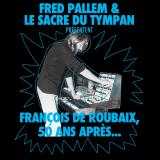
Le Sacre du Tympan est mon orchestre et mon instrument d’expression depuis 25 ans.
Avec cet ensemble a géométrie variable qui possède une dizaine d’albums a son actif, et de nombreux concerts en France et a l’étranger, je m’exprime en tant que compositeur mais aussi
arrangeur.
En 2008, nous avions crée un programme au festival Jazz a la Villette, avec cinq musiciens, en privilégiant la musique électronique et les synthétiseurs dans la musique de De Roubaix, pionnier du home studio et des Synthés. En 2015, nous avons enregistré ce programme.
Pour le cinquantenaire du compositeur qui aura lieu en 2025, j’aimerais élargir le programme autour de la musique orchestrale également très présente dans son oeuvre, ce qui permettra d’accentuer l’aspect intemporel de sa musique, tout en la confrontant aux œuvres de quelques autres compositeurs, pour démontrer l’influence qu’il a pu avoir y compris auprès de légendes telles que Morricone, Michel Legrand, ou John Barry.
Revenir sur les compositions de François de Roubaix permettra de mettre en avant la richesse des thèmes, des harmonies, et des timbres qui émanent de ses oeuvres, qui ont traversé les décennies en mettant en valeur leur portée intergénérationnelle auprès de tous les publics.
Fred Pallem, janvier 2025
Ever since the late 1950s bossa-nova revolution, Brazil’s influence on French music has been undeniable. Pierre Barouh, Georges Moustaki and a vast array of lesser known artists, all made the Musica Popular Brasileira (MPB) an axis of promotion at the service of a cool and metaphysical, modern and mixed Brazilian lifestyle. Some were seduced by the poetic languors of the bossa, some were looking for fun, and others just loved the American hybridization of jazz-bossa, jazz-samba.
What is bossa nova? One of its creators, Joao Gilberto said: "Its style, cadence, everything is samba. At the very start, we didn't call it bossa nova, we sang a little samba made up of a single note - Samba de uma nota so .... The discussion around the origins of bossa nova is therefore useless”. It is nevertheless useful to remember that these magnificent Brazilian songs, which the guitarist describes as samba, were shifted and balanced around improbable chords. "I like things that lean, the in-betweens that limp with grace," said Pierre Barrouh, quoting Jean Cocteau.
With emotion, arrangements for violin and supple guitar licks, bossa nova rapidly changed. A transformation that can be heard in the Tchic, tchic, French Bossa Nova 1963-1974 compilation, the result of a cultural reappropriation, which traveled through the United States and supplemented itself in France.
A musical revolution that has remained significant, bossa nova was born in Rio. From 1956 to 1961, Brazil lived through its golden years. In five years, the country had invented its modernist style. Elected president in 1956, Juscelino Kubitschek de Oliveira, an elegant man with a broad forehead, brandished a promising slogan: "Fifty years of progress in five years". He quickly got to work. Not worried about increasing debt, he launched the project for a new federal capital, Brasilia, designed by the communist architect Oscar Niemeyer. Volkswagen opened state-of-the-art factories and created the “fusquinha”, the Beetle. In Rio, the Vespa made its first appearance. The Arpoador Surf Club crew run into the “girl” from Ipanema, Helô Pinheiro - the tanned garota ("chick"), between a flower and mermaid, who at 17 walked by the Veloso bar, where the fiery author and composer, Tom Jobim and Vinicius de Moraes, were getting drunk on whiskey. From then on, bossa symbolized cool.
In 1958, Joao Gilberto recorded Chega de Saudade, which the directors of Philips denied, calling it "music for fagots". The marketing director, who believed in it, secretly pressed 3000 78-inch vinyls and distributed them at schools around Rio, creating a tidal wave.
American jazzmen then took over. In particular, trumpeter Dizzy Gillespie and guitarist Charlie Byrd. In November 1962, the Brazilian Ministry of Foreign Affairs funded a "Bossa-Nova" concert at Carnegie Hall in New York, inviting the genre’s pioneers. Unprepared, the show soon turned to disaster. But the troupe was invited to the White House by Jackie Kennedy. The first lady loved "the new beat" and in particular Maria Ninguem, a song by Carlos Lyra, later covered by Brigitte Bardot.
In Brazil, the 1964 military coup quickly ended this euphoria. The destructive atmosphere that ensued pushed many Brazilian musicians to leave, if not to exile. Thus, Tom Jobim, Sergio Mendes and Joao Gilberto arrived to the United States. In New York, Joao Gilberto met saxophonist Stan Getz. At the time, he was married to the Bahianese Astrud Weinert Gilberto, who had a German father. She had never sung before, but she knew how to speak English. Getz therefore asked her to replace her husband on The Girl From Ipanema. The Getz/Gilberto record with Tom Jobim on piano, was released in March 1964. Phil Ramone, the "pope of pop" was in charge of sound.
Bossa nova arrived in Paris through the classic “guitar-voice” channel (Pierre Barouh, Baden Powell, Moustaki…) But France loved jazz and Paris had already welcomed its American contributors. All these good people were to pass through Saint-Germain-des-Prés. The cabaret l'Escale became the Mecca of Latin American sound where one could find Pierre Barrouh and his friends, such as the Camara Trio, samba-jazz aces, whose only record was published by the Saravah label. With a band strangely called Les Masques (a band that included Nicole Croisille and Pierre Vassiliu, among others), the Camara Trio recorded an interesting Brazilian Sound, including the track Il faut tenir which is present on this tasty compilation of rarities.
Other enlightened musicians can also be found on the compilation, such as Jean-Pierre Sabar (songwriter for Hardy, Auffray, Leforestier ...) and the French pop rock organist Balthazar. In 1975, Sabar recorded Aurinkoinen Musiikkimatka on a Finnish label, which featured the crazy Vai, Vai, included on this record. We are now following the footsteps of Brazilian electronic musicians such as Sergio Mendes, Eumir Deodato or Marcos Valle who created funk and disco sounds on their keyboards and synthesizers. A style that influenced Véronique Sanson when she wrote Jusqu’à la Tombée de la nuit in 1969 for Isabelle de Funès, the niece of Louis and a great friend of Michel Berger - Sanson did end up singing this track on her 1992 Sans Regret record.
The pinnacle of exoticism and travel, Sylvia Fels’ Corto Maltese includes bongos, sea mist and ocean sounds. The title was taken from Jacky Chalard’s concept album written in 1974, Je suis vivant, mais j’ai peur (I am alive, but I am scared), based on Gilbert Deflez’s science fiction novel.
However, bossa nova extended the scope of popularity. "In the 1970s, I was a fan of Sergio Mendes, Getz / Gilberto. I fell in love with this music that I knew because I had been an orchestral singer, " explained Isabelle Aubret, who in 1971 delivered a composite record of covers by the very funky Jorge Ben, Orfeu Negro, Tom Jobim, Vinicius de Morais and Jean Ferrat. "I recorded this album for Meys Records in Paris, far from Brazil, with wonderful musicians, François Raubert, Roland Vincent, Alain Goraguer...". The latter wrote the arrangements for Casa Forte, a very percussive title borrowed from Edu Lobo, one of the initiators of the bossa who spent time in California. "Jazz and bossa came together and produced very rhythmic music. I love singing, it allows me to dream, to have fun, to feel a high on stage, and these songs brought me joy, made me swing, my singing felt like a dance.”
The world tours of French singers and their desire for the tropics, often brought them to Rio with its hills, forests, caipirinhas and tanned bodies. There are surprises though, like this Iemenja (Iemenja is the goddess of the sea in the Afro-Brazilian candomblé religion). Not unlike the composer and musician Jean-Pierre Lang, based in Sao Paulo, Claire Chevalier taught Brazil to Brazil. In 1970, the singer and painter published a 45-inch vinyl, Mon mari et mes amants (My husband and my lovers), under the improbable pseudonym of Clarinha (little Claire). She was then living in Rio, with her husband, Joël Leibovitz, who founded a band called Azimuth, and who owned a record label specialized in "sambas enredos" songs for samba school parades.
For its B side, she asked Pierre Perret to come up with lyrics for a song composed by Carlos Imperial: "Oh goddess of the sea, o goddess Iemenja, I bring a white rose to adorn your long hair ..." . "Perret came to see us, and we had fun, remembers Joël Leibovitz. We wrote Lemenja for fun, we recorded it at the Havaí studio, behind the Central do Brasil the central station. Erlon Chaves, the arranger who worked with Elis Regina, joined us" adding his share of Afro-Brazilian percussions and funky brass to the mix.
There is a common misunderstanding in Franco-Brazilian history: that bossa, admittedly hedonistic, is perceived as funny, even though the poets who wrote the texts are often philosophizing on the human condition. Its French interpreters pull it towards a carnival inspired universe, far removed from its fundamental essence. Thus, Jean Constantin covered the famous Samba da minha terra, an ode to the art of samba written by the classic Bahian composer Dorival Caymmi, renaming it with the enticing title of Pas tant de tchi tchi pompon: "On your pier there is no tchi tchi / when you arch your back, you know everything is alright ”(lyrics by Gérard Calvi). This expedited bossa aims for the absurd, but retains a certain elegance.
Indeed, Jean Constantin was not an idiot, the rather large man had a huge mustache and liked fantasy, (Les pantoufles à papa, Le pacha, inspired by cha-cha-cha-cha, salsa and jazz) but he was also the lyricist of Mon manège à moi interpreted by Edith Piaf, the composer of Mon Truc en plume by Zizi Jeanmaire and the soundtrack of François Truffaut’s 400 Blows. Le Poulpe, published in 1970, from which this bossa is extract, was arranged by Jean-Claude Vannier, an accomplice of Serge Gainsbourg’s Melody Nelson. In short: "There is enough of samba / By looking at the parasol / Because my poor cabeza / Is going to die in the sun".
Even the American actress Marpessa Down, who was at the heart of the bossa nova revolution with her role as Euridyce in Marcel Camus’ film Orfeu Negro, winner of the 1959 Cannes Palme d'or, fed the clichée with Je voudrais parler au petit cuica - "Tell me how you manage to always make people want to dance / It's true, I must admit that I cannot resist your magic" - in consequence, once can hear the cuica, a little drum inherited from the Bantu.
But bossa nova had many angles. Societal, of course, pushing actresses who were symbols of women's liberation like Brigitte Bardot, Jeanne Moreau, or Sophia Loren to engage in the exercise of accelerated bossa. In February of 1963, Sophia Loren made a record in French in Rome, Je ne t'aime plus, featuring the song De jour en jour, a bossa written by two Italians, Armando Trovajoli and Tino Fornai, which was released a little later by Barclay. Bossa accompanied the 1960s, a decade of moral liberation. Ann Sorel, who interpreted La Poupée des favellas, caused a sensation with L’amour à plusieurs, a provocative song written by Frédéric Bottom and Jean-Claude Vannier. As for the actress Andrea Parisy, she displayed her bourgeois cheekiness in Marcel Carné's Les Tricheurs before interpreting Les mains qui font du bien. And Magalie Noël, the friend of Boris Vian, who sung Johnny fais-moi mal, was hired to sing Une énorme Samba, composed by Alain Goraguer (arranger to Gainsbourg, Bobby Lapointe and Jean Ferrat) with lyrics by Frédéric Botton.
But in the end, of what wood is bossa nova made of? The answer is given by Christianne Legrand, daughter of Raymond the conductor, and sister to Michel the composer: "With me, with jà" - jà means "immediately" in Portuguese. In 1972, the singer, an expert in vocal jazz and a member of the Double Six, published Le Brésil de Christianne Legrand. Two songs included on the Tchic Tchic compilation that demonstrate how bossa, jazz, funk, rock, etc. work like a swiss army knife: the music is used to denounce broken systems, or miracles, HLM et ciné roman, Cent mille poissons dans ton filet, two songs from the O Cafona soundtrack, a successful telenovela broadcast, at the time in black and white, on TV Globo. The first was adapted in French by the fighter and friend of the Legrand tribe, Agnès Varda. The second is content with a play on words, jostling them into a summer fun.
Véronique Mortaigne
No en stock
Última entrega hace 3 meses disponible para reposición sin garantía
Starting in 2021 the critically acclaimed Next Wave Acid Punx series has seen Luca Venezia, aka Curses, celebrate the music that has shaped both his life and career. Across the first two compilations Luca took us from the industrial and post-punk sounds of the late 70s,through the emergence of EBM, new beat and freestyle in the 1980s and onto the music he both makes and plays himself in clubs today. Bringing the series to a close Next Wave Acid Punx TROIS sees the Berlin-based musician and DJ return full circle, this time exploring the sounds that first initiated him into Brooklyn's rave scene and the music that, in some way, continues to embody its eclectic spirit today.
Spread across three 2LPs and 3CDs Next Wave Acid Punx TROIS captures a moment whose influence can still be heard reverberating around clubland today. With the nascent rave scene obliterating boundaries, this was a moment where the darker, harder industrial electronic sounds of the mid 1980s were crashing headfirst into the ecstatic wave that was washing over clubland creating thrilling juxtapositions. Whether in the clubs and warehouses of New York, London, Frankfurt, Valencia and beyond, electronic music would never be the same again as countless new genres we take for granted today were born from the chaos and energy that had been unleashed.
Featuring 46 hard-to-find, new and exclusive tracks, Next Wave Acid Punx TROIS both documents that fertile period and shows how, despite rumours to the contrary, that early anarchic spirit can still be found today. From the Detroit Techno of Model 500 to Nitzer Ebb's EBM and the proto-Trance of Age of Love and onto brand new tracks from some of today's best producers such as Zaatar, Italo Deviance and Leona Jacewska, this compilation closes out a series that has to date revelled in exploring the darker corners of clubland in uplifting style.
Spinnin' Records, one of the most influential dance music labels, celebrates its 25th anniversary with the Chapter 2 compilation featuring a further selection of iconic hits that have shaped the global electronic music scene.
Since its founding in 1999, Spinnin' has been a trendsetter in electronic dance music (EDM), nurturing superstar artists and groundbreaking tracks across house, future bass, big room, and deep house genres.
This edition of Spinnin' 25 Years...Chapter 2 double vinyl LP collection includes the hits "Lay Low" by Tiësto, "Turn Up The Speakers" by Afrojack & Martin Garrix, "Satisfaction" by David Guetta & Benni Benassi, "Intoxicated" by Martin Solveig & GTA, "Gecko" by Oliver Heldens, "Sex" by Cheat Codes x Kris Kross Amsterdam and 25 more tracks showcasing their signature sound and major contributions to the label.
Spinnin' 25 Years...Chapter 2 is available as a limited edition on blue vinyl. The iconic Spinnin' logo is printed with an uv spot varnish on the gatefold sleeve.
No en stock
Última entrega hace 80 días disponible para reposición sin garantía
This 18- track selection spans Edith Piaf' s career from the years 1946 to 1961. It includes all of her big hits, such as 'La Vie en rose', 'Non, je ne regrette rien', 'Hymne a l'amour', 'Milord', 'La Foule', 'L'Accordeoniste', and 'Padam Padam', among many others. Regarded as France's national chanteuse, singer songwrite, and actress Edith Piaf (1915-1963), also became one of the country's greatest international stars. Her music was often autobiographical with her songs reflecting her own personal life. Piaf's specialties were the chanson and torch ballads, particularly those of love, loss, and sorrow.
‘Platinum Rare 1’ contains extremely rare recordings by the four original SWEET members. The legendary glam/hard rock band continues to thrill fans all over the world to this day. Over the years, SWEET have sold more than 55 million records and reached 34 number 1 chart positions. The songs on ‘Platinum Rare 1’ come from the private archive of SWEET guitarist Andy Scott and were personally selected by him. Fans of the band will be thrilled with this collection of rare and alternative takes and mixes. Many of the songs on the album have never before seen the light of day on a regular SWEET release. ‘Platinum Rare 1’ is an absolute enrichment for every true fan of SWEET.
The journey through French-speaking pop archives continues with this fifth volume, packed with fuzz, gimmicks, and dissent. Far from the charts, the selected tracks display a great creative freedom, often backed by corrosive humor. Welcome to the surprising, kaleidoscopic, and colorful world of the late sixties and early seventies, Wizzz!
Born in Montauban, Robert Pico stumbled into music by chance when he met René Vaneste, then artistic director at Pathé-Marconi. René brought him to Paris to record his first 45 RPM EP in 1964. A year later, Pierre Perret introduced him to Vogue, where he recorded his second album with Claude Nougaro’s orchestra. Sylvie Vartan then introduced him to RCA, where he recorded four singles, including the astonishing "Chien Fidèle," a track backed by a hair-rising fuzz guitar. Alongside his solo career, he also composed for other artists like Alain Delon (the song was recorded but remains unreleased), Magali Noël, Bourvil, and Georges Guétary. In the Paris of the sixties, he mingled with Mireille Darc, Elsa Martinelli, Marie Laforêt, France Gall, Françoise Hardy, Petula Clark, Régine, Dani, Serge Gainsbourg, Joe Dassin, Franck Fernandel, Charles Level, and Roland Vincent. Despite his efforts and winning a Grand Prix Sacem for his final record, Robert Pico didn’t achieve the expected success in show business and decided to leave Paris and return to the Southwest, where he devoted himself to writing. He is the author of 23 books (including Delon et Compagnie, Jean-Marc Savary Editions 2025, a memoir about his youth and his many encounters). Today, he is relieved to never have become a celebrity and devotes himself to his work with passion.
In 1969, the Franco-Italian movie Erotissimo was released, directed by Gérard Pirès (who later directed Taxi in 1998, written and produced by Luc Besson). This pop comedy features Annie Girardot, Jean Yanne, Francis Blanche, Serge Gainsbourg, Nicole Croisille, Jacques Martin, and Patrick Topaloff. The soundtrack was written by Michel Polnareff and William Sheller, with lyrics by Jean-Lou Dabadie. "La Femme Faux-cils," performed by Annie Girardot. It recounts the feelings of a rich CEO's wife who seeks to develop her sex appeal under the influence of advertisement and magazines. Groovy, sparkling and light, this track, with ITS lush arrangements humorously critiques consumer society and feminine beauty standards.
“Je suis l’Etat” (1967) is the flagship track of the first EP by singer-songwriter Spauv Georges, aka Georges Larriaga, better known as Jim Larriaga (1941-2022). Born into a family of bakers, the young man was initially planning to become a hairdresser when he discovered English-speaking music through Elvis Presley and the Beatles. After this revelation, he decided he would become a songwriter and gave himself five years to succeed. He recorded his first two EP’s independently for RCA under the pseudonym Spauv Georges; meaning “that poor George”, a nickname given to him by the mother of her friend Jean-Pierre Prévotat (future drummer of the Players, Triangle, or Johnny Hallyday). Portraying a depressed and eccentric young man, Spauv Georges created corrosive and amusing songs that didn’t reach a wide audience, despite a TV appearance with Jean-Christophe Averty.
Supported by his loyal friend and fellow songwriter Jean-Max Rivière, Georges Larriaga met the future singer Carlos in the early '70s, then Sylvie Vartan’s assistant. He wrote songs for Carlos, including the popular "La vie est belle," "Y’a des indiens partout," and "La cantine", which went onto become a huge hit in 1972. He also composed for Claude François (“Anne-Marie”, 1971), Charlotte Julian (“Fleur de province”, 1972), helped launch child singer Roméo (who sold 4 million records), and later wrote the hit "Pas besoin d’éducation sexuelle" (1975) for the young Julie Bataille. In 1971, Jim recorded an album for Disc'Az: “L’univers étrange et fou de Jim Larriaga”, which featured pop gems like “La maison de mon père”.
The story of the song "Zoé" began when Pierre Dorsay, artistic director at Vogue Records, asked Swiss singer and musician Pierre Alain to write a song for a new female singer. The inspiration came when he realized that Zoé (the artist's name) was also the name of France's first atomic battery, created in 1948, which consisted of uranium oxide immersed in heavy water! The lyrics reflect a bubbling energy that must be handled with caution, while the instrumentation echoes this atomic theme, notably with the use of a theremin.
Zoé’s career lasted only as long as a single 45 RPM, but it seems Christine Fontane was the vocalist behind this pseudonym, who is known for several EPs, a good "popcorn" album in 1964, and a handful of children’s singles in the '70s. Regardless, the photograph on the cover is of a different girl entirely.
Later, Pierre Alain continued his career, writing songs for himself, Marie Laforêt, Danièle Licari, Alice Dona, Arlette Zola (3rd place in Eurovision 1982), and achieving multiple gold and platinum records in Canada. Also an inventor with several patents, president of the Romande Academy, and head of the French Alliance in Geneva, he now composes atonal music, books, and poetry. Moreover, he is also the host of "Les Mardis de Pierre Alain" at "Le P'tit Music'Hohl" in Geneva.
Filled with oriental choruses and fuzz guitar, "Fou" is from Jacques Da Sylva's only EP released by Vogue in 1967. Despite the quality of this recording, all traces of this singer disappear after this first effort.
Valentin is a baroque pop singer born in Belgium. He is the songwriter and composer of most of the tracks on his three singles released in the late 60s in Canada. A legend says that he reincarnated himself as Jacky Valentin during the 1970s for a rock'n'roll revival career in Belgium, but his older brother sadly debunked this story. Valentin's first two singles were arranged by Claude Rogen, a Parisian session pianist who had come to Canada to promote the song “Mister A Gogo”, a cover of David Bowie’s “Laughing Gnome”, adapted by singer Delphine, his wife at the time. Far from his usual network, Claude Rogen arranged music for Polydor, including the arrangements for “Je suis un vagabond” in 1969, a jerk tune with string arrangements and a furious optimism.
Jacques Malia wrote, composed, and recorded his only 45 EP for Festival in 1966. “Histoire de gitan” is an incredible beat track with bohemian scat that tells the story of a gypsy musician who came to Paris to make it in the Music-Hall, to no avail. The hero of the song and its author probably shared a similar fate, as Jacques Malia faded into anonymity after this remarkable attempt.
Bernard Jamet recorded two EPs for Barclay in the late sixties and co-wrote several songs with Christine Pilzer, Pascal Danel, and prolific songwriters Michel Delancray and Mya Simile. The track “Raison Légale” (1968), his masterpiece, immerses the listener in a courtroom right when a murderer is being judged, with jerk rhythm and free arrangements. A unique, paranoid, judicial, and psychedelic oddity.
Jean-Pierre Lebrot-Millers started his career in show business in 1967 as a singer and songwriter for the Philips label. After three singles, he wrote several songs of a new kind with his friend Pierre Halioche, in the midst of the sexual liberation movement and the democratization of drugs. With provocative lyrics, “Les filles du hasard” and “Barbara au Chapeau Rose” were released on a Philips singles in 1968. The character of Barbara was inspired by a queen of Parisian nightlife during the psychedelic years: model Charlotte Martin, who dated Eric Clapton from 1965 to 1968, then Jimmy Page from 1970 to 1983. Jean-Claude Petit’s arrangements, with a table-filled intro, soul brass, and Hendrixian guitar, emphasize the flamboyance of a hedonistic and sexy character, whose dog is named Junkie because “Junkie est un nom exquis”! The track was recorded live in three takes with a full orchestra.
Upon its release, the record was censored by Europe 1 and RTL due to its references to drug use. Jean-Pierre Lebrot was then banned from the airwaves and later dismissed by his record label. He changed his artist name to Jean-Pierre Millers, while his companion Pierre Halioche became D. Dolby for a new dreamy composition, “Chilla”, which Jean-Pierre produced himself with arrangements by Jean Musy. Once again, the song was immediately censored everywhere. After this setback, he decided to stop singing and started taking on odd jobs to support his Swedish wife and their son until the day he met Jean-Pierre Martin, then production manager at Decca, who had worked with Manu Dibango. Martin offered Jean-Pierre Lebrot-Millers, then employed at Rank Xerox, the position of artistic director at Decca. He accepted and became, a year later, promotion director (radio, press, TV). He worked on Julio Iglesias’s first album for Decca, which became a massive hit and allowed him to meet Claude Carrère. The latter asked him to write new songs and find their performers, much like a “talent scout.” It’s through him that Jean-Pierre discovered Julie Pietri and Corinne Hermès. He composed “Ma Pompadour” for Ringo, Sheila’s husband, and took the microphone again for the syncope hit “Rendez-Vous” in 1982.
That same year, Jean-Pierre Lebrot-Millers tried to release a track for which he had heavily gone into debt: “Si la vie est un cadeau”. Having recorded it in London, he presented it to numerous professionals, all of whom refused to get involved. The same thing happened with Antenne 2 and the Sacem when he proposed the song as France’s entry for Eurovision. He then met Haïm Saban, who was producing cartoon soundtracks and had just launched the Goldorak theme song. Saban, having listened to the song, declared it had the potential to become a hit. He sent Jean-Pierre and Corinne Hermès to meet the CEO of the Luxembourg radio and television network. The latter received them, asked to hear a verse and chorus a cappella in his office, and immediately hired them to represent Luxembourg at Eurovision 1983. They reworked the arrangements and recorded a new version with Haïm Saban as co-producer. The song ended up winning Eurovision 1983, a great comeback for our hero. He continued producing and hung out with the band Nacash in Belgium when a couple came to introduce their daughter for an impromptu audition in a hotel room. The girl sang “Les démons de minuit” while dancing to a radio cassette. Impressed, he had her take singing lessons for a year and composed a song for her (for which he had the melody and title, but no lyrics). This required him to go on the hunt for a lyricist, who ended up being Guy Carlier. They recorded the song, which was initially a ballad, at Bernard Estardy’s CBE studio, and gave the singer a new name: Melody. They showed the song around their industry network without success. Later, Estardy called Jean-Pierre to suggest changing the rhythm and making it pop-rock. Orlando, Dalida’s brother, liked the result and decided to co-produce the track. “Y’a pas que les grands qui rêvent » became a classic hit. The song has since been covered by Juliette Armanet (as a ballad, like the original) and Valentina.
Born into an aristocratic Breton family, Hervé Mettais-Cartier worked as a DJ at Queen Kiss, a nightclub in Poitiers, where he formed the band Les Concentrés with Michel (an actor) and Christian (a radio technician). Together, they created a repertoire of whimsical songs (“Ma bique est morte”, “J’suis un salaud”, “Fils de dégénéré”...) that they performed on stage dressed in white (in homage to “concentrated milk”). They performed at Bliboquet and Olympia in 1968 for the 10th edition of the “Relais de la chanson Française” organized by L’Humanité-Dimanche and Nous les Garçons et les Filles, sponsored by Pepsi Cola. Winners in the author-composer category, alongside Danish singer Dorte, their visibility allowed them to record a 45, and appear on television in Jean-Christophe Averty’s show. The A-side of the disc features Bruno le ravageur, a casatchok dedicated to Bruno Caquatrix, the director of Olympia, nicknamed in the song “Coq Atroce” or “croque-actrices”. The B-side is dedicated to “Fils de dégénéré”, a quirky tribute to Hervé's aristocratic roots, mixing absurdity with sophisticated vocal harmonies.
After Les Concentrés, Hervé Mettais-Cartier formed the duo La Paire et sa Bêtise with his friend Olivier Robert. They performed in Parisian cabarets and toured with Pierre Vassiliu. In the late 1970s, Hervé began a solo career. He recorded two albums for the Motors label in 1978 and 1979, which did not achieve their anticipated success due to lack of promotion. In 1980, he met Bernadette, with whom he started a family and created a “Chansons à voir” (songs to see) show that he performed until his death at the end of 2024.
Publicité comes from the final EP by the Missiles (Ducretet Thomson, 1966), a disc that also includes “La (nouvelle) guerre de cent ans”, featured on Volume 4 of our Wizzz! series. Please refer to the booklet for the story of the band.
“He’s 1.82 meters tall, 28 years old, weighs 135 kg, is black and Belgian”: this is the description of singer Hegesippe on the back of his sole single (Decca, 1967). He appears on the album cover wearing a Greek toga, like a hippie gag – we are at the end of the year 1967. In “Le crédo d’Hegesippe”, this former bodyguard of Antoine and the Charlots plays the delightful card of the thick brute converted to Flower-Power and non-violence, with arrangements by Jean-Daniel Mercier, aka Paul Mille.
“Ethéro-disco” was released on a promotional record for clients of the Maréchal company (Liège, Belgium) for the New Year 1979. Over a funky rhythm, celebrity impersonations (Brigitte Bardot, Jacques Dutronc, Fernandel…) deliver an enigmatic text about pharmaceutical products like ether, bismuth, and aspartate. The track was composed by Dan Sarravah (responsible for Joanna's “Hold-up inusité” featured on Wizzz! Volume 3) and Tony Talado, who was also a singer (one 45 in 1967), songwriter (with over a dozen credits between 1964 and 1985 in various styles from surf music to disco), author (Devenez Végétarien, Dricot Editions, 1985), ad designer, and psychologist.
Décollez-les is on the A-side of Mamlouk's only single, a pseudonym for Marsel Hurten, who is known for his work on several EPs in the late sixties, as well as composing music for Hervé Vilard’s “Capri, c’est fini”, Claude Channes' “La Haine”, Annie Philippe’s “On m’a toujours dit”, and Nancy Holloway’s “Panne de Cœur”.
This strange song, with Afrobeat horns and absurd dialogues between a chef and his kitchen staff, is the result of a collaboration between Marsel Hurten and one of his neighbors, a photographer from Pavillon-sous-Bois (93), where the musician settled after returning from the Algerian War. A music video was shot to promote the record.
Marsel Hurten was born in Tourcoing (59) into a musical family. At a young age, he joined the brass band founded by his grandfather, playing the piston before studying trumpet at the conservatory, as well as teaching himself how to play the guitar. As an orchestra musician, he toured in France, Belgium, Germany, and England. He released a series of solo 45’s between 1965 and 1968 for the DMF and Az labels before stopping recording to focus on working for other artists (Gilles Olivier, Noëlle Cordier…).
“L’amour nu” (Vogue, 1971) is the work of the short-lived Belgian band Mozaïque. The track, written by singer Jacques Albin, closely resembles another of his compositions, “Carré Blanc”, which he recorded in 1969 for Disc’AZ.
Represented by the Lumi Son micro-label based in Marignane (Côte d'Azur), Jean-Marc Garrigues released two 45 RPMs in the late sixties, defending the French jerk sound. The song “Je dis Non” is a short, joyful ode to youth, pop music, and rebellion.
Songwriter and performer Jacques Penuel released three singles. The first one, “Astronef 328” (Fontana, 1969), features a dizzying series of chords punctuated by sound effects, a sci-fi story, and arrangements by Jean-Claude Vannier.
We would like to sincerely thank Pierre Alain, Moon Blaha, Marsel Hurten, Bastien Larriaga, Jean-Pierre Lebrot-Millers, Bernadette Mettais-Cartier, Robert Pico, Olivier Robert, Claude Rogen, Micky Segura.
No en stock
Última entrega hace 8 meses disponible para reposición sin garantía
Mit der exklusiven Doppelvinyl in zartem Pink erscheint eine Hommage an eine der größten Künstlerinnen Europas: Édith Piaf. Ihre Lieder sind nicht nur musikalische Meisterwerke, sondern auch emotionale Zeitdokumente, die Millionen Menschen berührt haben - in Frankreich, Deutschland und weit darüber hinaus. Geboren 1915 in Paris, wuchs Piaf unter schwierigen Umständen auf, sang auf den Straßen und wurde 1935 von einem Cabaret-Besitzer entdeckt. Ihr Spitzname "La Môme Piaf" - der kleine Spatz - wurde zum Symbol für ihre fragile Erscheinung und ihre kraftvolle Stimme. Ihre Musik war oft autobiografisch, geprägt von Liebe, Verlust und Hoffnung. Sie sang mit einer Intensität, die bis heute unter die Haut geht. Piaf wurde zur Nationalikone Frankreichs, besonders nach dem Zweiten Weltkrieg. Ihre Lieder wie "La Vie en Rose", "Non, Je Ne Regrette Rien" oder "Hymne à l"Amour" wurden zu Hymnen einer Generation. Auch in Deutschland und Europa wurde sie gefeiert - als Stimme der Versöhnung, der Leidenschaft und der Menschlichkeit. Diese Vinyl-Edition vereint ihre größten Werke in einem liebevoll gestalteten Sammlerstück - ein Muss für Musikliebhaber und Kulturinteressierte.
No en stock
Última entrega hace 11 meses disponible para reposición sin garantía
On December 8, 2023, Siska unveiled a first single titled Arabian Knights, a cover of Siouxsie and the Banshees, and it’s a 4-track EP that she is preparing to release on March 29.
« Diggin’ the Roots » 4 times that she was unearthed deep in her emotional discotheque; from her high school years (Arabian Knights) to her encounter with Rasta (Igziabeher), from her Watcha Clan period where she mixed Arabic and Hebrew (im Nin'alu) to the soul music that has marked his journey since his childhood (Troubles...).
This EP is produced, arranged and mixed in-house with Clem a.k.a Adelo Basileus and Soupa Ju at VLB Recordings and it’s thanks to the solidity of its foundations that the Marseille singer can continue to always move forward.
A 2nd ep of compo this time, will be released in September with 2 new productions signed by Prince Fatty and some surprises to come.
No en stock
Última entrega hace 12 meses disponible para reposición sin garantía
Mysterious disco outfit Jiri Jiri deliver an essential EP. Four tracks of sublime, summary European cool hand-picked by Batov Records boss DJ Kobayashi for the label"s brand new and carefully curated "Give Me Disco" 12" series, named after Raja Zahr"s disco classic. The "Give Me Disco - Vol. 1" EP marks the beginning of two exciting new ventures, the emergence of Jiri Jiri, and inspired by their need for a home, the launch of Batov Records" "Give Me Disco" 12" series.
No en stock
Última entrega hace 10 meses disponible para reposición sin garantía
‘Platinum Rare 2’ contains extremely rare recordings by the four original SWEET members. The legendary glam/hard rock band continues to thrill fans all over the world to this day. Over the years, SWEET have sold more than 55 million records and reached 34 number 1 chart positions. The songs on ‘Platinum Rare 2’ come from the private archive of SWEET guitarist Andy Scott and were personally selected by him. Fans of the band will be thrilled with this collection of rare and alternative takes and mixes. Many of the songs on the album have never before seen the light of day on a regular SWEET release. ‘Platinum Rare 2’ is an absolute enrichment for every true fan of SWEET.
The Island Festival presents its first vinyl sampler — a celebration of groove and unity
Born from the spirit of one of northern France’s most beloved electronic gatherings, The Island Festival unveils its very first vinyl sampler on its freshly launched label, The Island.
Held annually on the stunning Île des Saules, The Island has become a beacon for house and electronic music lovers. This limited-edition record captures that magic with four carefully selected tracks, bridging international talent and local energy.
The sampler features:
• A standout cut by Italian duo The Deepshakerz (Great Stuff, Defected, Toolroom, Crosstown Rebels), bringing their trademark blend of funky, percussive house.
• A feel-good track from Etienne & Eddsax, offering sun-soaked grooves and uplifting vibes.
• A deep and dreamy voyage by The Sandman, blurring the lines between groove and introspection.
• And the iconic “Midnight in New York” by Michael Sanctorum.
This release is a sonic snapshot of the festival’s soul. From open-air euphoria to late-night intimacy, The Island Sampler EP 1 is both a collector’s item and a dancefloor weapon.
Français
The Island Festival dévoile son premier vinyle sampler — une célébration du groove et de l’unité
Né de l’esprit de l’un des festivals électroniques les plus emblématiques du nord de la France, The Island Festival présente son tout premier vinyle sampler, lancé sur son propre label : The Island.
Organisé chaque année sur la magnifique Île des Saules, The Island est devenu un rendez-vous incontournable pour les amoureux de house et de musique électronique. Cette édition limitée en vinyle capture l’essence du festival à travers quatre titres soigneusement sélectionnés, mêlant talents internationaux et énergie locale.
Ce sampler réunit :
• Un titre percutant du duo italien The Deepshakerz (Great Stuff, Defected, Toolroom, Crosstown Rebels), fidèles à leur style house percussif et groovy.
• Un morceau feel-good signé Etienne & Eddsax, aux accents ensoleillés et aux rythmes entraînants.
• Une plongée onirique et profonde avec The Sandman, à la frontière entre groove hypnotique et ambiance introspective.
• Et le classique intemporel “Midnight in New York” de Michael Sanctorum.
Cette sortie est un instantané sonore de l’âme du festival. De l’euphorie en plein air à l’intimité des sets nocturnes, The Island Sampler EP 1 s’impose comme un objet de collection autant qu’une arme pour le dancefloor.
No en stock
Última entrega hace 11 meses disponible para reposición sin garantía
The project’s title track is the perfect blend of gossamer shoegaze and Graveface’s signature eerie nocturnal feel, with the lyrics similarly balancing the purity of love against mankind’s darker instincts in the face of romantic obsession.
“‘For Keeps’ is a story written from the perspective of someone who is so desperately in love, they’d do anything to hold onto that love,” the band shares. “We just wanted to explore a really dark part of the human psyche.”
To further elucidate on these themes, Night School has shared a music video that pairs performance footage with a narrative of amour fou that gets a little bit too fou—I won’t spoil anything, but there is manslaughter involved.
Patricia Kaas' 2012 album Kaas Chante Piaf is a heartfelt tribute to the legendary French singer Édith Piaf, celebrating the 50th anniversary of her passing. The album features Kaas’ interpretations of 16 iconic Piaf songs, including classics like "La Vie en Rose," "Non, Je Ne Regrette Rien," and "Hymne à l'amour." Kaas infuses each track with her own unique style, while honoring the emotional depth and power of Piaf’s timeless music. Known for her smoky voice and dramatic delivery, Kaas breathes new life into these chansons, creating a nostalgic yet contemporary homage. Kaas Chante Piaf is more than just a cover album—it’s a celebration of Piaf’s enduring legacy and an opportunity for Kaas to showcase her deep connection to French musical heritage. For fans of French chanson, this album is a must-listen, capturing the spirit of both Piaf and Kaas. Kaas Chante Piaf is available as a limited edition of 1500 numbered copies on light green coloured vinyl.
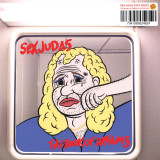
Oslo’s Sex Judas feat. Ricky announces 2 x LP for Norway’s Snick Snack Music
The band’s varied concept album portrays a break-up of epic proportions and releases Jabnuary 2025
Digital Release Date: 3rd May 2024
Vinyl Release Date: Jan 2025
“Are you ready for the big disaster? The moment when everything unravels?
On their third album, Sex Judas feat. Ricky portrays a break-up of astronomical proportions. The band's mascots, Sex Judas and Ricky, embodied by artist Sindre Goksøyr, find themselves in the midst of a separation, and their feelings are sprayed all over the big screen.
But what is actually going on? Sex Judas feat. Ricky consists of the musicians Tore Gjedrem (Ost & Kjex), Sidiki Camara, Ivar Winther, Tracee Meyn, Tore Brevik, Kristian Edvardsen and Linn Nystadnes, a stellar team part of Oslo's musical underground. Together, they play a mixture of funk, disco, post-punk, traditional music from Mali and electronica that always moves the dance floor, with two previous critically acclaimed albums on the Scottish Optimo Music and a Norwegian Grammy to show.
Sex Judas’ third album, ‘The Book Of Dreams / After Sex’, is a double disc and a two-part musical affair. In the first part, Sex Judas' version of the breakup is depicted in a band format, with music inspired by the alternative 80s. Think Grace Jones, Tom Tom Club, DAF, No Wave, and the Compass Point Studio backing band in a blissful cocktail.
In part two, depicting Ricky’s breakdown, the band has created their most experimental music to date in close collaboration with contemporary composer Ole-Henrik Moe. The songs influenced by Ole-Henrik's tones are fluid and beautifully ambient, with inspiration ranging from 30s and 40s film music, Norwegian folk, contemporary electronica and IDM topped with Moe’s modern string arrangements.” - Snick Snack Music
No en stock
Última entrega hace 20 meses disponible para reposición sin garantía
Collected by Charles Aznavour is a wonderful collection of hits and classics by the French chansonnier, that touches your soul at every moment. It’s an overview of his work during the sixties, seventies and duets with Johnny Hallyday on “Il Faut Savoir” and with Frank Sinatra “Young At Heart”. Also his English versions of “How Sad Venice Can Be”, “The Old Fashioned Way”, “She” and four more English songs are included on this deluxe Trifold 3LP album.
In the early 1950s a man of short stature attempts to win over his audience. With a hoarse voice he delivers songs that do not catch on. People jeer at him. Tomatoes fly through the air. The Frenchman with Armenian roots slinks off the stage, but does not quit. Ironically, the song that makes him a household name is the song in which he recalls his agonising trial. The audience reacted indifferently when Charles Aznavour decided to try out his new song on stage. But when he went on to greet the audience for one final time they all stood and gave him a thundering standing ovation.
In the sixties, hits and classics succeed one another. Nobody is bothered any more by his husky voice, by his small stature or his rugged characterful face. The croony “For Me Formidable” (1963), the heart breaking “Et Pourtant” (1963) and the nostalgic “Hier Encore” (1964) confirm his standing as a fan favourite. “La Bohème” (1965) and “Emmenez-moi” (1967) turn Aznavour into a superstar. In “La Bohème”, there are impressionist painters strolling in the shadows of the Sacré-Coeur, the compelling “Comme Ils Dissent” (1972) is the first chanson after Vichy France to overtly endorse homo sexuality and in the present “France Of La Manif Pour Tous” (the movement that opposes gay marriage), does it again to sound particularly topical. “Camarade” (1977) was about the nomenklatura, the ruling elite in the Soviet Union and is a social and historical topic. “Avec Un Brin De Nostalgie” is an Aznavour grand cru, maybe even the best he has made over the last thirty years.
Charles Aznavour Collected is available as a limited pressing of 1000 individually numbered copies on gold vinyl. The package includes a 4-page booklet with liner notes and photos.
No en stock
Última entrega hace 22 meses disponible para reposición sin garantía
"Heartfelt was released in 2002; the 7th studio album by the jazz quartet Fourplay. They created a crossover between contemporary jazz, R&B and pop with this album and started reaching a broader audience, partly due to the success of the tracks ""Galaxia"" and ""That's The Time"". Fourplay abandoned their individual processes and decided to record this album by free jamming in the studio. The strongest cuts on Heartfelt are those written by one member or two in combination; on these, from the Pat Metheny-inflected title track to Nathan East's velvety vocal showcase ""Let's Make Love,"" the quartet's taste and fundamentally conservative aesthetic shine most brightly.
Heartfelt is available on vinyl for the first time as a limited edition of 1000 individually numbered copies on gold coloured vinyl and includes 4-page booklet.
No en stock
Última entrega hace 22 meses disponible para reposición sin garantía
An integral part of La Fine Equipe's famous La Boulangerie series, La Boulangerie II had never seen its Part 2 released on vinyl until now. That’s now a thing of the past thanks to this double LP!
No en stock
Última entrega hace 22 meses disponible para reposición sin garantía
‘Les Cigales’ takes its’ sonic cues from the structure of film and TV music from the 1960s and 70s, channelling the influence of film composers such as Francois de Roubaix and David Axelrod, whilst also sitting somewhere between the washed out, sun-soaked sonics of Surprise Chef and Robohands. As the EP unwinds, its narrative reflects a love story, full of longing, melancholy and drama, connecting with the story of Gyptis and Protis – the founding myth of Marseilles – whose love broke convention and welcomed the arrival of foreign people on French soil.
The project follows The Offline’s debut album ‘La couleur de la mer’, released in November 2023, which saw him create his own soundtrack to a film yet to be made. Inducing images of manorial, fog- swept villas at the seas edge, silhouetted sailing boats and cigar-chomping villains attempting to thwart the mission of an imaginary hero, the record is a masterfully composed sonic journey. ‘Les Cigales’ sees him continue to build upon a distinctive sound that moves from dramatic cues to fragile romanticism, incorporating psychedelic spaciness, retro soul and hip-hop sensibilities informed by his extensive record collection.