Jim O'Rourke and Jos Smolders teamed up again after their first collaboration, Additive Inverse from 2021. Over a period of three years, both artists worked in sessions of a day, each in their own studio.
The result is sometimes like a warm cloud of sounds, suddenly breaking up into a rhythmic, irregular pattern, after which it dives into introverted mindsets. The music is in constant flux
The project followed the same workflow, but this time Jim took the lead and kicked off with a salvo of sounds that he extracted from his Kyma System. Both Jos and Jim were quite interested in the spectral character of sounds. Jim applied Kyma algorithms while Jos granulated his basic recordings. That way, textures are built, quite slowly moving from warm to gritty, from hard surfaces to deep sonic wells.
Suche:l ex
Some records are collections of tracks. Others are fragments of a life. I AM A CULT HERO is not a debut. It is a return to origin. Before Skylax Records. Before Los Angeles. Before the architecture of house music became clear. There was Sarcelles. Concrete towers. Invisible youth. Yet a coded multicultural energy where funk, soul, early hip-hop and primitive electronics coexisted before categories existed. Sarcelles was not Compton, but spiritually it was the same frontier.
95200 is not just a postcode. It is the birthplace of Hardrock Striker. 368 was the bus to the train station — the crossing line between isolation and possibility. Each journey toward Paris felt like entering another system. Those nights required discipline. Instinct. Strategy. Music was not distraction. It was structure.
Years later, Los Angeles revealed the hidden architecture behind those early intuitions. House music was not a genre but a living mechanism — built on vinyl culture, extended mixes, dubplates and repetition as language. That system had already been shaped and transmitted by pioneers such as Ron Hardy, Larry Levan, Frankie Knuckles, Electrifying Mojo, Hot Mix 5, Mark Kamins and Ron Murphy. Hardrock Striker did not imitate that language. He internalized it. The tracks on I AM A CULT HERO operate as transmissions.
Gospel For Dancers (95200 Mix / Dub) is vertical — ritual energy, lift and controlled expansion. Dance here is elevation. Erotic Loop (368 Mix / Dub) is horizontal — hypnotic repetition, circular bass motion and gradual immersion. Repetition becomes destination.
95200 and 368 are coordinates. Origin and transit. Memory and motion. Anchor and crossing.
From Sarcelles to Paris to Los Angeles to Skylax & now, back to the source.
This record closes the circle. Hardrock Striker has transformed origin into signal. Signal into structure. Structure into permanence.
A cult hero is not declared. A cult hero is revealed. Vinyl is the only truth.
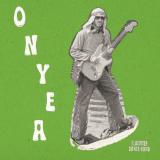
AFTER DARK is the latest project from French producer Onra, conceived as the soundtrack to an imagined late-night film. Entirely self-produced, the album continues the sophisticated R&B and Modern Soul direction explored since his 2010 classic Long Distance and 2018's accomplished Nobody Has To Know, focusing on late 80's / early 90's inspirations.
Structured like a film unfolding between dusk and dawn, After Dark moves through themes of intimacy, urban solitude, distance, and quiet indulgence. Analog synthesizers, tight drum programming, understated basslines, and selective live saxophone textures shape a cohesive body of work that favors mood and narrative over excess. The sequencing reinforces its cinematic intent, opening and closing with intro and outro pieces that frame the record as a cohesive night-time narrative album.
Over 20 years since emerging in the mid-2000s from the beat scene, Onra has steadily evolved from sample-based Hip-Hop production toward polished, song-oriented projects rooted in contemporary R&B and Funk. With After Dark, he delivers one of his most focused and refined statements to date: a mature, immersive album built for late hours, and attentive listening.
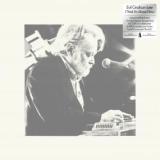
At the age of 72, "Evil" Graham Lee, the legendary pedal steel pioneer and veteran of the iconic Australian band The Triffids, delivers his first ever album under his own name titled ‘I Think I’m Alone Now’. In addition to his work with The Triffids, Graham’s place in ambient history was cemented in 1990 when his evocative pedal steel became the soulful centerpiece of The KLF’s masterpiece, Chill Out (specifically on the highlight “Baltimore to Fair Play”).
I Think I’m Alone Now is a profound exploration of the instrument's emotional range, blending traditional country infused melodies with vast, reverb drenched ambient textures. The album spans six tracks, anchored by the Side B title track, a 15 minute textural piece that leans heavily into the ambient genre. From the delicate melancholy of "Seeking Beauty in Sadness" to the curious abstraction of "Nursery in the Beehive," Lee uses his pedal steel and an array of pedals to sculpt unique, haunting soundscapes that exist between tradition and the avant garde.
The connection is brought full circle with exclusive liner notes written by The KLF’s Bill Drummond. Reflecting on a forty year friendship that began when The Triffids served as the backing band for Drummond’s solo debut, The Man, Drummond provides a personal and poignant context for this long awaited solo bow.
A 180g pressing housed in a full sleeve designed by Bradley Pinkerton with metallic sticker and bespoke inner sleeve featuring liner notes signed by Bill Drummond.
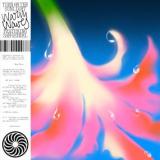
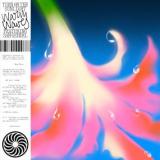
‘Warm Waves’ first appeared in 2020, ten years after Turn On The Sunlight’s debut self-titled album was first released in Japan. During that decade, Turn On The Sunlight’s Jesse Peterson and Mia Doi Todd welcomed their first child and co-founded a music venue in Los Angeles. When performance spaces were required to close at the start of the pandemic, Jesse’s focus shifted back towards home recording. Since ‘Warm Waves,’ five more Turn On The Sunlight albums have followed (including ‘Drives To The Beach,’ also on Tokonoma Records), all of which can be seen as an expansion of the musical direction set forth on this album.
The group heard on ‘Warm Waves’ consists of musicians who Mia and Jesse were regularly playing with at the time - Sam Gendel, Mitchell Brown, Andres Renteria & Gabe Noel - joined by Laraaji, Arji & Luis Pérez Ixoneztli, making their first recordings together.
The group’s blended signal was routed through Mitchell’s tape loops and modular synthesizer, which contributed to the unique communal sound of these recordings. Further extending this approach, Carlos Niño then reprocessed and reimagined ‘Passing Rain’ with Jamael Dean for his Elemental Beat Mix.
Originally released one week into the official lockdown period, some listeners found the warm, collective sound well-suited for the time of introspection and shifting priorities that followed. Now, in 2026, ‘Warm Waves’ returns on vinyl to once again encourage peaceful contemplation and open-hearted togetherness, in echo of the spirit of its creation.
Credits
Sam Gendel: Saxophone & Electronics on A1, A2, A3, B1, B2, B3
Laraaji: Voice & Zither on A3
Luis Pérez Ixoneztli: Bird Sounds on A1, Aerophones & Water Drums on B2
Mia Doi Todd: Voice on A1, A2, B2, B3; Piano on A3
Jesse Peterson: Guitar, Bass, Organ & Bird Sounds on A1; Organ on A2; Guitar & Bass on A3; Wooden Whistles, Guitar, Ukulele & Piano on B1; Ice Breaking on B3
Andres Renteria: Percussion on A1, A2, B1, B2, B3; Marimba & Percussion on A3
Mitchell Brown: Synthesizers & Magnetic Tape on A1, A2, A3, B2, B4
Gabe Noel: Bass on A2, A3, B1
Arji: Bells & Shells on A3
Carlos Niño: Production / Remix on B4
Jamael Dean: Additional Keyboards on B4
Produced, mixed & recorded by Jesse Peterson
Except B4, produced by Carlos Niño
‘Warm Waves’ first appeared in 2020, ten years after Turn On The Sunlight’s debut self-titled album was first released in Japan. During that decade, Turn On The Sunlight’s Jesse Peterson and Mia Doi Todd welcomed their first child and co-founded a music venue in Los Angeles. When performance spaces were required to close at the start of the pandemic, Jesse’s focus shifted back towards home recording. Since ‘Warm Waves,’ five more Turn On The Sunlight albums have followed (including ‘Drives To The Beach,’ also on Tokonoma Records), all of which can be seen as an expansion of the musical direction set forth on this album.
The group heard on ‘Warm Waves’ consists of musicians who Mia and Jesse were regularly playing with at the time - Sam Gendel, Mitchell Brown, Andres Renteria & Gabe Noel - joined by Laraaji, Arji & Luis Pérez Ixoneztli, making their first recordings together.
The group’s blended signal was routed through Mitchell’s tape loops and modular synthesizer, which contributed to the unique communal sound of these recordings. Further extending this approach, Carlos Niño then reprocessed and reimagined ‘Passing Rain’ with Jamael Dean for his Elemental Beat Mix.
Originally released one week into the official lockdown period, some listeners found the warm, collective sound well-suited for the time of introspection and shifting priorities that followed. Now, in 2026, ‘Warm Waves’ returns on vinyl to once again encourage peaceful contemplation and open-hearted togetherness, in echo of the spirit of its creation.
Credits
Sam Gendel: Saxophone & Electronics on A1, A2, A3, B1, B2, B3
Laraaji: Voice & Zither on A3
Luis Pérez Ixoneztli: Bird Sounds on A1, Aerophones & Water Drums on B2
Mia Doi Todd: Voice on A1, A2, B2, B3; Piano on A3
Jesse Peterson: Guitar, Bass, Organ & Bird Sounds on A1; Organ on A2; Guitar & Bass on A3; Wooden Whistles, Guitar, Ukulele & Piano on B1; Ice Breaking on B3
Andres Renteria: Percussion on A1, A2, B1, B2, B3; Marimba & Percussion on A3
Mitchell Brown: Synthesizers & Magnetic Tape on A1, A2, A3, B2, B4
Gabe Noel: Bass on A2, A3, B1
Arji: Bells & Shells on A3
Carlos Niño: Production / Remix on B4
Jamael Dean: Additional Keyboards on B4
Produced, mixed & recorded by Jesse Peterson
Except B4, produced by Carlos Niño
J-Walk return to BiD with a one off single 'Never Go Home' ahead of an album of new works to be released next year...
Recorded in his Stockport studio & channeling the DIY ethos of his previous BiD release Broken Beauty, 'Never Go Home' is a paeon to the mind-altering oeuvre of late 80's indie psychedelia, influenced by artists such as Spacemen 3, Nick Nicely & The Field Mice.
On the flip 'Dub Never Go' expands the vision with a version that wades deeper into dub territory, spacing out the stems & positioning the song in an abstract format.
This limited-edition vinyl release comes in a homemade sleeve which is stamped, numbered & implanted with J-Walks DIY DNA.
Barefoot Beats drop two highly infectious Brazilian power jams for all the vinyl collectors and lovers of International sounds out there.
Regular contributor to the imprint Bernardo Pinheiro teams up with Zaidan to expertly craft a timeless Reggae classic into a pure Brazilian good times anthem.
Over on the flip, Rio based producer Joutro Mundo combines superbly with Dicky Trisco to produce a more late night inspired number which is ready to fuel your Carnarave and set that dance floor on fire.
All delivered on a beautiful, LTD edition 10inch vinyl pressing.
MELODI is the debut full-length album from Norwegian artist Sommerfeldt; a collection that takes listeners through the artist's mind, inspirations, experiences, and travels.
With a 20 year track record and releases on labels such as Full Pupp, Paper Recordings, and his other home Badabing Diskos, this album showcases a playful approach to genre, where a tight drum machine groove forms the foundation of a colourful record that touches on ambient, '80s, new wave, deep house, balearic, and downpitched progressive trance from the early millennium (which Sommerfeldt himself highlights as his formative years).
The album has been four years in the making. Several of the tracks were recorded around the world on hardware samplers and synths; bird sounds and ocean waves were captured, processed, and later finalised in his studio in Oslo.
Joining him is a stellar team of contributors; Embla Maria, Sigmund Floyd, Toshybot, Guro Kverndokk, Kristian Solhaug and Magnus JJ, adding outstanding vocal performances, gritty guitars, and oval percussion, the original cover artwork signed by Sommerfeldt's own favourite artist, Quentin Desveaux.
All of this is woven together into a cohesive whole that will make you want to listen again and again.
The six track musical masterpiece is set for physical release May 29th 2026 on a bold orange 12"
DJ Sprinkles & Hardrock Striker feat. Move D
SKYLAX HOUSE EXPLOSION IV – After The Dancefloor
A defining transmission in the history of Skylax Records. Originally released across different moments of the Skylax catalogue, these recordings are now assembled as the final chapter of the Skylax House Explosion series — a project exploring the architecture, memory and survival mechanisms embedded within house music culture. The record opens with Move D’s “Outer Rim 64”, originally released in 2018 as part of the Skylax House Explosion narrative. Suspended between motion and distance, the track establishes the conceptual perimeter of this final chapter — a space where rhythm no longer functions only as propulsion, but as orientation. Here the listener stands at the outer edge of the dancefloor’s architecture, where structure persists even as its original social conditions begin to disappear. The sequence continues with Hardrock Striker’s “Motorik Life (DJ Sprinkles Dub)”, originally released in 2011. Rather than operating as a conventional remix, the Dub reinforces the motorik continuum of the original composition, transforming repetition into endurance. DJ Sprinkles preserves the infrastructural skeleton of the dancefloor — its capacity to sustain bodies through duration alone, without narrative resolution or emotional release. The record culminates with “Motorik Life (DJ Sprinkles Mountain Of Despair Remix)”, one of the most politically explicit works ever associated with Skylax Records. Through the relentless repetition of the phrase “mountain of despair,” Terre Thaemlitz dismantles the traditional function of dance music, transforming remix culture into structural critique. Referencing Martin Luther King Jr.’s famous metaphor, the remix removes the promise of redemption and leaves only the architecture of struggle. The dancefloor is no longer presented as escape, but as a temporary condition of survival. Together these recordings reveal house music’s true function: not to resolve despair, but to create temporary conditions in which bodies can continue to exist despite it.
AFTER THE DANCEFLOOR
you cannot preserve a dancefloor
by archiving its sound
because the dancefloor was never sound
it was bodies
finding temporary protection
inside systems designed to erase them
house music was never a genre
it was a survival strategy
when the lights disappeared
the structures remained
and so did we
Daskal debuts on DJ Tennis’s Life and Death label today with the release of “Changes,” the first single from his forthcoming album OD, out March 6. The release marks a defining moment for the producer and composer, whose work moves fluidly between contemporary dance, film, and electronic music, and represents his first full-length statement reconnecting his compositional practice with the dancefloor.
“Changes” arrives alongside a striking accompanying video directed by award-winning filmmaker Tamir Faingold, featuring dancers from the world-renowned Batsheva Dance Company. Rather than functioning as a traditional music video, the piece uses contemporary dance as its primary language, translating the emotional charge and magnetism of nightlife into movement. Together, the single and visual introduction frame OD as a bridge between club culture and the expressive traditions of modern dance and composition.
A classically trained composer with deep ties to the world of choreography, Daskal has spent recent years creating original scores for institutions including Los Angeles Dance Project and the Royal Danish Ballet, while simultaneously developing a parallel body of work across ambient and experimental electronic music. OD emerges as a convergence of those paths: a ten-track album shaped as much by physical movement and spatial awareness as by club tradition, positioning Daskal between concert hall, black box theater, and late-night club environments.
Recorded and mixed primarily using vintage hardware — including a rare 1980s German mixer in a high-end Tel Aviv jazz studio — OD reflects a deliberate shift away from purely atmospheric writing toward rhythm, repetition, and physicality, while retaining the precision and restraint of his compositional background.
Warm chords, subtle groove pressure and a spacious late-night feel. This is heady, functional and quietly expressive club music, refined in detail, reduced in form, and made for deep hours rather than obvious moments. A tasteful and immersive release with real depth. With UKR059, Eva Lansberg delivers a deeply atmospheric and elegantly reduced four-tracker for Ultra Knites Records.
Tip! Next amazing 4 tracker on Andrey Pushkarevs label Luck Of Access. You probably haven’t heard about Konstantin Smirnov yet, and that makes us even more excited to share this release! We, at Luck of Access, love the feeling of discovering hidden gems, and this release is full of it. Konstantin Smirnov masterfully combines raw techno, ambient & electro in his “On My Mind” EP, which includes a beautiful rework from the legendary Satoshi Tomiie – enjoy the trip!
With CT018, Cosmic Tribe introduces a new editorial format within the catalogue: a focused artist EP on Side A, followed by reinterpretations on Side B — establishing a dialogue between original material and alternative rhythmic perspectives.
Alex Gordiy is a Ukrainian producer currently based in the Netherlands. He has been producing and experimenting across various genres, with a strong focus on electro and techno in recent years. In his music, deep and energetic grooves merge with lush synth textures, creating tracks that unfold with a clear narrative intention.
This release contains two original techno tracks from Alex Gordiy and two electro reinterpretations from EC13 and ROI.
On Side B, the material is reinterpreted through electro. ROI and EC13 reshape the originals into sharper, machine-driven versions, shifting the rhythmic emphasis while preserving the core motifs. The result is a contrast between techno’s linear momentum and electro’s syncopated precision.
Two techno originals. Two electro reinterpretations.
Cosmic Tribe · Research & Development in Sound.
No filler, no detours, just floor-focused disco from Berlin's Delfonic, who is always on point. 'Welcome Black' wastes no time snapping into action with driving drums, elastic bass and bright string stabs that demand full body movement. 'Dancing Facts' keeps it lean and punch with vocals and tight percussion, doing exactly what's required. Flip it over and 'Got To Know Your Body' rolls out classic disco funk, warm chords and a flash of soulful heat cutting through the groove. 'FM4 Me' goes deeper, chugging rhythm and filtered synth lines primed for locked-in, late-night sessions. Functional, effective and quality as ever from Delfonic.
Slope114 are Dmitri SFC & Elise Gargalikis, a duo that makes their house music live from home in San Francisco. That lends it a rare musicality and melodic lushness that sit their work right up there with deep house forefathers. This outing starts with the slouchy goodness and endearing bass of 'Dystopian Blues', complete with aloof vocals that exude cool. The dub is even more pillow and smooth than the Mark Ambrose mix that brings a little more roughness to the drums but still locks into a hypnotic vibe. 'Emu 2' is a gentle rhythm with dusty pads and candle-lit chords for when slow-burn subtlety is prized over immediacy. Classy stuff.